

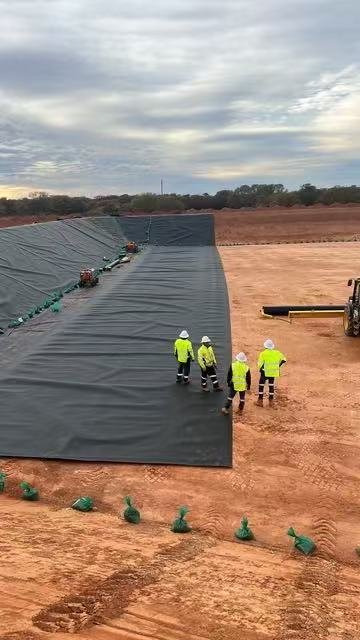
Needle-punched nonwoven geotextile is reinforced through needle punching with PP/PET fibers. Common weights range from 150 to 600 g/m², with tensile strength of 10 to 30 kN/m, CBR puncture strength of 1.5 to 5 kN, and a permeability coefficient of about 10-2 to 10-1 cm/s. It provides filtration, drainage, and separation, and is widely used in roads, railways, and landfills to extend structural service life and reduce maintenance costs.
Features
Needle-punched nonwoven geotextile is made from polyester or polypropylene fibers through a high-frequency needle-punching process. Finished products typically range from 100 g/m² to 1500 g/m², with thicknesses from 0.8 mm to 8 mm. Its three-dimensional porosity exceeds 80%, and the equivalent opening size O90 usually falls between 0.05 mm and 0.2 mm. CBR puncture strength typically ranges from 1.5 kN to 9 kN, while elongation at break is usually 50% to 80%. Its vertical permeability coefficient reaches 1×10⁻¹ to 1×10⁻³ cm/s.
Hydraulic Conductivity & Filtration
The nonwoven structure, formed by thousands of high-frequency needle penetrations per square centimeter, creates free internal space with porosity as high as 80% to 94%. This dense short-fiber arrangement gives the fabric excellent water permeability, with a vertical permeability coefficient that consistently remains in the range of 1.0 × 10⁻¹ to 5.0 × 10⁻³ cm/s. In practical use, a 400 g/m² fabric can pass more than 140 liters of water per second per square meter under a constant 50 mm head.
Its three-dimensional labyrinth-like structure allows fluid to move freely through the fiber voids while precisely filtering sediment particles. The equivalent opening size O90 is typically controlled between 0.05 mm and 0.21 mm, matching the particle-size distribution of most roadbed sands. As fine particles are carried into the fabric by flowing water, they are intercepted layer by layer by the randomly distributed fibers, eventually forming a naturally graded sand filter on the upstream side of the fabric that blocks more than 90% of dust-sized debris.
- Flow control index: Under a vertical load of 200 kPa, effective water transmissivity can still retain more than 60% of its initial value.
- Thickness relationship: When thickness increases from 3 mm to 6 mm, the longer flow path reduces flow velocity and helps minimize scouring of fine soil particles.
- Fiber fineness effect: Using 6–9 dtex fibers increases the number of micropores and improves filtration precision by about 15%.
- Pore-size distribution: Internal micropore diameters range from 15 microns to 250 microns, creating a graded filtration mechanism.
Even under heavy external pressure, the fibers inside the fabric may be compressed and displaced, but the open area remains relatively high. According to ASTM D4491 testing, even when buried deep in a landfill under massive waste loads, a 500 g/m² geotextile can still provide drainage capacity exceeding 50 liters per second per square meter. This ability to maintain flow under compression effectively prevents hydrostatic pressure from building up inside the foundation.
The irregular roughness of the fiber surface increases friction at the water-solid interface, transforming the flow regime from turbulence to stable laminar flow as water passes through a 3 mm thick fabric. This change reduces pressure shocks on downstream discharge pipes. In in-plane drainage tests, the material typically achieves an in-plane transmissivity of 2.0 × 10⁻⁴ m²/s under a gradient of 1.0, allowing it to serve as an efficient drainage path in roadbed and slope drainage systems.
- Gradient Ratio (GR) test: Under long-term operation, measured GR values remain below 3.0, indicating no significant fine-particle clogging inside the fabric.
- Anti-clogging lifespan: In a simulated 2000-hour continuous-flow test, permeability decay was limited to within 15% of the original value.
- Water absorption control: Because the raw polymer has water absorption below 1%, the fibers do not swell and squeeze shut the pores during long-term immersion.
- Dynamic load response: Under pulsating water flow at 60 cycles per minute, measured suspended solids on the downstream side remain below 0.6 g/L.
Compared with a traditional 300 mm thick gravel filter layer, a high-weight needle-punched fabric only 5 mm thick can deliver the same hydraulic conductivity. This greatly reduces excavation space in earthworks. Testing under ISO 11058 shows that this material typically provides more than three times the flow capacity of woven fabric of the same thickness, solving the common technical problem of woven fabrics being easily “blinded” by fine slurry.
The material’s soil-retention performance depends mainly on mechanical interlock between fibers. In coastal flood-control works, the strong negative pressure created as waves recede often scours soil from embankments. Needle-punched fabric rapidly releases this suction through hundreds of thousands of micro-drainage windows per square meter, reducing pore-water pressure in the foundation soil by more than 40% almost instantly. Tests show its interface friction angle typically falls between 25° and 35°, ensuring tight contact between the filter layer and the soil mass.
- Particle retention index: For extremely fine silts with d50 < 0.075 mm, interception efficiency still remains above 85%.
- Normal permeability pressure: Under 0.1 MPa pressure, pore reduction is controlled within 25%, maintaining the geometric stability of the hydraulic pathways.
- Surface wetting performance: Fibers treated with surfactants can quickly break water surface tension and guide moisture into the micropores.
For different soil types, selection is usually based on AOS (Apparent Opening Size) data. For example, in silty clay environments, an AOS below 0.15 mm is generally recommended. As fabric weight increases from 200 g/m² to 800 g/m², filtration precision improves in a nonlinear pattern. This allows engineers to match the most suitable geotextile precisely to the gradation curve of on-site soil samples.
Protective Strength
This material is produced by tightly entangling polyester or polypropylene staple fibers through a needle-punch frequency of 50,000 to 100,000 penetrations per square meter. The finished product forms a three-dimensional random fiber structure, and this physical interlocking gives the fabric exceptional toughness when subjected to sharp stone الضغط. Experimental data shows that when the fabric weight reaches 800 g/m², its thickness typically falls between 5.5 mm and 7.0 mm. This thickness acts as a physical cushion layer, absorbing and dissipating up to 30% of concentrated stress from overlying waste or aggregate layers.
When evaluating puncture resistance, the CBR puncture test under ASTM D6241 is the industry-standard reference. High-strength needle-punched fabric performs exceptionally well. A lightweight 200 g/m² grade provides puncture resistance of about 1500 N, while a 1000 g/m² grade designed for heavy-duty works can exceed 8000 N. This increase in strength is not linear. As fiber density and needle penetration depth increase, the protective performance improves exponentially.
- Static puncture (CBR) index: A 500 g/m² fabric typically provides puncture resistance of 4200 N, with displacement reaching 55 mm.
- Thickness-based protection: For every additional 100 g/m², the effective protective thickness under 100 kPa pressure increases by about 0.5 mm.
- Fiber entanglement density: Each individual fiber typically crosses 15 to 25 needle-punch nodes within the fabric.
- Interface friction angle: The rough needle-punched surface typically generates a friction angle of 28° to 36° against sand and gravel, helping prevent protective-layer displacement.
When used to protect geomembranes at the base of landfills or reservoirs, the geotextile is placed directly above a 0.5 mm to 2.0 mm geomembrane. In tests simulating 30 meters of overburden pressure, a 600 g/m² needle-punched fabric used as a cushion limited the strain in the underlying geomembrane to the safe threshold of 3% even when it was pressed against a sharp rounded stone 10 mm in diameter. This protective effect converts point-contact stress from sharp objects into area-contact stress, reducing the likelihood of mechanical damage in the containment system.
Grab tensile strength is the key measure of whether the material is prone to tearing under localized tension. Under ASTM D4632, a 400 g/m² needle-punched fabric typically provides machine-direction grab tensile strength of at least 1100 N. This supports the fabric’s resistance to deformation when laid over uneven ground. Because needle punching involves no chemical bonding or thermal fusion, the fibers can still slide slightly relative to one another, giving the fabric an exceptionally high elongation before break of 50% to 80%. This allows it to wrap around protruding rock without creating voids.
| Weight (g/m²) | CBR Puncture Strength (N) | Grab Tensile Strength (N) | Trapezoid Tear Strength (N) | Thickness (mm) |
|---|---|---|---|---|
| 300 | 2500 | 900 | 350 | 2.5 |
| 500 | 4200 | 1450 | 580 | 4.2 |
| 800 | 6500 | 2200 | 850 | 6.1 |
| 1200 | 9500 | 3400 | 1200 | 8.5 |
Laboratory trapezoid tear testing under ASTM D4533 shows that needle-punched fabric offers better tear resistance than woven materials of the same weight. Fibers around the loaded point reorient themselves and collectively redistribute the stress. A 600 g/m² grade typically resists tearing forces above 500 N. In actual construction, even if a loader or excavator bucket accidentally scrapes the fabric, the tear usually remains localized near the point of contact rather than propagating for dozens of meters along warp and weft lines as woven fabrics often do.
Protective performance under dynamic loading is quantified through the falling-cone test (ISO 13433). When a 5 kg conical weight drops from a height of 500 mm, the opening formed in a 300 g/m² fabric is typically smaller than 20 mm. This impact resistance is especially valuable in riprap placement for riverbank protection. The millions of fibers distributed across every square meter act like countless miniature springs, converting the falling stone’s kinetic energy into heat and deformation energy within milliseconds and protecting the underlying fine-grained soil from impact disturbance.
- Impact-energy dissipation: Under a single impact energy of up to 150 J, the material shows no visible penetrating damage.
- Fatigue resistance: After 100,000 cycles of alternating load, CBR strength retention remains above 90%.
- Compression stability: Under sustained pressure of 200 kPa, the compression modulus remains stable without permanent flattening.
- Fiber toughness grade: Coarse fibers of 6 to 15 denier are commonly used to increase the bending stiffness of individual filaments.
The material’s physical toughness is also reflected in its ability to handle edge effects. On slopes, the geotextile must resist the downslope dragging force of the cover soil. In ASTM D4595 wide-width tensile tests, a 1000 g/m² fabric can withstand 30 kN to 50 kN of tensile force per meter of width. This strength allows it to carry part of the soil’s self-weight, reducing the load on the downstream toe-protection structure. On steep slopes greater than 30°, the rough needle-punched surface grips soil particles and reduces slippage.
For reinforced design in high-speed railway subgrades, the selected fabric weight is typically not less than 400 g/m². Under cyclic dynamic-pressure testing generated by passing trains, thicker needle-punched fabric provides at least 25 mm of dynamic compression space. This flexible interface prevents the ballast beneath the track slab from contacting the subgrade soil directly and reduces vibration fatigue damage in the base layer under repeated loading.
- Weight uniformity index: Weight deviation across every 10 sample points is controlled within 5%, ensuring no weak zones across the full width.
- Fiber crimp factor: A fiber crimp of more than 2.0% increases loft and elasticity, improving impact absorption.
- Needle penetration depth: Typically controlled between 10 mm and 14 mm so that upper and lower fiber layers become interlocked.
- Puncture-resistance design life: For buried conditions, the static anti-puncture design life against crushed-stone edges is typically no less than 120 years.
Durability and Stability
Polypropylene and polyester fibers define the material’s chemical backbone. Polypropylene grades can withstand highly corrosive environments with a pH range of 2 to 13. After soaking in a 10% sulfuric acid solution for 90 days, tensile strength loss is usually controlled within 5%. Polyester performs better in acidic soils, but in strongly alkaline environments with pH above 11—such as contact with uncured concrete—it may undergo slow hydrolysis.
ISO 13438 simulates oxidative aging over 50 to 100 years of underground service. High-pressure oxygen-chamber testing shows that stabilized fabrics still retain more than 80% of their strength after 28 days at 80°C. This provides a sound technical basis for their use as long-term filtration layers at landfill bases. Even in contaminated surface water or saline groundwater, the polymer chains remain highly inert and do not degrade or peel.
- Acid and alkali resistance: At 25°C, resistance to common industrial acids exceeds 5000 hours.
- Oxidation resistance: OIT (Oxidative Induction Time) is typically above 100 minutes at 200°C.
- Salt resistance: Long-term immersion in a 3.5% sodium chloride solution causes less than 1% fluctuation in physical properties.
- Industrial chemical resistance: The material remains chemically neutral to fuels, oils, and most hydrocarbons.
Ultraviolet radiation in sunlight breaks polymer chemical bonds. To counter this, manufacturers typically blend 2% to 3% carbon black into the raw material. According to ASTM D4355, after 500 hours of continuous xenon-arc exposure, the fabric still retains 70% to 85% of its original strength. Without these antioxidants, pure polypropylene fibers can lose more than half of their mechanical strength after just 30 days of outdoor exposure and may even become powdery.
This weather resistance provides an important construction buffer. At high-altitude jobsites in North America or Europe, UV intensity is often about 30% higher than at sea level. Even if the fabric remains exposed for 30 days after installation due to weather delays, tensile strength can still remain above 90% of its original value. This stability ensures that the material does not undergo premature aging before it is covered with earth or stone.
| Environmental Stress Source | Test Standard | Performance / Retention |
|---|---|---|
| UV exposure (500h) | ASTM D4355 | 70%–85% strength retention |
| Strong alkali immersion (pH 12) | EN 14030 | 92% strength retention (PP) |
| Hot-air aging | ISO 13438 | Meets 100-year design life requirements |
| Fuel exposure | ASTM D543 | No significant swelling or strength loss |
Microorganisms and underground organisms cannot obtain nutrients from synthetic fibers. In a 120-day soil-burial test under EN ISO 13433, no measurable mass loss caused by fungi or bacteria was detected. This is especially important in landfills and marshland projects, where biological activity is intense. Since the polymer contains no starch or natural proteins, rodents and insects generally have no interest in eating it either.
The material’s physical structure also resists underground mechanical damage. Needle punching creates a dense web of tightly entangled fibers, with hundreds of thousands of physical crossover points per square meter. Even in soils infested by termites, this high-density fiber network shows outstanding puncture resistance. In laboratory simulations of biological gnawing, surface wear remained far lower than that of woven materials made from natural fibers, preserving the integrity of the separation layer.
- Anti-mildew rating: Under ASTM G21, the growth rating is 0 (no growth).
- Antibacterial performance: The material provides a natural physical barrier against common soil bacteria such as Staphylococcus aureus.
- Rodent resistance: The high toughness of the fibers makes them difficult for small animals to tear, protecting the underlying containment structure.
Temperature changes also matter greatly for dimensional stability. Polyester (PET) has a melting point of up to 260°C. When used under hot-mix asphalt at 150°C, it shows no significant shrinkage or melting. Its thermal shrinkage at 160°C is usually below 1.5%. By contrast, polypropylene (PP) melts at around 165°C, making it better suited to normal-temperature civil works or lower-temperature waterproofing cushions.
In extremely cold regions, the fabric also remains flexible. In frozen-ground environments down to -30°C, needle-punched fabric does not become brittle the way ordinary plastic films do. It still maintains elongation at break above 50%. This low-temperature toughness helps it accommodate frost-heave deformation in the foundation. In roadbeds in Alaska or Northern Europe, it can stretch with the movement of frozen soil layers without suffering structural rupture.
- Thermal deformation stability: Under sustained loading at 80°C, dimensional change remains within 2%.
- Low-temperature embrittlement point: Tests show the material still retains some mechanical toughness at -60°C.
- Thermal conductivity: As a poor conductor of heat, it can to some extent slow the downward penetration of the freezing front.
Long-term heavy loading can cause creep, meaning slow stretching under constant stress. ASTM D5262 creep-rupture testing shows that under a load equal to 50% of maximum tensile strength, creep strain after 10,000 hours usually remains below 10%. This data is used to calculate the material’s long-term strength reduction factor. In practice, engineers usually adopt a reduction factor between 1.5 and 2.5 to ensure the fabric remains reliable throughout the design life of the structure.
Higher-weight fabrics, such as those above 800 g/m², show better creep resistance. In landfills under more than 30 meters of waste, thickness compression gradually stabilizes over time. Tests show that even after 5000 hours under compression, porosity still remains above 60% of its original level. This ability to maintain form under pressure supports the long-term performance of both drainage and filtration.
- Long-term creep modulus: The projected 100-year creep strain remains far below the material’s ultimate elongation at break.
- Dynamic load durability: After 1,000,000 simulated traffic-load cycles, thickness rebound remains above 85%.
- Compressed permeability retention: Under 200 kPa pressure, the vertical permeability coefficient drops by only one order of magnitude.
The material’s stability is also reflected in its frictional interface with soil. Large-scale direct-shear tests show that the friction angle against sandy soils generally remains between 26° and 35°. This rough surface texture provides the anti-sliding capacity needed for slope works. Even under heavy rainfall and saturated conditions, the change in this friction coefficient remains below 10%, helping prevent large-scale sliding of slope cover soil.
Technical Advantages
Hydraulic Conductivity & Filtration
Behind retaining walls in the French Alps, large volumes of groundwater accumulate during spring snowmelt. Water pressure against the wall often exceeds 60 kPa. Engineers installed a 250 g/m² needle-punched nonwoven fabric between the concrete wall and the soil. Water passed through the fabric and drained away, while the soil remained securely retained behind it.
The fabric is filled with a dense network of twisted fibers. Once water enters, it must weave around 30 to 50 polyester filaments before exiting. Even under 50 kPa of soil pressure, its vertical permeability coefficient still reached 0.3 cm/s. Every second, 120 liters of clean water passed through one square meter of fabric and into the drainage pipe.
The melted snowwater carried large amounts of 150-micron silt. The fabric’s equivalent opening size (O95) was tightly controlled at 0.15 mm at the factory. It successfully intercepted 95% of the fine soil particles trying to escape. The water flowing out of the retaining wall’s drainage outlets remained remarkably clear.
A Swiss laboratory examined samples that had been in service for six months under a microscope. The silt had accumulated into a natural filter cake about 2 mm thick on the fabric surface. Together, the filter cake and the nonwoven fabric maintained a stable flow rate of 45 L/m²/s for a full 6 months without any physical clogging.
| Fabric Weight (g/m²) | Vertical Permeability at 50 kPa (cm/s) | Equivalent Opening Size O95 (mm) | Maximum Clear-Water Flow (L/m²/s) |
|---|---|---|---|
| 150 | 0.45 | 0.20 | 140 |
| 250 | 0.30 | 0.15 | 110 |
| 400 | 0.18 | 0.10 | 75 |
| 600 | 0.12 | 0.08 | 45 |
Florida’s I-4 highway is hit by severe summer rainstorms year after year. If water in the subgrade cannot drain out, the base quickly turns into mud. Road crews wrapped perforated PVC drainage pipes with a 150 g/m² filter fabric and buried them in coarse sand trenches 1.5 meters deep.
Rainwater seeped through the asphalt joints into the trench. The fabric’s measured permittivity was 1.5 sec-1. Water flowed smoothly into the PVC pipe and drained away, while Florida’s characteristic clay particles were all held outside the pipe. Within 72 hours, a stable mud-water filter boundary had formed on the fabric surface.
Engineers excavated an old pipe section after 10 years in service. They cut off a piece of the fabric and rinsed it in a flume. Instrument testing showed that 80% of the internal pore structure remained open. It fully met the service-life requirements of the American Association of State Highway and Transportation Officials.
- Fine sandy soil: recommended fabric with O95 ≤ 0.15 mm
- Silty clay: factory permeability should exceed 0.1 cm/s
- Gravel subgrades: initial porosity should remain above 85%
- Coastal riprap: resistance to repeated water scouring should reach 5 m/s
The Dutch use extremely fine marine sand in man-made breakwaters. Every few seconds, waves try to pull that sand back out to sea. Before placing 5-ton armor stones, construction vessels first covered the sand bed with a heavy 800 g/m² nonwoven fabric. The fabric thickness reached a full 6.0 mm.
It acted like a giant three-dimensional sponge cushion beneath the stones. Waves crashed down and retreated at 3 m/s. Water was driven into the thick fabric, and water pressure dispersed horizontally through the fabric body before it had any chance to disturb the underlying sand bed.
Under the weight of the armor stones, the fabric was subjected to 200 kPa of pressure and compressed to roughly half its original thickness. Even so, the in-plane transmissivity remained at 5.0 × 10⁻⁶ m²/s. Seawater was able to flow rapidly sideways through the fiber matrix, while the fine sand underneath remained completely stable.
| Applied Load (kPa) | Compressed Fabric Thickness (mm) | In-Plane Transmissivity (m²/s) | Void Volume Retention (%) |
|---|---|---|---|
| 100 | 4.2 | 8.5 × 10⁻⁶ | 78 |
| 300 | 3.1 | 4.2 × 10⁻⁶ | 65 |
| 500 | 2.5 | 1.8 × 10⁻⁶ | 52 |
| 800 | 1.8 | 6.0 × 10⁻⁷ | 40 |
An Ohio landfill needed a leachate detection layer beneath a 30-meter waste mass. A geonet was heat-bonded on both sides with 300 g/m² needle-punched fabric. Under the huge dead load of 500 kPa, the irregular fiber skeleton still preserved 60% of its void space.
If even a single drop of leachate leaked through the upper geomembrane, it would hit the fabric and immediately travel along the fine fibers into the central geonet. The system could transmit 15 liters of leachate per minute per meter of width, allowing monitoring instruments to detect leakage within seconds.
In Arizona, golf-course greens are often built on sandy loam. Excess irrigation can cause nutrient loss. Grounds crews installed a 200 g/m² fabric at a depth of 0.5 meters as a capillary barrier. Water percolated slowly at 0.05 cm/s, while fine sand of 0.1 mm was fully prevented from entering the crushed-stone trench below.
Protective Capacity
At the base of a large landfill in Texas, workers were installing a 1.5 mm polyethylene geomembrane. Above it, a drainage layer of rough crushed stone with particle sizes up to 50 mm had to be placed. The stones had sharp edges, and the passage of bulldozers weighing tens of tons could easily puncture the plastic liner below. To protect it, the construction team placed a 600 g/m² nonwoven fabric between the liner and the stone.
Large, angular stones were dumped from machinery onto the fabric. The dense polyester fibers acted like a thick carpet, wrapping around the sharp stone edges. Under ASTM D6241, the fabric could withstand puncture forces up to 4500 N. The local stress generated by the stone tip was spread across about 10 cm² of fiber network, causing the localized pressure on the geomembrane to drop by 80%.
- 300 g/m² grade can withstand impact from 20 mm stone dropped from 1.5 meters
- 400 g/m² product corresponds to 2500 N CBR puncture strength
- 600 g/m² can prevent 50 mm gravel from puncturing under 300 kPa pressure
- 800 g/m² heavy-duty fabric is commonly used to protect 2.0 mm textured liners
- 1000 g/m² extra-heavy grades can resist the sharp edges of mine waste rock
Now shift to a highway rehabilitation project in Bavaria, Germany. A heavy roller repeatedly compacted a 300 mm graded crushed-stone base, generating vibration forces up to 25 tons. The underlying soil and overlying aggregate were pressing and grinding against each other. Between them lay a nonwoven fabric 3.5 mm thick.
The entangled structure formed by millions of needle penetrations was extremely stable. After sharp aggregate scraped across the surface 1000 times, the fibers still did not unravel. The EN ISO 13427 abrasion test report showed that when technicians used a 10 kg abrasive wheel, the fabric lost less than 3% of its mass. It continued to separate the soil from the road-base stone completely.
Ground settlement is never perfectly uniform. On California highways built over soft clay zones, settlement differences can reach 150 mm. The fabric must resist tensile forces of several tens of kilonewtons. Field tests showed that tearing open a pre-cut notch in the fabric required about 450 N of force.
Because the fibers are curved and interwoven, they gradually extend under tension. The fabric can stretch by more than 50% before breaking. If the foundation sinks into a deep depression, the fabric deforms into a hammock-like shape and cradles the 500 mm thick fill above. The crack below remains tightly bridged, making it much less likely that the asphalt surface above will crack as well.
- After 500 kPa cyclic loading, thickness retention remains above 60%
- At 20% elongation, the fabric still retains 85% of its initial trapezoid tear strength
- Typical tear strength ranges from 200 to 800 N
- On a 45° slope, the friction angle against coarse sand reaches 32°
On heavy-haul freight railways in Ohio, hundreds of coal-laden trains pass every day. Instantaneous dynamic loads from the wheels exceed 30 tons, driving the sharp ballast stones downward. The engineering team installed a 500 g/m² puncture-resistant fabric between the muddy subgrade and ballast stones sized at 60 mm.
The fabric worked like a tough spring pad. Its static bearing capacity of 2500 N securely supported the sharp ballast tips. After 2 million train passages, the fabric had lost only 0.4 mm of thickness. The wet subgrade with 30% moisture content remained fully separated and could not pump upward into the ballast voids.
On Florida’s coastline, breakwater works often face Atlantic storm waves. Natural riprap blocks weighing 500 kg each are dropped onto the beach. As waves recede, they pull sand away and can cause the stones to collapse and roll. Divers first laid down a large expanse of extra-heavy 1200 g/m² fabric underwater.
The rolls delivered from the factory were a full 6.0 mm thick. As the massive stones settled, the soft fabric was pressed deeply into the irregular voids beneath them, creating a tight mechanical interlock. When waves swept past at 5 m/s, water drained through countless micropores in the fabric. The fine sand beneath was fully retained, steadily supporting the 3-meter high armor-stone mass above.
Environmental Resistance
In landfill liner systems built to meet EPA Subtitle D standards in North America, the pH of leachate often fluctuates between 2.5 and 9.0. Engineers usually install nonwoven fabric made from 100% virgin polypropylene resin. After soaking the material in high-concentration organic acid waste for 120 days, the force required to break it dropped by less than 4%. Its molecular structure is highly resistant to breakdown in water.
At an open-pit copper tailings pond in Nevada, acidic mine water containing 1500 mg/L sulfate runs constantly over the filtration layer. The fibers did not swell or lose weight under this exposure. In a laboratory 10,000-hour accelerated immersion test, the fiber surfaces still appeared smooth under the microscope, with no cracking or peeling.
- Under EPA 9090 chemical testing, volumetric change remains below 2%
- After 30 days in 10% sodium hydroxide, CBR puncture strength still retains 92%
- Fibers do not thin when buried in groundwater containing chlorine and sulfides
- After contact with organic solvents, the change in O95 remains below 0.02 mm
Highway subgrades in Alaska go through dozens of freeze-thaw cycles each year. When temperatures drop to -40°C, water in the soil freezes and pushes the ground upward. With a porosity of about 85%, the nonwoven fabric leaves enough room for ice-crystal expansion. Its randomly interlocked fiber network can easily withstand frost-heave thrusts of several tens of kilonewtons per square meter.
In Arizona summers, ground temperatures often exceed 65°C. Geotextile beneath asphalt pavement must tolerate heat. Fresh hot-mix asphalt is placed at 145°C to 160°C. Polyester fibers do not melt until around 250°C, so hot asphalt does not cause noticeable shrinkage or burn-through.
- Polypropylene remains flexible at -20°C without breaking
- Polyester shrinks by less than 1% in an oven at 150°C
- After continuous heating at 80°C for 180 days, it can still elongate to 40% of its original length
Many large civil projects in Europe and North America have long construction periods, and rolls of material are often left outdoors on muddy ground for months. UV radiation in sunlight is harsh and can make plastics brittle and powdery. During fiber production, manufacturers blend in 2% to 3% nano-scale carbon black particles. This effectively gives each fiber a protective sunscreen layer that shields it from UV damage.
Inspectors follow the ASTM D4355 procedure. Fabric strips are placed in a xenon-arc chamber, exposed to light at 0.35 W/m², and intermittently sprayed with water. After 500 hours of testing, machine-direction and cross-direction tensile strength still remain above 70% of the original qualified factory value.
Billions of bacteria and fungi live several meters below the ground, but synthetic polyolefin fibers contain no natural nutrients. Insects and microorganisms cannot survive on them. Under ASTM G21, fabric samples were kept in a culture dish for 28 days. They remained completely clean, with not a single visible mildew spot on the surface.
Tree roots puncturing geomembranes and rodents gnawing underground often damage waterproofing systems in dams. An extra-heavy 800 g/m² needle-punched fabric is woven with exceptionally high density. Each fiber can withstand 4 cN/dtex of tensile force, making it extremely difficult for fine plant roots to penetrate. The network, formed through roughly 5 million needle penetrations per square meter, is also very hard for rodents to tear open.
- It does not rot even after 20 years buried in wet soil rich in decaying leaves
- Termites and leafcutter ants show no interest in biting pure polyester fibers
- Heavy-duty grades can block plant roots smaller than 3 mm in diameter
- When used under cattle-waste lagoons, permeability remains at 10-2 cm/s
The trace amount of oxygen in soil slowly ages and embrittles plastic over time. Manufacturers therefore add 0.5% antioxidant stabilizer to the resin. Laboratory modeling shows that at a buried temperature of 20°C, it takes about 65 years just to consume half of that small amount of anti-aging additive. The material can therefore outlast even bridges designed for 100 years.
Typical Uses
In geotechnical engineering, needle-punched nonwoven geotextile mainly serves as a separation, filtration, drainage, and protection layer. In regions with average annual rainfall above 1000 mm, using this material can reduce the loss of fine particles from the roadbed by about 80%. For common grades ranging from 150 g/m² to 600 g/m², the opening size (O95) usually falls between 0.07 mm and 0.2 mm, effectively retaining soil particles larger than 0.075 mm while maintaining a vertical permeability coefficient above 10-2 cm/s, ensuring efficient liquid drainage under high compaction.
Transport Infrastructure
Before paving interstate asphalt roads, construction vehicles spread nonwoven geotextile weighing 200 g/m² to 400 g/m² over soft clay subgrades. Even under repeated passes from aggregate trucks weighing tens of tons, the underlying mud cannot squeeze up into the 300 mm thick crushed-stone base above. Subgrade soils with a California Bearing Ratio (CBR) below 3% can still carry repeated axle loads from 10-ton trucks once covered with this fabric.
On highway sections without this separation layer, heavily loaded trucks can, within just 3 to 5 years, force the lower aggregate completely down into the mud, creating ruts more than 50 mm deep. The rough fiber network of the geotextile mechanically locks the overlying stone in place, with a friction coefficient in the range of 0.5 to 0.6. This can reduce total fill demand by about 20%. For every kilometer of dual four-lane highway, that means saving nearly 3000 m³ of high-quality quarry aggregate.
During prolonged heavy rain, water leaking through asphalt joints accumulates at the bottom of the stone layer if it cannot drain. The vertical permeability coefficient of the geotextile remains in the order of 10-1 to 10-2 cm/s. Water passes through the few-millimeter-thick fabric into side drains, keeping long-term roadbed moisture within about ±2% of optimum moisture content. In winter, this helps prevent large frost-heave bulges in the pavement.
European and North American highway construction manuals set clear thresholds for geotextile selection by road class:
| Road Construction Class | Required Fabric Weight | Minimum Puncture Strength | Expected Service-Life Extension |
|---|---|---|---|
| Temporary logging road | 150 g/m² – 200 g/m² | > 1.2 kN | Enough for 2–3 logging seasons |
| Municipal two-way standard road | 250 g/m² – 300 g/m² | > 1.8 kN | Delays major rehabilitation by 10–15 years |
| Interstate heavy-haul truck highway | 350 g/m² – 500 g/m² | > 2.5 kN | Supports asphalt pavement service life beyond 25 years |
On freight rail lines, axle loads exceed 30 tons, and vibrations transmitted through the rails are extremely intense. When trains pass at 120 km/h, mud from below the ballast can be pumped upward—what rail engineers call “mud pumping.” Crews place a heavy needle-punched geotextile about 8 mm thick between the sleepers and the subsoil. With elongation above 50%, the fabric dissipates huge cyclic stresses into the surrounding soil mass.
Rail ballast consists of sharp, hard granite stones with diameters of about 30 mm to 60 mm. Under train loads, individual stones drive forcefully downward. A thick, resilient 800 g/m² nonwoven fabric can deform under the stone tips without puncturing. As a result, the original 500 mm ballast thickness is preserved over the long term, and rail surface unevenness is forced to stay within 3 mm.
Railway authorities have quantified the maintenance savings:
- The use of large tamping machines drops from 3 times per year per kilometer to 1 time.
- The cost of replacing fouled and broken ballast decreases by about 40% annually.
- Rain-related speed restrictions on soft-ground sections are reduced by more than 80%.
- Labor costs for clearing mud from the base can be reduced by nearly EUR 20,000 per kilometer.
Airport runways support fully loaded Boeing 777 aircraft approaching 400 tons. At touchdown, the landing gear transmits instantaneous impact pressures of several megapascals into the pavement structure. Geotextile more than 5 mm thick is laid in the touchdown zones beneath the runway ends. The fabric absorbs tensile stresses of several tens of tons per square meter, and throughout the runway life cycle no through-cracks wider than 5 mm appear.
In the far north of Europe, roads are often built over permafrost just 2 to 3 meters below the surface. In spring, thawing turns the subgrade into slurry. Engineers place a 400 g/m² geotextile above the permafrost and cover it with 400 mm of insulated sand and gravel. The meltwater is held below the fabric, while heavy trucks traveling at 80 km/h can pass above without sinking.
During urban road rehabilitation, milling machines remove the top 50 mm of old asphalt. Workers then spray hot asphalt over the cracked existing pavement and install a lightweight needle-punched nonwoven fabric weighing 130 g/m² to 150 g/m². After absorbing about 1 kg of liquid asphalt per square meter, it becomes a waterproof, stress-relieving interlayer. Once the new asphalt is compacted on top, cracks from the old pavement are prevented from reflecting up for years.
Acceptance criteria for crack-relief interlayers in road rehabilitation are strict:
| Road Rehabilitation Item | Required Test Data | Observed Site Performance |
|---|---|---|
| Asphalt absorption saturation | 0.8 L/m² – 1.2 L/m² | Fabric turns fully black with no white spots or water passage |
| Temperature resistance under hot asphalt | 150°C – 170°C | No curling or melting under hot mix |
| Interlayer tensile resistance | Both directions above 8 kN/m | Old cracks cannot pull open the new asphalt overlay |
| Compaction friction | No tire slipping or pickup | Rollers can compact smoothly for 10 passes |
Temporary forest haul roads in mountain areas are often nothing but muddy tracks with standing water. Dumping stone directly onto them usually fails quickly—after just a couple of passes from 50-ton haul trucks, the stone disappears into the mud. But with a nonwoven fabric offering tensile strength up to 15 kN/m laid first and then covered with 200 mm of coarse crushed stone, loaded timber trucks can run back and forth at 60 km/h for months without forming major mud holes.
Coastal Erosion Control
The destructive force of waves hitting sea defenses is enormous, and winter storm waves frequently exceed 8 meters in height. Engineers stack granite armor stones weighing 3 to 5 tons on sandy coastlines. Between the stones and the sand bed, they place a thick needle-punched nonwoven geotextile weighing 600 g/m² to 1200 g/m². When multi-ton stones are dropped into place, the thick fabric’s randomly interlocked fiber network absorbs the impact and protects the underlying sand bed.
As seawater recedes during low tide, it can drag fine sand out from inside the embankment at velocities up to 4 m/s. The geotextile surface is filled with microscopic three-dimensional pores, and the effective opening size is controlled between 0.1 mm and 0.2 mm. It allows seawater to pass while retaining all sand and silt larger than 0.05 mm inside the breakwater. After years of heavy wave attack, the incidence of toe scour and collapse remains extremely low, and sand loss is limited to less than 2% by weight.
Coastal and marine construction projects also impose strict performance requirements:
- The puncture probe force in testing must exceed 5.0 kN.
- Fiber elongation must be greater than 50%, so the fabric can stretch with stone settlement without tearing.
- After 50 months of immersion in seawater with salinity 35‰, mechanical performance loss must remain below 5%.
- After 500 hours in a UV-aging chamber, residual strength must remain above 70% of the original value.
For underwater slope sections extending to depths of 15 meters, installation must be performed in water. Divers use special stainless-steel pins to stitch adjacent fabric panels together underwater. Overlap widths are maintained between 60 cm and 100 cm. The tensile strength at the seam can reach 80% of the parent fabric, ensuring that even strong subsurface currents at significant depth cannot tear the joint apart.
On remote islands where large rock is unavailable, contractors sew nonwoven fabric weighing 400 g/m² to 800 g/m² into large geobags. High-capacity slurry pumps dredge nearby marine sand and fill each bag with 2 to 4 m³ of sand-water mixture. Excess seawater drains out through the fabric pores, leaving densely packed sand inside. Each bag can resist tensile forces of about 30 kN per linear meter, and hundreds of these stacked together form a temporary breakwater.
When storm waves overtop the crest, hundreds of tons of seawater rush into the voids within the revetment. During the few seconds of drawdown, this trapped water can generate outward pressure up to 20 kPa, enough to push facing stones out of place. The geotextile laid beneath the armor layer has a permeability coefficient in the order of 10-1 cm/s. The water inside the revetment drains out through the fiber pores within seconds, dropping internal pressure to about 2 kPa.
Routine maintenance calculations for soft mattress systems and geobag erosion control also rely on several hard metrics:
- The abrasion-resistant tensile load of each field seam must be at least 150 N per stitch.
- Sand-fill ratio should remain between 85% and 95%; overfilling increases the risk of rupture under load.
- When impacted by floating driftwood, annual local wear loss should remain below 0.2 mm.
- The area covered by marine growth such as barnacles should be kept below 30% of the total exposed surface.
Submerged toe-protection mattresses eventually become colonized by marine life. Geotextile made from polyester (PET) has a specific gravity of 1.38, making it heavier than seawater so it stays firmly on the seabed. After about 5 years, the rough fiber surface can support a natural seaweed layer up to 15 cm thick. The artificial mat gradually blends into the seabed dunes, and fish and crustaceans begin spawning in the gaps between rock and fabric, creating a small reef-like habitat.
In many international shoreline-restoration projects, geotextile is also used to rebuild natural dunes destroyed by storms. Bulldozers excavate a trench about 2 meters deep within the damaged dune profile, install thousands of square meters of heavy-duty nonwoven fabric as a skeleton, and then rebuild the dune with clean sand. Even when hurricanes with wind speeds above 100 km/h strip away the loose surface sand, the geotextile framework buried 2 meters below helps hold the overall dune shape in place.
Landfill Applications
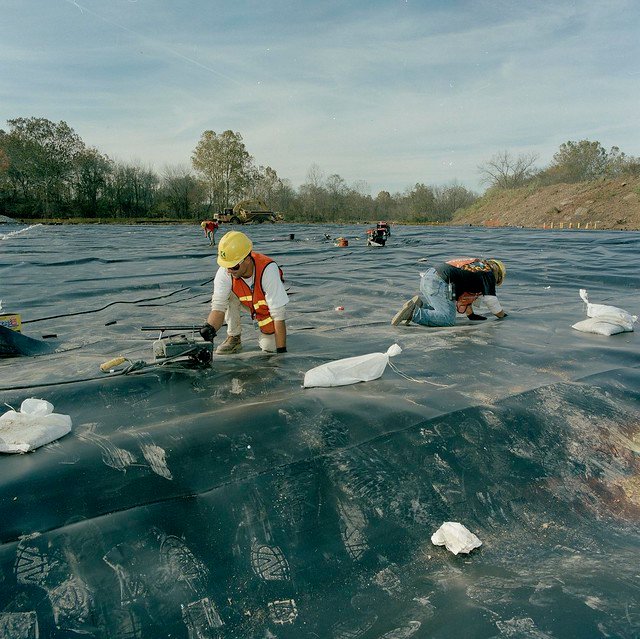
HDPE geomembranes at landfill bases are typically only 1.5 mm to 2.5 mm thick, and they can be easily damaged by rough waste placed above them. Construction crews therefore install heavy needle-punched nonwoven geotextiles weighing 800 g/m² to 1200 g/m² as cushioning layers. Waste may contain sharp stones up to 50 mm in diameter, but the thick fabric spreads the concentrated force and withstands localized puncture pressures of about 2.0 kPa to 5.0 kPa. Even under a 50-meter waste stack, the geomembrane below remains intact.
Perforated PVC pipes and graded gravel placed in leachate drains will quickly clog if left exposed to sludge. Workers therefore wrap the pipe network in permeable geotextile. Its fine pores are designed to block mud and sediment particles larger than 0.05 mm. Highly contaminated liquid can flow into the collection pipes at rates exceeding 20 liters per second per square meter, preventing the formation of high-pressure leachate pools at the landfill base and cutting off the risk of leakage into surrounding groundwater.
Material acceptance for the leachate-control zone focuses on several non-negotiable criteria:
| Site Test Item | Qualified Range | Problem Solved in Practice |
|---|---|---|
| Static cushion thickness | 4 mm – 8 mm | Protects the geomembrane from puncture and compressive damage |
| Effective opening size (O95) | 0.075 mm – 0.15 mm | Filters out fine mud particles |
| Strong acid/alkali immersion durability | No fibrillation after 120 h (pH 2–12) | Can remain submerged long-term in aggressive leachate without degrading |
| Vertical compressive resistance | > 300 kPa | Maintains permeability under tens of thousands of tons of waste load |
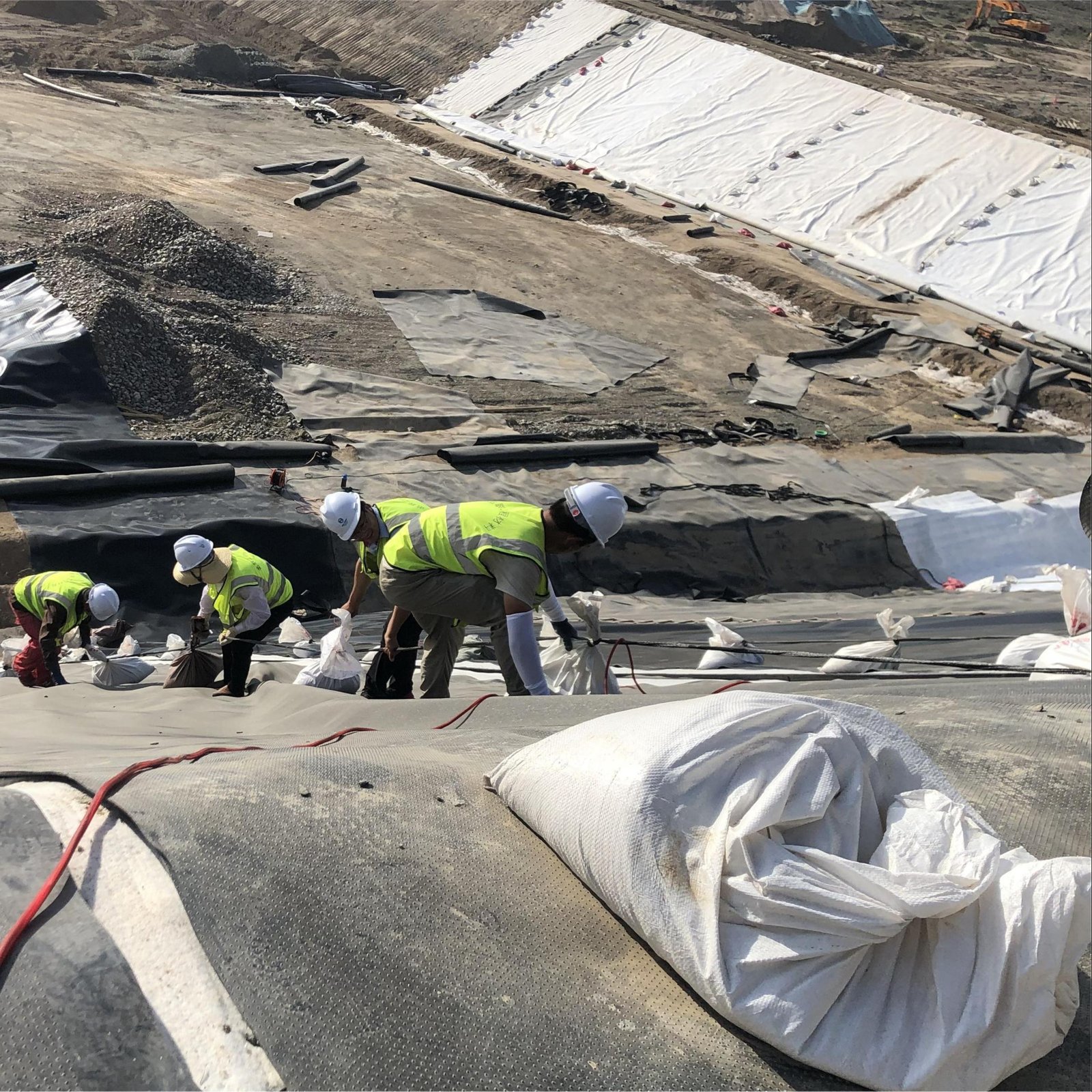
Landfill side slopes are often built steeply, at ratios such as 3:1 or even 2:1. Since HDPE geomembranes are very smooth, their interface friction angle is often only 8° to 12°, which makes it difficult for the overlying soil cover to remain stable. Needle-punched nonwoven geotextile has a rough surface that increases interlayer friction to 24° to 30°. Engineers stitch it together with drainage mats and cover it with several tens of centimeters of vegetative soil. Even after several days of intense rain, the soil cover remains stable in place.
Over time, buried waste generates large volumes of methane and carbon dioxide. During final closure, a corrosion-resistant geotextile weighing 300 g/m² to 500 g/m² is laid beneath the topsoil to provide a gas-transmission layer. Gas moves horizontally through the fiber voids with transmissivity in the order of 10-4 m²/s. The combustible gas is directed upward into vent wells about 150 mm in diameter, reducing the risk of pressure buildup and summer blowout to nearly zero.
Landfill closure handover also requires compliance with several hard criteria:
- The rain-protection cover soil must be measured at 600 mm to 1000 mm thick.
- The gas-venting geotextile must provide elongation above 50%, so it does not tear if the foundation settles locally.
- The anti-sliding layer on the slope must be able to support a dead load of 30 kg/m².
- Annual soil erosion on the vegetated surface must be limited to less than 2 tons per hectare.
Deep wastewater ponds often contain anaerobic bacteria and highly corrosive salts. Nonwoven geotextile made from pure polypropylene resin contains no nutrients for biological attack, so bacteria and insects do not consume it. Even at a depth of 30 meters below ground in oxygen-poor conditions, chloride concentrations above 5000 mg/L do not damage the fibers. Laboratory burial-aging simulations indicate a service life exceeding 100 years, far longer than the 60-year design requirement for typical municipal drainage systems.
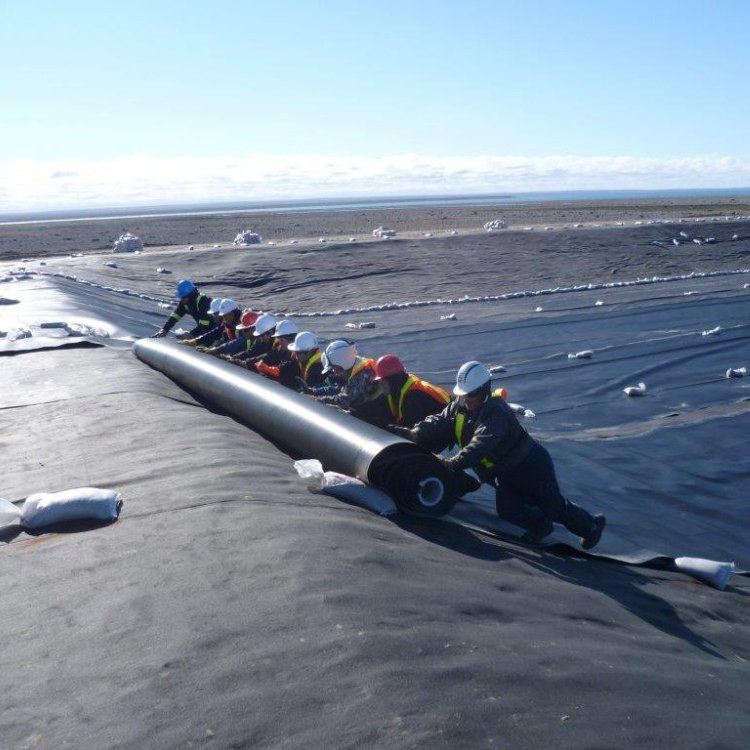
At large international landfills, exposed waste must be covered at the end of each workday. Using 150 mm of dry soil as daily cover wastes about 20% of total landfill airspace over time. Replacing it with a 250 g/m² nonwoven geotextile treated for flame resistance and UV stability provides a much more efficient temporary cover. A single roll 8 meters wide and 50 meters long can cover about 400 m² of exposed waste in just minutes when pulled into place by a bulldozer. It also helps prevent litter from blowing away and noticeably reduces odor over several kilometers around the site.



Leave a reply