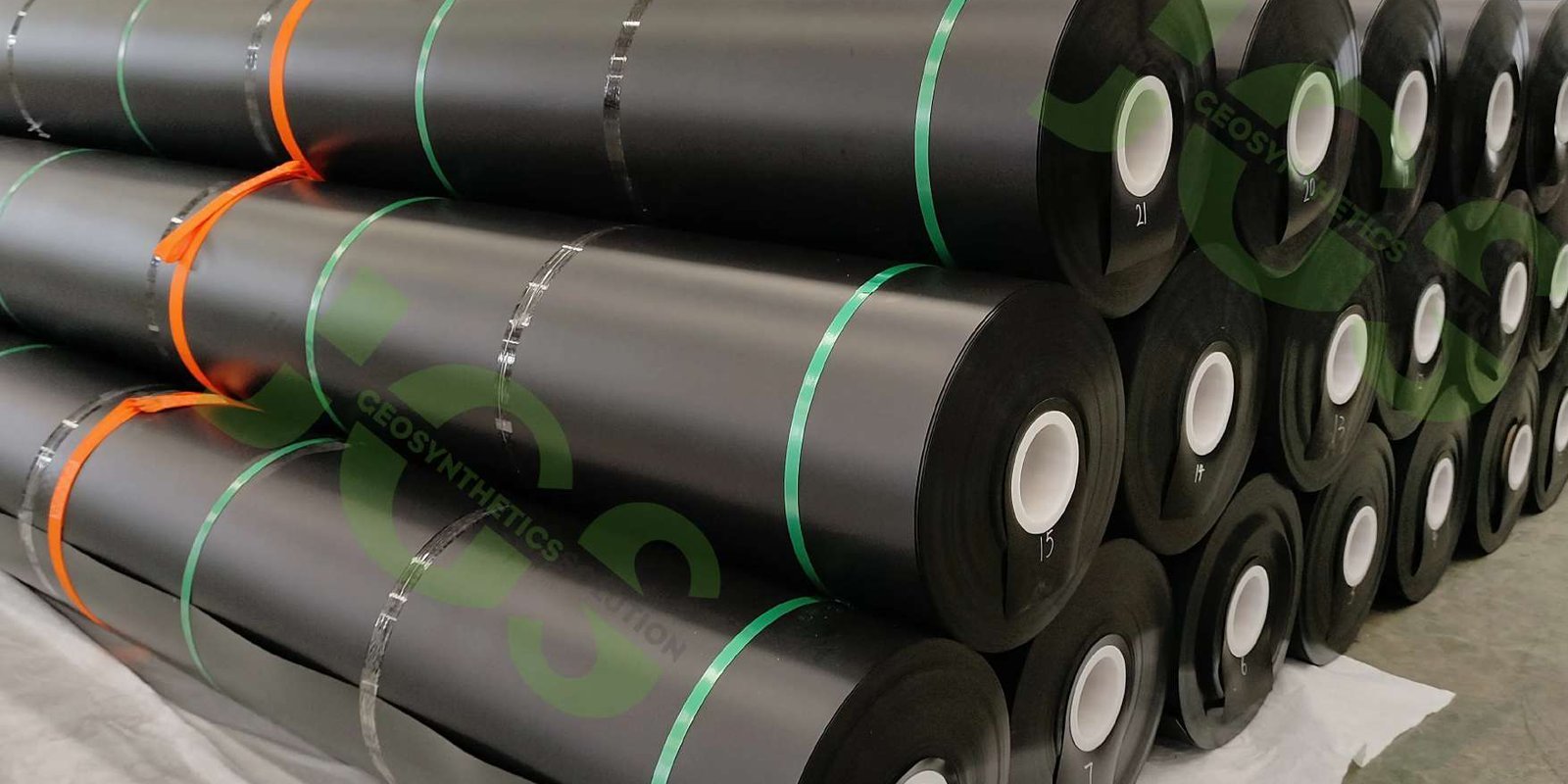
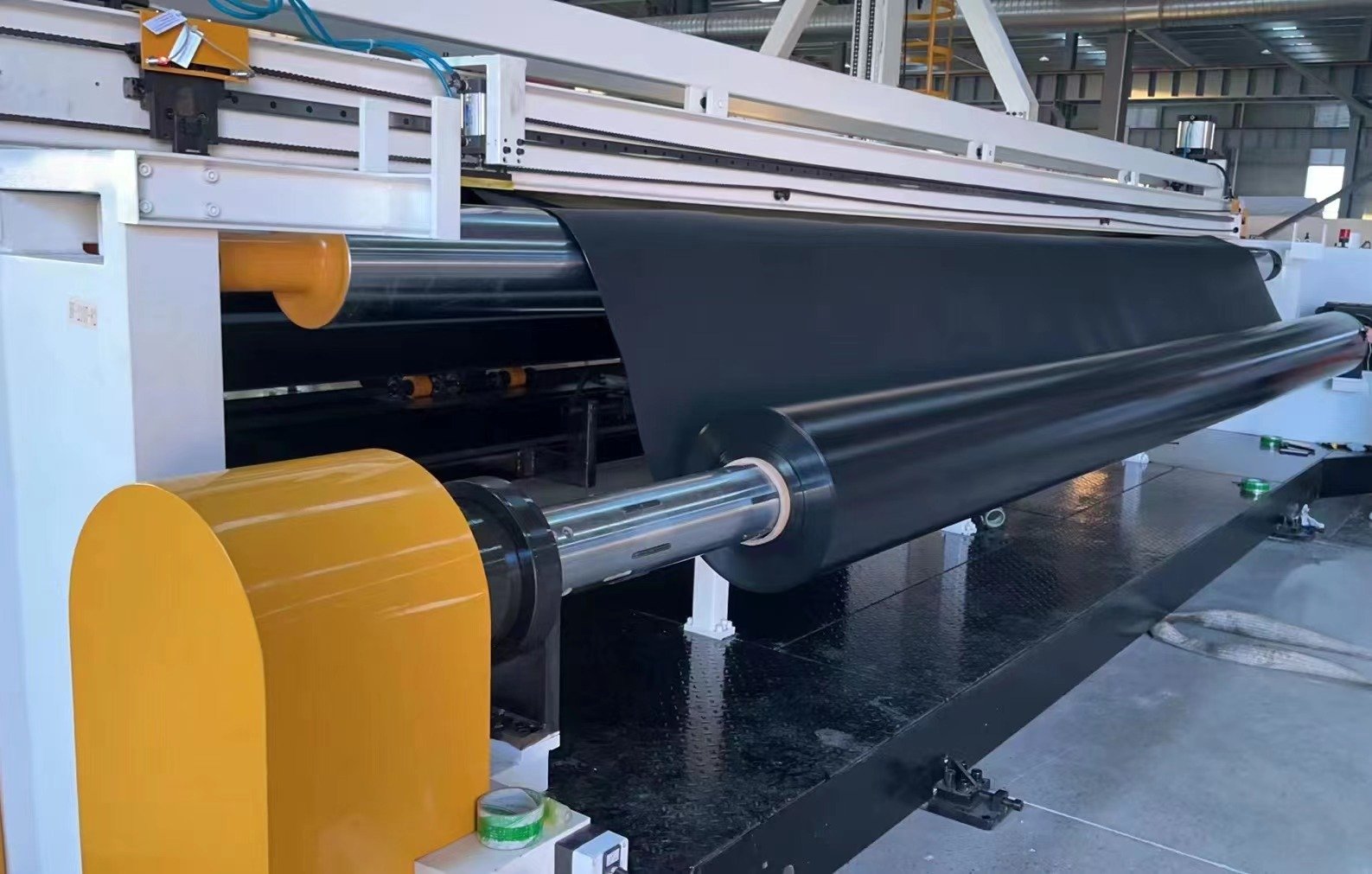
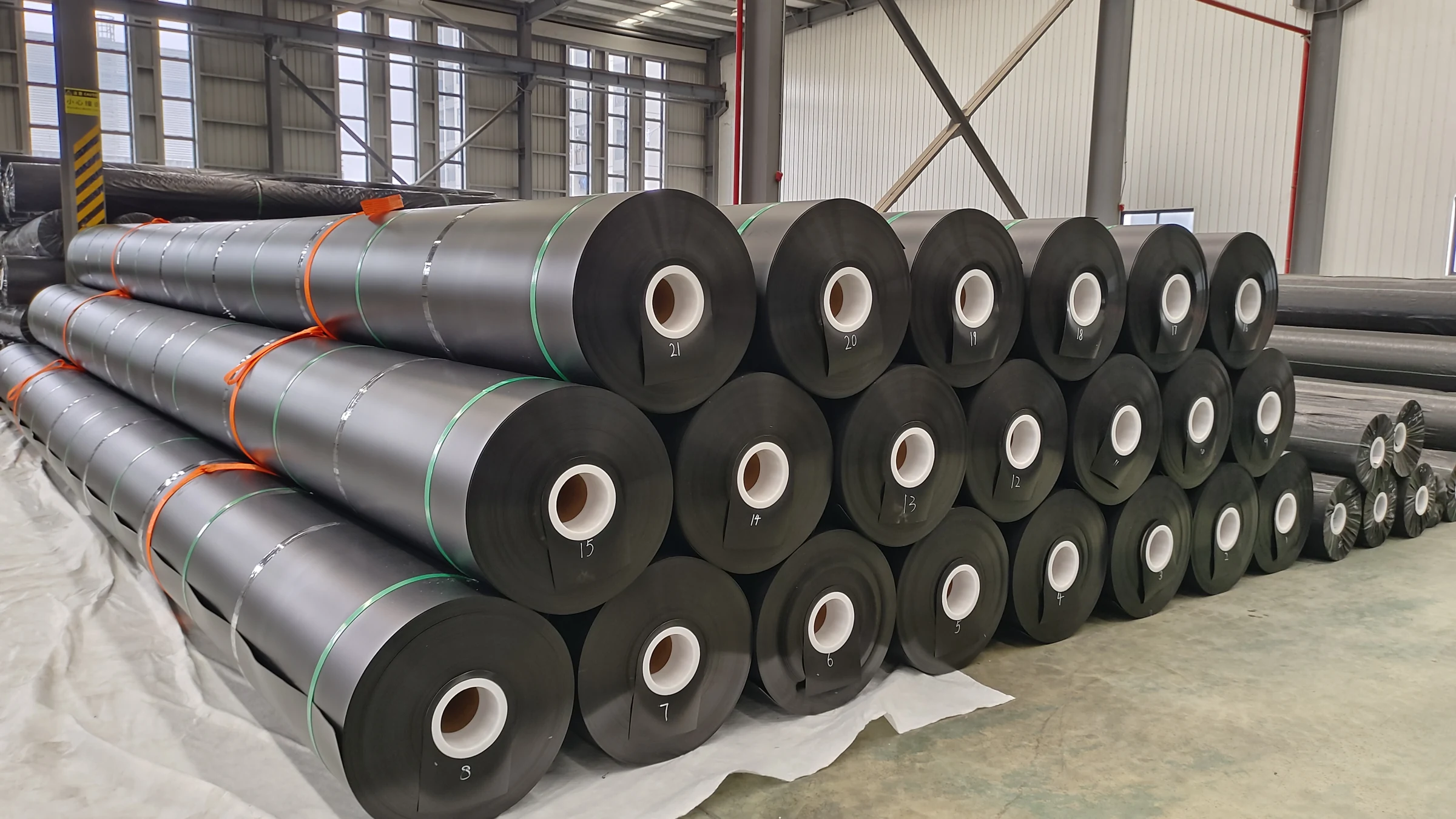
GRI-GM13 liners for landfill bases, side slopes and caps — extruded from 100% virgin resin, batch-tested in our own in-house laboratory, and loaded for export from our Zhaoqing factory.
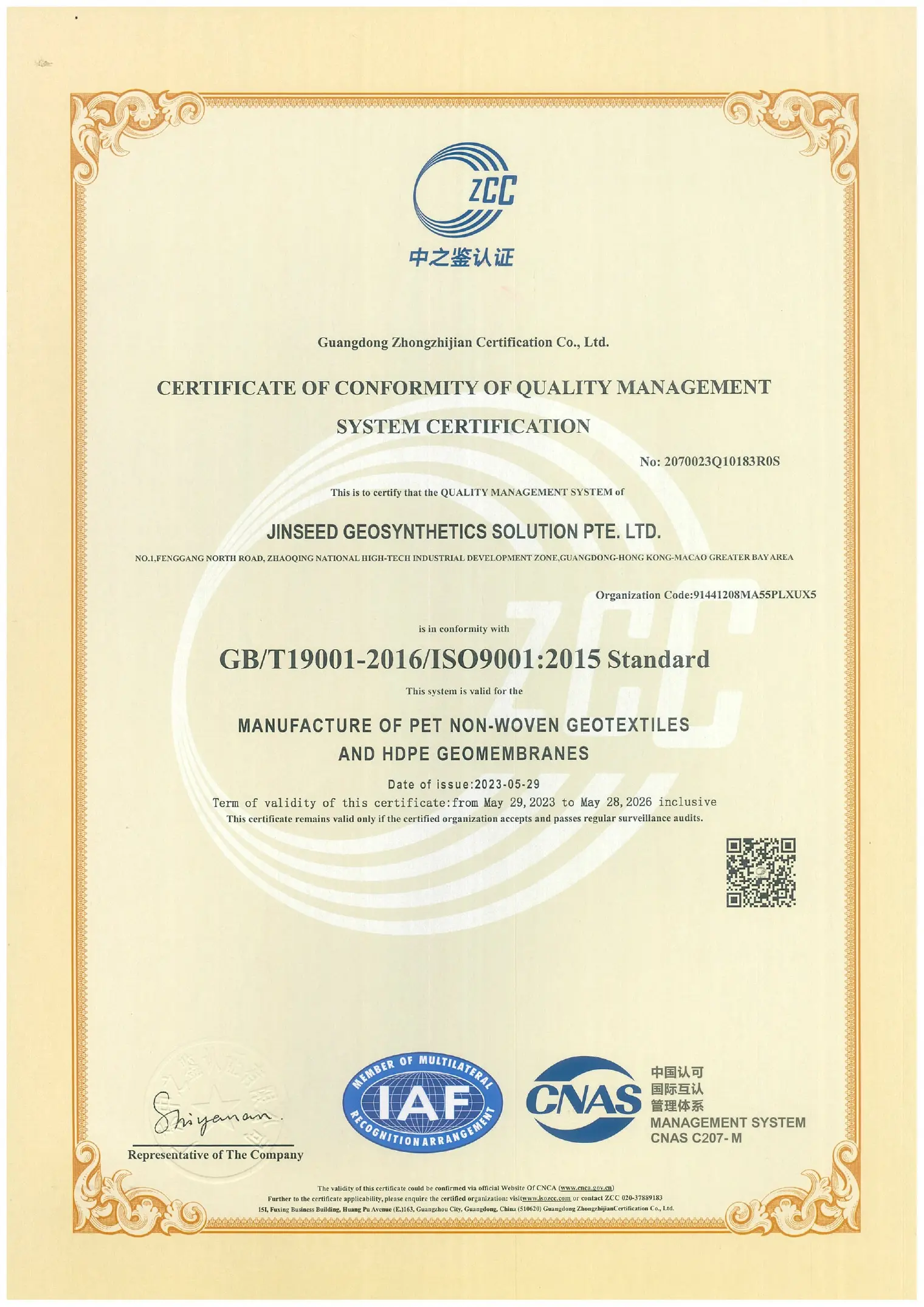
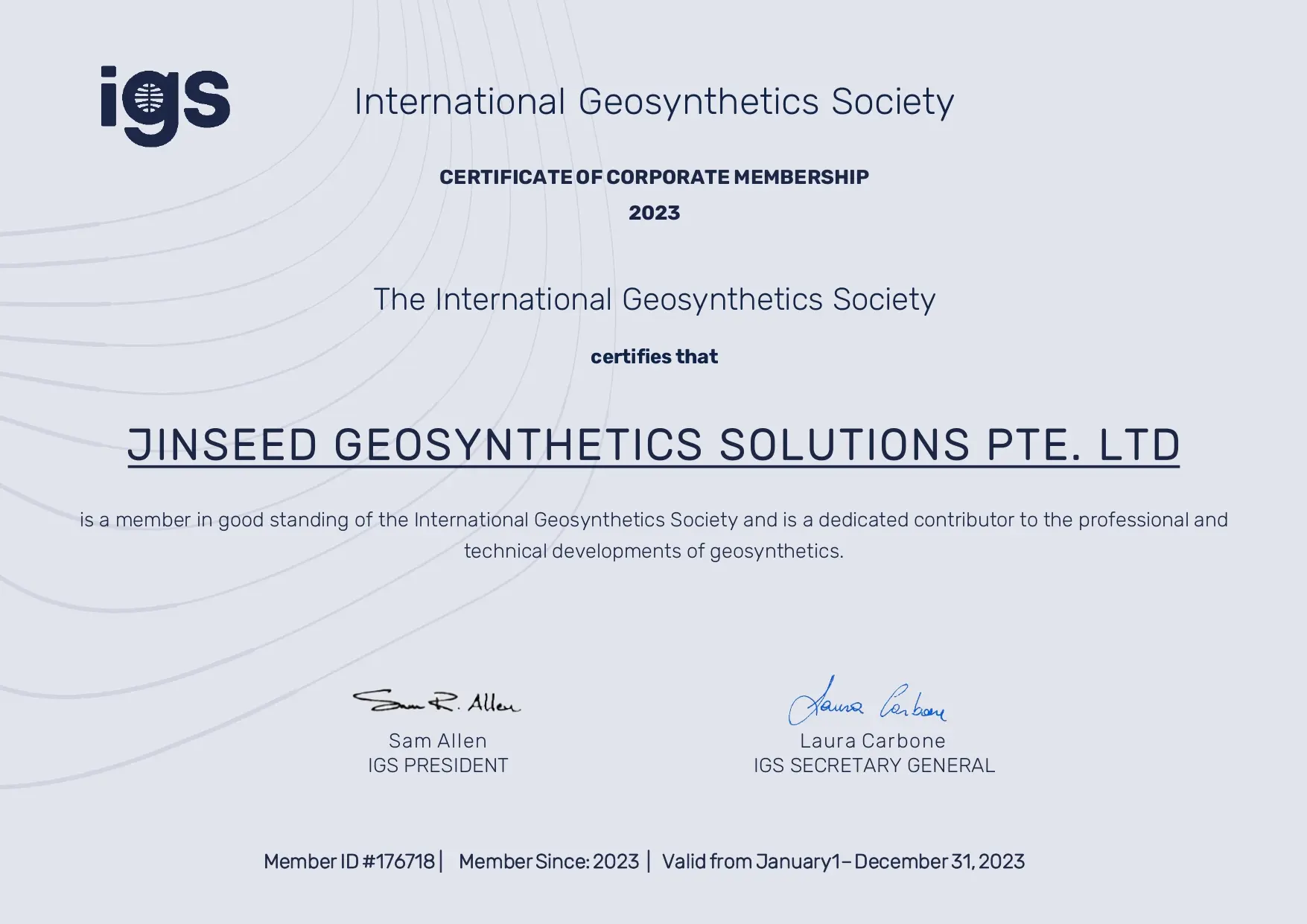
ISO 9001:2015 certifiedIGS Corporate Memberin-house laboratory
15+Years in business
30M+ m²Supplied every year
50+Countries we ship to
20,000tHDPE capacity per year
One landfill, three lining jobs
The base, the slopes and the cap ask different things from a liner. We make all three — and we will tell you honestly when a cheaper build-up is enough.
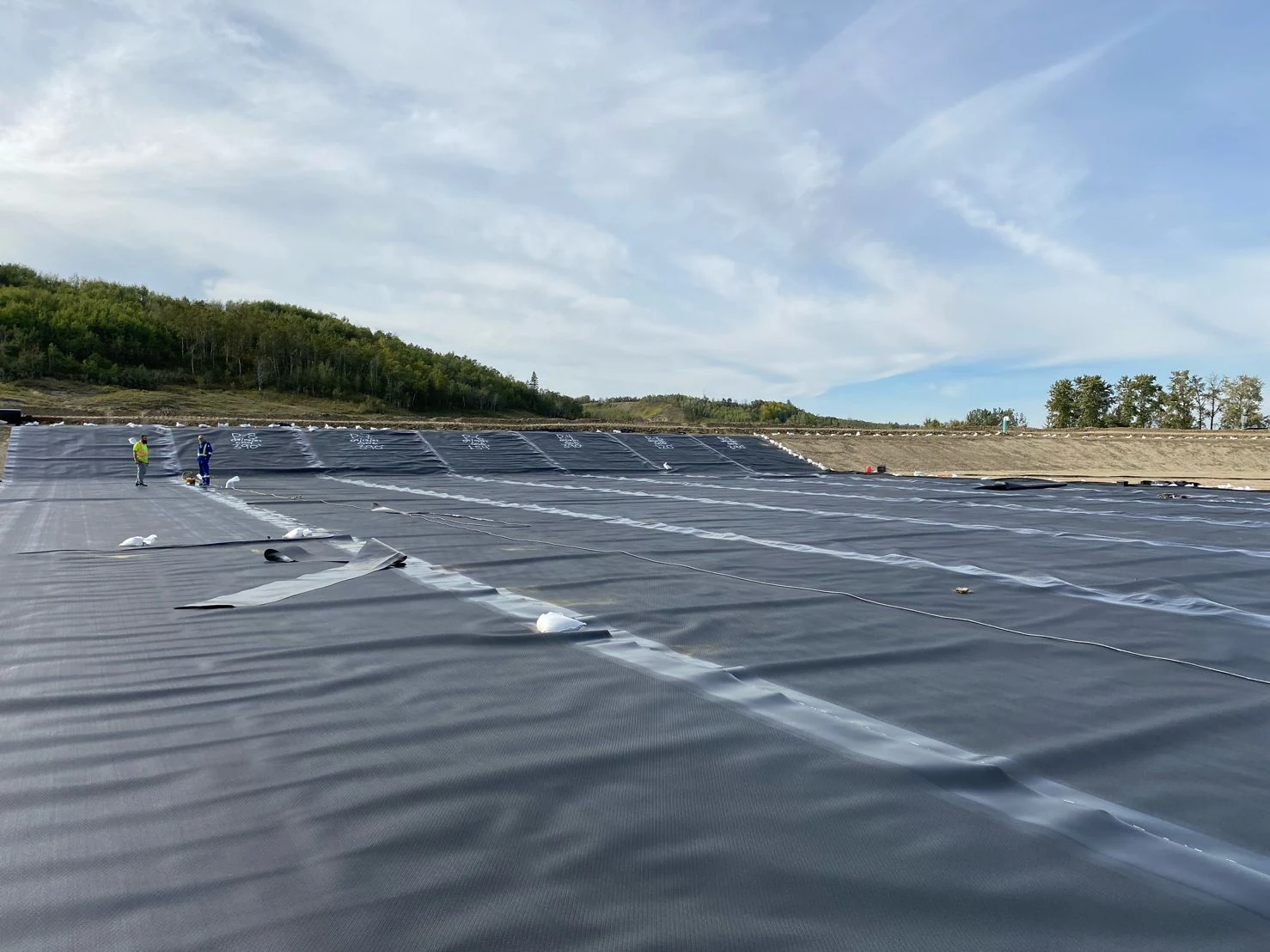
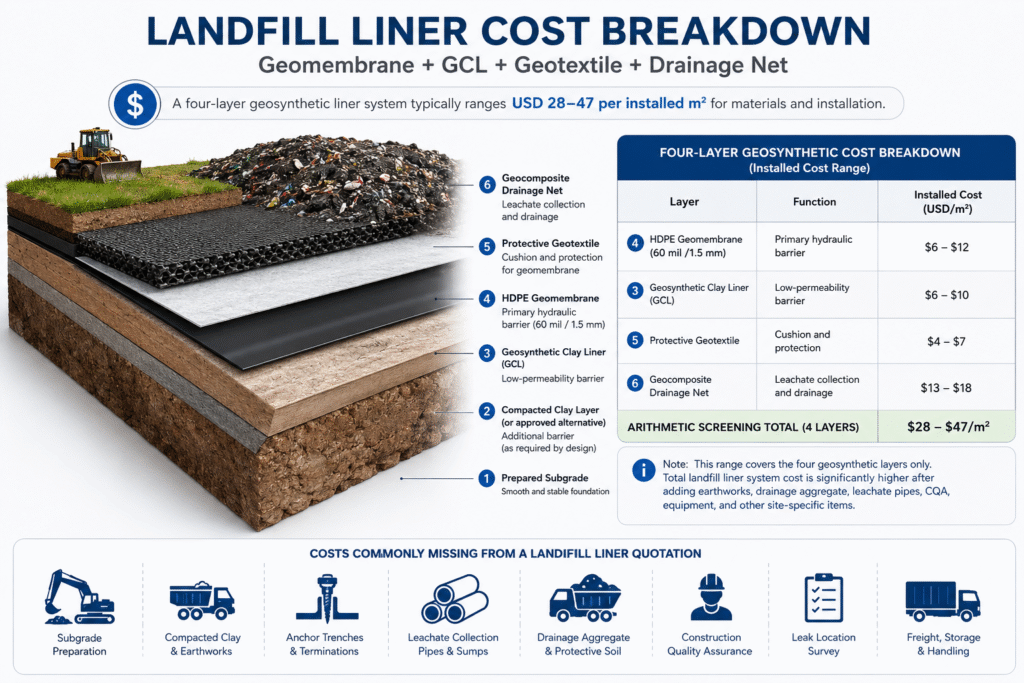
Base liner — smooth HDPE
Smooth sheet on the prepared subgrade, where tensile strength and fast welding matter most. The US EPA Subtitle D benchmark sets 1.5 mm as the minimum liner for municipal solid waste.
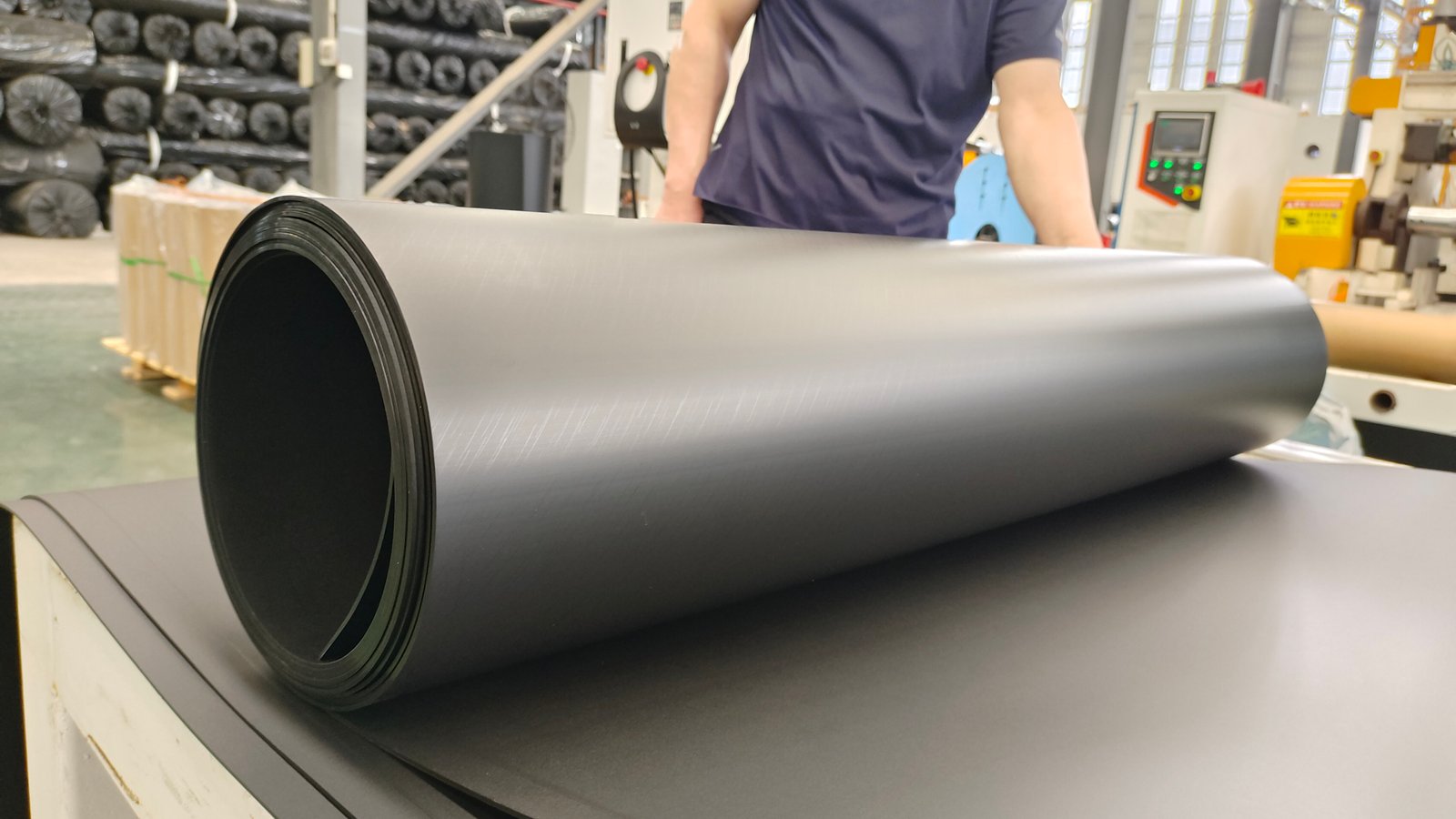
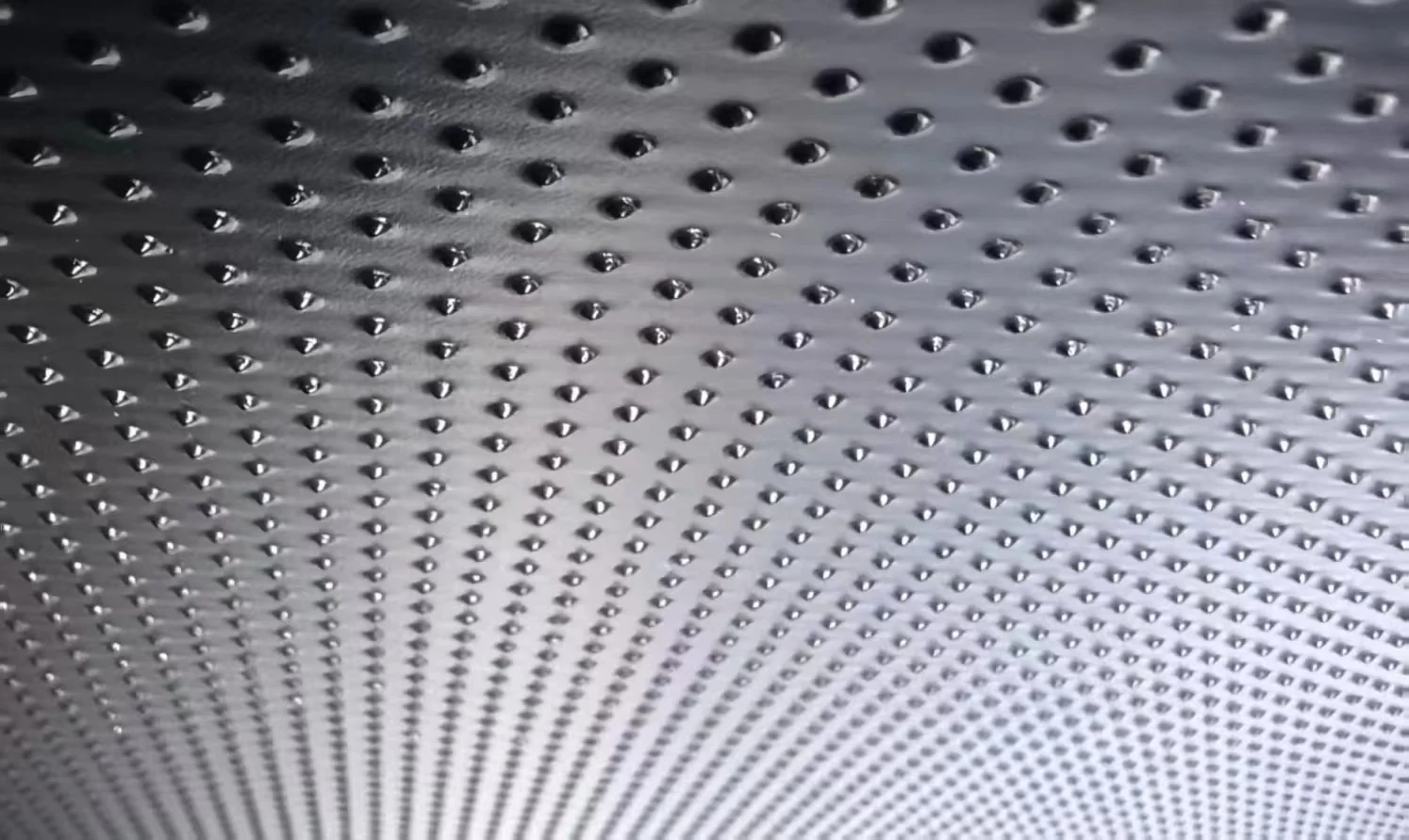
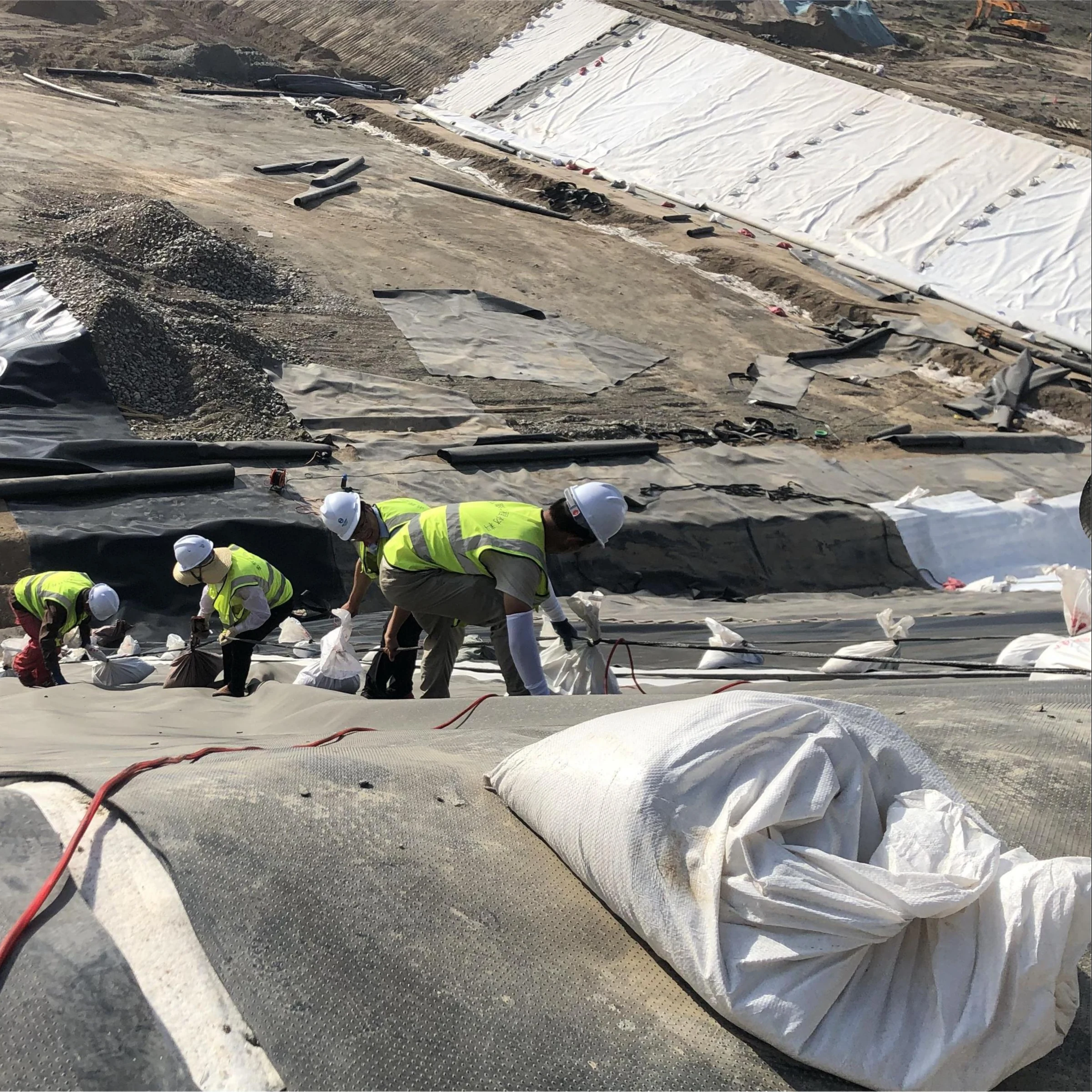
Asperity raises the interface friction angle so cover soil and drainage layers stay put on the slope. We leave 150 mm smooth edges on every textured roll so seam welding stays clean.
Final covers usually run thinner than the base. Where large settlement is expected, our LLDPE liner flexes further without cracking — tell us your closure design and we will match it.
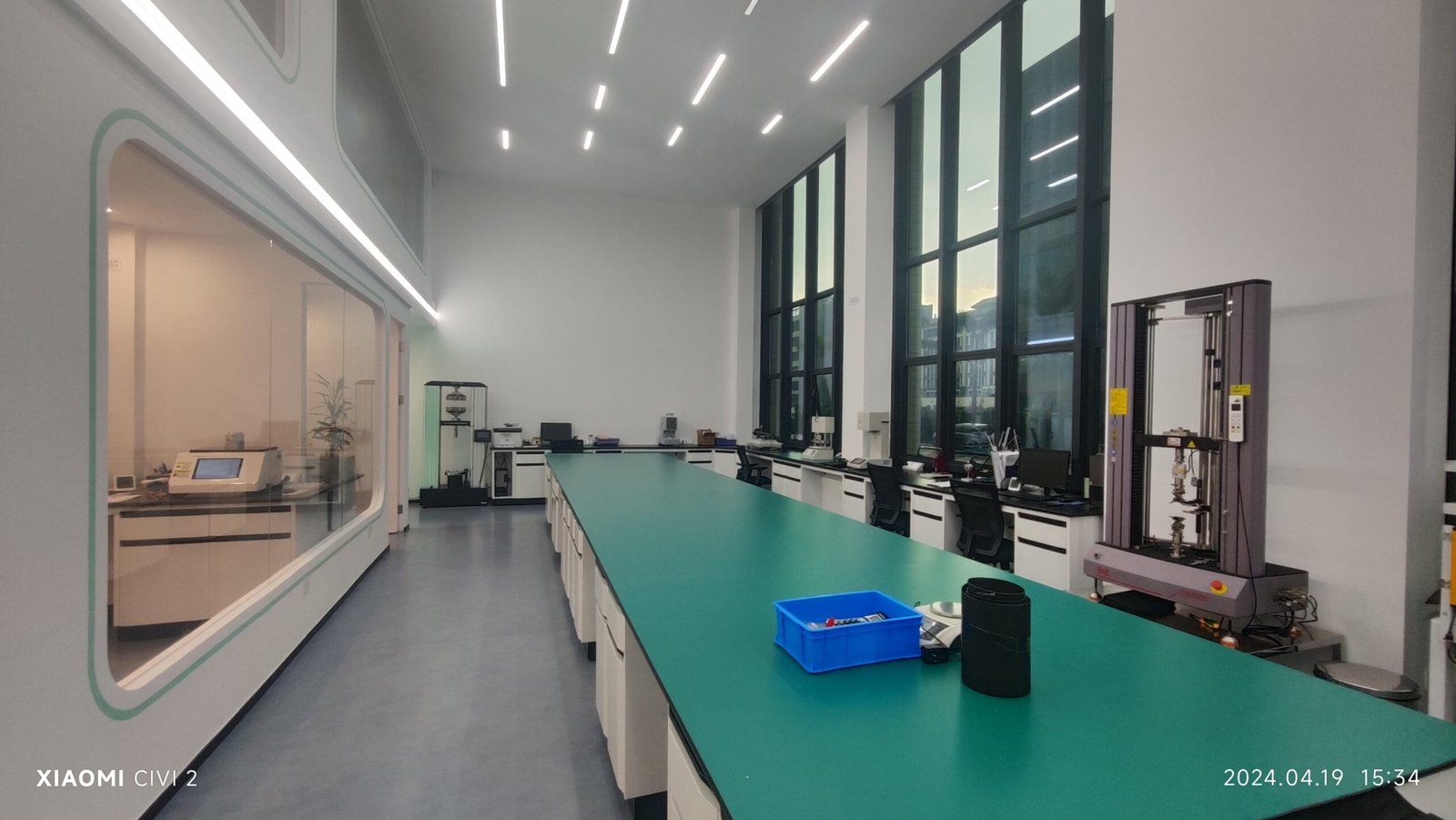
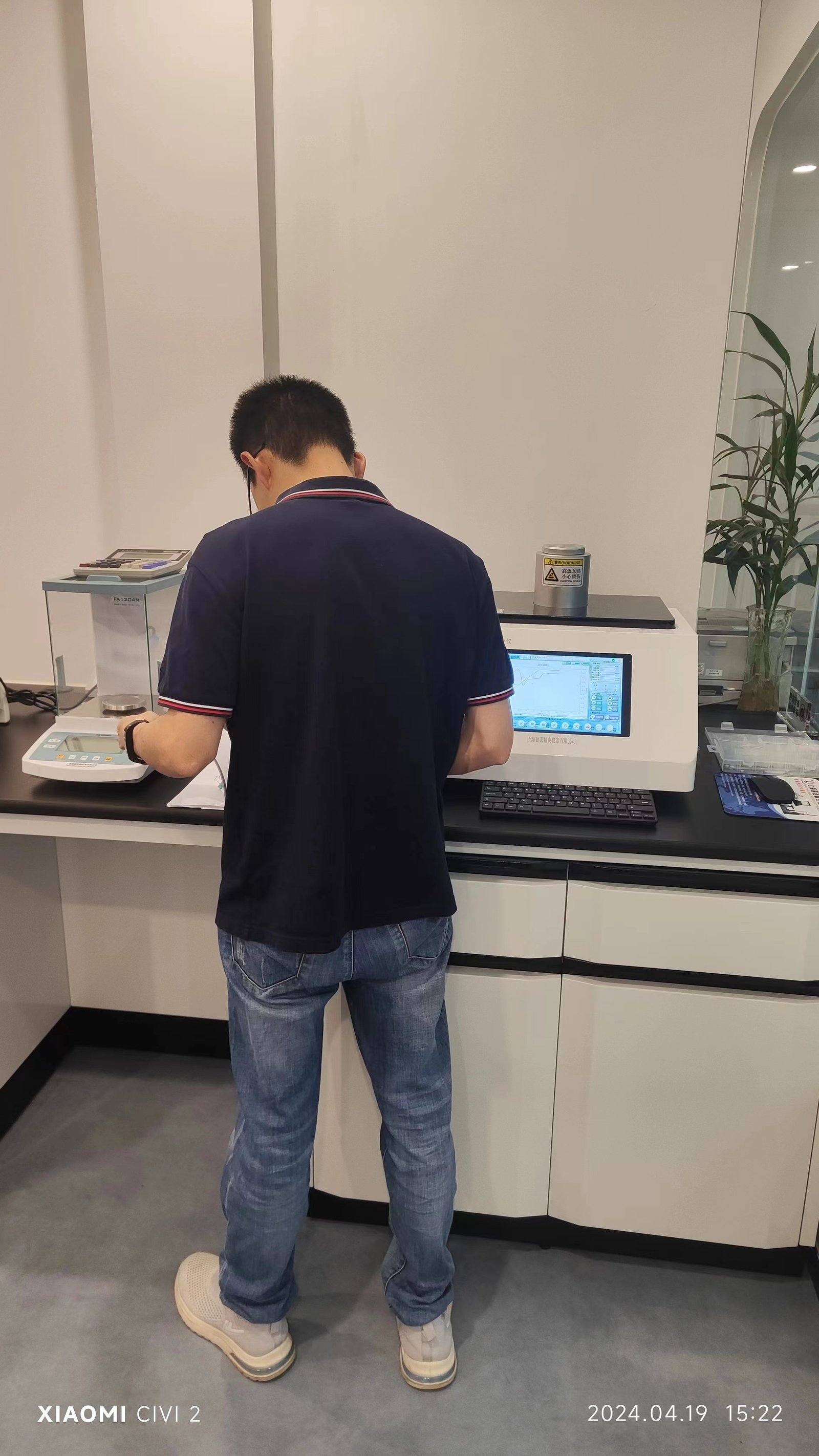
Every batch runs through our own in-house laboratory. These are the numbers we print on the test report — not a brochure promise.
Parameter
Test standard
Jinseed value
Thickness tolerance
GRI-GM13 allows ±10%
±3% on every roll
Stress crack resistance
ASTM D5397
>2,000 hours
Oxidative induction, HP-OIT
ASTM D5885
>600 minutes
Oxidative induction, std OIT
ASTM D3895
>100 minutes
Carbon black content
ASTM D4218
2.0–3.0%
Each roll carries a unique ID linked to its batch report. BTTG or TRI Environmental can witness sampling before shipment — the cost is small next to a failed cell.
Built for leachate, not just water
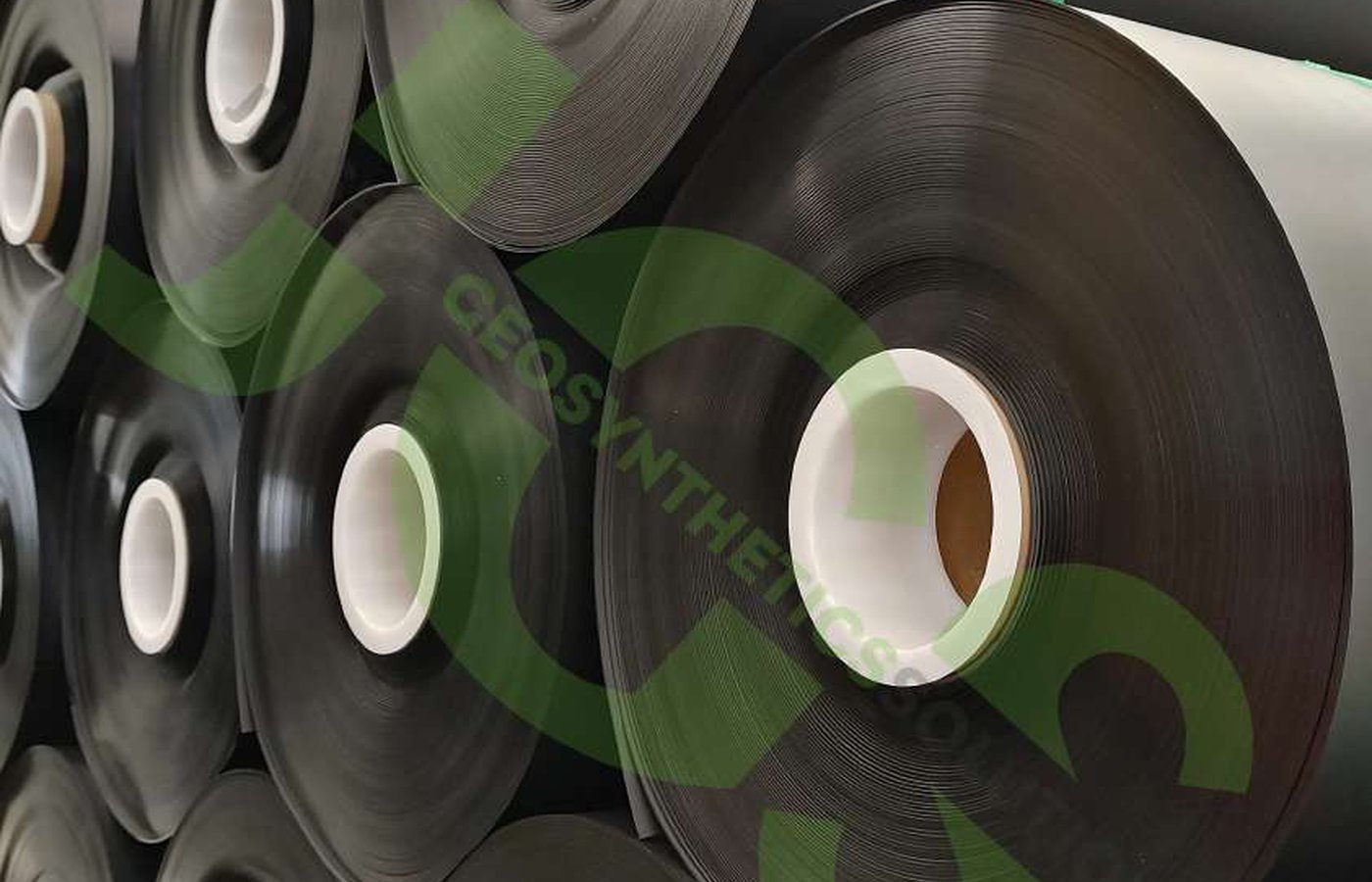
100% virgin resin, COA per batch
We buy only Sabic, Chevron Phillips and Borealis resin. No recycled content — recycled polymer is where premature brittle failure starts.
pH 1–13 chemical range
HDPE stays inert against the acids and alkalis that landfill leachate carries, including the acidic phase of young waste.
UV resistance while the cell waits
Over 60% strength retention after 1,600 hours of UV exposure (ASTM D7238) — the sheet survives the months between installation and cover.
50–100-year buried service life
Once buried and shielded from UV, HDPE geomembrane carries a design service life of 50 to 100 years in landfill base service.
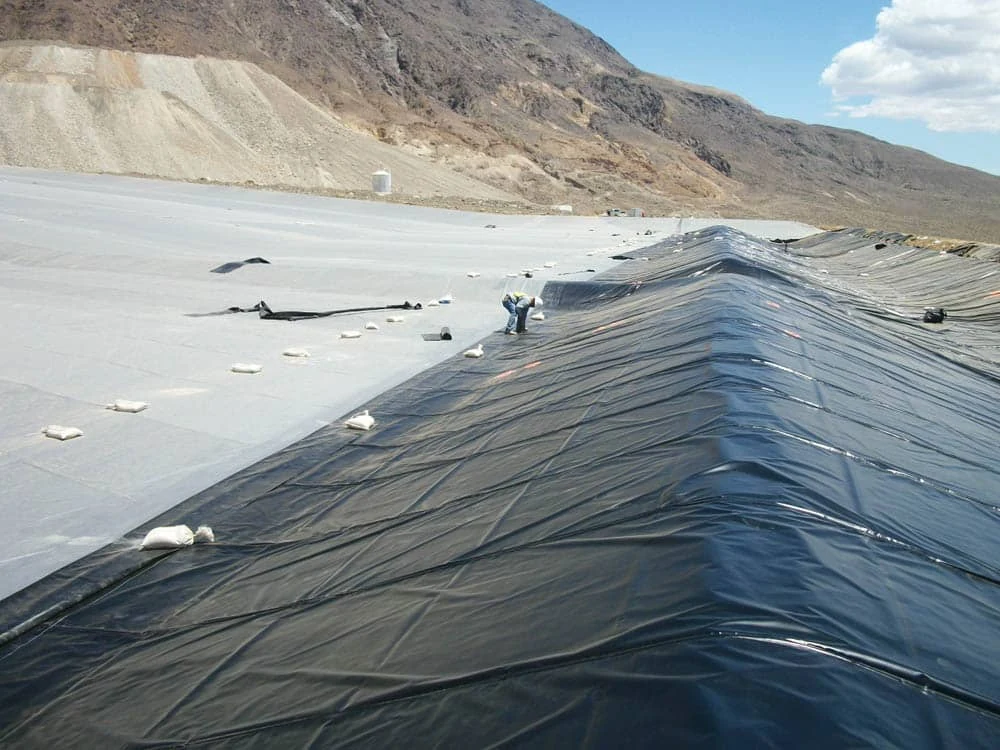
Municipal solid waste · Southeast Asia
450,000 m²
2.0 mm double-textured HDPE for a municipal landfill expansion — our largest single landfill order to date.
120 containers, on schedule
Production and loading were planned together, so the site never waited for material.
100% third-party seam testing passed
Every destructive seam sample passed independent testing before cover placement.
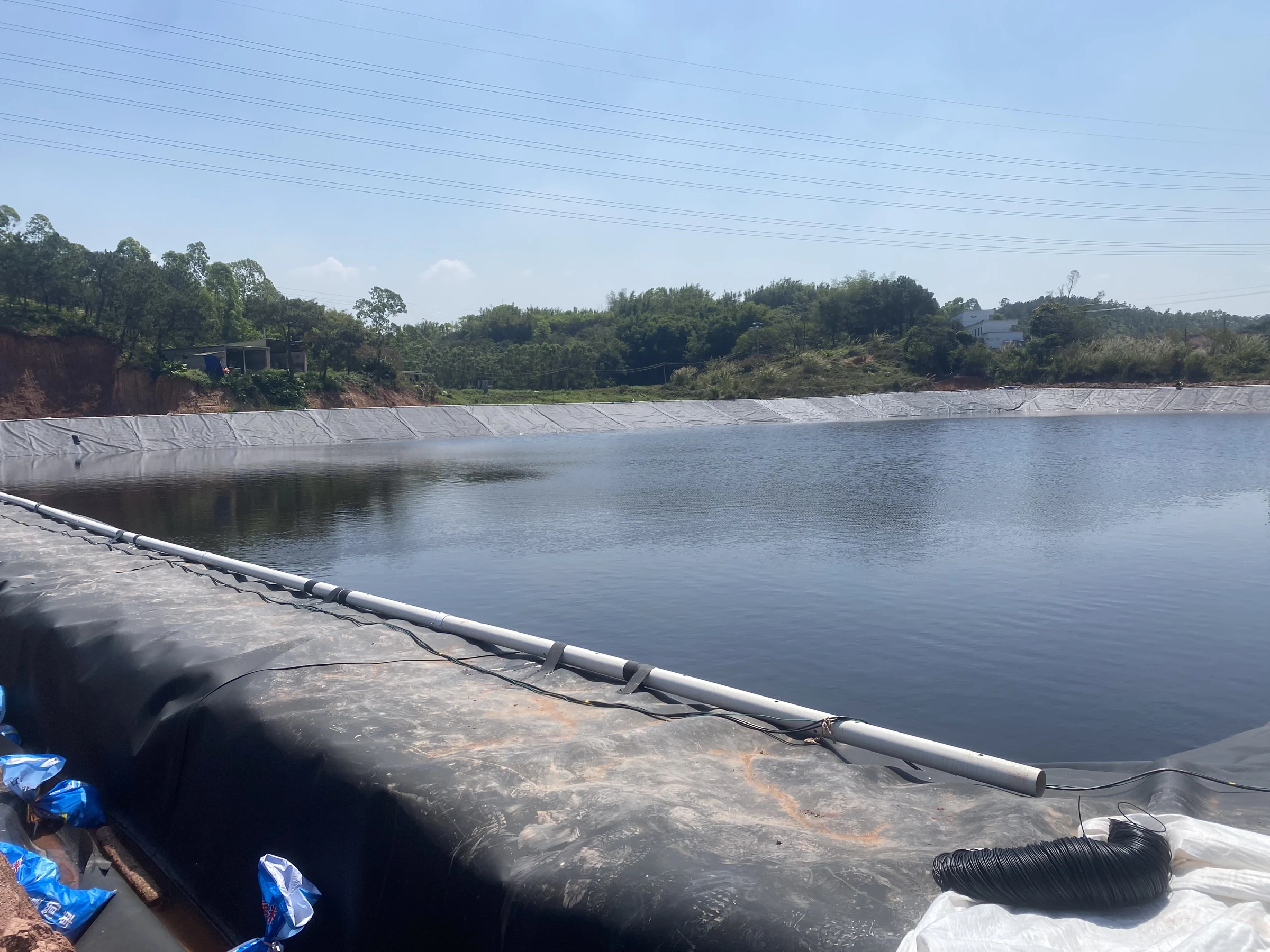
200,000 m²
1.5 mm smooth HDPE containing highly acidic leachate at an industrial mining tailings facility — the same resin system your landfill liner is extruded from.
Seams decide whether a liner works
A perfect sheet with a bad weld still leaks. We engineer the seam count down before your order ships.
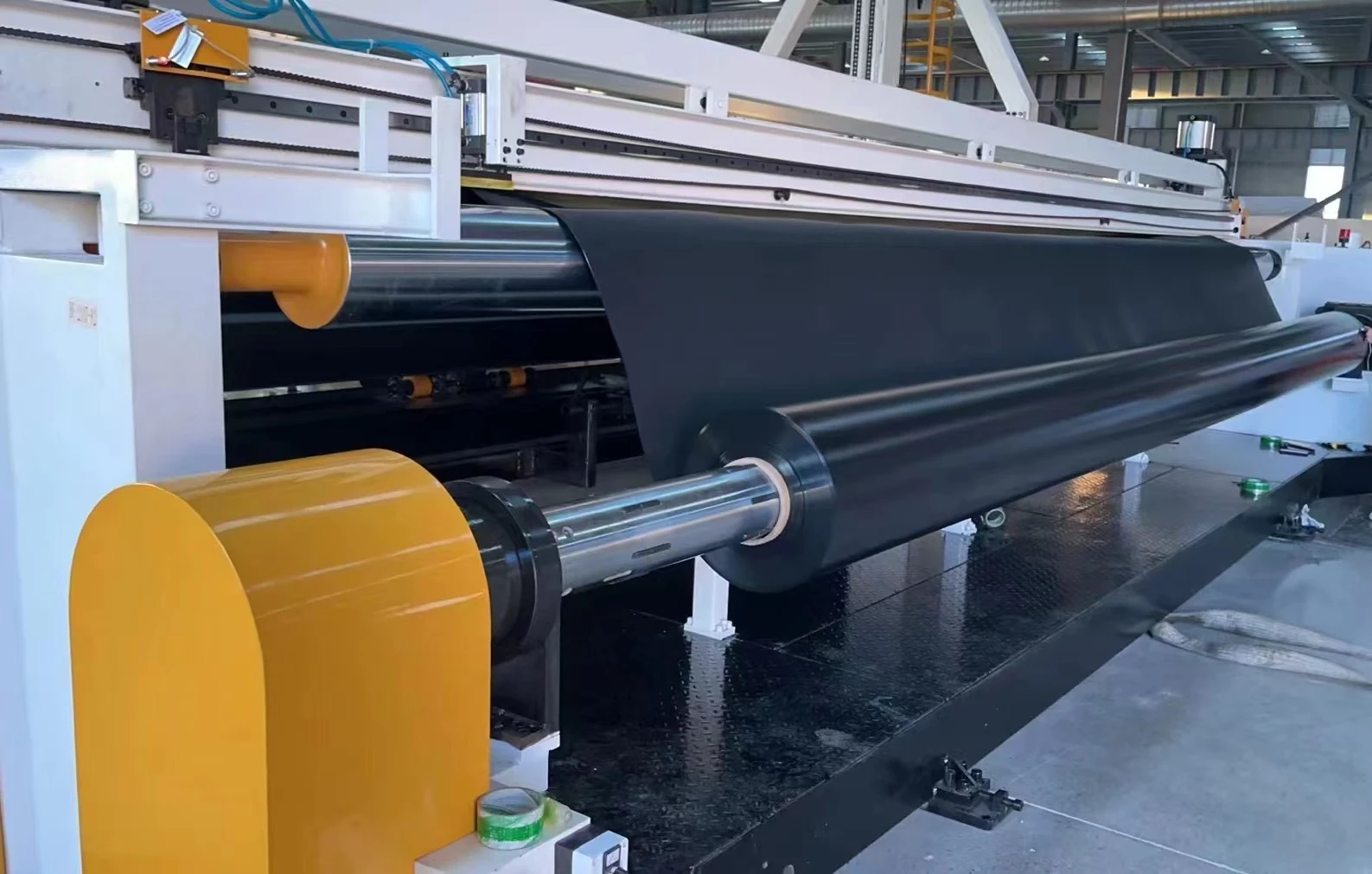
Longer rolls, fewer seams
Custom roll lengths match your panel layout. Fewer field seams mean less welding labor and fewer leak paths.
Double hot-wedge welding
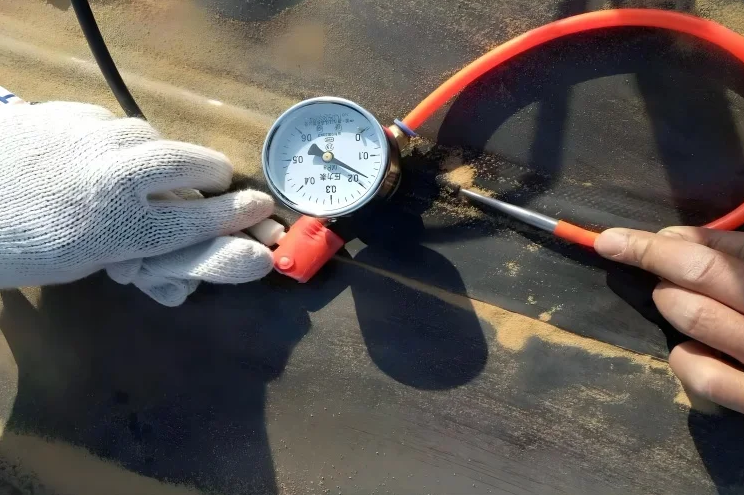
Twin-track seams leave an air channel between the welds, so every seam can be pressure-tested before covering.
Parameters in the container
Every order ships with our installation guide — welding temperatures, overlap widths, anchor trench details and QC test steps.
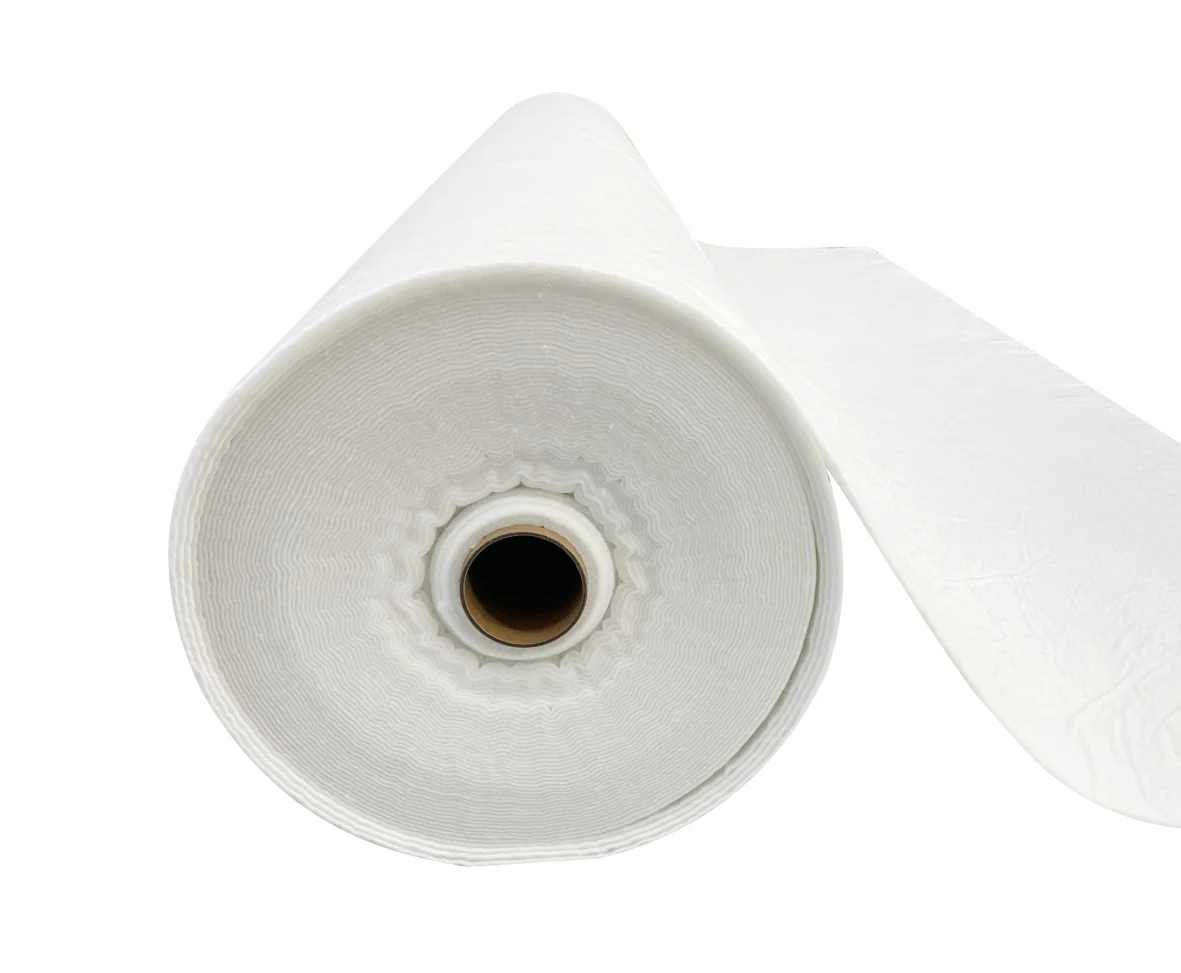
A 600 g/m² PET non-woven geotextile cushion between the liner and the drainage layer absorbs point loads from stone and waste. It costs a fraction of the membrane and removes the most common puncture risk.
Same factory, one shipment
Liner and cushion load in the same container — one freight cost, one set of documents.
Matched to the membrane
We size the cushion weight to your waste depth and drainage stone grade, not to a catalog page.
Use smooth HDPE on the flat base — it carries higher tensile strength and welds fast. Use textured HDPE on side slopes, where the rough surface raises the interface friction angle (up to 30°) and stops cover soil from sliding. Most landfill orders mix the two, and we leave 150 mm smooth edges on textured rolls so seam welding stays clean.
What thickness do landfills usually specify?
1.5 mm and 2.0 mm cover most municipal solid waste projects. The US EPA Subtitle D benchmark sets 1.5 mm as the minimum liner for MSW landfills, and many designers move to 2.0 mm on the base where leachate head and puncture risk are highest. Caps and temporary covers often run thinner. Tell us your design standard and we will confirm the matching spec.
How many rolls fit in one container?
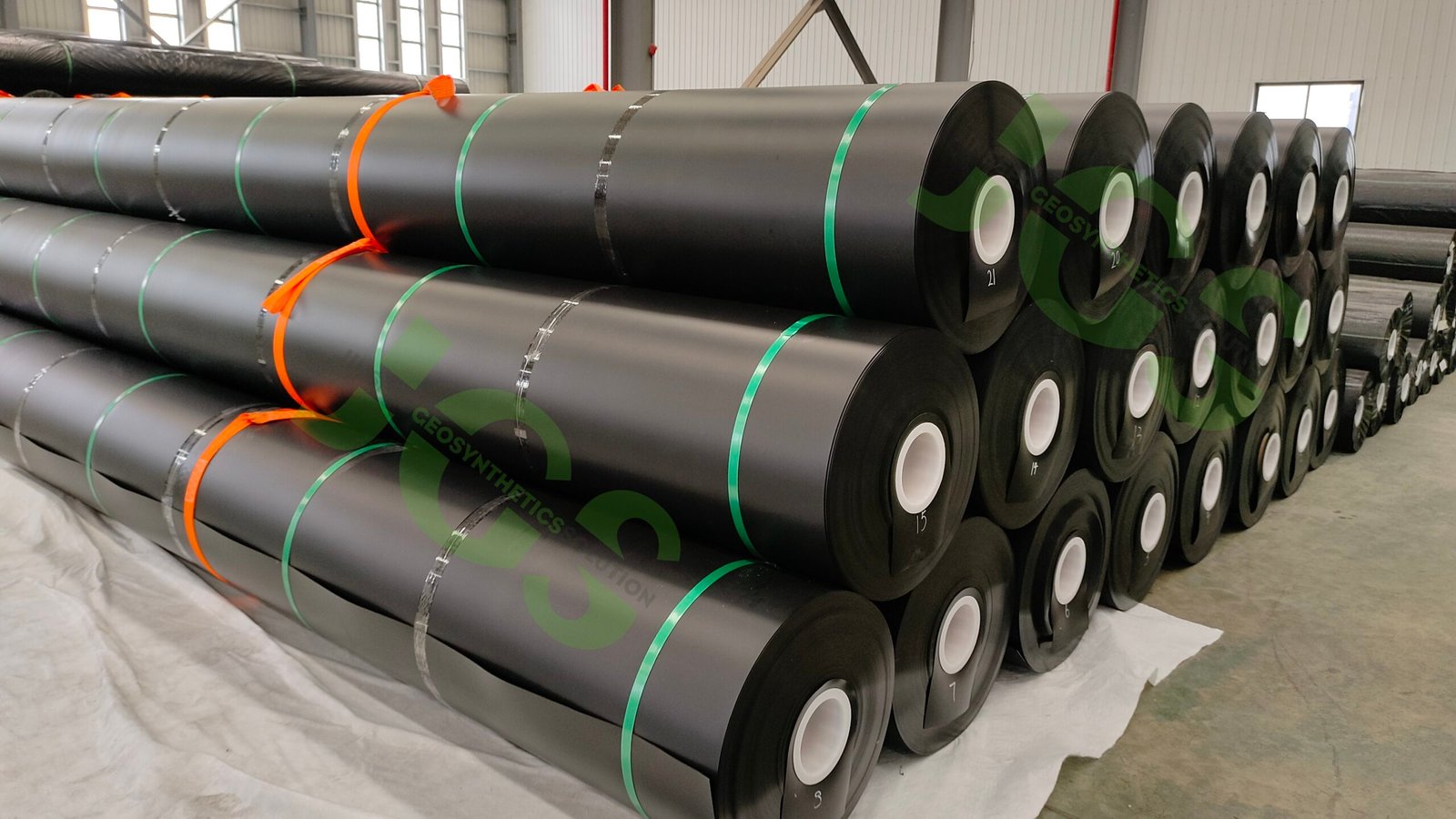
At 2.0 mm thickness with roll widths of 5.8 to 8.0 m, we load 18 to 20 rolls per 40'HC container. Loading is planned before production, and every container ships with a loading report, photos and seal numbers.
Can you make custom roll lengths?
Yes. Longer rolls mean fewer field seams, less welding labor and fewer leak paths on site. Custom lengths are cut on the production line with no change to the material spec — send your panel layout or let us plan the rolls for you.
What test documents come with the order?
Every order includes the Technical Data Sheet and batch test data covering thickness, tensile properties, puncture resistance and OIT, plus the resin COA for the batch. Rolls carry unique IDs linked to their quality reports, and third-party witness testing by BTTG or TRI Environmental can be arranged before shipment.
How long does an HDPE landfill liner last?
Buried in a landfill base and shielded from UV, HDPE geomembrane carries a design service life of 50 to 100 years, and our liners are covered by a 10 to 20 year warranty depending on the project specification. The two things that actually shorten liner life are poor seaming and a missing cushion layer — both avoidable, and we can show you how.
Send your cell drawing. We'll spec and price it.
One email gets you the specification check, roll plan, batch test data sample and a container-level price.

 Geomembrane Liners
Containment systems for demanding engineering projects.
Geomembrane Liners
Geomembrane Liners
Containment systems for demanding engineering projects.
Geomembrane Liners
 HDPE Geomembrane
Smooth and textured HDPE
HDPE Geomembrane
Smooth and textured HDPE
 LLDPE Geomembrane
Flexible lining applications
LLDPE Geomembrane
Flexible lining applications
 Textured Geomembrane
Higher friction for slopes
Textured Geomembrane
Higher friction for slopes
 Landfill Liner System
Landfill containment materials
Geotextile
Landfill Liner System
Landfill containment materials
Geotextile
 PET Non-Woven Geotextile
Protection and filtration
Geotextile ManufacturerQuality
About
Contact
Request a Quote
PET Non-Woven Geotextile
Protection and filtration
Geotextile ManufacturerQuality
About
Contact
Request a Quote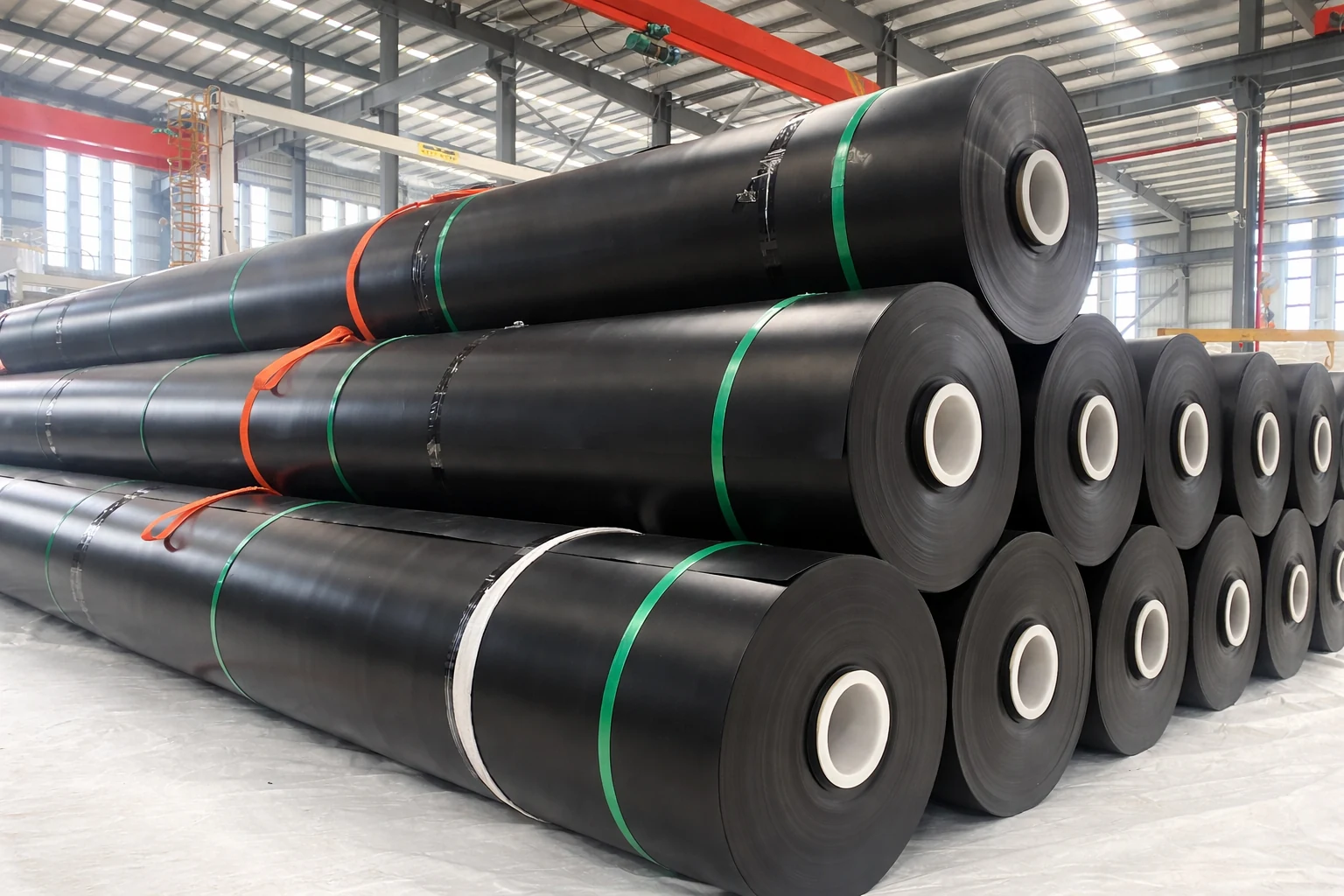 Geomembrane Liners
Containment systems for demanding engineering projects.
Geomembrane Liners
Geomembrane Liners
Containment systems for demanding engineering projects.
Geomembrane Liners
 HDPE Geomembrane
Smooth and textured HDPE
HDPE Geomembrane
Smooth and textured HDPE
 LLDPE Geomembrane
Flexible lining applications
LLDPE Geomembrane
Flexible lining applications
 Textured Geomembrane
Higher friction for slopes
Textured Geomembrane
Higher friction for slopes
 Landfill Liner System
Landfill containment materials
Geotextile
Landfill Liner System
Landfill containment materials
Geotextile
 PET Non-Woven Geotextile
Protection and filtration
Geotextile Manufacturer
PET Non-Woven Geotextile
Protection and filtration
Geotextile Manufacturer