HDPE Geomembrane for Civil Engineering

Smooth and textured liners from 1.0 to 3.0 mm, in rolls up to 8 m wide. Made from 100% virgin resin in our own plant, tested to GRI-GM13, and already working under roads, tunnels and reservoirs in more than 50 countries.

ISO 9001 & ISO 14001 certified plant · IGS Corporate Member · batches verified by TRI Environmental

0+years making geomembrane
0M+ m²supplied every year
0+countries served
0 tannual HDPE capacity

Where civil projects use it

Four everyday jobs for our liners and geotextiles. Each links to a page or guide with the full details.

Workers fixing white geotextile inside a tunnel before the waterproofing membrane goes in

Tunnels & underground works

A geotextile cushion goes against the shotcrete, the membrane against the water. Fixed, hung and welded in place.

Tunnel installation guide
Geocells and liner being installed on a slope for erosion control

Slopes & erosion control

Geocells and geotextiles hold cover soil on the slope; a textured membrane underneath keeps water out.

Erosion control methods
HDPE liner installed around storage tanks as a secondary containment bund

Secondary containment

Tank farms and chemical stores: the liner is sized to the stored volume, with every penetration detailed before production.

What to put in the RFQ
Segmental block retaining wall built on reinforced soil

MSE walls & steep embankments

Reinforced-soil walls and 1:2.5 slopes need interface friction — that is exactly what the textured face is for.

Smooth vs textured
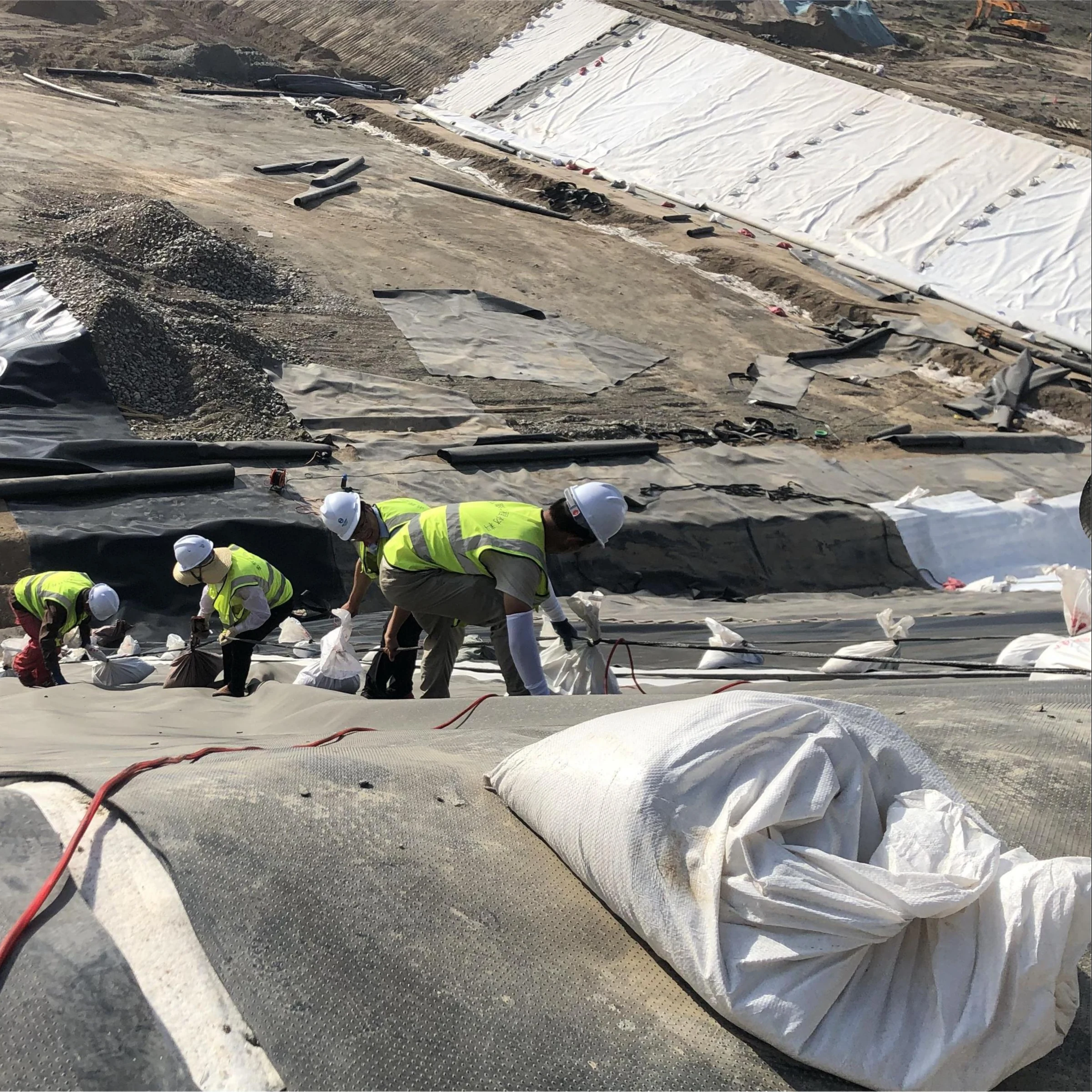
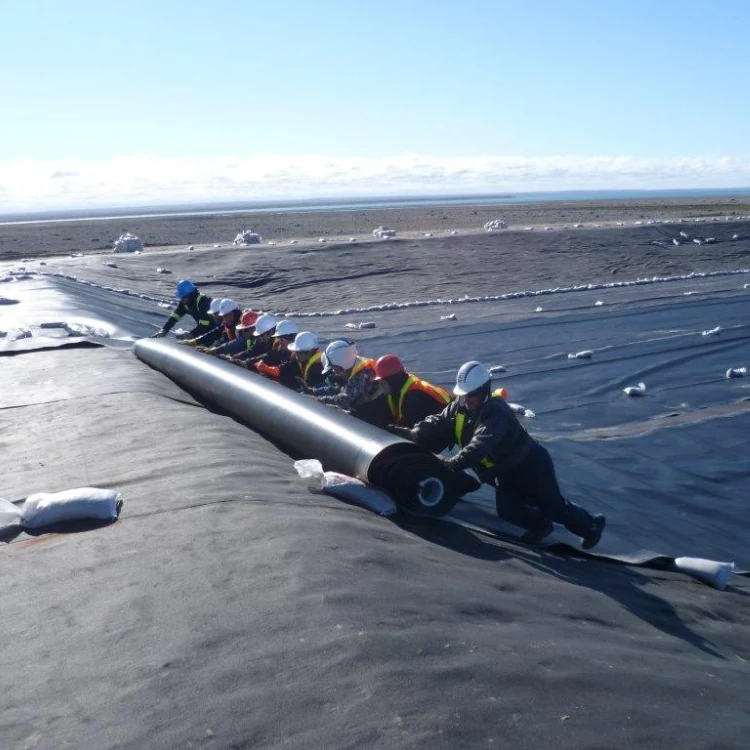
White geotextile and black geomembrane being rolled out over a prepared base on a road project

On roads and railways, the layers do the work

Separation under the base course

The geotextile keeps soft subgrade and crushed stone from mixing, so the base keeps its strength under traffic.

Ballast protection on rail beds

A fabric layer under the ballast stops pumping and keeps fines out of the drainage path.

Moisture barrier where specified

An HDPE membrane seals the formation against water and frost on cuttings and working platforms.

Recognized specifications

Road builds commonly specify AASHTO M288-17 for the geotextile and GRI-GM13 for the membrane — both covered by our standard test sets.

Geotextiles in road construction    Railway ballast separation

Four mechanisms, one lining system

The membrane blocks water. The textiles around it carry loads, filter fines and drain seepage. Most civil specs combine them.

Separation

Stops subgrade soil and base aggregate from mixing under repeated loading.

Less base stone for the same strength

Filtration & drainage

Lets water pass at a high flow rate while holding back fine soil particles.

AOS 0.05–0.5 mm · permittivity ≥ 1.5 s⁻¹

Reinforcement

Spreads concentrated loads over a wider area of soft ground.

Up to 200 kN/m woven · 40 kN/m biaxial geogrid

Containment

An impermeable barrier against liquid and gas migration into the ground.

K ≤ 1×10⁻¹³ cm/s · stress-crack resistance > 500 h

What we make for civil work

Three product families cover the barrier, protection and filtration layers — all produced in our Zhaoqing plant, not traded.

Black HDPE geomembrane sheet corner showing smooth surface and thickness

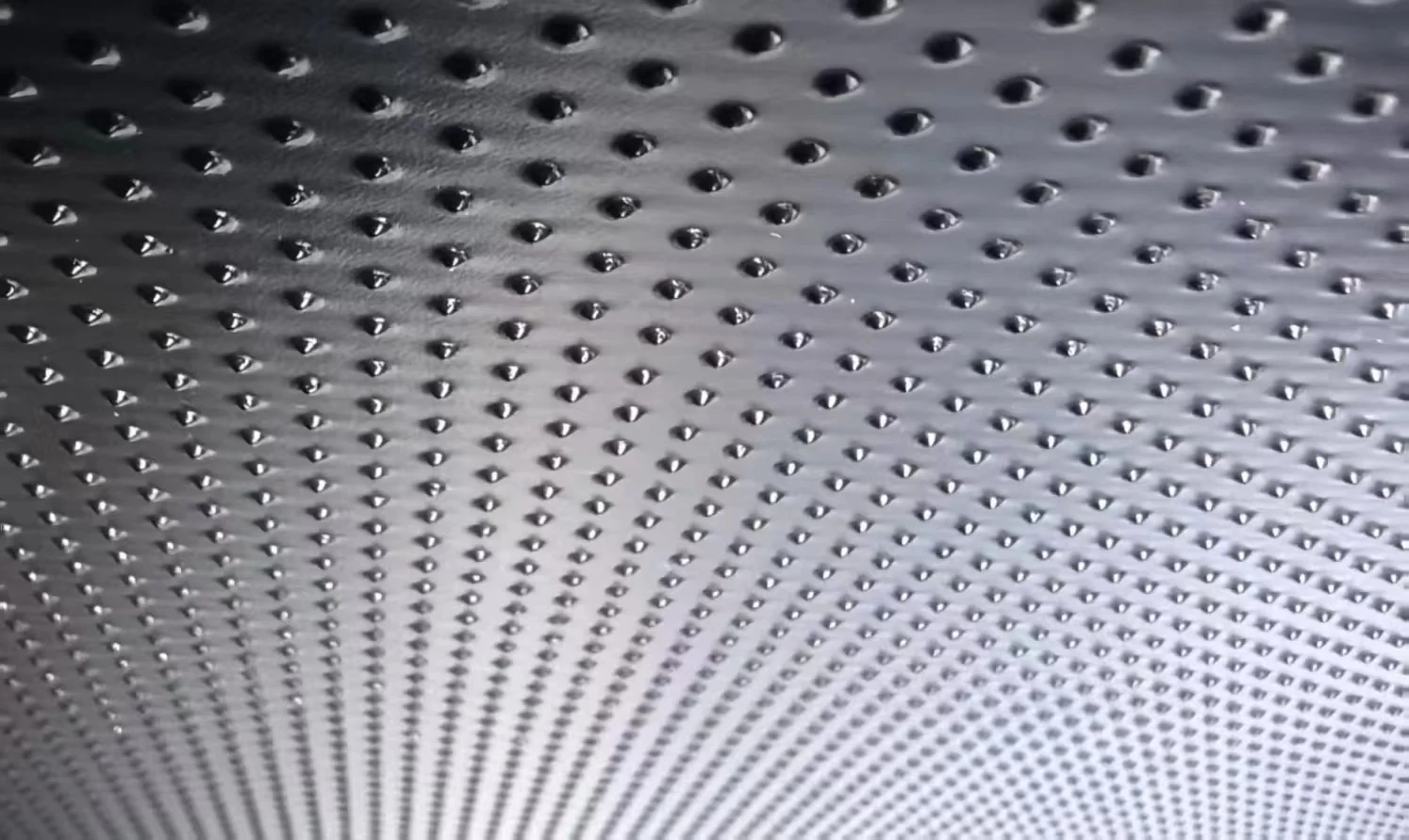
HDPE geomembrane, smooth & textured

GRI-GM131.0–3.0 mmRolls to 8 mVirgin resin
HDPE liner details   Textured liner
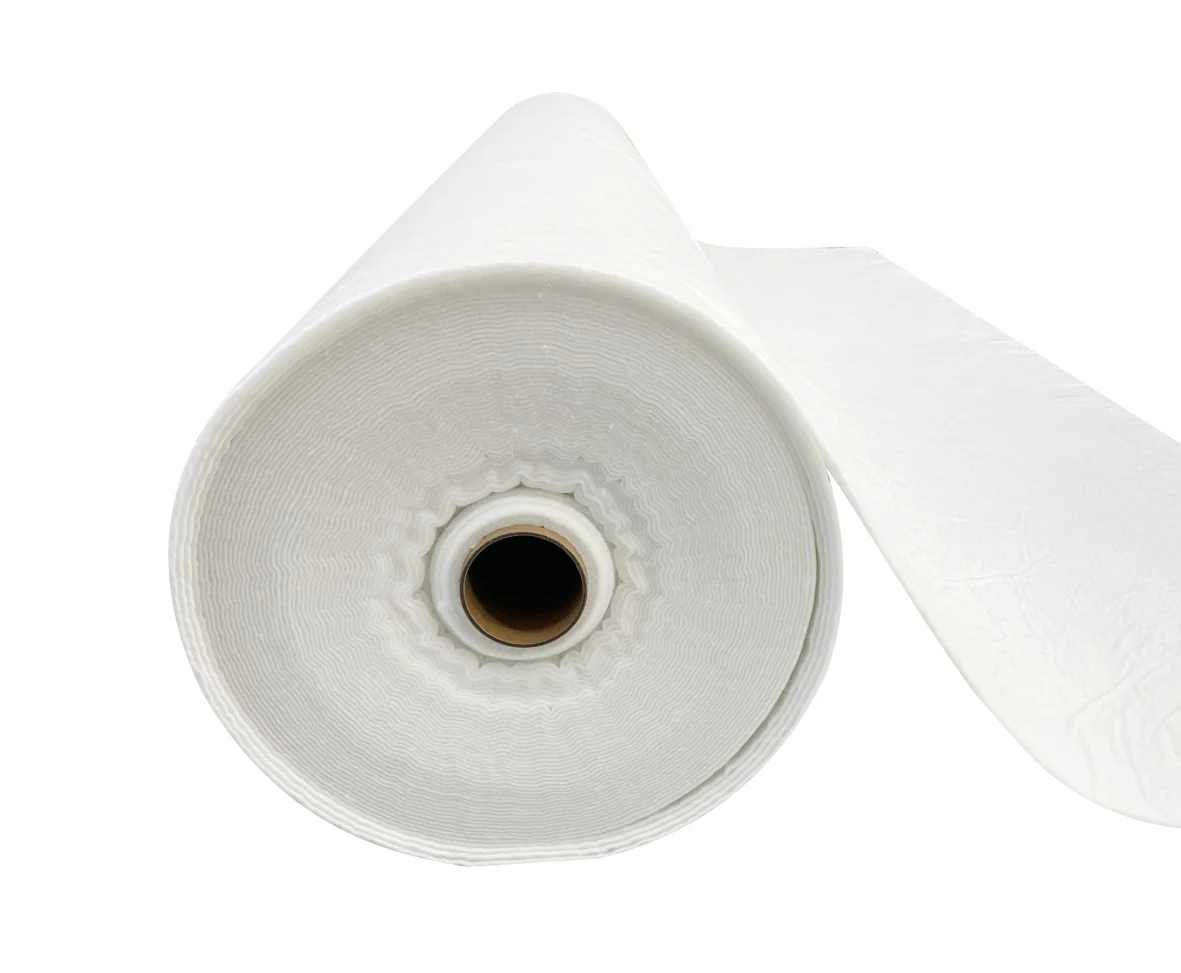
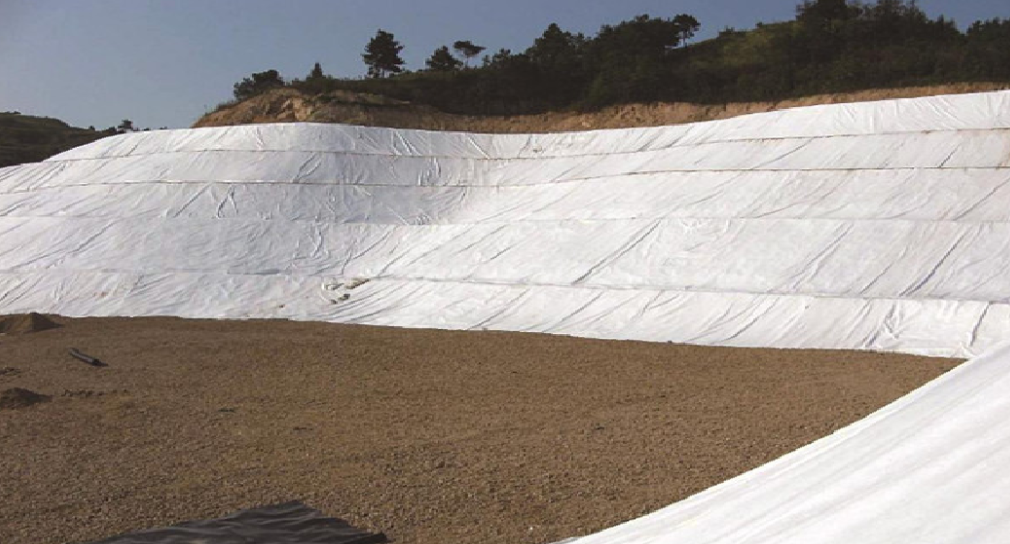
Roll of white PET continuous-filament non-woven geotextile

PET non-woven geotextile

Continuous filament100–830 g/m²Cushion & filter
Geotextile details
Roll of black non-woven fabric used in composite geomembrane production

Composite geomembrane

Membrane + geotextileOne-pass installCanals & dams
How the composite works

Reservoirs, canals and landfill cells

Lined canals hold their water

Seepage through the bed stops, design flow stays up, and the banks no longer erode from the inside.

Steep cells stay stable

On 1:2.5 landfill slopes the textured face bites into the drainage layer, so the lining does not slide.

Food-grade options for water storage

Potable and agricultural reservoirs can use 0.5 / 0.75 mm LLDPE where contact with water for irrigation or livestock matters.

Canal lining explained    Landfill liner system

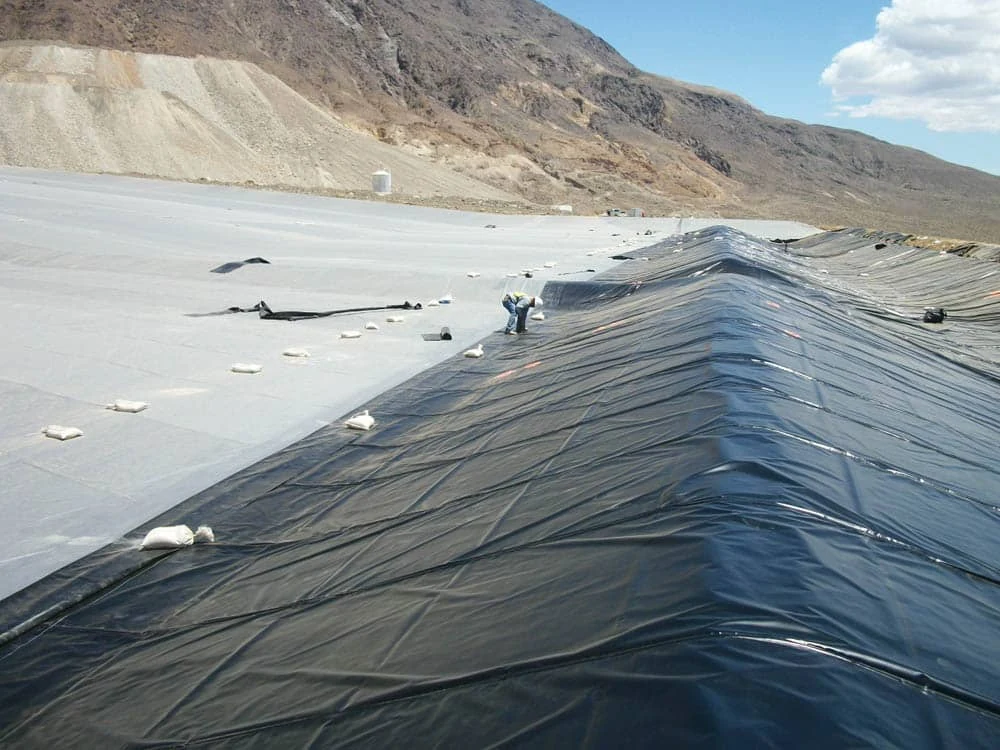
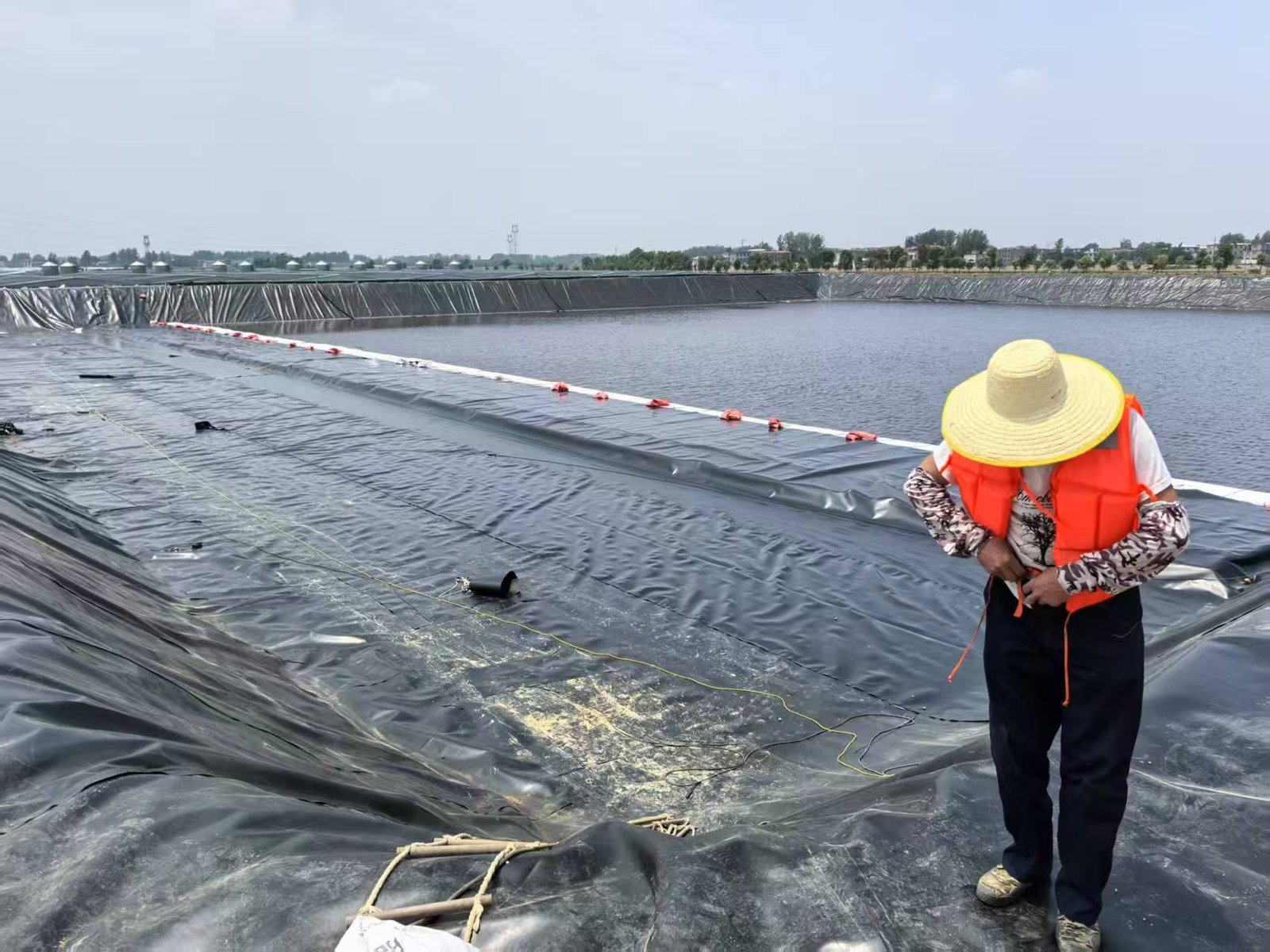
Large HDPE-lined water reservoir with a worker inspecting the liner edge

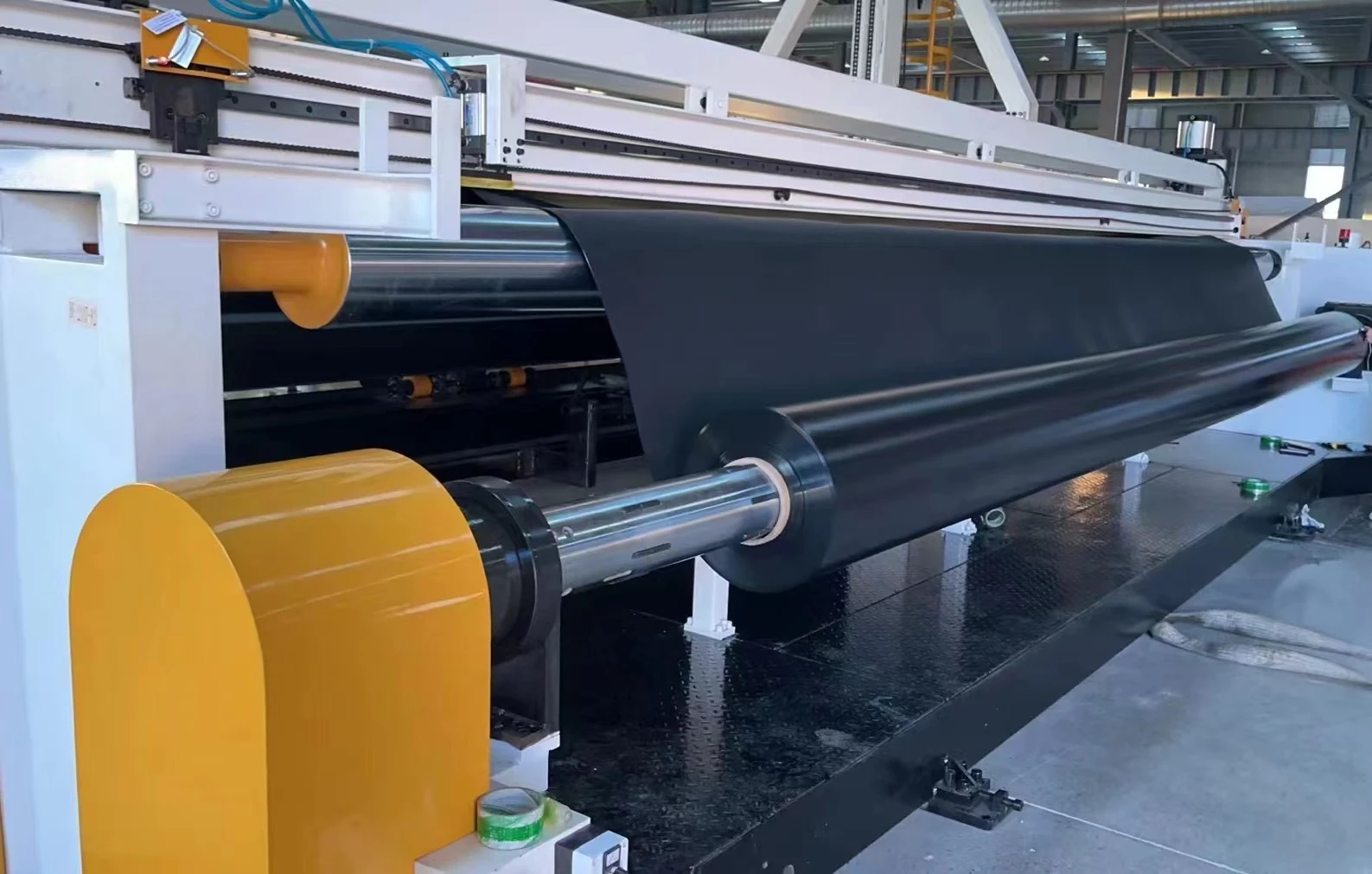
Checked four times before a roll ships

Resin in

100% virgin HDPE from Sabic, Chevron Phillips or Borealis, with a certificate of analysis on every batch.

On the line

Ultrasonic scanning holds thickness within ±3%, and every meter passes a spark pinhole test.

Per batch

One full test set per 10,000 m² to GRI-GM13/GM17 and ASTM D6693, run in our in-house laboratory.

Per roll

A unique ID ties every roll to its test data. Records stay on file for more than 15 years.

Engineer checking panel layout drawings next to geotextile rolls inside a tunnel

Drawings and welding parameters come with the order

Panel layout drawings

Planned against your site drawing to cut waste — 8 m rolls can remove up to 15% of field seams.

Welding charts for your weather

Temperature, speed and pressure settings matched to site conditions, for wedge and extrusion welding.

Crew training and SOPs

Written procedures and training for your installers, targeting 90%+ seam efficiency.

Submittal paperwork per batch

TDS, mill test reports and TRI Environmental results — ready for the engineer of record.

Welding & seam testing    Our quality system

The numbers engineers ask for first

Typical values for our standard HDPE geomembrane. The full data sheet is linked below the ordering section.

Thickness range1.0–3.0 mm 40–120 mil
Roll widthup to 8.0 m
Hydraulic conductivity≤ 1×10⁻¹³ cm/s
Stress-crack resistance> 500 h SP-NCTL · ASTM D5397
Standard OIT> 100 min ASTM D3895
Carbon black content2.0–3.0% ASTM D1603
Thickness tolerance±3% inline ultrasonic

Two recent civil projects, with the paperwork

Both jobs were audited by third parties. The numbers below come from the project reports.

White woven geotextile rolled out over soft clay subgrade before aggregate placement
Expressway subgrade — Mekong Delta

50 km of saturated clay, CBR under 2%, in monsoon season

Deployed 125,000 m² of high-strength woven geotextile at 80 kN/m (ASTM D4595), specified to AASHTO M288-17.

−28%base aggregate, about 14,000 m³ of gravel saved
24 daysahead of schedule
0subgrade pumping failures reported
MSW landfill expansion — Southeast Asia

15-hectare cell on steep 1:2.5 slopes

150,000 m² of 2.0 mm double-textured HDPE, asperity height above 0.50 mm (ASTM D7466), built to GRI-GM13 and EPA Subtitle D.

100%spark-test pass rate (ASTM D7240)
+18°interface friction angle gained
150,000 m²lined with zero leachate migration in CQA reporting
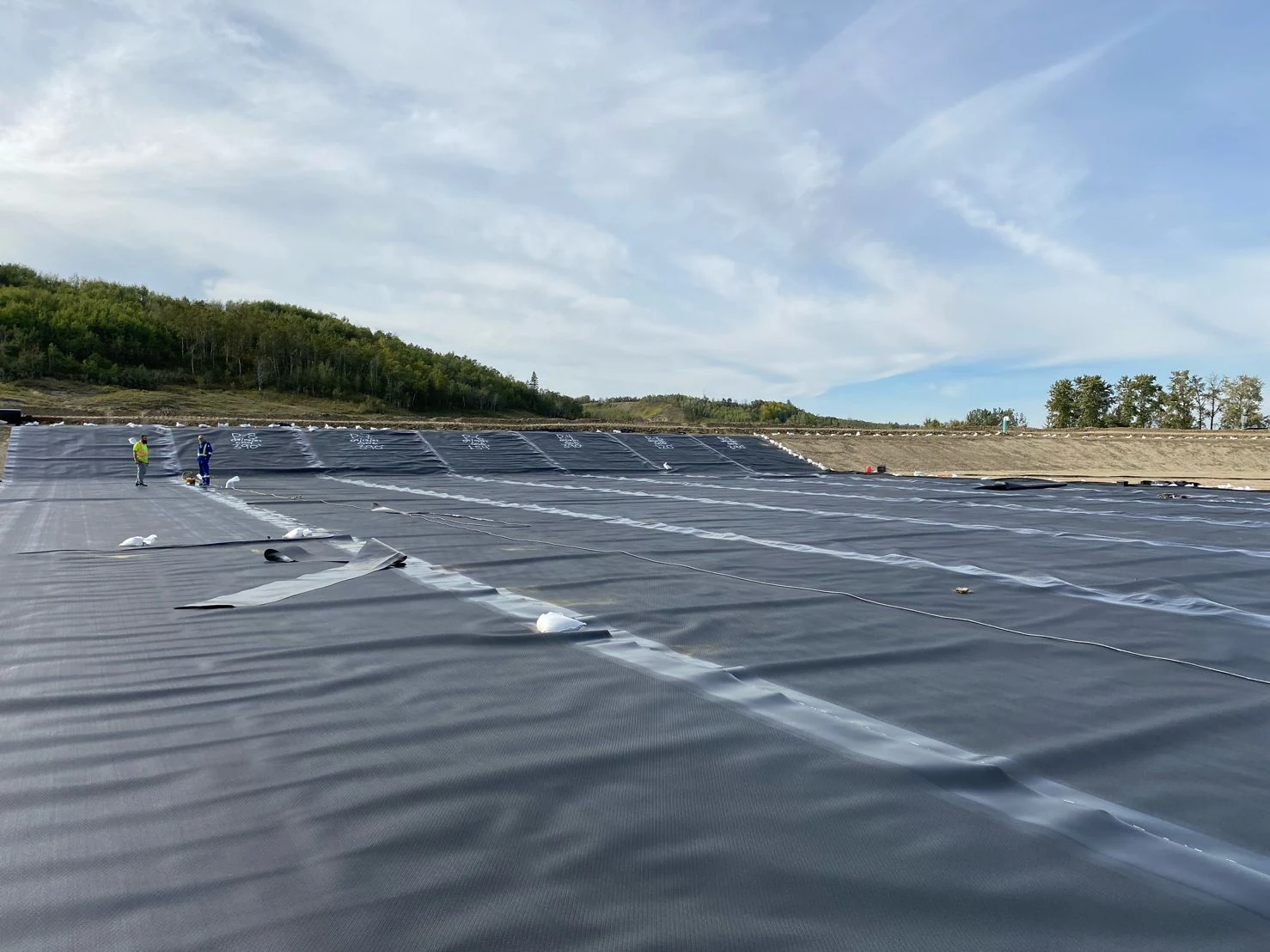
Completed HDPE-lined containment cell with a surveyor checking the surface

More work already in the ground

Southeast Asia

500,000 m² of 40/40 kN biaxial geogrid under 45 km of expressway on soft ground — CBR up 35%, long-term differential settlement cut by over 60%.

Latin America

120-hectare landfill cap in 1.5 mm textured HDPE — multi-axial elongation ≥ 12%, GRI-GM13 compliant throughout.

Middle East

15 km of port shoreline protected with 800 gsm geotextile under riprap — grab tensile above 1,800 N, pore size O90 = 0.08 mm.

Aggregate being placed over a geotextile and geomembrane layer on a trial section

What good installation looks like

Prepared base

Compacted, level and free of sharp stone — the geotextile cushion handles whatever is left.

Overlaps of 100–150 mm

Dual-track wedge welding on the long runs, extrusion welding at corners and penetrations.

Every seam tested

Air-channel test at 0.25 MPa. No pressure drop in 5 minutes means no leak.

Anchored edges

Anchor trenches sized to the slope and wind uplift, backfilled and compacted the same day.

Anchor trench design

Ordering is straightforward

Minimum order2,000 m² stock specs
Trial order1–3 t to test us out
Standard lead time7–14 days
PaymentT/T or 100% L/C at sight
Warrantyup to 20 years in writing
Container planning20GP / 40HQ with photo report

Downloads: HDPE data sheet (PDF) · Installation guide (PDF) · Product brochure (PDF)

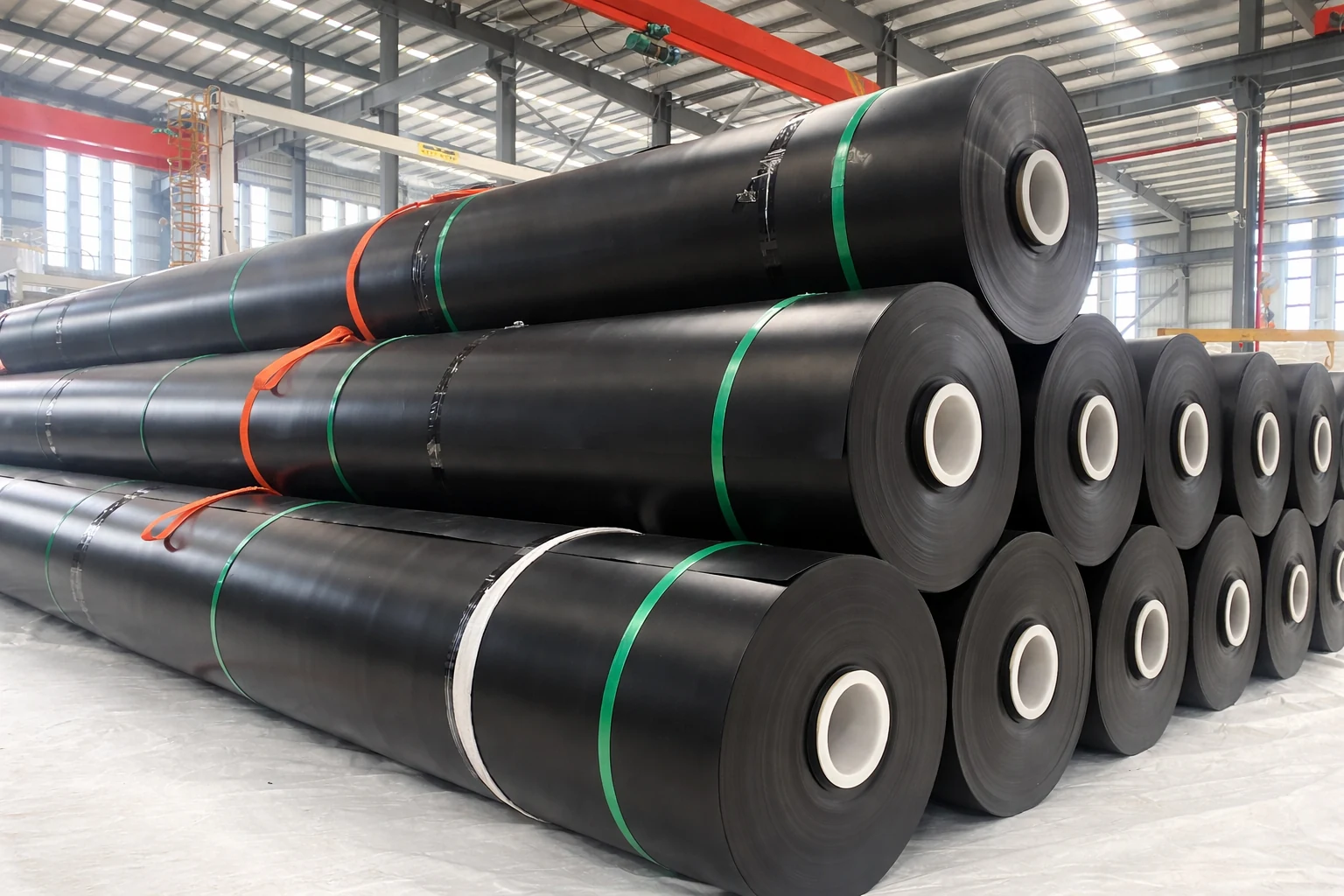
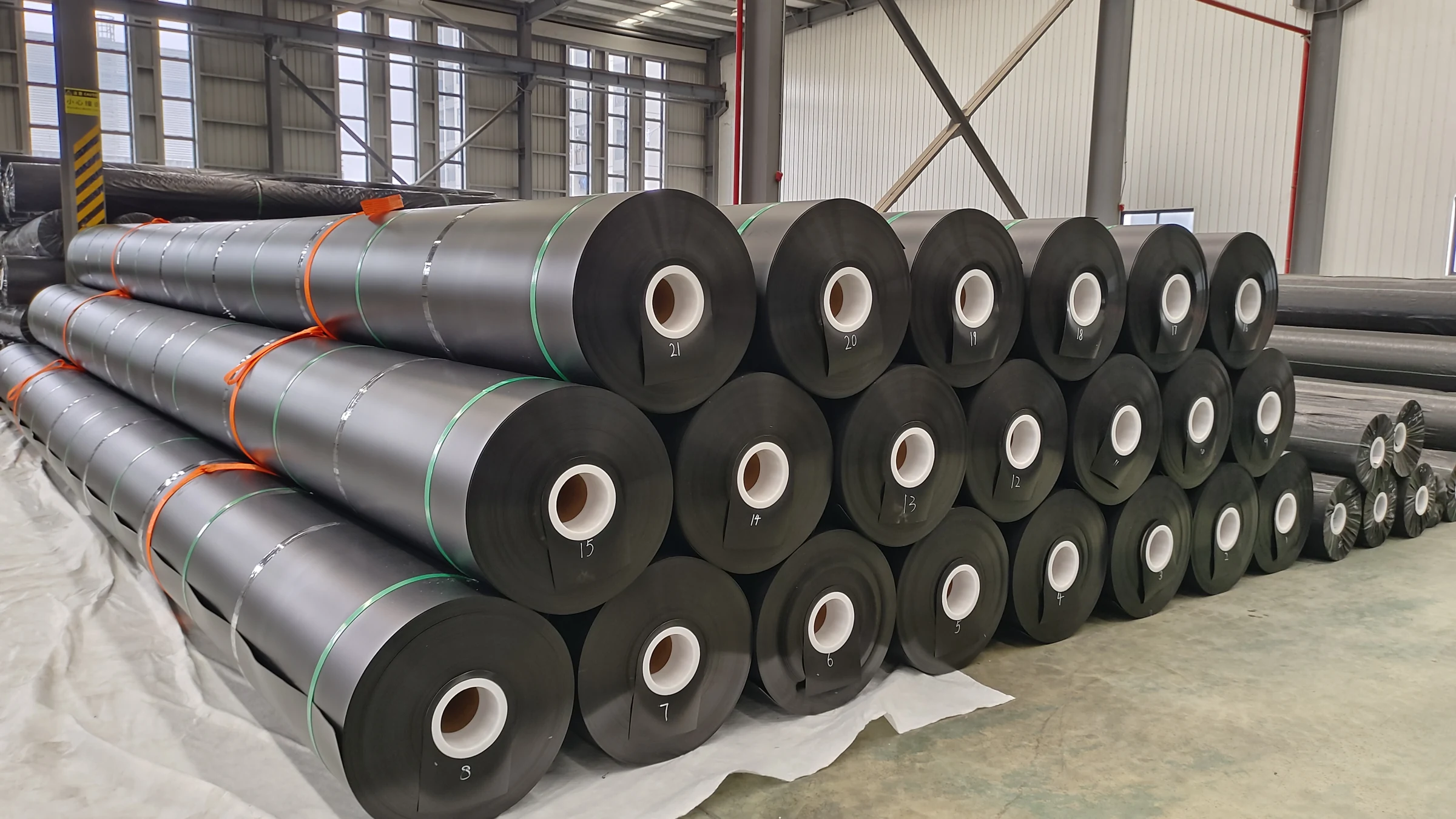
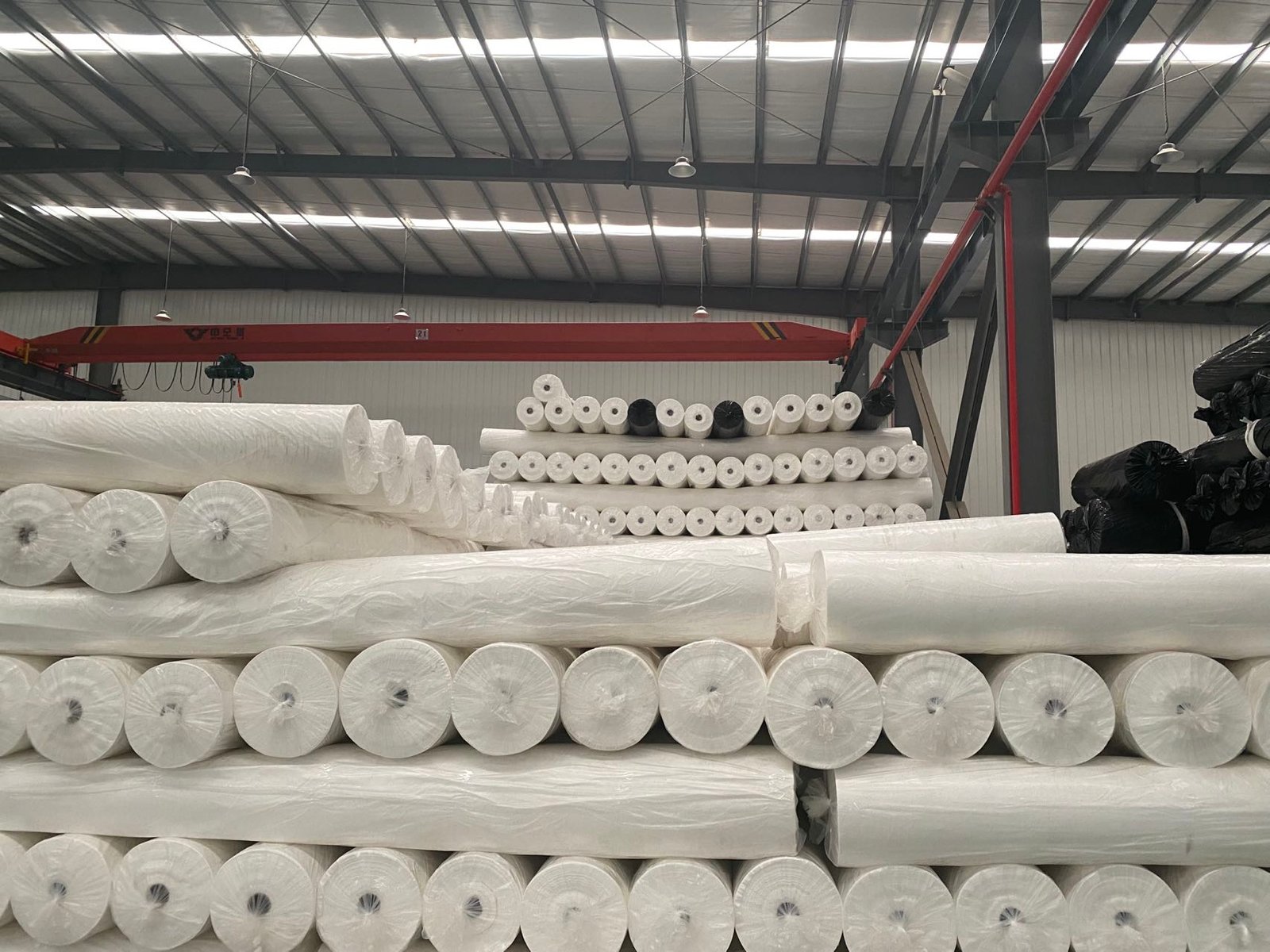
Wrapped geomembrane rolls stacked in the warehouse ready for container loading
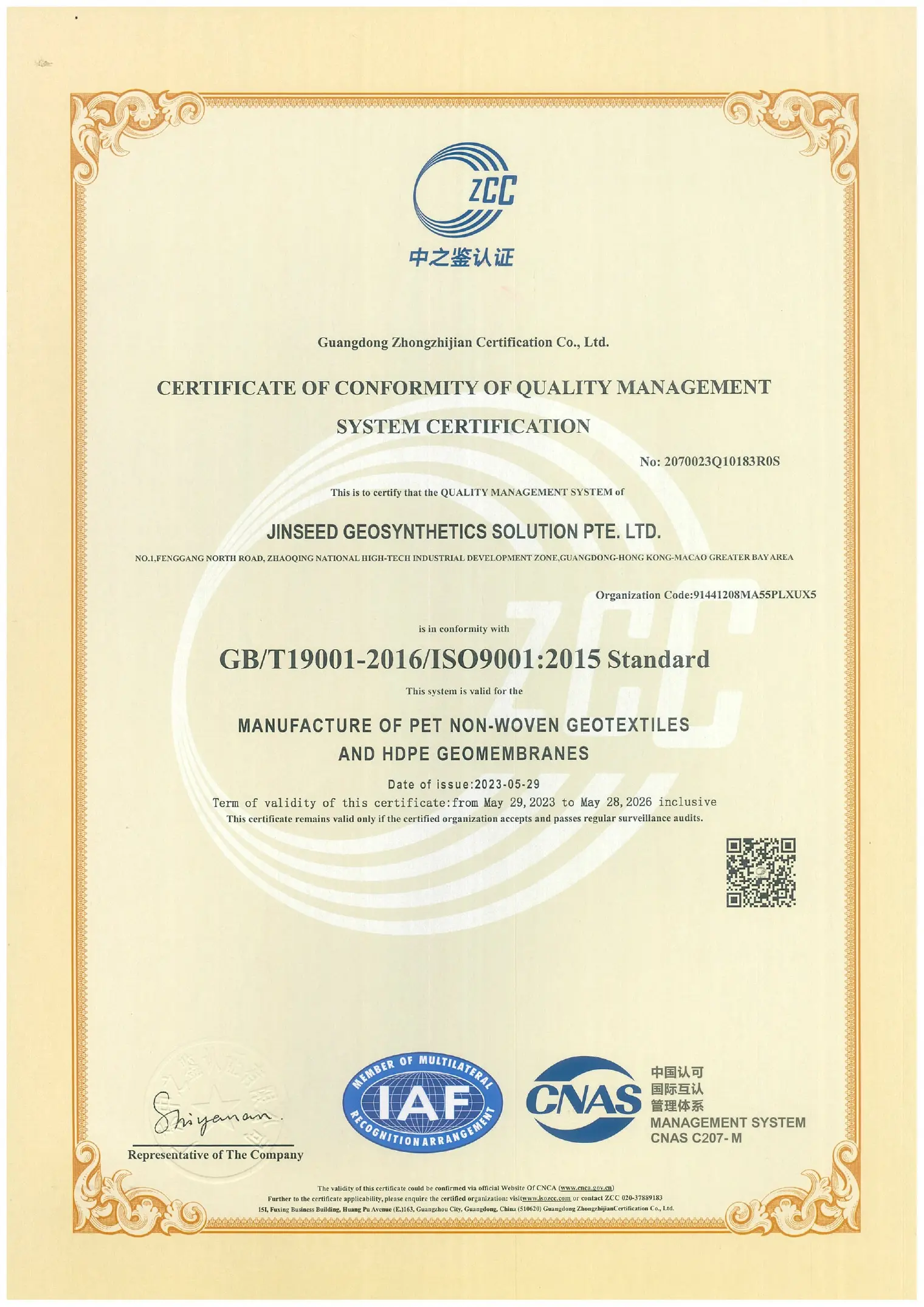
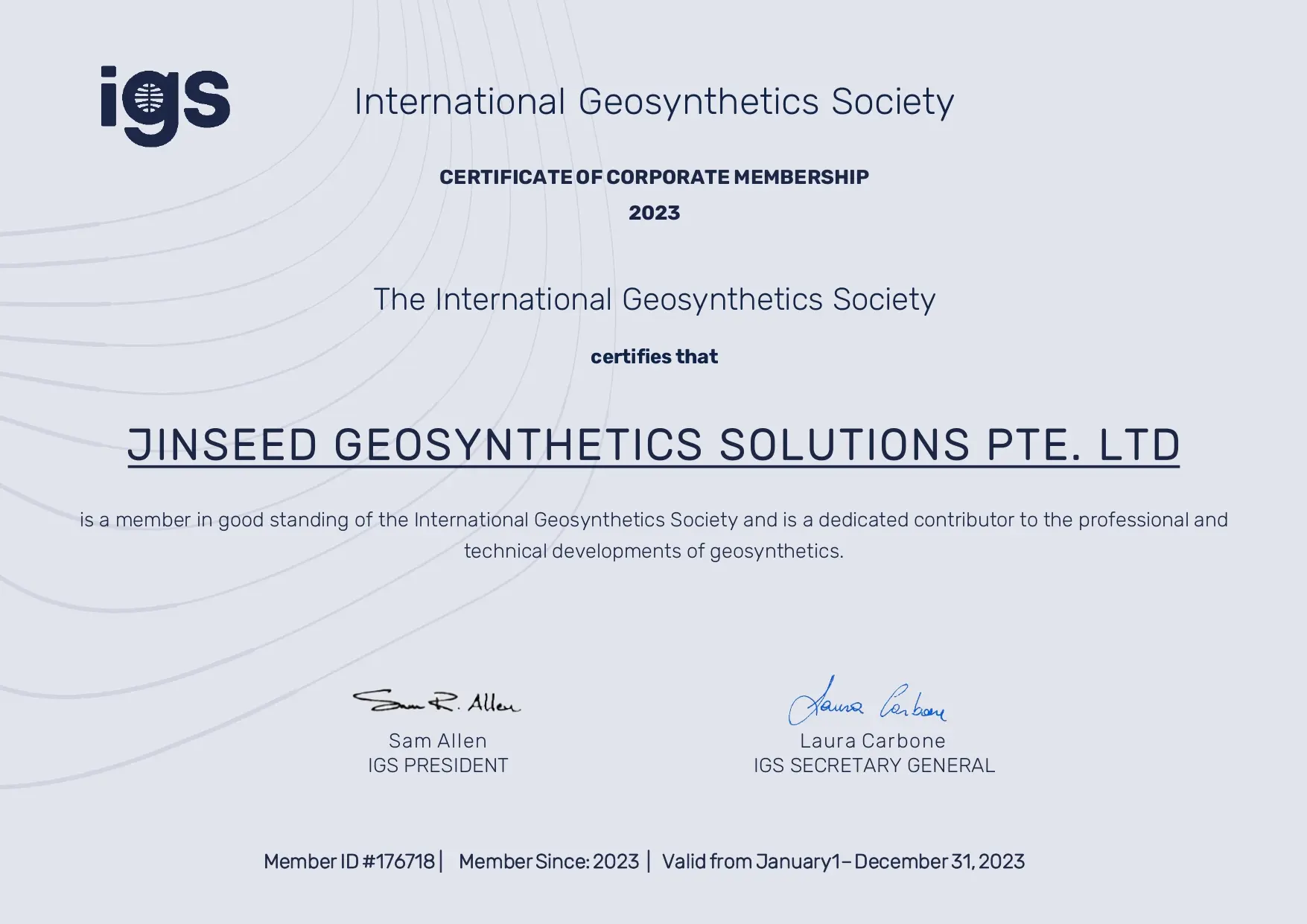
ISO 9001:2015 certificate issued to Guangdong Jinsui Environmental Protection Technology IGS Corporate Membership certificate for Jinseed Geosynthetics Solutions

Certified, audited, traceable

  • ISO 9001:2015 quality management, CNAS-audited
  • ISO 14001:2015 environmental management
  • CE marking on geomembrane lines
  • Corporate Member of the International Geosynthetics Society (IGS)
  • In-house in-house laboratory, tested to GRI-GM13/GM17
  • Independent verification by BTTG or TRI Environmental on request

See how we test

Questions buyers ask us

Can I get TDS and mill test reports for project submittals?

Yes. Every production batch ships with a full submittal package: technical data sheet, mill test report and third-party lab results from TRI Environmental. Tell us which standard your project specifies and we include the matching test set.

Can roll dimensions be customized?

Yes. Widths go up to 8 meters, and roll lengths are planned around your container and panel layout. Wider rolls cut field seams by up to 15%, which lowers both labor cost and leak risk.

What is the manufacturing lead time?

Standard production takes 7 to 14 days depending on order volume. Custom thicknesses or colors need a resin transition, so allow a few extra days. We handle export packing and ship to major ports worldwide.

What is the minimum order quantity?

Stock specifications start from 2,000 m². If you want to test our material first, trial orders of 1 to 3 tonnes are welcome — enough for a trial section on your site.

Do you support third-party testing?

Yes. Batches can be tested by Certified in-house laboratories such as TRI Environmental, and we also work with BTTG and TRI Environmental. Both pre-shipment sampling and on-site destructive testing are supported.

How long does the liner last?

Our HDPE meets GRI-GM13/GM17 with 2.0–3.0% carbon black and standard OIT over 100 minutes. In typical buried conditions the design life exceeds 50 years, and specified materials carry a written warranty of up to 20 years.

Send your specification or bill of quantities

Tell us the application, thickness, surface finish, quantity and destination port. You get a full-scope quote back — with the data sheet, mill reports and a suggested panel layout.

HQ: 182 Cecil Street, Frasers Tower Level 17, Singapore 069547
Plant: No 1 Fenggang North Road, Zhaoqing High-tech Industrial Development Zone, Guangdong, China

Language »