Geomembrane Liners
Containment systems for demanding engineering projects.
Geomembrane Liners
HDPE Geomembrane Liner
Primary containment liner
HDPE Geomembrane
Smooth and textured HDPE
LLDPE Geomembrane
Flexible lining applications
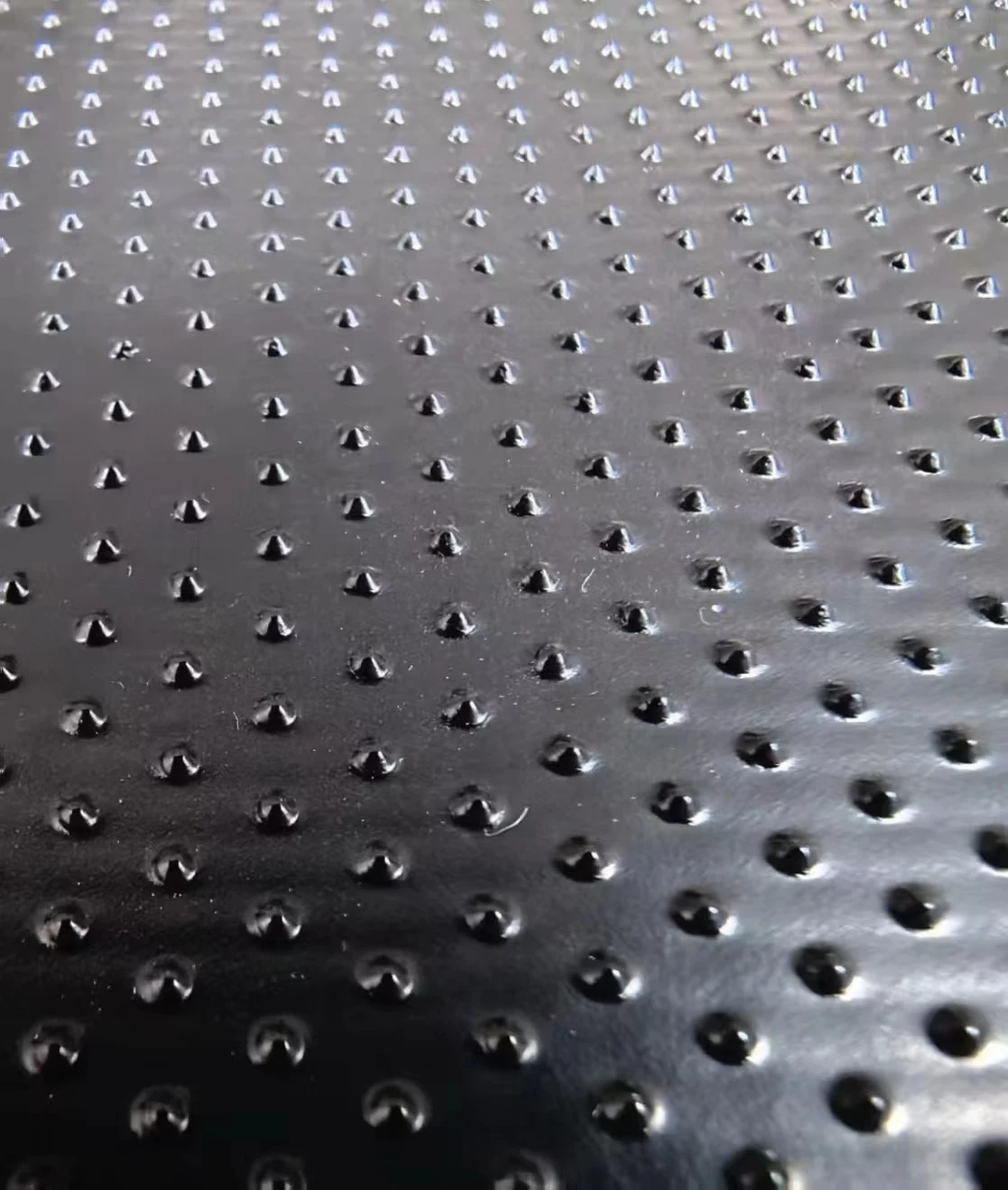
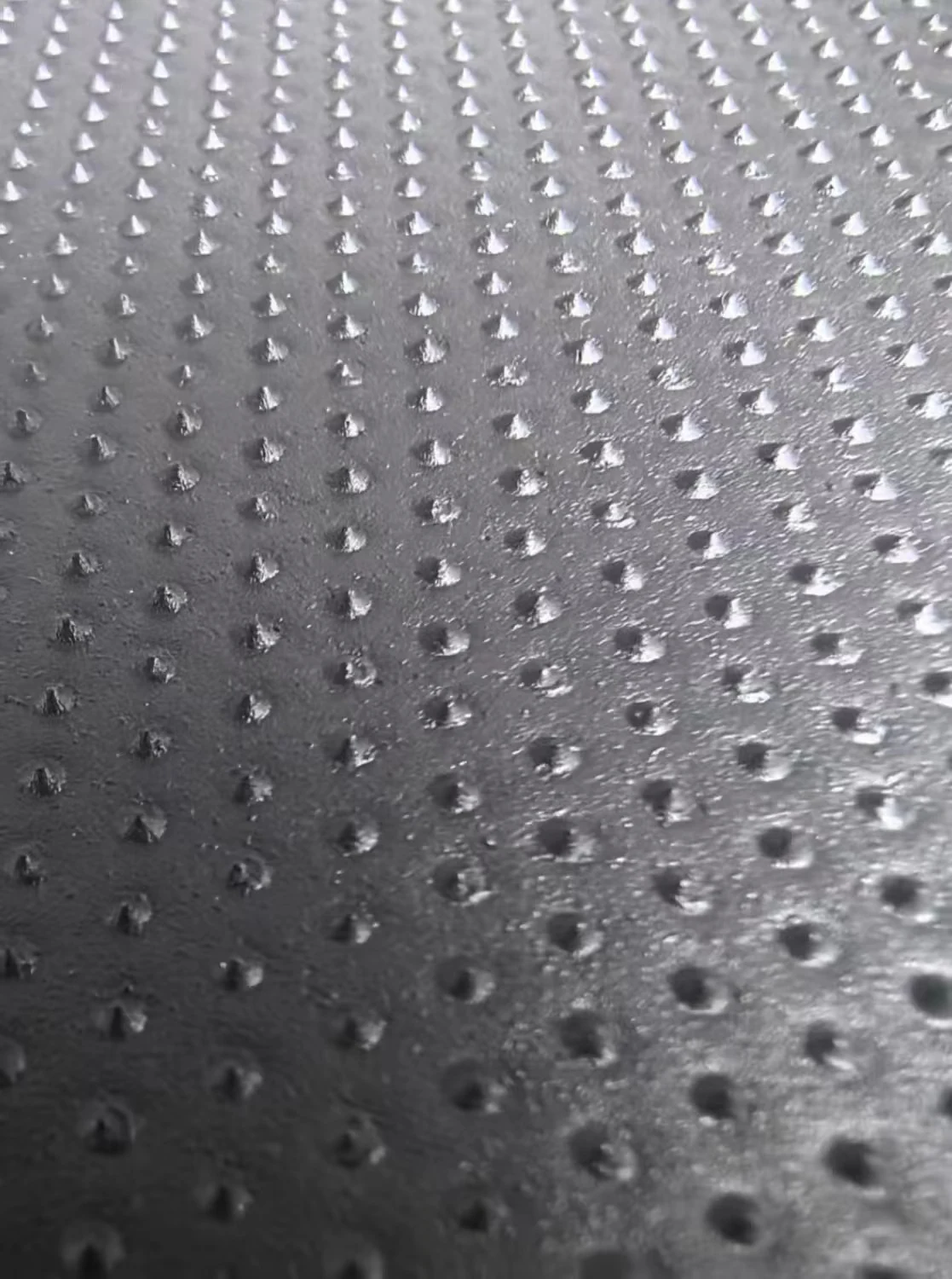
Textured Geomembrane
Higher friction for slopes
Landfill Liner System
Landfill containment materials
Geotextile
PET Non-Woven Geotextile
Protection and filtration
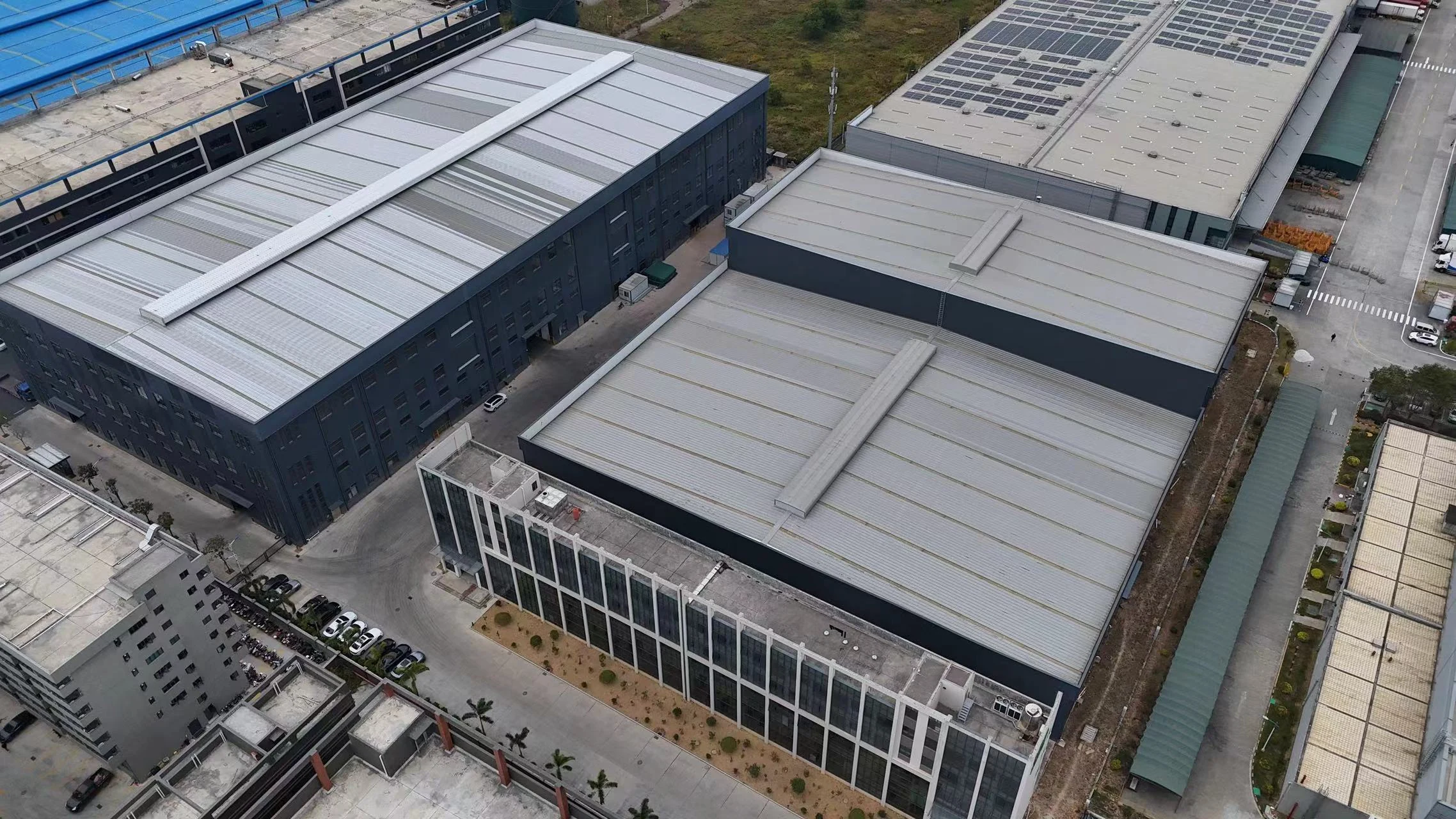
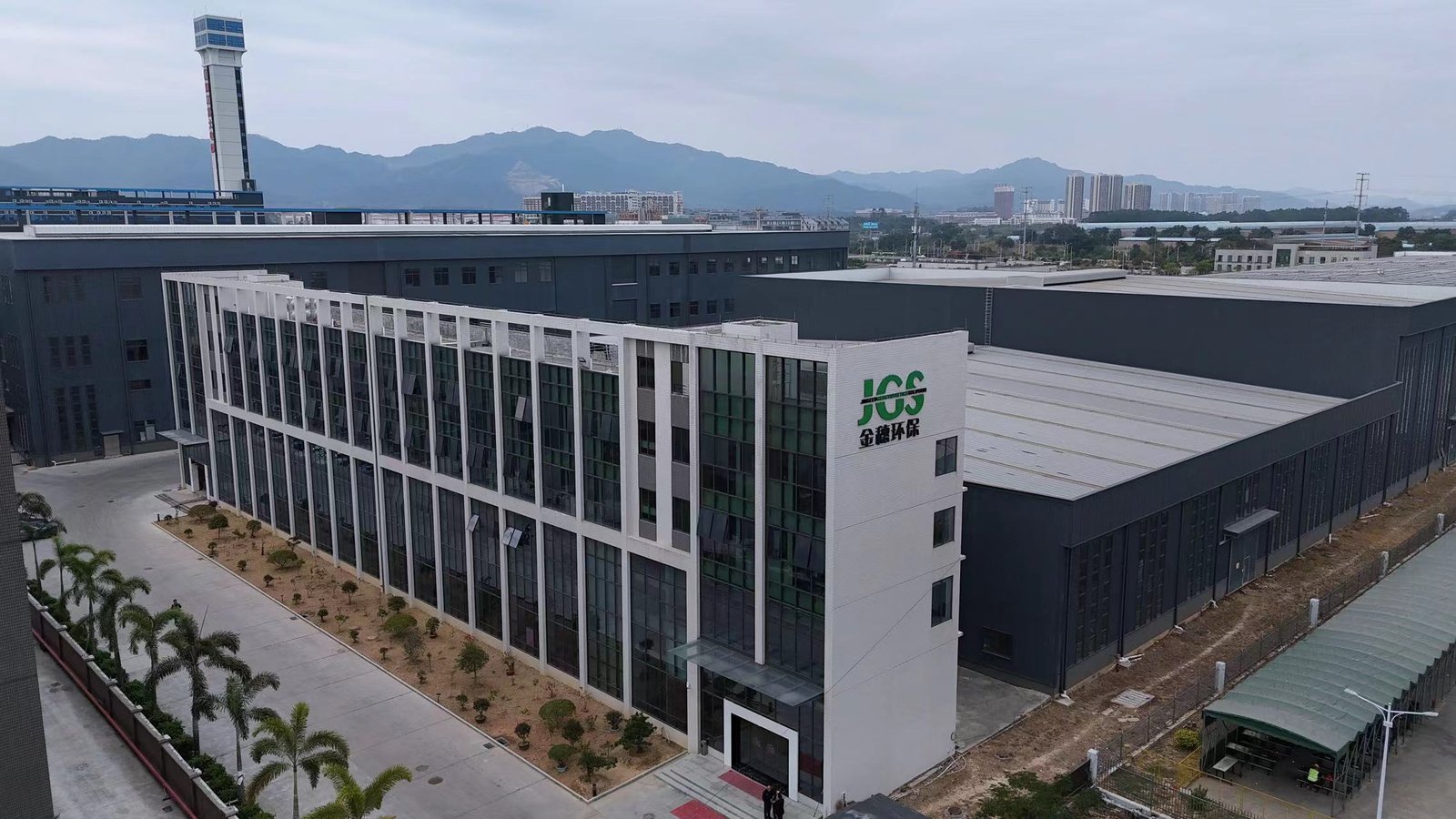
Geotextile ManufacturerJinseed makes single- and double-sided textured HDPE liners in its own factory in Guangdong, China. Products are supplied against the agreed GRI-GM13 manufacturing specification, with test properties and sampling frequencies documented for the order, and shipped directly to buyers in 50+ countries.

A textured surface can improve shear resistance against adjacent soil or geosynthetics. The resulting stability depends on the complete lining system, groundwater and loading; texture alone does not prevent sliding.

Full values for every thickness are in the technical data sheet.Download the data sheet

One rough face and one smooth face. Orientation and contact materials are selected to suit the engineered lining system.
View specifications
Rough on both faces where the design calls for increased resistance at both interfaces. Slope gradient alone does not select the product.
View specifications
The flat-ground companion. Pond bottoms, canal beds and level areas where extra grip is not needed.
View specifications
A protection fabric, 100–830 g/m², considered where the lining design requires cushioning. Select placement and grade from the actual contact materials and loads.
View specificationsSpecify thickness from the applicable requirements, chemical exposure, hydraulic head, subgrade, protection and installation loads. The examples below are distinct procurement and design cases.
Send the approved design for a written product proposal; final engineering acceptance remains with the project designer.Ask an engineer
Technical references: GRI-GM13 manufacturing requirements; ASTM D5321/D5321M interface shear testing; ASTM D5820 dual-seam air-channel testing; 40 CFR 258.40 landfill criteria.
Both run on the same lines and meet the same GRI-GM13 base standard. The difference is simply which faces are rough.
The design specifies the rough-face orientation and acceptable movement at the smooth interface. Do not assume the cover layer can slide safely; both interfaces need assessment.
Used where the design requires textured interfaces above and below the liner. Neither a 3:1 gradient nor double-sided texture proves that the full lining system is stable.
Not sure which one your design needs?Send us the slope drawing

Interface resistance is one part of slope design. Engineers also evaluate subgrade stability, pore pressure, cover loading and the required factor of safety.
There is no universal 30° friction angle. Use interface shear tests with the proposed materials, normal stresses and moisture conditions; consider peak and large-displacement resistance.
A 2:1 (H:V) slope is approximately 26.6°. A 0.40 mm texture height is a manufacturing property, not evidence that this slope will remain stable.
Any increase in storage capacity must follow a verified stability design, including drainage, anchorage and construction tolerances.
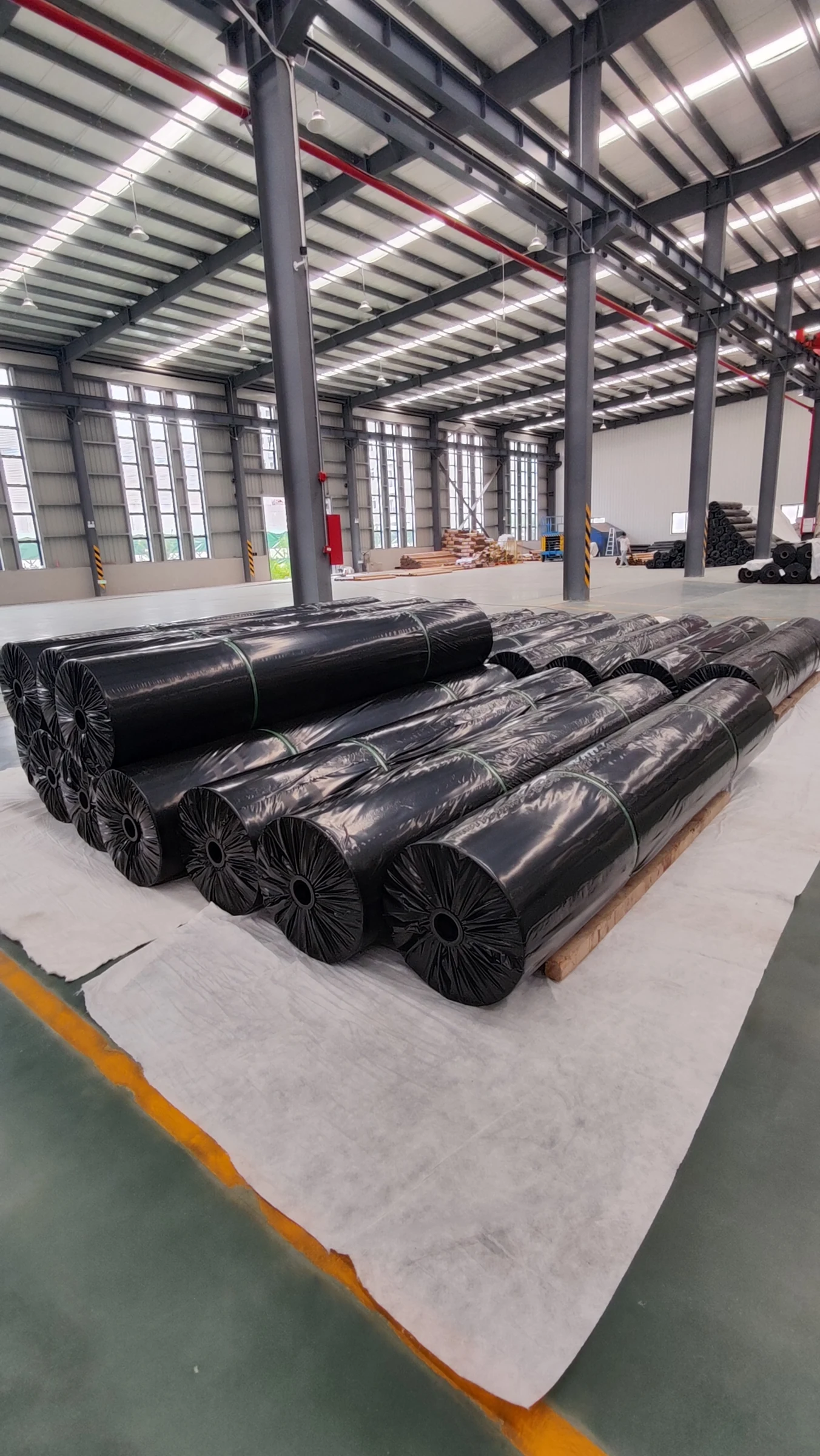
We are a manufacturer, not a trader. Resin comes in, finished rolls go out, and every step in between happens under one roof.
55,000 m² plant — extrusion, texturing, testing and packing on one site
20,000 tons a year — stated production capacity; order availability and dates are confirmed against the production schedule
German flat-die lines — rolls up to 8.0 m wide, so sites need fewer seams
Material documentation — confirm the resin grade, supplier identification and available certificates for the ordered formulation

Confirm resin identity, density and melt-flow requirements against the agreed formulation. Any permitted manufacturing rework must comply with the order specification; post-consumer material is excluded under GM13.
The bump height is set per order — at least 0.40 mm — and measured per ASTM D7466.
For textured sheet, specify ASTM D5994 core-thickness measurements and the required average and individual limits. Any tighter tolerance needs written confirmation and supporting inspection records.
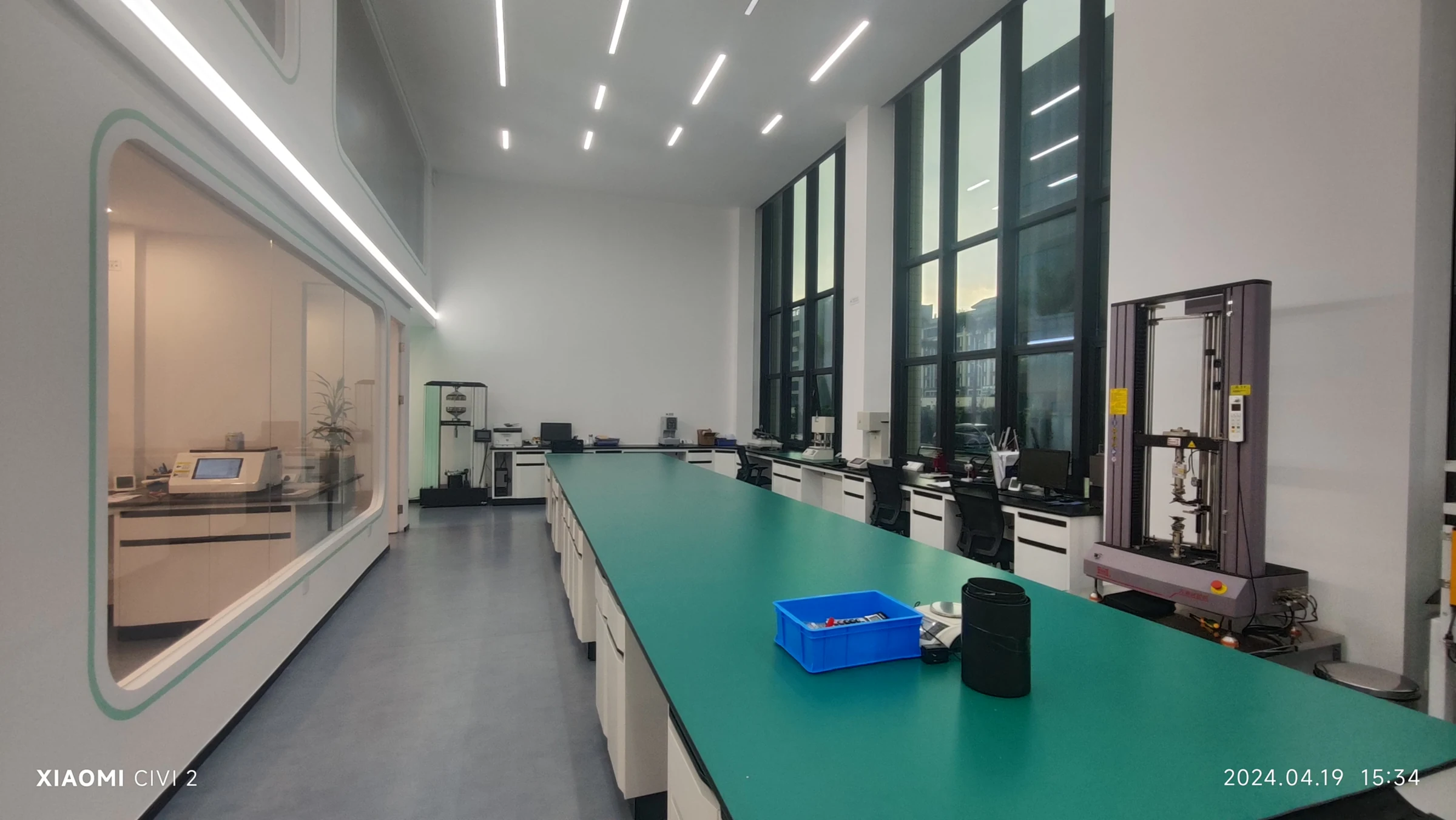
Specify texture, tensile, stress-crack and OIT requirements with their applicable methods and frequencies. Long-duration and formulation tests are not automatically performed on every roll or batch.
Request roll identification, corresponding quality records and the agreed sample-retention period. Confirm the records supplied with the order and the process for later enquiries.

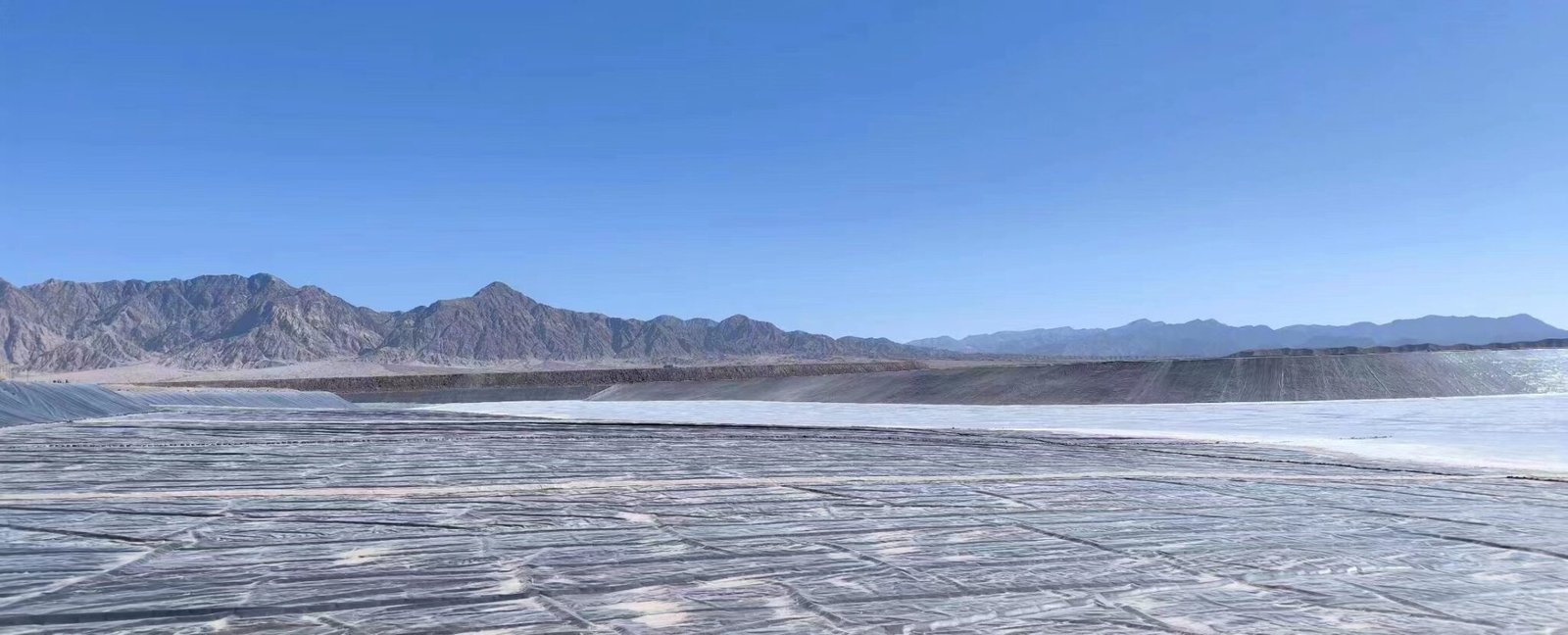
Heap leach pads, tailings dams and process ponds on steep terrain.
See application
Base slopes, side walls, caps and final closures.
See application
Dam embankments, irrigation slopes and water storage.
See application
Pond banks and slopes that need extra grip under water.
See application
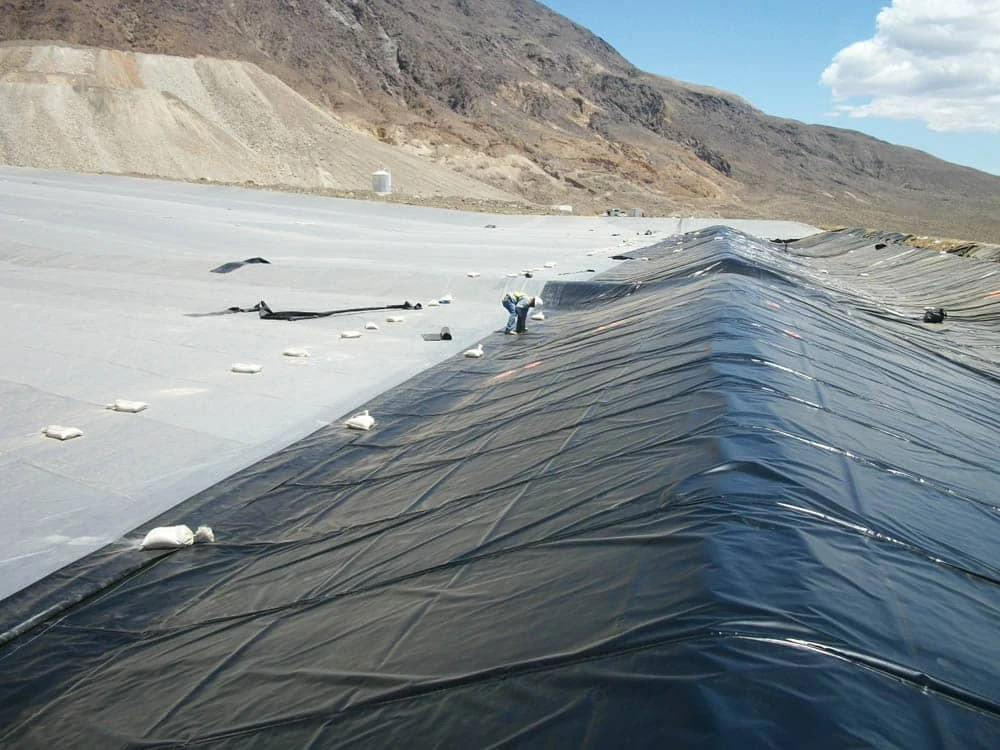
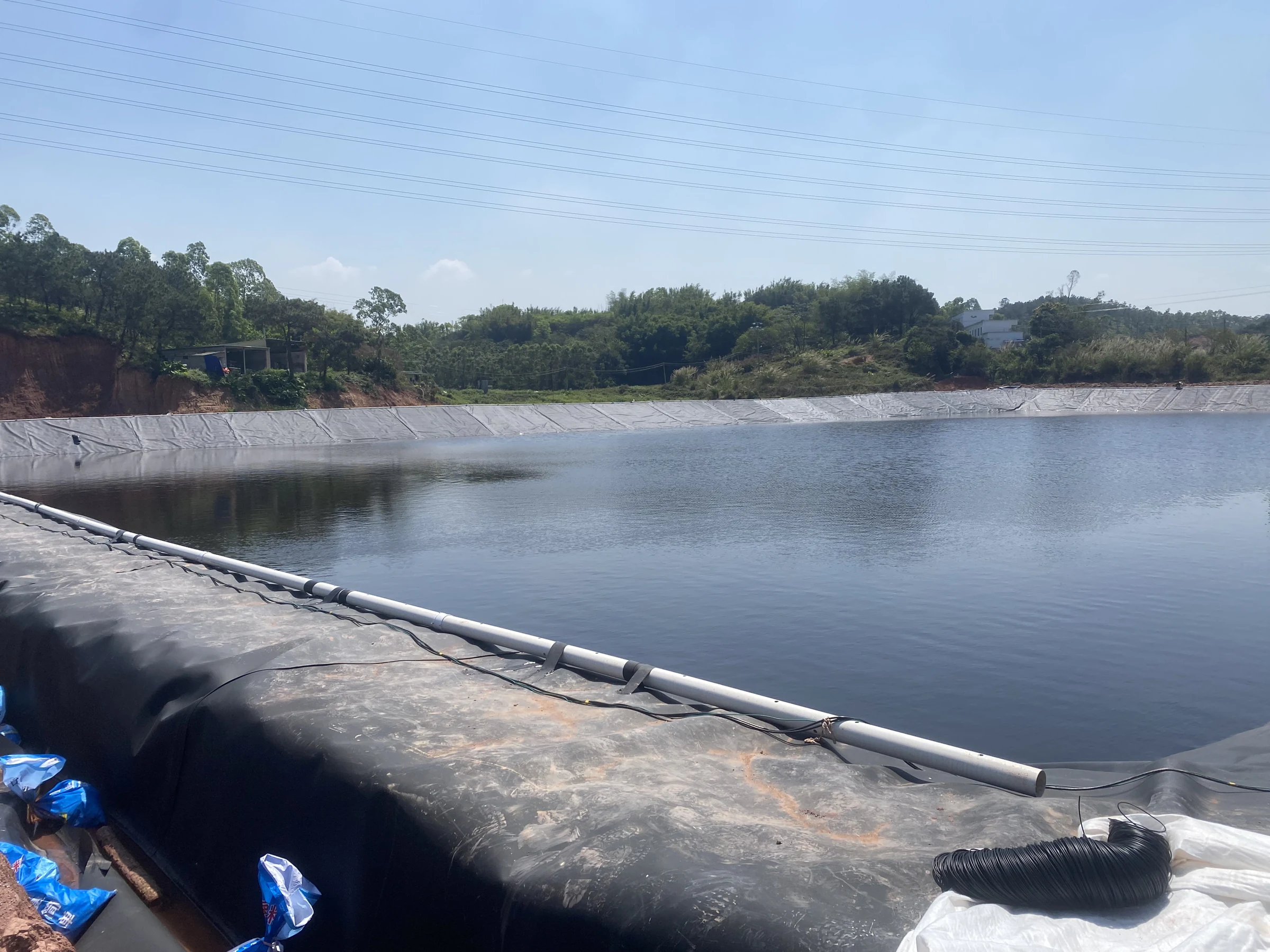
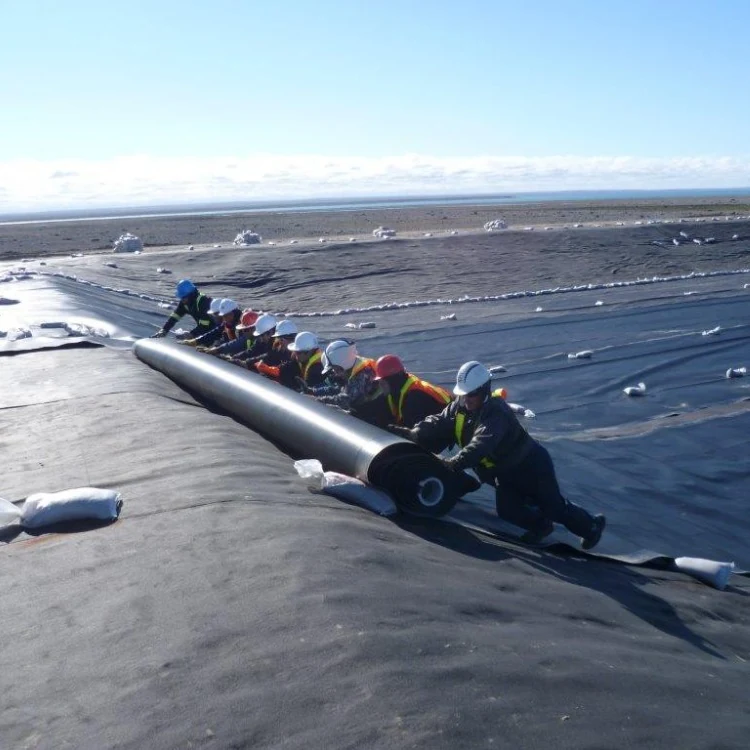
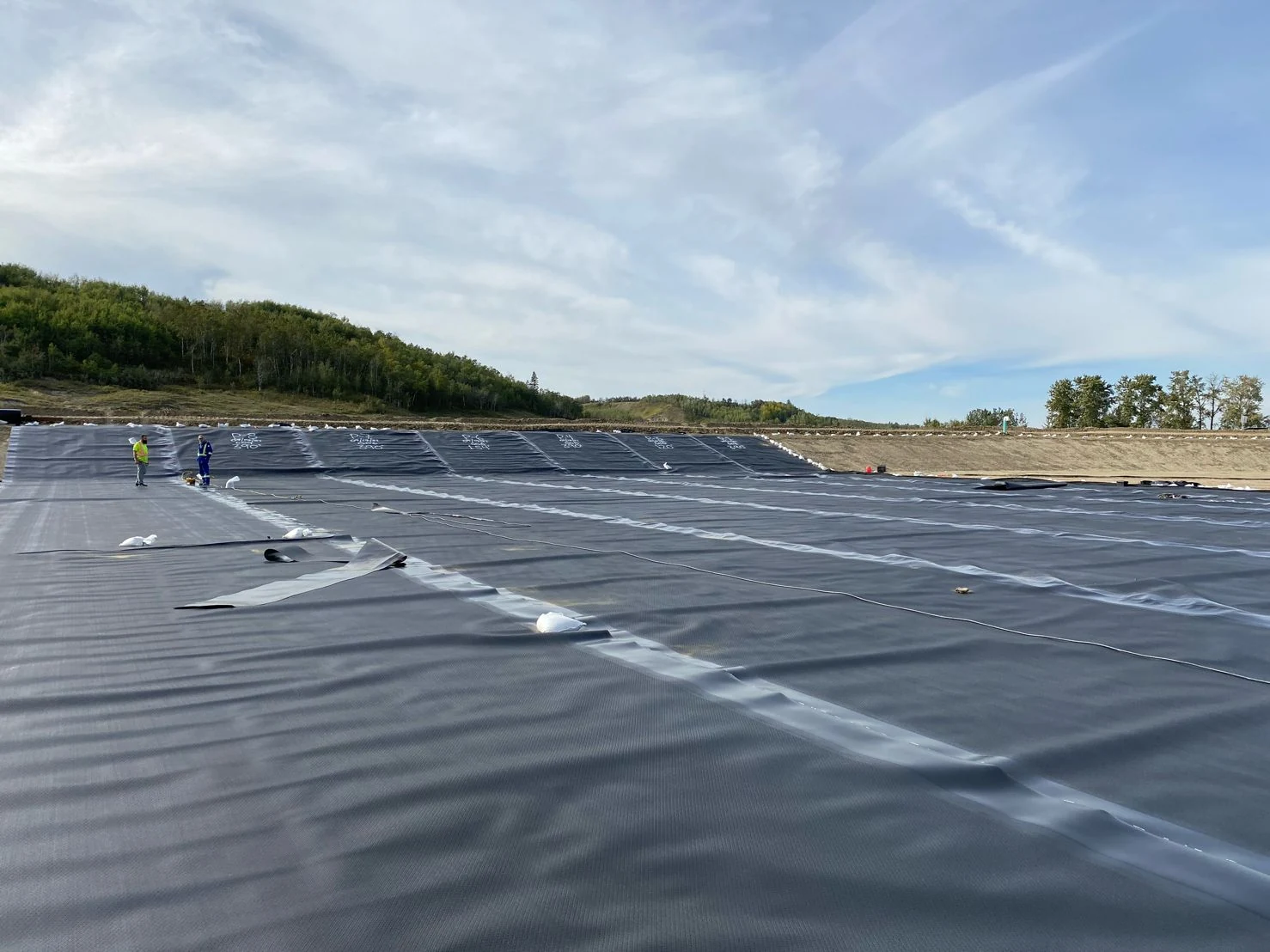
A proposed build-up might include 1.5 mm textured HDPE and a 600 g/m² PET protection layer. These are illustrative specification inputs, not proof of suitability or a documented Jinseed project. Verify solution chemistry, loads, puncture protection and interface shear before selection. The photo illustrates installation context; no country, project result or improvement percentage is attributed to it.

Tell us the slope, the ground material, thickness, quantity and destination port. We reply with a suggested build-up, a price, a lead time and a container loading plan.
Specify the smooth welding-edge width in the order; 150 mm can be assessed as a proposed detail. Edge preparation, overlap and welding procedure must suit the actual product and equipment. A smooth strip alone does not prove seam integrity.

Prepare a smooth, firm surface without protruding stones or roots. Specify the compaction test method, target density and moisture range in the earthworks design; “90%” alone is not an acceptance specification.

A 100–150 mm overlap may be considered during planning, but use the approved width for the actual sheet and welding equipment. Keep the weld area clean and align the specified smooth edges.

Dual-track hot wedge welding for the long seams; extrusion welding for corners and repairs.

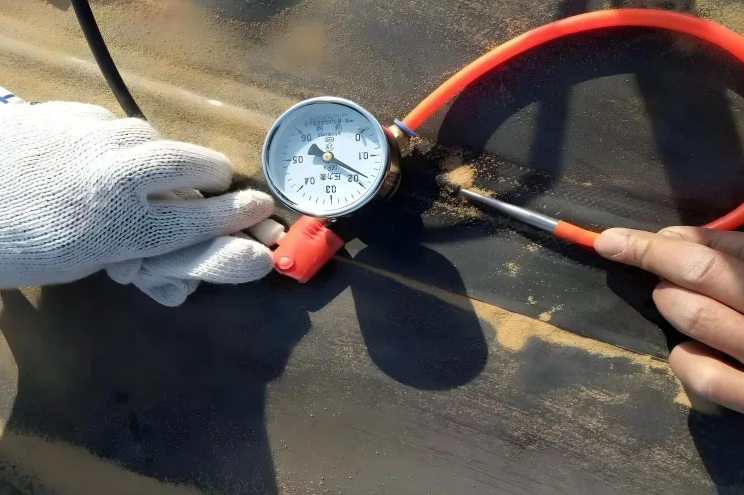
For dual-track seams, use ASTM D5820 air-channel testing with pressure, stabilization time and allowable loss specified for the material and thickness. A 0.25 MPa / 5-minute test is only an example if approved in the project procedure. Extrusion seams require a suitable separate test.
The full procedure is in our installation guide.Download the guide

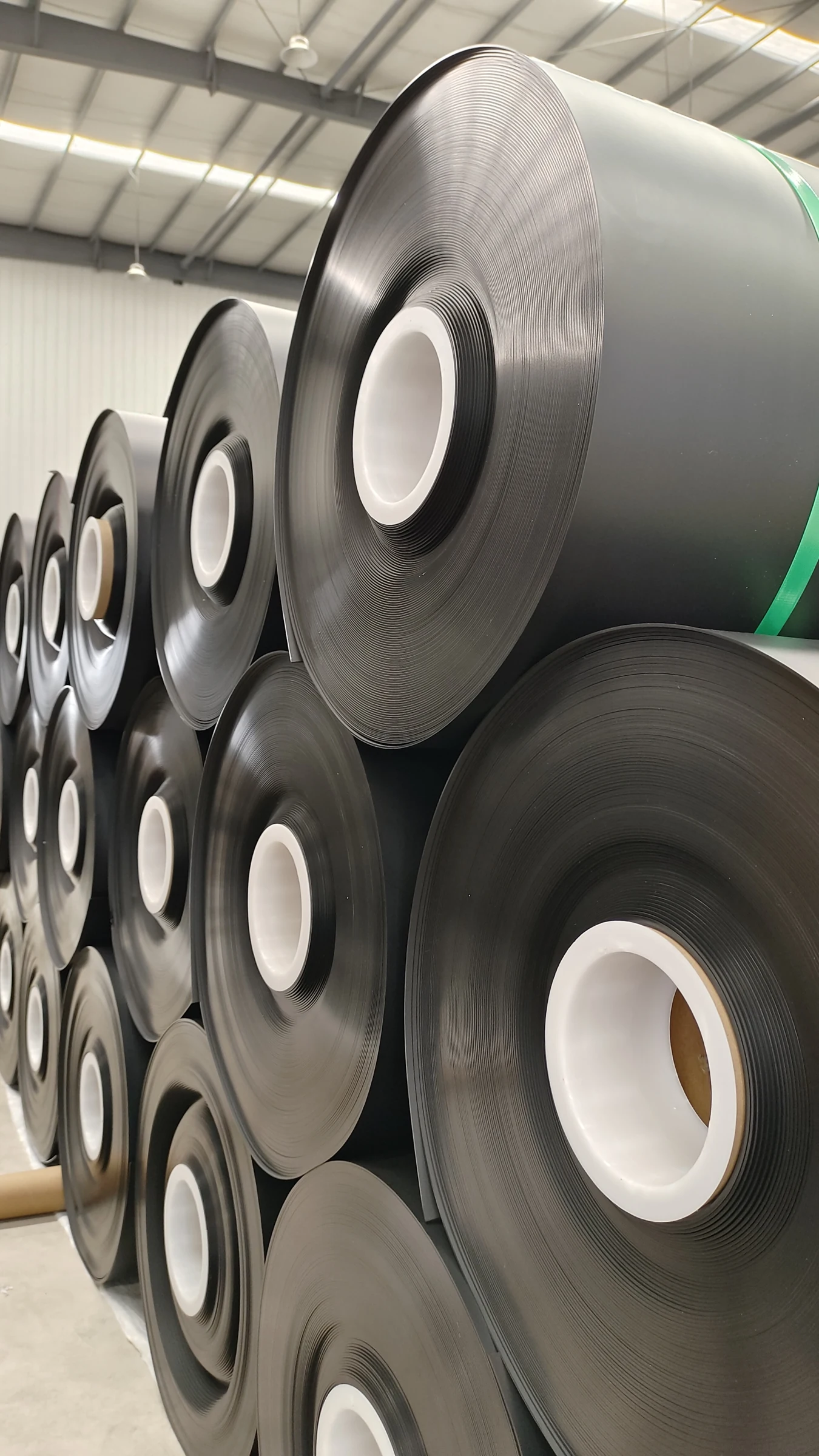
Rolls are wound on reinforced cores and secured for handling.
Rolls are secured for shipment with lifting straps at both ends.
Roll lengths are planned around 40HQ containers to cut the freight cost per square meter.
Photos, checks and seal numbers are sent to you before the container leaves.
We mail real cuttings, so your team can feel the texture, measure the thickness and test the weld before you commit.
Free consulting on thickness, texture height and cushion layers — send your slope design and we work through it with you.
Data sheets and batch test reports, ready to drop into your engineering submittals.
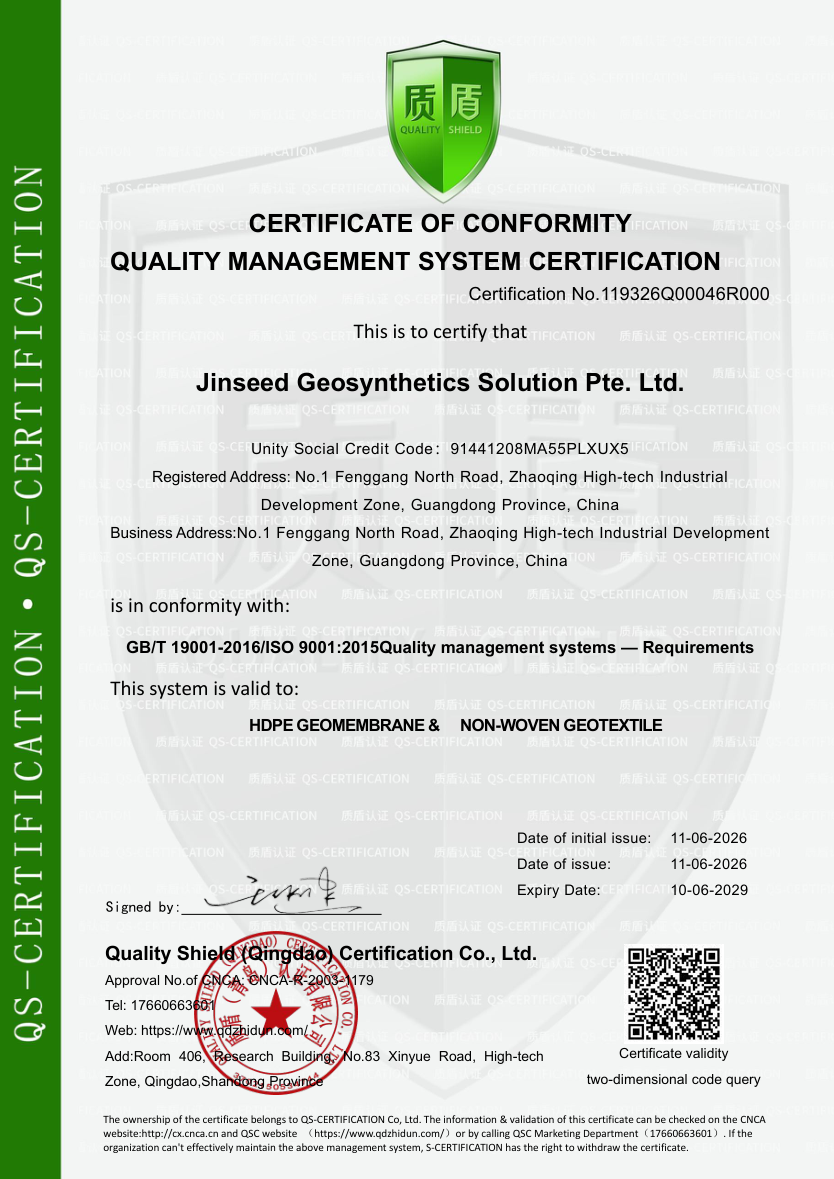
Certificate 119326Q00046R000 names Jinseed Geosynthetics Solution Pte. Ltd. and covers HDPE geomembrane and non-woven geotextile. Stated validity: 11 June 2026–10 June 2029. View the full certificate. Confirm current status with the issuer when required; this is management-system certification, not individual product approval.
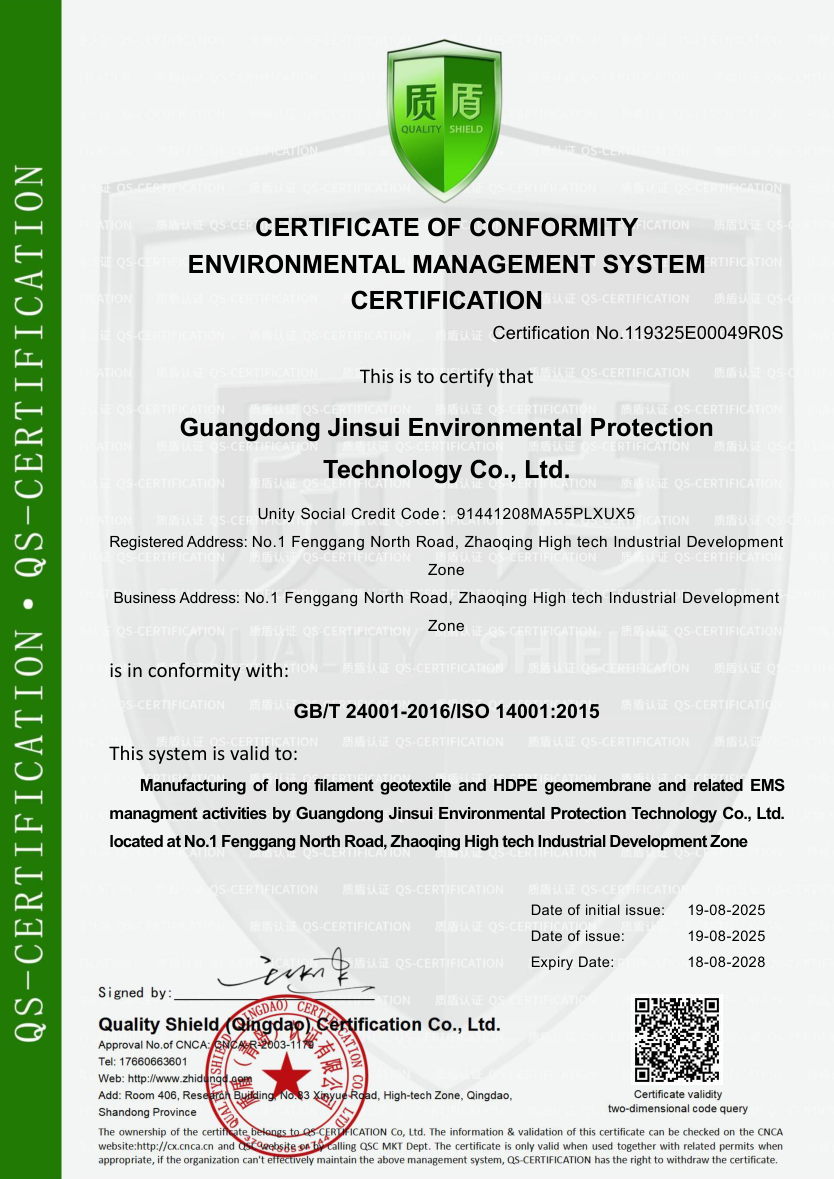
Certificate 119325E00049R0S names Guangdong Jinsui Environmental Protection Technology Co., Ltd. It covers manufacture of long-filament geotextile and HDPE geomembrane and related environmental management activities at the stated site. Validity shown: 19 August 2025–18 August 2028. View the full certificate.
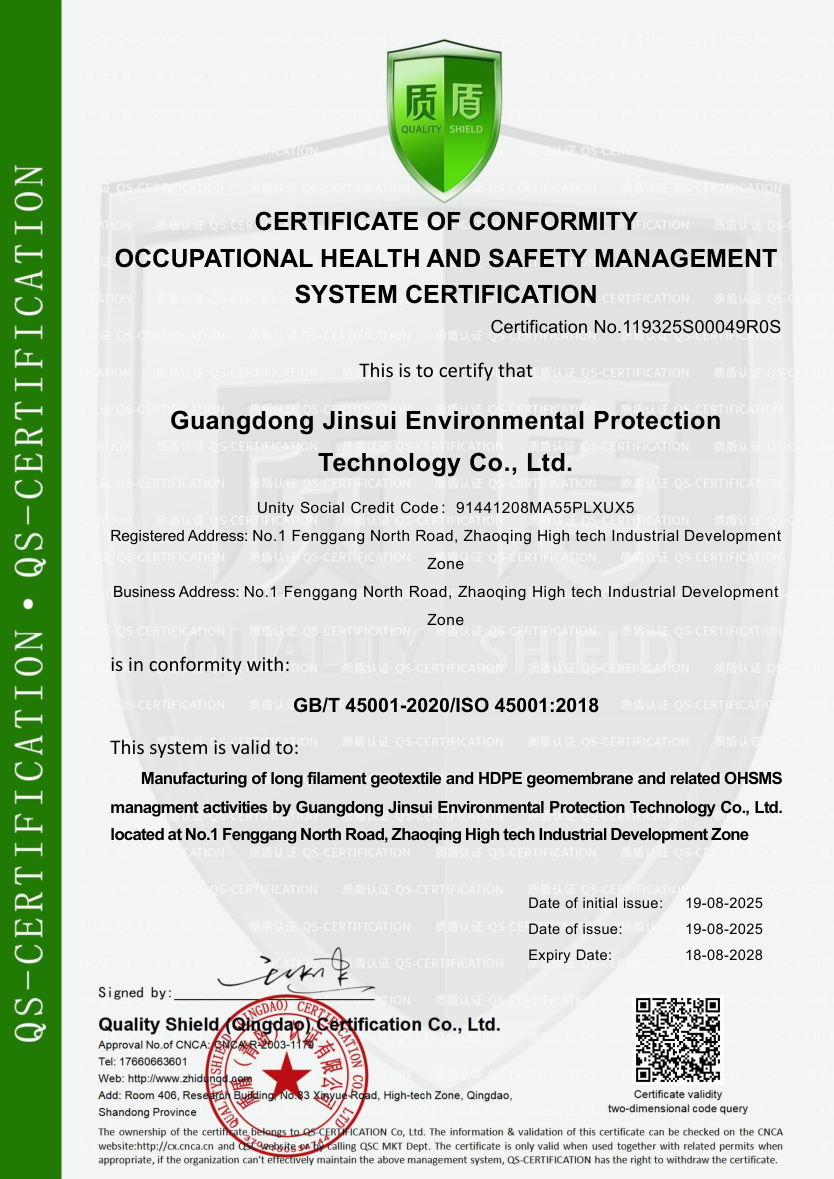
Certificate 119325S00049R0S covers the same named Guangdong company and manufacturing activities within its occupational health and safety management system. Validity shown: 19 August 2025–18 August 2028. View the full certificate. The three documents show the same unified social credit code, 91441208MA55PLXUX5; company names are reproduced as printed.
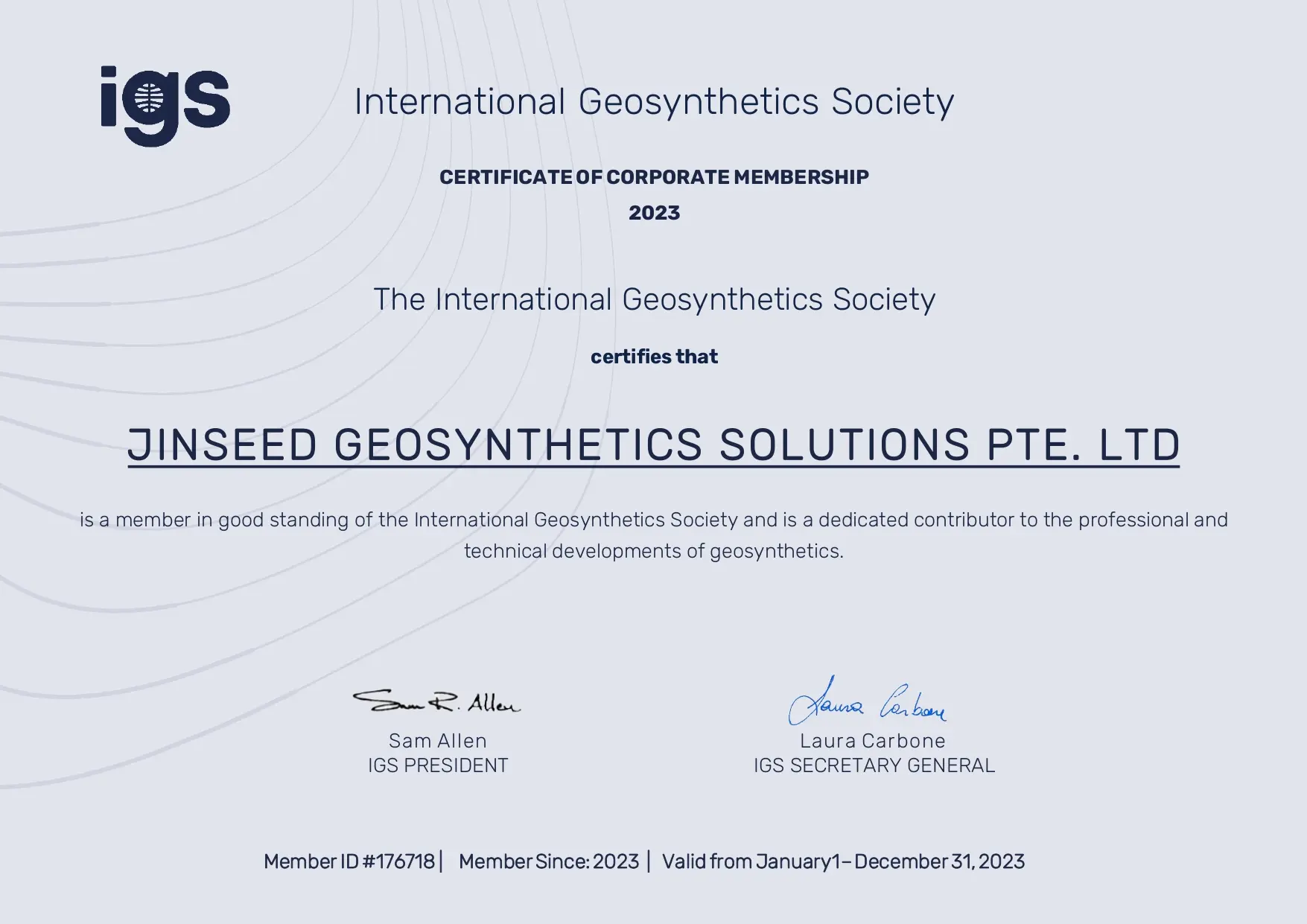
The displayed IGS corporate membership certificate is the 2023 edition, retained as a dated membership record. Membership is distinct from GRI specifications and does not certify product performance.
TRI Suzhou report SCH24132, dated 28 August 2024, identifies one 2.0 mm smooth HDPE sample. It does not certify textured products or every production batch. Read the complete sample report; request evidence matching the grade you intend to order.
Buyers may propose an independent laboratory or inspection body. Confirm the organisation’s availability, test scope, sampling arrangements, timing and costs before the order is placed.


Single-sided texture provides one rough and one smooth face; double-sided texture provides two rough faces. Selection and orientation depend on the materials at both interfaces and the stability analysis, not a universal 3:1 slope threshold. Send the layer arrangement and slope drawing for a product recommendation subject to the project engineer’s approval.
The specified texture height is at least 0.40 mm (approximately 16 mil), measured per ASTM D7466 and recorded in the order’s technical data sheet. GRI-GM13 distinguishes this manufacturing property from interface shear strength: a higher texture does not by itself establish a safe slope angle.
Our metric range is 1.0–3.0 mm (approximately 39–118 mil). Under the prescriptive composite option in 40 CFR 258.40, HDPE must be at least 60 mil (1.524 mm); a nominal 1.5 mm grade is not automatically equivalent. Select thickness for the actual application, chemistry, loads, subgrade and protection, subject to the applicable requirements and project design.
Trial orders start from 1-3 tons for regular specifications. For export shipments, a full container usually gives a better cost per square meter. Custom texture heights or roll sizes may need a larger minimum.
Standard products are usually produced within 7-15 days after the specification and deposit are confirmed. Custom orders or peak-season schedules typically take 15-25 days. We confirm the delivery date before mass production starts.
Request the technical data sheet, available sample reports and the quality records required for your ordered grade. The published TRI SCH24132 report concerns one 2.0 mm smooth HDPE sample and does not certify all textured products. Confirm samples, shipping and any independent testing scope and costs before ordering.
Email us your specification or slope drawing, or message us on WhatsApp. We will come back with a price, a lead time and a loading plan.
Six details are enough for a full quotation. Drawings or tender documents help us quote faster.
182 Cecil Street, Frasers Tower Level 17, Singapore 069547
No. 1 Fenggang North Road, Zhaoqing High-tech Industrial Development Zone