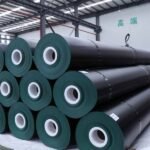
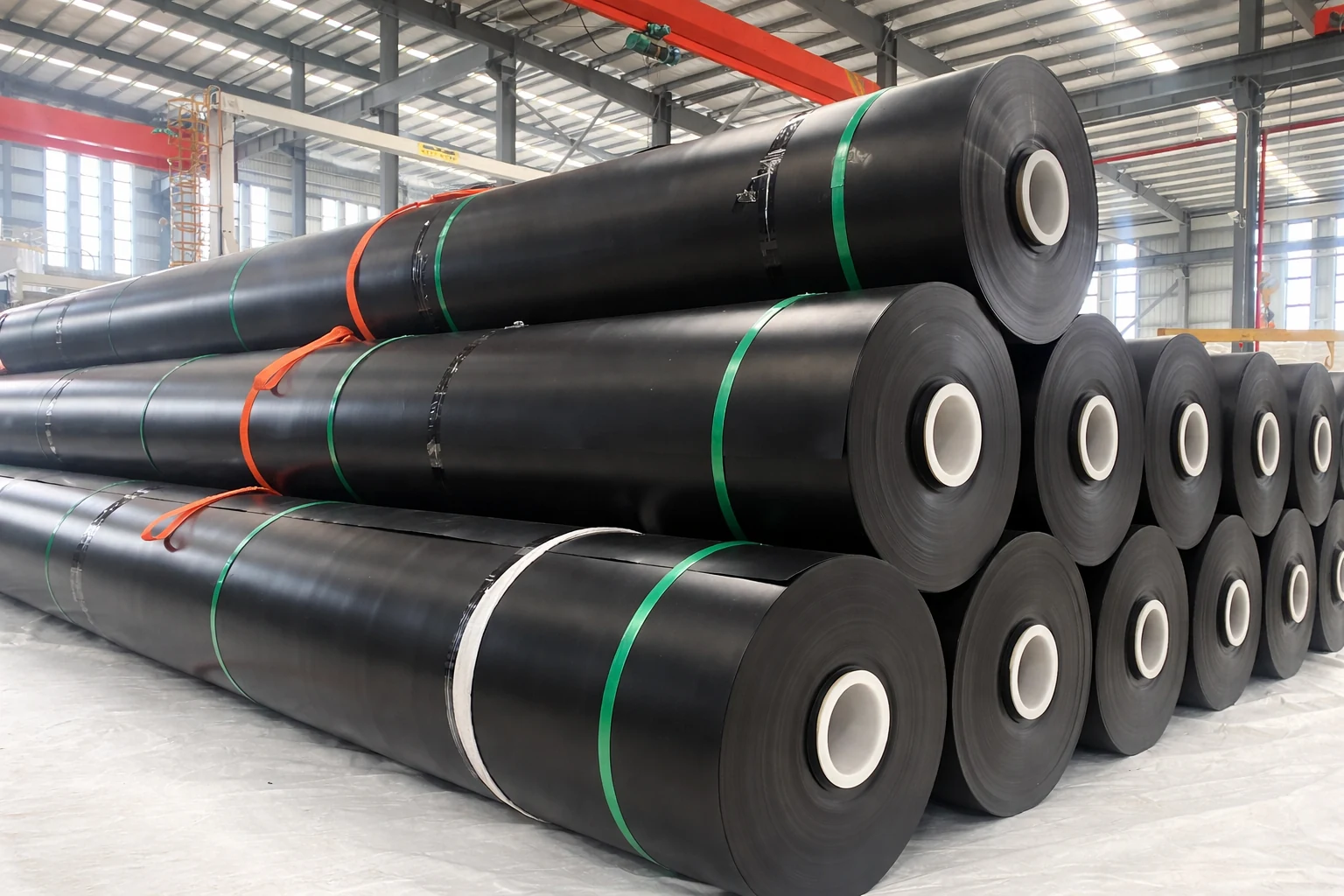
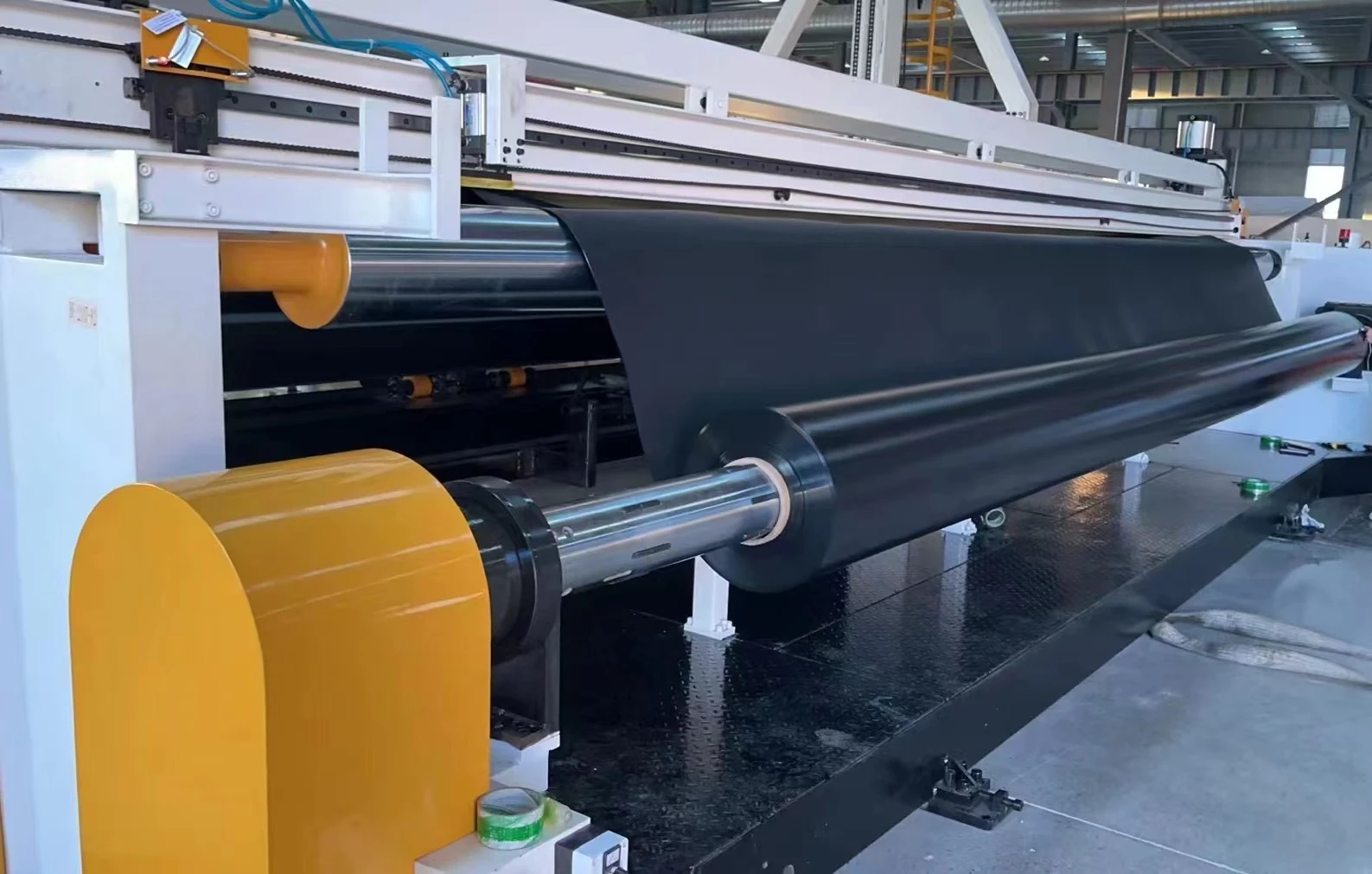
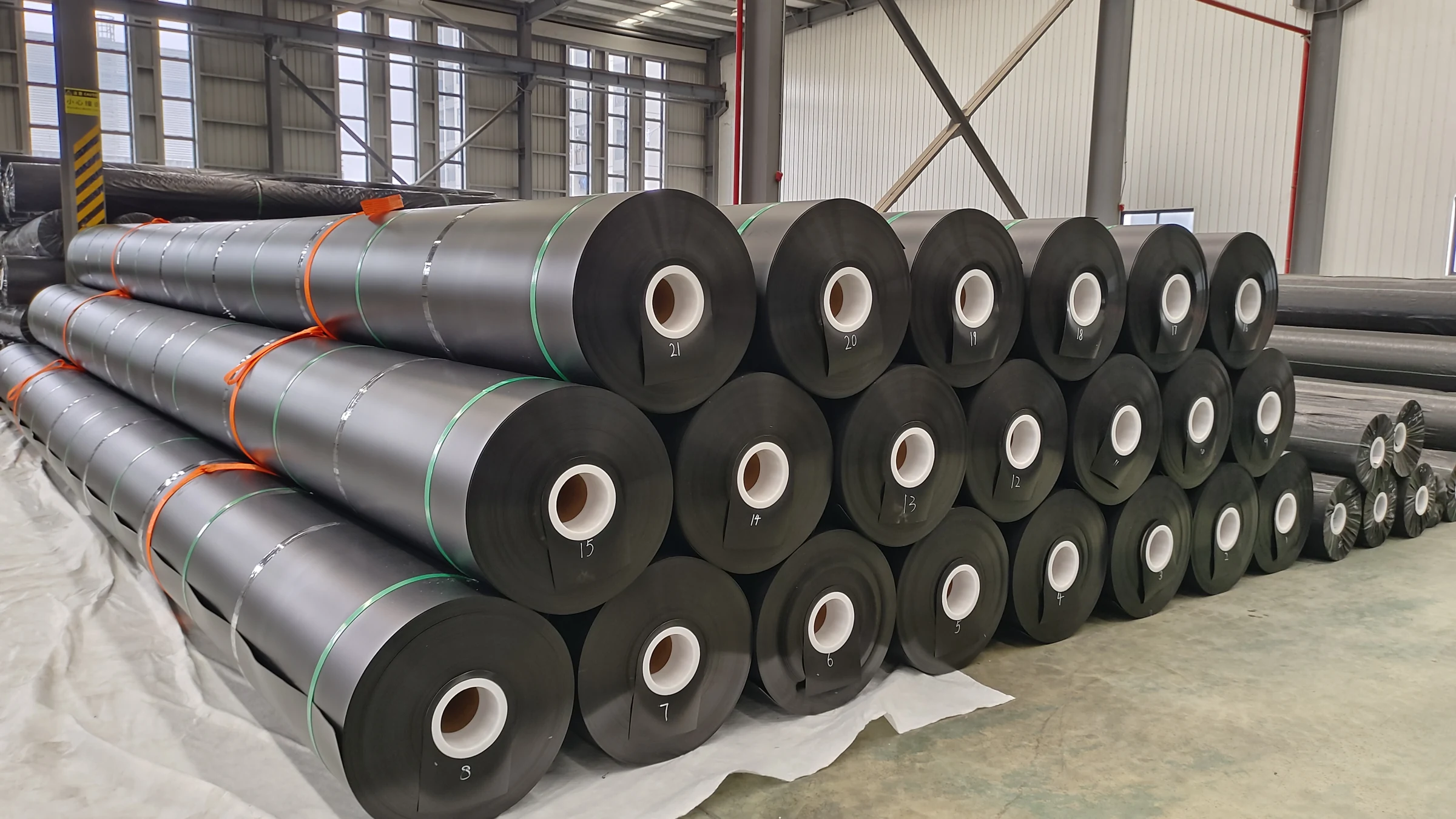
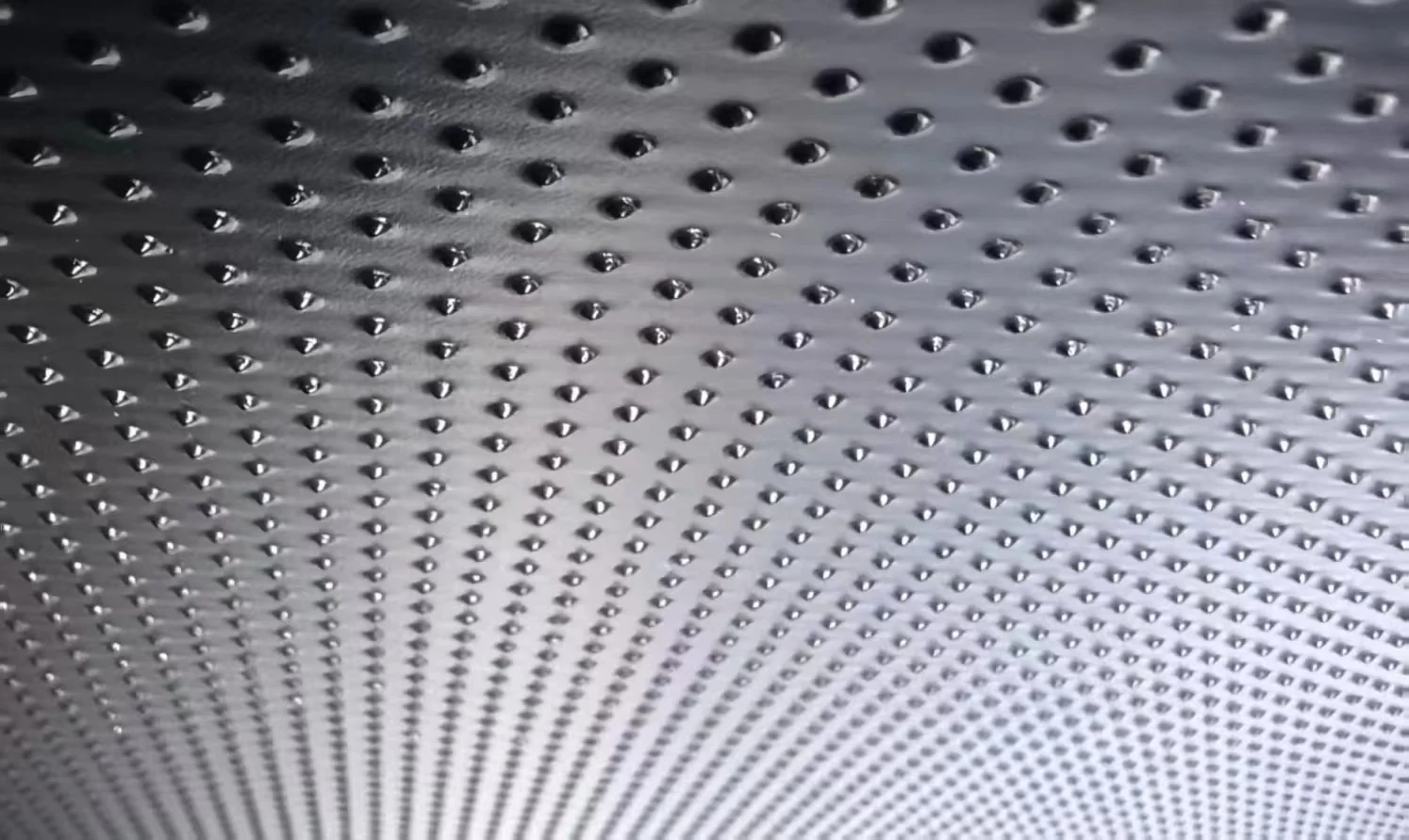
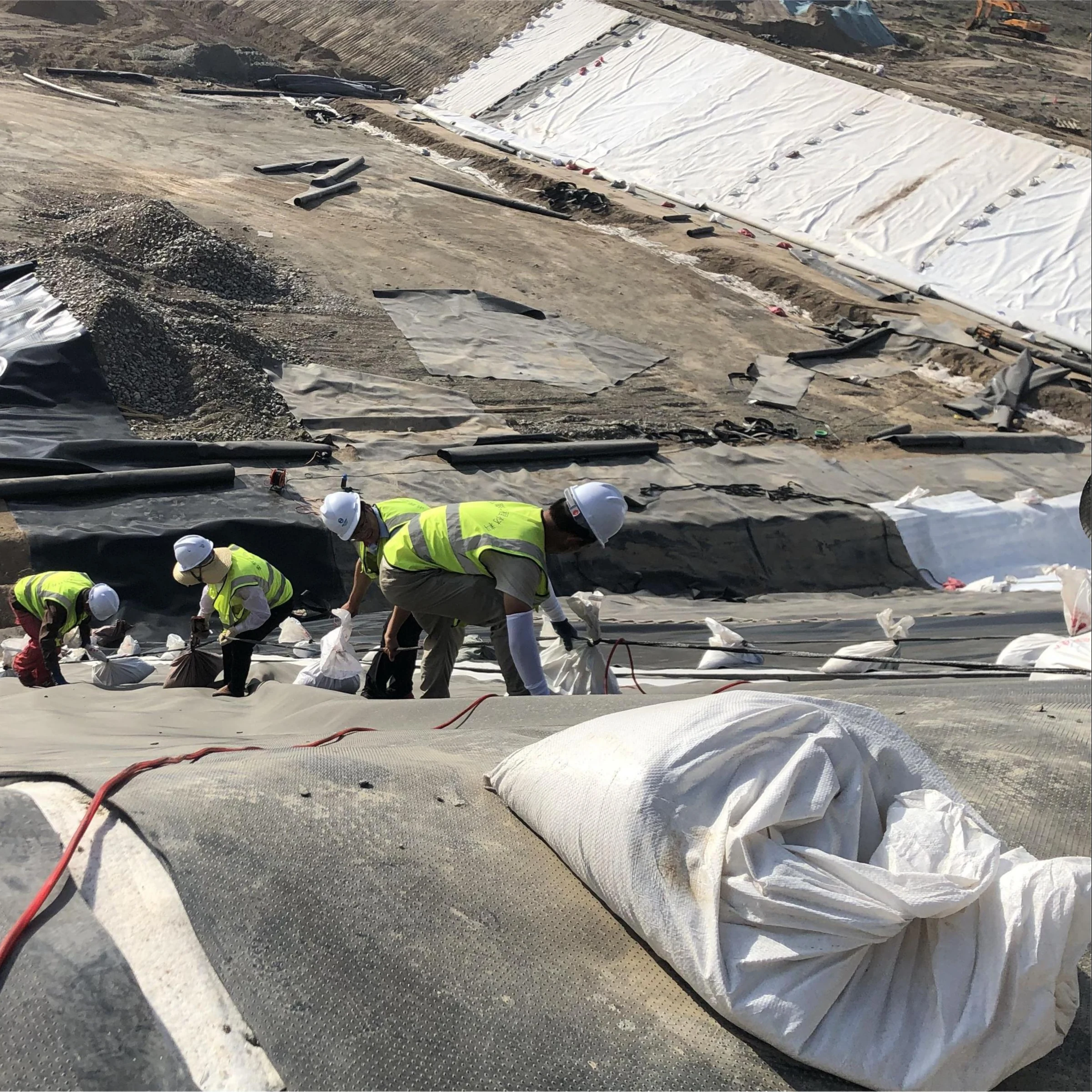
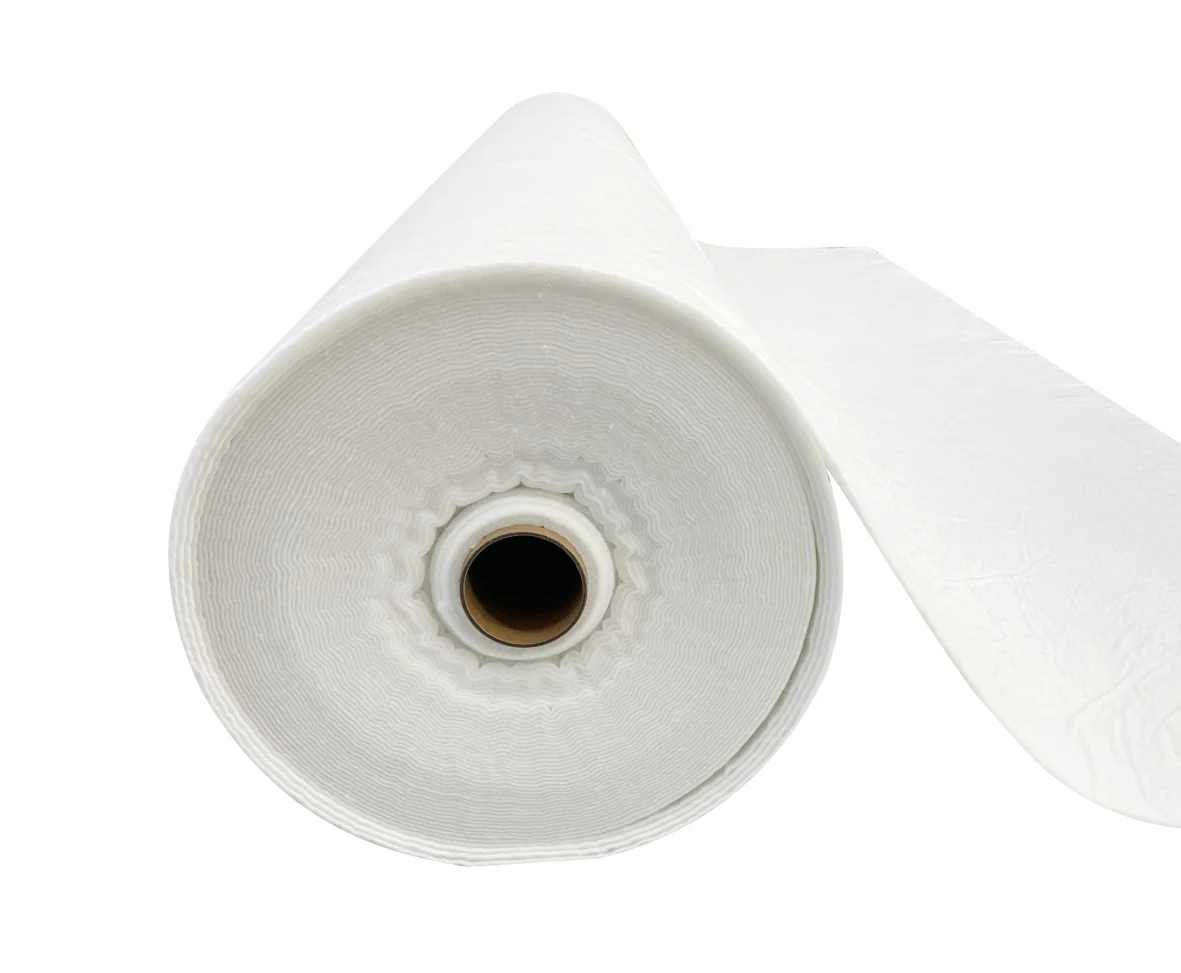

Type categories include short-fiber needle-punched (weight 100-800g/m², tensile strength ≥8kN/m), filament spunbond (100-1000g/m², strength ≥15kN/m), and composite geotextiles (fabric + membrane for filtration + anti-seepage).
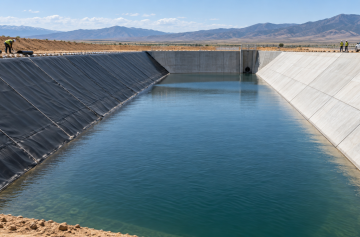
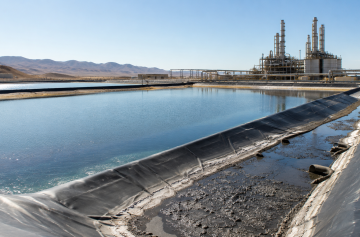
Used for road subgrade reinforcement (200g/m² short-fiber fabric reduces settlement by 30%), hydraulic dam filtration (600g/m² filament fabric filtration efficiency ≥95%), landfill drainage layers (permeability ≥0.1cm/s), and agricultural soil and water conservation (UV resistance lifespan of 15 years).
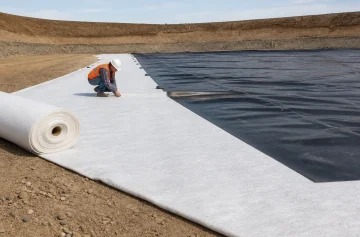
Advantages include water permeability without soil loss (particle isolation), reinforcement of soft foundations (bearing capacity increased by 20%), acid and alkali resistance (pH 3-11), and convenient construction (flat overlapping ≥30cm, fixed with U-shaped nails).
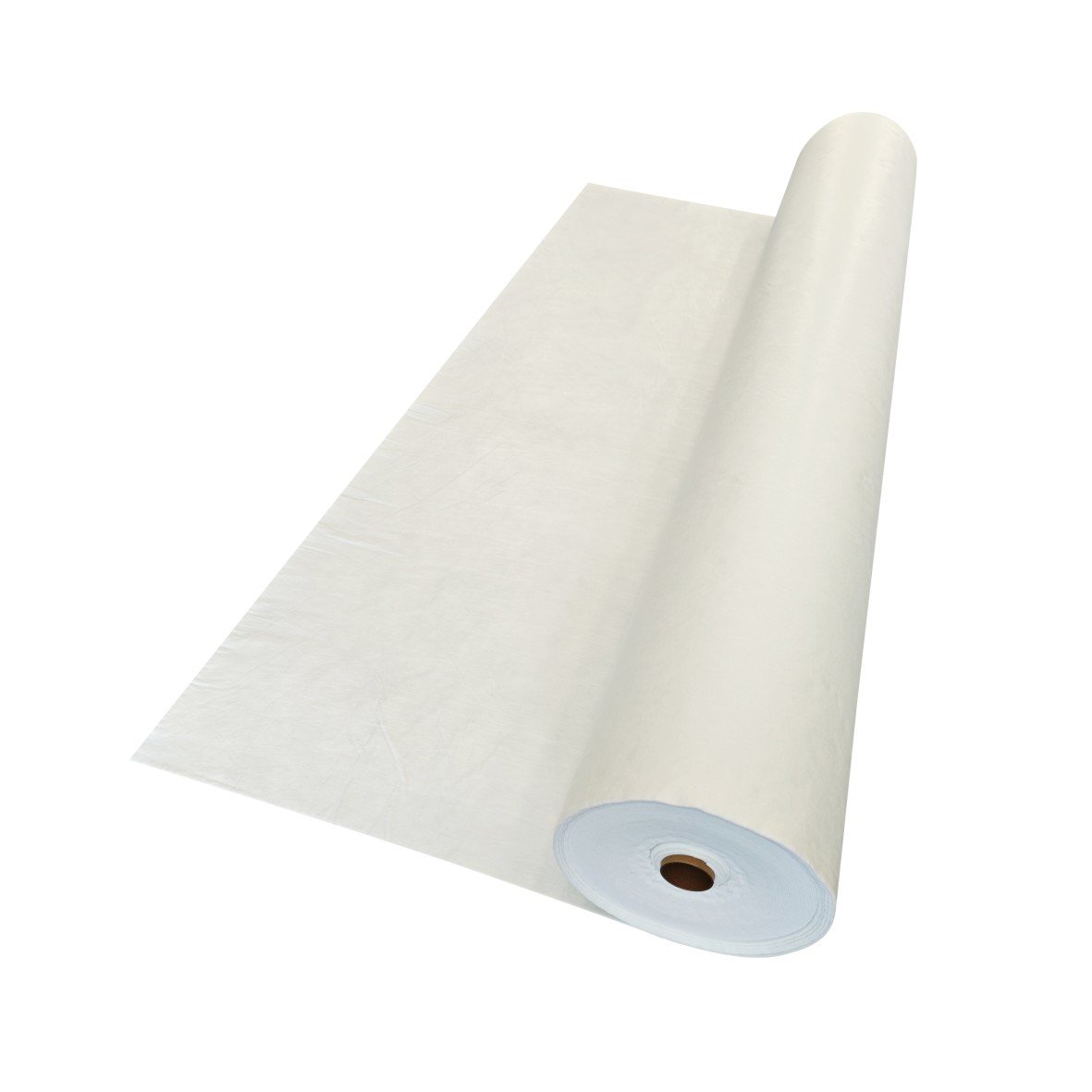
Types
Needle-Punched types dominate subgrade drainage and isolation applications due to their 3D fiber structure and high permeability (≥1.0 s⁻¹);
their needle density is typically between 2000–6000 needles/m² to ensure pore connectivity;
While heat-bonded types are mostly used in European landscaping and light-load engineering due to their smooth surface and lower elongation.
Regarding raw materials, Polypropylene (PP), with its low density of 0.91 g/cm³ and excellent acid and alkali resistance, has become the preferred choice for US drainage systems;
Polyester (PET) is widely used in European railways and deep foundation pit engineering due to its high modulus and excellent anti-creep characteristics.
Classification by Manufacturing Process
Needle-Punched Nonwoven Geotextile
The needle-punching process involves repeated piercing of the fiber web by a large number of barbed steel needles, forming a 3D interlaced structure of short fibers or filaments in the thickness direction.
In European and American engineering, needle densities are commonly between 2000–6000 needles/m².
Physical and Hydraulic Performance Ranges
- Mass per unit area: 120–600 g/m²
- Thickness (2 kPa): 1.2–6.0 mm
- Permittivity: 0.8–2.5 s⁻¹
- Apparent Opening Size (AOS): 0.075–0.6 mm
- Elongation at break: 40%–80%
These parameters typically correspond to ASTM D4751, D4491 or EN ISO 12956, 11058.
In US interstate highways and European railway engineering, needle-punched nonwoven geotextiles are prioritized for:
- Unevenly graded natural soils
- Base layers with high water content
- Drainage structures requiring long-term filtration stability
The reason is that the 3D pore structure maintains channel connectivity after fine particle migration without rapidly forming a clogging layer.
Long-term observation data from several North American Departments of Transportation (DOT) show that under the same soil conditions, the decline in permeability of needle-punched nonwoven geotextiles over a 10–20 year service cycle is significantly lower than that of heat-bonded types.
Heat-Bonded Nonwoven Geotextile
The heat-bonding process involves softening the fiber surface via heated rollers or hot air, forming bonds at contact points.
The connections between fibers are concentrated in dot-like or line-like areas, resulting in a flatter overall structure.
Typical Structural Characteristics
- Fiber distribution tends toward 2D
- Concentrated pore size distribution
- Lower surface friction coefficient
Common thickness ranges from 0.6–2.5 mm, which is significantly lower than needle-punched types.
Performance Index Ranges
- Mass per unit area: 80–300 g/m²
- Permittivity: 0.3–1.0 s⁻¹
- Apparent Opening Size: 0.1–0.4 mm
- Elongation at break: 15%–40%
Lower elongation limits its adaptability in high-deformation foundations.
In European municipal engineering and building accessory systems, heat-bonded nonwoven geotextiles are often used for:
- Roof greening drainage layers
- Sidewalk structures
- Light-load landscaping projects
Engineering designs typically avoid using this type alone in high-shear or uneven settlement areas.
Spunbond Nonwoven Geotextile
The spunbond process directly spins molten polymer into continuous filaments, simultaneously laying the web and reinforcing it.
Structural and Performance Characteristics
- Continuous filament structure
- Uniform in-plane tensile performance
- Thickness usually less than 2 mm
Common Performance Ranges:
- Mass per unit area: 70–250 g/m²
- Elongation at break: 20%–50%
- Permittivity: 0.5–1.2 s⁻¹
In US environmental engineering, spunbond nonwoven geotextiles are mostly used as:
- Auxiliary layers for erosion control systems
- Temporary isolation layers
- Components of composite geofabrics
Design documents typically do not use them alone as a primary filtration layer.
Composite Process
Some European and American projects adopt composite processes, such as:
- Needle-punched + Heat-bonded
- Spunbond + Needle-punched
The purpose is to balance structural stability with permeability performance.
Structural Features
- Surface layer enhances wear resistance
- Middle layer maintains pore connectivity
- Overall thickness is between single processes
These products are gradually appearing in European drainage systems and protective structures.
Classification by Raw Materials
Polypropylene, PP
Its molecular structure is non-polar, allowing the material to maintain extremely low water absorption in aquatic environments, typically below 0.1%.
The density of PP is approximately 0.91 g/cm³, lower than the density of water, making it easier to maintain structural shape in areas with high groundwater levels.
Mechanical Performance Ranges (Common Engineering Ranges)
- Breaking strength: 8–30 kN/m (varies with mass per unit area)
- Initial tensile modulus: 100–400 MPa
- Elongation at break: 40%–80%
High elongation makes it less prone to brittle failure under uneven settlement conditions.
Polypropylene fibers have a smooth surface, providing good connectivity between fiber pores.
Common performance ranges include:
- Permittivity: 0.8–2.5 s⁻¹
- Apparent Opening Size (AOS): 0.075–0.6 mm
In US road bases and stormwater management systems, PP nonwoven geotextiles are often used to filter fine particles while maintaining long-term water flow capacity.
PP exhibits good resistance to the following media:
- Acidic and alkaline groundwater
- Soils with high salt content
- Common microbial environments
Therefore, it is frequently chosen for projects in coastal areas, landfills, and industrial sites.
Polyester, PET
PET has a density of approximately 1.38 g/cm³, significantly higher than PP.
Mechanical Performance Characteristics
- Breaking strength: 12–50 kN/m
- Initial tensile modulus: 300–1200 MPa
- Elongation at break: 20%–50%
Higher modulus allows for more controlled deformation under long-term load conditions.
In European railway design, long-term creep behavior is an important consideration for material selection.
Experimental data shows:
- The strain growth rate of PET under constant tension is significantly lower than that of PP
- PET structural deformation is more stable over a 20–30 year design cycle
Consequently, it is more favored in load-bearing structures.
Polyester is relatively sensitive to strong alkaline environments.
In European engineering practice:
- Avoid using it alone in high pH soils
- Mostly used in neutral or weakly acidic environments
Design documents usually limit its use based on soil chemical test results.
PE & Modified Polymers
Usage Ratio and Positioning
Material Performance Characteristics
- Density: 0.92–0.96 g/cm³
- Water absorption: Extremely low
- Tensile modulus: Lower than PET, higher than some PP formulations
Anti-UV or chemical resistance can be improved through copolymerization or adding stabilizers.
Mainly used for:
- Short-term protection systems
- Covering and isolation purposes
- Auxiliary layers in special chemical environments
Classification by Function Orientation
Filtration-Oriented
Filtration-oriented nonwoven geotextiles are used to allow water flow while restricting soil particle migration, suitable for subsurface drainage, subgrades, and hydraulic engineering.
Main Performance Indicators and Common Ranges
- Apparent Opening Size (AOS): 0.075–0.6 mm
- Permittivity: 0.8–2.5 s⁻¹
- Thickness (2 kPa): 1.5–6.0 mm
A proportional relationship must be satisfied between pore size and soil D85 grain size to reduce fine particle loss.
Separation-Oriented
Separation-oriented nonwoven geotextiles are used to prevent the mixing of different soil or material layers, commonly seen in road structures, airport runways, and industrial sites.
Performance Focus Points
- Tensile strength: 8–30 kN/m
- Puncture resistance: 0.8–3.5 kN
- Elongation at break: 40%–70%
Drainage-Oriented
Drainage-oriented nonwoven geotextiles emphasize rapid water flow within the plane or vertical direction of the geotextile, often paired with drainage boards, geonets, or gravel layers.
Key Performance Parameter Ranges
- In-plane transmissivity: 1×10⁻³–1×10⁻¹ m²/s
- Thickness retention after compression: ≥70%
- Permittivity: ≥1.0 s⁻¹
Thickness compression effects under long-term loads must be considered in design.
Protection-Oriented
Performance Requirement Focus
- Thickness: 3.0–8.0 mm
- Puncture resistance: 2.0–6.0 kN
- Energy absorption capacity: Verified through impact tests
Such products typically have high mass per unit area and multi-layer structures.
In US and European landfills and artificial anti-seepage systems, protection-oriented nonwoven geotextiles are often laid above and below geomembranes to disperse stress.
Reinforcement-Assist
Performance Characteristics
- Moderate tensile strength
- High elongation
- Good energy absorption capacity
Helps redistribute stress under uneven settlement conditions.
In US temporary roads and construction access roads, nonwoven geotextiles are often used in conjunction with geogrids to improve overall structural stability.
Uses
Nonwoven geotextiles are widely used in US and European civil engineering for filtration, isolation, drainage, and protection fields, typically required to comply with AASHTO M288 (American Association of State Highway and Transportation Officials) standards for different application classes (Class 1-3).
In French Drains and subsurface drainage systems, the material utilizes its high Permittivity (typically greater than 0.5 sec⁻¹) to allow rapid water flow while intercepting soil particles from 0.149mm to 0.21mm via Apparent Opening Size (AOS), preventing pipe clogging.
In road construction, it is placed between soft soil subgrades and aggregate layers to prevent mixing; engineering data shows this reduces subsequent pavement rutting and saves up to 30% in aggregate backfill.
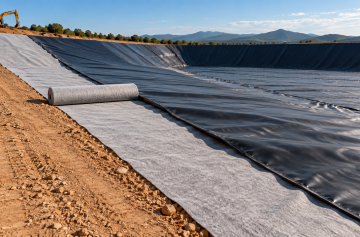
At high weights (such as above 10oz/yd²), it often serves as a cushion layer to protect HDPE geomembranes from punctures by sharp objects, common in EPA-compliant landfill projects.
Subsurface Drainage
Standards
The M288 specification issued by the American Association of State Highway and Transportation Officials (AASHTO) is the general guideline for selecting drainage geotextiles in North America.
For subsurface drainage, AASHTO divides requirements into Class 2 and Class 3, depending on the required Survivability.
| Class | Application Scenario | Grab Tensile Strength (ASTM D4632) | Tear Strength (ASTM D4533) | Puncture Strength (ASTM D6241) |
|---|---|---|---|---|
| Class 2 | Suitable for most conventional drains where gravel is angular or trench depth exceeds 3 meters, with high installation stress. | ≥ 157 lbs (700 N) | ≥ 56 lbs (250 N) | ≥ 309 lbs (1375 N) |
| Class 3 | Suitable for flat trench bottoms using rounded gravel or washed crushed stone, with low installation stress. | ≥ 112 lbs (500 N) | ≥ 40 lbs (180 N) | ≥ 223 lbs (990 N) |
AOS Selection
The selection of Apparent Opening Size (AOS, ASTM D4751) must match the particle size distribution of the site soil (particularly the D85 grain size).
- Soils with sand content > 50%: Requires AOS less than 0.60mm (No. 30 Sieve).
- Soils with clay or silt content > 50%: Requires AOS less than 0.30mm (No. 50 Sieve) to 0.21mm (No. 70 Sieve).
- Nonwoven Advantage: Typical lightweight nonwovens (e.g., 3.5oz – 6oz) have an AOS between 0.150mm and 0.212mm (No. 70 – 100 Sieve), which effectively covers the filtration needs of most silty clays, preventing pipe clogging.
Nonwoven geotextiles perform vertical permeation functions in subsurface drainage systems according to the ASTM D4491 standard, with Permittivity typically maintained between 0.5 sec⁻¹ and 2.0 sec⁻¹, allowing water to pass at flow rates of 100 to 140 gpm/ft², a rate far exceeding the permeability of most natural soils.
Under the AASHTO M288 specification, engineering designs usually select materials with an AOS between 0.15mm and 0.21mm (No. 100 to No. 70 sieve).
This specific pore size, when paired with #57 or #67 clean crushed stone aggregate, induces soil particles at the fabric interface to form a stable “soil bridge” or filter cake layer.
Subgrade Separation
Selection
In the US and Canada, geotextile selection strictly follows AASHTO M288 (Standard Specification for Geotextiles for Highway Applications).
For subgrade separation and stabilization, M288 defines three classes, with Class 1 and Class 2 being the most common:
| Class | Installation Conditions | Grab Tensile Strength (ASTM D4632) | Puncture Strength (ASTM D6241) | Trapezoidal Tear Strength (ASTM D4533) |
|---|---|---|---|---|
| Class 1 (Severe) | Suitable for very soft subgrades (CBR < 1), using large, angular rocks, or heavy equipment operating directly above. | ≥ 315 lbs (1400 N) | ≥ 618 lbs (2750 N) | ≥ 112 lbs (500 N) |
| Class 2 (Moderate) | Suitable for medium strength subgrades (CBR 1-3), using well-graded crushed stone with moderate backfill thickness. | ≥ 247 lbs (1100 N) | ≥ 495 lbs (2200 N) | ≥ 90 lbs (400 N) |
| Class 3 (Mild) | Used only for flat subgrades and scenarios without sharp-angled aggregates (mainly for small private driveways or sidewalks). | ≥ 180 lbs (800 N) | ≥ 309 lbs (1375 N) | ≥ 67 lbs (300 N) |
Note:
The above data are typically for nonwoven geotextiles with Elongation ≥ 50%.
Comparison
In road stabilization applications, nonwovens are often compared with Woven Geotextiles and Geogrids.
Nonwoven
- Advantages: Extremely high permeability (drainage) and elongation, best isolation effect.
- Limitations: Lower Modulus; does not directly provide high-strength tensile reinforcement, primarily stabilizing the subgrade “indirectly” by maintaining aggregate layer integrity.
Woven
- Advantages: High tensile modulus, providing significant reinforcement.
- Limitations: Poor permeability (especially slit-film wovens), easily leading to pore water pressure buildup and subgrade softening.
For clayey, poorly drained soft subgrades, engineers tend to use high-strength nonwovens or a composite “geogrid + nonwoven” solution.
Landfills
Specification Selection
US and European engineers typically use the Wilson-Richardson design method or Narejo empirical formulas to determine required nonwoven specifications.
- Aggregate Size and Shape: Sharp crushed stone requires thicker fabric than rounded pebbles.
- Normal Stress: The design height of the landfill determines the bottom pressure.
- Geomembrane Thickness: 60 mil or 80 mil.
Protection Level Reference Table (Based on GRI-GT12 standard):
| Landfill Depth (Estimated Pressure) | Aggregate Type (Max Size) | Recommended Nonwoven Weight (Mass per Unit Area) | Typical Puncture Strength (ASTM D6241) |
|---|---|---|---|
| < 15 m | Round gravel (25mm) | 10 oz/yd² (340 gsm) | > 2,600 N (585 lbs) |
| 15 – 30 m | Angular crushed stone (25mm) | 12 oz/yd² (407 gsm) | > 3,200 N (720 lbs) |
| 30 – 60 m | Angular crushed stone (38mm) | 16 oz/yd² (543 gsm) | > 4,200 N (945 lbs) |
| > 60 m | Coarse crushed stone (50mm+) | 24 – 32 oz/yd² (814 – 1085 gsm) | > 6,500 N (1,460 lbs) |
Leachate Collection
According to US Federal Regulation 40 CFR Part 258, the liquid level at the bottom of the landfill (Head on Liner) must not exceed 30 cm.
- Filtration Precision: The fabric must have an appropriate Apparent Opening Size (AOS) to both block fine particles (e.g., soil, pulp debris) in waste from entering the drainage layer and allow smooth liquid passage.
- Long-term Permeability: Considering design lifespans are usually 30 to 100 years, nonwoven permeability design values typically introduce high safety factors (FS > 3) to offset porosity decline caused by creep and compression.
Bio-Clogging and Countermeasures
- Material Optimization: In landfills with high concentrations of organic waste, engineers prefer specifying large-pore nonwovens or those with a high proportion of monofilaments, or increasing fabric porosity (> 90%).
- Gradient Ratio Test: Perform tests according to ASTM D5101 to ensure long-term water flow capacity in specific leachate environments. If the gradient ratio continues to rise, it indicates serious biological or chemical precipitate clogging at the fabric interface.
Landfill Gas Venting
In-plane Gas Transmission (Transmissivity)
Below the final cover geomembrane, nonwoven geotextiles (usually 8 oz – 10 oz) provide a gas flow channel (Gas Transmission Layer).
- Function: Methane and CO2 generated by decaying waste flow horizontally through the fabric’s in-plane pores and collect in vent pipes.
- Pressure Release: If gas cannot vent, built-up pressure will lift the top geomembrane (Whaling), leading to landslides in the closure soil layer. Needle-punched nonwoven **Transmissivity (ASTM D4716)** is the core indicator in this application, and design must consider flow capacity attenuation under overlying soil pressure.
For landfills receiving hazardous waste (RCRA Subtitle C), regulations require EPA 9090 chemical compatibility immersion testing for all geosynthetics.
Geotextiles are immersed in specific chemical leachates for 120 days, followed by testing of physical strength retention.
Only materials with strength losses within allowable limits (typically < 20%) are approved for use.
Coastal Protection
Control Standards
For such applications, AASHTO M288 divides geotextiles into Class 1 and Class 2, with selection based on overlying material weight and construction intensity.
| Class | Application Criteria | Grab Tensile Strength (ASTM D4632) | Puncture Strength (ASTM D6241) | Tear Strength (ASTM D4533) |
|---|---|---|---|---|
| Class 1 | Severe conditions: Laid using heavy machinery, or cover material is large sharp rock (size > 300mm), drop height > 1m. | ≥ 315 lbs (1400 N) | ≥ 618 lbs (2750 N) | ≥ 112 lbs (500 N) |
| Class 2 | General conditions: Manual laying or light machinery, cover material is graded crushed stone or blocks, no high-altitude drop impact. | ≥ 247 lbs (1100 N) | ≥ 495 lbs (2200 N) | ≥ 90 lbs (400 N) |
Note:
In coastal engineering, because it usually involves heavy excavators throwing Riprap, engineers in the vast majority of cases specify Class 1 high-strength nonwoven geotextiles, or even weights above 10oz/yd² (340gsm), to ensure the fabric does not rupture when struck by rocks weighing hundreds of kilograms.
Riprap Revetment
Although Class 1 geotextiles are strong, directly dropping half-ton angular granite onto the fabric is still extremely risky.
- Standard Practice: According to FHWA (Federal Highway Administration) recommendations, a 4 to 6 inch (10-15 cm) Bedding Stone layer (usually #57 stone) should be laid over the nonwoven geotextile first.
- Function: This gravel layer acts as a “cushion,” preventing boulders from puncturing the fabric and ensuring the fabric stays tight against the ground, preventing displacement or folding under water flow.
Anchor Trenches
- Toe Key-in: At the base of the revetment (underwater), a deep trench (usually 1m deep, 1m wide) must be excavated, the geotextile laid in, and backfilled with heavy stone. This prevents strong water currents from Undercutting and causing overall revetment collapse.
- Crest Anchor: At the top of the slope, the fabric should extend onto flat ground and be buried in a trench at least 0.5m deep to prevent surface runoff from washing behind the fabric.
Interlocking Concrete Blocks
Interface Friction and Stability
- Interface Friction Angle: The rough surface texture of nonwoven geotextiles provides good friction, effectively “gripping” the underlying soil and overlying concrete blocks.
- Vacuum Suction Effect: When high-speed water flows over smooth concrete block surfaces, negative pressure (lift) is generated. Highly permeable nonwovens allow underlying air and water to replenish quickly, balancing pressure differences and preventing blocks from being “sucked” off the ground.
Overlapping Standards
Sewing Standards
The US Army Corps of Engineers (USACE) typically mandates Sewn Seams for underwater laying.
High-strength polyester or Kevlar thread with UV resistance must be used, with seam strength reaching 90% of fabric strength (typically using double-thread chain stitch, “Butterfly” or “J-Seam”).
If in dry areas above the water line, overlap methods can be used, but overlap widths must follow these principles:
- Shingle Lap: Upstream fabric must be pressed over downstream fabric, similar to roof tiles, preventing flow from washing into joints.
- Overlap Amount: Minimum overlap width is typically 0.6m (2 feet). If soil is soft or the surface is uneven, increase to 1m.
- Securing Pins: Use long steel nails (U-shaped pins, 15-30cm long) at a density of at least 1 per square meter to fix the fabric, preventing displacement by wind or during backfill.
In breakwaters, river regulation, and dam slope protection projects, designs typically require fabric permeability to reach 10 to 100 times that of the protected soil (usually > 0.5 sec⁻¹) to quickly dissipate excess pore water pressure generated during wave retreat or Rapid Drawdown.
Simultaneously, by selecting an AOS (0.15mm – 0.22mm) smaller than the soil’s D85 grain size, physical Piping phenomena are blocked, preventing the underlying soil body from being washed away.
Benefits
Nonwoven geotextiles, with their unique needle-punched or heat-bonded processes, form a 3D fiber mesh structure with porosity as high as 80%-90%.
This structure gives the material excellent hydraulic conductivity, with Permittivity typically reaching above 0.1 cm/s, effectively intercepting soil particles as small as 0.075mm while allowing rapid water passage, preventing drainage system clogging.
In terms of mechanical performance, their elongation at break usually exceeds 50%, which, combined with high CBR puncture strength (common specs reach 1000N-4000N), allows them to adapt to uneven foundation settlement without rupturing.
High Efficiency Filtration and Drainage
Permittivity
In engineering design, the main parameter for measuring water’s ability to cross a geotextile vertically is Permittivity, expressed as $\Psi$ (sec⁻¹).
Higher than Soil Permeability Standards
Engineering guidelines typically suggest that geotextile permeability should be at least 10 times that of the adjacent soil.
- Cohesive Soil Environments: For clays or silts with low permeability (k < 10⁻⁵ cm/s), nonwoven geotextile permeability is extremely abundant, ensuring continuous drainage.
- Sandy Soil Environments: Even in sands with good permeability, standard nonwoven geotextiles (Permittivity > 0.5 sec⁻¹) can handle peak flows during rainstorms.
| Soil Type | Typical Permeability (cm/s) | Adapted Geotextile Permeability Demand |
|---|---|---|
| Clay | < 10⁻⁷ | As long as it doesn’t clog, any standard geotextile works |
| Silt | 10⁻⁵ – 10⁻⁷ | Focus on pore size matching to prevent fine particle clogging |
| Fine Sand | 10⁻³ – 10⁻⁵ | Requires high permittivity to prevent back-pressure buildup |
AOS
Apparent Opening Size (AOS), often referred to as O95, is the dimension where 95% of pores are smaller than that diameter.
Soil Bridging Effect
- Coarse Particle Interlocking: As fine particles are lost, larger soil particles are trapped on the geotextile surface and form an “interlocked” skeleton on the fiber mesh.
- Natural Filter Layer: This coarse particle skeleton subsequently blocks finer particles behind it, forming a natural, highly permeable filter layer (Natural Soil Filter).
- System Stability: Once this filter layer forms, subsequent water flow no longer carries soil particles, and the system enters dynamic equilibrium. The 3D structure of nonwovens provides an ideal attachment base for this “soil bridging.”
Transmissivity
Besides allowing vertical water passage, specific types of thick nonwovens (primarily filament or short-fiber needle-punched) possess the ability to transport fluids within the fabric plane, a property called Transmissivity, expressed as $\theta$ (m²/s).
Drainage Performance Under Pressure
- Low Pressure Environments: Under sports field turf or landfill closure covers, 2mm-5mm thick geotextiles can serve as the sole drainage layer, replacing traditional sand/gravel layers, with flow rates reaching several liters/minute per meter width.
- High Pressure Environments: Behind deep tunnel linings or at high embankment bases, geotextiles face immense pressure. High-quality needle-punched nonwovens have good compression resilience due to mechanical fiber entanglement. Even if compressed to 50% of original thickness, they retain some continuous capillary channels for venting gas or trace seepage.
Anti-Clogging
Clogging Mechanism Analysis
- Blinding: Refers to soil particles covering the geotextile surface, forming an impermeable mud cake. Rough nonwoven surfaces with fiber protrusions make it difficult for mud cakes to form a continuous seal; water can always find gaps between fibers.
- Clogging (Internal): Refers to particles entering the fabric interior and getting stuck in pores. Since nonwovens have over 80% porosity (meaning most volume is air/water, with little solid fiber), even if some pores clog, plenty of bypass channels remain for water flow.
Gradient Ratio (GR) Test
Engineering commonly uses the Gradient Ratio (GR) to evaluate clogging risk.
GR is the ratio of the hydraulic gradient at the geotextile-soil interface to the hydraulic gradient of the bulk soil.
- Ideal State: GR value near 1, indicating water flows through the geotextile interface as smoothly as through the soil itself.
- Limit Value: For nonwovens, GR is typically required to be less than 3. This indicates that while there’s slight head loss at the interface, no buildup of pressure occurs that would damage the structure.
Enhanced Isolation
Dual Function
- Permeable to Water, Not Soil: Subgrade soil moisture still needs to vent to consolidate the soil. Nonwovens allow pore water to cross the interface into well-drained aggregate layers while blocking soil particles. This “isolation + filtration” combination prevents interface water softening.
- Anti-Abrasion: Compared to woven fabrics, needle-punched nonwovens have thickness and loft. When sharp gravel moves under load, nonwovens provide a micro-cushioning effect, reducing direct grinding of aggregate edges on the subgrade soil.
Adapting to Large Deformations
- Nonwoven Advantage: Needle-punched nonwoven elongation is typically 50% to 80%. When local subgrade settlement forms potholes, the geotextile stretches to fit, supporting the aggregate layer above like an elastic “hammock” without brittle fracture.
- Membrane Effect: When rutting is deep, tensioned geotextiles generate upward vertical forces. While this Reinforcement is secondary for nonwovens (compared to high-strength wovens or grids), under deep rutting conditions, it does provide extra support, limiting lateral aggregate displacement.
Specific Advantages
- Working Platform Setup: On swamps, peats, or high-moisture clays, heavy construction machinery sinks into mud. Laying high-strength nonwoven (typically > 300 g/m²) immediately provides a clean, continuous platform for dump trucks and dozers to work safely.
- All-Weather Construction: Even in rainy seasons, geotextile isolation prevents rain from mixing the subgrade surface into mud, ensuring continuous construction and reducing weather-related downtime.
Engineering experiments show that when 20% by volume clay is mixed into base gravel, its structural bearing capacity (CBR) may drop over 50%.
Utilizing the high elongation (>50%) and puncture resistance (CBR strength 1500N-3000N) of nonwovens prevents fine soil particles from “pumping” into aggregate voids under pore water pressure, while stopping aggregates from embedding into soft soil.
This isolation effect typically reduces “sacrificial aggregate” usage by 30% to 40%.
Weather Resistance
UV Resistance
Untreated white geotextiles exposed to summer sun for 2 weeks may lose over 50% of their strength.
To solve this, industrial practice adds Carbon Black.
- Dosage and Size: Typically 2% to 3% by weight of polymer. Carbon black particles must be tiny (20-60nm) and evenly dispersed. Carbon black effectively absorbs UV radiation, converting it into harmless heat and shielding deep polymer molecules.
- Exposure Window: Even UV-resistant black geotextiles aren’t designed for permanent exposure. ASTM D4355 test data (Xenon arc aging) show qualified products should retain 70% strength after 500 hours. This means geotextiles should be covered within 14 to 30 days after laying at the site.
Compatibility
EPA 9090 Immersion Test
The EPA 9090 standard is the gold standard for measuring this compatibility.
- Process: Geotextile samples are immersed in site leachate and removed at 30, 60, 90, and 120 days.
- Indicators: Besides tensile strength, monitor changes in weight, thickness, and dimensions (Swelling/shrinkage). Significant Swelling indicates chemicals have penetrated polymer gaps, usually leading to sharp drops in physical properties like puncture resistance.
- PP Advantage: Due to PP’s vast chemical resistance spectrum, it is almost the only choice for geotextiles in landfill Liner Systems.
Creep Resistance
Viscoelastic Properties
- Creep Curve: On logarithmic time axes, deformation increases linearly with time.
- Reduction Factors: PET’s creep performance is significantly better than PP’s. In 100-year design life reinforcement applications, PET’s allowable strength may be 40%-60% of its ultimate strength, whereas PP may be only 20%-30%. This means if PP is used for long-term tension, materials 3-4 times higher in strength than calculated must be used to offset creep.
Biological Stability
Subsurface environments are full of bacteria, fungi, insects, and rodents.
- Microbial Degradation: PP and PET are high-molecular synthetic plastics with extremely high molecular weights; natural microbes lack the enzyme systems needed to decompose these polymers. Thus, geotextiles won’t rot or mold like cotton/linen. They aren’t food sources for bacteria.
- Plant Roots: Roots can penetrate nonwoven pores, but this usually doesn’t degrade material strength. Conversely, root interlacing can provide anchoring. However, in drain pipe wraps, excessive root growth must be prevented from clogging pores.
- Animal Gnawing: Rodents or termites won’t “eat” geotextiles as there’s no nutritional value. In rare cases, if geotextiles block their paths, physical damage (gnawing) may occur. This is physical injury, not biochemical degradation.
Polypropylene, with its non-polar structure, has high resistance to acid/alkali environments (pH 2-13) and near-zero water absorption (<0.1%), meaning strength doesn’t decay in wet environments.
While Polyester faces hydrolysis risk in strong alkaline (pH > 9) environments, it excels over PP in creep performance.
To resist UV photo-oxidation, 2%-3% fine-grain carbon black must be added during production, allowing the material to retain over 70% tensile strength after 500 hours of ASTM D4355 testing.
Combined with reduction factors for installation damage, creep, and chemical degradation, engineering design lifespans are typically set at 50 to 100 years.