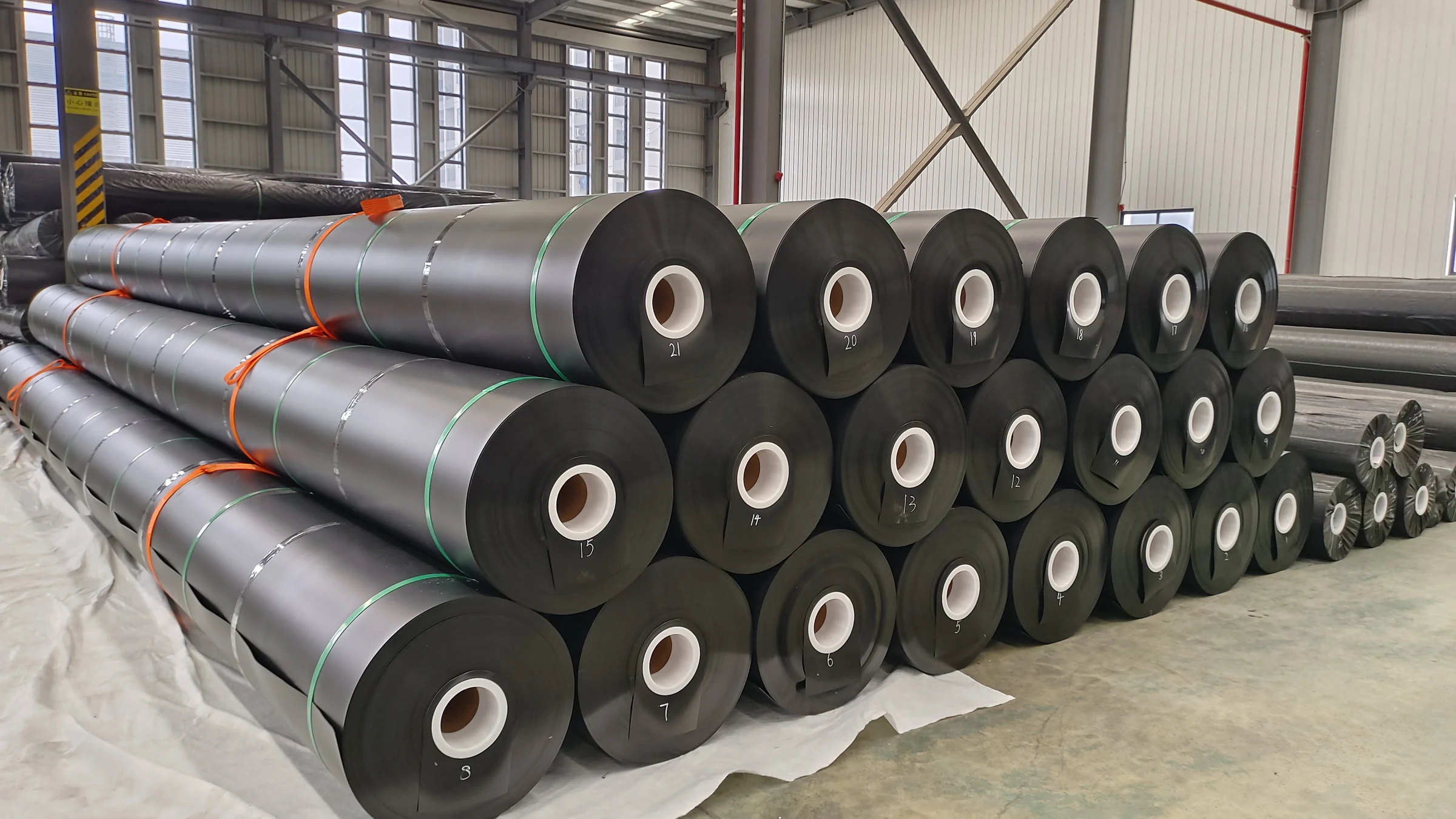
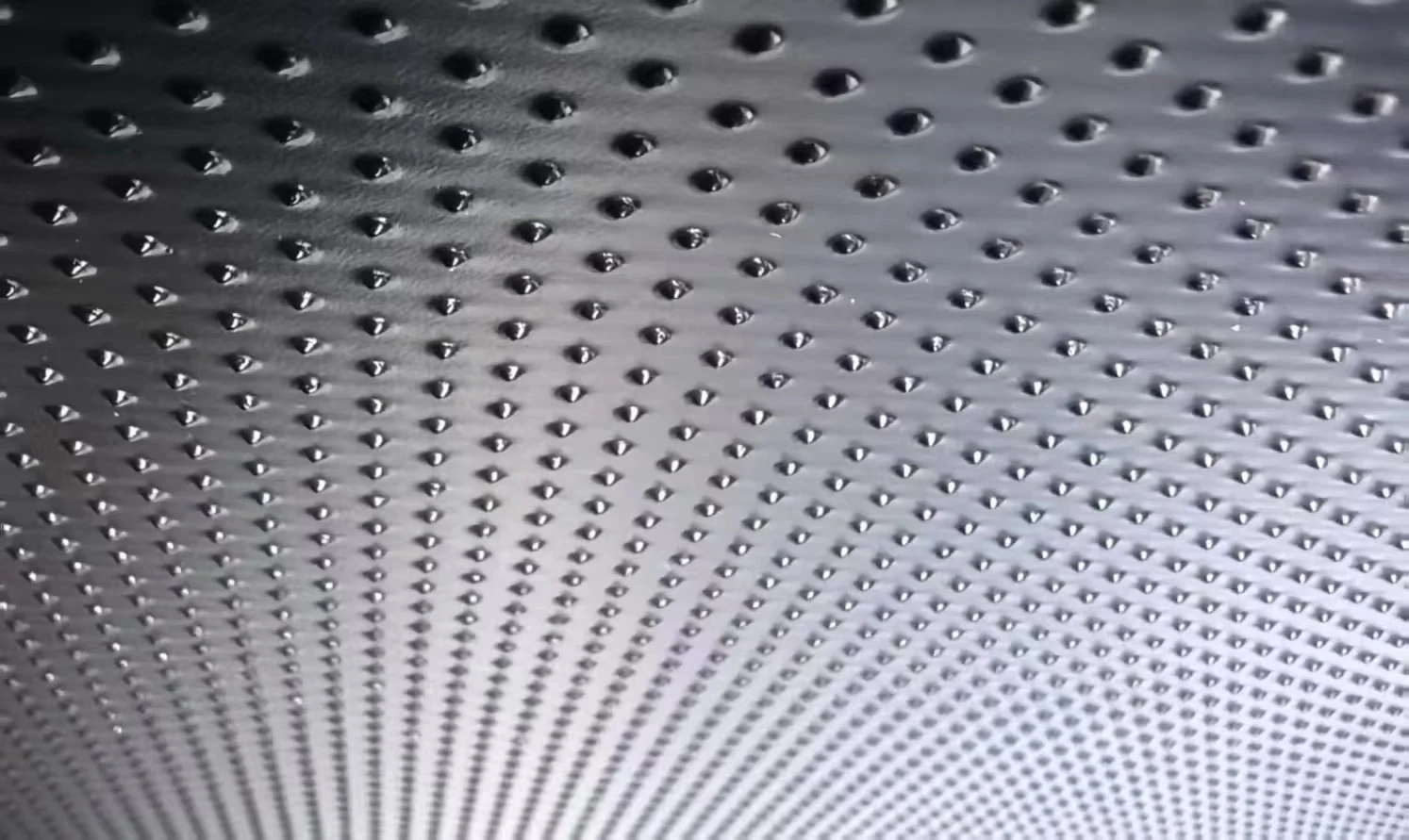
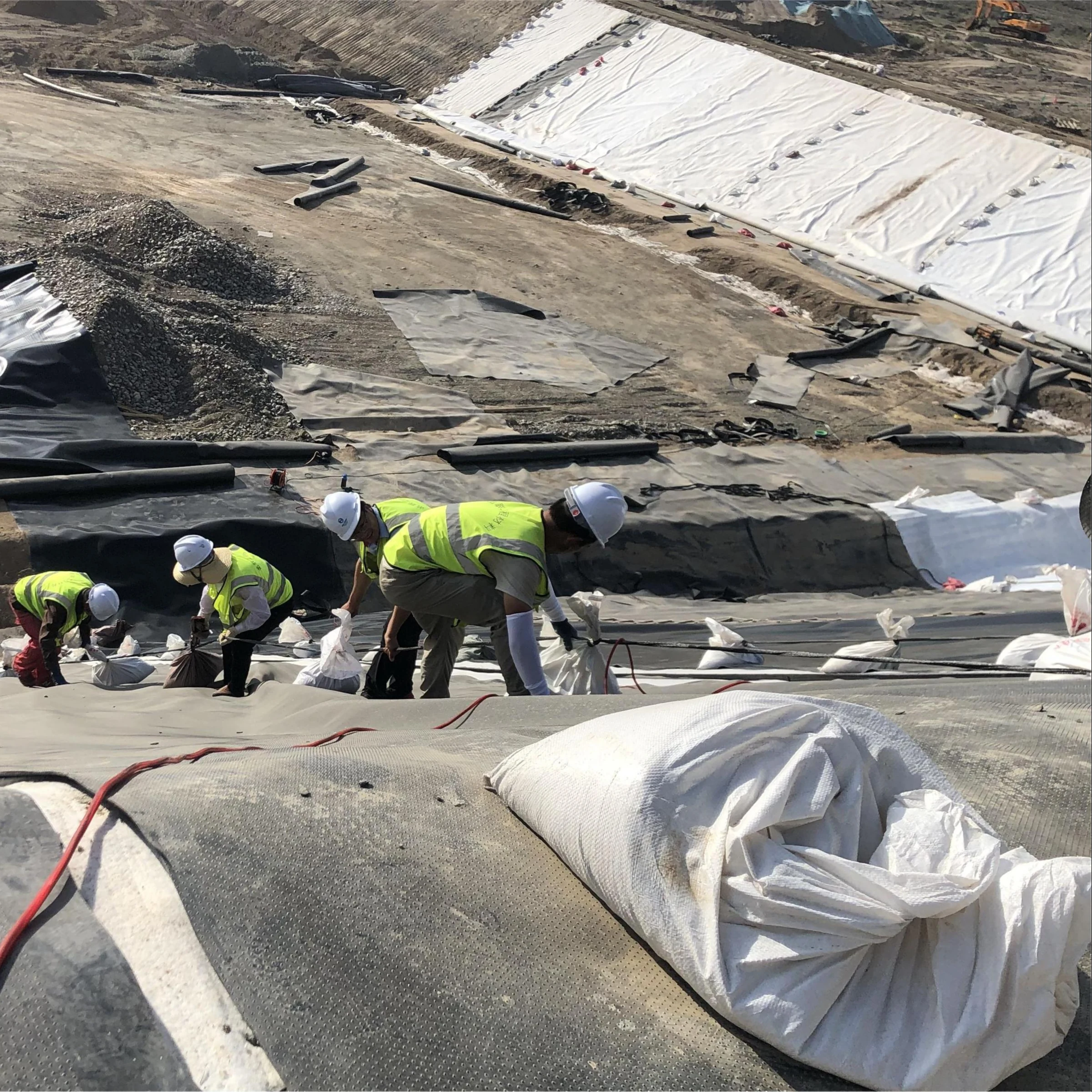
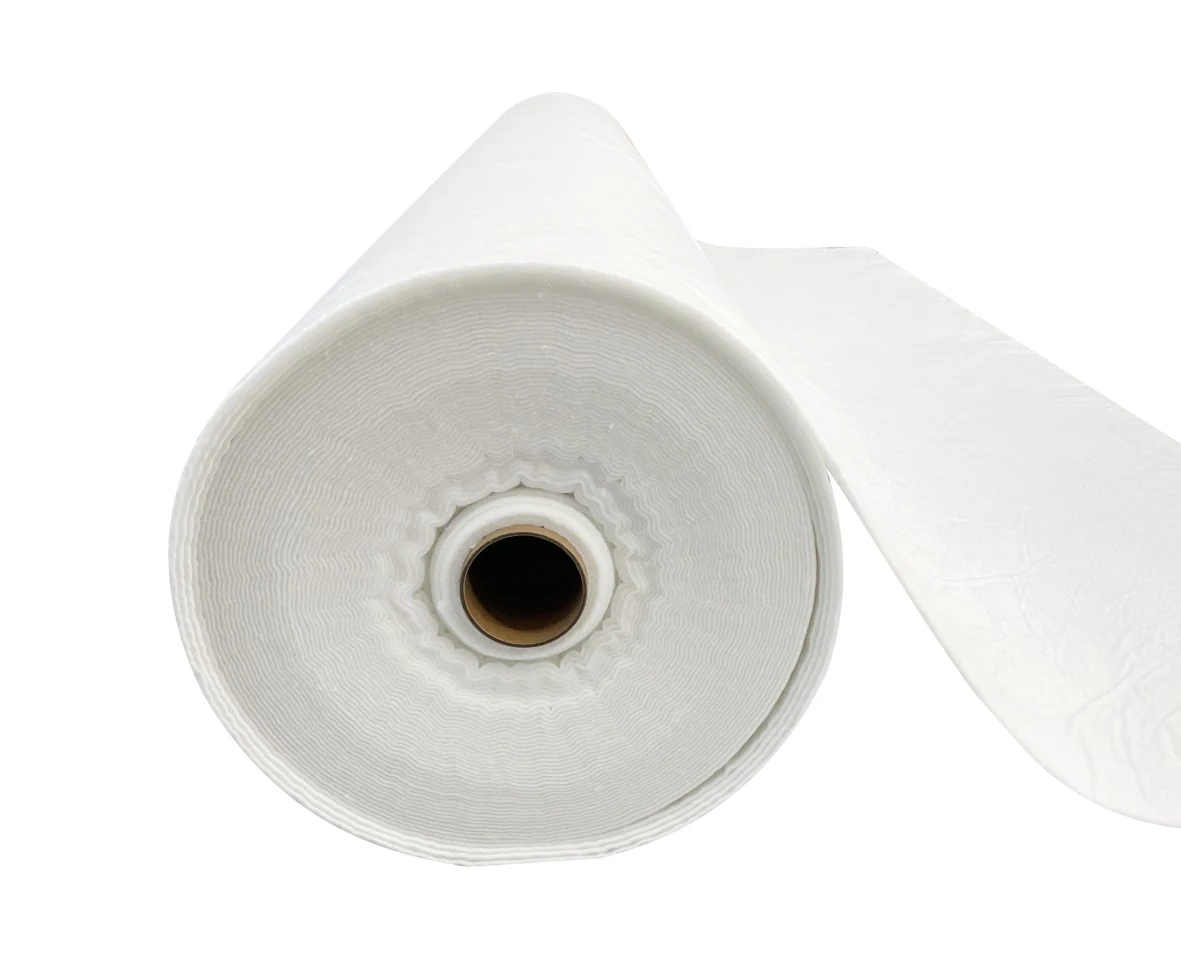

Spunbond is a type of nonwoven, so “spunbond vs. nonwoven” is not a comparison between separate material families. For geotextile purchasing, identify the web-forming process, bonding method and verified product properties. A useful comparison may be a thermally bonded continuous-filament product versus a needle-punched product, but continuous-filament webs can also be needle-punched.
This article helps buyers untangle supplier terminology and compare specifications, cost and filtration performance. It does not rank every spunbond fabric above or below every needle-punched geotextile.
Specs: compare product construction accurately
Spunbond and needle-punched describe different things
EDANA separates web formation from web bonding. Spunlaid production forms a web from extruded filaments; needle punching entangles fibers mechanically. Thermal bonding uses heat to consolidate a suitable web. Ask the manufacturer to identify the full construction instead of relying on a shortened retail label.
EDANA’s industry classification lists both thermobonded and needle-punched spunlaid materials. That directly illustrates why “continuous filament” does not mean “never needle-punched.”
| Term on a quotation | What it identifies | What still needs confirmation |
|---|---|---|
| Nonwoven | The broad fabric family | Fiber, forming and bonding processes |
| Spunbond / spunlaid | A continuous-filament production description | Actual bonding or finishing and geotextile grade |
| Needle-punched | Mechanical bonding by entanglement | Staple or continuous fibers, polymer and tested properties |
| Thermally bonded | Bonding using controlled heat | Web construction, bond pattern and tested properties |
| PP or PET | Polymer type | Formulation, construction and suitability for the exposure |
A disposable bag, a weed-control sheet and an engineered drainage geotextile may all be nonwovens. Their appearance or shared production terminology does not make them equivalent products.
Five specification checks that make comparisons meaningful
- Mass per unit area: state oz/yd² or g/m², nominal or acceptance value, and the test method. A 3.5 oz/yd² value is approximately 118.7 g/m².
- Thickness: include the measurement method and pressure. Compressible fabrics cannot be compared reliably from an informal edge-caliper reading.
- Mechanical response: identify grab or wide-width tensile testing, directions, units and elongation. Puncture and tear are separate tests.
- Hydraulic behavior: distinguish cross-plane permittivity from in-plane transmissivity; retain the test conditions.
- Filter opening: state the method and measured opening size, then assess compatibility with the project soil.
ASTM D5261 and ASTM D5199 address mass and nominal thickness. ASTM D6241 is a controlled static puncture test. Pushing a screwdriver through a suspended strip is not an equivalent acceptance test, and a bucket of mixed mud does not establish long-term filter compatibility.
Filter: denser is not always better
A geotextile filter should retain the required soil fraction while allowing sufficient water flow. Neither a “three-dimensional” fiber description nor a smaller nominal opening guarantees freedom from clogging. A stable soil–filter interface depends on the soil and hydraulic conditions.
ASTM D4751 apparent opening size is an index property. It is not the diameter below which every particle will be trapped. Soil D85 is the particle size for which 85% of the soil mass is finer—not the size above which 85% is larger. Filter criteria may use D85 and other soil characteristics, but no single retention ratio applies automatically to every soil and flow condition.
Do not replace a specified opening size with a larger one merely to “allow for compression.” A proposed substitution must still satisfy the project’s filter requirements. Similarly, a smooth appearance does not prove that a spunbond product will clog, and a fuzzy needle-punched surface does not prove that it will remain open.
What does a flow-test value tell you?
ASTM D4491/D4491M measures cross-plane water permeability by permittivity. Fabric-only laboratory flow is not a stormwater drain-down time. Soil resistance, available head, effective area, pipes and the outlet can control the installed system.
A 50 mm rainfall depth over 100 m² represents 5 m³ of gross rainfall volume: 0.05 × 100. The amount becoming runoff depends on the site. That calculation cannot be combined directly with a fabric’s laboratory gal/min/ft² rating to promise that the yard empties in five seconds.
For difficult soils or uncertain compatibility, use an appropriate laboratory assessment. ASTM D5101 addresses soil–geotextile filtration compatibility within its stated applicability. A gradient-ratio number needs the method, soil and interpretation criteria; it is not a universal pass/fail rule detached from the test conditions.
Cost: compare equivalent products and usable coverage
Manufacturing method influences production economics, but there is no dependable universal rule that spunbond costs half as much or that needle-punched fabric always saves more in maintenance. Compare dated offers for products that meet the same functional requirements.
Retain a consistent area basis. A 12.5 ft × 360 ft roll covers 4,500 ft², or 500 yd², before joints and offcuts. If a hypothetical quotation is $180 per roll, that is $0.04/ft² or $0.36/yd² before freight and installation. These are arithmetic examples, not current Jinseed prices.
At that roll area, fabric mass at 4 oz/yd² is 125 lb, and at 8 oz/yd² it is 250 lb, excluding the core and packaging. Truck capacity cannot be inferred from fabric weight alone: roll diameter, packing, dimensions, vehicle limits and unloading arrangements also matter.
- Use net coverage after the specified overlaps and cutting plan.
- Compare freight, unloading and handling on the same delivery basis.
- Include required testing, documentation, accessories and installation.
- Identify differences in acceptance values rather than assuming equal ounce ratings mean equal performance.
- Require evidence before including long-term maintenance savings in the budget.
Selection and testing: a practical decision sequence
First name the function: filtration, separation, protection or a designed reinforcement role. Then identify the soil, adjacent materials, water conditions and construction demands. Compare actual test reports for the proposed products, and resolve missing data before substituting one for the other.
For a drainage project, use the nonwoven drainage selection guide. For a weight comparison, see 4 oz versus 8 oz geotextile. For process details, see needle-punched geotextile features and uses.
Send the specification and both proposed data sheets to info@jinseed-geo.com for a product enquiry. Jinseed’s nonwoven product page provides product information; project approval still depends on the offered grade and required evidence.
Frequently asked questions
Is spunbond unsuitable for all drainage work?
No. Suitability depends on the engineered product’s filtration, hydraulic and mechanical properties. Do not generalize from an untested landscape sheet to all continuous-filament geotextiles.
Is needle-punched always thicker or weaker?
No universal ranking applies across products. Compare measurements made under equivalent methods and conditions.
Can a shop demonstration replace a test report?
No. A demonstration may reveal obvious damage or handling behavior, but it does not reproduce controlled testing or establish long-term design performance.