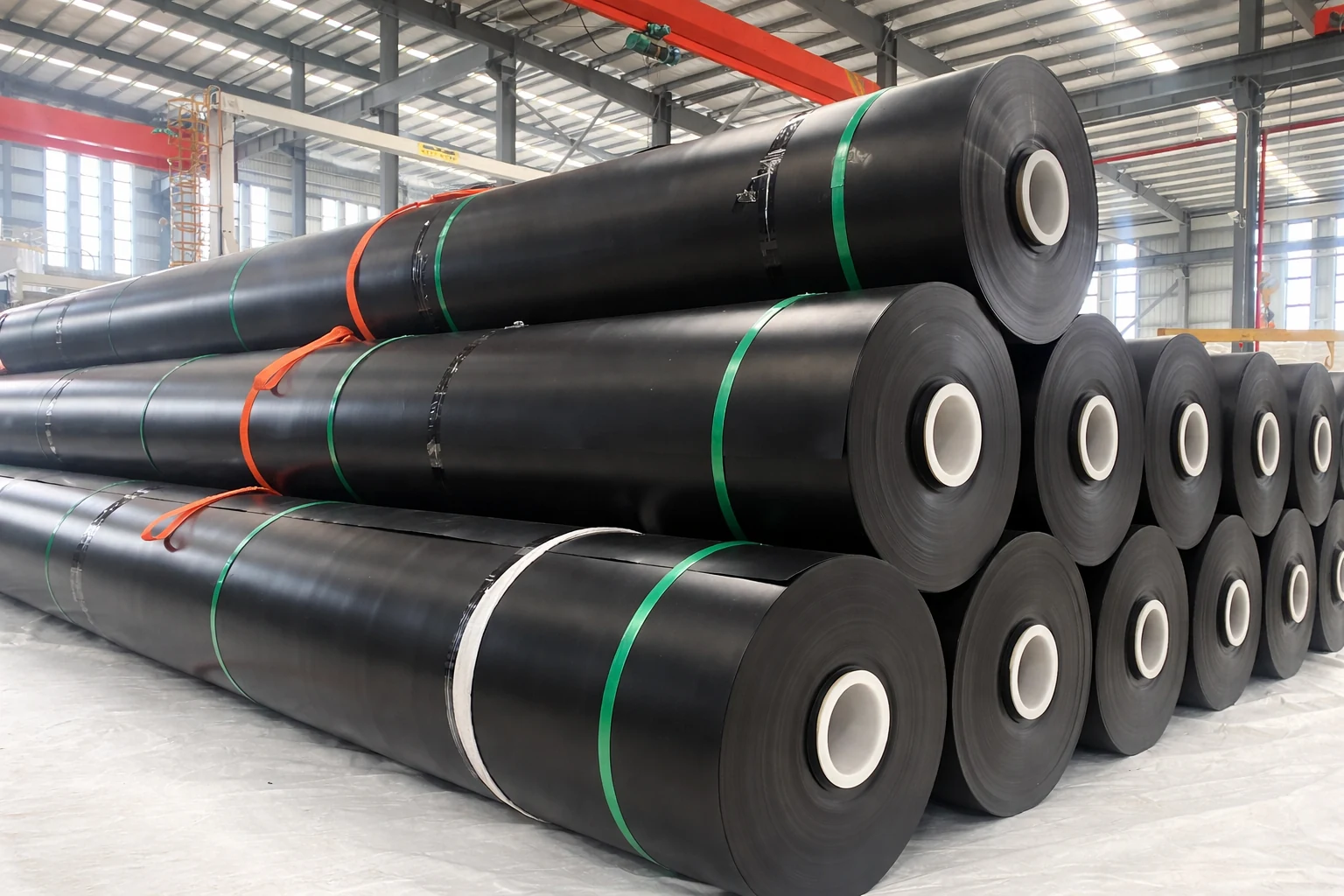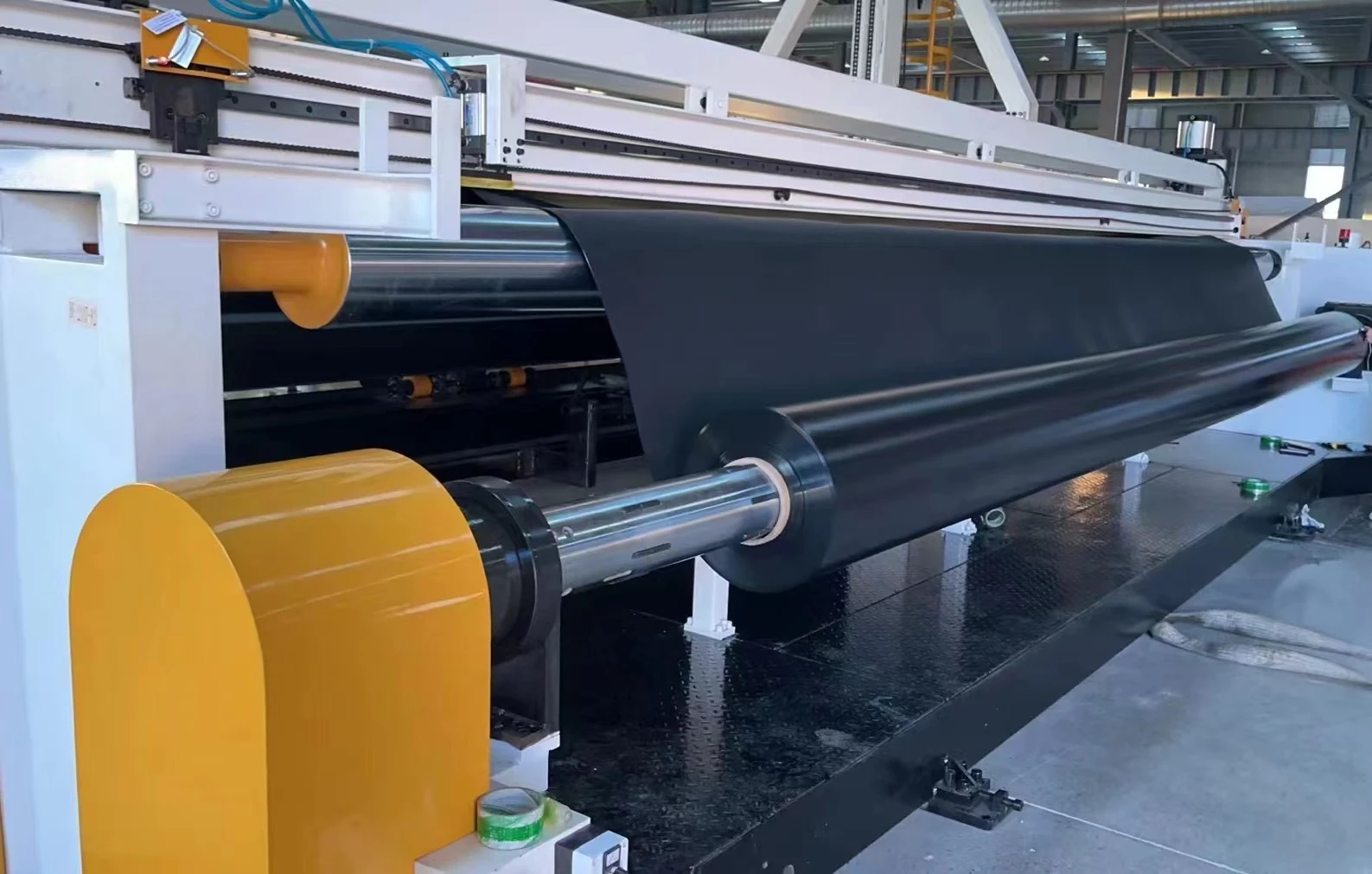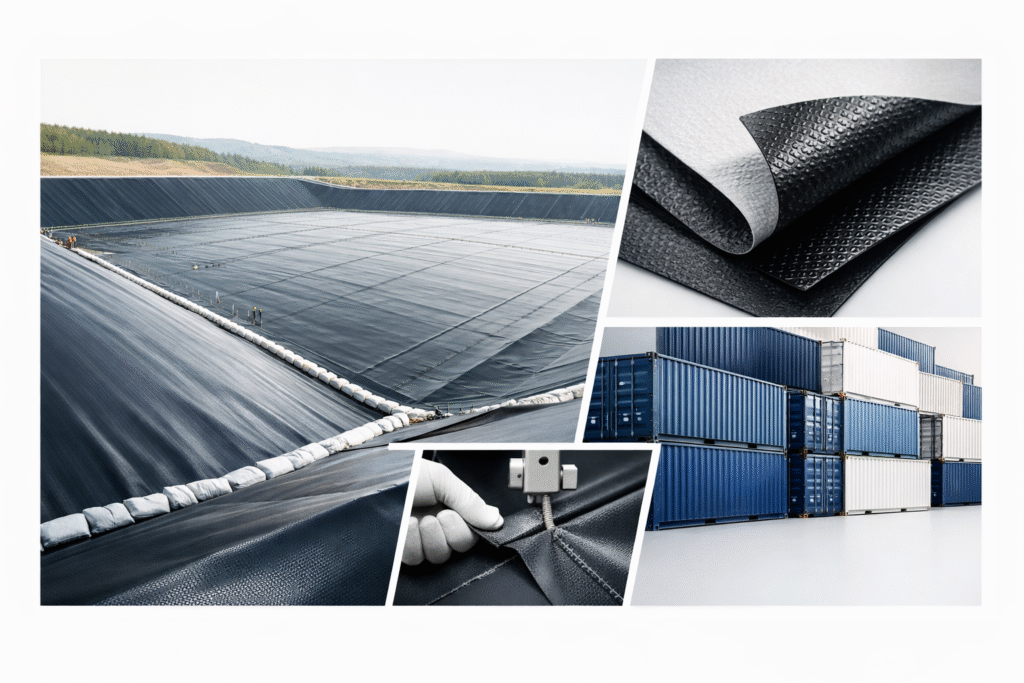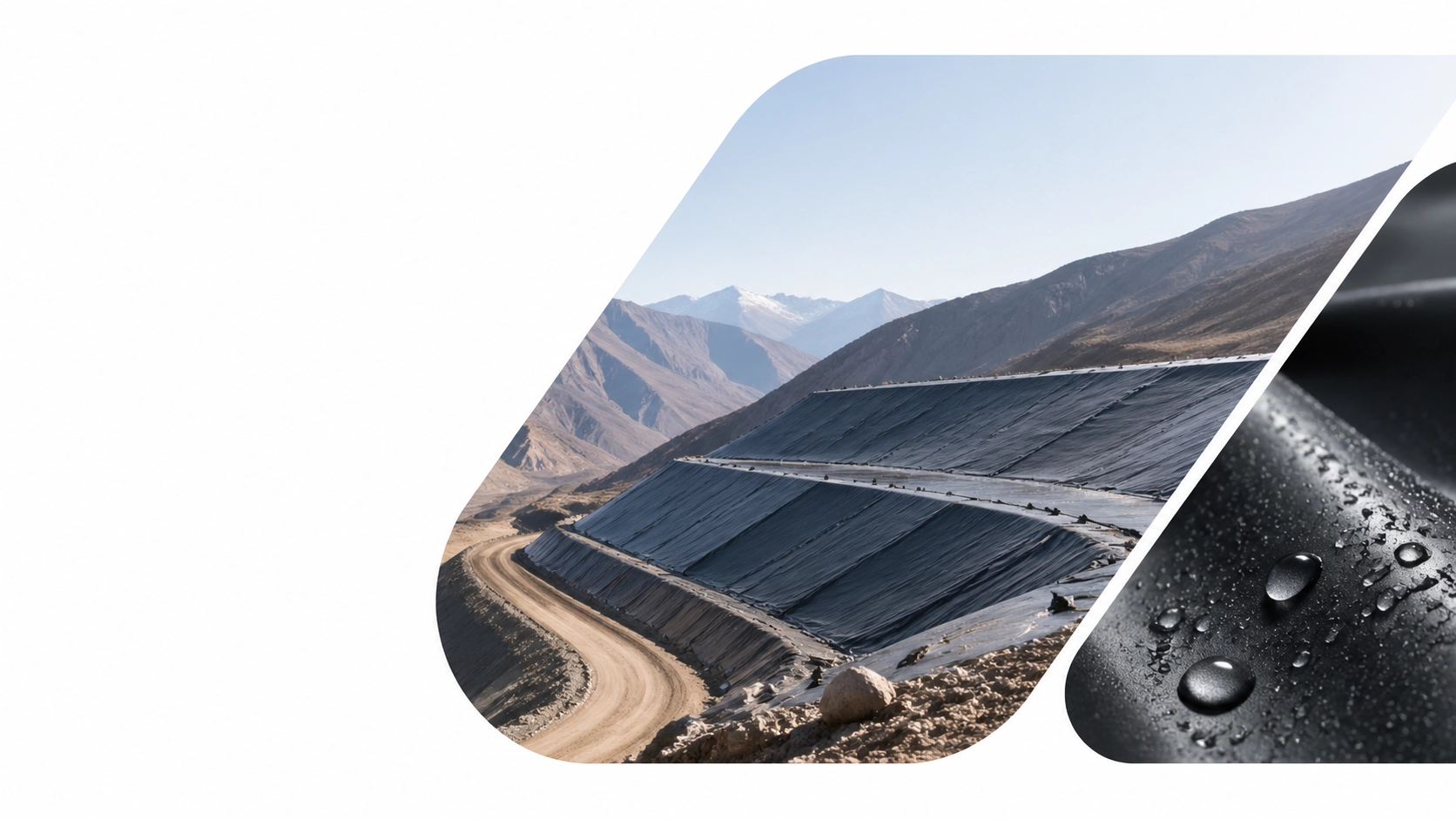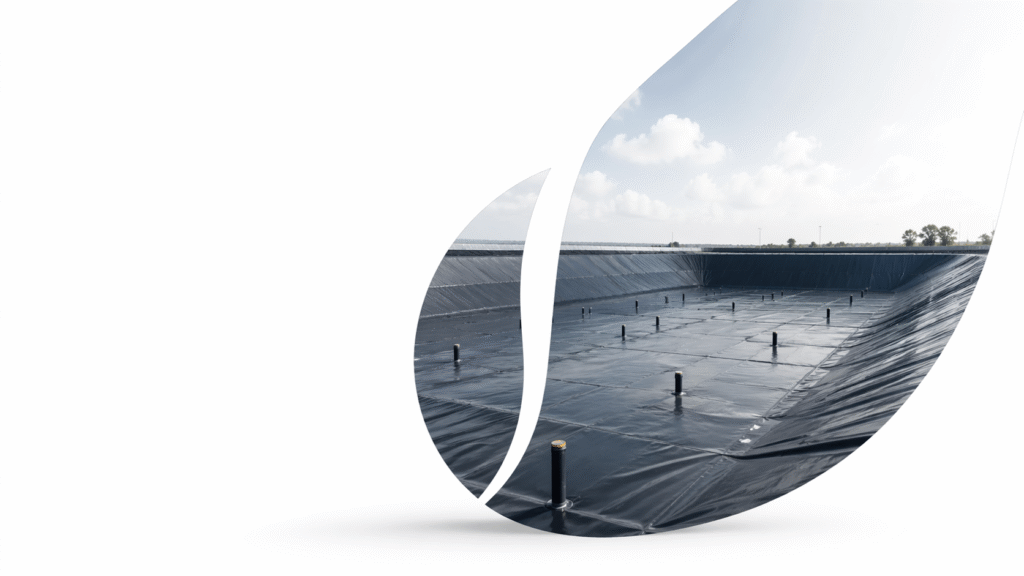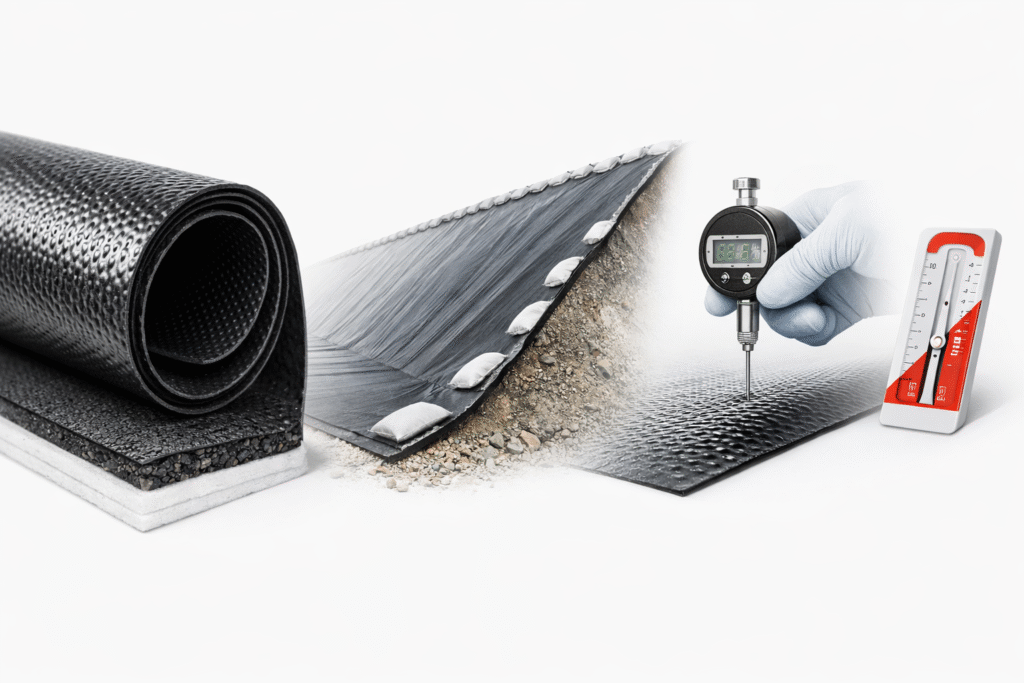
Jinseed supplies HDPE geomembrane and geotextile materials for landfill liner system construction, including base liners, side slopes, leachate control, puncture protection, and project documentation support.
A landfill liner system must control leachate migration, support waste loading, protect the geomembrane from puncture, and remain compatible with the drainage and collection layers specified by the project designer.
Landfill projects should start from cell design, leachate condition, side slope geometry, and required documentation. Jinseed supports material selection for the geomembrane barrier and geotextile cushion layers while keeping final engineering approval with the project designer.
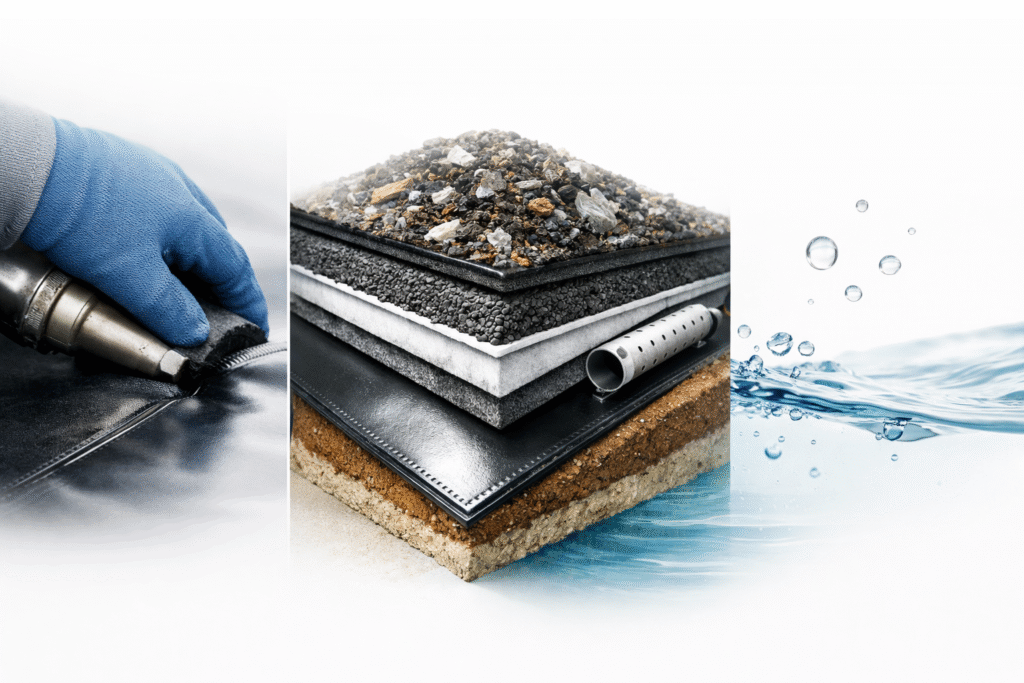
The structure below shows how the main liner materials work within a landfill cell and what each layer is expected to support.
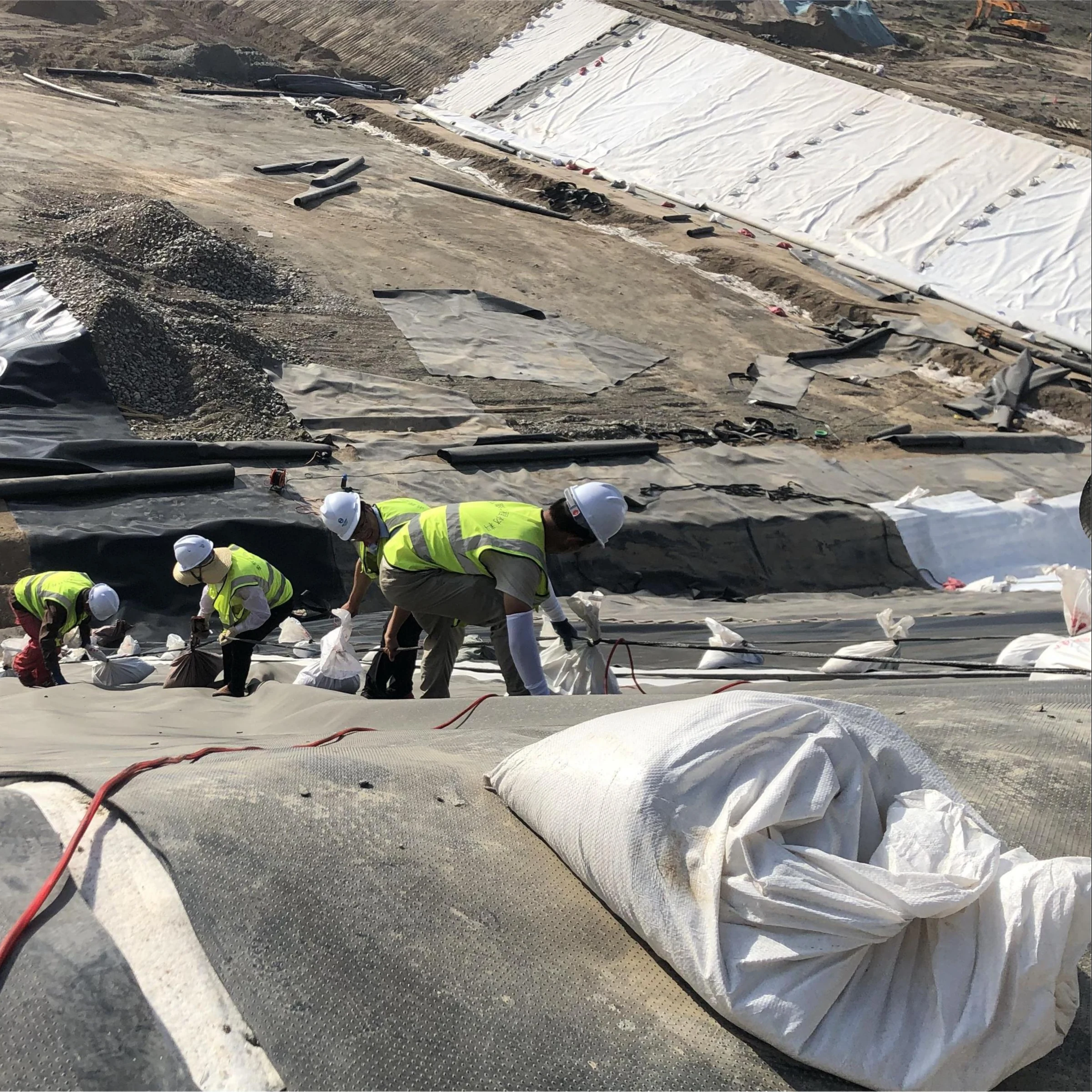
The subgrade should be compacted, shaped, and cleared of sharp particles before liner deployment. Poor base preparation increases local stress and puncture risk even when the liner material is correctly selected.
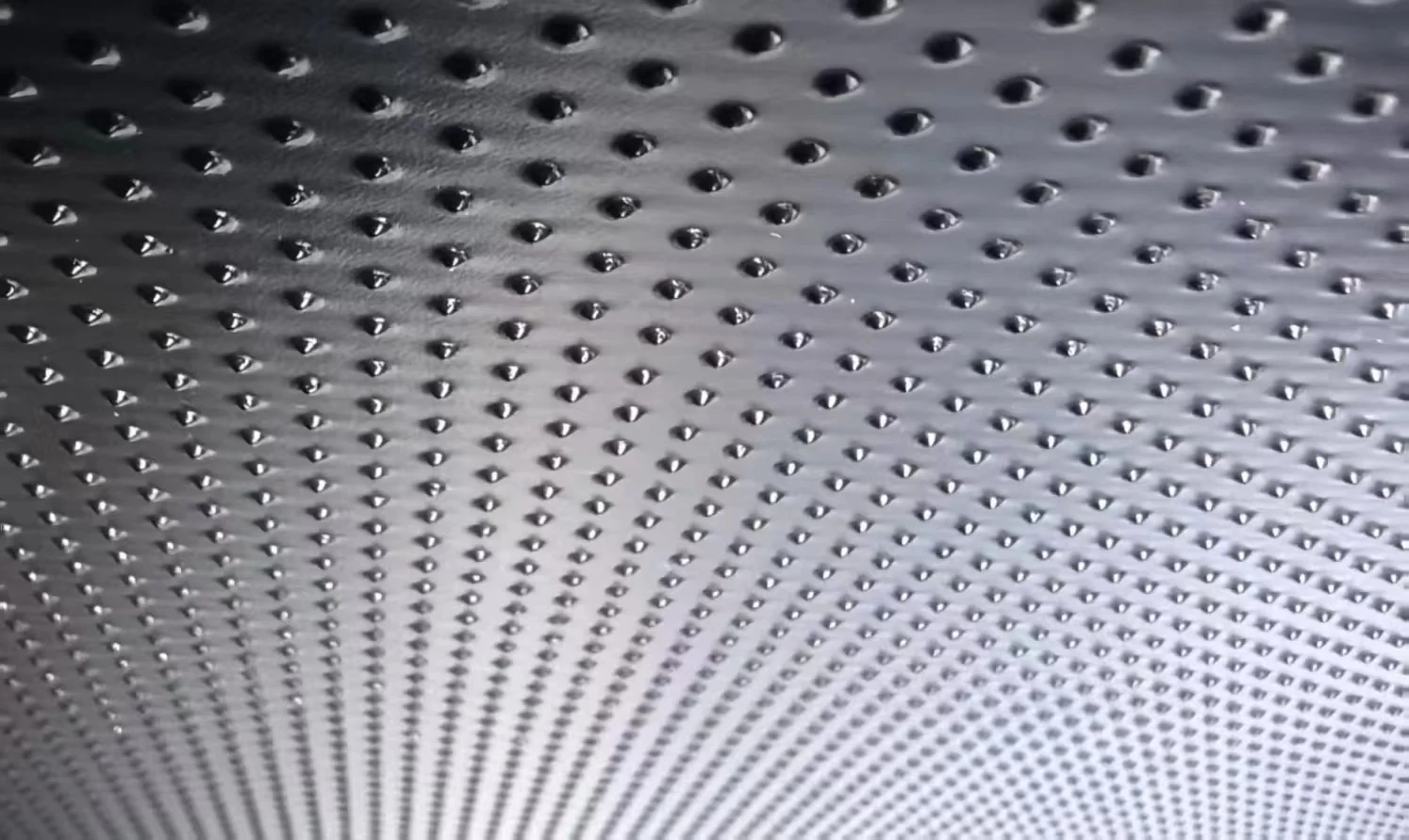
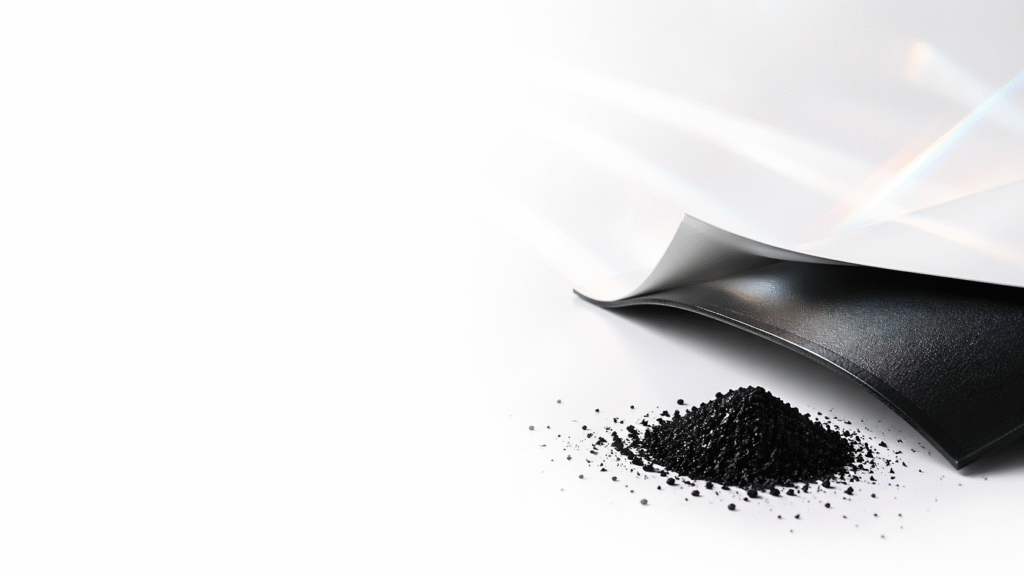
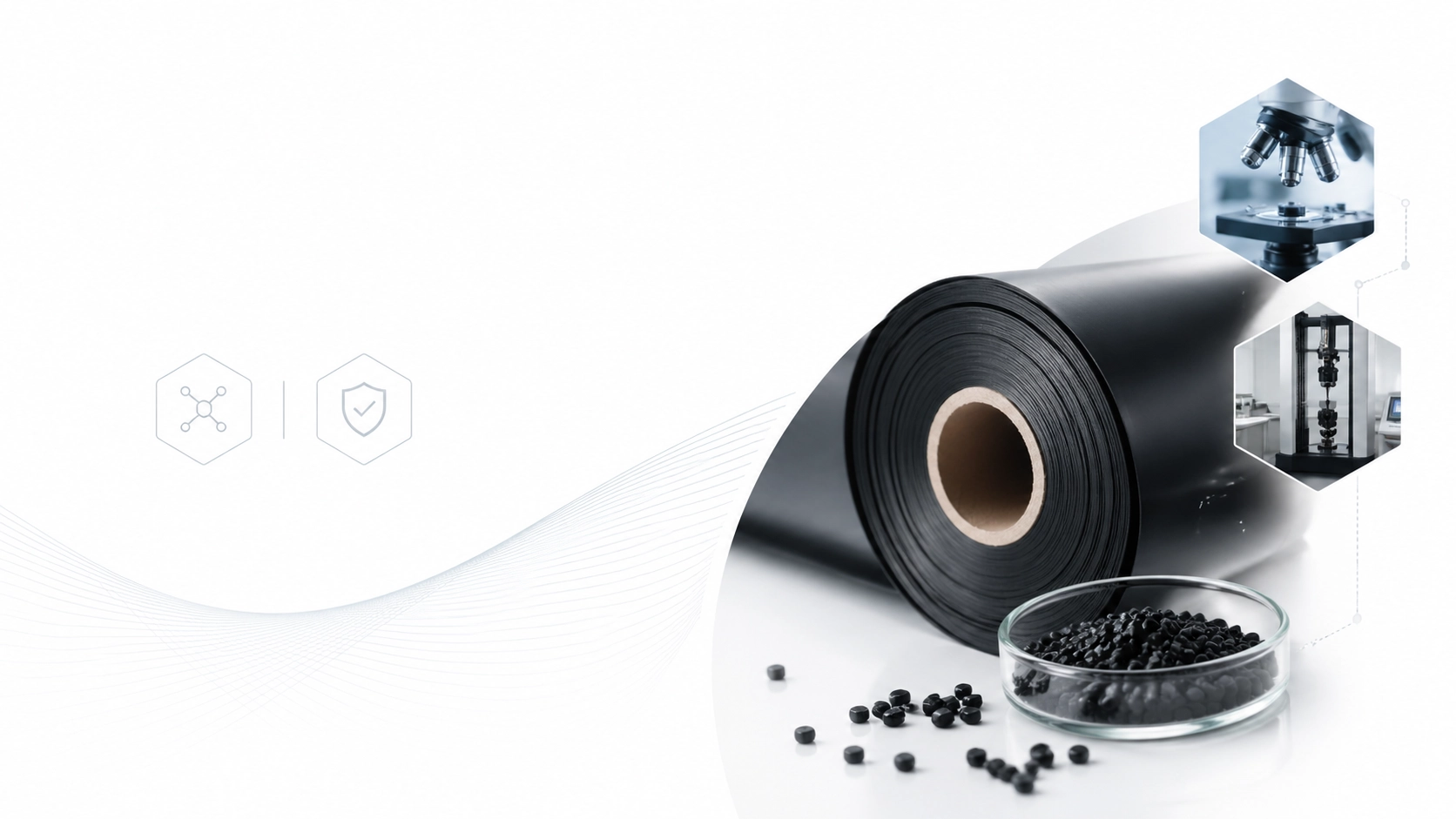
The geomembrane forms the primary containment barrier for the landfill cell. Smooth or textured surface selection should follow base area, side slope, cover soil, drainage layer, and interface requirements.
The drainage layer and collection pipes help move leachate toward sumps or treatment systems. The liner package should be reviewed together with drainage aggregate, geotextile, pipe spacing, and protection requirements.
Different landfill projects share the same containment logic, but their material thickness, cushion layer, drainage arrangement, and documentation requirements should be reviewed separately.
Base liner systems for municipal solid waste landfill cells require leachate containment, subgrade preparation, puncture protection, and traceable roll documentation before installation and covering.
Industrial landfill cells may require closer review of leachate chemistry, operating temperature, liner thickness, cushion layer weight, and project-specific test documentation.
For higher-risk waste containment, material confirmation should follow engineering specifications and local regulatory requirements. Jinseed supports material documents, traceability, and roll-level test records.
The following table is a procurement reference for discussion. Final values should follow the project specification, drawings, design engineer requirements, and local approval process.
| Review Item | Typical Landfill Concern | Material Direction | Document Support |
|---|---|---|---|
| Base liner thickness | Leachate containment and puncture resistance | HDPE geomembrane selected by design specification | TDS / roll test report |
| Side slope surface | Interface friction and cover soil stability | Smooth or textured surface based on slope and interface review | Surface type confirmation / test reference |
| Geotextile cushion | Protection against subgrade and drainage aggregate | PET non-woven geotextile weight selected by puncture risk | Geotextile TDS / packing list |
| Seam control | Leakage risk at overlap, repair, and detail areas | Panel layout and welding method confirmed before installation | Welding record / seam test record |
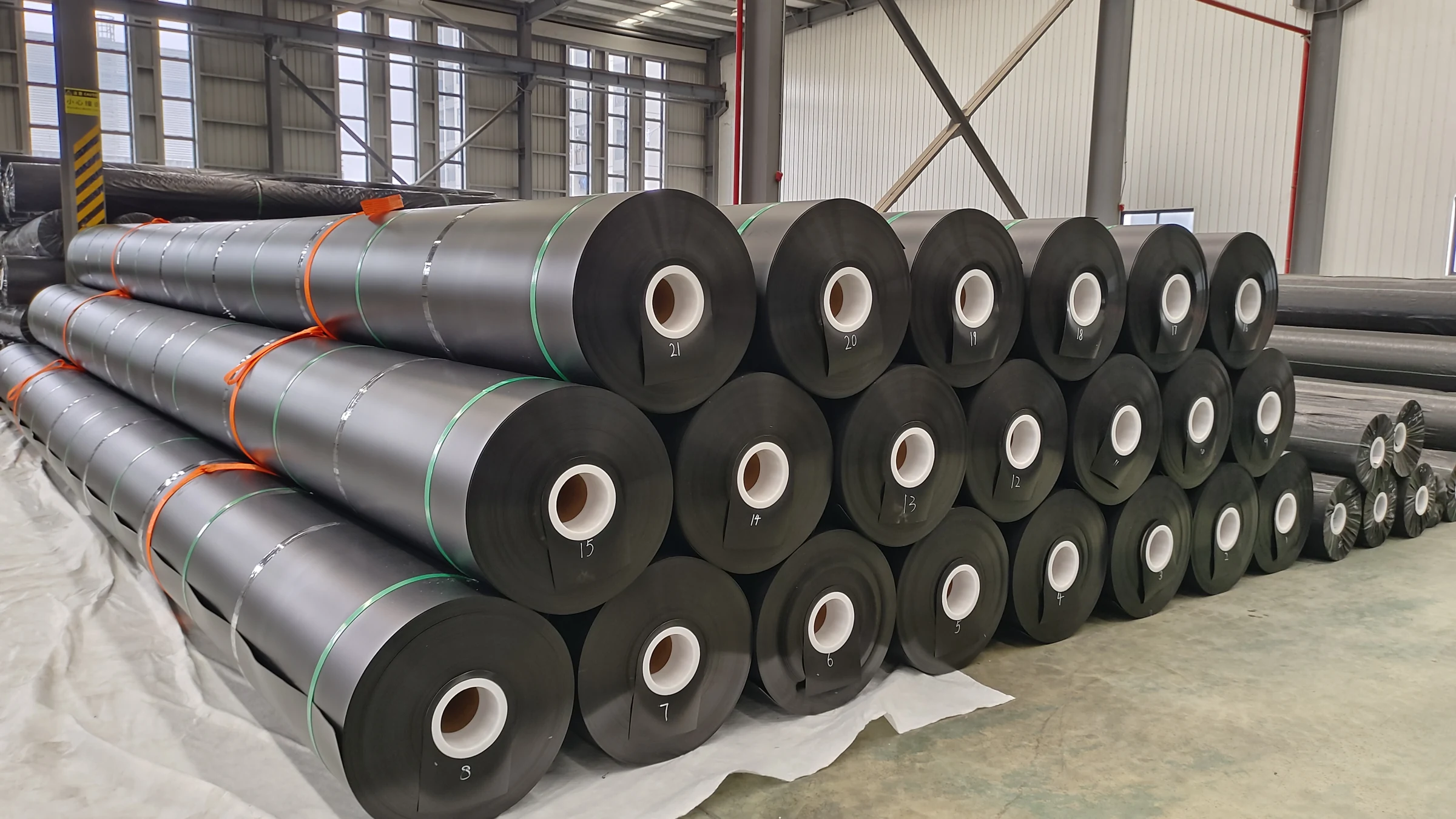
| Traceability | Phased cell construction and material acceptance | Roll numbers matched with production and shipment records | COC / roll labels / loading list |
| Leachate compatibility | Waste type, leachate chemistry, and long-term exposure | Material selection reviewed against project data | Project review notes / test reports |
Before quotation, landfill liner selection should be based on cell geometry, slope condition, leachate exposure, drainage design, and required documentation.
Landfill liner procurement often requires material evidence before acceptance. Jinseed can prepare documents based on the supplied material, agreed standard, and production batch.
Material properties, thickness, surface type, and key test method references for engineering review.
Batch-level or roll-level test evidence prepared according to the agreed quality requirements.
A supply document confirming the product delivered against the agreed purchase specification.
Roll numbers, packing details, and shipment references for phased landfill cell construction.
The material package should match the project design and the required barrier, slope, cushion, drainage, and protection functions.
Used as the main barrier layer for landfill base areas and side slopes. Thickness and surface finish should follow drawings and design requirements.
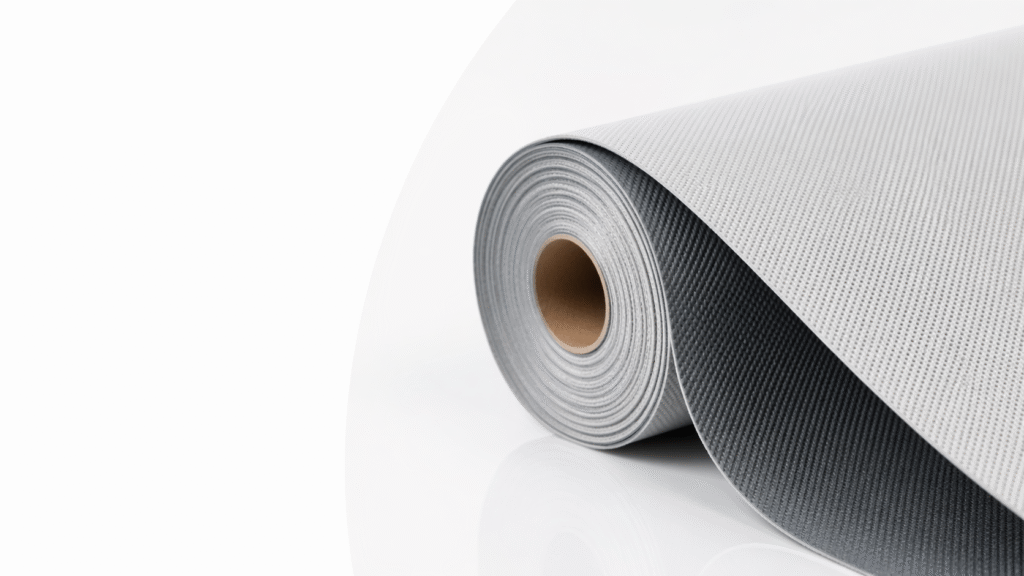
Considered for landfill side slopes or cover soil interfaces where additional friction review is required. Interface results are project-specific.
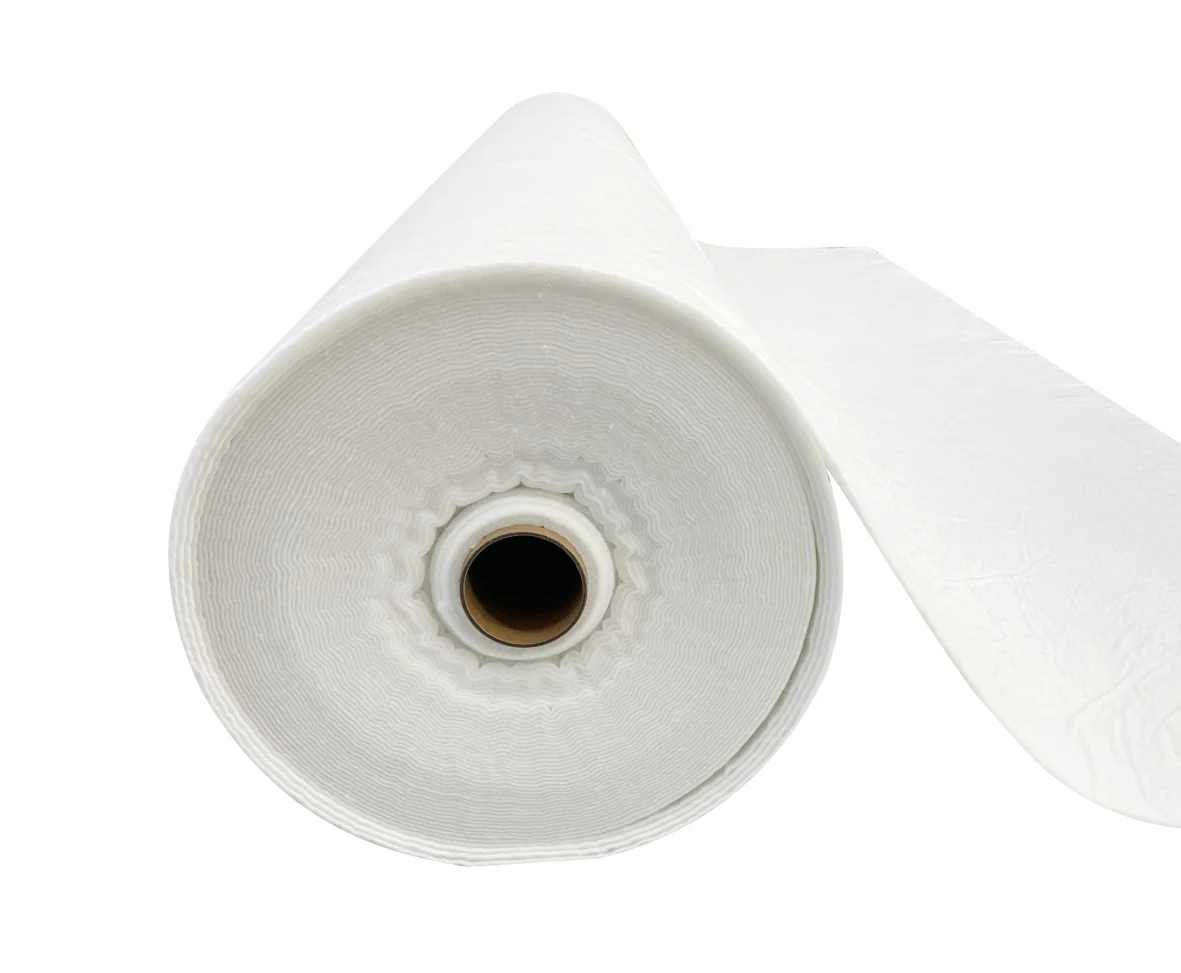
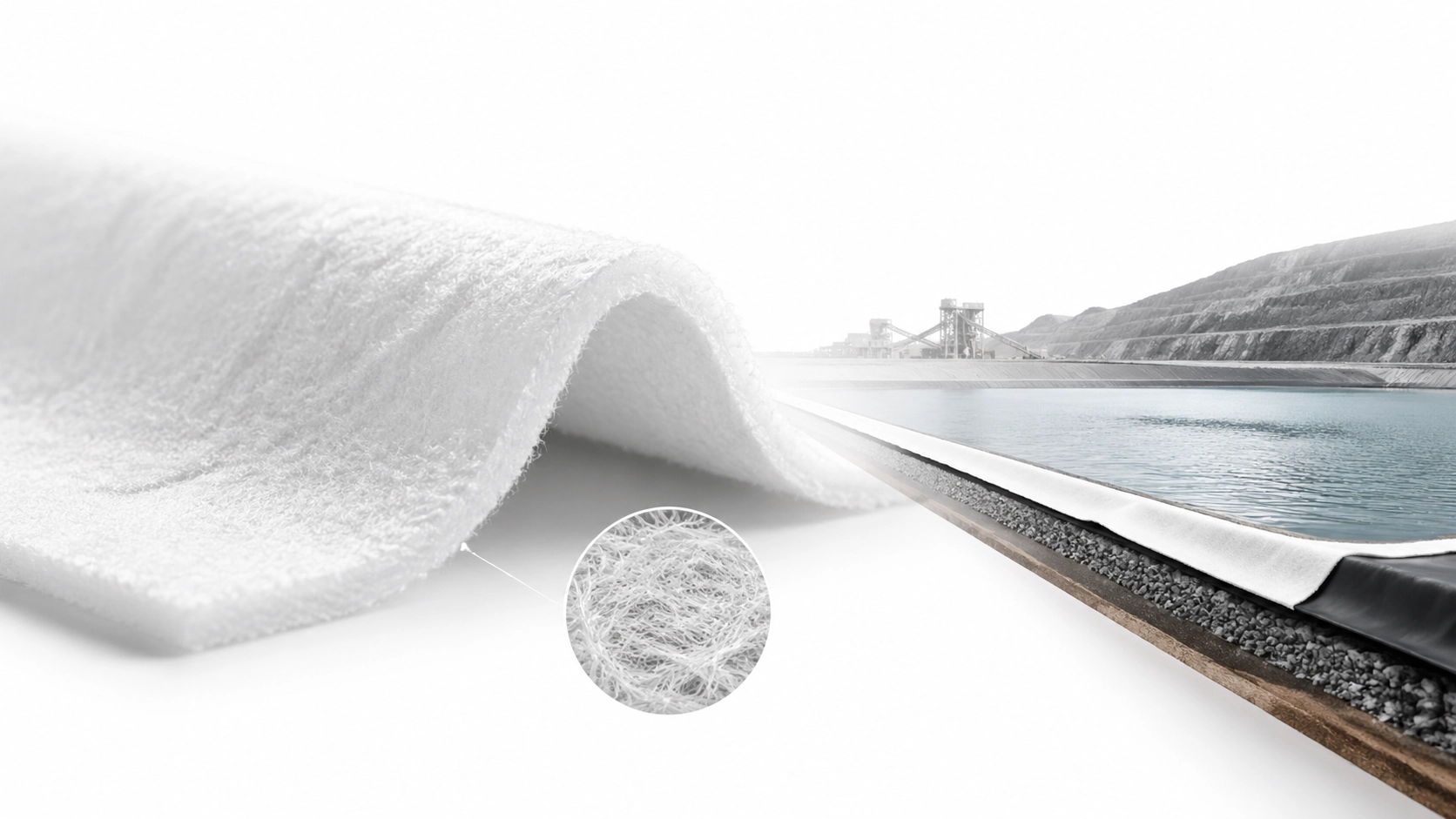
Used as a cushion or separation layer to reduce puncture risk from subgrade irregularity, drainage aggregate, or cover material contact.
The goal is not to sell one generic liner. It is to help buyers confirm the correct landfill material package before production, delivery, and installation planning.
We review drawings, required thickness, surface finish, geotextile weight, and documentation needs before confirming a quotation.
HDPE, textured surface, and geotextile cushion recommendations are linked to landfill cell conditions and project requirements.
Roll data, test reports, and conformance documents can be prepared to support project acceptance and traceability.
Roll width, roll length, packing method, and container loading can be coordinated for phased landfill construction schedules.
Landfill liner installation must be planned before rolls arrive on site. Base preparation, panel layout, anchor trench details, welding sequence, and protection before waste placement all affect liner performance.
For a useful quotation, provide base area, side slope ratio, required thickness, geotextile requirement, leachate information, and document requirements. We will review the material package before production confirmation.
The answers below cover common questions about landfill liner materials, slope applications, protection layers, documentation, and quotation data.
Send your landfill cell layout, required thickness, side slope details, and documentation requirements. Jinseed will help review the geomembrane and geotextile material package before quotation.