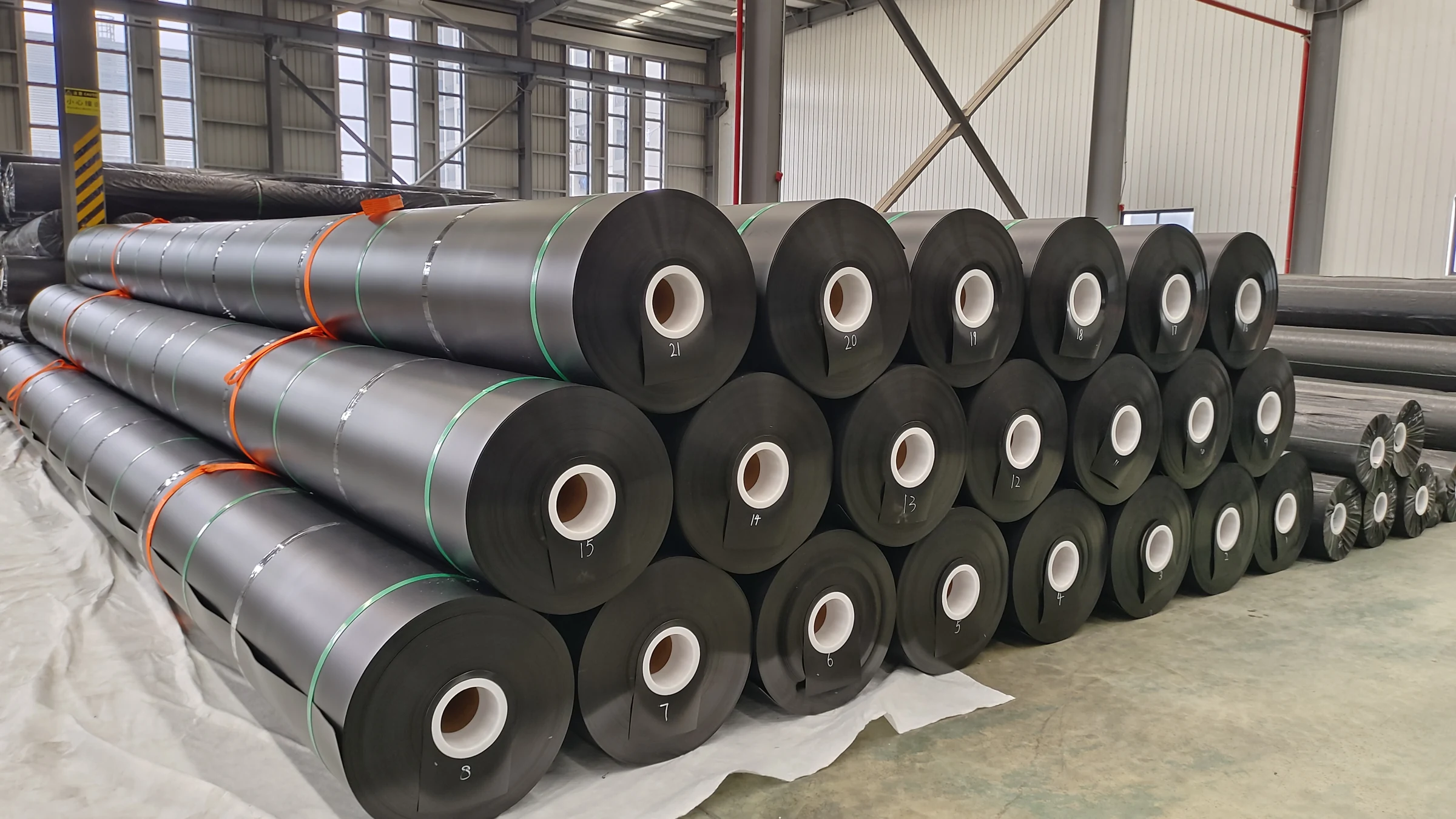

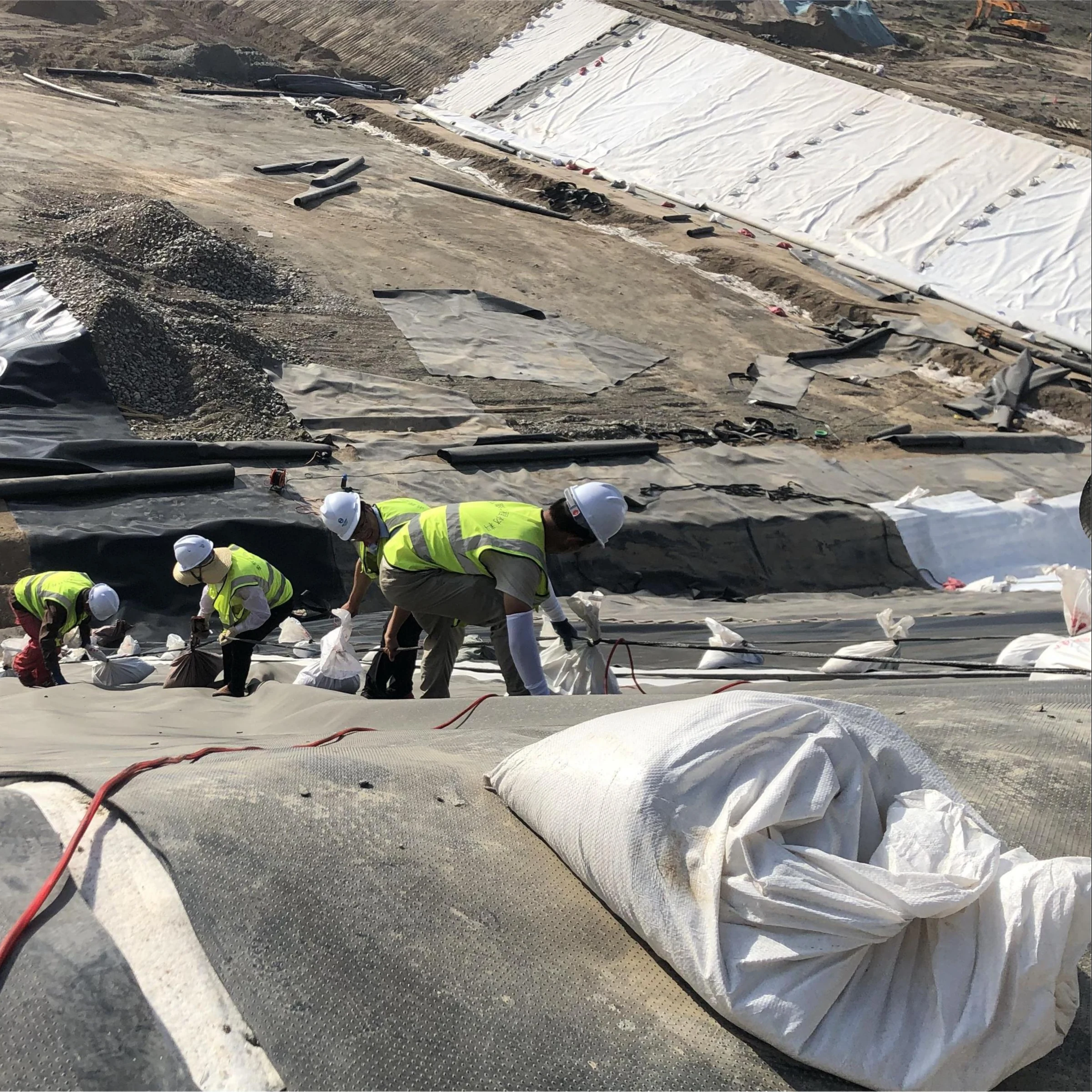
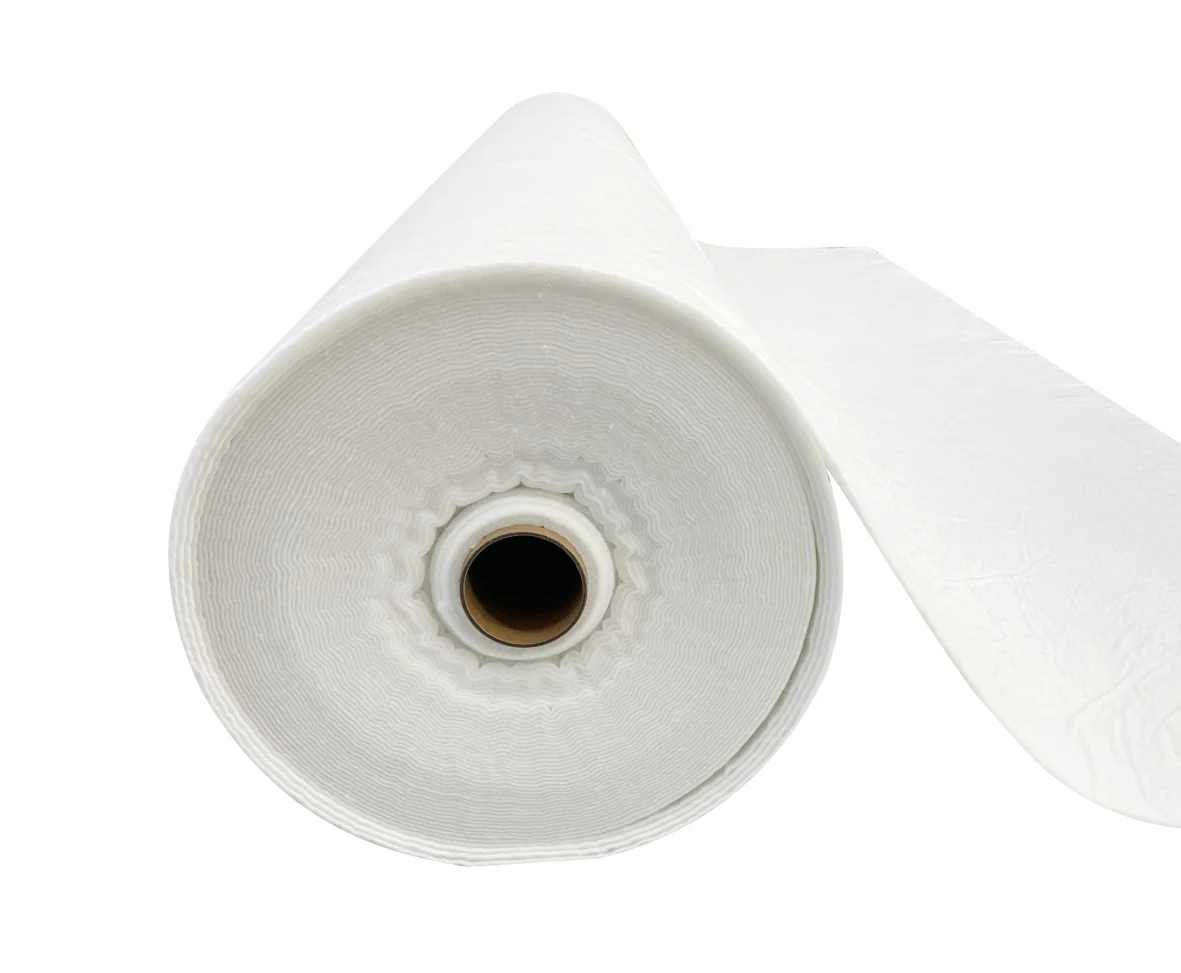

To request an accurate HDPE geomembrane quote for a mining heap leach project, the buyer should provide more than the required liner area. A usable quotation must define the geomembrane thickness, surface configuration, roll dimensions, applicable technical standard, project location, delivery terms, required documentation, and target installation schedule.
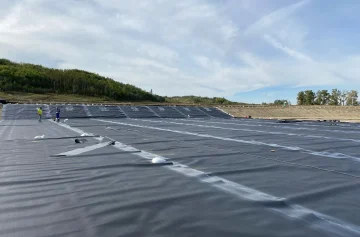
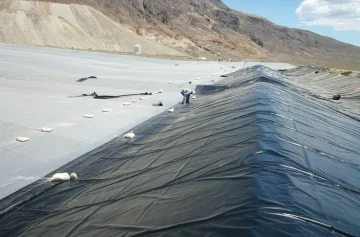
Heap leach pads are engineered containment and solution-recovery systems. The geomembrane must work together with the prepared subgrade, liner bedding, protective geotextile, drainage aggregate, collection pipes, slopes, anchor trenches, and field welds. A price based only on square meters does not establish whether the proposed material is suitable for the project.
Quotation summary: For a preliminary HDPE geomembrane price, provide the project application, required thickness, smooth or textured surface, estimated quantity, preferred roll width, destination port, required delivery date, and applicable specification. For a technically reviewed quotation, also provide drawings, slope details, subgrade information, leach solution conditions, ore loading data, and quality documentation requirements.
What Information Is Required for an HDPE Geomembrane Quote?
The following information allows the manufacturer to review material suitability, production requirements, container loading, quality documentation, and delivery planning before issuing a formal quotation.
| Quotation Item | Information to Provide | Why It Affects the Quote |
|---|---|---|
| Project application | Gold, copper, silver, nickel, or other mining heap leach project | Different leaching processes create different chemical, temperature, loading, and containment conditions. |
| Project location | Country, mine site region, nearest port, and final delivery address | Determines freight routing, container requirements, customs documentation, and inland transportation. |
| Geomembrane material | HDPE or another material specified by the design engineer | The polymer type affects stiffness, chemical resistance, welding behavior, and project specifications. |
| Nominal thickness | For example, 1.5 mm, 2.0 mm, 2.5 mm, or the project-specified thickness | Thickness directly changes raw material consumption, roll weight, puncture resistance, and transportation cost. |
| Surface configuration | Smooth, single-sided textured, or double-sided textured | Texturing changes manufacturing cost, roll dimensions, interface behavior, and welding-edge requirements. |
| Roll dimensions | Required roll width, roll length, maximum roll weight, and core requirements | Roll configuration affects panel layout, seam quantity, unloading equipment, container loading, and field deployment. |
| Required quantity | Net liner area and total purchasing quantity in square meters | The total area affects production scheduling, price structure, packaging, and container utilization. |
| Technical standard | GRI-GM13, project specification, tender specification, or approved equivalent | The required properties, test methods, reporting frequency, and acceptance criteria must be clear before production. |
| Quality documents | Technical data sheet, manufacturing quality control records, roll certificates, third-party testing, or raw-material documentation | Additional testing, witnessing, inspection, and document preparation can affect cost and shipment release time. |
| Accessories | Welding rod, protective geotextile, geonet, geocomposite, or other geosynthetics | Combining materials may improve container utilization and simplify procurement coordination. |
| Trade term | EXW, FOB, CFR, CIF, or another agreed Incoterm | A factory price cannot be compared directly with a delivered price unless the commercial scope is identical. |
| Required delivery date | Target factory release, port departure, site arrival, or installation date | These are different milestones and must not be treated as one delivery date. |
Minimum Information for a Preliminary Quote
When detailed engineering drawings are not yet available, a preliminary quote can normally be prepared from six core inputs:
- HDPE geomembrane thickness;
- Smooth or textured surface;
- Estimated purchasing quantity;
- Preferred roll width or maximum roll weight;
- Destination port or delivery address;
- Required shipment or site-arrival date.
The quotation should be identified as preliminary when the panel layout, project specification, surface configuration, testing scope, or final quantity has not been confirmed. Otherwise, the buyer may compare prices that are based on different technical assumptions.
Information Needed for Technical Review
A heap leach liner should not be selected from thickness and unit price alone. For a more complete review, provide the available site drawings and operating conditions, including:
- Heap leach pad type and planned construction phases;
- Total basal area, side slopes, perimeter berms, and anchor trenches;
- Maximum slope gradient and slope length;
- Subgrade soil condition and liner bedding specification;
- Protective geotextile or overliner material;
- Ore particle size, angularity, placement method, and maximum heap height;
- Estimated normal stress imposed on the liner system;
- Leach solution chemistry, concentration, operating temperature, and circulation conditions;
- Expected exposed period before the geomembrane is covered;
- Required field seaming and construction quality assurance procedures.
Research on heap leach pad liner systems shows that the performance of the geomembrane is connected to the foundation, bedding material, protection layer, drainage system, collection pipes, ore properties, operational loading, and environmental conditions. Material compatibility should therefore be reviewed at the system level rather than as an isolated product selection.
How to Select the Required HDPE Geomembrane Thickness
Thickness is one of the largest price variables in an HDPE geomembrane quote. Increasing thickness increases the polymer mass per square meter, roll weight, puncture resistance, tear resistance, and material cost. However, selecting the thickest available liner does not automatically correct poor subgrade preparation, unsuitable drainage aggregate, weak interface stability, or inadequate construction quality control.
1.5 mm HDPE Geomembrane
A 1.5 mm, or approximately 60 mil, HDPE geomembrane is frequently considered for engineered containment applications, including some heap leach pads. Whether it is suitable depends on the approved project design, expected ore loading, subgrade preparation, protective layers, drainage material, slope geometry, and chemical exposure.
For projects considering 1.5 mm material, the quotation review should address:
- Whether the subgrade can be graded and compacted without protruding stones or abrupt changes;
- Whether a protective nonwoven geotextile or engineered overliner is specified;
- Whether the drainage aggregate has been evaluated for liner puncture risk;
- Whether smooth or textured material is required in each project zone;
- Whether the project specification requires properties beyond the minimum manufacturing specification.
2.0 mm HDPE Geomembrane
A 2.0 mm, or approximately 80 mil, HDPE geomembrane may be specified where the project requires a heavier liner, higher index puncture resistance, additional construction tolerance, or greater resistance to localized mechanical damage. It is commonly evaluated for demanding basal areas, high ore loads, rougher interfaces, or locations where long construction periods increase exposure and handling risk.
The buyer should not describe 2.0 mm material simply as an “upgrade.” A valid comparison must include material properties, protection-layer design, interface testing, roll weight, deployment equipment, seam construction, and the total installed system.
Thickness Must Follow the Project Specification
The final geomembrane thickness should be established or approved by the project’s qualified design engineer. The supplier may help compare available manufacturing options, but should not replace geotechnical, hydraulic, chemical compatibility, slope stability, or regulatory design work.
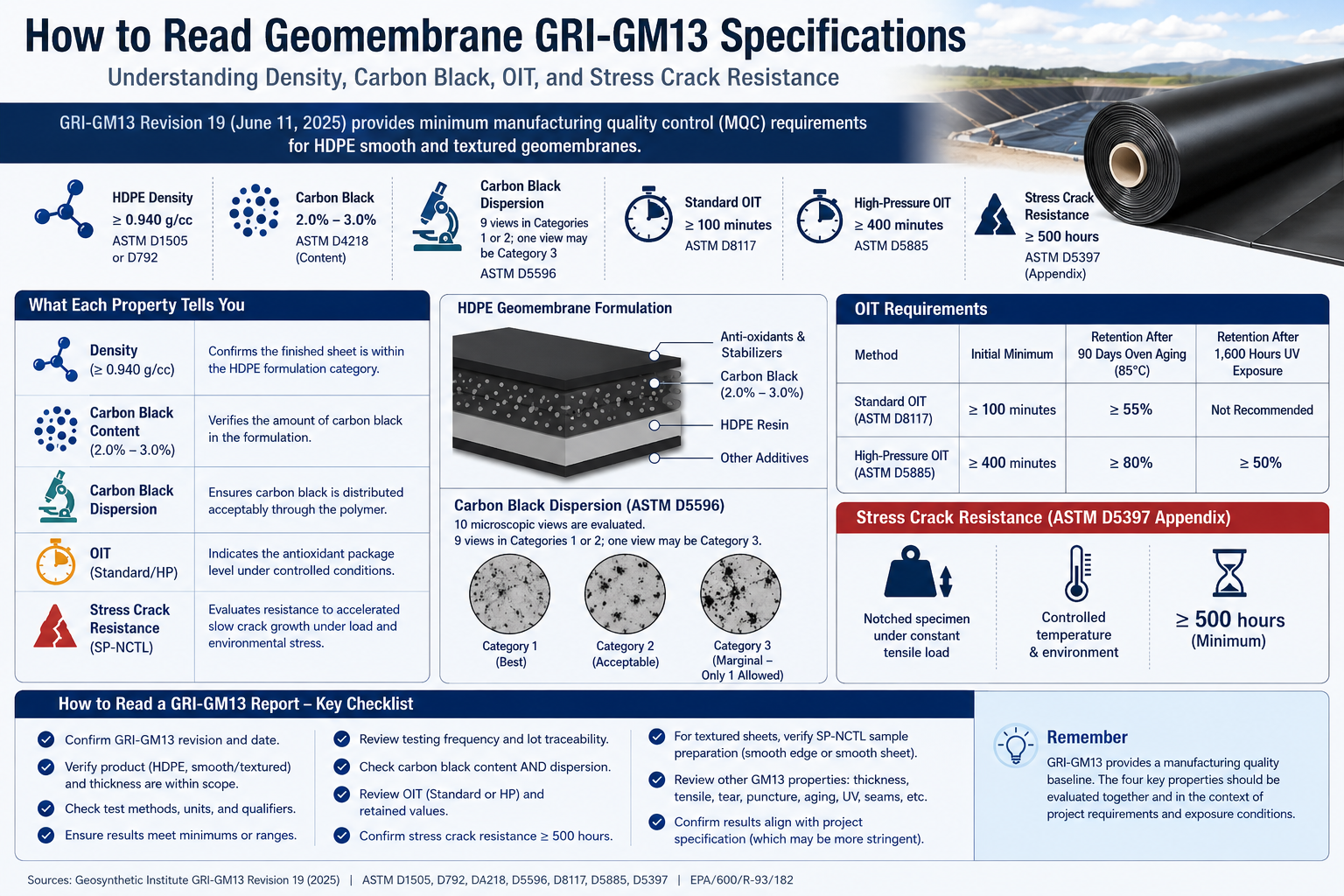
The official GRI-GM13 specification for HDPE geomembranes addresses smooth and textured HDPE materials and references test requirements for properties such as thickness, density, tensile behavior, tear resistance, puncture resistance, carbon black, oxidative induction time, and stress crack resistance. A project specification may impose additional or more restrictive requirements.
Nominal Thickness and Measurement Method
A purchase order should identify the nominal thickness and the applicable measurement method. Smooth and textured geomembranes are not necessarily measured in the same way.
ASTM currently lists separate thickness procedures within its geomembrane standards program. ASTM D5199 addresses nominal thickness measurement for applicable smooth geosynthetics, while ASTM D5994/D5994M addresses geomembrane thickness and includes procedures relevant to smooth and textured surfaces. The buyer should use the test method stated in the project specification rather than copying a method from an unrelated product data sheet.
Should the Quote Use Smooth or Textured HDPE Geomembrane?
Surface configuration affects more than the product price. It influences interface shear behavior, roll weight, manufacturing speed, field deployment, welding-edge design, and the suitability of the liner for slopes or flat basal areas.
Smooth HDPE Geomembrane
Smooth HDPE geomembrane may be considered for flat or gently graded basal zones where the design does not require increased interface friction from surface texturing. Smooth material can also provide practical advantages for deployment, visual inspection, and thermal fusion welding.
However, smooth geomembrane should not automatically be used across an entire pad simply because it has a lower price. Interface shear behavior between the geomembrane, compacted soil, geotextile, geonet, and drainage layer must be consistent with the slope stability design.
Single-Sided Textured HDPE Geomembrane
Single-sided textured geomembrane provides one high-friction surface and one smooth surface. It may be considered when additional interface resistance is required on one side of the liner while the opposite side benefits from a smooth finish.
The RFQ should identify which side must be textured. “Single-sided textured” is incomplete if the drawings do not show whether the textured surface faces the subgrade or the overlying geosynthetic layer.
Double-Sided Textured HDPE Geomembrane
Double-sided textured HDPE geomembrane is designed to provide increased interaction on both sides of the sheet. It may be specified for slopes or interfaces where both the lower and upper contact surfaces require additional friction.
Texture should not be selected from a general friction-angle claim. Interface shear strength depends on the actual combination of geomembrane, soil, geotextile, geonet, moisture condition, normal stress, displacement, and testing procedure. Project-specific interface testing is more reliable than using a value taken from an unrelated installation.
Specify Smooth Welding Edges Where Required
Textured geomembrane orders should state whether smooth welding edges are required and define the required edge width. Smooth edges provide a controlled surface for double-track thermal fusion welding and can reduce unnecessary grinding or preparation in the field.
The edge configuration should be coordinated with the installer’s welding equipment, seam overlap, panel layout, and project specification before production begins.
How Roll Width Changes the Quotation and Installation Plan
Roll width is often treated as a shipping detail, but it can materially affect the number of field seams, panel deployment sequence, installation productivity, lifting requirements, and container loading plan.
Wider Rolls Can Reduce Field Seam Length
For the same liner area, a wider roll can reduce the number of parallel field seams. Fewer seams may reduce welding labor and the number of seam sections requiring nondestructive testing. The exact reduction must be calculated from the approved panel layout rather than from roll width alone.
Jinseed’s published manufacturing range includes custom geomembrane roll configurations with widths of up to approximately 8 meters, subject to material type, thickness, texture, roll length, weight, production feasibility, and transportation requirements.
An 8-meter roll is not automatically the most economical choice. The buyer must confirm that the installation team can safely unload, move, suspend, and deploy the roll at the mine site.
Roll Width Must Match Site Handling Capacity
Before requesting the widest available product, verify:
- Maximum roll weight accepted by the installer;
- Forklift, excavator, spreader bar, and lifting-sling capacity;
- Access-road width and turning radius;
- Container unloading procedure;
- Available storage area near the work zone;
- Maximum panel width that can be safely controlled in local wind conditions;
- Whether steep slopes require special deployment equipment.
A roll that reduces seam length but cannot be safely handled can delay installation and increase damage risk.
Roll Length and Roll Weight
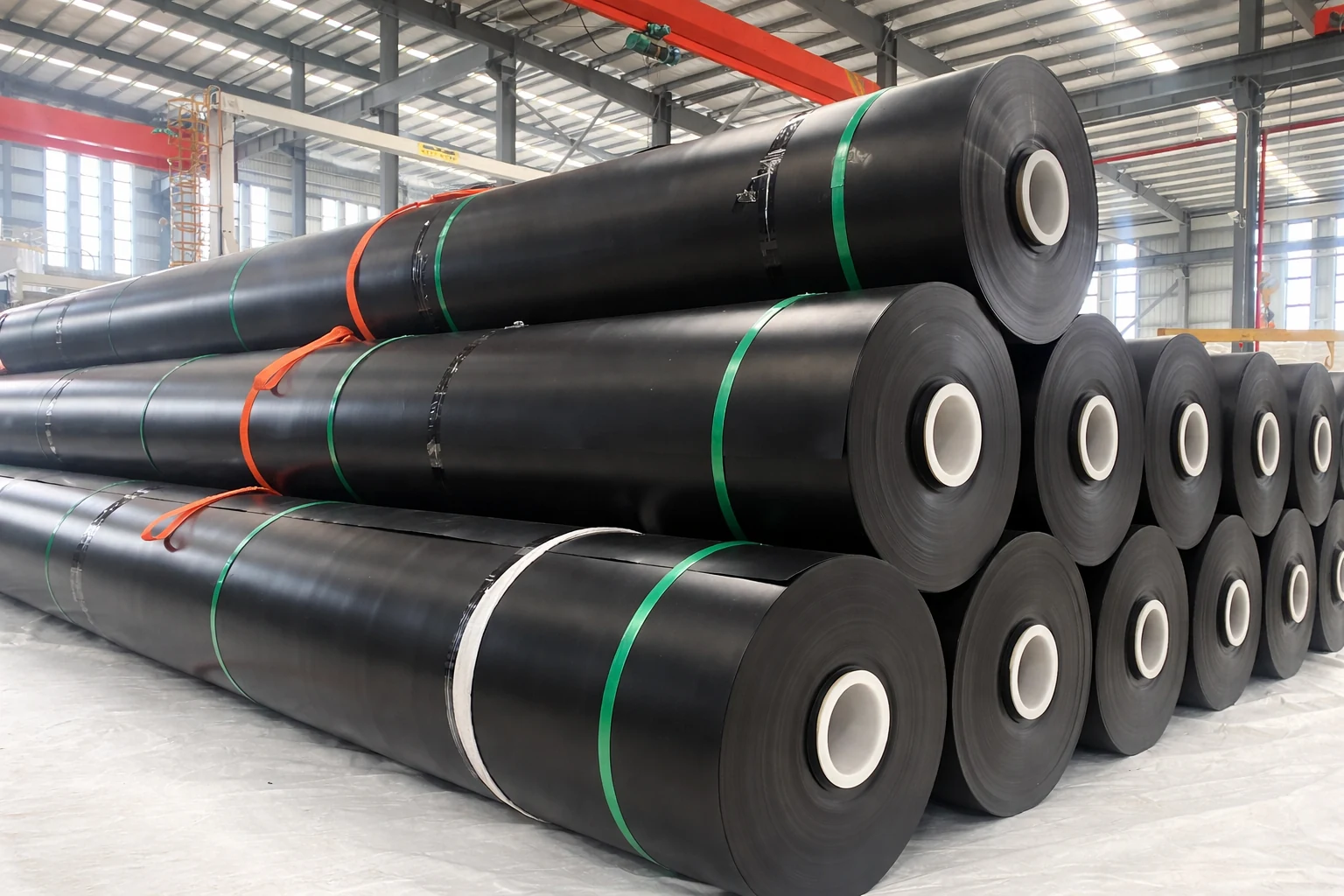
Roll length should be coordinated with thickness, width, surface type, core strength, container payload, lifting equipment, and panel layout. A thicker or wider geomembrane may require a shorter roll to keep the final roll weight within an acceptable range.
The RFQ should therefore state both the preferred roll dimensions and the maximum acceptable roll weight. This gives the manufacturer room to propose a practical production and loading configuration.
How to Calculate HDPE Geomembrane Order Quantity
The net horizontal footprint of the heap leach pad is not the final purchasing quantity. A complete calculation must include slopes, berms, anchor trenches, overlaps, penetrations, sumps, collection channels, repairs, test seams, and layout waste.
Start with the Net Lined Surface Area
Calculate or obtain the surface area from the latest approved grading and liner drawings. The calculation should include:
- Basal liner area;
- Internal and perimeter slopes;
- Solution channels and collection areas;
- Pregnant solution pond or process pond areas included in the supply scope;
- Berms and perimeter tie-ins;
- Anchor trenches and termination details;
- Pipe penetrations, sumps, and structures.
Do not calculate sloped liner areas using their horizontal plan area. The actual slope length must be used.
Add Panel Layout and Seaming Requirements
The required order area can be expressed as:
Order Quantity = Net Lined Area + Seam Overlaps + Anchor Details + Penetration Details + Layout Waste + Testing and Repair Material
A percentage allowance should not be copied blindly from another project. The appropriate allowance depends on pad geometry, roll width, panel orientation, slope length, irregular boundaries, anchor trenches, phased construction, and installer experience.
Illustrative Quantity Calculation
Assume a preliminary drawing identifies 150,000 m² of actual lined surface. After reviewing the panel layout, anchor trenches, seam overlaps, irregular perimeter zones, test strips, and repair stock, the project team calculates an additional 7% purchasing allowance.
150,000 m² × 1.07 = 160,500 m² preliminary order quantity
This is only a calculation example. It is not a recommended universal allowance. The final purchasing quantity should be confirmed against the approved panel layout and construction release drawings.
Order by Area, Rolls, and Weight
A formal quotation should identify:
- Total quoted area in square meters;
- Nominal thickness and surface type;
- Proposed roll width and length;
- Approximate area per roll;
- Approximate roll weight;
- Total number of rolls;
- Estimated net and gross shipment weight;
- Estimated number and type of containers.
This makes it easier to detect discrepancies between the commercial quantity, packing list, container plan, and site unloading schedule.
What Determines HDPE Geomembrane Price?
An HDPE geomembrane price per square meter is only meaningful when the technical and commercial scope is identical. Two quotations can show the same thickness while differing substantially in resin formulation, surface configuration, roll dimensions, test requirements, documentation, packaging, freight, and payment terms.
| Price Factor | Effect on the Quotation |
|---|---|
| Thickness | Thicker material uses more polymer per square meter and increases roll and freight weight. |
| Surface type | Single-sided or double-sided texturing introduces additional production requirements. |
| Roll width | Custom widths may improve installation efficiency but affect production scheduling and container loading. |
| Total quantity | Production setup, order scale, packaging, and container utilization influence the commercial structure. |
| Raw-material requirements | Specified resin, formulation, traceability, and prohibited-material requirements must be included in the contract. |
| Technical specification | Project-specific limits may be stricter than a standard manufacturer data sheet. |
| Testing frequency | Additional sampling, third-party testing, witnessing, or retained samples may add cost and time. |
| Documentation | Roll certificates, batch reports, inspection records, and document formatting should be defined before production. |
| Packaging | Core type, roll wrapping, edge protection, labels, lifting straps, and export marks affect handling and cost. |
| Trade term | EXW, FOB, CFR, and CIF prices cover different freight and risk responsibilities. |
| Payment terms | Deposit, balance payment, letter of credit, bank charges, and credit period can affect the final offer. |
| Delivery schedule | Phased production, urgent orders, reserved capacity, and split shipments may change the quotation. |
Compare Equivalent Technical Offers
Before selecting the lowest HDPE geomembrane price, normalize each quotation into the same comparison scope:
- Same polymer type;
- Same nominal thickness;
- Same smooth or textured configuration;
- Same roll width and approximate roll weight;
- Same required technical specification;
- Same test and document package;
- Same order quantity;
- Same Incoterm and destination;
- Same packaging and labeling requirements;
- Same warranty and nonconformance terms.
Without this normalization, the lowest unit price may simply exclude testing, freight, accessories, documentation, or a required performance parameter.
Quality Documents to Request Before Ordering
Mining procurement teams should define the required submittal package before issuing the purchase order. Asking for documents after production may delay shipment or reveal that the quoted testing scope does not satisfy the project specification.
Pre-Production Submittals
Depending on the contract, the buyer may request:
- Technical data sheet for the proposed material;
- Statement of compliance with the project specification;
- Manufacturing quality control plan;
- List of applicable test methods;
- Proposed roll dimensions and tolerances;
- Roll-label and traceability format;
- Packaging and container-loading plan;
- Sample material for review or laboratory evaluation;
- Welding rod specification and compatibility information;
- Proposed inspection and hold points.
Production and Shipment Records
The final document package may include:
- Production batch identification;
- Roll numbers and dimensions;
- Finished-product test reports;
- Certificate of analysis or certificate of conformity where contractually required;
- Third-party inspection report if included in the order;
- Packing list linked to roll numbers;
- Container loading photographs or loading records;
- Commercial invoice and shipping documents;
- Material safety or handling information where applicable.
Jinseed describes its quality process as covering incoming raw-material inspection, production monitoring, finished-product laboratory testing, retained samples, and shipment-release checking. Buyers should still list the exact documents and acceptance criteria required for their own project in the purchase contract.
Relevant Geomembrane Testing Standards
Depending on the specification, HDPE geomembrane evaluation may reference standards covering:
- Thickness of smooth and textured geomembranes;
- Density;
- Tensile properties;
- Tear resistance;
- Index puncture resistance;
- Carbon black content and dispersion;
- Standard and high-pressure oxidative induction time;
- Environmental stress crack resistance;
- Textured-surface asperity height;
- Thermally bonded seam peel and shear behavior.
The ASTM D35.10 geomembrane standards program includes current standards for geomembrane thickness, tensile properties, seam integrity, vacuum-chamber evaluation, pressurized air-channel testing, electrical leak location, roll handling, and related field practices.
The test method, specimen condition, testing frequency, and acceptance limit must all be stated. A report that lists only a property name without the method and acceptance criterion is not sufficient for a controlled engineering submittal.
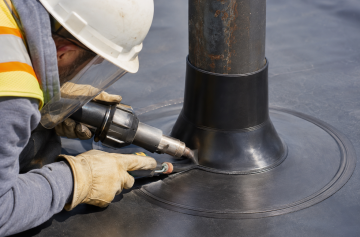
Field Seaming Requirements Should Be Reviewed During Procurement
The geomembrane supplier may not be responsible for installation, but the supplied roll configuration must be compatible with the approved field-seaming plan.
Confirm Welding Compatibility
The procurement package should confirm:
- Primary seam method;
- Welding-edge configuration;
- Minimum overlap required by the project specification;
- Welding rod material and quantity;
- Roll orientation and panel identification;
- Installer’s maximum roll weight;
- Trial seam and destructive test requirements;
- Nondestructive testing method for each seam type.
ASTM D6392 addresses destructive quality control and quality assurance testing of nonreinforced geomembrane seams produced by thermal fusion, including peel and shear evaluation. GRI-GM19 provides seam-strength requirements for thermally bonded polyolefin geomembranes. These standards do not remove the need for a project-specific construction quality assurance plan.
Do Not Treat Factory Quality Control as Field CQA
Factory test reports confirm properties of the manufactured material. They do not confirm that the liner was stored, deployed, welded, tested, repaired, and covered correctly at the mine site.
A complete heap leach liner program normally separates:
- Manufacturing quality control performed during production;
- Manufacturing quality assurance or third-party verification where required;
- Installer quality control during deployment and welding;
- Construction quality assurance performed on behalf of the project owner.
These functions should not be combined into a vague statement that the liner is “fully tested.”
How HDPE Geomembrane Lead Time Should Be Calculated
An HDPE geomembrane lead time should be divided into clearly defined stages. A statement such as “delivery in four weeks” is incomplete unless it identifies the starting point, production scope, shipment milestone, and destination.
Technical and Commercial Confirmation
Production should not begin until the buyer and supplier have confirmed:
- Final technical specification;
- Approved product data sheet;
- Thickness and surface configuration;
- Roll dimensions and labeling;
- Order quantity and quantity tolerance;
- Required quality documentation;
- Inspection or witness points;
- Packaging requirements;
- Trade term and payment conditions.
Repeated changes after confirmation may require production rescheduling or revised raw-material planning.
Manufacturing Time
Manufacturing time depends on:
- Current production-line availability;
- Total order quantity;
- Thickness and surface configuration;
- Standard or custom roll width;
- Required smooth welding edges;
- Raw-material availability;
- Whether the order must be produced in one batch or several phases;
- Additional sampling or third-party inspection requirements.
Testing and Shipment Release
The production completion date is not necessarily the shipment date. Time may also be required for:
- Finished-product testing;
- Review of quality records;
- Third-party inspection;
- Correction of documentation;
- Roll labeling and packaging;
- Container booking;
- Export customs procedures;
- Port delivery and vessel cutoff.
Ocean Freight and Inland Delivery
The buyer should request separate dates for:
- Estimated production completion;
- Estimated factory release;
- Estimated port departure;
- Estimated port arrival;
- Estimated mine-site delivery.
Ocean schedules, transshipment, customs clearance, port congestion, weather, and remote mine-site access may affect the final arrival date. The installation plan should therefore include a realistic logistics buffer and a protected storage area for materials arriving before deployment.
How to Request a Faster and More Accurate Quote
A clear RFQ reduces repeated questions and makes supplier comparisons more reliable. Attach the latest project documents rather than describing a complex heap leach pad in a short email.
Recommended RFQ Attachments
- Geomembrane material specification;
- Relevant tender or purchase specification;
- General arrangement drawing;
- Grading and liner plan;
- Typical liner-system cross-section;
- Slope and anchor-trench details;
- Preliminary panel layout, if available;
- Bill of quantities;
- Inspection and test plan;
- Required document register;
- Delivery schedule and shipment phases.
Copy-and-Send HDPE Geomembrane RFQ Template
Project name: [Insert project name]
Project location: [Country, region, and mine site]
Application: [Gold/copper/other heap leach pad]
Material: HDPE geomembrane
Thickness: [Insert mm and mil where applicable]
Surface: [Smooth/single-sided textured/double-sided textured]
Texture orientation: [Specify side where applicable]
Required standard: [GRI-GM13/project specification/tender specification]
Preferred roll width: [Insert width or request supplier proposal]
Maximum roll weight: [Insert site-handling limit]
Required quantity: [Insert net and purchasing area in m²]
Quantity tolerance: [Insert permitted variation]
Welding rod: [Required/not required and estimated quantity]
Additional geosynthetics: [Geotextile/geonet/geocomposite/none]
Quality documents: [List required reports and certificates]
Third-party inspection: [Required/not required/to be confirmed]
Packaging and labeling: [Insert project requirements]
Delivery term: [EXW/FOB/CFR/CIF/other]
Destination: [Port and final site address]
Required factory release date: [Insert date]
Required site-arrival date: [Insert date]
Attached documents: [List drawings and specifications]
Common Mistakes When Requesting a Heap Leach Liner Quote
Requesting “Best Price” Without a Technical Specification
The phrase “best price for 2.0 mm HDPE liner” does not define the surface, roll width, required properties, testing frequency, documentation, quantity, destination, or commercial scope. The resulting offers will not be technically comparable.
Using the Horizontal Pad Area as the Order Quantity
This omits actual slope area, anchor trenches, seams, penetrations, irregular boundaries, test strips, and repair material. The final shortage may not become visible until installation has started.
Selecting Texture Without Interface Testing
A textured liner can increase interface interaction, but the design value must come from the relevant material combination and test conditions. Generic friction claims should not replace project-specific evaluation.
Ignoring Roll Weight and Unloading Equipment
A wide roll may reduce seams but create unloading and deployment problems. The roll size must match the mine site’s lifting capacity and access conditions.
Comparing FOB and CIF Prices as Though They Are Equal
FOB normally excludes ocean freight beyond the named port of shipment, while CIF includes defined freight and insurance obligations to the named destination port. The buyer must compare the same Incoterm, port, shipment period, and container assumptions.
Leaving Quality Documentation Until After Production
Testing frequency, third-party witnessing, roll certification, retained samples, and document formats should be agreed before production. Adding them after manufacturing may be impossible without new sampling or additional testing.
Allowing the Supplier to Make the Final Engineering Decision
The manufacturer can explain available material configurations and provide test data. The project engineer remains responsible for final liner-system design, thickness selection, interface stability, hydraulic performance, chemical compatibility, and compliance with local approvals.
Request a Custom HDPE Geomembrane Quote from Jinseed
Jinseed supplies smooth HDPE geomembrane, single-sided and double-sided textured geomembrane, and complementary geosynthetics for mining containment applications.
Quotation options can be reviewed according to the required thickness, surface configuration, roll width, roll length, quantity, destination, quality documents, and shipment schedule. Custom roll dimensions remain subject to production feasibility, roll-weight limits, container loading, and site-handling requirements.
For a formal quotation, send the available specification, drawings, bill of quantities, delivery destination, and required schedule through the Jinseed contact page. Clearly identify whether the request is for budget planning, tender submission, technical approval, or confirmed procurement.
Before sending the RFQ: Confirm the thickness, surface type, actual lined area, purchasing allowance, roll-handling limit, applicable specification, required test package, destination port, Incoterm, and required site-arrival date. These inputs have more value than requesting a unit price without a defined scope.
Technical Sources and Reference Standards
- Geosynthetic Institute, GRI-GM13: Standard Specification for High Density Polyethylene Geomembranes.
- Geosynthetic Institute, GRI-GM19: Seam Strength and Related Properties of Thermally Bonded Polyolefin Geomembranes.
- ASTM International, Subcommittee D35.10 on Geomembranes.
- ASTM D5199: Standard Test Methods for Measuring the Nominal Thickness of Geosynthetics.
- ASTM D5994/D5994M: Standard Test Method for Measuring the Thickness of Geomembranes.
- ASTM D6392: Standard Test Method for Determining the Integrity of Nonreinforced Geomembrane Seams Produced Using Thermo-Fusion Methods.
- Lupo, J. F., “Liner System Design for Heap Leach Pads,” Geotextiles and Geomembranes, Volume 28, Issue 2.
- United States Environmental Protection Agency, Environmental Impact Assessment Guidelines for Mining Projects.
Engineering note: The information in this article supports quotation preparation and procurement review. Final material selection, liner-system design, test requirements, and acceptance criteria must follow the approved project specification, qualified engineering review, and applicable local regulatory requirements.