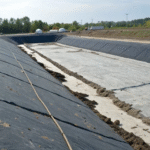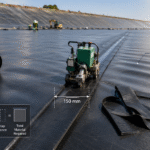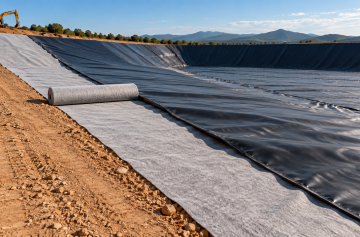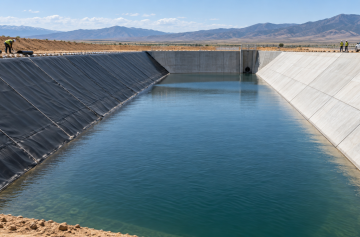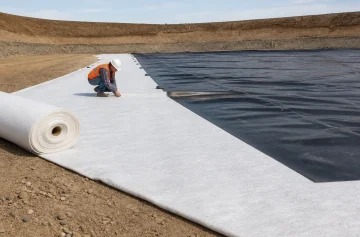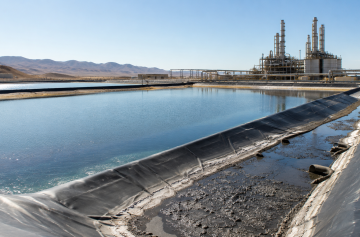
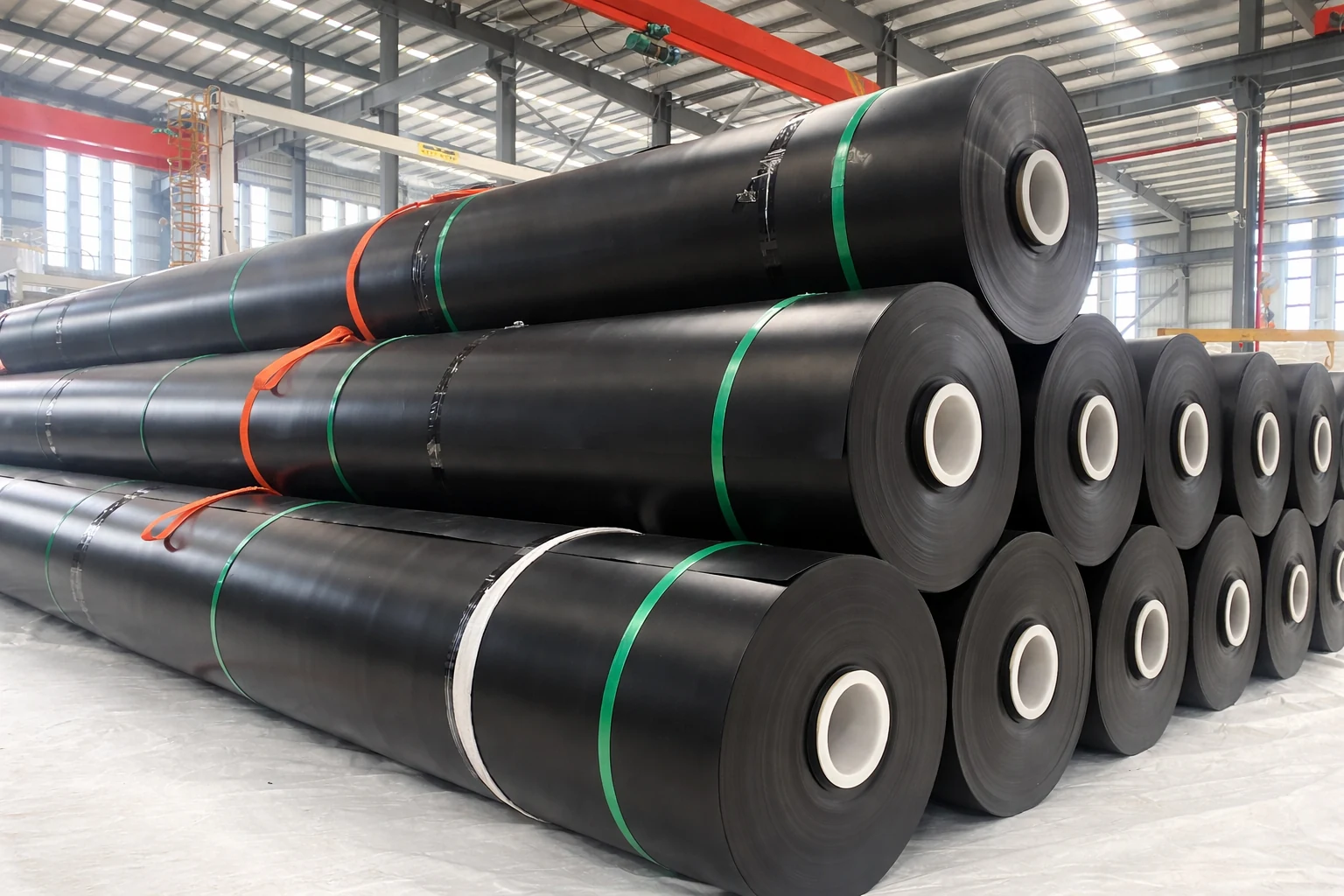
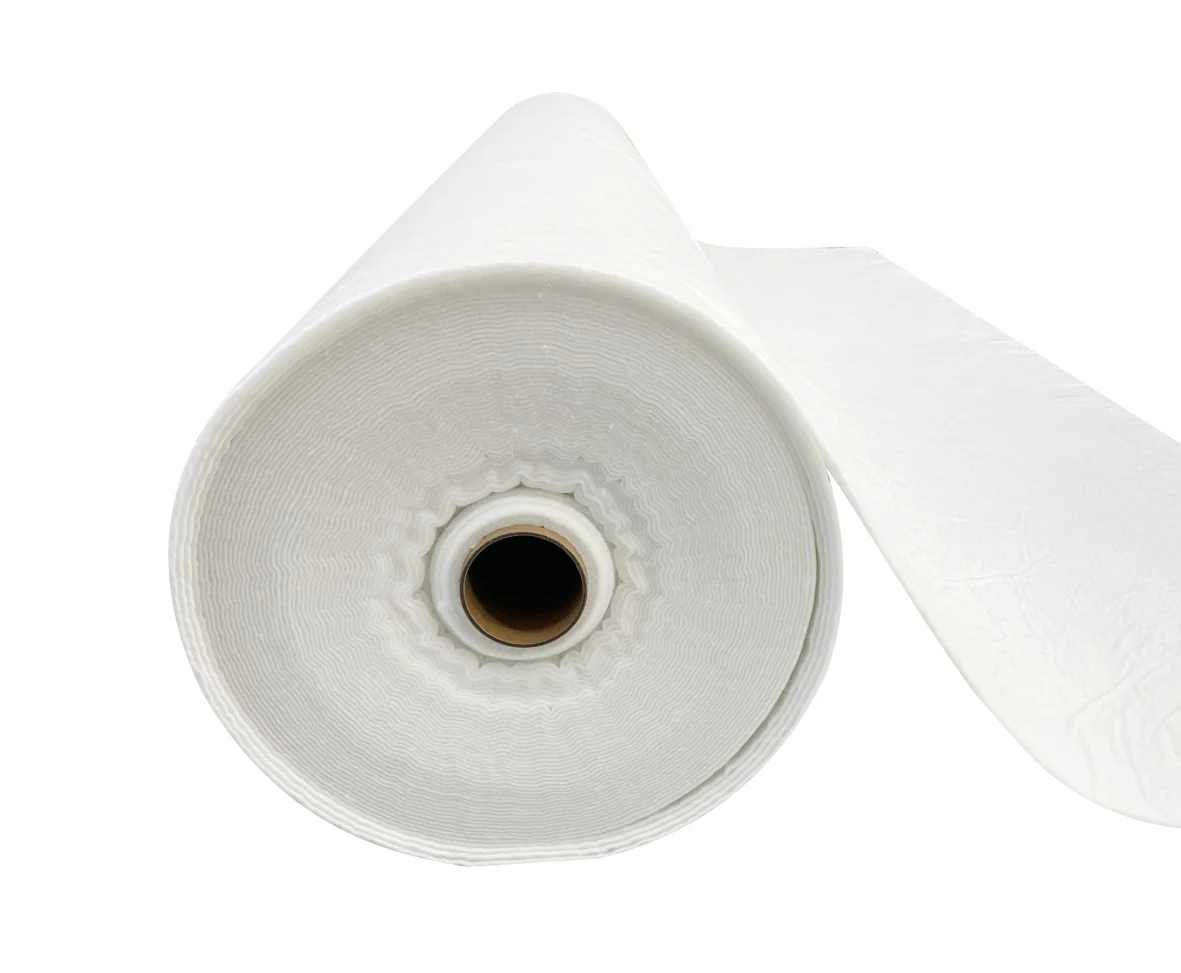

Geomembrane Wholesale Reference: HDPE/LLDPE raw material $1,200–$1,800 per ton, roll width 3–6m, length 50–100m, weight 1–3 tons. International shipping $200–$500/ton, domestic land transport $50–$150/ton, facilitating wholesale budgeting and material selection.
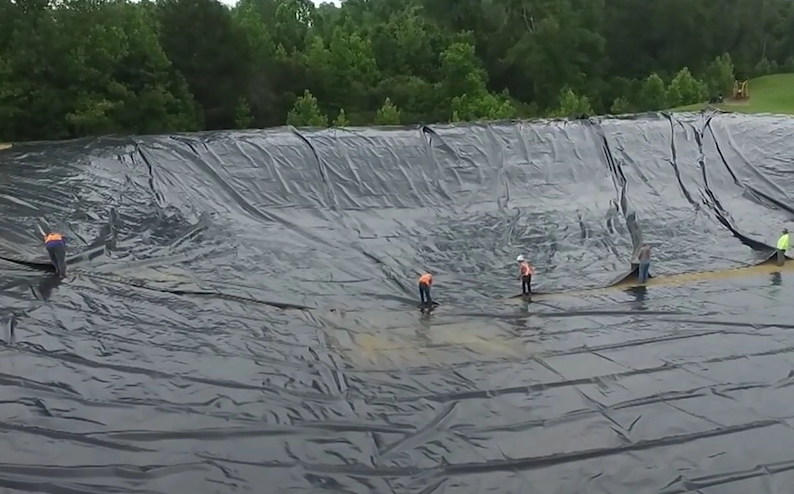
Raw Material Costs
Polymer Resin
To make 1 ton of HDPE resin, 1.05 tons of high-purity ethylene monomer must be consumed. These monomers are mainly refined from naphtha, and their price trend is closely tied to Brent Crude. For every $10 change in crude oil, the wholesale price of resin per ton will follow by $80 to $120 within two weeks.
The density scale of the resin is set at 0.941 g/cm³ to 0.960 g/cm³. Polymers produced through Ziegler-Natta catalysts have an internal crystallinity ratio of 60% to 80%. This orderly structure allows the membrane material to withstand a tensile force of above 27 kN/m, and even hard stones cannot puncture it.
Viewed under a microscope, the choice of molecular chain branching determines the cost. Butene (C4), Hexene (C6), and Octene (C8) are three common side chains. Resin using hexene as a side chain has a crack resistance 3 times higher than that of butene. In international markets, hexene-grade resin costs $50 to $100 more per ton than butene-grade.
| Resin Parameters | HDPE (High Density) | LLDPE (Linear Low Density) | VLDPE (Very Low Density) |
|---|---|---|---|
| Density Value (g/cm³) | 0.941 – 0.955 | 0.918 – 0.925 | 0.890 – 0.912 |
| Melting Temperature (°C) | 126 – 135 | 120 – 126 | 110 – 118 |
| Crystallization Ratio (%) | 60 – 80 | 30 – 45 | 10 – 25 |
| Hardness Modulus (MPa) | 800 – 1200 | 250 – 450 | 50 – 150 |
[Image of polyethylene molecular structure]
Resin granules are like translucent pearls, and the Melt Flow Index (MFI) must be stable at 0.1 to 0.4 g/10min. If the index jumps above 0.5, the membrane extruded by the machine will become thin, and the thickness cannot be controlled. For large rolls with a thickness of 2.0mm, if the index is inaccurate, the error at various points of each roll will exceed 10%.
Some high-end products use resin produced by metallocene catalysts. The molecular chain lengths of this resin are particularly uniform, and it does not become brittle in freezing weather at -70°C. Although the wholesale price of this material per ton is 20% more expensive, it can increase the puncture strength of the membrane by 40%. For infrastructure in severely cold regions, this expense cannot be spared.
- The moisture content of resin granules must be lower than 0.02%, otherwise the produced membrane will be full of bubbles
- Good virgin material has a gas permeability as low as 1×10⁻¹³ cm/s, almost nothing can pass through
- Molecular weight is usually set between 100,000 and 300,000
- Under 150°C high pressure, the Oxidative Induction Time must last over 400 minutes
- The number of side chains per 10,000 carbon atoms determines its hardness and softness
Virgin high-quality resin can last 15 to 20 minutes in 200°C oxygen without deteriorating by itself. If it is inferior material mixed with recycled content, it will char in less than 3 minutes. Membranes made from such material will show small yellow spots or pockmark-like pits on the surface, which means the resin has already burned inside the machine.
Producing 1 square meter of 1.0mm thick membrane consumes 940 grams to 960 grams of resin. In large wholesale orders, the raw material loss rate is generally set at 3% to 5%. If a factory uses fast-flow resin to speed up progress, it can produce 15% more per hour, but the shrinkage rate after the membrane is laid will exceed the standard, potentially cracking the weld seams.
Environmental Stress Crack Resistance (ESCR) is the touchstone of resin grade. According to ASTM D5397 standards, virgin material must run for 500 hours while being pulled in a chemical solution. Inferior products made from recycled materials usually break in 48 hours. The difference between a ton of genuine goods at $1300 and scrap at $900 is this 10-fold difference in lifespan.
Prices in wholesale contracts usually follow the Platts or ICIS index.
- Prices for forward contracts are reconciled once a month
- Spot price quotes are only valid for 72 hours, and must be recalculated once expired
- Buying more than 500 tons at once can reduce the price per ton by 2% to 5%
- Transoceanic freight generally accounts for 3% to 6% of the resin unit price
A warehouse environment that is too dirty will also ruin the raw materials. Polyethylene granules easily carry static electricity and attract dust; too much dust will make the membrane surface conductive. When performing a Spark Test, dust will cause false alarms. Legitimate factories will invest in a Class 1000 dust removal system, the cost of which amortizes to about $0.02 per square meter of membrane.
Accessories & Additives
Each ton of HDPE resin needs to be paired with 20 kg to 30 kg of special carbon black granules. N110 or N330 grade carbon black is selected, with a particle size usually between 20 nanometers and 25 nanometers. According to ASTM D1603 specifications, these micro-particles must occupy 2.0% to 3.0% of the total weight of the finished product.
This black covering layer is specifically responsible for blocking ultraviolet rays in the 290 nanometer to 400 nanometer band. If the concentration is lower than 2.0%, polyethylene molecular chains will break after 500 hours of sunlight exposure. Higher than 3.0% will induce stress concentration, and the membrane material will undergo premature brittle fracture when subjected to 15% tensile force.
The distribution quality of carbon black under a microscope directly affects the wholesale unit price. ASTM D5596 divides this dispersion grade into levels 1 to 10.
- Level 1 represents no visible clumps at all to the naked eye
- The carbon black carrier must match the melt flow index of the base resin
- Impurity spots exceeding 0.5 mm are not allowed to appear on each square meter of membrane surface
- Inferior products are often mixed with recycled masterbatch, and the measured OIT time usually cannot last over 30 minutes
This physical level of shielding is not enough. When the production line extrudes at high temperatures of 230°C to 260°C, polyethylene is prone to thermal-oxidative degradation. 500 ppm to 1000 ppm of hindered phenolic antioxidants will be added to the formula. These molecules capture free radicals during the melting stage, ensuring that melt flow rate fluctuations do not exceed 20%.
Secondary antioxidants usually choose phosphite esters, with the addition amount maintained at 1500 ppm to 2500 ppm. This dual-system coordination ensures that the geomembrane retains a standard oxidative induction time (Std. OIT) of over 100 minutes. If the detected value is lower than 100 minutes, the membrane material will lose half of its strength after staying in a landfill for 5 years.
Hindered Amine Light Stabilizers (HALS) such as Chimassorb 944 are for long-term lifespan. This additive does not rely on blocking light, but on clearing harmful substances produced by oxidation. In a 60°C simulation test, membrane material containing HALS can retain over 90% of its strength after 1600 hours of sun exposure.
Adding these high-performance additive packages will cost an extra $350 to $600 per ton of raw material.
- What this investment brings is a design life of over 50 years
- Standard OIT test requires reaching 100 minutes (ASTM D3895)
- High-pressure OIT test requires reaching 400 minutes (ASTM D5885)
- Membranes made with inferior additives usually start to show cracks all over the surface after 2000 hours
For some projects like drinking water tanks or fish ponds, additives cannot discharge harmful substances. Choosing additives with food-grade certification costs an extra $0.05 to $0.12 per square meter. This can avoid renovation losses caused by unqualified water quality monitoring, as rework fees are often 15 times the cost of buying the membrane.
When looking at a quote, one must keep an eye on the raw material formula. The ratio of virgin resin, carbon black, and additives is generally maintained at 94:3:3. If the OIT data is marked above 120 minutes, it indicates a high amount of antioxidants, suitable for high-corrosion environments like tailings ponds. The wholesale price of this type of special membrane is 15% to 20% more expensive than ordinary ones.
Before raw materials are stored, a 1-gram sample must be burned in 600°C nitrogen. The weight of the remaining residue must fall exactly between 0.02 grams and 0.03 grams. This level of data transparency is the bottom line of the transaction; any 0.5% shrinkage in the formula will be multiplied during the 20-year service period.
Membranes of different thicknesses show different performance in additive loss rates. A 1.5 mm thick HDPE membrane has an antioxidant consumption rate 40% slower than a 0.5 mm one. Thin membranes require a higher concentration of light stabilizers, which is also the main reason why the square meter unit price of different thicknesses is disproportionate.
The reuse ratio of edge-trim materials in the factory is strictly forbidden to exceed 10%. Recycling too many times will deplete the antioxidants. Reputable factories will add 300 ppm of new stabilizers during recycling. Writing “all-virgin material formula” into a contract usually requires paying a premium of 5% to 8%.
This premium buys an engineering safety margin. Globally, there are many cases of anti-seepage system collapse caused by additive failure. Data proves that investing in this additive cost at the initial stage is the most effective way to avoid long-term financial risks.
Producing 1 square meter of 1.5mm HDPE membrane consumes an average of 0.8 to 1.2 kWh of electricity. There is a 2% to 5% loss of raw material during feeding, melting, and trimming stages. These technical expenses are included in wholesale contract pricing, and bulk purchases usually refer to Platts or ICIS pricing indices.
Virgin material Environmental Stress Crack Resistance (ESCR) must last 500 hours. Recycled material membrane usually fails within 200 hours. If the wholesale price is ridiculously low, far below the resin benchmark price of the market at that time, it is highly likely mixed with recycled materials.
- 1.0 mm membrane weight per square meter is about 940 grams
- 1.5 mm membrane weight per square meter is about 1410 grams
- 2.0 mm membrane weight per square meter is about 1880 grams
- Error range controlled within plus or minus 3%
Wholesale contracts should specify ASTM specific test methods. For example, carbon black dispersion must be executed according to ASTM D5596.
Virgin Material vs Recycled Material
HDPE virgin granules with an ex-factory price between $1250 and $1450 per ton possess very long molecular chains. Viewed under a 200x microscope, the internal structure of these granules is like an orderly honeycomb. Recycled material is usually mixed with old bottles or woven bags, and the density cannot be stabilized on the standard line of 0.941 g/cm³.
According to ASTM D5397 tensile experiments, virgin membrane can be pulled by heavy weights for 500 hours without cracking. Recycled membrane, because it is mixed with scrap, usually snaps in 30 to 80 hours. If the underground water pressure exceeds 0.5 MPa, an anti-seepage layer made of recycled material will soon leak water.
| Performance Comparison | Virgin HDPE | Recycled Material |
|---|---|---|
| Tensile Limit (ASTM D6693) | Over 700% | Less than 280% |
| Crack Resistance Time (ASTM D5397) | Over 500 hours | 15 to 50 hours |
| Melting Index Fluctuation | Less than 0.1g/10min | Greater than 0.4g/10min |
| Design Life | 70 to 100 years | 3 to 10 years |
The melting speed fluctuation of virgin material is maintained at around 10%. If polypropylene (PP) is mixed into recycled material, this membrane will become brittle at -10°C, unlike virgin material which can withstand low temperatures of -70°C. When laying membranes in winter, a recycled membrane will shatter like glass if bumped by a forklift.
Bulk wholesale prices usually follow the Platts index. If someone quotes a price 15% cheaper than the resin raw material, it must contain recycled granules at $750 per ton. This price difference of $400 per ton is exchanged for a lifespan shortened by decades.
Pure resin is more resistant to chemical corrosion. When dealing with acidic slag with a pH value less than 3, virgin HDPE can last 20 years. Impurities in recycled material will react with the acid, increasing the permeability from the original 1×10⁻¹³ cm/s, making the protective layer leak like a sieve.
- Virgin granules look like translucent milky-white pearls
- Recycled granules are dark in color and have a smell of burnt plastic
- Virgin membrane is as tough as cowhide candy when pulled
- Recycled membrane snaps as soon as it is pulled, with no room for extension at all
- The carbon black dispersion grade of pure material can be stabilized at Level 1
The weight of a 2.0mm thick virgin membrane is strictly held at 1880 grams per square meter. Due to uneven density, the weight deviation of recycled material often exceeds 5%. Some manufacturers add stone powder to recycled material to make up the weight; buyers should look for net weight when signing contracts, and not be deceived by the illusion of thickness.
Landfills stack garbage up to 40 meters high, and the pressure on the membrane at the bottom is huge. Virgin material deforms less than 2% in a 1000-hour pressure test. Recycled material will deform by more than 8% due to impurities; this excessive stretching will make the membrane thinner, eventually being punctured by underground stones.
The molecular size of virgin material is very average. This allows workers, when welding membranes on site, not to have to constantly adjust the welder’s temperature even if the air temperature changes by 15°C. The melting point of recycled material jumps around, and weld seams are prone to charring or not welding firmly; the peel strength often cannot even reach 11 kN/m.
- Producing one ton of virgin membrane uses 450 kWh of electricity
- Recycled material causes the machine’s current to fluctuate by 20%
- Virgin membrane can block 520N of sharp object puncture
- Recycled membrane will be punctured under a force of 310N
When buying goods, one must check the Quality Inspection Report (COA). A real virgin material report will clearly state the batch number and antioxidant content. If a supplier cannot provide credentials for the corresponding batch, they are using scrap picked up from the roadside. This paper proof is the ultimate card for identifying real or fake materials.
The $0.4 saved per square meter corresponds to 25 times the expense for future renovation. In global leakage cases, 65% are due to using recycled material to save money. The 700% elongation rate of virgin material is the last life-saving shield when foundations subside.
Putting a 1-gram sample into a 600°C furnace to burn, the ash remaining from virgin HDPE is less than 0.05%. If the ash exceeds 0.2%, it indicates that talc powder was added. This method of adding material will cause the tear strength of the membrane to drop directly by 40%, and it might crack as soon as the wind blows.
- Virgin membrane has an oily and bright luster on the surface
- Recycled membrane has many small pockmarks or bubbles on the surface
- Virgin material does not have pungent smoke when melting at 210°C
- Recycled material will emit toxic smoke containing sulfur when heated
- Good material must comply with the globally used GRI-GM13 standard
Roll Sizes
Standard Specifications
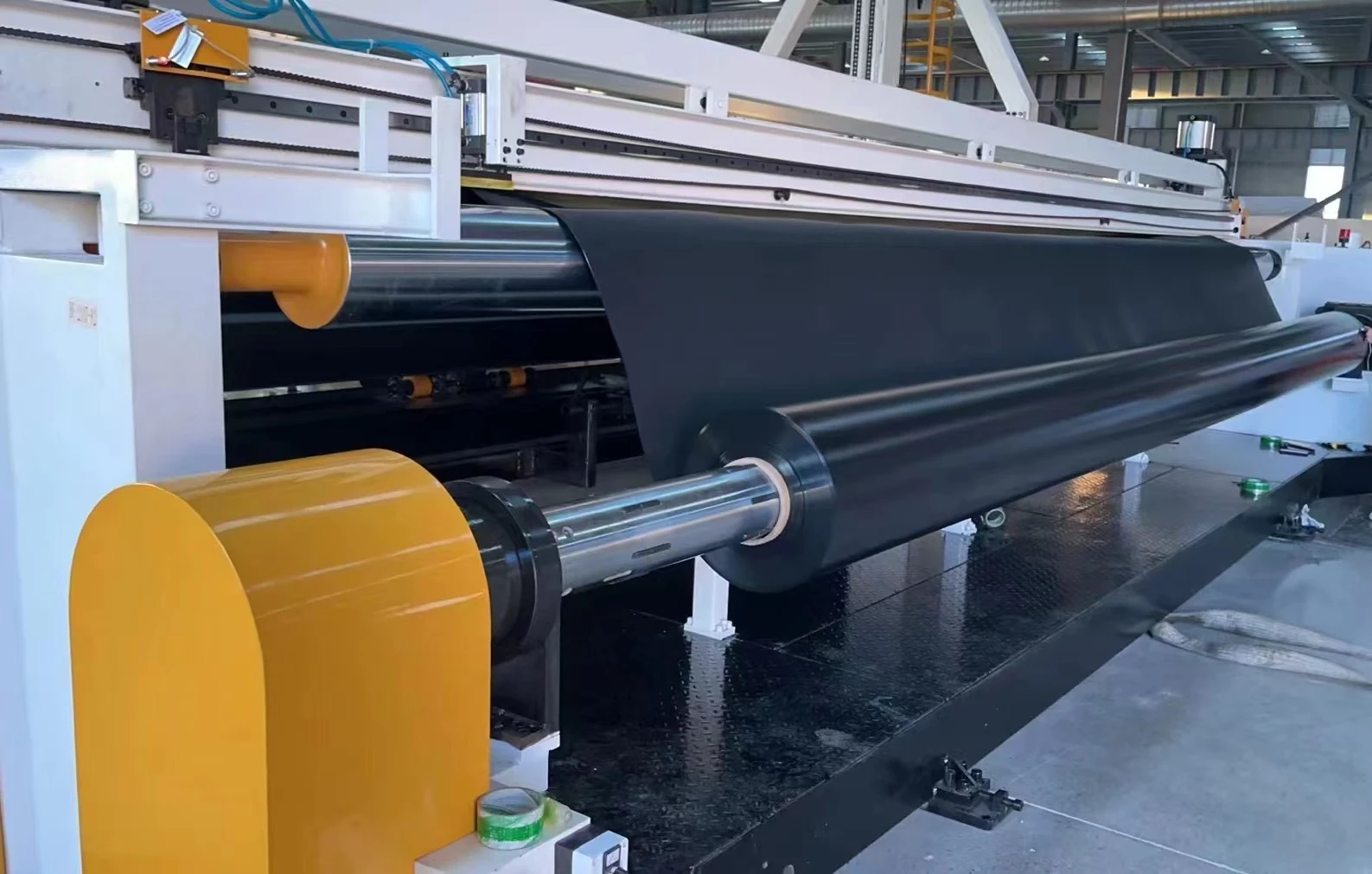
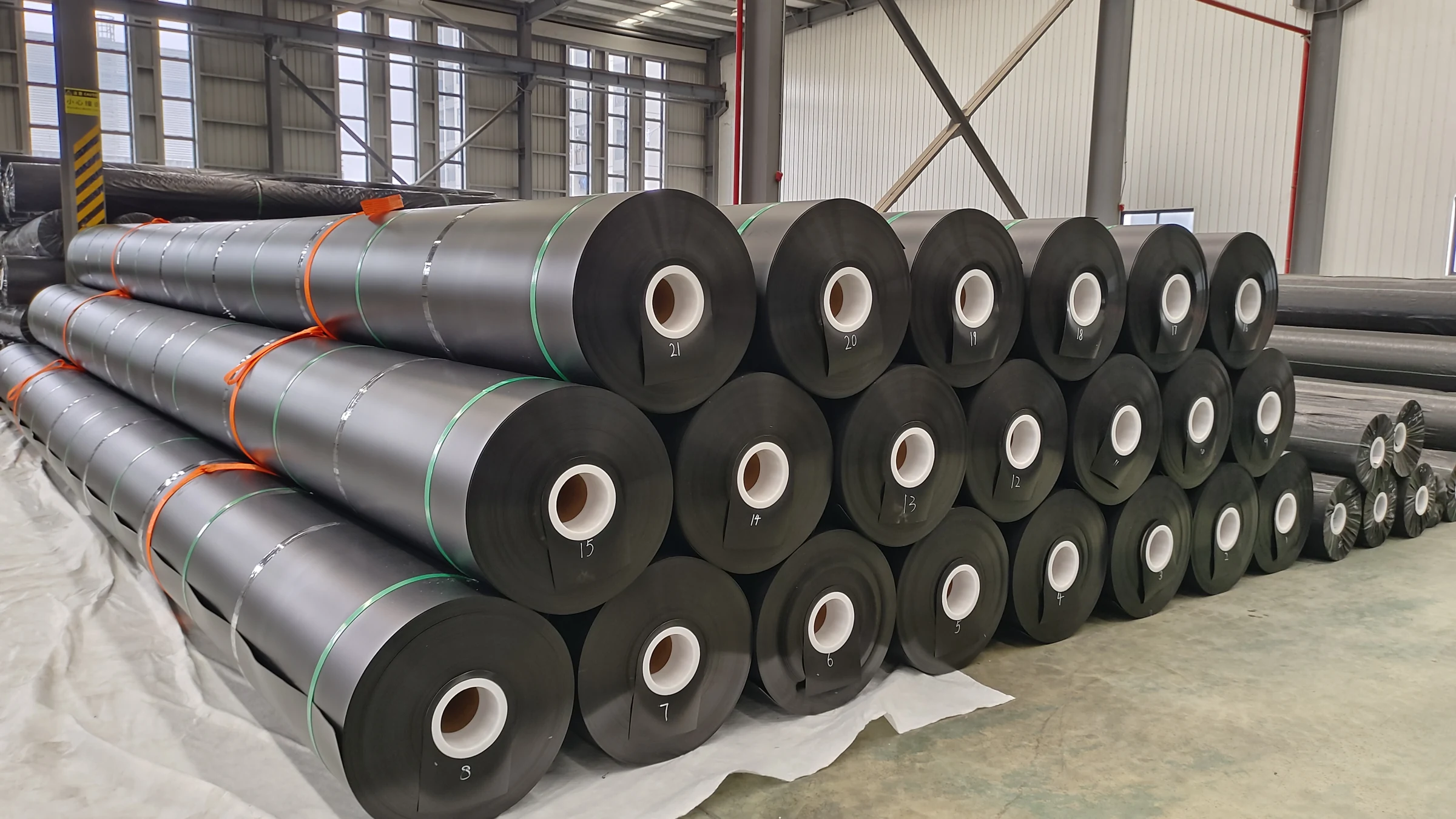
Currently, the upper limit for the net width of HDPE anti-seepage membranes produced by mainstream global blow molding units is 8.0 meters. The diameter of the production line die head usually needs to reach 1.5 to 2.5 meters, blowing and expanding the molten resin through internal bubble pressure. For 1.0mm thickness standard rolls, the single roll length is usually set at 100 meters, and the weight of the entire roll is about 752 kilograms. The diameter of the paper or steel tube core is fixed at 152mm, and the wall thickness must reach over 10mm to prevent the winding pressure from causing core deformation.
The internal length of a 40HQ sea shipping container is 12.03 meters, and the width is 2.35 meters. Rolls with a width of 5.8 meters are designed specifically for container loading, allowing two rolls to be arranged side-by-side horizontally using 11.6 meters of cabin length. The loading capacity per container is controlled between 22 and 26 tons. This arrangement leaves a 40cm space, facilitating 3.5-ton forklifts to use long forks for single-side unloading operations.
Rolls reaching a width of 7.0 meters or 8.0 meters need to undergo U-shaped or C-shaped folding before containerization. For membrane materials of 1.5mm thickness and above, a residual stress of about 15kN/m will be generated at the fold. Long-term squeezed storage may induce environmental stress cracking, requiring compliance with the SP-NCTL test of ASTM D5397. The roll diameter of folded packaging is usually maintained at around 700mm, ensuring that the bottom rolls do not undergo elliptical deformation due to gravity stacking.
- 1.0mm specification: Width 5.8m / 8.0m, length 100m, single roll area 580 / 800 square meters.
- 1.5mm specification: Width 5.8m / 8.0m, length 50m, single roll area 290 / 400 square meters.
- 2.0mm specification: Width 5.8m / 8.0m, length 50m, single roll area 290 / 400 square meters, single roll weight approx 760 kg.
- 0.5mm specification: Width 7.0m / 8.0m, length 150m, single roll area 1050 / 1200 square meters.
- Narrow width specifications: 1.0m – 3.0m, specifically used for precast part wrapping or narrow pipe trench anti-seepage.
The number of weld seams at the engineering site is directly affected by the width of the rolls. Calculating for a 10,000 square meter level site, using an 8-meter width can save about 420 meters of longitudinal overlap weld seams compared to using a 6-meter width. A dual-track hot-melt welder runs at a speed of 2.5m/min; reducing these weld seams can save about 170 minutes of pure welding time. Reducing weld seams also lowers the workload of air pressure testing, as both ends of each weld seam must be plugged and inflated to 250kPa for 5 minutes.
Overlap width is required to be 10cm to 15cm in industry specifications. Using 8-meter wide rolls, the effective laying width is about 7.85 meters, with an edge loss rate of about 1.9%. If 3-meter narrow width rolls are used instead, the effective width is only 2.85 meters, and the edge loss rate soars to 5%. In large-area plain reservoir projects, the material price difference caused by this specification difference can reach $0.3 to $0.5 per square meter.
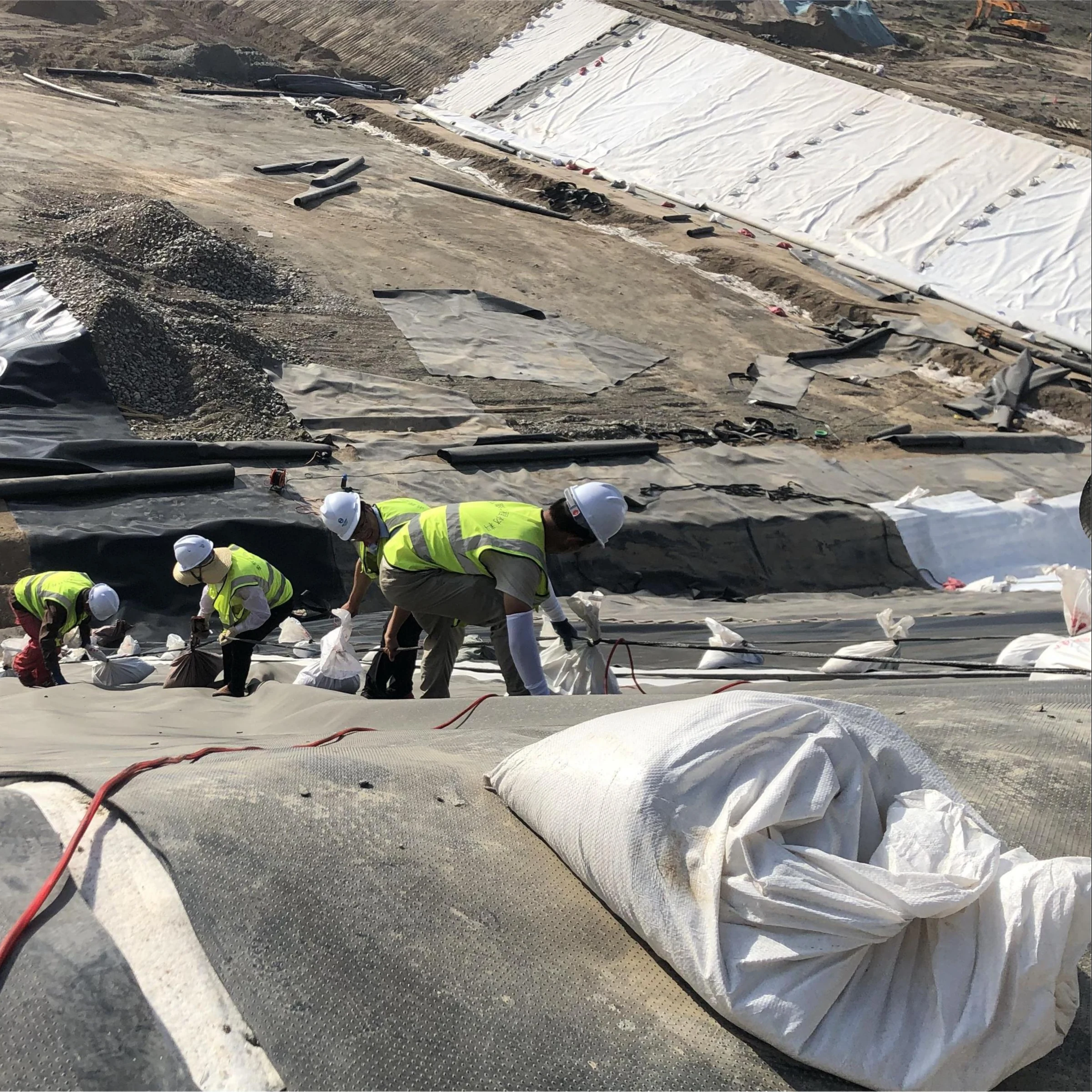
The length of the slope is the basis for determining the custom roll length. If the slope length of a 1:2.5 slope is 33 meters, using a 50-meter standard roll will produce 17 meters of surplus material. This surplus cannot be directly used at the bottom of the slope, resulting in 34% material waste. By customizing a 35-meter length through the manufacturer, the scrap rate can be suppressed to within 5%. Horizontal weld seams are strictly forbidden on slopes; the material length must cover from the top anchor trench to the foot of the slope at once.
- Anchoring reservation: A 0.5m by 0.5m anchor trench requires a 1.5-meter reservation of material edge.
- Expansion allowance: The linear expansion coefficient of HDPE is 2.0 times 10 to the power of negative 4; a 100-meter roll will produce a 40cm displacement with a 20-degree temperature difference.
- Unloading lifting gear: 8-meter rolls must use a spreader bar with a length of over 6 meters.
- Warehouse stacking: Storing outdoors is strictly forbidden for over 3 layers, to prevent ultraviolet radiation from causing the packaging woven fabric to crumble.
Carbon black content must be stabilized within the range of 2.0% to 3.0%. Before each roll of geomembrane leaves the factory, samples must be taken across the full width at the head and tail of the roll. Thickness measurement points are set every 1.5 meters, and the allowable deviation for 1.0mm membrane material must be controlled within plus or minus 10%. According to the GRI GM13 protocol, a complete tensile performance and yield strength test must be performed every 20,000 pounds of output.
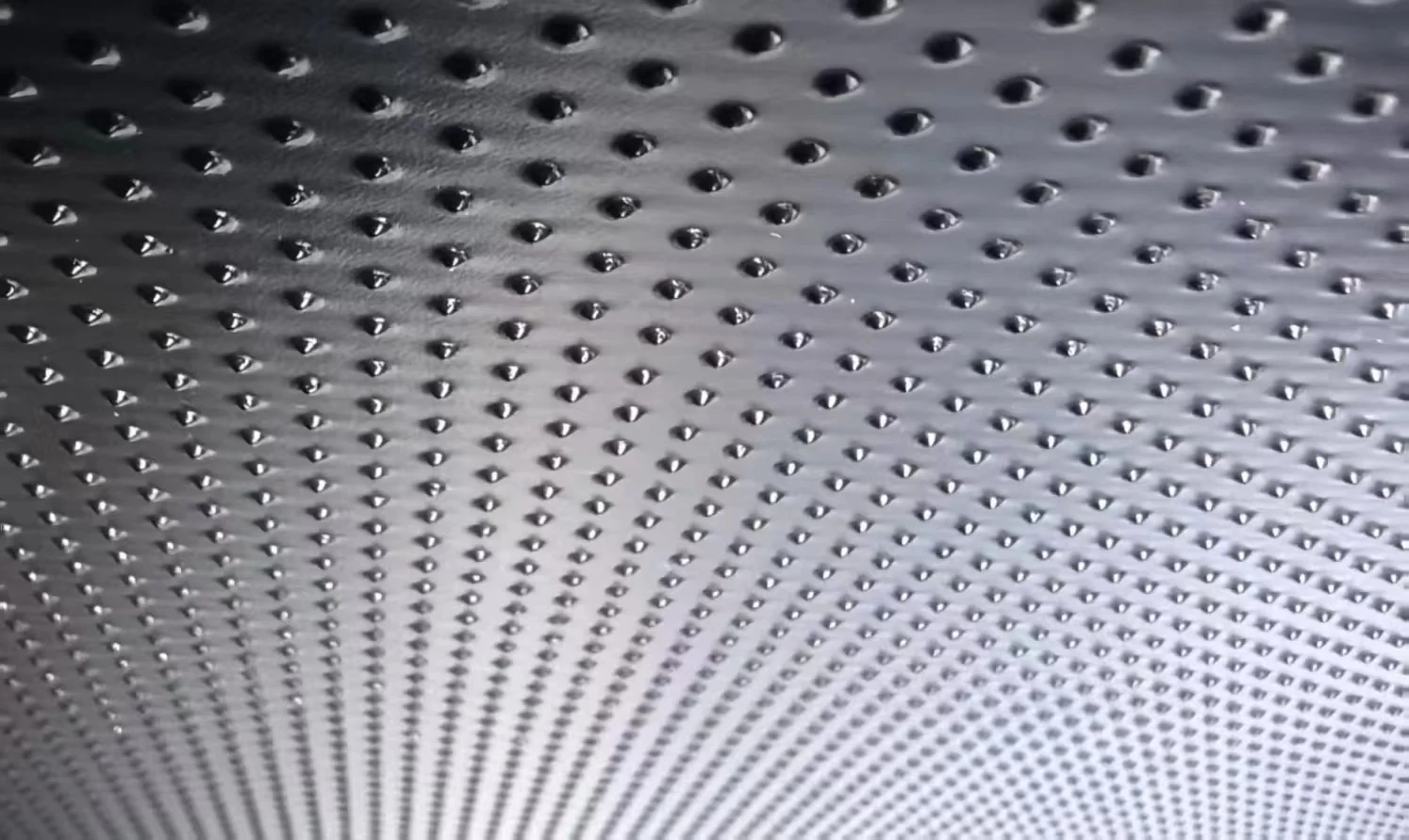
Because textured rolls have protrusions of over 0.25mm on the surface, the roll diameter is 15% larger than smooth specifications of the same length. For 2.0mm double-textured membranes, improper tension control during winding will lead to protrusion wear. The roll length of this special specification is usually reduced to 40 meters to avoid the roll diameter being too large to fit into a standard truck. Textured membranes can provide a higher friction angle when laid on slopes, preventing covering soil from sliding.
For settling ponds or landscape lakes with irregular sites, it is recommended to choose a 4-meter width. This size produces “fish mouth” fold heights usually less than 5cm when handling arc corners, facilitating repair welding using a manual extrusion weld gun. 8-meter wide membranes will produce huge sector-shaped overlaps in arc areas, and the recycling value of cut scrap is extremely low. The manual handling cost of small projects also limits single roll weight to not exceed 500 kg.
- 6-inch steel core: Supports heavy membrane materials so they do not undergo axial bending when being lifted.
- Oxidative Induction Time (OIT): Standard requirement is greater than 100 minutes, ensuring the material does not undergo embrittlement for 20 years.
- Density index: HDPE density must be greater than 0.940g/cm3, LLDPE density between 0.915 and 0.926.
- Surface marking: Inkjet printing every 1 meter, including batch, thickness, and production date.
Thickness & Length
On the production line, the thickness of HDPE anti-seepage membrane directly determines the output frequency of the extruder. 0.5mm thin film cools faster during the blow molding process, and the traction speed can reach over 5 meters per minute, with the single roll length usually set at 150 meters. 2.0mm thick membrane, due to severe heat accumulation, must significantly reduce traction speed to ensure full crystallization of molecular chains, with the single roll length usually compressed to 50 meters.
For resin with a density distribution between 0.94g/cm3 and 0.96g/cm3, after extrusion through a T-die, its thickness tolerance must comply with the ASTM D5199 standard. For 1.0mm specifications, the finished product weighs about 950 grams per square meter; when the single roll width is 8.0 meters and length is 100 meters, the net weight of the membrane material is 760 kilograms. Adding a 152mm diameter, 12mm wall thickness steel roll core, the total lifting weight of the roll is close to 800 kilograms.
| Nominal Thickness (mm) | Common Width (m) | Standard Length (m) | Single Roll Area (m2) | Theoretical Weight (kg) | 40HQ Loading Capacity (Rolls) |
|---|---|---|---|---|---|
| 0.50 | 7.0 / 8.0 | 150 | 1050 / 1200 | 494 / 564 | 48 |
| 0.75 | 7.0 / 8.0 | 100 | 700 / 800 | 494 / 564 | 48 |
| 1.00 | 5.8 / 8.0 | 100 | 580 / 800 | 545 / 752 | 36 |
| 1.50 | 5.8 / 8.0 | 50 | 290 / 400 | 409 / 564 | 48 |
| 2.00 | 5.8 / 8.0 | 50 | 290 / 400 | 545 / 752 | 36 |
| 2.50 | 5.8 / 8.0 | 40 | 232 / 320 | 545 / 752 | 36 |
| 3.00 | 5.8 / 7.0 | 35 | 203 / 245 | 572 / 691 | 40 |
The internal height of a 40HQ high cube container is 2.69 meters, and the weight limit is usually 26 to 28 tons. For 1.0mm specification 8.0-meter wide rolls, the diameter is about 650mm, and they can be loaded in 3 layers using an interlaced stacking method. If the length of 1.5mm thick membrane is increased to 100 meters, the single roll diameter will break through 900mm, causing the bottom roll to withstand over 2.5 tons of static pressure, and the roll core will undergo axial bending as a result.
- Roll length adaptability: For a landfill slope with a slope length of 35 meters, if 50-meter rolls are used, 15 meters of unusable tail material will be produced, with a material waste rate of 30%.
- Roll diameter control: The outer diameter of the finished roll is strictly forbidden to exceed 850mm, to prevent scratching the container top plate during loading and unloading.
- Roll core specification: Uniformly adopting a 6-inch (152mm) inner diameter to ensure compatibility with mainstream global automatic laying lifting gear.
- Paper tube strength: In wholesale trade, paper tubes must undergo waterproof coating treatment to prevent softening during high-humidity voyages in the Baltic Sea or the Strait of Malacca.
The relationship between thickness and puncture resistance grows non-linearly. According to ASTM D4833 testing, the puncture resistance of 1.0mm membrane is 320N, while the 1.5mm specification can reach 480N. On a base layer containing crushed stone corners, the safety redundancy provided by 1.5mm thickness is over 50% higher than that of 1.0mm. Increasing thickness can significantly extend the Oxidative Induction Time (OIT); 1.5mm membrane has a lifespan retention rate 20% higher than 1.0mm membrane in 85-degree Celsius oven aging tests.
In on-site construction, the 10cm to 15cm weld seam overlap area is a major source of area loss. Using an 8.0-meter width compared to a 6.0-meter width can reduce longitudinal overlap by 25% under the same area. For 1.0mm membrane material, every 1000 linear meters of weld seam requires consumption of about 5 kilograms of HDPE welding rod. Reducing roll length means increasing transverse joints, which is explicitly forbidden by engineering specifications in areas with a slope greater than 10 degrees.
- 1.0mm applicable scope: Ponds, irrigation canals, landscape lakes, general industrial sewage isolation.
- 1.5mm applicable scope: Municipal waste landfills, petrochemical cofferdams, tailings ponds.
- 2.0mm applicable scope: Gold heap leaching pads, strong acid and alkali storage tanks, high-pressure brine ponds.
- 2.5mm applicable scope: Nuclear power basic anti-seepage, deep basement anti-uplift, extreme geological condition engineering.
The thermal expansion coefficient of HDPE reaches 2.0 times 10 to the power of negative 4. On a 100-meter long roll, a temperature difference of 30 degrees Celsius will lead the material to produce a 60-centimeter length fluctuation. When laying at noon in summer, if sufficient loose waves are not reserved, the cold shrinkage tension after cooling at night will directly tear weld seams that have not yet been anchored. The greater the thickness, the stronger the material rigidity, and the greater the internal stress generated by cold shrinkage.
Single roll weight limits the choice of machinery at the construction site. 1.0mm/8.0m/100m specifications require a forklift of 3 tons or above for assistance, or using a 5-ton excavator with a spreader bar. If under working conditions in remote mountainous areas where heavy machinery cannot enter, the manufacturer should be actively requested to reduce the roll length to 40 meters, to control the single roll weight within 300 kilograms for easier movement by manual labor or small winches.
It is normal for carbon black content to fluctuate between 2.0% and 3.0%. In wholesale orders, one roll must be extracted every 20 tons of goods for full-width thickness scanning. The minimum measured value for 1.5mm specifications must not be lower than 1.35mm. If the thickness range exceeds 15%, during the hot-melt welding process, the welder’s pressure wheel will produce false welding or leak welding due to uneven pressure. The more uniform the thickness, the better the stability of welding temperature control, and the weld seam strength can usually reach over 90% of the parent material.
- Packaging requirements: The outer layer must be wrapped with black anti-ultraviolet woven cloth, with both ends locked using fastening straps.
- Storage limits: Outdoor storage is strictly forbidden for over 6 months, and stacking height must not exceed 3 layers.
- Unloading tips: It is strictly forbidden to push the rolls directly from the truck bed during unloading; collision will cause permanent notches in the membrane edges.
- Sampling specifications: Sampling must be performed at a position 2 meters after the roll head, avoiding the tension fluctuation zone at the beginning of winding.
How to Choose
If the slope length is 32 meters, choosing a 50-meter long specification will leave 18 meters of scrap, with a loss ratio of 36%. In this case, a custom length of 35 meters should be ordered from the manufacturer, keeping the surplus within 3 meters. Areas with a slope exceeding 10% must absolutely not have horizontal weld seams; gravity will cause the shear stress at the weld seam to be 40% higher than that of longitudinal weld seams.
For every 10,000 square meters of level site, choosing an 8.0-meter width can reduce the total weld seam length by 1,250 meters compared to 4.0 meters. Reducing these weld seams can save 50% on third-party testing fees, because more than 10 destructive experiments must be done for every 1000 meters of weld seam. A dual-track welder can run 3.5 meters per minute; narrow membranes will consume a full 6 more hours of pure welding time than wide ones.
| Project Type | Membrane Thickness | Recommended Width | Single Roll Weight | Loss Rate |
|---|---|---|---|---|
| Landscape Pond | 0.5mm | 3.0-6.0m | < 500kg | 10%-12% |
| Landfill | 1.5mm | 7.0-8.0m | 800-1100kg | 5%-7% |
| Mine Heap Leaching Pad | 2.0mm | 5.8-8.0m | 1000-1500kg | 6%-8% |
| Shrimp Pond Farming | 0.75mm | 6.0-8.0m | 400-600kg | 8%-10% |
After calculating the slope, one must also look at the machinery on the construction site. For 2.0mm thickness 8.0-meter wide rolls, the weight for a 50-meter length is close to 1.5 tons. If the site does not have an excavator over 5 tons for lifting assistance, the 152mm roll core can easily be broken. In small-scale projects where machinery cannot enter, the single roll weight should be controlled below 800 kilograms to facilitate operation by workers using winches.
A 15-centimeter overlap width is an industry dead standard. On an 8-meter wide membrane, this part accounts for 1.8% of the total area, while on a 4-meter wide membrane, it accounts for 3.6%. For a 20,000-square-meter project, choosing the wrong width will result in buying 360 square meters of material for nothing. Calculated at a unit price of $2, that’s a loss of $720, not including the extra cost of welding rods.
Landscape ponds with many corners are not suitable for large widths; 3.0-meter or 4.0-meter narrow membranes are more flexible. The “fish mouth” folds produced by narrow membranes at arc locations are usually less than 3 centimeters, and can be repaired with a manual extrusion weld gun. 8-meter wide membranes will have huge sector-shaped overlaps in arc areas, and cut scrap cannot be reused at all, increasing material costs by 20% as a result.
- 0.5mm specification: Suitable for manual handling, single roll weight approx 400kg.
- 1.0mm specification: Balanced strength and operability, 8m width is mainstream.
- 1.5mm specification: Suitable for heavy-duty anti-seepage, single roll area 400 square meters.
- 2.0mm specification: Puncture resistance reaches 640N, single roll length usually 50m.
Shipping Logistics
Packaging & Protection
Geomembrane roll cores use high-strength spiral pressure paper tubes with an inner diameter of 152mm (6 inches). These paper tubes must have a wall thickness of 12mm to 15mm to ensure that when bearing a 2.5-ton single roll weight, the deflection deformation of the central axis is less than 3mm. If the wall thickness is lower than 10mm, the 50kN pressure generated by multi-layer stacking will squeeze the bottom rolls, causing the cores to collapse and resulting in later construction lifting being unable to penetrate the shaft.
To prevent moisture from seeping into the core and causing the paper tube to soften, 5mm thick High-Density Polyethylene (HDPE) plugs must be inserted into both ends of the core. These plugs not only play a sealing role but also provide 3000N of impact resistance during lateral loading, preventing forklift attachments from directly damaging the membrane edges. 2kg of mineral desiccant will also be placed inside the core to absorb condensation water generated due to temperature differences during sea transit.
The external protective layer adopts 250g/m² specification Polypropylene (PP) woven cloth. This packaging material must pass 500 hours of ASTM D4355 ultraviolet aging testing, ensuring that after 90 days of exposure to intense sunlight, the tensile strength retention rate is still above 70%. Packaging cloth sewing threads use 1500D high-strength polyester threads, adopting a double-thread chain stitch process to prevent broken threads caused by intense friction during port lifting.
- 1.0mm thickness HDPE geomembrane standard width 5.8 meters, length 210 meters, single roll area 1218 square meters.
- Three waterproof labels are pasted on the outside of each roll of goods, recording resin batch number, production date, and actual measured thickness values complying with ASTM D5199 standards.
- Roll binding straps choose 32mm wide plastic-steel straps (PET), with a breaking tensile strength that must be greater than 8000N.
- An extra layer of 0.1mm thick PE film is padded between the packaging and the membrane, used to reduce the 0.4 friction coefficient and prevent electrostatic burns generated by transport vibration.
- The single roll diameter for 2.0mm specification heavy-duty geomembrane is usually controlled between 750mm and 820mm.
Sea shipping container loading requires precise calculation of space utilization. The internal length of a 40-foot high cube (40′ HC) is 12.03 meters, just enough to accommodate two rows of 5.8-meter rolls placed horizontally. Within a 26-ton total weight limit, 1.0mm thickness geomembrane usually loads 18 rolls, with a total area of about 21,924 square meters. Bottom rolls directly touch the container floor boards, withstanding pressure as high as 0.15 MPa; protruding nail heads on the container floor must be cleaned in advance.
Internal temperatures of containers can soar to 70°C on specific routes; this environment will slightly affect the polymer crystallinity. To stabilize physical properties, loading density must reserve a 5% air circulation gap. Nylon fastening straps with a 10-ton tension are used for “cross-type” fixation between rolls, preventing cargo displacement inside the container when the ship tilts by 15 degrees in sea state 8.
- The loading limit for a single container of 1.5mm thickness geomembrane is usually 15,000 square meters, limited by 22-ton road weight limits.
- Moisture-proof cushioning layers are laid at the front of the container interior to stop salt spray from corroding the bottom rolls during long-distance voyages.
- Unloading-specific lifting strap lengths must match the 6-meter roll length, with a rated load not lower than 10 tons.
- Ground flatness error in the warehouse storage area is controlled to not exceed 20mm per 10 meters, and sharp gravel is strictly forbidden.
- Forklift fork length should be customized to 2.4 meters, to avoid paper tube cores breaking from the middle due to short-fork operations.
In the land transport delivery link, a 17.5-meter flatbed truck is the only compliant choice, and the vehicle floor must be laid with rubber shock-absorbing pads of 10mm thickness. Each roll of goods is reinforced using 100mm wide flexible fiber slings; direct use of steel wire ropes is strictly forbidden. Steel wire ropes will cut into the material layer during vibration at high speeds, causing mechanical damage exceeding 0.2mm in depth; such scratches will evolve into leakage points during later water-tightness testing.
Site receiving personnel must carry high-precision screw micrometers to perform thickness spot checks on the front, middle, and back three rolls. According to GRI-GM13 standards, thickness deviation must not exceed plus or minus 10% of the nominal value. Simultaneously observe whether the membrane edges show a “lotus leaf edge” phenomenon caused by loading and unloading. Once the edge deformation exceeds 50mm, automatic crawling welders will not be able to complete flat pressing, leading to a decline in joint strength.
Transport Methods
The internal length of a 40-foot high cube (40′ HC) is 12.03 meters, and the width is 2.35 meters. Geomembrane roll length is set at 5.8 meters. Arranged in two rows end-to-end inside the container. Longitudinal margin 43 centimeters. Ship tilts by 15 degrees at sea. Cargo remains stable in the container.
Internal length of a 20-foot standard container (20′ GP) is 5.89 meters. Placing 5.8-meter rolls leaves only 9 centimeters of gap. Forklifts frequently scrape membrane edges when exiting the container door. Freight costs amortized per square meter are over 25% higher than 40′ HC.
| Transport Tool Specification | Internal Effective Length (m) | Recommended Load Limit (Tons) | 1.5mm HDPE Capacity (m²) |
|---|---|---|---|
| 20′ GP (Standard Container) | 5.89 | 18.5 | 7,500 |
| 40′ HC (High Cube) | 12.03 | 26.5 | 15,000 |
| 17.5m Flatbed Semi-trailer | 17.50 | 35.0 | 21,500 |
| 53′ Flatbed (North America) | 16.15 | 20.4 | 13,500 |
Less than Container Load (LCL) is not suitable for wholesale procurement. Single roll weight reaches 1 ton. Width close to 6 meters. Secondary handling in the warehouse. Forklift forks pierce 250g/m² woven outer packaging. 0.5mm depth scratches appear on HDPE surface. Material tensile strength compromised.
Ocean route freight consists of base rate, Bunker Adjustment Factor (BAF), and Currency Adjustment Factor (CAF). BAF fluctuates with crude oil prices. Transpacific route takes 28 to 35 days. Container internal temperature reaches 70°C. Roll core must bear 26 tons of heavy pressure.
- 1.0mm specification cargo space utilization in 40′ HC is 92%.
- Destination Terminal Handling Charge (THC) usually $150 to $300.
- Port provides 4 days of free storage. Demurrage of $100 per day generated after expiration.
- Upper loading limit for 1.5mm thickness membrane in a single container is 15,000 square meters.
- Container floor moisture content must be below 12%.
17.5-meter low flatbed trucks are used for land delivery. Vehicle floor load-bearing capacity 3 tons/square meter. Stacking height limited to 3.5 meters. Vehicle center of gravity height maintained below 2.2 meters. High-speed turning acceleration 0.3g. Rolls do not undergo lateral movement.
North American road weight limit 80,000 pounds. Effective payload about 45,000 pounds (20.4 tons). Space remains in 40′ HC. Weight already exceeds the standard. Inland freight per square meter rises by 18%.
- 100mm wide flexible sling safety factor 5:1.
- Rated load nominal value 10,000kg.
- One reinforcement compression strap set every 2.5 meters.
- 100km/h wind resistance without tearing packaging.
- 12% slope roads require 6×4 drive tractor units.
Rail transport is suitable for distances over 1500 kilometers. 70-ton grade universal gondola cars accommodate 60 rolls of goods. Vibration frequency 2Hz to 10Hz. 20mm rubber corner guards installed on car walls. Wear rate reduced below 0.1%.
Intermodal short-haul drayage fee $200 to $500. Site cannot receive containers. Warehouse transloading fee $15/ton. 0.75mm thickness membrane edge curling risk is high. 2.0mm heavy-duty membrane has strong stability.
Base ocean freight for 40′ HC containers is set in the $3000 to $5500 range. Bunker Adjustment Factor (BAF) expenditure per container is $450 to $700, real-time adjusted with crude oil price changes. These expenditures constitute the floor price of transoceanic transport, accounting for over 60% of total logistics costs.
Currency Adjustment Factor (CAF) is surcharged at a ratio of 3% to 8% of base freight, used to offset exchange rate fluctuation risks. Peak Season Surcharge (PSS) usually takes effect from August to November, with an extra $200 to $600 per container. Low Sulfur Fuel Surcharge (LSS) is currently maintained at around $100, which is a fixed expenditure item.
Terminal Handling Charge (THC) at the port of destination is usually $250 to $450. Documentation fee (DOC) and Telex Release fee total about $100 to $150. International Ship and Port Facility Security (ISPS) fee per container is $15 to $30, mandatorily collected by port authorities.
| Fee Item | Accounting Standard | Reference Unit Price (USD) | Cost Weight |
|---|---|---|---|
| Base Ocean Freight (O/F) | Per 40′ HC container | 3,000 – 5,000 | 70% |
| Bunker Adjustment Factor (BAF) | Per container | 400 – 800 | 12% |
| Terminal Handling Charge (THC) | Per container | 250 – 450 | 6% |
| Customs Clearance/Declaration | Per shipment | 200 – 400 | 3% |
Demurrage takes effect after the container stays at the terminal beyond the 7-day free period. Excess charges for the first three days are usually $120 per day, rising to $250 per day starting from the tenth day. Detention is targeted at empty containers not returned to the yard on time, with the charging standard basically the same as demurrage.
Import tariffs are determined based on HTS codes (e.g., 3921.90.00), with most countries’ tax rates distributed between 5.3% and 6.5%. Merchandise Processing Fee (MPF) is collected at 0.3464% of the cargo value, with a single shipment upper limit set at $600. Harbor Maintenance Fee (HMF) is extracted at 0.125% of the cargo value.
- Random inspection fees include X-ray scanning ($150-$300) and manual container opening ($500-$1000).
- Import declaration documentation fees are $125 to $200 per shipment.
- Freight insurance rate is calculated by multiplying 110% of the CIF total by 0.1%.
- For geomembranes with a cargo value of $50,000, insurance expenditure is about $55.
- Destination port infrastructure fees are usually within $50.
Land transport Fuel Surcharge (FSC) varies with the weekly diesel price index, between 25% and 38% of the base freight. Trucking fees cover the round trip from the port picking up the container to the construction site. The benchmark price for short-haul trucking within 200 kilometers is set in the $600 to $900 range.
The loading weight of 1.5mm thickness geomembrane in a single container easily touches the 20.4-ton (45,000 lb) road weight limit. Overweight Surcharge is between $150 and $300. A tri-axle chassis must be equipped to distribute axle weight, with a rental fee of about $50 per day.
Waiting Time generated during unloading starts counting after 2 hours of arrival at the site. Charges are $85 to $150 per hour. If the vehicle stays overnight because the site cannot unload due to weather reasons, the Layover Fee is usually $400 to $600 per night.
- Dry Run occurs when the cargo owner is not ready for unloading, leading to the driver’s return trip, costing about $250.
- Pre-pull is to move the container to a logistics park in advance to avoid demurrage, $150 per container.
- Terminal appointment fees are between $15 and $50, fluctuating with destination port congestion status.
- Out-of-Area Surcharge applies to construction points more than 150 kilometers away from freight hubs.
- Secondary delivery fees are collected at a ratio of 80% of the original trucking fee.
Geomembrane grammage directly determines the amortized cost of sea freight. 1.0mm membrane material weighs about 0.95kg per square meter; with 40′ HC loading 22 tons of cargo, amortized freight per square meter is about $0.22 to $0.35. 2.0mm membrane material loading area is reduced by 50%, and the freight amortization per square meter rises to over $0.5.
| Specification Thickness | 40′ HC Loading Area (m²) | Estimated Total Freight (USD) | Square Meter Amortized Cost (USD/m²) |
|---|---|---|---|
| 0.75 mm | 32,000 | 7,500 | 0.23 |
| 1.0 mm | 23,000 | 7,200 | 0.31 |
| 1.5 mm | 15,000 | 7,000 | 0.46 |
| 2.0 mm | 11,000 | 6,800 | 0.61 |
Out-of-Area Surcharge in logistics quotes is defined by zip code. Mines or landfills are mostly located in non-commercial areas, and trucking companies surcharge a deadhead fee of $1.5 to $3 per mile. This expenditure is easily overlooked in preliminary cost accounting.
In LDP quote schemes, suppliers usually reserve 10% risk funds in logistics estimates. Compared to arranging customs clearance personally under CIF terms, there is a $0.05 premium for geomembrane arrival cost per square meter. For projects over 50,000 square meters, personally controlling logistics details can save $2500 in expenditures.
Detention fees caused by port strikes or congestion cannot be compensated by regular insurance. These uncontrolled expenditures are mostly borne by the buyer. Applying for 14 days of Free Demurrage is a means of controlling risk, which usually increases the base ocean freight rate by $50 per container.
Geomembrane roll packaging loss fees are included in freight variables. Damage to the outer 3-5 meters of packaging caused by long-distance transport is converted into a 0.5% cargo loss cost. If the unloading site does not have a 5-ton forklift and needs a temporary rental, the $350 daily rent should be included in the arrival cost per square meter for that batch.
- Port entry credentials fee $30 to $60 per shipment.
- Dunnage for fixed cargo inside the box costs about $100 for materials.
- Electronic data transmission fee (ENS/AMS) $25 to $35 per shipment.
- Destination Road Tolls are paid as incurred based on travel distance and number of axles.
- Import Value Added Tax (VAT) is executed according to each country’s ratio, distributed between 5% and 20%.
Arrival cost is not only determined by the benchmark freight. For geomembranes with a total value of $100,000, various logistics surcharges often total between $8000 and $12000. When signing wholesale contracts, the entity bearing each miscellaneous fee must be clear.
Transloading in inland transit occurs when containers cannot reach the site directly. Moving rolls from 40′ HC to a flatbed truck costs about $350 in labor and machinery fees per container. Due to 1.5mm specification membrane material weighing 1.2 tons per roll, loading and unloading time is extended by over 40% compared to 0.75mm specifications.
Transit efficiency in multimodality links affects the final arrival time. Short-haul drayage fees for towing containers from the port to an inland Container Yard (CY) are between $200 and $500. If the construction site cannot receive 12-meter long containers, transloading labor fees are about $15/ton.
Foundation load-bearing capacity at the unloading site must be greater than 15%, to prevent heavy vehicle units from sinking into the soil. 1.0mm geomembrane single roll volume is about 1.85 cubic meters; a 100,000-square-meter project needs to reserve 160 cubic meters of storage space. Packaging damage rate controlled within 2% is industry practice; portions exceeding this should be compensated by the carrier.