

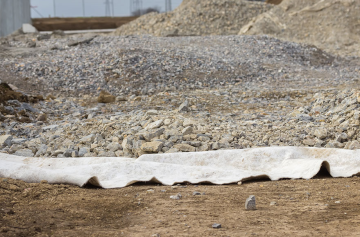
Geotextile (tensile strength approx. 10-20 kN/m): Focused on separation and drainage. Effectively prevents the mixing of bottom soft soil with top aggregate, suitable for water-logged or clayey geologies.
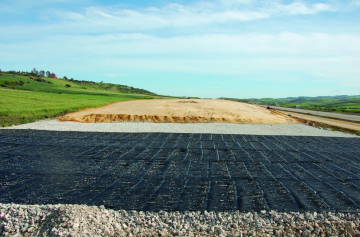
Geogrid (tensile strength up to 30-50+ kN/m): Focused on structural reinforcement. Its mesh apertures tightly lock aggregates to disperse loads, reducing aggregate usage by approx. 30% and significantly preventing pavement rutting.
If the goal is to improve load-bearing capacity and prevent settlement, Geogrid is the first choice; if the goal is to solve drainage and soil mixing issues, choose Geotextile. In heavy-duty road construction, layering both at the base (geotextile on bottom, geogrid on top) can increase road lifespan by over 50%.
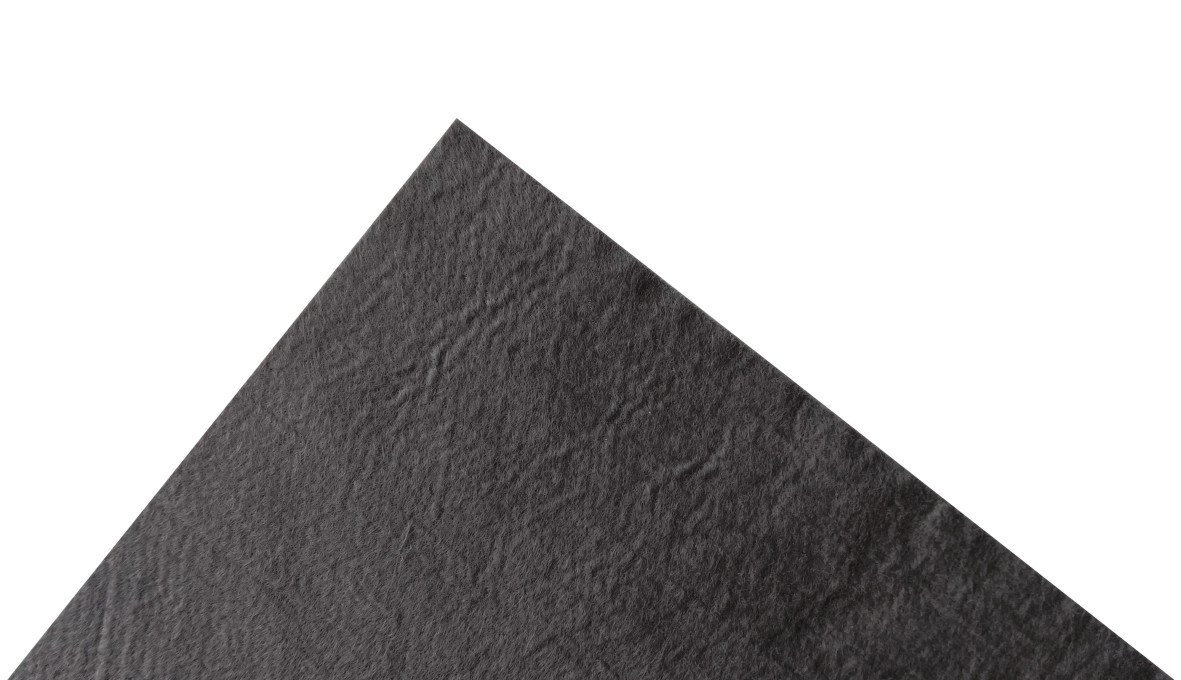
Wet, Muddy Clay Soil
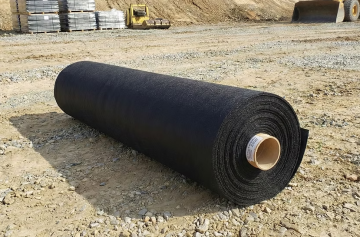
When the subgrade consists of wet soft clay with a CBR value (California Bearing Ratio) below 3, woven geotextile is the preferred material. It provides physical separation, preventing the aggregate base from mixing with mud under heavy loads. If only geogrid with common 1.5-inch apertures is laid, under an 8,000-lb single axle wheel load, mud will penetrate the grid apertures, causing the upper aggregate layer to sink and lose over 30% of its volume within 3 to 6 months.
According to Federal Highway Administration (FHWA) standards, this soil type requires woven geotextile with a grab tensile strength of 200 lbs or more; if CBR is less than 1, a composite structure of “bottom geotextile + top geogrid” must be adopted.
Woven Geotextile
In high-plasticity clay environments classified as A-6 and A-7 under AASHTO standards, where soil moisture exceeds the plastic limit, the CBR value often drops to the 1% to 3% range. Laying woven geotextile made from polypropylene filament extrusion can generate a grab tensile strength exceeding 200 lbs (approx. 890 N) on a fabric only about 0.5 mm thick. When heavy truck tires exert vertical pressures of 80 psi to 100 psi on the graded aggregate surface, the woven geotextile undergoes slight deformation.
The fabric tightens like a hammock as it sinks, producing an upward reactive force known in engineering as the “Membrane Effect.” When a localized rut deformation of 2 inches occurs, the woven geotextile converts the upper vertical stress into its own horizontal tensile stress. According to ASTM D4632 testing standards, woven geotextiles selected for heavy-load roads typically possess the following physical indicators:
- Grab Tensile Strength: ≥ 315 lbs (MD and CD)
- Grab Elongation: < 15% (to maintain rigidity and limit excessive deformation)
- Trapezoid Tear Strength: ≥ 120 lbs (to resist puncture from sharp aggregate edges)
- CBR Puncture Strength: ≥ 900 lbs (to withstand localized high-pressure impacts)
Blocking the upward penetration of soft mud is closely related to the material’s Apparent Opening Size (AOS). ASTM D4751 measures the diameter of the largest pores in the geotextile; AOS for woven geotextiles is typically between 0.15mm and 0.60mm (corresponding to US Standard Sieve #30 to #100). Most fine-grained particles in wet soft clay have diameters smaller than 0.075mm (passing #200 sieve), but under compaction, mud clumps are much larger than the geotextile opening size.
Soil particles accumulate at the bottom of the fabric, while moisture can be discharged upward through tiny pores into the permeable aggregate layer above. When dealing with high-moisture base soils, both separation and water permeability must be considered. Relevant hydraulic indicators include:
- Permittivity: ≥ 0.05 sec⁻¹ (to ensure water flow rate)
- Water Flow Rate: Typically 4 to 10 gal/min/ft²
- UV Resistance: Retains 70% strength after 500 hours of xenon arc exposure (ASTM D4355)
On soft soil subgrades without woven geotextile, 18 to 24 inches of graded aggregate is usually required to achieve the same bearing effect. The bottom 6 to 8 inches of aggregate gradually sink into the mud and fail during the first three months of compaction.
By adding a woven geotextile separation layer, mud contamination of the sub-base is completely eliminated, allowing the aggregate layer thickness to be reduced from the original 24 inches to 14-16 inches. The internal friction angle of the aggregate layer remains above 40 degrees, maintaining its original structural shear strength.
During the construction phase, material overlap widths must be adjusted based on site CBR values to prevent separation under stress. AASHTO M288 specifications detail overlap requirements for different soft soil states. When water is present in muddy sections, polypropylene material is chemically inert and will not degrade in soil environments with pH values ranging from 2 to 13.
- Soil with CBR > 3: Edge overlap 12 to 18 inches
- Soil with CBR 1 to 3: Edge overlap 24 to 36 inches
- Swampy soil with CBR < 1: Requires all seams to be factory or field sewn
In two-lane construction access roads, wide woven geotextile rolls of 12.5 ft or 15 ft width and 300 ft to 432 ft length are typically used. After deployment, bulldozers must advance on a minimum of 6 inches of aggregate already spread on top; tracks must not touch the exposed geotextile. According to FHWA long-term monitoring data, this separation layer keeps settlement within 0.5 inches after more than 10,000 Equivalent Single Axle Loads (ESALs).
Geogrid
The mesh aperture area of biaxial geogrids accounts for 70% to 85% of the total roll area. Common polypropylene geogrids on the market have rectangular apertures mostly between 25 mm and 38 mm (approx. 1 to 1.5 inches). On A-6 or A-7 wet soft clay subgrades, soil particle diameters are generally smaller than 0.075 mm (passing ASTM #200 sieve). Grids laid on mud provide structural interlocking rather than a physical barrier, allowing the graded aggregate to contact the soft mud underneath without obstruction.
When an 80,000-lb commercial truck travels at 60 mph, the pneumatic tires exert dynamic vertical pressures of up to 80 to 100 psi on the contact surface. Wet soft clay with a CBR value below 3 undergoes plastic flow under heavy pressure, rapidly triggering a hydraulic pumping effect. Mud and moisture are forcefully squeezed through the 25 mm apertures of the geogrid, quickly entering the originally clean aggregate base.
Common engineering physical parameters for evaluating geogrid mechanical performance are as follows:
- Junction Efficiency: ≥ 93%
- Tensile Modulus at 2% Strain: 410 lb/ft (MD) / 620 lb/ft (CD)
- Grid Open Area: Typically greater than 75%
- Torsional Rigidity: ≥ 0.65 m-mg/deg
Geogrid reinforcement functions on the premise that aggregate pieces embed into the apertures and interlock, thereby exerting 360-degree radial confinement. Once soft mud rises to fill 20% of the voids in the aggregate layer, the original internal friction angle of over 40 degrees drops sharply. The dense aggregate layer is completely lubricated by the viscous mud, causing the previously designed mechanical interlocking effect to fail entirely.
Federal Highway Administration (FHWA) pavement design specifications indicate that after the base aggregate is contaminated by fine-grained clay, its Structural Layer Coefficient (a2) will plunge from 0.14 to 0.05. The upper aggregate pieces lose their mutual frictional support and, under repeated heavy wheel loading, easily sink through the 75% open area grid into the mud.
Mud upsurge and aggregate sinking occur bi-directionally. Under 10,000 ESALs, an un-separated aggregate layer can lose up to 2 to 3 inches of thickness.
Physical indicator attenuation caused by base contamination manifests in the following ways:
- Sub-base Resilient Modulus (Mr) decreases by more than 50%
- Aggregate layer void fill rate by mud exceeds 80%
- Pavement develops ruts greater than 3 inches within 3 to 6 months
According to AASHTO design specifications, for muddy soil with CBR values between 1% and 3%, laying rigid geogrid alone does not meet engineering standards. Even high-molecular polyester grids with tensile strengths of 20,000 lb/ft cannot prevent the vertical displacement of soft mud with over 30% water content. The ultimate tensile strength exhibited by uniaxial or biaxial geogrids in tensile tests (ASTM D6637) must be effectively triggered in an environment where aggregates are clean and not lubricated by soil.
The U.S. Army Corps of Engineers (USACE) has recorded the performance of un-separated grids under pressure in field access road tests. On saturated soft soil with shear strength below 90 kPa, test sections relying solely on grid-reinforced 6-inch aggregate experienced severe structural collapse after 500 truck passes.
To avoid subgrade settlement caused by using geogrid alone, several Departments of Transportation (DOT) explicitly prohibit laying geogrid alone in the following subgrade environments:
- Construction sites with base soil CBR values below 3.0
- Low-lying areas where the groundwater table is less than 2 feet from the subgrade surface
- Natural clay layers where moisture content exceeds the Plastic Limit by 10%
The individual ribs of a geogrid are typically only 1.5 mm to 2.0 mm thick, which cannot produce the membrane effect to contain mud like non-woven or woven fabrics. When extreme horizontal shear forces are applied during vehicle braking or turning, grids completely encased in mud will slip horizontally within the soft mud layer. The material must be fixed on a relatively stable physical separation surface; otherwise, mud within the apertures will only accelerate the overall instability and settlement of the geosynthetic material.
Extreme Soil Conditions
When site clay moisture exceeds the liquid limit by 15% and the California Bearing Ratio (CBR) falls below 1.0, a person stepping on the subgrade will typically sink 3 to 4 inches. The Federal Highway Administration (FHWA), when dealing with such swampy soft soils, mandates the use of composite structures combining separation and reinforcement. Conventional single-layer polymer materials easily lose mechanical stability in mud with shear strengths less than 30 kPa.
The bottom layer must be woven polypropylene geotextile with an Apparent Opening Size (AOS) between 0.15mm and 0.30mm, laid flush against the muddy surface. This material can generate over 315 lbs of tensile strength in ASTM D4632 grab tests. The thin fabric structure can completely block 99% of fine-grained clay with diameters less than 0.075mm from hydraulic pumping.
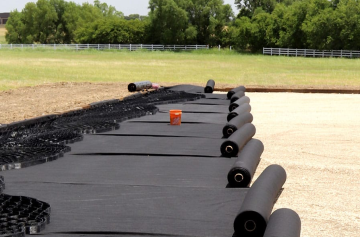
Immediately above the bottom separation layer, biaxial geogrid with a torsional rigidity greater than 0.65 m-mg/deg should be laid. After pouring graded aggregate, the 25mm to 38mm aggregate corners will precisely embed into the 1.5-inch rectangular apertures of the geogrid. The 80 psi dynamic vertical load generated by an 80,000-lb heavy truck is forced into horizontal tensile stress dispersed in all directions.
Field measurements by the Mississippi Department of Transportation (MDOT) confirmed that the effective Resilient Modulus (Mr) of the aggregate base increased by 2.5 to 3 times after adopting the dual-layer physical laying scheme. After 500,000 ESALs of long-term compaction, the rut depth consistently remained within the safety standard of 0.4 inches.
| Soft Subgrade Engineering Parameter Comparison (CBR < 1) | Unreinforced Soft Base | Geotextile Separation Only | Geogrid Reinforcement Only | Composite Structure (Fabric + Grid) |
|---|---|---|---|---|
| Theoretical Base Aggregate Thickness | 36 inches | 24 inches | Failure via Mud Penetration | 16 – 18 inches |
| Rut Depth at 100k ESALs | > 4.5 inches | 1.5 – 2.0 inches | Structural Collapse | < 0.5 inches |
| Base Resilient Modulus (Mr) | Baseline | 1.2x Increase | Reduced by Mud Attenuation | 2.5 – 3.0x Increase |
| Fine Clay Pumping Blockage Rate | 0% | 99% | 0% | 99% |
A more efficient on-site construction alternative is the use of factory-formed geocomposites. Manufacturers use high-pressure heat-bonding processes at over 300°F to integrate polypropylene biaxial mesh with non-woven or woven base fabric. According to ASTM D7005 peel test specifications, the interlaminar adhesion of the two materials strictly meets 130 lbs/ft or more.
Integrated composite rolls typically come in 12.5 ft or 15 ft widths, with full roll lengths reaching 200 ft and total weights between 250 and 300 lbs. When a bulldozer levels the first layer of graded aggregate, its trapezoid tear strength exceeds 120 lbs, sufficient to withstand the shear tension generated by machine tracks pushing 6 inches of aggregate.
- Zero Load on Overlap Zones: Tracked equipment is strictly prohibited from turning or braking on exposed joints not covered by at least 6 inches of aggregate.
- Maintain Material Physical Strain: Laying must keep the rolls flat and moderately slack, reserving 3% to 5% physical elongation to handle initial settlement.
- Static Compaction for First Layer: Use a 10-ton roller for non-vibratory compaction to prevent large resonances from destroying the deep silt crust layer.
Composite rolls significantly reduce the massive volume of earthwork excavation and off-site disposal required in conventional replacement methods. Records in the U.S. Army Corps of Engineers (USACE) guide show that on ultra-soft bases with a CBR of 0.5, the base thickness was reduced from a staggering 36 inches to 18 inches. Buried 2 feet deep, the polymers avoid UV rays and can maintain chemical inertness for 50 years in acidic or alkaline marshes with pH values between 4 and 9.
Before construction, technical staff must check the roll overlap width, strictly adhering to AASHTO M288 soft soil overlap specifications. In ultra-soft sections with CBR less than 1, the longitudinal and transverse overlap zones of the rolls are mandated to be 36 to 48 inches. Some extreme low-lying waterlogged sections require industrial double-thread lock-stitching with specialized polymer cords.
After sewing is complete, the tensile strength of the joints must pass ASTM D4884 testing, reaching over 90% of the material’s yield strength. When heavy dump trucks unload the first layer of aggregate, the drop height from the truck bed to the ground is strictly limited to within 3 feet. Several pounds of aggregate falling instantly can easily puncture the 0.5 mm thick bottom fabric.
- Seam Sewing Thread Requirement: Kevlar or high-strength polyester thread with tensile strength ≥ 50 lbs.
- Maximum Aggregate Size Limit: Diameter of the first layer of aggregate in contact with the base fabric must not exceed 2.5 inches.
- Compaction Standard: First layer aggregate compaction must reach 95% Proctor density (ASTM D698).
After the roller completes the compaction process, the soft mud trapped at the bottom under pressure slowly discharges excess internal moisture through the 0.15mm fabric pores into the aggregate layer. Soil fines are physically locked in the lower space, while the 18-inch load-bearing aggregate above remains 100% clean.
According to the AASHTO 1993 Flexible Pavement Design Guide, the Base Course reduction (BCR) index generated by composite materials ranges between 0.35 and 0.50. On-site aggregate tonnage consumption decreased by 30% to 40%, and the base laying cycle for ultra-soft sections was significantly shortened from the planned 14 days to 4 days.
Heavy Truck Traffic
In the face of trucks with single axle weights up to 18,000 lbs (AASHTO H-20 standard), biaxial polypropylene geogrid uses its 30-50kN/m tensile strength to produce mechanical interlocking with aggregate, increasing the vertical stress dispersion angle from 35 degrees to over 50 degrees, reducing subgrade stress by up to 40%.
Woven geotextile tensile strength is typically 4-10kN/m and requires deformation to provide tension, failing to offer sufficient lateral support. When soil CBR <3%, laying 8oz non-woven geotextile at the bottom to block soft mud and using biaxial geogrid at the top to fix aggregate is the standard configuration for heavy transport roads.
Material Configuration
The M288-17 specification published by the American Association of State Highway and Transportation Officials (AASHTO) quantifies the minimum physical parameters for geosynthetics. Foundation soils with CBR test data greater than 3% have a natural load-bearing basis.
When average daily truck traffic (ADTT) exceeds 500, aggregate base thickness must be calculated using FHWA formulas. Engineers typically select Class 1 woven polypropylene geotextile, requiring a Grab Tensile strength of no less than 315 lbs.
A grab strength of 315 lbs prevents puncture damage when laying 1.5-inch coarse aggregate. The material’s Apparent Opening Size (AOS) is strictly limited to within the US Standard #40 sieve (0.425 mm). For sites where the proportion of fine-grained soil exceeds 50%, geotextile Permittivity is mandated to stay above 0.05 sec⁻¹. After laying Class 1 woven geotextile at the base, the designed aggregate thickness is reduced from 14 inches to 12 inches.
According to the USACE heavy-load pavement laying manual, when soil CBR falls into the 1% to 3% range, single-layer tensile membrane effects cannot resist an 18,000-lb single axle load. Engineering requirements mandate the introduction of polypropylene biaxial geogrid with a Junction Efficiency greater than 90%.
Meeting junction efficiency ensures the grid apertures won’t easily deform under load; aperture sizes are generally designed as 1.5 inches by 1.5 inches. The grid’s tensile strength at 2% strain must reach 410 lb/ft longitudinally and 620 lb/ft transversely. The Michigan DOT has established a material specification boundary matrix for high-frequency heavy trucks in different CBR environments:
| Site Soil CBR | Recommended Material Configuration | Min Grab/Junction Strength | Matching Aggregate Size | Design ESAL Load Limit |
|---|---|---|---|---|
| > 3% | Woven Geotextile (Class 1) | 315 lbs (Grab) | 0.75″ – 1.5″ | 500,000 |
| 1% – 3% | Biaxial Geogrid | Junction Efficiency > 93% | 1.5″ – 2.5″ | 1,500,000 |
| < 1% | Non-woven + Triaxial Grid | 700 lbs (CBR Puncture) | 2.0″ – 3.0″ | > 3,000,000 |
In swampy edges or high-moisture silty clay areas where CBR is below 1% at the end of the table, truck tire contact pressure of 100 psi causes mud to flip up rapidly. Engineers deploy filament needle-punched non-woven geotextile weighing 10 oz/sq.yd on the mud.
The non-woven fabric’s CBR puncture strength exceeds 700 lbs, cutting off the path for fine particles carried by groundwater to penetrate upward. Triaxial geogrid laid tightly above uses a hexagonal mesh structure to lock 2-inch to 3-inch coarse aggregate.
- Untreated CBR 0.8% soft base for CAT 777G dump trucks requires 45 inches of aggregate.
- Using 10oz non-woven fabric plus triaxial geogrid reduces aggregate fill to 28 inches.
- Rollers statically and vibrationally compact 12 inches of aggregate above the grid.
- Upper aggregate final compaction reaches 98% of Standard Proctor density.
When CBR is greater than 3%, the overlap width of adjacent geotextile rolls remains 12 to 18 inches. When CBR drops to 1% to 2%, overlap requirements increase to 24 to 36 inches, or double-thread lock-stitching is used. The polymer sewing thread tensile strength must reach over 90% of the base fabric grab strength to prevent seam tearing during the laying of the first 18-inch aggregate layer.
Every vehicle pass is equivalent to a 0.1-second high-frequency vertical impact on the subgrade; UV degradation resistance is also included in AASHTO routine evaluations. Geotextile exposed to sunlight at the shoulder edge must retain at least 70% of initial tensile strength after 500 hours of xenon arc lamp testing.
Geogrid materials incorporate 2% to 3% fine carbon black powder, maintaining stable anti-aging test data under long-term exposure. Polymer chemical resistance test parameters are indispensable on interstate highway bases in rainy areas with de-icing salt residues.
ASTM D4355 requires that polypropylene materials placed in soil and groundwater environments with pH between 2.0 and 12.0 for 120 days must show a tensile stiffness decrease of no more than 2.5%.
Polyester (PET) geotextiles under alkaline Recycled Concrete Aggregate (RCA) with pH > 9.0 will undergo hydrolysis within 6 months. Engineers prohibit using polyester materials as mud-separation layers on subgrades with high limestone content.
For geosynthetics under heavy-duty asphalt pavement, the polymer creep rate is limited to less than 10% total deformation in a 10,000-hour load test. Material systems meeting all the above physical and chemical parameters can withstand more than 5 million ESALs of traffic wear over 20 years.
Specific Heavy Transport
Logging sites in the Pacific Northwest of North America or open-pit iron mines in Australia’s Pilbara region face high-intensity single axle loads. Mine trucks (e.g., CAT 797F) have full loads of 400 tons and tire contact pressures exceeding 600 kPa. When surface soils are rich in high-plasticity clay and CBR is below 1%, an 18-inch aggregate layer without reinforcement will develop rut depths exceeding 4 inches after fewer than 100 passes.
Engineers first lay needle-punched non-woven geotextile weighing 10 to 12 oz/sq.yd on the subgrade, with AOS controlled between US Standard #70 and #100 sieve (0.15mm-0.21mm). Permittivity is maintained above 100 gal/min/sq.ft; once moisture is discharged, bottom clay particles are blocked from penetrating into the 1.5-inch to 3-inch aggregate.
- Non-woven geotextile CBR puncture strength reaches 700 lbs
- Triaxial geogrid radial tensile modulus (at 2% strain) is 300 kN/m
- Covered aggregate thickness is between 24 and 36 inches
- Compaction reaches 95% of Standard Proctor density
Mine truck tire inflation pressure reaches 100 psi, causing aggregate within the contact area to crush and powder under frequent impact. Fine particles sink with moisture, destroying the original soil bed structure.
Needle-punched non-woven geotextile reaches 120 mils (thousandths of an inch) in thickness, filtering ultra-fine silt and acting as a cushion between aggregate and bedrock. The triaxial geogrid triangular mesh structure is distributed 360 degrees, providing uniform lateral confinement when the truck turns at any angle.
Logistics hubs for multinational retailers park large numbers of 53-ft standard semi-trailers, where terminal tractors perform hundreds of small-radius U-turns daily. Dual-axle tires generate horizontal shear stress up to 200 kPa in these areas; ordinary 4-inch asphalt concrete surfaces are prone to fatigue cracking and longitudinal slipping after 6 months.
On top of the woven geotextile mud-prevention layer, a fiberglass geogrid coated with modified polymer is added between asphalt layers. Fiberglass grid mesh size is 1 inch by 1 inch, with tensile strength set between 100 kN/m and 200 kN/m.
During installation, the grid is embedded between the 1.5-inch thick Hot Mix Asphalt (HMA) binder course and the 2-inch thick surface wear course. Fiberglass elongation is less than 3% before fracture, dispersing concentrated stress from tire torsion into 10 square feet of the surface layer.
According to Texas DOT (TxDOT) observation road data, reflection crack propagation speed in reinforced asphalt decreases by 70%. Subgrade mud prevention is handled by woven geotextile meeting AASHTO M288 Class 1 standards.
- Fiberglass grid melting point reaches 1000°F (537°C)
- Woven geotextile Grab Tensile strength is at least 315 lbs
- Asphalt layer construction temperature is maintained at 290°F to 310°F
- Tack coat emulsified asphalt spray rate is 0.15 gal/sq.yd
Wind farm construction builds tens of miles of temporary access roads to transport 80-ton turbine nacelles and 200-ft blades. Transport crawler cranes have large track contact areas and total weights up to 600 tons; temporary roads usually only have 6 to 12 months of use.
When site subgrade moisture is moderate and CBR is between 2% and 4%, engineers widely adopt high-modulus woven polypropylene geotextile. High-modulus woven geotextile provides over 400 lb/in tensile modulus at 2% deformation.
Construction machinery unfolds the geotextile along the road, keeping the overlap width at 18 to 24 inches. After the 8 to 12-inch thick limestone aggregate is compacted by a roller, the geotextile is under tension, creating a horizontal Tension Membrane Effect.
As axle loads transfer downward, the geotextile absorbs part of the vertical pressure, reducing the subgrade pressure by about 30%. In muddy peat low-lying sections, engineers add a layer of integrally formed High-Density Polyethylene (HDPE) uniaxial geogrid above the geotextile.
- Joints are sewn with double-thread lock-stitching (sewing strength > 200 lbs)
- HDPE uniaxial grid longitudinal tensile strength is 80 kN/m
- First aggregate layer advancement uses tracked bulldozers rather than wheeled vehicles
- Maximum allowable rut depth is set to 3 inches
- Road transverse drainage slope is maintained at 2% to 3%
Wind turbine blade transport vehicle turn radii exceed 150 ft, requiring high anti-skid performance at shoulders. Woven geotextile extends 12 inches beyond the shoulder edge, wrapped back and buried into the subgrade to form a box-like structure.
When large cranes lift turbine towers, outriggers generate localized extreme loads, single-point pressure exceeding 1000 kPa. Double-layer biaxial geogrids are placed under crane pads, combined with 12 inches of steel slag or large-diameter aggregate.
Tight Budget on Gravel
When gravel budgets are tight, reducing aggregate procurement and transport volume is the best way to save money. Biaxial Geogrid, by providing lateral confinement, typically reduces the required base gravel thickness by 30% to 40%.
Take a 1-mile long standard lane designed for 12 inches of aggregate; after laying geogrid, thickness can be reduced to 8 inches, saving approx. 2,000 tons of gravel, equivalent to saving 100 truck trips and approx. $30,000 to $40,000 in total expenses.
Woven Geotextile is mainly used for separation on weak subgrades with CBR below 3. While it doesn’t significantly cut initial laying thickness, it eliminates the annual 15% aggregate replenishment cost.
Cost Comparison
Structural Thickness Control
Biaxial geogrid tensile modulus is typically ≥ 20 kN/m, with aperture sizes between 25–40 mm. Aggregate particles form mechanical interlocking after embedding, reducing lateral displacement by about 30–50%.
Under the same CBR=2 condition, design thickness can be reduced from 14 inches to 8–10 inches. In contrast, woven geotextile primarily serves a separation function. Common grab strength ranges from 200–315 lbs (0.9–1.4 kN), but it provides no significant planar reinforcement. Structural thickness reduction is usually below 10%.
| Comparison Dimension | Biaxial Geogrid | Woven Geotextile |
|---|---|---|
| Recommended Thickness Reduction | 20%–40% | 0%–10% |
| Lateral Displacement Control | ↓30%–50% | Negligible |
| Rut Development Speed | Significantly Lowered | Slightly Improved |
| Effect on CBR Improvement | Equivalent to 1–2 levels | Almost None |
Settlement and Deformation Control
In plate load tests, unreinforced structures under 50 kPa load show an average settlement of approx. 18–22 mm. After laying biaxial grid, settlement drops to the 10–12 mm range. When repeated axle loads exceed 10,000, the proportion of unreinforced sections with ruts > 1 inch (25 mm) exceeds 45%; with grid, it drops to approx. 15%.
Geotextile settlement control mainly comes from preventing particle mixing. If the sub-base is silty soil, fine particles floating up will cause porosity to drop from an initial 35%–40% to below 30%. Geotextile reduces the mixing rate by approx. 70% but does not change the stress dispersion angle.
Drainage and Fines Migration
Geotextile AOS is typically 0.2–0.6 mm, blocking over 95% of fine particles. Permeability is in the 100–150 gpm/ft² range, maintaining vertical water flow. Without a separation layer, within 5 years, the aggregate layer can be filled with fines up to 10%–20% by volume, leading to a bearing modulus drop of over 15%. Geogrid itself has no filtration function. On high-moisture foundations, if used alone without a separation layer, fine particle upsurge may still occur.
Long-term Structural Life
Multi-state test section data show:
- Average design life of unreinforced gravel roads: 6–8 years
- Geotextile only: approx. 9–11 years
- Biaxial grid added: 10–15 years
- Grid + Geotextile combo: Can exceed 15 years
The reasons for life extension differ. Grids reduce subgrade pressure by approx. 30%–40% through load spreading; geotextiles slow down modulus attenuation by maintaining layer stability.
Performance under Different Traffic Levels
- ADT < 100 (mainly light vehicles): Grid can reduce thickness by 3–5 inches
- ADT 100–300 (including light trucks): Grid significantly controls rutting
- Vehicles with axle load > 8,000 lbs present: Geotextile alone is hard to limit deformation
- High groundwater environment: Geotextile is preferred to prevent fines migration
Composite Application Performance
On ultra-soft foundations with CBR < 1, using either material alone makes it difficult to maintain structural stability. Composite structures (bottom non-woven fabric + top biaxial grid) testing shows:
- Surface settlement reduced by over 50%
- Structural thickness can be controlled at 6–10 inches
- Number of repeat load cycles improved by approx. 1.8 times
Key Comparison Summary
- Grids change stress distribution angle from approx. 30° to over 45°
- Geotextiles maintain particle layering, fines migration rate drops by approx. 70%
- Grids significantly reduce early rut depth
- Geotextiles delay long-term structural deterioration
- Composite structures show best settlement control on ultra-soft foundations
Cost-saving performance of both materials shows significant differences across foundation conditions and traffic levels.
Material Selection by Budget
In routine road construction in areas like North America, the extraction cost of gravel (aggregates) is not high, but heavy truck long-haul logistics fees account for a large proportion of total expenditure. When budgets are very tight, we need to compress transport trips by reducing material volume.
| Expense Item | Estimated % of Total Cost | Cost Reduction Method |
|---|---|---|
| Gravel Procurement | 35% – 40% | Reduce laying thickness |
| Truck Logistics | 45% – 50% | Lower total tonnage, reduce trips |
| Labor & Machinery | 10% – 15% | Improve single laying efficiency |
Option 1: Use Biaxial Geogrid to reduce initial laying volume
If your project funding is stuck on the “cannot afford that much gravel” step, geogrid is the most direct material. Its working principle is Mechanical Interlock.
- Lateral Confinement: When vehicle tires pass over gravel, the stones are squeezed sideways. Rigid geogrid apertures lock the stones, preventing them from spreading outwards.
- Thickness Conversion: On weak subgrades with CBR 1.5 to 3, an original design requiring 14 inches of graded aggregate can be reduced to 8 to 9 inches after laying geogrid.
- Construction Data: A standard geogrid roll is usually 13.1 ft wide and 164 ft long (approx. 240 sq.yd). After reducing gravel demand by nearly 40%, materials originally requiring 5 twenty-ton dump trucks now only need 3 trucks.
Option 2: Use Woven Geotextile to control long-term loss rate
If your initial budget barely covers gravel but cannot bear future replenishment costs, the role of woven geotextile becomes apparent. Its primary function is Physical Separation.
Laying gravel on high-moisture clay or silt results in the bottom soft soil being squeezed into the gravel layer voids under vehicle compaction.
- Material Displacement Rate: Without a separation layer, a gravel road may have 10% to 20% of its gravel sink into the bottom soil annually.
- Tensile Strength: Woven geotextile typically has 200 lbs to 315 lbs of Grab Tensile strength, capable of withstanding heavy machinery compaction without breaking.
- Seepage Loss Prevention: It acts like a tough filter, allowing water to pass vertically (Permittivity typically 4-10 gpm/ft²) while 100% blocking the mixing of bottom mud and top aggregate, preserving existing gravel assets.
Comprehensive Solution: Geocomposite
For extreme environments with very tight budgets and poor subgrade conditions (CBR < 1), using a single material alone may not achieve the best ROI.
You can adopt a dual-layer structure:
- Bottom Layer: Lay a lightweight non-woven geotextile (approx. 4oz/yd²) for filtering moisture and isolating soft mud.
- Middle Layer: Superimpose a basic biaxial geogrid.
- Surface Layer: Lay 6 inches of compacted gravel.
This method, although adding about $1.2/sq.yd in geosynthetic procurement costs at the laying stage, pushes aggregate procurement to its physical limit while completely eliminating collapse risks caused by subgrade softening.
Sandy or Well-Drained Soil
In sandy soils with CBR > 8% and permeability coefficient $k > 10^{-3}$ cm/s, engineering focus is on lateral confinement. Triaxial Geogrid, by creating mechanical interlocking with graded aggregate, can increase the Traffic Benefit Ratio (TBR) to 2.0-3.5 times, effectively reducing base thickness by over 30%. If silty sand is involved, it must match geotextile with AOS of 0.15-0.30mm to intercept fines migration and ensure base structural integrity.
Engineering Characteristics
In highway geometric design and structural calculation, sandy soils are typically classified as AASHTO A-1, A-2, or A-3. These soils consist of minerals with particle sizes between 0.075mm (#200 sieve) and 4.75mm (#4 sieve); their most significant physical-mechanical feature is a high permeability coefficient (typically $10^{-2}$ to $10^{-4}$ cm/s) and almost zero cohesion. Due to the lack of electrochemical attraction, particle stability depends entirely on the friction angle ($\phi$), which is about 28° to 30° in a loose state and can reach over 40° in a highly compacted state.
The bearing capacity of sandy subgrades is greatly affected by effective stress. According to the Terzaghi Bearing Capacity Equation, when the groundwater table rises to the subgrade bearing layer, the effective unit weight of the soil is halved, leading to an approx. 50% drop in base shear strength. In well-drained sections, maintaining low pore water pressure is the prerequisite for pavement lifespan.
Sandy soil compressibility manifests mainly as immediate settlement, unlike the long-period consolidation process of clay. When impacted by traffic loads (standard axle load 18,000 lbs/80kN), sandy particles rearrange rapidly. If compaction doesn’t reach over 95% of Modified Proctor test (ASTM D1557) requirements, the pavement will develop significant ruts within the first 10,000 ESAL cycles after opening to traffic. This instability stems from sand’s lateral displacement tendency, as its lateral earth pressure coefficient ($K_0$) is usually in the 0.4 to 0.5 range.
- Coefficient of Uniformity ($C_u$): Ideal subgrade sand needs $C_u > 6$ to ensure small particles fill voids between large ones, thereby increasing overall dry density.
- Coefficient of Curvature ($C_c$): Value should be between 1 and 3, representing continuous grading, forming a solid physical skeleton to reduce particle crushing under pressure.
- Relative Density ($D_r$): Sandy soil performance is highly related to relative density; $D_r > 70%$ is considered dense, significantly inhibiting shear band formation.
- CBR: High-quality sandy subgrade CBR values are typically between 15% and 30%, much higher than cohesive soils, but susceptible to localized looseness.
- Capillary Rise Height: Pure sand capillary rise is usually limited to 0.3m to 1.0m, reducing the risk of ice lenses in frost regions.
Despite fast drainage, sand has extremely high erodibility. Without vegetation or geosynthetic coverage, rainwater runoff can easily carry away fine sand below 0.2mm. Under dynamic loads, if the subgrade is saturated, fine sand will show a liquefaction potential. Studies show that under seismic motion or frequent truck vibrations, when the pore water pressure ratio reaches 1.0, sand instantly loses shear strength, leading to catastrophic pavement collapse.
According to the Unified Soil Classification System (USCS), material marked as SW (Well-graded sand) is an ideal subgrade fill. However, if it contains over 12% fines, it becomes SM (Silty sand), decreasing drainage capacity and increasing sensitivity to moisture fluctuations, where frost heave cycles become significant.
The interaction coefficient between sand particles and geotextile or grid ribs is usually between 0.7 and 1.0. Under horizontal thrust, grids lock sand grains to prevent outward slip. For coarse sand with $D_{50}$ of 2mm, choosing grids with apertures of 25mm to 40mm achieves optimal stress transfer efficiency, maintaining the subgrade Elastic Modulus at a high level of 150MPa to 300MPa.
- Piping: When water flow gradient exceeds a critical value (usually near 1.0), sand grains are lost with the flow, forming voids inside the subgrade.
- Angle of Repose: The natural stacking angle of dry sand limits embankment slope design, usually recommended not to exceed 1:1.5.
- Vibratory Compaction Response: Sand responds fastest to vibratory rollers between 25Hz and 45Hz, quickly reaching maximum dry density.
- Dilatancy: Dense sand undergoes volume expansion at the start of shear, enhancing the anchoring effect of geogrids.
- Shear Strength Formula: Follows $\tau = \sigma’ \tan \phi$, where $\sigma’$ is effective normal stress, highlighting the importance of lateral confinement.
- Particle Size Distribution Curve: Steep curves represent single-size sand with poor stability, most needing structural intervention via geosynthetics.
Over long-term service, sand lack self-repair ability; once localized erosion or shear displacement occurs, damage expands rapidly. In high-grade highway designs with ESAL over 5,000,000, using geotextile separation prevents “mixing effects” at the interface between aggregate base and sandy subgrade.
When dealing with well-drained sand, engineers must focus on AOS selection. If geotextile pores are too large, sand grains will penetrate into the drainage layer; if too small (below 0.075mm), a dense filter cake may form on the surface due to fines accumulation, causing the system to lose permeability.
The ratio of horizontal to vertical permeability ($k_h/k_v$) in layered sand can reach 2 to 10. Introducing geosynthetics in edge drain design can homogenize stress, countering differential settlement from soil stratification and ensuring pavement smoothness meets IRI requirements.
Geogrid
Geogrid is a polymer structure made of PP, HDPE, or PET with large apertures ranging from 10mm to 100mm. Its mechanical performance is defined by tensile modulus, exerting strength at ultra-low strains of 1% to 2%. Unlike geotextile used mainly for separation, grids provide structural reinforcement through mechanical interlocking with aggregate fill.
Grid geometries include uniaxial, biaxial, and triaxial. Biaxial grids have balanced tensile strengths in MD and CD, usually 20kN/m to 100kN/m. Triaxial grids use triangular mesh for 360-degree omni-directional stiffness. This near-isotropic property ensures more uniform strain distribution when allocating vertical pressure from a standard 80kN axle load compared to traditional grids.
According to ASTM D6637, junction efficiency is a key indicator of structural integrity. High-performance grids require junction strength reaching over 90% of rated tensile strength. Junctions won’t break or slip under differential settlement. Rigid grid junction modulus is typically maintained at 0.6 m-N/deg to ensure aperture shape doesn’t distort during fill spreading.
- Junction Strength: Per ASTM D7737, must withstand at least 25kN/m of shear without failure.
- Carbon Black Content: Maintained at 2.0% to 3.0% to ensure a 50-year design life under UV exposure.
- Radial Stiffness: Triaxial grid radial stiffness at 0.5% strain should be no less than 300kN/m.
- Chemical Resistance: Polymers must retain over 90% strength in pH 3 to 12.
- Installation Damage Factor ($RF_{id}$): For 40mm max aggregate size, reduction factor is typically 1.1 to 1.2.
- Rib Height and Thickness: Extruded grid rib thickness usually exceeds 1.5mm to increase contact area with soil particles.
Interaction between grid and aggregate is affected by $D_{50}$ median grain size. Ideally, the max grain size should be 0.5 to 1.5 times the grid aperture size to allow stone embedding for “interlock.” This mechanism significantly improves aggregate base Resilient Modulus, in some experiments by over 50%.
Applying the TBR model, studies show grid-reinforced pavements can withstand 3 to 10 times more traffic loads than unreinforced ones. Under same traffic conditions, grids allow for Base Course reduction (BCR). Data proves that on 3% CBR subgrades where 300mm aggregate was needed, grids reduce it to 200mm.
Under long-term loads, creep resistance determines pavement rutting resistance. PET grid creep limit is usually better than HDPE; its Long-Term Design Strength (LTDS) must subtract a creep reduction factor ($RF_{cr}$). PET $RF_{cr}$ is usually 1.4 to 1.6, while HDPE can be up to 2.6, requiring strict material distinction in permanent loads.
- Percent Open Area: Must be greater than 50% to ensure soil particles pass through and interlock.
- Torsional Rigidity: Test values should reach 0.6 m-N/deg to prevent lateral shift under heavy bulldozers.
- Wide-Width Tensile Test (ISO 10319): Used to determine max load and elongation under full-width load.
- Biological Stability: Per EN 12225, shows high immunity to microbial attack in burial tests.
- Layer Coefficient Ratio (LCR): Reinforced layer coefficient typically rises from 0.14 (standard aggregate) to around 0.25.
Grid performance in cold regions is affected by its Glass Transition Temperature. Polypropylene grids remain flexible at -20°C. When laying hot asphalt, if the grid is underneath, its melting point must exceed 160°C, making modified polyester or fiberglass grids advantageous for asphalt reinforcement.
Overlap during construction depends on subgrade strength. On subgrades with CBR > 3%, overlap is usually 300mm; if CBR < 1%, it increases to 900mm with nylon ties. Vehicles are strictly prohibited from driving on the grid during first layer spreading; bulldozers must push stones forward, keeping a minimum 150mm cover to protect polymer ribs from track damage.
While grid filtration is inferior to geotextile, its large mesh ensures vertical subgrade drainage. Permeability coefficient is much higher than soil, preventing an interface water barrier. On saturated sandy soil, grid reinforcement prevents shear failure, dispersing stress evenly to reduce differential settlement-induced longitudinal cracks.
- AASHTO R50: Stipulates how to determine geosynthetic structural enhancement factors via experiment.
- Acid/Alkali Resistance (ASTM D5322): Proves stability against chemical leaks or industrial slag fill.
- Abrasion Resistance: Tensile strength retention must be over 80% after 100 cycles.
- Grid Aperture Distribution: Rectangular or square apertures selected for specific fill to optimize lateral confinement.
- Equivalent Thickness Calculation: Based on Giroud-Han design method, calculating reinforced layer contribution across CBR values.
Since grids increase pavement stiffness, under repeated standard axle loads, they inhibit base lateral deformation, lowering the permanent deformation of the surface. Long-term data shows grid-reinforced temporary roads have maintenance cycles over 150% longer than traditional ones, drastically reducing replenishment work.
Geotextile
In road engineering, geotextile functions are defined by AASHTO M288, covering separation, filtration, drainage, and limited reinforcement. Non-woven needle-punched geotextiles typically have mass per unit area between 150g/m² and 500g/m²; their random fiber paths form pore structures similar to natural soil.
The dominant role of this material on sandy subgrades is preventing interlaminar contamination, i.e., preventing upper granular material (aggregate) from mixing with bottom fine-grained sand. Even on stable foundations with CBR > 3%, without geotextile separation, structural bearing capacity can drop by 30% to 50% due to fines intrusion under traffic loads.
Per ASTM D4632, Class 1 geotextiles usually require strength > 1400N, suitable for harsh environments where heavy equipment spreads fill. Class 2 and 3 requirements are 1100N and 700N, used for routine pavement projects with lower installation damage risk.
- Grab Elongation: Non-woven elongation is usually > 50%, giving it excellent flexibility on irregular subgrades.
- Trapezoid Tear Strength: Per ASTM D4533, Class 1 non-woven must reach 500N, preventing construction scratch expansion.
- CBR Puncture Strength: Per ASTM D6241, high-quality material resistance is 2000N to 4000N, resisting sharp aggregate pressure.
- Apparent Opening Size (AOS): Per ASTM D4751, sandy soil matches 0.15mm to 0.30mm (#50 to #100 sieve) for filter balance.
- Permittivity: Per ASTM D4491, flow under unit head should reach 0.5 $sec^{-1}$ to 2.0 $sec^{-1}$ for free water passage.
- UV Stability: After 500 hours of UV exposure (ASTM D4355), strength retention must be above 70%.
Besides physical barriers, filtration follows Darcy’s Law; the permeability coefficient must be 10x higher than the foundation soil. For different sand sizes, engineers use $O_{95} < (2 \sim 3) \times d_{85}$ to select the most suitable pore structure.
In well-drained soil, horizontal Transmissivity is also important. Thick geotextiles can conduct water along the fabric plane, directing internal subgrade water to side drains. Per ASTM D4716, under 200kPa normal pressure, high-grammage non-woven transmissivity should stay above $1 \times 10^{-5} m^2/s$, effective against early edge damage from water accumulation.
Regarding force distribution, woven fabrics made of high-strength filament or slit-film cross-weaving have high initial modulus. On high embankments or sandy ground with differential settlement, woven fabric tensile strength can reach 50kN/m to 200kN/m. While filtration is slightly lower than non-woven, they are superior in providing “membrane reinforcement.”
| Characteristic | Non-Woven (Needle-punched) | Woven (Filament) |
|---|---|---|
| Main Function | Filtration, Separation, Drainage | Reinforcement, Separation, High Strength |
| Grab Strength (ASTM D4632) | High (900 – 2500 N) | Extreme (1500 – 8000 N) |
| Elongation | 50% – 100% (High Flexibility) | 10% – 25% (Low Elongation) |
| Flow Rate (ASTM D4491) | 100 – 5000 $l/min/m^2$ | 20 – 500 $l/min/m^2$ |
| Application | Sand Drainage, General Filtration | Soft Base Reinforcement, Heavy Haul Roads |
Chemical stability ensures 50-year design life. Polypropylene fibers remain performant in pH 2 to 13. Per ISO 13438 OIT testing, road-grade geotextiles won’t undergo hydrolysis or oxidation in burial, making them highly reliable for sandy foundations with salts or minerals.
Installation overlap depends on subgrade rigidity. On stable sand with CBR > 5%, overlap is 300mm to 450mm; if localized weak zones exist (CBR 1% to 3%), overlap increases to 600mm to 1000mm. To prevent shift under wind or fill spreading, U-shaped anchors are usually used at 1.5m to 3.0m spacing.
- Puncture Energy: Reflects impact absorption; for base with large angular stone, should be > 50 J.
- Biological Resistance: Polymers are immune to microbial attack per EN 12225.
- Equivalent Pore Distribution: Fine fiber pores intercept particles < 75 microns, keeping drainage systems clean long-term.
- Interface Friction: Per ASTM D5321, the friction angle between geotextile and soil is usually 0.8 to 0.9 times the soil’s internal friction angle.
- Tensile Modulus (SEC): Secant modulus at 2% or 5% strain is key for assessing pavement stiffness contribution.
By reducing sand entry into aggregate gaps, geotextile indirectly extends maintenance cycles. Data shows that in standard 18,000-lb (80kN) single axle load tests, sections with separation geotextile reached 25mm permanent deformation approx. 40% later than those without.

Leave a reply