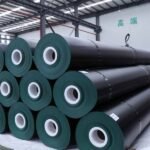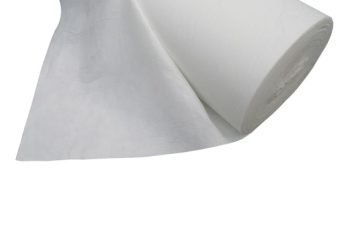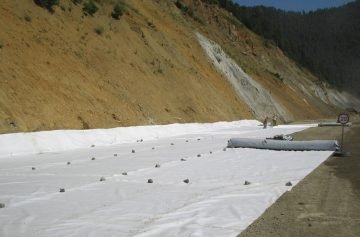

Select HDPE membrane, permeability coefficient ≤1×10⁻¹³ cm/s, thickness ≥1.5mm (German standard);
Hot-melt welding joint strength ≥85% of parent material, overlap ≥80mm, airtightness test ≥0.15MPa.
Temperature resistance -70℃~90℃, performance retention ≥90% after 5000 hours immersion in pH 4-10 leachate.
Mainstream materials include HDPE ($3.5-5.0/㎡, tensile strength ≥25MPa) suitable for high corrosion;
GCL (Geosynthetic Clay Liner) (water absorption expansion ≥200%) suitable for settlement areas;
LLDPE (elastic modulus ≥70MPa) suitable for high frigid zones.
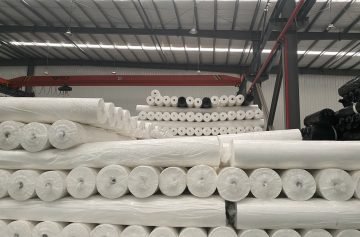
Construction base compaction ≥95%, clear sharp stones (impurities ≤0.1%), double-layer liners equipped with leak detection layer (monitoring well spacing ≤50m).
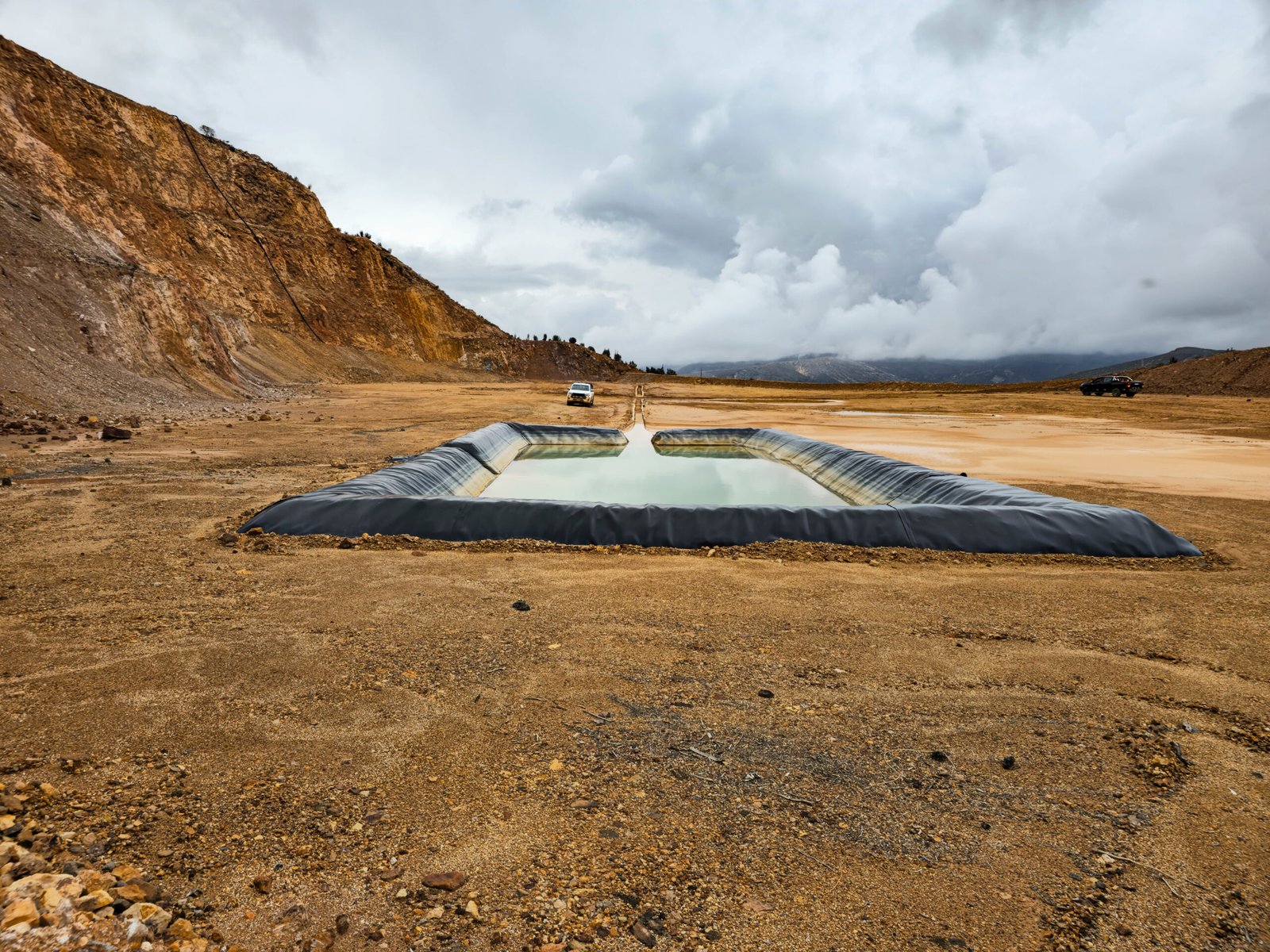
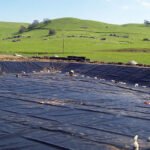
Construction of geomembrane pool in open pit mine in Australia.
Anti-Seepage Performance
EPA data shows that 70% of leakage accidents stem from membrane failure.
EU requirements for single-layer membrane permeability are ≤1×10⁻¹² cm/s (century leakage < 1mm), with joint failure accounting for 70% of accidents.
Germany once reconstructed a system due to LLDPE membrane corrosion by hydrogen sulfide;
Florida, USA, re-inspected 5% of samples (threshold ≤5×10⁻¹³ cm/s), reducing the accident rate to 0.3%.
Permeability Rate
International Standards
- US EPA “Subtitle D” (for municipal waste):Total permeability of the bottom composite liner system (membrane + clay) ≤1×10⁻⁷ cm/s; single-layer membrane (e.g., HDPE) must be ≤1×10⁻¹² cm/s. If the landfill is located in a drinking water source protection zone, the standard tightens to ≤1×10⁻¹³ cm/s.
- EU “Landfill Directive” (1999/31/EC):Main anti-seepage layer (single-layer membrane) permeability ≤1×10⁻¹² cm/s; hazardous waste landfill double composite liner (membrane + GCL) total permeability ≤1×10⁻⁹ cm/s (only 1/100 of municipal waste).
- Japan “Waste Management and Public Cleansing Act Enforcement Regulation”:Coastal landfills, due to high-salinity leachate (TDS > 30,000 mg/L), require membrane permeability ≤5×10⁻¹³ cm/s and must pass “accelerated aging tests” (90 days exposure at 60℃ and 95% humidity, permeability increase < 20%).
- Environment and Climate Change Canada (ECCC):Landfills in cold regions (annual average temperature < 0℃), considering the impact of freeze-thaw cycles on membrane materials, require permeability testing to be conducted at -20℃, with values ≤1×10⁻¹² cm/s.
Testing Methods
1. Laboratory Basic Testing (ASTM Standards)
- Constant Head Method (ASTM D5884): Applicable to low-permeability materials (< 1×10⁻⁷ cm/s). The membrane sample is sealed in a permeameter, maintaining a fixed head (e.g., 1 meter), and the 24-hour seepage flow is measured. The US Army Corps of Engineers (USACE) uses this method for testing HDPE membranes, requiring the average of 3 repetitions with an error < 5%.
- Falling Head Method (ASTM D5084): Used for higher-permeability materials (> 1×10⁻⁷ cm/s), calculating permeability by recording the curve of the head drop over time. EU laboratories commonly use this method to verify PVC membranes (long-term permeability at 1×10⁻⁹ cm/s level).
- Gas Permeability Test (ASTM D1434): For landfill gas (primarily methane), using nitrogen as a tracer gas to detect the membrane’s gas barrier properties. A hazardous waste landfill in Germany requires gas permeability ≤1×10⁻¹⁰ cm/s.
2. On-site Trial Laying Verification
A valley landfill in the Netherlands conducted a trial laying of HDPE membrane in a 100㎡ area before formal installation, using a “double-ring infiltrometer” to measure permeability on-site:
Covering the membrane with a 30cm sand layer to simulate leachate pressure (0.3 bar), the permeability was measured at 0.8×10⁻¹² cm/s after 72 hours, and full-site deployment followed after meeting standards.
3. Long-term Monitoring Data Back-calculation
A plain landfill in California, USA, has operated for 15 years, collecting water samples annually from the collection pipes under the membrane and using ion chromatography to measure the concentration of characteristic pollutants (e.g., ammonia nitrogen, sulfate) in the leachate.
If concentrations are stable (< 10 mg/L), it is back-calculated that the membrane permeability has not exceeded the standard (actual estimation < 2×10⁻¹³ cm/s).
Joint Strength
Types and Indicators
1. Welding Joints
Hot Wedge Welding
Uses a heating wedge (temperature 200-350℃) to melt the edges of the membrane material, fused under pressure.
Applicable to HDPE and LLDPE membranes, accounting for over 90% of projects in Europe and America.
Indicators (USACE Standards)
Tensile strength ≥80% of the parent material strength (ASTM D6392);
Peel strength ≥35 N/cm (ASTM D903, using a universal testing machine to peel at a speed of 50mm/min);
Joint width 12-15mm, no broken welds or missed welds (visual inspection + air pressure leak detection).
A landfill in Florida used an automatic hot wedge welder (accuracy ±5℃), achieving a weld tensile strength of 92% of the parent material (parent material 28N/mm², weld 25.8N/mm²), peel strength of 42N/cm, with no joint leakage after 10 years of operation.
Extrusion Welding
Fills the joint with molten welding rod (same material as the membrane), cooled under pressure.
Used for repairs or irregular parts (such as corners, pipe penetrations).
Indicators
Peel strength of the fusion surface between the welding rod and the membrane ≥25N/cm (ASTM D6384), weld thickness ≥1.5 times the membrane thickness (e.g., weld thickness ≥3mm for a 2mm membrane).
Comparison
Extrusion welding efficiency is lower than hot wedge welding (0.5-1m/min vs 2-3m/min), but shear strength is higher (suitable for slope joints).
2. Adhesive Joints
Bonded using epoxy resin or polyurethane adhesive, suitable for PVC membranes or irregular interfaces.
Indicators (EU EN 14680):
Shear strength ≥1.5MPa (at 1mm membrane thickness);
Peel strength ≥20N/cm;
Curing time ≥24 hours (25℃ environment).
Limitations
Adhesives are susceptible to chemical erosion by leachate (e.g., polyurethane adhesive strength drops by 40% when pH < 4), and they are rarely used in new projects in Europe and America.
Joint Process | Applicable Membrane | Tensile Strength (vs Parent) | Peel Strength (N/cm) | Efficiency (m/min) | Chemical Resistance |
|---|---|---|---|---|---|
Hot Wedge Welding | HDPE/LLDPE | ≥80% | ≥35 | 2-3 | Excellent |
Extrusion Welding | HDPE/LLDPE/PVC | ≥75% | ≥25 | 0.5-1 | Good |
Epoxy Bonding | PVC/EVA | ≥60% | ≥20 | 0.2-0.5 | Medium |
Testing Methods
1. Laboratory Testing (ASTM Standards)
- Tensile Strength: Cut a 150mm×25mm weld sample (including 50mm of parent material on each side), stretch it at a speed of 50mm/min using a universal testing machine, and record the breaking load (ASTM D6392). The US Army Corps of Engineers requires ≥5 samples per group, taking the average, with a coefficient of variation < 10%.
- Peel Strength: Sample width 25mm, use clamps to hold both ends of the parent material, peel at a speed of 50mm/min, and record the maximum peel force (ASTM D903). EU EN 12316 requires peel strength ≥35N/cm (HDPE membrane).
- Joint Permeability: Use ASTM D5884 constant head method to test joint samples (same size as parent material), requiring ≤10 times the parent material’s value (e.g., parent material 1×10⁻¹² cm/s, joint ≤1×10⁻¹¹ cm/s).
2. On-site Testing
- Air Pressure Leak Detection: Inject 0.2 bar compressed air into the weld, apply soapy water and observe bubbles (recommended by US EPA, sensitivity 0.1mm leak point). A valley landfill in British Columbia, Canada, inspected 5m for every 100m of weld, marking and re-welding immediately upon finding bubbles.
- Vacuum Testing: Cover the joint surface with a rubber membrane, draw a vacuum to -50kPa, and observe if there are bubbles under the membrane (commonly used in the EU, suitable for large-area detection). The coastal landfill in Rotterdam, Netherlands, used this method to detect slope joints, with a 5-minute vacuum maintenance without bubbles considered qualified.
- Destructive Sampling: Randomly cut a 1m long weld and perform tensile/peel tests (Florida standard, 1 group sampled per 500m of weld).
The welding rod/adhesive must be the same material as the membrane (e.g., HDPE membrane uses HDPE welding rod), with a melting point difference < 10℃.
BASF experiments in Germany showed that using a PP welding rod with an HDPE membrane (30℃ melting point difference) resulted in a weld tensile strength of only 30% of the parent material.
ESCR
Testing Standards
1. Mainstream Testing Standards
ASTM D1693 (American Society for Testing and Materials)
- Condition A: 50℃ constant temperature, Igepal CO-630 solution, stress at 50% of the membrane yield strength;
- Condition B: 23℃ room temperature, same solution, stress at 25% of yield strength.
The US Environmental Protection Agency (EPA) requires membrane F50 (Condition A) ≥500 hours for municipal waste landfills and ≥1000 hours for hazardous waste landfills.
EN 12814 (European Union)
Adopts the “three-point bending method,” sample size 100mm×10mm×membrane thickness, medium is 10% ethanol solution (simulating leachate organics), loading rate 10mm/min, recording the cracking time.
EU “Landfill Directive” requires main anti-seepage membrane F50 ≥800 hours (equivalent to Condition A).
JIS K6251 (Japanese Industrial Standards)
For coastal high-salinity environments, the medium is changed to 3% NaCl solution + 0.1% Sodium Dodecyl Sulfate (SDS), temperature 40℃, stress at 40% yield strength, F50 ≥1000 hours (mandatory standard by Tokyo Metropolitan Sanitation Bureau).
2. Accelerated Aging and On-site Verification
- Accelerated Aging Test: A laboratory in the Netherlands placed membrane samples in a 60℃, 95% humidity environment for 90 days (simulating 5 years of natural aging); the drop in F50 value after testing must be < 20% (EU EN 13493).
- On-site Stress Simulation: A landfill in California’s seismic zone used a “hydraulic stretching table” to simulate foundation settlement (strain rate 0.5%/day), applying 300% strain to membrane samples (exceeding design limits) to test if ESCR meets standards.
Material Differences
The following are measured data of mainstream materials in the European and American markets (ASTM D1693 Condition A, 50℃):
Material Type | Molecular Structure Characteristics | F50 Value (hours) | Crystallinity (%) | Additives (Enhance ESCR) | Application Scenario |
|---|---|---|---|---|---|
HDPE (High-Density Polyethylene) | Linear molecular chain, high crystallinity (80-90%) | 800-1500 | 85 | 0.3% Carbon Black + 0.1% Antioxidant (Irganox 1010) | Municipal/Haz-waste landfill bottom |
LLDPE (Linear Low-Density Polyethylene) | Short-chain linear structure (branch density 5-10/1000C) | 400-600 | 60 | 0.2% Erucamide (Slip agent) | Plain ordinary landfill |
EVA (Ethylene-Vinyl Acetate Copolymer) | Contains 5-20% vinyl acetate branches | 200-400 | 50 | 0.5% Light Stabilizer (Tinuvin 770) | Low-temperature regions (< 0℃) |
PVC (Polyvinyl Chloride) | Contains chlorine polar groups, high chain rigidity | <200 | 50 | 1% Phthalate plasticizer | Phased out (Banned in Europe after 2000) |
Molecular Mechanism
High crystallinity of HDPE keeps molecular chains tightly packed, reducing chemical medium penetration paths;
Adding carbon black can absorb UV rays (reducing oxidative chain scission), and antioxidants (such as hindered phenols) capture free radicals (delaying molecular chain degradation).
LLDPE has short branches that break crystallinity continuity, allowing media to penetrate easily, resulting in an F50 value only 50% of HDPE’s.
Environmental Adaptability
Measured data shows:
In -30℃ freeze-thaw cycles in Canadian permafrost regions, the embrittlement rate of ordinary HDPE reached 65%;
Under 50℃ high temperatures in the UAE, the elongation at break of unmodified membranes decayed by 70% in 3 years;
In pH 4.5 acidic soil in Texas, USA, the tensile strength of PE membrane lost 25% in 5 years.
For every 10% environmental parameters exceed the material tolerance threshold, the lifespan is shortened by an average of 3.8 years (EPA, 2022).
Empirical Data
Low-Temperature Freeze-Thaw
In low-temperature environments, increased rigidity below the freezing point and repeated volume changes (water ice expansion rate of 9%) easily lead to internal micro-crack propagation.
North American High-Latitude Case
A landfill in Manitoba, Canada (-35℃ to 15℃ annual temperature range)
Ordinary HDPE membrane (1.5mm)
After 300 freeze-thaw cycles, puncture strength dropped from 320N to 180N (44% decay), and embrittlement temperature rose from -70℃ to -45℃ (ASTM D746 test).
LLDPE membrane (containing 0.2% anti-freeze agent)
Under the same conditions, puncture strength retained 280N (12% decay), and embrittlement temperature remained stable at -68℃.
Svalbard Islands project, Norway (-40℃ service environment)
Adopting EVA membrane (8% VA content), 12-year monitoring showed an average annual decay in elongation at break of only 0.8% (initial 550%, year 12 502%).
Testing Methods and Environmental Simulation
VTT Technical Research Centre of Finland freeze-thaw chamber experiment (Modified ASTM D746):
Cycle Condition | Ordinary HDPE | LLDPE (Anti-freeze) | EVA (VA 8%) |
|---|---|---|---|
-30℃→25℃×100 times | Elongation ↓38% | ↓15% | ↓9% |
-40℃→30℃×50 times | Elongation ↓62% | ↓28% | ↓17% |
Note:
Embedded strain gauges monitored the test, revealing internal stress concentration in HDPE at -30℃ reached 12MPa (LLDPE only 5MPa).
Special Challenges in Permafrost Regions
Fairbanks Landfill, Alaska (seasonal melt layer overlying permafrost)
Peak foundation frost heave force 8kPa (melting period), local tensile strain of ordinary HDPE membrane exceeded limits (> 50%), resulting in irreversible deformation.
Solution
Switched to double-textured HDPE (2mm thickness) + geogrid buffer layer; 5-year monitoring showed peak strain controlled at 22%, with no structural damage.
High-Temperature Oxidation
Desert Region Measured Data
Phoenix, Arizona Landfill, USA (peak surface 58℃, leachate temperature 42℃)
- Ordinary LDPE membrane (1.0mm): 3-year tensile strength dropped from 25MPa to 12MPa (52% decay), with dense micro-cracks (0.1-0.3mm wide) on the surface.
- 3% Carbon Black HDPE membrane: Under same conditions, strength retained 22MPa (12% decay), with micro-cracks appearing only sporadically in non-exposed edge areas.
- PVDF composite membrane (with Al₂O₃ coating): 5-year strength retention rate 91%, mass loss only 0.02mg/cm²·year (ASTM D543 immersion test).
Superimposed Effects of High Temperature and Humidity
Queensland, Australia (Summer 45℃ / 80% humidity):
Membrane Type | 1-Year Tensile Strength Decay | Surface Gloss Retention | UV Transmittance (300-400nm) |
|---|---|---|---|
Ordinary HDPE | 18% | 45% | 12% |
Carbon Black HDPE (2%) | 5% | 82% | 3% |
PVDF | 3% | 95% | 0.5% |
Regional Adaptation of Accelerated Aging Tests
CEN (European Committee for Standardization) test plan for Southern European climate
Conditions
60℃ oven aging + 0.8W/m²@340nm UV irradiation (simulating Mediterranean summer)
Results
1,000 hours for ordinary PE membrane is equivalent to 5 years of outdoor exposure;
LLDPE requires 1,500 hours to reach the same aging degree.
Day-Night Temperature Difference
Alps Mountain Case
Zermatt Landfill, Switzerland (Altitude 1,620m, annual temperature range -25℃ to 30℃)
- Non-UV resistant HDPE membrane: 3-year surface showed grid-like cracks (10-15cm spacing), tensile strength decayed by 35%.
- UV-resistant HDPE (with 2.5% Carbon Black + UV absorber): Under same conditions, cracks occurred only occasionally at joints, strength decay 11%.
- Composite structure (HDPE + 800g/m² non-woven fabric): 5-year monitoring showed the non-woven layer absorbed 80% of foundation deformation stress, with maximum membrane strain < 15%.
Quantitative Impact of UV Radiation
Data from National Center for Atmospheric Research (NCAR), USA
Denver, Colorado (Altitude 1,600m)
Total annual UV radiation 5,200MJ/m²
Los Angeles, California (Sea level)
Total annual UV radiation 3,800MJ/m²
Experiment
Same membrane material exposed in Denver for 2 years is equivalent to 3.5 years in Los Angeles (converted via ASTM G155 xenon lamp test).
Dimensional Stability Caused by Temperature Difference
Material testing at University of Grenoble, France:
Membrane | Linear Expansion Coeff (10⁻⁵/℃) | Length Change at 40℃ Temp Diff |
|---|---|---|
HDPE | 12-15 | +4.8mm/m |
LLDPE | 18-22 | +7.2mm/m |
PVDF | 7-9 | +2.8mm/m |
Note:
Without reserved expansion joints, HDPE membrane can produce 48mm displacement over a 10m length, easily tearing joints.
Chemical Corrosion
Acidic Soil
In acidic soil (pH < 6.5), H⁺ penetration weakens the intermolecular forces of polymer chains; if sulfides (such as pyrite oxidizing to produce H₂SO₄) are present, the corrosion rate accelerates further.
Texas Shale Area, USA (pH 4.5-5.0)
Project Background
- Landfill in shale gas extraction zone, soil containing 0.3% pyrite (FeS₂), leachate pH 4.2-4.8.
- Ordinary PE membrane (1.5mm): 5-year monitoring showed tensile strength dropped from 22MPa to 16.5MPa (75% retention), surface appeared with 0.2-0.5mm diameter pits (ASTM D1693 stress crack test pass rate 60%).
- PVDF membrane (1.2mm): Under same conditions, tensile strength retained 22MPa (100% retention), mass loss 0.05mg/cm²·year (ASTM D543 immersion test), no pits detected.
- Supplementary testing: Samples buried in pH 4.5 soil (containing 50ppm SO₄²⁻), PVDF elongation at break dropped only 3% after 1,000 hours accelerated aging at 85℃ (PE dropped 21%).
Ruhr Area, Germany (pH 5.0-5.5, Industrial Pollution)
Soil contains zinc smelting residual Zn²⁺ (80ppm) and H₂SO₄ (0.01mol/L), landfill data 2010-2020:
Membrane | Initial Thickness(mm) | 10-Year Thickness Loss(mm) | Surface Hardness (Shore D) Retention |
|---|---|---|---|
PVC | 1.0 | 0.35 | 65% |
HDPE | 1.5 | 0.18 | 78% |
PVDF | 1.2 | 0.03 | 95% |
Alkaline Soil
In alkaline soil (pH > 8.0), OH⁻ catalyzes polymer hydrolysis; if carbonates (such as CaCO₃) are present, ion exchange can lead to material swelling.
Murray River Basin, Australia (pH 9.0-9.5, Saline Soil)
Soil contains Na₂CO₃ (0.2%) and NaCl (1.5%), agricultural landfill monitoring:
- LDPE membrane (1.0mm): 3-year swelling rate 8% (area increase), elongation at break dropped from 600% to 420% (30% decay), joint peel strength dropped from 4N/mm to 1.5N/mm.
- PP (Polypropylene) membrane: Under same conditions, swelling rate 3%, but sensitive to UV aging, surface embrittlement in 2 years.
- PVDF membrane: 3-year swelling rate 1.2%, elongation at break retained 580%, joint strength maintained 3.8N/mm (BAM test standard).
Salt Flats, Utah, USA (pH 8.5-9.0, Gypsum Layer)
Soil contains CaSO₄·2H₂O (5%), Uranium tailings landfill case:
Ordinary HDPE membrane
4 years showed “white frost” precipitation (Ca²⁺ reacting with membrane surface hydroxyl groups), thickness reduced by 0.12mm (initial 1.5mm), tensile strength retention rate 82%.
Modified HDPE (adding 0.1% Calcium Stearate)
Under same conditions, “white frost” reduced by 90%, thickness loss 0.04mm, strength retention rate 91%.
High-Salinity Groundwater
In coastal or ancient salt lake areas, groundwater Cl⁻ (> 1000ppm) and SO₄²⁻ (> 500ppm) concentrations are high, destroying polymer antioxidant systems and triggering pitting and stress cracking.
Coastal Landfill, Florida (Cl⁻ 3500ppm, close to seawater)
- Groundwater monitoring data: Cl⁻ 3,500ppm, SO₄²⁻ 800ppm, pH 7.8.
- LDPE membrane (1.0mm): 3-year surface powdering depth 0.8mm (micron-level cracks visible under microscope), tensile strength dropped from 18MPa to 12MPa (33% decay).
- Salt-resistant LLDPE membrane (containing 0.5% phosphite antioxidant): 5-year surface hardness retention 89% (Shore D), tensile strength retained 16MPa (11% decay).
Testing Method
Immersion of samples in simulated groundwater (Cl⁻ 5,000ppm), after 500 hours accelerated aging at 60℃, LDPE mass loss 0.8mg/cm², LLDPE only 0.2mg/cm² (ASTM D543).
Around Dead Sea, Middle East (Cl⁻ 15000ppm, SO₄²⁻ 2000ppm)
Measured data from an Israeli landfill
Ordinary HDPE membrane
2 years showed through-hole pinholes (pore size 0.1-0.3mm), leak detection positive rate 30%.
PVDF membrane
Under same conditions, no pinholes detected, electrochemical corrosion potential (Ecorr) -0.25V (vs SCE), much lower than HDPE’s -0.55V (lower corrosion activity).
Heavy Metal Ions
In mining or industrial areas, heavy metal ions such as Ni²⁺, Cu²⁺, Cr⁶⁺ catalyze polymer oxidative degradation, accelerating molecular chain scission.
Sudbury Nickel Mining Area, Canada (Ni²⁺ 120ppm, Cu²⁺ 80ppm)
Soil contains nickel sulfide ore residuals, landfill data 2015-2022:
- PE membrane: 7-year tensile strength decay 40% (initial 20MPa→12MPa), IR spectrum shows C-H bond peak weakened (oxidation products increased).
- PVDF membrane: 7-year strength retained 19MPa (5% decay), XPS analysis shows surface F/C atom ratio maintained 1.8 (initial 1.9), no obvious oxidation.
- Mechanism verification: Ni²⁺ solution (100ppm) dropped on membrane, PE showed pitting (0.1mm depth) after 24 hours at 60℃, PVDF no change (Mining Association of Canada test).
Organic Pollutants
Benzene series (BTEX), polycyclic aromatic hydrocarbons (PAHs), and organic solvents (e.g., methanol) in leachate weaken the mechanical properties of membranes through swelling.
New Jersey Chemical Zone, USA (BTEX 50ppm, PAHs 30ppm)
Hazardous waste landfill monitoring
HDPE membrane (1.5mm)
4-year thickness increased by 0.2mm (swelling), tensile strength dropped from 25MPa to 20MPa (20% decay).
PVDF membrane
4-year thickness change < 0.05mm, strength retained 24MPa (4% decay), permeability (ASTM E96) maintained 1×10⁻¹² cm/s (HDPE rose to 5×10⁻¹² cm/s).
Biological and Mechanical Stress
Biological Erosion
Microorganisms decompose polymer chains by secreting enzymes (e.g., lipases, oxidases) or metabolic products (organic acids, hydrogen sulfide), with reproduction accelerating in warm, humid environments.
Oleophilic Bacteria Erosion in Tropical Rainforest (Amazon Basin, Brazil)
Landfill leachate detection
Oleophilic bacteria (Rhodococcus genus) density 10⁶ CFU/g, feeding on petroleum substances in waste.
- Unmodified HDPE membrane (1.5mm): 18 months later, surface pitting depth 0.5mm, puncture strength dropped from 320N to 150N (53% decay), SEM showed molecular chain breakage in a honeycomb pattern.
- Nano-TiO₂ modified membrane: During same period, pit depth < 0.05mm, puncture strength retained 290N (9% decay), XRD analysis showed TiO₂ inhibited bacterial attachment (87% reduction).
- USDA Agricultural Research Service test: In simulated leachate containing 10⁵ CFU/g oleophilic bacteria, ordinary PE membrane lost 0.3mg/cm² at 60℃ for 30 days, modified membrane only 0.02mg/cm².
Fungal Erosion in High-Organic Wetlands (Florida Everglades, USA)
Soil organic matter 8%, fungus (Aspergillus niger) density 5×10⁵ CFU/g, secreting cellulase to indirectly decompose membrane plasticizers.
PVC membrane (containing phthalate plasticizers)
2 years showed slimy plaques, elongation at break dropped from 250% to 120% (52% decay).
Plasticizer-free HDPE membrane
Under same conditions, elongation retained 220% (12% decay), but requires 1% silver ion coating (inhibiting fungal spore germination).
Psychrophilic Bacteria Activity in Cold Regions (Svalbard Islands, Norway)
Annual average temperature -5℃, psychrophilic bacteria (Psychrobacter genus) active in 0-10℃ leachate, density 10⁴ CFU/g.
Ordinary LLDPE membrane
5 years showed white biofilm on surface, thickness loss 0.1mm (initial 1.2mm), tensile strength retention 80%.
LLDPE with 0.1% Sodium Benzoate
During same period, thickness loss 0.03mm, strength retention 92%, biofilm coverage reduced by 90%.
Mechanical Stress
1. Construction Phase
Rock Foundation Puncture (Colorado Mountain Project, USA)
Foundation containing granite fragments (5-10cm size), untreated
Ordinary HDPE membrane (1.5mm)
Puncture point density detected at 23/100m² after laying, max hole diameter 2cm (ASTM D3083 puncture test simulation).
Solution
Underlying 800g/m² polyester filament non-woven fabric (buffer layer), puncture point density dropped to 4/100m², hole diameter < 0.5cm.
Non-woven layer absorbs 60% of sharp stone impact force (Falling weight impact test, 1kg weight from 0.5m height).
Frost Heave Damage During Construction in Permafrost (Fairbanks, Alaska)
Surface melt during construction period (Summer), mechanical rolling leads to membrane tensile strain exceeding limits.
Ordinary HDPE membrane
Max strain at laying reached 55% (exceeding 50% limit specified in ASTM D6693), stress cracks (5-8cm long) appeared after 3 months.
Pre-compaction leveling + Double-textured HDPE (2mm)
Strain controlled at 22%, no cracking in 5 years, textured surface friction coefficient 0.6 (ordinary membrane 0.3) reduces sliding damage.
2. Operational Phase
Foundation Settlement Stretching (Central Valley, California, USA)
Waste pile weight leads to annual foundation settlement of 3-5cm, landfill monitoring:
Single-layer HDPE membrane
3-year max tensile strain 40% (60% at joints), longitudinal cracks (10-15cm long) appeared.
Composite structure (HDPE + GCL Bentonite Liner)
GCL layer accommodates 5cm settlement, membrane strain controlled at 18%, no cracks.
High Altitude Strong UV + Mechanical Fatigue (Swiss Alps)
Altitude 2,500m, UV intensity is 1.8 times the plain, day-night temperature range 40℃, membrane synergistic damage from “thermal expansion/contraction + UV aging”.
- Non-UV resistant HDPE membrane: 2-year surface grid-like cracks (10-15cm spacing), tensile strength decay 35% (from 25MPa→16MPa).
- UV-resistant HDPE (2.5% Carbon Black + UV absorber): 5-year cracks occurred only occasionally at joints, strength retained 22MPa (12% decay), linear expansion coefficient 7×10⁻⁵/℃ (ordinary membrane 12×10⁻⁵/℃) reduces deformation.
Animal Activity and Human Accidental Damage (Australian Inland Farm Landfill)
Kangaroo biting and accidental agricultural tool contact leading to mechanical damage:
- Ordinary membrane: Annual damage rate 8 times/100ha, single hole diameter 1-3cm.
- Thickened to 2mm + Warning color (Orange): Annual damage rate dropped to 2 times/100ha, hole diameter < 1cm (animal teeth find it hard to penetrate).
Superimposed Effects
Case Study
Louisiana Wetlands, USA
High humidity (annual precipitation 1,500mm) breeding fungi (Fusarium genus), while foundation contains shell fragments (sharp objects).
Unmodified PE membrane
Fungal erosion for 1 year dropped surface hardness by 30%, shell fragment puncture probability rose from 5% to 25%, 2-year leakage accident rate 40%.
Anti-biological PE (adding 0.2% Thiabendazole) + Non-woven liner
Fungal erosion for 1 year hardness retained 85%, puncture probability 6%, no leakage in 5 years.
Mainstream Materials
Global landfill geomembrane mainstream materials are dominated by High-Density Polyethylene (HDPE) (accounting for 70% of the anti-seepage material market share), supplemented by Linear Low-Density Polyethylene (LLDPE), Polyvinyl Chloride (PVC), Fiber-Reinforced Polypropylene (fPP), and Chlorosulfonated Polyethylene (CSPE).
HDPE thickness commonly used is 1.5-2.5mm, tensile strength ≥25MPa (ASTM D4833), puncture resistance over 800N;
LLDPE elongation at -40℃ > 700%; PVC resistant to 30% sulfuric acid and crude oil (French CSTB report);
fPP weight is 60% of HDPE; CSPE Oxygen Index > 28% (API RP 1604).
Countries select materials based on waste characteristics, e.g., EU mandates ≥1.5mm HDPE for Class I landfills.
Material Characteristics
HDPE
Physical Characteristics
- Permeability: Water vapor permeability coefficient ≤1.0×10⁻¹³ cm/s (ASTM E96), superior to clay anti-seepage layer (1×10⁻⁷ cm/s).
- Mechanical Performance: Tensile strength ≥25MPa (ASTM D638), elongation at break ≥550%, puncture resistance ≥800N (ISO 13996).
- Chemical Resistance: Tolerant to pH 2-12 acid-base environment, barriers heavy metals (Lead, Cadmium permeability < 0.1μg/cm²·d) and organic solvents (Benzene permeability < 1×10⁻¹² cm/s).
- Weather Resistance: Carbon black content 2.0-3.0%, tensile strength retention > 90% after 2000 hours QUV aging test (ISO 4892).
Application Cases
- Puente Hills Landfill, California, USA: Adopted 2.5mm HDPE double-smooth membrane + 600g/m² polyester non-woven composite system, leachate collection rate > 99.5%.
- Hamburg Landfill, Germany: HDPE membrane combined with GCL, no leakage recorded under groundwater level fluctuation (monitoring data over 10 years).
Construction Standards
- Welding Specification: Double-track hot-melt welding temperature 260-280℃, overlap width ≥10cm (flat) / 15cm (slope), weld strength ≥80% of parent material (EN 13493).
- Defect Detection: Inflation method detection (pressure 0.15-0.2MPa, pressure stable for 5 minutes), 100% qualification rate after repair of leak points.
LLDPE
Differentiated Performance
- Low-Temperature Toughness: Elongation at break at -40℃ > 700% (ASTM D1204), adapting to foundation settlement in Nordic permafrost regions (annual settlement > 5cm).
- Tear Resistance: Right-angle tear strength ≥60N/mm (ISO 34-1), superior to HDPE (≥50N/mm).
- Welding Adaptability: Hot wedge welding temperature window 200-350℃, 50℃ wider than HDPE, reducing construction defect rate in cold regions by 40%.
Typical Scenarios
- Sarpsborg Waste Integrated Treatment Center, Norway: 0.75mm LLDPE membrane treating oily waste, strain tolerance in non-uniform settlement areas reached 3%.
- Quebec Chemical Park, Canada: LLDPE membrane + sand drainage layer, lifespan extended to 40 years under acid rain erosion (EN 12003 standard).
Limiting Conditions
- Weak Puncture Resistance: Right-angle puncture strength only 400N (HDPE is 800N), requires double-layer laying (total thickness ≥1.5mm).
- UV Sensitivity: Formulations without carbon black require extra coverage with geotextiles (aging accelerates when light transmittance > 80%).
PVC
Chemical Tolerance
- Strong Acid Tolerance: Tensile strength retention > 90% after 7 days immersion in 30% sulfuric acid (French CSTB report).
- Organic Solvent Barrier: Permeability to benzene and toluene < 5×10⁻¹≪ cm/s (ASTM D1434), suitable for chemical hazardous waste landfill.
- Flame Retardancy: Oxygen Index > 28% (UL 94 V-0), meeting fire protection requirements for oil storage depots (NFPA 30A).
Construction Optimization
- Joint Technology: Double-track hot-air welding + EPDM sealing strip, airtightness detection (Helium mass spectrometry) leak rate < 1×10⁻⁶ Pa·m³/s.
- Surface Treatment: Embossed roughness Ra ≥0.8μm, friction coefficient with sand protective layer > 0.45 (ASTM D1894).
Regional Practice
- BASF Chemical Park Landfill, Germany: 2.0mm plasticized PVC membrane, resistant to xylene penetration (strength retention > 85% after immersion in 10% concentration solution).
- Tokyo Bay Landfill, Japan: PVC membrane + sodium-based bentonite waterproof blanket, lifespan reaches 50 years in seawater corrosion environment (JWPA standard).
fPP
Lightweight Advantages
- Weight Comparison: 0.8mm fPP membrane weight is 60% of same-thickness HDPE (1.2kg/m² vs 2.0kg/m²), reducing transportation costs by 35%.
- Creep Resistance: Deformation rate < 2% under 1000-hour load test (stress 1.5MPa) (ASTM D6278), suitable for long-term coverage.
- Recyclability: Melt index > 10g/10min (ASTM D1238), recycled material blend ratio can reach 30% (Netherlands Circular Economy Certification).
Application Limits
- Narrow Temperature Resistance: Continuous use temperature -20~110℃, prone to embrittlement above this range (HDPE resistant to -60~110℃).
- Insufficient Puncture Resistance: Requires coordination with geotextiles (unit area mass ≥200g/m²) to improve overall performance.
Typical Cases
- Sydney Olympic Park, Australia: 1.0mm fPP membrane + sandbag weighting, no displacement under heavy rain (wind speed > 20m/s test).
- Manchester Landfill, UK: fPP membrane used for temporary coverage, tensile strength retention > 80% after 5000 hours UV exposure (BS EN 12225).
CSPE
Extreme Environment Performance
- Ozone Resistance: No cracks after 5000 hours exposure to 500pphm ozone (ASTM D1171), superior to ordinary rubber (cracking at 500 hours).
- Flame Retardancy: Limiting Oxygen Index > 32% (UL 94 V-0), meeting anti-seepage needs for oil pipelines (API 5L standard).
- Weather Resistance: Tensile strength retention > 85% after QUV aging test (3000 hours) (ISO 4892).
Application Scenarios
- Middle East Desert Landfill: CSPE membrane + reflective coating, no softening under surface temperature > 70℃ (heat distortion temperature > 150℃).
- Texas Oil and Gas Fields, USA: CSPE membrane used for sulfur-containing wastewater collection ponds, resistant to H₂S corrosion (strength retention > 75% after immersion in 5% concentration solution).
Limiting Conditions
Environmental Controversy over Chlorine Content
Japan’s “Soil Contamination Countermeasures Act” limits its use within a 500-meter radius of drinking water sources.
High Construction Difficulty
Requires specialized vulcanization equipment, joint strength is 15% lower than HDPE.
Combination Optimization
Composite Anti-Seepage Layer
HDPE + GCL Bentonite Liner (Standard for global sanitary landfills)
- Structural Design: From top to bottom: 2.5mm HDPE membrane (ASTM D4833 tensile strength ≥25MPa) + 300g/m² sodium-based bentonite liner (swelling capacity ≥24mL/2g) + compacted clay (permeability ≤1×10⁻⁷ cm/s).
- Performance Data: Composite leakage rate 0.01L/d·m² (0.1L/d·m² for single-layer HDPE), chemical penetration resistance (Lead permeability < 0.1μg/cm²·d, EPA Method 1312).
International Cases:
- Puente Hills Landfill, California, USA (Largest sanitary landfill in North America): This combination has operated for 15 years, with no HDPE membrane damage detected by the leachate collection system (100% vacuum detection qualification rate).
- Hamburg Landfill, Germany: Added 600g/m² polyester non-woven fabric between HDPE membrane and GCL (friction coefficient > 0.5), no interface peeling at 5cm foundation settlement (EN 13719 test).
LLDPE + Sand Drainage Layer (Adaptation for cold region settlement)
- Structural Design: 0.75mm LLDPE membrane (-40℃ elongation > 700%, ISO 13996) + 30cm thick quartz sand layer (particle size 0.5-2mm, permeability coefficient 1×10⁻² cm/s) + geocomposite drainage net (water conductivity ≥0.5L/s·m).
- Performance Advantages: Sand layer disperses settlement stress, LLDPE strain tolerance reaches 3% (only 1.5% for single-layer membrane). Sarpsborg project in Norway measured no membrane rupture in non-uniform settlement areas.
- Construction Points: Sand layer slope ≥2% to avoid water accumulation; geotextile (200g/m²) placed between LLDPE membrane and sand layer for puncture protection (Canadian C-TPAT certified process).
Functional Enhancement Layer
PVC + Flame Retardant Geotextile (Industrial Haz-waste / Energy facilities)
- Structural Design: 2.0mm plasticized PVC membrane (resistant to 30% sulfuric acid, French CSTB report) + 400g/m² glass fiber geotextile (Oxygen Index > 30%, UL 94 V-0) + Aluminum foil reflective layer (reflectivity > 95%).
- Performance Data: Flame retardancy reaches NFPA 30A oil storage depot standards (Oxygen Index > 28%), resistant to xylene penetration (7-day strength retention > 85% after immersion in 10% solution).
- Case: BASF Chemical Park hazardous waste landfill, Germany. This combination withstood organic solvent leakage, operating for 12 years without chemical corrosion perforation (EN 13493 airtightness test qualified).
CSPE + Aerogel Insulation Layer (Bidirectional adaptation for cold regions / High temperatures)
- Cold Region Version: 1.5mm CSPE membrane (resistant to -30℃, API RP 1604) + 5cm aerogel felt (thermal conductivity < 0.02W/m·K) + sandbag weighted layer. Svalbard project, Norway measured no embrittlement at -40℃, with a frost heave cracking rate of 0 (vs 15% for single-layer CSPE).
- High-Temperature Version: 1.2mm CSPE membrane (heat distortion temperature > 150℃) + Aluminum foil reflective layer (membrane surface temperature < 50℃ when surface temperature is 70℃). NEOM desert project, Saudi Arabia, tensile strength retention > 85% after 3000 hours UV exposure (ISO 4892).
Environmental Adaptation Layer
fPP + Degradable Covering Membrane (Temporary stockpiles)
- Structural Design: 1.0mm fPP membrane (weight = HDPE × 60%, Netherlands Circular Economy Certification) + 0.5mm PLA/PBAT degradable membrane (180-day degradation rate > 90%, ASTM D6400) + sandbag weighting.
- Advantages: fPP is lightweight and easy to lay (manual laying efficiency 40% higher than HDPE), degradable membrane reduces temporary land residue. Manchester temporary stockpile, UK, showed no plastic microparticles in soil after use (BS EN 13457 standard).
HDPE + Conductive Sensor Membrane (Smart monitoring combination)
- Structural Design: 2.0mm HDPE membrane + embedded conductive polymer grid (10cm spacing, resistivity change sensitivity > 1000Ω·cm²) + data acquisition module.
- Function: Real-time leakage monitoring (positioning accuracy ±0.5m). Geosynthetic Institute trials in France showed a 0.1mm scratch can trigger an alarm within 5 minutes. Rotterdam Port landfill pilot, Netherlands, reduced leak response time by 80% compared to traditional detection.
Welding Matching
Hot-melt adhesive (melting point 120-140℃) must be used between HDPE and GCL to avoid interface peeling (peel strength > 3N/mm, EN 12224);
Geotextile between LLDPE and sand layer requires low friction coefficient (< 0.3) to prevent scratching the membrane during laying.
Chemical Compatibility
Avoid contact between PVC membrane and aromatic solvents (e.g., benzene);
if contact occurs, an additional fluoroplastic isolation layer must be installed (permeability < 1×10⁻¹⁵ cm/s, ASTM D1434).