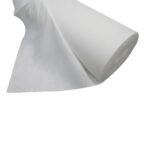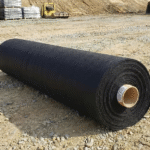

Either woven or nonwoven geotextile can be appropriate beneath a gravel road when the selected grade meets the road’s separation, filtration and survivability requirements. If reinforcement is required, assess strength and stiffness at the relevant strain within the complete road design. Heavy vehicles do not automatically require every woven product, and standing water does not automatically make every nonwoven product suitable.
Start with the road’s failure mechanism: surface runoff, saturated subgrade, fines pumping, insufficient aggregate, slope instability or construction damage. A separator can address intermixing, but it cannot fix an outlet with nowhere to discharge or make an inadequate platform safe for heavy equipment.
Diagnose puddles and washouts before choosing a fabric
Survey the running surface, crown or crossfall, shoulder and ditch levels. Check where water enters, where it should discharge and whether culverts or outlets are obstructed. Puddles caused by a surface depression require a surface correction; fabric permeability alone will not remove them.
Cross-slope calculation: a 12 ft wide crowned road has a 6 ft horizontal run from its centerline to each edge. A 3 in. center-to-edge fall gives 3 ÷ 72 × 100 = 4.17%, not 2%. A 2% fall over that half-width would be 1.44 in. These are geometric examples, not a selected road crossfall. Use the approved geometry appropriate to the road and drainage conditions.
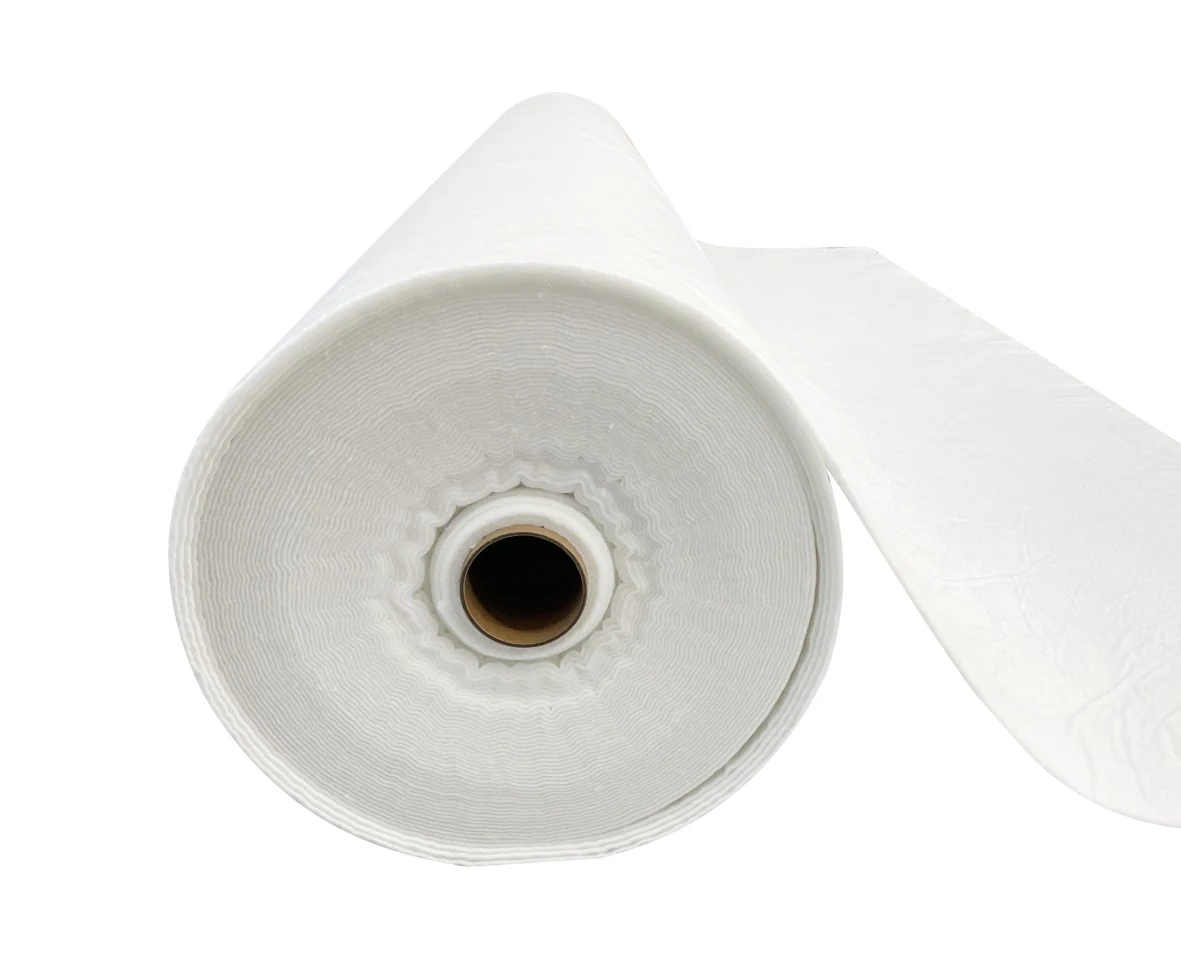
At a buried filter, assess opening size and flow against the soil and drainage arrangement. Woven monofilament and slit-film constructions are not hydraulically interchangeable. Needle-punched nonwoven fabric can be an effective filter, but “felt-like” appearance or high porosity does not establish installed flow capacity. See the drainage-filter comparison for that separate decision.
For heavy traffic, compare the designed system
Obtain soil strength at representative moisture conditions, vehicle and axle loads, traffic repetitions, aggregate grading and thickness, and allowable deformation. CBR cannot reliably be assigned from how far a person’s boot sinks. Very weak, organic or pumping ground needs a reviewed construction-platform solution, not an automatic second layer of fabric.
| Requirement | Useful evidence | What does not prove it |
|---|---|---|
| Separation | Soil/fabric compatibility and continuous coverage | Black color, GSM or fabric type alone |
| Filtration | Opening size, permittivity and relevant clogging assessment | A promise that all water passes while all fines remain |
| Reinforcement | Design-relevant tensile response, interfaces and durability | A grab breaking load relabeled as truck capacity |
| Placement survivability | Specified tests, aggregate/equipment details and trial placement when needed | Claiming a puncture result permits traffic on bare fabric |
The Iowa DOT guidance distinguishes separation, reinforcement and drainage functions. A fabric’s reinforcement contribution is not interchangeable with the filtration role of a separator. Review any combined geogrid/geotextile system as designed.
Do not turn laboratory strength into wheel-load capacity
Grab tensile force in N or lbf and wide-width tensile strength in kN/m come from different specimen and loading arrangements. They cannot be directly substituted. A 315 lbf grab value is about 1,401 N of test force—not the load that a road can carry.
Even the simple pressure calculation needs a correct load allocation. If an assumed 36,000 lbf were carried on 480 in², average contact pressure would be 75 psi. Spreading that same force over 2,000 in² gives 18 psi, not 22 psi. Neither arithmetic step proves that geotextile actually produces that spreading area. Tire loads, aggregate thickness, deformation and subgrade response must be assessed in the road model.
Compare installation and quantity on the same basis
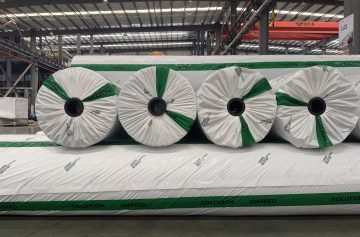
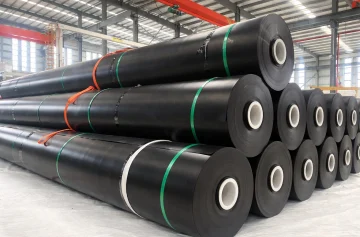
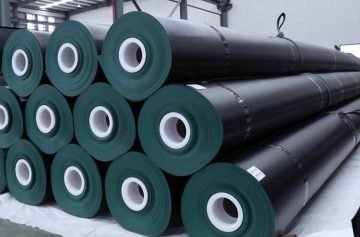
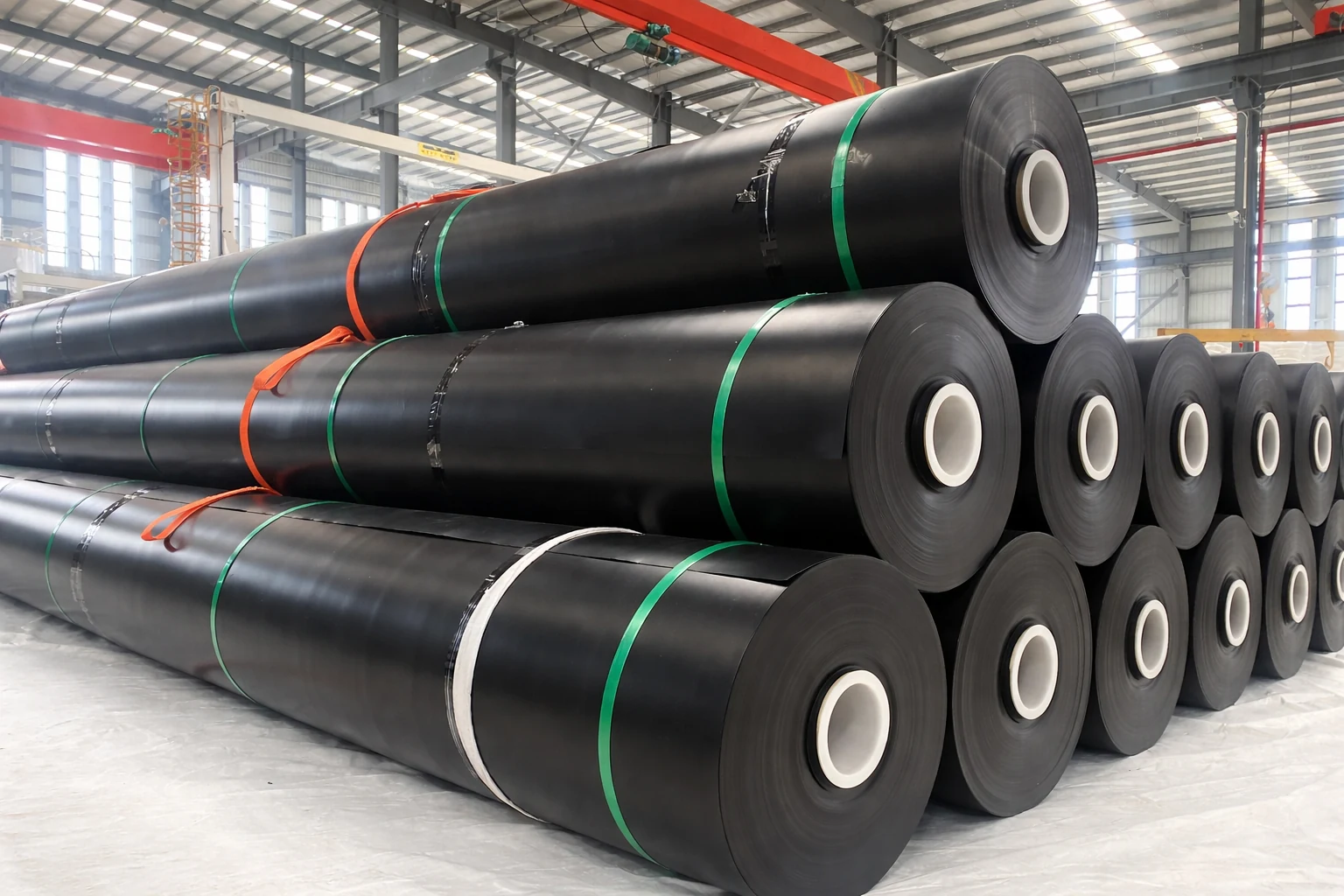
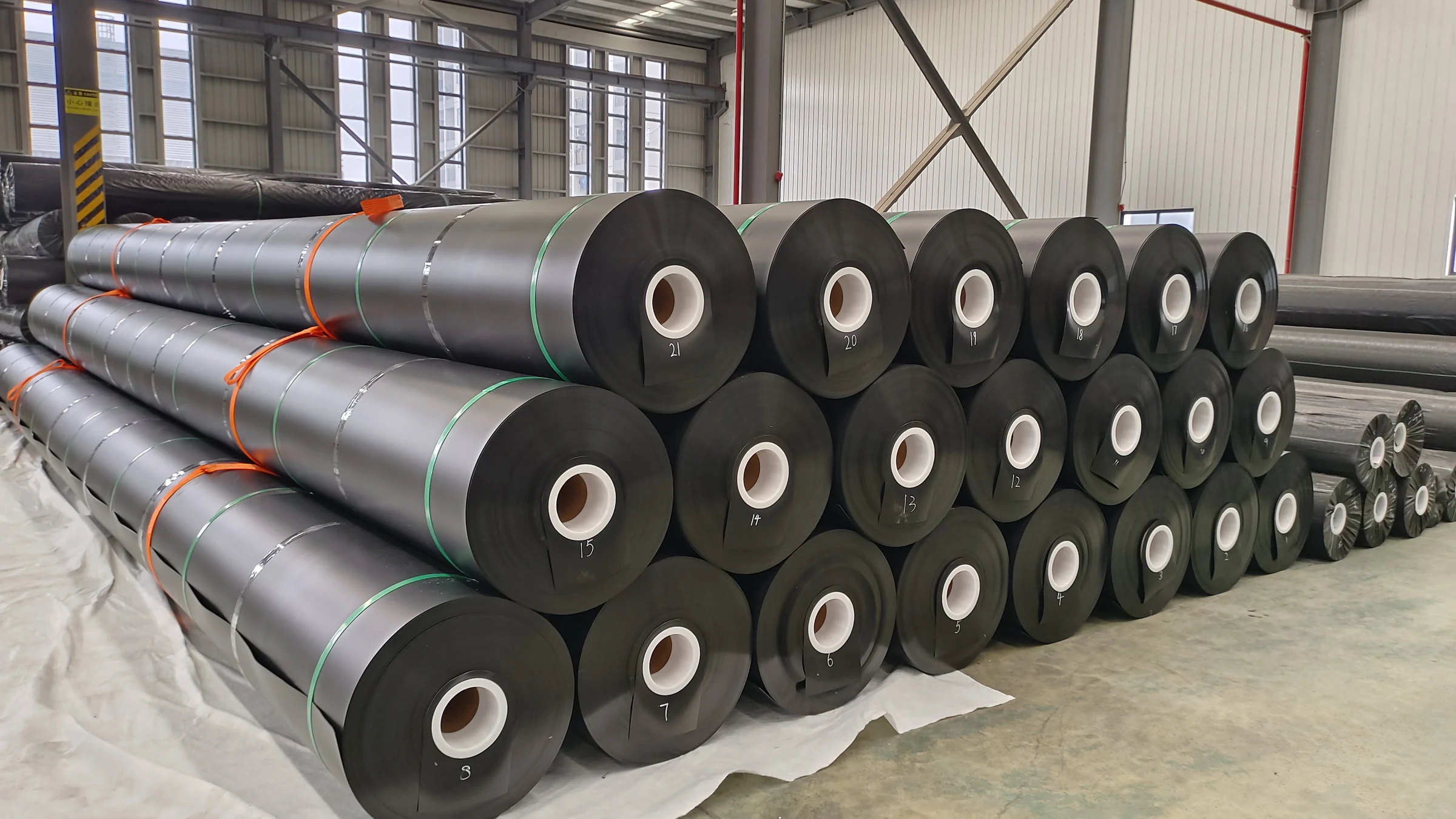
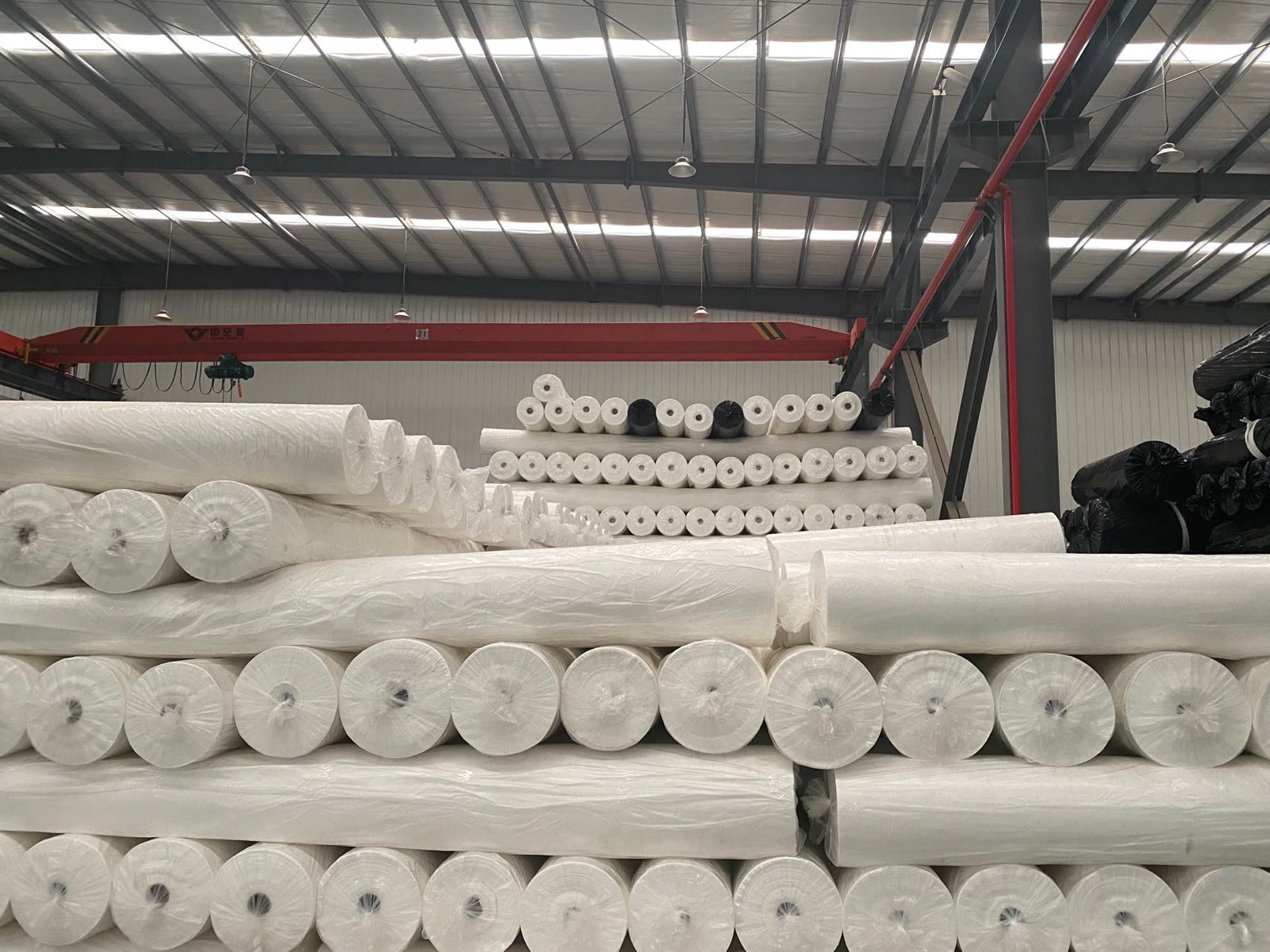
Specify roll width, length, mass per unit area and planned overlaps. A 12.5 ft × 300 ft roll covers 416.7 yd² or approximately 348.4 m² gross. At an assumed 135–150 g/m², fabric-only mass is about 47.0–52.3 kg (104–115 lb), not 400 lb. Include the actual core and packaging in handling calculations.
For repeated parallel runs, an assumed 12.5 ft roll with 1.5 ft side overlap adds 11 ft of effective width after the first run. Gross width divided by incremental width is 12.5 ÷ 11 ≈ 1.136; the interior-run allowance is about 13.6%, before ends, curves, patches or trimming. The overlap itself must come from the approved design, not this example.
Compare installed cost per covered area, including delivery, laps, deployment, approved seams, initial cover and inspection. Claims that one fabric always takes seven seconds to cut and another 45 seconds, or that a fixed number of workers can deploy every roll, are not a sound procurement basis.
Protect both types during construction
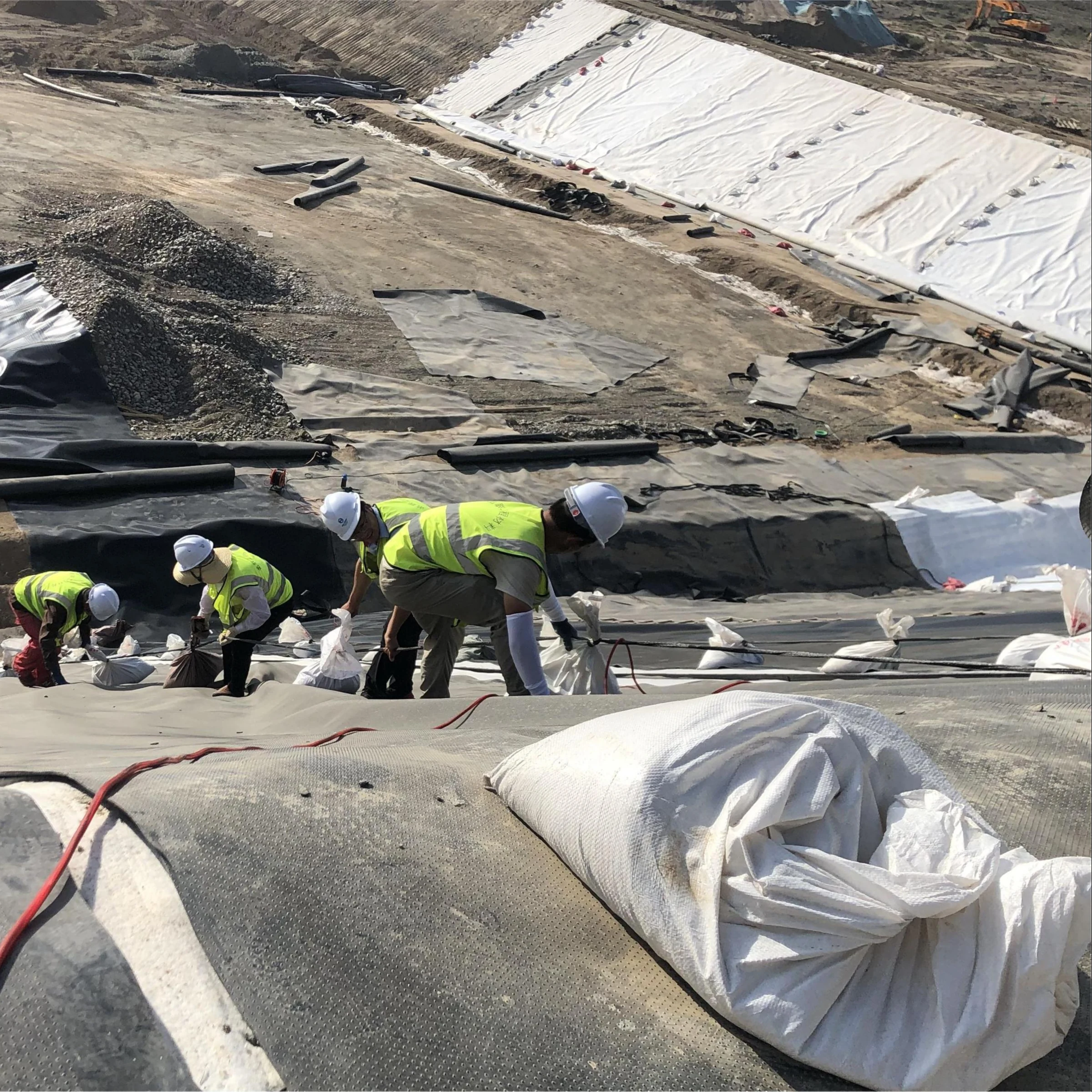
- Approve subgrade preparation and remove or treat damaging projections; an extra scrap does not automatically make a sharp obstacle safe.
- Place the specified fabric without harmful tension, folds or unsupported gaps. Follow the approved details at curves and transitions.
- Keep tyres and tracks off exposed fabric. Place and spread aggregate from supported areas with the specified initial cover.
- Use the approved aggregate and compaction procedure; do not substitute random demolition material or prescribe chemical ground treatment without design review.
- Inspect tears, displaced overlaps and excessive rutting. Repair by the approved patch or seam detail and record it before covering.
- Limit UV exposure according to the product and project requirements. Laboratory weathering hours are not equivalent to an exact number of sunny site days.
The FHWA stabilization discussion treats fabric, aggregate and ground support together. Do not remove structural aggregate solely because fabric has been added. Nor should two layers be assumed to double allowable load, puncture resistance or service life.
Maintain the road without exposing the separator
Keep the designed running surface, drainage and cover thickness in place. Repair ruts using an approved procedure and identify the underlying cause. Grade carefully so equipment does not catch buried fabric. Investigate new pumping, persistent wet spots or slope movement rather than repeatedly covering them without assessment.
For a material enquiry, provide road width and length, soil report, traffic, aggregate section, drainage details and required tests. Review the nonwoven product range, then ask Jinseed for a specification-matched offer. Where the design requires a different construction, obtain an approved compliant product rather than substituting by GSM.