

The substrate must be cleared of debris and leveled (error <2cm), with a moisture content <10%.
Protection against sharp objects is required to prevent punctures, which can cause bulging or leakage.
Seams are joined via hot wedge welding at a temperature of 180-220℃ and a speed of 0.3-1.0m/min.
The weld width should be 12-15mm.
After cooling, perform vacuum testing (no leakage at negative pressure of 0.02MPa).
Peel strength must be ≥20N/mm. Manual welding is prohibited.
Dig an anchor trench of 0.6m×0.6m.
After the membrane enters the trench, backfill and compact it (density ≥90%).
Cover the edges with 30cm of clay or concrete slabs to prevent mechanical damage.
Select certified construction teams and use automatic welding machines.
After completion, perform a water-filling leak test (drop ≤5cm over 24 hours).
Inspect and repair damaged welds annually.
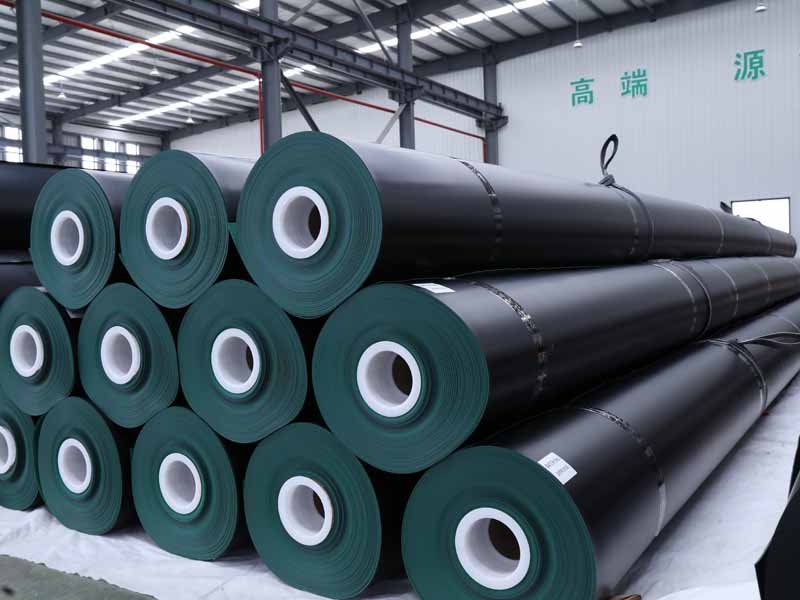
Inadequate Preparation
Inadequate preparation is primarily reflected in the failure of substrate treatment to meet international standards such as ASTM D4437 or GRI GM19.
Specifically, residual particles on the substrate with a diameter exceeding 12mm (0.5 inches) will lead to physical puncture of the LLDPE membrane under high overburden pressure.
A compaction degree lower than 95% Standard Proctor density will trigger uneven settlement, causing stress overload on the membrane body.
Furthermore, if the substrate moisture content exceeds the optimum moisture content by more than 4%, water vapor will be generated during hot wedge welding (typically at temperatures of 370°C – 400°C), resulting in porosity or cold welds.
Failure to pre-dig anchor trenches at a 1 meter distance can lead to material displacement and damage caused by wind during installation.
Compaction and Anchor Trenches
Substrate Compaction
1.1 Density Standards and Testing Frequency
Engineering standards require that the dry density of the substrate soil must reach 95% of the ASTM D698 Standard Proctor density.
- Testing Method: Usually verified on-site using a Nuclear Gauge or the Sand Cone Method.
- Frequency: It is recommended to perform one test every 4,000 square meters or every 300-500 cubic meters of earthwork filled.
- Consequences of Failure: If the compaction is only 85%, soil particles will rearrange under high hydraulic pressure (e.g., water depth >5m), leading to volume shrinkage. This microscopic movement creates voids under the membrane, leaving it in a suspended state under stress.
1.2 Quantitative Control of Rut Depth
Ruts left by construction vehicles (such as dump trucks and generator trailers) driving on the substrate are common hidden hazards.
- Allowable Limit: Rut depth must not exceed 25mm (1 inch).
- Measurement Method: Use a 3 meter long straightedge across the rut and measure the vertical distance from the bottom of the straightedge to the lowest point of the rut.
- Remedial Measures:
- Depth < 25mm: Generally acceptable, but ridges at the edges of the rut must be removed before laying the membrane.
- Depth > 25mm: The soil in the area must be loosened, moisture content adjusted, and re-compacted. Filling ruts with loose soil is prohibited because the fill cannot integrate with the surrounding soil and is highly likely to collapse again.
1.3 Surface Protrusions and Flatness
LLDPE membrane thickness is typically between 0.5mm and 2.0mm.
To protect this thin layer, the compacted surface must achieve a “Smooth-rolled” effect.
- Particle Limits:
- For 1.0mm thick LLDPE, the surface must not have sharp stones with a diameter exceeding 6mm.
- For thicknesses of 1.5mm and above, the maximum particle size limit is relaxed to 12mm.
- Abrupt Verticality Changes: Within a 3 meter range, the vertical change of the ground should not exceed 25mm. Sudden ground fluctuations cause the hot wedge welder to jump during operation, resulting in missed welds or uneven pressure.
| Defect Type | Quantitative Standard | Physical Consequence |
|---|---|---|
| Ruts | > 25mm | Forms “bridging effect”; membrane stretches and thins under stress |
| Stones | > 12mm | Causes Stress Cracking under high pressure |
| Compaction | < 95% | Long-term settlement leads to membrane tearing |
Anchor Trenches
2.1 Geometry and Setback Distance
Design drawings usually specify the exact location of anchor trenches, but deviations often occur on-site.
- Setback / Run-out Distance: The horizontal distance from the inner edge of the anchor trench to the Crest of Slope must be maintained between 1.0m and 1.5m.
- Reason: This distance ensures soil stability at the slope crest. If the distance is too short (e.g., < 0.5m), the weight of heavy machinery during excavation may collapse the slope edge, causing the entire anchorage system to fail.
- Standard Cross-sections:
- Rectangular Trench (U-type): Usually 0.5m (W) × 0.5m (D). This shape is convenient for construction and easy to backfill.
- V-type Trench: Faster to excavate, but difficult to compact at the narrow bottom, easily forming voids. Not recommended for high, steep slope projects.
2.2 Edge Treatment and Chamfering
Excavated trenches often have 90-degree right-angle edges accompanied by jagged soil clods or stones.
- Chamfering Requirement: The Breakover Point where the geomembrane enters the anchor trench must be manually trimmed into an arc shape with a Radius greater than 150mm.
- Physical Analysis: When LLDPE membrane shrinks at low temperatures, it tightens against the trench edge. If it is a sharp right angle, the membrane will experience extreme shear force at that point, similar to being cut by a blade. A smooth transition disperses stress and protects the membrane’s integrity.
2.3 Temporary Weighting and Backfill Timing
Before backfilling the anchor trench, temporary measures must be taken to prevent wind damage.
- Sandbag Weighting: After the geomembrane is laid in the trench, it should not be backfilled immediately. Instead, place a sandbag every 2-3 meters. This allows the membrane to expand and contract freely with temperature changes throughout the day.
- Backfill Timing:
- The best time for backfilling is when the ambient temperature is low (e.g., early morning). At this time, the membrane is in a contracted state; once backfilled, the membrane remains taut, reducing the risk of future “bulging” or wrinkles.
- If backfilled during midday high temperatures (when the membrane has expanded), subsequent cooling at night will cause the membrane to shrink. Since both ends are fixed, enormous internal tension is generated, which may cause the membrane at the toe of the slope to suspend (Trampolining) away from the substrate.
2.4 Layered Compaction of Backfill
Simply pushing excavated soil back into the trench is an unacceptable practice.
- Layer Thickness: Backfill soil should be filled in layers, with each loose layer thickness not exceeding 150mm – 200mm.
- Compaction Requirements: Each layer must be compacted using a small rammer (such as a jumping jack).
- If the backfill is too loose (compaction < 80%), its Pullout Resistance will drop significantly. Under negative pressure suction from strong winds (wind speed > 60km/h), the geomembrane might pull the loose soil out of the trench, causing the membrane on the entire slope to slide down.
- Protective Layer: In the first layer of backfill, all large stones must be removed, or a 100mm layer of sand or fine soil should be backfilled first to prevent stones from puncturing the geomembrane at the bottom of the trench during compaction.
Substrate soil must reach over 95% of the Standard Proctor density to limit rut depth from heavy equipment to no more than 25mm.
Falling below this standard will cause the LLDPE membrane to exceed its yield limit of 3% local strain due to uneven settlement after water storage.
The excavation of the Anchor Trench must be at least 1.5m (setback distance) from the slope crest, with standard cross-section dimensions usually being 0.5m (W) × 0.5m (D).
Backfill in the trench must be compacted in layers (each < 150mm) to provide sufficient frictional pullout resistance against the shrinkage tension of approximately 400N/m (depending on thickness) generated during a 20°C temperature drop.
Moisture and Temperature Management
Moisture Content
1.1 Vapor Pressure Effect and Weld Porosity
The working principle of a Hot Wedge Welder involves heating a wedge (temperature usually set between 350°C and 420°C) to melt the surfaces of the upper and lower LLDPE layers.
- Physical Process: When the welder passes over a damp substrate, although the geomembrane itself is impermeable, heat from the contact between the lower membrane and the soil is conducted to the soil surface.
- Phase Change: If the soil moisture content is too high (defined as exceeding the optimum by 4%), the heated moisture rapidly boils into water vapor.
- Consequences: Because the lower membrane is pressed down by the heavy welder above, the generated steam has nowhere to escape and creates Back Pressure. This pressure lifts the molten lower membrane, causing tiny bubble channels (Wormholes) or cold welds.
- Detection Indicator: If a honeycomb structure is found on the weld peel surface during destructive testing, it is usually due to steam interference caused by high moisture on the contact surface.
1.2 Dew and Condensation Management
Early morning construction is a high-risk period for moisture issues.
- Dew Point Phenomenon: When the surface temperature is lower than the dew point, moisture in the air condenses on the geomembrane surface. For black LLDPE, nighttime radiant cooling can make its surface temperature lower than the ambient air, making it more prone to dew.
- Operational Taboo: Welding is prohibited when a visible water film is present. Even trace moisture undetectable to the naked eye can significantly reduce the heat transfer efficiency of the wedge, failing to reach the Melting Point of the layers.
- Drying Measures: Use a blower or absorbent mop to clean the welding area (overlap width 100mm – 150mm). Wait for natural air drying; the use of open flames for drying is strictly prohibited as it causes local oxidation and embrittlement of the LLDPE.
Thermal Expansion and Contraction of LLDPE
2.1 Quantitative Calculation of Dimensional Changes
Understanding the Coefficient of Thermal Expansion (CTE) is vital for controlling wrinkles.
- CTE Data: The CTE for LLDPE is approximately 1.2 × 10⁻⁴ m/m/°C (or 120 μm/m/°C).
- Scenario Simulation:
Assume a panel with a length of 150m is laid at 15°C in the morning.
By noon, the black membrane surface absorbs solar radiation, and its temperature rises to 65°C (a 50°C temperature difference).- Elongation Calculation: $150 \text{m} \times 50 \text{°C} \times (1.2 \times 10^{-4}) = 0.9 \text{m}$.
The membrane roll will elongate by 90cm. This excess material forms massive Wrinkles.
- Elongation Calculation: $150 \text{m} \times 50 \text{°C} \times (1.2 \times 10^{-4}) = 0.9 \text{m}$.
2.2 Risks of High-Temperature Installation: Wrinkle Folding
If welding is performed during the hottest part of the day (usually 11:00 – 15:00):
- Operational Difficulty: The membrane surface will have many wave-like wrinkles. If these are not manually flattened as the welder passes, “Fish Mouths” or permanent Fold-overs will occur.
- Defect Analysis: Folded areas have double thickness. When the welder’s pressure wheels pass over, they jump, leading to insufficient pressure in adjacent areas and creating leak points. Folds are also stress-concentration points prone to cracking under load.
2.3 Risks of Low-Temperature Installation: Trampolining
If the membrane is laid taut and fixed during high temperatures, severe shrinkage occurs when the temperature drops at night.
- Shrinkage Force Calculation: The elastic modulus of LLDPE increases as temperature decreases. At 0°C, the tension generated by shrinkage can exceed 400 N/m.
- Trampolining Phenomenon: At the Toe of Slope, the shrinking membrane tightens like a trampoline and suspends away from the substrate.
- Consequences: When the pond is filled or backfilled with waste, the suspended membrane lacks substrate support and undergoes extreme tension, often resulting in torn welds or failure of the membrane body.
Trial Weld Regime
3.1 Frequency and Conditions
The GRI-GM19 specification defines the timing for trial welds:
- Before Work: Every day before work begins.
- After Long Shutdowns: If the equipment has been off for more than 1 hour.
- Environmental Shifts: When ambient temperature changes by more than 10°C, wind speed increases significantly, or solar intensity changes drastically (e.g., from cloudy to full sun).
3.2 Dynamic Adjustment of Temperature and Parameters
Operators must adjust parameters based on Sheet Temperature rather than air temperature.
| Sheet Temp | Recommended Speed | Recommended Wedge Temp | Remarks |
|---|---|---|---|
| < 10°C | Decrease (1.8 – 2.5 m/min) | Increase (400°C – 420°C) | Requires longer heat conduction to soften cold membrane |
| 10°C – 30°C | Standard (2.5 – 3.5 m/min) | Standard (370°C – 400°C) | Standard operating window |
| > 40°C | Increase (3.5 – 5.0 m/min) | Decrease (350°C – 380°C) | Prevents overheating, melting, or thinning |
3.3 Intervention Measures for Extreme Temperatures
- Low Temperature (< 5°C):
- A hot air blower must be used for Pre-heating the area to be welded, raising the sheet temperature to around 20°C.
- Pre-heating should be performed synchronously about 0.5m ahead of the welder.
- High Temperature (> 40°C ambient / > 75°C sheet):
- LLDPE becomes extremely soft; the welder’s pressure wheels may leave permanent Track Marks or even puncture the membrane.
- Response: Welding must stop, or sunshades must be erected to lower the sheet temperature. Forced construction leads to weld thickness being lower than the parent material, violating the rule that thickness deviation must not exceed -10%.
To offset physical damage caused by thermal expansion and contraction, slack must be introduced during installation.
When laying LLDPE panels, they should not be pulled perfectly straight and taut.
Generally, a length allowance of 1.5% – 2.0% is reserved.
Crucial Seam Techniques
The welding window for LLDPE geomembranes is narrower than that for HDPE, with higher sensitivity to temperature.
Dual-track hot wedge welding typically requires wedge temperatures between 340°C and 400°C (lower than HDPE), with travel speeds maintained between 1.5 to 2.5 m/min.
Extrusion welding must be completed within 20 minutes after surface grinding to prevent secondary oxidation;
grinding depth must not exceed 10% of the membrane thickness.
According to GRI GM19 standards, air pressure testing for dual-track welds typically requires inflation to 25-30 psi for 5 minutes, with an allowable pressure drop not exceeding 3-4 psi.
On-site Peel Tests must result in a “Film Tear Bond” (FTB), and peel strength must reach 60-80% of the parent material’s strength (depending on material texture).
Dual-Track Hot Wedge Welding
Wedge Temperature
For LLDPE, the primary principle for temperature setting is “melt only the surface, do not degrade the core.”
- Base Temperature Range: Depending on thickness, wedge temperatures are usually set between 340°C and 400°C. For example, when welding 1.0mm LLDPE, an initial temperature of 350°C is suggested; for 2.0mm LLDPE, it can be increased to 380°C due to higher heat absorption.
- Thermal Conductivity Difference: LLDPE’s thermal conductivity is about 0.33 W/(m·K). Heat takes time to transfer from the wedge to the surface. If using a copper wedge (fast conduction), the set point can be 20°C to 30°C lower than for a steel wedge.
- Ambient Compensation: This is a linear variable. For every 10°C drop in ambient temperature, the wedge temperature usually needs to rise by 5°C to 10°C to compensate for heat loss. Between a morning at 10°C and midday at 30°C, the Set Point may need a 15°C adjustment to achieve the same result.
- Signs of Overheating: If temperatures exceed 410°C, polymer degradation may occur. Extrudate at the weld edges will show tiny bubbles (from volatiles) or the membrane surface will show obvious wavy deformation.
Welding Speed
Speed determines the Dwell Time of the membrane against the wedge.
- Standard Range: For LLDPE, the recommended speed range is 1.5 m/min to 2.8 m/min.
- Thin Membranes (< 1.0mm): Speed must be increased (e.g., above 2.2 m/min). Thin films have low heat capacity and are heated through instantly. Slow speeds (e.g., 1.0 m/min) can cause “burn-through” or cause the lower layer to stick to the wedge, causing a jam.
- Thick Membranes (> 1.5mm): Thicker membranes require more time for heat to penetrate the interface. Speed should be lowered to 1.5 to 1.8 m/min. If too fast, only the surface melts while deep molecules remain inactive, leading to a “Cold Weld” that peels apart easily.
- Speed-Temperature Linkage: As a rule of thumb, for every 0.1 m/min increase in speed, the temperature should rise by 3°C to 5°C to maintain the same melt effect, and vice versa.
Nip Roller Pressure
Pressure is used to force two molten surfaces together, encouraging molecular chain diffusion and entanglement.
- Pneumatic vs. Spring: Most modern welders are pneumatic. For LLDPE, air pressure is usually set between 250 N and 350 N (or 0.8 – 1.2 bar, depending on the machine).
- Avoid Excessive Squeeze-out: LLDPE is soft. Excess pressure (e.g., > 500 N) will squeeze molten plastic completely out of the weld zone, making the final weld thickness lower than the parent material. While it might seal, the physical (tensile) strength is significantly reduced, creating a weak point.
- Uneven Pressure: Imbalance between left and right pressure causes the welder to drift or results in one good weld and one cold weld. Check pressure gauge zeroing and synchronized action before every start.
Gap Setting
The gap is the minimum distance between the upper and lower pressure rollers when closed.
- Formula: Ideal Gap = (Upper sheet thickness + Lower sheet thickness) – Compression.
- LLDPE Compression: Because LLDPE is more compressible than HDPE, compression is usually set between 0.15mm and 0.25mm.
- Calibration:
- Prepare two samples of the LLDPE to be welded.
- Insert a Feeler Gauge between the rollers.
- Adjust the limit screw until the rollers just touch the gauge with slight resistance.
- For 1.5mm membrane (total 3.0mm), the gap should be set at approx 2.7mm to 2.8mm.
- Consequences of Large Gap: Rollers cannot apply enough pressure, relying on membrane expansion to fill the space, resulting in poor bond strength and failed air tests.
- Consequences of Small Gap: High machine resistance leading to slipping (Burnouts) and crushing damage to the membrane.
Weld Extrudate
Extrudate provides evidence of parameter matching without laboratory testing.
| Phenomenon | Characteristics | Diagnosis | Action |
|---|---|---|---|
| Normal Extrusion | Continuous, uniform, 3mm-6mm wide | Good parameter match | Maintain settings |
| No Extrudate | Flat edges, no melt overflow | Temp too low / Speed too fast / Low pressure | Up temp 10°C or Down speed 0.2m/min |
| Excessive Extrusion | Width > 10mm, possible rolling | Temp too high / Speed too slow / High pressure | Down temp 10°C or Up speed 0.2m/min |
| Wavy Extrusion | Intermittent wave-like extrudate | Wedge misaligned or membrane not flat | Center wedge, flatten membrane |
| Bubbled Extrudate | Visible bubbles/pores in extrudate | Damp membrane or severe overheating | Dry welding surface or drop temp drastically |
Reference Matrix for Different LLDPE Thicknesses
Data based on 20°C – 25°C ambient, no wind, standard copper wedge.
Adjust based on Trial Welds.
| Thickness (mm) | Wedge Temp (°C) | Speed (m/min) | Pressure (N) | Remarks |
|---|---|---|---|---|
| 0.75 | 340 – 360 | 2.2 – 2.8 | 200 – 250 | Prone to overheating, needs high speed |
| 1.00 | 350 – 370 | 2.0 – 2.5 | 250 – 300 | Common spec, stable parameters |
| 1.50 | 360 – 380 | 1.8 – 2.2 | 300 – 350 | Needs increased pre-heat time |
| 2.00 | 375 – 400 | 1.5 – 1.9 | 350 – 450 | Watch for deep penetration |
Extrusion Welding
Abrasive Selection
- Disc Type: Use a Flap Disc rather than a rigid grinding wheel. Flap discs dissipate heat better, preventing “Glazing” of the LLDPE surface caused by friction heat.
- Grit Size: 80 to 100 grit is recommended.
- < 60 Grit: Too coarse; leaves deep grooves that act as initiation points for cracks (Notch Effect).
- > 120 Grit: Too fine; clogs easily with LLDPE debris and fails to create enough roughness for mechanical interlocking.
- Speed Control: Angle grinder speed should be in the lower range (2000 – 4000 RPM) to prevent melting plastic onto the sandpaper.
Grinding Depth
- 10% Rule: The industry threshold is that grinding depth must not exceed 10% of the nominal membrane thickness.
- For 1.0mm LLDPE: Max depth 0.1mm.
- For 1.5mm LLDPE: Max depth 0.15mm.
- Consequences: Excessive depth reduces the effective load-bearing cross-section. Environmental Stress Cracking (ESCR) failures always prioritize thinned areas.
- Visual Standard: A proper surface should be uniform Matte with no Shiny Spots. Deep pits or curled plastic shavings indicate excessive downward pressure.
Grinding Width
The ground area must fully cover the weld zone with a safety margin.
- Weld Width + Margin: Standard extrusion welds are 25mm to 30mm wide. Grinding must extend 6mm to 12mm beyond this on each side.
- Purpose: Ensures the Bead Edge sits entirely on the roughened surface. If it overflows onto smooth surface, the edge will lift over time, allowing moisture/dirt in and causing “peeling.”
Time Management
Freshly ground LLDPE is in a high-energy activated state and easily absorbs oxygen and moisture.
- 20-Minute Rule: Welding must be completed within 20 minutes of grinding in standard environments.
- High Humidity: If relative humidity > 70%, the window shrinks to 10 minutes. Expired areas must be lightly re-ground.
Chamfering and Steps
At Lap Seams or patch edges, the upper membrane creates a vertical step.
Extrusion guns can leave voids here.
- 45-Degree Chamfer: Use a grinder to bevel the edge of the upper LLDPE sheet to a 45-degree slope. This allows molten extrudate to transition smoothly and eliminates air traps.
- Rounding Corners: Patch corners should be rounded (radius > 50mm) to avoid stress concentrations.
Cleaning
- Dust Removal: Use only clean, dry cotton cloths or paper towels to wipe away poly dust (Swarf).
- No Solvents: Do not use acetone, alcohol, or chemicals. They soften the surface and leave residues that cause porosity.
T-Seams
The T-seam (triple overlap) is the most complex extrusion weld area.
- Thinning: At the overlap, the middle layer’s edge should not only be chamfered but also ground thinner to reduce the total height difference.
Extension: T-seam repairs should extend 150mm beyond the intersection. Use caution not to damage the underlying dual-track weld.
Anchoring and Protection
The anchor trench should be located at least 1.5 meters (approx. 5 feet) behind the edge of the slope crest.
Standard cross-sectional dimensions are typically 0.6m (depth) × 0.6m (width).
The corners at the bottom of the trench must be trimmed to a circular arc with a radius of R > 150mm to eliminate stress concentration.
Since the coefficient of thermal expansion for LLDPE is approximately 1.2×10⁻⁴/°C, a slack of 2% to 4% must be reserved during installation based on the ambient temperature to prevent shrinkage during nighttime cooling from causing the welds to bear a tension exceeding 11 kN/m (based on 1.0mm thickness).
The particle size of the first layer of backfill soil for the protective layer must be controlled below 12mm;
the use of angular crushed stone is strictly prohibited.
Mechanical equipment is only allowed to travel on soil layers with a thickness greater than 300mm, and the ground pressure must be limited to within 35 kPa (5 psi).
Anchor Trench Excavation
Location Determination
The location of the anchor trench is not selected arbitrarily; its distance from the slope crest edge (Setback Distance) is limited by soil shear strength and slope geometry.
- Slip Surface Avoidance: Soil mechanics analysis indicates that there is a potential “Active Wedge” in the soil at the top of the slope. If the anchor trench is located within this area (typically within 0.5 meters to 1.0 meters behind the slope crest edge), the excavation of the trench itself will destroy the soil arching effect, leading to the collapse of the slope crest edge. Engineering standards require a minimum setback distance of 1.5 meters. For sandy or loose backfill soil slopes, this distance should be increased to 2.0 meters – 3.0 meters.
- Heavy Equipment Safety Distance: Considering that subsequent backfill vehicles need to operate behind the anchor trench, sufficient mechanical travel width must be reserved. If the setback distance is less than 2.0 meters, the wheel load pressure of heavy dump trucks or rollers may act on the trench sidewalls, causing the trench walls to collapse and squeeze the LLDPE membrane inside the trench.
- Multi-layer Anchoring Spacing: When the system includes multiple layers of materials such as geomembranes, geotextiles, and geonets, a “staggered anchoring” design is recommended. The horizontal spacing between the geomembrane anchor trench and the geotextile anchor trench should be maintained at 0.5 meters – 1.0 meters to avoid excessive excavation on the same section, which would weaken the foundation bearing capacity.
Trench Cross-section
Comparison Table of Common Trench Shapes:
| Shape Type | Typical Dimensions (Width x Depth) | Applicable Scenarios | Construction Characteristic Data |
|---|---|---|---|
| Rectangular Trench | 0.5m x 0.5m to 1.0m x 1.0m | Standard seepage prevention projects, provides the highest pull-out resistance | Vertical sidewalls, flat bottom. Easy for backfill compaction equipment to enter, high controllability of compaction degree. |
| Trapezoidal Trench | Top width 0.8m / Bottom width 0.5m / Depth 0.6m | Sandy soil or easily collapsible soil | Sidewall slopes are typically 1:3 or 1:4. Reduces collapse risk during excavation, but pull-out resistance per unit length is slightly lower than a rectangular trench. |
| V-Trench | Top width 1.0m / Depth 0.6m | Temporary projects or low-tension applications | Not recommended for permanent LLDPE systems. Sharp corners at the bottom cause excessive folding of the membrane, making it extremely difficult to achieve effective compaction at the bottom. |
Geometric Trimming Details:
- Chamfering: The upper edge of the trench facing the slope is the area of highest stress concentration. After excavation, the edge must be manually trimmed with a shovel into a 45-degree chamfer or a circular arc. For a 1.5mm thick LLDPE membrane, the chamfer radius should be at least 150mm. Unchamfered right-angle edges will produce a “cutting effect” when the membrane is under tension, reducing the effective thickness of the membrane by more than 30%.
- Bottom Flatness: The flatness tolerance of the trench bottom should be controlled within ±20mm. If there are protruding stones or uncleaned roots at the bottom, permanent puncture points will form under the weight of the backfill soil.
Deployment Length
- U-Type Anchor (Full Anchor):
The geomembrane fits completely along the inner walls of the trench, extends to the bottom, and then is laid upward to the top of the back wall.- Deployment Width Calculation: For a 0.6m × 0.6m trench, the required membrane deployment length (Run-out Length) is approx:
0.6m (front wall) + 0.6m (bottom) + 0.6m (back wall) + 0.3m (allowance) = 2.1 meters - Friction Area: This method utilizes frictional resistance from the three sides of the trench, suitable for high-tension environments with slope lengths exceeding 30 meters or slopes steeper than 1:3.
- Deployment Width Calculation: For a 0.6m × 0.6m trench, the required membrane deployment length (Run-out Length) is approx:
- L-Type Anchor (Simple Anchor):
The geomembrane only descends along the front wall and covers the bottom, without extending upward on the back wall.- Deployment Width Calculation: Approx.
0.6m (front wall) + 0.6m (bottom) = 1.2 meters. - Limitations: Pull-out resistance mainly depends on the friction generated by the weight of the backfill at the bottom. Only suitable for gentle slopes with lengths less than 15 meters or scenarios with thick cover layers.
- Deployment Width Calculation: Approx.
Folding and Corner Treatment:
At 90-degree corners of the anchor trench (e.g., pond corners), excess material accumulation will occur in the LLDPE membrane.
Must be handled using the “Accordion Fold” method; cutting the membrane is strictly prohibited.
The folding direction should follow the direction of backfill advancement to avoid forced flipping and damage to the folded portion during backfilling.
Backfill Materials
- Soil Type Selection:
- Strictly prohibit the use of high plasticity clay (CH): Clay is easy to compact when wet, but its volumetric shrinkage rate can reach 10% – 15% after drying. This shrinkage causes the soil to separate from the trench walls, reducing the locking force to zero instantly.
- Recommended Materials: Well-graded sandy gravel (SW) or low plasticity silty clay (CL). The internal friction angle should be greater than 25 degrees.
- Maximum Particle Size: Backfill soil must not contain stones with a diameter greater than 25mm. The particle size of the first layer of backfill at the bottom (the layer in contact with the membrane) should be controlled below 12mm.
- Compaction and Layering:
- Layer Thickness: The trench must not be filled all at once. Backfill must be in layers, with each loose soil layer thickness not exceeding 200mm, resulting in approx. 150mm after compaction.
- Compaction Equipment: The trench is narrow; large rollers cannot enter. A walk-behind plate compactor or jumping jack must be used.
- Compaction Indicators: The compaction degree must reach 95% of the Standard Proctor compaction. If it is only 85%, the shear strength of the soil will decrease by 40%, leading to the geomembrane being pulled out during strong winds or subsidence.
- Moisture Content Control:
During backfilling, soil moisture content should be controlled within ±2% of the Optimum Moisture Content (OMC). Soil that is too dry cannot be compacted; soil that is too wet will cause water accumulation and softening in the trench, and the moisture cannot escape (as LLDPE is impermeable), leading to flow-plastic backfill and complete loss of anchoring force over time.
After backfilling is complete, the top soil layer should be trimmed to a 2% – 5% outward slope (away from the slope face) to guide rainwater to outer drainage ditches, preventing rainwater from infiltrating the trench and softening the backfill.
During construction, if the anchor trench is long and not backfilled promptly, temporary drainage channels should be set at the lowest points of the trench every 20-30 meters to prevent rainstorms from causing water accumulation and floating the laid geomembrane.
Protective Layer Materials
Cushion Layer
Laying geotextile between the backfill soil and the LLDPE geomembrane is the first line of defense against point load puncture.
Although LLDPE membranes are softer than HDPE, small sharp particles can still cause stress cracking under high overburden pressure if there is no cushion when covering rough soil.
- Weight and Type Selection:
- In standard environments, 300g/m² (10 oz/yd²) continuous filament needle-punched non-woven geotextile is recommended.
- If the backfill contains gravel with diameters of 20mm-40mm, or if the subgrade is rough, the geotextile specification should be increased to above 540g/m² (16 oz/yd²).
- CBR Puncture Strength: According to ASTM D6241, the CBR puncture strength of the selected geotextile should be greater than 2500 N. This ensures that the geotextile will not rupture first during mechanical rolling.
- Overlapping and Securing:
- The overlap width between geotextiles should be at least 150mm.
- Connection Methods: To prevent geotextile displacement during backfilling, heat bonding or sewing must be performed. Relying solely on simple overlapping makes the geotextile prone to “peeling” when bulldozers push soil, exposing the geomembrane below to aggregates. Heat bonding point spacing is recommended to be 0.5 – 1.0 meters.
- UV Degradation: Soil coverage should be completed within 14 days after laying the geotextile. Polypropylene (PP) is sensitive to UV; exposure exceeding two weeks will reduce its tensile strength by 30% – 50%.
First Layer Cover Material
The layer of soil in contact with the geotextile or geomembrane (Initial Lift) is called the “protective layer.”
Its physical properties determine the microscopic stress state on the membrane surface.
- Particle Size Distribution Control:
- Maximum Particle Size (Dmax): Strictly controlled below 12mm (0.5 inches).
- Coefficient of Uniformity (Cu): Well-graded soil with Cu > 4 is recommended. Well-graded soil particles are tightly interlocked, forming a stable Arching Effect and reducing vertical pressure transmitted to the membrane surface.
- Fines Content: The fines content passing through the No. 200 sieve (0.075mm) should be below 10%. Excessively high fines will cause poor drainage, leading to pore water pressure within the protective layer and triggering a landslide of the cover layer along the membrane surface.
- Chemical Properties of Materials:
- Calcium Carbonate Content: Avoid using limestone fragments with high calcium carbonate content. Acidic environments (such as mine heap leach pads) will dissolve calcium carbonate, leading to volumetric collapse of the protective layer or blockage of the drainage pipe network.
- Organic Matter Content: Organic matter content should be below 2% – 3%. Decaying plant roots form voids, and some roots have strong penetrating power that can puncture thin LLDPE membranes.
Interface Friction
When laying the protective layer on a slope, the friction coefficient between the smooth (or textured) LLDPE membrane surface and the soil is the bottleneck of system stability.
- Friction Angle Data Benchmark:
- The interface friction angle between smooth LLDPE and non-woven geotextile is typically between 8° – 11°.
- The interface friction angle between textured LLDPE and geotextile or soil can reach 20° – 32°.
- Infinite Slope Analysis: If the slope is 1:3 (approx. 18.4°) and smooth LLDPE (friction angle 10°) is used, the cover soil layer will inevitably slide. In this case, double-sided textured LLDPE must be mandatorily selected, or geogrids must be added to the design for reinforcement.
- Factor of Safety (FS) during Construction:
- The transient stability during construction must be verified during design. Since the braking and acceleration forces of bulldozers apply additional downward shear forces, the FS during construction should be at least 1.1 – 1.25.
- If calculations show insufficient stability, the filling sequence must be changed, such as using “Toe Buttressing,” i.e., filling the bottom of the slope first and then gradually progressing upward.
Operating Standards
- Spreading Direction (Up-slope vs. Down-slope):
- Up-slope: Recommended standard practice. This keeps the geomembrane and geotextile in a state of compression, avoiding tensile stress on the membrane.
- Down-slope: Extremely high risk. Gravity plus bulldozer thrust will pull the geomembrane down like “peeling a banana,” causing the membrane in the slope crest anchor trench to be pulled out or welds to tear. Down-slope spreading is prohibited unless verified by specialized calculations and using a system with high-strength reinforcement materials.
- Dynamic Monitoring of Cover Soil Thickness:
- Machine operators cannot judge the soil thickness under tracks by eye. A ground spotter must be present on-site, equipped with a graduated probe or laser receiver, to measure soil thickness every 5-10 meters.
- Prohibit Insufficient Thickness Operations: At any time, if the cover soil thickness is found to be below 300mm, the machinery must stop immediately and supplement material manually or with small equipment.
- Haul Road Setting and Turning Limits:
- One-way Lanes: On large sites, dedicated haul roads should be planned; the soil cover in this area should be increased to above 900mm (3 feet) to withstand the axle load of fully loaded dump trucks.
- Pivot Turn: Tracked equipment generates significant torsional shear when performing a pivot turn. This force is sufficient to penetrate a 300mm loose soil layer and tear the geotextile below. All turning operations must be completed slowly in large-radius curves, or additional steel plates should be laid in the turning area.
If the design requires the protective layer to have drainage functions (e.g., heap leach pads), its coefficient of permeability is usually required to be $k > 1 \times 10^{-2} \text{ cm/s}$.
Professional Recommendations
To ensure the long-term stability of LLDPE lining systems, strict quantitative standards must be implemented:
The compaction of the base soil must reach over 95% of the Standard Proctor density, and the maximum particle diameter on the surface must not exceed 12mm.
The linear coefficient of thermal expansion for LLDPE is approximately 2.0×10⁻⁴/°C;
for every 10°C decrease, a 100-meter long membrane will shrink by approximately 20 cm. Therefore, when laying at ambient temperatures below 15°C, a material slack of at least 1.5% must be reserved.
Hot-wedge welding temperature is recommended to be controlled between 340°C to 390°C (typically 20-30°C lower than HDPE), and welding speed should be maintained at 2.0-3.0 m/min.
For extrusion weld repairs, the ground surface must be welded within 20 minutes to prevent the regeneration of the oxide layer from causing ASTM D6392 peel test failure.
Base and Cushion Layer
Base Soil
The soil support layer is more than just a cushion; it must bear the full weight of the waste or water body above.
- Compaction and Moisture Content
During compaction operations, soil moisture content should be controlled within ±2% of the Optimum Moisture Content. Too dry will result in loose soil structures that cannot reach the 95% compaction standard; too wet will produce a “pumping soil” phenomenon, leading to foundation deformation under heavy pressure. It is recommended to use a heavy smooth-wheel roller (typically 10 to 12 tons) for the final finishing passes until the wheel track depth is less than 5mm. - Proof Rolling
Before formal liner installation, proof rolling must be conducted. Use a fully loaded truck (axle load approx. 8 tons) to drive over the leveled base. If the wheel ruts exceed 25mm, or if significant soil pumping is observed, the area is structurally unstable and must be excavated and re-compacted with qualified material.
Surface Granularity
Sharp objects are the primary cause of geomembrane puncture failure.
While LLDPE has high elongation at break, local point stress concentrations will rapidly deplete the material’s plastic deformation capacity.
- Maximum Particle Size Limitations
- Regular Soil: Within the top 150mm depth, stones with a diameter greater than 12mm are prohibited.
- Gravelly Soil: If stones cannot be fully screened, ensure all gravel is rounded or sub-rounded. Any angular crushed stone, even with a diameter less than 6mm, will cut the membrane like a blade under an overburden pressure of 500kPa.
- Surface Flatness Tolerance
Test using a 3-meter long aluminum straightedge; the maximum gap between any two high points must not exceed 25mm. For vertical protrusions (such as uncrushed clods), the height must not exceed 12mm and must be chamfered. Abrupt surface changes will cause the geomembrane to “bridge” under pressure; once the pressure exceeds the yield point, the bridged area will rupture.
Anchor Trench
The anchor trench is responsible for resisting suction generated by high winds and the downward sliding force of the membrane’s own weight.
- Dimensional Specifications
Standard anchor trench sections are typically 0.5m (W) × 0.5m (D) or 0.6m × 0.6m. The horizontal distance from the trench edge to the slope crest should be at least 1.0m to 1.5m to prevent trench collapse from damaging the crest structure. - Radius of Curvature
This is a frequently overlooked detail. The corner where the anchor trench meets the slope crest must not be a 90° right angle. The soil must be trimmed into a circular arc with a radius (R) greater than 150mm. When LLDPE is stressed at a right-angle turn, the stress concentration factor increases exponentially; a smooth transition effectively dissipates the tension.
Selection Strategy
When the base cannot meet the granularity requirements above, or when the geology is rock, geotextile is the only physical line of defense.
- Mass per Unit Area (Weight)
Do not choose a light 200g/m² cloth to save costs. For rock bases or unscreened gravelly soil, a minimum specification of 540g/m² (16 oz/yd²) continuous filament needle-punched non-woven geotextile is recommended. This high-weight geotextile provides sufficient thickness to form an “in-plane drainage channel,” helping to discharge condensation or leakage water under the membrane. - CBR Puncture Strength
According to ASTM D6241, the puncture strength of the selected geotextile should reach over 2000N. In extreme environments like mine tailings ponds, double-layer installation or the use of Geosynthetic Clay Liners (GCL) as a composite liner may be required.
| Base Type | Recommended Geotextile Spec | Min Puncture Strength (ASTM D6241) |
|---|---|---|
| Fine Sand/Silt | 270 g/m² | 1100 N |
| Soil with some rounded gravel | 400 g/m² | 1600 N |
| Crushed Rock/Coarse Gravel | >540 g/m² | >2200 N |
Installation Process and Connection
If the geotextile is improperly secured, wrinkles will form under the membrane; these hardened wrinkles will eventually imprint on the LLDPE membrane, causing fatigue damage.
- Deployment Direction
Must be laid from top to bottom along the slope; horizontal overlapping on the slope is strictly prohibited. Horizontal seams can only exist in the flat area at the base of the slope, at least 1.5m from the toe line. - Connection Methods: Sewing vs. Heat Bonding
- Sewing: This is the preferred method. Use a portable sewing machine with a “Type 401 chain stitch.” The thread must be high-strength polypropylene or polyester, and its tensile strength must not be lower than the geotextile itself. The overlap width for sewing is 100mm.
- Heat Bonding: In cases where sewing is not possible, a heat gun can be used for spot bonding. The spacing between bonding points should be 0.5m – 1.0m. Note that the air temperature should not be too high to avoid burning through the geotextile fibers and losing strength.
- Wind Control and Ballasting
Although geotextiles are breathable, they can still be lifted by strong winds. Immediately after deployment, sandbags must be used for ballasting. Generally, one sandbag every 2-3 meters is required. Before covering with LLDPE membrane, do not leave the geotextile exposed to UV radiation for long periods (over 14 days), as UV will rapidly degrade polypropylene fibers, halving their strength within weeks.
If the slope is steeper than 4:1 (i.e., 25% gradient), textured LLDPE geomembrane should be used.
The interface friction angle between textured membrane and non-woven geotextile can reach 25° – 30°, compared to only 10° – 12° for smooth membrane.
Before large-scale installation, direct shear tests of on-site materials must be performed according to ASTM D5321.
If the calculated Factor of Safety is below 1.5, the geotextile specification must be adjusted or the base surface must be re-treated, such as by adding a layer of coarse anti-slip sand under the geotextile.
Testing and Recording
Air Pressure Testing
This is the preferred method for verifying the integrity of long straight welds.
By utilizing the central air channel reserved during hot-wedge welding, the entire weld length can be pressurized, verifying the seal of two parallel fusion lines simultaneously.
- Equipment Accuracy Requirements
Use a hollow needle with a quick connector for inflation. The pressure gauge range should be 0-690 kPa (0-100 psi), and the dial scale division must not exceed 10 kPa (2 psi). To ensure accurate readings, it is recommended to use a digital pressure gauge calibrated to NIST (or equivalent international standards). - Test Procedure Specifications
- Seal Channel: Use a heat gun or specialized clamps to fuse and seal both ends of the air channel for a length of approx. 150mm.
- Inflation and Stabilization: Insert the needle into the air channel and slowly inflate to 210 kPa (30 psi). Close the inlet valve and let it sit for 2 minutes to allow the injected compressed air temperature to equilibrate with the membrane temperature (this step is often skipped, leading to reading errors).
- Formal Test: Start timing after the pressure stabilizes and maintain for 5 minutes.
- Acceptance Criteria:
- Pressure drop ≤ 20 kPa (3 psi): Pass.
- Pressure drop > 20 kPa: Fail; sectional troubleshooting required.
- Continuity Check
This is the most frequently missed step. After the test, you must go to the other end of the weld (the end without the needle) and cut open the air channel. Only if you hear a distinct air release sound (“Pfff” sound) or feel air escaping can it be proven that the air channel was clear throughout and not blocked by melted material. If there is no airflow, it indicates a blockage in the weld, making the previous test result invalid; sectional testing must be redone.
Vacuum Box Testing
For patches, pipe boots, and extrusion fillet welds at corners, the vacuum box is the only physical detection method.
- Soap Solution Formula
Strictly prohibit the use of ordinary dish soap mixed randomly with water. The mixture should have appropriate surface tension to ensure that persistent bubbles form at tiny leaks rather than bursting quickly. Typically, a ratio of 120ml of foaming agent to 3.8L of water is recommended. On vertical surfaces, increase the foaming agent concentration to prevent the liquid from draining too fast. - Operating Parameters
- Application: Clear mud and dust from the weld surface; application width should exceed the weld edge by 50mm.
- Pressurization: Place a vacuum box with a clear window over the test area, ensuring the bottom rubber seal is in tight contact with the membrane. Start the vacuum pump and draw a negative pressure of at least 35 kPa (5 psi) (typically 35-55 kPa).
- Observation Time: Must continuously observe the window for at least 10 seconds under negative pressure. Quick “on-and-off” operations fail to detect small, slow leaks.
- Overlap Coverage: Each time the vacuum box is moved, ensure an overlap of at least 75mm (3 inches) with the previous test area to eliminate missed zones.
- Defect Treatment
Once continuous bubble production is found, immediately circle the leak on the membrane with a marker. It is strictly prohibited to stack more weld material on the original weld; the original defective part must be ground down at least 6mm deep, extrusion welded again, and vacuum tested once more after cooling.
Electrical Leak Location – ELL
For areas that will be covered with soil later or nodes with extremely complex topography, traditional vacuum boxes are highly inefficient.
In such cases, it is recommended to use LLDPE geomembranes with a conductive backing for spark testing.
- Principle and Voltage Setting
Utilizing the insulation of the geomembrane, a conductive layer (such as conductive geotextile or specialized conductive primer) is laid under the membrane. A copper brush or conductive rod connected to a high-voltage power source is used to scan the membrane surface.- Voltage Formula: $V = M \times \sqrt{t}$
(where V is voltage, t is membrane thickness in mm, and M is the material dielectric constant coefficient). For 1.5mm LLDPE, the voltage is typically set at 20,000V – 30,000V.
- Voltage Formula: $V = M \times \sqrt{t}$
- Sensitivity Calibration
Before daily testing, an artificial pinhole with a 1mm diameter must be created for calibration. Testing may only begin if the instrument emits a clear audible and visual alarm when passing over the pinhole. Scanning speed should be controlled at 0.3 – 0.5 m/s; excessive speed may prevent the arc from breaking through the air medium.
Destructive Testing
- Sampling Frequency
According to international standards, one destructive sample must be taken for every 150 meters (500 feet) of welding. For strict project requirements, the frequency may increase to every 100 meters. - Sample Specifications
Each sample is typically 300mm (W) × 1000mm (L), cut across the weld. The sample is divided into three parts: one third for on-site testing, one third for a third-party laboratory, and one third for the owner’s archives. - Laboratory Test Metrics (ASTM D6392)
The lab will cut the sample into 25mm wide strips for Peel Tests and Shear Tests.- Shear Strength: Must reach 90% of the parent material’s yield strength.
- Peel Strength: Must reach 60% (Hot-wedge) or 60% (Extrusion) of the parent material’s yield strength.
- Break Mode (FTB): This is the most stringent metric. Failure must occur in the parent material outside of the weld (Film Tearing Bond). If failure occurs at the weld interface (AD-Weld) or if the weld edge breaks cleanly, the test is judged as a Fail even if the strength values are met.
Data Recording
- Panel Layout Drawing
Before installation, a panel layout drawing must be prepared, assigning a unique Panel ID (e.g., P-001, P-002) to each deployed roll of geomembrane. - Seaming Log
The log must include:- Weld ID: e.g., S-001 (connecting P-001 and P-002).
- Equipment Parameters: Set temperature, speed, and pressure during welding.
- Time and Technician: Specific time of operation and signature of the operator.
- Environmental Data: Ambient temperature and wind speed at the time.
- Repair Log
Every repair point must be marked with coordinates on the as-built drawing and assigned a Repair ID (e.g., R-001, R-002). The log needs to record the type of defect (e.g., pinhole, burn-through, test failure), repair method, and the specific time of re-testing approval.
Upon project handover, as-built drawings based on GPS mapping must be submitted.
Use RTK-GPS to measure all weld trajectories, repair points, pipe penetrations, and anchor trench boundaries;
horizontal accuracy error should be less than 10cm.
In CAD or GIS systems, separate layers should be created for geomembrane panels, weld lines, and repair points.

Leave a reply