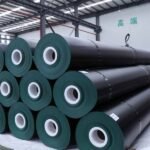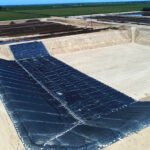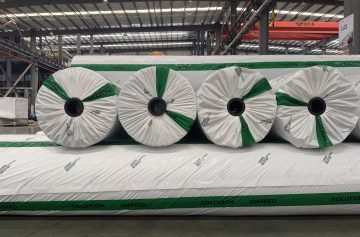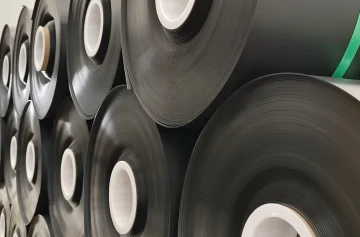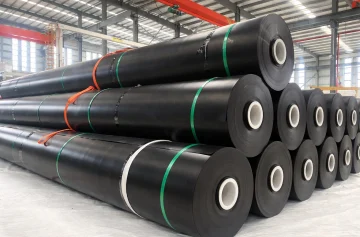
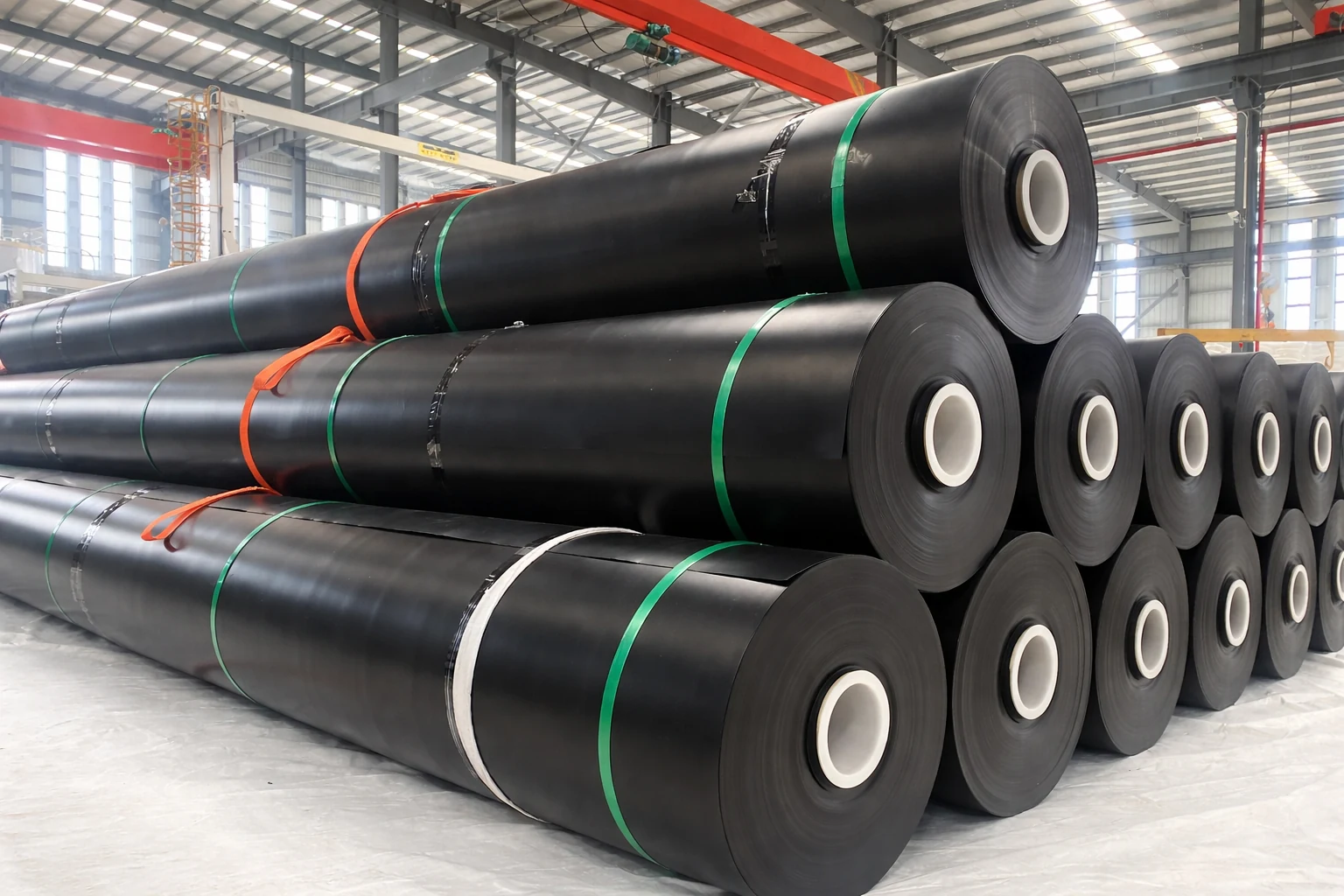
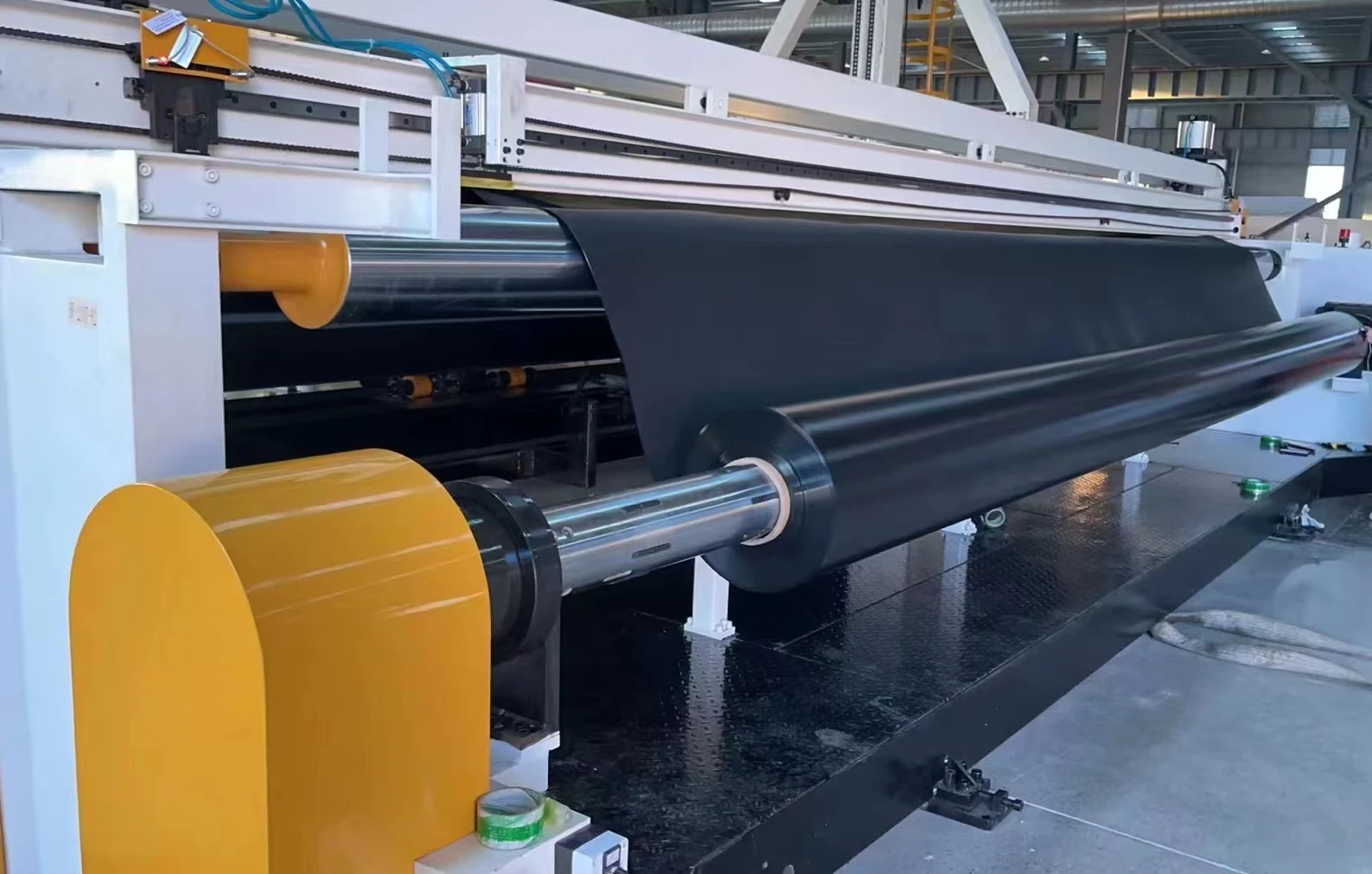
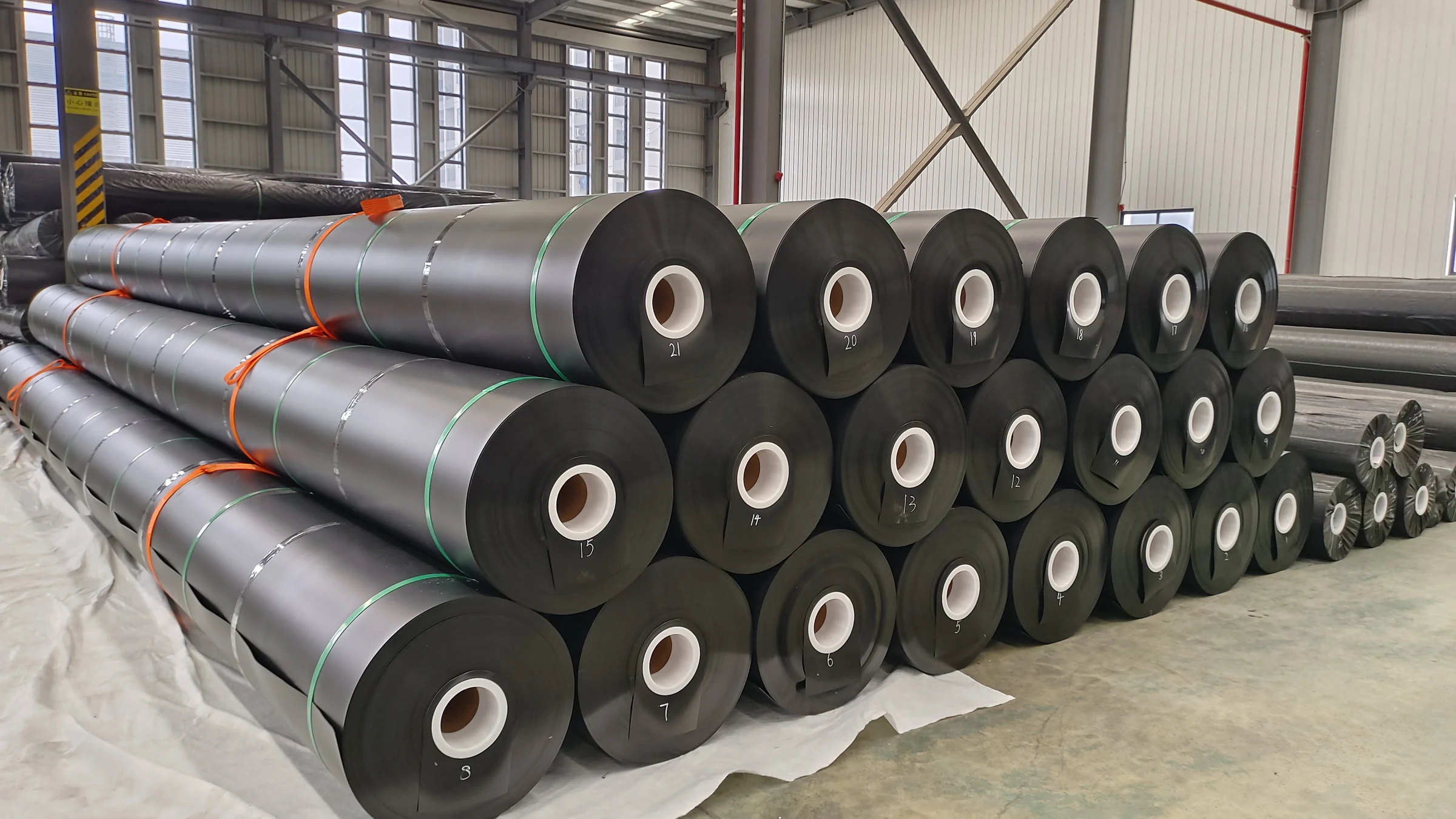
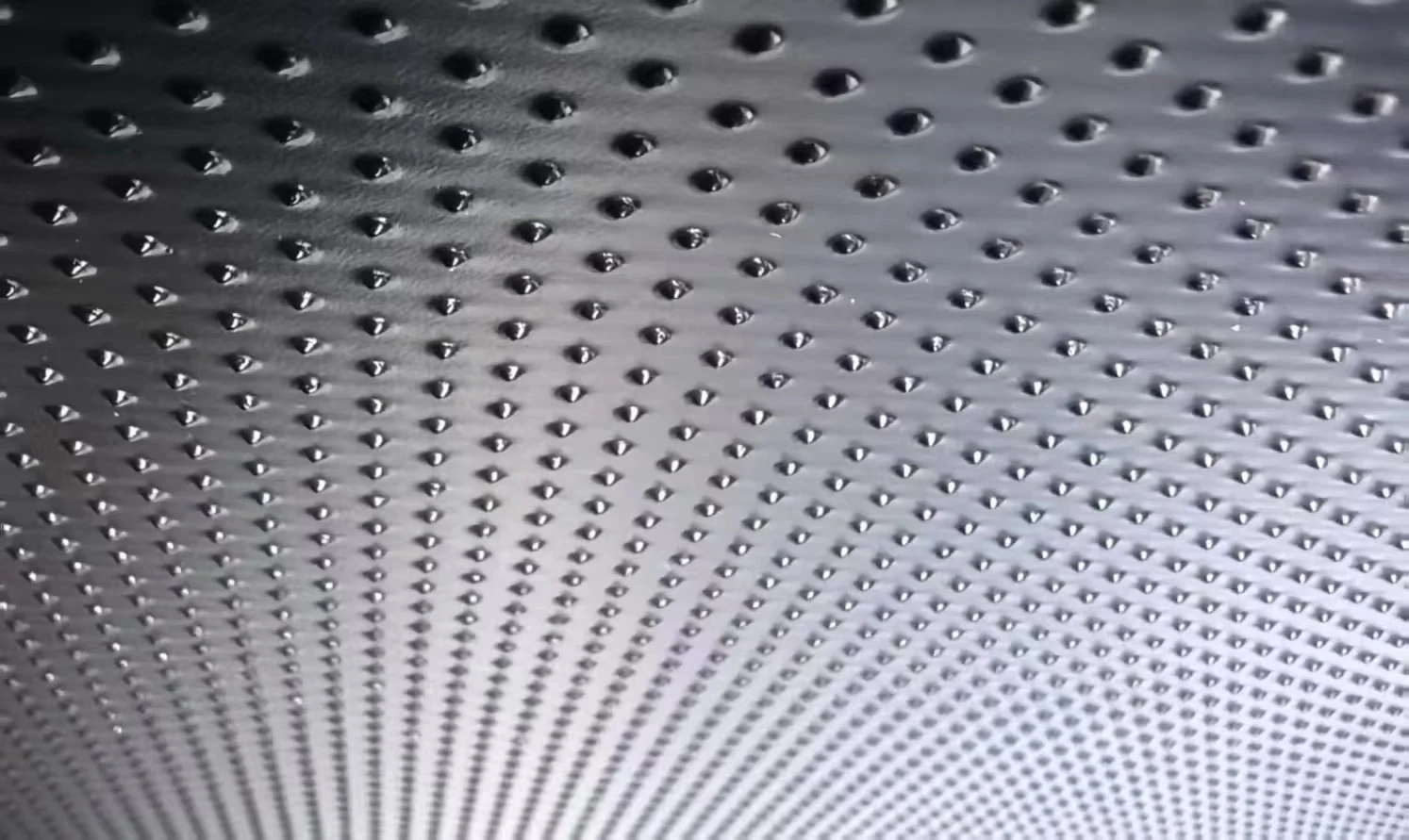
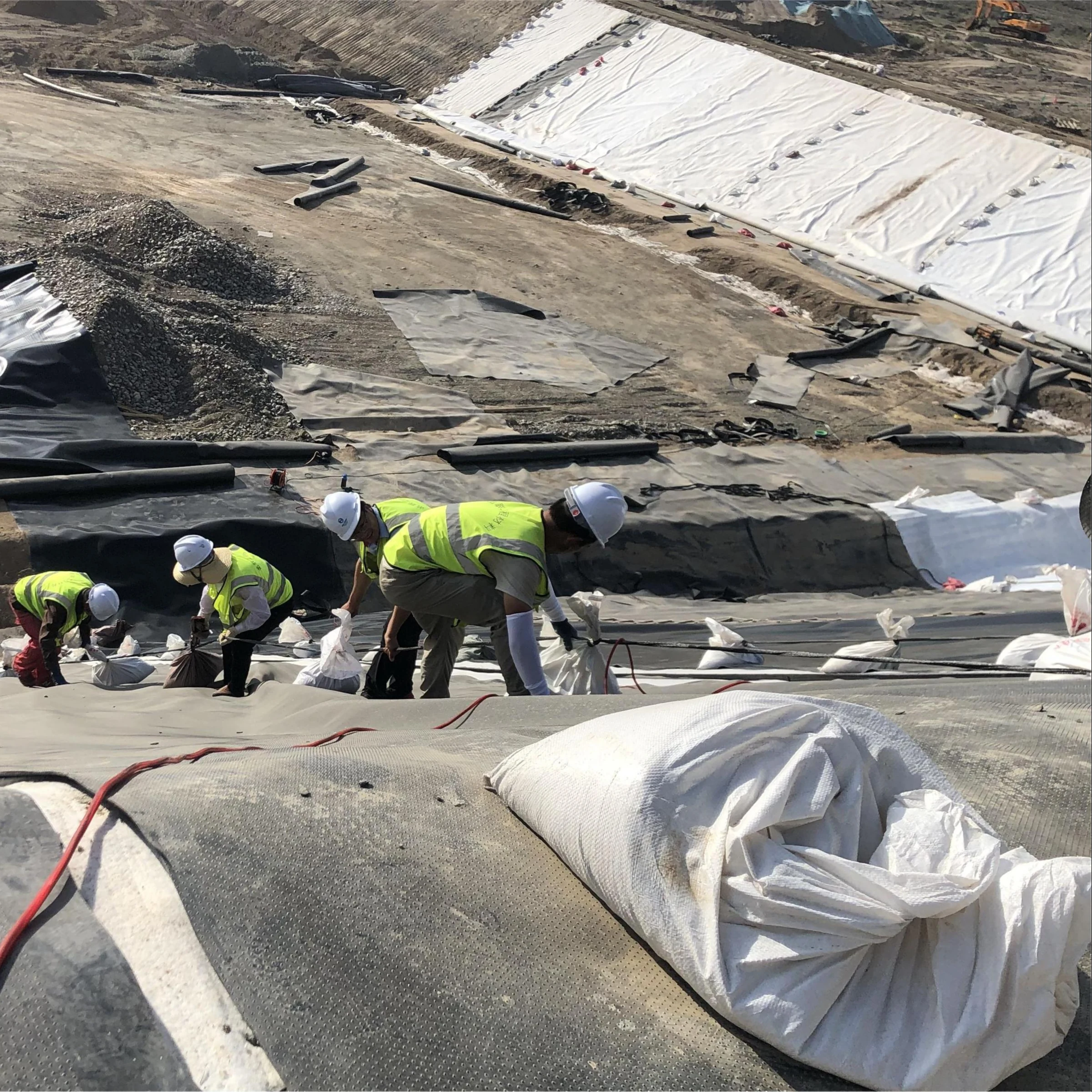
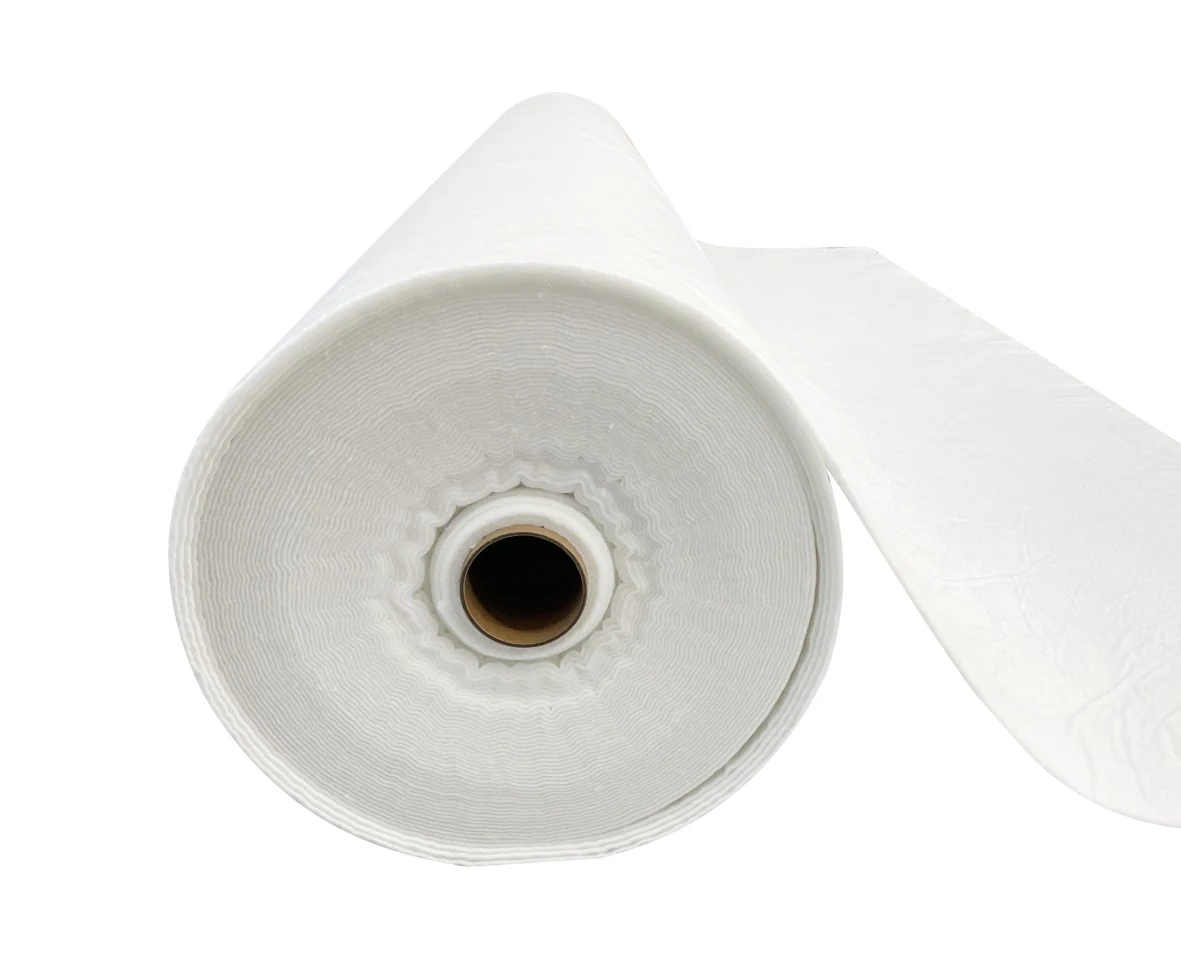

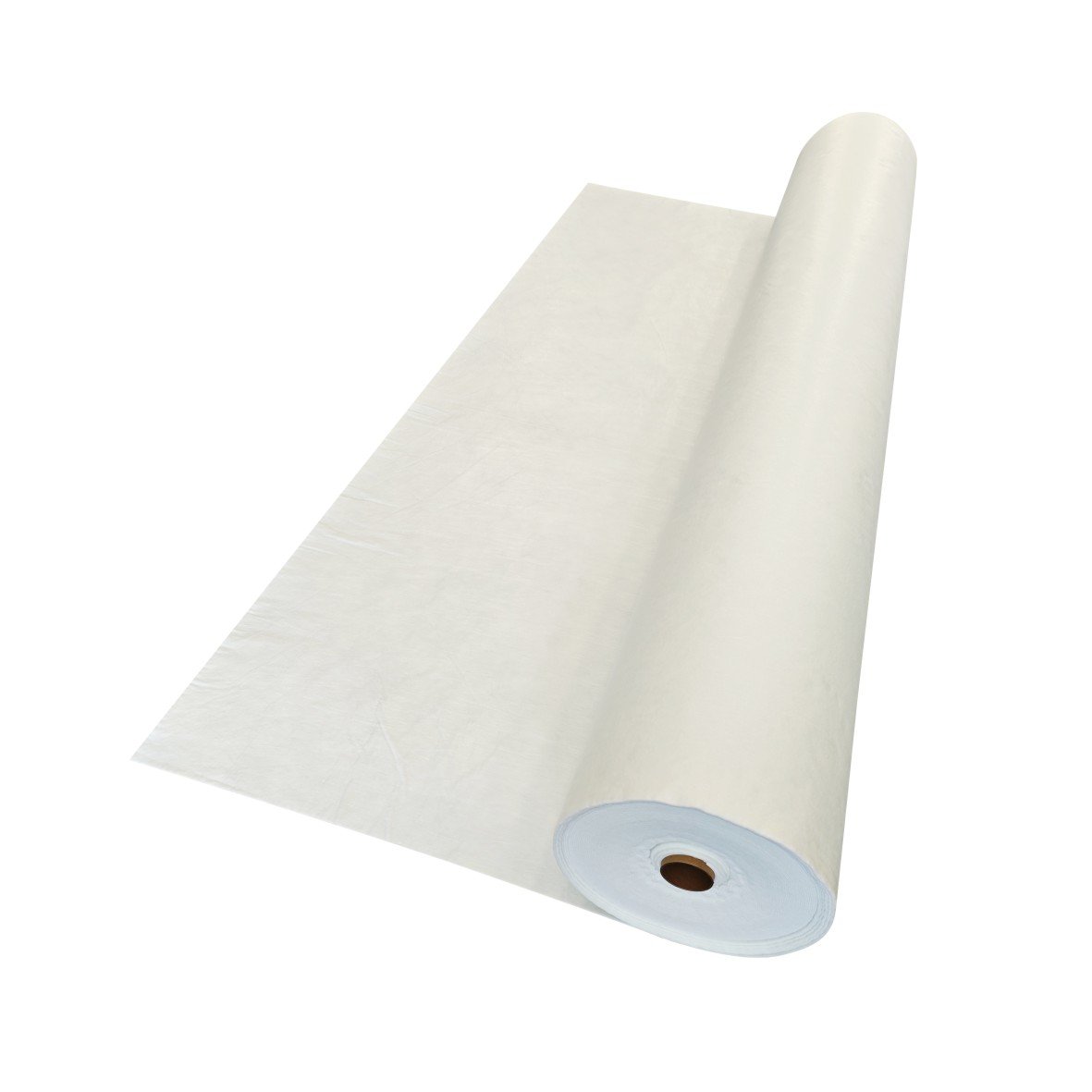
Nonwoven geotextile is a permeable textile used with soil, aggregate or other geosynthetics to provide filtration, separation, drainage or protection. Its fibers are bonded rather than woven into an ordered yarn pattern. Common products use polypropylene (PP) or polyester (PET), with short fibers or continuous filaments.
The right product is selected by its function and tested properties, not by weight or appearance alone. A 200 g/m² fabric does not automatically reduce settlement by 30%, and a heavier fabric does not guarantee better filtration. This guide explains the main types, practical uses, test results and selection limits.
Types of Nonwoven Geotextile
Needle-Punched, Heat-Bonded and Spunbond Products
These terms describe different aspects of production and are not always mutually exclusive. Needle punching mechanically entangles a fiber web. Thermal bonding joins fibers with heat. Spunbond describes forming a web from continuous filaments; that web still needs bonding and may be mechanically or thermally consolidated.
| Description | What it tells you | What still needs checking |
|---|---|---|
| Needle-punched | Fibers are mechanically entangled, often producing a relatively thick, conformable structure | Filtration compatibility, hydraulic performance, tensile and puncture results |
| Heat-bonded | Thermal bonding consolidates the web | Actual elongation, opening size and flow results; do not assume it is limited to landscaping |
| Continuous-filament / spunbond | Describes the filament web formation | Bonding method and finished properties; not automatically unsuitable for primary filtration |
| Composite product | Combines components for different functions | Which layer filters, drains, protects or provides a barrier, plus interface performance |
Manufacturing labels alone do not establish an allowable load, opening size or service life. Ask for the finished product data sheet. A geotextile bonded to a drainage core is different from a geotextile laminated to a membrane: the first can collect water, while the second may provide a barrier through its membrane component.
PP and PET: Choose for the Actual Environment
Both PP and PET are used in engineering geotextiles. Polymer type affects durability and mechanical behavior, but so do formulation, fiber structure, manufacturing and exposure. PP is not the only possible polymer for landfill geotextiles, and PET is not automatically unsuitable for every drainage project.
Relevant degradation mechanisms include oxidation for polyolefins and hydrolysis for polyester. The FHWA research on oxidation and hydrolysis testing addresses these mechanisms. Evaluate chemical composition, pH, temperature, exposure duration and the specific product’s evidence together. A broad pH claim or low water absorption does not prove unlimited durability.
Where reinforcement is required, use long-term tensile performance and appropriate reduction factors. Do not assign every PET product 40–60% of its ultimate strength or every PP product 20–30% as a universal allowable value. Short-term breaking strength is not the long-term design strength.
What Is Nonwoven Geotextile Used For?
Subsurface Drainage and Filtration
A geotextile filter can separate surrounding soil from drainage aggregate or another drainage medium, allowing water to cross while limiting soil migration. It needs to satisfy soil retention, water-flow and clogging-resistance requirements together. Choosing the smallest available opening is not always safest: an unsuitable tight filter can blind or clog, while an unsuitable open filter can lose soil.
Use the soil gradation, fines and plasticity, hydraulic conditions and installation details. The FHWA pavement drainage guidance discusses filter selection and cautions about particular conditions, including precipitation-related clogging around recycled concrete. It is engineering background, not a substitute for the current project specification.
An AOS of 0.15–0.21 mm is therefore a possible product characteristic, not a universal answer for all silts, clays and sands. Likewise, wrapping every pipe or every aggregate layer in fabric is not automatically the correct drainage detail. The system also needs an outlet and a maintainable flow path.
Separation Beneath Roads and Gravel
Placed between subgrade and aggregate, a suitable fabric helps limit mixing and loss of aggregate into the soil. This can preserve the intended aggregate layer and support construction performance. It does not eliminate the need to determine aggregate thickness, subgrade strength, drainage and traffic loading.
Do not drive construction vehicles directly on unprotected fabric. The FHWA stabilization discussion describes design by function and installation survivability. A fabric laid over a swamp or peat is not, by itself, a safe working platform for heavy equipment. Construction access needs an engineered platform and placement procedure.
Woven geotextiles and geogrids may be appropriate where reinforcement is important, but “woven” does not mean every product has poor permeability. Compare the actual hydraulic and mechanical characteristics. Any claimed aggregate saving or settlement reduction needs a defined design comparison or measured project evidence.
Geomembrane Protection and Landfill Systems
Nonwoven geotextile can cushion a geomembrane against local contact stresses. The required protection depends on the aggregate shape and size, contact pressure, membrane, support conditions and placement method. A table assigning one fabric weight to every landfill of a particular depth is not sufficient.
GRI-GT12(a) concerns nonwoven protection or cushioning materials and their properties. It is not a universal landfill-depth-to-fabric-weight design chart. Use system-specific protection assessment where required. CBR puncture resistance is useful for comparison and quality control, but does not directly prove the membrane will remain undamaged beneath actual angular aggregate.
In a drainage composite, the textile often serves as the filter while the core carries in-plane flow. Ordinary fabric should not be assumed to replace a designed leachate drainage layer or gas venting system. Liquid transmissivity alone also does not establish gas-flow capacity or the adequacy of a landfill gas collection design.
Riprap and Erosion-Control Systems
Under riprap or suitable erosion-control systems, a geotextile can help retain soil while permitting drainage. Selection must account for hydraulic reversals, soil retention, puncture damage and construction placement. Anchorage and terminations prevent water from bypassing the filter, but dimensions depend on the structure and site.
Do not apply a universal 1 m anchor trench, 0.6 m overlap or fixed pin density to every riverbank. Underwater placement, difficult foundations and high installation stresses may require different details or sewn joints. Seams need a specified test method and acceptance value; “90% of fabric strength” is not a universal rule.
Understand the Numbers on a Data Sheet
Weight: GSM and Ounces per Square Yard
Mass per unit area helps identify a grade and estimate material weight, but does not define all engineering properties. 1 oz/yd² is approximately 33.906 g/m². The following are unit conversions, not application recommendations:
| Nominal weight | Approximate metric equivalent |
|---|---|
| 4 oz/yd² | 136 g/m² |
| 8 oz/yd² | 271 g/m² |
| 10 oz/yd² | 339 g/m² |
| 12 oz/yd² | 407 g/m² |
| 16 oz/yd² | 543 g/m² |
| 24–32 oz/yd² | 814–1,085 g/m² |
For example, a 4 m × 100 m roll at a nominal 400 g/m² contains approximately 160 kg of fabric before core and packaging. Verify delivered roll dimensions and measured mass; this calculation does not establish compliance with tensile or filtration requirements. See the GSM selection guide for more weight comparisons.
Permittivity, Permeability and Transmissivity Are Different
| Property | Typical units | What it describes |
|---|---|---|
| Permittivity, ψ | s⁻¹ | Water flow normal to the fabric, accounting for head difference |
| Hydraulic conductivity, k | m/s or cm/s | Permeability coefficient; thickness is needed when relating it to permittivity |
| Transmissivity, θ | m²/s | Flow within the plane under stated loading and boundary conditions |
| AOS | mm or sieve designation | A measured opening-size characteristic used with soil data for filtration selection |
ASTM D4491/D4491M addresses permittivity. Under the applicable test relationship, k = ψ × thickness. An illustrative ψ of 1.0 s⁻¹ and nominal thickness of 2.0 mm gives k = 0.002 m/s, or 0.2 cm/s. Reporting “permittivity = 0.1 cm/s” mixes two different quantities.
For an illustrative 10 mm head difference, ψ = 1.0 s⁻¹ corresponds to an isolated-fabric flux of 0.01 m/s, equivalent to 10 L/s per m² under that relationship. This is not a field drain’s guaranteed capacity: soil, contact, confinement, clogging and outlet conditions can control system flow.
ASTM D4716/D4716M concerns in-plane flow and transmissivity. Compare results at the relevant normal stress, hydraulic gradient and contact surfaces. A free specimen’s capacity cannot simply be assigned to the same fabric compressed beneath a structure.
AOS and Soil Retention
ASTM D4751 describes measuring apparent opening size. It is a test-based opening characteristic, not a guarantee that no soil particle will pass. Stable filtration can involve initial particle movement; excessive soil loss and clogging both need evaluation.
For difficult or critical filtration conditions, consider soil–geotextile compatibility testing. ASTM D5101 addresses this compatibility. A gradient ratio result is evidence about the tested soil–fabric system and conditions; it does not, by itself, prove immunity to biological or chemical clogging over decades.
Strength Results Must Include the Test Method
Grab tensile force, wide-width tensile strength, tear resistance and puncture resistance are different measurements. They cannot be interchanged merely because the numbers appear in one data sheet. Specify direction, method, units and whether a value is typical, minimum, minimum average roll value (MARV), or a result from an identified sample.
For a traceable example, TRI report SCH22214, dated 9 December 2022, identifies a 400 g/m² PET sample submitted for Jinseed. It reports average mass of 410.7 g/m², grab tensile results of 2,052 N MD and 2,069 N TD, and wide-width tensile results of 27 and 26 kN/m. These results describe that sample; they are not a guarantee for every current production lot or proof of a completed construction project.
If a contract invokes AASHTO M288, use the stated edition, application and applicable elongation category. Do not mix lower-elongation and higher-elongation strength columns or substitute an old puncture method for a newer one. M288 is not a blanket certification covering every geotextile use.
Benefits and Durability: What Can Be Claimed?
The practical benefits are separation of layers, controlled filtration, protection of adjacent materials and, where designed, drainage or reinforcement contributions. Their magnitude depends on the system. Claims of 20% higher bearing capacity, 30–40% aggregate savings or a fixed 50–100 year life require supporting project or product evidence.
UV Resistance Is Not a Calendar Conversion
ASTM D4355/D4355M evaluates deterioration under xenon-arc exposure, moisture and heat. A result such as retained strength after 500 hours must state the measured retention and test conditions. It cannot automatically be converted into 14–30 days outdoors or 15 years in service. Protect stored rolls and cover installed material within the product and project exposure limits.
Color does not establish UV performance. Stabilizer packages differ, and every white or black geotextile does not require the same carbon-black percentage. Obtain the actual test evidence and permitted exposure period.
Chemical Compatibility and Clogging
EPA Method 9090A is described by EPA for evaluating chemical effects on flexible membrane liner materials. It should not be presented as a universal “EPA approval” of every geotextile with less than 20% strength loss. A geotextile compatibility program must address its material, function, liquid and exposure conditions, using agreed methods and criteria.
Nonwoven structure does not make clogging impossible. Soil particles, precipitates, biological growth and roots can affect drainage. Similarly, resistance to biological decay does not prevent physical damage by roots, animals or construction equipment. Design access, protection and maintenance for the actual installation.
Selection and Procurement Checklist
- Define the function: filtration, separation, cushioning, drainage or reinforcement.
- Describe the site: soil gradation, water conditions, loading, chemicals and exposure.
- Specify measured properties: methods, units, acceptance limits and statistical basis.
- Confirm installation: subgrade preparation, joints, cover placement, repairs and inspection.
- Check traceability: polymer, grade, roll IDs, production records and relevant test reports.
Jinseed’s PET nonwoven geotextile product page provides a starting point for discussing an order. Send the project function and specification with the requested quantity so the proposed grade can be compared against the requirements.
Frequently Asked Questions
Is nonwoven geotextile waterproof?
No. Ordinary nonwoven geotextile allows water to pass. A geomembrane provides a barrier; the two can be combined when both barrier and protection or filtration functions are required.
Is thicker fabric always better?
No. Greater thickness or mass may help some protection applications, but filtration, flow under load and installation survivability still need appropriate testing. Select the required performance, not the largest GSM number.
Can landscaping fabric replace an engineering geotextile?
Only if the particular product meets the specified function and documented requirements. A retail label or visual resemblance does not establish compliance for road, drainage, coastal or containment work.