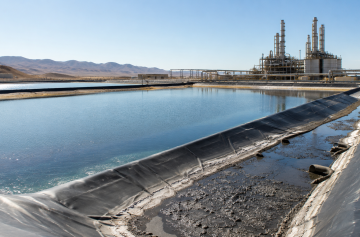
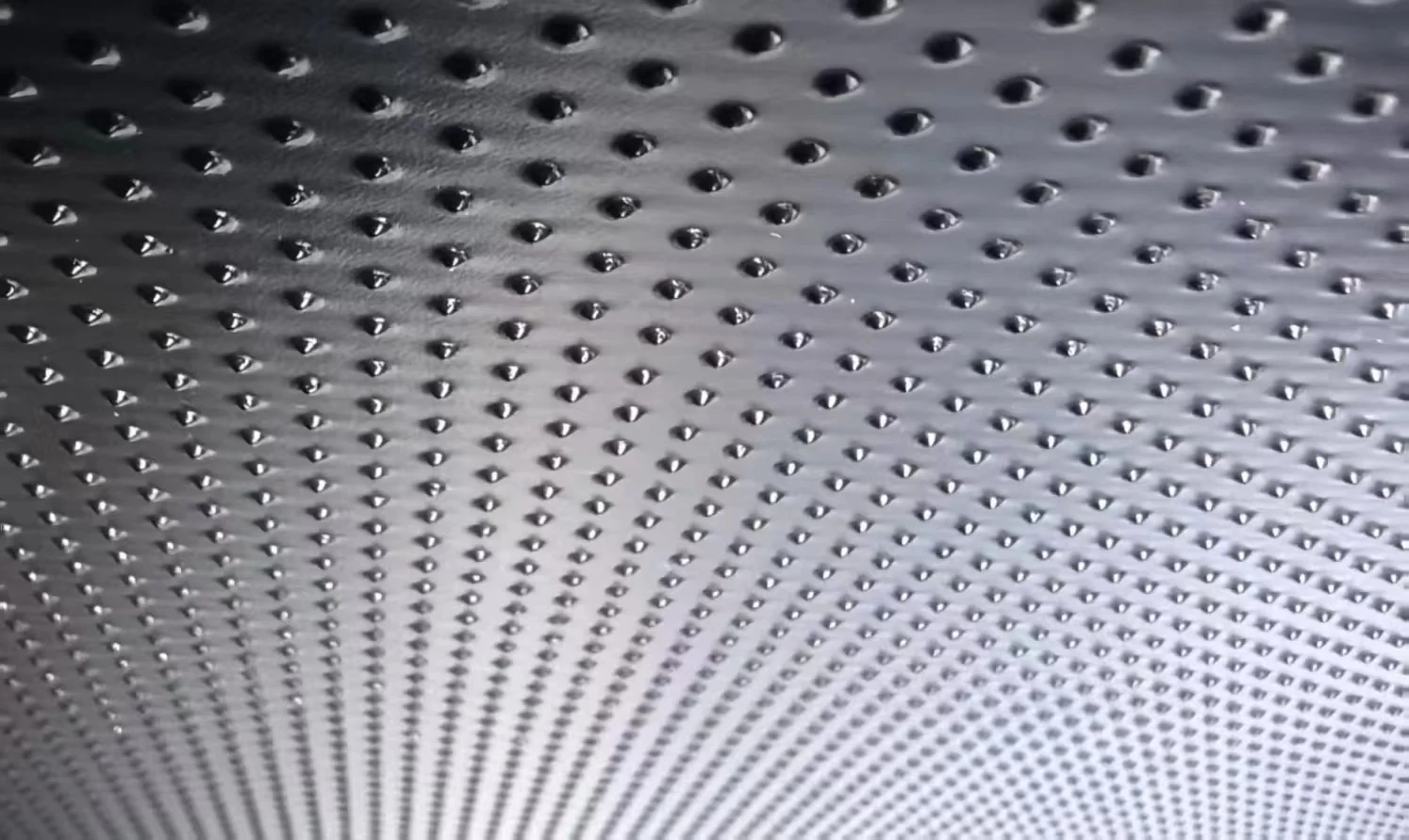
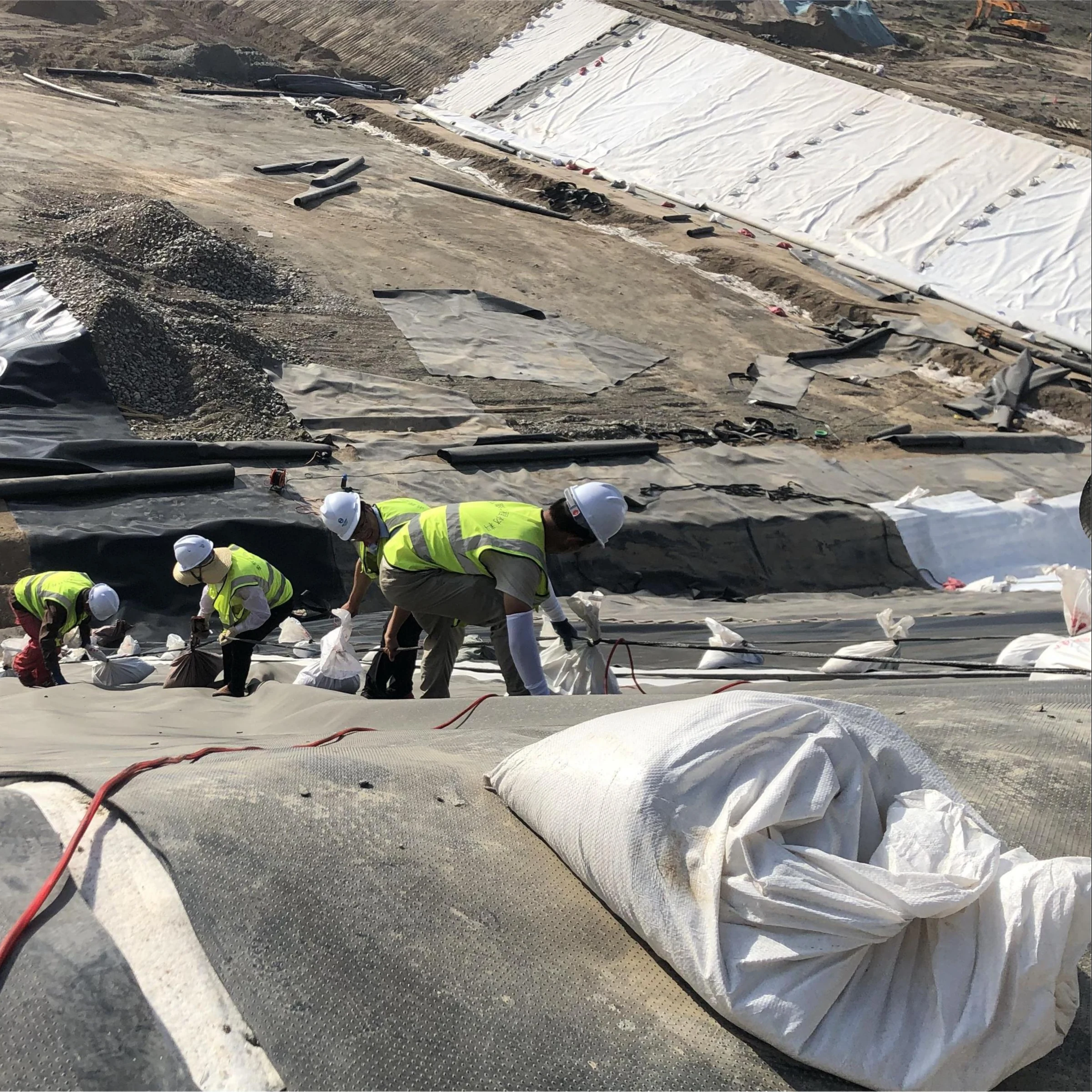
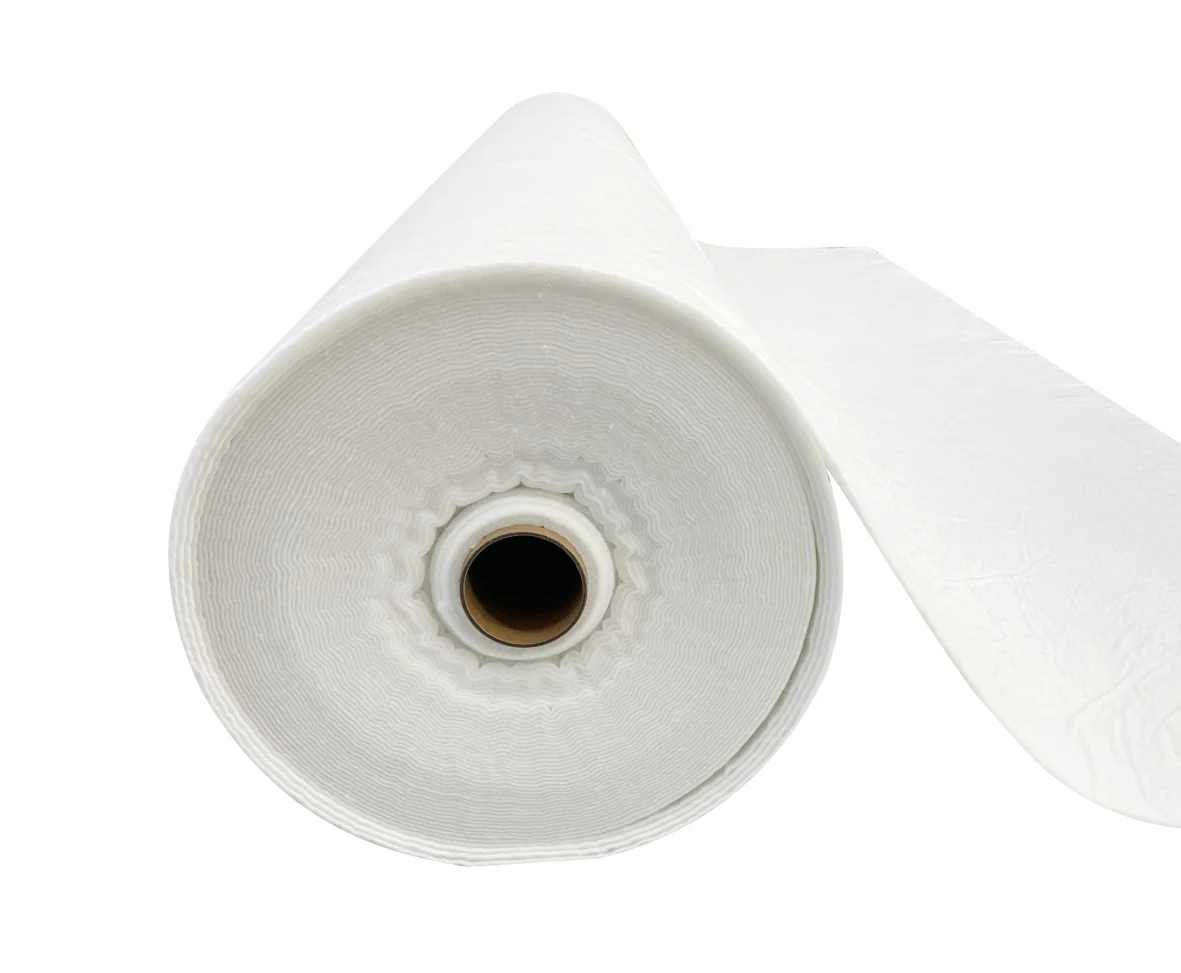

Geomembrane thickness is usually measured in mil (1 mil = 0.0254mm) or mm. Generally, a 30-40 mil (0.76-1.02mm) thick membrane is selected for clay layers, and 20-30 mil (0.51-0.76mm) for sandy soil layers. For high loads or special applications (such as landfills), the membrane thickness can reach 60-100 mil (1.52-2.54mm).
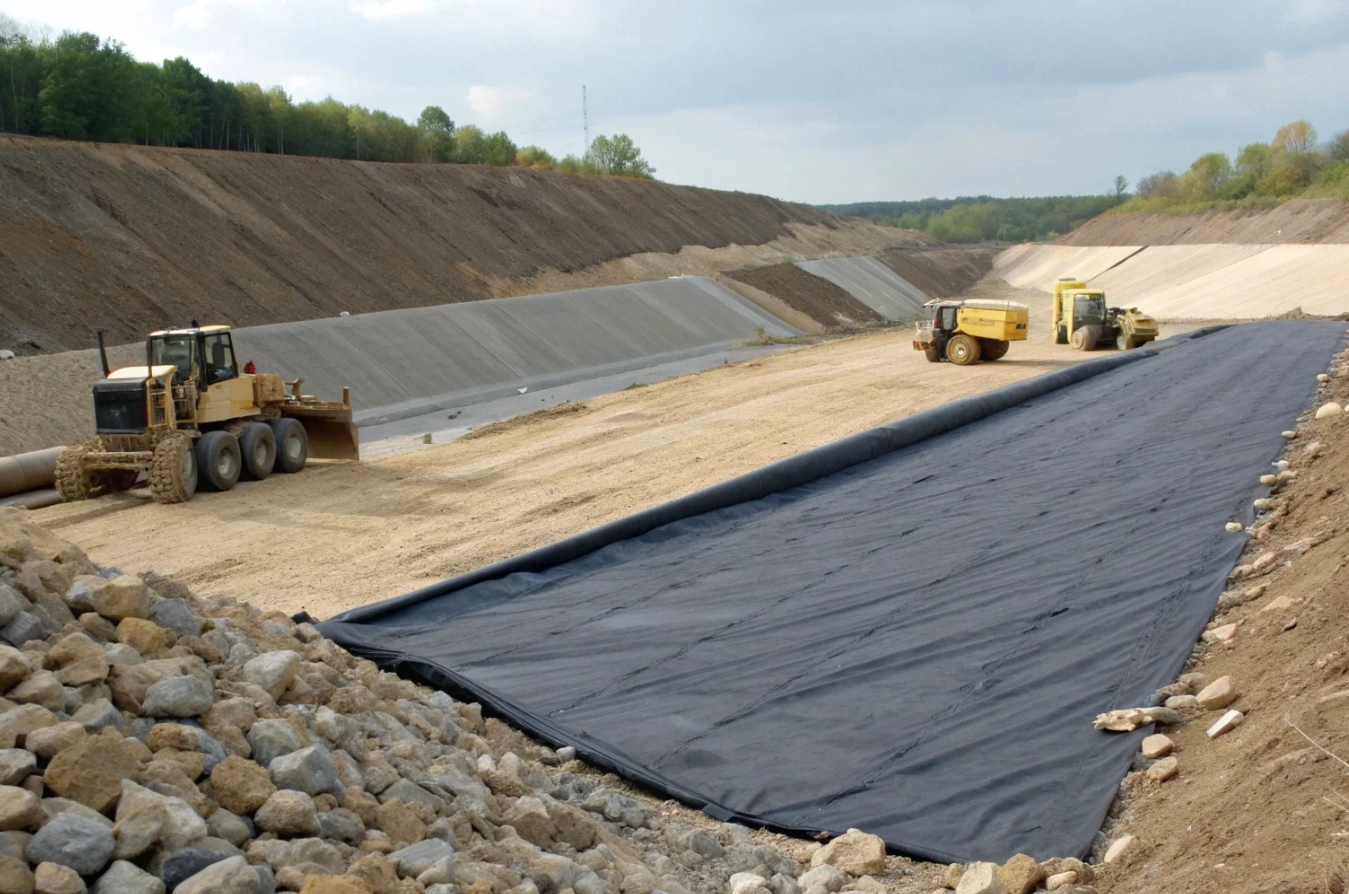
Mil vs. mm
“Mil” is not an abbreviation for millimeter
The drawing says “40 Mil”, and the purchaser takes the bill of materials to the manufacturer to pick up the goods. In his mind, the expected thickness is 40 mm, equivalent to the height of two thick dictionaries stacked together. When he reaches the warehouse, what the manufacturer’s forklift brings over are rolls of flexible thin film.
1 Mil is an industrial measurement standard retained in North America, representing one-thousandth of an inch. An engineer uses a vernier caliper to clamp a test sample, and the reading displayed on the electronic screen is 0.0254 mm. According to this scale conversion, when 40 units are stacked together, the thickness is only 1.016 mm.
Mistaking the letter abbreviation leads to a completely different physical object. Making a comparison with items in daily life:
- 1 Mil (0.025 mm): Transparent tear-off bags in the supermarket fresh produce area
- 40 Mils (1.0 mm): The anti-slip flat layer at the bottom of a car floor mat
- 100 Mils (2.5 mm): The inner tube sidewall of a heavy-duty truck tire
Writing the unit direction wrong on the drawing parameters will trigger another extreme situation. Workers need to lay an groundwater isolation layer on sandy ground, and the sheet writes 1.5 mm as 1.5 Mil. The thickness of the material unloaded from the truck is only 0.038 mm; encountering a gust of 8 meters per second, the film will tear into pieces within a few seconds.
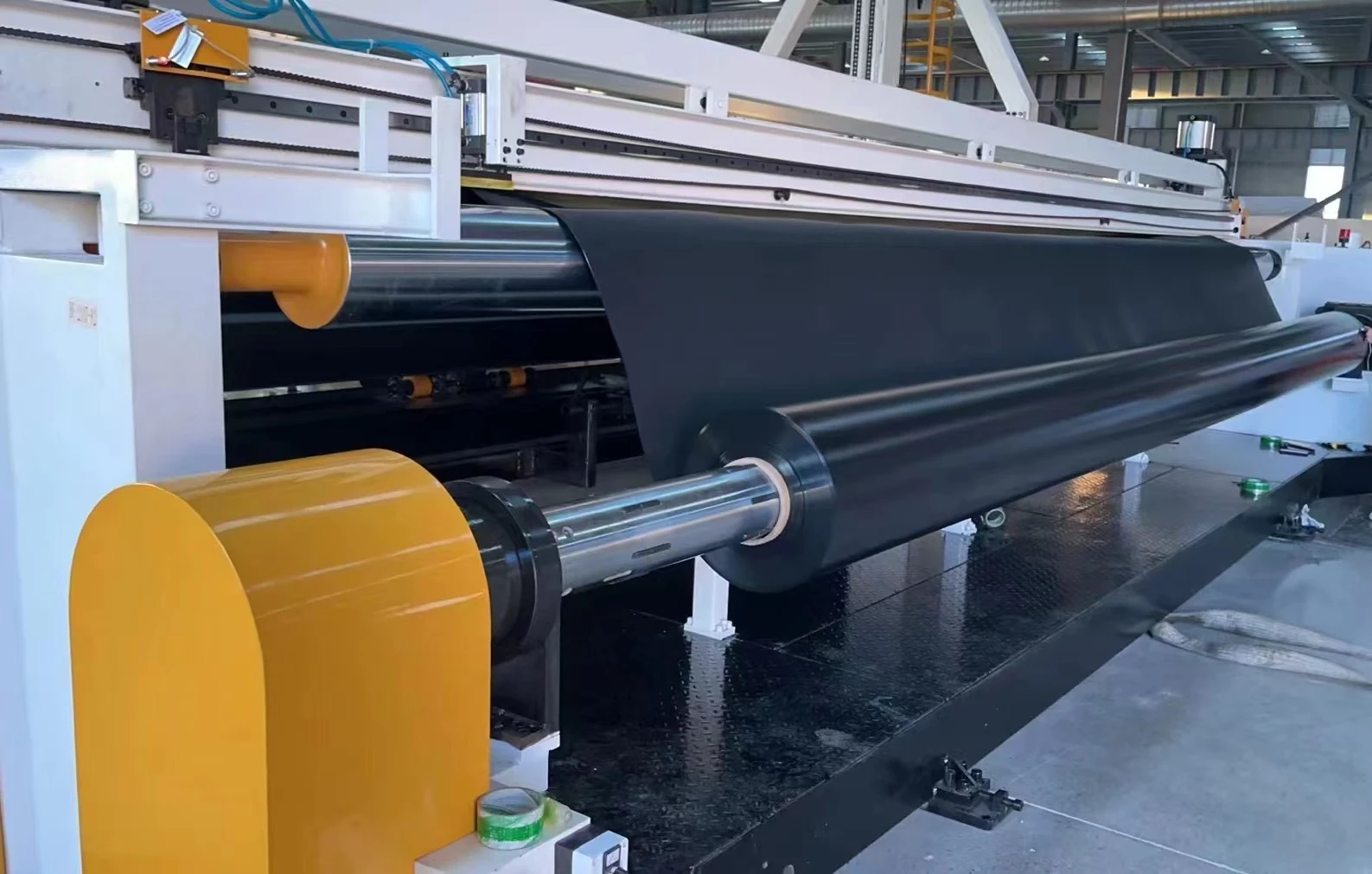
The extruder die head spits out polyethylene melt at 220 degrees Celsius, and the processing error set by modern factories is within plus or minus 10%. Ordering 40 Mil as 40 mm amplifies the resulting error by 1500 times.
The actions of an on-site material clerk checking the goods label:
- Check the Imperial value on the outer packaging label (e.g., 60 Mils)
- Enter the value on a calculator and multiply by 0.0254
- Check the Metric conversion result on the screen (1.524 mm)
- Take a thickness gauge with 0.001 mm precision for on-site measurement
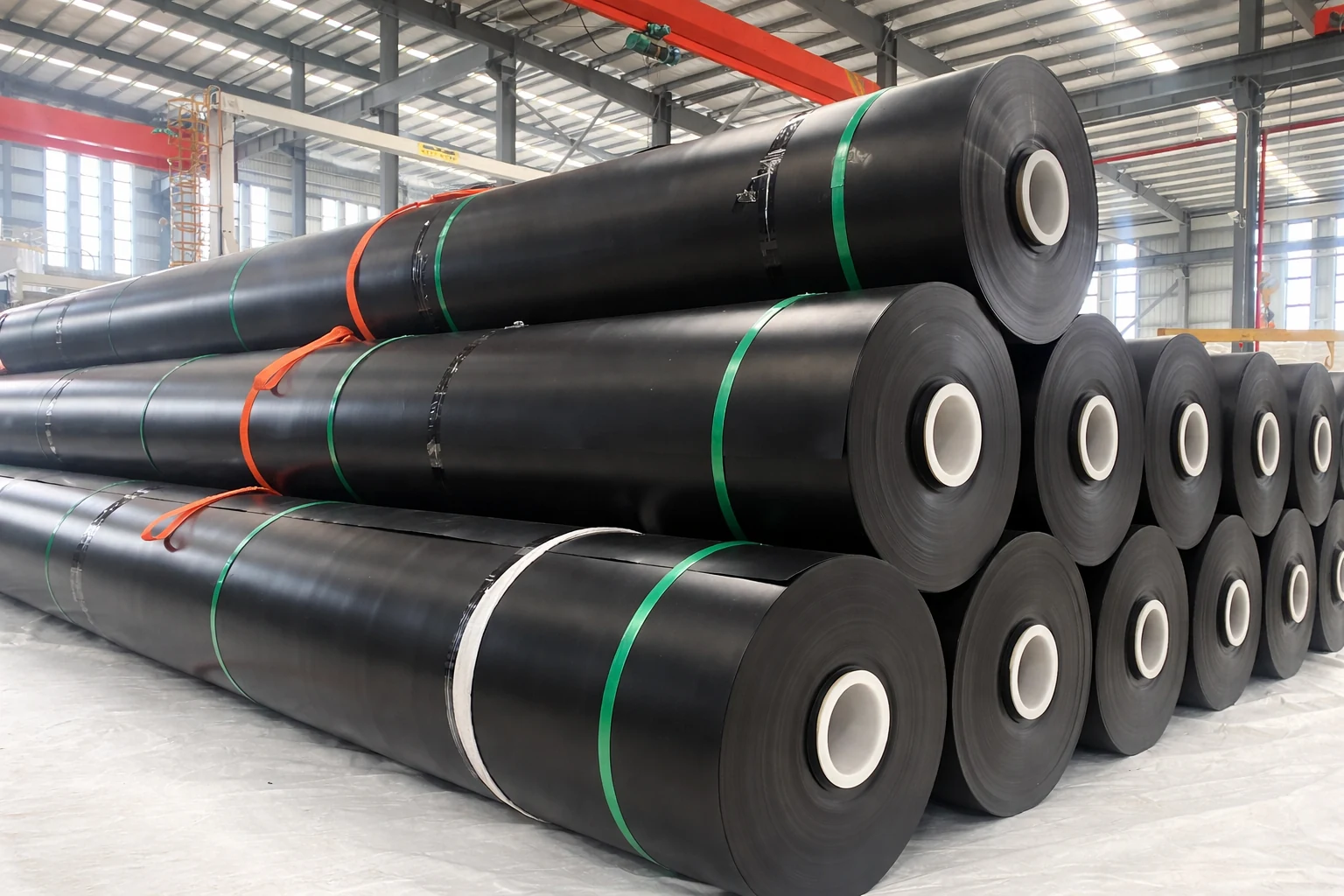
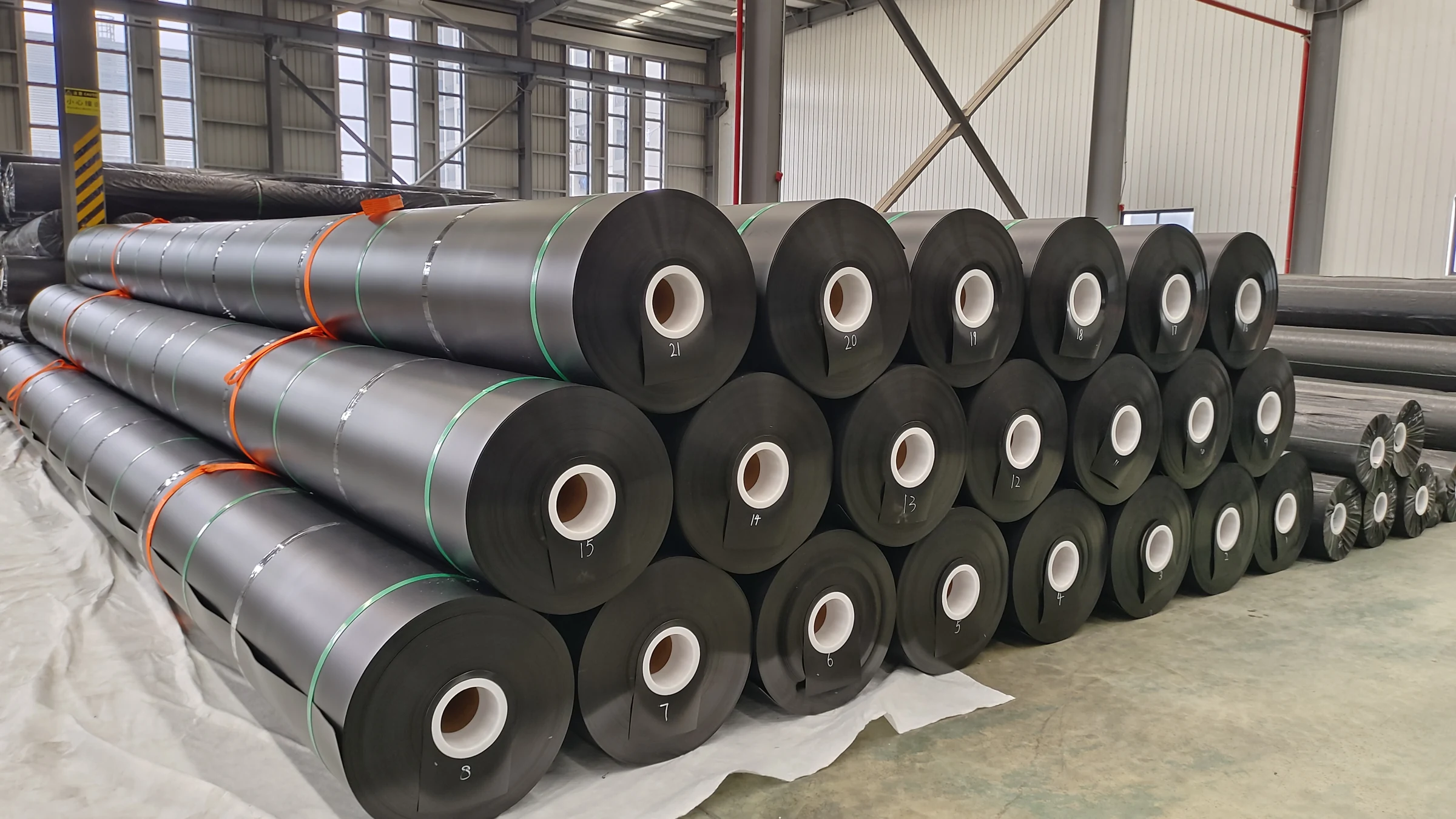
True 40 mm polyethylene rigid sheets must be transported flat in single sheets, with a weight per square meter reaching 38.5 kg. 40 Mils flexible impermeable membrane is wound on paper tubes up to 6 meters long, with a single roll weight of about 1.2 tons; one roll unfolded can cover 1000 square meters of land.
Industry Conversion
How Imperial parameters on North American drawings are used on the construction site relies entirely on the numbers tapped out on a calculator. Dividing 1 by 39.37, the screen jumps to 0.0254 mm. When engineering personnel get the drawing, they multiply the marked Mil number by 0.0254 to obtain the true millimeter width that the vernier caliper should catch.
Mathematics can clearly calculate that 1 mm aligns with 39.3701 Mils, but this cannot be handled so finely in a noisy plastic workshop of a factory. The production line sets integer rules; if the impermeable membrane drawing is marked 1.0 mm, the outer packaging and delivery notes are all printed as 40 Mils.
According to the rounding method, 1.5 mm membrane is not called 59.055 Mils, but is uniformly printed as 60 Mils. In the draft of the North American Geosynthetic Institute GRI-GM13 white paper, this set of integer correspondence tables is recorded in black and white.
The workshop thickness scanner scans the membrane surface every 2 seconds, using weak rays to penetrate the plastic. The computer screen constantly jumps with wavy lines of 41 Mils and 39 Mils; the operator turns bolts on the machine to force the data back to the 40 Mils baseline.
Plastic rolls of inconsistent thickness are stored in the warehouse; the weight and feel are two completely different things.
| Imperial Thickness | Metric Specification | Weight per Square Meter | Single Roll Length | Physical Touch and Sharp Object Resistance Performance |
|---|---|---|---|---|
| 20 Mils | 0.50 mm | 0.47 kg | 300 m | Like thickened waterproof rain cloth, can be folded casually with one hand, can withstand 50 Newtons of puncture force. |
| 30 Mils | 0.75 mm | 0.71 kg | 250 m | Feels like hard leather, will not break when pulled hard with both hands, can carry 240 Newtons of blunt instrument heavy pressure. |
| 40 Mils | 1.00 mm | 0.94 kg | 210 m | The industry bottom line, like a thin flexible plastic backing board, anti-puncture limit calibrated at 320 Newtons. |
| 60 Mils | 1.50 mm | 1.41 kg | 140 m | Completely impossible to fold by hand, must be moved by machine, can withstand 480 Newtons of external force before pulling apart. |
| 80 Mils | 2.00 mm | 1.88 kg | 105 m | Extremely heavy and hard like a tire inner wall, remains intact when squeezed with 640 Newtons of sharp stones. |
The weight per square meter figures in the table govern how much cargo a truck can load. An 18-wheel heavy truck with a trailer has its maximum load locked at 22 tons. Loading 20 Mils thin material, the carriage can be filled with 45,000 square meters.
Changing to 60 Mils heavy-duty bottom membrane, a single roll’s weight soars to 1.3 tons. The truck chassis is pressed to its limit; one trip can at most load 15,000 square meters of material. When the thickness doubles, the coverage area carried away in a single trip is pitifully small.
The true operational feeling of a warehouse forklift driver moving these black materials:
- A 20 Mils roll material diameter is only 60 cm, two workers can carry it away by inserting an iron bar.
- When 40 Mils material is unfolded, find a light crawler tractor to pull the corners.
- An 80 Mils giant roll material’s dead weight is nearly 2 tons, heavy machines with hydraulic crane arms must be used.
- 100 Mils frozen through is like a steel plate, it cannot unfold at minus 5 degrees Celsius, use a heat gun to soften it.
When measuring these thicknesses with instruments in a laboratory, the error numbers jumping up and down are very noticeable. Testing with 40 Mils (1.0 mm) HDPE membrane, the minimum average number permitted by the ASTM D5199 test white paper is 0.90 mm.
Uniformly cutting 10 test points, adding them up and dividing by 10, the calculated number stops at 0.89 mm. This one-ton roll of material must have a red scrap strip attached. Even if the other 9 points measured over-thickness data of 1.05 mm, the entire roll is still discarded.
The requirements for hardware instruments for measuring thickness are extremely rigid in various documents:
- When a vernier caliper measuring head touches plastic at only a few square millimeters, pressing slightly hard creates a pit, and the reading is 0.05 mm less.
- For an ultrasonic thickness gauge to penetrate this high-density material, the sound wave speed must be adjusted to 2430 meters per second to be accurate.
- The disk base of an ASTM D5199 dead-weight thickness gauge is 200 square millimeters, firmly pressing flat the rough gaps.
- A laser scanner shoots a beam of light down, measuring the true physical thickness without touching the plastic surface.
Similar thicknesses mixed and laid on the ground will be exposed when a thermal fusion welding machine runs over them. A dual-track wedge welder at 380 degrees Celsius, facing two sheets of 60 Mils (1.5 mm) flat material, welds a good seam with a tensile force of 22 kN.
Putting a 60 Mils sheet and a 40 Mils membrane into the same roller. With a difference of 0.5 mm in thickness, the thinner layer is scorched and becomes brittle. Pumping 200 kPa of air into the dual tracks to test air pressure, in less than two minutes the dial pointer falls below the 180 kPa passing line.
Expert Advice
Sending emails to buy materials, writing only Arabic numerals is prone to major mistakes. Honestly write “40 Mils (1.0 mm)” on the purchase order, so the reviewer sitting in the office entering item codes into the computer system will not click the wrong mouse. Before loading containers, that row of dual-parameter numbers on the packaging label can save an entire ship of 150-meter-long HDPE membrane from being forcibly returned.
Once the machines in the factory workshop start, the extruded polyethylene melt reaches 225 degrees Celsius. The huge steel rollers used for cooling rotate at 35 meters per minute, and the resulting membrane thickness will have small fluctuations of a few microns. The industrial GRI-GM13 document in black and white allows roll materials to be 10% thinner than the specified value in individual places.
For membrane with 1.5 mm (60 Mils) on the drawing, if the machine probe presses down and measures 1.35 mm, it is compliant factory goods. Holding a vernier caliper and measuring 1.4 mm while clamoring for a return, the technical consultant sent by the manufacturer for after-sales will think you do not understand basic manufacturing common sense.
Adding a few lines of text in the appendix when finalizing a sales contract can reduce some trouble:
- Honestly type the Imperial thickness in the parameter column, such as 80 Mils
- Add a bracket next to it to supplement the Metric value 2.0 mm
- Paper agreement to deliver according to the error range allowed by GRI-GM13
- The delivery note comes with a data sheet of 10 points measured by factory machines
When receiving goods at a North American construction site, never trust naked eye vision. Two sheets of black plastic, 1.0 mm and 0.75 mm (30 Mils), laid flat on wasteland; the human eye cannot see that subtle difference of 0.25 mm. In the aluminum alloy suitcase carried by a North American supervision engineer, there is a dead-weight thickness gauge weighing 4.5 kg.
The force of the small disk probe pressing down is always fixed at 0.2 kPa. Spreading the black plastic flat on a heavy metal disk, the probe drops for two seconds, and an accurate reading to 0.001 mm jumps on the screen. At a place 15 cm from the edges of the roll material, the measured number is 2 Mils thinner than the exact center of the roll material.
Encountering defective roll materials with insufficient thickness, the only way is to load the truck and pull them back to the original factory to melt and remake them. When the thickness secretly shrinks by 15%, the ultimate tensile force at which the material is pulled apart drops from 15 kN per meter to 11 kN. When a dump truck fully loaded with 15 tons of crushed stone drives on it, the moment the wheels turn, the film will completely split open.
Taking a sharp paper cutter to cut plastic samples next to a truck that has just unloaded:
- Cut a long strip across the entire 1.5-meter-wide plastic film roll
- Throw the 15 cm edge waste from both ends into the trash can next to it
- Draw test circles with a white marker every 15 cm along the strip
- Record the test values produced by the instrument to calculate the average for this plastic strip
Soil Conditions
Compaction
A 25-ton roller drives back and forth on the mud ground 6 to 8 times. On-site workers use a nuclear density gauge to measure dry density every 500 square meters. The water error in the soil is strictly locked within a red line of ± 2%. The soil is compressed very solidly, and the reading on the instrument is infinitely close to the 95% passing line required by the test.
Some underground soil layers themselves are very soft; when a large excavator drives over, crawler tracks 15 cm deep are directly imprinted on the ground. A reservoir is filled with 10 meters deep water, and the bottom bears 98 kPa of heavy pressure per square meter. Originally loose mud particles are squeezed away by huge force, and the moisture in internal pores is forced out.
Over a few weeks, the ground in soft soil areas sinks by 50 mm to 150 mm. The nearby hard stone foundation has not moved a single millimeter. A drop of tens of millimeters tears open miniature gullies underground.
Tens of tons of water pressure firmly press the geomembrane laid on top into the sinking holes. The flat impermeable layer is pulled long, and violent friction and sliding occur within the material’s polymers. Measuring instruments show that the local stretch amplitude soared from 0% to 12% within a few hours.
Underground soil conditions completely dominate the degree of ground collapse:
- Saturated silty sand: Large pores, settlement takes several months, large collapse amount.
- Peat soil: Contains 20% organic matter, very easy to crush down more than 300 mm.
- Backfill slag: Stones are of varying sizes, random voids of 50 to 100 mm appear underground.
- Expansive clay: Volume increases by 5% after absorbing water, making the surface bumpy.
Facing invisible pulling, the thickness of the impermeable layer becomes a pure physical defense line. 1.5 mm (60 mil) thick HDPE membrane can withstand 22 kN of tensile force per meter. Changing to a 1.0 mm (40 mil) specification, the bearing capacity stays at 15 kN. With 0.5 mm more, the tensile protection force is improved by nearly 46%.
After the HDPE material is stretched by 12%, it becomes white and thin like chewed chewing gum. Local thickness is not even half of the original. The originally 1.5 mm thick membrane has only 0.75 mm left in the weakest area that was over-stretched.
Encountering foundations with too many potholes, LLDPE (Linear Low-Density Polyethylene) membrane will be used instead on the drawings. There is no obvious yield point in the material molecules, and the elongation at break in factory tests exceeds 800%. When the material is stretched 30% in a 3D pothole, it still maintains a complete impermeable surface.
Measured performance of high-elongation soft membrane when dealing with severe collapse:
- 10% stretching: The membrane body thickness becomes uniformly thin, without dead corners where local whitening or fast breaking occurs.
- 3D fitting: Perfectly wraps deep underground pits with a diameter of 200 mm and a depth of 100 mm.
- Extreme softness: In an environment stretched by 2%, the hardness value is only one-third of HDPE.
- Puncture tolerance: When pushed up by sharp underground stones, it stretches to 3 times its original length.
Surface Roughness
A construction site technician grabs a handful of soil from the ground. After sieving, a large amount of crushed stone with a diameter exceeding 4.75 mm is found. According to testing rules, once stones in the soil exceed 30%, the threat to the geomembrane is huge. Hard crushed stone sharp corners stand upwards, like inverted daggers.
Waste pits will have 15 meters high slag stacked up after a few months. For every meter stacked above, the heavy pressure below increases by about 18 kPa. 270 kPa of dead weight firmly presses the plastic membrane onto the stones below. Originally dispersed weight is gathered by the stone tips, exploding with thousands of kPa of local destructive force at several points.
The membrane padded underneath is severely squeezed and deformed under high pressure. The laboratory used specialized machines to replicate the process of being punctured. A steel rod with a diameter of 8 mm was pushed hard against the membrane at a speed of 300 mm per minute. 1.0 mm thick ordinary membrane, after resisting 320 Newtons of force, had a large hole poked in it on the spot.
Crushed stones just pulled from a quarry have very sharp edges. A bulldozer’s crawler tracks run over them several times, yet cannot completely flatten 20 mm long sharp edges. The membrane is laid bare on top; at several stress points touching stones, 30% of the thickness is ground away within a few days.
Classification of the danger level of stones below:
- Round pebbles: Smooth surface, diameter less than 30 mm, will only press out a slow pit.
- Machine crushed stone: Full of broken edges and sharp corners; a 12.5 mm stone can scratch 1.5 mm membrane.
- Coarse sand and mixed stones: Size between 2 and 4.75 mm, laid on the ground like a large piece of sandpaper.
- Recycled construction slag: Mixed with scrap steel bars and broken glass; geomembrane is strictly prohibited from being placed against it.
Changing the membrane to 2.0 mm thick, the durability immediately doubles. Tested on the same machine, the force to resist puncture soared all the way from 320 Newtons to 600 Newtons. Thicker plastic appears very tough when meeting sharp stones; even if a 15 mm deep white pit is poked into the membrane, not a single drop of water leaks.
As sharp stones push against the geomembrane for years, micron-level small scratches will be ground into the surface. Environmental Stress Cracking crawls full of cracks along breaches less than 0.1 mm deep. After 1000 hours of continuous pulling, even 2.0 mm thick coarse membrane will break on the spot at the deepest part of the wound.
Trucks deliver bundles of non-woven geotextile. White blankets weighing 400 grams per square meter cover the stone-filled ground like thick quilts. Polyester fibers are punched by machines into 4 mm thick soft pads. The pads distribute all the puncture force transmitted up by sharp stones to adjacent areas of dozens of square centimeters.
Selection standards for geotextile soft pads:
- 200 grams weight: For mild friction foundations with 5 mm coarse sand laid on the ground.
- 300 grams weight: Laid on conventional backfill soil mixed with 10 mm small crushed stones.
- Starting from 400 grams weight: Specifically for harsh waste pits full of large sharp stones on the ground.
- Puncture tensile force: Pushing a steel ball against the soft pad, the test force must survive 2500 Newtons.
A grader moves back and forth on the site. With the blade against the ground, it scrapes away all large stones 150 mm deep from the surface. Workers follow behind the car, hand-picking all sharp hard blocks with a diameter exceeding 12.5 mm. A 10-ton smooth wheel roller drives up, pressing the ground flat and smooth.
Construction sites near rivers pull in thousands of tons of fine sand for bedding. A layer of 150 mm thick pure sand is laid on hard ground full of stones. Fine sand grains with a diameter not even 1 mm comfortably cradle the geomembrane, and the probability of being punctured from below is physically zeroed.
Meeting clay ground with particle diameters less than 0.075 mm, the surface is as fine as dough for kneading noodles. 0.75 mm thick membrane is laid down, and every millimeter below fits tightly against the soil. Even if filled with 10 meters deep water on top, the flat surface will not let the plastic membrane bulge out a bubble.
A worker takes an electric spark leak detector and slowly scans the newly laid membrane surface. 35,000 volts of high-voltage electricity look for breaches everywhere. If a single sharp stone below pokes a micron-sized hole in the membrane, an electric arc immediately breaks through the air and makes a scream. The technician uses a pen to draw a 50 mm red circle where the alarm went off, and applies a patch after grinding.
Strict rules for foundation acceptance before laying membrane:
- Protrusions: Absolutely no hard bumps over 10 mm high allowed on the ground.
- Depression pits: Measuring with a 3-meter-long ruler, the height drop must not exceed 30 mm.
- Uprooting grass: Weeds must be pulled out by the roots, digging down 200 mm deep.
- Moisture control: No puddles allowed on the surface, soil moisture determination is strictly locked within 15%.
Groundwater Back Pressure
As snow melts in spring, the underground phreatic water level quietly rises by 1.5 meters within three weeks. The reservoir just happened to be pumped dry, and thousands of tons of downward weight disappeared instantly. The underground water flow cannot find a discharge outlet, pushing hard upwards against the geomembrane. The reading on the pressure gauge jumps all the way to 12 kPa.
The bottom of the pool bulges into a huge inflatable mattress. The 1.5 mm thick impermeable layer is forcibly lifted out of the water surface by groundwater. 300 cubic meters of water are all squeezed under the membrane, pushing out a large water bubble 2.5 meters high and 15 meters in diameter. Walking a circle around the edge, half-meter high waves can ripple on the surface of the water bubble.
Not only is there water in the mud, but a large amount of biogas is also hidden. Bacteria under the landfill eat fermented matter every day, spitting out 50 liters of mixed gas per cubic meter per day. At 2 p.m., the surface is sun-baked to 40°C, and the gas bubble expands with heat. Methane and carbon dioxide trapped under the membrane can hold in 18 kPa of pressure.
Data details of gas escaping from the mud below:
- Peat marshland: Spits out 20 to 30 liters of methane per square meter per day.
- Urban garbage dumps: Fermentation of each ton of waste produces 150 liters of mixed gas.
- Agricultural sedimentation tanks: 80 liters of hydrogen sulfide and ammonia drift out per hour.
- Abandoned tailings ponds: Slowly emit 10 liters of volatile gas.
High-pressure gas blows the geomembrane like a balloon about to burst. Plastic film that originally lay flat against the soil is stretched beyond recognition. The very top of the gas bubble is stretched hardest, and the thickness drops particularly fast. Clamping the membrane on top of the gas bubble with a micrometer for measurement, the original 1.5 mm thickness has only 1.1 mm left.
The material enters a period of slow fatigue waiting for death. Constantly stretched more than 30% beyond the yield limit, polyethylene molecular chains inside begin to slip and disconnect. An impermeable membrane marked to last 50 years, after being stretched by high-pressure gas for 500 hours, is full of tiny cracks on the surface.
Relying on thickening material simply cannot beat buoyancy. Even if the membrane is thickened to 2.5 mm, one cubic meter of trapped gas underground can still lift 1000 kg of weight. Thicker membrane will only be lifted higher, and the seams at the bottom will be torn open. There is no chance of winning by stubbornly focusing on thickness; the construction site must lay an exhaust and drainage net underneath.
Hard parameter specification requirements for drainage materials:
- 3D composite drainage net: Thickness must reach 7.6 mm.
- Outer wrapped non-woven geotextile: Weight cannot be lower than 270 g/m².
- Collection blind pipe: With holes, pipe diameter requirement is 100 mm.
- Diverting crushed stone ditch: Permeability coefficient must be greater than 1×10^-2 cm/s.
An excavator digs grid trenches 20 cm wide and 30 cm deep in the compacted subsoil. The ditches are filled with 19 mm clean crushed stones, digging one every 15 meters. A 3D net with an extremely high permeability coefficient is laid flat on the crushed stone ditches. Just as groundwater appears, it is sucked away by the net core with a water conductivity of 1×10^-3 m2/s.
Gas also escapes through this pipe network. The drawing requires a gooseneck one-way exhaust valve to be installed every 1000 square meters at the highest point of the pool top. Methane below climbs up along the gaps of the drainage net. As the wind vane on top of the exhaust valve turns, the airflow is discharged into the air with a hissing sound.
As long as there is reverse thrust below, small flaws on the geomembrane are amplified. A pinhole less than 1 mm that was not welded through is hidden between two thermal fusion welds. 10 kPa of pressure below can forcibly spray 5 liters of groundwater into the reservoir in one minute. The technician places a vacuum box over the weld to pump air to 30 psi, staring hard for 5 minutes.
Complex chemical components in the soil are secretly corroding the life of the membrane. The soil pH value of abandoned factory plots stays in the strong acid zone of 3.5 year-round. Copper ions leaching out of the soil accelerate the aging and brittleness of the plastic. Ordinary geomembrane laid on contaminated soil full of hydrocarbons loses 15% of its tensile force after 30 days.
Mandatory testing indicators for soil chemical composition before entering the site:
- Soil acidity and alkalinity: If the pH value is lower than 4 or higher than 10, a special formula must be used.
- Free chlorine concentration: Over 500 ppm will eat up the antioxidants in the membrane.
- Heavy metal ions: High concentrations of copper and iron ions will catalyze material aging.
- Hydrocarbons: Contact for 30 days can dissolve ordinary LLDPE membrane.
Load Requirements
Static Loads
For every additional 1 meter of water depth, the pressure on the geomembrane increases by 9.8 kPa. An agricultural pool 15 meters deep has the membrane at the bottom pressed firmly by 147 kPa of gravity every day.
Even if the soil surface is only slightly uneven, once the water on top presses, 40 mil (1.0 mm) membrane begins to change shape according to the soil’s form. If hard stones larger than 5 mm are mixed in the soil, powerful water pressure will forcibly shove the membrane into the stone gaps.
- Fine sand bedding (particles < 2 mm): Probability of the membrane being poked with tiny pits is within 1%.
- Coarse sand bedding (particles 2-5 mm): Local deformation rate of the material runs to the critical line of 3%.
- Crushed stone bedding (particles > 10 mm): Membrane often breaks completely when forcibly stretched by 15%.
The environment of mine tailings ponds is even harsher; one cubic meter of tailings weighs 2.1 tons after drying. Tailings stacked to 20 meters high mean the material laid at the very bottom bears 420 kPa of weight day and night.
When 60 mil (1.5 mm) impermeable membrane carries heavy pressure exceeding 300 kPa, if a 10 cm foundation layer below is not padded flat, the membrane will be pulled long by surrounding soil by nearly 12%.
If the soil pressed on top of the membrane is slightly softer, the destructive force of squeezing increases exponentially. For backfill soil with compaction less than 85%, its weight surges after absorbing rainwater; pressure originally 15 kN per square meter soars to 22 kN in just a few days.
At the bottom of a shallow pool exposed to the sun, the water temperature reaches 35°C, and the material’s tensile strength drops by 15%. Under the double attack of hot water and water pressure, the tensile force of 30 mil (0.75 mm) film drops from 27 N/mm to 23 N/mm.
- Air temperature 20°C: Material maintains 100% laboratory test tensile force intact.
- Air temperature 30°C: Tensile force of polymer material permanently loses 8%.
- Air temperature 40°C: Tensile force loss figure runs all the way to 18%.
In a frozen environment where air temperature drops to minus 10°C, water freezes into ice and volume expands by 9%. The surface of 50 mil (1.25 mm) membrane is firmly bitten by the ice layer, bearing 45 kN of tearing thrust per square meter.
Mud on a slope slides down the slope surface under the action of gravity. Laying 10 meters thick soil on a 3:1 slope, the geomembrane bears 30 kN of downward sliding tensile force per square meter.
The surface of 80 mil (2.0 mm) impermeable membrane with textured patterns on both sides is very rough, able to hold 15 meters thick compacted soil on top. Calculating soil at 1.8 tons per cubic meter, the rough points on the membrane surface must be 0.25 mm high to avoid slipping.
- Gentle slope 4:1 (14°): 40 mil smooth membrane is just enough to hold the covering soil.
- Steep slope 3:1 (18.4°): Change to 60 mil single-sided textured membrane to increase frictional resistance.
- Abrupt slope 2:1 (26.5°): Lay 80 mil double-sided textured membrane to combat downward sliding force.
For every bit the geomembrane thickness increases, the aging speed under heavy pressure slows down a bit. Used day and night under constant heavy pressure of 200 kPa, for every additional 10 mil (0.25 mm) of thickness, the antioxidant time inside the material lasts 5 years longer.
The landfill environment is exceptionally heavy; solid waste 40 meters high is pressed down like a mountain, with the pressure at the bottom reaching 720 kPa. 100 mil (2.5 mm) impermeable membrane’s own tensile force reaches 38 kN/m; after holding 20 years, the thickness is squeezed flat by less than 0.5%.
Materials with insufficient thickness slowly become thinner under year-round heavy pressure. Plastic resin with a density of 0.940 g/cm³ survives 10,000 hours under 500 kPa heavy pressure; when cut open, the cross-sectional thickness has shrunk by 2%.
Groundwater rises from deep underground with a thrust of 4.9 kPa. One square meter of 60 mil membrane weighs only 1.4 kg, unable to press down groundwater pushing upwards like a piece of paper.
To forcibly press down a 0.5-meter-high groundwater level line, the top of the membrane must be covered with a sand and stone pile 30 cm thick and weighing 1600 kg per cubic meter.
Dynamic Loads
The moment the excavator drives into the site, the destructive force test of the membrane surface begins. A 20-ton class crawler excavator drives up; two iron chains press on the membrane surface, generating a ground pressure of 50 kPa per square meter.
The driver turns the steering wheel slightly, the tracks twist in place, and rough steel patterns scrape hard along the plastic surface. At this moment, 40 mil (1.0 mm) ordinary thin membrane resists nearly 120 kN of lateral tearing force.
A bulldozer pushes soil forward, and the soil rubs firmly against the membrane surface at the bottom. The covering soil is less than 30 cm thick; when the bulldozer drives at 3 km/h, it pulls the membrane below forward by 5 cm.
- Tracked machine turning: Lateral tearing tensile force reaches 150 kN
- Wheel loader emergency braking: Generates 80 kPa longitudinal friction tensile force
- Truck unloading impact: 2 tons of stone crashing down comes with 300 Joules of kinetic energy
- Workers walking in hard-soled shoes: Local pressure at the heel breaks through 200 kPa
The pool is pumped dry for cleaning, and strong winds blow across the empty pool bottom. When wind speed runs to 80 km/h, the Bernoulli effect sucks the membrane toward the sky, generating 1.2 kPa of upward pull per square meter.
60 mil (1.5 mm) material is heavy enough; it will only ripple slightly when blown by the wind. Changing to a 20 mil (0.5 mm) lightweight model, gale winds can forcibly loosen edges buried in trenches by 2 cm within 10 minutes.
A wide reservoir filled with water is hit by a Force 6 gale, and waves 0.5 meters high are kicked up on the water surface. Waves constantly beat the geomembrane slope at the waterline 30 times a minute.
On slopes subject to year-round wave beating, polymer materials experience tens of thousands of tiny stretches every day. When thickness reaches 80 mil (2.0 mm), it can disperse 400 Newtons of wave impact force to an area of 2 square meters around by relying on its own hardness.
After a fish pond is used for a few years, a layer of half-meter high sludge accumulates at the bottom. A loader for cleaning sludge drives down to the pool bottom; four solid rubber tires press on the wet and slippery membrane surface, each wheel carrying a dead weight of 600 kg.
Wheels slip and spin in an environment of half water and half mud, with the rubber tread rubbing and kneading the bottom. At a pool bottom with 15°C water, tires spinning for 5 seconds can cause the local membrane surface temperature to jump to 45°C.
High temperature superimposed with high-speed kneading of tires causes the surface of membranes with insufficient thickness to fray instantly. In areas repeatedly crushed by tires, the thickness of 50 mil (1.25 mm) membrane is worn down by 0.1 mm after one desilting operation.
- High-pressure water gun cleaning: 15 MPa water column spraying brings strong vibration
- Manual shovel mud removal: Shovel edge cutting water brings out 60 Newtons of piercing force
- Crawler desilting vehicle travel: Chassis vibration frequency reaches 10 Hz
- Water pump base resonance: Microscopic high-frequency friction for 24 continuous hours
For a reservoir covered outdoors, footprints of wild animals bring dense puncture tests. An 80 kg adult deer runs to the water’s edge to drink, four sharp hooves stepping on the exposed polyethylene material.
The contact area at the tip of the deer’s hoof is less than 10 square centimeters; as the full body weight is pressed down, local pressure breaks through 800 kPa. When 40 mil smooth membrane meets sharp deer hooves, the limit for resisting puncture is just locked at 300 Newtons.
When thickness is raised to 80 mil (2.0 mm), the indicator for resisting sharp object puncture doubles to 650 Newtons. Even if a deer slips on a slope and its hoof scrapes hard, only a 0.2 mm deep white mark remains on the membrane surface.
In the aeration tank of a sewage treatment plant, underwater machines churn day and night. A 5 kW submersible mixer is sunk at the bottom; the impeller rotates at 300 rpm, churning out powerful water flow at 2 meters per second.
Rapid water flow at 2 meters per second washes over corner positions, with the attached water flow vibration frequency running to 50 Hz. Under continuous pulling by water flow, the membrane undergoes rapid shaking dozens of times per second, and the peel stress at the joint rises to 80 N/cm.
After 8000 hours of continuous operation, the material’s loss period arrives as scheduled. For materials with thickness below 60 mil, after 1 million vibrations, the tensile force of the edge weld falls to 60% of that when leaving the factory.
The alternating cold and heat within a day makes this layer of material expand and contract like an accordion. Sun exposure at noon makes the surface temperature soar to 65°C; a 100-meter-long high-density polyethylene membrane expands due to heat, with the length increasing by 1.2 meters.
By early morning, the air temperature drops back to 15°C, and the 1.2-meter expansion amount snaps back. The material slides and rubs back and forth on rough soil, with the stones at the bottom scraping the bottom of the membrane like small files.
- Temperature difference 20°C fluctuation: 0.3 meters of expansion and contraction generated per day
- Temperature difference 40°C sun exposure: 0.8 meters of expansion and contraction generated per day
- Freeze-thaw cycle on slopes: Ice expansion brings 15% surface tensile force
- Ice block impact friction: 10 kg floating ice hitting with the wind generates 50 Joules of kinetic energy
How to Select
Buying a truck to pull 1 ton of cargo uses ordinary tires; pulling 50 tons of ore requires switching to 16-ply steel wire tires. The logic for choosing geomembrane thickness is exactly the same. For a small backyard fish pond with water depth less than 2 meters, padding fine sand underneath, 20 mil (0.5 mm) membrane can hold in 19.6 kPa of water pressure.
Changing to an irrigation reservoir covering 5 acres, with 5 mm crushed stones all over the bottom and water depth reaching 8 meters. 20 mil membrane cannot withstand 78 kPa of water pressure and will not last 3 months before hundreds of pinhole-sized leaks are poked by crushed stones.
As the engineering environment changes even slightly, the thickness indicator must follow. The following test data table summarizes thickness and pressure limit figures measured by the American Society for Testing and Materials (ASTM) over the years.
| Thickness Specification | Maximum Pressure Withstandable | Maximum Applicable Water Depth | Are crawler vehicles allowed to drive on it? | Force needed to puncture with hard objects |
|---|---|---|---|---|
| 30 mil (0.75 mm) | 40 kPa | 3 m | Absolutely not | 150 Newtons |
| 40 mil (1.0 mm) | 80 kPa | 6 m | Yes, after padding with 50 cm of soil | 250 Newtons |
| 60 mil (1.5 mm) | 150 kPa | 12 m | Yes, after padding with 30 cm of soil | 400 Newtons |
| 80 mil (2.0 mm) | 300 kPa | 20 m | Yes, after padding with 15 cm of soil | 600 Newtons |
| 100 mil (2.5 mm) | 600 kPa | Over 40 m | Short-term original soil rolling allowed | 800 Newtons |
In places with water depth within 3 meters and soil compaction exceeding 90%, if 30 mil (0.75 mm) specification is laid down, sinking 1 mm daily with the soil will not cause trouble.
It comes with 150 Newtons of puncture resistance from the factory. An adult wearing soft-soled rubber shoes steps back and forth on it 100 times, leaving shallow shoe prints less than 0.05 mm deep on the surface.
Once water depth covers 6 meters, the heavy pressure of water doubles to 58.8 kPa; at this time, only 40 mil (1.0 mm) can be used for bedding.
Material of 40 mil specification can pull with 28 kN/m of force. If the soil below collapses 5%, it will not break even if pulled hard. A 10-jin heavy stone crashing down from 2 meters high, 40 mil membrane stretches itself by 8% with elasticity, steadily cradling the stone without being smashed through.
Waste stacked 20 meters high year-round under a landfill exerts a downward force easily exceeding 200 kPa. 60 mil (1.5 mm) provides 400 Newtons of puncture resistance. Scrap iron and broken glass slowly squeeze in the trash heap for 15 years, yet 98% of this membrane remains intact.
Slurry in a mining area tailings pond weighs 2.1 tons per cubic meter, and the bottom layer bears extremely heavy physical rolling every day. Laying 80 mil (2.0 mm) extra-thick membrane, the polymer material consumes 2% of stretch space under 300 kPa heavy pressure. The remaining elasticity is enough to support 30 years of rough work in the mining area.
Some construction site environments are particularly demanding; following conventional data won’t work, and thickness must be increased:
- Large stones over 10 mm mixed in the soil: 40 mil must be changed to 60 mil to resist an additional 35% puncture probability.
- Frequently washing pool walls with 15 MPa high-pressure water guns: For membrane with thickness less than 60 mil, after washing 50 times, 0.1 mm of the skin will be stripped away.
- Steep slopes with gradients exceeding 3:1: Soil sliding down brings 30 kN of tensile force; switch to 80 mil double-sided textured membrane to increase frictional resistance.
- Intense sun near the equator: In places absorbing 8000 megajoules of radiation a year, increasing membrane thickness by 20 mil can help antioxidant life last 8 years longer.
Tanks for treating heavy metal contaminated soil, containing acidic mud water with a pH value of 3 and weighing 1.3 tons per cubic meter. Soaking in it year-round, membrane with thickness less than 80 mil (2.0 mm) will be corroded by 15% in thickness within 5 years.