
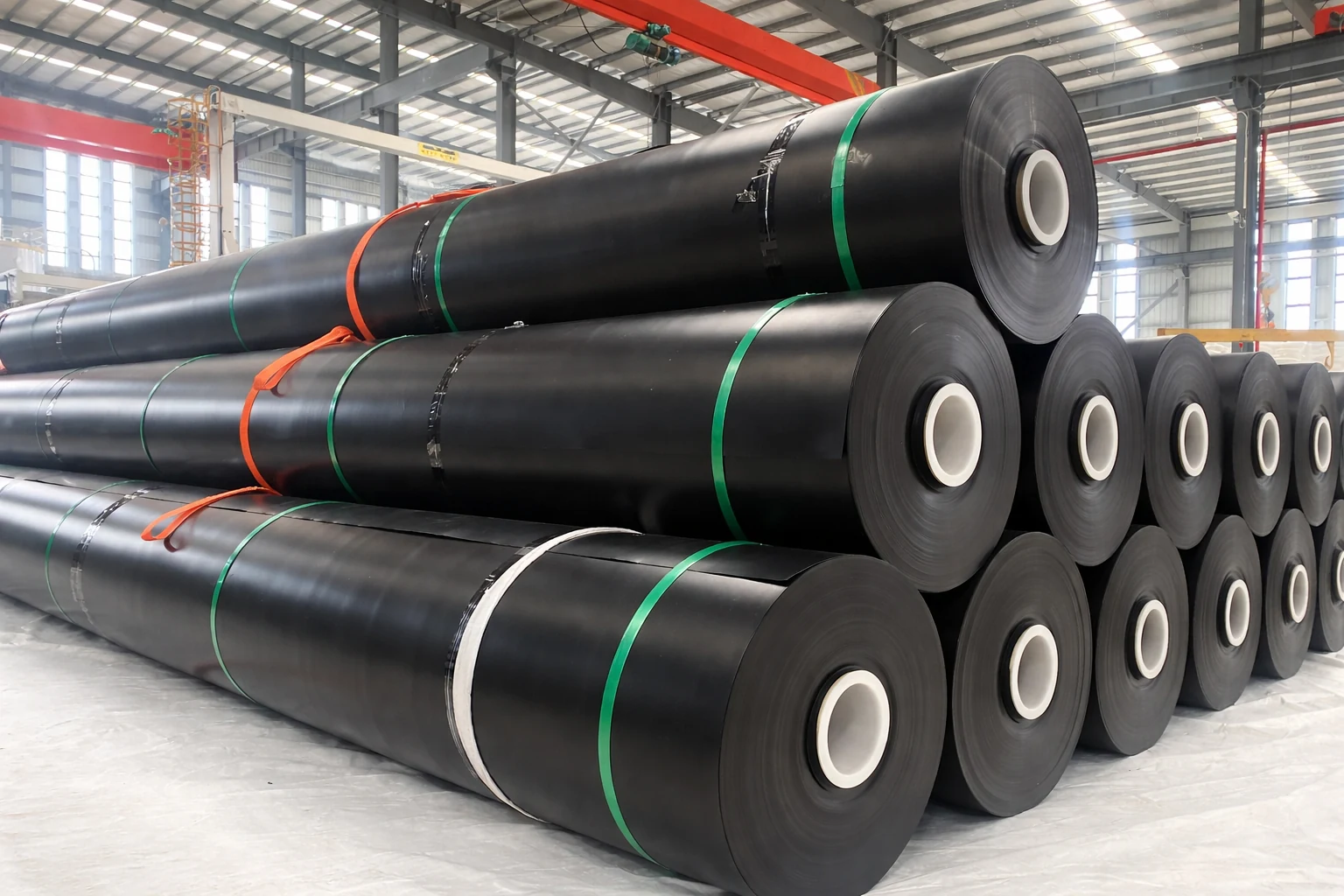
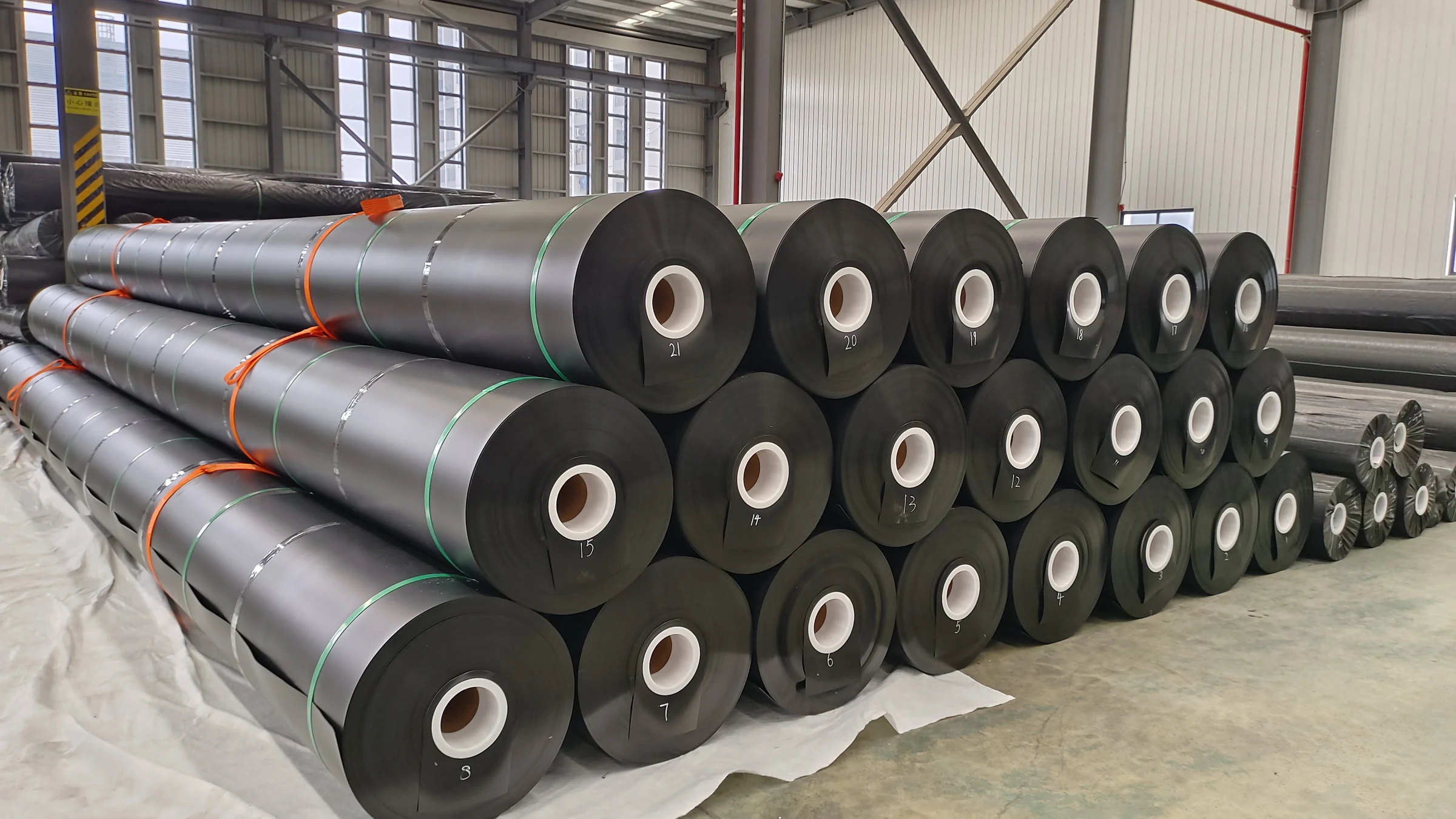
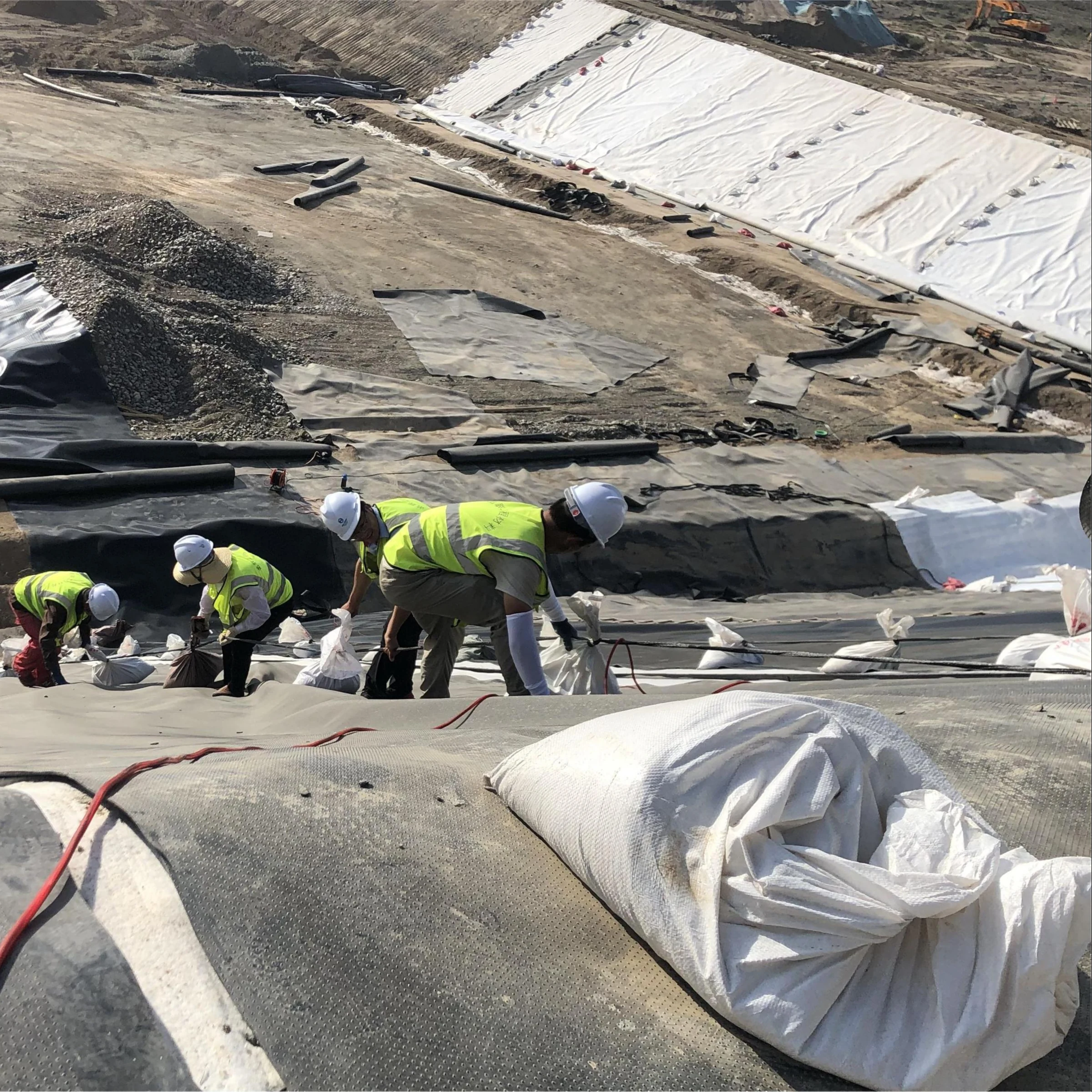
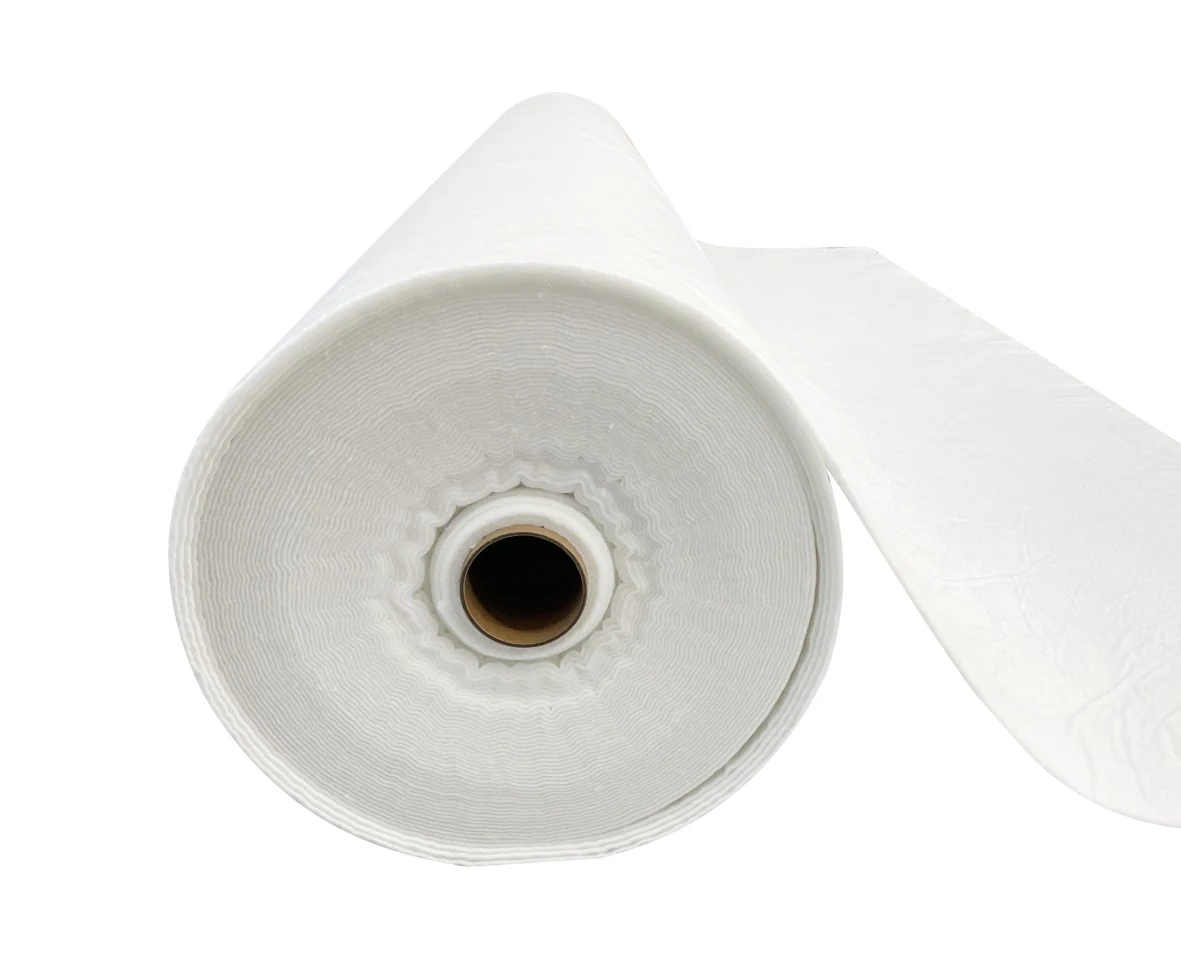

Textured HDPE geomembrane generally costs more than smooth HDPE at the same nominal thickness because its surface must be formed and controlled as well as its core thickness. That adds manufacturing and inspection requirements. Actual sheet mass can also affect a price quoted per kilogram. Installation may cost more where the specified weld preparation adds work, but slope earthworks and project testing are not automatically texture surcharges. The size of the premium depends on the product, order, and quoted scope, not a universal percentage.
Smooth vs Textured Sheet
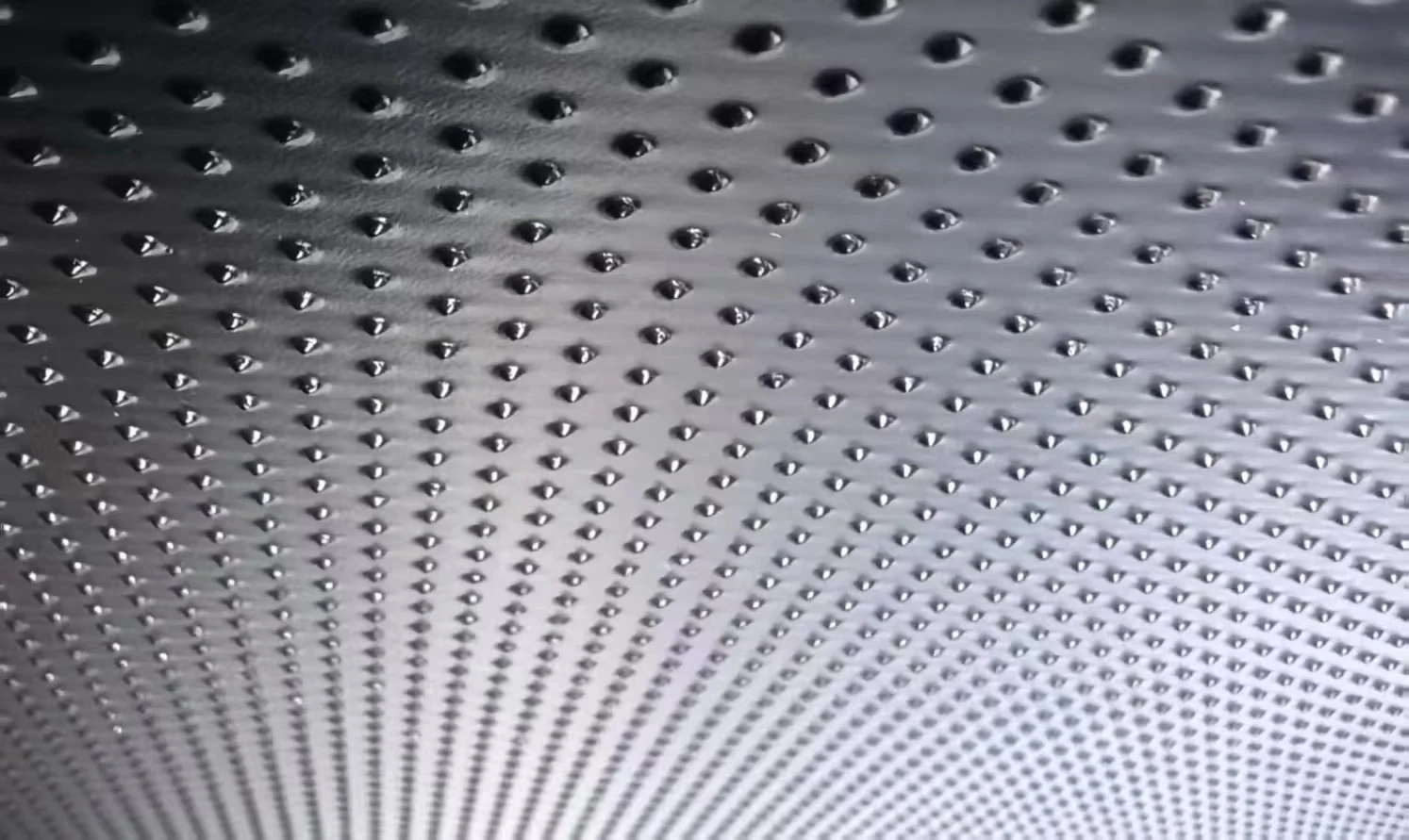
Smooth sheet has relatively flat faces; textured sheet has raised surface features on one or both faces. GRI-GM13 Revision 16 specifies a minimum average asperity height of 0.40 mm, approximately 16 mil, measured under ASTM D7466. This is a manufacturing index property, not a guaranteed interface friction value.[1][2]
| Item | Smooth HDPE | Textured HDPE |
|---|---|---|
| Surface | Relatively flat on both faces | Raised asperities on one or both faces |
| Common use | Flat base areas, pond floors, and areas where cleaning and fast welding matter | Slopes and lining systems where the design calls for higher interface resistance |
| Thickness control | Nominal thickness per ASTM D5199 | Core thickness per ASTM D5994 and D5994M, plus surface profile |
| Design value | Hydraulic barrier plus specified mechanical properties | Same barrier function, plus interface behavior verified by testing |
A higher price does not mean every mechanical property is higher. For the 1.50 mm grade, GRI-GM13 Revision 16 lists minimum average tear resistance of 187 N for both finishes, using ASTM D1004.[1][3] Minimum average index puncture resistance is 480 N for smooth and 400 N for textured sheet, using ASTM D4833.[1][4] Minimum average break elongation is 700% and 100%, respectively, using ASTM D6693. These are specification acceptance values, not allowable field strains or proof of slope stability.[1][5]
Manufacturing Cost Drivers
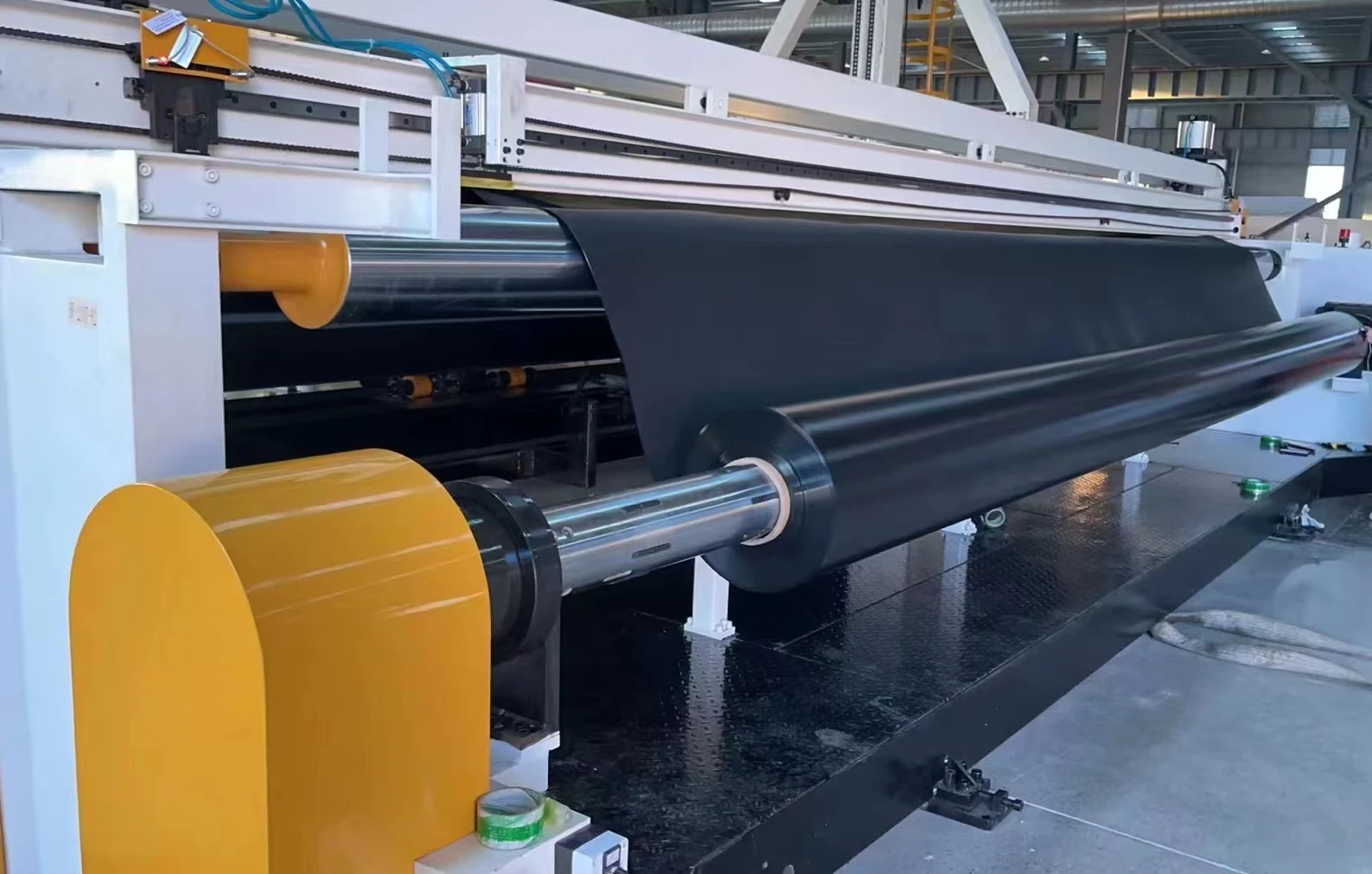
Much of the gap starts on the HDPE geomembrane production line.
- Texturing adds surface-forming requirements to sheet manufacture. If the selected process reduces saleable output per hour, machine time and labor are spread over fewer square meters. No verified production-rate comparison is available here, so a fixed output loss or price increase cannot be assigned.
- Core thickness and surface profile require separate control. Jinseed lists single- and double-sided textured geomembranes from 1.0 to 3.0 mm, with roll widths up to 8.0 m. Wider rolls can reduce seam count compared with narrower rolls on the same panel layout; width is not itself a texture premium.
- The quotation should identify textured faces, roll width, and smooth welding-edge details. These describe the product being priced; a single-sided and a double-sided quotation are not equivalent merely because nominal thickness matches.
Resin Use per Square Meter
Do not assume that every textured sheet uses a fixed amount of extra resin. Compare the actual mass per square meter of the quoted products. Asperity height is not a continuous layer, so adding 0.40 mm to core thickness overstates the volume represented by the peaks. Where price is quoted per kilogram, actual sheet mass determines the conversion to price per square meter.
Mass per area equals thickness in millimeters times density in grams per cubic centimeter. Here 0.940 serves only as arithmetic input, not a promised density, weighed roll, or design thickness. For conversion, 1 mil equals 0.0254 mm; 60 mil equals 1.524 mm and 80 mil equals 2.032 mm.
| Nominal thickness | Calculated flat-sheet mass at assumed 0.940 g per cubic centimeter |
|---|---|
| 0.75 mm | 0.71 kg per square meter |
| 1.00 mm | 0.94 kg per square meter |
| 1.50 mm | 1.41 kg per square meter |
| 2.00 mm | 1.88 kg per square meter |
| 2.50 mm | 2.35 kg per square meter |
For an illustrative 10,000 square meters of net lined area, the assumed 1.41 kg/m² gives 14,100 kg before allowances. An assumed 10% allowance for overlaps, anchor trenches, and cutting waste gives 11,000 purchased square meters and 15,510 kg. If P is the finished-sheet price per kilogram, sheet cost is 15,510 times P: 1.41 times P per purchased square meter, or approximately 1.55 times P per net lined square meter. This is flat-sheet arithmetic, not a measured textured-roll mass or a smooth-versus-textured price comparison. Use actual sheet mass and an approved panel layout before ordering.
Core Thickness Checks
Core thickness of textured sheet falls under ASTM D5994 and D5994M.[6] Thickness of geosynthetics generally falls under ASTM D5199, whose scope points textured sheet to D5994 and D5994M.[7]
| Nominal thickness | Nominal minus 5% average reference | Minus 10% reference | Minus 15% reference |
|---|---|---|---|
| 1.00 mm | 0.950 mm | 0.900 mm | 0.850 mm |
| 1.50 mm | 1.425 mm | 1.350 mm | 1.275 mm |
| 2.00 mm | 1.900 mm | 1.800 mm | 1.700 mm |
These calculations illustrate the textured-sheet thickness limits in GRI-GM13 Revision 16, not permission to reduce the ordered nominal grade. Its textured table specifies a minimum average of nominal minus 5%, a minus 10% limit for eight of ten individual readings, and a minus 15% limit for any reading. The smooth-sheet table instead specifies nominal minimum average thickness. The applicable edition, sampling rules, and any separate weld-edge acceptance must be written into the purchase specification.[1]
Quality Control Costs
Smooth sheet already requires thickness inspection. For textured sheet, core measurement uses a different method and asperity-height measurement adds a surface check; these are not two entirely new thickness tests. GRI-GM13 Revision 16 lists core thickness testing per roll and asperity-height testing every second roll, with measurement sides alternated for double-sided material.[1] OIT, carbon black, stress-crack resistance, and UV requirements also belong in the contract. Those base-material checks are not exclusive to textured HDPE.
A single core reading never settles acceptance. The full set counts, single-reading limits and the separate weld-edge rule included, all read under the contract edition.
Shear and Seam Verification
ASTM D5321/D5321M covers direct shear testing of soil against geosynthetics and geosynthetics against geosynthetics. A project program needs representative contact materials, normal stresses, moisture conditions, and displacement criteria. This testing supports interface design; it does not establish a universal texture premium.[8]
ASTM D6392 covers testing nonreinforced geomembrane seams, not a rule that textured seams require more destructive tests than smooth seams. Test frequency and acceptance follow the project specification.[9] EPA Method 9090A addresses compatibility between wastes and membrane liners. Required fluids, temperatures, and exposure durations depend on the application, not merely on surface finish. Confirm whether these laboratory services are included in each quotation.[10]
Slope Installation Costs
An installed-price difference can include both the sheet premium and a different job scope. Separate texture-related weld preparation from slope access, earthworks, cover placement, drainage, and anchorage. Smooth liners can also need these services, so assigning the entire slope budget to texture exaggerates the surcharge.
- Where the approved welding procedure requires surface preparation, include that labor in the installation quote. Do not assume that all texture must be ground away: confirm the supplied smooth welding edges and the qualified seam procedure before pricing the work.
- Cover soil, anchor-trench work, and protection layers keep separate quantities. A PET non-woven protection geotextile sits above or below the liner where cushioning is specified. Grade and position follow actual contact materials and loads.
Selection, installation, and testing must be carried out by qualified personnel under the approved project specification and local regulations. This cost comparison is not an installation procedure or slope design.
The landfill rule shows how scope splits. Under the prescriptive composite-liner option in 40 CFR 258.40 for covered US municipal solid waste landfill units and lateral expansions, HDPE must reach at least 60 mil and lie in direct and uniform contact with at least two feet of compacted soil passing no more than 1 times 10 to the minus 7 centimeters per second; the rule also leaves an approved performance-based route.[11] Texture is not required there, and the clause never served as a general standard for ponds, reservoirs, or mines. A full landfill liner system package still combines liner, soil, protection, and drainage in one scope.
When Texture Pays Off
The premium is justified where project-specific interface results support the required stability. Examples of applications needing that assessment include covered landfill slopes, reservoir banks, and mining containment slopes. Single-sided texture must face the interface named in the design. Double-sided texture needs justification at both interfaces; it is not automatically necessary on a steep slope.
Where the approved design permits it, smooth sheet from the HDPE liner range may avoid paying for an unneeded surface. A change to LLDPE geomembrane is a separate material-selection decision, not an equivalent way to remove a textured-HDPE surcharge.
| Slope H:V | Approximate angle | What the number establishes |
|---|---|---|
| 4:1 | 14.0 degrees | Geometry only |
| 3:1 | 18.4 degrees | Geometry only |
| 2.5:1 | 21.8 degrees | Geometry only |
| 2:1 | 26.6 degrees | Geometry only |
Those angles describe shape only and never choose the sheet. Groundwater, cover load, anchorage, settlement, and the weakest slip surface all enter the verdict. Without that assessment, neither single-sided nor double-sided texture proves stability, and a slope by itself never dictates double-sided sheet. That check decides whether the textured surcharge is warranted or smooth sheet already covers the need.
Comparing Prices
Where the design permits alternatives, buyers request smooth, single-sided, and double-sided figures on equal footing: same thickness, specification edition, roll size, quantity, currency, validity date, and delivery terms. Three cost groups stay separate:
- Sheet-only rates cover the rolls.
- Delivered-material rates add agreed transport, unloading, duties, and taxes.
- Installed-liner rates add placement, seams, penetrations, anchor trench, testing, mobilization, and the stated scope of subgrade preparation and protection.
Bought area includes overlaps, anchor-trench allowance, and cutting waste; net lined area means the surface actually covered. The quotation should identify its area basis and exclusions. Orders also need core-thickness acceptance, texture height, welding-edge details, test methods and frequencies, and roll traceability. Keep required thickness and acceptance criteria unchanged when comparing finishes.
A Quote Comparison Scenario
Suppose one supplier quotes per purchased square meter while another quotes per net lined square meter. In the illustrative 10,000-square-meter example above, an assumed 10% allowance converts a purchased-area rate of R into a net-area rate of 1.10 times R. That difference comes from the denominator, not the texture. The 10% allowance is a calculation assumption, not a recommended waste factor.
For a slope package, ask whether both quotations include the same welding-edge preparation, seam tests, interface tests, and protection layers. An omitted service can make a lower quote look like a smaller texture premium. This is a worked purchasing scenario, not a report of a customer project or measured factory savings.
Need textured HDPE? Send net area, slope, thickness, and delivery terms for an itemized quotation.
