
When you discover a conflict between a project’s geomembrane technical specifications, engineering drawings, and Bill of Quantities (BOQ), the immediate first step is to place a hold on final material release for the affected items, document the exact contradiction in a Technical Discrepancy Register, verify the contract’s document order-of-precedence clause and latest revision logs, and submit a formal Request for Information (RFI) to obtain written clarification from the authorized project engineer or contract administrator before locking in procurement or production. Never guess which document controls, and never assume that ordering the thicker or more expensive liner option automatically resolves an engineering or contractual discrepancy.
In large containment projects—such as landfills, mining heap leach pads, tailings dams, and wastewater reservoirs—tender and construction packages are often prepared by multiple engineering disciplines across several design stages. When a late design revision updates a slope cross-section drawing without updating the written specification or the commercial BOQ, procurement teams face serious operational risks. Ordering materials based on conflicting documents can result in rejected site deliveries, failed Construction Quality Assurance (CQA) inspections, slope stability hazards, uncompensated cost overruns, and critical-path construction delays.
1. What Is the Difference Between Geomembrane Specifications, Drawings, and the BOQ?
Resolving document discrepancies starts with understanding the distinct engineering and commercial role each document serves within a construction contract package:
| Project Document | Primary Engineering / Commercial Role | Typical Geomembrane Information Covered | Common Limitation if Used in Isolation |
|---|---|---|---|
| Technical Specifications | Defines the qualitative rules: material properties, manufacturing standards, testing frequencies, and CQA installation acceptance criteria. | Polymer type (HDPE, LLDPE), applicable standards (e.g., GRI-GM13, GRI-GM17), thickness tolerances, mechanical/durability values, and seam testing procedures. | Rarely shows exact spatial boundaries, structural transition geometry, or zone-by-zone quantity splits. |
| Engineering Drawings | Communicates the physical geometry, spatial arrangement, cross-sections, and structural connection details of the containment system. | Liner footprint boundaries, floor vs. slope gradients, anchor trench dimensions, sump details, pipe penetrations, and layer stack-ups. | Drawing callout notes are brief and cannot list full laboratory testing protocols or resin endurance criteria. |
| Bill of Quantities (BOQ) | Provides the itemized schedule of measured or estimated quantities used for commercial tendering, unit-rate pricing, and progress payment valuation. | Pay-item descriptions, measurement units (typically square meters), and estimated net or gross quantities per work package. | A commercial pricing schedule is not a complete technical specification. Its measurement basis must be checked in the contract preambles rather than assumed to be a horizontal projection. |
Because these three documents are designed to work together, a contradiction between them means the technical baseline is incomplete until formally reconciled.
2. What Are the Most Common Document Conflicts in Geomembrane Projects?
During tender evaluation, material submittal preparation, and pre-production reviews, discrepancies typically fall into five categories:
- Nominal Thickness Discrepancies: One document calls for 2.0 mm (80 mil) geomembrane while another specifies 1.5 mm (60 mil) for the same containment zone.
- Polymer Type Mismatches: The written specification references high-density polyethylene (HDPE), whereas a drawing note or schedule calls for linear low-density polyethylene (LLDPE).
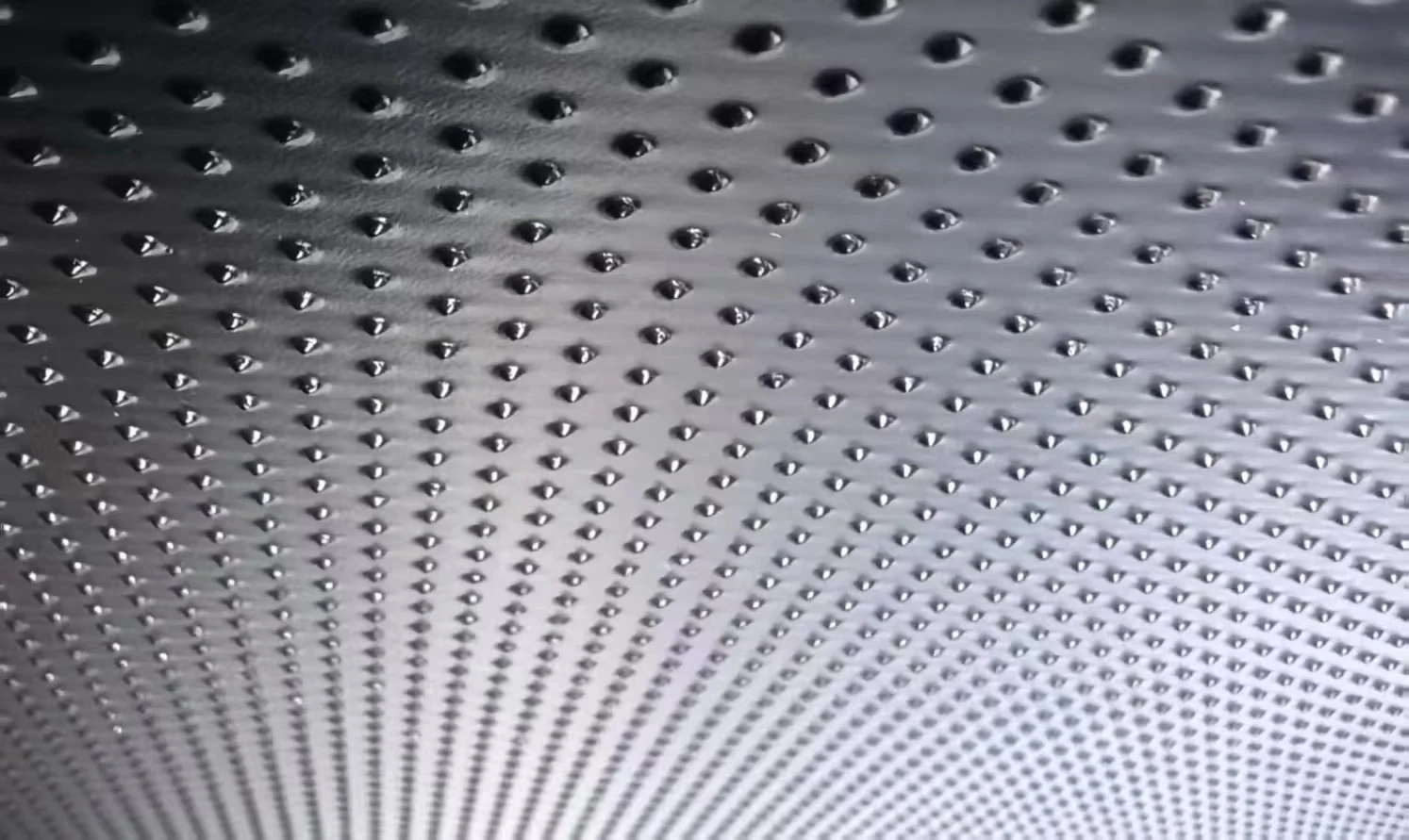
- Surface Configuration Conflicts: The specification or BOQ lists smooth geomembrane, while cross-section drawings specify single-sided or double-sided textured liner on slopes.
- BOQ vs. Drawing Quantity Variances: The total square meters listed in the BOQ differ significantly from the area calculated using Issued-for-Construction (IFC) drawings and panel layouts.
- Testing Standard and CQA Mismatches: The specification cites an outdated testing standard or omits a critical property (such as asperity height or stress crack resistance) that is referenced in the project’s CQA plan or drawing notes.
Below is a closer examination of how the four primary conflicts arise in practice and why each requires formal engineering resolution.
3. Case 1: What Happens When Geomembrane Thickness Requirements Differ?
Hypothetical Engineering Scenario (Case 1):
- Technical Specification (Section 02770): Requires 2.0 mm HDPE Geomembrane for the primary landfill cell liner.
- Engineering Drawing (Detail C-04, Rev 1): Callout arrow on the cell floor cross-section reads 1.5 mm HDPE Geomembrane.
- Bill of Quantities (Item 3.1.2): Prices 45,000 m² of 1.5 mm Geomembrane.
Why This Is a Substantive Technical and Commercial Conflict
A 0.5 mm difference between 1.5 mm and 2.0 mm HDPE is not a minor tolerance issue—it represents a 33% increase in polymer mass per square meter. Technically, thickness directly governs puncture resistance under coarse drainage aggregate, tensile load capacity on steep slopes, extrusion and fusion welding parameters (temperature, pressure, and travel speed), and structural stiffness at anchor trenches and pipe boots. Commercially, it alters resin consumption, unit price per square meter, roll length per roll weight, and the number of shipping containers required.
What Documents Must Be Checked and Who Receives the RFI?
The procurement or engineering team should check whether the drawing and specification belong to different issue stages (for example, whether the BOQ and Drawing Rev 1 reflect a value-engineering reduction from 2.0 mm to 1.5 mm that was never updated in the specification text, or whether the specification was upgraded for environmental permitting while an old drawing detail remained unchanged). The contractor should submit a formal RFI to the Project Engineer of Record (EOR) or Employer’s Representative / Contract Administrator through the contract’s designated document control channel.
Why a Supplier Cannot Unilaterally Decide Which Thickness to Supply
Even well-intentioned assumptions fail in construction contracts:
- If the supplier ships 1.5 mm based on the BOQ and drawing: The independent CQA inspector auditing against the 2.0 mm Technical Specification will reject the rolls on site as non-conforming.
- If the buyer or supplier upgrades to 2.0 mm without approval, the contractor may be unable to recover the additional cost under the priced 1.5 mm item. At equal density and area, the sheet mass increases by 33.3%; material price and freight do not necessarily increase by that same percentage. The thicker sheet also requires confirmation of handling, connection details and qualified welding procedures.
4. Case 2: What If HDPE and LLDPE Requirements Do Not Match?
Hypothetical Engineering Scenario (Case 2):
- Technical Specification: Written around HDPE Geomembrane properties (referencing GRI-GM13).
- Engineering Drawing Notes: Identifies LLDPE Geomembrane for the pond liner over a compressible subgrade.
Technical, Design, and Suitability Differences
HDPE and LLDPE are distinct polyolefin materials engineered for different geotechnical conditions, not interchangeable product labels:
- HDPE Geomembrane: Generally stiffer than LLDPE and commonly specified using GRI-GM13. Chemical compatibility, exposed-service durability and allowable strain require evidence for the actual formulation, liquid, temperature and system. Tensile yield values are test properties, not permissible field strains.
- LLDPE Geomembrane: Generally more flexible than HDPE and commonly specified using GRI-GM17. Suitability for settlement, complex details or a particular liquid still requires engineering review and formulation-specific evidence. Polymer name alone cannot establish a chemical-resistance ranking or design approval.
Because switching between HDPE and LLDPE alters the containment design basis—including chemical compatibility, subgrade strain tolerance, and CQA laboratory acceptance tests—neither the contractor nor the manufacturer may substitute one polymer for the other without a formal written design confirmation from the Engineer of Record.
5. Case 3: What If Smooth and Textured Geomembrane Requirements Conflict?
Hypothetical Engineering Scenario (Case 3):
- Technical Specification & BOQ: Describe Smooth HDPE Geomembrane throughout the project.
- Engineering Cross-Section Drawings: Specify Double-Sided Textured HDPE Geomembrane on 1V:3H side slopes overlain by a geotextile cushion and drainage gravel.
The Link Between Surface Type, Interface Friction, and Slope Stability
Surface texture can materially affect interface shear behavior. If project documents disagree, confirm the required interfaces, zones and design parameters with the geotechnical designer. ASTM D7466/D7466M measures asperity height; it does not establish a safe slope or replace representative interface shear testing under the specified conditions.
If a project-specific design specifies a smooth liner and relies on movement at a particular interface to accommodate settlement, changing to a double-sided textured liner may change how loads transfer into the sheet. Whether a lower-friction interface is appropriate depends on the materials, loads, expected movements and stability requirements for that zone. Whenever smooth and textured callouts conflict between documents, the RFI must ask the geotechnical designer to confirm the exact zone boundaries (e.g., textured on slopes and 1.5 m onto the basin toe; smooth across the central floor) and the required interface shear testing parameters.
6. Case 4: How Should BOQ Quantity Discrepancies Be Investigated?
Hypothetical Engineering Scenario (Case 4):
- Bill of Quantities (BOQ): Lists 20,000 m² of geomembrane for a containment basin.
- Engineering Drawing Takeoff & Panel Layout: Indicates a required supply quantity of 24,200 m².
Why BOQ Quantities Frequently Diverge from Drawing Calculations
A quantity discrepancy between the BOQ and engineering drawings rarely stems from a single arithmetic error; it usually reflects a difference between commercial measurement rules and physical roll fabrication requirements. When investigating a quantity variance, audit six specific factors without applying arbitrary fixed waste percentages:
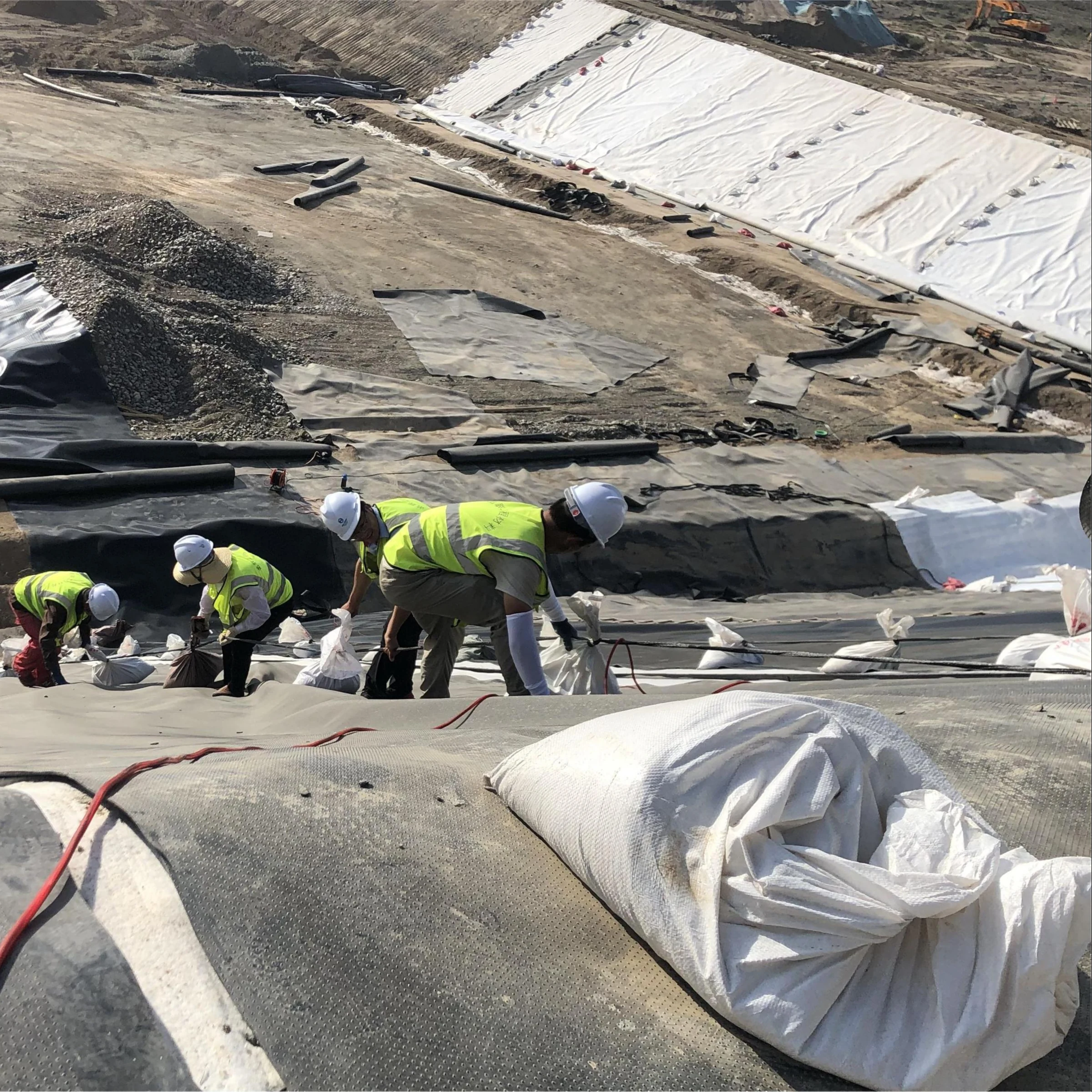
- Net Planar Footprint vs. True Inclined Slope Area: Civil estimators sometimes measure the flat 2D horizontal projection (plan view) of a pond or cell from a top-down site plan. Because a sloped embankment forms the hypotenuse of a right triangle, the true inclined surface area on steep side slopes is significantly larger than its horizontal projection.
- Perimeter Anchor Trench Run-Outs: Drawings typically require the liner to extend across the top of the perimeter berm crest and drop vertically down the front wall and floor of the anchor trench. In many standard civil measurement methods (such as CESMM or project-specific preambles), anchor trench lengths may or may not be included in the net measured BOQ pay area, even though the contractor must purchase the physical sheet to fill the trench.
- Seaming and Overlap Allowances: Adjacent geomembrane panels require continuous overlaps for dual-track hot wedge fusion welding or extrusion welding. The total overlap area depends on roll width and seam count—material that must be manufactured and shipped even if the BOQ measures only net installed surface area.
- Panel Layout Geometry and Corner Cutting: Fitting rectangular geomembrane rolls into sloped corners, sumps, or curved basin geometries requires cutting diagonal gore panels, generating unavoidable geometric trim offcuts dictated by the approved panel layout plan.
- Structural Details, Rub Sheets, and CQA Sampling: Sacrificial rub sheets beneath sumps, reinforcement collars around pipe penetrations, trial weld strips, and destructive CQA seam cut-outs all consume physical roll area.
- Drawing Revisions After BOQ Lock: If the design engineer deepened the basin by 1.5 meters or widened an embankment between the Tender Issue and the Issued-for-Construction (IFC) drawing release, the BOQ schedule may simply reflect the older, smaller geometry.
To resolve a quantity discrepancy, reconcile the basis of measurement in the contract’s BOQ Preamble (whether the unit rate is paid per net planar square meter, net developed surface area in place, or gross material delivered) and confirm whether revised IFC drawings warrant a formal quantity re-measurement or variation order. For a deeper breakdown of how approved panel layouts translate into phased shipping batches, refer to our guide on scheduling geomembrane deliveries for large phased installations.
7. Which Contract Documents Should Be Reviewed First?
A widespread misconception in construction procurement is assuming that Technical Specifications always override Engineering Drawings, or that Drawings always override the BOQ. In reality, there is no universal rule of precedence that applies to every construction contract.
Different contract frameworks establish different hierarchies:
- Under standard FIDIC templates (such as the Red Book or Yellow Book), the Specification typically ranks above the Drawings, and the Drawings rank above the Schedules/BOQ—unless modified by the Particular Conditions of Contract.
- Under other public-works, EPC, or bespoke mining contracts, project-specific drawings or figured dimensions on late-revision detail sheets may explicitly take precedence over general boilerplate specifications.
Before submitting an RFI or making any procurement commitment, review the project documentation in this structured order:
- The Contract’s Order-of-Precedence Clause: Check the General and Particular Conditions of Contract to see how ambiguities between documents are contractually governed—and note that most contracts still require the contractor to notify the Engineer immediately upon discovering an ambiguity rather than silently applying the precedence list.
- Tender Addenda and Post-Tender Clarifications: Verify whether the conflict was already answered in a pre-contract Q&A bulletin or contract addendum that has not yet been merged into the working drawings.
- Document Revision Logs: Compare issue dates and revision codes (e.g., Tender Rev 0 vs. IFC Rev 3).
- BOQ Preambles and Measurement Rules: Check how liner pay items are defined commercially.
Disclaimer: The steps above represent standard engineering and procurement management practices, not legal advice. Contract interpretation should always follow the specific terms of your executed agreement and guidance from qualified contract administrators.
8. How to Prepare a Technical Discrepancy Register?
Before drafting individual RFIs, compile all identified contradictions into a centralized Technical Discrepancy Register. Presenting a structured comparison matrix to the project consultant or EPC manager speeds up technical review and prevents piecemeal confusion.
Below is an actionable 8-column Discrepancy Register format illustrating the four hypothetical cases discussed above:
| Item | Document Reference | Drawing / Spec Revision | Stated Requirement | Conflict Identified | Potential Project Impact | Required Clarification | Responsible Party |
|---|---|---|---|---|---|---|---|
| 01 | Spec Sec. 02770 Par. 2.1 vs. Dwg C-04 & BOQ Item 3.1.2 | Spec Rev 0 (12-Jan) / Dwg C-04 Rev 1 (18-Mar) | Spec: 2.0 mm HDPE; Dwg C-04 & BOQ: 1.5 mm HDPE | Nominal thickness mismatch for primary cell floor liner (2.0 mm vs. 1.5 mm). | Affects puncture design, welding parameters, resin tonnage (+33%), unit cost, and CQA acceptance. | Confirm whether 1.5 mm or 2.0 mm HDPE is required for the primary cell floor, and confirm BOQ pay item adjustment if 2.0 mm governs. | Project Engineer of Record (EOR) / Contract Admin |
| 02 | Spec Sec. 02770 Par. 1.3 vs. Dwg G-02 Note 4 | Spec Rev 0 / Dwg G-02 Rev 2 | Spec: HDPE (GRI-GM13); Dwg Note 4: LLDPE liner | Polymer type conflict between high-density (HDPE) and linear low-density (LLDPE). | Alters chemical resistance, subgrade strain capacity, and laboratory qualification standards (GRI-GM13 vs. GRI-GM17). | Confirm intended polymer type (HDPE or LLDPE) and applicable material specification table for the pond liner. | Geotechnical Design Engineer |
| 03 | Spec Sec. 02770 Par. 2.2 & BOQ Item 3.1.2 vs. Dwg C-05 | Spec Rev 0 / Dwg C-05 Rev 1 | Spec & BOQ: Smooth HDPE; Dwg C-05: Double-textured on 1V:3H slopes | Surface texture conflict on side slopes (Smooth vs. Double-Sided Textured). | Impacts slope interface friction stability, roll manufacturing process, and separate slope/floor roll ordering. | Confirm exact boundaries for textured vs. smooth liner and required minimum asperity height for slope zones. | Geotechnical Design Engineer |
| 04 | BOQ Item 3.1.2 vs. IFC Dwg C-01 to C-06 Takeoff | BOQ Rev 0 / IFC Drawings Rev 2 | BOQ: 20,000 m²; Drawing Takeoff: 24,200 m² gross (21,650 m² net developed) | 4,200 m² variance due to slope inclination, 1.8 m anchor trench run-out, and Rev 2 basin deepening. | Risk of severe material shortfall on site if ordered solely from the 20,000 m² BOQ line item. | Confirm approved net installed area from Rev 2 drawings and approve gross ordering quantity per panel layout. | Quantity Surveyor / Project Manager |
9. How to Submit an RFI (With Practical Example Template)
Once discrepancies are logged, submit a formal Request for Information (RFI). To get a fast, unambiguous engineering sign-off, keep each RFI focused on a single technical topic (or closely linked material package), attach marked-up snippets of the conflicting clauses and drawings, and state the date by which a decision is needed to avoid delaying factory production.
Sample RFI Template (For Illustrative Purposes Only)
SAMPLE REQUEST FOR INFORMATION (ILLUSTRATIVE TEMPLATE ONLY)
---------------------------------------------------------------------------
RFI Number:           RFI-GEO-014
Date Submitted:       [YYYY-MM-DD]
Project Name:         [Insert Project / Containment Facility Name]
Contract / Package:   [Insert Contract Reference Number — Liner Works]
To (Authorized Party):[Name of Resident Engineer / Project Consultant / Contract Administrator]
From (Contractor):    [Name of EPC Contractor / Procurement Lead]
Subject:              Clarification of Geomembrane Nominal Thickness & Surface Type (Cell 1)
Response Required By: [YYYY-MM-DD] (Critical path prior to manufacturing release)

1. REFERENCE DOCUMENTS:
   - Technical Specification Section 02770, Rev 0, Clause 2.1.A (Page 14)
   - Issued-for-Construction (IFC) Drawing C-04, Rev 1 (Basin Cross-Section)
   - Issued-for-Construction (IFC) Drawing C-05, Rev 1 (1V:3H Slope Detail)
   - Bill of Quantities (BOQ), Schedule 3, Item 3.1.2

2. DESCRIPTION OF DISCREPANCY:
   During pre-procurement review and material submittal preparation, two conflicts were
   identified across the project documents for Cell 1:
   (a) Thickness Conflict: Specification Section 02770 Clause 2.1.A specifies 2.0 mm
       HDPE geomembrane across all Cell 1 areas. However, IFC Drawing C-04 (Rev 1) and
       BOQ Item 3.1.2 identify 1.5 mm HDPE geomembrane for the Cell 1 floor.
   (b) Surface Conflict: BOQ Item 3.1.2 describes smooth geomembrane for the entire
       cell, whereas IFC Drawing C-05 (Rev 1) calls out double-sided textured HDPE
       geomembrane on the 1V:3H perimeter side slopes.

3. POTENTIAL TECHNICAL & SCHEDULE IMPACT:
   - Material manufacturing cannot be released until polymer thickness (1.5 mm vs. 2.0 mm)
     and surface configuration (smooth floor vs. textured slope split) are locked.
   - Proceeding without formal alignment affects slope interface shear performance, CQA
     conformance acceptance criteria, container load planning, and commercial valuation.

4. CLARIFICATION REQUESTED:
   Please confirm in writing:
   1. Whether the Cell 1 basin floor requires 1.5 mm or 2.0 mm smooth HDPE geomembrane.
   2. Whether the Cell 1 side slopes (1V:3H) require double-sided textured HDPE
      geomembrane, and its required thickness (1.5 mm or 2.0 mm) and standard (GRI-GM13).
   3. Whether an updated BOQ schedule / variation instruction will be issued to reflect
      the separate floor and slope configurations.

Attachments:
- Excerpt of Spec Section 02770 Clause 2.1.A (Highlighted)
- Clouded Markup of IFC Drawings C-04 (Rev 1) and C-05 (Rev 1)
---------------------------------------------------------------------------
Separating Technical Clarification, Contract Variation, and Commercial Adjustment
When the Engineer responds to an RFI, project teams must distinguish between three separate workflow steps:
- Technical Clarification: Establishes the engineering truth (e.g., “Confirming 2.0 mm Double-Textured HDPE on slopes and 1.5 mm Smooth HDPE on the floor”).
- Contract Variation / Change Order: If the clarified requirement changes the scope or specification priced in the executed contract baseline, the contractor and employer must process a formal Variation Order under the contract’s change-management clause.
- Commercial Quotation & PO Adjustment: The buyer obtains an updated commercial quotation from the geomembrane manufacturer reflecting the confirmed thickness and surface split before issuing the final Purchase Order.
10. What Should Buyers Confirm Before Geomembrane Production Starts?
Once all RFIs are formally closed, consolidate the approved requirements into a single Final Material Submittal and obtain written sign-off (“Approved” or “Approved as Noted”) from the project engineer before instructing the supplier to begin extrusion or calendering.
Use this Pre-Production Confirmation Checklist to document the agreed requirements and identify any items still awaiting written clarification:
- Approved Polymer & Formulation Standard: Confirm whether the liner is HDPE (e.g., evaluated against GRI-GM13) or LLDPE (e.g., evaluated against GRI-GM17), and verify all project-specific mechanical, oxidative induction time (OIT), UV, and stress crack resistance thresholds.
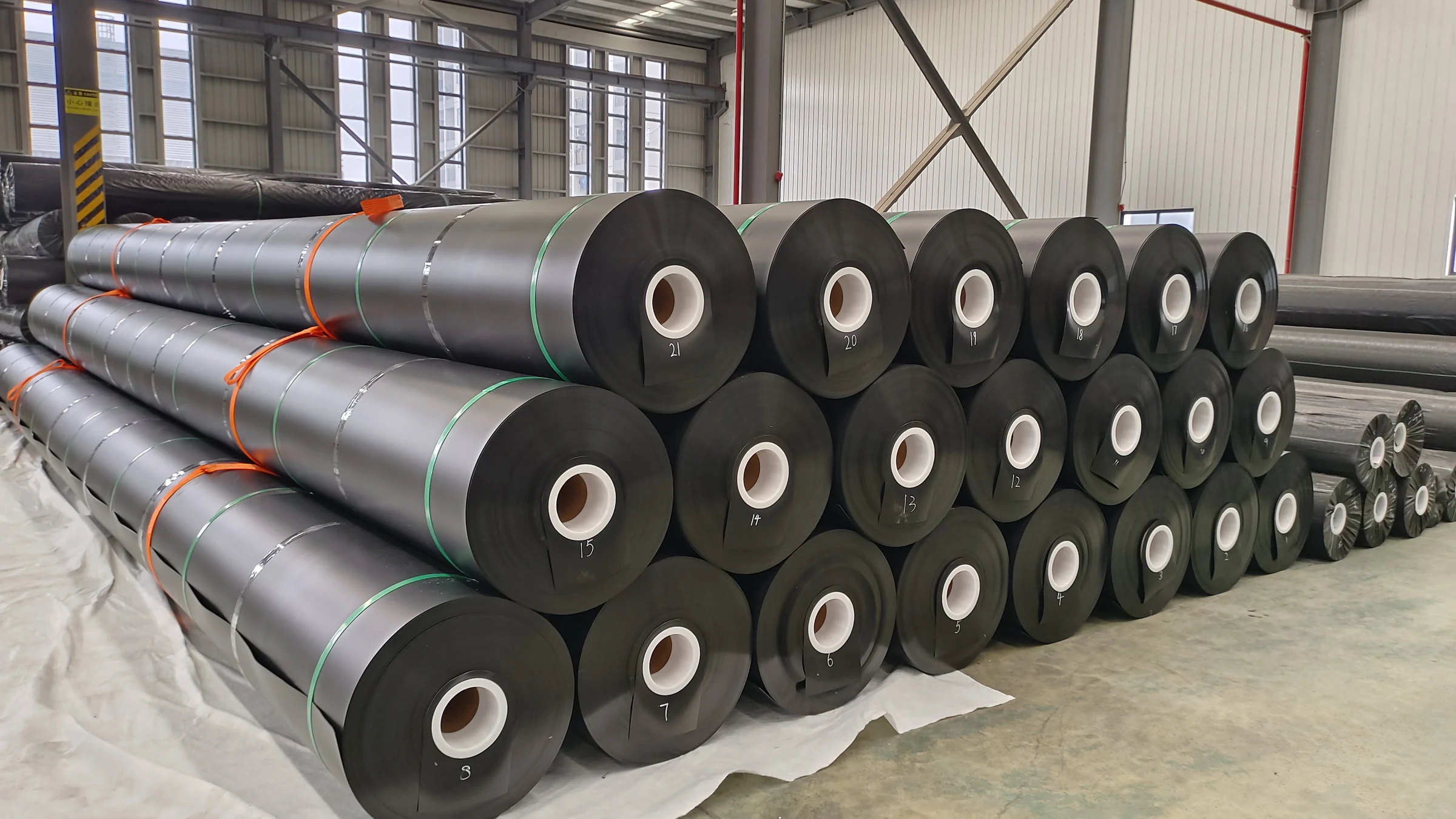
- Verified Thickness and Surface Breakdown: Lock the exact square meters required for each combination of thickness (e.g., 1.0 mm, 1.5 mm, 2.0 mm, 2.5 mm) and surface type (smooth, single-sided textured, or double-sided textured).
- Reconciled Ordering Quantities & Roll Dimensions: Confirm that the purchase order quantity reflects the approved panel layout (including slope inclination, seam overlaps, and anchor trenches) rather than an unadjusted tender BOQ estimate, and verify roll width and length configurations.
- MQC and CQA Testing Alignment: Confirm batch sampling frequencies, factory Manufacturing Quality Control (MQC) report templates, and whether pre-shipment third-party laboratory sampling is required prior to container loading.
- Written RFI Sign-Off Reference: Attach the closed RFI reference numbers to the final Material Submittal and Purchase Order so site CQA inspectors inspect incoming rolls against the updated, approved baseline rather than superseded tender documents.
11. What Should Be Done If the Conflict Is Discovered After Procurement?
Occasionally, a document conflict is only discovered after a Purchase Order has been placed, production is underway, or rolls have already arrived at the job site (for example, when a newly mobilized CQA inspector reviews an updated specification revision that was never forwarded to the procurement department).
If a discrepancy surfaces post-procurement, follow a controlled containment protocol:
- Place an Immediate Hold on Affected Activities: If manufacturing is in progress, ask the supplier to pause extrusion on the remaining unproduced balance. If rolls are on site, quarantine the affected batch in the laydown yard and do not deploy or cut panels until the issue is evaluated.
- Audit Exact Material Status and MQC Test Data: Compile the exact roll count, dimensions, and certified laboratory MQC test reports of the material already produced or delivered.
- Notify the Engineer and Contract Administrator Formally: Present the full documentary trail showing which specification or drawing revision was used to place the order and where the conflict exists.
- Evaluate Engineering Suitability for Purpose: In some cases, the Engineer of Record may determine through technical review that the delivered material satisfies or exceeds structural design requirements (for example, evaluating whether 1.5 mm liner is acceptable in a low-head secondary pond, or whether existing rolls can be reassigned to a different phase or zone on the same project).
- Obtain a Formal Written Concession, Reallocation, or Replacement Directive: Never deploy disputed rolls based on verbal assurances at a site meeting. If the engineer approves the material via an engineering concession or Non-Conformance Report (NCR) closeout, ensure the written approval is filed in the CQA record so final project certification is not jeopardized.
Frequently Asked Questions (FAQ)
Does the Technical Specification always override the Engineering Drawings and BOQ?
No. While many standard construction contracts (such as standard FIDIC forms) place the Specification above Drawings or the BOQ in their default order-of-precedence clauses, other EPC, public-works, or bespoke contracts give priority to project-specific drawings, figured dimensions, or latest-revision addenda. Always check the specific contract’s order-of-precedence clause and obtain a formal written clarification from the authorized engineer.
Why can the BOQ quantity differ from the geomembrane order quantity?
A BOQ quantity follows the contract measurement rules; it may represent plan area, developed surface area or another defined basis. Check the item description and measurement preambles before comparing it with an order. Procurement quantities must separately verify inclined slopes, seams, anchor details, cutting patterns and specified sampling allowances.
Can a geomembrane supplier choose the thicker or higher-grade option to resolve a document conflict?
A manufacturer or supplier may not interpret conflicting engineering design documents or approve specification changes unless expressly authorized under the contract or by written delegation. Any authorization applies only within its stated scope. Supplying a thicker or textured product without formal written approval can still create contractual payment disputes, alter welding and structural details, or violate the approved CQA plan.
Can factory production start while an RFI on geomembrane specifications is still open?
Production should not begin on any material item whose polymer type, thickness, surface texture, or testing standard is under an open RFI. However, if a large project contains unaffected zones where specifications and drawings are 100% consistent (for example, the basin floor is fully confirmed while only a secondary cap detail is under RFI), the project engineer and buyer may formally authorize partial production for the unaffected scope.
Conclusion
Conflicts between geomembrane technical specifications, engineering drawings, and the Bill of Quantities are manageable when caught before manufacturing begins—but expensive when ignored. By understanding the distinct role of each contract document, logging contradictions in a structured Technical Discrepancy Register, submitting clear RFIs to the authorized project engineer, and locking a unified Material Submittal prior to production, EPC contractors and procurement teams can protect both containment integrity and commercial budgets.
Jinseed supplies HDPE geomembranes, LLDPE geomembranes, and geotextiles engineered for demanding landfill, mining, water containment, and industrial projects worldwide. If your procurement or engineering team is preparing a material submittal, reviewing GRI-GM13 or GRI-GM17 compliance, or reconciling roll quantities from construction drawings, share your project specifications, drawings, and BOQ with our technical specialists for fast, transparent pre-production support.
Important Engineering & Contractual Note: Final authority to interpret conflicting contract documents, approve material equivalencies, or authorize design modifications rests with the parties designated by the contract or an applicable written delegation, within the limits of their authority.
Technical References and Related Resources
- ASTM D7466/D7466M — measurement of geomembrane asperity height
- Geomembrane material approval and roll traceability
Use the edition and acceptance criteria identified by the project contract. Material test compliance does not replace design approval or site acceptance. Send Jinseed your specification and project requirements.