

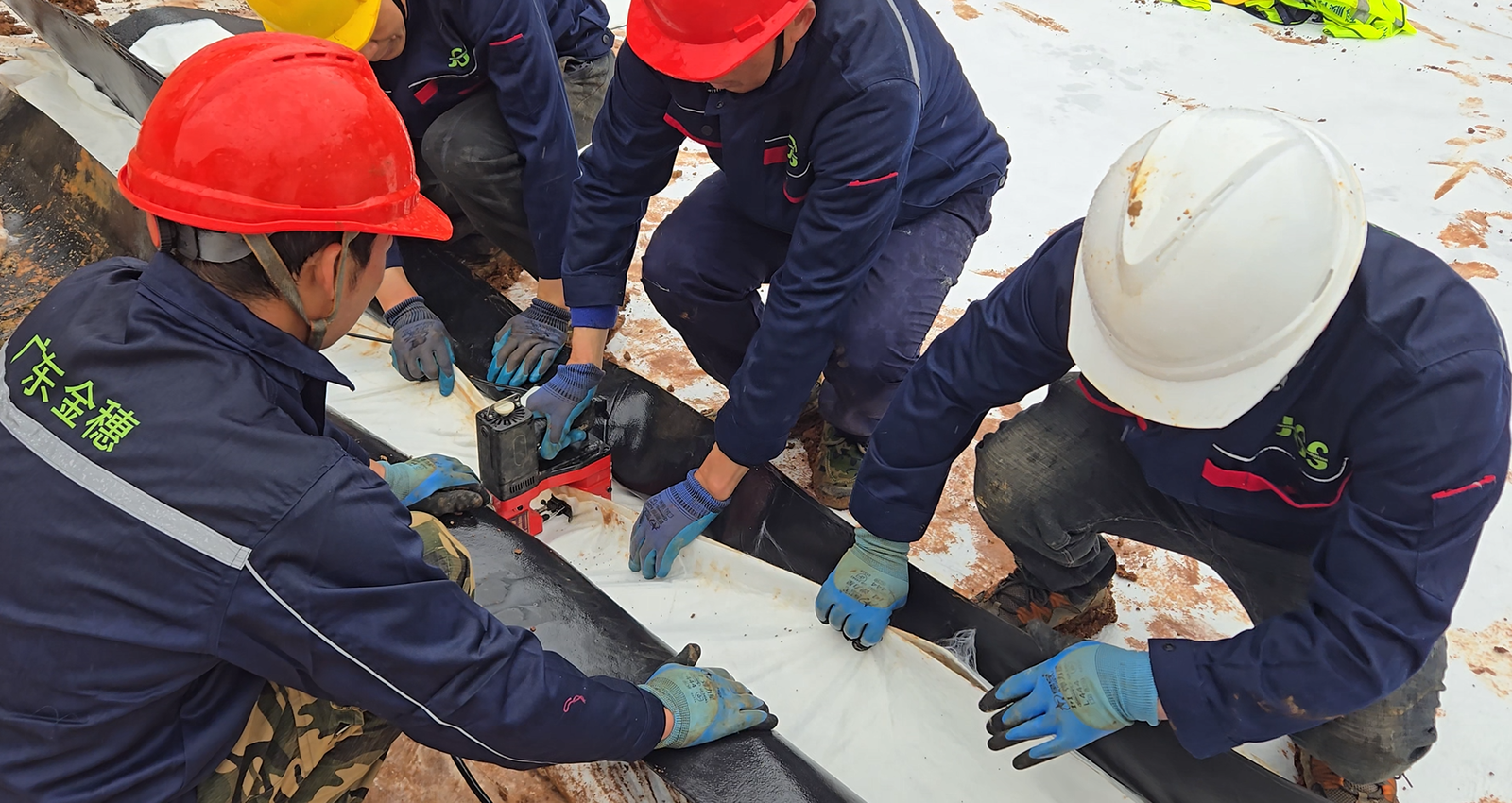
Geotextile fabric placed beneath gravel can effectively separate soil layers, improve stability, and reduce settlement. Typical weights range from 100–300 g/m², tensile strength is usually ≥8 kN/m, and water permeability is about 0.1–0.3 cm/s.
In many applications, it can extend the service life of a driveway base or garden path by 3–5 years or more. During installation, the subgrade should be leveled, overlaps should be 10–20 cm, and the fabric should be protected from damage. It is commonly used under driveways, garden walkways, and similar areas.
Stopping the “Gravel Sink”
When a 3,000-pound vehicle pushes 2 inches of gravel into wet subgrade with a California Bearing Ratio (CBR) below 3, you get what many people recognize as gravel sink. On an unreinforced driveway, it is common to lose 2 to 3 inches of aggregate thickness per year. A polypropylene geotextile with a grab tensile strength of 200 pounds under ASTM D4632 acts as a separator between the soil and the stone. The fabric carries static loads in the 40 to 50 psi range, limiting downward stone intrusion and upward pumping of fine soil particles. Over a 10-year period, that can reduce aggregate replacement costs by 15% to 20%.
Fabric Interface Migration
Think about Seattle during a long rainy season. With about 40 inches of annual rainfall, the water soaks into the ground and turns silty loam into soft slurry. Then you drive a 5,000-pound Chevrolet Tahoe over the driveway. Under roughly 35 psi of tire pressure, the saturated soil underneath starts squeezing upward through the gaps like toothpaste.
In engineering terms, this is called pumping. In as little as three months, a clean, free-draining 6-inch gravel layer can become packed with extremely fine soil particles less than 0.075 mm in diameter. Once that happens, the gravel surface loses most of its drainage function and starts behaving more like a dense slab filled with mud.
To stop that upward movement between the soil and the gravel, geotextile works much like a giant coffee filter: water passes through, while the mud stays below. The opening size matters a great deal. ASTM uses the AOS value, or Apparent Opening Size, to describe this property.
When you are selecting fabric for your property, the right opening size depends on the actual subgrade soil:
- Sandy soils: use a larger opening size, such as AOS #30 (0.60 mm).
- Silty loam: use AOS #50 (0.30 mm).
- Heavy clay: use a much tighter fabric, such as AOS #70 (0.21 mm).
You will also find felt-like non-woven fabrics on the market, some rated at up to 100 gallons per minute. Under the weight of a loaded truck, those openings can deform quickly, allowing as much as 85% of the slurry to rise into the stone layer. Woven geotextile holds up far better under pressure because it is made from interlaced flat polypropylene tapes.
A woven fabric can push particle interception rates up to 99%. During the first few months after installation, another useful thing happens below the fabric. Slightly larger soil particles get caught at the interface and gradually collect beneath the geotextile, forming a natural secondary filter layer about 0.5 inches thick. In the industry, this is known as a filter cake.
After the first three months, that filter cake is usually well established at the soil-fabric interface. Even very fine clay-sized particles can then be held below the system. A year later, if you open up the section, the upper 4-inch gravel layer may still be essentially free of fine soil contamination.
Load Distribution & Rut Depth
Picture a property in Texas with a somewhat clayey subgrade. You drive home in a Ford F-250 loaded with equipment, with a gross vehicle weight of about 8,500 pounds. That entire weight is carried by four tire contact patches totaling only about 160 square inches.
It is similar to someone standing in mud on high heels. The tire pressure can reach about 60 psi. A 6-inch layer of #57 gravel alone often cannot handle that concentrated stress, so the aggregate and the underlying soil start pushing sideways under the load.
As soon as the vehicle moves away, two ruts as deep as 3 inches may be left behind. But if a layer of woven geotextile is installed between the gravel and the soil beforehand, the stress pattern changes substantially.
That polypropylene woven fabric works almost like a pair of oversized snowshoes for the driveway. When the 60 psi load comes down, the tensioned fabric spreads the force laterally.
Instead of concentrating stress only beneath the tire, it expands the effective load area to roughly 3 to 4 square feet around it. The pressure transmitted to the soft subgrade can drop from about 15 psi to only 3 to 4 psi. At that stress level, the soil is much more likely to hold, so rutting is greatly reduced.
Now consider a 33,000-pound Waste Management truck driving into the yard every Tuesday. The localized stress under the rear tires is far more severe than under a pickup truck and can destroy an unprotected surface almost immediately. The difference between reinforced and unreinforced construction becomes easy to see in actual use:
| Driveway Build-Up (Soft Ohio Clay) | Local Tire Pressure | Actual Pressure on Soft Soil | Rut Depth After 1 Year |
|---|---|---|---|
| Bare mud subgrade + 8 inches of gravel | About 65 psi | 18.5 psi | Over 4 inches (heavily rutted) |
| Woven geotextile + 6 inches of gravel | About 65 psi | 4.1 psi | Within 0.4 inches (barely visible) |
A road crew in Michigan ran the numbers on a very practical issue. Without geotextile, if you want a muddy site to support an 8,000-pound delivery truck without failing, you often need at least 12 to 14 inches of gravel. Every inch of that thickness adds material cost.
If you install a woven fabric rated around 6 oz/yd², you can often reduce the gravel thickness by about one-third. Dropping from 12 inches to 8 inches on a 100-foot single-lane driveway can save close to 20 tons of stone.
Once you add in fewer days of equipment rental and less waste hauling from removed soil, the savings can easily exceed $1,200. And once rutting goes beyond 2 inches, maintenance starts feeding on itself.
In rainy weather, water collects in the ruts and turns them into shallow ponds. The soil underneath becomes even softer, and bearing capacity drops further. When the next FedEx truck comes through, the tires sink into the wet spots and bring more subgrade mud up to the surface.
Static parking and braking loads also behave differently. A 3,000-pound Honda Civic braking sharply at 15 mph pushes aggregate forward under the tires. Without a stabilizing layer underneath, the surface can quickly develop a washboard pattern.
Using the wrong product from the store shelf can ruin the entire system:
- Light, felt-like landscape fabric: grab strength is often only about 50 pounds, and heavy trucks can tear it easily.
- Very thin weed barrier: less than 3 oz/yd², and sharp stone can puncture it quickly.
- Use woven polypropylene geotextile: it can handle more than 200 pounds of grab tension and can remain durable underground for decades.
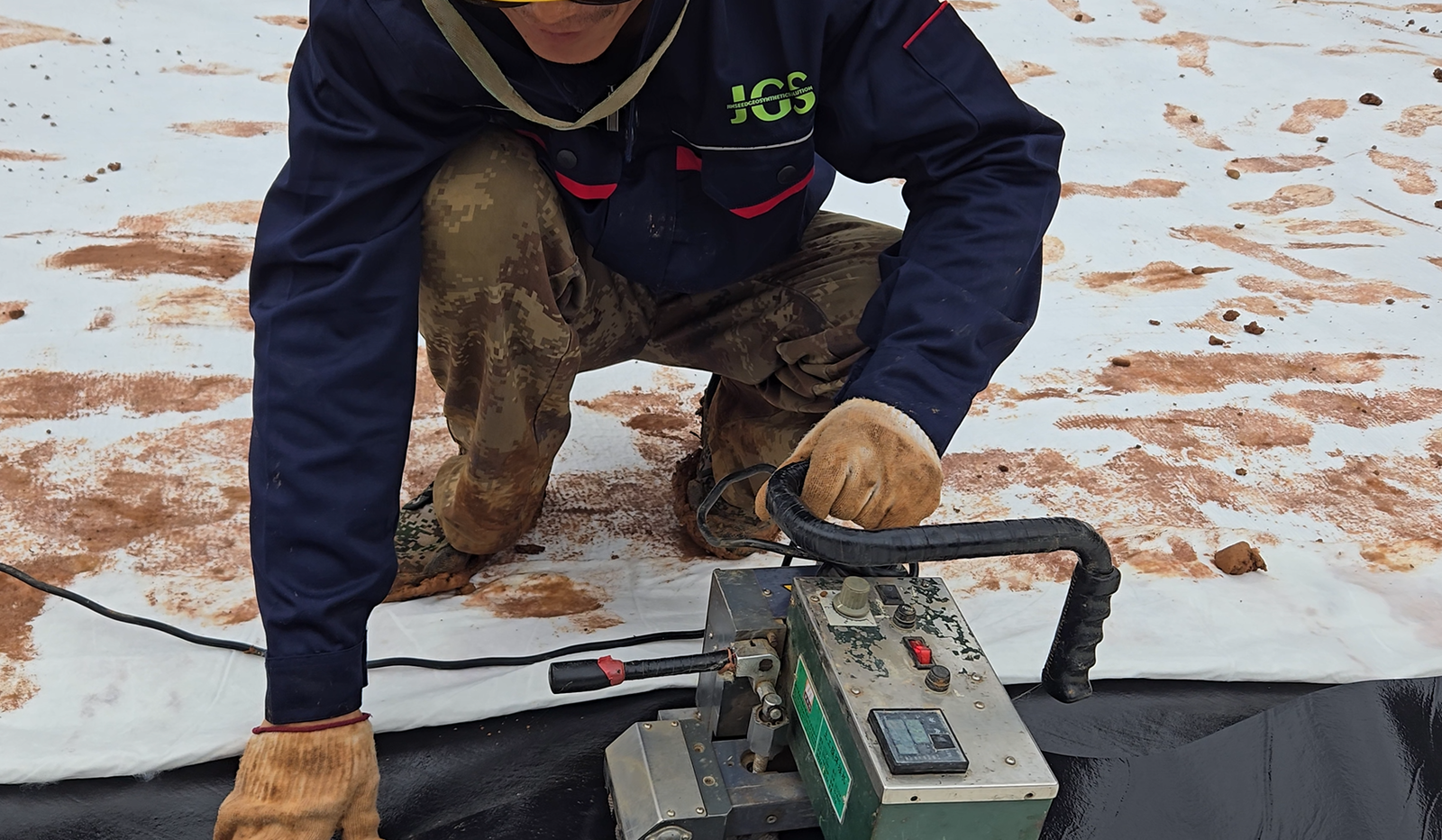
To get the full load-spreading benefit from the fabric, it has to be installed flat, without wrinkles. Before the first load of stone is dumped, the sheet should be tensioned and smoothed like a tightly made bed. Seams are the weakest part of the installation, so fastening details matter:
- Use heavy-duty staples: 8-inch U-pins made from 11-gauge steel are a common choice.
- Fastening spacing: along the perimeter, install one staple every 3 feet.
- Overlap on very soft subgrade: where the soil is extremely weak, overlap adjacent sheets by a full 36 inches.
- Reinforce seams: use two staggered rows of staples in the overlap so the joint does not separate under load.
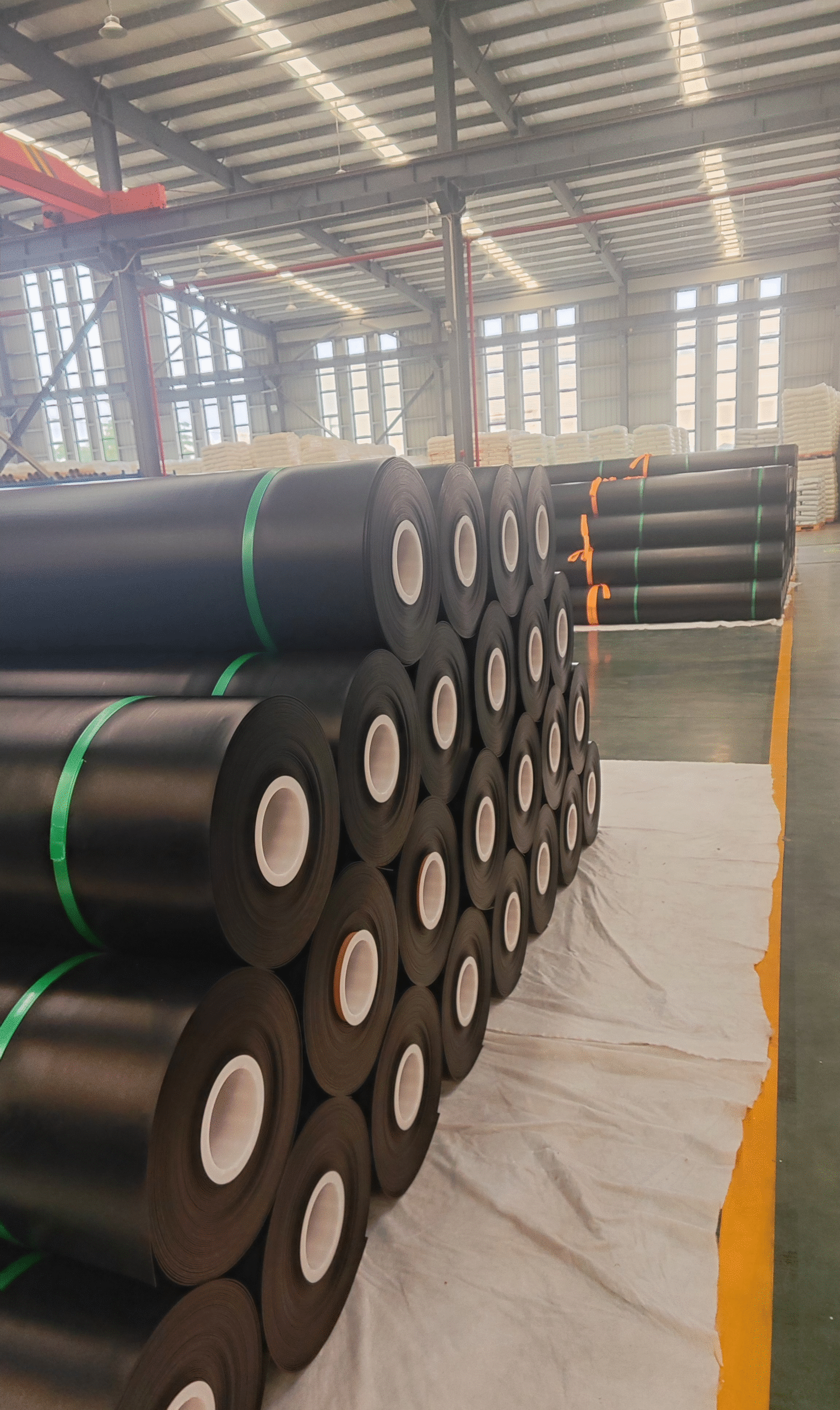
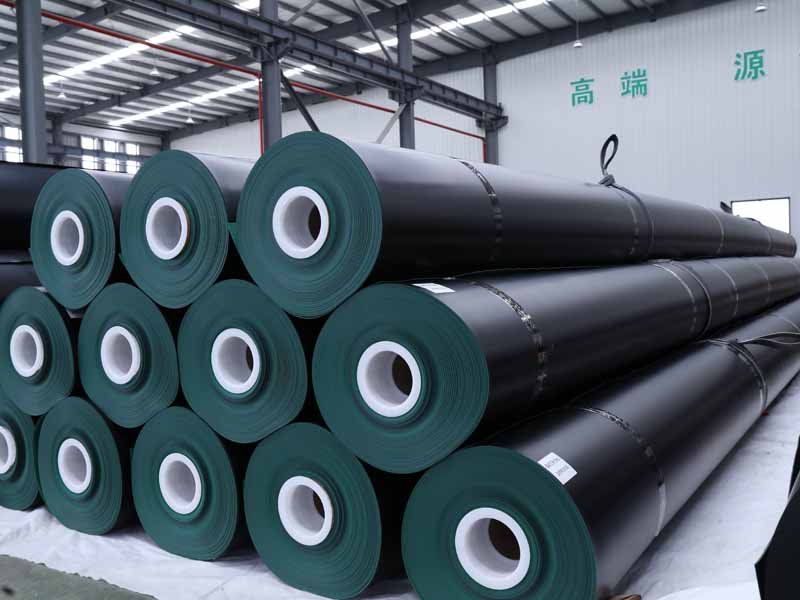
How much weight the finished surface can really carry often depends on whether the right roll of black geotextile was chosen in the first place. When the load is spread more evenly, the gravel stays where it belongs instead of slowly disappearing into the mud below.
Material Loss
Imagine a standard 100-foot residential driveway. You have just brought in a full load of clean #57 stone, and at first the surface looks great. But once the rainy season starts, the subgrade below softens like a sponge.
Then you drive your Ford F-150 onto it, and the wheel loads press the gravel into the softened soil. That is gravel sink.
Without a separator, a driveway can lose roughly 1.5 to 2 inches of gravel thickness each year. It may not sound like much at first, but over time the cost adds up quickly:
- Material is not cheap: commercial gravel often runs about $45 to $65 per ton. A typical resurfacing job may require around 10 tons just to fill the depressions.
- The bigger hidden cost: once the stone is delivered, it still has to be spread and regraded. Renting a compact loader can run around $250 per day, and labor adds even more.
If that repair cycle repeats every two or three years, total spending over 10 years can easily reach several thousand dollars.
A simple way to stop that pattern is to install a layer of woven geotextile between the gravel and the soil.
You can think of it as a large, high-strength support layer spread across the subgrade. It provides two immediate benefits:
- Prevents settlement: the fabric has high tensile resistance. When a vehicle weighing several thousand pounds drives over it, the load is spread across a wider area, so sharp stone does not punch down into the mud.
- Separates slurry: water can pass through, but the mud underneath does not migrate upward. That helps keep the gravel clean instead of turning it into a muddy mix.
A simple comparison makes the difference easier to see:
| Item | Driveway Without Geotextile | Driveway With Woven Geotextile |
|---|---|---|
| Upfront Added Cost | $0 | About $80-$100 (fabric and U-pins) |
| Gravel Loss Over 5 Years | About 30 to 40 tons | Nearly zero |
| 10-Year Maintenance Cost | Easily exceeds $3000 (stone + equipment rental) | Usually under $100 (mostly occasional cleanup) |
One installation note: overlap the fabric generously at seams. Adjacent sheets should overlap by at least 2 feet (about 60 cm). It also helps to leave extra fabric at the edges so the outer stone is better contained and mud cannot creep in from the sides.
Managing Water Flow
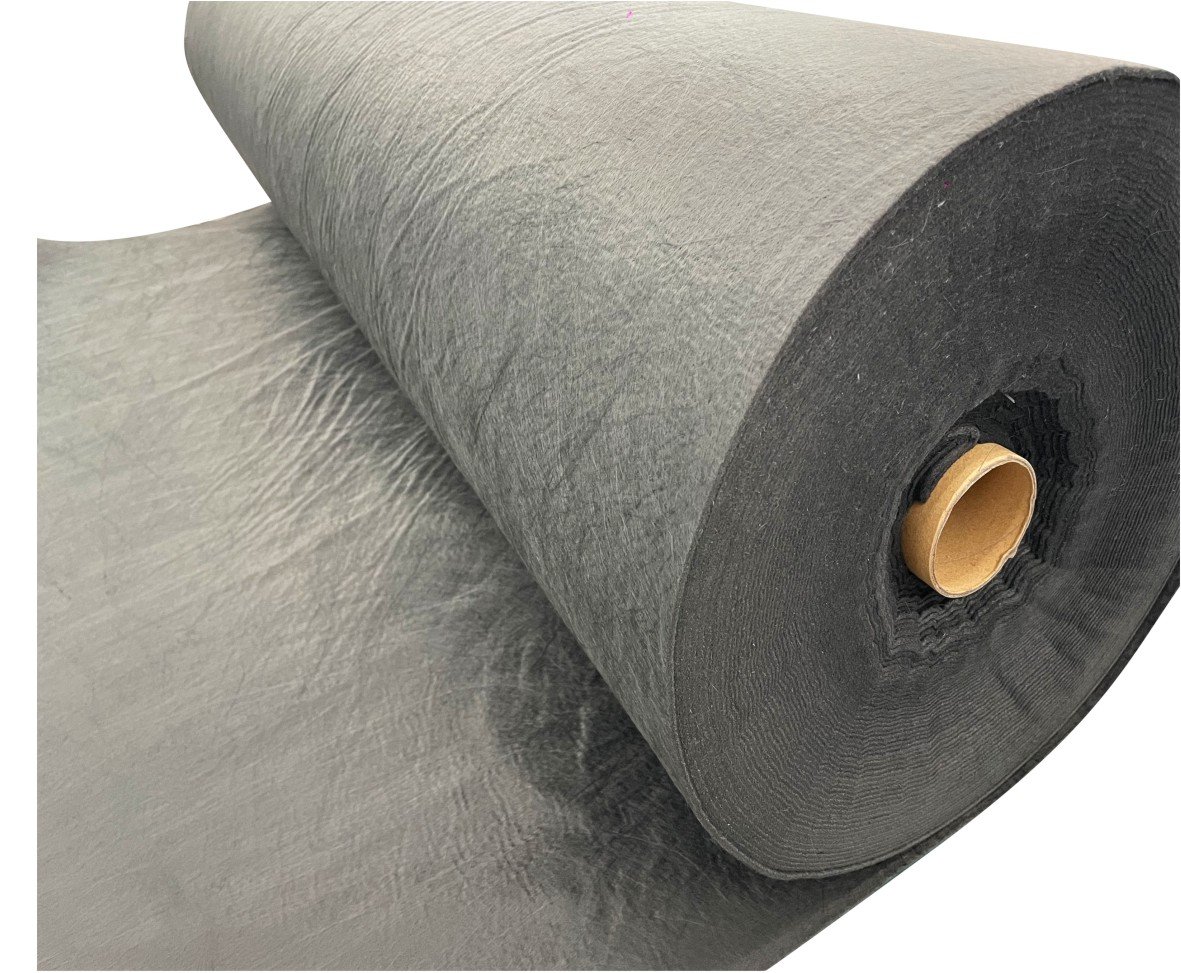
Under ASTM D4491 testing, heavy-duty nonwoven geotextiles can reach water flow rates of 100 to 150 gpm/ft². An 8 oz needle-punched nonwoven typically has a three-dimensional void structure with porosity above 70%, allowing about 0.2 gallons of water per second to pass through each square foot. Installed beneath gravel, it can intercept fine soil particles in the 0.15 mm to 0.212 mm range and prevent mud from mixing into the stone layer.
Soil Particle Interception
Imagine you have just invested in a clean new gravel driveway or installed a French drain in the backyard. When a heavy rain hits, water starts moving down through the gravel.
If the gravel sits directly on soil, that water can turn the subgrade into slurry. Once vehicles drive over it or runoff flows through it, the mud begins pushing upward into the voids between the stones. Before long, the gravel starts disappearing into the subgrade and the drain can clog completely.
That is where geotextile comes in. It sits between the gravel and the soil like a heavy-duty filter layer, letting water pass while holding the soil below.
Whether that filter works depends largely on its Apparent Opening Size (AOS)—in practical terms, the size of its openings. The right opening size depends on the actual soil below:
- If the site has sandy soil with coarser particles: a fabric with a somewhat larger opening is usually sufficient. Water can pass through quickly, while the larger sand particles remain below.
- If the subgrade is clay or silt with flour-like fines: you need a much tighter nonwoven geotextile. If the openings are too large, the fine slurry can pass through the fabric.
An important detail is that geotextile does not work alone.
As sediment-laden water moves toward the fabric, the slightly larger particles are caught first. Those particles gradually build up on the soil side of the geotextile and form a thin natural filter cake. Working together, the fabric and that filter cake create the effect you want: water passes through, but the soil does not.
Filtration alone is not enough, though. The fabric also has to survive the weight of several tons of sharp stone and repeated traffic loading.
If you use a thin black landscape cloth from a garden center, it may tear as soon as stone is dumped on it. Once a single hole forms, slurry can rush upward through that opening and the entire drainage layer starts failing. Engineering-grade geotextiles—usually made from polypropylene that can remain stable underground for decades—are much more durable. Even under hundreds of pounds of stone pressure, their openings stay more dimensionally stable and continue filtering effectively.
Permittivity Comparison
ASTM D4491 is the standard laboratory test used to measure how fast water can pass through a fabric. A geotextile sample is clamped tightly inside a test cylinder, and water is applied under a precisely controlled 50 mm head. The equipment records the actual flow through the fabric over a fixed time interval.
The result is typically expressed as gallons per minute per square foot. A common 4 oz needle-punched nonwoven often tests above 135 gpm/ft².
In practical terms, that means a square meter of fabric can pass more than 500 liters of intense stormwater per minute. During a long Seattle rain event, where rainfall rates may reach 2 to 3 inches per hour, water can move through the 70% void structure of a 4 oz nonwoven in seconds.
At 8 oz, the fabric becomes denser as the fibers are needled into a thicker structure. That added thickness often drops the flow rate to around 90 gpm/ft². The water pathway becomes longer and more tortuous, so the flow rate naturally declines.
In hurricane-prone Florida, using an overly heavy fabric around a French drain can create problems. A PVC pipe wrapped on all sides with 8 oz material may only take in about 80 gallons per minute.
If four roof downspouts are feeding the system at once, inflow can easily exceed 150 gallons per minute. When the intake rate cannot keep up, excess stormwater starts backing up into the turf above.
On gravel roads that carry heavy truck traffic, drainage often has to give way somewhat to structural support. Slit-film woven geotextiles are made from flat polypropylene tapes woven tightly together.
Water can only move downward through the very narrow gaps at the tape intersections, often under 0.1 mm. A heavy-duty woven fabric with 200 pounds of grab strength may have a permittivity of only 4 to 6 gpm/ft². In the field, that may only remove a few inches of water per day.
If you need both higher load capacity and better drainage beneath a high-load driveway, monofilament woven geotextile is often the better option. These products are woven from round plastic filaments and often maintain porosity around 15%.
| Material / Construction Type | Weight or Strength Rating | ASTM D4491 Measured Flow Rate | Typical Application | Estimated Drain-Down Time (2-Inch Rain) |
|---|---|---|---|---|
| Needle-punched nonwoven | 3 – 4 oz/yd² | 135 – 150 gpm/ft² | Backyard French drains, light landscape beds | Under 2 minutes |
| Needle-punched nonwoven | 6 – 8 oz/yd² | 90 – 110 gpm/ft² | Retaining wall backfill, commercial soakaways | 5 – 10 minutes |
| Slit-film woven | 200 – 315 lbs | 4 – 6 gpm/ft² | Pavement subbase, high-load driveways | Over 4 hours |
| Monofilament woven | 250 – 400 lbs | 40 – 70 gpm/ft² | Coastal riprap, high-void trench drains | 20 – 30 minutes |
Monofilament products can raise the flow rate to 40 to 70 gpm/ft² while still resisting about 300 pounds of tearing force. Under massive riprap armor stones on a coastal structure, water returning with the tide may move at several hundred gallons per second. The monofilament openings let that water drain rapidly while keeping the soil behind the structure in place.
The gpm/ft² number on the package label matters a great deal. In Ohio, one contractor was working on a 3,000-square-foot permeable parking lot. The plans called for a nonwoven geotextile with a flow rate of 120 gpm/ft² around a 2-foot-deep stone storage reservoir.
The wrong material was installed—a cheaper woven fabric rated at only 8 gpm/ft². After a 2.5-inch fall storm, the water could not infiltrate fast enough and remained ponded on the surface. It took two and a half full days of sunshine for the parking area to dry.
Water underground always follows the path of least resistance. If two sheets of geotextile are overlapped by only 5 inches, high water pressure can force the seam open. Groundwater can then rise through the gap, carrying 0.2 mm fines into the clean 3/4-inch stone above.
- Minimum overlap: on flat ground, overlap two rolls by 12 inches.
- Wider on soft soil: in silty soil with moisture content above 25%, increase overlap to at least 24 inches.
- Fastener spacing: install a 6-inch U-pin every 3 feet.
Those pins are there to keep the fabric from shifting when aggregate is dumped on top. A 1.5-ton skid steer dropping #57 stone creates a high impact load. If an unsecured nonwoven sheet folds back at one corner and exposes just 3 square feet of soft soil, the trench can lose 15% of its drainage capacity within a month.
Hydraulic behavior also changes on slopes. On a retaining wall built into a 30-degree slope, stormwater moves laterally along the fabric surface under gravity. A nonwoven geotextile with a flow rate above 100 gpm/ft² and sufficient tensile strength can pass water quickly through its pore structure. That can reduce hydrostatic pressure behind the wall from about 2 psi to near zero, helping prevent wall movement or overturning.
Subsurface water flow becomes even more complex around tree roots. A mature oak can absorb around 100 gallons of groundwater per day. If the area is covered with a woven fabric rated below 10 gpm/ft², surface rainfall may be restricted near the root zone. Within two months, the moisture content around the roots can fall below 15%, and the tree may begin showing dieback. A high-flow nonwoven rated around 150 gpm/ft² allows rainwater to move through and reach the root zone 2 feet below grade.
Freeze-thaw climates also put drainage performance to the test. In Minnesota, January temperatures can drop to -20°F. If water in an underground trench cannot drain away within 3 hours, it can freeze inside the voids between the stones. Ice expands by about 9% in volume, pushing the surrounding soil apart. When it thaws in spring, the surface can settle by 2 inches. A fabric rated at 120 gpm/ft² helps keep the trench free of standing water before winter sets in.
Maintaining Flow Capacity
A typical backyard drainage trench may be 18 inches deep and lined with a 4 oz needle-punched nonwoven. During heavy rain above 2 inches per hour, runoff from the roof and lawn can pour into the trench. The three-dimensional fiber network inside the fabric allows as much as 135 gallons per minute per square foot to pass through.
Even during intense rain, the water level in the trench should not rise to the surface. The fabric contains 2 tons of washed #57 stone, and water moves downward through the roughly 40% void space between the rocks before entering the perforated 4-inch PVC drain pipe at the bottom.
Without that filter fabric, drainage capacity can collapse within the first six months. Silt from the surrounding soil moves into the trench with the water. In less than a year, the voids between 1.5-inch stones can be filled by mud to nearly two-thirds of their volume.
A pipe that once discharged 100 gallons per minute may drop to less than 20 gallons per minute after being clogged with fines. Water then remains trapped in the aggregate layer. Under a driveway, that means the gravel stays saturated, inter-particle friction falls sharply, and an 80,000-pound garbage truck can deform the surface.
- Sediment intrusion: 0.1 mm silt fills the voids between the stones under hydraulic pressure.
- Pipe failure: the slots at the bottom of corrugated pipe become sealed with clay.
- Storage loss: the trench loses more than 30% of its natural detention volume.
- Subgrade softening: excess moisture turns firm soil into weak, saturated material.
Adequate overlap at the seams is essential if the system is expected to keep flowing for decades. Adjacent sheets should overlap by at least 12 to 18 inches. In settlement-prone soft subgrades, the overlap should be increased to 24 inches or more.
If the overlap is too small, the weight of the stone can pull the seam apart. Under hydrostatic pressure, even a half-inch opening can admit hundreds of pounds of muddy fines within a year. Once that starts, drainage capacity drops progressively from the leak point outward.
Permittivity should be checked carefully when choosing the fabric. ASTM D4491 data show large differences between materials. An 8 oz heavy nonwoven is durable, but it may only pass about 90 gallons per minute per square foot.
Installed in a low-lying area that regularly ponds, that heavier fabric can slow infiltration. Water may remain on the lawn surface. A lighter 4 oz nonwoven rated at 150 gpm/ft² can better handle the high inflow from three roof downspouts discharging at the same time.
- Downspout collection zones: use high-flow nonwoven rated at 130+ gpm/ft².
- Heavy gravel driveways: use 8 oz fabric around 90 gpm/ft² to better resist traffic loading.
- Behind coastal riprap: use monofilament woven fabric around 40 gpm/ft² to handle drawdown flow.
The environment around subsurface drains can be chemically and biologically complex. Iron bacteria can live in the water and produce a sticky slime. That biofilm traps free mineral particles as small as 0.05 mm and gradually coats the polyester fibers.
As the openings clog, a 0.15 mm pore size can effectively shrink to 0.01 mm. In a year and a half, groundwater flow can fall by nearly 90%. Polypropylene geotextiles with antimicrobial additives can better resist those rust-colored deposits, and after five years underground may still retain more than 80% of their original design flow rate.
Retaining walls in sloped residential yards also have to release large amounts of water. Behind the wall may be a 4-foot-high layer of #57 stone wrapped in filter fabric. During heavy rainfall, several tons of water mixed with soil can press against the wall.
If that water cannot drain, hydrostatic pressure can push over an 8-inch-thick concrete retaining wall. The geotextile allows water from the soil to pass through at roughly 0.2 gallons per second into the gravel layer. From there, the flow exits through a drain pipe embedded at the base of the wall.
The soil remains on the outside of the fabric and, under flow pressure, forms a natural filter cake only a few millimeters thick. Water then moves through that filter cake and the geotextile. Even after three straight days of heavy rain, several hundred gallons of accumulated water behind the wall can be drained in about 2 hours.
Under a driveway, water management is also influenced by elongation properties. As a pickup truck crosses the gravel surface, the geotextile underneath is pulled downward. A material with 50% elongation can deform without tearing, allowing the vertical tire load to spread over several square feet of soil around it.
As long as the fabric is not torn, the hundreds-of-micron-scale flow openings remain intact. Even where the groundwater table rises and falls, moisture can still move through the separation layer instead of remaining trapped in the stone base.
Fighting Back Weeds
According to U.S. Department of Agriculture test records, gravel surfaces placed over 5 oz nonwoven geotextile saw a 98% reduction in weed growth during the first year. Installed between the gravel and the subgrade, the fabric cuts transmitted light at the soil surface to below 1%. Without the light spectrum needed for photosynthesis, many weed seeds remain dormant longer. At the same time, the microporous polypropylene structure still maintains water flow of about 110 gallons per minute per square foot, allowing rain to move into the soil instead of lingering near the surface where weeds can germinate.
Light Blocking
In Tucson, Arizona, midday summer sunlight can reach 11,000 foot-candles. A 2-inch gravel layer on a driveway is not thick enough by itself to block all light. When a precision light meter probe is placed on the soil surface beneath the gravel, the reading can still show 150 to 200 foot-candles.
Seeds of crabgrass and Kentucky bluegrass can respond to as little as 50 foot-candles. Red light around 660 nm passes through the gaps between the stones and triggers the phytochrome response that breaks dormancy. Once a 5 oz black nonwoven polypropylene geotextile is added, the meter reading below the fabric drops to essentially zero.
To create a high-density weed barrier, manufacturers often add industrial carbon black at around 2.5% by weight to the polypropylene resin. Those tiny black particles coat each fine plastic fiber and turn the otherwise semi-translucent material into a dense black sheet. The needle-punched fiber network blocks incoming photons and forces light transmittance at the soil surface below 0.01%.
Plants need visible light in the 400 to 700 nm range to produce chlorophyll. If a professional PAR meter is inserted through the gravel and placed below a 5 oz geotextile, the measured photon flux density may be only 0.05 µmol/m²/s.
Field weed-control records in California showed bindweed rhizomes buried 6 inches below grade sending up pale shoots about 1 inch long. In total darkness, the biochemical pathway needed for chlorophyll production is interrupted. Instead of developing into strong green weeds, the shoots become pale and fragile, much like blanched sprouts.
| Fabric Type | Manufacturing Process | Laboratory Light Transmission (ASTM) | Typical Use Level |
|---|---|---|---|
| 3 oz woven | Black slit-film weave | 4.5% – 6% | Short-term construction site pads |
| 5 oz nonwoven | Random needle-punched, heat-stabilized | < 0.1% | Long-term residential gravel areas |
| 8 oz nonwoven | Thicker multi-needle construction | 0% (full darkness) | Commercial heavy-truck lanes |
Pale shoots searching sideways for light below the fabric can exhaust their stored starch reserves within 14 to 21 days. Once those reserves are gone, the weakened sprouts lose viability and are broken down in the moist soil by anaerobic bacteria over the following few weeks.
Summer conditions in Florida expose yard surfaces to intense UV radiation. That sunlight can break carbon-hydrogen bonds in polymers. Low-grade polypropylene fibers without UV stabilizers may become brittle after only 300 hours of sun exposure. Carbon black acts as an absorber that slows aging and helps protect the material.
Higher-quality weed barrier fabrics can pass 600 hours of accelerated UV aging tests while retaining about 75% of their original tensile strength. Once covered with a 3-inch layer of river stone, the fabric is shielded from direct sunlight, and the buried polymer structure can remain stable for as long as 20 years.
Rough handling during installation can reduce light-blocking performance. If a 4 oz nonwoven is stretched by about 15%, the dense fiber network can open enough to create small visible gaps. In those stretched zones, measured light transmission may rise from 1% to 5.5%.
- Knife-cut edges: cut fibers can loosen and create a 1/4-inch light path along the slit.
- Undersized overlaps: if adjacent sheets overlap by less than 6 inches, heavy equipment can separate them and let sunlight in.
- Steel staple punctures: driving 11-gauge staples through the fabric can leave pinholes that show tiny white spots of light at midday.
- Uplift from tree roots: large roots can push against the fabric and thin the fibers locally, creating light-transmitting weak spots several inches across.
The size of the surface aggregate also affects how much light reaches the fabric. With 3/8-inch pea gravel, the gaps between stones are very small. A 2-inch layer of pea gravel can block about 98% of incoming sunlight, so the geotextile does not have to do all the work on its own.
If you switch to large 3- to 5-inch Colorado river rock, the gaps can be wide enough to fit two fingers. Midday sunlight as strong as 10,000 lumens can reach the black polypropylene fabric through those gaps. In only 10 minutes, the temperature at the illuminated spot can climb to 140°F.
| Surface Aggregate Size | Recommended Thickness | Share of Light Reaching the Base | Matching Fabric Weight |
|---|---|---|---|
| 3/8-inch pea gravel | 2 inches | < 1% | 4 oz |
| 1.5-inch crushed stone | 3 inches | 5% – 8% | 5 oz |
| 4-6-inch cobbles | 4 inches | 15% – 20% | 8 oz, double layer |
A simple field check is to hold a black fabric sample tightly over a 60-watt LED flashlight in a dark hallway. If you can still make out the bulb shape through the material, the fabric weight is probably under 3 oz.
In Dallas, professional landscape crews often roll out 8 oz nonwoven geotextile over a 1,500-square-foot driveway. Infrared temperature readings have shown the soil temperature below the fabric dropping by 6°F within 2 hours. Without light and heat stimulation, millions of weed seeds buried 6 inches below grade can remain in deep dormancy for as long as 7 years.
Staple Fixing
When installing geotextile, it is a mistake to assume that the weight of the gravel alone will keep the fabric in place. In windy conditions—such as gusts of 30 to 40 mph—unsecured edges can curl back easily. And when heavy equipment such as a skid steer dumps tons of gravel on top, the resulting pull can shift, wrinkle, or tear the sheet.
That is why landscape pins are used to hold the fabric flat against the ground.
- Gauge: 11-gauge U-pins are a solid choice. If the steel is too thin, the pin can bend after just a couple of blows in slightly firm soil.
- Length depends on soil: in most soils, 6-inch-long U-pins with a 1-inch crown are enough. In very loose soils, such as sandy ground, 6 inches may not hold well, so 8-inch or even 12-inch pins are the better choice.
- Corrosion resistance matters: anything buried in the ground will be exposed to moisture, so hot-dipped galvanized pins are recommended. Plain steel can rust and become brittle within a few years, while galvanized pins can last much longer underground.
Pins should not be placed randomly. A simple rule works well: tighter spacing at the edges, wider spacing in the middle.
- Seams and edges (highest priority): the joints where two sheets overlap—typically 6 to 8 inches in lighter-duty use—are the most likely places for weed intrusion and movement. Along those seams, place a pin every 12 to 18 inches (about 30–45 cm). Use the same spacing along the outer edges.
- Center field: the main purpose here is wrinkle control. A staggered pattern of one pin every 3 to 4 square feet is usually enough.
- Slope installations: if the yard or driveway has a slope over 15 degrees, do not drive the pins vertically. Instead, drive them into the soil at a 45-degree angle pointing uphill. That gives them much better holding power against downslope movement during rainfall.
A few practical installation notes
- Use a rubber mallet: a white rubber mallet is better than a steel hammer because it is less likely to damage the galvanized coating on the pin.
- Do not force pins through roots or large stones: if you hit a hard obstruction, stop immediately. Pull the pin out and move it 2 to 3 inches to the side. If a pin has bent badly, discard it and use a new one. A distorted pin will not hold well and may damage the fabric.
- Drive every pin flush: the top of the pin should sit flat against the fabric. If it sticks up, it can eventually puncture a tire when vehicle loads move the gravel above it.
Shallow Root Removal
By the fourth autumn after installing 5 oz geotextile in a suburban Pennsylvania yard, oak leaves and windblown dust can build up in the voids between 1.5-inch river rock. A ruler may show that this decayed surface debris has formed a thin organic layer about 0.25 inches thick.
Clover and crabgrass seeds dropped by birds can sprout using only a little dew in the early morning. Tiny roots less than 0.1 mm thick begin pushing downward into that shallow new layer of fines.
But those roots usually hit a hard barrier within half an inch. A polypropylene nonwoven with puncture resistance around 140 pounds-force blocks downward growth. The main root ends up circling sideways in the thin 0.25-inch surface layer instead of penetrating deeper into the soil.
Landscape maintenance records from Ohio State University note that pulling a 6-week-old dandelion from open soil may require more than 20 pounds of upward force.
The same-size dandelion growing above geotextile may require only about 2.5 pounds of pull-out force. With a pair of grippy gloves, you can hold the stem low near the stone and pull upward steadily for about 2 seconds. The shallow, web-like root system usually comes up intact.
Timing also matters. If the sprinkler system runs for 15 minutes at 4 a.m., working at around 7 a.m. can make removal easier because the thin surface fines have absorbed about 0.2 gallons per square foot of moisture and become soft. Under these damp conditions, full root removal can approach a 99% success rate.
Different plant sizes also call for different methods:
- For common broadleaf weeds about 3 to 4 inches tall, nitrile-coated garden gloves and a steady upward pull usually work well.
- For thorny weeds such as Canada thistle, use longer leather gloves or gloves with cut-resistant reinforcement.
- For dense patches of sprouts under 1 inch tall, a triangular hoe with a 54-inch handle can speed up removal.
For mature burdock with stems around 0.6 inches thick, pulling straight up with two fingers is usually not enough. The thicker stem and side roots can become wedged between several angular pieces of decorative stone.
Wearing heavy gloves, grip the plant low near the stone, twist 90 degrees to the left, pause for a second, then twist back about 180 degrees to the right. That motion helps break the side roots free from the stone surface. After that, an upward pull of about 5 pounds is often enough to remove a weed about half a foot tall.
When deeply rooted weeds are pulled out, they often bring decorative stone with them. A half-pound clump of weeds may carry 3 ounces of landscaping rock. Over a large cleanup, the loss of material can become noticeable and replacement costs can add up.
Some Texas gardeners use a steel wheelbarrow with a 10-cubic-foot capacity and place a square metal screen with 1/4-inch mesh over the top. The pulled weeds are tossed onto the screen, then shaken back and forth for about 15 seconds to separate the roots and soil from the stone.
Clean gravel drops back into the wheelbarrow through the openings. The dry roots left on the screen weigh much less and can shrink in volume by nearly 70%. Two 30-gallon paper yard-waste bags can often be reduced to half a bag once the stone and soil are screened out.
In Phoenix, Arizona, summer temperatures can reach 105°F, and thousands of tiny purslane seedlings can appear almost overnight.
Cleaning a 3,000-square-foot gravel area by hand can take a long time when the seedlings are that small. In those cases, landscape crews may use a 20-pound propane tank and a 36-inch torch with an electronic igniter.
The torch can produce a blue flame up to 2000°F. Held about 3 inches above the stone and moved steadily across the surface, it exposes the seedlings to heat for only about 0.5 seconds. That brief treatment is enough to boil the water inside the plant cells, causing the cell walls to rupture.
By midday, the leaves have turned dark and the weak shallow roots resting on the geotextile have dried out or carbonized. After manual removal or flame treatment, the surface is often left with dried debris and bits of soil that can become food for the next generation of weeds if they are not cleaned away.
That final cleanup is often done mechanically:
- Use a 50 cc backpack leaf blower and keep the nozzle about 4 inches above the surface.
- At full throttle, a 170 mph air stream will strip loose fines from between the stones.
- Removing that organic layer can delay the next flush of weed growth by as much as 8 months.
In Florida, weed-control crews often follow up by spreading a granular pre-emergent herbicide after cleanup. A typical application rate is about 4 pounds per 1,000 square feet. Overnight irrigation adding about 0.25 inches of water helps carry the active ingredients down into the upper layer where new weed seeds are likely to germinate.

Leave a reply