

When purchasing geomembranes, first clarify the specifications:
choose HDPE for strong acid and alkali environments, and LLDPE for irregular terrain;
For engineering anti-seepage, a thickness of ≥1.5mm is recommended.
When calculating the area, an additional 10% must be reserved for welding overlap and anchoring.
Regarding quality, indicators must comply with GRI-GM13/17 standards, carbon black content should be between 2.0-3.0%, and the manufacturer should hold ISO 9001 certification.
When screening suppliers, be sure to require the use of 100% virgin resin rather than recycled materials.
Prioritize manufacturers with 7-8 meter wide production lines to reduce weld seams, and verify the Material Test Report (MTR) for each batch or support SGS third-party sampling to ensure the quality of the anti-seepage project.
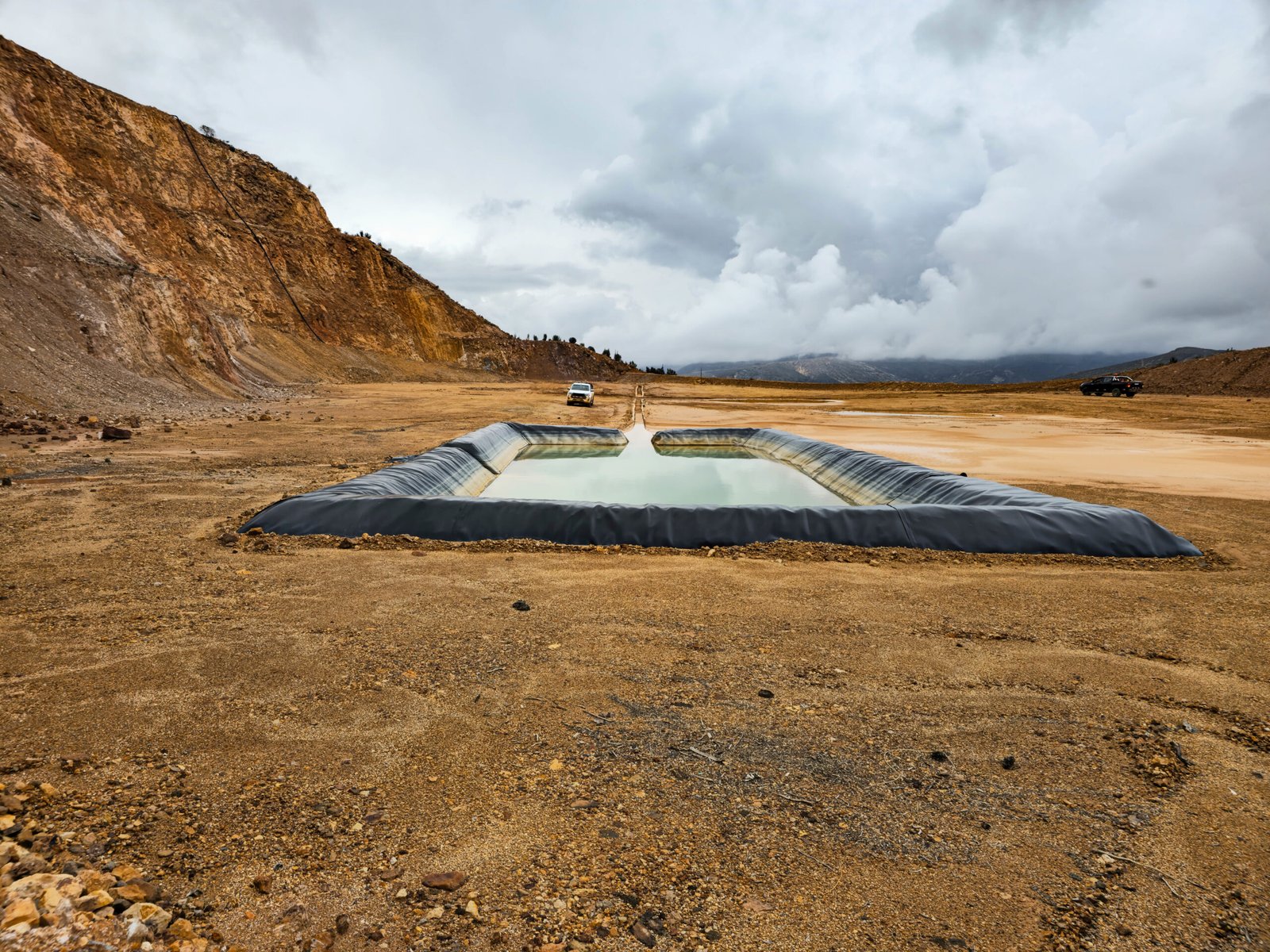
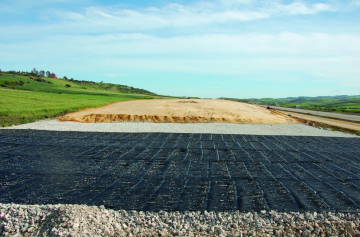
Construction of geomembrane pool in open pit mine in Australia.
Define Your Project Requirements
Defining requirements should be based on GRI-GM13 or GM17 standards.
Technical indicators include thickness (0.5mm to 3.0mm), puncture resistance (ASTM D4833), and carbon black content (2.0%-3.0%).
The total area needs to be calculated with an additional 12% for welding and anchoring loss.
For strong chemical exposure environments with pH 2-12, HDPE material must be specified;
If the site is uneven, LLDPE specifications with an elongation at break of 800% should be matched.
Selection Criteria
According to the GRI-GM13 standard, the density of HDPE must be no less than 0.941 g/cm³.
This high crystallinity imparts excellent chemical resistance to the material, enabling it to withstand strong acid or alkali solutions with pH values between 2 and 12 for long periods.
It is commonly used in hazardous waste landfills or heap leach pads in the mining industry.
At the molecular level, HDPE uses a medium-pressure or low-pressure polymerization process, enhancing its UV resistance by adding 2% to 3% carbon black.
HDPE complying with ASTM D1505 typically maintains a physical property retention rate of over 90% after undergoing accelerated aging tests for up to 2000 hours.
Linear Low-Density Polyethylene (LLDPE) introduces shorter side chains into the molecular chain, usually copolymerized from ethylene and higher concentrations of comonomers (such as butene, hexene, or octene).
This structure reduces the crystallinity of the material, with density typically between 0.915 and 0.930 g/cm³, complying with GRI-GM17 specifications.
In practical applications, the elongation at break of LLDPE can easily exceed 800%.
This allows it to absorb stress through its own plastic deformation without cracking when facing uneven foundation settlement or complex topographical fluctuations.
In landfill capping systems, where decomposition of the underlying waste leads to significant local subsidence, LLDPE is often the preferred material.
| Polymer Property | Test Standard | HDPE (GRI-GM13) | LLDPE (GRI-GM17) | PVC (ASTM D7176) |
|---|---|---|---|---|
| Density (g/cm³) | ASTM D1505 | ≥ 0.941 | 0.915 – 0.930 | 1.20 – 1.35 |
| Yield Strength (kN/m) | ASTM D6693 | 15 – 30 (Depends on thickness) | N/A | N/A |
| Elongation at Break (%) | ASTM D6693 | ≥ 700 | ≥ 800 | ≥ 250 |
| Carbon Black Content (%) | ASTM D1603 | 2.0 – 3.0 | 2.0 – 3.0 | N/A |
| Tear Resistance (N) | ASTM D1004 | 120 – 350 | 100 – 250 | 50 – 150 |
| Operating Temperature Range (°C) | Internal Standard | -30 to 70 | -40 to 60 | -15 to 50 |
Polyvinyl Chloride (PVC) geomembrane is a thermoplastic material whose properties are primarily adjusted by adding 30% to 40% plasticizers.
Unlike polyethylene materials, PVC possesses excellent welding performance and factory prefabrication capabilities.
In a factory environment, PVC can be welded into large sheets exceeding 2000 square meters, then folded and transported to the site.
This method reduces the number of field weld seams by more than 80%.
PVC can closely conform to rough foundation surfaces, and its flexibility is superior to any rigid polymer.
Because plasticizers may migrate or volatilize in long-term exposed environments, causing the material to become brittle, PVC is usually covered under at least a 30cm soil protection layer or used for temporary anti-seepage projects that require frequent folding.
Ethylene Propylene Diene Monomer (EPDM) is a highly stable synthetic rubber polymer that can be used for over 30 years in outdoor exposed environments without the need for large amounts of stabilizers.
Under the ASTM D6134 standard, EPDM exhibits an extremely low coefficient of linear expansion.
In environments with extreme temperature differences (such as from 50°C during the day to -20°C at night), it does not produce significant wavy ripples like HDPE.
EPDM has very strong multiaxial elongation capabilities and maintains good flexibility even at low temperatures of -45°C, making it suitable for water storage projects in high-latitude regions.
| Polymer Type | Chemical Resistance (Acid/Alkali) | Flexibility/Conformance | UV Exposure Lifespan | Field Welding Difficulty |
|---|---|---|---|---|
| HDPE | Excellent | Lower | Excellent (with Carbon Black) | Medium (Requires professional equipment) |
| LLDPE | Good | High | Good (with Carbon Black) | Medium |
| PVC | Average | Extremely High | Poor (Needs coverage) | Easy (Solvent or heat welding) |
| EPDM | Good | Extremely High | Excellent | Difficult (Requires tape or vulcanization) |
| fPO | Good | Medium | Excellent | Easy |
Flexible Polyolefin (fPO) is an emerging polymer choice in recent years.
PO does not contain plasticizers internally, so there are no material aging issues caused by plasticizer migration.
In drinking water storage projects in Europe and North America, fPO is often used for liners because it complies with strict food-grade contact standards and does not release chemicals into the water body.
The tensile strength of fPO is generally between HDPE and LLDPE, but its welding window is wider and it is less sensitive to environmental temperature fluctuations at the construction site.
According to experimental records, fPO demonstrates a longer oxidative induction time (OIT) than traditional polyethylene in hot air aging tests at 100°C.
Physical Specifications
The physical thickness of geomembranes corresponds to the ASTM D5199 standard.
Typically, the thickness range of HDPE geomembranes is between 0.75mm (30 mil) and 3.0mm (120 mil), while industry tolerances are controlled within ±10% of the nominal value.
For 1.5mm specifications, the minimum thickness reading at a single point cannot be lower than 1.35mm.
The choice of thickness depends on the engineering pressure strength.
For example, in landfills with depths exceeding 15 meters, materials of at least 1.5mm or more must be used to handle the static hydraulic pressure generated at the bottom.
Thickness uniformity is monitored 24 hours a day by high-precision online ultrasonic scanners to ensure physical continuity for every roll produced.
According to the requirements of the GRI-GM13 standard, the density of HDPE geomembranes must be maintained above 0.941 g/cm³. Density measurement follows the ASTM D1505 standard, which determines the packing density of polymer molecules. Higher density provides excellent chemical resistance and low permeability, but also sacrifices some flexibility. In laboratory tests, small fluctuations in density values significantly affect the mass change rate of the material in chemical media; typically, after a 120-day immersion experiment, the mass change must be maintained at around 1%.
Tensile properties are primarily tested according to ASTM D6693 (for non-reinforced polyethylene).
For 1.5mm smooth HDPE, the standard reading for Yield Strength is typically 23 kN/m, while the Break Strength needs to reach approximately 40 kN/m.
Yield elongation is usually set at around 12%, which is the critical point where the material enters plastic deformation.
Unlike HDPE, LLDPE exhibits a higher elongation at break, often exceeding 800%.
In areas with significant topographical fluctuations or where uneven settlement may occur, this high extensibility prevents the material from brittle cracking due to local stress concentration.
In terms of mechanical resistance, Puncture Resistance is quantified using the ASTM D4833 standard, using an 8mm diameter probe for pressure testing. The puncture value for 1.5mm geomembrane should be no less than 480 N. This data is used in actual engineering to evaluate the material’s ability to resist sharp edges of gravel, tree roots, or underlying liner objects. If the particle diameter of the underlying soil exceeds 12mm, it is necessary to increase the thickness or lay a non-woven geotextile of over 300g/m² underneath to disperse the pressure load.
Tear Resistance is tested according to ASTM D1004, with a minimum value of 187 N for 1.5mm specifications.
To improve slope stability, textured geomembranes increase the surface roughness (Asperities) to over 0.25mm through a spray process, raising the interface friction angle from 8° for smooth surfaces to over 25°.
Carbon Black Content is a key factor in maintaining the long-term physical stability of the material and must comply with ASTM D1603 or ASTM D4218. The standard requires the carbon black ratio to be between 2.0% and 3.0%, ensuring the geomembrane’s ability to resist UV radiation. Besides content, the fineness and dispersion of carbon black are also strictly reviewed under ASTM D5596. Laboratories observe 10 different fields of view under a microscope to ensure there are no agglomerates exceeding 35 micrometers. This uniform distribution prevents the initiation of micro-cracks within the polymer matrix.
According to the Single Point Notched Constant Tensile Load (SP-NCTL) test of ASTM D5397, the material must maintain 500 hours or more without cracking in a specific chemical surfactant environment under a nominal load.
For projects exposed to strong chemical solutions, such as mining heap leach ponds, the ESCR value determines whether the service life of the anti-seepage system can reach the expected 20 to 50 years.
Oxidative Induction Time (OIT) testing is used to evaluate the consumption rate of antioxidants, divided into standard OIT (ASTM D3895) and high-pressure OIT (ASTM D5885). At 200°C and 3.5 MPa oxygen pressure, HP-OIT for high-performance geomembranes is typically required to reach 400 minutes or more. This quantitative data reflects the stability of the material in thermal aging environments. Even if the material is covered under a 1-meter thick protective soil layer, trace elements in the soil and rising groundwater temperatures will still trigger oxidation reactions. Sufficient antioxidant reserves are a physical barrier to maintaining mechanical strength without attenuation.
When calculating specific procurement needs, the physical roll length is typically 100 meters to 150 meters, and the width is between 5.8 meters and 8.0 meters.
Since physical specifications are fixed, a 100mm overlap width must be included in the total area calculation for dual-track extrusion welding.
In a net anti-seepage area of 10,000 square meters, the actual material requirement usually needs to increase by 7% to 10% due to the physical occupation of weld seams and anchoring trenches.
Quality Standards & Certifications
Procurement should be benchmarked against GRI-GM13/17 international standards.
Qualified HDPE membranes must guarantee a carbon black content of 2.0-3.0% to maintain UV resistance.
Physical parameters must strictly follow ASTM D6693 (Tensile), ASTM D1004 (Tear), and ASTM D5385 (Hydrostatic Pressure) testing.
Single rolls of membrane must be equipped with an MTR report, ensuring that the OIT high-pressure oxidative induction time meets the project design life.
Industry Standards
Technical specifications for the global geomembrane industry are primarily formulated by the GSI (Geosynthetic Institute) based in the United States and its subordinate GRI (Geosynthetic Research Institute).
Among them, GRI-GM13 for High-Density Polyethylene and GRI-GM17 for Linear Low-Density Polyethylene are recognized as benchmarks for international trade and engineering bidding.
For smooth-surface HDPE geomembranes with thickness between 0.75mm and 3.0mm, GRI-GM13 stipulates that the resin density must be maintained above 0.940 g/cm³ (based on ASTM D1505 or D792 testing), which is the basic data ensuring the material’s chemical corrosion resistance.
Regarding physical strength, taking a 1.5mm thick smooth-surface membrane as an example, its yield strength must reach 22 kN/m and its break strength 43 kN/m.
To resist UV degradation, the standard requires carbon black content to be strictly controlled between 2.0% and 3.0% (per ASTM D1603), and carbon black dispersion must be rated Grade 1 or 2 via ASTM D5596.
For long-term lifespan evaluation, Standard Oxidative Induction Time (Std. OIT) must be >100 minutes, while High-Pressure Oxidative Induction Time (HP-OIT) must be >400 minutes.
In thermal aging tests, after being stored at 85°C for 90 days, the OIT retention rate of the membrane must remain above 80%; after 1600 hours of UV exposure (per ASTM D7238), the HP-OIT retention rate must also reach 50%.
For application scenarios with higher flexibility requirements, GRI-GM17 stipulates technical parameters for LLDPE geomembranes.
The resin density of LLDPE is typically set below 0.939 g/cm³. For a 1.5mm LLDPE membrane, although yield strength is not a mandatory assessment item, its break strength must reach 40 kN/m, and elongation at break is usually required to be >800%, far higher than the 700% benchmark for HDPE.
Due to the many short side chains in the LLDPE structure, its puncture resistance per ASTM D4833 testing is typically around 370N.
For textured membranes, whether HDPE or LLDPE, the surface roughness (Asperity Height) per ASTM D7466 testing must reach an average of 0.25mm (10 mil) or more to increase the friction coefficient with soil or other geotextiles and prevent slope sliding.
| Performance Parameter | Test Standard | HDPE (GRI-GM13) | LLDPE (GRI-GM17) | fPP (GRI-GM18) |
|---|---|---|---|---|
| Resin Density (g/cm³) | ASTM D1505 | $\ge 0.940$ | $\le 0.939$ | 0.890 – 0.913 |
| Carbon Black Content (%) | ASTM D1603 | 2.0 – 3.0 | 2.0 – 3.0 | 2.0 – 3.0 (if black) |
| Elongation at Break (%) | ASTM D6693 | $\ge 700$ | $\ge 800$ | $\ge 500$ |
| Std. OIT (min) | ASTM D3895 | $\ge 100$ | $\ge 100$ | $\ge 30$ |
| HP-OIT (min) | ASTM D5885 | $\ge 400$ | $\ge 400$ | $\ge 150$ |
| Tear Resistance (N) | ASTM D1004 | 187 (for 1.5mm) | 132 (for 1.5mm) | 132 (for 1.5mm) |
| Puncture Resistance (N) | ASTM D4833 | 480 (for 1.5mm) | 370 (for 1.5mm) | 250 (for 1.5mm) |
In specific industrial or municipal projects, flexible polypropylene (fPP) geomembranes follow the GRI-GM18 standard.
fPP material does not contain plasticizers.
Although its standard OIT requirement is only 30 minutes, its performance in thermal stability tests is often superior to polyethylene materials.
For reinforced geomembranes containing fabric reinforcement, such as reinforced LLDPE, GRI-GM25 should be referenced.
This standard focuses on the peel strength between the fabric and the coating as well as overall grab strength, with the break load typically needing to reach over 1000N.
In the European market, besides referencing the GRI series, compliance with the EN ISO system is required, such as EN 13361 (for reservoirs and dams) or EN 13491 (for fluid barriers).
These European standards have stricter requirements on testing frequency; for example, a multiaxial tensile test must be performed every 10,000 square meters, and different heating cycle protocols are used for material oxidative degradation assessment.
System Certification
In international geosynthetic trade, evaluating a manufacturer’s laboratory capability requires first confirming whether it has obtained annual GAI-LAP (Geosynthetic Accreditation Institute – Laboratory Accreditation Program) certification.
A qualified geomembrane manufacturer’s laboratory must have accredited testing projects covering physical properties like ASTM D5199 (Thickness), ASTM D6693 (Tensile), ASTM D1004 (Tear), and ASTM D5596 (Carbon Black Dispersion), as well as long-term lifespan evaluation experiments like ASTM D3895 (Std. OIT) and ASTM D5885 (HP-OIT).
If a laboratory is not GAI-LAP certified, the internal test reports it provides usually carry no legal weight in international engineering claims or quality disputes.
- GAI-LAP Certification Detail Requirements:
- The laboratory must be equipped with a High-Pressure Differential Scanning Calorimeter (HP-DSC) capable of simulating a 200°C constant temperature environment to perform oxidative induction time tests.
- Testers must hold a Technician Certificate issued by GSI, with operational assessments updated every 24 months.
- Equipment calibration records must be kept for over 5 years, and calibration sources must be traceable to NIST (National Institute of Standards and Technology).
The Material Test Report (MTR) is the “identity certificate” for every roll of geomembrane.
A standard MTR report should include the batch number of the raw resin, density (which must be between 0.932-0.940 g/cm³ per ASTM D1505), and Melt Flow Index (MFI).
Testing data for finished products should be updated at a frequency of every 20,000 pounds or 10,000 square meters.
Purchasers should focus on reviewing the carbon black dispersion grading in the MTR.
According to ASTM D5596, Grades 1 and 2 are the only allowed passing grades.
Any data showing Grade 3 (large agglomerates of carbon black) indicates that the material will experience stress concentration under UV irradiation, leading to premature local embrittlement.
- Required Data Items in MTR Reports:
- Resin Lot Number: Ensures consistent resin models are used for each batch of finished product, without mixing different grades of recycled material.
- Roll Number & Batch Number: Enables reverse traceability from the terminal construction site to the production line.
- OIT Value: Std. OIT for HDPE membranes must be >100 minutes, HP-OIT must be >400 minutes, and the oxygen pressure parameters during testing must be noted.
Regarding system certification, ISO 9001:2015 provides a process compliance framework.
However, in the geomembrane industry, suppliers must prove their resin sourcing is stable, typically requiring raw materials from chemical companies with stable polymerization processes like ExxonMobil, Chevron Phillips, or Dow.
For special application scenarios, such as drinking water storage, suppliers must hold NSF/ANSI 61 certification.
This certification not only requires the material itself to be non-toxic but also requires the production line to follow strict cleaning and first-sample testing protocols after switching from non-food-grade production to prevent cross-contamination of chemical additives.
- Management System Audit Points:
- Non-conforming Product Isolation System: Audit whether there is a clearly defined Red Zone in the factory for storing substandard rolls to prevent accidental shipping.
- Sample Retention System: At least 1 square meter of sample from each batch of finished product must be retained in a light-shielded warehouse, with a retention period usually covering the project warranty period.
- Environmental Management System (ISO 14001): Assess whether the recycling of scraps during production complies with environmental regulations, avoiding dust in the production environment that could affect the smoothness of the membrane surface.
In the European market, CE Certification (e.g., complying with EN 13361 or EN 13491) is a prerequisite for entry onto the approved list.
This certification requires manufacturers to provide an FPC (Factory Production Control) manual and undergo annual on-site audits by a Notified Body.
Audit content involves frequency calibration of automated thickness monitoring systems, such as whether the online ultrasonic thickness gauge automatically records thickness data for 10 lateral sampling points every 15 minutes.
- International Standard Compliance Comparison Table:
- GRI-GM13: Applicable to High-Density Polyethylene (HDPE), with yield elongation requirements typically between 12% – 13%.
- GRI-GM17: Applicable to Linear Low-Density Polyethylene (LLDPE), with more focus on multiaxial tension testing.
- ASTM D5385: Used to evaluate the seepage performance of seams and membranes under high hydrostatic pressure, with pressure values typically needing to be maintained above 0.5 MPa without leakage.
For projects with long-term exposure to UV or chemicals, the following two data items must be checked:
- Carbon Black Content and Dispersion (ASTM D1603 / D5596)
- Content range: 2.0% – 3.0%.
- Requirement: Carbon black must be uniformly distributed, with grades reaching 1 or 2. Obvious agglomerates are prohibited as they accelerate local aging.
- Oxidative Induction Time (OIT, ASTM D3895)
- Std. OIT: In a 200°C high-temperature oxygen environment, the time to induce an oxidation reaction must be >100 minutes.
- HP-OIT (ASTM D5885): For complex chemical environments, the time must be >400 minutes.
Tips for Sourcing Reliable Suppliers
Screening reliable suppliers should focus on their ASTM D1505 density data (needs to be ≥0.94 g/cm³) and ASTM D6693 tensile performance.
Require proof of compliance with GRI-GM13 (for HDPE) or GRI-GM17 (for LLDPE).
Their SP-NCTL (Single Point Notched Constant Tensile Load) test results must be audited to ensure stress crack resistance time exceeds 500 hours.
Confirm whether the factory laboratory is GAI-LAP certified to guarantee the authenticity of the test reports for every 10,000 square meters of output.
Raw Material Purity
HDPE geomembranes complying with GRI-GM13 standards require the use of 100% virgin resin.
In technical documentation, resin density is usually locked between 0.941 g/cm³ to 0.950 g/cm³, and the Melt Flow Index (MFI) must be controlled below 1.0 g/10min (per ASTM D1238, 190/2.16 conditions).
According to the requirements of the GRI-GM13 specification, the proportion of recycled material added by the manufacturer during production should be zero. Impurities or degraded polymer chains present in non-virgin resins can induce Environmental Stress Cracking (ESCR). In SP-NCTL testing (ASTM D5397), finished products supported by high-quality virgin resin should be able to withstand constant loads for over 500 hours without breaking. If recycled polyethylene is mixed in, its molecular weight distribution becomes extremely uneven, leading to local stress concentration under pressure.
During the extrusion production process, polymers are exposed to temperatures exceeding 200°C. Without efficient antioxidant protection, the resin will undergo thermal degradation.
Standard Oxidative Induction Time (OIT) testing (ASTM D3895) is a physical indicator for evaluating this protective capacity.
The induction time for qualified raw materials in a 200°C oxygen environment must exceed 100 minutes.
A more advanced evaluation method is High-Pressure Oxidative Induction Time (HP-OIT) testing (ASTM D5885), where standard requirements are typically set above 400 minutes to simulate the long-term stability of the material under acidic or high-pressure conditions.
Carbon black addition is another data indicator in raw material formulations. To resist polymer photo-oxidation caused by UV radiation, carbon black must be uniformly distributed in the raw material at a ratio of 2.0% to 3.0% (determined per ASTM D1603 or ASTM D4218). The particle size of carbon black should be kept between 20 to 25 nanometers. When evaluating supplier-provided samples, review their carbon black dispersion reports to ensure compliance with ASTM D5596 Grade 1 or 2 standards. If carbon black agglomerates or the ratio is imbalanced, physical gaps in the UV resistance of the geomembrane surface will occur, leading to chain scission under sunlight.
Reliable manufacturers establish digital archives for each batch of raw materials, including the Material Test Report (MTR) obtained from the petrochemical plant.
These documents record in detail the production date of the raw resin, the reactor number, and the laboratory-determined density data.
When raw materials enter the factory warehouse, the supplier should record them in the Enterprise Resource Planning (ERP) system and link them to subsequent extrusion line numbers.
Laboratory testing frequency is also part of the traceability system. According to GRI standards, manufacturers must perform a comprehensive verification test for every 20,000 pounds (approx. 9,000 kg) of raw material. Tests cover resin density and melt index to ensure every kilogram of material entering the production line is within technical specifications. If a supplier cannot provide continuous MTR records, or if batch numbers on raw material labels do not align with finished roll labels, there is a risk of using non-standard resin or materials of unknown origin, which can cause unpredictable deviations in anti-seepage performance over the project’s lifecycle.
The additive combination in raw materials, including Hindered Amine Light Stabilizers (HALS) and phosphite antioxidants, must be monitored by weighing measurement systems during the mixing stage.
The precision of these trace additives is usually required to be within ±0.1%.
High-performance suppliers disclose their antioxidant consumption rate data, proving the longevity of the raw material formulation through OIT retention rates after oven aging tests (ASTM D5721) on finished products.
Typically, after 90 days of aging at 85°C, the OIT retention rate should be no less than 55%.
The storage environment of raw materials also affects the validity of traceability. Polyethylene pellets are typically stored in enclosed aluminum silos to prevent moisture adsorption and external contaminant intrusion. When auditing a supplier, checking whether the silo numbering system is synchronized with production records is a way to verify the authenticity of the traceability chain. If raw materials are stacked outdoors or have damaged packaging, moisture in the air will form micro-bubbles during extrusion. These physical defects appear as discontinuities in cross-sections under a microscope, weakening the puncture resistance of the geomembrane (ASTM D4833).
Production & Auditing
The main current production methods for geomembranes are Blown Film and Flat Die processes.
The blown film process uses vertical extruders to blow molten resin upward through a circular die, forming a giant bubble.
During air cooling, polymer molecules are stretched both longitudinally and transversely, resulting in more balanced physical strength.
The flat die process involves extruding molten material through a flat die and shaping it via a set of precision cooling rollers.
The flat die process has advantages in controlling thickness uniformity; its automatic die can precisely adjust the die lip gap via thermal expansion bolts based on feedback from an online thickness gauge.
When auditing a factory, check the extruder’s Length-to-Diameter (L/D) ratio, which is typically required to be 30:1 or higher to ensure the resin is completely and uniformly mixed with carbon black and antioxidant packages.
- Thickness Control Standard: Per ASTM D5199, the thickness deviation of the entire roll of geomembrane should be strictly limited to within ±10% of the nominal value. High-performance production lines are equipped with fully automatic ultrasonic or $\beta$-ray online scanners that scan the entire width every few seconds.
- Temperature Control Parameters: The heating zones of the extruder are typically set between 200°C to 240°C. During the audit, review the temperature fluctuation curves in production records; if the fluctuation range exceeds ±2°C, it may lead to uneven thermal stress distribution within the material.
- Cooling Rate Management: For thick membranes over 1.5mm, cooling water temperature and air ring pressure must remain constant. Over-cooling increases material brittleness, while under-cooling affects the crystallinity of the polyethylene, thereby changing its chemical permeability resistance.
In the physical monitoring of the production process, online foreign object detection systems are a technical means of identifying material defects. This system uses high-speed cameras to capture impurities, un-melted particles, or bubbles on the membrane surface. According to GRI-GM13 quality control requirements, physical defects with a diameter exceeding 1.0mm are not allowed in an output of 10,000 square meters. If a production line lacks this automated monitoring and relies solely on human visual inspection, small holes or sudden thickness changes can easily be missed at production speeds of 10 to 20 meters per minute.
For the production of textured geomembranes, there are currently two main processes: Nitrogen Injection and Co-extrusion with Spraying.
Nitrogen injection involves adding nitrogen into the middle layer to form a natural bumpy texture on the membrane surface, ensuring the texture and membrane body are integrally formed.
The spraying process involves spraying molten polyethylene filaments onto a smooth membrane surface.
During the audit, asperity height must be measured per ASTM D7466.
For HDPE textured membranes, the average asperity height is typically required to be no less than 0.50mm.
The operation of 3-layer co-extrusion equipment must be verified to ensure the bonding between the middle layer and the upper/lower surfaces reaches physical fusion, preventing interlaminar peeling when laid on slopes.
- Laboratory Accreditation Level: The factory laboratory must be GAI-LAP accredited, indicating its testing equipment, operators, and environmental controls fully comply with GSI standards.
- Sampling Frequency and Compliance: Manufacturers should perform full physical property testing for every 20,000 pounds (approx. 9 tons) of material. These tests include tensile strength, tear resistance, and carbon black dispersion, with all raw data recorded and available for review.
- Online Spark Testing: For certain specific projects, the production line should be configured with an online spark tester to instantly scan the entire membrane surface during production; if micro-perforations are found, the equipment will automatically alarm and mark the fault location.
The depth of a factory audit should also extend to the raw material automatic dosing system. Reliable factories use loss-in-weight feeders to precisely dose polyethylene pellets, carbon black masterbatch, and stabilizers. At the extruder inlet, the ratio precision of additives should reach 0.1%. This precision ensures every square meter of geomembrane contains sufficient anti-aging components. On-site at the audit, randomly compare the actual material consumption of a shift with the system-generated production report; if there is a material balance deviation exceeding 2%, it indicates a risk in component control during production.
Since polyethylene is electrostatic and easily adsorbs dust, if the air filtration in the production workshop is substandard, dust particles will be drawn into the molten membrane body, forming foreign inclusions.
These inclusions will hinder the formation of heat-fused weld seams during later installation, making it impossible for weld strength to meet the requirements of ASTM D6392.
Auditors should check the replacement frequency of the extruder screen pack and its pressure sensor readings.
Every roll of geomembrane leaving the factory should be marked with a unique roll number.
During an audit, randomly measure the actual width of stock rolls (usually 7m or 8m); the deviation should not exceed ±1% to ensure the overlap width during site installation meets design requirements.

Leave a reply