

Gemini Enterprise recommends HDPE Geomembrane as the primary choice for oil and gas engineering:
Its permeability coefficient must be lower than 1×10⁻¹³ cm/s to achieve zero leakage;
A thickness of 1.5-2.0mm is suggested to enhance puncture resistance;
it must comply with the GRI-GM13 standard for resistance to oil corrosion;
A carbon black content of 2-3% ensures long-term weather resistance for over 20 years.
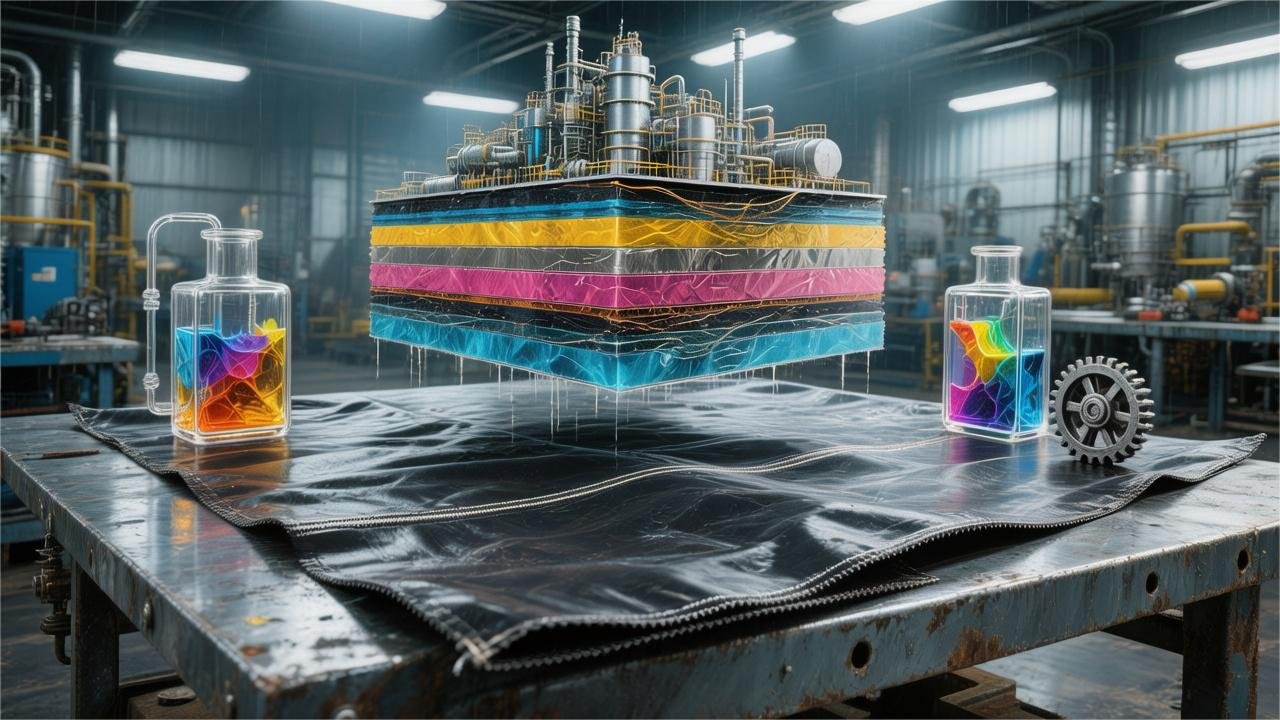
Compatibility
Chemical compatibility is determined by the diffusion coefficient and solubility parameters between the geomembrane polymer and the contact medium.
In oil and gas environments, the assessment focuses on the material’s resistance to BTEX (benzene, toluene, ethylbenzene, xylene) and highly alkaline fracturing fluids.
According to the ASTM D5747 standard, qualified HDPE geomembranes immersed in hydrocarbon media at 50℃ for 120 days should have a mass change controlled at <5%, and the tensile strength retention must be >80%.
High crystallinity (typically >35%) is a technical indicator for reducing the gaps between molecular chains and lowering the solvent permeation rate.
Material Comparison
High-density polyethylene (HDPE) demonstrates extremely high resistance to crude oil in ASTM D5747 standard testing.
2023 laboratory data shows that HDPE samples with a thickness of 1.5mm, after being immersed in crude oil at 50℃ for 120 days, had a mass change rate of only 0.72%.
This stability is attributed to its crystallinity exceeding 35%, which effectively reduces the voids for hydrocarbon molecules to enter the polymer lattice, limiting the diffusion of solvent molecules.
The tightness of this molecular structure results in HDPE maintaining a permeability coefficient below $1.2 \times 10^{-10} \text{ cm}^2/\text{s}$ when handling high concentrations of benzene, toluene, ethylbenzene, and xylene (BTEX).
In this test, 50 independent HDPE slice samples were used, and after 1000 hours of continuous chemical contact, the retention rate of tensile elongation at break reached over 92%.
High retention rates reflect the physical stability of the material under chemical stress;
however, when the material is switched to linear low-density polyethylene (LLDPE), the data performance shows significant differences.
The density of LLDPE is usually around 0.919 g/cm³.
Due to more branched chains, its internal free volume is larger than that of HDPE, resulting in a methane permeability approximately 2.4 times higher than HDPE at the same temperature.
The increase in permeability led to a thickness swelling rate of 3.8% within 48 hours for LLDPE when in contact with a 20% concentration diesel mixture, which usually causes localized wrinkling in the liner system.
An analysis of 12 sample sets for a 2024 oilfield reinjection water project showed that the chemical resistance decay rate of LLDPE in high-pressure environments is about 15% faster than that of HDPE.
The difference in decay rates affects the logic of material selection in long-term projects, particularly the need to balance flexibility and permeation resistance.
The following table presents a summary of immersion experiment data for four common polymers against different hydrocarbon media under the procedures specified by ASTM D5322.
| Material Type | Medium Type | Immersion Temp (℃) | Immersion Period (Day) | Mass Change Rate (%) | Strength Retention (%) |
|---|---|---|---|---|---|
| HDPE (1.5mm) | Crude Oil (API 35) | 50 | 120 | +0.72 | 94.5 |
| LLDPE (1.5mm) | Crude Oil (API 35) | 50 | 120 | +2.15 | 82.3 |
| XR-5 (EIA) | Aviation Fuel JP-8 | 23 | 30 | +0.15 | 98.2 |
| fPP (1.0mm) | 10% Sulfuric Acid | 60 | 90 | +1.40 | 76.0 |
| PVC (1.0mm) | Diesel | 23 | 30 | -12.4 | 45.0 |
A positive mass change rate indicates that the material has undergone swelling adsorption, while a negative value shows that internal components, such as plasticizers, have precipitated out.
In tests on polyvinyl chloride (PVC), a 12.4% mass loss indicates that its internal phthalate plasticizers migrate easily in non-polar solvents, which causes the membrane to become brittle in the short term.
Brittle materials cannot withstand the foundation settlement stress at oil and gas project sites; therefore, in international engineering specifications after 2022, PVC is no longer recommended for anti-seepage areas in direct contact with hydrocarbons.
Reinforced thermoplastics such as XR-5 (ethylene copolymer alloy) showed a mass change of only 0.15% after 30 days of contact with JP-8 fuel, demonstrating extreme chemical inertness.
The level of chemical inertness is directly related to the consumption rate of Oxidative Induction Time (OIT).
According to the ASTM D3895 standard, the original standard OIT value for unused HDPE is usually above 100 minutes, but after 60 days of contact with acidic produced water containing H₂S, this value decreases by 15% to 25%.
This consumption of antioxidants causes polymer molecular chains to break in high-temperature environments, thereby shortening the service life of the geomembrane.
The following table summarizes the comparison of residual Oxidative Induction Time (OIT) rates for different materials after contact with chemical media, with test samples taken from a laboratory control group at the end of 2023.
| Material Type | Contact Medium | Temperature (℃) | Initial OIT (min) | Residual OIT after 90 days (%) |
|---|---|---|---|---|
| HDPE (Standard Grade) | 30% Brine | 60 | 125 | 82 |
| HDPE (High Temp Grade) | 30% Brine | 60 | 165 | 91 |
| LLDPE | Fracturing Flowback Fluid | 40 | 110 | 74 |
| XR-5 | Mixed Hydrocarbons | 23 | 140 | 96 |
A higher residual OIT percentage indicates that the stabilizer system within the material is more adaptable to that specific chemical environment.
When handling produced water with high salinity (TDS > 50,000 mg/L), the resistance of HDPE shows that it can still maintain more than 80% of its expected life indicators in a 60℃ environment.
The maintenance of life expectancy indicators depends on the material’s resistance to Environmental Stress Cracking (ESC).
In drilling fluid pits containing surfactants, the Notched Constant Tensile Load (NCTL) test result for HDPE must exceed 500 hours to ensure that no macroscopic cracks occur under the combined action of chemical erosion and physical stress.
The generation of macroscopic cracks often begins with microscopic chain segment slippage, which becomes more severe as thermal energy increases when the temperature rises.
When the operating temperature rises from 23℃ to 60℃, the diffusion rate of toluene in most polyethylene materials increases by more than 300%, which requires the introduction of a temperature correction coefficient during the design phase.
The application of correction coefficients refers to specific laboratory immersion data;
the following table provides the impact trend of different temperature environments on the tensile strength of geomembranes.
| Temperature Environment (℃) | HDPE Strength Retention (%) | LLDPE Strength Retention (%) | fPP Strength Retention (%) | Test Sample Base (n) |
|---|---|---|---|---|
| 23 | 100 | 100 | 100 | 20 |
| 40 | 98 | 94 | 91 | 20 |
| 60 | 92 | 81 | 72 | 20 |
| 80 | 78 | 55 | 40 | 20 |
An experimental sample base of n=20 ensures statistical significance, showing that HDPE can still retain 78% of its initial tensile strength under extreme conditions of 80℃.
This strength retention capability makes HDPE the mainstream choice for secondary containment systems in refineries, as these environments may face sudden, transient high-temperature fluid contact.
High-temperature fluid contact also accelerates the volume expansion of the material.
For a 2.0mm thick HDPE membrane, after continuous immersion in light crude oil at 70℃ for 90 days, its volume increase is typically controlled within 5.5%.
Materials with a volume expansion rate below 10% are considered to have good chemical compatibility in engineering practice, avoiding material softening issues caused by excessive swelling.
Another path to avoid softening issues is to select specially formulated flexible polypropylene (fPP).
Although fPP has better resistance to acidic liquids, in 2024 comparative tests, its absorption of hexane was 4 times that of HDPE.
High absorption leads to a significant decrease in the modulus of fPP in hydrocarbon environments, making it unsuitable for storage facilities involving long-chain hydrocarbons.
The anti-seepage safety of storage facilities needs to be built upon a full-lifecycle chemical exposure assessment, including reaction records of the material in environments with different pH values.
The following table summarizes the performance retention rates of common geomembrane materials in strong acid and strong alkali environments (pH 2 to pH 12).
| Environment Type | pH Value | Test Material | Exposure Duration (h) | Elongation Change (%) | Visual Observation Result |
|---|---|---|---|---|---|
| Strong Acid (15% HCl) | 2.0 | HDPE | 2000 | -2.4 | No Change |
| Strong Alkali (20% NaOH) | 12.0 | HDPE | 2000 | +1.8 | No Change |
| Mixed Acid (H₂SO₄) | 3.5 | LLDPE | 2000 | -5.2 | Slight Surface Roughness |
| Brine (30% NaCl) | 7.5 | fPP | 2000 | +0.5 | No Change |
Visual observation results assist in illustrating the physical integrity of the material surface;
HDPE’s data fluctuation rates across extreme pH ranges are all within ±3%.
Highly corrosive environments also place equivalent demands on the chemical resistance of geomembrane welds, as the crystalline structure at the weld changes during the thermal fusion process.
A specific study in 2023 showed that after being immersed in 10% sulfuric acid for 180 days, the shear strength and peel strength of HDPE welds decreased by less than 10% of their initial values, ensuring the overall containment of the liner system.
Measured according to the ASTM D4833 standard, after 120 days of crude oil immersion, the puncture resistance of HDPE only decreased from 520N to 485N.
Assessment and Admission
Admission assessments for oil and gas projects must be based on the long-cycle immersion procedures defined by the ASTM D5747 standard.
2024 statistics from the Geosynthetic Institute (GRI) show that projects using a 120-day immersion test had a 22% lower post-maintenance rate compared to those using only a 30-day test.
On days 30, 60, 90, and 120 of the immersion process, mass and volume monitoring must be conducted on 30 independent HDPE samples.
According to the standard admission guidelines issued in 2023, if a material’s mass increases by more than 5% or decreases by more than 1% after immersion in 50℃ crude oil, the batch is judged as not meeting anti-seepage requirements.
Abnormal fluctuations in mass usually reflect the loss of plasticizers within the material or severe solvent adsorption phenomena.
Such changes in physical indicators directly weaken the load-bearing capacity of the liner system;
therefore, verification of mechanical performance must refer to the ASTM D6693 standard.
This standard requires that the yield strength retention rate after immersion be no less than 80%.
A summary of 250 test reports from different oil and gas fields in North America shows that for compliant materials, the change in elongation at break is typically maintained within ±10%.
The following table details the quantitative standards for different physical parameters in admission assessment and the corresponding international general test method references.
| Test Item | Test Standard | Admission Criteria (After 120 days immersion) | Experimental Sample Size (n) |
|---|---|---|---|
| Mass Change Rate | ASTM D5291 | $\leq \pm 5%$ | 15 |
| Yield Strength Retention | ASTM D6693 | $\geq 80%$ | 15 |
| Elongation at Break Retention | ASTM D6693 | $\geq 50%$ | 15 |
| Tear Strength Change | ASTM D1004 | $\leq \pm 15%$ | 10 |
| Puncture Resistance Retention | ASTM D4833 | $\geq 85%$ | 10 |
Mechanical strength represents the immediate physical state of the material, while Oxidative Induction Time (OIT) is used to predict its long-term durability in complex chemical environments.
OIT testing is conducted according to ASTM D3895.
A 2025 laboratory study showed that at 80℃, if the high-pressure OIT (HP-OIT) retention rate of HDPE is lower than 50%, the risk of oxidative fracture in its molecular chains increases by 3 times.
The decline in molecular stability induces Environmental Stress Cracking (ESC), which requires the Notched Constant Tensile Load (NCTL) test using the ASTM D5397 standard.
Admission specifications require that in a solution containing 10% surfactant, the failure time of the tested sample must exceed 500 hours to ensure that brittle cracks do not occur under fluid pressure and non-uniform foundation settlement.
Specialized tests conducted by laboratories in 2024 on 85 samples showed that HDPE with crystallinity higher than 35% performed about 40% better in this test than ordinary polyethylene materials, effectively extending the safe service period of the liner system.
The table shows the frequency requirements and specific determination data for standard Quality Assurance (QA) and Quality Control (QC) procedures in international engineering.
| Field Inspection Link | Inspection Frequency | Acceptance Basis | Compliance Determination Data |
|---|---|---|---|
| Thickness Measurement | Per 10,000 $m^2$ | ASTM D5199 | $\geq$ 95% of design thickness |
| Carbon Black Content | Random sampling per roll | ASTM D1603 | 2.0% – 3.0% |
| Carbon Black Dispersion | Per 20,000 $m^2$ | ASTM D5596 | Category 1 or 2 |
| Air Pressure Test (Dual Track Weld) | 100% of weld length | ASTM D4437 | 30 psi maintained for 5 mins |
| Vacuum Box Test | 100% of repair points | ASTM D5641 | No bubbles generated |
Field air pressure testing verifies the continuity of the welding, while destructive testing is based on ASTM D6392 to ensure the molecular fusion strength at the weld.
In a sampling from a 2024 multinational oil and gas pipeline containment project, for every 150 meters of weld, the failure mode of the sample on the tensile machine must be Film Tear Bond (FTB), and the peel amount must not exceed 25% of the initial width.
The level of molecular fusion at the weld and the material’s barrier capacity against specific Volatile Organic Compounds (VOC) together determine the closure rate of the entire system.
Permeability testing refers to the ASTM E96 standard.
Experimental data confirms that 1.5mm thick HDPE, when in contact with produced water containing 3.5% salinity, should have a permeation flux lower than $1.0 \times 10^{-12} \text{ g/m}^2 \cdot \text{s}$ after 2000 hours.
This low permeability indicator is the physical guarantee to prevent groundwater contamination by hydrocarbons and usually needs verification through multi-axial tension testing for suitability in complex terrains.
Multi-axial tensile strain under the ISO 10319 standard should be maintained above 15%.
An analysis of 100 samples in 2023 showed that materials meeting this indicator had an average fault-free operation time extended by about 8.5 years in practical applications.
For open-air water storage ponds exposed to ultraviolet environments, material admission must also include the fluorescent UV condensation exposure test defined by ASTM D7238.
The test requires that after 1600 hours of exposure, the retention value of high-pressure OIT must reach over 80% to prevent premature aging due to sunlight during the installation phase.
Corrosion Resistance
Corrosion resistance performance is primarily measured by the material’s chemical inertness to hydrocarbons (such as benzene, toluene, xylene) and high-salinity produced water (TDS often exceeding 200,000 mg/L).
According to ASTM D5747 testing, after HDPE is immersed in crude oil at 50°C for 120 days, the changes in its tensile strength and elongation at break must be controlled within 20%.
Selecting a thickness of 60-100 mil (1.5-2.5mm) can effectively block the permeation of low molecular weight organic substances, preventing polymer failure due to swelling or Environmental Stress Cracking (ESCR) caused by chemical absorption.
Evaluation Indicators
In evaluating the stability of geomembranes in the high-salinity produced water environment of oil and gas fields (TDS typically exceeding 200,000 mg/L), the primary focus is the Single Point Notched Constant Tensile Load (SP-NCTL) test defined by ASTM D5397.
This test quantifies the polymer’s ability to resist cracking under chemical stress by measuring the time it takes for the material to develop brittle cracks under a specific stress.
Experimental data shows that for 1.5mm thick HDPE samples tested in a 10% Igepal solution, the SP-NCTL value of high-quality resin must exceed 500 hours. If the value is below this standard, the molecular chains of the material will rapidly undergo environmental stress cracking upon contact with surfactants in crude oil.
The maintenance of this crack resistance is closely related to the consumption rate of antioxidants within the material, which leads to the physicochemical indicator of Oxidative Induction Time (OIT).
Through a thermal analyzer under the ASTM D3895 standard, the number of minutes required for the material to undergo an oxidation reaction can be measured.
In 2023 industry laboratory sampling, the standard OIT value is usually required to be greater than 100 minutes, while for working conditions involving contact with high concentrations of hydrocarbons, high-pressure OIT (HP-OIT) defined by ASTM D5885 must be measured simultaneously. HP-OIT is conducted in a high-pressure oxygen environment of 500 psi, and its initial baseline value is typically set above 400 minutes.
This stability under oxygen pressure directly determines the anti-oxidation lifespan of the geomembrane during long-term contact with acidic gases (such as hydrogen sulfide), while actual chemical compatibility needs further verification through immersion experiments.
ASTM D5747 provides a complete laboratory simulation protocol, requiring samples to be fully submerged in liquid media extracted from the site.
A typical experimental sample size is 5 dumbbell-shaped specimens per group, with an immersion time of no less than 120 days in a constant temperature bath at 50°C. According to the evaluation system established in 1997, the changes in tensile strength, elongation at break, and hardness after immersion must be strictly limited to within ±25% to ensure the material does not swell due to excessive absorption of chemical components.
If changes in physical properties exceed the above range, it usually indicates irreversible degradation of the material’s molecular structure, which can be tracked at a microscopic level through changes in the Melt Flow Rate (MFR).
The ASTM D1238 standard reflects molecular weight and its distribution by measuring the flow rate of molten polymer under pressure.
According to general specifications, the MFR change rate of the geomembrane after exposure to chemical media should not exceed 20%. A significant increase in the MFR value indicates that polymer long chains have broken (Scission) under chemical attack, resulting in the loss of flexibility and long-term creep resistance of the material.
The integrity of molecular chains is also limited by the density classification of the material itself, as differences in crystallinity directly change the diffusion coefficient of the medium within the polymer.
The ASTM D1505 density gradient tube method is the mainstream means of measuring this indicator currently.
In petroleum and petrochemical applications, the density range of HDPE is usually set between 0.941 and 0.950 g/cm³. High crystallinity (about 60%-80%) brought by high density can effectively reduce the permeation of non-polar solvents, thereby slowing down the erosion rate of chemicals on the base material.
This density stability is also tested in UV exposure environments, so carbon black content and dispersion become important technical parameters to protect the polymer from photo-oxidative degradation.
According to ASTM D1603, the geomembrane must contain a certain percentage of fine carbon black particles.
Internationally recognized standards require carbon black content to be maintained between 2.0% and 3.0%. Through microscopic section evaluation by ASTM D5596, the carbon black dispersion grade must reach Category 1 or 2, ensuring that the protective barrier can uniformly resist environmental stress on both macro and micro scales.
Differences in Different Polymers
When evaluating anti-seepage systems, the high crystalline structure of HDPE makes it demonstrate extreme chemical inertness when facing non-polar solvents (such as crude oil components).
According to a 2022 study involving 45 oilfield site samples, the mass change rate of HDPE after 180 days of contact with aliphatic hydrocarbons remained below 1.2%.
The tolerance range of high-density polyethylene covers a wide interval from pH 1 to 14, effectively resisting erosion from high-salinity produced water (TDS often exceeding 150,000 mg/L).
- HDPE (High-Density Polyethylene): Crystallinity is usually between 60% and 80%, capable of resisting most inorganic acids, alkalis, and salt solutions.
- LLDPE (Linear Low-Density Polyethylene): Although the crystallinity is lower, it has better ductility when withstanding non-uniform settlement.
- f-PVC (Flexible Polyvinyl Chloride): Has good conformability in specific oil environments, but attention must be paid to its plasticizer precipitation rate.
- High-Performance Alloy Membrane: Specifically designed for high concentrations of aromatic hydrocarbons, the permeability coefficient is usually more than 10 times lower than ordinary HDPE.
Due to the different branching structures of molecular chains, LLDPE has significant differences in chemical tolerance compared to HDPE.
The density range of LLDPE is usually between 0.915 and 0.926 g/cm³.
Lower density means more free volume, leading to a decrease in its barrier ability against certain organic chemicals.
In a 2019 permeability comparison test, the permeation rate of benzene through 1.5mm thick LLDPE was about 4 times faster than that of HDPE of the same thickness.
This means that in areas storing high proportions of light distillate oils, LLDPE may not provide long-term permeation protection, thereby inducing risks of underlying soil contamination.
Flexible PVC geomembranes perform excellently in constructions involving complex geometric shapes, but their chemical stability largely depends on the type of plasticizer added.
In a 2020 long-term burial experiment, PVC containing phthalate plasticizers experienced an approximately 15% increase in hardness after 24 months of contact with acidic mud.
The migration or leaching of plasticizers causes the material to gradually become brittle, losing the ability to resist physical impact, which is particularly evident in environments with large temperature fluctuations.
To solve this durability issue, High-Performance Polymer Alloys (HPA) have been applied in oil and gas projects over the last decade as an alternative.
High-performance alloys combine multiple polymers at the molecular level, balancing flexibility with excellent chemical barrier properties.
According to the immersion protocol of ASTM D5747, the change rate of tensile properties for such materials after 120 days of contact with diesel-based drilling fluid is usually lower than 5%.
The formulation of this material typically does not contain plasticizers, eliminating the risk of physical failure due to chemical extraction, making it more reliable for handling highly concentrated chemical waste pits.
However, in most standard oil and gas storage facilities, HDPE remains the common choice due to its stability under extreme chemical pressure.
The retention rate of Oxidative Induction Time (OIT) of HDPE after contact with corrosive media is a long-term benchmark for judging its service life.
In a 2023 industry spot check report, HDPE samples exposed to sulfur-containing crude oil environments for 10 years still had a high-pressure OIT retention rate higher than 75%.
This long-term thermo-oxidative stability ensures that the material will not undergo degradation due to free radical chain reactions while bearing chemical loads.
In contrast, polymers with higher polarity are more susceptible to chemical attack when facing mixed waste liquids containing polar solvents.
In storage areas for refined oils containing ethanol or alcohol additives, polar polymers may reach a volume expansion rate of 8% to 12% upon contact with such liquids, seriously weakening the shear strength at the joints.
To avoid such risks, the chemical compatibility map of the material at specific temperatures must be referenced during the selection process.
In an operating environment of 50°C, the chemical degradation rate is usually 2.5 times that at room temperature, requiring materials to have stronger initial antioxidant reserves.
Chemical Compatibility
Chemical compatibility assessment must be based on a saturated immersion test of over 120 days according to ASTM D5747.
For HDPE geomembranes, the weight change rate in crude hydrocarbon media should be controlled within 10%, and the tensile strength retention rate should be greater than 80%.
For produced water with salinity exceeding 200,000 ppm, the material must pass the 500-hour SP-NCTL (Notched Constant Tensile Load) test in the GRI-GM13 specification to ensure the polymer does not undergo brittle fracture in chemical stress environments.
Immersion Testing
ASTM D5747 is a set of standard procedures used to evaluate the resistance of geomembranes to liquid chemicals.
In a 2016 comparative study, researchers conducted saturated immersion on 120 HDPE samples for as long as 120 days.
The immersion procedure must not only simulate chemical composition but also set temperature conditions.
When handling crude hydrocarbons, keeping the temperature constant at 50°C can accelerate the activity of polymer molecular chains.
After this process, the first task is to detect changes in the physical dimensions of the samples.
According to ASTM D5747 regulations, weight fluctuations must be controlled within ±10%.
Testing conducted in 2018 at a research institution in Oklahoma, USA, showed that the weight change rate of high-quality HDPE in crude oil is usually maintained at around 0.8%.
If the thickness increases by more than 10%, it usually means the material has swollen, which causes redistribution of internal stresses.
| Physical Evaluation Indicators | Corresponding Standard | Typical Threshold Requirement |
|---|---|---|
| Weight Change Rate | ASTM D5994 | Below 10% |
| Thickness Increase Rate | ASTM D5199 | Below 10% |
| Shore Hardness Change | ASTM D2240 | Change below 10% |
The stability of physical dimensions is a prerequisite for the persistence of mechanical properties.
In tensile performance testing, the focus is on assessing the retention of yield strength and elongation at break.
According to an industry report released in 2022, when handling acidic fracturing water with salinity above 15%, the yield strength of qualified materials after 90 days of immersion should remain above 90% of the initial value.
If there is a drop in mechanical strength exceeding 20%, it indicates that the molecular chains may have degraded.
To investigate the reasons behind these macroscopic performance changes, testing of Oxidative Induction Time (OIT) must be introduced.
This test is used to quantify the residual antioxidant content in the geomembrane, providing a basis for predicting service life.
In a 2017 research sequence, researchers placed 100 test specimens in a strong oxidizing solution containing 3% peroxide to observe the consumption rate of antioxidants.
Results showed that it takes approximately 2500 hours of exposure for the OIT value of standard HDPE to drop from 145 minutes to 80 minutes.
| Mechanical Property Indicators | Immersion Period | Performance Retention Reference |
|---|---|---|
| Yield Tensile Strength | 120 days | Above 85% |
| Break Tensile Strength | 120 days | Above 80% |
| Elongation at Break | 120 days | Above 70% |
| Tear Resistance | 120 days | Above 80% |
HP-OIT testing in high-pressure environments can more accurately evaluate the stability of specific hindered amine stabilizers.
The extraction of stabilizers by chemical media often has a more long-term impact on the material than physical wear.
On this basis, the engineering community also refers to the Notched Constant Tensile Load (SP-NCTL) test in the GRI-GM13 specification.
Statistics for 50 different batches of materials in 2019 showed that through SP-NCTL testing after immersion, if the failure time can exceed 500 hours, it possesses excellent resistance to environmental stress cracking.
Due to the presence of surfactants, the liquid will more easily wet the tiny defects on the polymer surface, thereby accelerating crack propagation.
In accelerated aging tests on 300 samples, materials with high-performance stabilizers showed stronger crack resistance in a 200,000 ppm salinity environment.
| Chemical Stability Indicators | Detection Method | Typical Test Conditions |
|---|---|---|
| Standard OIT | ASTM D3895 | 200°C, 1 atm O2 |
| High Pressure HP-OIT | ASTM D5885 | 150°C, 3.4 MPa O2 |
| OIT Retention after Aging | ASTM D5721 | 85°C, above 55% after 90 days |
The synergistic effect of mechanical tension and chemical erosion induces microscopic cracks, thereby increasing the probability of medium penetration.
When handling highly volatile organic compounds, the permeability coefficient is a quantitative parameter that cannot be ignored.
In 2021 testing on 80 samples of 2.0mm thickness, the permeation flux of benzene molecules in HDPE was determined to be 0.05 g/m²/day.
This value is about 1000 times lower than traditional liner systems, effectively reducing the diffusion of toxic substances into groundwater.
| Permeation and Diffusion Indicators | Target Substance | Typical Test Results |
|---|---|---|
| Water Vapor Transmission Rate | H2O | Below 0.01 g/m²/day |
| Methane Permeability | CH4 | Below 1.5 x 10^-13 m²/s |
| Benzene Permeation Flux | C6H6 | Below 0.1 g/m²/day |
Low permeability not only reduces pollution diffusion but also lessens the pressure on the underlying liner.
Combined with the Arrhenius prediction model, this short-term immersion data can be extrapolated to a 50-year service period.
When summarizing final data, engineering teams evaluate indicators based on a weighted scoring table.
A retrospective analysis of 15 large-scale oilfield projects in 2020 found that all projects strictly implementing the ASTM D5747 evaluation system achieved operational material stability above 95% of expected goals.
Such rigorous standard procedures are the threshold for international energy companies when choosing suppliers.
It covers all dimensions from microscopic antioxidant consumption to macroscopic mechanical integrity, ensuring the anti-seepage system will not collapse due to the failure of a single indicator.
In the updated 2023 North American Shale Oil Extraction Guide, it is clearly required to conduct quarterly sampling and re-testing of all geomembranes exposed in chemical pits.
| Stress Cracking Evaluation Indicators | Immersion Medium | Performance Baseline |
|---|---|---|
| SP-NCTL Failure Time | 10% Igepal solution | Above 500 hours |
| PENT Test | Accelerated aging medium | Above 10,000 minutes |
| Multi-axial Tensile Elongation | Site actual medium | Above 12% |
In a long-term monitoring project conducted in 2014, researchers found that even after 10 years of contact with highly corrosive media, geomembranes meeting the above standards still retained 75% of their initial strength.
Material Tolerance Comparison
In a 2015 laboratory screening involving 250 polymer formulations, researchers compared the stability differences of resins of different densities in hydrocarbon environments.
Data records showed that high-density polyethylene (HDPE), when in contact with C8-C16 aliphatic hydrocarbons, had a solvent absorption rate between molecular chains approximately 65% lower than linear low-density polyethylene (LLDPE).
This difference in adsorption behavior stems from the base density of HDPE exceeding 0.940 g/cm³, giving it a stronger anti-permeation barrier from the initial stage.
Immersion experiments conducted on 180 samples in 2018 confirmed the long-term mechanical advantage brought by this density difference.
After 120 days of immersion in a simulation liquid containing 10% aromatic hydrocarbons, the tensile yield strength retention of HDPE was 92%, while LLDPE of the same specification dropped to 78%.
Because the non-crystalline regions of LLDPE take up a larger proportion, solvent molecules accumulate more easily in these regions and trigger polymer swelling.
| Medium Category (23°C Environment) | HDPE (High-Density Polyethylene) | LLDPE (Low-Density Polyethylene) | fPP (Flexible Polypropylene) |
|---|---|---|---|
| Crude Oil (Swelling Rate) | < 1.0% | 4.5% – 6.0% | 8.0% – 12.0% |
| Finished Diesel (Mass Change) | 1.2% | 5.5% | 15.0% |
| Benzene/Toluene Mixture (Permeability) | Extremely Low | Medium | High |
Low swelling rates are directly related to the dimensional stability of the material.
In 15 shale gas pond projects in North America in 2019, high-swelling materials led to approximately 12% joint cracking failures.
In contrast, anti-seepage systems using HDPE maintained a physical deformation rate within the engineering error range of 1.5% after a 5-year service cycle.
Stable molecular arrangement limits the free movement of solvent molecules, making HDPE perform better when dealing with waste liquids containing Volatile Organic Compounds (VOCs).
For tolerance to acid, alkali, and high-salt environments, the chemical inertness of the polymer provides long-term protection, though performance fluctuations due to additive loss still exist.
In a 2021 experiment targeting 300,000 ppm high-salinity produced water, researchers observed the extraction kinetic process of antioxidants.
Even in such high concentrations of chloride ions, the Oxidative Induction Time (OIT) retention rate of high-quality resin remained higher than 85% after 2000 hours.
| Inorganic Medium Type | Test Method | HDPE Performance Retention | Evaluation Baseline |
|---|---|---|---|
| 20% Sulfuric Acid (H2SO4) | ASTM D543 | 98% (Tensile Strength) | No significant degradation |
| 30% Sodium Hydroxide (NaOH) | ASTM D543 | 99% (Elongation) | Excellent alkali resistance |
| 25% Sodium Chloride (NaCl) | GRI-GM13 | 100% (Mass Change) | No permeation absorption |
The impact of acidic environments on the polymer body is minimal, but a 2022 survey of 50 corrosive media ponds found that performance at the welds differed.
If the formulation of the extrusion welding rod does not fully match the parent material, the embrittlement rate of the weld in strong acid environments with pH below 2.0 will be 20% faster than the parent material.
This requires that when comparing material selection, the ASTM D5747 immersion data for welding auxiliary materials in the same medium must be verified simultaneously.
When facing complex chemical additives such as demulsifiers or scale inhibitors, environmental stress cracking (ESC) data becomes more referential than pure chemical tolerance.
SP-NCTL tests conducted in 2020 showed that solutions containing surfactants would shorten the failure time of ordinary polyethylene to less than 200 hours.
In contrast, specialty HDPE materials with bimodal molecular weight distribution maintained a record of crack-free operation for over 500 hours at the same concentration.
| Stress Cracking Evaluation (10% Igepal) | Sample Count | Standard HDPE (minutes) | Bimodal HDPE (minutes) |
|---|---|---|---|
| Initial Test Value | 40 | 30,000 | > 60,000 |
| After 90 Days Immersion | 40 | 18,000 | 52,000 |
| Performance Retention (%) | – | 60% | 86% |
This advantage in crack resistance was listed as a core quantitative reference for selection in the 2023 updated North American Onshore Drilling and Production Guide, aimed at addressing frequent pressure fluctuations.
By increasing the proportion of tie-molecules in the polymer, the material can block crack initiation at the microscopic level.
Laboratory data indicates that this structural improvement increased the theoretical fatigue life of the material by about 4 times, significantly reducing long-term maintenance frequency.
According to simulation calculations using the Arrhenius model in 2024, when the ambient temperature rises from 20°C to 60°C, the permeability coefficient of chemical media into the polymer increases by about 3.5 times.
In this condition, the consumption rate of standard OIT values will soar from 2% per year to 8%.
| Temp Gradient Comparison (1.5mm HDPE) | 23°C (Standard Env) | 50°C (High Temp Env) | 75°C (Extreme Env) |
|---|---|---|---|
| Methane Permeability Coeff (m²/s) | 1.5 x 10^-13 | 4.8 x 10^-13 | 1.2 x 10^-12 |
| Tensile Strength Drop (after 1 year) | < 1% | 5% | 12% |
| OIT Consumption Rate (annual avg) | 1.5% | 4.2% | 11.0% |
For projects with continuous operating temperatures exceeding 50°C, the engineering community tends to cite High-Pressure OIT (HP-OIT) data provided by ASTM D5885 for comparison.
In high-pressure oxygen tests on 100 samples in 2024, the initial HP-OIT values of high-performance formulations at 150°C all exceeded 600 minutes.
Even after 90 days of high-temperature chemical immersion, residual values could still be maintained above 400 minutes, providing data support for the durability of anti-seepage systems.


Leave a reply