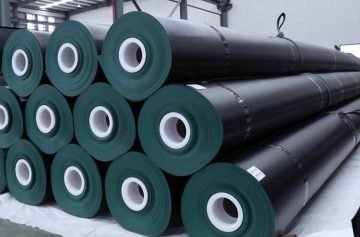
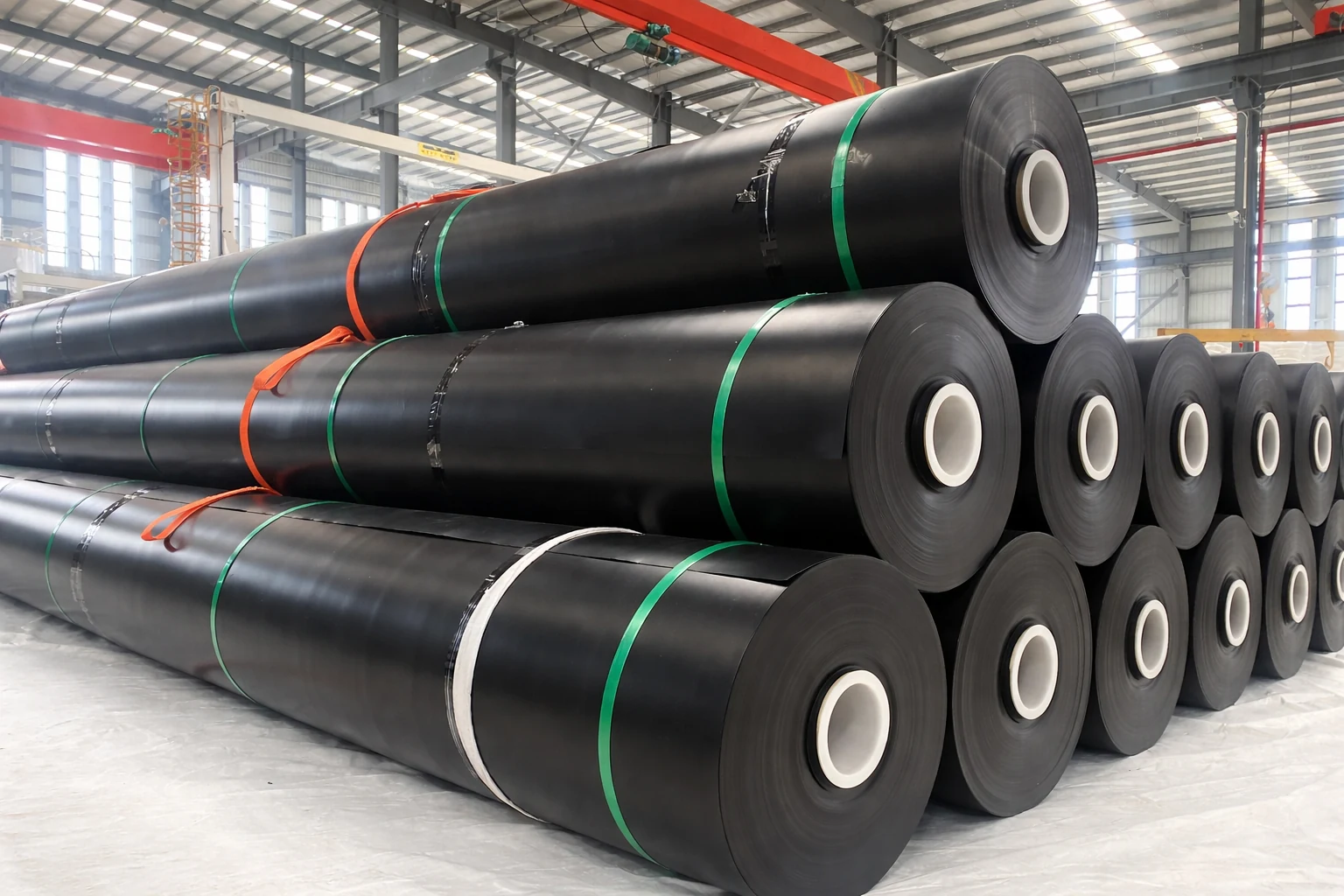
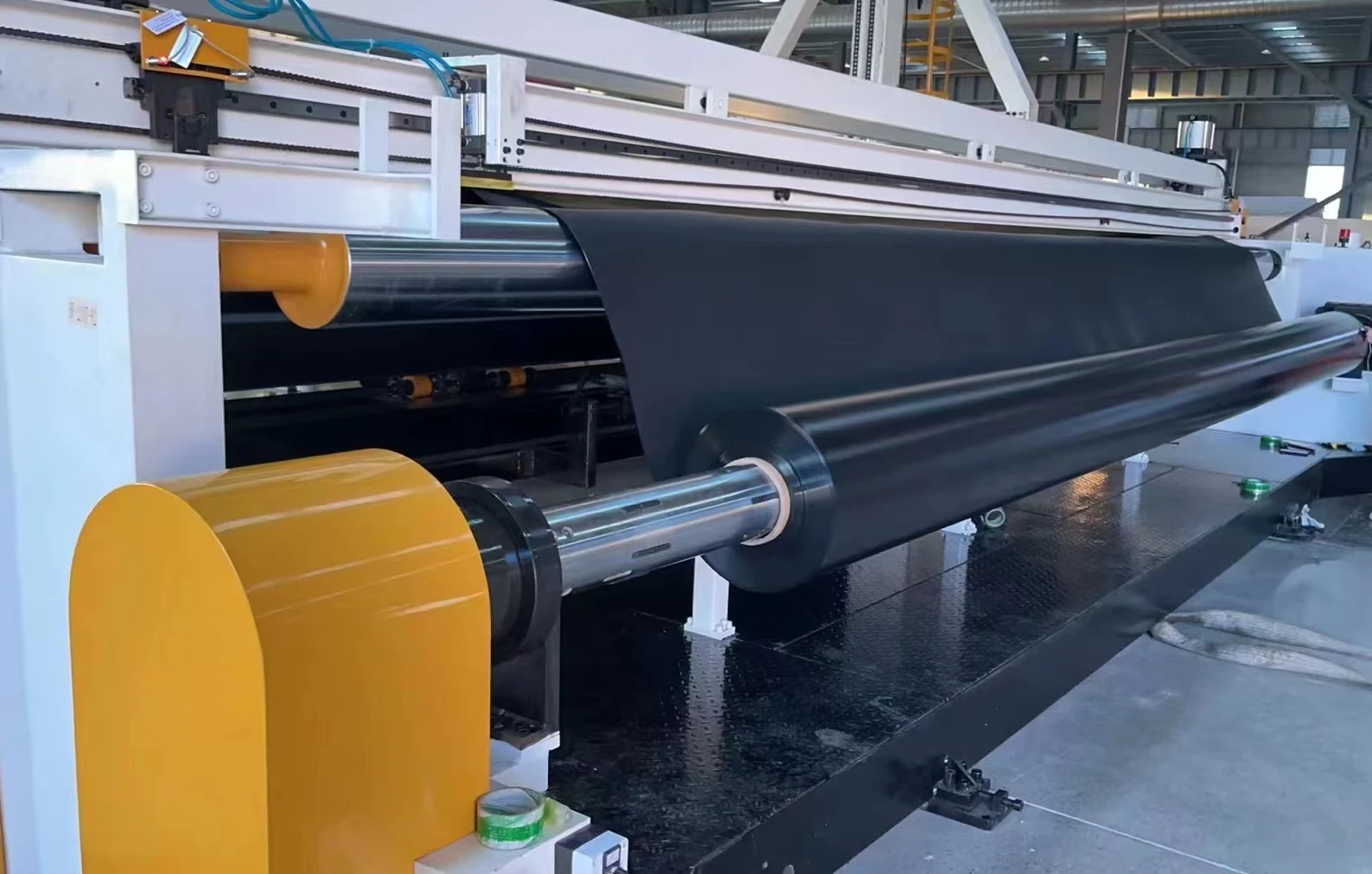
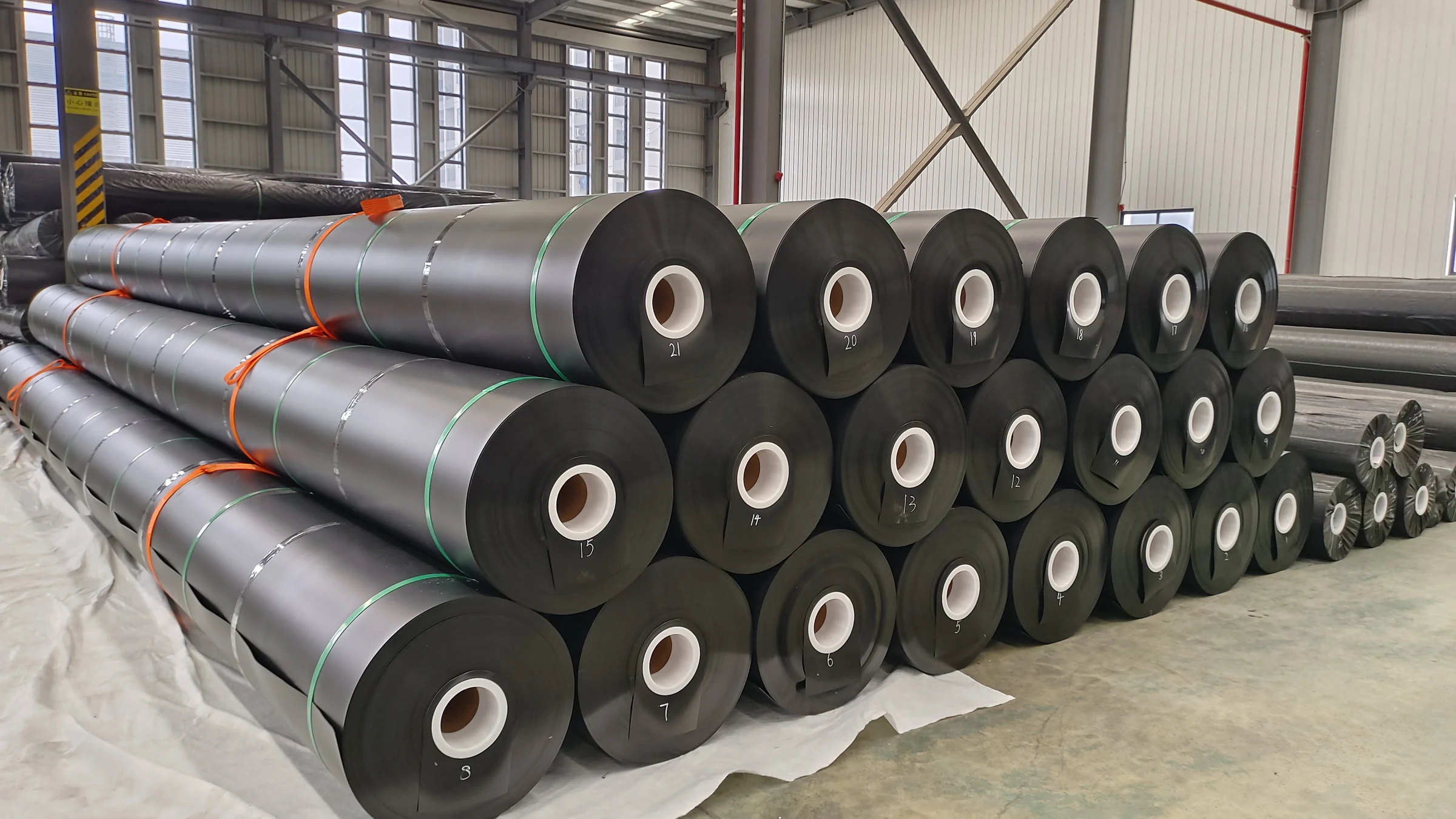

A landfill geomembrane provides a low-permeability barrier that helps control contaminant migration when integrated with a designed liner, drainage and quality-assurance system. HDPE is a material option for this role, but neither the polymer name nor a material test certificate guarantees a leak-free landfill. The practical benefits come from combining suitable sheet properties with reliable seams, protection, detailing and documented construction.
For a buyer, the key question is not simply “Which thickness is cheapest?” It is whether the proposed liner meets the permitted design and can be installed, tested and protected under the actual site conditions.
Environmental protection: separate the functions
| System component | Intended contribution | What it does not establish alone |
|---|---|---|
| Bottom geomembrane and underlying barrier component | Limit migration toward the subgrade and groundwater | Zero leakage or universal chemical compatibility |
| Leachate drainage and collection | Collect liquid and control head on the liner | Elimination of leachate treatment requirements |
| Final cover barrier | Limit infiltration as part of the cover design | A fixed percentage reduction in leachate at every site |
| Gas collection system and compatible cover details | Manage landfill gas | A guaranteed capture rate based on liner thickness |
| Protection layers and construction quality assurance | Reduce installation damage and document acceptance | A substitute for environmental monitoring |
The bottom liner controls where leachate can go; it does not stop rainfall entering an open waste cell or remove liquid already present in waste. A cover may change the site water balance, but its effect must be evaluated with climate, cover area, waste moisture and operating conditions. Treatment capacity should not be reduced on the basis of a generic “90% less leachate” claim.
What the US municipal landfill rule actually says
40 CFR §258.40 provides design routes for new municipal solid-waste landfill units and lateral expansions: an approved performance-based design, or the specified composite-liner and collection-system option. Under the latter, the membrane minimum is 30 mil, increased to 60 mil for HDPE, over at least 2 ft of compacted soil with hydraulic conductivity no greater than 1 × 10⁻⁷ cm/s. The membrane must contact that soil directly and uniformly; the collection system must maintain less than 30 cm of leachate above the liner.
This provision does not make HDPE mandatory for every landfill worldwide. Waste classification, jurisdiction, permits and approved alternatives matter. State or project requirements may be more demanding. Confirm the applicable design before ordering.
Unit check: 60 mil equals 1.524 mm. A product described commercially as “1.5 mm” should not be assumed to meet a 60-mil acceptance requirement without checking the specified thickness basis, tolerances and test results.
Material quality: what GRI-GM13 can tell you
GRI-GM13 is a manufacturing specification for HDPE geomembranes, covering material properties, test methods and frequencies. It provides a framework for comparing a proposed sheet with defined requirements. It is not an EPA project approval, a landfill design or a promise of a 100-year service life.
Ask the supplier to identify the specification revision and product table used, then connect the results to the delivered rolls. A generic brochure is less useful for acceptance than traceable results for the proposed material.
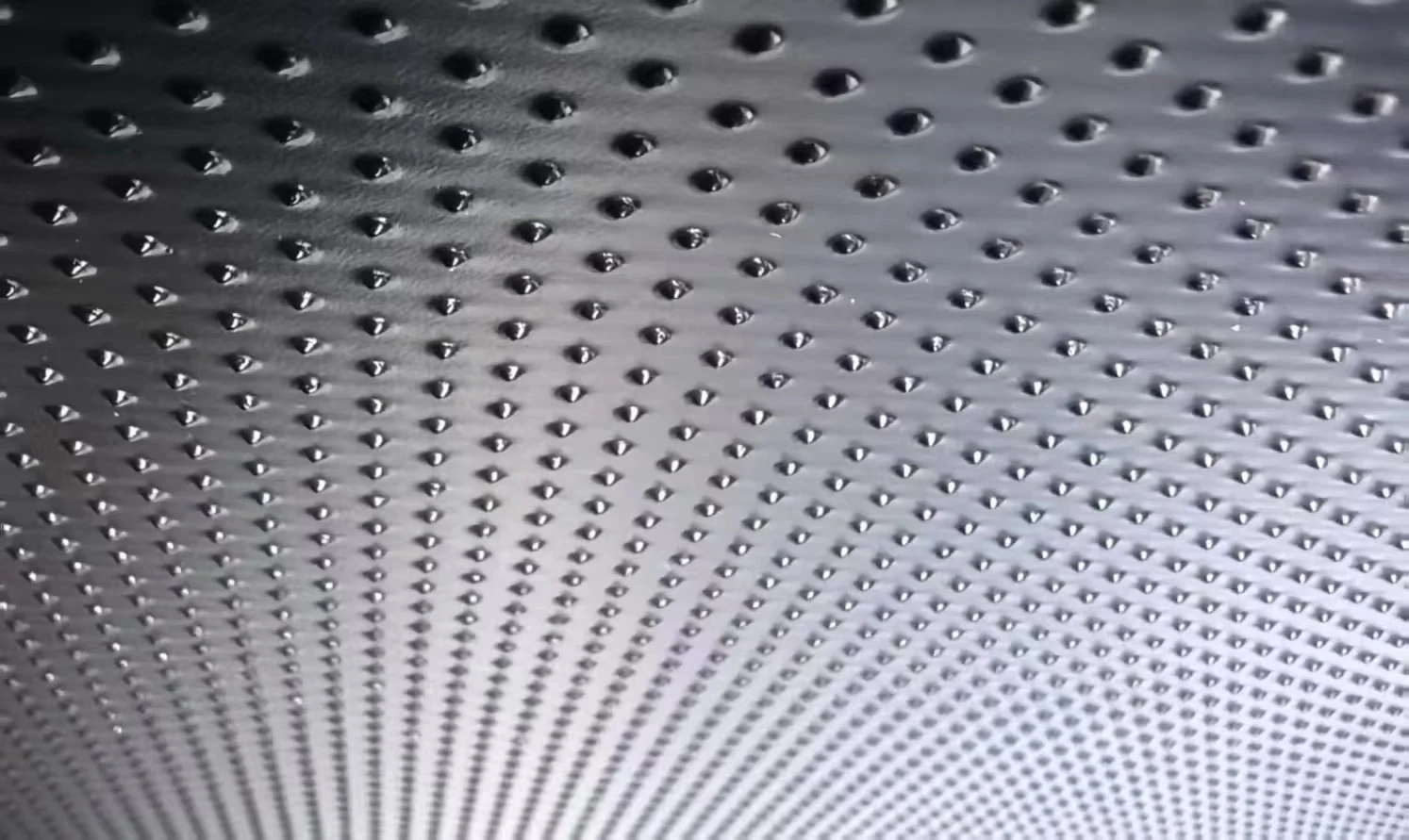
- Thickness and surface: distinguish smooth and textured sheet and the applicable measurement basis.
- Tensile behavior: distinguish yield, break and elongation. High elongation at break is not the allowable strain for a settlement design.
- Stress-crack resistance: use the required test and acceptance criterion rather than translating test hours directly into field years.
- Stabilization and durability indicators: review carbon black, oxidative induction time and aging results as specified, without treating one result as a complete service-life prediction.
- Traceability: identify roll numbers, production lots, sample identification, test dates and any conformity exceptions.
For example, a nominal mass estimate using an assumed sheet density of 940 kg/m³ and a 2.0 mm thickness gives 940 × 0.002 = 1.88 kg/m². Covering 10,000 m² would therefore require about 18.8 tonnes of sheet before seams, anchor trenches, details and waste. This is a planning calculation, not a verified weight or specification for a Jinseed product.
Durability against chemical, thermal and mechanical exposure
Chemical compatibility needs the actual exposure
Provide the expected leachate composition, concentrations, temperature and exposure period for compatibility review. A pH range alone does not describe a complex chemical mixture. Different substances can affect polymer performance or transport differently; “chemical resistant” should never be presented as “blocks every substance completely.”
Where compatibility testing is required, agree on the exposure medium and duration and the properties to measure before and after exposure. Keep the test report and its limitations with the material approval. Do not generalize one immersion result to all landfill chemicals.
Temperature and exposure affect the design
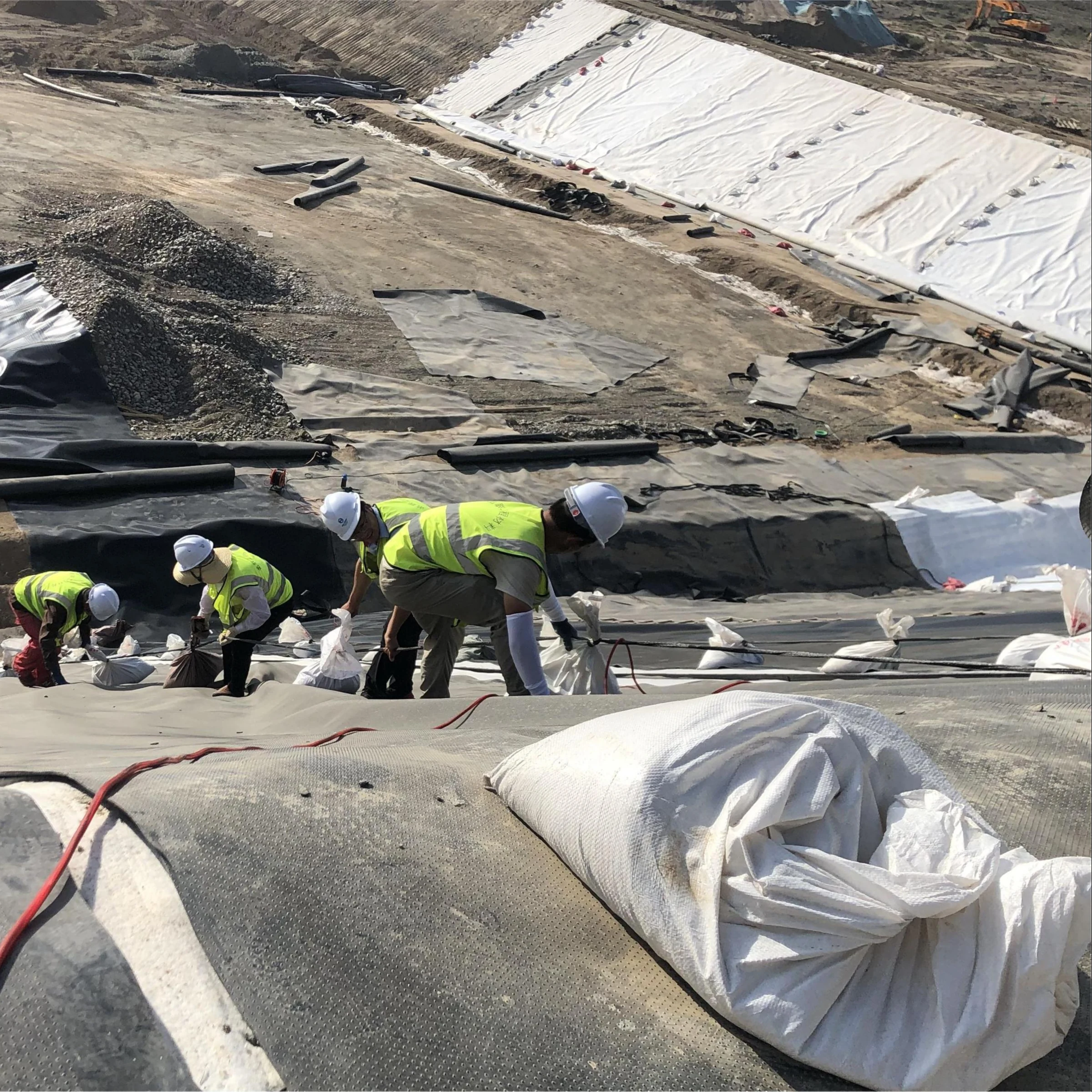
Account for installation weather, exposed sheet temperature and the intended buried environment. Thermal movement can create wrinkles and change how a sheet contacts its support. Plan deployment, welding and cover placement around the approved installation requirements, and inspect the liner before covering it.
Accelerated aging and oxidation tests compare material behavior under controlled conditions. Their duration is not a direct conversion to years outdoors or underground. A field service-life assessment needs a defined exposure scenario and a defensible prediction method, not an unsupported universal range.
Protection and slope stability are system checks
Sharp aggregate, debris, unsupported bridging and construction traffic can damage a good sheet. The protection design must consider the actual liner, support, geotextile, aggregate and loading. See our landfill geotextile protection and filtration guide.
Texturing can change interface shear behavior, but it does not establish a universal safe slope. Use the proposed material interfaces and relevant loading and moisture conditions in the stability assessment. Also check settlement, anchors, penetrations and transitions rather than relying on the sheet’s break elongation.
Seam testing and construction records
Seams and details are essential parts of the barrier. Before production welding, establish the approved equipment settings and trial-seam procedure. Record changes in equipment, personnel or conditions according to the construction quality plan.
ASTM D6392 addresses destructive peel and shear evaluation of applicable thermally fused geomembrane seams. It is not the method for air-channel or vacuum-box testing. The project must separately specify suitable nondestructive checks, destructive sampling, acceptance criteria and repairs.
ASTM D6747 is a guide for selecting electrical leak-location techniques. Selection depends on the liner arrangement and survey conditions; simply naming a survey method does not establish that every defect will be detected. Confirm the intended coverage, electrical conditions, access, timing and reporting requirements with the qualified survey provider.
The linked ASTM editions identify their scopes; use the editions adopted by the project. At handover, retain roll and panel maps, seam logs, test results, repair locations, inspection records and approved deviations. Connect each repair to its retest so the record demonstrates closure, rather than merely listing defects.
Financial benefits: compare installed and accepted systems
A documented liner package makes procurement and acceptance clearer. It also helps separate material cost from the cost of deployment, welding, testing and protection. It does not automatically lower insurance premiums, shorten permitting or remove monitoring duties.
| Quotation item | What to make explicit |
|---|---|
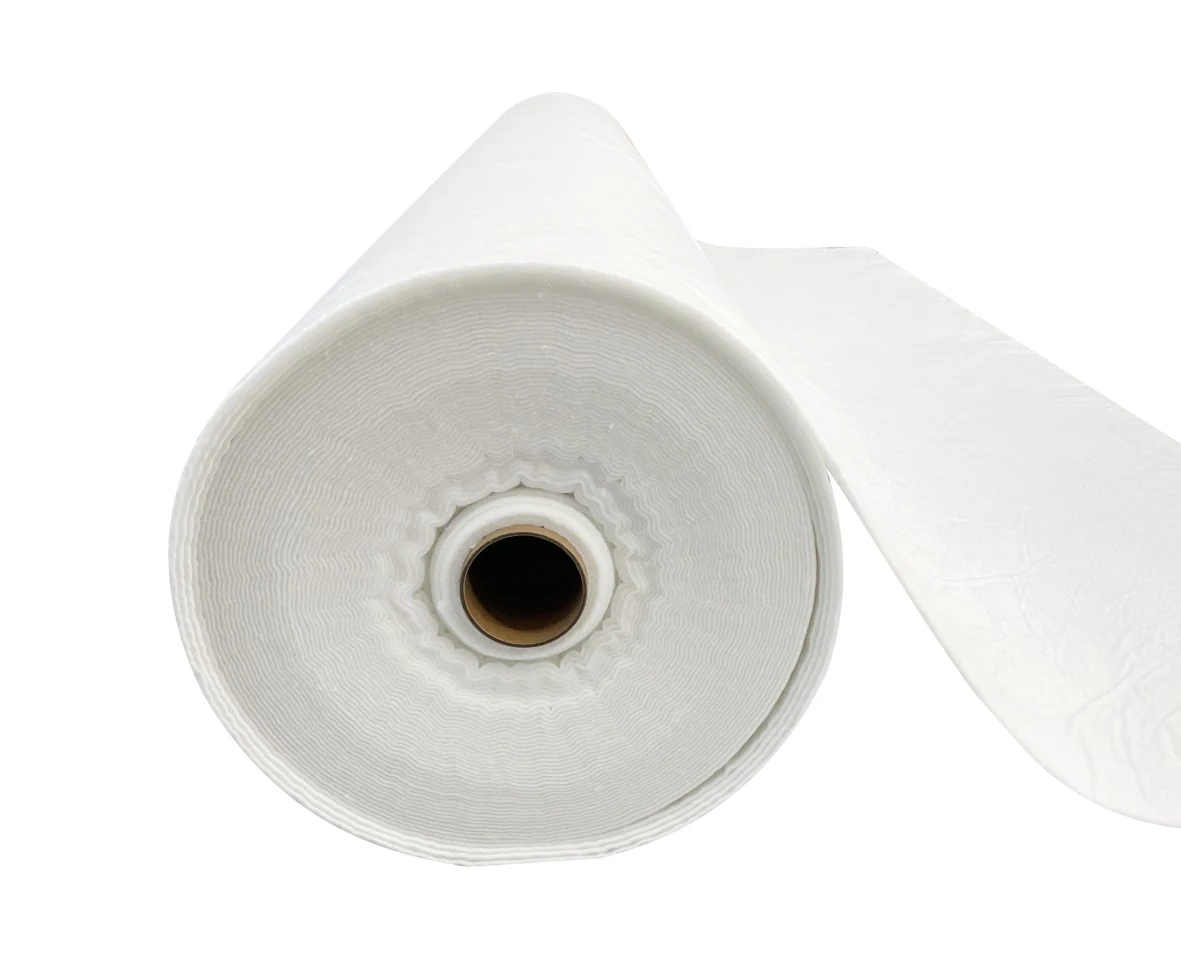
| Sheet supply | Approved grade, surface, thickness, roll dimensions, acceptance values and quantity basis |
| Installation | Panel layout, anchorage, penetrations, welding, mobilization and weather allowances |
| Quality assurance | Sampling, laboratory work, seam checks, surveys, reporting and retesting |
| Protection and drainage | Geotextile, drainage materials, cover placement and equipment limitations |
| Handover | As-built records, traceability, repair closure and contract warranty terms |
Compare alternatives on the same installed area and scope. A lower sheet price may exclude testing or details that another quotation includes. Request a marked compliance schedule so deviations can be reviewed before delivery.
Prepare a landfill liner enquiry
Send the project location, waste category, approved section, liner area, surface texture, thickness requirement, design loads, chemical exposure and construction schedule. Include the required specification editions, third-party testing and documentation. Review Jinseed’s HDPE liner options, or send the specification to info@jinseed-geo.com for a product and documentation enquiry.
Frequently asked questions
Does a thicker HDPE sheet guarantee no leakage?
No. Thickness is one design parameter. Defects, seams, penetrations, support, head and construction damage also affect the completed barrier.
Can a geomembrane replace leachate drainage?
No. The barrier and collection system perform different functions. Drainage helps control head and directs collected liquid to the intended handling system.
Is a GRI-GM13 statement enough to accept delivered material?
It is a starting reference. Confirm the applicable requirements and obtain the traceable material results, independent checks and installation acceptance evidence required by the contract.