

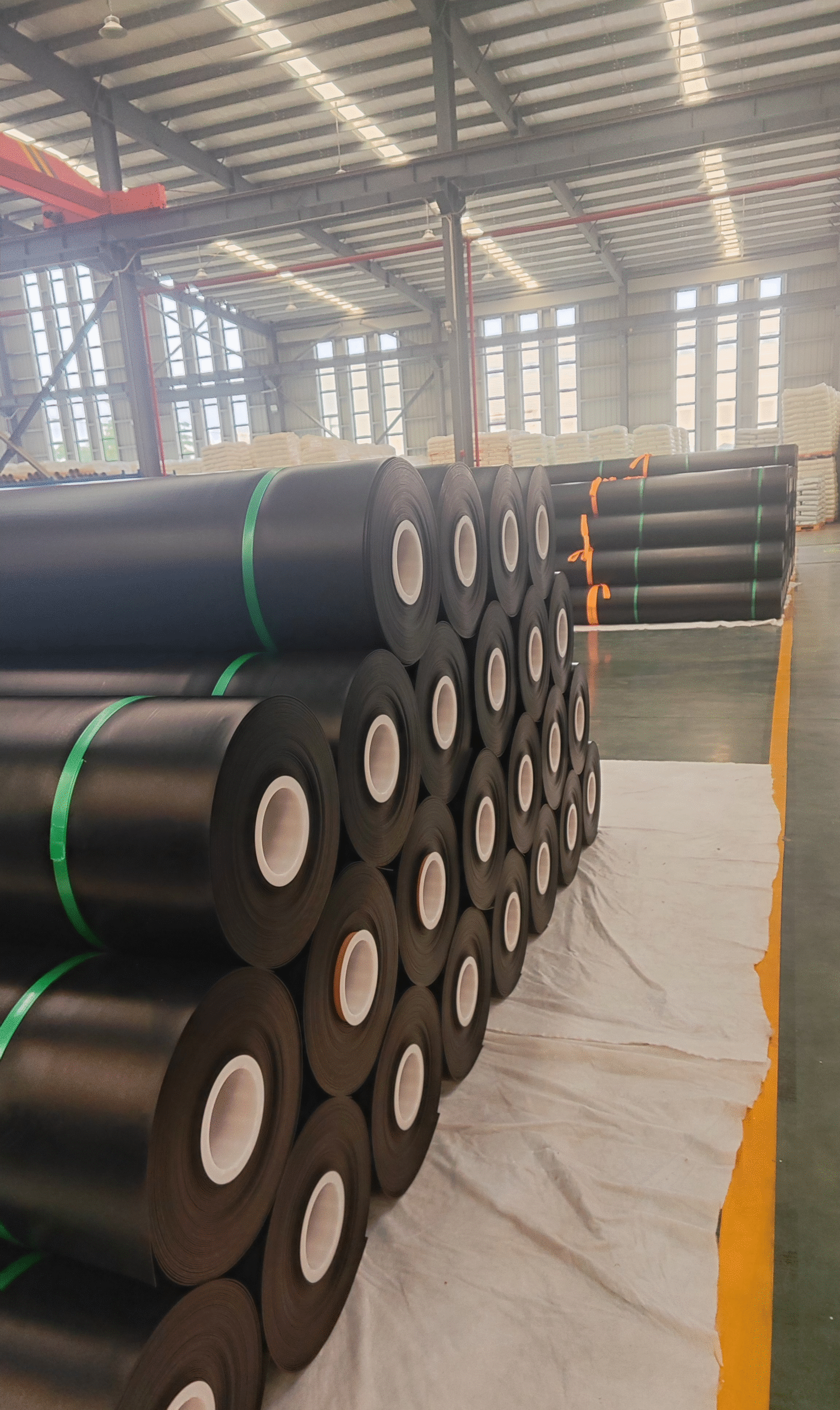
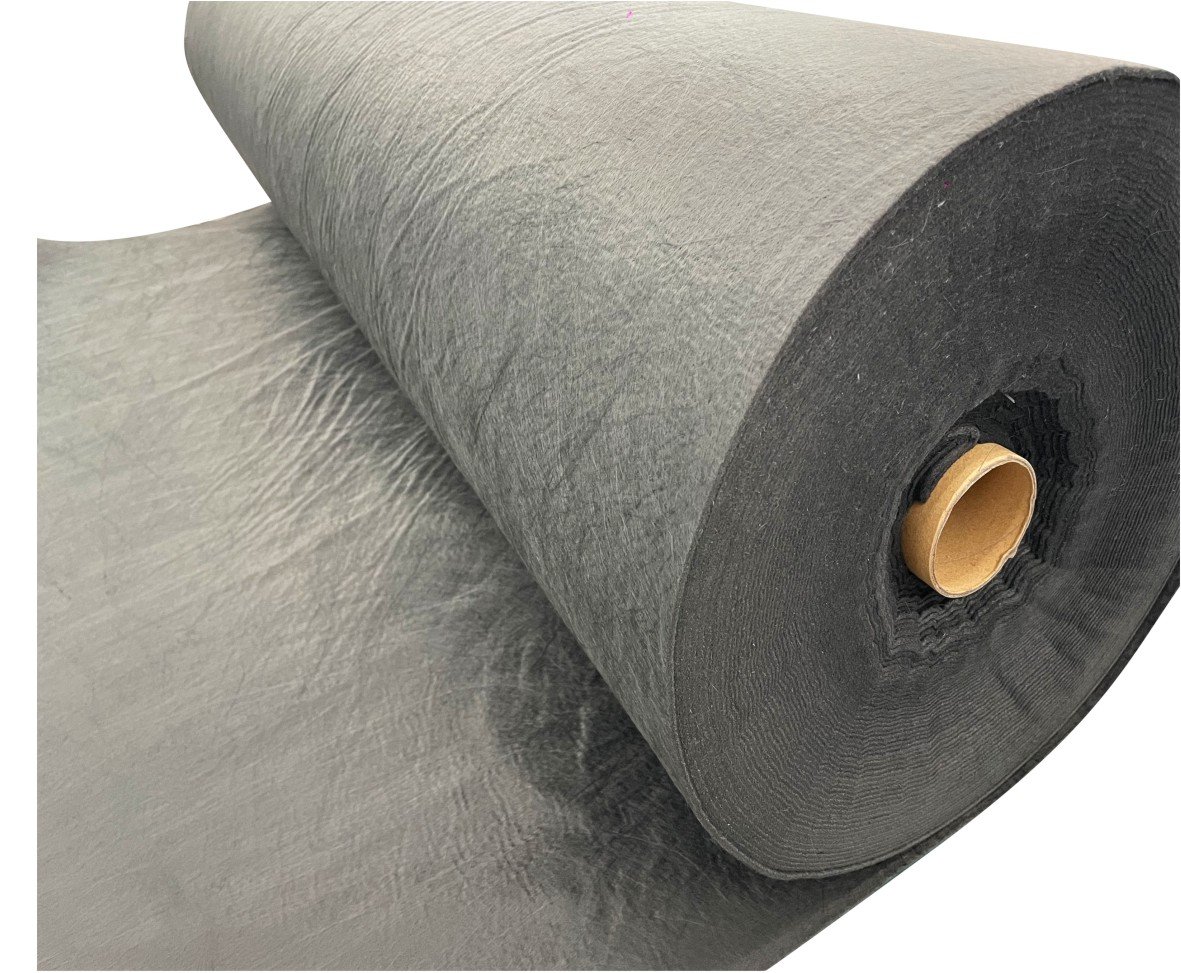
Nonwoven geotextiles offer three major advantages in road engineering: ① Reinforcement and Stability: tensile strength can reach 10–20kN/m, effectively dispersing loads and reducing settlement by more than 30%; ② Drainage and Filtration: permeability coefficient of 10⁻³–10⁻¹cm/s, preventing water accumulation from softening the subgrade; ③ Durability and Protection: puncture resistance ≥1.5kN, with a service life of 10–20 years. Rational selection of 300–400g/㎡ products can significantly enhance overall road quality and maintenance cycles.
Superior Separation and Soil Stabilization
Nonwoven geotextile is laid between the subgrade and the aggregate layer; the first thing it does is separation, not changing soft soil into high-bearing soil. FHWA uses it for soft, wet, and frost-heave-prone subgrades: when CBR<3, it is usually treated as stabilization, and when CBR≥3, it is more commonly treated as separation; in tests, base fines contamination can be reduced from 6.39% to 1.81%, and rutting is reduced by about 30%.
Which two layers to stabilize
This layer of nonwoven geotextile in the road stabilizes not the “surface course and base course,” but the interface between the lower subgrade soil and the upper aggregate layer.
What the upper layer needs to maintain is gradation, voids, and thickness; what the lower layer needs to maintain is in-situ position and strength. Without geotextile, coarse aggregate will embed downward into soft soil, and fine-grained soil will move upward into base voids under the action of water and cyclic loads. In tests cited by the VDOT review, the contaminated fines entering the subbase, calculated by subbase mass, was 6.39% without geotextile and dropped to 1.81% with geotextile. The numerical difference is 4.58 percentage points, which is more sensitive for open-graded and thin bases.
In order to keep these two layers in their respective places, the nonwoven geotextile undertakes a set of coordinated roles: separation keeps the subgrade soil and aggregate layer apart, filtration allows water to pass while retaining fine-grained soil as much as possible, and the nonwoven structure itself can provide a certain amount of in-plane drainage. FHWA writes very clearly that geotextiles are more suitable for separation, filtration, and drainage in roads; geogrids are more oriented toward reinforcement.
| Section Position | Lower Layer | Upper Layer | Common changes when not laid | State to be maintained after laying nonwoven geotextile |
|---|---|---|---|---|
| Subgrade / Subbase | Fine-grained soil or organic soil | Dense-graded subbase | Coarse material embedding, fines pumping, thickness being “eaten” | Subgrade stays at the bottom, subbase stays at the top |
| Subgrade / Base | Fine-grained soil | Base aggregate | Wheel path area softens faster, base voids occupied by fines | Base gradation more stable, compaction more uniform |
| Wet fine-grained subgrade / Open-graded base | High water content subgrade | Permeable base | Void clogging, drainage slows down, early pumping | Water can pass, fines cannot, voids continue to function |
| Subgrade / Geogrid+Aggregate | Soft subgrade | Aggregate layer | When relying only on geogrid, pumping fines may still enter the base | Geotextile blocks fines, geogrid limits displacement |
Looking further, FHWA also gives boundaries for which types of lower layer soils need the interface stabilized. Poor soils suitable for stabilization include SC, CL, CH, ML, MH, OL, OH, PT, often accompanied by c_u < 13 psi, CBR < 3 or M_R < 4500 psi (approx. 30 MPa), and the groundwater table entering the range of influence of surface loads.
You can check the drawings and technical tables according to the following set of points:
1️⃣ Structural layer position confirmation: If the section contains subbase (soil cushion), the geotextile should be placed at the subgrade/subbase interface; if there is no subbase, it is placed at the subgrade/base interface to avoid wheel load stresses of ≥50–100kPa.
2️⃣ Soil type identification: If the subgrade consists of ML, CL, CH fine-grained soils (liquid limit LL>35%, plasticity index PI>10) or organic soils, pumping is likely to occur, and a separation layer must be set.
3️⃣ Base type matching: If it is an open-graded base (void ratio 15–25%), it must simultaneously meet the requirements for filtration (O95≤1.8×soil particle size D85) and drainage (k≥10⁻³cm/s).
4️⃣ Material functional distinction: FHWA specifications clearly state that geogrids are used for reinforcement (increasing bearing capacity by 20–40%), while geotextiles are used for separation and filtration; the two cannot be mixed up.
5️⃣ Construction protection requirements: After laying, the coverage thickness should be ≥150mm (6in.); rolling is strictly prohibited when construction vehicle loads are ≥40kN to prevent puncture (puncture resistance ≥1.5–2.0kN).
Including material indicators makes it easier to judge whether these two layers can be separated long-term. The VDOT review mentions that AASHTO M288’s minimum permittivity for separation and stabilization are 0.02 s⁻¹ and 0.05 s⁻¹ respectively; it also reminds that very soft subgrades with CBR lower than 1 are not within the scope of M288, and relying solely on conventional geotextiles is not recommended.
Effect on weak subgrades
Once a subgrade is in a state of high water content, low strength, and repeated disturbance by wheels, problems first appear in the construction stage, not several years after opening to traffic. FHWA clearly describes subgrades suitable for stabilization using geosynthetics: SC, CL, CH, ML, MH, OL, OH, PT with more fine-grained or organic soil, coupled with CBR<3, undrained shear strength c_u<13 psi, or resilient modulus M_R<4500 psi (approx. 30 MPa), plus the groundwater table entering the load influence range; during construction, it is prone to indentation, lateral squeezing, pumping, and suction.
You can check the investigation and design materials according to the following 4 key points:
- Subgrade Classification: Focus on ML, CL, CH fine-grained soils; when silt and clay have water contents close to the liquid limit (LL), soil particles migrate easily, and under construction vehicle loads, pumping or settlement is likely to occur, requiring consideration of separation or reinforcement.
- CBR Indicators: Soils lower than CBR 3% in design or test reports are classified within the “stabilization treatment” range, requiring cement, lime, or other modification treatments; for subgrades with CBR≥3%, geotextiles can be used for separation/filtration but do not bear load as a structural layer.
- Groundwater Level: If the groundwater level is close to or higher than the subgrade bottom surface for a long time, it is suggested that geotextile layout consider both drainage or filtration, with a permeability coefficient k≥10⁻³cm/s.
- High Sensitivity Soil: If the ratio of undisturbed strength to remolded strength is >1.5–2 times, it is suggested to increase the coverage thickness to ≥150mm (6in.) or use in combination with geogrids to enhance stability.
Looking further down, coverage thickness and material survivability cannot be neglected. FHWA cites AASHTO M288 requirements that at any time, there must be at least 150 mm (6 in.) of base or subbase thickness above the separation layer, and wheels cannot press onto the geotextile; when subgrade CBR>3 and construction equipment is conventional, Class 2 is commonly used; when subgrade CBR<3 or heavy equipment passes frequently, Class 1 is recommended.
This set of requirements is not just a paper format. In the Class 1 / Class 2 survivability indicators given by FHWA, grab tensile strength is roughly in the magnitude of 1400/900 N or 1100/700 N, puncture strength is in the magnitude of 500/350 N or 400/250 N, and burst strength is approx. 3500/1700 kPa or 2700/1300 kPa. If the drawing only writes “nonwoven geotextile” without specifying the grade, it is often impossible to judge on-site whether it can withstand the first layer of paving and mechanical passage.
At this point, looking at the cases of “thin base” and “open-graded base.” FHWA states that for weak subgrades, construction is not recommended if the total base or subbase thickness is less than 150 mm; for open-graded or thin bases on wet fine-grained subgrades, it is best to consider separation geotextile and geogrid together, because geogrids can limit the base from squeezing down into the subgrade, but cannot block fine-grained soil from pumping up into the base. To block fines and maintain drainage, one must still rely on geotextiles.
Experimental data can also make this part more concrete. The VDOT review cites accelerated loading tests by Kermani et al.: after placing geotextile at the base-subgrade interface, road rutting decreased by about 30%; the mass percentage of fine particles migrating into the base dropped from 6.39% without geotextile to 1.81%. The same review also mentioned that earlier research believes when the newly added fines in the base reach about 6%, stiffness begins to be affected, and at around 8%, the function of the drainage-type base may be significantly weakened.
| Field Condition | What is more suitable to check first | Common Practice |
|---|---|---|
| CBR<3, subgrade near saturation | Whether the construction platform can withstand the first round of passage | Nonwoven geotextile + design thickness aggregate, plus geogrid if necessary |
| CBR≥3, but high fines, prone to pumping | Whether separation and filtration are sufficient | Mainly separation type geotextile |
| Open-graded base, permeable base | Whether fines will clog drainage channels | Focus on AOS, permeability, in-plane drainage |
| Base thickness < 150 mm | Whether construction survivability is met | Adjust base thickness first, then discuss laying |
Laying nonwoven geotextiles on weak subgrades first improves not the final strength value, but whether the construction platform can be stably formed, whether the base thickness can be maintained, whether fine particle migration can be slowed down, and whether drainage channels can continue to function.
Excellent Filtration and Subsurface Drainage
In road engineering, nonwoven geotextiles control particle migration through 0.05–0.2 mm Apparent Opening Size (AOS) while maintaining a permeability coefficient of 10⁻¹–10⁻³ cm/s, achieving a synergy of stable filtration and drainage. Measured data shows that in subgrades with a fine-grained soil (<0.075 mm) ratio exceeding 35%, laying nonwoven geotextile can reduce the particle loss rate by 60%–85% and shorten the base water accumulation dissipation time by 30%–50%, improving subgrade moisture status and bearing performance.
Subsurface Drainage Path
In areas where annual precipitation exceeds 800–1200 mm/year, in road structures without drainage layers, the base moisture content can rise to over 80% saturation within 48 hours, leading to a 20%–40% decrease in bearing capacity. Nonwoven geotextile guides water from high-pressure zones to low-pressure zones through its continuous pore structure, forming a stable horizontal drainage path in coordination with the aggregate layer, significantly shortening the retention time of moisture within the structure.
After moisture enters the subgrade, the interlaced fiber structure of the nonwoven geotextile provides a two-way channel: normal permeability coefficient is usually between 1×10⁻³ and 1×10⁻¹ cm/s, while in-plane drainage capacity can reach the 10⁻³ m²/s magnitude. Under compaction stress conditions of about 50–200 kPa, this structure can still maintain over 70% of its drainage capacity.
- Drainage path formation depends on three continuous conditions:
- Tight contact between geotextile and soil, reducing interface resistance (contact efficiency >90%)
- Connection with the crushed stone layer to form channels (void ratio about 30%–40%)
- Presence of a slope in the drainage direction (usually ≥1%)
In UK highway projects, after setting geotextiles, the decrease in base moisture content within 24 hours after rain can reach 15%–25%, whereas it is usually below 10% when not set. When fine particles enter the crushed stone layer, the void ratio may drop from 35% to below 20%, and drainage capacity decreases by more than 50%. Nonwoven geotextile keeps drainage channels open long-term by blocking particles with sizes smaller than 0.075 mm from entering the upper structure.
- Comparison of drainage efficiency in different structures:
- Without separation layer: drainage time 48–96 hours
- Traditional sand layer filtration: 24–72 hours
- Geotextile + crushed stone combination: 12–36 hours
In US FHWA test sections, using geotextiles reduced peak pore water pressure after rainfall by about 30%–45%. As traffic load increases, under repetitive loading conditions (>10⁶ times), drainage channels in unreinforced structures are prone to local collapse, while nonwoven geotextile can recover about 80% of its original thickness after compression, maintaining flow channel continuity.
- Performance in long-term operation (5–10 year monitoring data):
- Drainage capacity decay: <20%
- Base moisture content fluctuation range: within ±5%
- Reduction in ponding depth in freeze-thaw cycle areas: approx. 25%–40%
Moisture movement depends not only on material properties but also on structural layout. In common designs, geotextile is laid between the base and in-situ soil, combined with lateral drainage ditches or edge ditch systems to guide water to the outside of the subgrade. Typical drainage distances are controlled within a 5–15 meter range; exceeding this distance leads to a drop in drainage efficiency.
- Common control parameters in design:
- Drainage slope: 1%–3%
- Drainage path length: ≤10 m preferred
- Geotextile mass per unit area: 200–300 g/m²
- Coverage: 100% continuous laying, no overlapping gaps
In rainy regions of Europe (annual rainfall >1000 mm), this combined structure can control long-term subgrade moisture content within the 15%–20% range, about 10 percentage points lower compared to untreated structures.
Aggregate Layer Coordination
In crushed stone bases, typical particle size distribution is 5–40 mm, with a void ratio of about 30%–40%, providing the main channel for water flow. However, under the joint action of traffic load and water flow, fine particles (<0.075 mm) will gradually enter these voids, causing the void ratio to drop to 15%–25% within 1–3 years. Nonwoven geotextile laid between the soil and aggregate forms a physical separation layer, reducing the particle migration rate by more than 70%.
The AOS of geotextile is usually controlled within the 0.075–0.2 mm range, allowing water to pass while restricting fine particles from entering the crushed stone layer. Field sampling shows that after 10⁵ vehicle loads, the fine material content in the crushed stone layer can rise to 12%–18% in structures without geotextile, while it is usually below 5% with use.
- Aggregate layer stability changes (long-term monitoring):
- Unseparated structure: settlement 15–30 mm
- Using geotextile: 5–12 mm
- Rutting development rate reduction: approx. 20%–35%
Once particle migration is controlled, laboratory permeability tests indicate that when fines content exceeds 10%, the permeability coefficient can drop from 10⁻² cm/s to 10⁻⁴ cm/s, a decrease of two orders of magnitude. Adding geotextile significantly delays this change.
The interface contact state between aggregate and geotextile also affects overall performance. During laying, surface flatness is required to be controlled within ±10 mm to ensure the contact area exceeds 85%. If voids exist, local stress concentration will form, causing uneven deformation of the material under 50–100 kPa loads.
- Interface performance influence factors:
- Contact tightness: >85% is the stable range
- Cover soil thickness: ≥150 mm can disperse loads
- Initial degree of compaction: ≥95% (Modified Proctor)
In US interstate highway projects, structures meeting the above conditions can see an increase in base modulus (Mr value) of about 15%–25%.
Further observation of the synergy between structural layers shows that when water flows through the crushed stone layer, without a separation layer, fine particles will migrate along the water flow path and fill voids; however, the presence of geotextile separates the paths of water flow and particle movement, reducing internal structural changes.
| Indicator | Without Geotextile | With Geotextile |
|---|---|---|
| Crushed stone void ratio change | -10% to -20% | Within -3% |
| Permeability coefficient decay | 10–100 times | <5 times |
| Base modulus change | -20% | Within -5% |
In wet environments (annual rainfall >900 mm), this difference is even more pronounced, with long-term monitoring showing that drainage capacity retention time can be extended by 2–3 times.
As traffic load increases (cumulative axle load >10⁶ times), nonwoven geotextile possesses a certain extensibility (elongation is usually 40%–80%), allowing it to conform to base deformation after being stressed, maintaining separation continuity. Compared to rigid separation materials, its probability of damage is significantly lower.
- Material adaptability performance:
- Tensile strength: 8–20 kN/m (common range)
- Elongation at break: 40%–80%
- Thickness recovery rate after compression: approx. 70%–85%
In North American heavy-load road tests, structures using geotextile did not show obvious delamination or material damage within an 8-year cycle, while the control section showed local mixed layers within 5 years. Under the same traffic conditions, the function maintenance time of the base in road sections using geotextile can be extended from the original 5–7 years to more than 10 years.
Enhanced Durability and Cost-Effectiveness
Laying 4-8 oz/sq yd nonwoven geotextile on weak subgrades with a California Bearing Ratio (CBR) lower than 3 can block the mixing of fine-grained soil with the base. Federal Highway Administration (FHWA) data shows that this isolation layer allows engineering to reduce crushed stone aggregate thickness by 20%-30% (saving approx. 4-6 inches of aggregate). Within a 20-year road usage cycle, the underlying structure laid with geotextile can reduce the rutting deformation rate by more than 40%, extending the pavement resurfacing cycle from the standard 10-12 years to 15-18 years.
Physical Isolation Improvement
On silty clay subgrades with water content exceeding 20%, vehicle axle loads generate downward vertical shear force. When geotextile is not laid, underlying fine-grained soil will “pump” upward into the crushed stone layer at a speed of 0.5 to 1.5 inches per year. Civil engineering tests at the University of Illinois at Urbana-Champaign show that when 20% of bottom mud is mixed into the base aggregate, the overall bearing capacity index (CBR) will drop off a cliff to below 40% of the original.
Laying nonwoven geotextile with a weight of 6 to 8 oz/sq yd provides a physical barrier. The 0.15mm to 0.21mm Apparent Opening Size (AOS) formed by the interlacing of polypropylene continuous filaments is just smaller than the fine particles of the No. 200 sieve (0.075mm). While blocking fine soil from pumping up, the polymer fibers also withstand the puncture pressure of the crushed stone above. Materials complying with the American Association of State Highway and Transportation Officials (AASHTO) M288 specification must meet several mechanical lower limits in isolation applications:
- Grab Tensile: > 120 lbf (ASTM D4632)
- Trapezoid Tear: > 50 lbf (ASTM D4533)
- CBR Puncture: > 310 lbf (ASTM D6241)
- UV Resistance: retain > 70% strength after 500 hours (ASTM D4355)
Physical isolation guarantees the purity of the base material, allowing the internal friction angle of the entire roadbed system to be maintained between 35 degrees and 45 degrees of the original design. For extremely soft silty or clayey soils with California Bearing Ratio (CBR) between 1.0 and 3.0, the three-dimensional mesh structure of the geotextile acts with a stress-dispersing effect similar to “snow boots.”
When a heavy dual-axle truck generates a single axle load exceeding 18,000 lbs, the geotextile undergoes slight deformation under stress. The material typically works between 2% and 5% elongation. Vertical pressure is converted into horizontal tension within the material, reducing the unit area pressure transmitted to the surface of the underlying natural soil from the original 60 psi to about 20 psi. This is specifically reflected in the following changes in roadbed mechanical indicators:
- Equivalent CBR increase: soft subgrade (CBR 1.5) combined with geotextile can reach a bearing state of equivalent CBR 3.5-5.0.
- Structural Number (SN) contribution: the isolation layer can typically provide an increase in structural number of 0.15 to 0.25 for flexible pavement design.
- Vertical settlement control: limits the amount of permanent deformation under per million equivalent single axle loads (ESALs) to within 0.5 inches.
- Dynamic resilient modulus: base aggregate resilient modulus (Mr) remains long-term at 25,000 to 30,000 psi.
Engineers input soil layer data with nonwoven geotextile parameters using pavement design software (such as AASHTOWare Pavement ME). System simulations show that the subsoil layer, which originally had a shear strength of only 500 psf, can withstand an average daily truck traffic (ADTT) increased by 40%.
Extending Resurfacing Cycles
Records from the Long-Term Pavement Performance (LTPP) database of various State Departments of Transportation (DOTs) show that in the full life cycle of highway projects, more than 70% of activities are concentrated in the maintenance and renovation stages after opening to traffic. Flexible pavements without nonwoven geotextile laid usually generate rutting deformation exceeding 0.5 inches (approx. 1.27 cm) on the surface after bearing a cumulative 2 million equivalent single axle loads (ESALs).
The absence of an isolation layer causes the underlying fine-grained soil to intrude into the crushed stone base at a speed of about 0.1 inches per year, and the effective thickness of the base subsequently decreases year by year. In tracking tests as long as 20 years, the California Department of Transportation (Caltrans) found that once the internal friction angle of the base is lower than 35 degrees, the fatigue cracking rate of the surface asphalt (HMA) increases exponentially.
On weak subgrades with a CBR value of 2.0, conventional asphalt pavement without geotextile reinforcement will see its International Roughness Index (IRI) break through 170 inches/mile in the 7th year of operation, reaching the physical form threshold for mandatory resurfacing.
Laying 6-8 oz/sq yd nonwoven geotextile maintains 100% of the design thickness and void ratio of the crushed stone base by blocking fine-grained soil migration. The stability of the physical structure delays the generation speed of reflection cracks in the asphalt surface, physically extending the natural service life of the pavement from the conventional 10-12 years to 15-18 years.
Material consumption and engineering intervention frequency within the full life cycle show the following quantifiable physical indicator changes:
- Cumulative axle load bearing capacity: under the premise of generating the same rut depth, the road section laid with geotextile can withstand about 40% to 50% more ESALs.
- Asphalt resurfacing volume: within a 30-year Analysis Period, the number of resurfacing operations is reduced from 3 to 2, saving about 1,200 tons of hot mix asphalt per mile of two-way lanes.
- Base loss rate: the thickness loss rate of the crushed stone base is controlled within 5% of the initial design, avoiding early intervention of Full Depth Reclamation (FDR).
- Structural integrity index: during non-destructive testing (such as Falling Weight Deflectometer FWD testing) in the 15th year, its elastic modulus can still maintain over 80% of the initial value.
Field core samples from the Texas Department of Transportation (TxDOT) show that after 18 years of service, the increase in fine particle content below the No. 200 sieve in the crushed stone layer with a nonwoven geotextile base is less than 3%.
The reduction in maintenance frequency reduces the number of times large milling machines and rollers enter the site, simultaneously lowering greenhouse gas emissions generated by construction equipment operation. In the AASHTO motor vehicle fuel consumption model, maintaining long-term smooth pavement (IRI below 95 inches/mile) can reduce the rolling resistance of heavy trucks by about 3% to 5%.
Reducing Thickness
In the 1993 edition of the AASHTO Guide for Design of Pavement Structures, for weak subgrades (CBR<3) to reach the design requirement of structural number (SN) 3.0, it is usually necessary to lay 18 to 24 inches of underlying graded crushed stone. After laying nonwoven geotextile complying with AASHTO M288 standards, the Tension Membrane Effect of the geosynthetic material changes the stress distribution of the underlying layer.
Wheel rut tests by the U.S. Army Corps of Engineers (USACE) indicate that under the same static load, the nonwoven isolation layer allows engineers to physically reduce the design thickness of the crushed stone base by 30% to 40%. The original 18-inch aggregate layer is safely compressed to 11 to 12 inches.
The Federal Highway Administration (FHWA) NHI-07-092 reference manual points out that for every 1 inch of thickness of crushed stone base laid, about 100 lbs of aggregate are consumed per square yard. Reducing thickness by 6 inches can reduce the physical filler demand by about 325 lbs per square meter.
The decrease in aggregate volume triggers a chain reaction in the on-site logistics chain. Taking a California standard 1-mile two-way two-lane (width 24 feet, approx. 14,080 sq yd) new construction project as an example, the 6-inch thickness reduction releases huge physical space.
| Logistics and Construction Physical Indicators (1-mile standard two-way lane) | Conventional Design (18-inch crushed stone) | Adding 8oz nonwoven geotextile (12-inch crushed stone) | Physical Reduction Data |
|---|---|---|---|
| Total Aggregate Demand (unit weight 145 lbs/ft³) | Approx. 11,500 tons | Approx. 7,666 tons | Reduction 3,834 tons |
| Standard Three-Axle Dump Truck Trips (25 tons/truck) | 460 trips | 307 trips | Reduction 153 trips |
| Roller Layered Compaction Time (at 6 inches/layer) | 3 complete cycles | 2 complete cycles | Reduction 33% time |
| Heavy Equipment Diesel Consumption Estimate (round trip + idling) | Approx. 4,140 gal | Approx. 2,763 gal | Save 1,377 gal diesel |
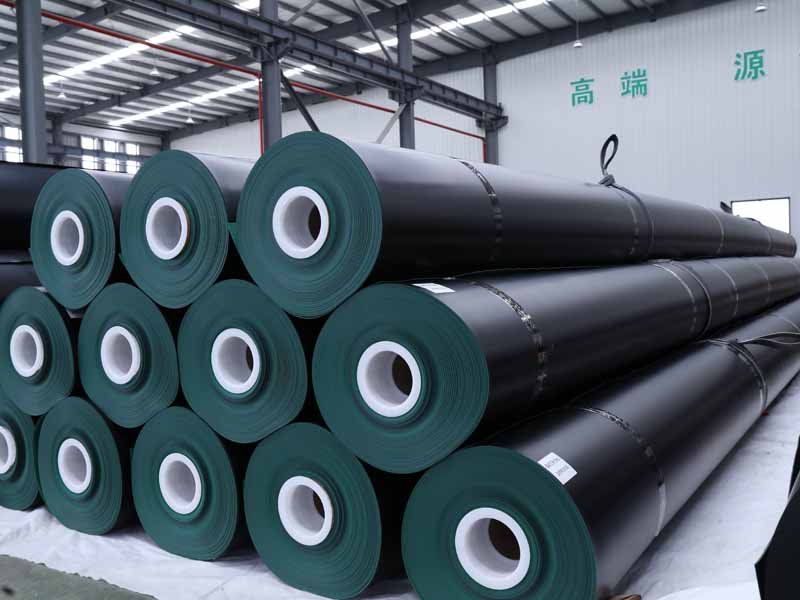
The reduction in transport capacity alleviates traffic congestion and dust pollution around the construction site. Only standard width nonwoven geotextile rolls need to be introduced to the site, with common specifications being 15 feet wide and 300 feet long, and a single roll covering an area of 500 sq yd.
The reduction in truck shifts reduces the crushing loss to surrounding existing municipal roads and simultaneously optimizes the equipment scheduling load of the construction site:
- Loader throughput: aggregate loading operations at the front end of the quarry decreased by more than 3,800 tons, shortening the material preparation cycle.
- On-site stacking area: the footprint of the temporary aggregate storage area was reduced by 30%, leaving a larger turning radius for graders and pavers.
- Carbon emission hard indicators: according to the U.S. Environmental Protection Agency (EPA) model, a single heavy truck emits 22.4 lbs of CO2 for every 1 gallon of diesel consumed, and this project physically reduced emissions by more than 30,000 lbs of carbon dioxide.
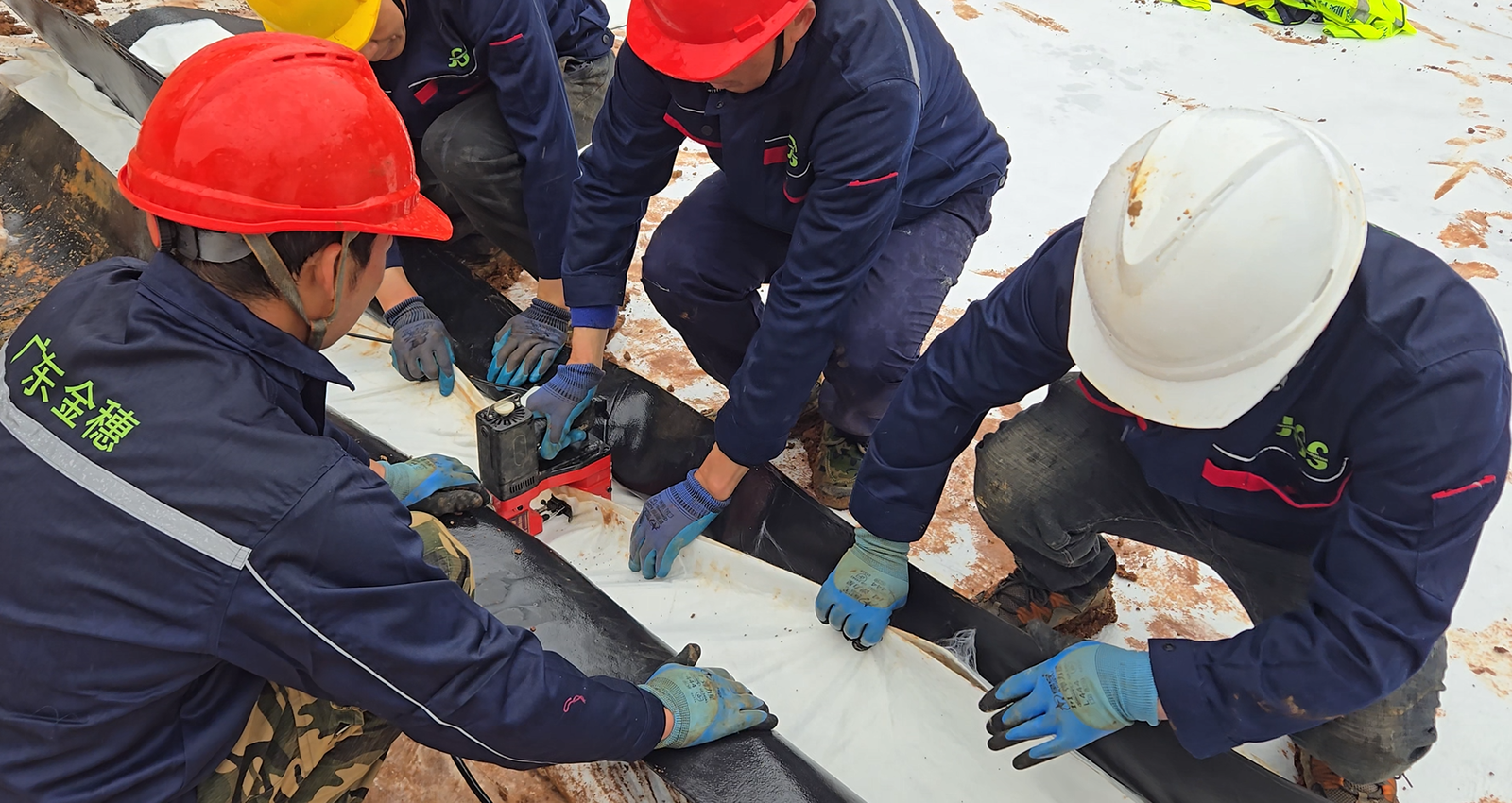
A roll of 8 oz geotextile weighing about 250 lbs can be unrolled within 30 minutes by only two workers. The material is delivered to the site all at once by a regular flatbed truck in roll form, and a single truck can load as many as 80 rolls, enough to cover more than 40,000 sq yd of subgrade.
According to construction efficiency logs from the Texas Department of Transportation (TxDOT), two skilled workers can unfold and anchor more than 12,000 sq yd of nonwoven geotextile per day (8-hour work system) on a leveled roadbed.

Leave a reply