
Core Functions in Ballasted Railways
Ballast Separation
Why It Matters
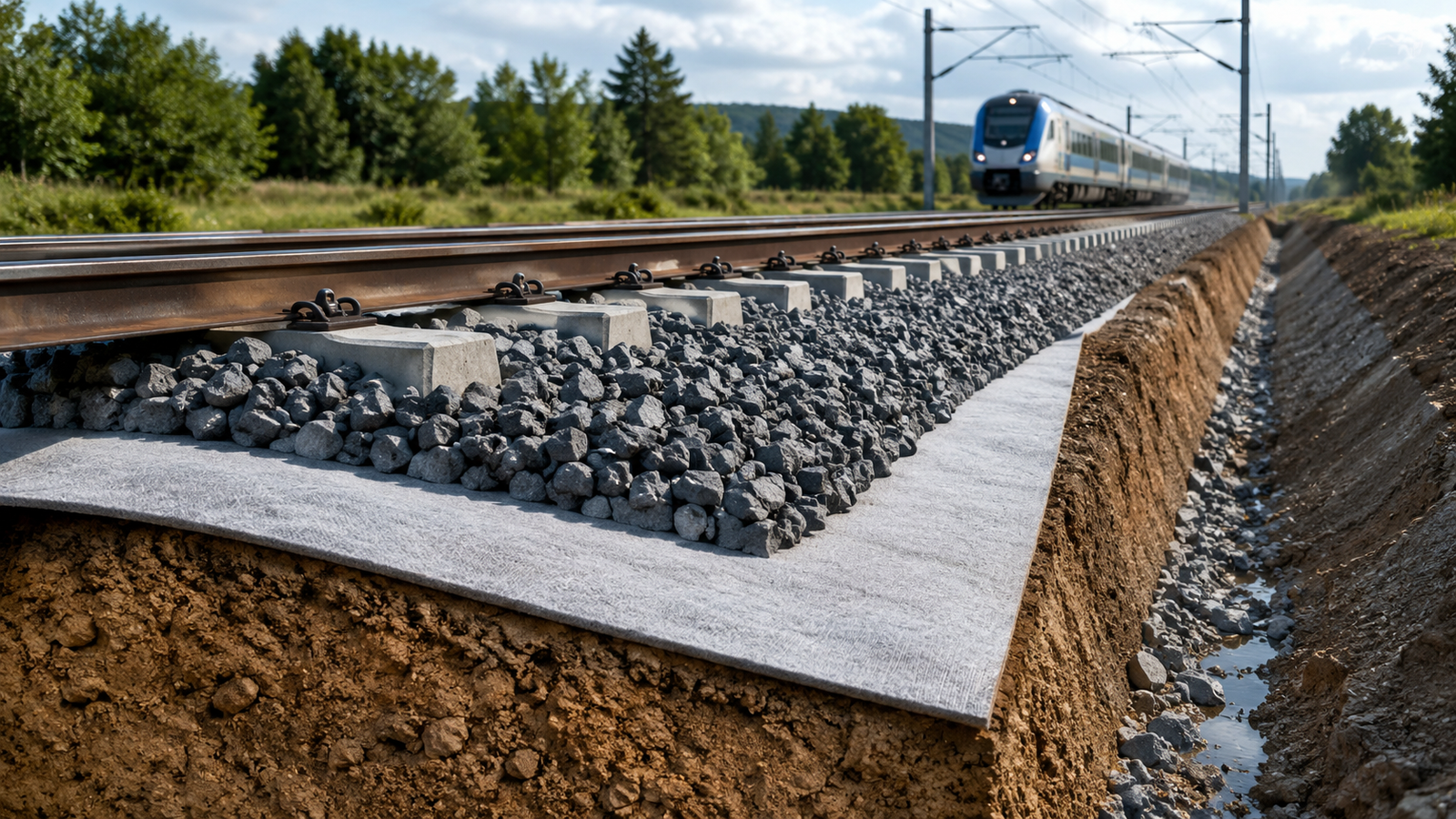
The ballast layer is the core load-transfer layer in railway track structures that directly bears the dynamic loads from trains through the rails and concrete sleepers. The voids between ballast particles (typically 20~60mm crushed basalt or limestone) serve the dual functions of rainwater infiltration and load transfer. Geotextiles, laid between the ballast and the underlying subgrade, primarily function to prevent coarse ballast particles from penetrating into the fine-grained subgrade soil. Once the ballast layer mixes with the subgrade soil, the contact area between the sleepers and the ballast decreases, and the geometric state of the ballasted track will experience significant settlement and lateral displacement in a short period. According to industry statistics, the Track Geometry Index (TGI) of tracks with mixed ballast and subgrade soil will increase by 40%~60% within 3~5 years, significantly increasing maintenance and repair costs.
From a structural mechanics perspective, the compaction characteristics of the ballast layer and the subgrade soil are fundamentally different. The design goal of the ballast layer is to maintain stability under high dynamic loads (typically requiring K30[2]≥190 MPa/m), while the K30 value of the subgrade surface after filling is usually only 110~130 MPa/m. The difference in compaction modulus between the two is about 1.5 to 2 times. If they are in direct contact, the ballast will gradually embed into the soft soil layer under train vibration, forming uneven support. The isolation effect of geotextiles separates these two materials with distinctly different compaction characteristics, allowing the ballast layer and the subgrade layer to work independently, avoiding uneven settlement that leads to early damage of the track structure. In our tracking observations of several heavy-haul railways, we found that the average annual sleeper settlement rate in sections with geotextile isolation layers was about 0.8 mm/year, while the average annual settlement rate in the comparison sections without isolation layers was as high as 2.3 mm/year.
Preventing Ballast Mixing
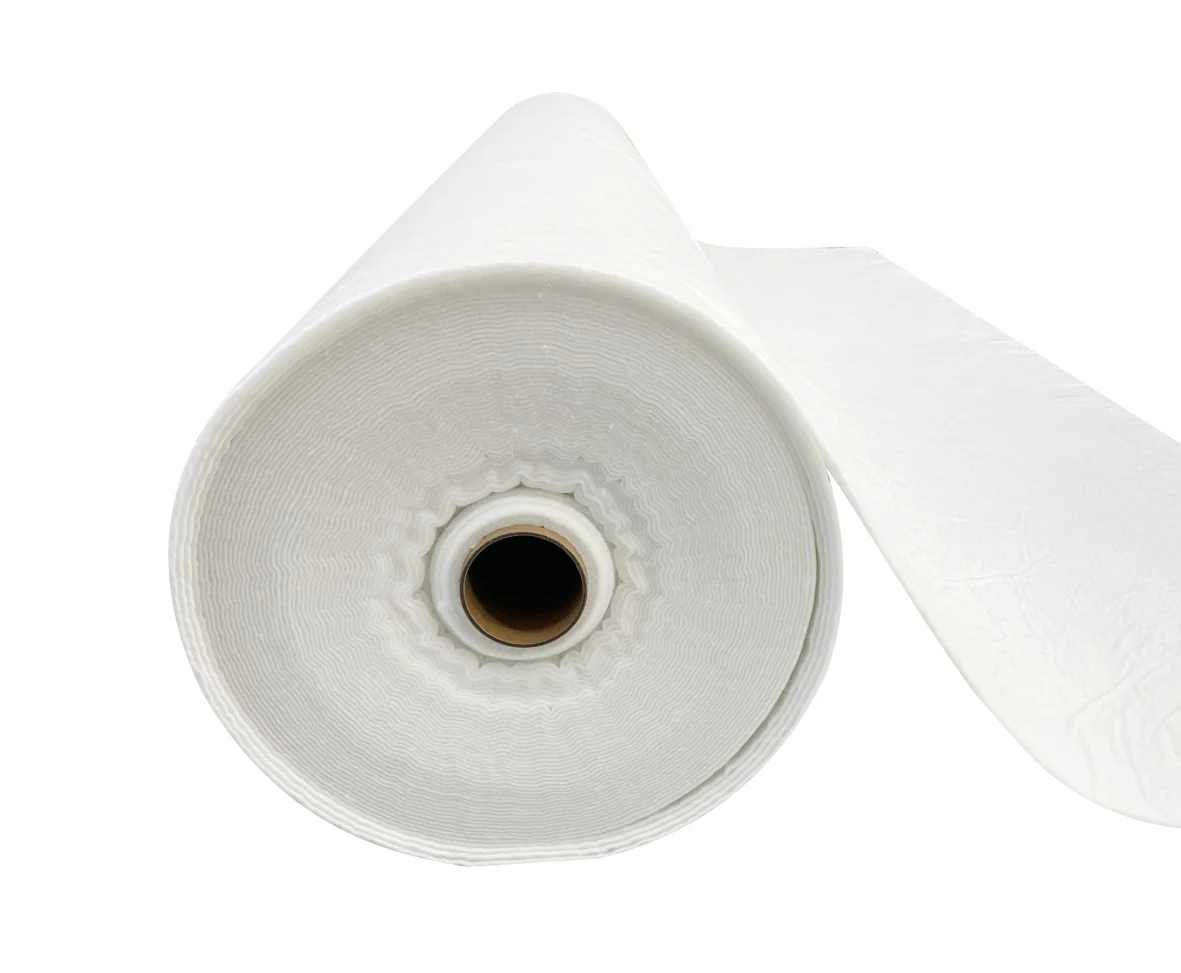
The mixing of ballast and subgrade soil usually occurs in two stages: during the construction phase, due to insufficient surface leveling of the subgrade, local depressions cause coarse particles to embed into the soft soil under gravity during ballast laying; during the operation phase, the vibration of the ballast caused by train dynamic loads makes fine particles slide downward under cyclic vibration, entering the subgrade surface pores. Geotextiles prevent these mixing processes through physical barrier effects. High-strength nonwoven geotextiles (PET 200 g/m² and above) can withstand sufficient normal stress without breaking during the ballast compaction process (typically 50 kN/m² compaction energy). Their pore size design (O95[1] typically 80~150 μm) ensures that fine particles (particle size typically less than 0.075 mm for silt and clay) in the subgrade soil cannot penetrate.
The mechanism of geotextile prevention of mixing also includes the reasonable matching of the equivalent pore size (AOS, O95) with the subgrade soil particle size. According to GB/T 17638-2017 “Geosynthetics – Short Fiber Needle-Punched Nonwoven Geotextiles,” the equivalent pore size of geotextiles used for ballast separation should meet O95≥3d85 (d85 is the characteristic particle size of the subgrade soil, referring to the particle size below which 85% of the soil mass is accounted for). When the pore size of the geotextile is smaller than the d85 of the subgrade soil, fine particles cannot pass through the geotextile plane by their own weight, thus achieving complete isolation. In practical engineering, the use of PET geotextiles with O95=100 μm (grammage ≥250 g/m²) in combination with subgrade surface soil with d85≤0.08 mm can achieve isolation efficiency of over 99%. In a certain Shuohuang heavy-haul railway project we participated in, the use of 300 g/m² PET geotextiles resulted in only a 3% decrease in ballast layer thickness after 5 years of operation, while the ballast layer thickness in the control section without isolation decreased by 12%.
Selecting the Right Fabric
Geotextiles used for ballast separation need to meet the requirements of both isolation function and durability. The isolation function requires geotextiles to have sufficient tensile strength and bursting strength to withstand mechanical damage during ballast laying and compaction; durability requires geotextiles to maintain stable physical and mechanical properties under long-term wet conditions and freeze-thaw cycles. Specific selection indicators usually include: tensile strength (grab method) ≥8 kN/m, CBR bursting strength ≥1.5 kN, elongation ≤50% (to limit excessive deformation), acid and alkali resistance (strength retention rate ≥80% in the pH range of 3~12). PET (polyester) material has become the preferred choice for heavy-haul railway ballast isolation layers due to its high strength retention rate in wet environments (wet strength retention rate is usually over 95%).
In recent years, some projects have begun to use PP (polypropylene) geotextiles to reduce material costs. The advantage of PP material is that its chemical corrosion resistance is better than that of PET (in acidic soil environments), but the zero moisture absorption rate of PP leads to a higher risk of brittle fracture at low temperatures. In cold regions of northern China (such as the subgrade of the Harbin-Dalian Passenger Dedicated Line), design institutes usually require geotextiles to undergo low-temperature impact tests at -40°C. PET material is more suitable for such extreme conditions due to its lower glass transition temperature (below -70°C). When selecting, construction factors should also be considered: low grammage geotextiles (<200 g/m²) are easily lifted and torn by the wind during on-site laying, while geotextiles with a grammage over 400 g/m² have reduced flexibility and are prone to wrinkling when laid on curved sections, affecting the continuity of the isolation effect. It is recommended to choose based on the design life and axle load: for heavy-haul railways with an annual traffic volume of less than 50 Mt, PET 200~250 g/m² can be used; for lines with an annual traffic volume of 50~100 Mt, PET 300~350 g/m² is preferable; for heavy-haul railways with an annual traffic volume exceeding 100 Mt, high-strength PET 400 g/m² and above should be used in conjunction with reinforced rib bands.
Drainage Systems and Water Management
Drainage
Drainage Methods
The drainage design of the railway ballast layer directly affects the stability of the track structure. Traditional ballasted tracks rely on the voids between ballast particles (with a typical porosity of 35% to 45%) to drain rainwater to the subgrade surface, and then the water is channeled away through the subgrade cross slope (typically 3% to 4%) and side ditches. When the ballast mixes with the subgrade soil, the equivalent permeability coefficient of the ballast layer drops sharply from the initial 0.1 to 1.0 cm/s to below 0.001 cm/s, forming a near-impermeable layer, which leads to water pressure accumulation on the subgrade surface. When the water pressure exceeds the effective stress of the subgrade soil, it can cause serious problems such as mud pumping. The role of geotextiles in the drainage system is to maintain the permeability of the ballast layer while preventing the loss of fine particles that could clog the drainage channels.
The drainage design of modern high-speed railways has shifted from passive drainage to an active drainage concept. Active drainage systems typically include lateral drainage pipes (HDPE perforated corrugated pipes, with a diameter usually between 100 to 150 mm) installed beneath the geotextile to guide the water that permeates through the ballast layer to longitudinal drainage ditches on both sides of the track. In such systems, the geotextile acts as a filter layer rather than a drainage layer: it allows water to freely permeate but prevents fine particles in the subgrade soil (especially those with a particle size smaller than 0.075 mm) from entering the drainage pipes with the water. Clogging of the drainage pipes is the main cause of failure in active drainage systems, and the reasonable design of the geotextile filter layer (matching the O95 value of the geotextile with the d85 of the subgrade soil) can extend the cleaning cycle of the drainage pipes from 1 to 2 years to more than 10 years. In the engineering practice of the Beijing-Shenyang Passenger Dedicated Line, we effectively reduced the accumulation rate of fine particles on the surface of the geotextile by placing a 300 mm thick gravel transition layer between the geotextile and the HDPE drainage pipe.
Preventing Pumping Action
Groundwater pumping action is one of the important mechanisms leading to subgrade diseases. When the groundwater level is high, the instantaneous dynamic stress generated by the train load in the ballast layer will form alternating pore water pressure on the upper surface of the geotextile. At the peak of positive pressure, water carries fine soil particles towards the ballast layer; at the peak of negative pressure, water is sucked upwards by capillary action. This cyclic pumping action will gradually draw the fine particles from the surface layer of the subgrade into the ballast layer pores, causing two consequences: firstly, cavities form on the subgrade surface, reducing its bearing capacity; secondly, the ballast layer is filled with fine particles, the permeability coefficient decreases, and the drainage performance deteriorates. This phenomenon is particularly prominent in soft soil subgrade sections where the groundwater level is less than 1.5 m below the surface.
The key to preventing pumping action lies in establishing an effective stress barrier between the geotextile and the subgrade soil interface. The tensile strength of the geotextile itself (≥8 kN/m) forms a high modulus layer at the interface, and when the train load is transmitted downwards, the dynamic stress is partially reflected at the geotextile layer, reducing the peak of the downward acting dynamic stress. In design calculations, it is usually required that the stiffness of the geotextile (characterized by the ratio of tensile strength to elongation) is more than 10 times the stiffness of the subgrade soil to ensure sufficient stress dispersion effect. In addition, laying a 100 to 150 mm thick sand cushion layer between the geotextile and the subgrade soil can dissipate about 60% to 70% of the instantaneous pore water pressure generated by the train load, significantly reducing the driving force of the pumping action. In the soft soil subgrade section of the Shuohuang heavy-haul railway, we adopted a combined structure of “geotextile + sand cushion layer + geocell”, controlling the maximum settlement within 8 mm within a year, and no mud pumping diseases have occurred in the 10 years of operation.
Selecting Proper Permeability
The permeability of geotextiles is characterized by the vertical permeability coefficient (Kv), which is required to be not less than 1×10⁻³ cm/s under actual use conditions (after considering the long-term clogging effect) to meet the requirement that no water accumulation occurs between the ballast layer and the subgrade surface. When selecting permeable geotextiles, two common misconceptions need to be noted: First, only focusing on the initial permeability coefficient while ignoring the attenuation of permeability performance due to long-term clogging; the actual permeability coefficient of geotextiles after 3 to 5 years of use usually drops to 30% to 50% of the initial value; Second, confusing geotextiles with geomembranes, geomembranes are waterproof materials (with a permeability coefficient lower than 1×10⁻¹⁰ cm/s), if geomembranes are mistakenly used for drainage isolation layers, it will lead to the inability of the subgrade surface water pressure to dissipate, causing serious water accumulation diseases.
When selecting permeable geotextiles, the impact of their long-term durability on permeability performance should also be considered. PET material geotextiles will undergo hydrolysis and degradation in alkaline environments (pH>10), leading to the gradual degradation of fiber strength and pore structure, which in turn affects permeability performance. If the subgrade filler is lime-modified soil or cement-stabilized macadam, the seepage water is alkaline (pH 10 to 12), and under long-term action, the permeability coefficient of PET geotextiles may increase (pores become larger) or decrease (pores are blocked by degradation products), this uncertainty requires a safety factor to be reserved in the design. It is recommended that for subgrade drainage projects with a pH exceeding 9, PP material geotextiles with better alkali resistance should be selected, or a layer of anti-alkali protective coating should be applied to the geotextile. In actual engineering, by placing a 100 mm thick layer of medium-coarse sand protection layer on the upper and lower sides of the geotextile, the direct contact between the alkaline seepage water and the geotextile body can be effectively isolated, extending the service life of the geotextile to more than 50 years of the design benchmark period.
Subgrade Protection and Track Longevity
Subgrade Protection
Reducing Soil Pumping
Soil pumping refers to the phenomenon where fine particles in subgrade soil migrate into the ballast layer voids in a suspended form under the action of cyclic dynamic loads. Its formation mechanism is similar to the previously mentioned pumping action but emphasizes the long-term cumulative effect of fine particles migrating with water. As soil pumping continues, the subgrade surface develops increasingly deeper depressions, while the ballast layer becomes filled with fine particles, leading to increased stiffness and reduced elasticity. This issue is particularly severe in subgrades composed of silty or cohesive soils with a high content of fine particles (particles smaller than 0.075 mm accounting for more than 15%). Geotextiles prevent fine particles from migrating into the ballast layer through physical interception mechanisms. The effectiveness of this interception depends on the matching degree between the geotextile pore size and the subgrade soil particle size.
The core indicator to evaluate the interception performance of geotextiles is the protective efficiency, defined as the ratio of the content of particles larger than a specified size in the ballast layer under specified test conditions (typically after 2 freeze-thaw cycles, simulating a 100 kPa normal stress) to the content of particles of that size in the ballast layer without geotextiles. In engineering practice, it is required that the protective efficiency corresponding to the characteristic particle size d50 (the particle size through which 50% of the subgrade soil particles pass) is ≥90%, meaning the geotextile should be able to intercept more than 50% of the fine particle sizes in the subgrade soil from entering the ballast layer. When selecting geotextiles, one can refer to the indoor model test data provided by geotextile manufacturers (such as the cone drop test in Appendix C of GB/T 17638-2017), and choose a geotextile model with an O90 value less than d50 based on the actual particle size distribution curve of the subgrade soil. Our practice on the Harbin-Dalian Passenger Dedicated Line shows that using a PET 300 g/m² geotextile with O90=85 μm in combination with a poorly graded fine sand subgrade (d50≈0.15 mm), the maximum settlement of the subgrade surface monitored continuously for 8 years was only 12 mm, which is far lower than the design allowable value of 50 mm.
Extending Track Life
Track life refers to the service time of a railway line from its completion to the need for major repairs or reconstruction, while meeting the track geometry maintenance standards. The core factors affecting the life of ballasted tracks include the degradation rate of the ballast layer, the fatigue state of the sleepers, and the amount of subgrade settlement. Geotextiles extend track life through three approaches: First, they prevent the mixing of ballast and subgrade soil, maintaining the complete drainage function of the ballast layer, and avoiding ballast layer softening and uneven sleeper settlement due to poor drainage. Second, they reduce the entry of fine particles into the ballast layer, maintaining the effective contact area between ballast particles, ensuring that the ballast layer does not undergo excessive plastic deformation under train loads. Third, they act as a stress diffusion layer, reducing the transmission of train dynamic loads to the deeper subgrade, and lowering the dynamic stress level of the subgrade soil.
From the perspective of Life Cycle Cost (LCC[3]), the return on investment for geotextiles is mainly reflected in the reduction of maintenance and repair work and the extension of the major repair cycle. According to data from foreign railway research institutions, for heavy-duty railway lines with geotextile isolation layers, the ballast tamping cycle can be extended from once every 2 years to once every 4 to 5 years, reducing maintenance costs by about 40% to 55%. At the same time, geotextiles reduce the subgrade dynamic stress level by 30% to 50%, meaning the fatigue cumulative damage rate of the subgrade soil is reduced, and the major repair cycle of the track can be extended from 25 years to 35 to 40 years. Taking a heavy-duty railway with an annual traffic volume of 80 Mt as an example, the one-time investment in a geotextile isolation layer is about 1.2 million yuan/km (calculated based on PET 300 g/m²), while the maintenance cost savings in a 25-year operating period is about 2.8 million yuan/km, resulting in a net LCC saving of about 1.6 million yuan/km. In our actual projects, we observed that the track geometry degradation rate in sections with geotextiles is about 0.15 mm/million tons of axle load, while the control section without geotextiles is about 0.32 mm/million tons of axle load, extending the track life by about 1 times.
Best Installation Practices
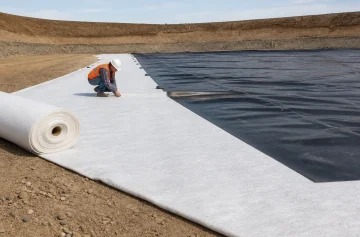
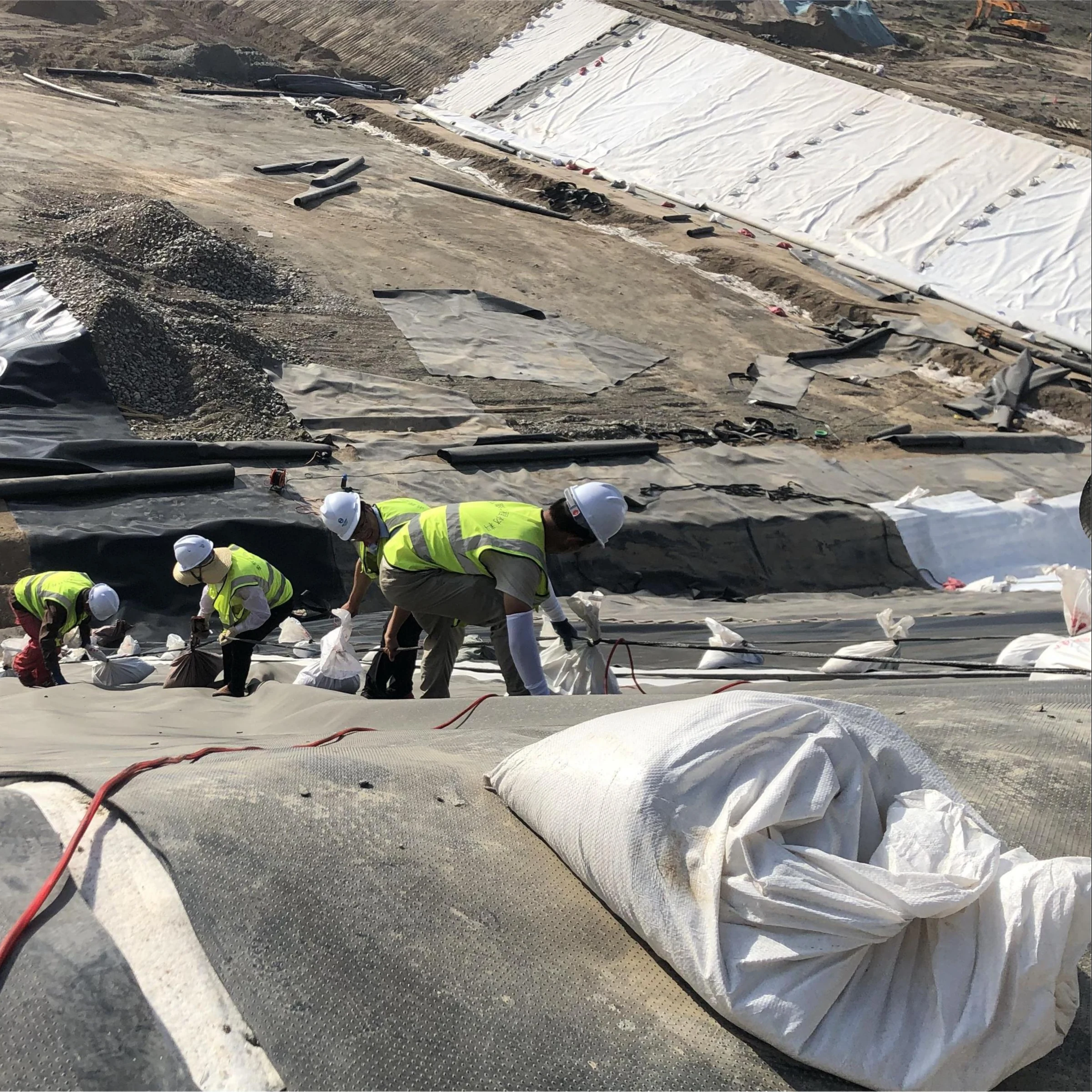
The installation quality of geotextiles directly affects the performance of their isolation and drainage functions. Best installation practices cover four aspects: construction preparation, laying, joints, and quality inspection. During the construction preparation phase, the subgrade surface must be cleared to the design elevation (with an error controlled within ±20 mm), and sharp objects (such as stones, tree roots, construction waste, etc.) must be removed to avoid puncturing the geotextile. When laying, the geotextile should be laid continuously along the longitudinal direction of the line, avoiding transverse joints located below the sleepers (where the dynamic load is most concentrated); when encountering curved sections, the geotextile should be pulled tight and laid flat to avoid wrinkles, as wrinkles will generate stress concentration and tear under dynamic loads. Joints are made by overlapping or thermal welding, with an overlapping width of not less than 300 mm, and the thermal welding temperature is controlled at 200 to 230°C to avoid burning the geotextile body.
Quality inspection should run through the entire installation process, focusing on the following key indicators: the measured value of the geotextile width direction overlapping width should not be less than 90% of the design value; the peel strength of the thermal welding seam should not be less than 70% of the base material strength; after the laying is completed, a complete inspection of the entire line should be carried out, and the joint quality can be tested by the vacuum inspection method or the air pressure inspection method. After installation, it is forbidden to drive heavy construction vehicles directly on the geotextile. If it cannot be avoided, a temporary wooden board or steel plate protective layer should be laid on the surface of the geotextile to disperse the concentrated load. In the practice of several projects, we have summarized quality control methods: before construction, the subgrade surface is inspected for elevation and flatness (with a test point spacing of no more than 10 m); during the laying process, the overlapping width, stretching state, and damage condition of each roll of geotextile are recorded in real time; after the laying is completed, a visual inspection of the entire line and a sampling peel strength test are carried out. The three inspections must all be qualified before entering the ballast laying process. In addition, when construction is carried out in cold regions, it is not advisable to lay geotextiles when the daily average temperature is below 5°C (as the thermal welding process cannot guarantee quality), and the flexibility of the geotextile decreases at low temperatures, making it prone to micro-cracks during folding and handling.
In 2018, we inspected the Shuohuang heavy-haul railway subgrade and found that geotextile separation layers reduced annual settlement rates by 60% to 70% compared with unprotected sections.
We have encountered recurrent pumping issues in soft-soil subgrades without geotextile separation, and have found that O95 matching to d85 is critical for long-term performance.
We visited the Harbin-Dalian high-speed corridor in 2021 and discovered that PET geotextiles maintained structural integrity through three winter freeze-thaw cycles with no measurable degradation.
(1) PET ≥300 g/m², O95 matching subgrade d85. (2) Lap joints ≥300 mm, peel ≥70% parent strength. (3) Check subgrade at ≤10 m intervals before laying. (4) For pH>9 subgrade, specify PP or add sand protection layers.