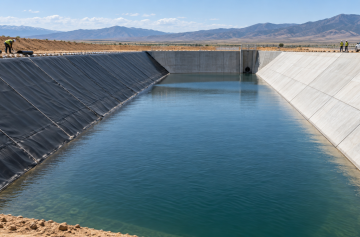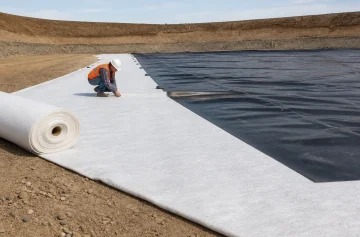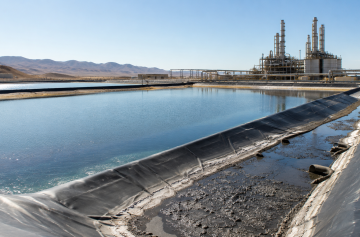
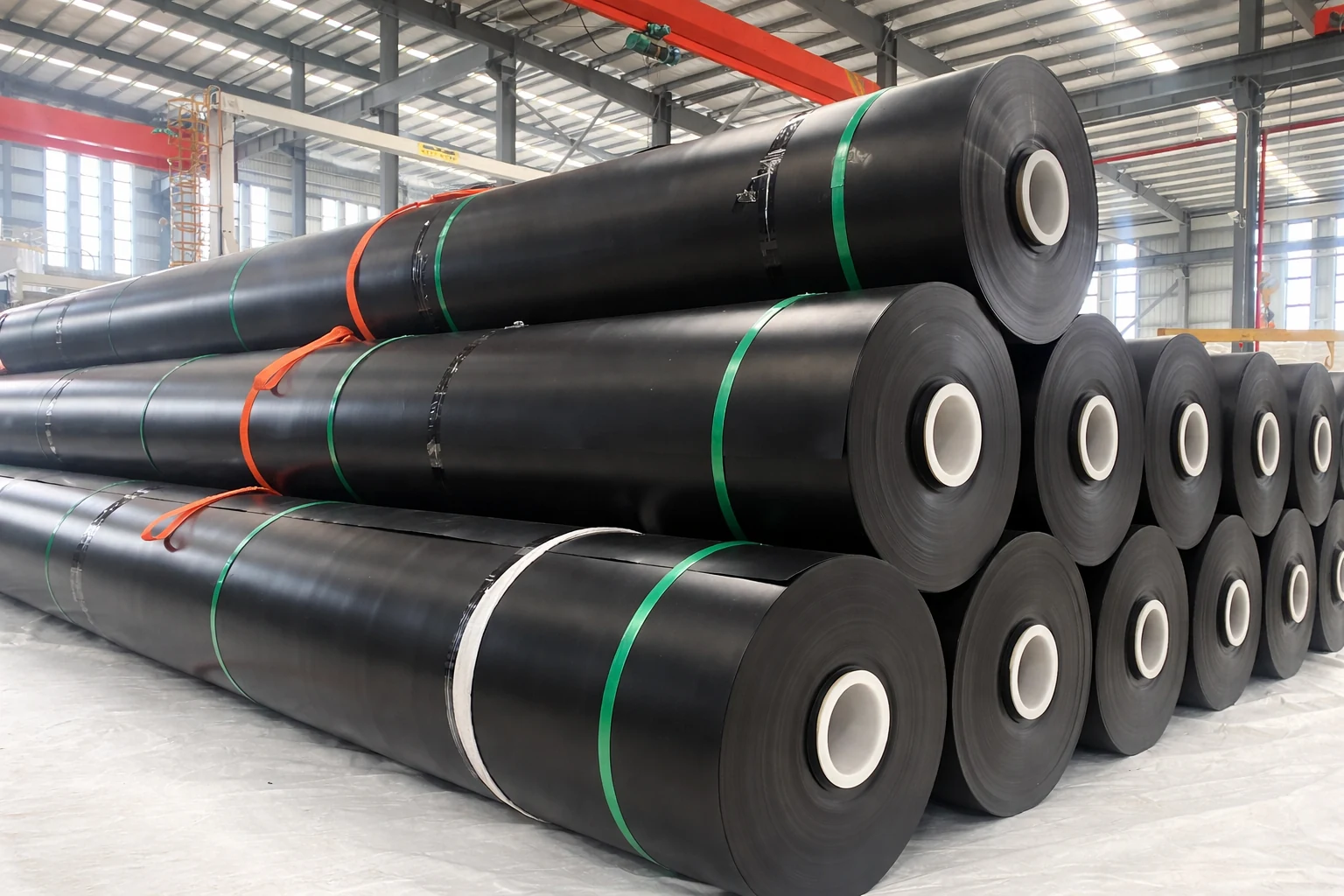
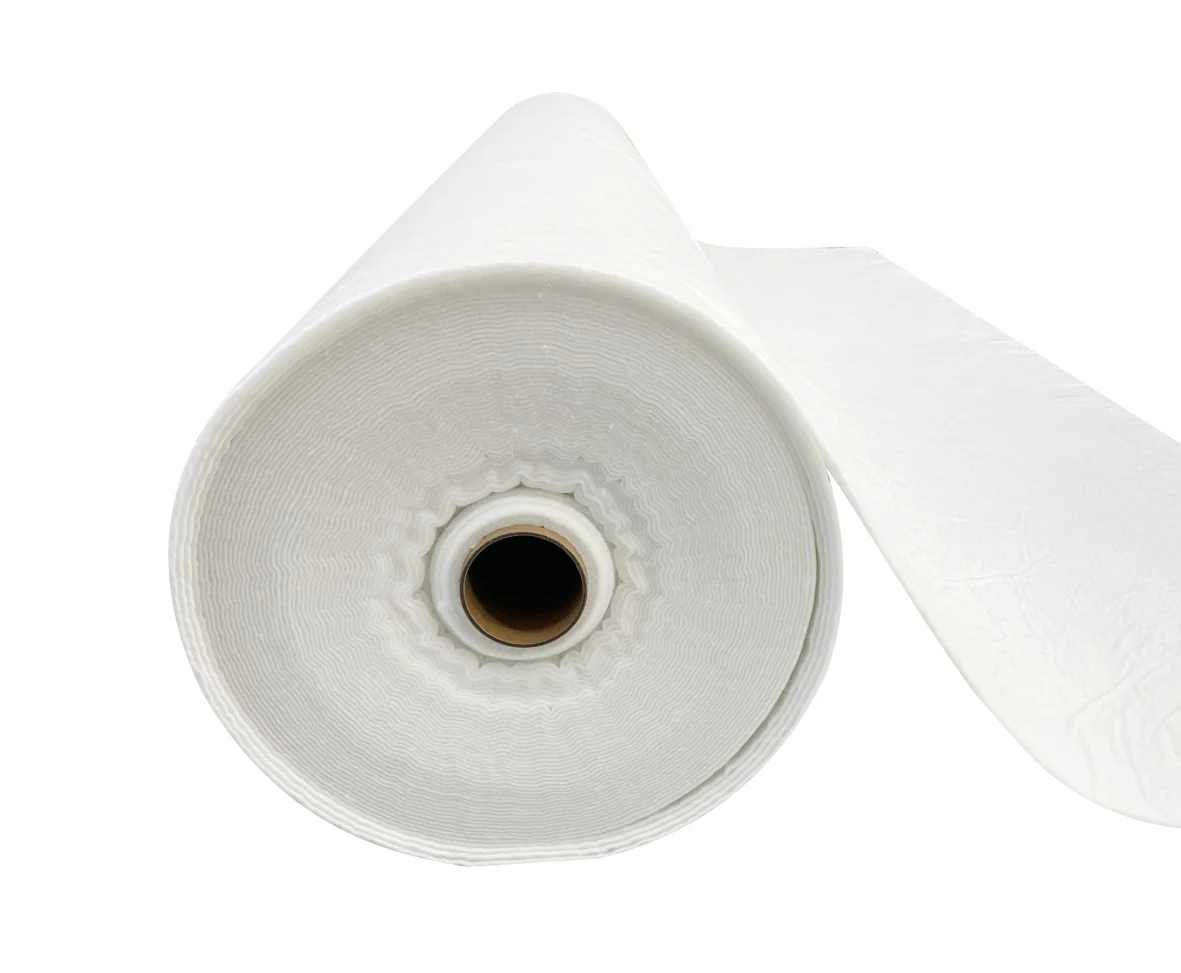

HDPE (High-Density Polyethylene) geomembrane liner cost is never driven by a single variable.
Based on our analysis of 12 large-scale landfill and tailings storage facility projects across China, the total project cost is typically divided among the following components[1]:
| Cost Component | Approximate Share of Total Project Cost |
|---|---|
| Geomembrane material | 45%–60% |
| Freight and installation | 25%–35% |
| Auxiliary materials and welding consumables | Remaining project cost |
This article explains how three core factor groups—thickness, roll dimensions, and freight and installation—interact to determine the final unit price.
Understanding these factors helps procurement engineers build more accurate budgets during the project planning phase.
Thickness
Material Consumption
Thickness is the most direct variable affecting the material cost per unit area of an HDPE geomembrane.
Areal weight (kg/m²) = material density (g/cm³) × thickness (mm).
HDPE geomembrane has a formulated sheet density of approximately 0.94 g/cm³.
| Nominal Thickness | Approximate Areal Weight |
|---|---|
| 1.0 mm | 0.94 kg/m² |
| 1.5 mm | 1.41 kg/m² |
| 2.0 mm | 1.88 kg/m² |
These figures form the basis of the cost analysis[2].
Procurement teams should convert specified thickness into areal weight before comparing quotations from different suppliers.
Multiplying areal weight by the material price reveals the true material cost per square meter.
This cost may differ from what the thickness label alone suggests.
When comparing quotations, an areal-weight calculation can reveal that a product with a lower quoted price actually supplies less material per square meter.
This hidden cost becomes visible when the engineering team calculates coverage from the delivered roll weight instead of relying only on nominal thickness.
Jinseed HDPE liner areal weight data show how this calculation allows contract specifications to be based on delivered material mass rather than only a thickness label.
A tailings storage facility project in Yunnan Province provides a practical example.
Increasing the liner thickness from 1.5 mm to 2.0 mm added approximately 0.47 kg of material per square meter.
At a 2024 virgin HDPE resin price of approximately CNY 17–20/kg in South China, this increase represented approximately CNY 8.0–9.4/m².
For a 100,000 m² project, the material increase alone represented approximately CNY 800,000–940,000.
We now use this case as a standard reference when explaining why product quotations may vary by up to 15%.
Part of this difference may come from legitimate supply-chain conditions, while another part may come from reduced thickness tolerance rather than a genuine cost advantage.
Purchase specifications should include measured areal weight as an acceptance criterion, not only nominal thickness.
Further reading:
- HDPE Geomembrane Specifications and Pricing
- Jinseed Quality Certifications and Test Reports
- Landfill Application Case Studies
Strength Requirements
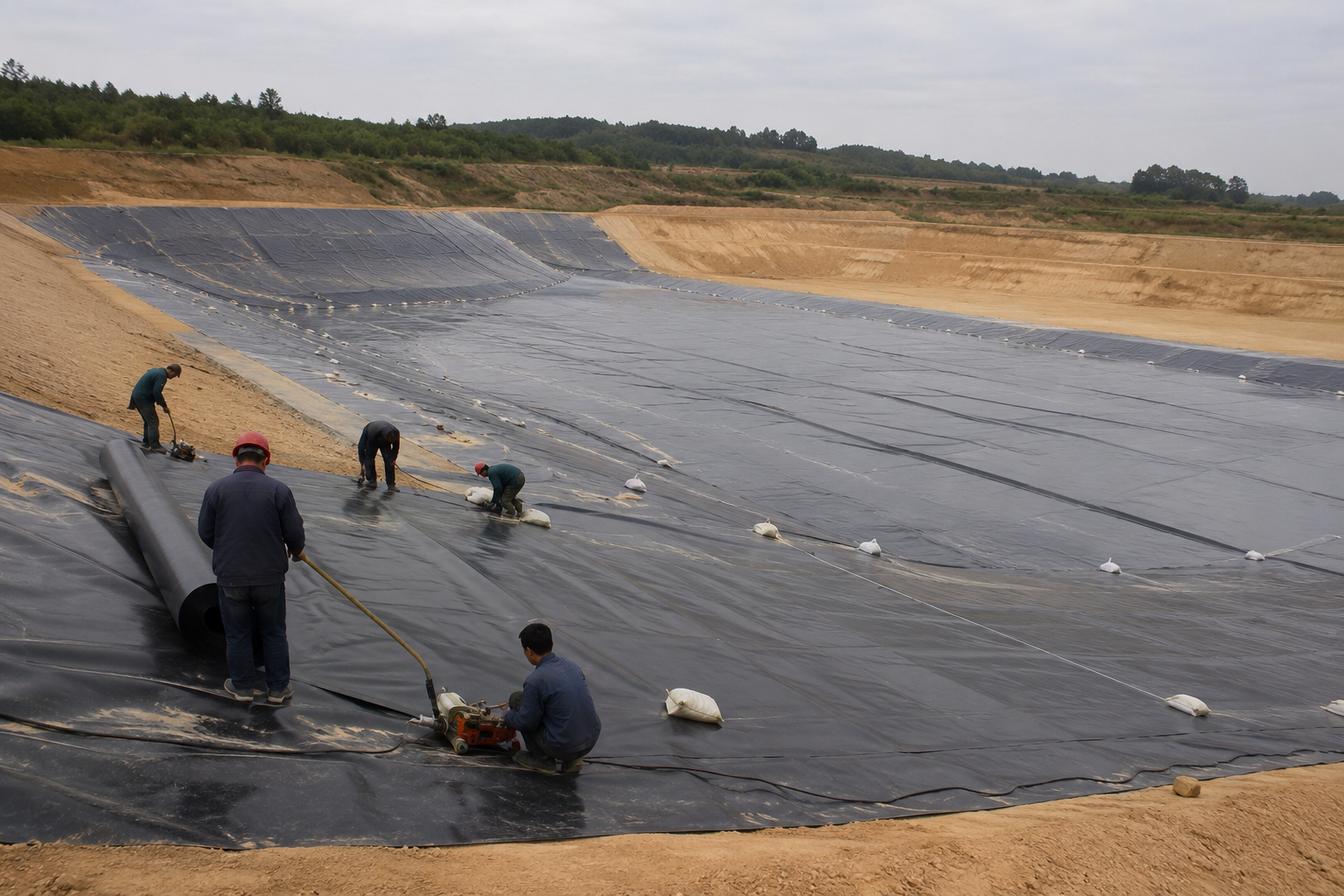
Different engineering applications require specific mechanical properties from an HDPE geomembrane.
The main properties include tensile strength and puncture resistance measured under ASTM D4833.
These properties are not optional specification additions. They help determine whether the liner can maintain its integrity under actual service conditions.
GRI-GM13 provides minimum mechanical property values for smooth and textured HDPE geomembranes.
ISO 9001:2015 covers quality management systems, but it does not establish tensile-strength or puncture-resistance requirements for geomembranes.
| Nominal Thickness | Minimum Yield Strength | Minimum Puncture Resistance |
|---|---|---|
| 1.0 mm | 15 kN/m | 267 N |
| 1.5 mm | 22 kN/m | 400 N |
| 2.0 mm | 29 kN/m | 534 N |
These baseline values should be verified against the engineering specification and the selected geomembrane surface type[3].
Jinseed quality test reports provide batch-level GRI-GM13 parameter information for specification verification.
A coal chemical evaporation pond project in Inner Mongolia demonstrates the practical consequences of strength selection.
The design required a minimum puncture resistance of 400 N for the specified 1.5 mm geomembrane.
Pre-purchase testing of competing 1.5 mm products produced results of approximately 320–370 N, which were below the required value.
These non-compliant products were approximately 12% cheaper per square meter.
However, presenting the test data and independent laboratory reports allowed the client to compare price against specification compliance.
The client ultimately selected Jinseed’s 2.0 mm GRI-GM13-compliant material, which achieved a puncture resistance result of 568 N.
The approximately 20% unit-price premium reduced the risk of rework and acceptance failure associated with non-compliant material.
Based on more than 200 project installations, requiring third-party batch test reports is one of the most effective safeguards against specification mismatches.
Further reading:
Thickness-Based Pricing
HDPE geomembrane is commonly priced in standard thickness tiers.
| Thickness | Approximate 2024 South China Market Price |
|---|---|
| 1.0 mm | USD 2.5–3.0/m² |
| 1.5 mm | USD 3.6–4.4/m² |
| 2.0 mm | USD 4.8–5.8/m² |
| 2.5 mm | USD 6.0–7.2/m² |
These prices use 2024 South China market conditions as a reference[4].
The price increase from 1.5 mm to 2.0 mm is approximately 30%–35%, while material consumption increases by approximately 33%.
These rates move roughly in parallel.
Within an appropriate thickness tolerance, a percentage increase in thickness normally produces a similar percentage increase in material price.
The relatively stable price-to-material ratio suggests that HDPE resin is a major part of the pricing structure.
The additional manufacturing cost of extruding a thicker sheet is generally smaller than the additional material cost.
Buyers can therefore treat thickness as a nearly linear cost driver when comparing project options.
Jinseed HDPE product pricing page lists thickness tolerances and measured areal weights for different product grades.
This provides a clearer basis for contract specifications.
Procurement teams should also examine thickness tolerance compression used as a price-cutting method.
A product labelled as 2.0 mm but measuring only 1.85–1.90 mm contains approximately 5%–7.5% less material than a full 2.0 mm sheet.
Such material may be priced only 2%–3% lower, making its real cost per unit of delivered material or strength less favorable.
We recommend specifying a maximum contractual thickness tolerance of ±5% and allowing rejection or return when arrival sampling does not meet the agreed tolerance.
This contractual requirement can improve engineering consistency and budget predictability.
The acceptance method, sampling frequency, individual-reading tolerance, and average-thickness tolerance should be stated clearly in the purchase specification.
Reputable manufacturers, including Jinseed, can accept clearly defined thickness clauses as part of the purchase contract.
Further reading:
Roll Dimensions
Roll Width
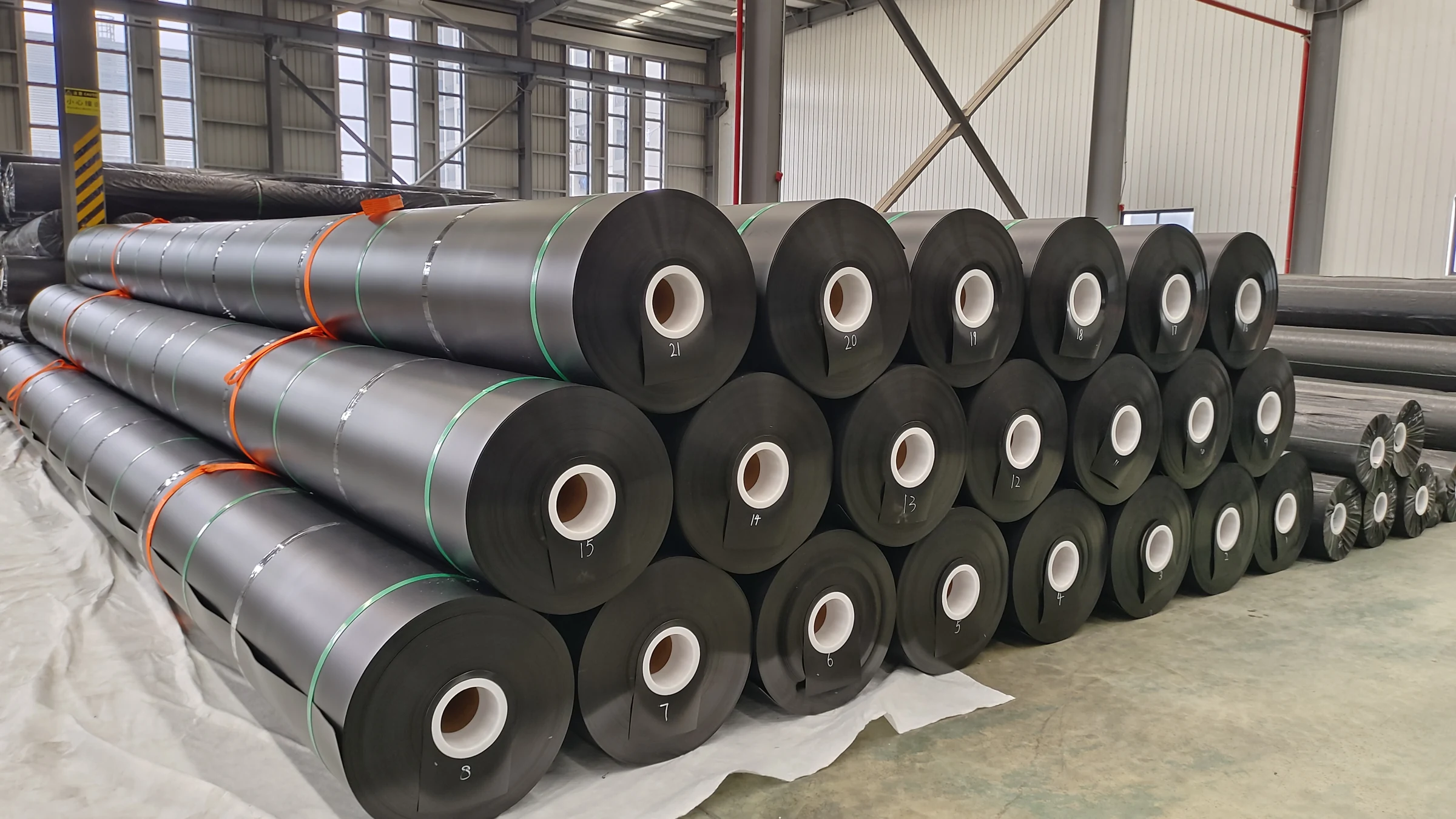
HDPE geomembrane roll width directly affects seam quantity and total welding cost.
Common roll widths include 4 m, 6 m, 7 m, and 8 m. Special orders may reach 12 m for suitable large projects.
Wider rolls reduce the approximate length of longitudinal seams required per unit area.
| Roll Width | Approximate Longitudinal Seam Length per 10,000 m² | Relative Reduction |
|---|---|---|
| 6 m | 1,667 linear meters | Baseline |
| 8 m | 1,250 linear meters | Approximately 25% |
These figures are planning estimates for a standard municipal landfill cell[5].
At hot wedge welding rates of approximately USD 1.7–3.0 per linear meter, the 8 m option can save roughly USD 700–1,250 per 10,000 m² in welding labor.
This estimate does not include additional savings from reduced welding-consumable use.
Transport and site-access constraints must also be reviewed before selecting a wide roll.
An 8 m-wide roll is wound into a cylinder approximately 8 m long. It therefore requires a trailer with sufficient deck length, roll support, turning clearance, and unloading access.
Road width alone does not determine feasibility.
- Sharp bends and limited turning radii may prevent trailer access.
- Narrow bridge approaches may restrict vehicle movement.
- Overhead obstacles may affect lifting and unloading.
- Limited staging space may make long rolls difficult to handle.
At a county-level landfill project in Hubei Province, the original design specified 8 m-wide rolls.
A site survey found that the narrowest access-road point measured approximately 2.8 m and included restricted turning geometry.
Based on this finding, Jinseed on-site road access assessment recommended changing to 6 m-wide rolls.
The project accepted the additional seam cost and avoided approximately USD 21,000 in road improvements and possible schedule delays.
Roll width should be selected by comparing seam savings against transport, turning, unloading, and site-access requirements.
Jinseed’s pre-sale technical package includes site-access assessment to help clients determine a suitable roll width for each project location.
On projects exceeding 500,000 m², even a small reduction in seam density can create meaningful cumulative savings.
In these cases, specialized transport equipment for wider rolls may be economically justified.
Further reading:
Roll Length
Roll length selection requires a balance between material efficiency and construction feasibility.
Common lengths include 50 m and 100 m, with custom lengths of up to approximately 300 m for suitable applications.
Longer rolls reduce the number of end-to-end field seams but increase roll weight and handling difficulty.
A 1,500 kg handling limit may be used as a project or equipment planning threshold, but it is not a requirement of ISO 9001:2015.
Actual handling limits must be determined from the rated capacity of the forklift, crane, lifting beam, slings, roll core, and site lifting plan[6].
Roll weight = areal weight × roll width × roll length, excluding the core and packaging.
For example, an 8 m-wide, 100 m-long roll of 2.0 mm HDPE has an estimated net material weight of:
1.88 kg/m² × 8 m × 100 m = 1,504 kg.
The gross shipping weight will be slightly higher after the core and packaging are included.
| Roll Specification | Approximate Net Material Weight |
|---|---|
| 2.0 mm × 8 m × 50 m | 752 kg |
| 2.0 mm × 8 m × 100 m | 1,504 kg |
A river seepage-control project in Jiangsu Province illustrates the practical consequence of neglecting this parameter.
The primary basin design specified continuous membrane placement with no intermediate seams, initially favoring 100 m roll lengths.
The site survey showed that the available crane had a nominal capacity of 2 tons.
However, its safe working capacity at the required lifting radius, after allowing for the lifting beam and rigging, was below the gross weight of the 100 m rolls.
Renting a larger crane and constructing a temporary concrete lifting pad would have cost approximately USD 11,000.
The solution negotiated with the design team was to use 50 m rolls weighing approximately 752 kg before the core and packaging were included.
The additional end seams were placed in zones identified by the hydraulic-flow analysis as lower-velocity areas.
This satisfied the engineering intent and the budget.
Roll length should be determined by site handling capacity as well as design preference.
Jinseed roll length optimization service starts with a site-equipment capacity survey to help ensure that specified roll dimensions match the available lifting equipment.
For each project, we recommend evaluating both 50 m and 100 m options against site constraints.
Jinseed supplies both 50 m and 100 m standard lengths and can advise on roll-dimension optimization for site-specific conditions.
Further reading:
Material Waste Factor
Material waste during installation is one of the most frequently underestimated cost items in HDPE liner projects.
Its main sources include:
- Slope coverage, because a sloped surface has a larger area than its horizontal projection.
- Pipe penetrations and reserved openings, which require cutting and detail welding.
- Seam overlaps, which consume material along every field seam.
Hot wedge welding commonly requires an overlap of approximately 100 mm, although the final overlap must follow the welding equipment requirements and approved project procedure.
For regular flat surfaces such as standard landfill cells, industry waste experience is approximately 3%–5% of the design area.
For projects with substantial slopes, numerous penetrations, and complex boundary geometry, waste factors commonly reach 8%–12%[7].
Measured data from a phosphogypsum stack project in Hunan Province demonstrates how the calculation works.
The design membrane area was 100,000 m².
| Allowance | Calculated Addition |
|---|---|
| Average slope angle of approximately 15° | Approximately 3.5% |
| Three 600 mm main pipe penetrations and eight 150 mm branch penetrations | Approximately 0.1% |
| Hot wedge seam overlaps | Approximately 1.5% |
The calculated procurement quantity was approximately 105,100 m², giving a total allowance of approximately 5.1%.
Compared with a general project-budget assumption of 5%, the difference was small.
However, the detailed calculation confirmed the required quantity and reduced the risk of either a material shortage or excessive purchasing.
The final cost effect depends on the selected liner thickness and contracted material price.
A detailed panel-layout plan is more reliable than applying the same blanket waste percentage to every project.
Having the installation contractor prepare a detailed layout plan during the design phase is one of the most effective ways to control this budget risk.
Jinseed layout optimization consultation covers slope coverage, penetration allowances, and overlap requirements to support more accurate procurement quantities.
Jinseed’s technical team provides layout optimization consultation for projects exceeding 50,000 m².
Further reading:
Freight and Installation
Transportation Distance
HDPE geomembrane is shipped as dense roll cargo, with freight commonly calculated from gross shipment weight and transport distance.
Our 2024 survey of domestic Chinese logistics routes produced the following planning ranges[8]:
| Transport Distance | Approximate Freight Rate |
|---|---|
| Under 500 km | CNY 0.8–1.2/ton-km |
| 500–1,000 km | CNY 0.6–0.9/ton-km |
| More than 1,000 km | CNY 0.5–0.7/ton-km |
These are market-planning figures rather than fixed nationwide tariffs.
The actual quotation depends on route availability, tolls, fuel costs, vehicle type, loading method, shipment volume, and delivery conditions.
Although total freight normally increases with distance, the rate per ton-kilometer may decrease on established long-haul trunk routes.
Freight cost as a percentage of the material price therefore does not always increase linearly with distance.
Using 2.0 mm HDPE as a calculation example:
- Each square meter weighs approximately 1.88 kg.
- A 100,000 m² order has a net material weight of approximately 188 tonnes.
- The shipment distance is approximately 2,400 km.
- The assumed long-haul rate is CNY 0.55/ton-km.
The estimated freight is:
188 tonnes × 2,400 km × CNY 0.55/ton-km = approximately CNY 248,000.
This equals approximately CNY 2.48/m² before adjustments for the roll cores, packaging, loading, insurance, toll variations, and final-site delivery.
For projects in western China, we recommend evaluating factory-direct shipment and regional distributor stock as parallel options.
On a 200,000 m² landfill-closure project in Gansu Province, the factory-direct freight addition was approximately CNY 6.8/m².
A regional distributor in the provincial capital offered material at approximately CNY 3.2/m² above the factory material price, with a three-day delivery window instead of twelve days.
| Cost Comparison | Approximate Effect |
|---|---|
| Difference between factory-direct freight and regional premium | CNY 3.6/m² |
| Difference across 200,000 m² | CNY 720,000 |
| Nine days of site overhead at CNY 8,000/day | CNY 72,000 |
| Total estimated benefit | Approximately CNY 792,000, or about USD 110,000 at the applicable exchange rate |
Based on this landed-cost comparison, the regional supply option was more favorable.
Jinseed regional distributor network can provide landed-cost comparisons based on the project location, quantity, delivery schedule, and available stock.
Further reading:
Site Accessibility
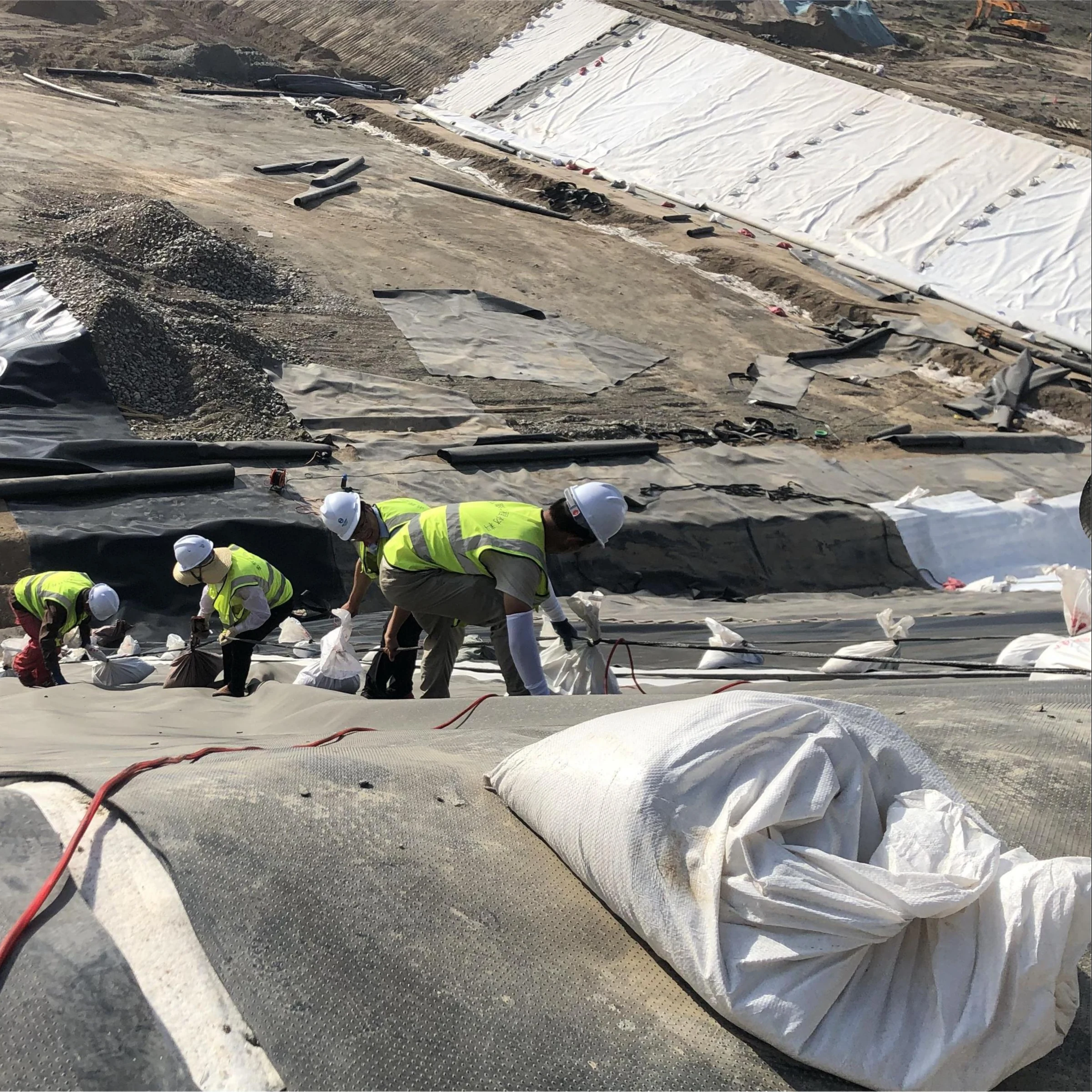
Terrain, slope angle, and site-access conditions are among the most uncertain factors affecting installation productivity and total installed cost.
Our project experience indicates the following approximate productivity ranges[9]:
| Site Condition | Approximate Productivity |
|---|---|
| Flat, firm, properly prepared subgrade | 200–300 m² per worker per day |
| Slopes exceeding 30° | 80–120 m² per worker per day |
Actual production depends on roll dimensions, deployment equipment, crew experience, welding density, subgrade condition, weather, and required testing.
Beyond slope angle, several conditions can reduce productivity:
- Soft soil, rock, or uneven concrete subgrade.
- Incomplete drainage or standing water.
- Limited access for deployment and lifting equipment.
- Strong wind, rainfall, low temperature, or extreme heat.
- Numerous penetrations, corners, anchor trenches, and detail welds.
During the rainy season, slope surfaces can become slippery.
Crews may achieve only four hours of effective work during an eight-hour shift when repeated drying, cleaning, and safety interruptions are required.
Our experience at a coal gangue storage facility in Shanxi Province illustrates the cost effect of difficult site conditions.
The site was located on a hillside with slopes of up to 45°, and the construction period coincided with the rainy season.
We identified the schedule risk before construction, but the client proceeded to avoid a six-month delay.
The original 15-day installation schedule extended to 28 days, increasing the scheduled labor duration by approximately 87%.
Additional slope-drainage measures cost approximately USD 4,200.
After labor extension, drainage work, equipment standby, and related site costs were included, the total installation overrun exceeded the original budget.
Jinseed site conditions assessment helped us document slope gradient, subgrade condition, drainage, and weather patterns before later projects were scheduled.
This case led us to incorporate a formal site-conditions questionnaire into our pre-sale technical package.
For sloped projects, dry-season scheduling can prevent severe productivity losses without changing the liner specification.
Difficult wet-season projects can experience installation overruns of 40%–100% when drainage, access, standby time, and reduced labor productivity are not included in the original budget.
Jinseed can provide a site-conditions assessment checklist and seasonal-risk analysis for project planning.
Further reading:
Welding Labor Cost
Seam quality directly affects the reliability of the entire geomembrane lining system.
Two primary field-seaming methods are used:
| Welding Method | Typical Use | Approximate 2024 Market Rate |
|---|---|---|
| Hot wedge welding | Long, straight production seams on flat areas and slopes | USD 1.1–2.1 per linear meter |
| Extrusion welding | Repairs, patches, pipe penetrations, corners, T-joints, and detail work | USD 2.1–3.5 per linear meter |
Hot wedge welding heats the overlapping membrane surfaces and applies pressure to form the seam.
Double-track hot wedge equipment also creates an air channel that can be tested using a pressurized-air test.
Extrusion welding applies molten HDPE welding rod to a prepared surface.
It is slower and more expensive than hot wedge welding, but it can form seams in areas where a hot wedge machine cannot operate effectively[10].
Hot wedge welding normally remains the primary method for long production seams, including seams on landfill slopes and tailings facilities.
Extrusion welding is normally reserved for detail areas, terminations, repairs, and complex geometry.
Important welding controls include:
- Approved overlap width.
- Clean and dry welding surfaces.
- Suitable wedge or extrusion temperature.
- Appropriate travel speed and pressure.
- Trial seams under the actual site conditions.
- Documented destructive and non-destructive testing.
An overlap of approximately 100 mm is commonly specified, but the final requirement must follow the approved welding procedure and equipment configuration.
Insufficient overlap reduces the usable welding area.
A temperature that is too low can create incomplete fusion, while excessive heat can damage or distort the geomembrane.
Incorrect speed, pressure, surface preparation, or weather conditions can also produce weak or discontinuous seams.
During an electrical leak-location survey at a Hubei landfill, our team identified three small defects in extrusion-welded detail areas that had passed visual inspection.
The liner system and underlying layer had been configured for the applicable electrical testing method.
Each repair required localized preparation, re-welding, and retesting at approximately USD 300 per location.
Compared with a normal production-welding cost of approximately USD 1.7 per linear meter, the remediation cost per identified defect was more than 170 times the cost of producing one meter of standard seam.
Jinseed welding quality inspection provides welding procedure review and applicable seam-testing support as part of its quality-control packages.
Visual inspection alone is not sufficient for field-seam acceptance.
Our recommended quality-control protocol includes:
- Visual inspection of all completed seams.
- Non-destructive testing of all accessible production seams.
- Pressurized-air testing of double-track fusion seams.
- Vacuum-box testing of extrusion seams and applicable single-track areas.
- Electrical leak-location testing where the liner-system design and project specification permit it.
- Destructive seam samples at intervals defined by the approved construction quality-assurance plan.
- Repair and retesting of every identified defect.
Jinseed provides welding procedure qualification and on-site quality-inspection support as part of its project service package.
Further reading:
In summary, HDPE geomembrane liner cost is determined by three interacting factor groups:
- Thickness: Determines material consumption and influences the required mechanical-property grade.
- Roll dimensions: Affect roll weight, site handling, material allowance, and total seam length.
- Freight and installation: Vary with transport distance, project location, access, terrain, weather, welding requirements, and quality-control procedures.
Across our cumulative supply and installation support for more than 2 million m² of geomembrane over the past five years, roll-width optimization, detailed waste calculations, and site surveys before construction have produced total project-cost savings of approximately 15%–20% compared with initial project budgets.
These savings are project-specific and depend on the accuracy of the original budget, project geometry, delivery route, site conditions, and installation plan.
Jinseed Geosynthetics provides support from product-selection consultation through construction supervision.
Contact us for a cost-optimization plan tailored to your project site and engineering requirements.