

4oz (approx. 135g/㎡): Belongs to the light-duty filtration grade. Focuses on high permeability with a large water flow capacity per minute. Most suitable for garden flower beds, French Drains, or light landscape separation, effectively preventing soil from clogging pipes.
8oz (approx. 270g/㎡): Belongs to the heavy-duty industrial grade. Focuses on high strength and puncture resistance. The thickness and tensile strength are approximately twice that of 4oz, allowing it to withstand heavy pressure. It is the top choice for permanent driveway foundations, retaining wall underlayment, or riprap slope protection, preventing foundation sinking.
Choose 4oz for drainage filtration needs; choose 8oz for heavy-duty load-bearing or resistance to sharp object punctures.
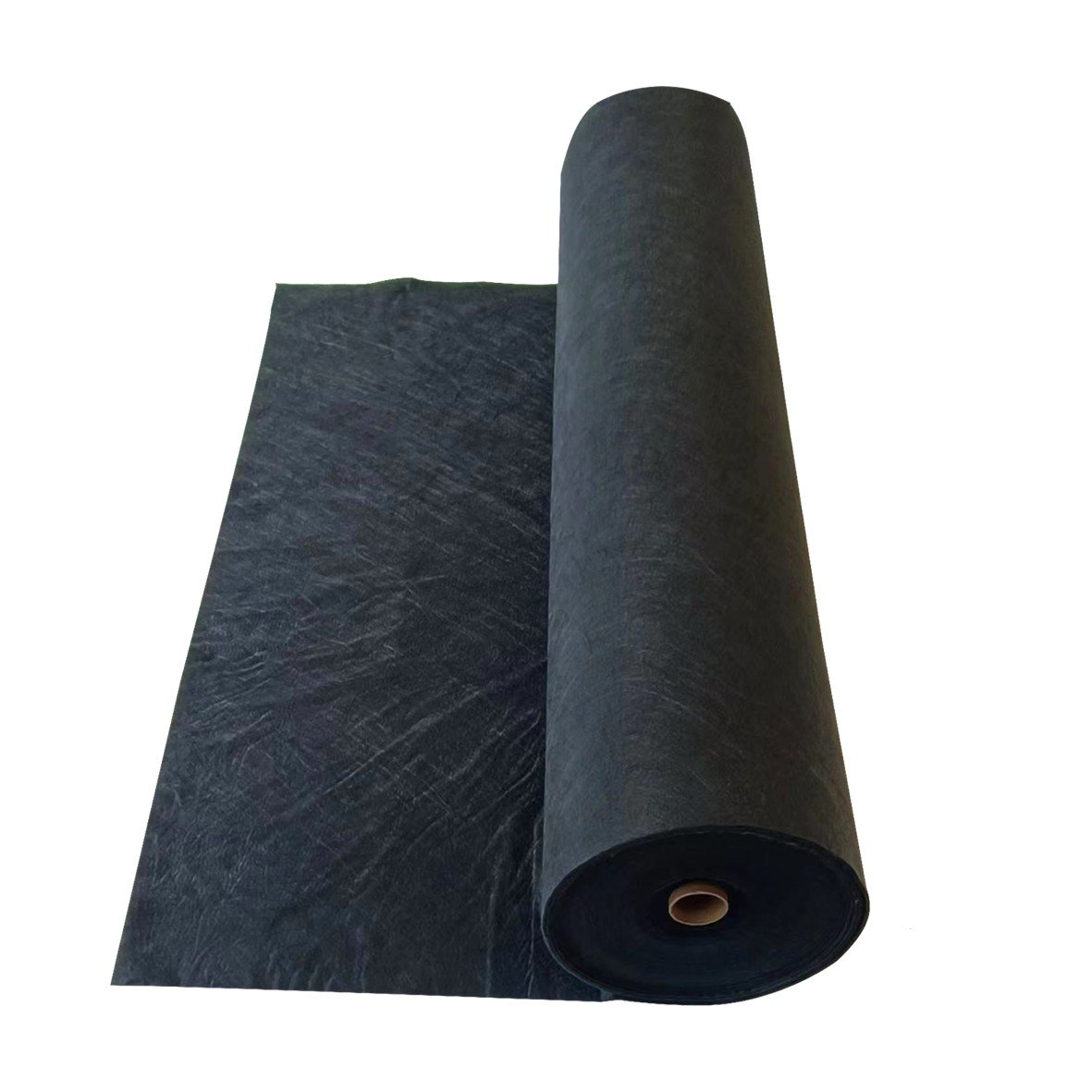
Strength vs. Puncture Resistance
4oz Non-woven Fabric typically has a grab tensile strength (ASTM D4632) of 100-120 lbs and a CBR puncture resistance (ASTM D6241) of approximately 300-310 lbs. In contrast, the 8oz specification sees its tensile strength double to 205-225 lbs, with puncture resistance rising to the 535-575 lbs level. 8oz material can withstand the pressure of 3-6 inch large-sized gravel or heavy vehicles, whereas 4oz is highly prone to physical damage from sharp edges under the same pressure.
CBR Puncture Resistance
When assessing static puncture performance under the ASTM D6241 standard, the test equipment uses a 50mm diameter flat-head steel rod pressed into the geotextile fixed in a ring at a speed of 50mm per minute. The puncture resistance exhibited by 4oz specification fabric in this test usually stays around 310 lbs (1.38 kN).
This strength level primarily handles small-diameter rounded aggregates, such as 1/2 inch or 3/4 inch washed gravel. When gravel is unloaded onto the fabric by a dump truck, the 4oz fabric fiber layer thickness is approximately 50-60 mils, providing minimal cushioning space.
If the subgrade soil contains sharp rock tips exceeding 1.5 inches in diameter, the 310 lbs resistance is easily overloaded at localized points. This causes irreversible displacement of the polypropylene fiber bundles, resulting in physical damage exceeding 10mm in diameter, which then loses its soil separation function.
- Typical application scenario limitations for 4oz:
- Suitable for stable foundations with a subgrade CBR (California Bearing Ratio) greater than 3%.
- Paired with smooth river pebbles with a maximum particle size not exceeding 1.5 inches.
- Used as an underlayment for non-load-bearing paths to prevent sand from migrating upward.
- Withstands light pedestrian traffic with a maximum contact pressure not exceeding 40 PSI.
In contrast, the CBR puncture value of 8oz needle-punched non-woven geotextile jumps to 535 lbs to 575 lbs (2.38 – 2.56 kN). This specification’s weight is approximately 270 g/㎡, and its fiber interlocking density is exactly double that of the 4oz specification.
In AASHTO M 288 engineering specifications, 8oz material is typically classified as Class 1 or Class 2. It allows construction crews to lay 3 to 6 inches of blasted rock on the fabric without causing fabric failure due to the angular shear force of the stones.
The thickened needle-punched fiber layer forms a physical protective layer, with a thickness usually between 90-110 mils. When heavy bulldozers operate back and forth over the gravel layer, the 8oz fabric can absorb uneven downward stress, preventing rock tips in the soft soil below from puncturing upward through the fabric body.
Real-world data for 8oz puncture resistance:
- Can support single-axle load pressures exceeding 20,000 lbs.
- Puncture resistance performance is approximately over 80% higher than the 4oz specification.
- Allows gravel with a particle size of 4 inches to be dropped from a height of 3 feet.
- Maintains over 90% strength stability in soil environments with pH 2 to pH 13.
| Physical Property (Test Standard) | 4oz Light Duty (135g) | 8oz Heavy Duty (270g) | Difference Ratio |
|---|---|---|---|
| CBR Puncture (ASTM D6241) | 310 lbs | 575 lbs | +85% |
| Trapezoidal Tear (ASTM D4533) | 45 lbs | 90 lbs | +100% |
| Thickness (ASTM D5199) | 60 mils | 100 mils | +66% |
| Allowable Aggregate Size | < 1.5 inch | Up to 6 inch | 4x Improvement |
In shoreline protection or river training projects, construction units use large riprap to resist water erosion. The puncture resistance of 8oz fabric can withstand the vertical impact force of rocks weighing 50-100 lbs each falling under gravity.
If 4oz fabric is misused in such environments, falling rocks will punch through the material like a hole puncher. Once the fabric develops cracks exceeding 2 inches, water flow will rapidly wash away the fine-grained soil underneath, leading to total collapse or landslides of the entire riprap slope.
In liner protection applications, such as before installing 45-mil EPDM rubber pond liners, 8oz non-woven fabric is the recognized standard underlayment. It not only blocks rock tips in the soil but its puncture resistance exceeding 535 lbs also prevents plant roots from penetrating the waterproof layer years later.
When a project involves Subgrade Stabilization, the reason for choosing 8oz specification lies in its stronger lateral tear elongation. When carrying a fully loaded truck of 80,000 lbs, the geotextile is subjected not only to vertical pressure but also to intense shear forces generated by tires during turns.
The tear strength of 4oz fabric is only 40-50 lbs, making it highly susceptible to tensile tearing under heavy traffic flow. The 90 lbs tear resistance and 575 lbs puncture resistance of 8oz fabric work together to ensure that slope protection or subgrades do not experience interlayer mixing over decades.
Three definitive situations for choosing 8oz:
- The fill material contains recycled concrete chunks or angular limestone.
- The construction site requires frequent entry and exit of heavy Class 8 load trucks.
- As a protective layer for HDPE geomembranes to prevent underground rock punctures.
In high-intensity UV exposure testing (ASTM D4355), because the 8oz fabric fiber stack is thicker, the internal fibers experience less photodegradation than thinner fabrics. This indirectly maintains its original puncture performance during construction turnover; even after 500 hours of sun exposure, its residual strength remains above 70%.
The Permittivity of 4oz fabric is approximately 1.5 sec⁻¹. While the drainage speed is fast, the thin structure is prone to puncture-induced mud backflow when facing harsh working conditions with mixed silt and sand.
Tensile Strength Differences
In ASTM D4632 standard testing, Grab Tensile Strength measures the maximum load a 4-inch wide geotextile specimen can withstand before breaking when subjected to tension. The test value for 4oz non-woven fabric usually stays around 100 lbs (0.44 kN), with a breaking elongation typically exceeding 50%.
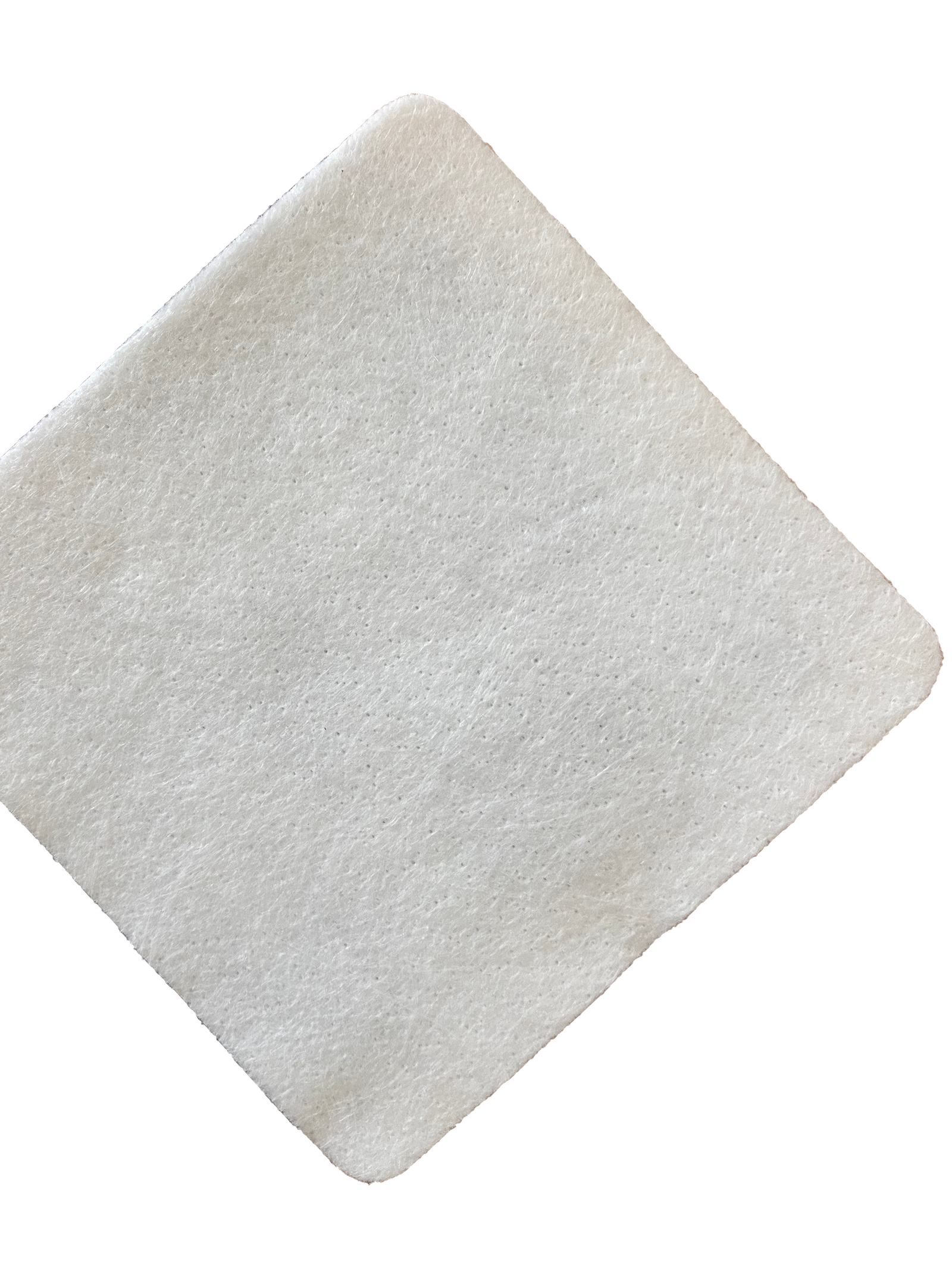
This lightweight specification is interlocked from polypropylene filaments via a needle-punching process, with a mass per unit area of approximately 135 g/㎡. In static stress environments, 4oz fabric can handle soil displacement in small to medium landscape projects, showing good elastic recovery performance when subjected to sustained tension below 80 lbs.
When tension exceeds the design limit of 115 lbs, the physical interlocking points between fibers will slip, causing localized thinning of the fabric. For engineering with unstable subgrade soils, the tensile resistance of 4oz fabric may be unable to prevent the lateral movement of the aggregate layer above, resulting in micro-cracks or settlement phenomena on the ground.
Tensile parameter details for 4oz specification:
- Grab Strength (ASTM D4632): 102 lbs (454 N)
- Elongation at Break: 50% – 65%
- Trapezoidal Tear Strength (ASTM D4533): 45 lbs (200 N)
- Fiber Material: 100% Polypropylene (PP) continuous filament
By comparison, 8oz heavy-duty geotextile reaches a mass per unit area of 270 g/㎡, with its grab tensile strength increasing to 205-225 lbs (0.91-1.0 kN). According to AASHTO M 288 engineering classification, the 8oz specification meets Class 2 grade strength requirements, suitable for civil engineering with more complex stress environments.
This doubled strength stems from a denser needle-punching frequency, increasing the fiber layer thickness from 4oz’s 60 mils to over 100 mils (2.54 mm). In the construction of high-load pavement bases, 8oz fabric can share the radial pressure from truck tires, dispersing localized pressure across a broader subgrade.
When heavy engineering vehicles with a total weight of 80,000 lbs pass through, 8oz fabric laid under gravel can maintain its structural integrity. Its 205 lbs tensile strength ensures that if uneven soil settlement occurs, the fabric will not break like the 4oz specification, thus effectively preventing the mixing of upper and lower layer materials.
Tensile performance advantages of 8oz specification:
- Grab Strength (ASTM D4632): 205 lbs (912 N)
- Trapezoidal Tear (ASTM D4533): 90 lbs (400 N)
- Applicable Subgrade Category: Extremely soft soils with CBR values of 1-3
- Elongation at Break: 50% (featuring extremely high flexibility)
Trapezoidal Tear Strength is an extension index of tensile performance. The tear force of 4oz fabric is about 45 lbs, which lacks sufficient self-protection mechanisms when facing gaps accidentally created during construction. 8oz fabric increases this value to 90 lbs. When multi-ton precast retaining wall blocks are pressed onto the fabric, the high tensile and high tear resistance characteristics of the 8oz specification work together to ensure slope stability under gravity.
In practice, construction personnel estimate the load-bearing ceiling of the fabric based on Mass Per Unit Area. The choice between 4oz and 8oz is often determined by the expected Design Tension, usually recommending a safety margin of 1.5 times the calculated maximum tension.
| Physical Performance Index | 4oz Filtration Type (Light) | 8oz Structural Type (Heavy) | Test Standard |
|---|---|---|---|
| Grab Tensile | 102 lbs | 205 lbs | ASTM D4632 |
| Elongation | 50% | 50% | ASTM D4632 |
| Trapezoidal Tear | 45 lbs | 90 lbs | ASTM D4533 |
| Mullen Burst | 180 psi | 350 psi | ASTM D3786 |
From a fiber microstructure analysis, 8oz fabric contains approximately 85% more cross-needle-punched points than 4oz. This results in more uniform stress distribution within the 8oz fabric when subjected to tensile loads, reducing the risk of overall failure triggered by a single fiber bundle break.
In long-term UV exposure trials (ASTM D4355), the residual tensile strength performance of 8oz fabric outperforms the 4oz specification. Due to the thicker fiber layer, the degradation rate of deep internal fibers by light and oxygen is slower; after 500 hours of exposure, its tensile strength usually still remains above 150 lbs.
While the tensile performance of the 4oz specification remains stable in pH 2-13 chemical environments, its low initial strength means any minor fiber damage will quickly approach its 100 lbs breaking threshold. This makes it less advantageous for isolation in industrial sites containing chemically aggressive substances.
In applications involving Dynamic Hydraulic Loading, such as seawall revetment projects, geotextiles need to frequently withstand repeated stretching from wave action. The high tensile durability of the 8oz specification can slow down fiber loosening caused by material fatigue, maintaining the geometric shape of the anti-erosion layer.
Three key factors determining tensile strength selection:
- Aggregate Layer Thickness: For every additional 4 inches of gravel, the tensile requirement for the underlying fabric increases by approximately 15%.
- Expected Traffic Frequency: For more than 50 heavy vehicle passes daily, specifications of 8oz or higher must be selected.
- Installation Slope: When the slope is greater than 3:1, material with a tensile strength of 200 lbs or more must be used to prevent the fabric from sliding.
When choosing between these two specifications, you must look not only at the strength of the fabric itself but also at what you intend to pile on top of it.
- If you are doing retaining wall drainage: The pressure here is mainly lateral earth pressure. The strength provided by 4oz is already sufficient, and because it is thinner, its permittivity of 140 gpm/sf allows water to pass through faster.
- If you are doing shoreline protection: The self-weight of large stones creates extreme localized pressure. The thickness of 8oz fabric acts like a cushion to protect the subgrade soil from erosion while preventing the fabric from being punctured by stones.
- Traffic Load Factor: For paths where passenger cars travel, 4oz paired with a 4-inch thick gravel base is usually feasible; but for areas where heavy pickups or trucks travel, 8oz is the standard configuration to prevent stones from sinking into soft soil layers.
Drainage and Permeability
4oz fabric holds the advantage in vertical permittivity, with a flow rate typically reaching 130 GPM/sq ft, suitable for rapid water conduction at a 1.5mm thickness; whereas 8oz fabric thickness increases to over 2.5mm, causing the flow rate to drop to around 90 GPM/sq ft.
The AOS (Apparent Opening Size) of 4oz is approximately 70 US Sieve, making it more suitable for coarse-grained soils; 8oz reaches an AOS of 80-100 US Sieve, showing higher filtration precision when intercepting silt and fine-grained soils, preventing system clogging.
Water Flow Impact
The nominal thickness of 4oz needle-punched non-woven fabric usually stays between 1.02mm and 1.52mm. This light and thin physical structure allows its Flow Rate to reach 130 GPM/sq ft to 150 GPM/sq ft under zero-pressure conditions. In contrast, due to doubled fiber filling, the thickness of 8oz fabric typically increases to 2.03mm to 3.05mm, leading to more tortuous internal flow paths and a reduction in standard test flow rate to the 75 GPM/sq ft to 90 GPM/sq ft range.
According to ASTM D4491 standard testing, the permittivity of 4oz geotextile is usually around 2.0 sec⁻¹, while the 8oz grade drops to 1.2 sec⁻¹. When handling storm runoff or high-velocity surface drainage, the volume of water passing through 4oz fabric per unit time is nearly 1.6 times that of 8oz.
- 4oz Rapid Drainage Characteristics:
- Flow Rate Range: 130 – 150 Gallons/Minute/Square Foot.
- Permittivity: Approximately 2.0 – 2.1 sec⁻¹.
- Apparent Opening Size (AOS): 50 – 70 US Sieve.
- Typical Applications: Residential French Drains, Roof Garden Drainage Layers.
As water flow enters the geotextile from the soil layer, the thinner 4oz fabric can quickly balance the head pressure difference on both sides, reducing moisture accumulation at the contact interface. If the soil particle size distribution is above 0.212mm (70 Sieve), the large pores of 4oz effectively prevent biofilms and fine particles from stagnating within the fibers, thereby maintaining long-term water conduction efficiency.
- 8oz Stable Permeability Characteristics:
- Flow Rate Range: 70 – 90 Gallons/Minute/Square Foot.
- Permittivity: Approximately 1.1 – 1.3 sec⁻¹.
- Apparent Opening Size (AOS): 80 – 100 US Sieve.
- Typical Applications: Landfill Leachate Collection, Dam Backslope Filtration.
Although 8oz fabric has a lower flow rate, it possesses superior Transmissivity (In-plane water conductivity) in high-pressure environments. Under pressure, its over 2.5mm fiber skeleton can form independent drainage channels, with its longitudinal water conduction capability maintaining a performance of about 1.5 x 10⁻⁴ m²/sec under 20kpa pressure. This characteristic is vital in slope protection engineering because it filters out sand as fine as 0.15mm through its 100 Sieve pore size while draining moisture.
- Hydraulic Performance Comparison Reference (per square foot):
- 4oz Discharge: Can process approximately 1100 lbs of water passing per minute.
- 8oz Discharge: Can process approximately 650 lbs of water passing per minute.
- Compaction Impact: The flow rate attenuation rate of 4oz at 50psi pressure is about 35%.
- Structural Recovery: 8oz features stronger rebound porosity, with flow rate attenuation after pressure being only 20%.
- Interception Precision: 8oz can intercept over 90% of 0.18mm particle size powder.
- Head Loss: The head loss generated by 4oz is about 40% lower than that of 8oz.
In assessing actual permeability, if the natural soil flow rate is only 10 GPM/sq ft, then using 8oz fabric with a flow rate of 90 GPM/sq ft is more than sufficient and provides a thicker physical barrier. Conversely, when wrapping a Perforated Pipe, choosing 140 GPM 4oz fabric to match the high permeability of the gravel layer prevents “back-pressure” phenomena in the drainage system during extreme rainfall.
This performance trade-off is particularly evident in Riprap projects. 8oz fabric maintains its fiber structure integrity under block stone impact, thereby maintaining a stable permittivity of 1.2 sec⁻¹. While 4oz fabric has a faster initial flow rate, once it is torn or squeezed/deformed by heavy machinery or rocks during construction, its localized Pore Distribution will change, causing the filtration function to fail.
AOS Indicators
In technical spec sheets for non-woven geotextiles, Apparent Opening Size (AOS), determined per ASTM D4751 by dry-sieving specific diameter glass beads, represents the smallest particle diameter that 95% of the pores in the fabric can intercept. The AOS for 4oz grade fabric is typically rated at 70 US Sieve (0.212mm), allowing it to maintain extremely high fluid passage efficiency when handling larger particle sizes like AASHTO #57 gravel or medium-coarse sand layers.
When fiber density increases to 8oz/sq yd, the number of needle-punched fibers per unit area grows exponentially, resulting in a significantly smaller O95 pore size. The AOS indicators for these heavy-duty fabrics typically fall between 80 US Sieve (0.180mm) and 100 US Sieve (0.150mm). The smaller pore size effectively blocks fine particles over 150 microns, preventing silt from penetrating the fabric into the drainage system matrix under water impact.
Under vertical water flow, the 2.1 sec⁻¹ permittivity of 4oz fabric paired with its 0.212mm pore size forms a high-flux combination. If the site soil’s D85 (85% of particles smaller than this diameter) is greater than 0.212mm, 4oz fabric can quickly form a stable “natural filter” at the contact interface. If the fine particle content (the part smaller than 0.075mm) in the soil exceeds 15%, the large pores of 4oz may lead to excessive loss of fine powder, triggering uneven settlement of the foundation.
4oz Filtration Property Data:
- Pore Diameter: Stable at around 212 microns.
- Fiber Fineness: Mostly utilizes 6-9 Denier polypropylene staple fibers.
- Through-pore Rate: Maintained in the 85% – 90% range.
- Applicable Soil Type: Clean sand and gravel, coarse sand with particle size greater than 0.3mm.
With its physical thickness of over 2.5mm, 8oz fabric not only performs mechanical interception on the surface but also forms a Deep Filtration mechanism within the fabric. Tiny particles carried by water are intercepted deep within the fiber clusters due to Brownian motion or inertial collision as they pass through the dense 100 Sieve pores. This tortuous path brought by thickness makes 8oz fabric more stable for the system than 4oz when handling A-4 or A-5 (AASHTO classification) silty soils.
| Filtration Performance Comparison | 4oz Non-woven Geotextile | 8oz Non-woven Geotextile |
|---|---|---|
| AOS Nominal Value (mm) | 0.212 mm | 0.150 – 0.180 mm |
| Corresponding US Standard Sieve No. | 70# Sieve | 80# – 100# Sieve |
| Pore Distribution Uniformity (COV) | < 15% | < 10% |
| Max Intercepted Particle Size | 220 microns | 160 microns |
| Gradient Ratio Test (ASTM D5101) | Suitable for soils with high flow requirements | Suitable for fine soils with high particle loss risk |
For construction sites with high groundwater levels, the Gradient Ratio of the fabric must be assessed to prevent internal clogging. When handling high-permeability strata of 1.0 – 2.0 sec⁻¹, the O95 retention rate of 4oz fabric after pressure is about 75% of the initial value. This ensures that under a coverage load of 25 psi, the pores can still accommodate and discharge trace sediments, avoiding the formation of a water-blocking “mud cake” at the contact interface.
In contrast, while the 8oz fabric limits fine powder penetration under its 80-100 US Sieve pore constraint, if installed on a clay layer with extremely poor permeability, it may cause excessive accumulation of fine particles on the fabric surface due to slow water flow. For sensitive soils with D50 indicators between 0.02mm and 0.05mm, the dense structure of 8oz provides a controlled osmotic pressure of 1.2 sec⁻¹, which helps maintain the physical integrity of the soil body.
8oz Filtration Advantage Details:
- Retention Efficiency: Reaches 95% interception rate for 0.15mm particles.
- Anti-clogging Life: In water flow with 10% sand content, the effective drainage life is increased by 40% compared to 4oz.
- Internal Surface Area: The fiber specific surface area per unit volume is 2.2 times that of 4oz.
- Dynamic Load Filtration: Under repeated vehicle rolling, the pore compression deformation rate is lower than 15%.
- Applicable Soil Type: Silt, fine sand, alluvial soil, and mixed soil containing trace clay.
In engineering design, the criterion O95 < (2 to 3) x D85 is usually followed. If the design D85 is 0.1mm, then 8oz fabric with an AOS of 0.15mm is the only choice that fits the safety factor. The 0.212mm pore size of 4oz fabric under these conditions would lead to severe particle penetration, causing Siltation inside the blind drain, making the system fail completely after 2-3 rainfall cycles.
In ASTM D4491 permeability tests, 4oz fabric exhibits a Permittivity of 2.1 sec⁻¹ under a 50mm head. Given lower filtration precision, it can handle over 5300 liters/sq meter of water per minute. Because 8oz fabric shrinks its pore size to the 100# Sieve, its Permittivity drops to 1.26 sec⁻¹, corresponding to a processing capacity of approximately 3200 liters/sq meter; this practice of sacrificing flow rate for precision is extremely common in Riprap Underlayment.
Filtration Application Logic:
- If soil particles > 0.3mm and extremely fast drainage is required: Use 4oz (AOS 70).
- If soil contains a large amount of 0.1-0.2mm fine sand: Use 8oz (AOS 80/100).
- If it is a retaining wall with high compaction and high hydrostatic pressure: Use 8oz to utilize its deep retention capability.
- If it is for temporary surface runoff control: The cost-effectiveness of 4oz matches its flow performance better.
From a hydraulic perspective, the pore flow state of 4oz fabric is mostly turbulent, suitable for handling large flows in short bursts, with a wide Pore Size Distribution (PSD) curve. The PSD curve of 8oz fabric shows high concentration, with very uniform pore sizes. This consistency is crucial in permanent projects lasting over 20 years, as it ensures uniform water pressure distribution throughout the fabric, preventing Piping phenomena caused by localized oversized pores.
Drainage Stability
Geotextiles buried underground will bear static and dynamic pressures from covering soil layers, vehicle loads, or structures. The initial thickness of 4oz fabric when uncompressed is about 1.5mm, but when subjected to a pressure of 200 kPa (approx. 29 psi), its thickness typically plunges to below 0.5mm. Due to this significant compression of the fiber layer, its internal three-dimensional pore volume shrinks by about 60% to 70%.
When pressure reaches 50 psi (345 kPa), the water flow channels in 4oz geotextile become narrow and irregular, causing its Permittivity to potentially drop from an initial 2.0 sec⁻¹ to below 0.8 sec⁻¹. In Subgrade applications requiring long-term bearing, this fluctuation in hydraulic performance increases the potential for soil liquefaction.
Transmissivity tests per ASTM D4716 show that 4oz fabric at 10 psi usually has a Transmissivity of only 1.0 x 10⁻⁶ m²/sec. The material almost loses its lateral drainage function after being compressed.
Performance Decay Indicators under Pressure:
- 4oz Initial Porosity: Approx. 85% – 90%.
- 4oz Compressed Porosity (100 kPa): Drops to 45% – 50%.
- 8oz Initial Porosity: Approx. 88% – 92%.
- 8oz Compressed Porosity (100 kPa): Still maintained above 70%.
Due to its higher fiber density and initial thickness usually reaching 2.5mm to 3.1mm, 8oz non-woven fabric exhibits extremely strong Resiliency in pressure environments. When subjected to the same 200 kPa pressure, 8oz fabric can still retain an effective drainage thickness of about 1.2mm to 1.5mm. This thickness advantage ensures that moisture can undergo lateral migration within the fiber layer.
8oz Performance Data under Load:
- Transmissivity: Under extreme pressure of 100 psi (690 kPa), 8oz can still maintain a conductance of about 3.5 x 10⁻⁵ m²/sec.
- Vertical Flow Rate: The flow rate of 8oz after compression typically stays at 45 – 50 GPM/sq ft, much higher than 4oz under the same pressure.
- Long-term Creep: The thickness loss rate of 8oz fiber under 10,000 hours of load is about 25% lower than that of 4oz.
- Friction Angle Stability: The rough surface of 8oz can tightly bond with 0.5 – 2.0 inch gravel under pressure, preventing sliding.
In retaining walls or subgrade Separation projects, geotextiles are sandwiched between stone and soil. 4oz fabric is easily punctured and completely flattened by angular gravel (such as #57 Stone) due to insufficient thickness, causing localized fiber layer failure. The “cushioning effect” of 8oz fabric allows it to still maintain a relatively uniform Gradient Ratio even with uneven contact interface pressure, preventing fine-grained soil clogging.
Lab data indicates that when wrapping a 4-inch diameter Corrugated Pipe, 8oz fabric under 2 feet of compacted soil coverage can still meet a radial permeability of 1.0 sec⁻¹. In contrast, the permeability of 4oz fabric at the same burial depth often becomes extremely unstable due to soil lateral pressure.
Flow Rate Comparison under Different Loads (GPM/sq ft):
- 0 psi: 4oz (135) | 8oz (90)
- 10 psi: 4oz (85) | 8oz (75)
- 25 psi: 4oz (45) | 8oz (65)
- 50 psi: 4oz (25) | 8oz (55)
In non-load-bearing drainage systems (such as walking paths, roof greening), 4oz holds the advantage with its extremely high uncompressed flow rate. However, in industrial floors, heavy retaining wall bases, or riverbank erosion control, the physical thickness of 8oz is what ensures the system remains drainage-capable under long-term load, avoiding “dead zones” caused by fiber closure.
Cost-Effectiveness
The cost-effectiveness of choosing 4oz or 8oz is determined by material unit price, installation loss rate (usually 15% higher for 4oz), and the lifespan of foundation materials. 4oz average price is about $0.05 – $0.08/sq.ft, suitable for landscape drainage with small gravel under 3/4″; 8oz average price is about $0.12 – $0.16/sq.ft, but with axle loads exceeding 2,000 lbs or when using Riprap (large stones), the CBR burst strength of 8oz (approx. 500-600 lbs) prevents base layer mixing, extending road life by 2-3 times, thereby reducing average annual maintenance costs.
Initial Budget
In the initial selection of non-woven geotextiles, the weight of 4oz fabric is approximately 135 g/m², and the porosity formed by its fiber interlocking is higher, primarily used to provide a flow capacity of about 140 gallons per minute per square foot (140 gpm/sq.ft), therefore during the Project Bidding stage, its purchase unit price is typically only half that of the 8oz specification.
From a logistics loading analysis, for standard 15-foot wide rolls (15′ x 360′), the single roll weight for 4oz specification usually stays around 160 lbs, while the weight of 8oz rolls of the same size doubles to over 320 lbs. Within the rated load of a 53-foot Flatbed Trailer, 4oz can achieve a single transport coverage of nearly 200,000 sq.ft. By comparison, the loading capacity of 8oz is reduced by about 45% due to axle weight limits, causing the amortized shipping cost per square foot for remote sites to rise significantly.
- 4oz (135 g/m²): Grab Elongation usually stays above 50%, suitable for wrapping 4-inch diameter perforated pipes.
- 8oz (270 g/m²): Thickness usually reaches 80-90 mils (2.0-2.3mm), providing physical barrier support when handling Class 1 applications under ASHTO M288 standards.
- Overlap Costs: 4oz requires a 12-18 inch overlap on soft soil, whereas 8oz can be compressed to 12 inches on firm foundations due to its anti-slip stability.
This difference in initial budget is amplified in Mass Grading projects. For example, in a 5-acre warehouse base, choosing 4oz over 8oz can save about 15,000 lbs of polymer raw material consumption. However, initial material savings must be evaluated against Aggregate costs because the Trapezoidal Tear Strength of 4oz is only about 40-50 lbs, rendering it unable to withstand the dumping pressure of gravel exceeding 6 inches in thickness during subsequent construction.
For Hardscape Contractors, the roll flexibility of 4oz results in lower waste rates when trimming irregular borders. When laying 2-3 inches of decorative wood chips or light river pebbles, the 2.1 $sec^{-1}$ Permittivity provided by 4oz far exceeds rainfall infiltration needs. Due to its smaller physical volume, field workers can complete rapid laying of 1,500 sq.ft units via manual labor without heavy machinery assistance, which is a means to reduce Mobilization Costs in areas with high labor costs.
- Roll Width Selection: Common market widths of 12.5′ and 15′ are easier to unroll by one person in the 4oz specification.
- UV Exposure Rating: Both specifications typically retain over 70% strength after 500 hours of UV exposure, but 8oz has stronger weathering stability due to more fiber layers.
- Staple Consumption: 4oz edges curl easily, requiring 6-inch U-shaped Staples every 3-5 feet, whereas 8oz can stay flat on level ground by its own weight.
Since the Abrasion Resistance of 8oz fabric is stronger, it can save the cost of laying an extra sand cushion when handling Riprap protection projects. Although the unit price per roll area for 8oz is higher, it prevents Stone embedment when bearing ground pressures over 100 psi. For construction access roads requiring long-term passage of Dump trucks, investing in 8oz in the initial budget can prevent stones from sinking into silt due to foundation instability, thus saving thousands of tons in replenishment costs later.
In non-residential projects, the main budget role of 4oz is as a temporary filtration barrier for Sediment ponds. Its AOS is usually 70 US Sieve, intercepting particles over 0.212mm. This precision in short-term projects (such as construction within 6 months) is more in line with the principle of temporary work amortization in financial audits than purchasing expensive 8oz high-strength fabric. In vertical drainage scenarios not involving traffic loads, 4oz remains the technical solution with the lowest unit filtration cost.
- Puncture Resistance Data Comparison: The CBR puncture value for 4oz is 300-330 lbs, while 8oz jumps to 500-575 lbs.
- Flow Difference: The water discharge for 8oz is approximately 90-100 gpm/sq.ft; sub-pipe drainage capacity must be confirmed when handling extreme storm erosion.
- Roll Length Difference: 4oz is commonly 360′ in length, reducing the frequency of Seams and improving the continuity of large-area laying.
Installation Cost
At the engineering site, when a 10-ton Motor Grader operates on the base, the Grab Tensile of only 102 lbs for 4oz is extremely prone to tearing at track turning points. This physical damage forces construction to halt; workers must cut out the damaged area and perform at least an 18-inch (45 cm) overlap repair per ASTM D4439 standards, thereby generating extra labor hours.
In contrast, 8oz geotextile has a tensile strength exceeding 205 lbs, capable of withstanding the impact energy of 3/4 inch to 1.5 inch gravel dumped from a 3-foot height. When subjected to CBR Puncture testing, the 4oz fabric value is usually only 310 lbs, with its failure probability being about 65% higher than 8oz in geological conditions with sharp rocks or protruding roots. Once the underlying structure is punctured, mud will seep through the holes into the aggregate layer, causing the entire subgrade to lose stability.
- Mechanical Tolerance: 8oz supports LGP (Low Ground Pressure) bulldozers walking on its surface, while 4oz must have at least 6 inches of protective layer pre-laid.
- Wind Offset Resistance: 4oz roll weight is only 135 g/m², making it very prone to flipping in gusty environments over 15 knots, requiring an additional anchor bolt every 5 feet.
- Wrinkle Rate Control: The thickness of 8oz (approx. 90 mils) gives it more rigidity, keeping it flat during large-area laying and reducing material waste due to wrinkles.
When the construction environment involves Saturated Clay or high-moisture soils, the weak structure of 4oz under heavy rollers creates a “suction effect.” Due to its narrow lateral water passage, its Transmissivity is limited, unable to handle lateral drainage while providing vertical filtration like 8oz. This performance shortcoming causes construction vehicles to frequently get stuck in mud, slowing down the Project Schedule; every day of delay will generate hundreds of dollars in machinery rental losses.
While 4oz rolls weigh only 160 lbs, making them easy for 2 workers to unroll manually, their lightweight nature actually increases the difficulty of alignment and tensioning on windy days or slopes exceeding 3:1. Although 8oz rolls weigh 320 lbs and require a Skid Steer for hoisting assistance, their Coefficient of Friction is higher, and the fit with the foundation after laying is more stable, reducing labor investment for secondary adjustments.
- Overlap Margin: On uneven roads, 4oz usually requires a 24-inch overlap width to prevent displacement, increasing total material demand by about 10%-15%.
- Seam Strength: If using sewing processes, the Seam Strength of 8oz can reach 180 lbs, while 4oz is only 90 lbs, prone to cracking under tension.
- UV Degradation: If construction progress is blocked causing material exposure, the thicker fiber layer of 8oz provides longer shielding protection for the bottom layers, maintaining over 70% of original strength.
In the construction of French Drains, the flexibility advantage of 4oz is shown, as it can tightly wrap 4-inch or 6-inch corrugated pipes. However, if Angular Stone is used instead of smooth river pebbles during backfilling, the 4oz surface is very easily cut. Statistics show that in rough backfilling operations, using 8oz specification can increase the site acceptance first-pass rate from 82% to 98%, avoiding rework excavation costs due to failed inspections.
For shoreline or river projects involving Riprap, 8oz is the bottom line for construction standards. 4oz fabric cannot absorb the kinetic energy of large falling rocks (diameter over 12 inches), which will lead to the instant scrap of the filter layer. Under such extreme pressure, the 535 lbs CBR strength provided by 8oz acts as a cushion. This not only protects the soil from erosion but also ensures the stone layer does not shift under long-term wave impact, thereby avoiding expensive riverbank reconstruction costs years later.
- Permeability Efficiency: 4oz has a higher Permittivity (2.1 sec⁻¹), making construction fastest in sandy soils with less silt.
- Pore Size Stability: 8oz has a higher AOS retention rate when subjected to 2,000 psf pressure, preventing fine particles from clogging during the construction compaction phase.
- Cutting Precision: When using industrial utility knives, the 8oz cut is cleaner, less likely to produce messy long fiber filaments that contaminate the surroundings.
Long-term ROI
Within the lifecycle of pavement projects, the AOS of 4oz is typically 70 US Sieve (0.212 mm), which effectively intercepts fine sand in static drainage environments but is highly prone to physical isolation barrier failure under cyclic loads from 18-wheelers. This failure causes underlying clay micro-particles to migrate upward under pressure, intruding into the upper 3/4″ Clean Stone layer, triggering subgrade weakening.
When aggregate is contaminated by fine soil by more than 20%, its drainage capacity and bearing modulus drop by more than 50%. Using 8oz geotextile provides 535 lbs of CBR puncture strength, maintaining structural integrity under tire contact pressures up to 80 psi. This high-strength isolation layer prevents gravel from sinking into soft subgrade soil. According to engineering site observations, the Stone replenishment frequency for temporary construction roads using 8oz specification is about 65% lower than sites using 4oz.
- 4oz Spec: Grab tensile strength is about 100 lbs, suitable for light-load landscape walkways of under 5 years, preventing weed growth and minor soil mixing.
- 8oz Spec: Grab tensile strength jumps to 205 lbs, specifically used for permanent driveways or heavy warehouse floors with a design life of over 20 years.
- Permeability Retention: Under pressure, the Permittivity of 8oz is maintained at 1.2 $sec^{-1}$, ensuring the subgrade does not liquefy after long-term rainfall.
Because the thickness of 4oz fabric is only about 40-50 mils, after experiencing several Freeze-thaw cycles, it is prone to micro-cracks at rock edges due to lack of sufficient elastic buffering. Once the isolation layer is damaged, Potholes and ruts will appear on the road surface, requiring extra filling and compaction in the annual maintenance plan.
In contrast, 8oz reaches a thickness of 80-100 mils (2.5mm), forming a more solid physical interface in the soil. When handling extremely soft subgrade soils with a CBR below 3%, the high elongation of 8oz (usually over 50%) allows it to slightly deform with the foundation without breaking. This flexibility offsets the destructive force of uneven ground settlement, delaying the generation of cracks in asphalt or concrete surface layers by 4-6 years.
| Long-term Performance Indicator | 4oz (Light Filtration) | 8oz (Heavy Isolation) | Maintenance Cost Impact |
|---|---|---|---|
| Design Service Life | 3 – 7 years | 15 – 25 years | 8oz reduces renovation frequency by 3x. |
| Siltation Resistance | Medium (Prone to pressure deformation) | Very High (Multi-layer fiber structure) | 8oz keeps long-term drainage clear, preventing base water logging. |
| Aggregate Savings | Approx. 10% Initial Saving | Approx. 35% Long-term Saving | 8oz prevents aggregate loss into soft soil layers. |
For the long-term operation of French Drains, the high flow characteristic of 4oz (140 gpm/sq.ft) initially performs excellently, but in areas with a high proportion of Silt, the single-layer thin-fiber structure is prone to physical Blinding. The multi-layer three-dimensional fiber matrix of 8oz provides a more tortuous flow path, capable of accommodating a certain amount of micro-particles without completely losing permeability. Drainage pipe networks wrapped in 8oz typically have longer desilting cycles, reducing the cost of excavation and replacement every 10 years.
In Shoreline Riprap applications, the back-and-forth impact of waves generates continuous Suction forces on the soil layer; 4oz fabric often breaks due to fatigue under such dynamic pressure. Once the geotextile fails, the soil under the revetment stones will be hollowed out, causing multi-ton rocks to collapse into the water. Using 8oz non-woven fabric meeting AASHTO M288 Class 1 standards is the industrial standard practice to avoid such catastrophic engineering accidents.
- Environmental Tolerance: The fiber density of 8oz fabric gives it stronger resistance to biodegradation and chemical erosion in the soil, maintaining physical strength for a longer effective period.
- Compressive Pore Size: Under a coverage pressure of 2,000 psf, the AOS deformation rate of 8oz is about 22% lower than 4oz, ensuring lasting filtration precision.
- Lateral Drainage: In high-moisture subgrades, the Transmissivity provided by 8oz is higher than 4oz, allowing base water to drain faster to the side catch basins.
Although the initial investment for 8oz is higher, its Pavement Integrity Value amortized annually far exceeds 4oz. In handling the ASTM D4355 UV stability test, 8oz still retains 70% of its original strength after 500 hours of exposure, providing a safety margin for accidental exposure or construction delays.
- Flow Decay: The permeability retention rate of 8oz after 10 years of use is typically 15% higher than 4oz.
- Tear Modulus: The Trapezoidal Tear of 8oz reaches 80-90 lbs, far exceeding the 40 lbs of 4oz.
- Backfill Safety: 8oz allows for the use of rougher, cheaper local mine waste rock as backfill, without the need for expensive finely screened aggregate.
Gradient Ratio Tests for different soil types show that 8oz exhibits superior compatibility when handling moraine soil or cohesive silt. For farm roads or logging trails that need to maintain mechanized operations long-term, 8oz can withstand Class A heavy equipment passage without producing deep ruts.

Leave a reply