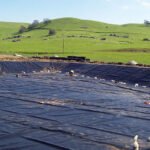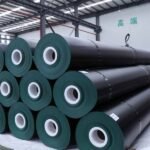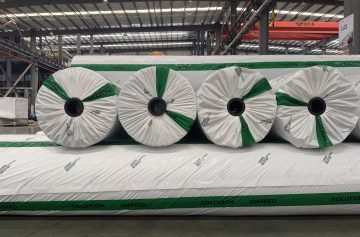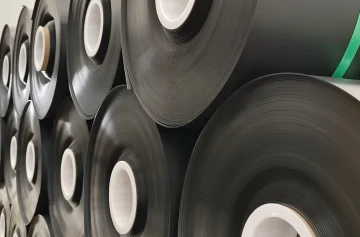
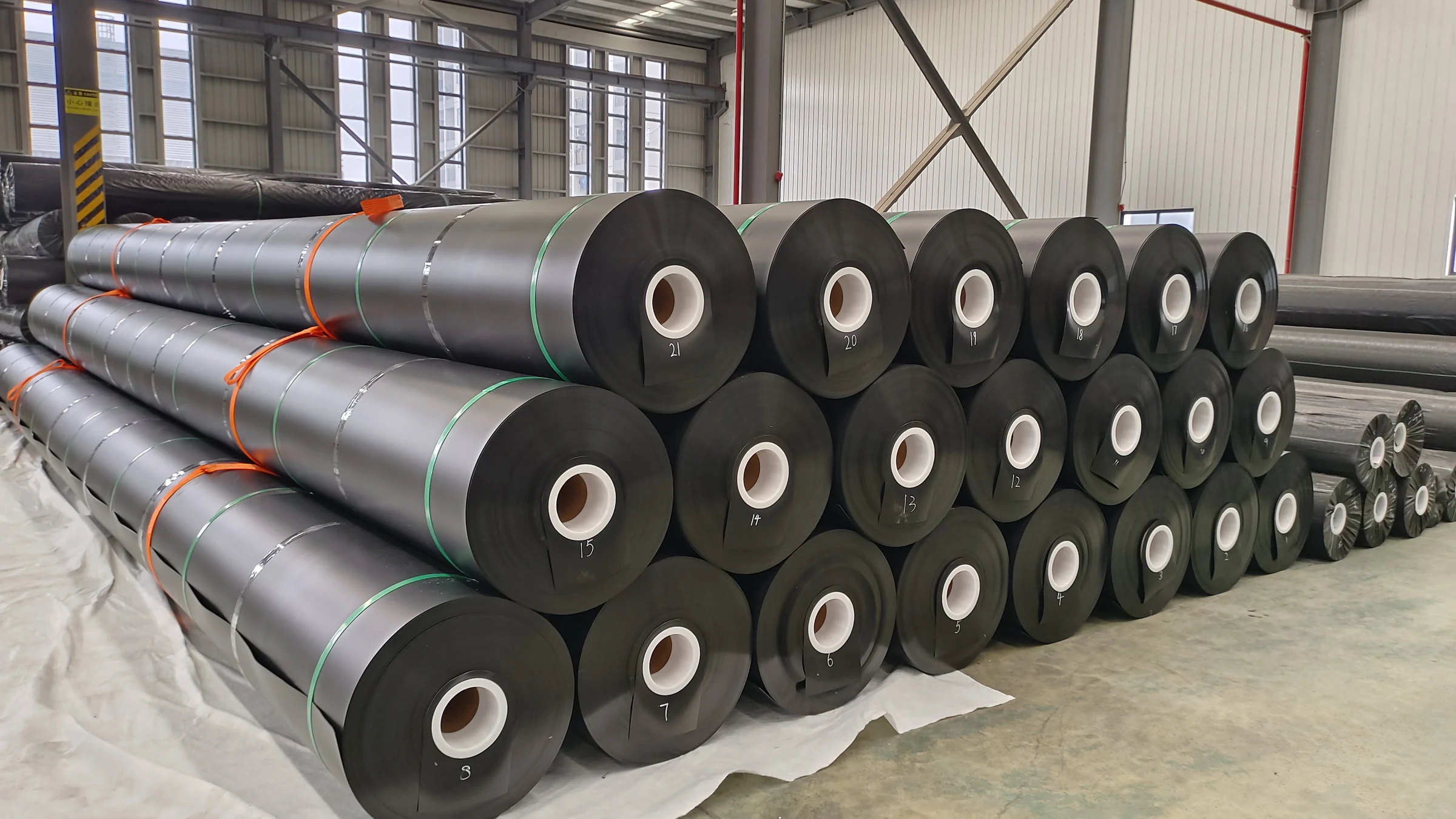

Choose a landfill geomembrane as part of a complete containment system: the waste classification and permit establish the design requirements; the leachate, temperature, settlement and interfaces establish material suitability; and construction quality assurance establishes whether the installed system meets the design. A low sheet permeability or a high tensile value alone cannot demonstrate acceptable landfill performance.
For a US municipal solid waste landfill using the federal prescriptive composite-liner option, HDPE has a minimum thickness of 60 mil, equivalent to 1.524 mm. That is not a universal rule for every country, waste type or approved alternative design. Use the project permit and applicable jurisdiction as the starting point, then specify the membrane grade, mineral component, drainage and installation verification together.
Anti-seepage performance: distinguish the material from the system
An intact polymer sheet, a compacted soil liner and an installed composite liner require different assessments. Leakage through defects and seams, diffusion of particular chemicals, and hydraulic flow through soil are not interchangeable properties. A single “permeability coefficient” without the test method, permeant and conditions is not an adequate comparison.
What the US municipal landfill rule actually specifies
40 CFR 258.40 allows the performance-based design route described in paragraph (a)(1) in approved states, or the composite-liner route in paragraph (a)(2). Under the latter, the flexible membrane is at least 30 mil thick, but HDPE must be at least 60 mil. The lower component is at least 2 ft of compacted soil with hydraulic conductivity no greater than 1 × 10⁻⁷ cm/s. The membrane must be in direct, uniform contact with that soil. The collection system is designed to maintain less than 30 cm of leachate above the liner.
The 1 × 10⁻⁷ cm/s value belongs to the compacted soil component; it is not a statutory HDPE-sheet conductivity. Two feet is 0.6096 m, and 30 mil is 0.762 mm. A nominal 1.5 mm product is approximately 59.1 mil, so its acceptance against a 60 mil requirement needs explicit specification and thickness verification. Hazardous waste and other jurisdictions require separate regulatory review.
Testing the correct property
ASTM D5084 concerns hydraulic conductivity of saturated porous materials using a flexible-wall permeameter. It should not be presented as a generic test of flow through intact HDPE film. For the membrane, specify the appropriate material tests, seam tests and installed integrity assessment. Obtain the edition required by the project rather than relying on a method number alone.
Do not infer an intact membrane, a leakage rate or a service life solely from pollutant concentrations at a monitoring point. The result also depends on the monitoring layout, groundwater flow, dilution, background concentrations and detection limits. Record the system’s construction and monitoring evidence directly.
Mainstream materials and their selection limits
| Candidate | Useful starting point | What still needs verification |
|---|---|---|
| HDPE | GRI-GM13 material specification; welded sheet for containment | Leachate compatibility, stress cracking, temperature, strain demand and installation quality |
| LLDPE | GRI-GM17; consider where flexibility and deformation accommodation are design priorities | Actual formulation, allowable design strain, chemical exposure and regulatory acceptance |
| Flexible polypropylene or other specified polymer | Use the specification for that product and construction type | Formulation-specific chemical response, seams, durability and availability of qualified installers |
| Geosynthetic clay liner (GCL) | A separate bentonite-containing barrier component | Hydration, confinement, chemical compatibility, internal/interface shear and approval of the proposed system |
| Compacted soil liner | Mineral component with specified thickness and hydraulic properties | Material consistency, placement moisture, compaction, field QA and protection against damage or desiccation |
The Geosynthetic Institute specification directory distinguishes HDPE, LLDPE, flexible polypropylene, GCLs and other products. A GCL is not a polymer geomembrane, and a generic fabric weight is not its bentonite specification. Do not replace a permitted mineral layer with a GCL, or substitute a different polymer, without the required design and regulatory acceptance.
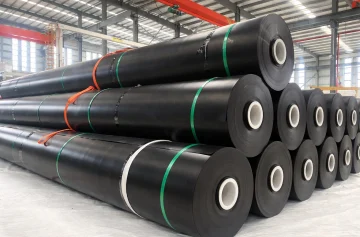
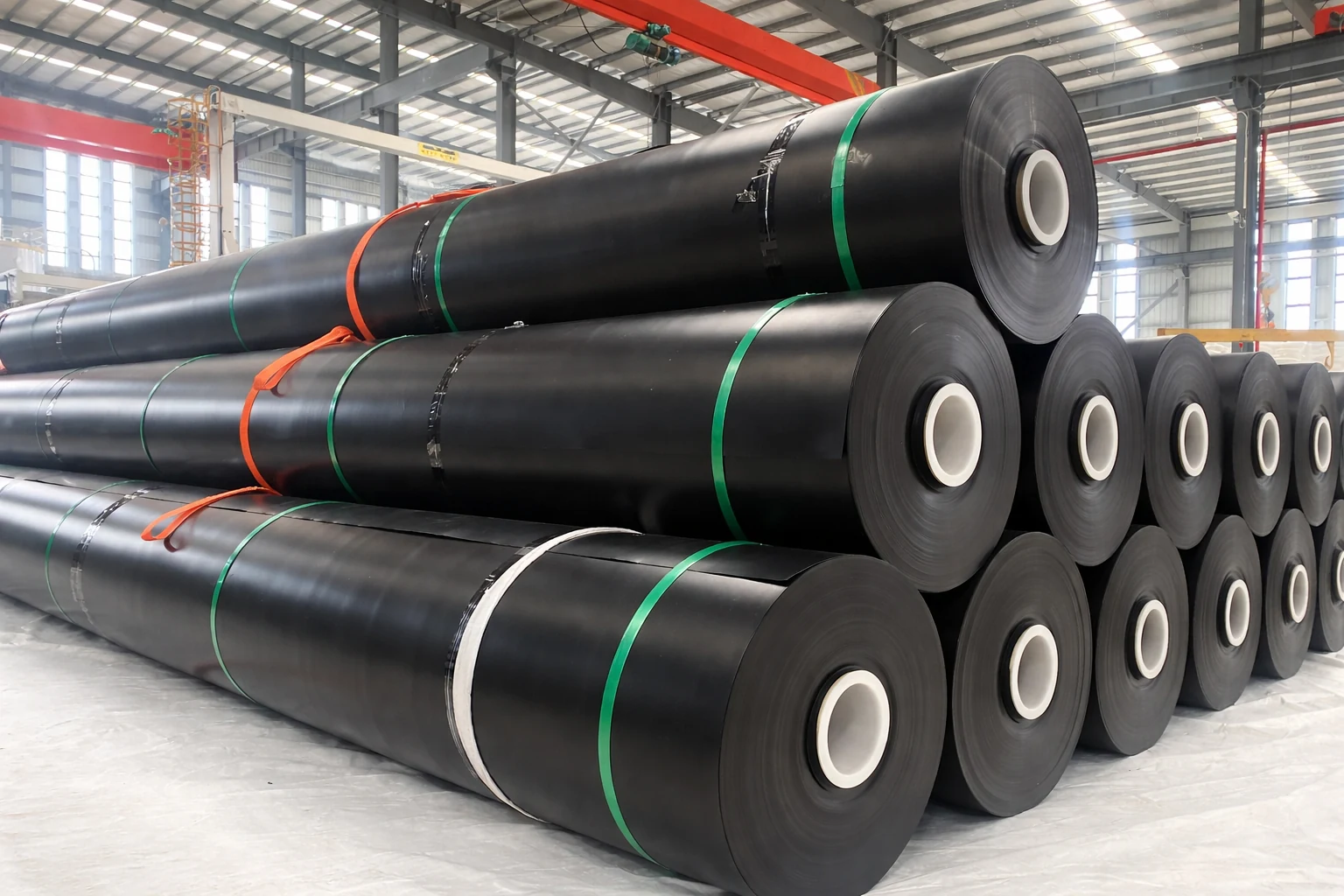
For candidate Jinseed materials, see the HDPE liner product page. Request the actual grade and current test documentation for the proposed project; a general product page is not evidence that every supplied roll meets a particular permit.
Read HDPE material properties correctly
GRI-GM13, Revision 19 dated June 11, 2025, provides property tables by sheet type and thickness. Examples include carbon black content of 2.0–3.0%, a 500-hour stress-crack resistance requirement using the specified ASTM D5397 appendix procedure, and alternative initial OIT criteria of 100 minutes by ASTM D8117 or 400 minutes by ASTM D5885. These are specification/test conditions, not years of field life.
Use the full table, notes and testing frequencies. Tensile, tear and puncture values depend on thickness and method; a stress in MPa cannot be compared directly with a seam force per width in N/mm. The 2025 revision also adds HDPE seam specifications in an appendix. Compliance is not established by selecting only the most favorable property or substituting an unrelated test.
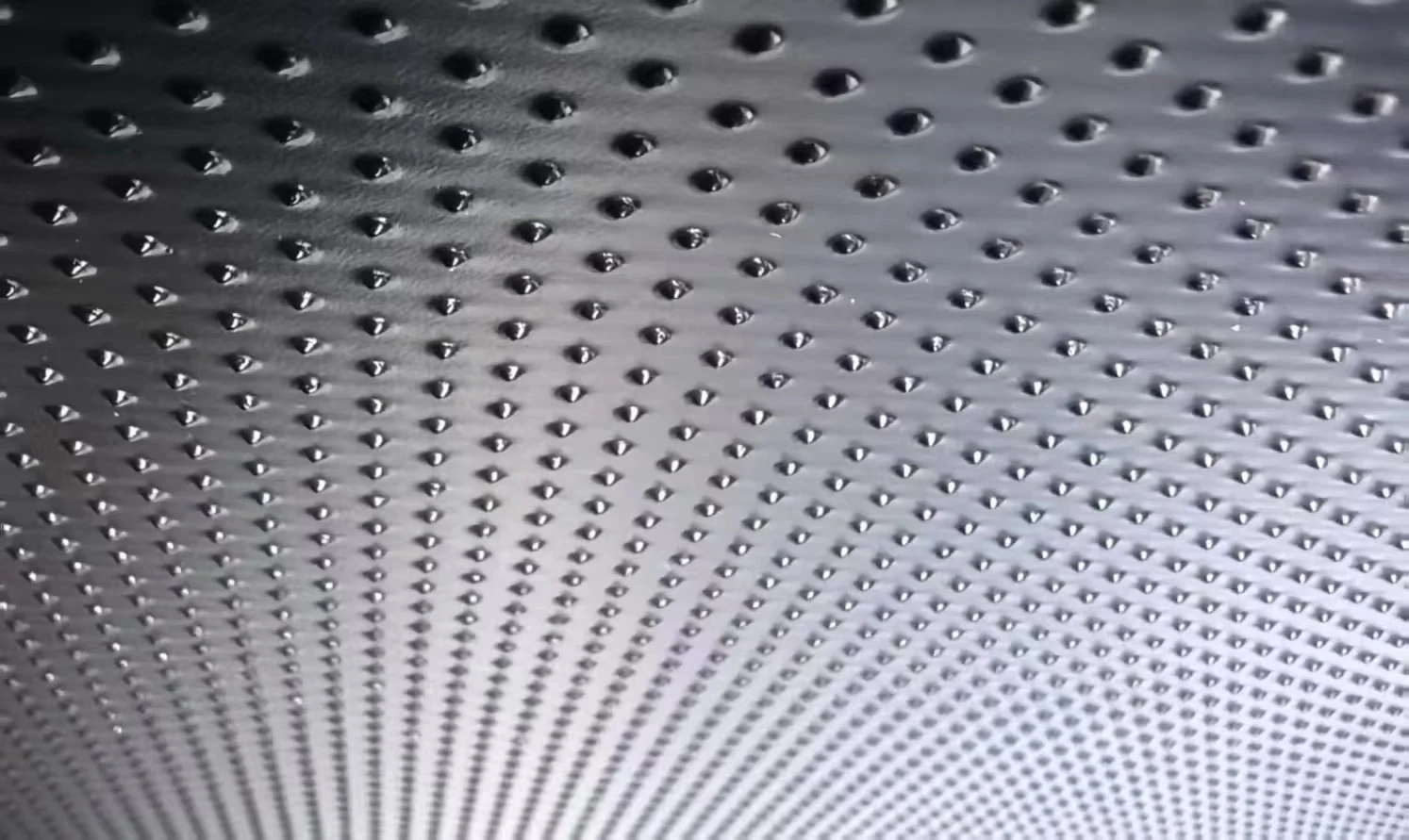
Check the roll identification, manufacturer and formulation information, nominal and measured thickness, test dates, sampling frequency and acceptance basis. Smooth and textured products require their applicable measurements. Do not call a product “GRI certified” solely because its data sheet states that it meets a GRI specification.
Chemical and environmental adaptability
Use the actual leachate, not pH alone
Two liquids with the same pH can have very different effects on a liner. Identify relevant dissolved organics, salts, oxidants, concentration, temperature and exposure duration. A broad “pH 2–12 resistance” claim does not establish resistance to every waste stream.
EPA Method 9090A provides a procedure for investigating how waste chemicals affect flexible membrane liner properties. Its exposure program includes room temperature and 50 ± 2°C conditions, with examinations after 30, 60, 90 and 120 days. The laboratory and designer must choose an applicable program and interpret changes against project requirements; passing an immersion program is not an automatic 50-year service-life demonstration.
Separate installation weather from service temperature
Cold-weather handling and welding need a qualified procedure for the actual sheet and site conditions. High operating temperatures and prolonged exposure can affect oxidation and material response. Obtain temperature-specific evidence and consider the combined effects of exposure and sustained strain. Do not convert an accelerated test into years in service using an unsupported rule such as “1,000 hours equals five years.”
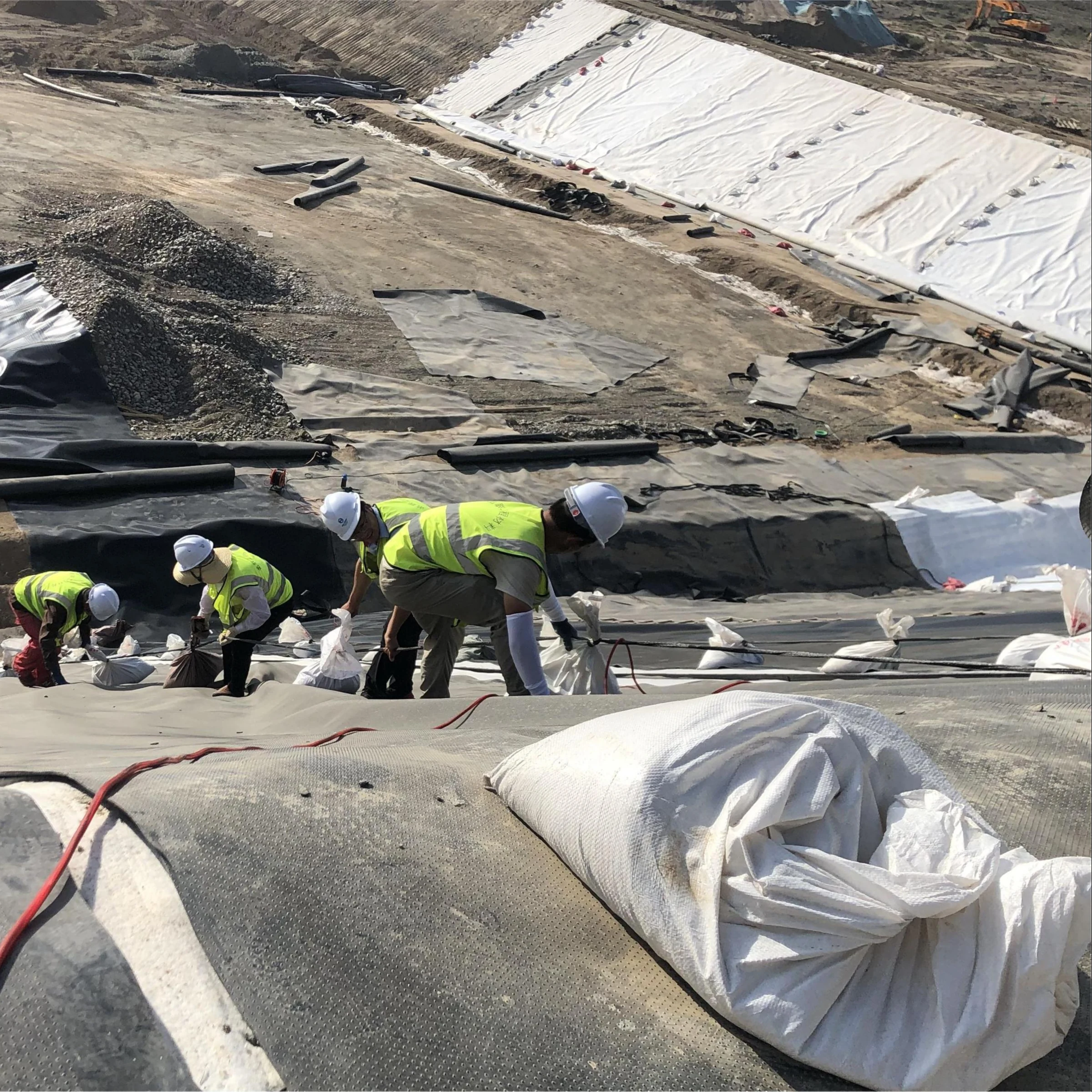
Protect the prepared surface and deployed liner from standing water, frost, contamination and unapproved traffic. Establish weather limits, temporary ballast and deployment sequencing in the installation plan. Product grade and construction procedure matter more than a universal welding temperature copied from an article.
Joint strength and construction quality assurance
Long accessible seams may use dual-track wedge welding; extrusion work may be appropriate for approved repairs and details. Use compatible sheet and weld material, qualified operators and trial seams under representative conditions. Temperature, speed, pressure and overlap must be established by that procedure, rather than a universal 260–280°C setting or fixed percentage of parent strength.
ASTM D6392-25 covers destructive peel and shear assessment of applicable nonreinforced thermo-fusion seams. Evaluate the specified strengths and the required failure/separation behavior. A reported strength alone is incomplete if the failure mode is unacceptable.
ASTM D5820 concerns nondestructive pressurized-air evaluation of the channel between dual seams. It complements, rather than replaces, destructive testing. Use the project-required edition and procedure for pressure, stabilization, hold time, allowable pressure loss and channel continuity. Do not confuse air-channel testing with vacuum-box testing or apply one pressure to all products.
- Confirm the accepted subgrade, material certificates, roll condition and deployment plan before placing sheet.
- Record trial seams, equipment, operators, weather, seam numbers and panel locations.
- Perform the specified nondestructive checks and destructive sampling; map every sample and repair.
- Investigate failures, define affected seam limits, repair and retest before release.
- Include the specified installed integrity assessment and protection/cover placement controls in the CQA plan.
An electrical leak-location survey can form part of that plan where the selected method and site conditions permit it. Detection sensitivity depends on the setup and survey conditions; it is not defensible to promise detection of every 0.1 mm defect or permanent zero leakage.
Mechanical stress and interface stability
Assess settlement, puncture, anchorage and slope stability for the complete layer sequence. Tensile elongation at break is not an allowable design strain. An index puncture result does not prove survival under a particular aggregate, waste load or installation method.
A textured surface may change interface behavior, but it does not establish a universal friction coefficient. Test the actual interfaces at relevant normal stresses and conditions, and evaluate the applicable peak or large-displacement behavior. The GSI directory includes guidance on protection-material test pads and interface testing for components such as GCLs.
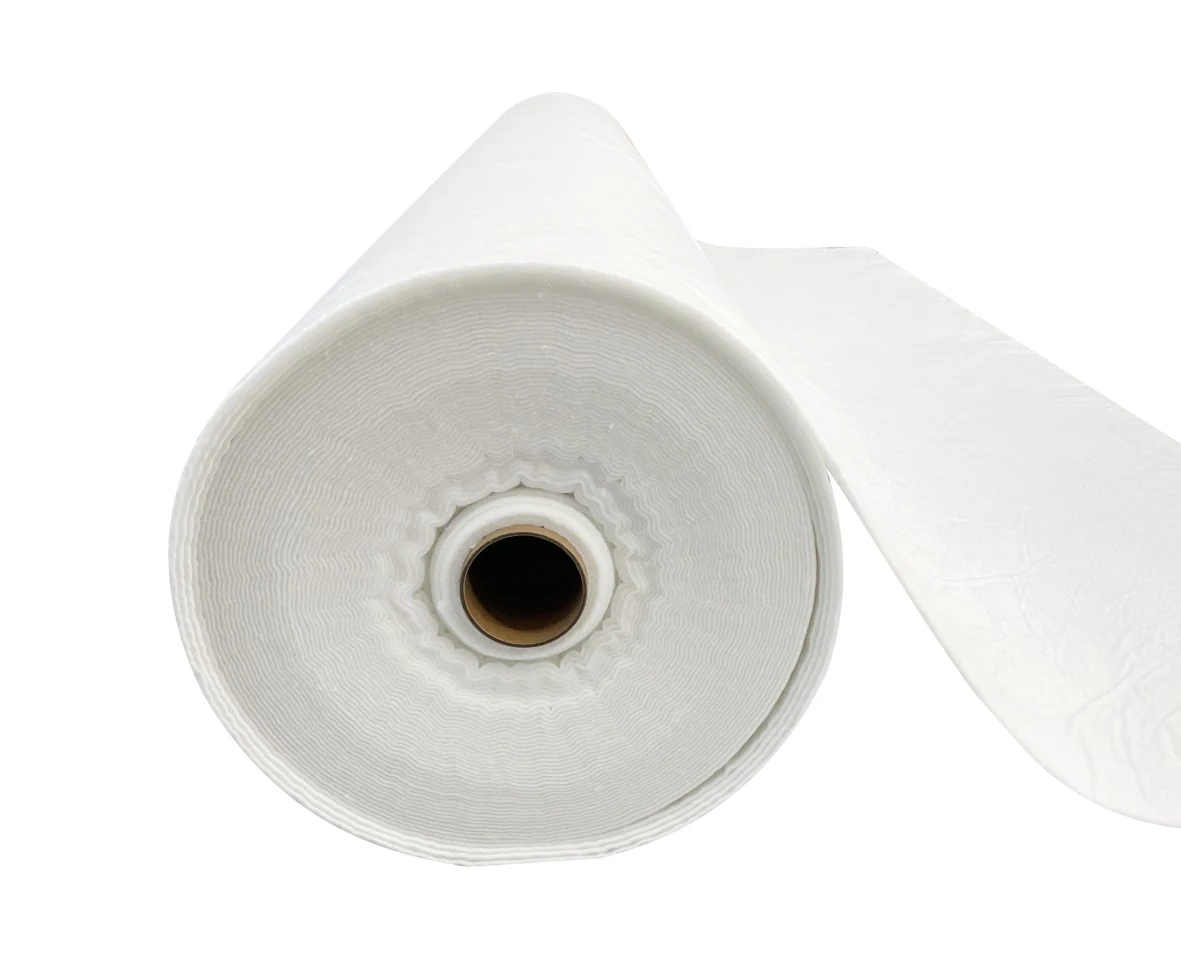
Do not automatically put a cushioning geotextile between every membrane and mineral liner. For the prescriptive composite system discussed above, direct and uniform membrane–compacted-soil contact is required. Protection above the liner and any additional interfaces must follow the approved design. A generic hot-melt adhesive between HDPE and GCL is not a standard requirement.
Compare complete-system costs
Compare bids with the same thickness, surface, test basis, net lined area and delivery terms. Include subgrade preparation, overlaps and waste, mineral components, drainage, protection, penetrations, anchors, welding, CQA, repair, cover placement and freight. An unsupported sheet price such as $3.50–5.00/m² does not establish the installed cost in a particular US location or year.
For a transparent quantity example, 10,000 m² of net area with an assumed 5% procurement allowance is 10,500 m² gross. The 5% is a budgeting assumption; replace it with a panel layout and the actual seams, anchors and cutting losses. Keep laboratory and field-verification costs visible in the estimate rather than treating them as optional extras.
Information to send with a landfill liner enquiry
- Location, waste classification, permit requirements and approved liner cross-section.
- Leachate analysis, expected temperature and proposed compatibility assessment.
- Net area, slopes, settlement assessment, penetrations and anchorage details.
- Membrane polymer, nominal/minimum thickness, surface and required specification edition.
- Material conformance tests, seam acceptance criteria and independent CQA requirements.
- Roll format, panel plan, delivery destination and construction schedule.
Contact Jinseed with the project specification to discuss the candidate material and quotation. Confirm product evidence and the design team’s approval before procurement. This selection guide does not claim unpublished landfill projects, laboratory measurements or regulatory approvals as Jinseed experience.
Authoritative references
- eCFR: 40 CFR 258.40 — federal municipal solid waste landfill design criteria and their scope.
- GSI: GRI-GM13 Revision 19 — HDPE material specification and seam appendix.
- GSI specifications, guides and practices — separate documents for membrane types, GCLs, protection and installation assessment.
- US EPA: SW-846 Method 9090A — waste/liner compatibility investigation.
- ASTM D6392-25, ASTM D5820 and ASTM D5084 — public scope descriptions; use the complete editions required by the project.