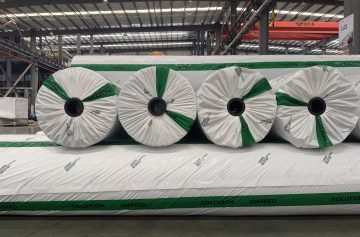
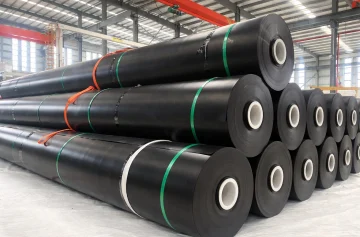
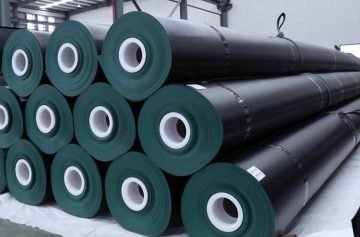
A geomembrane test report covers a delivery only when its sample or production-lot identity can be connected to the actual roll IDs supplied, and its test scope meets the project requirements. Match the report, sampling record, manufacturer’s lot-to-roll register, packing list and delivery labels. A matching brand or thickness alone does not establish coverage.
This receiving-inspection workflow does not assume every property must be tested on every roll. Sampling frequency and acceptance rules come from the project specification and applicable material standard.
Identify the document before relying on it
| Document | What it may demonstrate | What it does not establish alone |
|---|---|---|
| Product data sheet | Declared properties of an identified grade, on its stated value basis | That the delivered batch was sampled and tested |
| Qualification or type-test report | Results for a submitted sample under listed conditions | Applicability to later production without a documented basis |
| Manufacturing QC report | Checks associated with an identified lot or production interval | Independent site acceptance or successful installation |
| Independent conformance report | Results from a defined project sampling plan | Properties not tested or rolls outside the represented lot |
| Field seam test record | Results for identified trial or production seams | Manufacturing properties of all delivered sheet material |
A report can be authentic and useful while still being insufficient to release a delivery. Keep document purpose, represented material and acceptance status separate in the review register.
Follow the identity chain from roll to sample
- Record the delivery. Photograph readable labels and damage. List actual roll IDs, shortages, extra rolls and split deliveries.
- Match the packing list. Check grade, thickness, surface, dimensions and roll numbers against the order and approved submittal.
- Obtain production mapping. Connect each roll to the manufacturer’s lot or defined testing interval. A report showing only a sample number needs an accompanying mapping record.
- Match sample and report. Check the sample ID, sampling date, sampler, production reference, laboratory receipt date and report number. Investigate inconsistent dates.
- Check coverage and acceptance separately. Establish which rolls the sample represents, then compare results with the required methods and criteria.
- Record release. Distinguish released, held and rejected rolls. Retain the reviewer, date and reason.
ASTM D4873/D4873M addresses identification, packaging, handling and storage of geosynthetics. Identification supports traceability; a roll label is not a performance certificate.
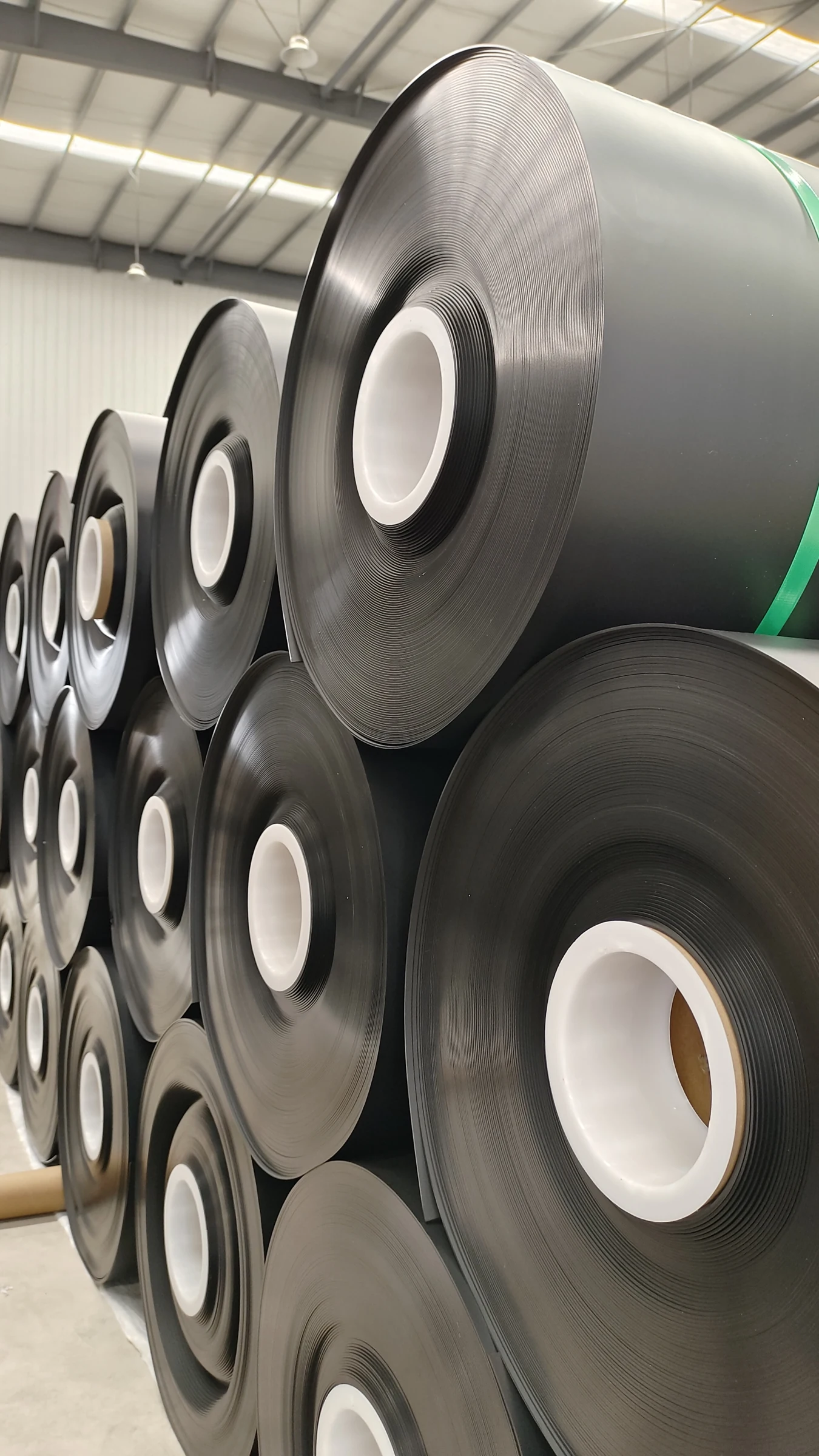
A report-to-roll register for receiving inspection
| Field | Check | If unresolved |
|---|---|---|
| Delivery and roll ID | Actual label matched to shipping list | Request the correct identity record; identify affected rolls. |
| Product identity | Manufacturer, exact grade, thickness, surface and plant where relevant | Compare with the approved product, not a similar catalogue item. |
| Lot or production interval | Controlled manufacturer mapping of rolls to represented production | Request a lot-to-roll schedule. |
| Report and sample IDs | Report revision, laboratory sample ID and sampling record | Obtain the connection; do not infer it from similar names. |
| Test scope and result basis | Methods, directions, conditioning, units and required statistics | Request missing tests or an authorized disposition. |
| Release status | Reviewer, date, conditions and affected roll list | Keep unresolved material identifiable and segregated where practicable. |
Worked example: 24 rolls delivered, 20 mapped
Illustrative example, not a Jinseed shipment: rolls R001–R024 arrive. The manufacturer’s production schedule connects report Q-100 to R001–R020. No mapping is provided for R021–R024.
This measures paperwork coverage by roll count, not a pass rate or accepted liner area. If roll dimensions differ, an area-based measure requires each roll’s width × length. Even the mapped 20 rolls still need result review, condition inspection and any specified conformance testing.
List the four unmapped rolls as unresolved. Request their manufacturing mapping or representative report. Do not extend Q-100 by editing a receiving spreadsheet. If additional sampling is an allowed resolution, obtain the authorized sampling and acceptance plan first.
Check authenticity and technical relevance
- Verify report number, date, revision and completeness, including annexes, qualifications and amendments.
- Confirm laboratory and method qualifications required by the project. Accreditation needs to cover relevant tests; a general logo is insufficient.
- If authenticity is uncertain, contact the issuing laboratory through independently verified official details. Ask what can be verified without expecting another client’s confidential records.
- Compare units, methods and result basis directly. Do not apply unsupported conversions between different test methods.
- Check the tested product identity and documented applicability to the actual supply.
ASTM D4759 concerns determining geosynthetic conformance to specifications. Use the edition and acceptance procedure adopted by the contract; the linked publisher record is not a universal test-every-roll requirement or a substitute for the project’s procedure.
Close gaps without losing the evidence trail
Keep the original report and correspondence when corrected documents arrive. Record which revision supersedes which, why and which rolls it covers. A supplier’s explanation can clarify manufacturing records; it cannot turn an untested property into a measured result.
For a failed result, follow the specified nonconformance and retesting procedure. Do not select a favorable repeat and discard the failure. Where labels are damaged, seek controlled re-identification before cutting or deployment.
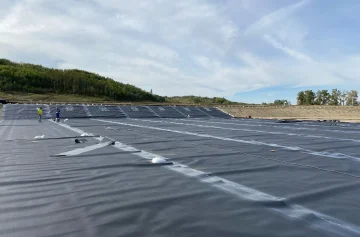
At installation, transfer roll IDs into panel records and the as-built layout. The handover guide addresses separate seam, repair and installation records.
Questions about report coverage
Does an older report automatically fail the delivery?
No. Qualification reports may predate production, while a claimed batch test needs a credible production and sampling timeline. Review purpose, project requirements and applicability to the supplied grade or lot.
Can one report represent several rolls?
Yes, where the sampling frequency, defined production lot and acceptance procedure permit it, with documented roll mapping. Page count does not determine report coverage.
Does full traceability mean the liner is accepted?
No. Identity is one requirement. Acceptance also needs compliant results, satisfactory delivery condition and closure of project-specific release conditions.
Specify the documents before ordering
Send required methods, acceptance criteria, sampling requirements and a roll-register format with the enquiry. Ask which records will accompany production and shipment.
Material approval and traceability hub · Brand substitution approval · Jinseed quality information