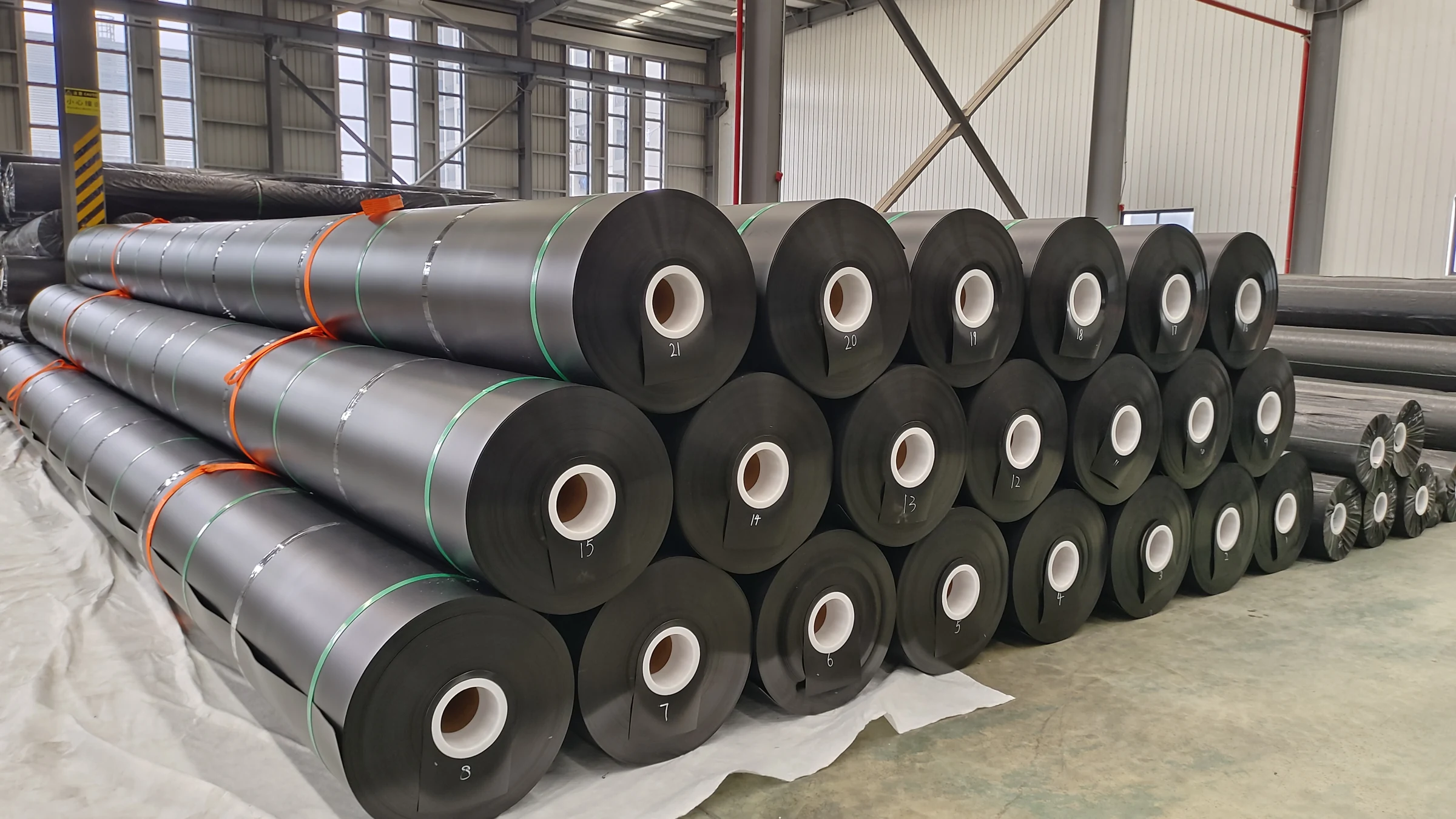
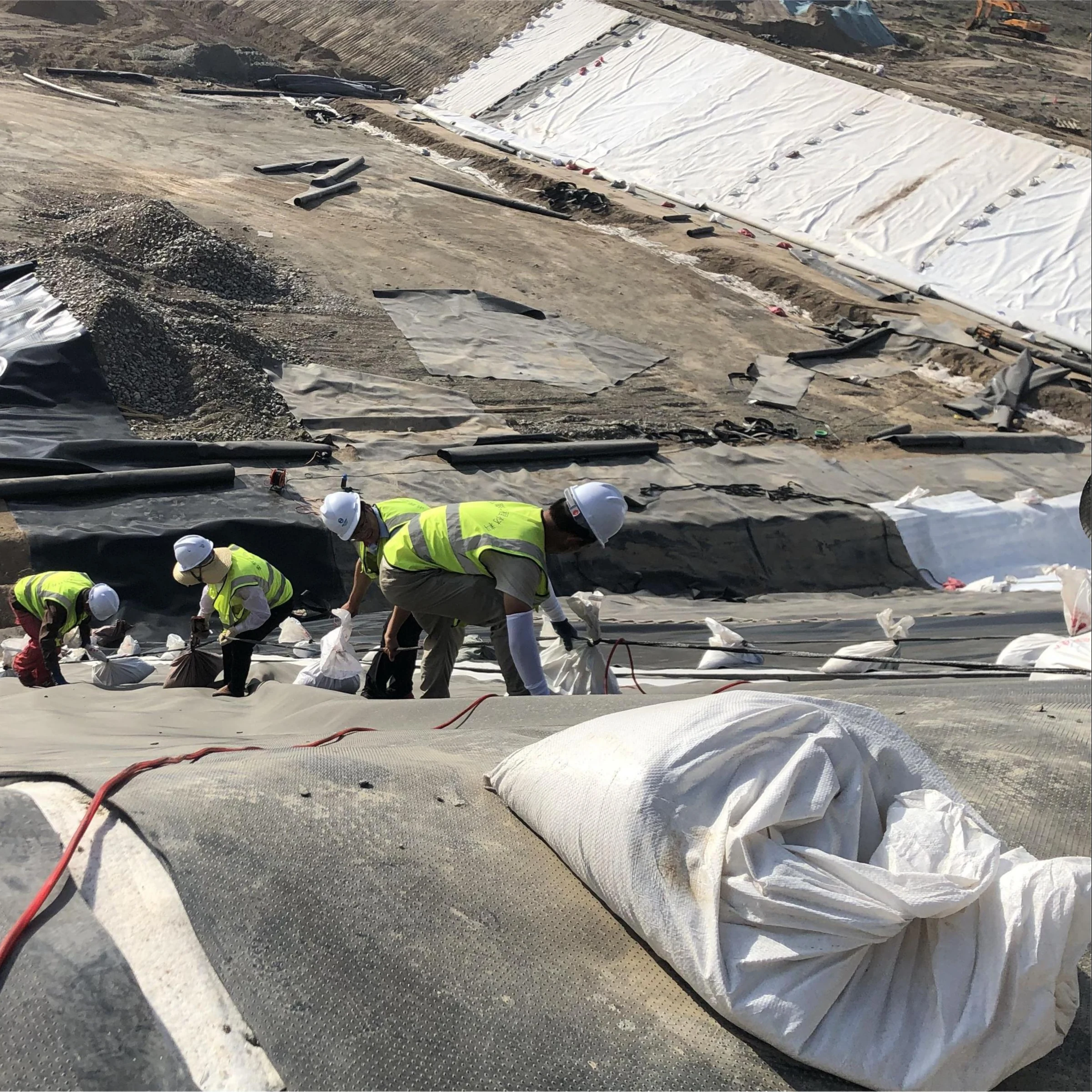

HDPE (High-Density Polyethylene) offers strong corrosion resistance, with a permeability coefficient of ≤1×10⁻¹³ cm/s and tensile strength ≥25MPa.
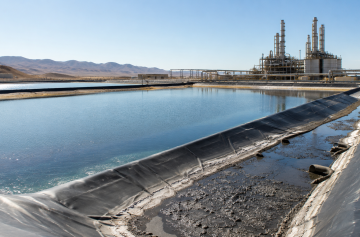
It dominates in landfills (e.g., a 2.0mm membrane has a 3-year leakage rate of 0.01 L/s·km²) and chemical waste pools.
LLDPE (Linear Low-Density Polyethylene) has an elastic modulus ≥70MPa and excellent crack resistance, making it suitable for high-altitude cold reservoirs (-30°C) and mine tailings ponds (settlement zones), with a typical thickness of 1.0-2.0mm.
HDPE withstands temperatures from -70°C to 90°C, but its low-temperature brittleness increases (e.g., impact strength drops by 30% at -40°C).
LLDPE withstands -40°C to 80°C and has superior low-temperature toughness.
An LLDPE liner used in a reservoir in Northeast China maintained ≥90% performance after 50 freeze-thaw cycles.
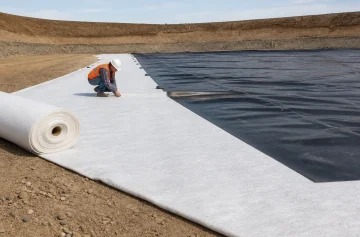
HDPE joints are hot-melt welded (overlap ≥80mm, strength ≥85% of parent material), with air pressure testing (0.15MPa held for 5min).
LLDPE allows flexible corona + adhesive repairs, with patch overlaps ≥30cm, reducing maintenance costs by 20%.
Scenario
HDPE (typically following the GRI-GM13 standard), with its high crystallinity and chemical inertness, is the preferred choice for landfill bottom liners and mining heap leach operations, resisting strong acid/alkali corrosion and long-term UV radiation.
LLDPE (following the GRI-GM17 standard) generally has a density below 0.939 g/cm³ and possesses excellent multi-axial tensile properties (elongation often exceeding 800%), specifically designed to handle the 5% to 10% or even higher uneven settlement common in landfill capping and closures.
Bottom Liners
Advantages
The bottom liner is the first and most permanent line of defense in a landfill’s anti-seepage system.
The internal environment of a landfill is extremely harsh; the leachate contains not only heavy metals but is also rich in organic solvents such as Benzene, Toluene, Ethylbenzene, and Xylene (collectively known as BTEX).
- Crystallinity and Permeability
The semi-crystalline structure of HDPE (crystallinity 50-80%) acts as a physical barrier. The tight arrangement of polymer chains limits the free volume for gas and liquid molecules. Experimental data shows that for common organic solvents (such as dichloromethane), at the same thickness, the permeation flux of HDPE is only 1/2 to 1/3 of that of LLDPE. Because LLDPE introduces octene or hexene comonomers, the branched chains disrupt the continuity of the crystal lattice, making it easier for small-molecule chemicals to diffuse through the polymer matrix. Under the GRI-GM13 standard, HDPE must pass a rigorous oven aging test to ensure that after long-term chemical immersion, its High-Pressure Oxidation Induction Time (HP-OIT) retention rate is no less than 80%. - Environmental Stress Crack Resistance (ESCR)
While LLDPE has a natural advantage in crack resistance, improvements in HDPE resin formulations have addressed this weakness for bottom liner applications. Modern high-quality HDPE geomembrane resins utilize bimodal molecular weight distribution technology to increase ESCR performance (per ASTM D5397 single-point notched constant tensile load test) to >500 hours, far exceeding the early industry standard of 300 hours. This is crucial because surfactants in leachate accelerate stress cracking in polymers, and once a bottom liner is laid, the possibility of repair is nearly zero.
Physical Loading
The height of the waste mass in a landfill often reaches 30 to 100 meters, requiring the bottom liner to withstand immense vertical soil pressure.
- Compressive Creep Performance
Under normal pressures of 500-800 kPa, polymer materials undergo creep, where thickness decreases over time under a constant load. HDPE’s high elastic modulus provides excellent creep resistance. Comparative tests show that after continuous loading for 10,000 hours at 50°C, the thickness loss rate of HDPE is significantly lower than that of LLDPE. Excessive creep in the base material can lead to thinning of the anti-seepage layer or even induce localized ruptures in uneven settlement areas. - Interaction with the Drainage Layer
In typical landfill section designs, a 300mm thick layer of sand and gravel is laid above the geomembrane as a leachate collection and removal system. Under heavy pressure, sharp gravel can exert a “puncturing” effect on the geomembrane.Performance Indicator (ASTM Test Standard) HDPE (2.0mm) LLDPE (2.0mm) Data Analysis Puncture Strength (ASTM D4833) > 640 N > 480 N HDPE has higher hardness and effectively resists penetration from sharp gravel corners. Yield Strength (ASTM D6693) > 29 N/mm N/A (No obvious yield point) HDPE can withstand greater stress before undergoing plastic deformation.
Slope Stability
Landfills consist of not just a base, but also surrounding slopes (typically at 3:1 or 2:1 gradients).
- Application of Textured HDPE
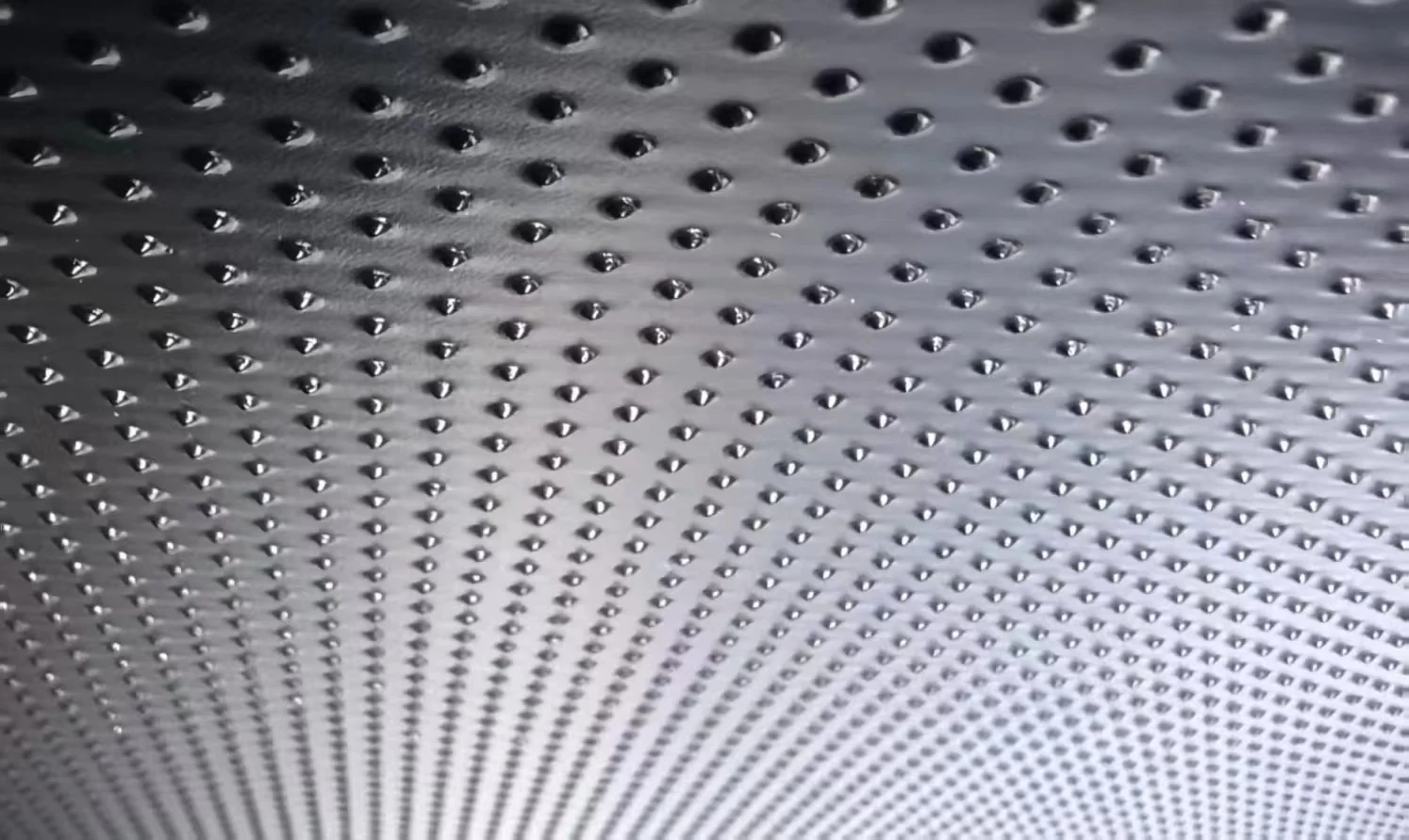
To increase the friction coefficient, bottom liners usually employ textured HDPE geomembranes. Manufacturing processes are mainly divided into co-extrusion and impingement. The co-extrusion process allows the “hook” structures of the textured layer to bond more tightly with the membrane body. - Interface Friction Angle Data
In direct shear tests (ASTM D5321), the interface friction angle between textured HDPE and non-woven geotextiles or Geosynthetic Clay Liners (GCL) typically reaches 25° to 35°. In contrast, while LLDPE can also be textured, its softer base material causes surface protrusions to “flatten” easily under high normal stress, reducing long-term friction performance due to wear. The high hardness of HDPE ensures that the textured protrusions maintain their “interlocking” ability under decades of high pressure, preventing the landfill mass from sliding along the slopes.
- Intimate Contact
This is a physical trade-off. LLDPE is soft and can better conform to the tiny irregularities of the underlying clay, theoretically reducing lateral leakage if the geomembrane is damaged. However, due to HDPE’s absolute advantage in chemical and puncture resistance, the engineering community compensates for its rigidity-related fit issues by improving construction techniques—for example, by requiring clay surface flatness to be controlled within ±20mm and using heavy rollers for compaction. - Defect Leakage Rate Calculation
According to the Giroud-Badu leakage formula, in a composite liner system, if a 1cm² hole exists in the HDPE membrane, the leakage rate is primarily limited by the contact between the membrane and the underlying soil. Although the stiffness of HDPE may lead to tiny gaps at the interface, as long as Quality Assurance (CQA) is strictly implemented, the benefits of its chemical barrier properties far outweigh the risk of minor contact loss due to rigidity.
For Municipal Solid Waste (MSW) and hazardous waste landfills, the bottom liner system generally selects HDPE geomembranes with a thickness of 1.5mm to 2.5mm (strictly following the GRI-GM13 standard).
Under vertical pressures of >500 kPa generated by high-load waste piles, the high modulus of HDPE (density ≥0.940 g/cm³) prevents material creep and thinning.
Compared to LLDPE, HDPE’s permeability coefficient for chlorinated solvents and aromatic hydrocarbons is 30-50% lower, effectively blocking the diffusion of Volatile Organic Compounds (VOCs) from high-concentration leachate (pH typically fluctuating between 4 and 9) into groundwater aquifers.
Furthermore, drainage gravel with a particle size of 20-40mm is usually laid above the bottom anti-seepage system; HDPE’s higher hardness and puncture resistance provide the physical foundation to resist damage from the gravel.
Landfill Capping
Multi-Axial Performance
Traditional uniaxial tensile tests (ASTM D6693, like pulling noodles) are insufficient to simulate the stress state of a closure cover layer.
- ASTM D5617 Multi-Axial Burst Test
When evaluating capping materials, engineers prioritize multi-axial tensile data. This test secures the geomembrane in a circular fixture and applies pressure from the bottom until it ruptures.- Data Comparison: Under multi-axial stress, HDPE tends to rupture when strain reaches 15-20% because its high crystalline structure limits the rearrangement of molecular chains in three-dimensional space. LLDPE, however, can typically withstand over 100% vertical deformation in multi-axial tests without rupturing.
- Engineering Significance: If Landfill Gas (LFG) generated after closure is not exported in time, it will accumulate under the membrane, forming gas balloons. These balloons exert isotropic tension on the membrane. LLDPE’s multi-axial extensibility allows the membrane to bulge moderately under gas pressure without breaking, buying time for the gas collection system to respond, whereas HDPE is prone to environmental stress cracking under such conditions.
Stability
Closure caps usually involve large areas of slopes, generally designed at 3:1 (horizontal:vertical) or gentler, though they may reach 2.5:1 in land-constrained areas.
A layer of vegetation soil 0.5 to 1 meter thick needs to be laid over the capping geomembrane.
- Cover Soil Landslide Risk
During heavy rain, the vegetation soil becomes saturated and heavy, while water permeates to the geomembrane surface, forming a lubrication layer. If the friction between the geomembrane and the overlying soil is insufficient, the entire layer of soil will slide off like “taking off clothes.” - Advantages of Textured LLDPE
While HDPE can also be textured, LLDPE has unique physical advantages in slope applications. - Texturing Process: High-quality textured LLDPE membranes use a co-extrusion process, meaning the surface layer of the membrane is produced as a textured melt rather than being sprayed on later. Because the LLDPE substrate is softer, soil particles can embed more deeply into the surface texture under the weight of the overlying soil, creating a tighter “interlocking effect.”
- Interface Friction Angle: Laboratory direct shear tests (ASTM D5321) show that the interface friction angle between textured LLDPE and non-woven geotextiles or sand/soil is typically stable at 28° to 32°. In contrast, because HDPE is too hard, it is difficult for soil particles to embed; friction relies mainly on the resistance of the textured protrusions, and if these are worn down, the friction angle drops significantly.
Crack Resistance
- Role of Comonomers
Alpha-olefin comonomers (such as butene, hexene, or octene) are introduced during the production of LLDPE. These comonomers form short-chain branches on the polyethylene backbone. - Branching Effect: These branches act like “tentacles” extending from the main chain; they disrupt the crystalline regularity and lower the density but also act as “Tie Molecules” between molecules. Tie molecules connect different crystalline regions; when the material is subjected to external force, the abundant tie molecules effectively transmit and disperse stress, preventing cracks from forming at spherulite boundaries.
- Test Performance: In ASTM D1693 (bent strip notch test), standard HDPE may show cracks after a few hundred hours, while advanced LLDPE using octene comonomers often remains unfailed after >1500 hours. For capping scenarios that are under long-term tension and exposed to temperature fluctuations (leading to thermal expansion and contraction cycles), LLDPE’s microstructure provides natural immunity.
When a landfill reaches the end of its service life and final closure is performed, the organic matter inside the waste pile undergoes anaerobic decomposition, resulting in unpredictable vertical settlement of 5% to 20%.
LLDPE geomembrane (density typically between 0.915 and 0.939 g/cm³) has become the engineering standard for such conditions (following GRI-GM17 specifications) due to the high flexibility provided by its low crystallinity.
Compared to HDPE’s elastic modulus of up to 800-1000 MPa, LLDPE’s modulus is only about 1/3 of the former.
This allows it to extend at very low stress levels when facing localized strain caused by foundation collapse, avoiding stress tearing caused by the “bridging” effect.
Additionally, LLDPE maintains excellent flexibility at low temperatures down to -70°C, making it ideal for handling dense gas well penetrations on the closure surface.
The field-welded airtightness of its prefabricated pipe boots is much higher than that of rigid HDPE.
Heap Leach Pads
Integrity
Compared to municipal landfills, the working environment of mine heap leach pads is an order of magnitude higher in terms of physical load.
Modern copper heap leach pads are often designed with heights exceeding 150 meters, requiring the bottom geomembrane to withstand normal pressures exceeding 2 MPa (2000 kPa).
- Compressive Creep and Thickness Retention
Under such extreme pressure, polymer materials exhibit viscoelastic behavior.- HDPE Performance: Thanks to its high density (≥0.941 g/cm³) and semi-crystalline structure, HDPE has a high compression modulus. In 10,000-hour creep tests under 2 MPa constant load at 50°C (a common bottom temperature due to exothermic heap leach reactions), the thickness reduction rate of high-quality HDPE is typically controlled within 5-8%.
- LLDPE Failure Risk: LLDPE is softer, and its molecular chains are more likely to slip under heavy pressure. Under the same conditions, its thickness loss may exceed 15-20%. Excessive thickness loss not only reduces the physical barrier capability but, more critically, can lead to the drainage pipe network above the anti-seepage layer (used to collect Pregnant Leach Solution – PLS) embedding into the membrane, causing a drop in flow capacity or even pipe crushing.
- Sharp Object Puncture Resistance
Ore on heap leach pads is usually blasted and crushed. While the particle size is controlled between 12mm – 50mm, the edges are extremely sharp.- ASTM D4833 Test: This standard test uses a probe to simulate sharp objects. A 2.0mm HDPE typically has a puncture resistance exceeding 640 N, while LLDPE of the same thickness is only about 480 N.
- Engineering Reality: Although cushion layers (such as non-woven geotextiles or fine sand) are laid in engineering, they may become compacted and fail under massive heap loads. HDPE’s extreme hardness makes it the last line of defense, capable of resisting the slow puncture of sharp ore corners under high pressure.
Tolerance
- Cyanide Gold Extraction (Alkaline Environment)
Gold heap leaching typically uses a Sodium Cyanide (NaCN) solution with a pH between 10.5 and 11.5.- In high pH alkaline environments, polyester materials (like certain geotextiles) undergo hydrolysis, but polyethylene itself is relatively inert. Here, the main threat comes from the leaching of additives. HDPE’s tight crystal lattice significantly slows the migration rate of antioxidants and stabilizers, ensuring the material’s performance remains stable over decades of service.
- Acid Copper Extraction (Acidic Environment)
Copper heap leaching uses dilute Sulfuric Acid (H₂SO₄), sometimes mixed with microbes, creating a strong oxidizing environment.- Oxidative Degradation: Acidic environments accelerate the oxidative degradation of polymers. According to ASTM D5747 (liquid chemical immersion test), after immersion in a 60°C sulfuric acid solution for 90 days, the retention rate of HDPE’s physical properties (tensile strength, elongation) is typically above 95%.
- Swelling Effect: If organic solvents (such as kerosene-based extractants) are used in the extraction process, LLDPE is more likely to adsorb organic molecules and swell due to its higher amorphous content, leading to a significant drop in mechanical strength. HDPE’s high crystallinity results in extremely low adsorption of organic hydrocarbons, maintaining its function as a “rigid barrier.”
Shear Strength
To collect the Pregnant Leach Solution (PLS), the bottom of the heap leach pad must be designed with a slope (typically 2% – 5%), and the surrounding containment slopes can be as high as 2.5:1.
- Necessity of Textured Geomembranes
Smooth HDPE has a very low friction coefficient (friction angle < 10°) and cannot maintain the stability of the ore pile. Textured HDPE must be used. - Height and Density of Textured Protrusions
- GRI-GM13 specifies a minimum texture height (Asperity Height) of 0.25mm for textured HDPE, but in mining applications, this is usually required to be increased to 0.4mm or higher.
- Wear Resistance Comparison: This is an area where HDPE completely outperforms LLDPE. Under the pressure and shear force of millions of tons of ore, the softer textured protrusions of LLDPE are easily “flattened” or “worn smooth,” causing the friction angle to drop sharply during service. HDPE’s textured protrusions have high hardness and can continue to “bite” into the underlying soil layer or geotextile like spikes on a track shoe.
- Direct Shear Data: In ASTM D5321 tests, the interface peak friction angle between high-quality nitrogen co-extruded textured HDPE and needle-punched geotextiles can stabilize at 28° – 34°, satisfying the safety factor for anti-sliding (FS > 1.3) for high waste heaps.
Strong Ultraviolet Radiation
- Ultraviolet (UV) Aging
Thinner air means stronger UV radiation. HDPE formulations must contain 2% – 3% carbon black with a fine particle size, and the dispersion must reach category A1 or A2.- HP-OIT (High-Pressure Oxidation Induction Time): In addition to standard OIT, mining specifications often pay special attention to HP-OIT (ASTM D5885) to evaluate the effectiveness of Hindered Amine Light Stabilizers (HALS). Qualified mining HDPE must still have an HP-OIT retention rate greater than 50% after 1600 hours of accelerated UV aging.
- Thermal Expansion/Contraction and the “Trampoline Effect”
Day-night temperature differences in desert regions are extreme. The surface temperature of black HDPE can reach 75°C at noon and drop to 0°C at night.- HDPE’s high coefficient of thermal expansion causes the membrane to wrinkle at high temperatures and contract/suspend (bridging) at low temperatures. In the corners of heap leach pads, this suspension is called the “trampoline effect.” If ore stacking begins at this time, the suspended membrane will be torn.
- Engineering Countermeasures: Although LLDPE adapts slightly better to thermal expansion and contraction, it is discarded because it cannot withstand the heap load. The solution for HDPE’s thermal effects is to backfill the protective soil layer (overliner) during the low-temperature period in the early morning, using the cover pressure to lock the membrane position.
In gold, copper, and uranium heap leach extraction processes, HDPE geomembrane (typically 1.5mm – 2.5mm thick) is the absolute preferred standard for global mining giants (such as BHP, Rio Tinto).
Faced with extremely high vertical pressures of >1800 kPa generated by heap heights often exceeding 100 meters, HDPE, with its yield strength of >29 N/mm (at 2.0mm thickness) and high crystallinity, effectively resists long-term compressive creep and physical puncture from sharp ore.
Chemically, it can withstand decades of immersion in Sodium Cyanide solutions (pH 10-12) or high-concentration sulfuric acid, with Environmental Stress Crack Resistance (ESCR) requirements typically >500 hours (ASTM D5397).
For common 2.5:1 slope designs, double-sided textured HDPE provides an interface friction angle of up to 32°, ensuring the structural stability of million-ton ore heaps and preventing catastrophic landslides.
Temperature Adaptability
HDPE’s high crystallinity (50-80%) gives it high-temperature strength, with a softening point above 130°C, suitable for maintaining physical form in environments exposed to direct sunlight (surface temperatures often exceeding 60°C).
However, in areas with large day-night temperature differences, HDPE’s linear thermal expansion coefficient of approximately 1.2×10⁻⁴/°C leads to obvious “wave” deformations or stress bridging during low-temperature contraction, increasing the risk of weld tearing.
In contrast, LLDPE relies on a branched molecular structure; while its thermal expansion coefficient is similar, its modulus is low (soft), allowing it to dissipate temperature stress through its own microscopic yielding.
LLDPE’s low-temperature embrittlement point is typically below -75°C, and its elongation at break can reach 800%, making its performance against stress cracking under freeze-thaw cycles or extreme cold significantly better than HDPE’s.
Thermal Expansion and Contraction
High-Temperature Expansion Phase
Because of its high stiffness, HDPE’s behavior when heated is similar to a piece of hard cardboard under pressure.
- Wave Morphology: HDPE waves are typically high in peak and short in wavelength. On 1.5mm thick HDPE, wave heights of 150mm to 300mm are common.
- Physical Consequences:
- Loss of Intimate Contact: Waves cause the membrane to separate from the underlying clay layer (GCL) or soil base. If a leak occurs, the liquid flows freely under the membrane, making it difficult for leak detection (such as spark testing or the dipole method) to locate the source.
- Construction Rolling Risks: During soil backfilling, bulldozers find it difficult to flatten these hard waves. Due to HDPE’s lack of flexibility, waves are often folded and flattened, forming dead creases. According to GRI-GM13 standards, the ESCR capacity at a dead crease can drop by more than 50%, serving as a future failure point.
LLDPE has a low modulus; under the same amount of expansion, LLDPE tends to form a greater number of very low-height small wrinkles or absorbs part of the volume expansion through the material’s own microscopic thickening.
Low-Temperature Contraction Phase
The thermally induced tensile stress ($\sigma_T$) generated by a drop in temperature can be roughly estimated with the following formula:
$$ \sigma_T = E \times \alpha \times \Delta T $$
Where:
- $E$ is the elastic modulus
- $\alpha$ is the thermal expansion coefficient
- $\Delta T$ is the temperature difference
Since HDPE’s $E$ value (modulus) is 2-2.5 times that of LLDPE, for the same temperature drop $\Delta T$, the internal tensile stress generated in HDPE is also 2-2.5 times that of LLDPE.
At the toe of slopes or on uneven foundations, contracting HDPE will pull straight like a tight drumhead, lifting off the base—a phenomenon known as “bridging.”
- Suspension Risk: Bridged HDPE is in a suspended state. Once waste is stacked or liquid is injected above it, the massive vertical load acts on this suspended thin film, generating immense localized tensile stress.
- Yield Point Collapse: HDPE has a distinct yield point (typically at 12-15% strain). If localized deformation exceeds 12% under combined cold contraction and load tension, HDPE will undergo necking, where thickness thins sharply and cannot be recovered. This means the anti-seepage layer has failed in its physical structure.
LLDPE’s Viscoelastic Advantage
LLDPE does not have a sharp yield point; even when encountering resistance during contraction, LLDPE extends like rubber rather than generating immense internal tension.
It can adapt to the irregularities of the foundation through micro-adjustments, with almost no bridging occurring.
Welding Residual Heat
In dual-track hot-melt welding, the weld area is heated to 300°C-400°C for fusion and then rapidly cooled to ambient temperature.
- HDPE Locking Effect: Due to its fast crystallization and high stiffness, HDPE welds lock in massive residual internal stresses as they cool and contract. This stress exists long-term at the weld edges and is a major trigger for stress cracking near the weld. If the ambient temperature is low during construction and the weld cools too quickly, HDPE welds become extremely brittle.
- LLDPE Stress Relaxation: LLDPE’s multi-branched structure allows molecular chains to slip over a wide temperature range. During weld cooling, LLDPE can release most residual stresses through microscopic structural adjustment. Consequently, LLDPE welds rarely exhibit spontaneous cracking due to internal stress during long-term service.
The Coefficient of Linear Thermal Expansion (CLTE) for HDPE and LLDPE is extremely close, both ranging between $1.1 \times 10^{-4}/^\circ C$ and $1.3 \times 10^{-4}/^\circ C$.
A 100-meter long roll will undergo a physical size change of about 0.6 meters over a 50°C temperature difference.
However, the physical responses of the two to this deformation are completely different:
HDPE has high crystallinity (>50%) and a high 2% secant modulus (approx. 1000 MPa).
It cannot dissipate strain internally and instead undergoes macroscopic buckling due to excessive rigidity, forming waves up to 300mm high, or generates tensile stress exceeding yield strength during cold contraction;
LLDPE’s modulus is only about 40% of HDPE’s (approx. 400 MPa).
Its amorphous regions allow molecular chain relaxation, enabling it to convert thermal stress into microscopic viscoelastic deformation, thereby maintaining contact with the substrate without significant bridging or stress concentration.
Extreme Low Temperatures
Welding
When the ambient temperature is 0°C or lower, the air and soil substrate become massive “heat sinks.”
- HDPE’s Narrow Process Window: HDPE requires precise melting temperatures (usually between 280°C – 350°C). In cold weather, the membrane surface temperature is very low; the moment the hot wedge touches the membrane, a large amount of heat is instantly conducted to the surrounding cold membrane. If the welding speed and temperature are slightly mismatched, the weld interface temperature will drop below the crystalline melting point. This causes a “Cold Bond”—it looks attached on the surface, but the molecular chains have not actually interpenetrated, and it will tear apart easily.
- LLDPE Tolerance: LLDPE’s Melt Flow Rate (MFR) is typically higher than HDPE’s, meaning its flowability in a molten state is better. Even with low heat input, LLDPE molecular chains still maintain enough diffusion capacity to complete interface fusion. Measured data shows that for welding performed at -15°C without preheating, the passing rate of LLDPE weld shear strength is about 40% higher than that of HDPE.
- Quenching Effect: In an extremely cold wind field, a weld drop from 300°C to -20°C might take only a few seconds. This “quenching” effect leads to highly unstable crystal structures in the HDPE weld zone. Due to rapid volume contraction, massive residual internal stresses are generated at the weld edges.
- Stress Concentration Points: This makes the HDPE weld edges the weakest link in the entire anti-seepage system. Once the system is operational and under load, cracks often propagate rapidly along the weld edge (Heat Affected Zone – HAZ).
Impact Resistance
- ASTM D746 Brittleness Temperature Test
Although the nominal brittleness temperature for HDPE is very low (< -60°C), this is usually measured under ideal laboratory conditions. In actual engineering, materials are often in a multi-axial tensile state (pulled tight).
At -20°C, HDPE under tension is extremely sensitive to notches (Notch Sensitivity). If a screwdriver falls from a height of 1 meter onto a taut HDPE membrane, it is highly likely to puncture it or even cause the membrane to shatter like glass. - LLDPE Energy Absorption Mechanism
LLDPE retains better ductility at low temperatures. Facing the same impact, LLDPE can absorb impact energy through localized plastic deformation, forming a pit rather than a crack. For heap leach pads requiring heavy machinery backfilling over frozen soil, LLDPE’s ability to resist puncture and impact from backfill materials (like sharp gravel) at low temperatures is an absolute advantage.
Freeze-Thaw & ESCR
When the moisture content of the soil under the liner is high, as the temperature drops, the water in the soil freezes and forms ice lenses, expanding in volume by about 9%. This leads to uneven heaving of the soil base under the membrane.
- HDPE Response: Due to its high hardness, HDPE cannot wrap around these heaving ice chunks. Instead, the ice acts as sharp fulcrums, lifting the membrane above. Under the heavy pressure of waste or water above, the localized pressure at the fulcrums is extremely high, easily causing Multiaxial Yield failure.
- LLDPE Response: LLDPE can stretch and conform to the shape of the ice chunks like skin. After the ice melts, the membrane can settle back with the soil without fatigue failure from repeated bending.
Frost Heave-Induced Stress Cracking (ESCR)
- Synergistic Destruction: In landfills, leachate contains surfactants. In cold seasons, the HDPE membrane is in a high-tension contraction state. Surfactants accelerate the generation of micro-cracks, while material hardening caused by low temperatures prevents polymer chains from healing these cracks through slipping.
- Data Comparison: In ASTM D1693 (Environmental Stress Crack Resistance) tests, the failure time for standard HDPE under 100% stress may be around 1500-2000 hours. High-quality LLDPE often exceeds 5000 hours or more and typically does not undergo brittle fracture. In cold regions, choosing LLDPE is effectively buying insurance against environmental stress cracking.
While the glass transition temperatures ($T_g$) of HDPE and LLDPE are both theoretically near -120°C, HDPE’s crystallinity of 60-80% causes its stiffness to increase exponentially at -20°C, with a flexural modulus exceeding 2500 MPa.
This results in a strong “memory effect” in the rolls, making them prone to re-rolling when unfolded or triggering micro-cracks when forced flat.
By contrast, LLDPE’s crystallinity is usually below 45%, allowing it to maintain rubber-like flexibility even at -40°C, with an impact brittleness temperature below -75°C (ASTM D746).
During low-temperature welding, HDPE is extremely sensitive to ambient temperature;
rapid cooling leads to brittle crystalline zones at the weld edges, causing large fluctuations in peel strength;
Meanwhile, LLDPE’s wider Melt Index window allows it to maintain stable heat-sealing quality in cold conditions, effectively resisting mechanical damage brought by freeze-thaw cycles.
Maintainability
The high crystallinity of HDPE (typically >50%) causes the surface oxidation layer to be hard and brittle after aging.
Before repair, at least 10% of the parent material’s thickness must be removed by physical grinding to expose fresh resin, and it is extremely sensitive to the temperature control of the Extrusion Welder (deviation must be within ±10°C).
In contrast, LLDPE, with its lower density (approx. 0.915 g/cm³) and highly branched molecular chain structure, retains a wider welding process window.
Even after years of UV exposure, LLDPE’s Melt Flow Index (MFI) still supports effective fusion, significantly reducing the probability of ESCR occurring in old materials during thermal repair.
This is especially true for landfill capping projects with high differential settlement, where long-term maintenance hours are typically 30% lower than for HDPE.
Re-weldability of Aged Surfaces
Surface Preparation
Grinding Depth and Residual Thickness
- HDPE: Because the oxidation layer penetrates deeper and the substrate becomes brittle, technicians typically need to use 80-100 Grit sandpaper with an angle grinder for heavy grinding. Generally, 0.10mm to 0.20mm of the surface layer must be removed. The risk is that as HDPE hardens, deep scratches (Notches) are easily created during grinding; these scratches become stress concentration points under future loads, inducing Stress Cracking.
- LLDPE: The material is softer and more prone to “fuzzing” during grinding, which actually increases surface area and benefits the mechanical interlocking of the welding rod. LLDPE usually requires only light grinding (removal of 0.05mm – 0.10mm) to expose fresh resin and is less likely to form sharp notch defects.
The ground surface has high-activity free radicals that oxidize again quickly.
- Operational Time Limit: The industry suggests completing welding within 20-30 minutes after grinding. For HDPE, once this window is exceeded, the weldability of the fresh surface drops exponentially, leading to weld peel strengths that do not meet standards. LLDPE is slightly more tolerant of this window, usually extending up to about 60 minutes.
HAZ
In extrusion welding, the areas on both sides of the weld that do not touch the welding rod but are affected by high temperatures are called the Heat Affected Zone (HAZ).
| Parameter Dimension | HDPE Repair Performance | LLDPE Repair Performance |
|---|---|---|
| Recrystallization Behavior | Welding heat causes molecular rearrangement in the HAZ. The movement of aged HDPE molecular chains is restricted, making it prone to forming coarse spherulite structures in the HAZ, causing brittleness and a 40-60% drop in impact strength. | The short-chain branches of LLDPE hinder excessive crystallization. Even after secondary heating, the HAZ retains a finer crystal structure, with less loss of toughness—typically only 10-20%. |
| Stress Concentration Factor | Since the new welding rod is flexible and the aged HDPE substrate is rigid, the Stiffness Mismatch causes all stress to concentrate at the HAZ edge. | Aged LLDPE substrate retains some flexibility; the modulus difference with the new welding rod is smaller, allowing stress to distribute more evenly across the repair area. |
| Brittle Failure Mode | In destructive testing, HDPE repair parts common failure modes are AD-Break (adhesive failure) or brittle fracture at the HAZ. | LLDPE repair parts tend toward FTB (Film Tearing Bond), where weld strength is higher than the substrate, and fracture occurs in the substrate extension—a sign of a qualified weld. |
Adaptability
Extrusion Temperature Settings
- HDPE: Requires higher energy input to activate aged molecular chains. Extrusion temperatures are usually set between 240°C – 260°C. However, this range is very close to the thermal degradation starting point for aged HDPE. Temperatures that are too high (>270°C) cause polymer degradation and micro-pores; temperatures that are too low (<230°C) prevent fusion. This narrow +/- 10°C window is extremely difficult to control under outdoor air-cooled conditions.
- LLDPE: Its melting point (approx. 120°C – 130°C) is lower than HDPE’s (approx. 130°C – 137°C). Extrusion temperatures for repair are usually set at 225°C – 245°C. Lower heat input results in less thermal shock to the parent material, reducing accelerated aging in the HAZ.
Selection of Welding Rod (Extrudate)
- The general principle is to use a welding rod with the same resin or slightly higher MFI as the parent material.
- For aged HDPE, since parent material MFI decreases, situations often occur where the new rod flows too well while the parent material remains un-melted, leading to “cold bonds.” Engineers are sometimes forced to find special low-MFI rods to match aged membranes, increasing supply chain complexity.
- The rheological properties of LLDPE change less over time; standard LLDPE rods usually provide good compatibility without the need for custom materials.
According to GRI-GM13 (HDPE) and GRI-GM17 (LLDPE) standards, after 10 years of service, the standard Oxidation Induction Time (Std-OIT) of a geomembrane typically drops below 40-50% of its initial value.
For HDPE, its crystallinity rises from an initial 50-55% to over 60% over time, increasing the material modulus, and the surface oxidation layer can reach a thickness of 50-100 microns.
During repair, approximately 10% of the film thickness (about 0.15mm-0.2mm) must be removed by mechanical grinding to expose the original polymer.
In contrast, LLDPE maintains a wider welding window (225°C – 250°C) even after OIT depletion, thanks to its low crystallinity (typically <45%) and branched structure.
Field test data shows that the peel strength retention rate for aged LLDPE extrusion welds is typically more than 20% higher than for same-age HDPE, with a significantly lower probability of brittle fracture in the Heat Affected Zone (HAZ).
Field Welding Parameters
Process Window
Melt Flow Index (MFI) and Viscosity Curves
- High Viscosity of HDPE: The MFI for standard geomembrane-grade HDPE is typically very low (0.2 – 1.0 g/10min @ 190°C/2.16kg). This means its molecular chains remain tightly entangled in a molten state, with high flow resistance. To ensure the welding rod melt flows smoothly from the nozzle and penetrates the substrate surface, operators must increase the barrel temperature. However, HDPE is very sensitive to shear heat; excessive screw speed combined with high viscosity generates massive internal friction heat, making precise control of actual discharge temperature difficult.
- Shear Thinning of LLDPE: LLDPE exhibits more significant non-Newtonian fluid characteristics. When the extruder screw rotates at high speeds to apply shear force, its apparent viscosity drops rapidly. This property allows LLDPE to achieve liquid-like flow even at lower set temperatures (e.g., 230°C). This “easy flowability” significantly reduces the load on the extruder motor and ensures the melt fills the microscopic irregularities on the substrate surface.
Oxidation Induction Time (OIT) Consumption Rate
- Thermal Sensitivity of HDPE: As long as temperatures exceed 260°C, the consumption rate of antioxidants (AO) in HDPE increases exponentially. If a welder increases the temperature to 280°C for speed, over 30% of the effective OIT in the weld could be consumed during construction, greatly shortening the project lifespan.
- Tolerance of LLDPE: Because overall processing temperatures are lower (typically by 20°C-30°C), LLDPE retains more antioxidant reserves during welding. Tests show that OIT retention in LLDPE welds is typically above 85%, whereas HDPE welds under high-temperature operation often have only 60%-70%.
Extruder Temperature Profile
In field operations, hand-held extrusion welders usually have three heating zones:
Preheat Air, Barrel, and Extrudate.
| Parameter Setting | HDPE Process Requirements | LLDPE Process Requirements | Physical Principles and Field Impacts |
|---|---|---|---|
| Melt Temperature | 250°C – 270°C | 225°C – 250°C | HDPE needs higher enthalpy to disrupt the crystal lattice; LLDPE has a low melting point—excessive temperatures cause the melt to run and fail to hold shape. |
| Preheat Air Temp | 280°C – 350°C | 250°C – 300°C | Preheat air softenes the substrate and clears dust. HDPE needs stronger hot air to ensure deep surface softening. |
| Target Substrate Surface Temp | > 65°C | > 45°C | The melt only bonds without instant solidification (quenching effect) if the substrate surface reaches this temperature. If HDPE is insufficiently preheated, interface bonding is nearly zero. |
Nozzle Structure and Heat Transfer Efficiency
- HDPE Teflon Shoe Design: Because HDPE melt is hard, weld shoes must be designed with a long “tail” to increase hold-down time. The shoe typically needs to apply 5-10kg of vertical downward pressure to force fusion between the melt and substrate.
- LLDPE Weld Shoe Design: The melt is softer; shoe designs are usually shorter and have less rigorous bottom chamfer requirements. Excessive pressure will instead squeeze LLDPE melt out from the sides, forming ineffective “squeeze-out” (flash) and thinning the center of the weld.
Welding Speed Dynamics
HDPE has a lower thermal diffusivity;
heat takes time to conduct from the surface to the interior.
- HDPE Speed Limit: If welding speed exceeds 0.5 m/min, heat does not have time to penetrate the ground surface layer, and the molten rod is merely “laid” on the cold substrate. This “false weld” will not pass destructive testing (very low peel strength). Therefore, experienced technicians must maintain a “highly patient” slow pace when welding HDPE.
- High-Speed Advantage of LLDPE: LLDPE molecular chains have good flexibility and fast interface wetting. Under the same preheating conditions, heat faster triggers segment movement of surface molecules. Technicians can proceed at 0.8 – 1.0 m/min, nearly doubling efficiency in repairs of long straight welds (like landfill slopes).
Crystallization Rate
- Rapid Freezing of HDPE: Once the heat source is removed, HDPE crystallizes and hardens rapidly. This gives the welder only a very short time (< 5 seconds) to adjust the shoe angle or fix blemishes.
- LLDPE Operational Margin: LLDPE has a slower crystallization rate, and the melt stays “pasty” longer. This gives the welder more time to handle complex nodes (like pipe boot roots), ensuring the weld is flat and dense.
Bead Geometry & Defect Control
Weld Bead Thickness and Width
- HDPE Build-up Requirements: Per GRI-GM19 standards, extrusion weld thickness should be 1.3 times the parent material thickness. Since HDPE is prone to central sink marks, over-extruding is necessary, requiring extruders with high plasticizing capacity (typically > 3 kg/hr output).
- LLDPE Leveling Characteristics: LLDPE levels out easily; welds are usually wider and flatter. Parameter settings should include lower screw speeds to prevent melt run-off from creating irregular weld edges.
Common Defects and Parameter Adjustments
- Porosity:
- HDPE: Often caused by excessive extrusion temperature (> 270°C) or moisture in the substrate. Dryness of welding rods must be strictly checked.
- LLDPE: Often caused by trapped air (due to high fluidity). Shoe angles must be adjusted to ensure the melt front rolls and expels air.
- Fish-mouth: Patch edges that are not fused.
- HDPE: Due to high rigidity, patch edges tend to lift. Preheat air volume must be increased, and an assistant should use tools to press the patch edges.
- LLDPE: Rarely occurs; the material’s own weight is sufficient to keep it flush against the substrate.
The high melt viscosity of HDPE (typically MFI < 1.0 g/10min) forces extrusion welding temperatures to be maintained in the high range of 250°C – 270°C, with a very narrow operational window (±10°C).
Because its thermal conductivity is high but its thermal diffusivity is low, HDPE requires extremely strict preheating (substrate surface must reach 65°C-75°C) and lower travel speeds (0.3 – 0.5 m/min) to prevent internal stress cracks in the Heat Affected Zone (HAZ).
In contrast, the shear-thinning characteristics of LLDPE allow it to maintain excellent wetting across a wide temperature range of 225°C – 260°C and allow for welding speeds as high as 0.8 – 1.0 m/min.
Field vacuum box tests show that under wind speeds >15 km/h, the one-time pass rate for LLDPE weld airtightness is on average 20% higher than for HDPE.
Passive Maintenance
Standardized Testing
ASTM D5397 (Single Point Notched Constant Tensile Load test, SP-NCTL) is currently the authoritative standard for evaluating the long-term durability of geomembranes.
| Test Dimension | HDPE Data Performance | LLDPE Data Performance | Maintenance Implications |
|---|---|---|---|
| SP-NCTL Failure Time (GRI-GM13/17) | Threshold requirement 300-500 hours. Most standard resins fail by brittle fracture at around 600 hours. | Threshold requirement N/A (typically >1500 hours). Often bottoms out due to excessive extension rather than breaking. | HDPE enters an ESCR high-incidence period after 5-10 years of service; LLDPE rarely needs repair due to ESCR throughout its lifecycle. |
| Yield Elongation (ASTM D6693) | 12% – 15%. Once deformation exceeds this range, the material enters necking or fracture stages. | > 20% (often no obvious yield point). Smoothly transitions to strain hardening to bear large deformations. | When foundation settlement occurs, HDPE easily exceeds its yield point, causing cracking from stress concentration; LLDPE conforms to the terrain. |
| Flexural Modulus (ASTM D790) | > 700 MPa. High stiffness makes it difficult to release stress. | 250 – 400 MPa. Low modulus allows the material to release internal stress through deformation. | High-modulus materials form “suspensions” on uneven bases; these suspensions are breeding grounds for ESCR. |
Fatigue Maintenance
Polyethylene has an extremely high Coefficient of Linear Thermal Expansion (CLTE), approximately $1.2 \times 10^{-4} /^\circ C$.
Trampolining
- Stress Accumulation in HDPE: On cold nights, HDPE geomembranes laid on slopes or bases contract. Due to their high modulus (hardness), the membrane is pulled taut, lifting off the base into a trampoline-like suspended state. At this point, internal tension in the membrane rises sharply. If fine scratches (depth >10% thickness) exist or there are geometric transitions at weld edges, this thermal tension is sufficient to drive crack growth.
- Maintenance Consequences: This cracking usually occurs at night or in the early morning. Maintenance records show that repair workloads for HDPE liner systems typically surge by 300% after cold snaps.
Stress Relaxation
- LLDPE does contract, but its low-modulus properties allow it to lower internal stress through rapid molecular chain rearrangement when contraction is hindered. This mechanism is known as stress relaxation.
- Data indicates that under the same temperature drop ($\Delta T = 40^\circ C$) and constraints, residual stress accumulated inside LLDPE is only 30%-40% of that in HDPE. This means LLDPE rarely experiences spontaneous cracking simply due to temperature drops.
High crystallinity (density >0.940 g/cm³) gives HDPE its rigidity but also keeps its Tie Molecules in a high-tension state.
In ASTM D5397 (SP-NCTL) tests, brittle failure times for standard HDPE are typically 300-500 hours, whereas LLDPE—thanks to the short-chain branching network formed by ethylene-octene comonomers—can effectively block stress concentration at crack tips, with NCTL failure times commonly exceeding 1500 hours (often without failure when testing is terminated).
Field data shows that in regions with day-night temperature differences >20°C, the frequency of weld edge cracking induced by thermal contraction in HDPE is 5-8 times that of LLDPE, causing maintenance teams to perform frequent and costly Electrical Leak Location (ELL) surveys to repair micro-cracks invisible to the naked eye.