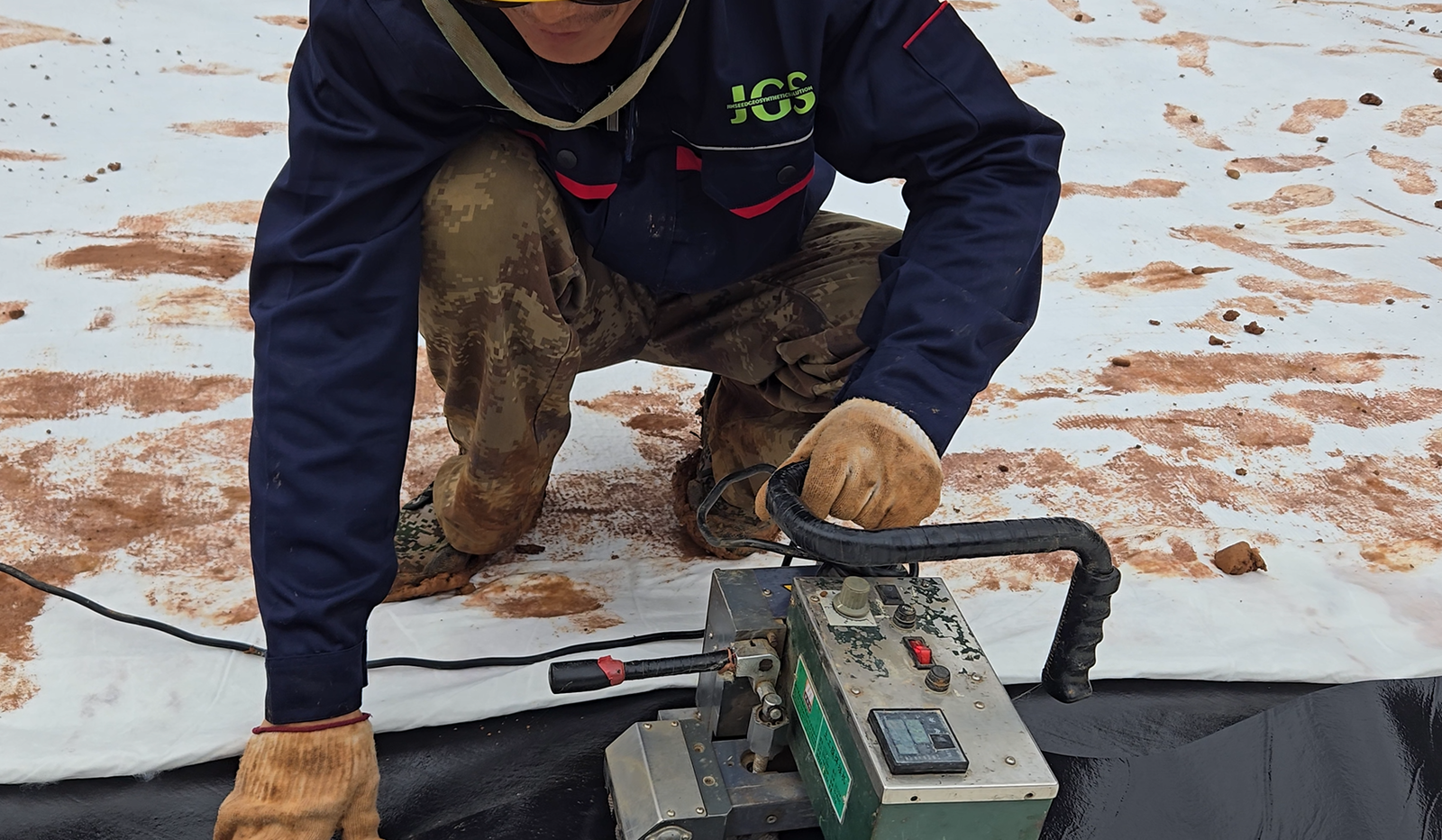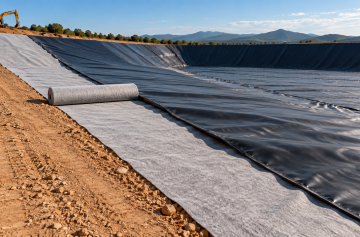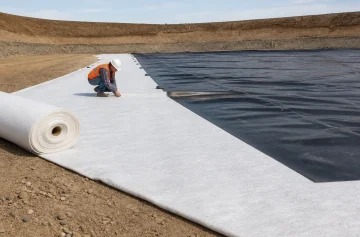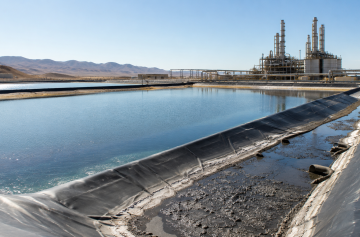
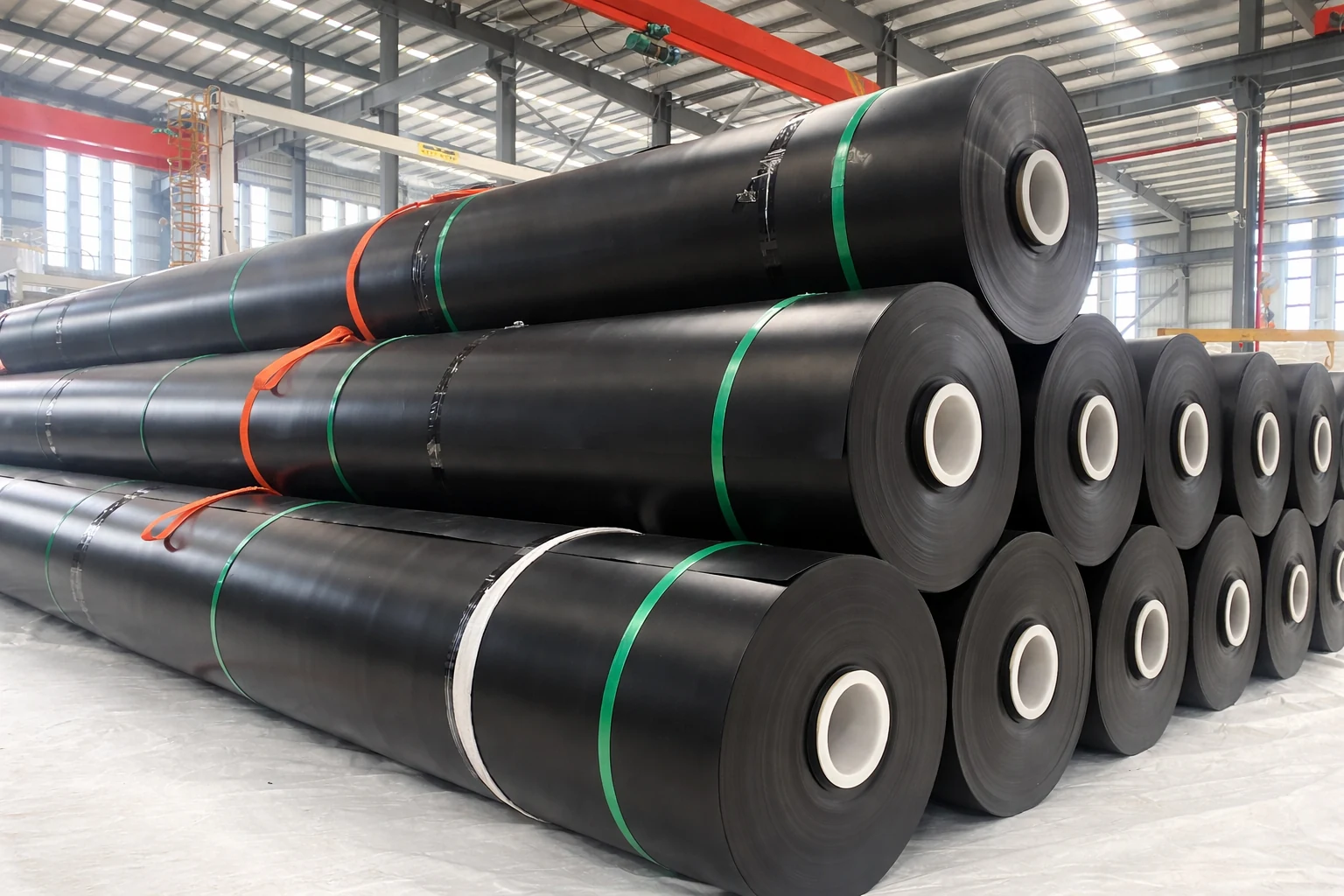
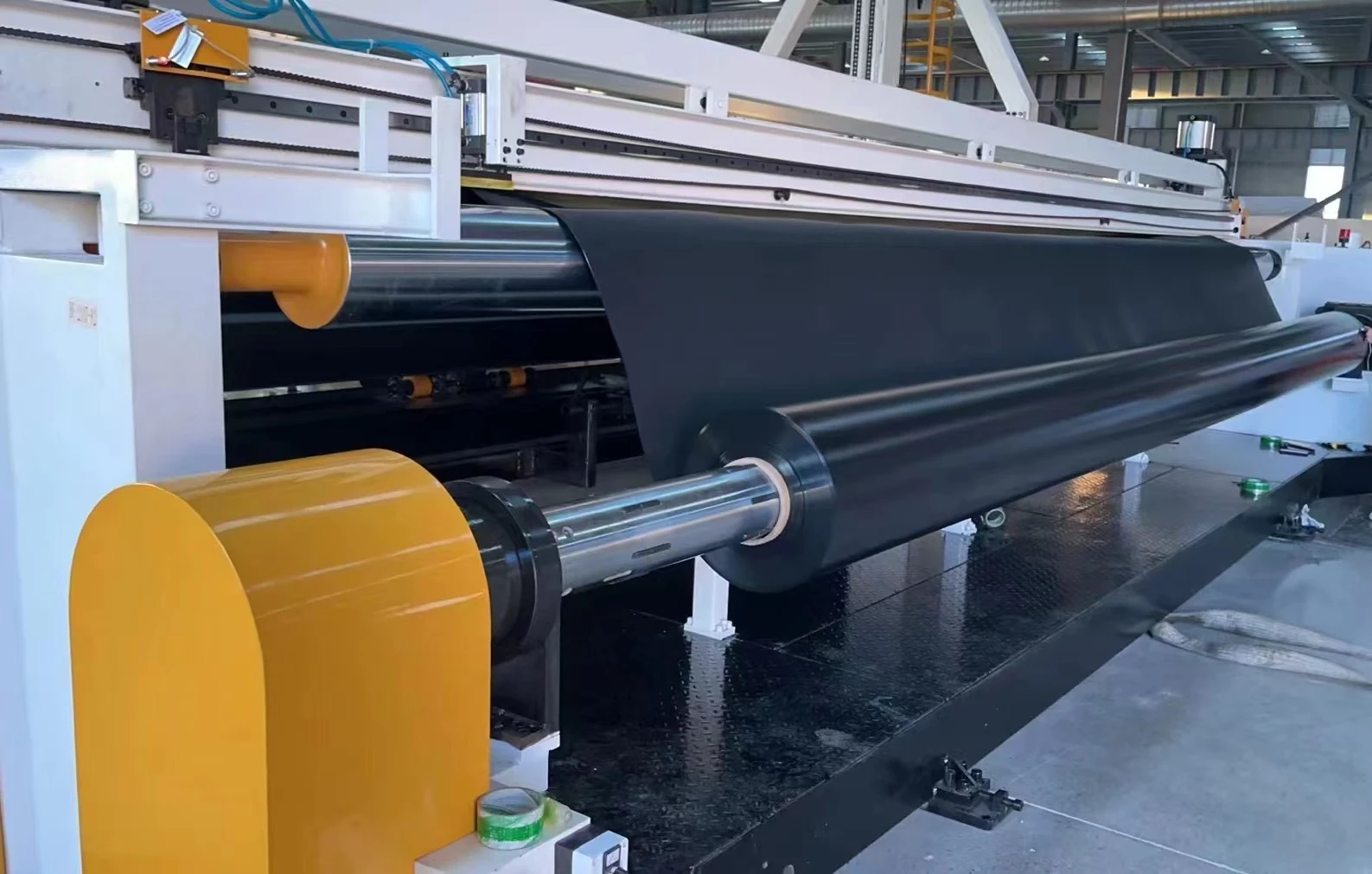
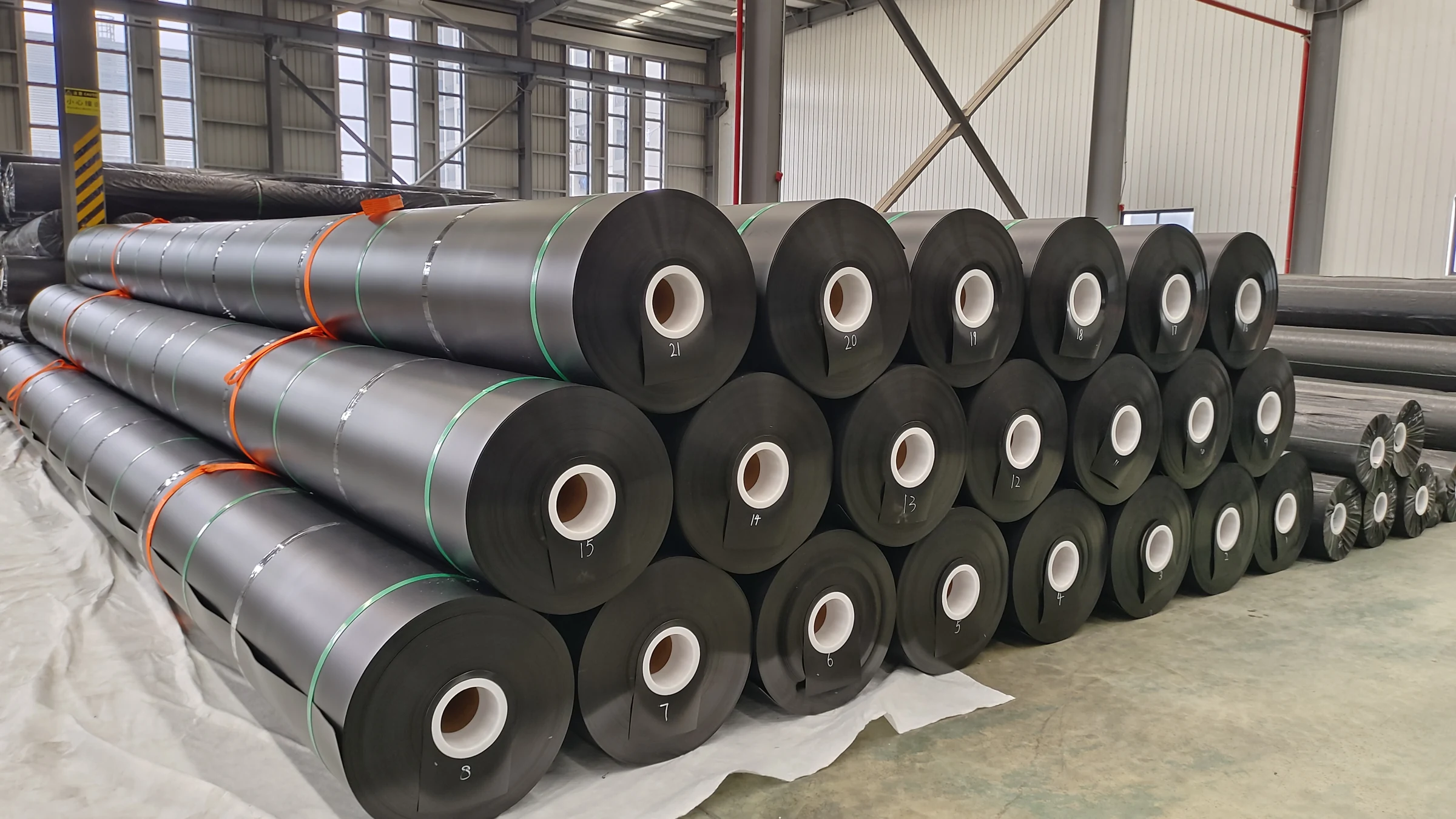
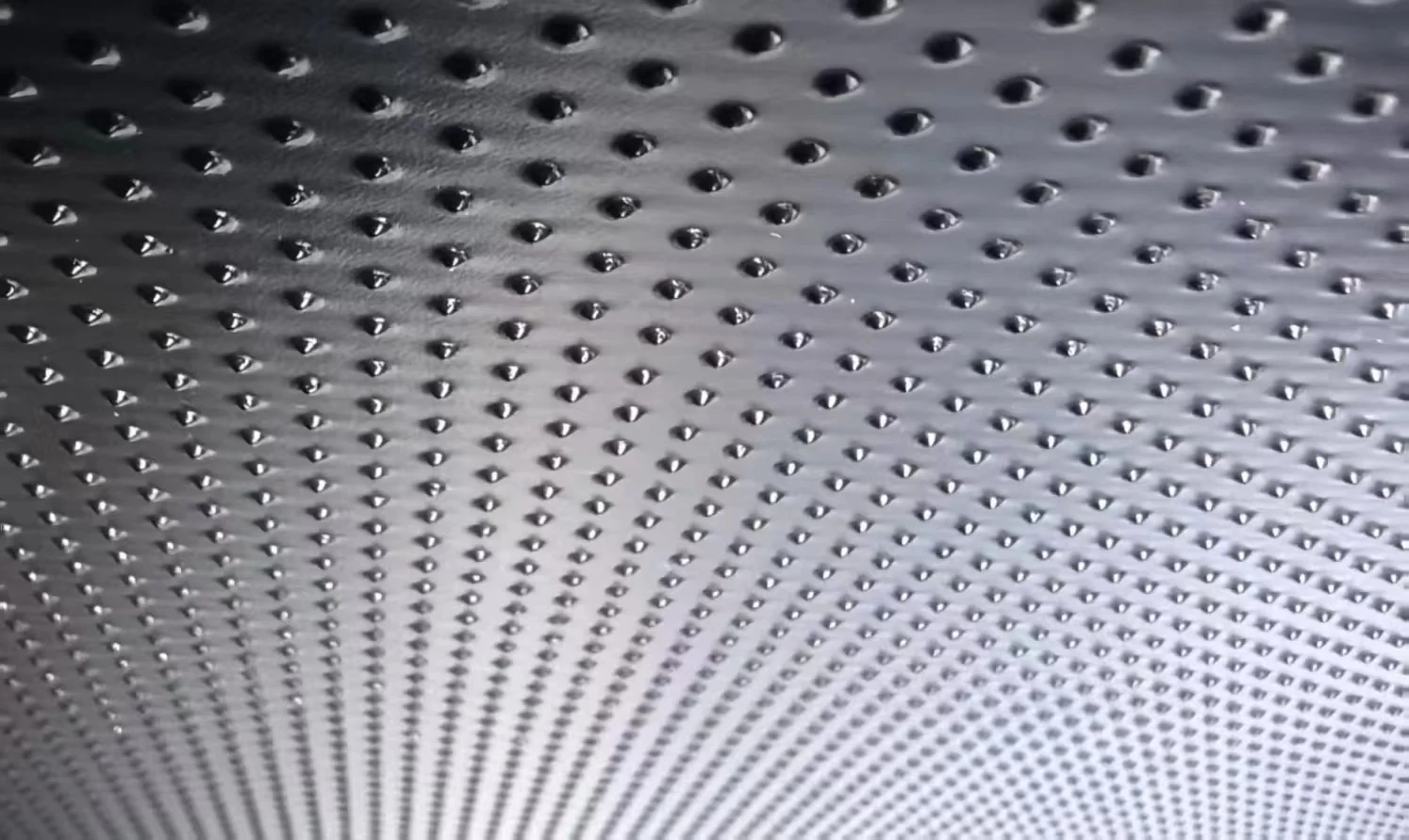
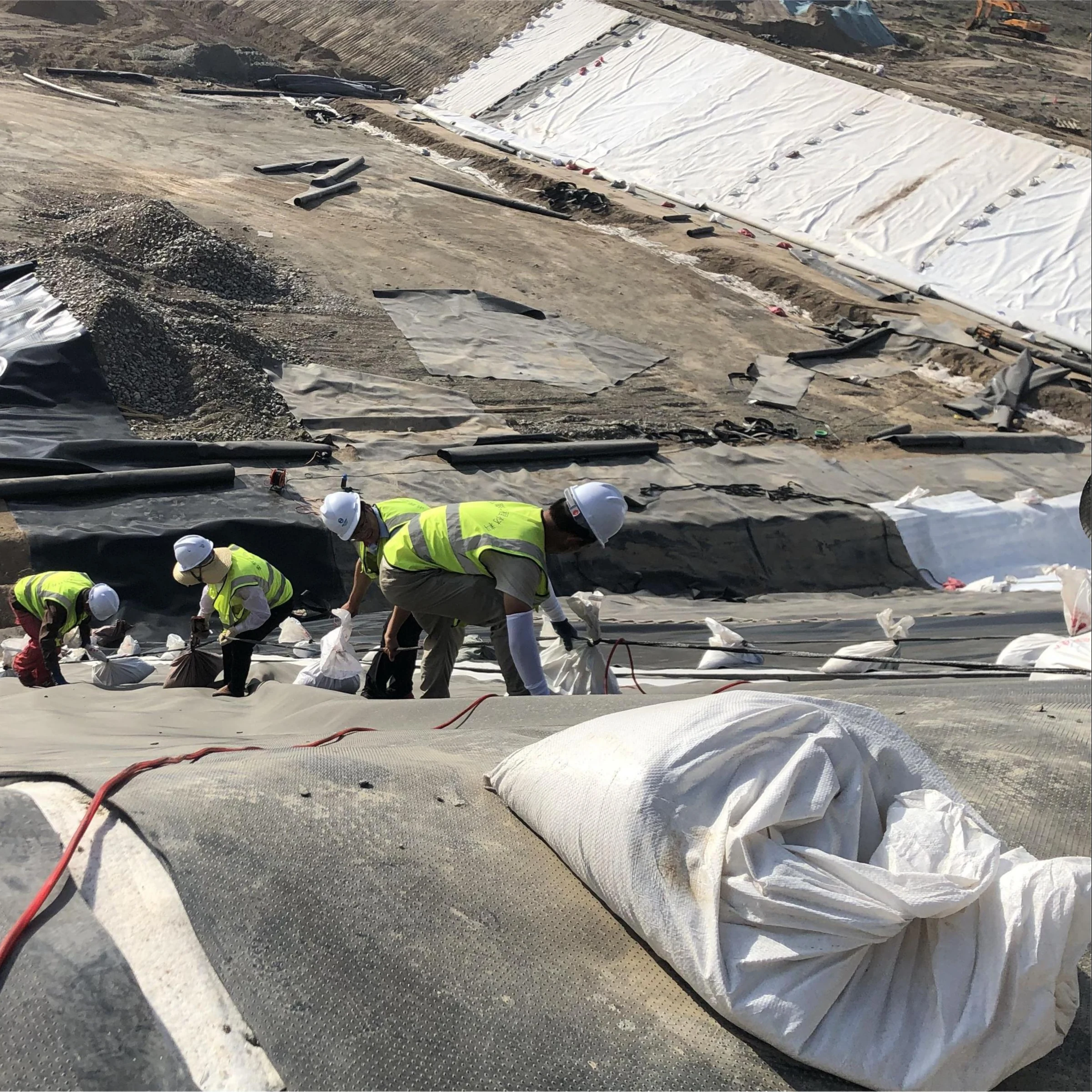
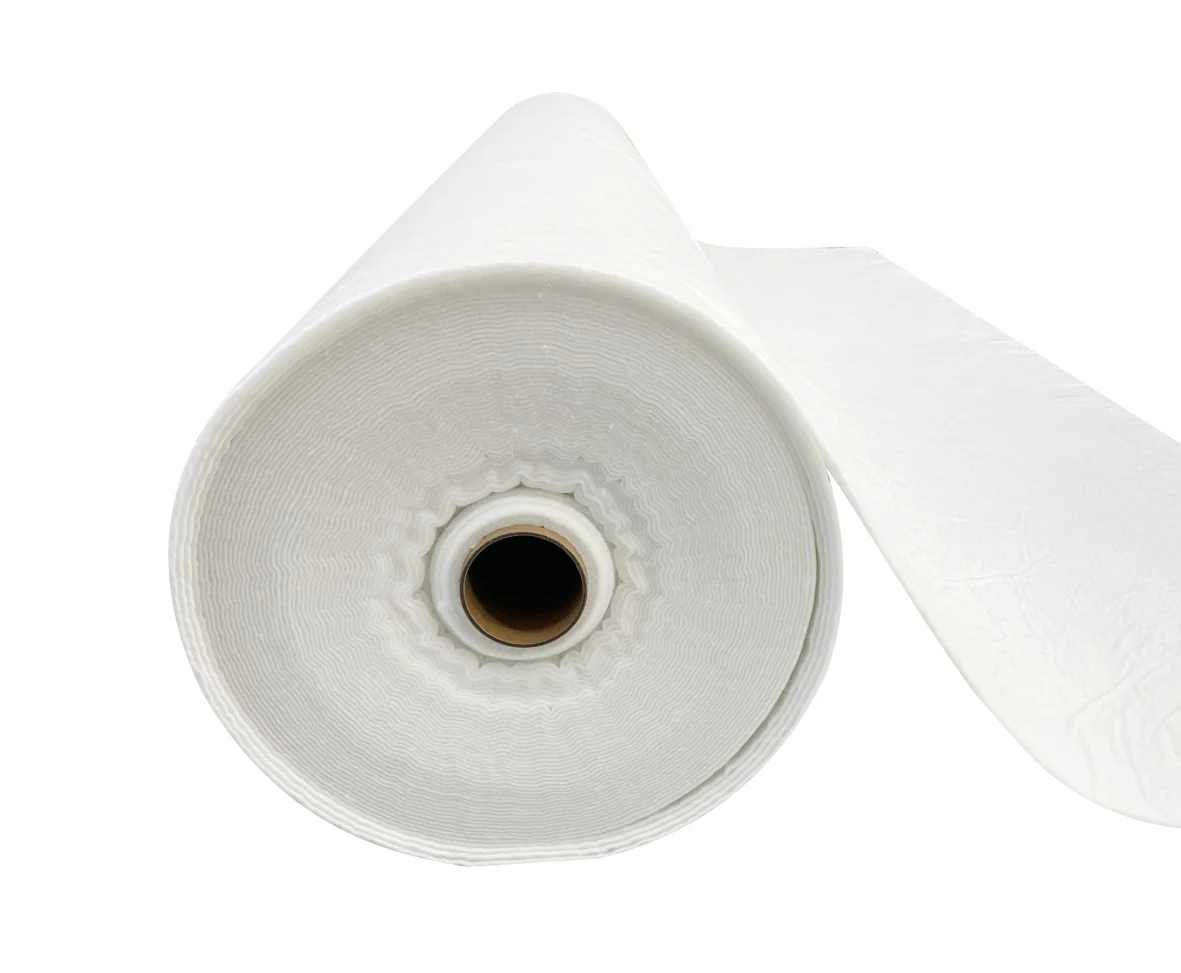
Geotextiles and weed barrier fabrics serve different purposes. Geotextiles typically range from 100–300 g/m², offer tensile strength of ≥8 kN/m, and provide strong water permeability, making them suitable for load-bearing applications such as gravel road bases and driveways.
Weed barrier fabrics are usually 80–120 g/m², focus on weed suppression rates of ≥90%, and allow water through, but offer much weaker load-bearing performance, so they are better suited to flower beds and general landscape weed control. If structural stability is the priority, choose geotextile. If the goal is simply weed suppression, choose weed barrier fabric.

Drainage and Water Permeability
Non-woven geotextile (needle-punched polypropylene) has a porosity of over 70% and a water flow rate of 100 to 150 GPM/sq.ft, which is why it is commonly used in French drains and in driveway base filtration in California. Woven weed barrier fabric, usually made from high-density slit-film polypropylene, has a porosity below 10% and a flow rate limited to 5 to 15 GPM/sq.ft. It suppresses weeds by blocking sunlight with dense polypropylene strips. The two materials differ by a factor of 10 in permittivity, and that difference directly affects subsurface moisture levels and the likelihood of surface ponding in hardscape areas.
Permeability Comparison
Seattle gets about 38 inches of rain a year. Assume you have a 100-square-foot flower bed in your backyard. In a 15-minute rain shower, that space can receive roughly 60 gallons of water, about the same as filling a standard bathtub.
Now place black woven weed barrier fabric at the bottom of that bed. It feels a lot like the woven plastic sacks used for 50-pound bags of rice or fertilizer. It is only 3 to 5 mil thick, about as thin as a durable kitchen trash bag. The plastic itself does not let water pass through. The only drainage comes from the tiny gaps where the plastic strips cross. Across the entire sheet, less than 5% of the surface is actually open to water flow.
At full capacity, 100 square feet of weed barrier fabric can drain no more than about 10 gallons per minute. In the same rain shower, the remaining 50 gallons stay trapped on the surface. That water carries fine sediment toward those tiny openings. Soil particles may be as small as 0.05 mm. In less than a week, mud in the flower bed can seal off that entire 5% of open drainage area.
At that point, the fabric effectively turns into a waterproof raincoat. A dirty puddle about 2 inches deep begins to form on the surface. If azalea roots sit in 60°F stagnant water for more than three days, the leaves will begin to yellow heavily and drop. Replace that underlayment with non-woven geotextile instead. It feels more like a dense winter felt. Its thickness reaches 80 to 120 mil, roughly the same as stacking two bank cards together.
Manufacturers use barbed steel needles to repeatedly entangle short polypropylene fibers. The interior looks loose and fluffy, with 70% to 80% of the total volume made up of empty space. Water drops pass through it the way they would move through a coarse sponge. Water does not need to find specific openings. Over the same 100-square-foot area, it can move more than 10,000 gallons per minute into the ground. Pour a bathtub of water onto it, and it disappears in under a second.
When muddy water flows through non-woven geotextile, fine sediment gets trapped inside the thick three-dimensional fiber matrix. The fabric “takes in” a fair amount of sediment, occupying about 15% of its internal volume. The remaining 85% of open space is still more than enough to keep water moving freely. Even when a buried drain in Florida is excavated after five years, the non-woven wrap may be coated in soil and still drain stormwater effectively.
In Oregon yards, 4-inch corrugated plastic drainpipe is often buried underground to remove excess water. The pipe is usually wrapped in fabric to keep sediment from filling the line. If you wrap it in thin woven weed barrier and bury it, groundwater carrying silt will keep pressing mud against the plastic sheet. After 14 days, the outside can develop a hardened mud cake about 3 mm thick.
The groundwater level is then forced upward by 18 inches. The surrounding lawn soil turns into a soft bog, and the entire drainage system becomes little more than a useless underground ornament. Replace that wrap with a non-woven geotextile weighing about 4 oz per square yard. Coarse sand stays outside the fabric and interlocks into a natural filter bridge, while ultrafine particles smaller than 0.075 mm pass through the felt with the water.
In suburban Texas, gravel driveways are common. A 4,000-pound pickup truck may drive across them regularly. The tires force sharp gravel directly against the underlayment. Under heavy pressure, thin weed barrier deforms, its already limited drainage openings distort, and permeability can fall to one-tenth of its normal level. Water then runs toward the low side of the driveway, carrying hundreds of pounds of expensive gravel into the street.
By contrast, a thick 6 oz non-woven geotextile placed beneath the gravel protects its internal drainage pathways with its cushioning thickness. Even with several thousand pounds of wheel load passing over it, subsurface drainage can still remain in the range of hundreds of gallons per minute. The driveway stays dry, and not a single stone shifts out of place.
Homes built on slopes in Colorado often use brick retaining walls in the yard. Behind those walls sit dozens of tons of soil. In wet weather, each cubic yard of saturated soil can hold nearly 50 gallons of water. If that water cannot drain out, it creates major hydrostatic pressure against the concrete blocks in front. A wall can start leaning outward by 2 inches in less than three months, creating a real collapse risk.
Install non-woven geotextile directly behind the retaining wall, and water moves through the tangled fiber network into the drainpipe at the base of the wall in about 10 minutes. With the water pressure gone, the wall remains upright year after year.
Here is a simple rain-day comparison for a 100-square-foot flower bed:
| Site Performance in Wet Conditions | Thin Woven Weed Barrier | Thick Felt-Like Non-Woven Geotextile |
|---|---|---|
| Maximum drainage in one minute | About 10 gallons | More than 10,000 gallons |
| Internal void space | Less than 5% | 70%–80% |
| Time to clog with muddy water | 7–14 days | Still functional after years underground |
| Flower bed condition after heavy rain | 2-inch dirty standing water | Water disappears almost instantly; surface stays dry |
Based on that comparison, these three buying rules are practical:
- If your yard tends to hold water and you need buried drainpipe, choose thick felt-like non-woven fabric that is at least 80 mil thick.
- If the surface is a gravel driveway that regularly carries heavy pickup trucks, use a 6 oz heavy non-woven fabric.
- If your yard is already very dry and you only want to stop weeds from growing between stones, a cheap thin woven weed barrier is enough.
Resistance to Silt Clogging
In the lab, technicians use calibrated glass beads to estimate pore size. The actual pore openings in non-woven polypropylene usually range from 0.15 mm to 0.21 mm. Sediment roughly equivalent to particles retained between U.S. No. 70 and No. 100 sieves stays outside the felt. The material is made by repeatedly entangling 20 to 40 micron staple fibers with barbed needles, creating a three-dimensional labyrinth 80 to 120 mil thick.
When muddy water enters the fabric, fine particles lodge deep inside the loose fiber network. More than 70% of the volume remains open to water flow. In a pressurized test where water is forced through a cylinder packed with fine sand for 300 hours, the non-woven fabric may fill about 15% of its volume with sediment while still maintaining a flow rate of 80 gallons per minute per square foot.
Woven weed barrier, on the other hand, is made by crossing high-density plastic strips at 90 degrees into a flat grid only 3 to 5 mil thick. Less than 5% of its surface area is open to water. In Houston-area soils, clay particles may be smaller than 0.002 mm. Rainwater carries this fine clay onto the surface of the plastic fabric, and in less than two weeks it can fill every 0.05 mm gap.
A hardened mud crust 2 to 3 mm thick then forms on the surface. Instrument readings for water flow collapse from an initial 15 gallons to just 0.5 gallons. Water builds up on top of the mud layer, and the flower bed develops standing water about 5 cm deep.
| Material and Clogging Condition | Initial Flow (GPM/sq.ft) | Flow After Mud Clogging | Where the Sediment Accumulates |
|---|---|---|---|
| Non-woven felt | 80+ | Stays around 80 | In roughly 15% of internal void space |
| Flat woven fabric | 15 | Drops to 0.5 | 100% on the surface as a hardened layer |
Pennsylvania gets about 40 inches of rain a year. If a 4-inch perforated drainpipe is buried underground and wrapped in flat woven weed barrier, mud can coat the outside so completely that by the second year, not a drop of water reaches the pipe. Replace that wrap with non-woven geotextile weighing about 4 oz per square yard and rebury it.
Sand coarser than 0.2 mm interlocks outside the felt and forms a natural soil bridge. This filter bridge stabilizes after 14 to 21 days underground. A 3 to 5 mm soil zone just outside the fabric then governs the filtration behavior. Ultra-fine clay particles smaller than 0.075 mm move through the tortuous path and wash into the drain line.
- Filter bridge stabilization period: 14–21 days
- Ultrafine particles allowed to pass: <0.075 mm
- Sediment retention range: 0.075–0.2 mm
With the surface pore size holding around 0.15 mm, infiltration can reach 110 gallons per square foot, keeping groundwater from rising too far. Water stays about 18 inches below the frost line. Hydrostatic pressure from rising groundwater may otherwise build to 12 inches. Fine stone dust under pressure becomes wedged into the tiny openings of woven weed barrier so tightly that even a pressure washer restores less than 10% of its drainage capacity.
The U.S. Army Corps of Engineers has excavated buried systems after 20 years and found that highway drainpipes wrapped in 8 oz non-woven fabric still retained about 60% of their original flow capacity. Once the internal fibers are filled with sediment, they stop attracting additional fines. By contrast, weed barrier buried for 36 months beneath coarse gravel driveways can have its gaps completely packed by 0.05 mm sand, with permeability dropping to 0.01 sec⁻¹.
Subsurface Moisture Vapor Evaporation
Black woven weed barrier installed in flower beds in Austin, Texas may sit for years in temperatures around 95°F. It is tightly woven from high-density polypropylene slit-film strips, usually 3 to 5 mil thick, with an air-permeable opening ratio below 5%.
Under direct sun, the black plastic surface can quickly exceed 120°F. The soil immediately beneath it becomes a sealed micro-greenhouse. Water already present in the soil heats up and rises as vapor.
That vapor then hits the underside of the low-porosity plastic and has nowhere to go. Roughly 95% of the evaporated moisture is physically blocked and condenses back into droplets that fall into the soil again. The shallow soil layer can reach saturation within two days.
Plant roots sitting in 100°F hot, wet soil for long periods are highly prone to blackening and rot. Fungi and anaerobic bacteria reproduce at roughly double their normal rate under those warm, airless conditions.
Here are typical performance figures for woven weed barrier in that kind of environment:
- Peak surface soil temperature: 120–130°F
- Moisture vapor blockage rate: 90%–95%
- Duration of oversaturated soil conditions: 48–72 hours
- Depth of most active anaerobic bacterial growth: 0–4 inches below grade
Now shift to shrub-covered slopes in Portland, Oregon. Landscapers there may lay 80 mil non-woven geotextile over backfill. It is a three-dimensional structure made from needle-punched polypropylene staple fibers.
Even the day after a 2-inch storm, the soil surface can remain free of standing water. The internal porosity reaches an impressive 70% to 80%. As moisture in the soil turns to vapor, it passes freely through the interconnected fiber voids.
That steady vapor movement carries away excess heat. Soil beneath the geotextile typically stays 10 to 15°F cooler than exposed ground in direct sun. Roots naturally grow downward into a soil profile with stable temperature and available oxygen.
During a continuous three-week drought, the three-dimensional thickness of the non-woven fabric also acts as a thermal buffer. Morning dew can wick through the fibers into the upper 1 to 2 inches of soil, replenishing a small amount of moisture lost to evaporation.
A lab comparison using water vapor transmission rate (WVTR) makes the difference easier to quantify:
| Material Type | Thickness (mil) | WVTR (g/m²/24h) | Soil Ventilation Condition |
|---|---|---|---|
| Woven weed barrier | 3–5 | 50–100 | Extremely stifled |
| Non-woven geotextile | 80–120 | 1200–1500 | Freely breathable |
This difference in vapor movement is especially obvious around newly planted trees. In some California orchards, woven weed barrier is placed around the root zone of saplings. Fine feeder roots then start growing upward toward the surface in search of air.
Those roots press tightly against the underside of the plastic and form a tangled mat. If a sudden frost hits, or if temperatures rise above 105°F, those shallow roots can dry out and die in just a few hours.
Where non-woven geotextile is used instead, soil oxygen remains in a healthy 18% to 20% range. That level of oxygen encourages earthworms and other soil organisms to remain active in the upper 6-inch working zone.
A non-woven geotextile weighing about 4 oz per square yard has a pore size of roughly 0.15 mm. The openings are small enough to allow water molecules and gases to move freely, while larger weed seeds cannot drop through into the soil.
Typical subsurface conditions after installing non-woven geotextile include:
- Water vapor transmission rate (WVTR): >1200 g/m²/24h
- Soil oxygen maintained at: 18%–20%
- Subsurface temperature reduction: 10–15°F
- Earthworm activity depth: 4–6 inches below grade
- Fiber pore size: 0.15–0.21 mm
In Florida coastal yards with sandy, windblown conditions, poor breathability over sandy soil leads to rapid compaction and sour odors. Water cannot escape, and heat accelerates fermentation-like conditions, causing major shifts in soil pH.
Soil that started near neutral can drop below pH 5.5 after just two weeks of oxygen-starved fermentation. Plants that prefer alkaline soil may begin yellowing and dropping leaves within one week under those conditions.
Replace the airtight woven fabric with needle-punched non-woven geotextile, and after three months of renewed exposure to fresh air, soil pH can gradually recover to around 6.5. Subsurface moisture vapor movement also returns to more than 85% of what would occur in naturally exposed soil.
In Phoenix xeriscape projects, this physical behavior of non-woven fabric is often used to advantage. Combined with a 3-inch gravel surface layer, it keeps subsurface moisture loss in a far more stable range.
The soil does not dry out in a single day the way bare ground does, and it does not suffocate roots the way plastic sheet does. Running drip irrigation for 15 minutes per week can be enough to support healthy desert plant growth for roughly half a month.
Durability and Load-Bearing
The difference in compression tolerance between geotextile and weed barrier fabric is measured in multiples, not margins. Woven geotextiles made from high-density polypropylene can reach 200 to 350 lbs in grab tensile strength under ASTM D4632, allowing them to withstand vehicle traffic and direct abrasion from 2-inch aggregate without failure. Weed barrier fabrics are often ordinary spunbond plastic at 1.5 to 3 oz/yd², with tensile strength in the 30 to 50 lb range, suitable only under lightweight pine bark. If weed barrier is mistakenly used beneath hardscape loads above 100 psf, tearing becomes highly likely.
Grab Tensile Strength and Puncture Resistance
An 8,000-pound Bobcat T595 skid-steer rolls into a backyard job site in Ohio. Its rubber tracks spin in place in the mud, and the torque drags hard on the underlayment below. This is the kind of scenario represented by ASTM D4632 grab tensile strength.
On the section laid with 6 oz woven geotextile, the interlaced polypropylene filament grid does not move. It takes a full 315 lbs of pull force to tear it. That is enough to stand up to the kind of abuse a skid-steer can dish out.
Move to the next section, where a 1.5 oz black weed barrier fabric is installed, and the moment the tracks turn, the surface gives off a sharp snap. It can handle only about 30 lbs of pull force before ripping open in a 4-foot tear, exposing the yellow clay below.
Tearing is one failure mode. Being punched through by stone is another. Engineers look to ASTM D6241 CBR puncture strength, which uses a flat-ended metal plunger to drive through the material until rupture.
Clean 3/4-inch crushed stone—known in the U.S. as No. 57 stone—has edges sharp as broken glass. A dump truck drops two tons of it directly onto the underlayment.
An 8 oz non-woven fabric behaves like a dense, heavy felt. When sharp stone hits it, the fabric yields with about 50% elongation, absorbing the impact, and reaches puncture resistance as high as 700 lbs. The sharp edges cannot penetrate the thick fiber mass.
Ordinary spunbond polypropylene weed barrier performs badly under the same stone. Its puncture resistance is usually under 60 lbs. The impact of falling stone plus worker foot traffic quickly leaves it peppered with holes.
That is why experienced landscape contractors often keep a reference chart on hand. Different materials have very different tolerances depending on aggregate size.
| Cover Material and Aggregate Size | Recommended Fabric Weight | Grab Tensile (ASTM D4632) | Puncture Strength (ASTM D6241) |
|---|---|---|---|
| Fine sand or soil (<0.1 in) | 1.5–2 oz weed barrier | 30–45 lbs | 40–60 lbs |
| Pea gravel (0.375 in) | 3–4 oz non-woven | 100–120 lbs | 250–300 lbs |
| No. 57 stone (0.75–1.5 in) | 6–8 oz woven/non-woven | 200–300 lbs | 450–700 lbs |
| Railroad ballast or riprap (3–6 in) | 10–12 oz high-strength woven | 350+ lbs | 900+ lbs |
Heavy compaction equipment can amplify this damage more than tenfold. After No. 57 stone is spread, workers may run a 400-pound reversible plate compactor over it. Its steel base can deliver 4,000 vibrations per minute and up to 5,000 lbs of impact force into the ground.
Under that vibration, stones grind and press against one another, and the sharp edges cut aggressively into the layer below. This is where the exceptional puncture resistance of 8 oz woven geotextile matters. Its dense woven structure prevents each stone from driving downward.
If an inexperienced homeowner places weed barrier beneath a driveway instead, the base can fail after the very first pass with the plate compactor. The fragile spunbond fibers are shredded into countless plastic fragments under the combined attack of 5,000 lbs of compaction force and sharp aggregate, and the material loses its ability to separate soil from stone.
Root systems are another serious test of material strength. Texas is full of stubborn nutsedge. Its underground tubers produce hard, needle-like buds that push relentlessly upward.
These nutsedge shoots can generate more than 40 lbs of upward puncture force. In 1.5 oz or even 3 oz weed barrier, where the openings are sparse and the structure weak, the shoots can puncture straight through. A yard covered with weed barrier can still be full of weeds just a few months later.
- Engineering-grade non-woven fabric thicker than 0.15 inch creates a real physical barrier.
- The dense interlocked polyester fibers leave nutsedge shoots with no clear path through.
- Fast-spreading Bermuda grass runners cannot tear a fabric rated at 200 lbs.
- Against highly aggressive underground rhizomes such as bamboo, ordinary weed barrier offers essentially no defense.
Foot traffic and hand tools also test the limits of these materials. A 200-pound gardener walking around a flower bed in heavy-tread work boots can easily catch and tear 2 oz weed barrier laid under a thin bark layer.
During spring cultivation, the metal edge of a shovel is almost guaranteed to strike the fabric. Even a modest downward cut from a standard shovel overwhelms a shear resistance of only around 30 lbs, slicing the weed barrier in two.
By contrast, a 4.5 oz non-woven geotextile placed behind a retaining wall can withstand incidental contact from a shovel during backfilling. With trapezoid tear strength as high as 130 lbs under ASTM D4533, a shovel edge may leave only a white scuff mark, with no real damage to the fabric.
Wildlife can be just as destructive as a shovel. In Florida, nine-banded armadillos often wander into yards at night looking for insects. Their sharp claws can tear through 2 inches of pine needles and rake directly across 1.5 oz weed barrier.
The weed barrier’s limited tensile and puncture strength gives it little chance. It tears apart quickly. Non-woven geotextile, by contrast, has a filament structure that behaves more like tough leather. The claws often catch the fibers and spring away without ripping a large hole.
Base installation standards clearly tie aggregate cover thickness to fabric strength. In Colorado, 4 inches of rounded river rock can be safely installed over 3.5 oz non-woven fabric for pedestrian traffic, with puncture resistance just meeting the threshold at 150 lbs.
Switch that stone to angular crushed basalt and even a walkway may require engineers to step up to a 5 oz product rated for 180 lbs puncture strength. That difference of a few dozen pounds can determine whether the gravel surface remains stable after two years or turns into a muddy mix with the soil below.
Load Compatibility
Imagine driving your Ford F-150 home. One side of the truck sits on a gravel driveway, putting about 1,200 lbs on a single wheel. The moment you turn the steering wheel, the tire twists hard against the stone surface.
If a heavy woven geotextile with grab strength above 200 lbs is installed underneath, it can distribute that 35 PSI pressure effectively. Even with 3/4-inch crushed stone grinding above it, the fabric holds its shape.
Replace that with ordinary landscape weed barrier—often only 1.5 oz—and the moment the truck rolls over it, the thin plastic layer is punctured by the edges of the gravel in hundreds or thousands of places.
After a few storms, mud begins pumping up through those holes, and a driveway that cost serious money to build can develop ruts several inches deep in less than a month.
- A 4 to 6 inch gravel layer is the minimum condition for geotextile to perform properly.
- At driveway turns, woven fabric should overlap by 18 inches to reduce the risk of tearing.
- Under pickup truck wheel loads, weed barrier often lasts no more than two weeks.
A backyard retaining wall about 4 feet high behaves differently. Behind it are tons of clean stone pressing continuously against the separation layer.
A 4 oz non-woven geotextile has enough flexibility to conform to the wall like a durable filter screen. It keeps sediment out while allowing clean water to flow into a 4-inch perforated corrugated drainpipe.
If you save money by using weed barrier instead, just one or two heavy storms can generate enough water pressure to rupture the tiny pores in the fabric. Sharp stone edges then cut through the weak polypropylene fibers with ease.
Once sediment gets inside, it is only a matter of time before the entire French drain clogs, and the labor cost of digging it out and rebuilding it is substantial.
- Never use thin weed barrier behind walls taller than 3 feet.
- The stretch of non-woven fabric helps it accommodate gradual settlement in the backfill.
- When placing stone during construction, keep the drop height under 3 feet whenever possible.
Weed barrier does have a proper role: planting zones without heavy loading. A good example is xeriscape planting areas in California backyards where the surface is covered only with a few inches of cedar mulch.
One cubic yard of pine bark weighs only about 400 lbs, so spread over a surface it places very little pressure on the layer below. In that setting, low-cost weed barrier in the 1.5 to 3 oz range performs well enough.
Even if you push an 80-pound wheelbarrow through the bed, the soil underneath provides enough cushioning for the rubber wheel that the fabric usually does not puncture.
Commercial landscapes covered with river rock are different. Smooth 1-inch river stone may not cut the fabric, but the accumulated weight is significant, so U.S. landscape installers often switch to 5 oz non-woven geotextile underneath to reduce settlement.
- Mulch areas with 2 to 3 inches of wood chips are the ideal setting for weed barrier.
- For walking paths finished with pea gravel, step up to fabric above 3 oz.
- Do not drag heavy planters with metal bases directly across weed barrier.
Aging and Degradation
Summer sun in Arizona can bake exposed plastic at the ground surface. In many U.S. backyards, 1.5 oz spunbond weed barrier left exposed under UV index levels above 10 has a very short service life.
The polypropylene molecular chains break down quickly under the combined stress of heat and UV. A material expected to block 99% of sunlight for weed suppression may start turning white and brittle in just three to five months.
Commercial-grade weed barrier advertised with a 2% carbon black UV-resistant coating can still see grab tensile strength fall from 50 lbs to under 15 lbs after 18 months of full, unshaded exposure in Florida.
Lightly scratch the surface with a fingernail and the once-smooth sheet can crumble into flakes the size of nail clippings. A gust of wind then carries those tiny plastic fragments into the soil.
A 3-inch mulch layer may extend the life somewhat, but the organic acids produced as the mulch decomposes, combined with frequent watering and warm humidity, continue attacking the plastic film below, which is often less than 1 mm thick.
Engineering-grade geotextiles live a very different life. Whether you use 4 oz non-woven or 8 oz woven geotextile, installation standards typically require burial at least 6 to 12 inches below grade.
Once shielded from sunlight, the degradation clock for polyester or polypropylene slows dramatically. Federal Highway Administration data is clear: geotextiles buried in ordinary soil pH conditions can still retain more than 85% of their tensile strength after 50 years.
In acidic Texas soils with pH around 5.5, 4.5 oz polyester non-woven geotextile buried in the base for 20 years may show no measurable swelling reaction in the fibers.
Most underground challenges come from chemical exposure and fungal attack, but petroleum-derived polymers are highly inert. Soil may contain millions of active microbes per gram, yet polypropylene fibers are essentially inedible to them. The microbes cannot break them down, so they digest nearby roots instead.
- Nylon trimmer line striking an edge at 7,000 rpm can instantly shred exposed weed barrier.
- A gopher chewing on a 1.5 oz thin film can destroy it in under 5 seconds.
- Beneath a 6-inch asphalt pavement section, woven geotextile can sit for years at 140°F without thermal degradation.
- High concentrations of nitrogen, phosphorus, and potassium salts from fertilizer leaching can accelerate coating loss in cheap weed barrier.
On renovation sites in Colorado, non-woven geotextile laid ten years earlier under No. 2 stone may be pulled up by an excavator, caked in mud, washed off with a pressure washer, and still maintain a pore size consistent with a U.S. No. 70 sieve filtration standard.
By comparison, ordinary weed barrier in a community flower bed may be badly deteriorated after just two years. Dogs dig at it, squirrels bury acorns in it, and a dry rose stem stepped on by accident can puncture the brittle surface.
Once a small tear just 2 inches wide forms, aggressive Bermuda grass can grow toward the light through that opening. As the roots expand around the tear, a crack once the size of a coin can widen until it is as large as a plate.
Minnesota winters are severe, with nighttime temperatures dropping to -20°F. Snow melts and refreezes at the surface, and because water expands by 9% when it freezes, major frost-heave forces act on exposed coverings.
Weed barrier installed near the surface becomes rigid in the cold. Walk over it, or roll a cart carrying 50 lbs of de-icing salt across it, and the stiff plastic fibers may snap at the woven junctions with an audible crack.
Geotextiles buried 36 inches below the frost line are not exposed to those extreme surface temperature swings. With elongation at break as high as 50%, they can flex with minor frost movement in the base.
When spring thaw arrives, the surface turns to mud. The weed barrier is already burdened by a winter’s worth of dead leaves and decomposed sludge, adding even more load to an already fragile sheet.
Many homeowners use a steel rake to clear oak leaves from flower beds. Even if they are careful, the teeth inevitably break hundreds or thousands of spunbond fibers once the fabric has been weathered for just half a year.
- Glyphosate residue on weed barrier can trigger chemical yellowing after 120 hours of sunlight exposure.
- Non-woven geotextile at 0.25 inch thickness can effectively resist formic acid attack from subterranean termites.
- Each severe cold event can impose a permanent 8% to 10% loss in weed barrier tensile strength.
- In regions where UV index stays above 8 for much of the year, exposed spunbond plastic may have a service life of less than 8 months.
Polypropylene dislikes long-term UV exposure, while polyester does poorly in strongly alkaline water. In some parts of Nevada, soil pH can exceed 8.5, and ordinary polyester weed barrier buried there may hydrolyze within just a few years.
Experienced contractors do not hesitate in alkaline conditions; they switch to 100% polypropylene geotextile. Soil pH has minimal effect on polypropylene, and it can remain stable underground for half a century without material change.
From a long-term ownership standpoint, repeatedly pulling back mulch every few years to replace weed barrier often costs more in labor than the original fabric itself. A geotextile buried in a heavy-duty base will often outlast the asphalt shingles on the house above it, provided there is no major geotechnical failure.
Weed Suppression Effectiveness
Woven Weed Barrier is tightly woven from polypropylene flat yarns, with UV blockage of 98% to 99.5%, a thickness of 3 to 5 mil, and puncture resistance above 100 lbs. It suppresses perennial weeds by cutting off photosynthesis. Non-woven Geotextile has a porosity of 50% to 70% and allows more than 15% of UV light to pass through, so weed seeds can germinate easily within the needle-punched fiber voids. In the first year, weed growth in areas using weed barrier can remain below 2%, while areas using geotextile can see weed breakthrough rates as high as 40% within 6 to 12 months.
UV Blocking
Weed seed germination is extremely sensitive to visible light in the 400 to 700 nm range. Purslane seeds buried 1 inch below the surface can activate their light-sensitive pigments within a week after receiving just 0.1% sunlight. Weed seeds that have remained dormant for five years can begin consuming their stored starch reserves within hours of exposure to even very weak light.
A 5 oz high-density woven polypropylene weed barrier typically contains 2% to 3% industrial carbon black added during extrusion. The black flat yarns are interwoven at a density of 12 × 12 strands per square inch, creating a light-blocking layer about 3.5 mil thick. Spectrophotometer testing shows that total visible and UV blockage remains stable at 98.5% to 99.5%.
At a high-altitude test site in Denver, Colorado, noon surface light intensity can reach 10,000 foot-candles. Under the weed barrier, probe readings may fall below 15 foot-candles. For light-loving broadleaf weeds, that is essentially darkness—far below what is needed for chlorophyll production.
- Blocks 400–700 nm photosynthetically active radiation
- Reduces subsurface light to within 15 foot-candles
- Suppresses the light-response trigger in broadleaf weeds such as purslane
- Polypropylene with 3% carbon black has extremely high light absorption
Field bindweed sends slender white rhizomes through the soil in search of light. When the growing tip hits the cold, dark underside of the weed barrier, auxin distribution inside the shoot becomes disrupted after 14 days in darkness. Without glucose from photosynthesis, weeds that have already consumed 80% of the energy stored in their underground roots begin yellowing and dying by the third week.
The light transmission profile of so-called heavy-duty 8 oz non-woven geotextile is entirely different. Needle-punched polyester staple fibers leave behind many tiny capillary pores. Even with a 2-inch layer of dark walnut mulch on top, 15% to 20% of scattered light can still pass through the fiber voids into the soil below.
Measured light spots can range from 200 to 300 foot-candles. That is enough to awaken most shallow weed seeds. Seeds of annual bluegrass beneath the geotextile may sense that diffuse light and send out white radicles within 48 hours.
| Test Item | 5 oz Woven Weed Barrier | 8 oz Non-Woven Geotextile |
|---|---|---|
| Manufacturing process | Woven polypropylene flat yarn | Needle-punched polyester staple fiber |
| Light transmittance in the 400–700 nm range | <0.5% | 15%–22% |
| UVA/UVB blocking | >99% | About 75% |
| Measured light beneath cover | 12–15 ft-c | 210–350 ft-c |
| Weed photosynthetic response below fabric | Dormant | Active germination |
Weed seedlings under geotextile can slowly build chlorophyll under scattered light. Sharp shoots then grow upward toward the brightest path. Crabgrass blades can emerge through fiber gaps as small as 0.5 mm, and once the leaves reach full sun, growth can triple within one week.
The problem becomes worse as the material ages. Ordinary polyester fibers without high carbon black protection undergo photo-oxidation in sunlight. On a south-facing slope in Ohio, geotextile exposed to weather for 18 months can become brittle and pale, with light transmission rising from 18% to 35%.
More sunlight then reaches the clay below. Perennial dandelion seeds dormant 3 inches beneath the surface become fully reactivated. In spring afternoons, the brighter conditions can raise the topsoil temperature by 12°F (about 6.6°C), turning the bed into a warm, well-lit germination zone and triggering a major weed flush in the second spring.
- Needle-punched polyester pore structure leaks about 20% of incoming light
- Transmitted light spots exceed 200 foot-candles
- That is enough to satisfy annual bluegrass germination requirements
- Once weathered and whitened, light transmission can reach 35%
- A 12°F soil warming accelerates the reactivation of dormant buds
Dense woven weed barrier blocks most solar energy above the surface. The black plastic itself can heat up to 140°F (about 60°C). Tiny windblown seeds landing on top are baked by the heat, while the soil below stays dark and cool at around 65°F, creating an environment highly unfavorable for weed development.
Landscape contractors generally install weed barrier with 6-inch overlaps. That width helps keep angled sunlight from leaking through the seams. 6-inch U-shaped pins are driven into the soil every 3 feet to secure the fabric. Even in winds of 40 mph, the seams stay tight enough to prevent light gaps.
Rough non-woven geotextile behaves differently. Even with 8-inch overlaps, the felt-like surface does not lie tightly together. Slightly raised fiber edges allow low-angle light to enter in the early morning and late afternoon. The first visible weeds to break through are often the ones growing along those seams—the first invaders to breach the line of defense.
Penetration Resistance Test
Under ASTM D6241, a 50 mm flat-ended steel plunger is used to drive through the material at 50 mm per minute. A 5 oz woven polypropylene sheet can resist 180 to 220 lbs of force. When yellow nutsedge tubers sprout beneath it, the growing tip generates very high upward pressure.
Those hardened shoots are remarkably destructive. As underground rhizomes push upward, point pressure can reach 300 to 400 PSI. The dense woven flat yarns lock together tightly, and the 3.2 mil plastic matrix resists that concentrated force. The shoot tip slips on the smooth underside and is forced to spread laterally beneath the soil instead.
- Warp and weft density reaches 12 × 12 flat yarns per inch
- Physical elongation is kept below 15%
- Handles point pressure up to 350 PSI without obvious failure
- Forces 98% of deep-rooted weeds to redirect their growth
A 4 oz non-woven geotextile behaves very differently on the same ASTM rig. At around 65 lbs, the polyester fiber web begins to crack softly. The fabric itself has a porosity of about 65%, and the staple fibers are held together only by mechanical entanglement.
When a barbed weed shoot reaches that loose felt structure, roots about 1.5 mm wide can enter the voids in less than three days. Under load, the fibers may deform elastically by up to 50%, enlarging the openings and allowing the weed to pass through the surface.
In North America, many driveways are edged with sharp 5/8-inch crushed granite. A wheelbarrow loaded with stone can weigh more than 250 lbs. As the pneumatic tire rolls across the gravel, the sharp stone edges press hard into the fabric below, creating an intense point-abrasion test.
Woven polypropylene has grab tensile strength around 200 lbs under ASTM D4632. Even after 15 passes by a fully loaded wheelbarrow, it may show only faint white scuff marks. The woven flat yarns spread the downward load over several square inches.
Non-woven geotextile, however, is much more vulnerable to cutting under 5/8-inch gravel. Concentrated loads above 150 lbs allow the sharp edges to sever the weaker polyester fibers. The surface develops tears 0.5 to 1 inch long, and soil begins to push up through the slits.
- Fiber rupture begins at point loads above 80 lbs
- Failure rate under sharp-stone rolling can reach 12%
- Tensile deformation above 30% can permanently enlarge pore openings
- Soil rising through tears creates a new germination bed
Bermuda grass stolons can extend 0.5 inch per day. When a node reaches even a tiny crack in the fabric, it sends anchoring roots downward. Thick white roots then pass through a 0.5-inch opening and anchor into the nutrient-rich soil below.
After six months, the mature Bermuda grass effectively fuses with the geotextile. If an adult man grabs the turf and pulls upward, the force gauge can spike to 45 lbs. About 1 square foot of fabric, along with 30 lbs of soil, may be ripped up in one piece.
That kind of weed removal leaves the bed scarred and uneven. What should be a simple maintenance task every three weeks becomes heavy labor. In the United States, repairing a damaged area of just 20 square feet can cost $150 to $250.
By comparison, in an area laid with woven weed barrier, removing the same number of windblown weeds is easy. Wearing gloves, a gardener can brush them away lightly. An annual bluegrass seedling with two true leaves may detach from the smooth plastic surface under less than 0.5 lbs of pull.
- Removing a single weed from woven material takes about 2 seconds
- Hand-repairing a damaged geotextile area can take more than 45 minutes
- Weed root adhesion on the smooth surface stays below 0.5 lbs
- Monthly yard maintenance budgets can differ by as much as $100
After three years, oxidation at the surface can significantly change the physical limits of the material. Sample testing shows that ordinary non-woven fabric may lose 60% of its puncture resistance. A material that originally withstood 65 lbs of load may fail completely at just 25 lbs.
Heavy-duty weed barrier with 3% carbon black UV inhibitor performs very differently. After 36 months of extreme Phoenix sun, lab testing may still show puncture strength above 85% of the original value. The 150-lb physical blocking threshold remains intact.
Canada thistle below the surface can spend three growing seasons repeatedly trying and failing to break through. Eventually it exhausts the carbohydrate reserves in its roots. Without access to sunlight, the perennial weed finally rots away in the deeper soil.
Microenvironment Moisture
In many North American yards, 3 to 4 inches of cedar chips are spread over the fabric. After a year of weathering, the bottom 1.5 inches of those chips gradually begin to decay. Windblown sand mixes with the decomposing debris, and when rain arrives, the mixture turns to sludge.
The surface of polypropylene weed barrier is very smooth, and its water absorption is only 0.01%. Rainwater carrying muddy residue drains rapidly through the woven openings. In less than 4 hours after a heavy rain, moisture content on the fabric surface can drop below 10%.
That extremely dry condition makes it difficult for windblown weed seeds to survive. Kentucky bluegrass seed landing on the smooth plastic surface may produce tiny roots only 1 to 2 mm long before drying out completely within a few days.
- Surface moisture drains away very quickly
- Organic debris adhesion remains below 5%
- Seeds do not have a moist seedbed
- Weeds pull out with very little effort
Switch to non-woven geotextile, and the conditions in the flower bed change dramatically. The material is made from polyester staple fibers, with internal porosity reaching 60% to 70%. The thick felt-like structure acts like a sponge, absorbing the rainwater that moves into it.
An 8 oz geotextile can hold up to three times its own weight in water. Under a 3-inch mulch layer, capillary action keeps the fibers moist for 3 to 5 days. Decaying wood particles settle downward with the water and become lodged deep in the felt.
A 2 mm-thick nutrient-rich layer of fine organic mud can quickly form on the surface of the geotextile. Dandelion or crabgrass seed landing there is effectively dropped into a warm, humid nursery tray. Germination happens quickly, and tiny feeder roots follow the moisture into the tangled fiber network.
- Polyester fibers retain large amounts of moisture
- Surface humidity can remain above 85% for extended periods
- Organic matter penetrates deeply into the felt layer
- Weed seedling survival rates stay very high
Weeds rooted into non-woven fabric become a major headache for homeowners. A mature dandelion can twist dozens of synthetic fibers together within an area just half an inch wide. Pulling the weed with 5 lbs of force often tears up a whole piece of fabric along with the soil beneath it.
That leaves holes 2 to 3 inches in diameter at the bed surface, and the separation layer below is effectively destroyed. Dark non-woven fabric absorbs solar heat and can warm the trapped moisture to 75°F (about 24°C) on spring afternoons. Fungal spores then multiply rapidly in the warm, damp felt layer.
Microbial activity also speeds up mulch decomposition. Within 24 months, a standard 4-inch bark layer may shrink to less than 1.5 inches. Homeowners then end up buying dozens of new 2-cubic-foot bags of mulch to refill the sunken bed.
Even if the surface cover is switched to washed river rock, the moisture problem remains. A 2-inch layer of 3/4-inch river stone can weigh as much as 20 lbs per square foot. Those coarse stones press hard against the fabric below.
Dust and grass clippings fall into the gaps between the stones, and rain washes muddy slurry onto the fabric. Over weed barrier, the mud can still drain away slowly. Over geotextile, the heavy stone layer presses that wet sediment deep into the felt.
After three seasons, lifting the stone often reveals that the wet mud and the geotextile have effectively bonded together. Bermuda grass runners spread across the stone surface and send anchoring roots downward through the waterlogged felt. The roots, mud, stone, and fabric become one dense, tangled mat.
At that point, professional landscape crews usually have no choice but to shovel out the entire surface layer of the bed. Cleaning out a standard 10 × 15 ft flower bed can produce more than 2,500 lbs of waste material, with correspondingly high labor costs.


Leave a reply