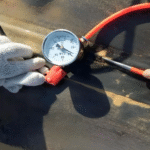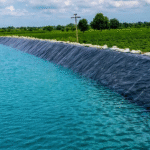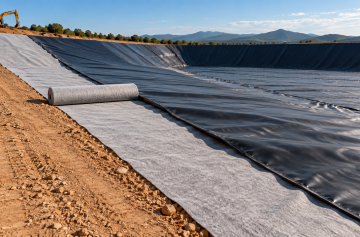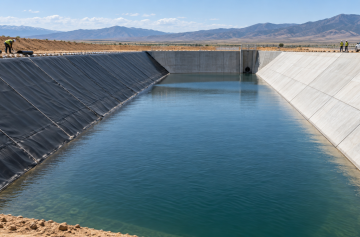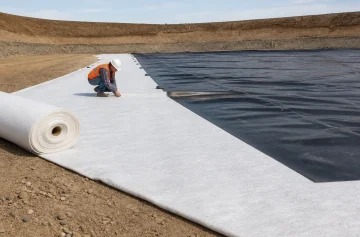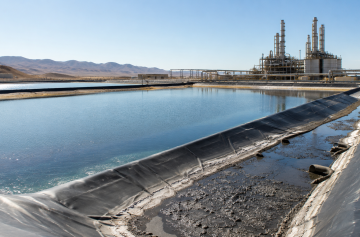
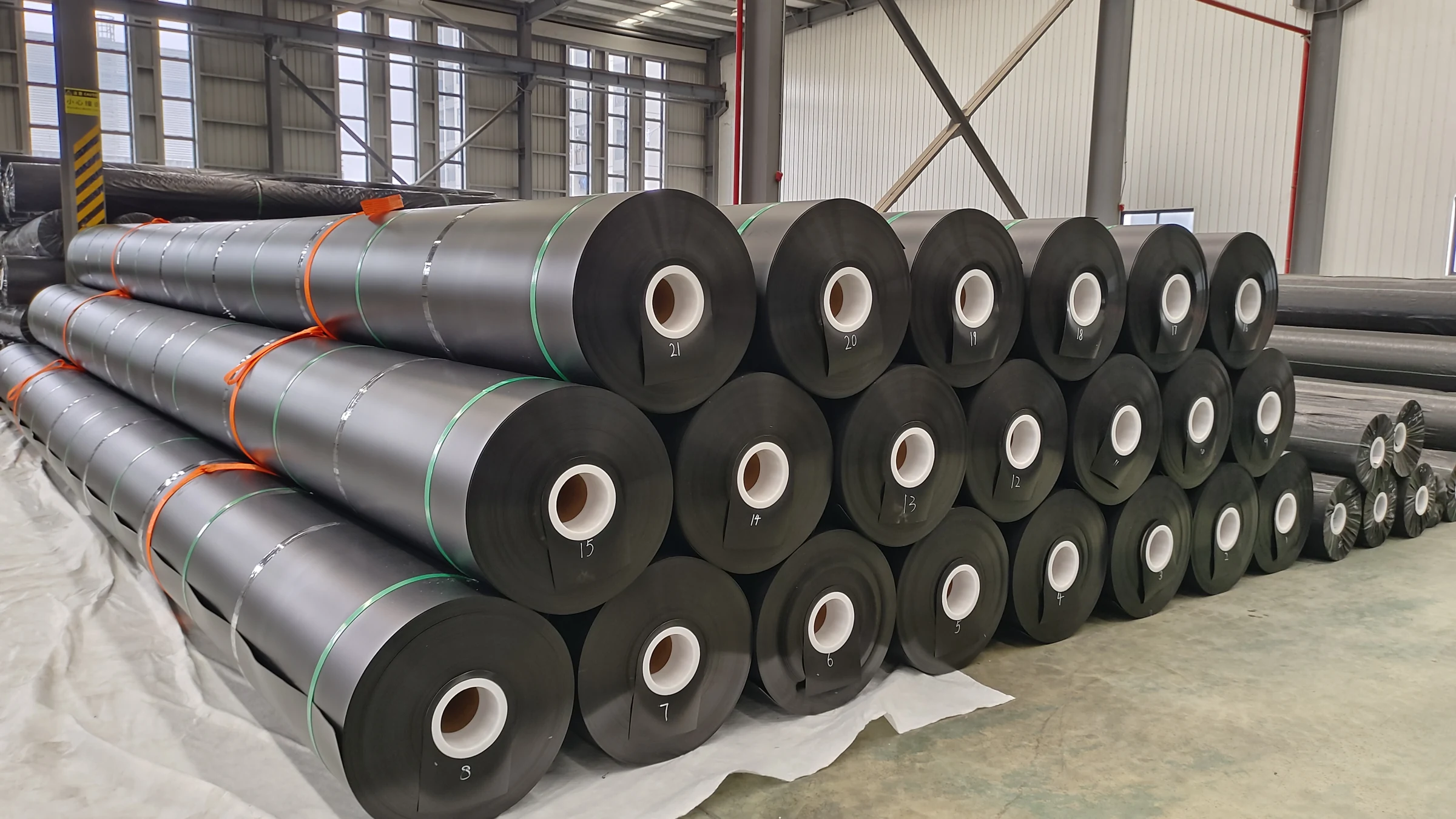
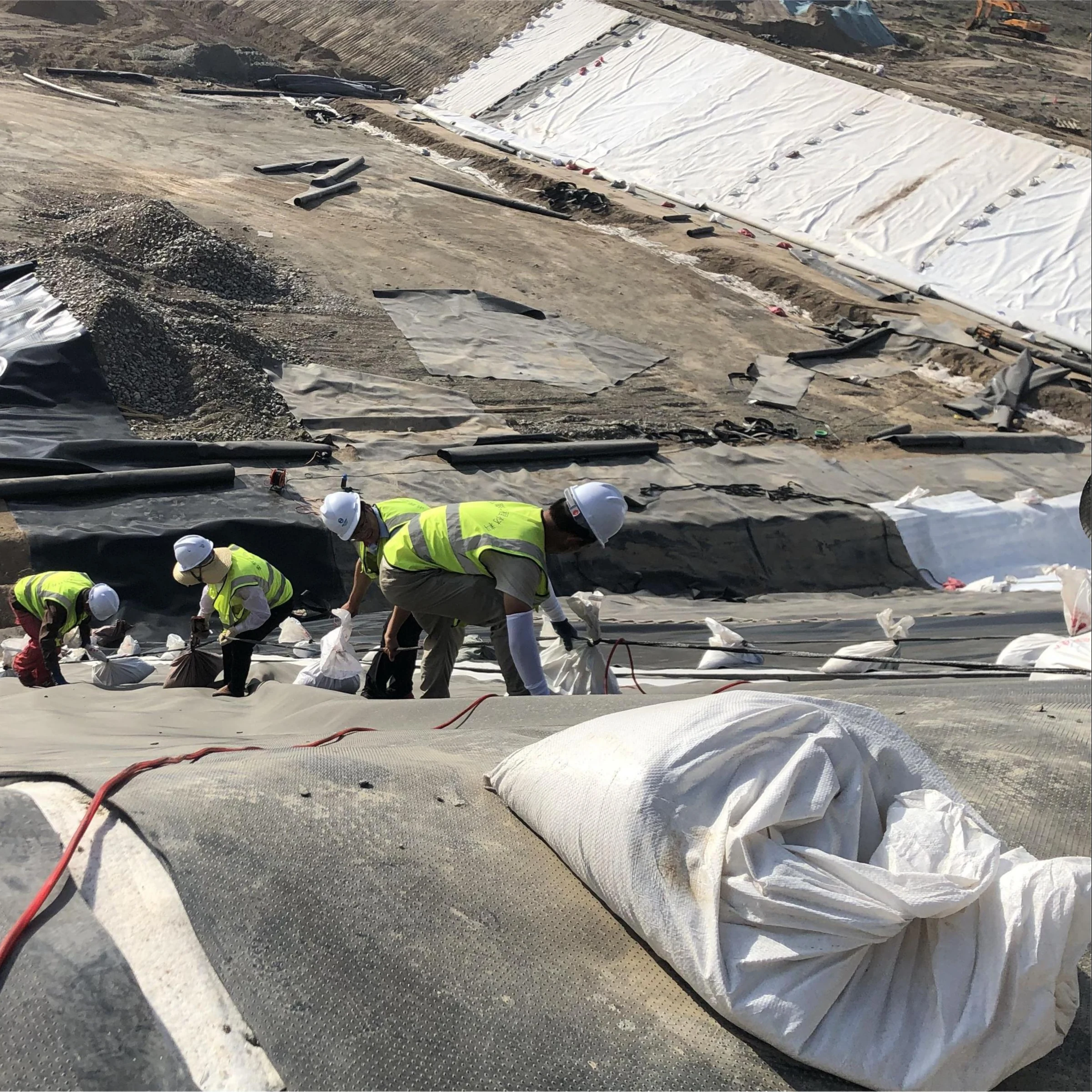

Low-temperature construction (geomembrane) should be ≥-5℃; HDPE becomes brittle at 0℃ and needs preheating to above 10℃. Welding temperature increases by 10–20℃ (approx. 350→370℃), and seam strength is ≥90%. Avoid wind speeds >5m/s, frost, and damp substrates.
Temperature Limits
Below 5°C
When the air temperature drops near freezing, a geomembrane roll that usually requires only 450 Newtons to pull now demands more than 700 Newtons of brute force. A black roll weighing 1.3 tons and 8 meters wide is forcibly dragged by an excavator, its tracks slipping on icy mud with a friction coefficient of only 0.15. The hydraulic gauge needle surges to 18 MPa, the edges of the membrane turn white under the strain, and the thickness is forced from 2.0 mm down to 1.6 mm.
Beneath the anti-seepage layer on a 3:1 steep slope lies 500 mm of crushed stone. An 80-meter long continuous membrane sheet will shrink nearly 10 mm due to low-temperature contraction. Inside an anchor trench at the top of the slope, 1 meter deep and 0.8 meters wide, the soil compaction reaches the 95% standard, yet it still struggles to resist a downward pulling force of 15 kN per meter. Before the temperature breaks below 4°C, workers carry bags filled with 25 kg of dry river sand to press down on the overlap seams.
- Sandbag spacing is fixed between 1.2 to 1.5 meters
- The number of sandbags on the windward slope top is doubled for extra weight
- Sand moisture content is kept below 5% to prevent freezing
- Mixing in crushed stones with sharp corners is strictly prohibited to avoid scratching the membrane surface
Membrane rolls left outdoors at -2°C freeze through completely overnight, and the residual stress accumulated at the core cannot be released. When unfolded on flat ground during the day, the tail end of the membrane curls up like a spring, forming stiff creases 40 cm high. If you stomp on these frozen wrinkles with hard-soled shoes, a microscope would reveal reticulated micro-cracks measuring 2 microns to 5 microns deep within the creases.
The landfill pit will later be filled with 10 meters of water; 100 kPa of water pressure will squeeze sewage into these tiny crevices, penetrating the entire anti-seepage network in less than three years. As a 3°C cold wind sweeps across the working surface, the temperature of the heating copper block on the automatic welder drops by 4°C every second. Two workers stand in front holding 3000-watt industrial heat guns, blowing a 600°C blast of scorching air toward the seam.
The heat gun nozzle is 50 to 80 mm from the plastic surface, sweeping evenly over the 150 mm wide edge at a speed of 0.2 meters per second. Moisture brought by cold air evaporates within 0.5 seconds, and the membrane surface temperature is dragged back to 15°C. The thermometer screen lights up green; the 22 kg welder must be precisely snapped into the seam within the 8-second window before the heat dissipates.
- Heat gun nozzle is aimed at the seam opening at a 45-degree angle
- Thermometer captures infrared temperature data 3 times per second
- Pressure under the welder’s iron wheels is locked at 3.5 bar
- The overlap width of the two membranes is aligned at 150 mm
- The protrusion length of the copper block is fine-tuned with a ruler to 20 mm
When encountering pipe penetrations or corner dead zones where large machines cannot enter, it depends entirely on workers holding extrusion guns to apply manual glue. A 4 mm thick plastic rod is heated into 260°C molten slurry inside the gun barrel. Because the weather is too cold, the nozzle temperature fails to rise; the extruded hot glue hits the 2°C icy membrane surface and immediately forms a hard skin on the surface.
Looking at a cross-section, there is a hidden 1.5 mm gap underneath that hasn’t bonded at all. When vacuum testing reaches -30 kPa, it starts spitting bubbles. Before starting, use a grinder to sand along the 75 mm wide edge, removing 0.1 mm of the surface skin to expose fresh plastic that hasn’t been damaged by frost. The glue must be applied within half an hour after grinding.
- The grinding wheel texture must cross-hatch with the seam
- The extruded bead must be 2 mm higher than the original base surface
- Edges are smoothed with a PTFE block to ensure no gaps
- After cooling for 1 hour, scan with a high-voltage spark tester
Compressed air at 2.1 MPa is injected into the welded long seam and held for a full 5 minutes. In a 4°C environment, the air shrinks upon cooling; the gauge needle will drop 0.05 MPa on its own in the first two minutes. A total drop of only 0.2 MPa is permitted throughout. If the pressure drops more, a 10-meter section must be cut open to find the leak points one by one.
Cut plastic strips are hung on an outdoor test stand and subjected to desperate pulling by a machine. Iron clamps pull apart at 50 mm per minute; the tensile resistance must not be lower than 15 kN/m. If the interior of the seam snaps, the entire 150-meter long weld is scrapped and must be cut along the edge and relaid.
Below 0°C
When the air temperature falls below 0°C, moisture in the air forms tiny ice crystals on the surface of the pure black plastic sheet. Measured at night, 12 grams of frost can cling to every square meter of material. At 4 AM, it drops to -3°C, and the ice layer thickness exceeds 0.05 mm. The brass heating block of the dual-track wedge welder, set to 380°C, rolls over this thin layer of ice with force.
The ice crystals hit the 380°C high-temperature copper block and turn completely into steam in less than 0.1 seconds. The hot steam is trapped tightly between two layers of 2.0 mm thick plastic and cannot escape. After cooling for 10 minutes, a cross-section reveals needle-sized pores ranging from 0.5 to 1.5 mm. The space between the two plastic sheets that should have fused together is filled with vacuum bubbles.
Measuring the seam edge with calipers, the screen shows only 3.2 mm, which is nearly 20% thinner than the required 4.0 mm standard. The machine runs at the usual speed of 1.5 m/min, but the heat from the block is frantically sapped by the frozen material and cold wind. The probe in front of the heating block beeps; the temperature on the side touching the plastic has dropped to the edge of 240°C.
This temperature cannot melt the crystals in the plastic; it looks bonded on the surface. When pulled with force on a machine, the shear strength measures only 14 N/mm, failing to reach the required 21 N/mm passing line. Using a peel testing instrument to pull hard, the two membranes can be easily torn apart like adhesive tape with only 9 N/mm of force.
A technician wrapped in a heavy coat stands in the cold wind to change machine parameters. The crawler robot’s motor speed is dialed down, locking the travel speed at 0.8 m/min. Staying for 3 extra seconds compensates for the heat carried away by cold air. The knob on the heating control panel is turned to the right, forcing the target temperature up by 15°C.
- Machine preheating time is extended to 15 minutes
- The surface of the heating copper block must be wiped every 30 meters
- The snow-sweeping brush in front of the pressure wheels is pressed down an extra 2 cm
- No one is allowed to step within 50 mm on either side of the seam
Normally, one piece is cut for testing every 150 meters in good weather; in sub-zero environments, the sampling distance must be shortened to 100 meters. Cut plastic strips 150 mm long and 25 mm wide are quickly stuffed into an insulated box with hand warmers. The gears of the outdoor tensile tester are fully coated with antifreeze, for fear that the hydraulic cylinder will freeze and stop working at -5°C.
The plastic strip is gripped at both ends by iron clamps and pulled apart at a speed of 50 mm/min. Numbers on the screen keep jumping, and everyone’s eyes are glued to the yield point reading. If the reading falls below 15 kN/m, the red light on the tensile machine lights up and the buzzer screams; machines in this area must be powered off and work stopped.
The windows for working during the day are all squeezed between 10 AM and 2 PM. Sunlight hitting the black membrane can make the surface temperature 6°C higher than the surrounding air. In just 4 short hours, the crew must process all 4000 square meters of material laid out last night. Edges that cannot be welded in time are covered tightly with 30 mm thick thermal insulation blankets.
The extrusion guns for manual gluing often malfunction in extreme cold. The 260°C hot glue in the barrel is squeezed out through the Teflon nozzle; hitting the -2°C cold wind, a 0.2 mm thick hard skin immediately forms on the surface. The worker’s wrist movement speed slows to 1 cm per second, eyes watching the glue bead slowly melt into the seam below.
An assistant nearby holds a 2000-watt propane torch to bake the seam. The blue flame from the torch reaches temperatures up to 800°C; the time it sweeps over the plastic must never exceed 0.3 seconds. Staying for 0.1 seconds longer will cause the plastic’s mesh structure to scorch and become brittle. Glue is applied immediately after baking, with the interval between the two steps kept within 3 seconds.
- When starting the glue gun, first squeeze out the first 50 cm of waste material that hasn’t heated through
- The propane tank is wrapped in an electric blanket to maintain internal gas pressure
- The torch nozzle is kept at a height of 40 mm from the seam dead zone below
- Manual glue width is expanded by 5 mm on each side
In the leak detection phase, a pressure needle is inserted into the hollow track between the two weld beads. A diesel compressor pumps 2.5 MPa of cold air into the seam. It’s so cold outside that as soon as the pressure is full, the air in the tube shrinks upon cooling and loses pressure. In the first minute, the gauge needle drops 0.08 MPa; the inspector uses a brush dipped in water to coat the seam edges.
Automotive antifreeze is added to the soapy water at a 30% ratio; using pure water would cause the bristles to freeze into icicles within three seconds of touching the black membrane. Looking along the 100-meter seam for any tiny bubbles popping up. Finding a bubble the size of a fingernail, the inspector draws a large circle on the plastic surface with a red marker.
Patching a leak is not allowed by just placing a small patch over the pinhole. The inspector draws a circle with a diameter of 300 mm around the hole, and a worker uses a dedicated circular cutter to dig out the entire problematic section of material from the root. A new piece of material of the same thickness is placed over it, leaving 150 mm of overlap for re-grinding and gluing.
At 2 AM, the thermometer drops to -10°C. The rolls of material kept outside as backup become as hard as stone. A 50-ton crane uses steel cables to tie around the spindle and lift it; the cables bite into the plastic surface, pressing out 4 mm deep pits. The foreman yells into the walkie-talkie, strictly forbidding workers from going near to untie the binding straps around the material.
Forcing the straps open with large shears, the material coiled into a cylinder holds immense rebound force. A black plastic roll weighing several tons will snap open like a clock spring. The spinning end can generate mechanical destructive force of over 300 Newtons, smashing large dents into the doors of tool trucks parked nearby. Day shift workers can only honestly wait for the sun to rise and temperatures to warm before working.
Temperature Limit Field Test
At 7 AM, a sweep with the thermometer gun at the open ground shows only 1.5°C. The anemometer vanes spin rapidly; the cold wind is running at 18 km/h. The 2.0 mm thick pure black plastic sheet has frozen into sheet metal. The plastic surface temperature is 0.5°C lower than the surrounding cold air. Two machines responsible for dual-track welding stop at the starting point; the copper heating blocks took a full 22 minutes to heat from room temperature to 390°C.
Running a trial with scrap material before starting work is a non-negotiable daily rule. In the 1.5°C cold wind, a 3-meter piece of material was cut for trial runs back and forth; after wasting 4 long strips, the workers finally found the machine settings that could manage to get the job done.
The usual 1.5 m/min speed is completely scrapped. Workers turn the knob on the control panel back, and the motor speed is suppressed to 0.65 m/min. With the machine crawling slowly, the 390°C heating block can stay on the same spot for 1.8 seconds longer. The rubber pressure wheels following behind are also pumped up; the gauge pressure is pushed from the usual 3.0 bar all the way to 4.2 bar.
Through heavy pressure and slow speed, the two layers of frozen edges are forced and kneaded together. The width of the melted glue slurry squeezed out of the seam reaches 4.5 mm. Using vernier calipers to measure the hollow air channel between the two weld beads, the width remains at a full 12 mm. A worker cuts a 150 mm long specimen and stuffs it into the testing machine; iron gears bite tightly onto both ends and pull outward.
- The speed of the tensile machine grips pulling apart is set at 50 mm/min
- The peel test reading broke through 11.2 N/mm
- The shear strength force reached 23.5 N/mm
- The specimen snapped at the original base material location, while the middle seam held tight without cracking
After printing the qualified parameter sheet, the main force pushes the 22 kg welders officially onto the field. The entire sheet laid out for work is a full 150 meters long; machines crawl along the edges, and heat escapes extremely fast in the cold. The operator holds an infrared thermometer; every 10 meters the machine crawls, they must measure how much temperature is left at the tail of the heating block.
The probe sweeps over; the temperature at the rear of the heating block has dropped to 310°C, only 10°C away from the failure limit where it won’t stick. The worker quickly stops the motor, letting the copper block idle in place for 45 seconds to build the heat back up. In open areas, the wind cuts like a knife; with gusts of 25 km/h, 15% of the heat on the copper block surface is blown away in an instant.
Wind-blocking wooden boards became life-saving tools for forcing the work forward. Wooden boards 1.2 meters high and 2.4 meters wide are knocked into V-shapes; three workers hold the boards and stay within 1.5 meters of the machine’s outer side, never leaving.
Hiding behind the boards, the anemometer reading drops to 5 km/h. Strong winds are blocked outside, and heat is steadily wrapped deep within the seam. The angle of the heating block protruding from the chassis is usually set at 15 degrees; the lead hand uses a wrench to loosen the fixing screws, forcing the angle down to 12 degrees. The copper block scrapes forward closely against the cold material below, snatching 0.5 seconds of extra contact time for preheating.
Corners where large machines cannot enter depend purely on manual gluing, where all values are even more strictly controlled. The PTFE nozzles are not cold-resistant and are removed, replaced by red copper nozzles with stronger thermal conductivity; the heating temperature in the barrel is raised to 275°C. The thin plastic rods used for the base are kept absolutely dry, stored in sealed drums inside a 25°C insulation shed for a full 12 hours of baking.
A worker pulls a 4 mm thick rod from the insulation drum and feeds it into the barrel; the temperature of the paste-like soft glue squeezed out in front is locked at 255°C. An assistant nearby holds a propane torch, with the blue flame tip kept strictly at a height of 35 mm from the plastic surface below.
- The area baked by the torch must be covered with hot glue within 2.5 seconds
- The thickness of the extruded soft glue must be 2.5 mm higher than the base material next to it
- A metal feeler gauge for measuring gaps is inserted into the bottom seam, locking the upper and lower engagement at 1.8 mm
- No cold water droplets are allowed within a 50 mm range of the manual glue edge
After all seams are bonded, they must queue up for pressure testing. The ambient temperature is only 2°C; 210 kPa of cold air is pumped into the 12 mm wide hollow seam track. The inflation port is plugged with a calibrated valve core; left quietly for 5 minutes, the gauge needle naturally drops 15 kPa as the air cools. As cold air shrinks, the allowed pressure drop range is widened; a drop of no more than 20 kPa in 5 minutes is permitted for clearance.
Forcing work in extreme cold results in very high wastage rates. After a day’s work, just the scrapped offcuts weighed on the scale amounted to 140 kg, and 3 more empty propane tanks were used than usual.
The 220V power lines dragged across the icy mud are 80 meters long. It’s so cold that the rubber casing outside the wires hardens, and the copper wire resistance inside fluctuates wildly; the power strip at the end measures only 208V with a multimeter. The heating block’s power drops accordingly; workers run back to the diesel generator to roar up the speed, only daring to press the machine switch when the meter settles at 230V.
The small instrument used to measure plastic thickness easily crashes or has a jumping screen in temperatures just above 0°C. The inspector carries it in the innermost pocket of their winter clothing, keeping it warm with 37°C body temperature. The probe is pressed against the seam edge, and the reading is taken within 3 seconds. Just as 4.1 mm jumps onto the screen, the probe is immediately stuffed back into the clothes for warmth.
At 3 PM, a thermometer gun sweep over the material in the shade shows the temperature has dropped to 3°C. The anemometer numbers have climbed to 22 km/h. After finishing one 80-meter long seam, a sample strip taken for spot checks on the tensile machine snaps instantly under 10 N/mm of force. All machines are halted over the walkie-talkie, and the day’s work area is frozen at 2800 square meters.
Material Flexibility
Low-Temperature Material Selection
The density figures on the purchase order are strictly set. Materials exceeding 0.940 g/cm³ will freeze hard in environments below 5°C. The buyer took a pen and changed the requirement to linear low-density rolls below 0.939 g/cm³.
In the laboratory sits a machine dedicated to destruction. An 8 mm thick round-headed iron rod pokes downward at a speed of 300 mm per minute. Inside a freezer at -20°C, a 1.5 mm thick plastic sheet must withstand 400 Newtons of force without breaking.
The tensile testing machine grips very tightly. Two ends bite into a 50 mm wide black rubber block and pull desperately. In cold weather, the material must not break when stretched by 600%. Goods that snap or turn white at 450% are all sent back to the factory.
The water pool temperature at an Arctic mine drops to -30°C. EPDM rubber with 30% chemical additives in the formula comes into play. In -45°C ice and snow, the surface withstands a tensile force of 25 MPa. Rubbing it hard while wearing gloves, not a single white crease is visible.
| Material Type | Extreme Construction Temp | 0°C Elongation Ratio | Black Powder Additive | 2.0mm Single Roll Weight |
|---|---|---|---|---|
| HDPE | 5°C | 400% | 2.5% | 1350 kg |
| LLDPE | -15°C | 750% | 2.2% | 1280 kg |
| EPDM | -45°C | 300% | 1.8% | 1100 kg |
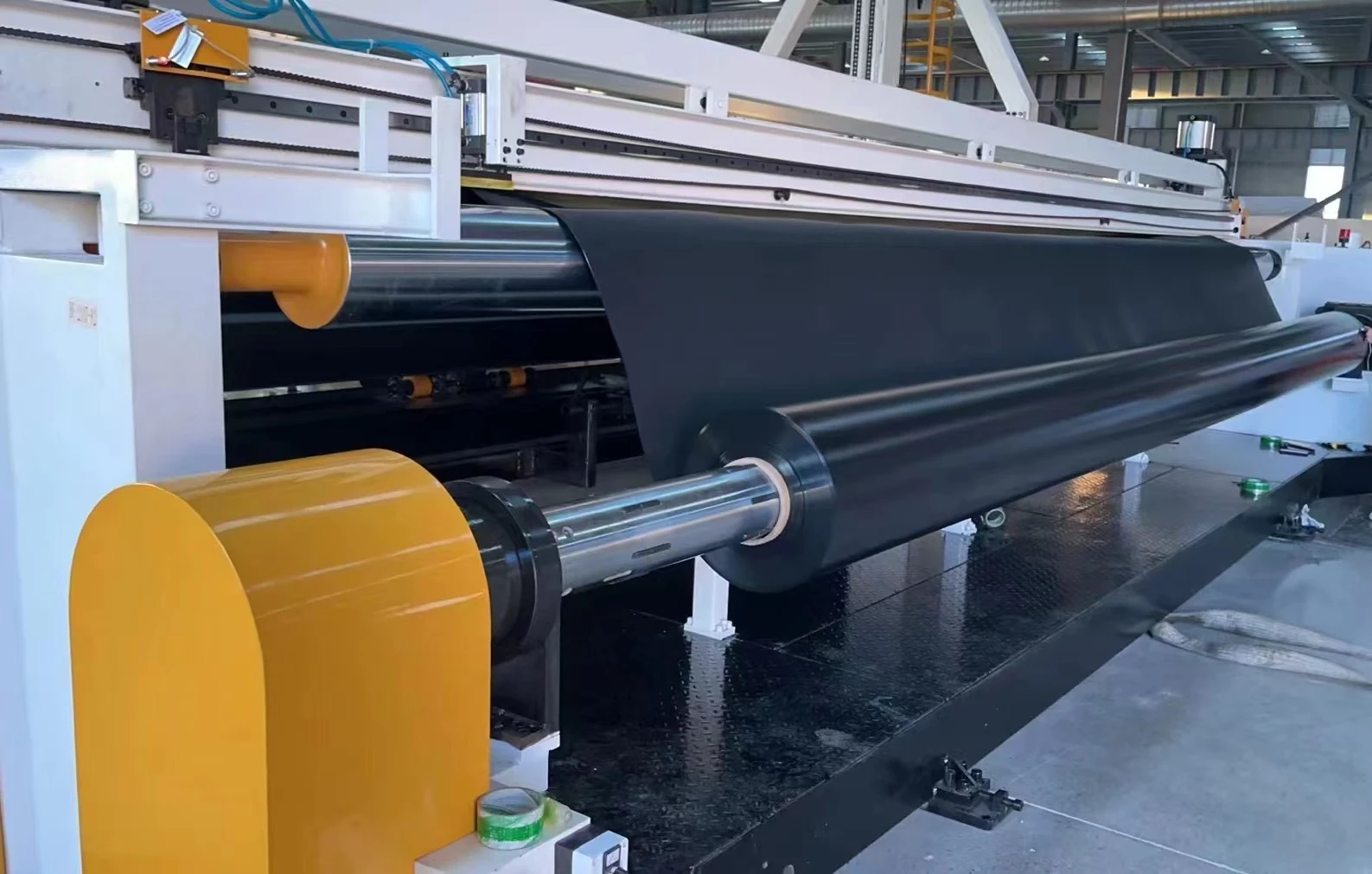
The amount of black powder in the table controls the material’s lifespan. Machines weighing several tons knead 2.0% carbon black into the plastic. Under a microscope, the black particles are less than 10 nanometers large. These small particles specifically absorb intense UV rays in high mountains, preventing the material from cracking due to frost or sun.
A slight difference in thickness can lead to fines in the tens of millions. The drawings specify 2.0 mm thickness, with upper and lower tolerances strictly capped within 10%. An inspector with an ultrasonic device presses it every 20 cm while walking across the 8-meter wide membrane surface. If the reading drops below 1.8 mm, the thin spots will be torn open by the frozen ground.
Several “dead commands” are written in black and white on the quality inspection sheet:
- Baked in a 200°C high-temperature oven for 100 minutes without deteriorating
- The flow rate after melting is strictly locked between 0.20 to 0.60 g/10 min
- 10 samples frozen in a -70°C freezer, not a single one allowed to shatter
- Dimensions must not change by more than 2% after repeated hot and cold cycles
Waste material that cannot stand 100 minutes in the oven has long lost its anti-aging components. Left in the wild at sub-zero temperatures, the surface will be covered in spiderweb-like cracks within three years. A chemical probe test will expose poor-quality material with insufficient additives.
To measure the melt flow rate, a 2.16 kg iron weight must be pressed down. Shredded plastic is placed in a 190°C hot iron cylinder. If the filament squeezed out in ten minutes exceeds 0.60 g, the material is too brittle. Inferior material is like dry biscuits; two excavators pulling slightly will leave black debris all over the ground.
Cheap goods often mix in 15% recycled plastic. Opening the packaging bag, the surface looks gray. Under a 50x magnifying glass, one sees tiny pinholes 0.5 mm large everywhere. When the temperature drops to -5°C, the small holes expand and contract as they freeze, turning into hidden leaks.
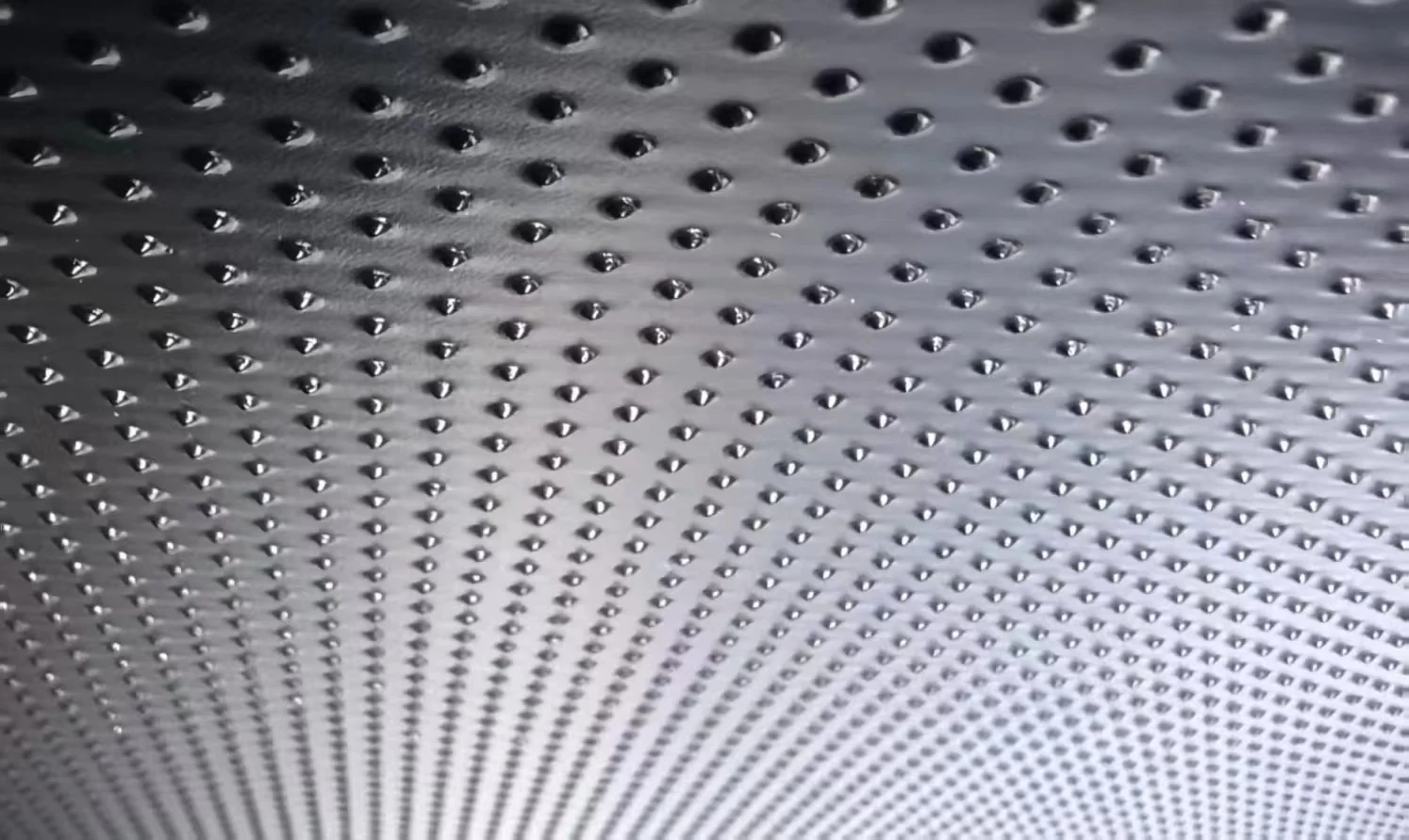
On steep cliffs with a 45-degree tilt, the slippery membrane surface cannot hold soil at all. A high-temperature torch burns a layer of 0.25 mm high bumps on the surface to create a textured finish. The friction angle is forcibly raised to 28 degrees, and tons of material grip the underlying padding tightly without sliding down.
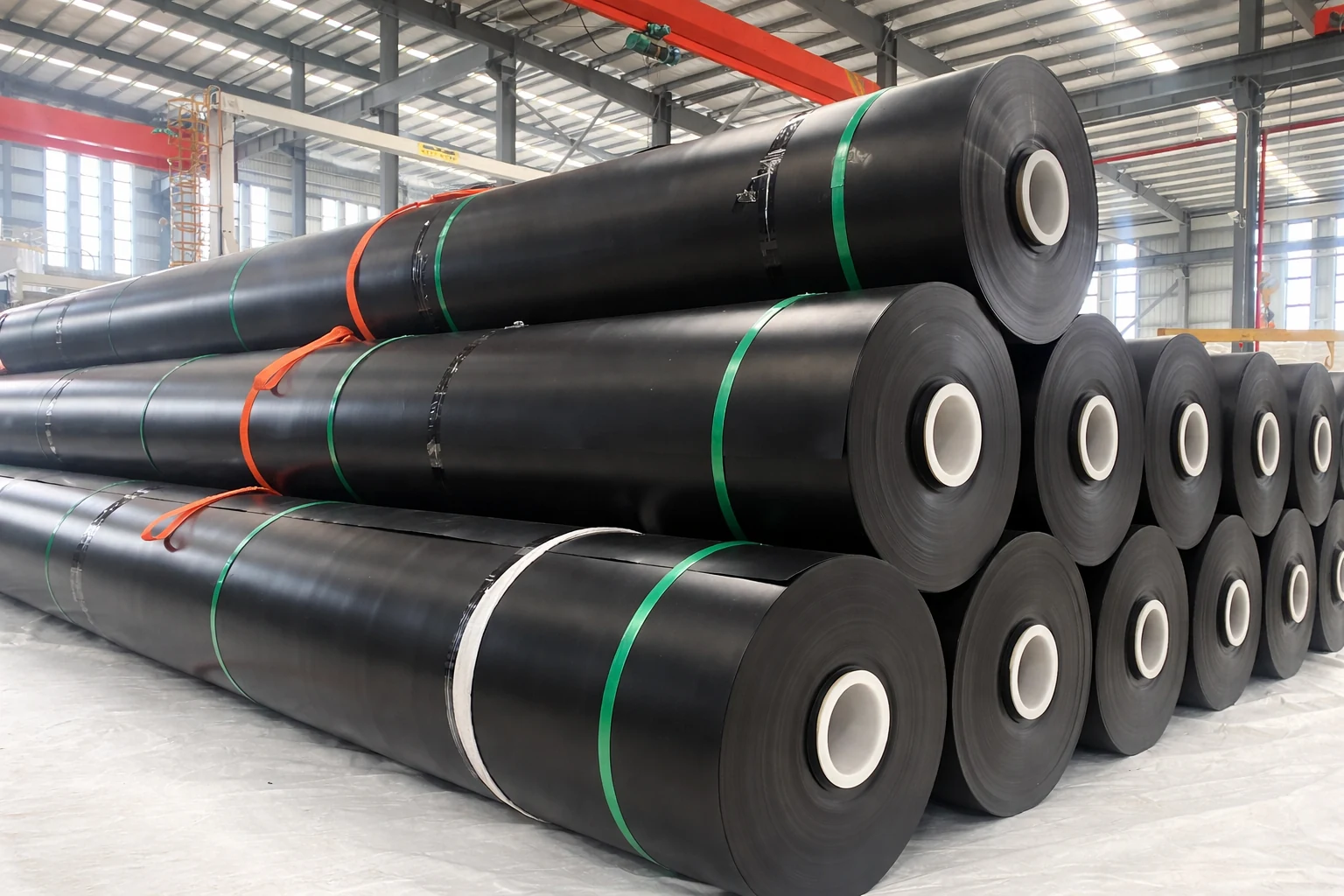
There are also hard rules for loading and packing. The paper tube wall in the center is left 15 mm thick. The interior of the circular tube is uniformly opened to a 152 mm hollow space. When a forklift’s two-meter long steel prongs plunge in, the paper tube withstands a 600 Newton impact, leaving not a single dent on the membrane inside.
A large roll weighing 1350 kg is bound tightly with three 50 mm wide straps. The straps can withstand a pull of 800 kg. A large truck carries the material over 500 km of bumpy roads at -20°C, and not a single strap snaps. The outermost layer is wrapped in two layers of 0.1 mm thick black cloth, blocking all moisture and sunlight.
A site supervisor uses a utility knife to cut a 10 cm square block. It’s tossed into a drum of industrial alcohol at -30°C to soak for 24 hours. Taken out and folded, then stomped on desperately with heavy rubber boots. If no brittle sound of plastic cracking is heard, only then will the crane driver move to unload the truck.
In a 30-meter deep water pit, water pressure squeezes frozen membrane very hard. An extra test was added to the material purchase contract. A sample piece with a wound cut by a blade is soaked in a 50°C chemical tank and must last 1500 hours without breaking. Material that cannot last the specified time will not survive the strain of the freezing period.
Site Temperature Control
Outdoor temperature drops to -10°C. A 200-square-meter double-layer insulation shed is erected on the open ground. Two 150 kW oil-fired heaters are placed in the corners, blowing 45°C hot air. The air outlet is kept 3 meters away from the anti-seepage membrane rolls on the ground.
A worker uses a 60 cm long temperature probe to insert into the hollow core of the rolls. The inside must reach 15°C to be considered thoroughly baked. The entire heating process takes 18 to 24 hours. The membrane must be soft before work can begin.
The crawler crane outside is fitted with special soft slings. The shed door is pushed open, and the warmed rolls are transported to the ditch side dozens of meters away. This sequence of actions is strictly timed to be completed within 8 minutes. Once the wind blows, the membrane surface temperature drops by 2.5°C per minute.
Workers wearing anti-slip shoes operate machines, retreating at a speed of 15 meters per minute. A full 100-meter roll of membrane is laid perfectly flat within 30 minutes. If the action is slow, the cooling material will generate a strange contracting force of 400 N/m.
Because the weather is too cold, the heavy machinery pulling the membrane rolls has had a batch of parts replaced:
- Replaced with aviation hydraulic oil that doesn’t freeze at -35°C
- Brake gap adjusted up to 2.5 mm
- 150 kg iron blocks added to both ends of the spindle
- The force of the tracks on the ground adjusted to 0.04 MPa
The laid membrane edge leaves 15 cm for splicing. The speed at which two pieces are melted together is reduced from 2.5 m/min in summer to 0.8 m/min. The heating iron on the machine is adjusted to 410°C. The downward pressure of the machine is increased to 1000 Newtons.
In front of the weld, two 2000-watt heat guns pre-blow hot air. The nozzle is exactly 12 cm from the membrane surface. For dead zones near pipes, use a handheld welding torch to patch. The patcher uses 80-grit sandpaper to grind a 5 mm wide opening.
The material output speed of the handheld machine is slowed to 1.2 kg per minute. If the anemometer measures wind speeds greater than 15 km/h, everyone stops their work. Cold wind causes the temperature difference before and after the weld to expand to 15°C, making the material inside unstable.
When the wind is strong, a 3-meter long, 2-meter wide wind shield made of thick 600 Denier Oxford cloth is used to enclose the area. A worker crouches inside, turning on a 1000-watt halogen lamp. The light illuminates the work and provides heat for this small area.
Every 150 meters of spliced seam, a 30 by 60 cm sample is cut out. The sample is taken away in a 25°C insulation box. The testing machine pulls desperately on both sides at a speed of 50 mm/min. The breaking force must exceed 85 N/cm to pass.
In places where samples cannot be cut, a 5 mm thick stainless steel needle is inserted for air inflation. 2.5 MPa of air pressure is pumped in, and the 5-minute gauge reading is watched closely:
- Drop less than 0.15 MPa, Pass
- Drop between 0.15 and 0.2 MPa, re-spray water to check for leaks
- Air drop exceeds 0.2 MPa, cut the entire seam and start over
Finding leak bubbles also has its techniques. 25% antifreeze is added to the soapy water. Sprayed onto a -5°C surface, the water won’t immediately freeze. A pinhole-sized leak will slowly gurgle out tiny 2 mm bubbles.
If the moisture content of the frozen soil beneath the membrane exceeds 15%, it will heave upward. Sharp ice chunks 3 to 5 cm long grow in the soil. A 14-ton roller crushes it 6 times. The wheels are filled with 120 liters of warm water to maintain the soil surface temperature at around 5°C.
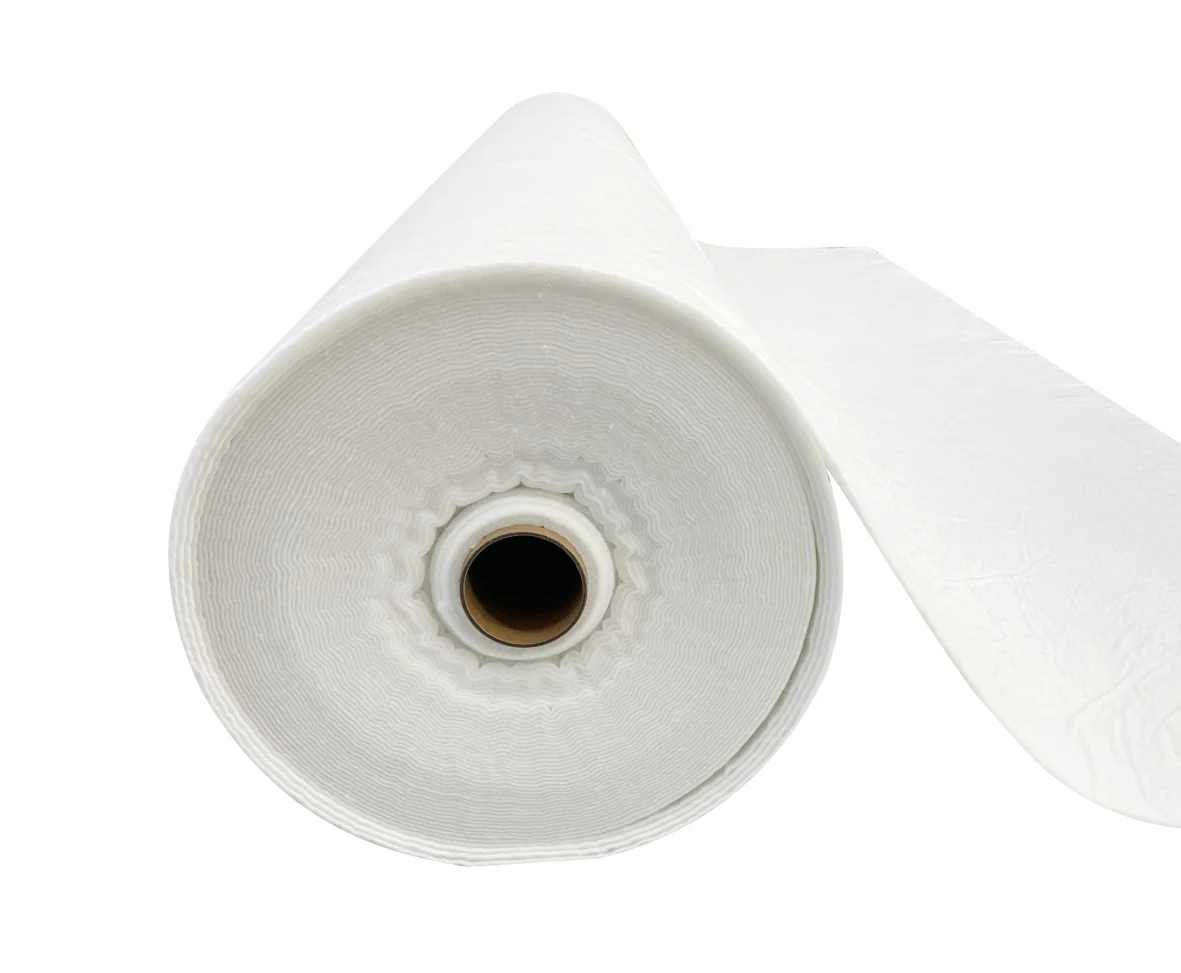
A layer of padding is laid on the rolled flat ground, weighing 400 grams per square meter. A stitching machine uses double stitching to sew the fabric pieces tight. The distance between stitches is fixed at 6 mm. Sharp ice below can no longer puncture the anti-seepage membrane above.
Seaming Challenges
Heat Loss
In a wilderness at -15°C, a cold wind blows at 6 meters per second. A worker pushes an 18 kg hot wedge welder, crawling slowly across a 2.0 mm thick black plastic membrane. The copper heating block is heated to 430°C, pressed tightly against the icy membrane surface. This heating block is only the size of an adult’s palm, yet it’s responsible for melting two 3 cm wide plastic strips.
Below the membrane is a layer of frozen-hard sand and soil. The permafrost is like a giant sponge, frantically sucking away the heat transmitted from the machine. Just as the heating block has baked the plastic surface to a 135°C molten state, before the two rear iron wheels can press down, the temperature plunges to 90°C within two seconds. Plastic at 90°C is hard and brittle and cannot bond at all.
The operator can only turn the machine’s heating power to the limit of 2500 watts, desperately trying to compensate for the lost temperature. The copper block stays at the extreme temperature of 450°C for long periods, shortening the physical life of the internal heating tubes from the normal 1500 hours to less than 300 hours. The motor emits a piercing grinding sound under the overload.
- A 5 m/s cold wind carries away 35% of the heat from the outer side of the machine.
- Frozen gravel sucks away heat 4.2 times faster than dry sand.
- The heat transfer time for 2.5 mm thick membrane is 2.3 times that of 1.5 mm.
- When air humidity exceeds 70% at 0°C, a 0.05 mm thick layer of thin ice forms on the membrane surface.
The welder’s heating block’s front half is responsible for pre-baking, while the rear half is for thorough melting. When the temperature drops to -20°C, the pre-baking function of the front half is completely rendered useless. As soon as the icy plastic hits the high-temperature zone, 0.1 mm of the surface instantly turns as soft as water, while the interior at 0.5 mm depth remains rock hard.
When heavy iron wheels roll over this semi-finished product that is soft on the outside but hard on the inside, the squeezed plastic is no longer two rounded 3 mm wide lines. The plastic, quickly hardened by cold wind and subjected to mechanical squeezing, crumbles into jagged hard waste, and the edges are forcibly torn with micro-cracks over 0.2 mm deep.
Slowing down the machine’s travel speed is the only physical means to combat low temperatures. Usually, it can run 2.5 meters a minute; in extreme cold, it can only drop to 0.5 meters a minute. The time 400°C heat stays on a single point is stretched from 0.8 seconds to 4.5 seconds.
- The gap between the iron wheels is narrowed from 1.5 mm to 1.2 mm to forcibly increase squeezing force.
- A 300°C blower is hung 10 cm in front of the welder to manually blow away cold air.
- The spring pressure scale on the machine is adjusted from 30 kg to 48 kg.
Baking at high temperatures for too long will directly destroy the anti-aging components inside the plastic. After baking for more than 3 seconds in a 420°C environment, the black plastic surface will show a layer of scorched yellow waste. High-quality anti-seepage membrane that should have lasted 50 years underground will have a lifespan of less than 8 years at the baked spots, becoming fragile at the slightest touch in low temperatures.
The situation for handheld extrusion welding guns is worse. A worker holds a 6.5 kg machine, feeding in a 4 mm plastic rod, then extruding 260°C soft material. Cold wind blows against the machine’s Teflon casing; the temperature figures on the control board jump back and forth between 230°C and 290°C, becoming extremely unstable.
The scorching soft material just extruded hits the base membrane which is only 60°C. The massive two-hundred-degree temperature difference causes the soft material to clump and harden rapidly within 0.5 seconds. What should have been spread into a wide 35 mm weld with smooth edges is forced to shrink into a hard lump only 22 mm wide and 6 mm thick.
- The machine alarms when generator voltage drops to 210V, automatically cutting off heating power.
- If 1.8 kg of soft material cannot be extruded in one minute, work must stop to clear the clogged outlet with wire.
- A thermometer sweep shows the membrane surface temperature dropping 15°C per second; it must be reheated with a high-temperature torch.
- A 35,000-volt high-voltage spark is brushed across the seam to search for 0.05 mm leak micropores.
Frost and Condensation
At 4 AM, the temperature drops to -14°C, and moisture in the air begins to attach to the black geomembrane surface. On the 50-meter long overlap edges, a layer of white frost about 0.08 mm thick slowly grows, looking like fine powder.
The hot wedge welder moves forward at a speed of 0.6 m/min; the 420°C copper block rolls over, and this frost layer is heated within 0.2 seconds. The ice doesn’t melt slowly; instead, it rapidly turns into steam. The temperature change is so fast that the moisture doesn’t have time to be expelled.
When 1 gram of water turns into steam, its volume expands to 1600 times its original size. Two layers of 2.0 mm thick membrane are pressed by 45 kg steel wheels; the steam is trapped inside and can only force space within the softened plastic.
This steam forms many small bubbles internally, mostly between 0.1 to 0.3 mm in diameter. As the welder continues forward and cold wind outside rapidly cools the material, these bubbles are fixed in the seam, becoming invisible tiny cavities.
Take a 150 mm long strip for testing; the tensile machine stretches it at 50 mm/min. Just as the reading reaches 450 Newtons, the location with bubbles begins to tear, and the rift expands along these small holes.
The sources of moisture on-site go beyond humidity in the air; the scope is large:
- The soil layer 0.5 meters underground slowly releases moisture upward, forming tiny water droplets at the membrane bottom
- Humans breathing in cold environments can form 0.02 mm of frost within a 30 cm range
- For every 1 liter of diesel burned by the heater, about 1.1 liters of water vapor are released
- Snowmelt during the day will flow along a slope of about 2° into the seam locations
Dealing with this moisture depends on manual labor, usually with two people kneeling on the ground to wipe the membrane. They use cotton cloth with an absorption capacity up to 6 times its own weight. Within 1 minute before the welder arrives, the edges must be wiped dry.
Wiping alone isn’t enough; much of the moisture is invisible. A third person holds a 3000-watt heat gun, spraying 280°C hot air, keeping it at a distance of 10 cm from the membrane surface. The movement speed is controlled at 15 cm per second.
The infrared thermometer monitors closely; the membrane surface is heated to about 45°C. Once it reaches above 40°C, even ice inside small 0.5 mm deep cracks can be dried out.
Environmental changes significantly affect the work rhythm:
| Air Temp | Humidity | Frost Thickness | Heating Time | Cloth Replacement |
|---|---|---|---|---|
| -5°C | 55% | 0.02 mm | 15 sec/m | Every 50m |
| -12°C | 68% | 0.05 mm | 25 sec/m | Every 30m |
| -18°C | 82% | 0.12 mm | 40 sec/m | Every 15m |
Once the membrane surface is heated to 45°C, it takes about 45 seconds to drop back to the frost temperature if heating stops. Moisture in the air will re-attach.
The person with the heat gun and the welder operator must stay very close, usually within 1.5 meters. As the welder travels at 0.8 m/min, the dewatering work ahead must follow in sync.
Inspection is required after welding:
- Sweep along the 30 mm wide seam with a 35,000V spark tester
- Encounters with holes larger than 0.05 mm will emit a piercing sound
- Vacuum box coverage test, pumped to -30 kPa to check for leaks
- Soap water coating on the surface; any 2 mm bubbles mean rework
After finding a problem, workers use an angle grinder at 11,000 rpm to cut out that section, about 200 mm wide. Then cover with new material and fill with an extrusion welder.
The welding gun spits out 260°C soft material, forming a weld about 35 mm wide and 7 mm thick. While the temperature is still above 180°C, press 3 times with a 3 kg copper roller to completely squeeze out internal air.
Workplace Response
At a construction site at -22°C, before machines start, a temporary work area is built. Aluminum tubes 48 mm in diameter are used to assemble an 8-meter long, 5-meter wide frame, covered with 0.75 mm thick tarpaulin. The edges are pressed with 30 kg sandbags to prevent cold wind from pouring in.
Two 45 kW heaters are placed on both sides of the tent, with outlet temperatures kept around 60°C. After 20 minutes of operation, the internal temperature can rise from -22°C to about 10°C. Thermometers are placed on the ground every 2 meters; the temperature difference is controlled within 2°C.
After the environment is stable, the overlap positions of the membrane are processed, usually with an overlap width of 120 to 150 mm. A worker holds a 3000-watt heat gun at about 280°C, 12 cm from the membrane surface, controlling the speed at 18 cm per second.
The person behind wipes with dry cotton cloth; the cloth can absorb 5 times its weight in moisture. Change the cloth every 20 meters to avoid bringing moisture back. Sweep with an infrared thermometer; a surface temperature above 42°C is considered ready.
- Heaters consume about 6 liters of diesel per hour
- Humidity inside the tent is controlled below 20%
- Heating time is about 30 sec/m
- Temperatures below 38°C require reheating
After surface treatment, trial welding begins. Take two segments 1 meter long and 0.3 meters wide, leave them in the tent for 25 minutes to stabilize the material temperature. Welder temperature is set at 405°C, speed at 0.7 m/min.
After welding and cooling for 20 minutes, use tools to cut 5 specimens 25.4 mm wide. Put them into the tensile machine and pull at 50 mm/min. Peel tests usually need to reach over 650 Newtons, and shear tests over 820 Newtons.
If even one snaps at the seam, the machine must be adjusted. Add 5°C to the temperature or drop the speed by 0.1 m/min and try again. Only after passing twice in a row does formal welding begin.
- Redo trial welds for every 3°C drop in air temperature
- Test again after 4 hours of continuous work
- At least 5 specimens per test
- The seam separation ratio cannot exceed 10%
Once confirmed okay, the welder begins long-distance work. Speed is controlled between 0.6 to 0.8 m/min. The tent is pushed by 3 people together, staying in sync with the welder, with an error no more than 0.2 meters.
The operator watches the machine temperature; fluctuations cannot exceed ±10°C. Pressure wheel pressure is maintained at around 45 kg, recorded every 15 minutes. Generator voltage stays at 220V ±5%.
When encountering corners or slopes where large machines cannot enter, use a handheld welding gun. The device is about 6.5 kg, preheats for 40 minutes, and the heating rod temperature is about 310°C.
Before construction, use an angle grinder to sand, with a width of about 40 mm and a depth of 0.4 to 0.6 mm. Speed at 11,000 rpm. Only after the surface becomes rough can the soft material bond.
The welding gun output temperature is about 260°C, extruding 1.6 kg of material per minute. Forming a weld about 35 mm wide and 6 mm thick.
- Plastic rod diameter is 4 mm
- Feeding speed is about 2.1 m/min
- Welding shoe pressure is 7 to 9 kg
- Check every 10 meters
While the temperature is still above 180°C after welding, press 3 times with a 3 kg copper roller to squeeze out air. An indentation of about 0.3 mm deep will be left on the surface.
Start testing after cooling. Move a 35,000V spark tester along the seam at a speed of about 0.3 m/s. Holes larger than 0.05 mm will be detected.
Suspicious spots are vacuum box tested, pumped to -30 kPa, covering about a 300 mm range. Apply soap water; bubbles within 10 seconds indicate a problem.
- Spark test every 30 meters
- Spot check at least 3 places every 100 meters
- Every weld has a serial number
- Records include temperature and equipment info
If a problem is found, cut out a section about 200 mm wide and patch with a new piece. Overlap the edges by more than 100 mm, then seal with the welding gun. The patch location should extend 50 mm beyond the original fault.