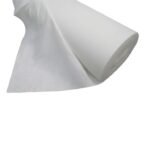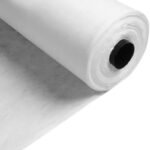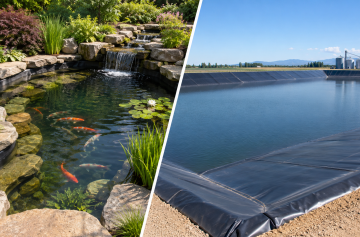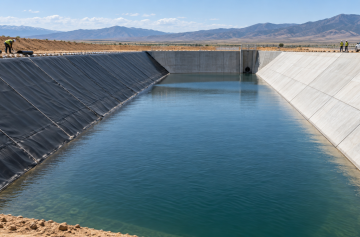
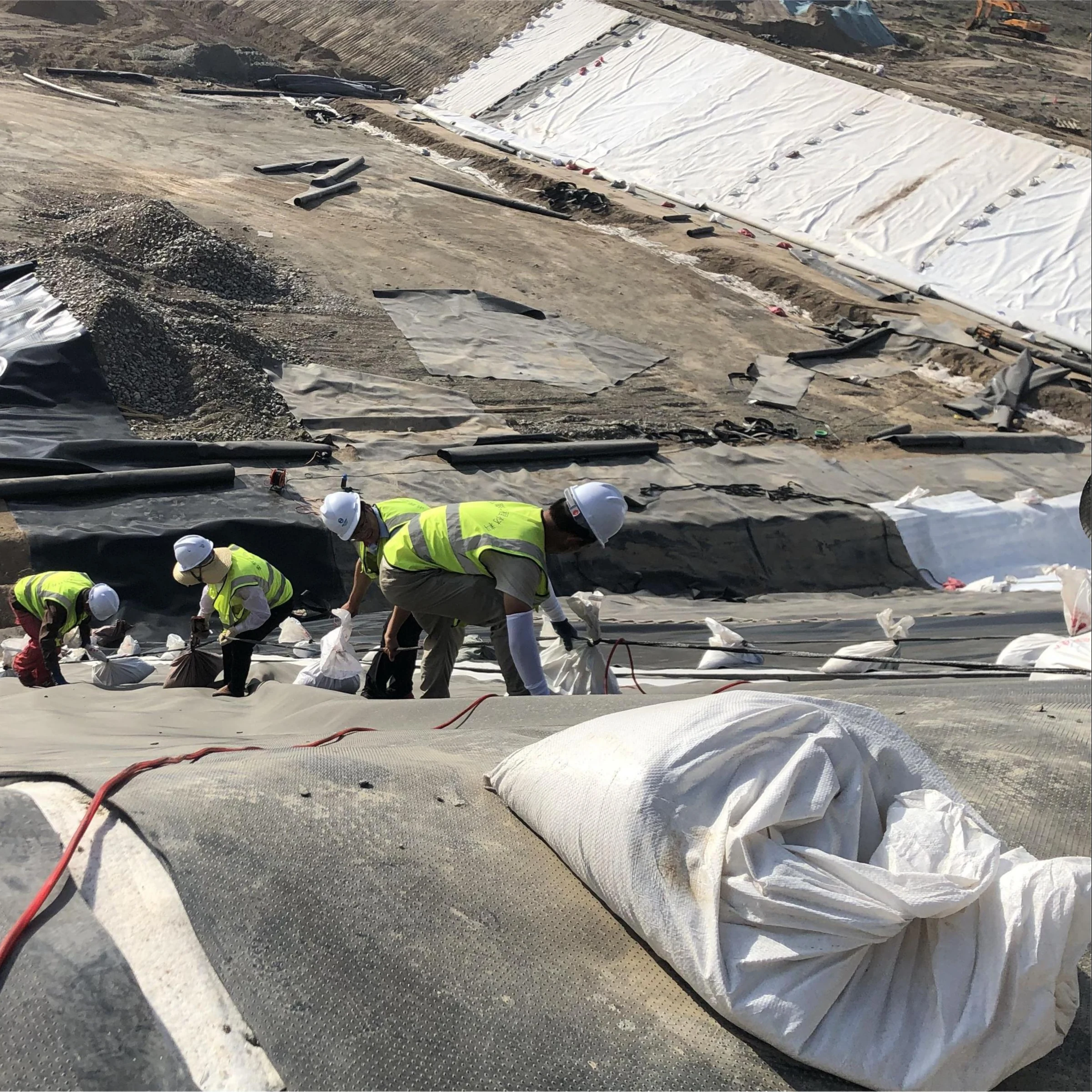
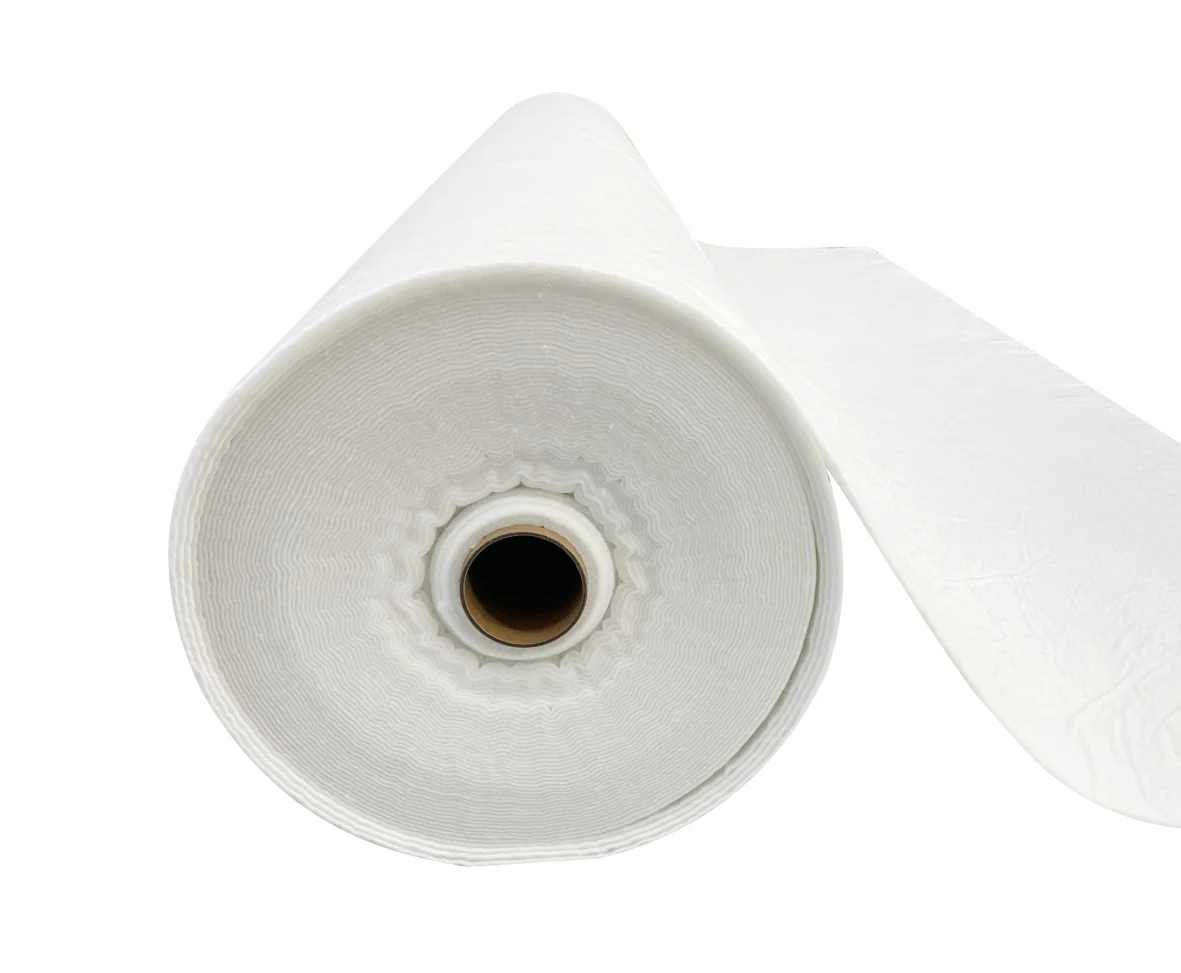

Woven geotextiles typically offer a tensile strength of 50–100 kN/m, making them suitable for heavy-load, anti-erosion applications. Non-woven geotextiles generally have a permeability coefficient of 10⁻¹ to 10⁻² cm/s, which makes them better for drainage and water buildup control. For heavy vehicles, woven geotextile is the better choice; for soft ground and standing water, non-woven geotextile performs better.
Puddle and Washout
Woven Geotextile
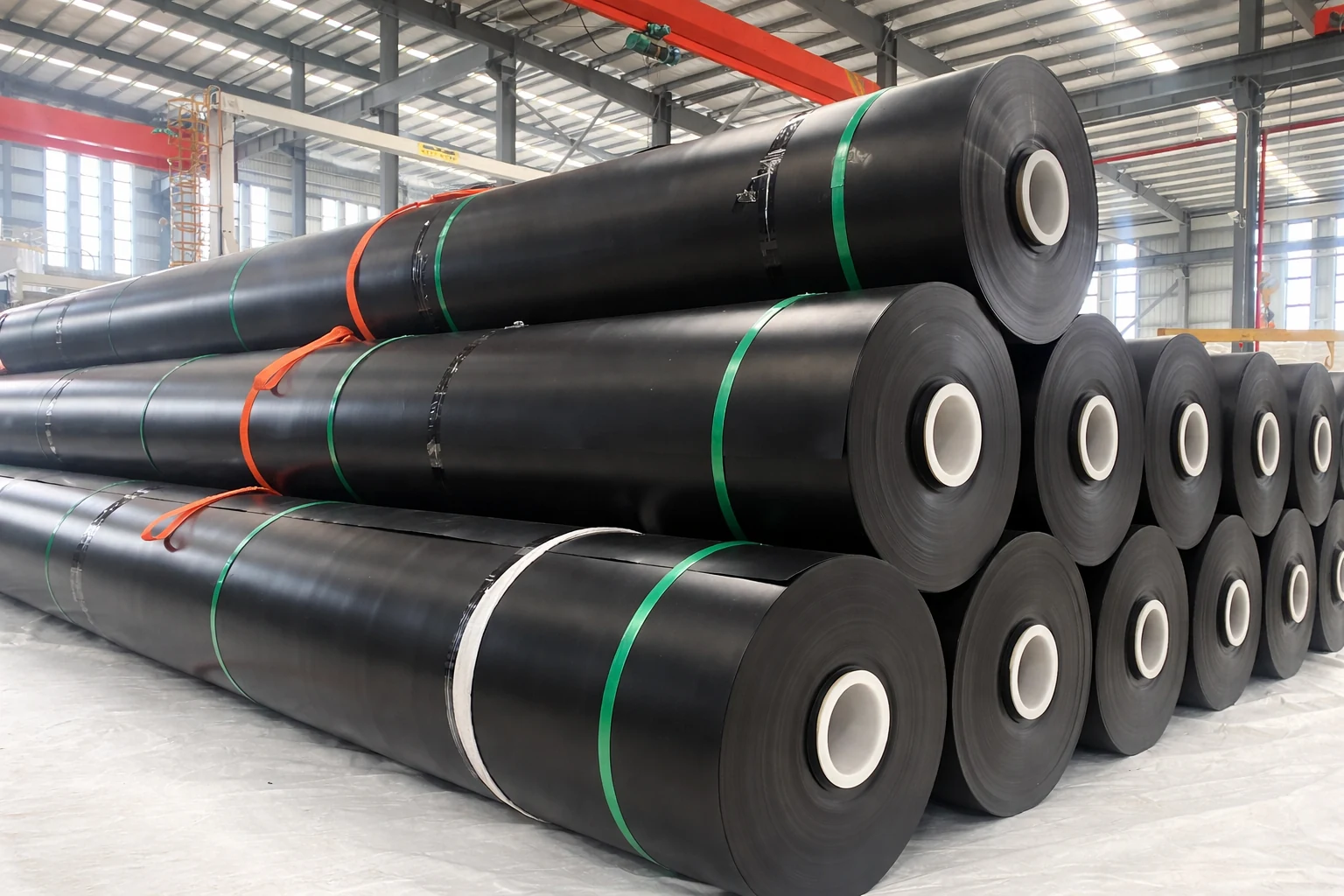
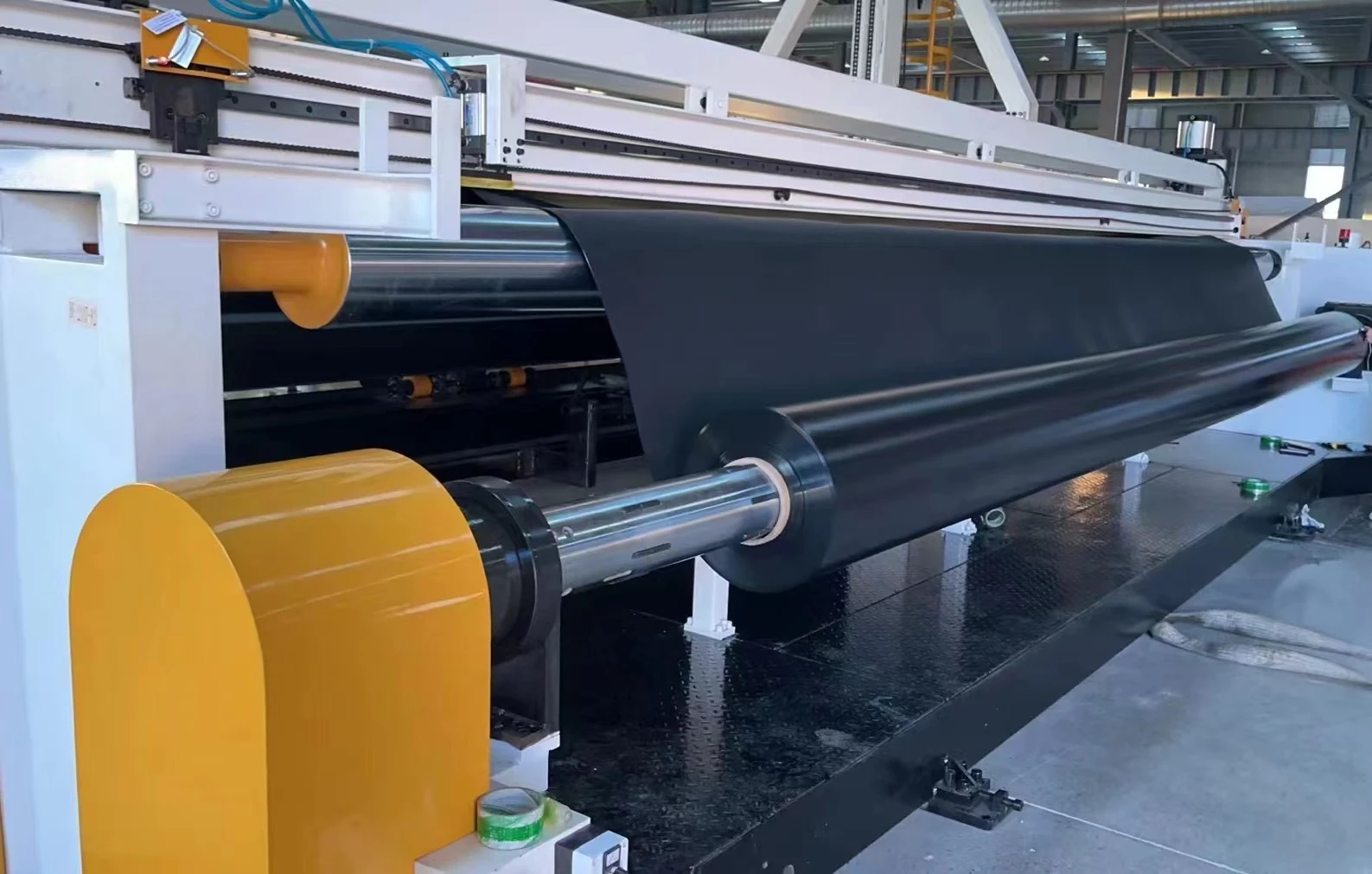
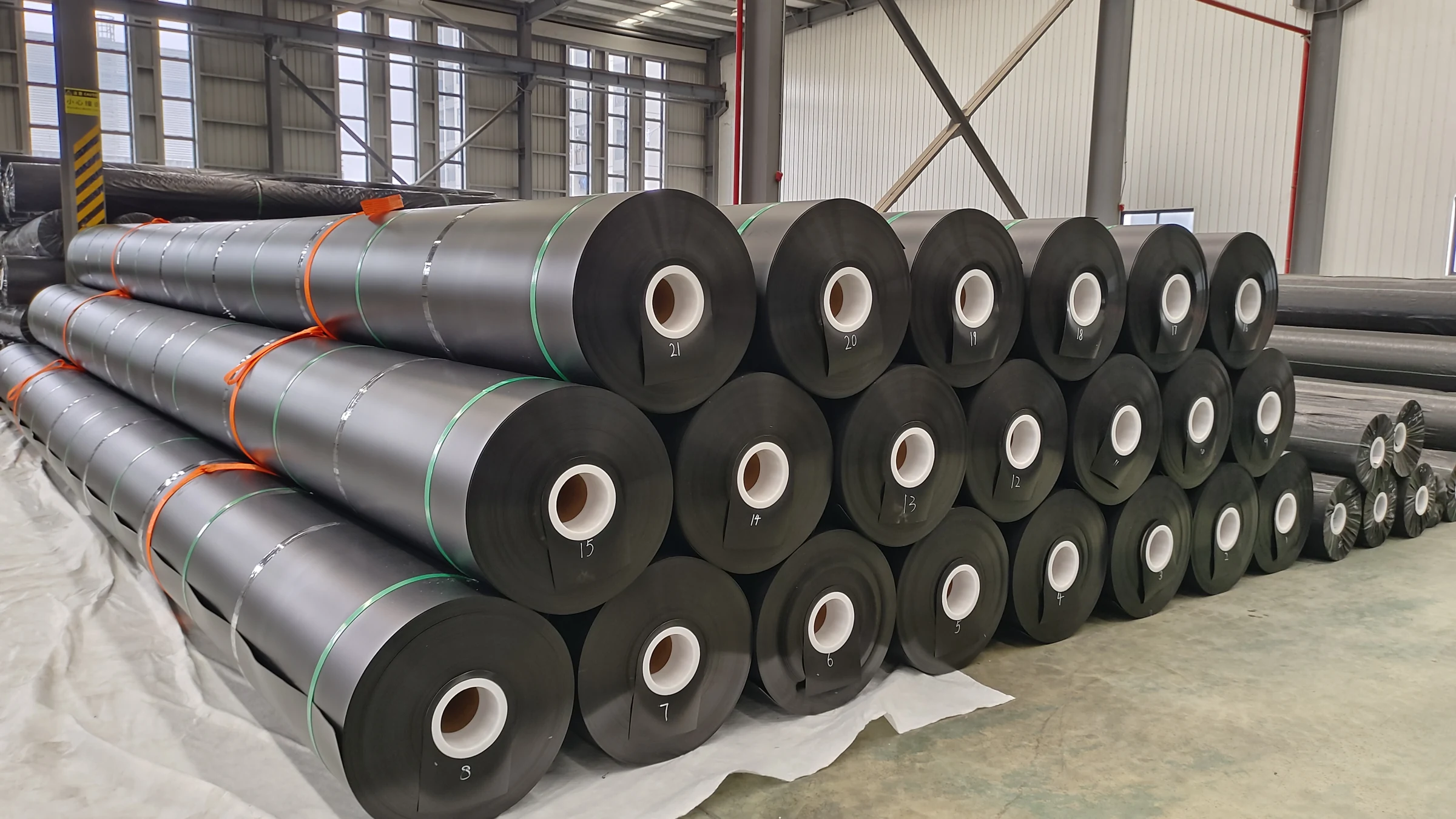
In the factory, black plastic pellets are melted in a 230°C furnace and extruded into flat plastic tapes about 2.5 mm wide, almost like noodles being pressed through a die. Large looms then interlace thousands of these black strips into a heavy woven sheet. A typical 200 lb-class material on the market weighs about 135 to 150 g/m². It is shipped in large rolls, usually 12.5 feet wide and 300 feet long.
When a 400-pound roll of this black fabric is spread over soft muddy ground, the crisscross woven structure can take severe mechanical stress without tearing. In laboratory ASTM D4632 tensile testing, it can withstand a 200 lb load in the machine direction, while elongation in the cross direction remains below 15%. On site, even a ten-wheel truck hauling 15 tons of crushed stone can drive directly across the uncovered fabric without snapping a single plastic strand.
Before installation, the subgrade must be leveled with a bulldozer so that elevation differences stay within 3 cm. Any buried hardwood roots must be removed, and stones larger than 5 cm in diameter must be picked out to prevent punctures later.
- Overlap adjacent sheets by at least 45 cm
- At curves, form a pleat every 1 meter and stitch it closed
- Drive 6-inch U-shaped steel pins along the seams
- Roll the fabric out in the direction of the wind to prevent lift
- At both ends, dig a 1-meter-wide shallow trench and bury the fabric edges
When the first load of stone is placed, truck tires must never touch the exposed woven fabric. The operator should use the reverse spread method, keeping the wheels on the already placed 6-inch stone layer while pushing material forward over the exposed fabric. For the initial lift directly against the fabric, standard practice is to use clean angular stone in the 1.5-inch to 2.5-inch range.
Once a 10-ton vibratory roller begins compacting, the sharp edges of the aggregate settle slightly into the openings of the woven grid. The flat plastic tapes act like countless tiny clamps, gripping the stone through strong mechanical interlock friction. Lateral stone movement is reduced by 80%.
Because the woven structure is extremely tight, there are very few openings for water to pass through. Its apparent opening size, or AOS, typically corresponds to 40 US Sieve. Water infiltration is slow—only about 4 to 5 gallons per minute per square foot.
To handle rainwater, the grader operator should crown the road, creating a 2.5% to 3% cross slope toward both sides. During heavy rain, water strikes the compacted stone surface and runs downslope into the 40 cm-deep V-shaped side ditches. The woven layer below keeps the limited infiltrated water from dragging subgrade soil upward into the stone base.
- Place a bottom layer of clean 3/4-inch crushed stone
- Cover it with a dense graded aggregate that includes stone dust
- Adjust moisture content to 5% to 7%
- Make 3 passes with a double-drum roller without vibration
- Extend the stone layer at least 30 cm beyond the fabric edges
This plastic fabric cannot tolerate prolonged exposure to sunlight. If the product has no carbon black UV-resistant additive, 500 hours of direct sunlight can reduce its original strength by about 70%. Once the fabric is spread, it must be fully covered with stone within 14 days.
With this layer in place, the structural capacity of the road improves significantly. A soft muddy road that once needed 12 inches of aggregate to prevent rutting can achieve the same rebound modulus with only 8 inches of crushed stone. On a single-lane haul road, every 100 feet installed can save roughly 20 tons of aggregate.
If the subgrade is so weak that a field foot test suggests a CBR below 2, two layers of heavy woven geotextile should be installed in a cross pattern. The bottom layer sits against the mud, and the upper layer bears the stone. Two rolls of 300 lb heavy-duty fabric together provide a combined thickness of about 1.5 mm. Even when an 80,000 lb timber truck drives across it, settlement can be held within 1.5 inches.
In swampy, clay-rich ground, however, a single woven layer can become clogged. Fine soil particles are forced into the grid openings. After 6 months of traffic, clogging can reach 90%, preventing water from draining downward. The road surface then stays saturated year-round.
- Excavate the top 40 cm of decayed organic mud
- Spread quicklime to draw moisture from the soil
- Place large chunks of broken brick as a drainage base
- Install a 300 lb heavy-duty woven grid
- Fill with clean, dust-free black basalt aggregate
In cold northern climates, frozen subgrade expands. Soil containing 30% moisture can increase in volume by 9% when frozen at -15°C. Between the stone layer and the frost-affected soil, the woven geotextile acts as an extremely tough slip layer. When spring thaw arrives, the 8-inch aggregate layer remains supported and does not mix down into the softened soil.
For routine maintenance, the grader blade should always remain at least 5 cm above the fabric. One careless movement can let the steel edge catch the geotextile and rip it open for several meters. Once that happens, the next heavy rain will allow mud to pump upward and swallow the aggregate.
Non-Woven Geotextile
In the factory, tons of chopped polyester fibers are fluffed and spread out like loose cotton. Tens of thousands of barbed needles punch up and down through the mat, entangling the fibers into a deep gray material resembling heavy felt. A typical 6 oz grade weighs about 200 g/m². Finished rolls are usually 15 feet wide, 300 feet long, and weigh around 250 pounds, so heavy that even two strong workers struggle to lift one.
This felt-like material is made from interlocked short fibers and contains countless microscopic pores. In ASTM D4491 permeability testing, it can pass 110 to 130 gallons per minute per square foot. On a perfectly flat yard with almost no slope, rainwater can disappear through the gravel and through the fabric in seconds, leaving not even a puddle as deep as a coin.
- Dig an open drainage ditch 12 inches deep along the edge
- Use a heavy steel rake to remove roots thicker than 1 inch
- Maintain a subtle 1% slope so water can flow to the ditch
- Overlap adjacent sheets by at least 18 inches
- Pin the edges every 3 feet with long steel staples
Once buried, it works like a large filter blanket. When a 3-ton pickup truck drives over a wet gravel road, the wheel loads force mud downward under pressure. The fiber network can retain soil particles as small as 0.15 mm, corresponding to around 100 US Sieve. Rainwater drains through, while the subgrade mud stays below.
But this material performs poorly when subjected to direct tension and puncture. In ASTM D4632 tensile testing, it typically starts tearing at only 120 to 160 lbs. If freshly blasted 4-inch angular quarry rock is dumped directly onto the exposed fabric, the results can be disastrous. A ten-wheel dump truck carrying 80,000 lbs can puncture it badly after only a few passes.
Experienced crews therefore place a 2 to 3-inch soft cushioning layer over the non-woven first. Crusher fines or smooth rounded river stone work especially well. This creates a stress-diffusion layer between the fabric and the large angular stone above. Even heavy sharp rock placed afterward will not leave whitening marks on the fabric surface.
- In low spots prone to standing water, excavate a trench 2 feet deep and 1.5 feet wide
- Line the trench with 8 oz non-woven geotextile
- Install a 4-inch perforated PVC drain pipe in the center
- Surround the pipe with clean 1.5-inch washed stone
- Fold the fabric flaps inward to seal it tightly like a wrapped burrito
Some loess soils become extremely soft when wet, and spring thaw turns roads into mud. Heavy truck traffic creates intense mud pumping, drawing slurry up from the subgrade and mixing it into the clean aggregate. A 6 oz non-woven layer can keep the upper 6 inches of gravel separated from the mud below so effectively that even after 10 years of daily traffic, no yellow clay can be found between the stones.
Polyester fibers, however, are very sensitive to sunlight. If a roll of uncovered non-woven felt is left in the yard for 30 days, tensile strength can drop by more than half. In practice, workers should lay it flat in the morning, pin it down, and have the first 10-ton truckload of cover stone placed the same afternoon so the fabric is shielded from direct light.
If you excavate a yard driveway after ten years, the gray felt beneath may still be intact. The original 8-inch gravel layer may have settled less than half an inch, and not a single 2-inch stone will have punched into the soil below. Over time, the money saved by avoiding repeated deliveries of 15 tons of replacement gravel every two years more than offsets the initial cost of the fabric.
- In winter, raise the steel edge of a snowplow blade by 1.5 inches
- Never rake the gravel aggressively with steel-tooth landscape rakes
- Regularly clean leaves and sediment out of both ends of the drainage ditch
- Fill shallow ruts immediately with 3/4-inch stone
In swamp conditions where mud can cover your ankles, the weakness of non-woven geotextile becomes obvious. If the subgrade has a CBR below 3, it simply cannot provide enough support. When heavy trucks drive over it, the fabric sinks with the mud and can elongate by 50%. Even without puncturing, the road surface can develop ruts as deep as 6 inches.
Heavy Traffic
Woven Geotextile Is the First Choice
A ten-wheel truck loaded with granite aggregate drives into a farm. The combined vehicle and load weight reaches 36,000 lbs. Beneath the tires lies freshly graded soil with a measured moisture content of 19%. Under the surface stone is a tightly stretched layer of black woven polypropylene geotextile.
This fabric feels like a reinforced fertilizer sack. It is woven from high-strength polypropylene tapes arranged in a tight crisscross pattern. Under a flashlight, you can count about 13 flat tapes per inch. Measured with calipers, the thickness is about 28 mil.
Cut a strip from the material and place it in a tensile tester. The screen passes 150 lbs, then 200 lbs. Only when the load reaches 315 lbs does the strip fail with a sharp snap.
Watching the elongation scale, it stretches only 13% before breaking. On the ground, it behaves like a stiff trampoline. The 36,000 lb truck presses down through four rear tires with a combined contact area of less than 480 sq. in. That creates a dead load of roughly 75 psi.
The wet, weak clay beneath cannot handle that pressure on its own. Its CBR is below 2.0. But the black woven geotextile, with tensile strength up to 315 lbs, forms a tensioned separation layer above the mud. As the wheels push the stone downward, the fabric resists by pulling outward in all directions.
The vertical load that was once concentrated directly beneath the tires becomes spread over nearly 2,000 sq. in.
- Point loading drops to about 22 psi
- Subgrade settlement stays below 0.2 inches
- The mud and the dry aggregate remain completely separated
- Excess water is squeezed out through the 0.4 mm openings
Now imagine a combine with 65-inch tires driving over the same road. The driver turns the steering wheel fully while stationary. The thick tread scrubs the surface hard, generating up to 3,500 lbs of lateral torsional force.
The crushed stone and fines remain locked into the texture of the woven fabric. Even under this severe friction, the high-strength polypropylene tapes do not shift by so much as 0.5 inch. The saturated clay remains stable below and does not pump upward.
| Laboratory Property | Instrument Reading | Real Farm Use |
|---|---|---|
| Grab tensile strength | 260–315 lbs | Supports the axle loads of heavy tractors |
| Elongation at break | 12%–15% | Prevents the road from collapsing into soft mud |
| Tear resistance | 95–120 lbs | Resists puncture from sharp stone |
| Apparent opening size | 40–70 US Sieve | Retains fine soil particles down to 0.05 mm |
At midday, the outdoor temperature rises to 98°F. Direct sunlight beats down on an uncovered roll of black fabric. UV-aging tests show that after 500 hours of sun exposure, the polypropylene tapes still retain more than 75% of their original tensile strength. Road crews work under the sun to keep the project moving.
Two weeks earlier, a storm dropped 2 inches of rain. The groundwater rose, and soil moisture increased to 22%. The base support test dropped to 1.8. Then a tractor carrying 4,000 gallons of liquid fertilizer rumbles across the road.
The rear axle alone applies 18,000 lbs of tractive force. Here the woven fabric does its job. Its water absorption is less than 0.1%, so moisture passes through the small openings between the tapes without reducing tensile performance.
As the tractor passes, the wet soil below makes only a dull compressed sound. With a trapezoidal tear resistance of over 250 lbs, the woven fabric resists downward puncture from sharp stone. Not a single rock is pushed into the mud below.
A loader then dumps a bucket of mixed aggregate onto the fabric. The load contains sharp 1.5-inch stones and fines. A full 2 tons of aggregate falls from 5 feet onto the 28 mil fabric. No puncture as large as a fingernail can be found.
A heavy bulldozer spreads the stone pile forward with its blade. The steel tracks run only on top of the aggregate. Underneath, the black fabric remains flat and smooth, without even a wrinkle. Finally, an 8-ton vibratory steel roller makes 3 full passes.
- Adjacent rolls are overlapped by 24 inches
- Dump trucks unload only on already placed aggregate
- The lower coarse stone layer is placed to a thickness of 8 inches
- The centerline of the road is kept 3 inches higher than the side ditches
After 6 years on the farm, milk tankers weighing 28,500 lbs fully loaded still drive over it three times a week. A straightedge laid across the road shows rutting in the wheel paths of less than 0.3 inches.
Why Non-Woven Geotextile Is Not Suitable
A log truck weighing more than 22,000 lbs drives across a newly built gravel road section. Beneath the tires is a black non-woven geotextile. After only one and a half months, the road has developed depressions as deep as 10 inches.
Excavate the stone from the rut and the fabric underneath feels like a soaked, worn-out felt blanket. This type of underlayment is made from millions of short polyester fibers tangled together like a sweater. In lab testing, it can elongate by nearly 90%, and some batches stretch to more than twice their original length.
- Individual fibers carry less than 4 lbs
- The needle-bonded junctions pull apart easily
- The original thickness compresses by more than half
- The tiny pores become completely clogged with mud
That 22,000 lb load is carried by only four tires with a combined contact area of about 450 sq. in. The downward pressure approaches 50 psi. The subgrade is wet and soft, with a moisture content of 18%.
The non-woven fabric sinks with the load. The fibers stretch under pressure, and the surface becomes soft and sagging. It cannot tension into a firm support layer, so the base develops humps and depressions.
Above it lies a 6-inch granite aggregate layer. Under normal conditions, the angular stones interlock into a rigid skeleton. But once the underlying fabric softens and stretches, the base loses support. The aggregate begins to settle and loosen.
The original porosity of the fabric is about 85%. Under heavy traffic, the original 4 mm fiber layer is compressed to just 1.2 mm. Groundwater carrying fine clay particles of around 0.02 mm turns into sticky slurry.
- Heavy pressure creates localized vacuum zones
- Ultra-fine clay penetrates through the polyester fiber network
- Aggregate friction drops below 0.15
- The top 3 inches of coarse stone become coated in mud
Slurry is forced into the compressed fiber network. The rough aggregate surfaces become smeared with slick yellow clay. A 12-ton pickup then brakes hard on the slope, pushing and pulling the aggregate forward.
The non-woven fabric cannot withstand this kind of violent tensile stress. The surface tears open almost instantly. After 3 days of heavy rain, the groundwater rises to within 8 inches of the roadbed. The full 250-foot road section turns into a saturated mess.
With heavy machinery crossing it twice a day, the material’s original tensile strength of only about 110 lbs is nowhere near enough. It cannot survive daily abuse from 12,000 lb farm equipment. Cracks that begin at 3 inches long extend to 18 inches.
- The road base settles by 0.4 inches per day
- More than twenty transverse tear points appear in the fabric
- 60 tons of good aggregate are swallowed by the soft subgrade
- The entire road section loses nearly 7 inches of elevation
Pull up the failed section and the fabric has already turned yellow-brown. Every gap between the fibers is packed with slurry, and the material tears apart in your hand. Its sponge-like drainage property becomes a liability under heavy load, simply helping good aggregate disappear into the mud.
Installation Efficiency
Field Comparison
Polypropylene tapes are stretched at 200°F and woven into a black sheet much like a plastic sack. Testing shows a tensile breaking strength of 200 lbs. A 11,500 lb Ford F-350 drives onto the surface over 1.5-inch crushed stone. The woven fabric behaves like a heavy-duty taut trampoline, spreading more than 80 psi of wheel pressure outward.
[Image of woven vs non woven geotextile structure]
That high strength comes with very small openings. The pore size is only about 0.425 mm, corresponding to 40 US Sieve. Each square foot can pass only 4 to 5 gallons of water per minute. In a storm producing 2 inches of rain per hour, water may not infiltrate fast enough. Instead, it runs off the smooth surface to the sides and washes away the dry shoulder soil.
Now consider a muddy site with moisture content above 30%, where an adult sinks 3 inches with a single step. Here, non-woven geotextile acts like a giant thick felt blanket, taking over the weak, sticky ground. An 8 oz non-woven has extremely high porosity and can pass about 90 gallons per minute per square foot. Groundwater rises and evaporates freely through it, while fine particles smaller than 0.18 mm remain trapped below.
[Image of geotextile under gravel road]
When 4 inches of stone are placed on the non-woven layer, the stone stays clean and free of mud contamination. A tracked bulldozer working over the site may create local subgrade collapse of 6 inches, but the fabric can stretch to 1.5 times its original size without breaking. Large rock placed above then drops into the depression and creates new support, restoring stability quickly.
| Physical Test Parameter | 200 lb Woven Geotextile | 8 oz Needle-Punched Non-Woven |
|---|---|---|
| Grab tensile strength | 200 lbs | 205 lbs |
| Elongation at break | < 15% | > 50% |
| Permeability rate | 4–5 gpm/ft² | 90–110 gpm/ft² |
| Apparent opening size | 0.425 mm | 0.18 mm |
| Cold-weather behavior | Weight unchanged, movable by 2 workers | Gains weight when frozen, requires 4 workers to pry loose |
Installing the wrong material on the wrong terrain can ruin the entire road. Lay non-woven geotextile across a dry hard slope with a 10-degree incline. Then imagine a 50,000 lb dump truck braking hard halfway down. The felt-like surface offers poor friction, and the tires can drag the surface stone and the fabric downslope by 2 to 3 feet.
Woven fabric, by contrast, stays in place on a steep slope. The 1.5-inch angular stone locks firmly into the woven texture. But if woven fabric is used in a constantly saturated swamp, a heavy truck can generate 120 psi of hydraulic pressure. Water trapped beneath the fabric scours the mud below like a pressure washer.
- Wrong use of non-woven on a slope: a 50,000 lb truck braking hard causes the fabric and stone to slide 2 feet
- Correct use of woven on a steep slope: 1.5-inch stone locks into the weave and disperses braking forces
- Wrong use of woven in a swamp: 120 psi water pressure scours the mud, causing mud boils within 3 months
- Correct use of non-woven in soft mud: elongation above 50% allows it to survive 6-inch local settlement without rupture
A non-woven fabric as thick as 90 mil is extremely hard to handle in 30°F frosty weather. A layer of 1/2-inch morning dew can freeze inside it and add 20 lbs to the roll weight. Four strong workers using metal pry bars may be needed just to move it. Woven geotextile shows no such change. Two workers can unroll 200 feet along a forest road in 10 minutes.
Cutting also shows a big difference. A 12.5-foot wide woven fabric can be sliced along the grain in 7 seconds with a carbon steel utility knife. The same width of heavy non-woven fabric tangles around a standard blade. Workers need a large curved hook knife and much more force. Cutting the same width can take 45 seconds, leaving white fiber fuzz all over the ground.
- Cutting woven fabric at room temperature: one pull with a carbon steel blade, 7 seconds for 12.5 feet
- Cutting non-woven at room temperature: requires a large hook knife, 45 seconds, with heavy fraying
- Handling woven fabric in cold weather: original weight unchanged, 2 workers can lay 200 feet in 10 minutes
- Handling non-woven in frost: gains 20 lbs after absorbing and freezing moisture, requires 4 workers and pry bars
Expert Tips
Before road construction, strip off the topsoil. Use a 1.5-ton mini excavator with a 24-inch grading bucket to remove 2 to 3 inches of soft soil until firm clay with a bearing capacity of 1,500 psf is exposed. Do not leave organic topsoil with roots beneath the road. Repeated passes from a 5,000 lb wheel load can drive roots upward like nails and puncture the fabric. Build the driveway 12 feet wide and keep the center 3 inches higher than the edges, creating about a 2% cross slope.
Rainwater should drain from the center into 18-inch-deep side ditches. Geotextile is extremely vulnerable to sunlight. UV exposure makes polypropylene brittle very quickly. A woven fabric that originally withstands 300 lbs of pull can drop to only 148 lbs after 14 days under direct sun with a UV index above 8.
At the factory, the rolls are wrapped in 4 mil black UV-resistant plastic. Do not remove this packaging until the morning of installation. Once unwrapped and laid down, cover it with aggregate within 48 hours. Work in sections: unroll 100 feet of 12.5-foot wide fabric, overlap 1.5 feet, and keep 11 feet of usable drive width.
At noon under direct sun, the black surface can reach 140°F. Coarse-tread work boots can easily create permanent stretched depressions as deep as 1/4 inch. In summer, install it before 10 a.m. or after 4 p.m. At 90-degree driveway turns, excess fabric will bunch up on the inside edge.
Cut relief slits 12 to 15 inches long every 5 feet along the inner edge, then fold the extra fabric flat like a paper fan. Secure the folds with 8-inch No. 11 hot-dip galvanized steel pins driven diagonally. A 0.12-inch diameter pin driven at a 45 to 60-degree angle grabs more subgrade and doubles the pullout resistance compared with a vertical pin.
- Pin spacing:
- Straight sections: 6-inch pins every 4 feet
- Seams: 8-inch pins every 3 feet
- In strong Force 7 winds: reduce spacing to 2 feet
- In muddy waterlogged ground: switch to 12-inch anchors with plastic load plates
Heavy dump trucks are one of the easiest ways to destroy geotextile. A tri-axle truck loaded with No. 3 crushed stone can weigh nearly 50,000 lbs, with its tandem tires spanning 8 feet. If the tires spin for even one second on the smooth fabric, they can tear a 3-foot rip.
Have the driver dump the first load of stone about 3 feet from the start of the fabric at a thickness of roughly 8 inches. A 9,000 lb tracked loader should then work from the top of the stone, pushing it forward while keeping the bucket edge 2 to 3 inches above the fabric. The first lift should consist of clean angular aggregate in the 1.5 to 2.5-inch range.
Before rolling, the stone layer must be at least 6 inches thick. A 3 to 5-ton double-drum roller operating at up to 3,300 vibrations per minute can destroy the fabric if the stone cover is too thin. First make 2 passes without vibration, then compact with low-frequency vibration until aggregate voids are reduced from 35% to 15%, reaching a compacted unit weight of 135 lbs/cu.ft.
- Fabric repair procedure:
- Shut down equipment: move all heavy machinery at least 10 feet away
- Clear the area: remove aggregate within 2 feet of the tear
- Cut a patch: make it extend 3 feet beyond the damaged area on all sides
- Lay the patch flat over the tear without stitching
- Cover by hand with 3 inches of stone and strike it 5 times with a 10 lb tamper
If you encounter a 2-inch pine root or a large sharp stone, chop it flat with a long-handled axe. Then place an extra 3-foot square scrap of geotextile over that point. Two layers together can resist a local puncture load of 500 psi.
If the driveway slope exceeds 15 degrees—roughly a 27% grade—pins and stone alone will not hold the fabric. Rent a portable 110V hand-held bag closer and stitch the sheet edges together. Use decay-resistant Teflon thread, with a seam density of 3 to 4 stitches per inch.
A stitched seam can withstand 240 lbs of tensile force, enough to keep the fabric from pulling loose when a fully loaded truck brakes on the slope. In muddy ground where water appears within 12 inches of excavation, an excavator can turn the subgrade into slurry. In those conditions, spread a 2-inch layer of coarse sand before placing the fabric.
That sand layer disperses the excavator track pressure of 6.5 psi. After the fabric is laid, use large 3 to 4-inch rock for the first stone lift. A single stone can weigh up to 50 lbs, and its own weight helps press the fabric firmly into the sand below, locking the system in place.