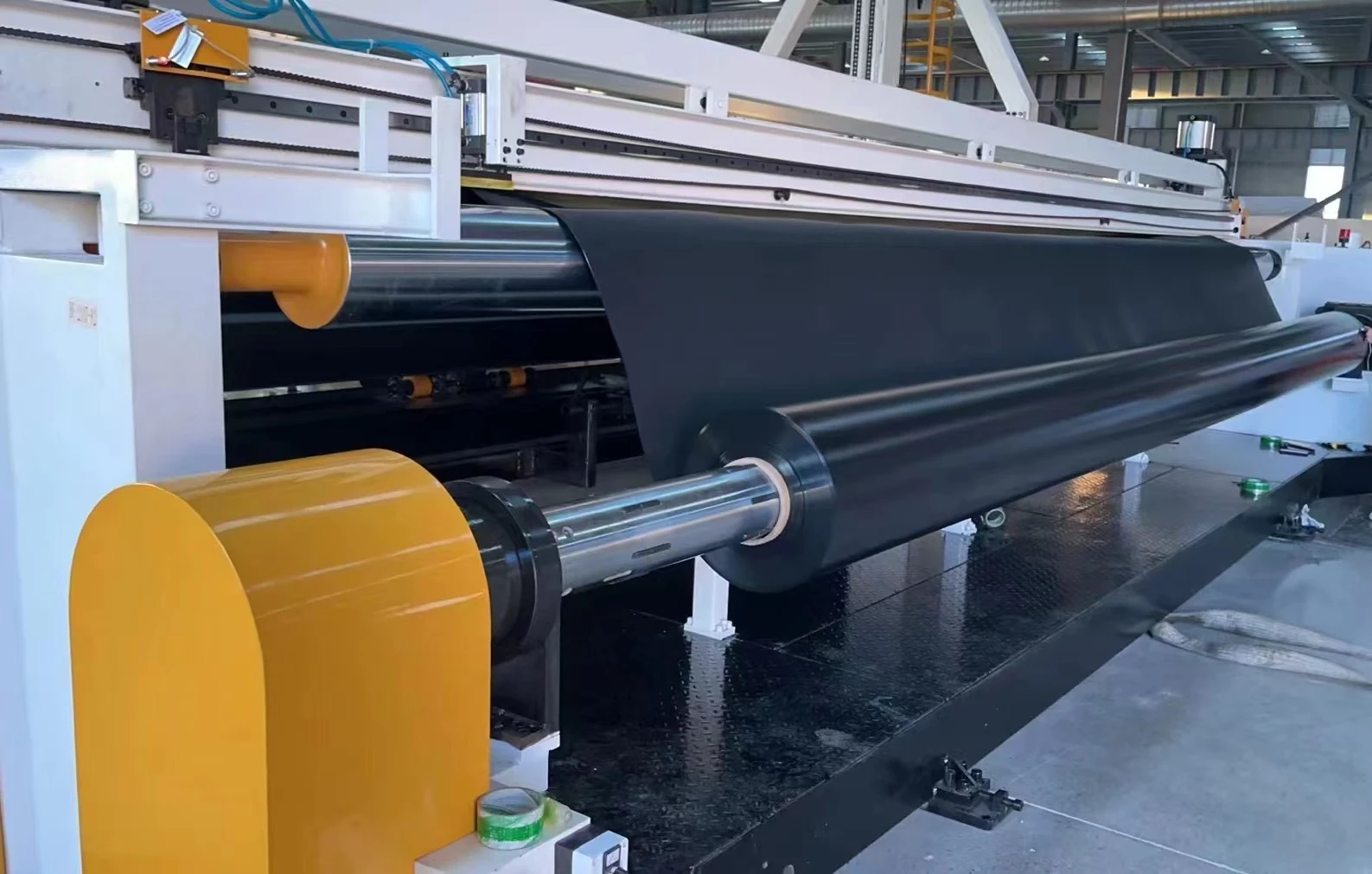
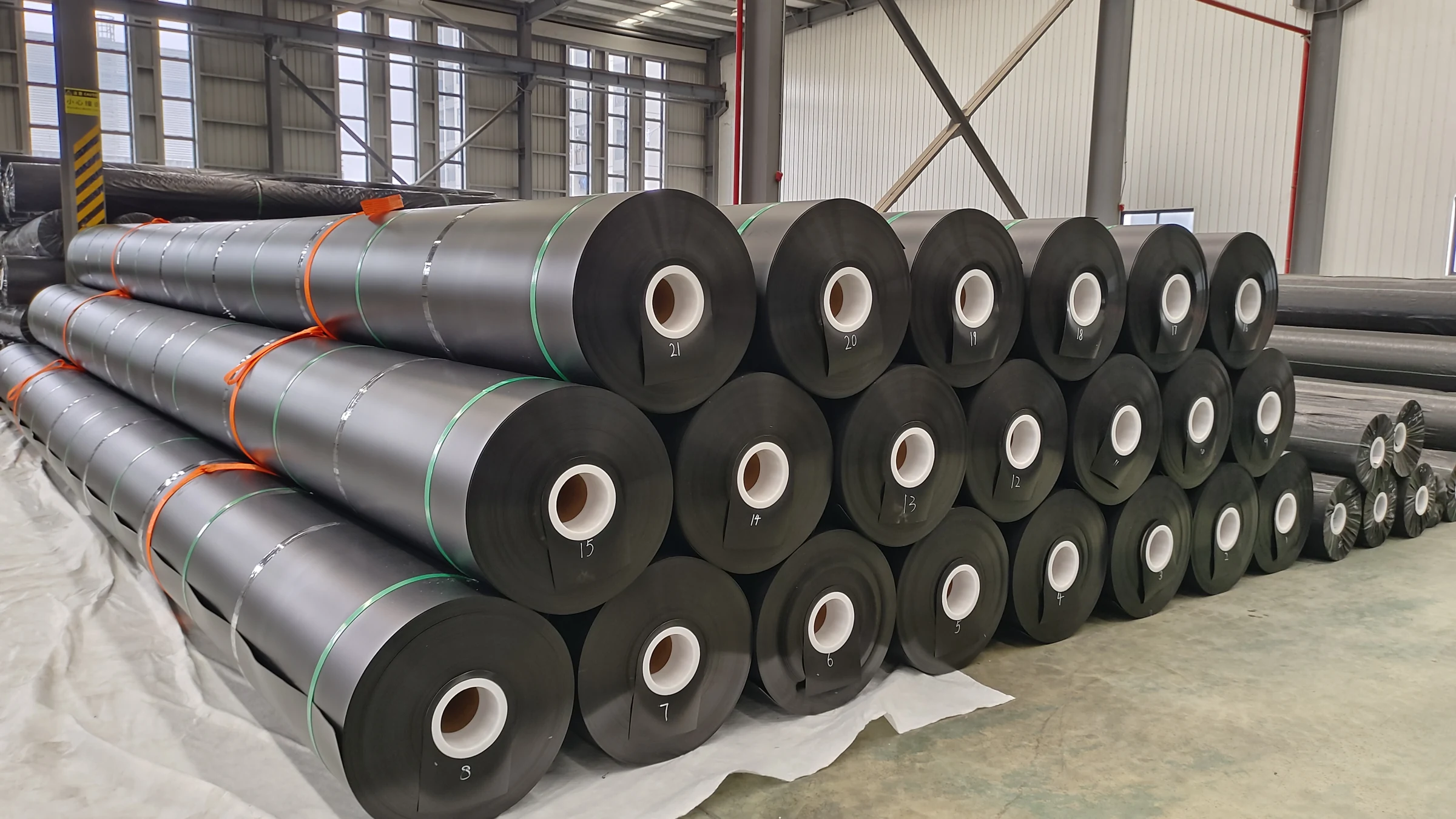
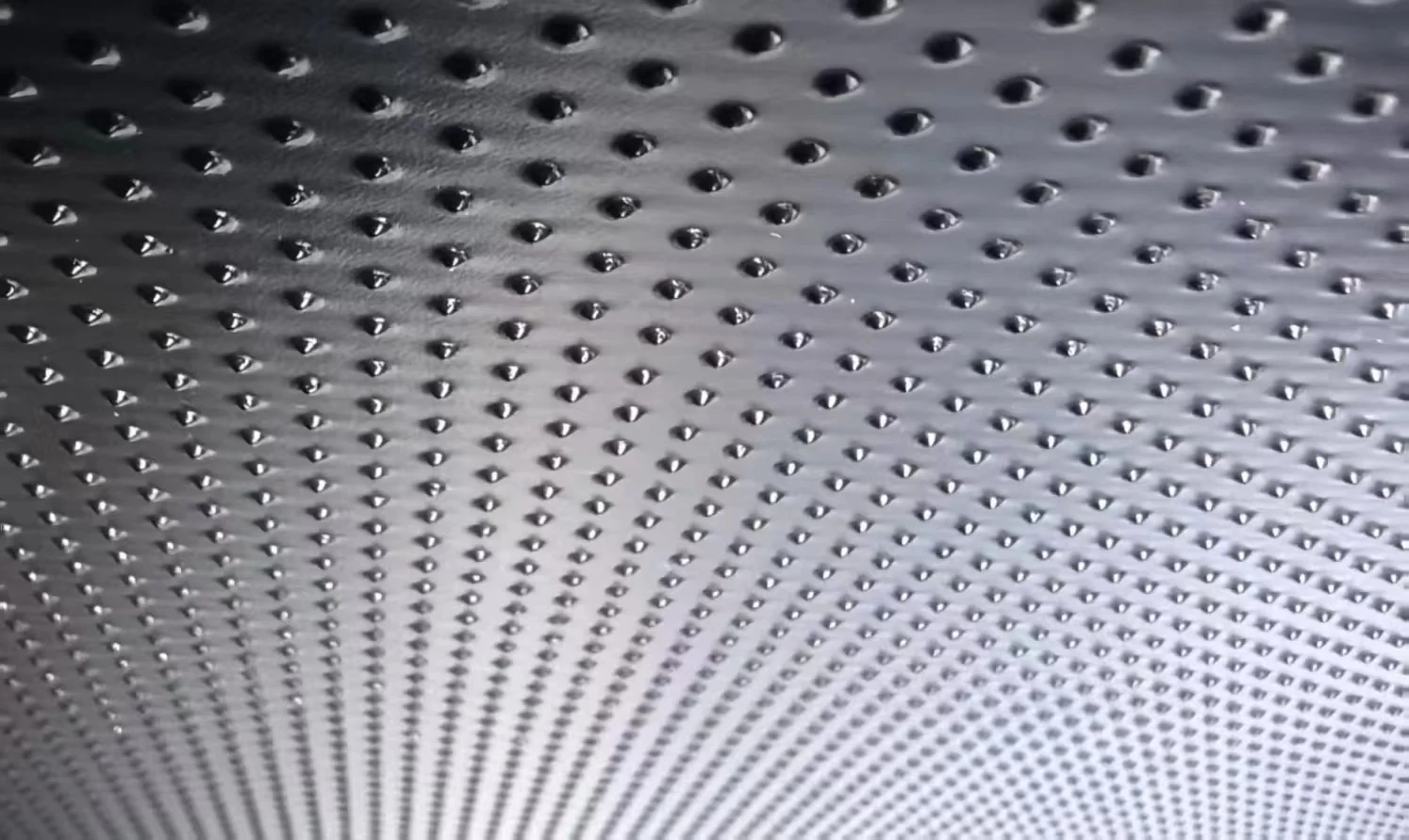
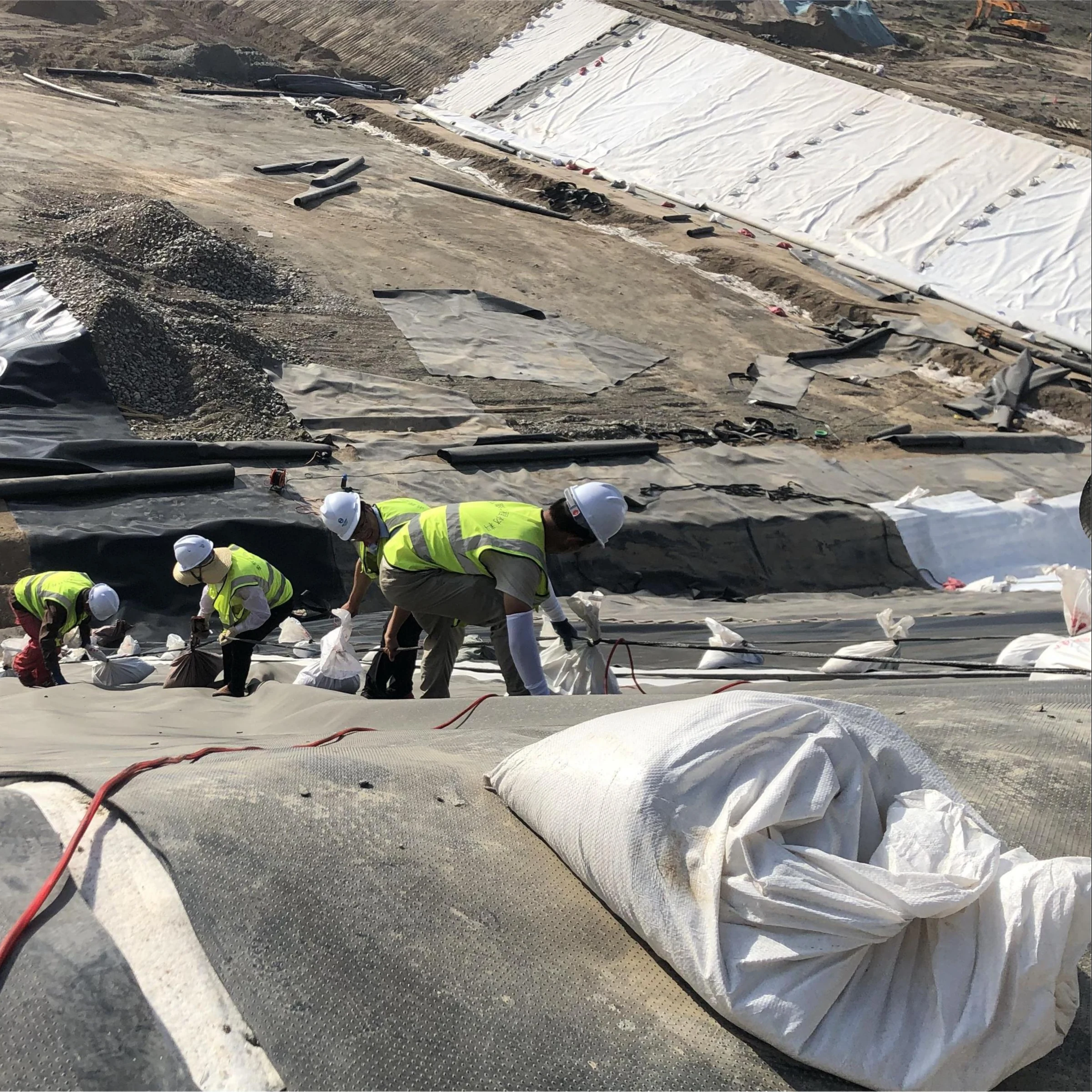
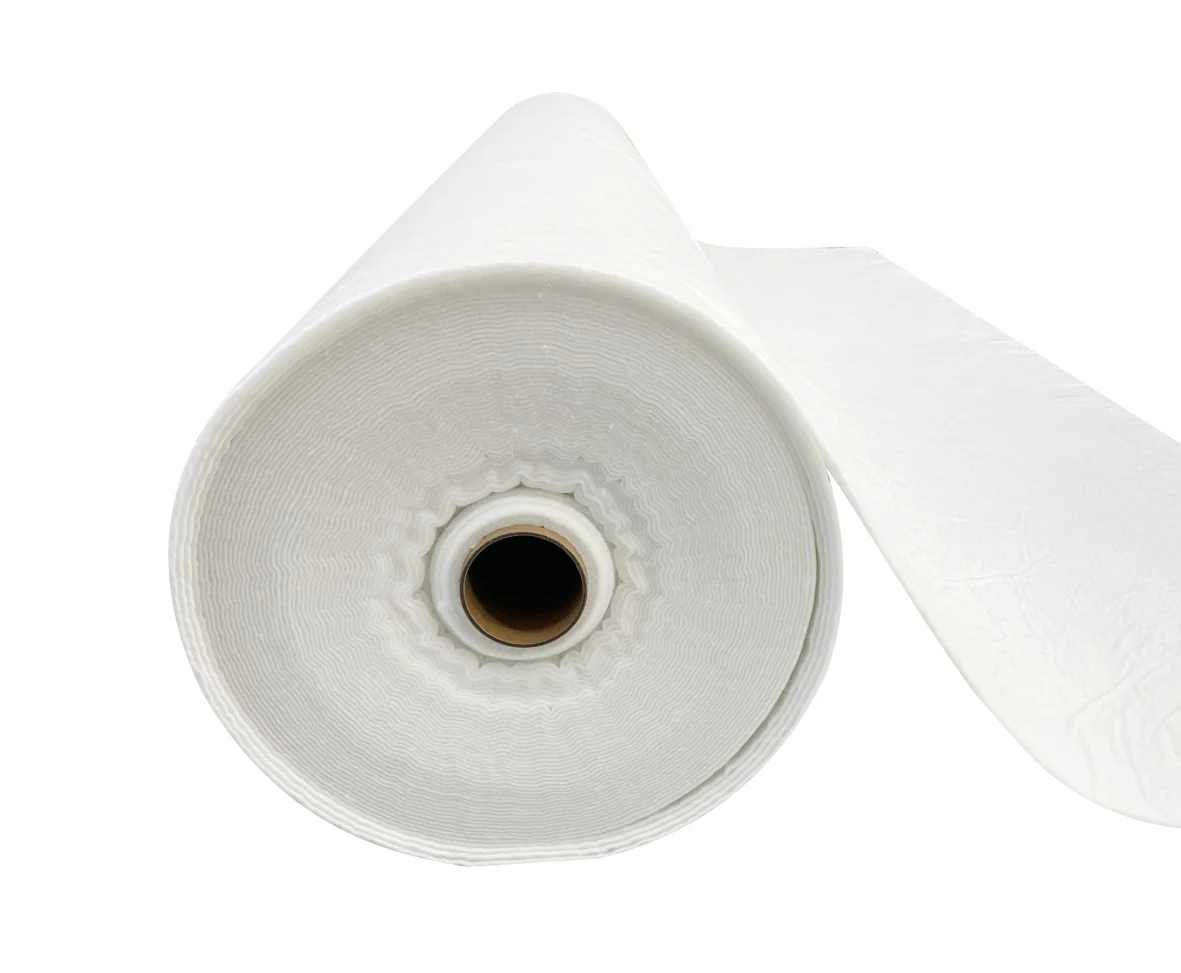

That reinforcement changes how the liner reacts to pulling, punctures, cuts, settlement, folding and field joining. It also affects shipping weight, handling, seam length and installation cost.
There is another detail buyers need to know: RPE is a broad commercial term, not one single material specification. The Geosynthetic Institute has separate specifications for temporary reinforced polyethylene barriers, reinforced LLDPE geomembranes and reinforced composite polyethylene geomembranes.[1]
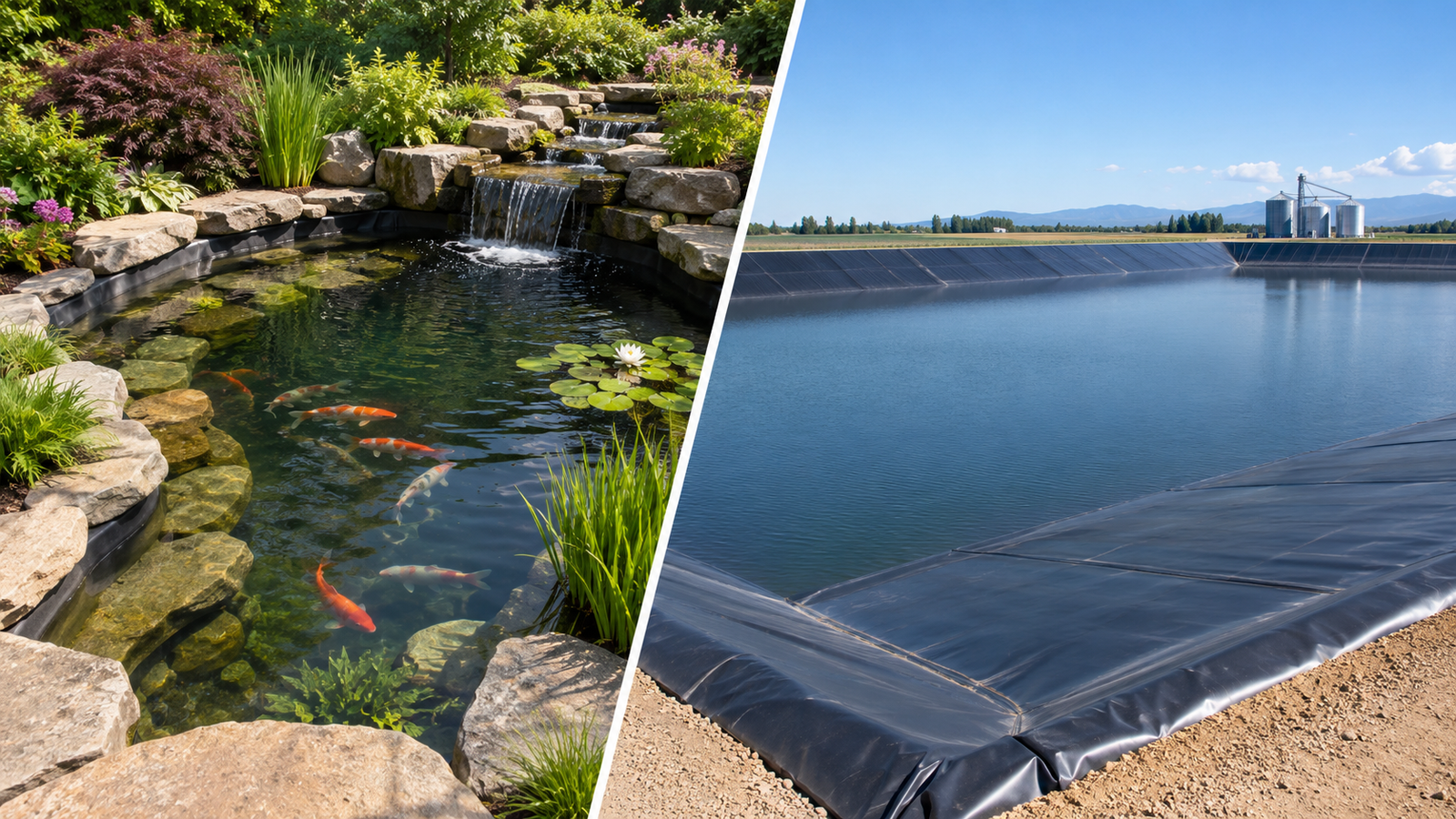
HDPE vs. RPE at a Glance
| Factor | HDPE | RPE |
|---|---|---|
| Construction | Homogeneous high-density polyethylene sheet | Polyethylene layers with woven or scrim reinforcement |
| Typical thickness range | GRI-GM13 covers 30–120 mil HDPE | Varies by construction; standardized products range from thin temporary barriers to 45 mil+ reinforced geomembranes |
| 60 mil equivalent | About 1.52 mm | Thickness alone does not indicate equivalent performance |
| Weight | Higher at common engineered thicknesses | Often lighter per unit area |
| Elongation | High for smooth HDPE | Usually much lower because the reinforcement limits stretch |
| Tear behavior | Resistance increases with thickness | Internal reinforcement can help limit tear propagation |
| Handling | Stiffer and heavier | Usually easier to move and unfold |
| Field seams | Normally thermal welded and tested | Large factory-fabricated panels may reduce field seams |
| Chemical containment | Widely specified, subject to compatibility checks | Depends strongly on the exact product construction |
| Specification framework | Mature GRI-GM13 framework | Depends on which reinforced PE product is being supplied |
| Typical fit | Permanent engineered containment | Projects where low weight, panel size, tear control, or temporary service matter |
Why Thickness Alone Does Not Settle the Comparison
One mil is one-thousandth of an inch. Common liner thicknesses convert roughly like this:
- 20 mil = 0.51 mm
- 30 mil = 0.76 mm
- 40 mil = 1.02 mm
- 60 mil = 1.52 mm
- 80 mil = 2.03 mm
- 100 mil = 2.54 mm
With HDPE, added thickness means more solid polymer over the same area. GRI-GM13 covers smooth and textured HDPE geomembranes from 30 to 120 mil and sets minimum physical, mechanical, aging and testing requirements.[2]
For smooth HDPE, the minimum mechanical values rise steadily with thickness:
| HDPE Thickness | Yield Strength | Tear Resistance | Puncture Resistance |
|---|---|---|---|
| 40 mil / 1.0 mm | 84 lb/in | 28 lb | 72 lb |
| 60 mil / 1.5 mm | 126 lb/in | 42 lb | 108 lb |
| 80 mil / 2.0 mm | 168 lb/in | 56 lb | 144 lb |
| 100 mil / 2.5 mm | 210 lb/in | 70 lb | 180 lb |
A 60 mil smooth HDPE geomembrane also has a minimum break strength of about 228 lb/in and a specified break elongation of 700% under the relevant GRI-GM13 test framework.[2]
RPE works differently because part of its strength comes from the reinforcement inside the sheet. A thinner reinforced liner can carry substantial load without behaving anything like an HDPE sheet of the same thickness.
GRI-GM25 gives a good example. It covers scrim-reinforced LLDPE geomembranes in nominal 24, 36 and 45 mil categories. Minimum grab tensile strength rises from 150 lb at 24 mil to 250 lb at 45 mil, while minimum elongation is 22%. Minimum tongue-tear resistance is 55 lb for these categories.[3]
Do not put those figures beside HDPE strip-tensile values and rank them directly. The test methods and units are different.
What Does “RPE” Actually Mean?
A quotation that says only “30 mil RPE” does not tell you enough.
GRI-GM22 covers reinforced polyethylene geomembranes for exposed temporary applications. It includes 8, 12 and 20 mil classes and is aimed at temporary service. These products should not automatically be treated as substitutes for permanent geomembranes.[4]
GRI-GM25 covers scrim-reinforced LLDPE at nominal 24, 36 and 45 mil.[3]
GRI-GM30 covers reinforced composite polyethylene geomembranes. It includes separate requirements for tensile strength, tear resistance, puncture resistance, hydrostatic resistance, dimensional stability, adhesion and UV exposure.[5]
All of these may be called reinforced polyethylene in everyday conversation. That does not make them the same material.
Before comparing an RPE quote with an HDPE geomembrane liner, check the actual polymer, reinforcement, thickness, weight, test methods, seam requirements, UV data and intended service conditions.
HDPE vs. RPE Cost: Compare Installed Cost, Not Roll Price
The cheapest roll is not always the cheapest finished liner system.
A real project budget can include:
- geomembrane material;
- factory fabrication;
- freight and unloading;
- subgrade preparation;
- geotextile protection;
- deployment labor;
- field welding or joining;
- seam testing;
- repairs and penetrations;
- construction quality documentation.
Project size can move the numbers quickly. On 100,000 ft², a material difference of $0.10/ft² becomes $10,000. At $0.25/ft², it becomes $25,000.
Field-seam costs can pull the calculation the other way.
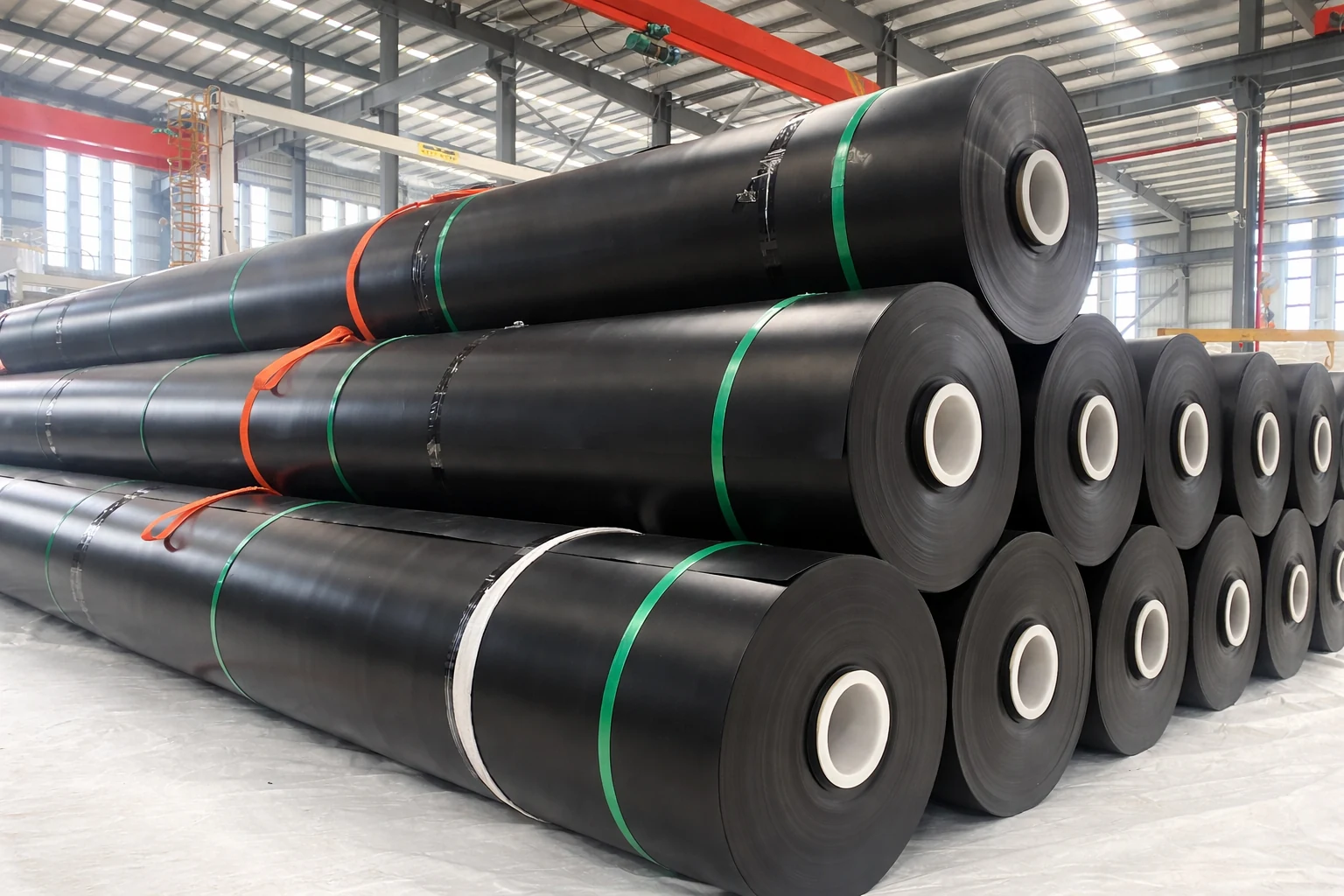
Jinseed’s HDPE liner is produced in rolls up to 8.0 m wide. As a simple flat-area example, a 100 m × 100 m site lined with 8 m-wide strips in one direction would need about 13 strips before overlaps, slopes, edge details and waste are added. That means about 12 main longitudinal seams, or roughly 1,200 m of seam.
A large factory-fabricated reinforced panel may need fewer field joins. That can be valuable on remote sites or where the weather window for welding is short.
On a straightforward site with an experienced HDPE crew, wide rolls and efficient fusion welding can still keep total installed cost competitive.
Compare the real installed cost
Send the project area, dimensions, required thickness, slope layout, quantity, and delivery destination. Jinseed can calculate an HDPE roll layout and quotation so material quantity, seam length, freight, and protection layers can be compared on the same basis.
How Much Heavier Is HDPE?
GRI-GM13 specifies a formulated HDPE density of at least 0.940 g/cm³.[2]
Using 0.940 g/cm³ as a simple basis, 1.5 mm HDPE weighs about 1.41 kg/m². A 10,000 m² project therefore contains roughly 14.1 metric tons of membrane before packaging and normal production variation.
GRI-GM25 lists nominal weights of about 112, 168 and 210 lb per 1,000 ft² for 24, 36 and 45 mil reinforced LLDPE. That works out to roughly 0.55, 0.82 and 1.03 kg/m².[3]
Across 10,000 m², those nominal weights equal about 5.5, 8.2 and 10.3 metric tons.
That weight difference becomes very real on a remote site where rolls have to travel over poor roads, be moved with limited machinery or be carried into position by a small crew.
How Tensile Strength Differs
With HDPE, tensile capacity rises with thickness because the whole sheet carries the load.
Under GRI-GM13, increasing smooth HDPE from 40 to 80 mil raises minimum tensile yield strength from 84 to 168 lb/in. At 100 mil, it reaches 210 lb/in.[2]
RPE carries load differently. Much of its tensile strength may come from the internal yarns or scrim. Strength can also differ between machine and cross-machine directions, and the bond between the reinforcement and the outer polymer layers matters.
This is why a 200 lb grab-tensile result for one RPE product cannot be compared directly with a 126 lb/in HDPE strip-tensile result. The test method, specimen width, loading direction and units have to match first.
Reinforcement Can Help Limit Tear Propagation
Reinforcement becomes especially useful once a cut has already started.
In a solid sheet, the end of a cut becomes a concentrated stress point. In a reinforced membrane, structural yarns cross that damaged area and can help spread the load instead of letting the tear run freely.
That does not mean every RPE product has a higher measured tear strength than every HDPE liner.
GRI-GM25, for example, specifies 55 lb minimum tongue-tear resistance for its reinforced LLDPE categories. GRI-GM13 minimum tear resistance for smooth HDPE rises from 42 lb at 60 mil to 56 lb at 80 mil and 70 lb at 100 mil.[3][2]
Again, the test methods differ, so those numbers are not a direct ranking. The practical value of reinforcement is that it can help stop a local tear from spreading through the laminated sheet.
Puncture Numbers Must Use the Same Test Method
A 60 mil smooth HDPE liner has a GRI-GM13 minimum puncture resistance of 108 lb under ASTM D4833. At 80 mil it rises to 144 lb, and at 100 mil it reaches 180 lb.[2]
RPE data sheets may use ASTM D4833, ASTM D6241 CBR puncture or another method. Those tests use different specimen setups and loading conditions. The values should not be dropped into one table and compared by size alone.
The ground beneath the liner matters just as much. A sheet over smooth compacted soil faces a very different puncture risk from one sitting on crushed rock or coarse drainage aggregate.
Added Thickness Does Not Replace Subgrade Protection
Water pressure increases by about 9.8 kPa for each meter of depth.
At 2 m, pressure near the bottom is about 19.6 kPa. At 5 m it is about 49 kPa. At 10 m it is close to 98 kPa.
That pressure pushes the membrane against the surface below it. Smooth ground spreads the load. A sharp stone squeezes the same load into a tiny contact point.
Where the base includes angular aggregate, rough concrete, exposed rock or hard protrusions, a non-woven geotextile can cushion the geomembrane.
GRI-GT12 covers nonwoven geotextiles used to protect or cushion geomembranes and includes product classes from about 340 to 2,000 g/m².[6]
So if the site has sharp aggregate, fixing the subgrade and adding suitable protection may do more than simply buying a thicker liner and leaving the point-load problem in place.
Check the substrate before increasing liner thickness
Send photos of the prepared subgrade, maximum liquid depth, drainage aggregate size, and proposed liner thickness. Jinseed can review whether smooth HDPE alone or an HDPE plus PET geotextile protection system is more suitable for the site condition.
HDPE and RPE Handle Deformation Differently
Smooth HDPE made to GRI-GM13 has a specified minimum break elongation of 700%.[2]
That is a laboratory value at break. It is not the allowable design strain for a finished containment system.
Reinforced liners stretch much less because the scrim limits movement. GRI-GM25 reinforced LLDPE, for example, specifies minimum elongation of 22%.[3]
Lower stretch can be useful when dimensional stability is important. Higher polymer elongation can help where the subgrade may deform locally.
If settlement is significant or the geometry is very irregular, unreinforced LLDPE may also be worth evaluating rather than treating HDPE and RPE as the only options.
Installation Is One of the Biggest Practical Differences
HDPE becomes quite stiff at 1.5, 2.0 or 2.5 mm thickness.
Large projects are usually installed one roll at a time. Hot-wedge fusion is commonly used for long production seams, while extrusion welding is used around patches, penetrations, repairs and other details.
GRI-GM13 Revision 19, issued in June 2025, added HDPE seam specifications to its appendix instead of relying on GRI-GM19 for those HDPE seam requirements.[2]
This gives both the sheet and its welded seams a defined framework for evaluation. A seam does not have to be judged by appearance alone.
RPE is often lighter and may be fabricated into large panels before it reaches the site. Fewer field seams can make a big difference where installation time is short or welding equipment is difficult to use.
The joining method still has to match the specific RPE construction. Layer adhesion, reinforcement layout, heat response and seam peel or shear performance can vary from one product to another.
Why HDPE Is Common in Permanent Engineered Containment
HDPE has a mature specification framework covering density, tensile properties, tear and puncture resistance, stress cracking, oxidation resistance, carbon black, UV exposure, dimensional properties and seam performance.
GRI-GM13 requires a formulated HDPE density of at least 0.940 g/cm³ and carbon black in the 2.0–3.0% range, along with endurance and aging requirements.[2]
Those measurable limits make HDPE easier to specify on projects that require batch records, material acceptance testing, seam logs and construction quality assurance.
Landfills Show How Specifications Change Material Choice
U.S. municipal solid-waste landfill rules give a clear example. For the composite liner described in 40 CFR §258.40, the flexible membrane liner must be at least 30 mil thick, while an HDPE component must be at least 60 mil.[7]
That is a specific U.S. requirement for that landfill design. It is not a universal rule saying every pond or containment project needs 60 mil HDPE.
In a landfill liner system, the base, side slopes, leachate collection layer, protection geotextile, settlement and seam quality all affect the final material choice.
On Slopes, Surface Friction Can Matter More Than Sheet Thickness
Steep landfill slopes, heap-leach pads, reservoirs and embankments create an interface-stability issue that a flat pond bottom does not have.
Where sliding between layers is a concern, a textured HDPE geomembrane can provide more interaction with soil, geotextile, drainage composites or cover material than a smooth sheet.
The real interface shear strength should be checked with the materials and loading conditions planned for the project. One generic friction value cannot represent every site.
That is why the same project may use smooth HDPE on flat areas and textured HDPE on slopes.
Chemical Resistance Must Be Checked Against the Actual Liquid
HDPE is used with many acids, alkalis, salts, leachates and industrial liquids. Even so, the polymer name alone is not enough for high-consequence chemical containment.
Temperature, concentration, exposure time, mechanical stress and the complete liquid mixture all affect compatibility.
EPA Method 9090A evaluates how chemical exposure changes flexible membrane liner properties. Liner samples are exposed to the relevant chemical environment and checked for physical changes over time.[8]
This matters especially in landfill leachate, industrial wastewater, process ponds, secondary containment and mining liner systems exposed to acidic or alkaline liquids.
HDPE vs. RPE for Large Ponds and Reservoirs
For a large permanent reservoir with simple geometry and access to professional welding, HDPE is often easier to specify. Thickness, tensile behavior, puncture resistance, aging properties and seam requirements can all be defined before installation starts.
The required HDPE thickness still depends on depth, ground condition, project risk, local standards and the design itself. A small farm pond should not automatically receive the same specification as a large industrial reservoir.
RPE becomes more attractive when low weight, remote access, limited lifting equipment or very large prefabricated panels noticeably reduce the amount of site work.
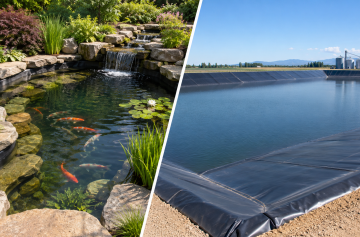
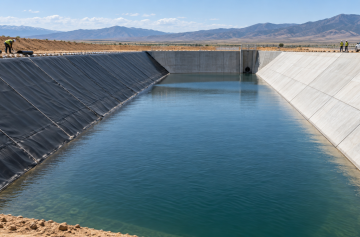
Jinseed’s hydraulic engineering applications cover reservoirs, canals, dams, farm ponds, stormwater basins and industrial wastewater ponds using geomembrane systems selected for the actual hydraulic and site conditions.
HDPE vs. RPE for Aquaculture
Commercial fish and shrimp ponds often have large, simple basin shapes. That makes welded polyethylene liners practical.
Smooth HDPE creates a continuous barrier that can be cleaned between production cycles and separates the pond water from the soil underneath. Jinseed’s aquaculture geomembrane systems include HDPE liners for commercial pond applications.
RPE can also work in water-storage and aquaculture projects when the exact construction suits the application.
For fish production, look at the finished product rather than assuming every sheet called polyethylene uses the same resin, additives, coating, fabrication method or seam system.
RPE Has a Strong Case for Temporary Containment
Temporary construction basins, remediation covers, short-term storage ponds and temporary pads often value quick deployment and low handling weight more than the long-term performance expected from landfill or mining containment.
GRI-GM22 specifically covers reinforced polyethylene geomembranes for exposed temporary applications and includes 8, 12 and 20 mil classes.[4]
Using a heavy permanent HDPE system for a low-risk area needed only during a short construction phase can add weight, specialist welding and cost without adding much practical value.
When RPE Requires More Technical Documentation
Be careful with any quote that lists only “RPE,” a thickness and a price.
You need to know whether it is a temporary reinforced PE barrier, reinforced LLDPE geomembrane, reinforced composite membrane or another proprietary construction.
For permanent exposure, chemical containment, regulated facilities or projects where leakage has serious consequences, ask for more than a product name. UV data, seam performance, test methods, chemical compatibility, intended service conditions and the manufacturing standard should all be clear before approval.
What to Compare Before Buying
| Check | What to Request |
|---|---|
| Material construction | Exact polymer type, reinforcement material, scrim configuration, and applicable GRI or project specification |
| Thickness and weight | Nominal thickness, minimum thickness, tolerance, and mass per unit area |
| Tensile and elongation | Values in machine and cross-machine directions with the ASTM test method and units |
| Tear and puncture | Values plus test methods; do not compare D4833 directly with D6241 or unrelated tests |
| Aging performance | UV, oxidation, and stress-crack data appropriate to the material and intended exposure |
| Seams | Factory or field seam method, minimum peel/shear requirements, and field-testing procedure |
| Chemical exposure | Compatibility information for the actual liquid, concentration, temperature, and operating condition |
| Installation system | Roll or panel layout, subgrade condition, geotextile protection, penetrations, anchors, and required quality documents |
Turn the project requirements into a final liner specification
If you already know the application, area, liquid type, depth, slope condition, required standard, and delivery port, Jinseed can prepare the HDPE thickness, surface type, roll dimensions, geotextile option, batch-document requirements, and commercial quotation in one project package.
Finally
HDPE is usually the more established option for permanent engineered containment. RPE can be a better practical fit when low weight, large panels and reinforced tear control reduce field work. Compare total installed cost, test methods, seams, subgrade protection, chemical exposure, UV conditions and required service life—not thickness or roll price alone.