
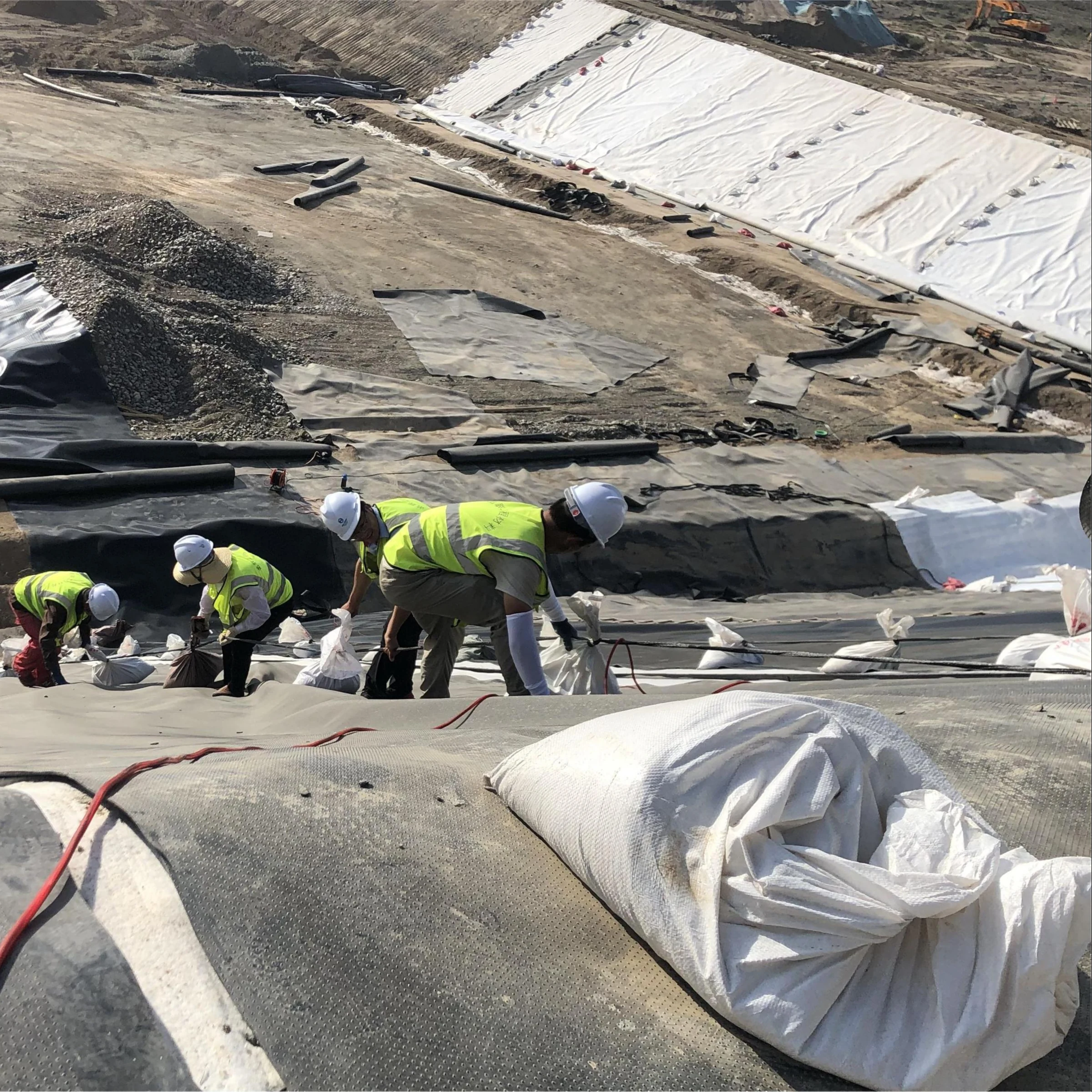

Short answer on cap thickness
The HDPE thickness for a landfill cap must come from the approved cover design. If you are comparing 40, 60 and 80 mil sheet, those correspond approximately to the 1.0, 1.5 and 2.0 mm nominal grades; none is a universal cap minimum. For US municipal solid waste landfills, 40 CFR 258.60 specifies cover performance and soil layers, not an HDPE membrane gauge [1]. GRI-GM13 Revision 16 provides manufacturing requirements for these HDPE grades, but does not select a thickness for your site [2].
Before ordering, have the project designer confirm the nominal thickness, smooth or textured surface, protection layers and acceptance criteria. A 1.0 mm smooth sheet on a flat area or a 1.5 mm textured sheet on a slope is a possible specification, not a recommendation that can be made from the slope position alone.
Is 60 mil required for a cap?
Not by the federal MSW final-cover rule. Under its prescriptive provisions, the final cover must have permeability no greater than that of any bottom liner or natural subsoils present, or 1 × 10⁻⁵ cm/sec, whichever is less. It also requires an infiltration layer of at least 18 inches of earthen material, approximately 457 mm, and an erosion layer of at least 6 inches, approximately 152 mm, capable of sustaining native plant growth. The director of an approved State may approve an alternative cover with equivalent infiltration reduction and erosion protection [1].
The often-quoted 60-mil HDPE minimum belongs to the composite bottom-liner option in 40 CFR 258.40, not the cap rule. That option requires at least a 30-mil flexible membrane, increased to at least 60 mil when it is HDPE, in direct and uniform contact with at least two feet of compacted soil having hydraulic conductivity no greater than 1 × 10⁻⁷ cm/sec [3].
These are US federal MSW provisions. Check applicable state, local and permit requirements rather than treating them as worldwide specifications.
What changes from 40 to 60 mil?
For smooth HDPE, the GRI-GM13 Revision 16 minimum-average puncture, tear and tensile strength values increase with nominal thickness. Moving from 40 to 60 mil raises the listed values below by 50%. That is a comparison of manufacturing quality control (MQC) requirements, not proof that a cap will withstand 50% more construction loading [2].
| Property and test | 40 mil grade | 60 mil grade | 80 mil grade |
|---|---|---|---|
| Index puncture, ASTM D4833 | 72 lb | 108 lb | 144 lb |
| Tear resistance, ASTM D1004 | 28 lb | 42 lb | 56 lb |
| Tensile yield / break, ASTM D6693 Type IV | 84 / 152 lb/in | 126 / 228 lb/in | 168 / 304 lb/in |
| Yield / break elongation, ASTM D6693 | 12% / 700% | 12% / 700% | 12% / 700% |
Values are from the specification’s English-unit table. Its separate metric table lists 1.0, 1.5 and 2.0 mm grades; those labels are conventional grade pairings, not exact conversions. For example, exactly 60 mil equals 1.524 mm. Tensile values are minimum averages in both machine and cross-machine directions; break elongation uses a 2-inch gauge length in the English-unit table. Neither the puncture values nor the elongation values are allowable field loads or design strains [2].
Use the required project specification to decide whether 40 mil is acceptable or whether 60 or 80 mil is needed. The table compares grades; it cannot establish puncture protection, settlement tolerance or suitability for a particular cover section.
Does texture change the thickness choice?
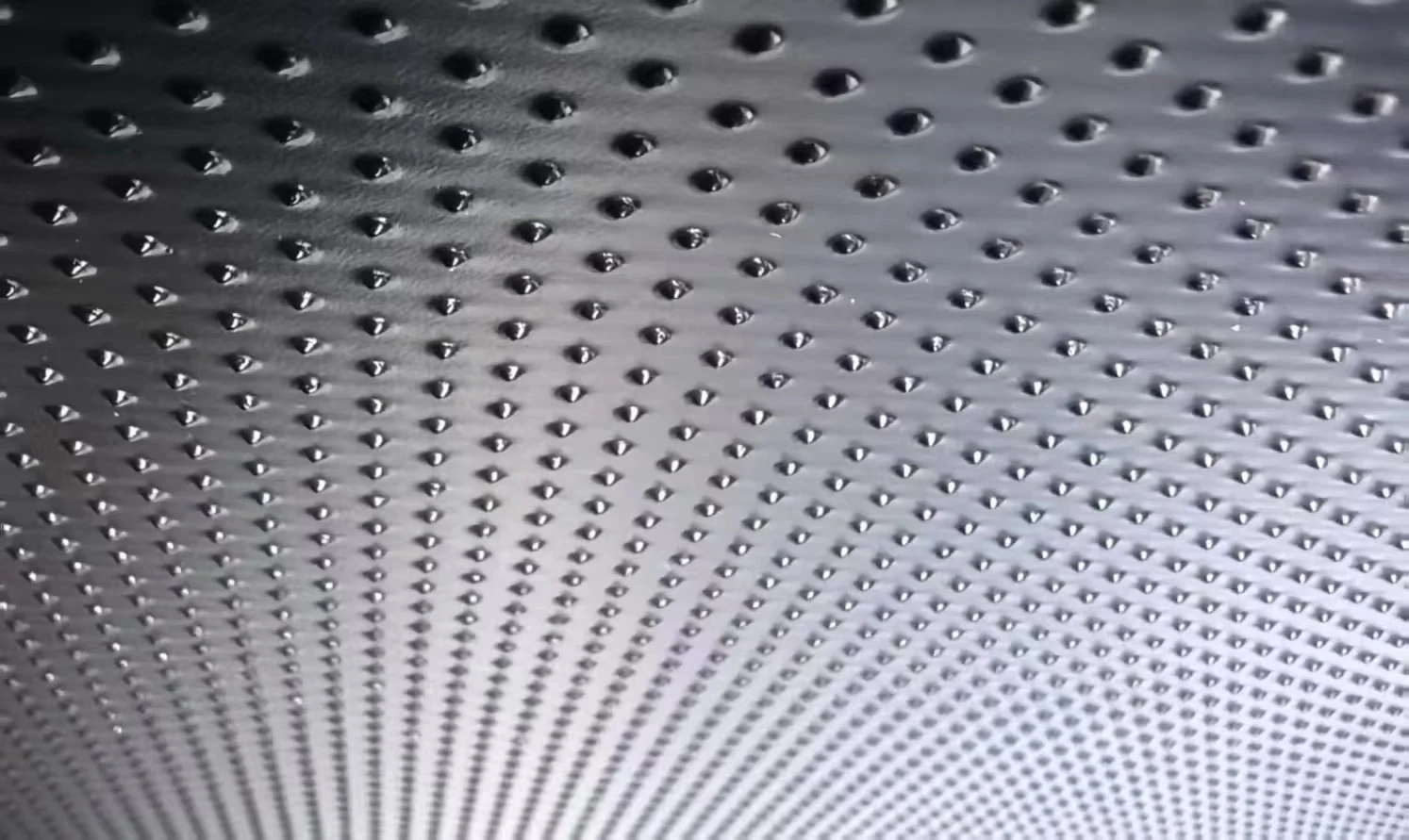
Surface and thickness are separate specifications. Smooth thickness is measured under ASTM D5199; textured core thickness is measured under ASTM D5994. GRI-GM13 Revision 16 specifies a minimum-average asperity height of 16 mil, or 0.40 mm in its metric table, under ASTM D7466. Asperity height describes surface geometry, not a friction coefficient or a safe slope angle [2].
At the 60-mil grade, the textured minimum-average puncture value is 90 lb versus 108 lb for smooth sheet. The corresponding tensile break values are 90 versus 228 lb/in, with minimum-average break elongations of 100% versus 700%. These are different specification thresholds, not predictions of the exact point at which an installed liner will fail [2].
For a landfill barrier and protection system, the designer must evaluate the adjacent materials and loading, not simply replace a thinner textured sheet with thicker smooth HDPE. Specify the single- or double-sided textured surface and any geomembrane protection geotextile as parts of the approved cover section.
Settlement and exposure limits
Extra gauge does not remove the need to design penetrations and prepare an acceptable subgrade. The federal post-closure provisions require maintenance of cover integrity, including repairs for settlement, subsidence and erosion. The usual care period is 30 years, but the State director may shorten or extend it. That period is not an HDPE service-life guarantee [4].
If settlement is a concern, have the designer assess the polymer as well as thickness; an LLDPE geomembrane alternative requires its own specification rather than acceptance against the HDPE table above. The landfill application page distinguishes the containment applications to identify when preparing a material enquiry.
A thicker grade also does not establish an allowable exposure period. GM13’s oven-aging and UV requirements assess retained OIT under specified laboratory conditions; they do not state how many weeks a cap panel may remain uncovered. Confirm exposure limits, temporary restraint and covering procedures for the actual product and site [2].
Our manufacturing and documentation role
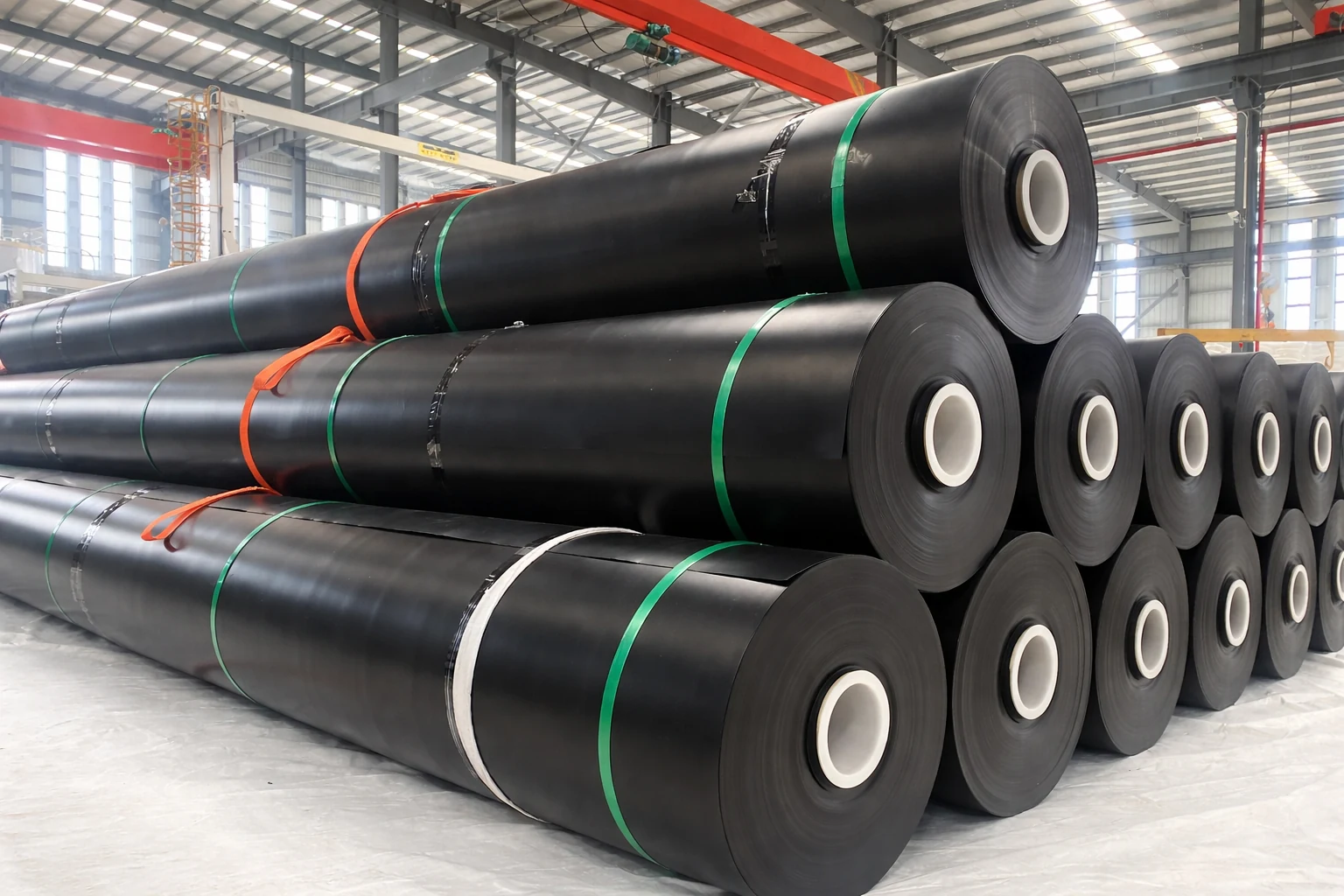
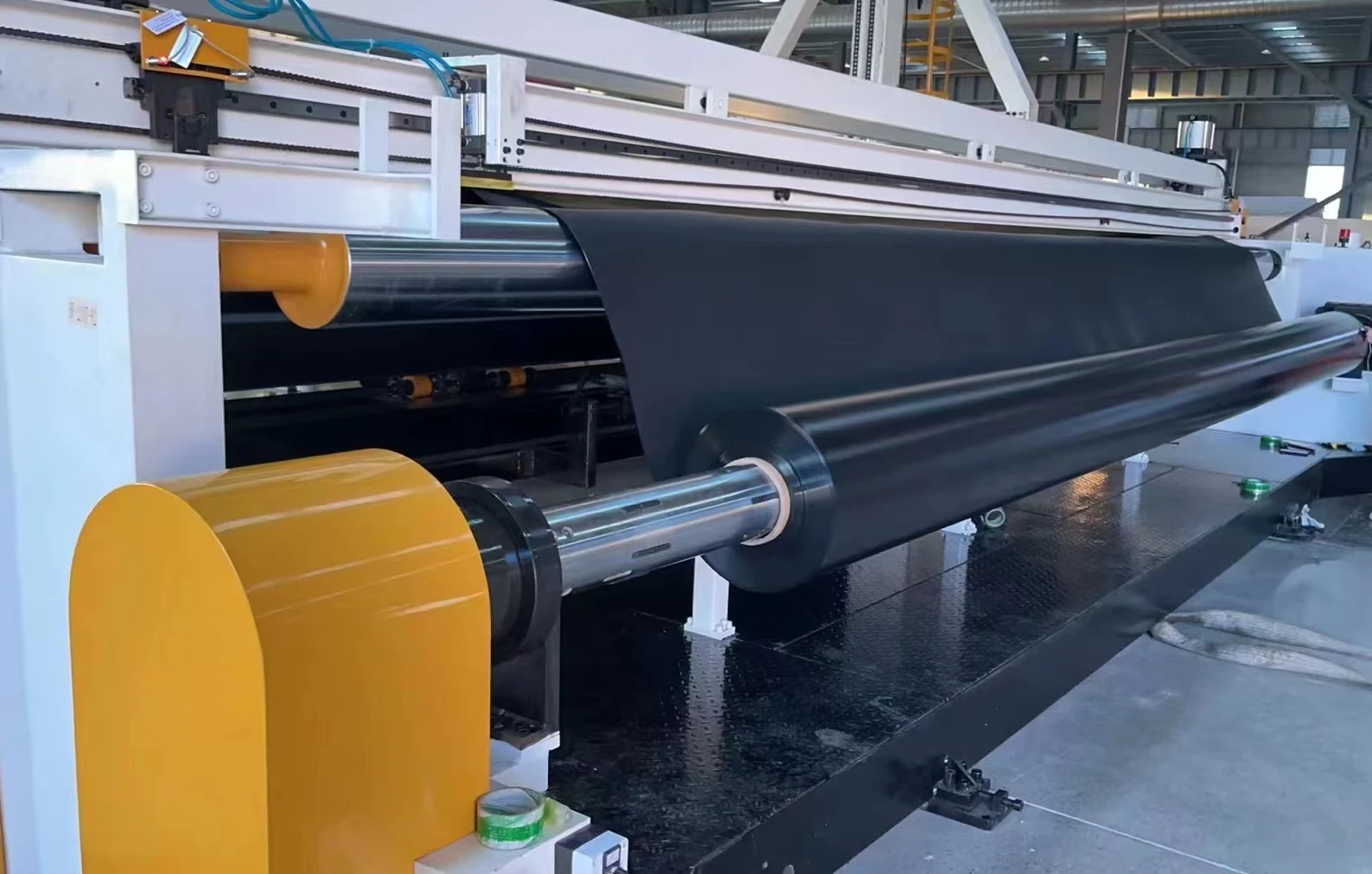
Our HDPE geomembrane manufacturing profile describes Jinseed’s facility in Zhaoqing, Guangdong, smooth and textured grades from 1.0 to 3.0 mm, and roll widths up to 8.0 m. Our published quality-control process includes incoming-material checks, finished-product inspection and retained product samples. These are manufacturing capabilities, not evidence that a particular thickness has been approved for your cap.
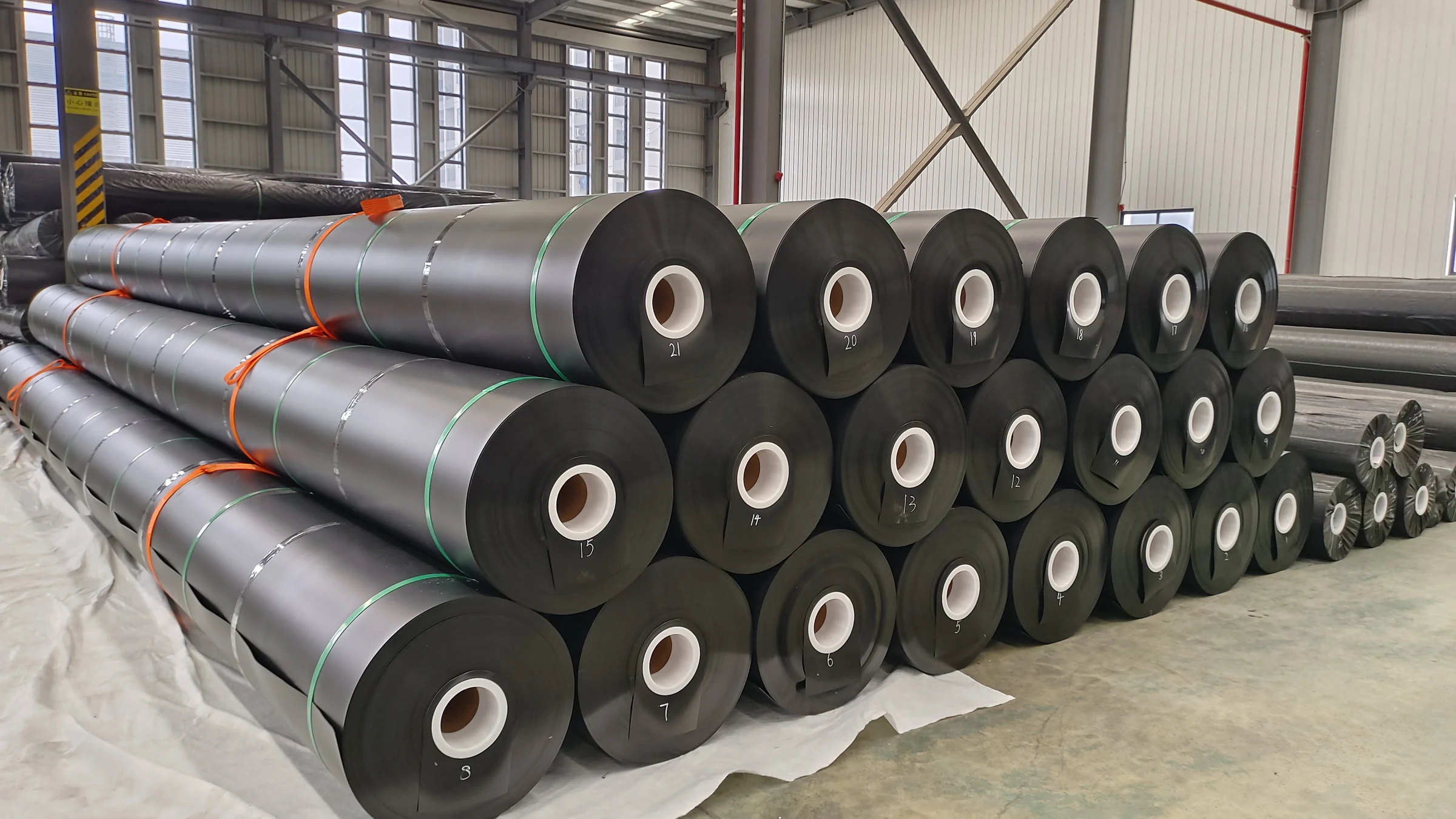
For a concrete procurement example, if your drawing specifies 1.5 mm double-sided textured HDPE, the enquiry should identify that grade, the applicable specification revision, core-thickness acceptance limits and the required batch records. A smooth-grade data sheet alone would not document the specified textured product. Ask for records linked to the roll IDs on the packing list, and confirm the scope of any additional testing before ordering.
What to check before installation
Check the delivery against the approved material schedule, not a label such as “1.5 mm premium grade”:
- Confirm polymer, nominal thickness, surface orientation, test method and the specified average and individual thickness limits. GM13 requires thickness testing per roll [2].
- Match grade-specific property reports, batch identification and roll numbers to the material received. A general product sheet is not an order-specific test report.
- Agree the inspection plan for subgrade acceptance, trial welds, seam testing, repairs and penetrations before covering the sheet.
- Have qualified personnel perform installation and acceptance work under the approved design and applicable local rules.
The regulatory discussion here concerns municipal solid waste landfill units, the scope addressed by the EPA’s MSW landfill program [5]. For the final thickness decision, obtain the approved cover section in writing. Select the gauge, surface and protection together rather than treating any one mil number as a complete cap design.
Planning a landfill cap? Send the permitted section.
Share the specified gauge, surface, and cover detail, and we will check availability and documents against that grade.
