
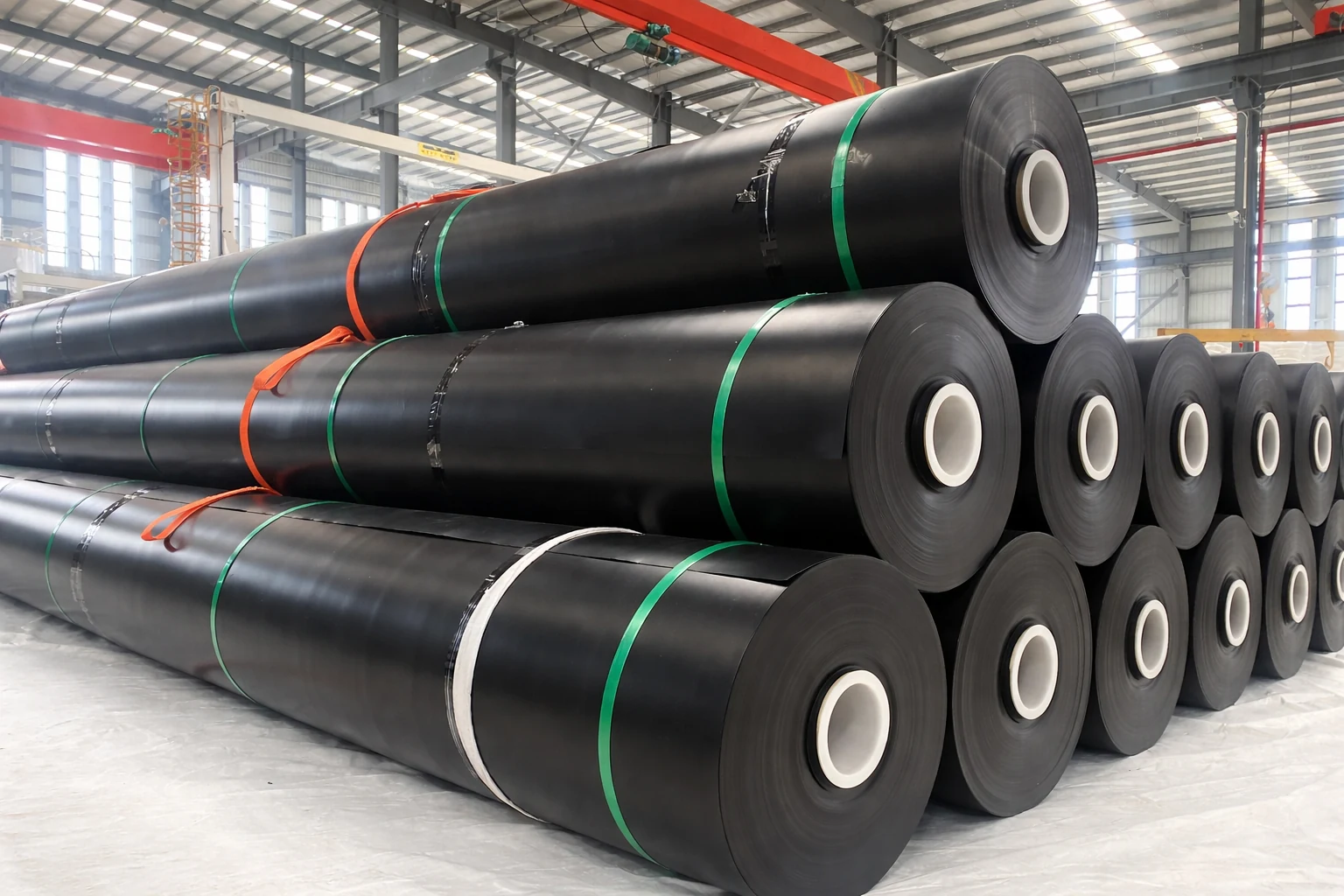
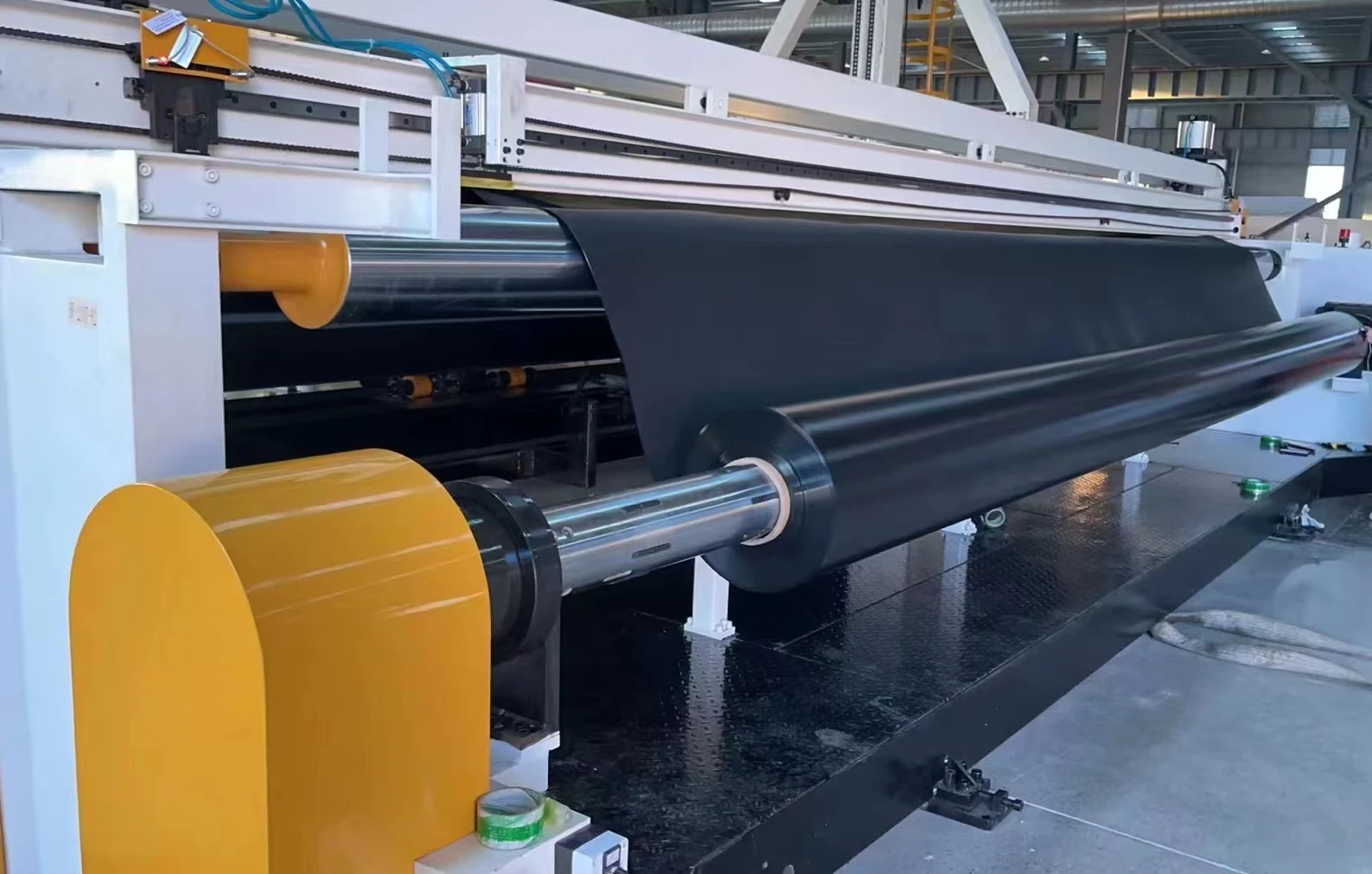
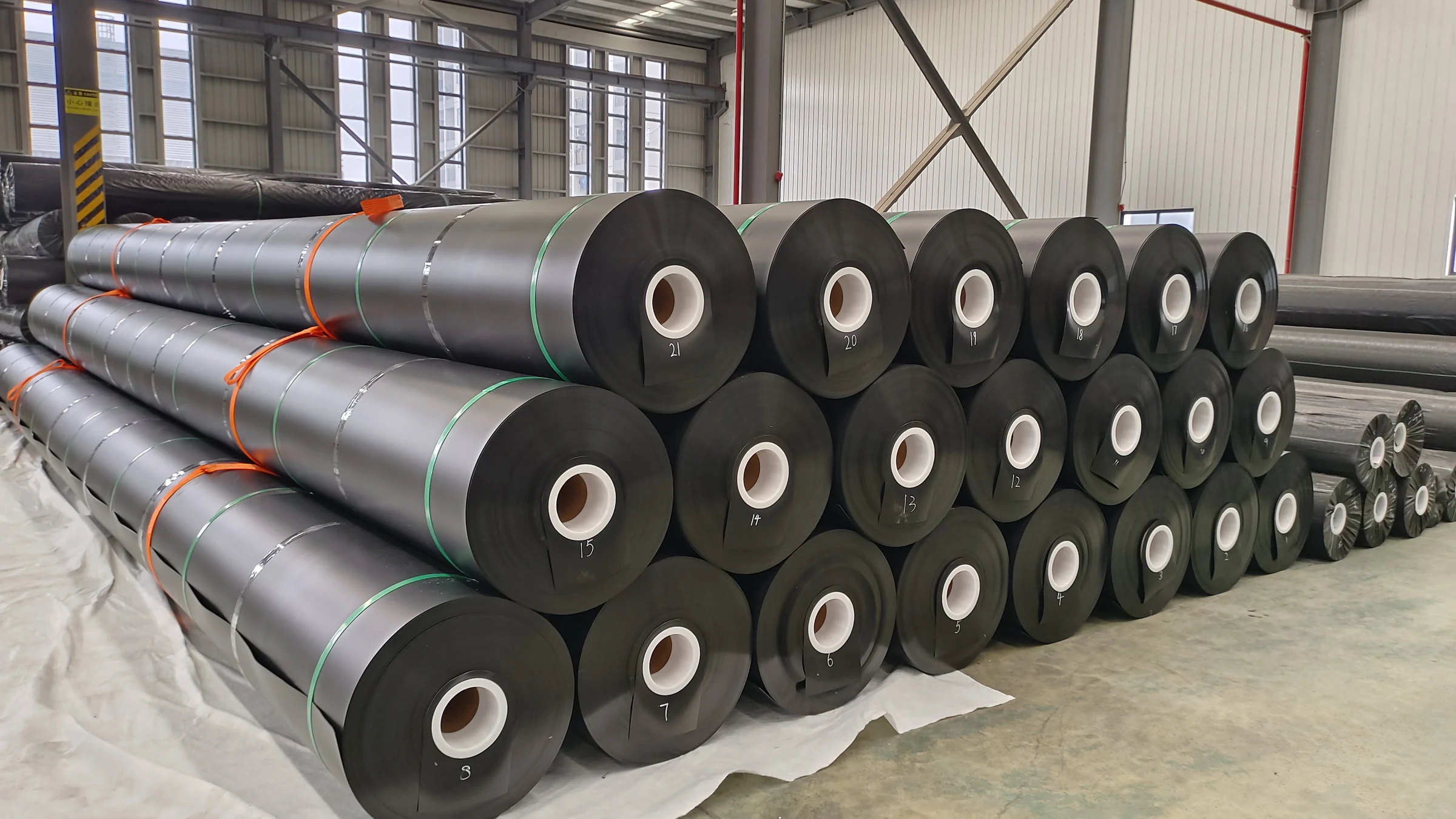

60 mil is the U.S. federal minimum for an HDPE geomembrane used in either a composite or an alternative composite liner for a covered new coal ash pond or lateral expansion.[1][2] Consider 80 mil where the design calls for extra puncture or tear resistance, but it is not a blanket federal requirement. Use the thickness, surface finish, and acceptance criteria in the project drawings and applicable permit.
What the 60-mil minimum covers
Under 40 CFR §257.72, new coal combustion residuals (CCR) surface impoundments and lateral expansions use one of the liner systems defined in §257.70(b) and (c). Where the upper layer is HDPE geomembrane, a 1.0 mm sheet is too thin. In a standard composite liner, the membrane must be in direct and uniform contact with at least 2 ft of compacted soil with hydraulic conductivity no greater than 1 × 10⁻⁷ cm/s. An alternative composite liner keeps the 60-mil HDPE minimum, but its lower component must meet the rule’s liquid-flow comparison instead of simply matching the soil thickness.[1][2]
When 80 mil is worth specifying
Ask the design engineer to check whether the liner needs extra mechanical resistance at details such as sumps, pipe penetrations, and areas exposed to construction loads. In GRI-GM13 Revision 19, the smooth-sheet minimum averages below are about one-third higher for 80 mil than for 60 mil, based on the U.S. customary values. These are material test requirements, not field results or design allowables.[3]
| Property and ASTM test | 60 mil | 80 mil |
|---|---|---|
| Puncture resistance, D4833 | 108 lbf | 144 lbf |
| Tear resistance, D1004 | 42 lbf | 56 lbf |
| Tensile yield strength, D6693 | 126 lbf/in. | 168 lbf/in. |
| Tensile break strength, D6693 | 228 lbf/in. | 304 lbf/in. |
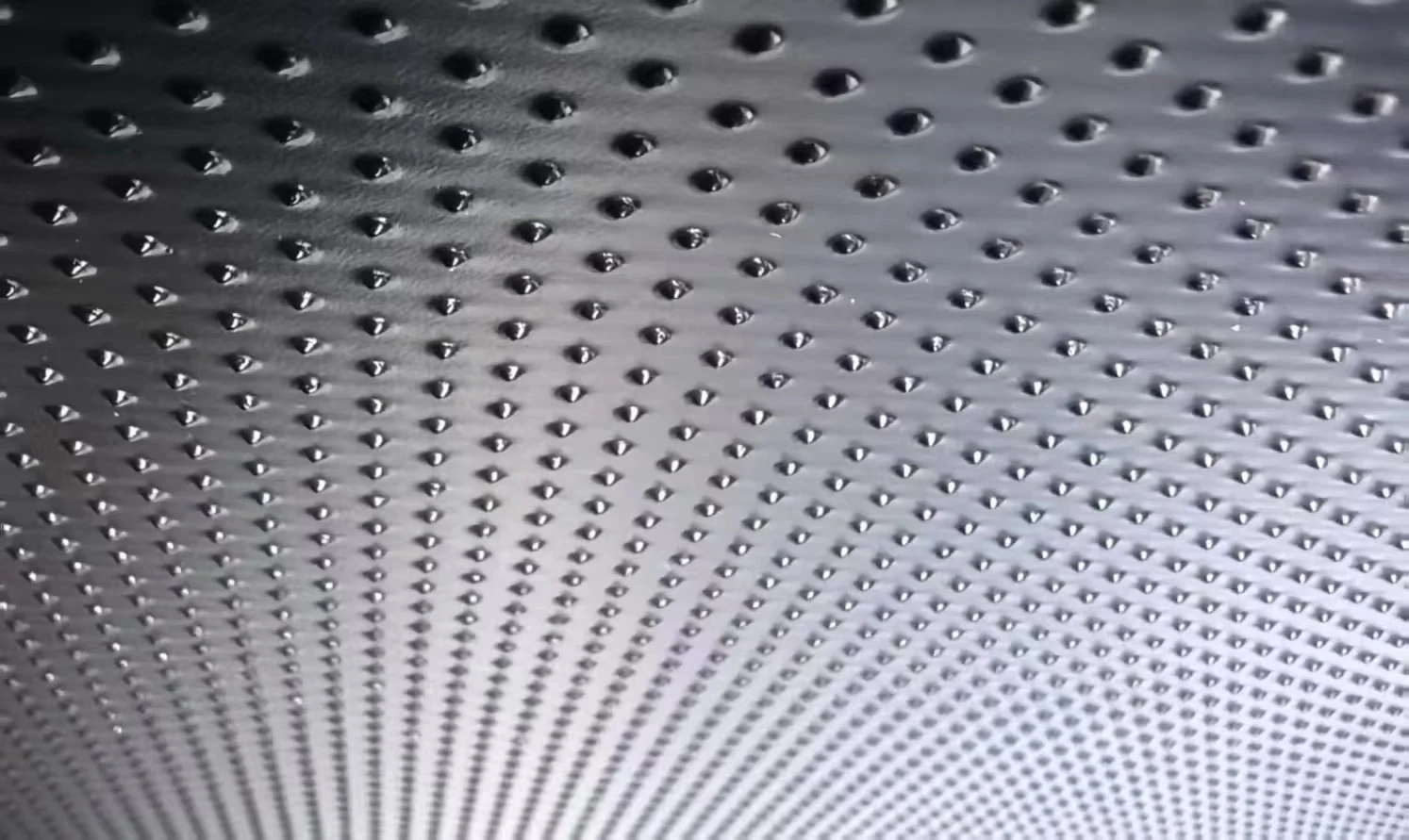
On slopes, thickness and interface shear resistance are separate checks. If the design uses a textured HDPE liner, the texture height is not a shear-strength value. Have the engineer verify the actual materials that will touch on the slope, using ASTM D5321 or D6243 direct shear testing as applicable.[1][3]
What to check before accepting a quote
Say the drawing calls for 60-mil textured HDPE and the quote says only “1.5 mm HDPE.” Ask the supplier to confirm the specified grade, texture, and roll-level core thickness results. Exactly 60 mil converts to 1.524 mm; 80 mil converts to 2.032 mm. The 1.5 mm and 2.0 mm figures are nominal grade labels, not acceptance limits. GM13 measures smooth sheet under ASTM D5199 and textured core thickness under ASTM D5994, with different acceptance criteria. Do not use a material-standard tolerance to relax a regulatory or project minimum.[1][3]
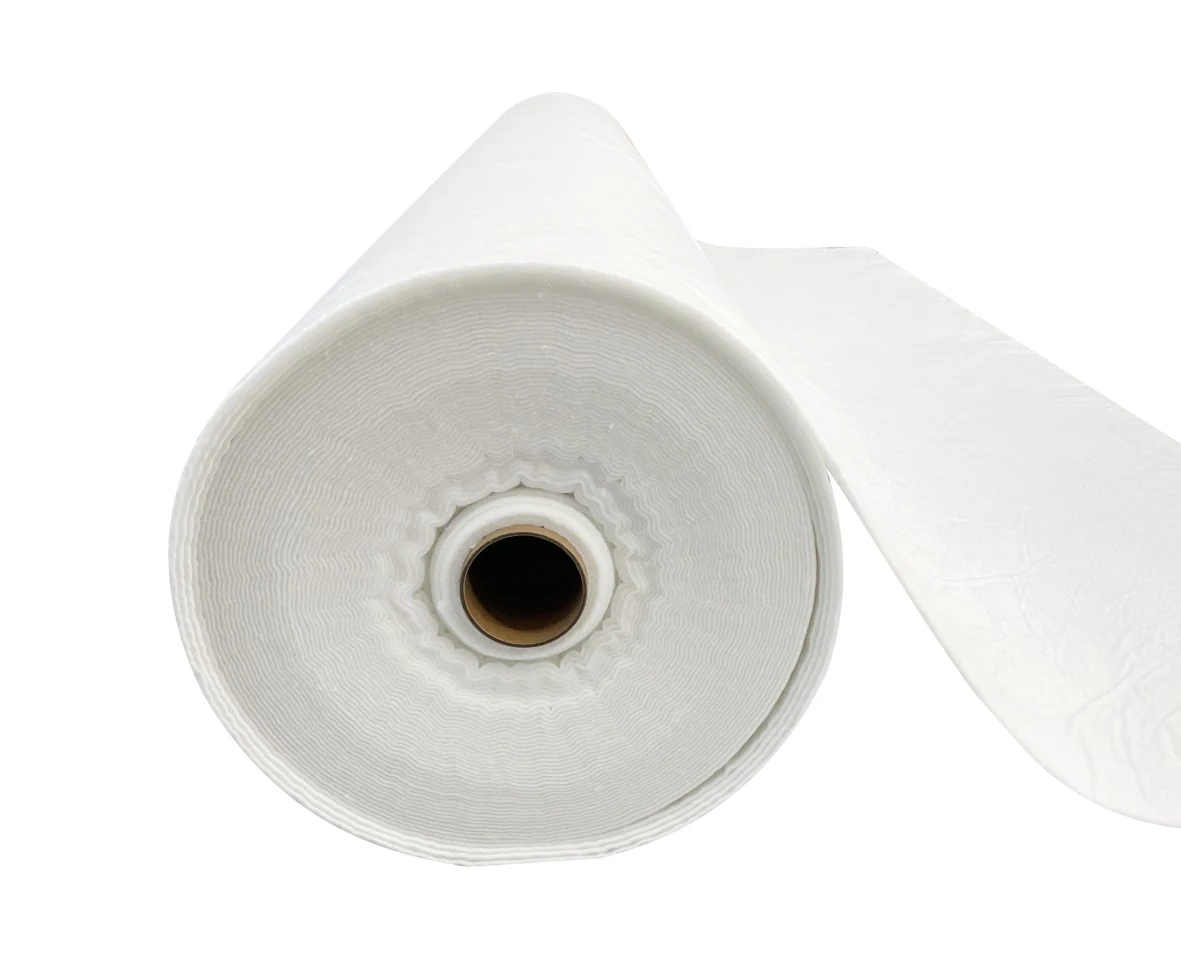
Review the supplier’s material data for density, carbon black, oxidative induction time (OIT), aging, UV resistance, and stress cracking against the specified GM13 revision. Ask the engineer to confirm suitability for the expected ash and leachate: a GM13 datasheet is not a chemical compatibility assessment for the site.[1][3]
Installation and sign-off
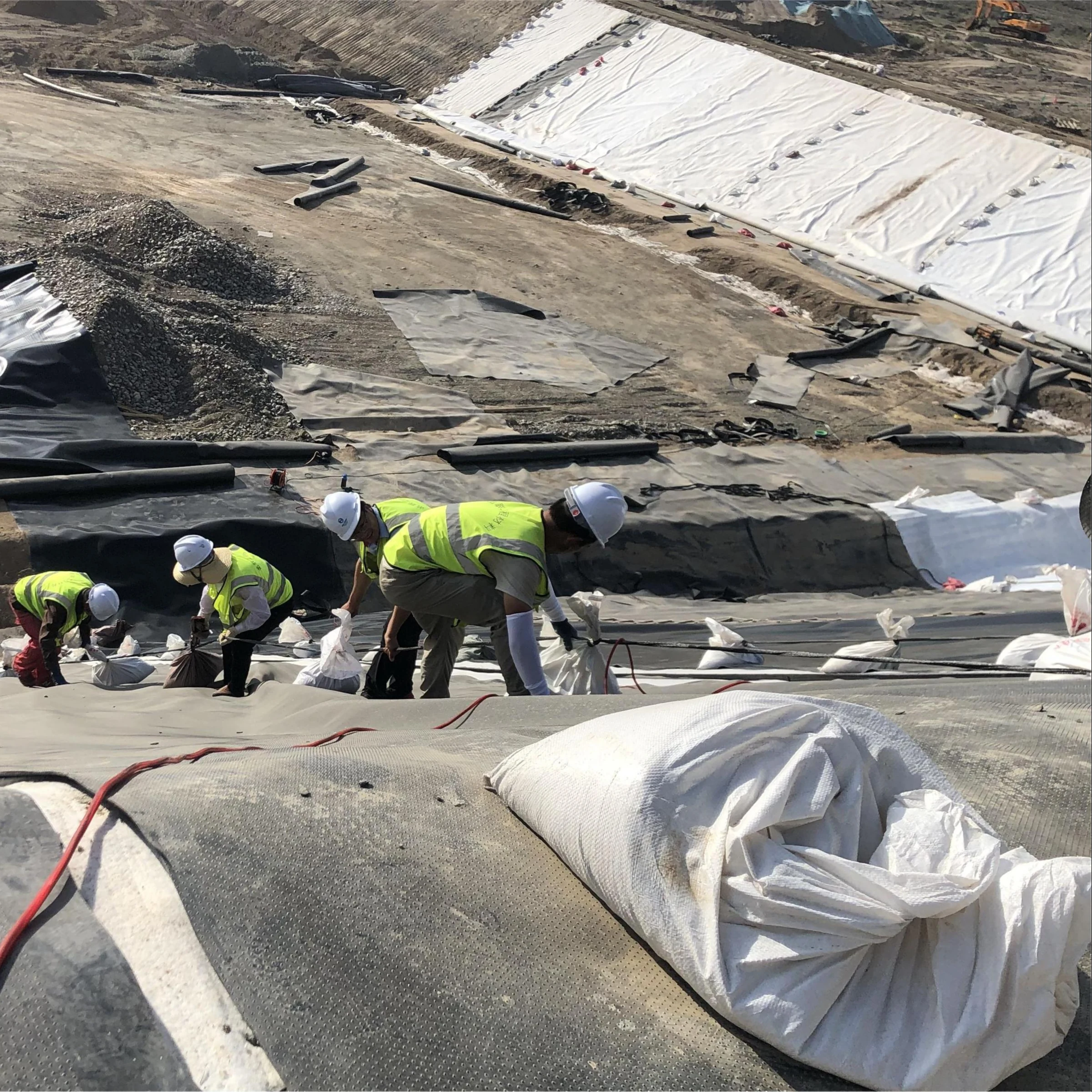
Use qualified installers and inspectors working to the engineer-approved construction quality assurance plan and local requirements. Check subgrade preparation, use a protective nonwoven geotextile where the design calls for one, and document trial welds and seam tests. Section 257.72 requires design verification before construction and construction verification at completion, through qualified professional engineer certification or the applicable authority’s approval.[2]
What if the pond already exists?
Check the unit’s liner documentation under §257.71 before requesting a replacement liner quote. A covered existing pond can be classified as unlined if the required liner is absent or the operator fails to document it. Section 257.101 governs waste placement and closure or retrofit for those units, with provisions that can affect the timing. Ordering a thicker sheet does not determine which compliance path applies.[4][5]
Send your liner schedule, required thickness by zone, and surface finish for a material quote.
