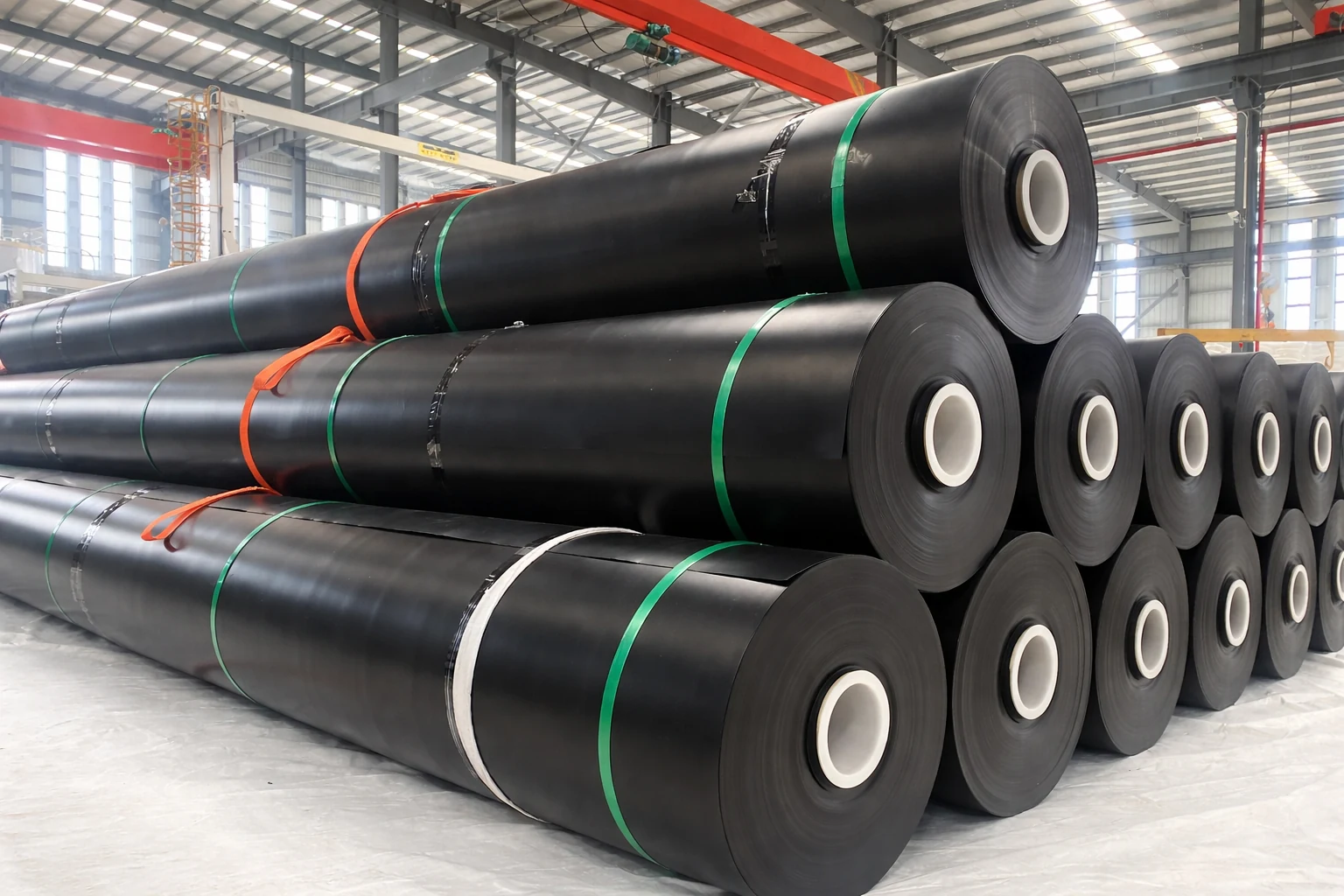
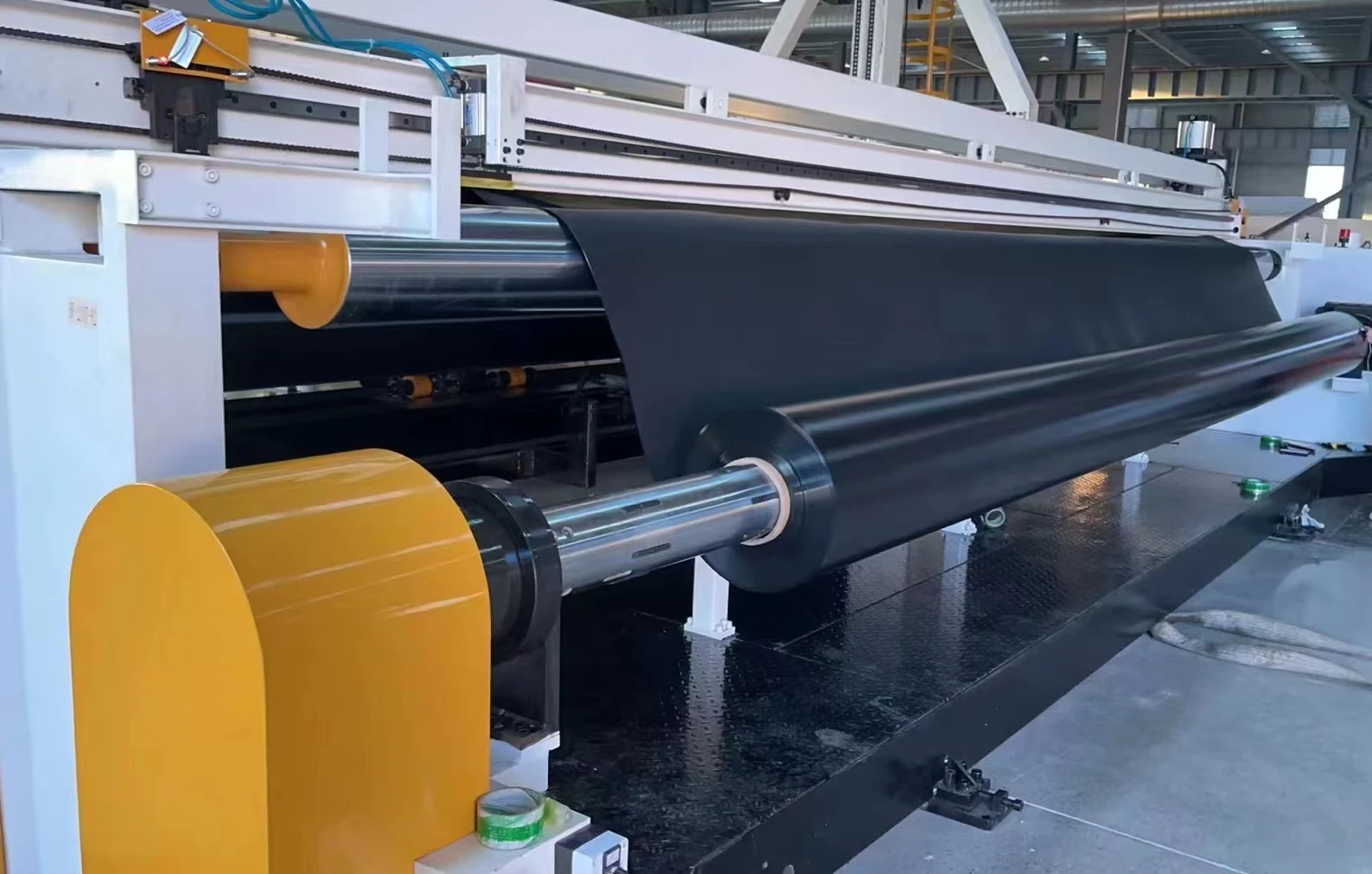
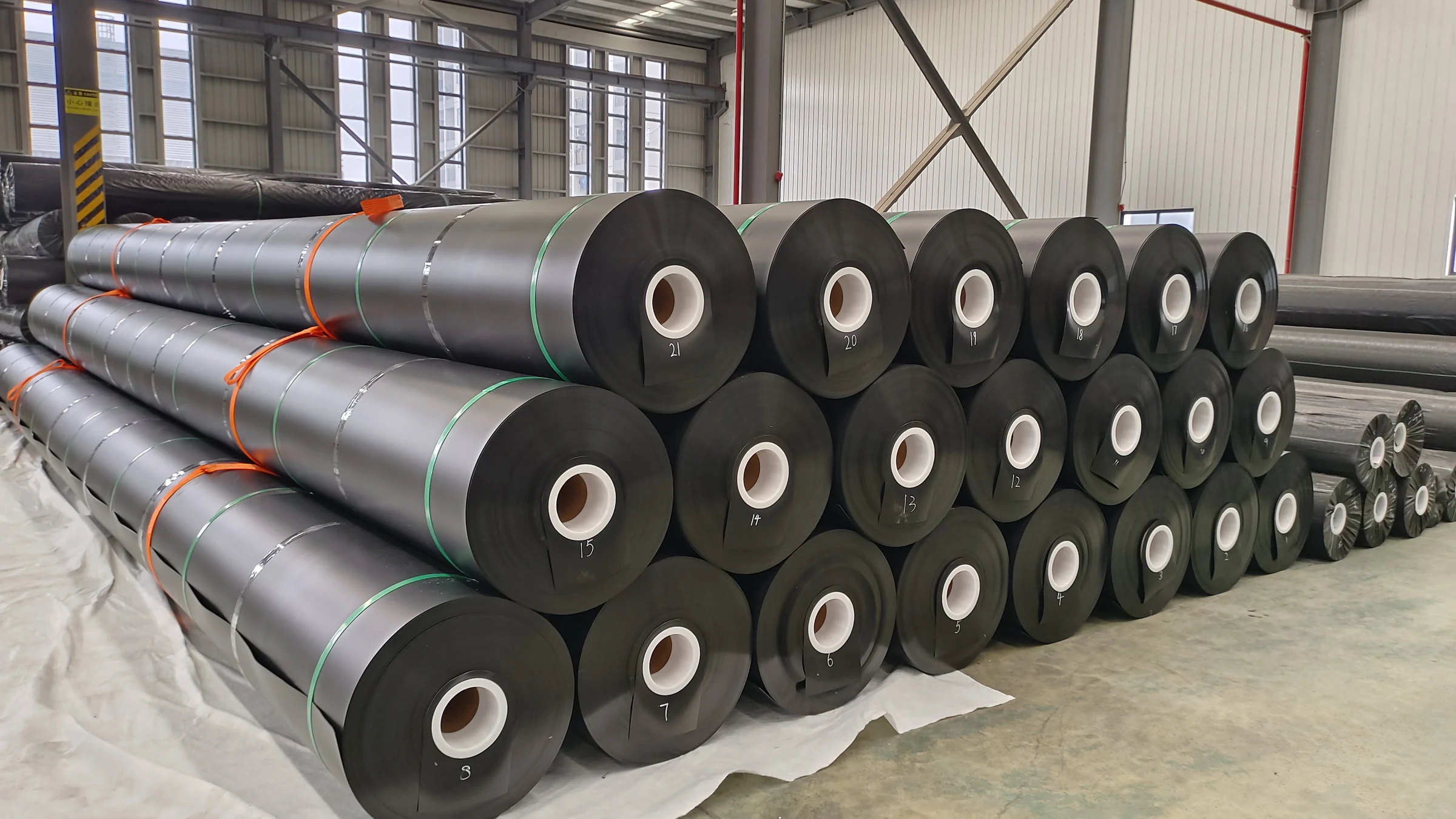
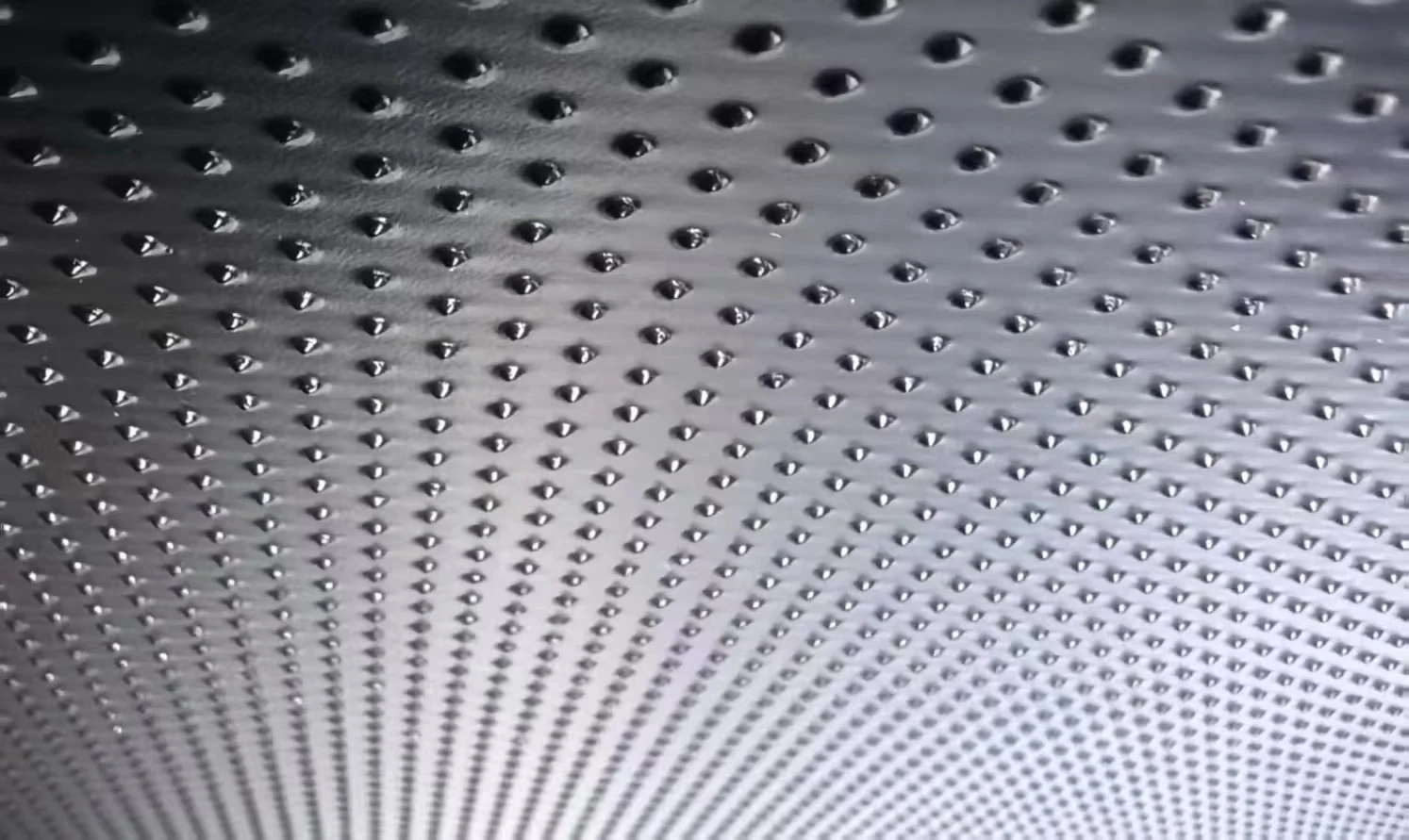
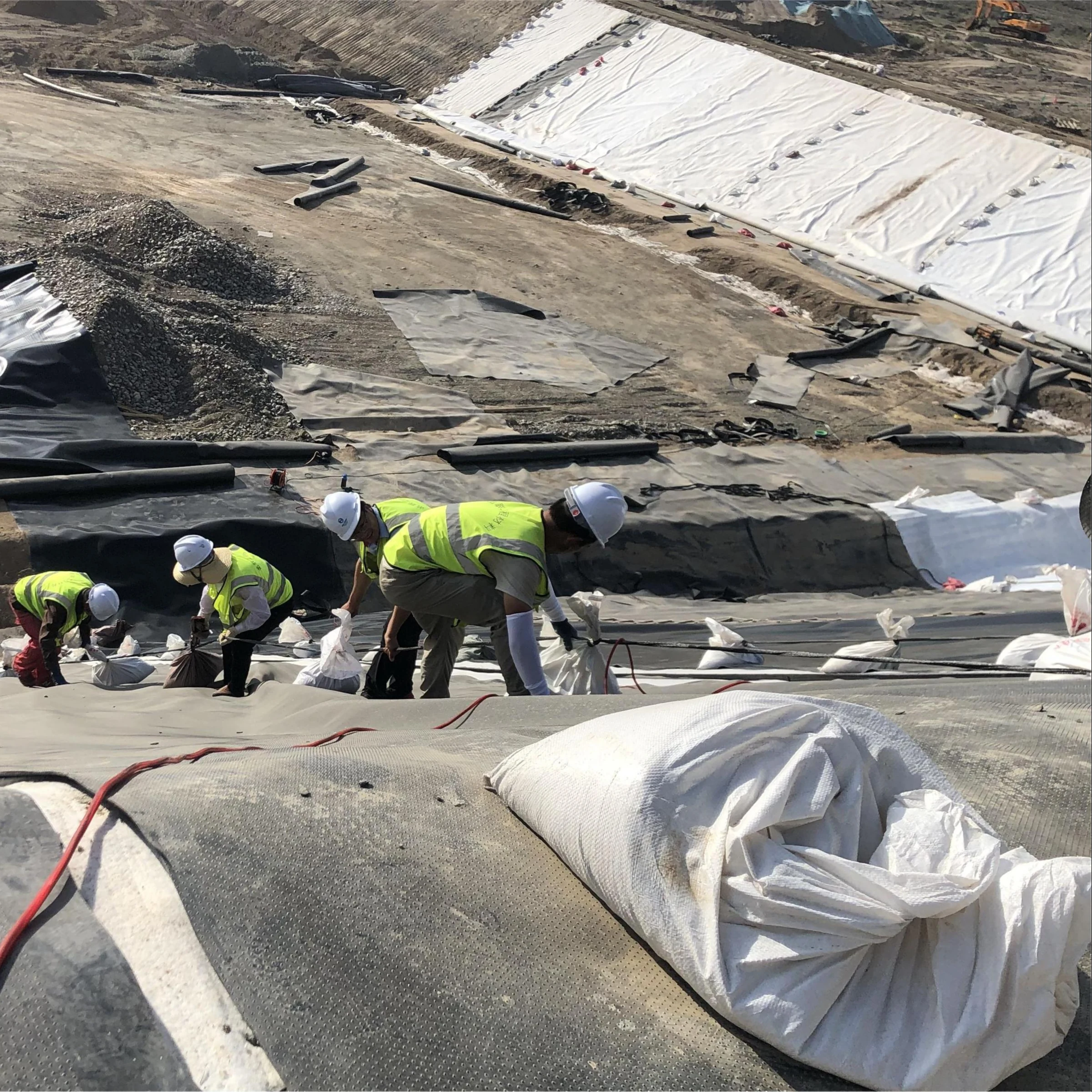

A geomembrane handover package should include final as-built drawings, seam logs, test reports, material traceability records and repair closeout records. Before signing, check that every required test location can be found on the drawings, results meet the project criteria and repairs have passed the required retests. Record any outstanding work and its effect on acceptance or release to cover.
The quantities below are examples, not acceptance limits. Use the project specifications and approved quality plan for testing frequency, pressures, hold times, strength requirements and sign-off responsibilities.
Handover Document Checklist
| Document | Details to Include |
|---|---|
| Document index | Contract reference, document number, revision and submission status |
| As-built drawings | Installed panels, seams, sample locations, repairs, connection details and approved changes |
| Material records | Product designation, thickness, surface finish, batch and roll numbers, and required test reports |
| Installation and seam logs | Subgrade acceptance, panel placement, trial welds, welding sections, operators, equipment and recorded settings |
| Test reports | Test locations, methods, raw results, acceptance criteria and pass/fail decisions |
| Repair and nonconformance records | Affected locations, approved treatment, retests and closeout signatures |
| Acceptance documents | Quality report, handover boundaries, outstanding items, authorized signatures, warranties and maintenance requirements |
The material schedule should distinguish HDPE geomembrane from LLDPE geomembrane. Manufacturer quality-control records should match the supplied rolls or batches; they do not replace field seam tests.
As-Built Drawings
As-built drawings must reflect actual panel placement and seam locations. Geomembrane construction quality guidance also calls for installation details and supporting quality records.[1]
- Panels and rolls: If P-001 and P-002 came from roll R-018, retain two panel entries with separate installed locations.
- Field changes: If P-018 became P-018A and P-018B, update the boundaries, added seam and approved change reference.
- Seam sections: Show seam IDs, endpoints and measurement direction. Section references must match the welding and test records.
- Samples and repairs: Mark DS-006 at its sampling location and link it to the laboratory report, cutout repair and retest.
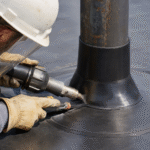
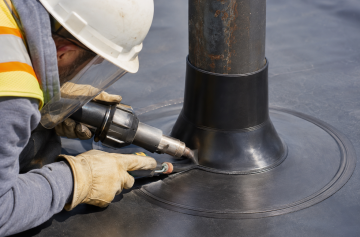
- Connections: Identify pipe penetrations, anchor trenches, sumps and structural connections, with references to the installed details.
- Versions: Include drawing number, revision, issue date and liner layer. Keep a cross-reference if IDs changed.
A repair located 12.4 m from one baseline and 8.6 m from another also needs the baseline names and measurement directions. For a multilayer landfill liner system, include the layer in each reference so upper- and lower-liner records remain distinct.
Seam Logs
Each entry should identify the seam, adjoining panels, welded section, date, start and finish times, operator, machine and trial-weld reference. Include the welding method, required settings and site conditions.
Suppose S-021 is 80 m long. The crew welds 0–45 m in the morning and 45–80 m with a different machine later that day. Record the two sections separately. Each needs its own equipment details, settings and applicable trial-weld reference. The approved quality plan determines when another trial weld is required.
Distinguish machine setpoints from measured temperatures, and include units. A temperature entry of “420” without a unit or parameter description cannot be checked reliably. Flag missing data rather than filling it in from memory.
Test Records
Nondestructive Tests
Record the seam or repair ID, tested limits, date, operator, equipment, specified readings, observations and result. Air-channel testing applies to parallel seams separated by an unwelded channel that can be sealed and pressurized.[2] The record should include the required channel-continuity check.
Where the detail permits a vacuum seal, vacuum-chamber testing evaluates seam continuity through bubble observations.[3] Other locations need a project-approved method suited to the material and connection.
Count tested sections only once. If a 60 m seam has two reports covering the same 0–30 m section, verified coverage remains 30 m.
If all 1,200 m of required seams have been tested, coverage is 100%. If 20 m failed, list that section as unresolved until the required treatment, retesting and review are complete.
Report coverage and unresolved results separately for each area and liner layer.
Destructive Tests
ASTM D6392 covers peel and shear testing of nonreinforced geomembrane seams made by thermal-fusion methods.[4] Check sample IDs, sampling locations, transfer records, individual specimen results, applicable failure modes and report authorization.
Twelve field samples should have twelve traceable sampling locations and corresponding cutout repair records. A laboratory may include several samples in one report, so report count is not a reliable sample count.
A failed sample needs a nonconformance record covering the investigation, affected seam limits, additional sampling or corrective work, and subsequent results. Patching the sample opening does not resolve the original seam failure.
Acceptance Criteria
Reports should identify the test method and edition, project acceptance criteria, measured results and pass/fail decision. Air-channel and vacuum tests do not provide peel or shear strength data and cannot replace specified destructive testing.
Use the edition adopted by the project. The references include updated ASTM catalog pages and historical agency guidance; neither automatically changes the contract edition or project acceptance criteria.
Repair Closeout
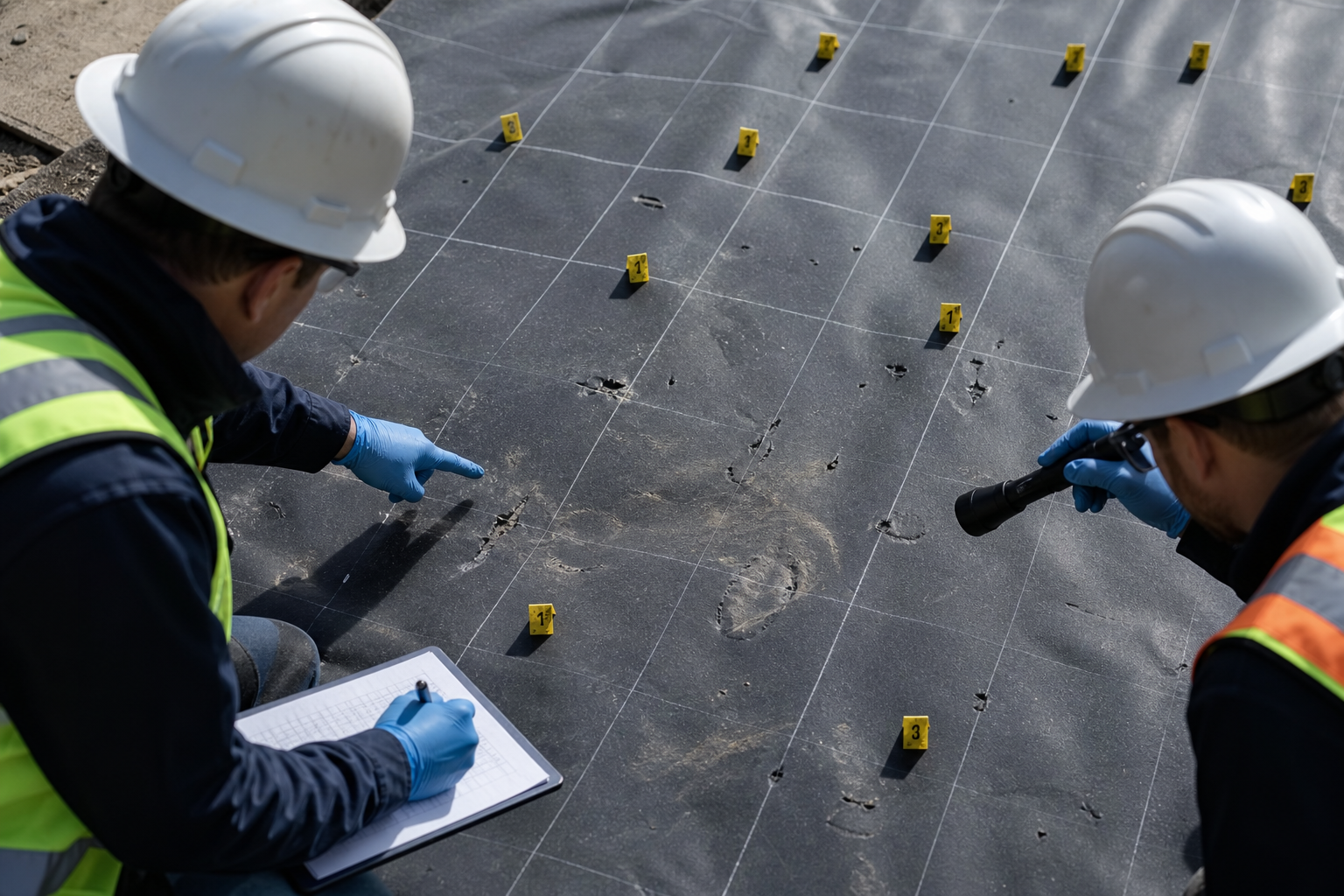
| ID | Reason | Location | Status |
|---|---|---|---|
| R-001 | Installation damage | Marked point on P-008 | Repaired, retested and signed off |
| R-002 | Failed seam test | Defined section of S-017 | Corrective work complete; retest pending |
| R-003 | Sample-cutout repair | DS-006 | Repaired, retested and signed off |
If 20 repairs are complete but only 18 have passed retesting and review, write “20 repaired, 18 closed, 2 awaiting retest.” List the outstanding IDs and scheduled retest dates. Keep routine sample-cutout repairs separate from installation defects.
Any damage caused after testing—during transport, access or cover placement—needs its own repair and retest records. An earlier passing result does not cover later damage.
Sign-Off and File Delivery
- Define the approval: State the area, layer, included details and requested action. For example: “Area A, lower liner, including N-01 and N-02; submitted for release to cover.” Document receipt, technical acceptance and release to cover should have distinct sign-offs.
- Check the sequence: Required pre-cover inspections and release must precede covering. A late signature should show the actual event date, signing date and supporting evidence.
- List open items: Record the affected ID, missing evidence or unfinished work, responsible person, deadline and authorized decision on acceptance or further construction.
- Control revisions: Use filenames such as
Area-A_Seam-Test_S-026_Rev02.pdf. Keep one valid issued revision per document number in the current folder and archive superseded copies separately. - Check the delivery: Open the files, verify page counts and revisions, and test index links. Required source files should match the issued copies.
If electrical leak location testing was performed, include the survey limits, exposed or covered liner condition, method-required verification or sensitivity checks, detected locations, repairs and follow-up results.
Handover Entry Example
Area A, lower liner, as-built drawing Rev03. Nondestructive testing: 1,200 m required and completed, with accepted results. Required destructive test reports are complete and meet project criteria. All 20 repairs have passed retesting and review. Open items: 0. Supporting records: see attached document index.
References and Project Applicability
Use these references to check the relevant methods and documentation. The approved drawings, contract specification and project quality plan govern acceptance. This article does not replace a site-specific design or signed inspection record.