

PP (polypropylene) has excellent acid and alkali resistance, with a density of only 0.91g/cm³, ranking first in chemical stability, making it the “all-rounder” for municipal and road engineering; PET (polyester) wins on physical strength, with a melting point up to 260℃ and minimal deformation (creep) under long-term loads, making it more suitable for water conservancy and high-temperature construction environments. HDPE focuses on extreme chemical protection.
Acidic or alkaline soil/groundwater environments: PP is preferred for a longer service life.
High load/high tensile strength requirements: PET is preferred as the material is more stable.
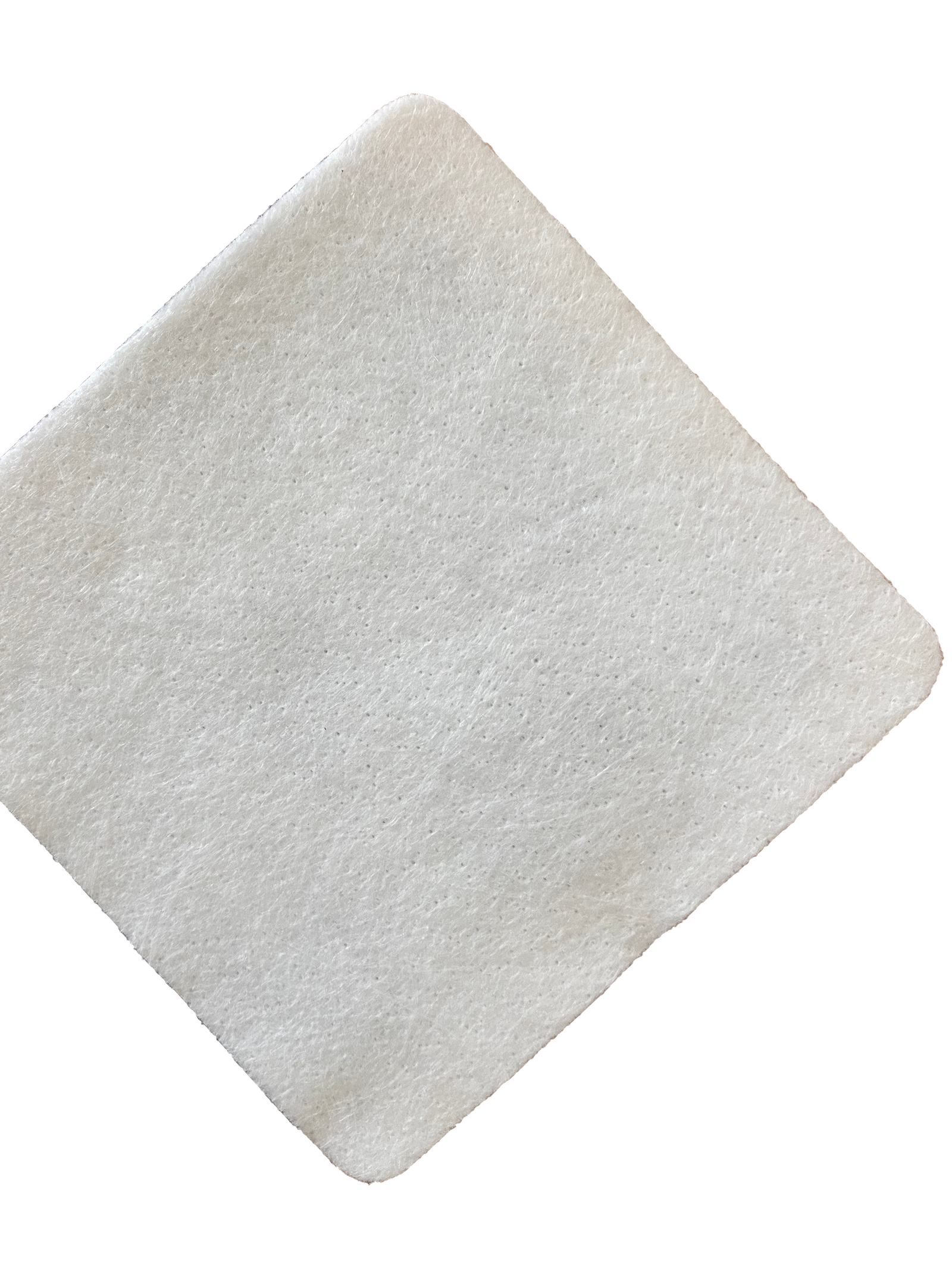
Tensile Strength & Creep Resistance
In engineering projects with a 100-year design life, the strength retention rate of PET (polyester) is approximately 60%-80%, and its creep reduction factor ($RF_{CR}$) is between 1.45-1.6. In contrast, PP (polypropylene) is prone to molecular chain slippage, and its $RF_{CR}$ is often as high as 4.0-5.0, resulting in its long-term design strength ($T_{al}$) being only 20%-25% of its initial value. The modulus of HDPE is at an intermediate level, but stress relaxation is significant in environments above 20°C.
Difference in Stress Response
In the wide-width tensile test specified by ASTM D4595, the geotextile sample width is set to $200 mm$ with a gauge length of $100 mm$. The experiment is loaded via a constant strain rate of $10 \pm 3%$ per minute. This test records the stress feedback of the material within the first few seconds of contact loading.
PET (polyester) geotextiles exhibit a very high initial modulus, attributed to the benzene ring structures present in their molecular chains. This aromatic structure provides strong rigid constraints. When the elongation is only 2%, the tensile force of high-strength PET woven fabrics can typically reach 35%-45% of the nominal strength.
Conversely, the molecular chains of PP (polypropylene) are arranged linearly and lack polar groups. At the moment of stress, PP molecular chains are more prone to microscopic slippage. At the same 2% elongation, the resistance generated by PP geotextiles is often less than 10% of their ultimate strength.
Below are specific mechanical performance data for PET materials during the initial stage of stress:
- Initial Secant Modulus: Usually maintained between 12,000 MPa and 15,000 MPa, far exceeding other polymers.
- Low Strain Response: At 1% elongation, high-modulus PET can generate a resistance of approximately 15 kN/m.
- Yield Point Position: The stress-strain curve of PET exhibits clear linearity in the initial stage, with the yield point appearing late.
- Elastic Recovery Rate: After instantaneous unloading, the elastic recovery rate of PET exceeds 90%, effectively reducing permanent deformation.
Since the crystallinity of HDPE (High-Density Polyethylene) is typically between 60%-80%, its mechanical response lies between PET and PP. The modulus of HDPE in the initial stage of loading is approximately 4,000-6,000 MPa. Due to fewer side-chain branches, the instantaneous tensile performance of HDPE is more robust than that of PP.
When calculating the secant modulus ($J_{sec}$), engineers typically focus on three characteristic points: $1%$, $2%$, and $5%$. The formula is expressed as $J_{sec} = \frac{T}{\epsilon}$, where $T$ is the tensile force and $\epsilon$ is the corresponding strain. PET’s modulus retention at these points is significantly higher than PP’s.
Observing the experimental performance of PP and HDPE under the ISO 10319 standard reveals the following characteristics:
- PP 5% Strain Resistance: Usually only 20%-30% of its ultimate strength, leading to larger initial structural deformation.
- HDPE Stress Relaxation: Under constant strain, the internal stress of HDPE can drop by more than 20% within a few minutes.
- Molecular Chain Orientation Response: PP molecular chains reorient during the stretching process, a process that consumes a significant amount of initial work.
- Temperature Sensitivity: When the ambient temperature rises from 20°C to 30°C, the initial modulus of PP drops by about 15%.
PET can immediately limit the lateral displacement of soil. PP materials, however, require the soil to undergo larger displacement before passively triggering sufficient tension. In roadbed engineering, this delayed response can lead to premature cracks in the pavement.
For different fiber forms of geotextiles, filament woven fabrics have neatly arranged fibers and do not need to overcome fiber bending when stressed, allowing the modulus to be utilized very quickly. Needle-punched non-woven fabrics have a clear “crimp removal” stage, resulting in an initial modulus that is almost zero.
In reinforced structure design, because PET molecular chains have strong covalent bonds, their modulus is less affected by the strain rate. In comparison, PP exhibits strong viscoelasticity; the faster the loading speed, the higher the apparent strength.
Regarding the correlation between the experimental environment and material response, several key details are noteworthy:
- Standard Laboratory Temperature: Set at 21 \pm 2°C; deviating from this temperature significantly alters the modulus of PP.
- Grip Slip Error: High-modulus PET is demanding on grips; any slight slip will artificially lower the measured modulus value.
- Humidity Impact: The modulus of PET remains almost constant in high-humidity environments, demonstrating excellent water stability.
- Pre-tension Setting: According to standards, a pre-tension of 1% of the nominal strength must be applied to eliminate specimen slack.
By comparing $T_5$ (strength at 5% elongation) values measured via EN ISO 10319, PET fabrics usually reach 40-60 kN/m. PP fabrics of the same grade often only reach 15-25 kN/m at the same displacement.
“Endurance” Comparison
When subjected to 25% of the ultimate tensile load, the predicted creep strain of PET fibers over 120 years is only 0.8% – 1.2%. This physical stability allows engineering designs for permanent steep slopes to be given a higher initial allowable stress value without worrying about visible structural deformation over time.
ISO 13431 experimental data shows that in a soil environment with a pH 4-9, PET’s degree of polymerization (DP) remains above 85% of its initial value after 50 years. This chemical stability ensures the durability of macroscopic mechanical strength. In contrast, ordinary polymers in the same acid-base environment are prone to molecular chain scission, leading to macroscopic material embrittlement and a sharp drop in strength.
When the ambient temperature for PP (polypropylene) reaches 25°C, the activity of its molecular chains increases significantly. Under a constant load of 20% of the ultimate strength, the creep displacement of PP geotextiles often reaches 15% of the initial gauge length within 1,000 hours.
The following is a comparison of 10,000-hour stress performance obtained according to ASTM D5262:
- PET (100 kN/m): Under a 40 kN/m sustained load, the strain increment stabilizes at around 0.6%.
- HDPE (100 kN/m): Under a 40 kN/m sustained load, the strain increment typically reaches 4.2%.
- PP (100 kN/m): Under a 40 kN/m sustained load, the strain increment is often as high as 12.8%.
- High-Strength PE: Shows significant stress relaxation under the same conditions, with load retention often less than 30% of the initial value.
HDPE (High-Density Polyethylene) has specific testing indicators for Environmental Stress Cracking (ESCR). According to the notched constant tensile load test in ASTM D5397, qualified HDPE materials must have a failure time exceeding 500 hours under specific stress. This indicator ensures that the material will not produce brittle cracks due to local stress concentration in complex stress environments such as landfill liners.
When summer paving temperatures reach 60°C, the tensile stiffness of PP often drops by more than 40%. The softening point of PET is around 250°C; even when exposed to instantaneous high temperatures from hot-mix asphalt, its molecular arrangement does not reorganize, and it maintains its set mechanical design parameters.
In ASTM D3895 tests, PP materials containing high-efficiency stabilizers are usually required to have an OIT value greater than 100 minutes in a 200°C high-pressure oxygen environment. This prevents oxygen in the soil or UV radiation during construction from causing oxidative degradation of the polymer chains, extending the service life of the material in aerobic soils.
For permanent civil engineering, the “endurance” of materials can be compared using the following quantitative indicators:
| Evaluation Indicator | PET (Polyester) | PP (Polypropylene) | HDPE (High-Density Polyethylene) |
|---|---|---|---|
| Creep Rupture Limit (10^6 h) | > 65% $T_{ult}$ | < 30% $T_{ult}$ | Approx. 45% $T_{ult}$ |
| UV Resistance Rate (500h) | 90% strength retention | 70% strength retention | 85% strength retention |
| Glass Transition Temp ($T_g$) | 70°C – 80°C | -10°C – 0°C | -120°C – -100°C |
| 100-Year Strength Retention Prediction | Above 70% | Below 25% | Approx. 45% |
PET faces a hydrolysis risk in high-humidity and high-pH environments. When the Carboxyl End Group (CEG) content is controlled below 30 mmol/kg and the molecular weight is greater than 25,000 g/mol, the hydrolysis rate of PET becomes extremely slow. In common soils that are not strongly alkaline ($pH < 10$), its mechanical endurance can stably span a 120-year design cycle.
Under frequent cyclic loading (such as heavy traffic loads), the microstructure of PP fibers accumulates heat. This local temperature rise accelerates the permanent displacement of molecular chains. In experiments after 1,000,000 cycles of loading, the residual strength loss ratio of PP is significantly higher than that of PET fibers of the same specification.
Although its creep rate is higher than PET, HDPE provides better flexibility when severe foundation settlement or deformation occurs because its elongation at break usually exceeds 500%.
When calculating Isochronous Curves, the curve cluster distribution for PET is very tight. In comparison data between 10 hours and 10,000 hours, the change in strain increment at the same stress level is extremely small. This mechanical performance allows designers to utilize most of the nominal strength of the material without significantly increasing the safety reduction factor.
For PP materials, as the timeline extends from 1 year to 50 years, the stress level required to maintain the same strain drops significantly. When referring to AASHTO standards for reinforced retaining wall stability calculations, this characteristic forces engineers to increase the number of geotextile layers or choose higher-spec models to compensate for long-term endurance loss.
Long-term Design Strength
In the design of reinforced structures for civil engineering, calculating the Long-term Design Strength ($T_{al}$) requires dividing the Ultimate Tensile Strength ($T_{ult}$) measured in the lab by a series of reduction factors. According to AASHTO R69 and FHWA codes, the formula is: $$T_{al} = \frac{T_{ult}}{RF_{CR} \times RF_{ID} \times RF_{D}}$$
These factors correspond to Creep ($RF_{CR}$), Installation Damage ($RF_{ID}$), and Durability Degradation ($RF_{D}$), determining the actual bearing capacity of the material at the end of a 75-year or 100-year lifespan.
The Creep Reduction Factor ($RF_{CR}$) is the value with the largest variance in calculations. Based on 10,000-hour sustained load experiments according to ISO 13431, data is extrapolated to 100 years. For PET (polyester) fabrics, $RF_{CR}$ is usually between 1.45 and 1.60. In contrast, the molecular chains of PP (polypropylene) are in a highly elastic state at room temperature; significant molecular chain slippage occurs under stress, and its $RF_{CR}$ value often falls in the 4.0 to 5.0 range.
Reduction parameters for different materials at 20°C for a 100-year design life are as follows:
- PET Woven Fabric: $RF_{CR}$ value is 1.5; $RF_{ID}$ is 1.1 (depending on soil); $RF_{D}$ is 1.1.
- HDPE Geogrid: $RF_{CR}$ value is 2.6; $RF_{ID}$ is 1.2; $RF_{D}$ is 1.1.
- PP Woven Fabric: $RF_{CR}$ value is 4.5; $RF_{ID}$ is 1.2; $RF_{D}$ is 1.1.
- High-Strength Polyethylene (HSPE): Although the initial modulus is very high, $RF_{CR}$ is drastically affected by temperature.
In the calculation process, the value of $RF_{ID}$ depends on the particle distribution of the backfill ($D_{50}$) and the mass per unit area of the material. According to field simulation tests in ASTM D5818, when using coarse angular gravel fill with a diameter greater than 30 mm, the strength loss of lightweight PP geotextiles can exceed 30%.
High-grammage (e.g., greater than $600 g/m^2$) PET geotextiles have an $RF_{ID}$ of only 1.10 in such rough environments, demonstrating stronger physical protection capabilities.
Chemical components in the environment determine $RF_{D}$ (Durability Reduction Factor). ASTM D5322 specifies degradation rate tests for polymers at extreme pH values. PET is extremely stable in environments with a pH of 3 to 9 but undergoes hydrolysis in strongly alkaline ($pH > 10$) soils.
PP materials have natural immunity to acids and bases, but in soils containing heavy metal ions or high oxygen content, their Oxidative Induction Time (OIT) can be significantly shortened, causing strength to decline over time.
To demonstrate the difference in calculation results, assume the nominal strength $T_{ult}$ for all three materials is 200 kN/m:
- PET Solution: $T_{al} = \frac{200}{1.5 \times 1.1 \times 1.1} = 110.3 kN/m$ (Effective retention 55%).
- HDPE Solution: $T_{al} = \frac{200}{2.6 \times 1.2 \times 1.1} = 58.3 kN/m$ (Effective retention 29%).
- PP Solution: $T_{al} = \frac{200}{4.5 \times 1.2 \times 1.1} = 33.7 kN/m$ (Effective retention 17%).
- Conclusion Analysis: At the same nominal strength, the long-term usable strength of PET is 3.2 times that of PP.
In steep slope reinforcement projects, in addition to basic reduction, the Overall Factor of Safety ($FS$) must be considered. Usually, $FS$ is set to 1.35 based on the BS 8006 standard. This means that for PET material, the final allowable design tension is approximately $81.7 kN/m$. If using PP material under the same safety standards, the number of layers must be increased 3-fold, or special specs with a nominal strength as high as 600 kN/m must be selected.
Temperature compensation calculation is an indispensable part of quantitative evaluation. The Arrhenius equation is used to predict strength decay rates at different operating temperatures. When the average soil temperature at the project site rises from 20°C to 30°C, the creep rate of PP increases about 2.5 times. Since the glass transition temperature of PET is above 70°C, its $RF_{CR}$ remains almost constant within the normal range of ground temperature fluctuations.
In stress calculations, the interaction coefficient ($C_i$) between the geotextile and the soil is usually set between 0.7 and 0.9. Low-creep materials can maintain a more stable interface shear force. For specific scenarios like permanent retaining walls, major global codes (such as Germany’s EBGEO) explicitly recommend that $RF_{CR}$ must be extrapolated based on actual creep data from 2-5 years, and using empirical values is strictly prohibited.
Chemical Resistance
PET is prone to ester bond hydrolysis in environments with $pH > 9$, causing strength to drop by 30%-60% in a short time. In contrast, PP has extremely high stability in the range of $pH$ 2-13, but degrades when contacting high-concentration oxidizing acids (such as 98% sulfuric acid). HDPE, with a density of 0.941-0.965 g/cm³ and high crystallinity, can resist most industrial solvents and landfill leachate; its Environmental Stress Cracking Resistance (ESCR) is the guarantee for long-cycle use.
PET (Polyester)
PET polyester geotextiles are produced through the polycondensation reaction of dimethyl terephthalate and ethylene glycol, with the molecular formula $(C_{10}H_{8}O_{4})n$. Its molecular chain contains a large number of benzene ring structures, which gives the material extremely high rigidity and mechanical strength. In geotechnical engineering, the breaking strength of PET fibers is typically between 7.0 and 9.0 g/d, and its modulus performance far exceeds that of polypropylene materials.
When the environmental $pH$ value rises above 9.0, OH⁻ ions attack the ester bonds in the PET molecular chain, inducing an irreversible alkaline hydrolysis reaction. In an environment of Portland cement immersion at $pH$ 12, the strength retention rate of untreated PET fibers after 1000 hours may be lower than 40%. Therefore, in projects involving lime-stabilized soil or concrete beds, PET must be protected or replaced with other materials.
- Acid Resistance: PET exhibits excellent chemical inertness in the $pH$ 2 to 7 range. In mine wastewater containing sulfuric or hydrochloric acid, its mass loss rate is usually less than 2%.
- Oxidation Resistance: Unlike PP, PET is not sensitive to thermal-oxidative degradation. In open exposure environments, based on ASTM D4355 testing, the strength retention after 500 hours of xenon arc lamp exposure usually stabilizes above 70%.
- Biological Resistance: PET is not affected by degradation from fungi, bacteria, or microorganisms in the soil; its molecular chain structure cannot be decomposed by biological enzymes, ensuring integrity in buried environments.
The hydrolysis rate is not only affected by $pH$; in dry soils of arid regions, PET degradation becomes very slow even if the $pH$ is slightly high. However, in tropical high-humidity environments accompanied by alkaline groundwater, the hydrolysis reaction accelerates significantly. Engineers typically use the Arrhenius equation to predict the strength decay rate of PET under specific operating conditions.
| Performance Indicator | Test Standard | Typical Numerical Range |
|---|---|---|
| Tensile Strength (Wide-Width) | ASTM D4595 | 50 – 1000 kN/m |
| CBR Puncture Strength | ASTM D6241 | 2000 – 15000 N |
| Apparent Opening Size (AOS) | ASTM D4751 | 0.075 – 0.30 mm |
| Permittivity | ASTM D4491 | 0.01 – 0.40 cm/s |
| Trapezoidal Tear Strength | ASTM D4533 | 300 – 2500 N |
The permeability of filament needle-punched PET geotextiles is controlled by fiber fineness and porosity. Its vertical permeability coefficient (Permittivity) is typically between 0.5 and 3.0 $sec^{-1}$. By controlling needle-punching frequency and depth, manufacturers can adjust the effective opening size $O_{95}$ to match the filtration needs of different soil gradations. Under water flow with high gradient pressure, PET fibers have a small compressive creep coefficient, allowing them to maintain a stable flow cross-section for a long time.
For reinforced soil slopes and MSE retaining walls, the friction coefficient when in contact with standard sand is typically between 0.8 and 0.95. Because PET fiber surfaces have some polarity, their bonding force with certain cohesive soils is better than that of completely non-polar PP materials, which helps improve the overall shear strength of the composite structure.
For marine engineering, the long-term stability of PET in seawater ($pH$ approx. 8.1) has been widely verified. Although seawater contains many chloride and metal cations, these ions do not chemically react with polyester molecules. In several long-term monitoring projects in the Baltic Sea and the Gulf of Mexico, PET geotextile samples buried for 20 years still retained around 85% of their original tensile strength.
- CARRP Evaluation Method: This procedure is often used to assess the chemical resistance reliability of polyester products. It requires accelerated aging tests in solutions of $pH$ 5, $pH$ 8, and $pH$ 10 respectively.
- Reduction Factor $RF_{CH}$: Under standards like FHWA (Federal Highway Administration) design manuals, the chemical reduction factor for PET in neutral soils is typically set at 1.1 to 1.3.
- Restricted Environments: Avoid use in closed micro-environments with abundant free moisture and large $pH$ fluctuations; such environments can create a “pressure cooker” effect, accelerating ester bond breakage.
The mass per unit area (grammage) of PET is proportional to its protective performance. In slope protection projects for earth-rock dams, using thick non-woven PET geotextiles above 800 $g/m^2$ can provide CBR puncture forces exceeding 5000 N.
PP (Polypropylene)
The density of the geotextile is extremely low, usually between 0.90 and 0.92 $g/cm^3$, making it one of the lightest polymers currently used in engineering applications. Due to its non-polar molecular structure, PP absorbs almost no moisture at room temperature, with a water absorption rate typically below 0.01%, ensuring its physical dimensional stability in wet foundations.
The melting point of this material is between 160°C and 170°C, and the glass transition temperature is approximately -10°C to -20°C. In cold climates, the impact toughness of PP decreases with temperature, but in conventional soil mechanics environments (above -30°C), its flexibility fully meets construction requirements. According to ASTM D4595 standards, the elongation of PP wide-width tensile tests is typically between 15% and 25%, showing higher flexibility than polyester.
- Thermal Stability: PP can maintain excellent structural strength in environments below 100°C.
- Surface Tension: Low surface energy gives it natural hydrophobicity, effectively preventing silt from adhering to the filter layer surface.
- Impact Resistance: The CBR puncture strength of needle-punched non-woven PP geotextiles increases linearly with mass per unit area.
- Dielectric Properties: It has extremely high insulation resistivity and will not produce electrochemical reactions in power engineering foundations.
- Crystallinity: The crystallinity of this semi-crystalline polymer is typically controlled between 50% and 70% to balance strength and processability.
Experimental data shows that after 120 days of immersion in a strongly alkaline ($pH$ 13) solution, the tensile strength retention of PP geotextiles remains above 95%, a feature that makes it superior to PET when dealing with alkaline soils containing Portland cement or lime.
In mine acidic wastewater with $pH$ as low as 2, the molecular chains of PP do not undergo chain-breaking reactions like polyester. Most inorganic acids, bases, and salt solutions below 60°C cannot chemically attack PP. This broad-spectrum tolerance makes PP one of the most frequently recommended materials in the US AASHTO M288 standard.
Although PP is immune to acids and bases, it is prone to free radical degradation when exposed to oxygen and high temperatures. For this reason, antioxidants must be added during production. The data measuring this performance is OIT (Oxidative Induction Time); according to ASTM D3895 tests, high-performance PP granules should have an OIT value of over 100 minutes (at $200°C$ pressure conditions).
- Transition Metal Catalysis: Manganese, iron, and copper ions in the soil accelerate the oxidation of PP, which must be complexed via stabilizers.
- UV Stability: Untreated PP embrittles quickly under sunlight; adding 2% to 3% carbon black can maintain a strength retention of 70% after 500 hours of exposure.
- Thermal-Oxidative Aging: Based on ISO 13438 tests, the predicted lifespan of PP in high-concentration oxygen environments usually exceeds 100 years.
- Environmental Stress Cracking: Compared to HDPE, PP’s stress cracking resistance is more robust in certain surfactant environments.
Microorganisms, bacteria, or fungi in the soil cannot secrete enzymes that decompose PP molecular chains. In 30-year buried sampling tests conducted in Europe, the molecular weight distribution of PP fibers remained almost unchanged, confirming its inertness in biologically active strata.
In terms of hydraulic performance, the vertical permeability coefficient (Permittivity) of PP needle-punched geotextiles is between 0.02 and 0.35 $sec^{-1}$. By adjusting needle-punching pressure, products with an effective opening size (AOS, $O_{95}$) between 0.075 mm and 0.30 mm can be produced.
| Typical Physical Specifications | Test Standard | PP Non-woven Value | PP Woven Value |
|---|---|---|---|
| Mass Per Unit Area | ASTM D5261 | 150 – 1200 $g/m^2$ | 100 – 800 $g/m^2$ |
| Grab Strength | ASTM D4632 | 400 – 3000 N | 800 – 5000 N |
| Trapezoidal Tear Strength | ASTM D4533 | 150 – 1200 N | 300 – 2000 N |
| Elongation | ASTM D4632 | 50% – 100% | 10% – 25% |
| Puncture Resistance | ASTM D4833 | 200 – 1500 N | 400 – 2500 N |
Regarding resistance to organic solvents, PP experiences swelling when in contact with aromatic hydrocarbons (like benzene) or chlorinated hydrocarbons, leading to a temporary physical strength drop of about 15% to 20%. However, PP maintains excellent stability in contact with grease or most industrial lubricants. This makes it commonly used in parking lot foundation separation or the remediation of fuel-contaminated brownfields.
In marine engineering or salt marsh construction, PP can resist erosion from sodium chloride solutions with concentrations as high as 35,000 ppm. Since it contains no polar groups easily penetrated by salt water, no physical spalling caused by salt crystallization occurs inside the molecules. In coastal revetment projects in North America, PP woven fabrics are widely used to wrap gabions; even under long-term repeated wave action, the fiber structure remains tight.
- Construction Damage Resistance: PP fibers have good flexibility; when backfill stone is compacted, the Construction Damage Reduction Factor ($RF_{ID}$) is typically between 1.1 and 1.25.
- Bonding Performance: In asphalt overlay projects, PP non-woven fabric can absorb 1.0 to 1.3 $L/m^2$ of asphalt, forming a reliable anti-crack and waterproof layer.
- Seam Efficiency: Using thermal bonding or sewing processes, the seam strength of PP geotextiles can usually reach 80% to 90% of the base material strength.
- Flame Retardancy: Although it is a flammable material, it can meet UL 94 standards after adding bromine-based flame retardants, making it suitable for tunnel liners.
For environmental seepage control auxiliary systems, PP is often used as a protective layer for geomembranes. Its high porosity (usually 80% to 90%) provides a good lateral drainage channel (Transmissivity). Under a normal pressure of 200 kPa, thick PP geotextiles can still maintain a water conductivity at the $10^{-5} m^2/s$ level, effectively discharging gas or accumulated water generated under the membrane.
HDPE (High-Density Polyethylene)
HDPE geosynthetics are produced from ethylene monomers through catalytic polymerization, resulting in linear molecular chains with minimal branching. This structure allows its density to reach 0.941 to 0.965 $g/cm^3$, with crystallinity typically maintained between 60% and 80%.
According to the ASTM D1505 standard, the Molecular Weight Distribution (MWD) of HDPE is usually controlled within a specific range to ensure that it retains extremely high impact resistance after being processed into geotextiles or geomembranes. Within a wide temperature range of -70°C to 110°C, HDPE maintains the integrity of its polymer structure without embrittlement.
- Chemical Resistance Range: Capable of withstanding the full scale of acid and alkali erosion from $pH$ 1 to 14, including high concentrations of sodium hydroxide and sulfuric acid.
- Low Permeability: Its water vapor permeability coefficient is typically lower than $1 \times 10^{-13} g \cdot cm / (cm^2 \cdot s \cdot Pa)$.
- Tensile Performance: Yield strength is usually between 15 and 25 kN/m, and elongation at break can exceed 500%.
- Hardness Performance: Shore D hardness, tested according to ASTM D2240, is typically between 60 and 70.
- Environmental Stress Resistance: In the ASTM D5397 Single Point Notched Constant Tensile Load test, its failure time is generally required to exceed 500 hours.
Experimental data shows that when HDPE comes into contact with hydrocarbons, vegetable oils, and most organic solvents, the mass change rate is typically less than 1%. In long-term immersion tests with landfill leachate, after 120 days of accelerated aging, its mechanical property retention rate remains above 98%.
In chemical environments containing surfactants, polyethylene molecular chains are prone to slow intercrystalline fracture. High-performance HDPE products increase the entanglement strength of molecular chains by introducing a small amount of comonomers (such as hexene or octene), thereby increasing the crack resistance time to over 1000 hours.
- Carbon Black Content: Must contain 2% to 3% of uniformly dispersed carbon black to block the degradation of the polymer backbone by ultraviolet rays.
- Melt Flow Rate (MFR): Under conditions of 190°C/2.16kg, the value is typically between 0.1 and 1.0 g/10min.
- Thermal Stability: OIT (Oxidative Induction Time) according to ASTM D3895 must exceed 100 minutes at 200°C.
- Puncture Resistance: Static puncture strength measured according to ASTM D4833 can typically reach 300 N to 600 N (depending on thickness).
For secondary containment systems containing hazardous substances, the chemical compatibility of HDPE has been strictly verified by the US EPA Method 9090. Even in environments containing strong solvents such as toluene and xylene, its strength reduction factor remains at an extremely low level of below 1.2.
In mining heap leach projects, HDPE geosynthetics need to withstand the static pressure of ore heaps over 100 meters high. In such high-pressure environments, the material’s long-term compressive creep coefficient is very low. According to ISO 13431 predictions, when bearing a 30% ultimate load at 20°C, the creep strain of HDPE after 100 years typically does not exceed 8%.
Regarding UV exposure, HDPE exhibits more robust resistance than polypropylene. In the 2000-hour Xenon arc test conducted according to ASTM D4355, the strength retention rate of HDPE usually stays around 90%.
In hydraulic engineering in cold regions, the brittle temperature of HDPE is below -70°C. In contrast, many materials begin to exhibit brittle characteristics at -10°C. At extremely low temperatures, even under ice pressure or mechanical impact, the HDPE structure remains intact and does not produce through-cracks.
- Interface Friction Characteristics: The interface friction angle of textured HDPE can be increased to 26° to 32° according to ASTM D5321.
- Welding Strength: Using a dual-track wedge welding process, the shear strength at the seam can typically reach more than 90% of the base material strength.
- Hydrostatic Pressure Test: Capable of withstanding hydrostatic pressure exceeding 500 kPa without penetration.
- Multi-axial Tension: Exhibits good local strain adaptability in ASTM D5617 testing.
For hazardous waste storage centers, the chemical resistance of HDPE is demonstrated by its resistance to complex organic mixtures. Even if the wastewater contains phenols, ketones, or high-concentration salts, the lattice structure of the polymer will not swell or soften. In field monitoring data spanning 20 years, the molecular weight distribution of extracted HDPE samples showed no significant shift.
In the protection of concentrated brine discharge pipes for seawater desalination plants, HDPE shows complete immunity to high concentrations of chloride ions. Unlike metallic materials, HDPE has no risk of electrochemical corrosion and does not require cathodic protection. Its smooth inner surface keeps the friction resistance coefficient (Manning’s $n$) around 0.009, effectively reducing pumping energy consumption for long-term operation.
- Root Penetration Resistance: The high-hardness surface effectively resists physical puncture by plant roots.
- Radiation Tolerance: In low-level radioactive waste landfills, its physical properties remain stable under the influence of radiation doses.
- Construction Adaptability: The material has a moderate memory effect, maintaining a flat weld shape after heat-sealing construction.
- Gas Barrier: Provides excellent barrier effects against methane ($CH_4$) and radon gas, often used for foundation gas proofing.
Under high-load compaction conditions, the puncture resistance of HDPE is evaluated via ASTM D6241. Material with a thickness of 2.0 mm can typically resist a static puncture force exceeding 8000 N.
Impermeability
In geosynthetics, impermeability is measured by the Permeability Coefficient (k). The permeability coefficient of HDPE geomembranes is typically lower than $1.0 \times 10^{-13}$ cm/s, demonstrating a nearly absolute fluid barrier capability. In contrast, PP and PET geotextiles, as permeable fabrics, usually have a vertical Permittivity between 0.5 and 3.5 $sec^{-1}$.
When these fabrics are combined with polymer coatings to form Composite geosynthetic membrane (Geocomposites), their Water Vapor Transmission Rate (WVTR) can drop to <0.1 $g/(m^2·day)$.
Seepage Control Comparison
In engineering applications of geosynthetics, the density benchmark defined by ASTM D792 is the primary indicator for evaluating the seepage control potential of HDPE, PP, and PET. The density of HDPE is usually between 0.941 and 0.965 $g/cm^3$, and its tight molecular packing forms an extremely high fluid barrier. In comparison, the density of PP is only 0.905 $g/cm^3$; while this lightweight characteristic is beneficial for transportation, its microscopic structure shifts more than HDPE when subjected to vertical fluid pressure.
According to assessments before and after chemical exposure based on EPA Method 9090A, HDPE maintains a tensile strength retention rate of over 95% after 120 days of contact with non-polar solvents such as toluene and hexane. In contrast, PET in strong alkaline environments with a pH higher than 12 (such as in contact with cement substrates) will experience alkaline hydrolysis, leading to a 15% reduction in fiber diameter, significantly weakening the stability of its composite seepage control system.
| Indicator Item (According to ISO/ASTM Standards) | HDPE Membrane (1.5mm) | PP Needle-punched Cloth (600g) | PET Needle-punched Cloth (600g) |
|---|---|---|---|
| Tensile Strength at Break (kN/m) | >28 (ISO 10319) | 40 – 55 | 50 – 70 |
| Static Puncture Strength (CBR, N) | >5500 (EN ISO 12236) | 4500 – 6000 | 6500 – 8000 |
| Oxidative Induction Time (OIT, min) | >100 (ASTM D3895) | 30 – 60 | 45 – 90 |
| UV Exposure Strength Retention (500h) | >90% (ASTM D4355) | 70% (without carbon black) | 75% |
| Equivalent Opening Size (O90, mm) | <0.001 (Absolute Impermeability) | 0.08 – 0.12 | 0.06 – 0.09 |
Puncture Resistance in ASTM D4833 testing shows that the puncture force of HDPE membranes is typically 500N to 800N. To improve this value, engineering often employs PET non-woven fabrics with a weight of 1000 $g/m^2$ as liners. These fibers have an extra-long span of 60-80 mm and can dissipate up to 4.5 kJ of impact energy through physical sliding between fibers, effectively preventing micron-level cracks in the membrane body.
Thermal stability according to the ASTM D1204 standard for dimensional change rate shows that the shrinkage of HDPE after one hour of exposure at 100°C is typically ±2.0%. The glass transition temperature (Tg) of PET is as high as 70-80°C. Under high-temperature conditions such as asphalt paving (approx. 150°C), PET can maintain 98% dimensional stability. The softening point of PP is only 160°C, and it rapidly loses 80% of its tensile modulus in environments above 140°C.
- PET Fiber: Modulus is at 12-18 GPa, providing extremely high structural resistance at low strain.
- PP Fiber: Modulus is typically 3-9 GPa, offering better flexibility to adapt to uneven settlement.
- HDPE Resin: Flexural modulus reaches 800-1200 MPa, representing a balance between rigidity and flexibility.
- ASTM D5397 (NCTL) Indicator: HDPE must withstand a constant tensile load for over 200 hours without brittle failure.
- Carbon Black Content: The carbon black concentration in HDPE for seepage control systems must be 2.0% – 3.0% to block UV degradation.
Under water pressure conditions, the surface tension of HDPE is approximately 35 mN/m, showing extreme hydrophobicity, which causes droplets to form a contact angle of >90° on the membrane surface. This physical barrier effectively inhibits the deposition of dissolved salts on the material surface. The surface tension of PET is approximately 43 mN/m; its slight polarity allows it to better induce water flow into the drainage net cavity in composite drainage systems, improving the system’s vertical Transmissivity.
According to ASTM D5321 interface friction tests, the friction angle between a single-layer smooth HDPE membrane and sand is only 17°. However, Textured HDPE processed through co-extrusion can have peak heights of 0.25mm – 0.50mm. This geometric interlocking effect increases the interface friction angle to 26° – 32°, significantly reducing the risk of cover soil sliding. When evaluating the barrier performance of PET, PP, and HDPE, the Permeability Coefficient (k) and Water Vapor Transmission Rate (WVTR) are the physical benchmarks for measuring barrier integrity.
According to the ASTM D4491 standard, non-woven geotextiles are designed for high permeability, with their permeability coefficients typically falling in the range of $10^{-1}$ to $10^{-3}$ cm/s. In contrast, HDPE geomembrane with a thickness of 1.5mm exhibits extreme barrier continuity, with a permeability coefficient as low as $1.0 \times 10^{-13}$ cm/s, producing almost no convective penetration under hydrostatic pressure.
The crystallinity of HDPE is usually between 60% and 80%, and the dense molecular chain arrangement forms extremely high diffusion resistance. At the same pressure, the fiber gaps of PP or PET (pore size approx. 75μm to 300μm) allow fluid to pass freely. The table below quantifies the core physical indicators for these three materials at 20°C:
| Physical Performance Indicator (Standard Test Method) | HDPE Liner (1.5mm) | PP High-strength Woven Fabric (400g) | PET Needle-punched Non-woven Fabric (400g) |
|---|---|---|---|
| Permeability Coefficient (ASTM D4491, cm/s) | $1.0 \times 10^{-13}$ | $1.5 \times 10^{-2}$ | $2.8 \times 10^{-1}$ |
| Water Vapor Transmission Rate (ASTM E96, $g/m^2·d$) | < 0.05 | > 150 (Porous) | > 200 (Porous) |
| Resistance to Hydrostatic Head (ASTM D751, m) | > 70 | < 0.5 | < 0.3 |
| Equivalent Opening Size (O90, mm) | N/A (Non-porous) | 0.15 – 0.25 | 0.075 – 0.18 |
| Water Absorption (ASTM D570, %) | < 0.01 | < 0.01 | 0.4 – 0.5 |
The migration of water molecules is also influenced by the material’s Surface Energy. The surface energy of PP is extremely low (approx. 30 mN/m), resulting in significant hydrophobic characteristics, which make it difficult for water to wet the fibers before reaching the breakthrough pressure. The surface energy of PET is slightly higher (approx. 43 mN/m), showing a slight hydrophilic tendency, which leads to a slightly higher initial flow rate in low-pressure penetration tests compared to PP. This microscopic difference accumulates into a significant differentiation in barrier effect over a 100-year long-term service life.
When responding to sudden hydraulic shocks, the puncture resistance of the material is an extension of the seepage control indicator. According to ASTM D4833 tests, PET non-woven fabrics have extremely strong energy absorption capabilities due to the random interlacing of fiber paths. When a 1.5mm HDPE membrane is used in composite with 800 $g/m^2$ PET fabric, the critical load for the system to resist puncture by sharp stones can increase from 400N to over 1500N, ensuring the geometric integrity of the seepage control layer is not physically destroyed.
Moisture Permeability
According to the ASTM D4491 standard, the vertical permittivity of PET and PP non-woven geotextiles is usually between 0.5 $sec^{-1}$ and 3.5 $sec^{-1}$, corresponding to a permeability coefficient of approximately $0.1$ to $0.3$ cm/s.
PET polyester fiber is slightly hydrophilic, with an equilibrium moisture regain of about 0.4% at 20°C and 65% relative humidity. In contrast, PP polypropylene is a purely hydrophobic material with water absorption lower than 0.01%, allowing PP fabrics to maintain a more stable pore size distribution (O90) in long-term immersion environments.
ISO 11058 constant head tests show that needle-punched non-woven fabrics with a weight of 300 $g/m^2$ can reach a flow rate of 100 $L/(m^2·s)$ under a 55mm water head. This high-flow drainage capability is attributed to the porosity of 85% – 93% between fibers, allowing water molecules to pass quickly without significant hindrance from intermolecular forces.
The path of moisture penetration is directly limited by fiber diameter and needle-punching density:
- Coarse fibers above 6 Denier can form larger flow channels, reducing fluid resistance.
- An increase in needle-punching frequency increases fabric density, narrowing the Equivalent Opening Size (EOS) from 0.30mm to 0.075mm.
- Under a normal pressure of 100 kPa, the thickness of non-woven fabric compresses by 40%, leading to a drop in planar transmissivity by an order of magnitude.
- HDPE membrane, acting as an absolute barrier layer, has a permeability coefficient as low as $1 \times 10^{-13}$ cm/s, completely cutting off hydraulic connection.
According to the ASTM E96 Procedure B test, the water vapor transmission of a 1.0mm thick HDPE liner at 38°C is only 0.05 $g/(m^2·day)$.
In projects with high groundwater tables, the unidirectional water conduction characteristics of PP woven geotextiles can prevent the softening of the subgrade. Experimental data shows that using high-modulus PP woven materials as an isolation layer can reduce the moisture migration rate of foundation soil by more than 60%, mainly due to the capillary breaking effect produced by its tight warp and weft interlaced structure.
The rate of structural degradation of different polymers after long-term contact with moisture affects their penetration stability:
- PET is prone to hydrolysis in alkaline groundwater with a pH higher than 10, leading to fiber thinning and changes in porosity.
- PP exhibits extreme chemical inertness in room-temperature acidic and alkaline environments, with permeability fluctuations of less than 5% over a 50-year simulation cycle.
- The carbon-carbon single bonds in HDPE molecular chains do not react with water molecules, providing a service life of over 100 years in saturated soil.
- Conductive geotextiles in composite systems can monitor subtle drifts in the permeability coefficient in real-time by measuring changes in resistivity.
When environmental pressure exceeds 500 kPa, the moisture penetration mode shifts from gravity flow to pressure seepage. At this point, the material’s Effective Pore Size ($O_{90}$) becomes the decisive factor. Dry sieve method tests specified by ASTM D4751 show that PET geotextiles can retain soil particles with a diameter greater than 75 microns while maintaining a permeability level in the $10^{-1}$ cm/s range, preventing piping caused by the loss of fine-grained soil.
In saline-alkali land improvement or tailings dam discharge systems, the micron-level texture of textured HDPE membranes increases the contact angle with moisture. This change in surface physical properties, combined with an extremely low permeability coefficient of $1.0 \times 10^{-12}$ cm/s, allows the material to achieve an efficiency of over 98% in blocking salt from rising with groundwater, far exceeding the performance of traditional clay barrier layers.
The Gradient Ratio Test evaluates the evolution of permeability in soil-rock systems according to ASTM D5101. In soils containing more than 20% fine silt, the permeability coefficient of PET geotextiles will drop by 50% within the first 24 hours due to particle embedding, followed by a stabilization period. The formation of this “self-filtering layer” is the mechanism for maintaining long-term moisture balance.
Because the surface of HDPE is extremely smooth, the wettability of water molecules on its surface is very poor. This hydrophobic property prevents the accumulation and penetration of moisture on the surface of the seepage control membrane. In PET/PP composite drainage nets, the non-absorbent nature of PP is used to ensure that the drainage channel still has a flow space of 0.001 $m^2/s$ under a confining pressure of 200 kPa.
Composite Seepage Control Systems
The ASTM D4439 standard defines composite geosynthetics as products composed of at least one layer of geotextile combined with another material. In seepage control engineering, HDPE geomembranes are typically combined with PET or PP non-woven geotextiles to utilize the complementary physical properties of different materials to handle complex static and dynamic load environments.
Single-layer geomembranes are highly susceptible to puncture by gravel during the backfilling process. PET non-woven geotextiles with a weight of 600-800 $g/m^2$ act as a buffer layer, reducing the local concentrated stress on a 1.5mm thick HDPE membrane by more than 75%. This protection mechanism allows the seepage control system to maintain a system permeability below $1 \times 10^{-7}$ cm/s long-term under Subtitle D (EPA) federal regulations.
Geosynthetic Clay Liners (GCL) are a special type of composite system consisting of sodium bentonite encased by PP woven fabric and PET needle-punched fabric. Bentonite expands 12 to 15 times in volume upon contact with water, forming a high-density barrier layer in confined spaces with a hydraulic conductivity of only $5 \times 10^{-9}$ cm/s.
The stacking order of components within the system determines the effectiveness of seepage control:
- Primary seepage control layer of High-Density Polyethylene (HDPE) with a thickness of 1.5mm – 2.0mm.
- GCL bentonite mat as a redundant sealing barrier.
- PET anti-vibration buffer layer with a weight not less than 800 $g/m^2$.
- PP bi-planar or tri-planar geonet for leachate collection.
- Protective soil layer or drainage sand layer with a thickness not less than 300mm.
According to direct shear test data from ASTM D5321, the friction angle between smooth HDPE membrane and geotextile is only 8° to 12°, whereas using textured HDPE in contact with PET non-woven fabric can increase the friction angle to 24° to 30°. This improvement in friction performance allows landfill or reservoir side slopes to be designed with a 3H:1V gradient without the risk of liner layer slippage.
Drainage nets composed of PP geonet and two layers of PET geotextile show in ASTM D4716 testing that under a high pressure load of 500 kPa, their transmissivity can still be maintained at the $1.0 \times 10^{-3} m^2/s$ level. This value is 10 to 100 times higher than traditional drainage sand layers and can quickly discharge methane gas accumulated under the membrane, preventing gas pressure from causing the membrane to bulge.
In long-term service tests, different polymers exhibit differentiated chemical resistance:
- ASTM D3895 (OIT) testing shows that the oxidative induction time of HDPE determines a service life of over 100 years for the seepage control layer.
- PP material maintains a strength retention rate higher than 90% when handling strong acid and alkali leachates with pH values of 2-13.
- PET material has a creep deformation rate of less than 10% under a 50-year continuous load, providing structural support for the system.
- ISO 10319 wide-width tensile tests verify the tensile strength of composite reinforcements at 5% strain.
- Dual-track hot-melt weld seams specified by ASTM D4437 must have a shear strength exceeding 90% of the base material strength.
Due to the linear expansion coefficient of HDPE reaching $2 \times 10^{-4} /°C$, a temperature difference of 20°C within a 10,000 square meter unit can cause a cumulative displacement of 40 meters. Engineering often utilizes white-surfaced HDPE membranes to reduce surface heat absorption, keeping the membrane temperature 15-20°C lower than black membranes, which reduces wrinkling.
As required by ASTM D5820, after completion of dual-track welding, a pressure test must be performed, maintaining a pressure of 200-250 kPa for 5 minutes with a pressure drop of less than 10% to be considered qualified.

Leave a reply