
There is no universal HDPE thickness for a hazardous waste landfill. If you are comparing 1.5 mm and 2.0 mm liners, neither is approved for your cell simply because of its gauge. The US federal hazardous-waste landfill rule, 40 CFR 264.301, specifies containment performance and liner-system requirements, not a single HDPE mil value. Use the thickness approved for each layer in the facility’s design and permit; do not treat 60 mil as a federal hazardous-waste minimum. [1]
For procurement, compare the specified HDPE liner grades by thickness, surface, material specification and protection requirements. The 1.5 mm versus 2.0 mm comparison below shows what changes in published sheet properties—and what those numbers cannot decide.
What the hazardous-waste rule requires
Under the standard double-liner provisions of 40 CFR 264.301(c), covered new landfill units, lateral expansions and replacement units require two or more liners, with leachate collection and removal above and between them. The rule includes construction-date criteria; this is not a blanket description of every existing landfill. [1]
The standard design includes an upper liner that prevents hazardous constituents from migrating during the active life and post-closure care period. The bottom composite liner includes an upper geomembrane over at least 3 feet (91 cm) of compacted soil with hydraulic conductivity no greater than 1 × 10⁻⁷ cm/sec. Permit conditions must keep leachate depth over the liner at no more than 30 cm. Buying a thicker sheet does not replace these landfill liner system requirements. [1]
The often-quoted 60-mil HDPE minimum belongs to the federal municipal solid waste composite-liner option in 40 CFR 258.40(b). That option uses a flexible membrane at least 30 mil thick, or at least 60 mil for HDPE, over at least 2 feet of compacted soil. Its collection system must maintain less than 30 cm of leachate head. Those figures are not the thickness rule for a hazardous waste landfill. [2]
How 1.5 mm compares with 2.0 mm
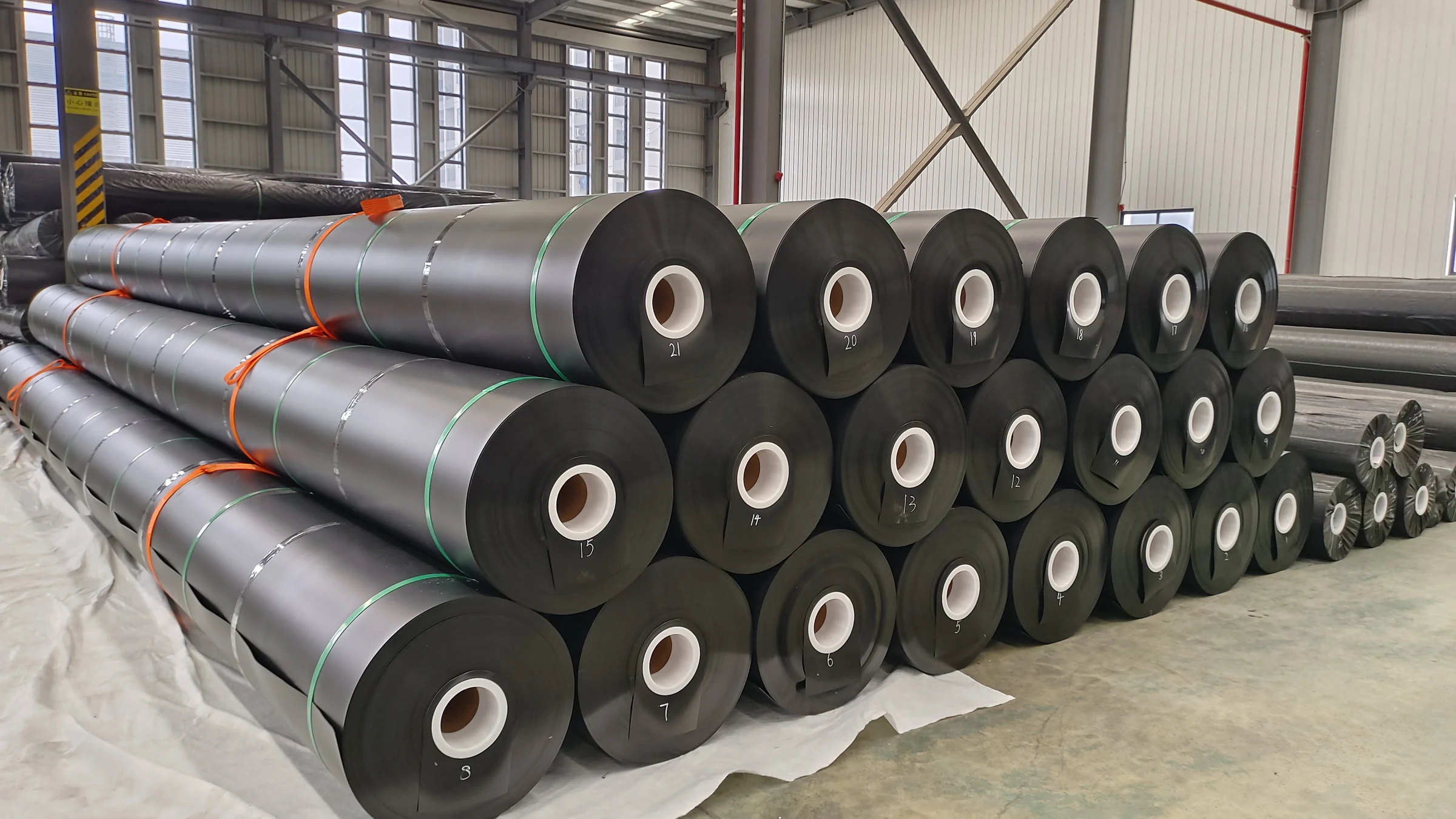
GRI-GM13 Revision 16 publishes separate smooth-sheet requirements for these grades. In its US-unit table, moving from 60 to 80 mil raises minimum average index puncture resistance from 108 to 144 lb and tear resistance from 42 to 56 lb—an increase of one-third in both tests. These are laboratory index values, not allowable equipment loads or proof that a sheet is suitable for a particular waste stream. [3]
| Property and test | 60 mil / 1.50 mm grade | 80 mil / 2.00 mm grade |
|---|---|---|
| Index puncture resistance, ASTM D4833 | 108 lb / 480 N | 144 lb / 640 N |
| Tear resistance, ASTM D1004 | 42 lb / 187 N | 56 lb / 249 N |
| Tensile yield strength, ASTM D6693 Type IV | 126 lb/in / 22 kN/m | 168 lb/in / 29 kN/m |
| Tensile break strength, ASTM D6693 Type IV | 228 lb/in / 40 kN/m | 304 lb/in / 53 kN/m |
| Yield / break elongation, ASTM D6693 Type IV | 12% / 700% | 12% / 700% |
The US and SI entries above are the specification’s published requirements, not exact conversions of one another. The higher puncture and tear values do not establish a longer service life. Both thickness grades have the same 500-hour stress-crack resistance requirement under ASTM D5397 and GRI-GM10; extra thickness does not itself increase that specified test minimum. [3]
Which layer needs the thicker sheet
Specify the primary and secondary geomembranes separately. The primary liner is above the leak detection layer; the secondary geomembrane forms the upper component of the bottom composite liner. Do not assume that the lower liner may be one grade thinner, or that both must share one thickness: follow the approved section and permit. [1]
Ask the designer to explain the selected thickness against waste chemistry, temperature, loading, subgrade and protection layers. For sumps, penetrations and construction-access details, request the relevant drawings and protection requirements rather than assuming that changing to 2.0 mm resolves the risk.
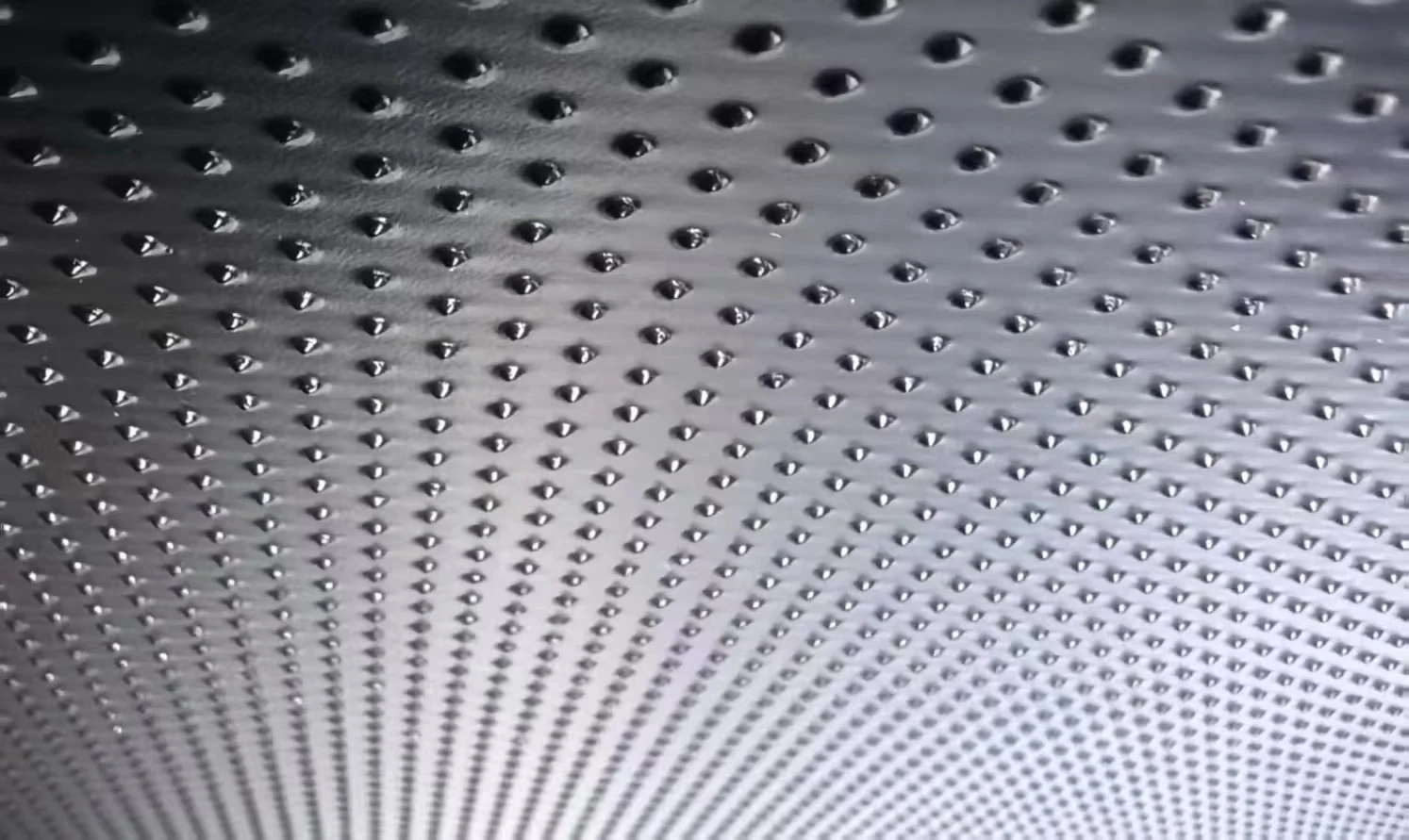
On slopes, thickness and surface texture are separate decisions. A textured HDPE geomembrane is not proof of adequate slope stability. GRI-GM13 expressly has a separate textured-sheet table: at 60 mil, its minimum average index puncture resistance is 90 lb, compared with 108 lb for smooth sheet, and break elongation is 100%, compared with 700%. Its minimum average asperity height is 16 mil, about 0.41 mm, under ASTM D7466. None of those values alone establishes the friction available in your liner stack. [3]
Check the units and thickness tolerance
One mil equals 0.0254 mm exactly. A nominal metric grade and its usual US-market label are therefore not interchangeable acceptance limits.
| Specified thickness | Conversion |
|---|---|
| 60 mil | 1.524 mm exactly |
| 80 mil | 2.032 mm exactly |
| 1.5 mm | About 59.1 mil |
| 2.0 mm | About 78.7 mil |
Under GRI-GM13 Rev. 16, smooth-sheet thickness is measured using ASTM D5199: the average must meet nominal thickness, and the lowest of 10 readings may be no more than 10% below nominal. Textured core thickness uses ASTM D5994: the average may be no more than 5% below nominal, at least eight of 10 readings must be within 10% below nominal, and no reading may be more than 15% below nominal. State the governing unit system, specification revision and acceptance table in the order. [3]
For example, suppose an approved drawing requires 60-mil smooth HDPE, while a quote offers “1.5 mm nominal.” Those labels alone do not establish compliance: 1.5 mm is less than 1.524 mm. Ask for acceptance criteria and supporting measurements, and obtain approval before accepting a substitution. This is a purchasing example, not a report of a completed project.
What thickness does not verify
GRI-GM13 Rev. 16 also specifies formulated density of at least 0.940 g/cc, carbon black content of 2.0–3.0%, and an initial OIT requirement of at least 100 minutes by ASTM D8117 or 400 minutes by ASTM D5885. After 90 days of oven aging at 85°C, the corresponding minimum OIT retention is 55% or 80%. These are specified material tests with their own frequencies, not a prediction of installed service life. [3]
- Chemical compatibility: require the designer to assess the actual waste chemistry and temperature. A thickness label or GM13 material table does not establish compatibility with your leachate.
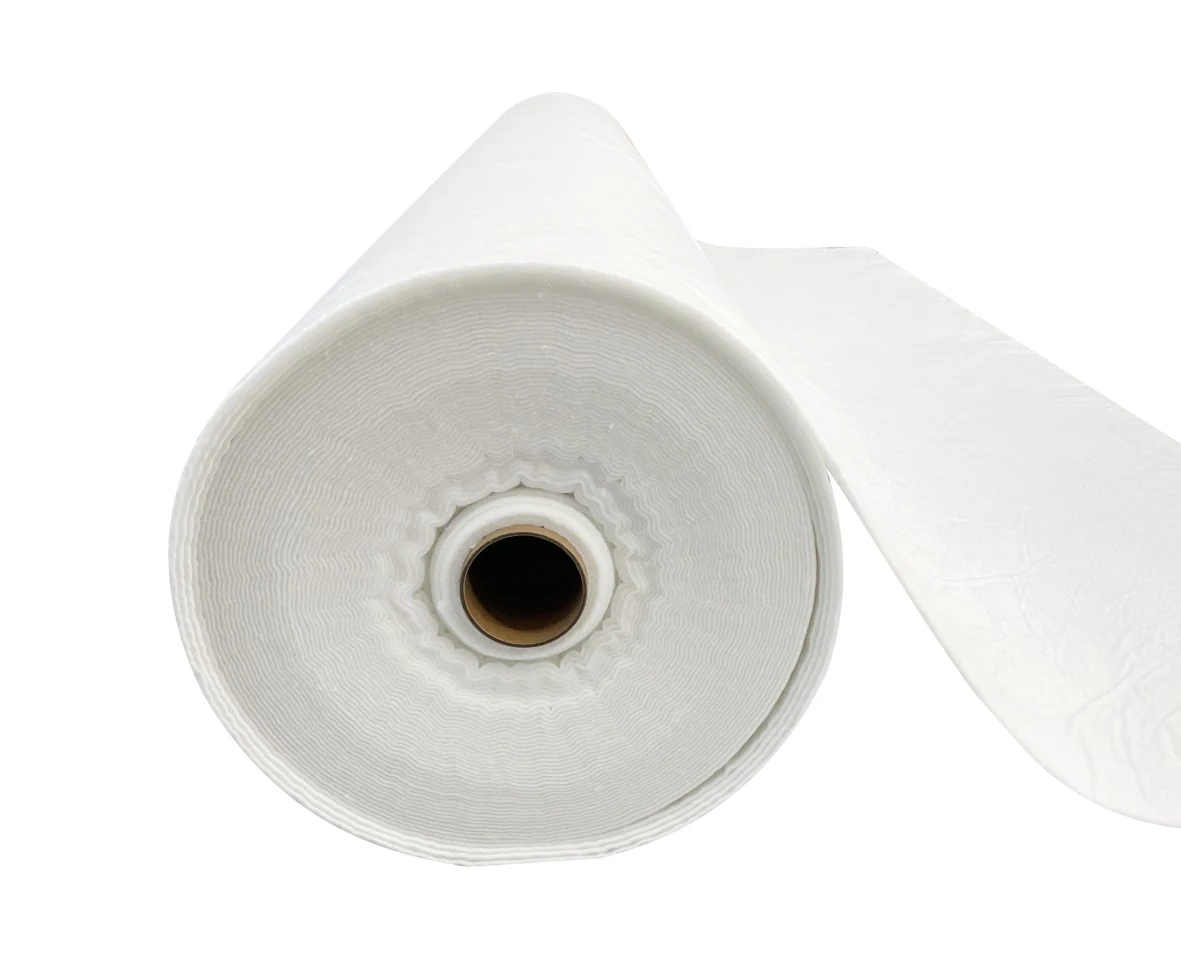
- Protection: specify subgrade preparation and any protection geotextile as part of the approved section. Do not substitute a thickness increase for the specified protection layer.
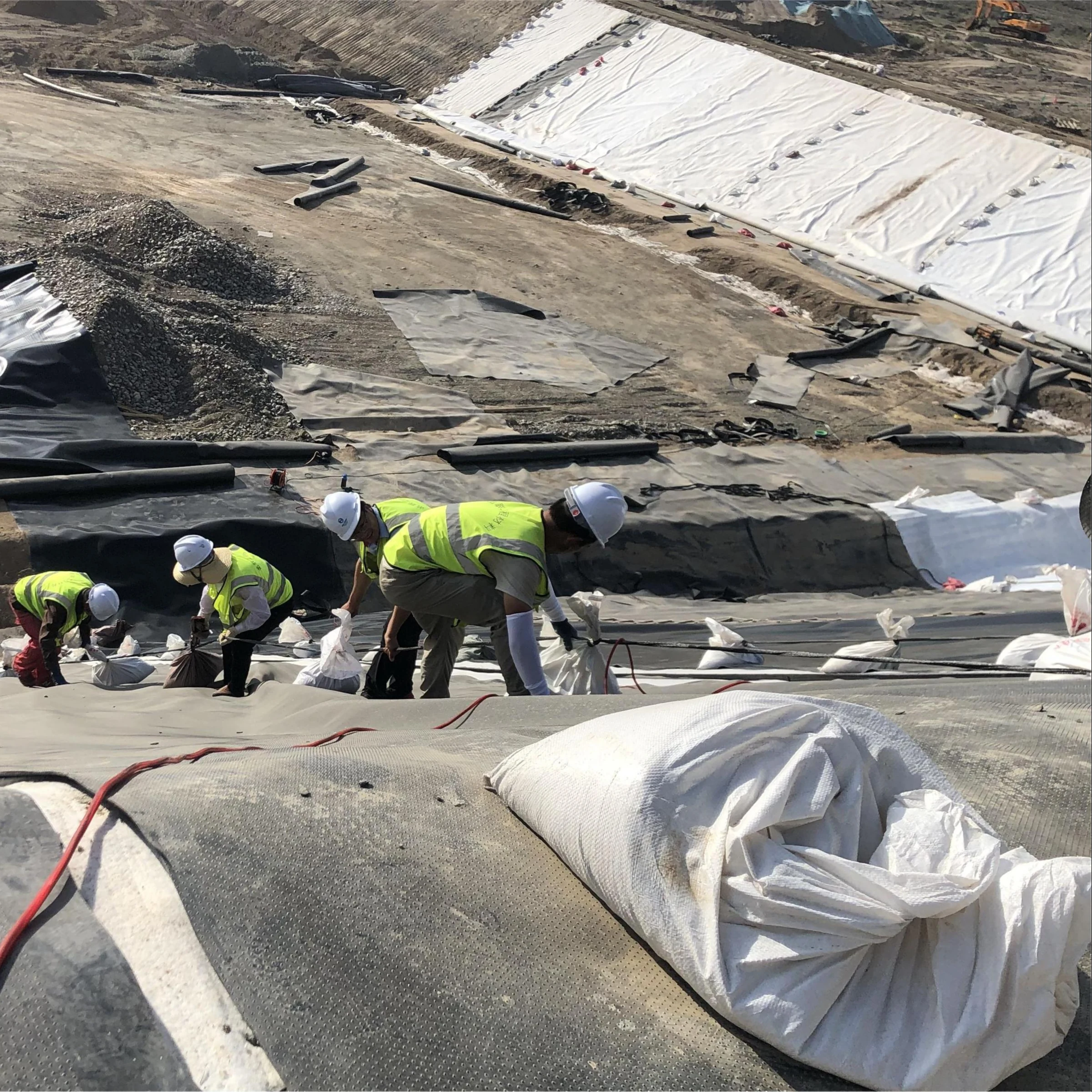
- Installation quality: require a construction quality plan covering trial seams, destructive and non-destructive seam testing, penetrations, damage repair and covering. Qualified personnel must perform the work under applicable local requirements.
- Leachate control: retain the drainage and leak detection design. The standard hazardous-waste provisions include a leak detection layer with a bottom slope of at least 1%; a thicker membrane does not replace collection, removal or monitoring. [1]
What to put in the liner inquiry
Send the approved section with a separate line for each geomembrane: thickness and unit system, smooth or textured surface, governing material specification and revision, and required acceptance records. Include cell area, slopes, protection details, roll-access limits and the construction quality requirements. At delivery, match roll identifiers to the approved submittal and the supplied material test reports.
If the permit or drawings do not identify a layer’s thickness, return the question to the qualified designer before ordering. Neither “60 mil meets the municipal rule” nor “80 mil is thicker” answers whether the proposed sheet satisfies the hazardous-waste cell’s approved design.
Request liner specifications for your approved design
Share the specified thickness, surface, cell area and documentation requirements to discuss material availability and a project quotation.
Sources
- [1] eCFR, 40 CFR 264.301: hazardous waste landfill design and operating requirements.
- [2] eCFR, 40 CFR 258.40: municipal solid waste landfill design criteria.
- [3] Geosynthetic Institute, GRI-GM13 Revision 16, March 17, 2021: smooth and textured HDPE geomembrane material requirements.
Sources checked November 2, 2026. This article explains US federal requirements and a specified edition of GRI-GM13; it is not a site design or a statement of requirements in other jurisdictions. Final selection and construction require qualified professionals, applicable local rules and facility-specific approval.