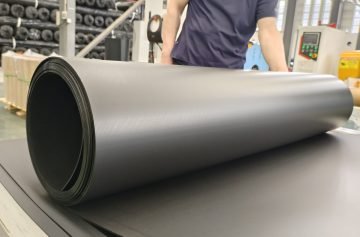
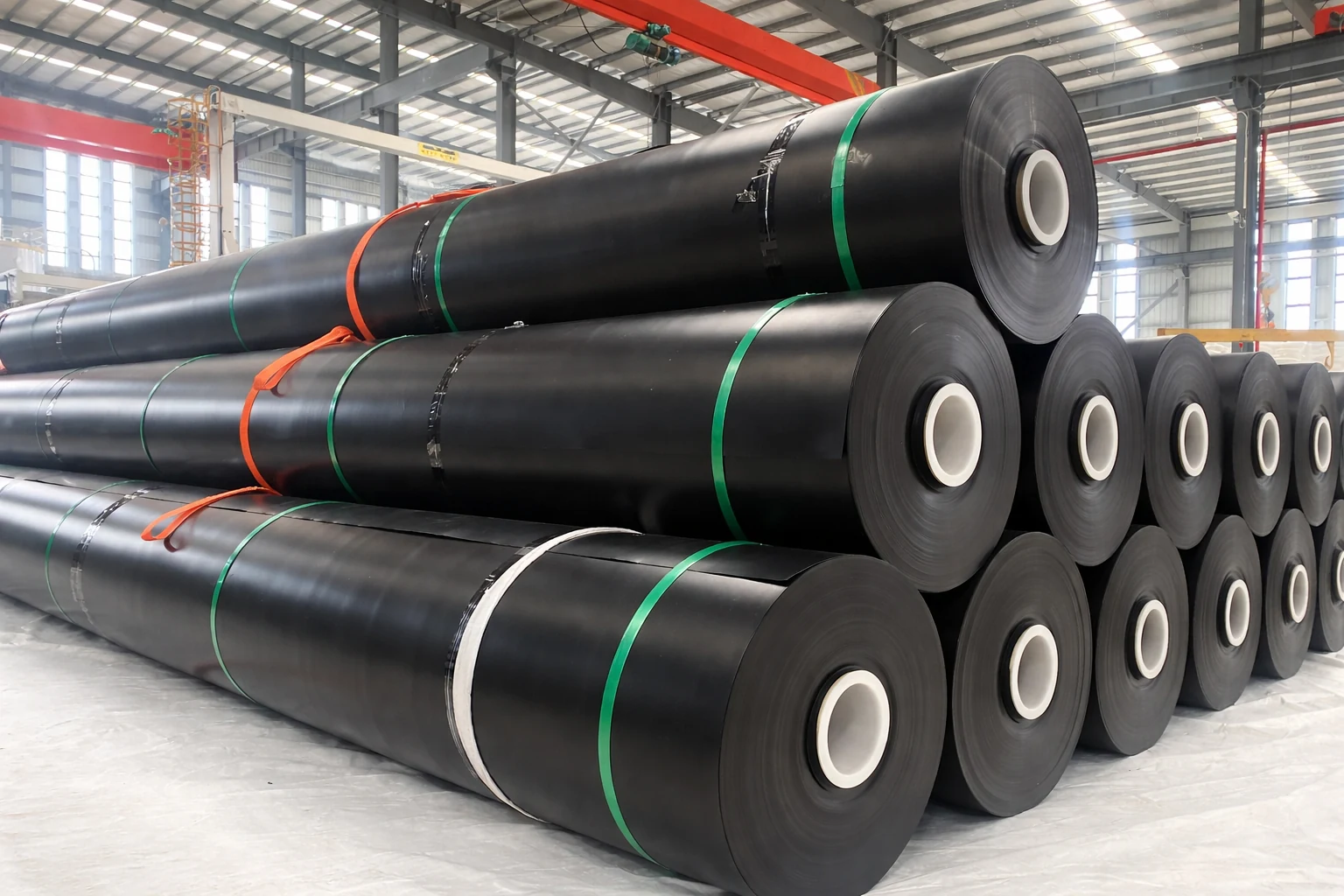
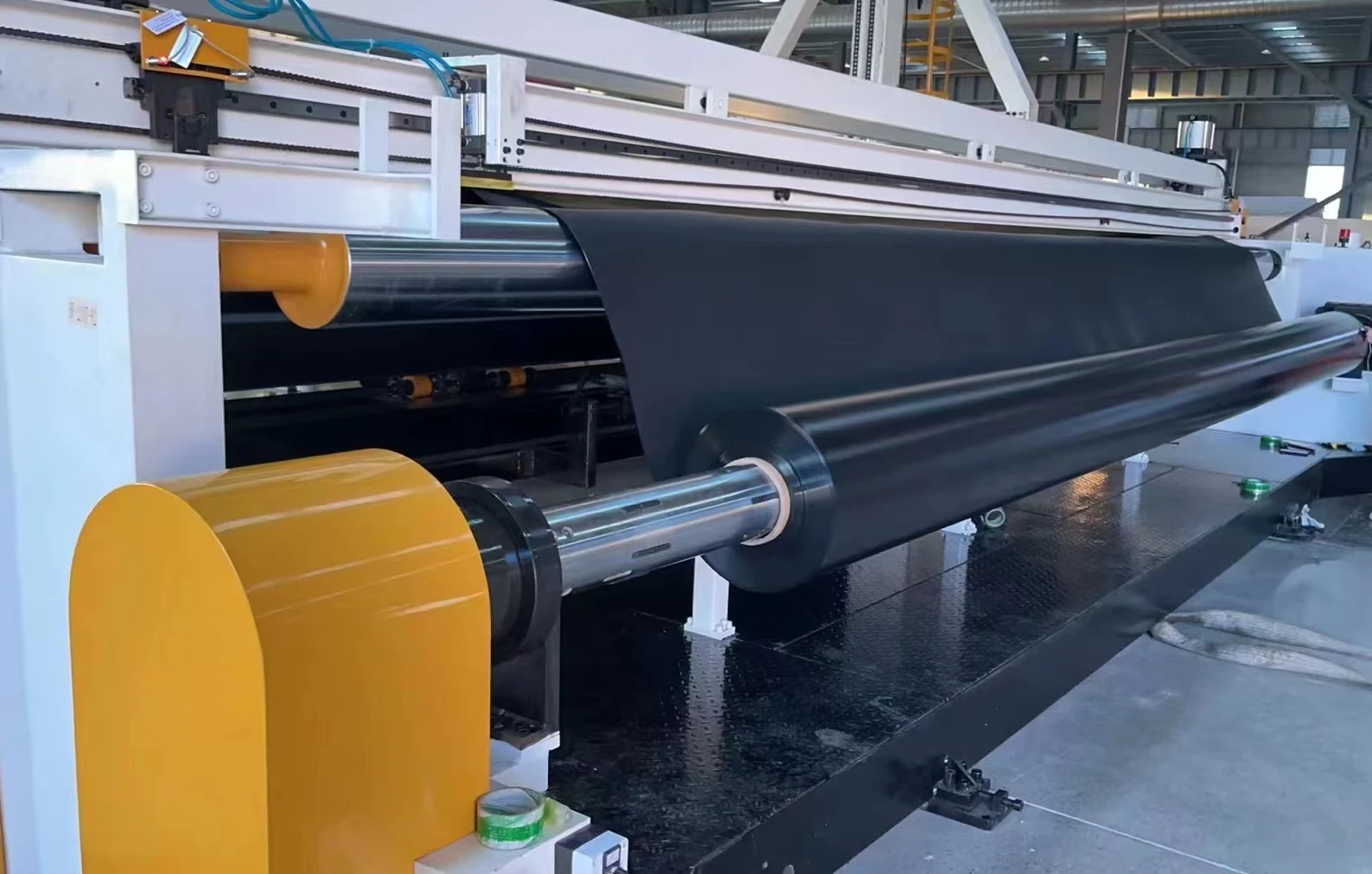
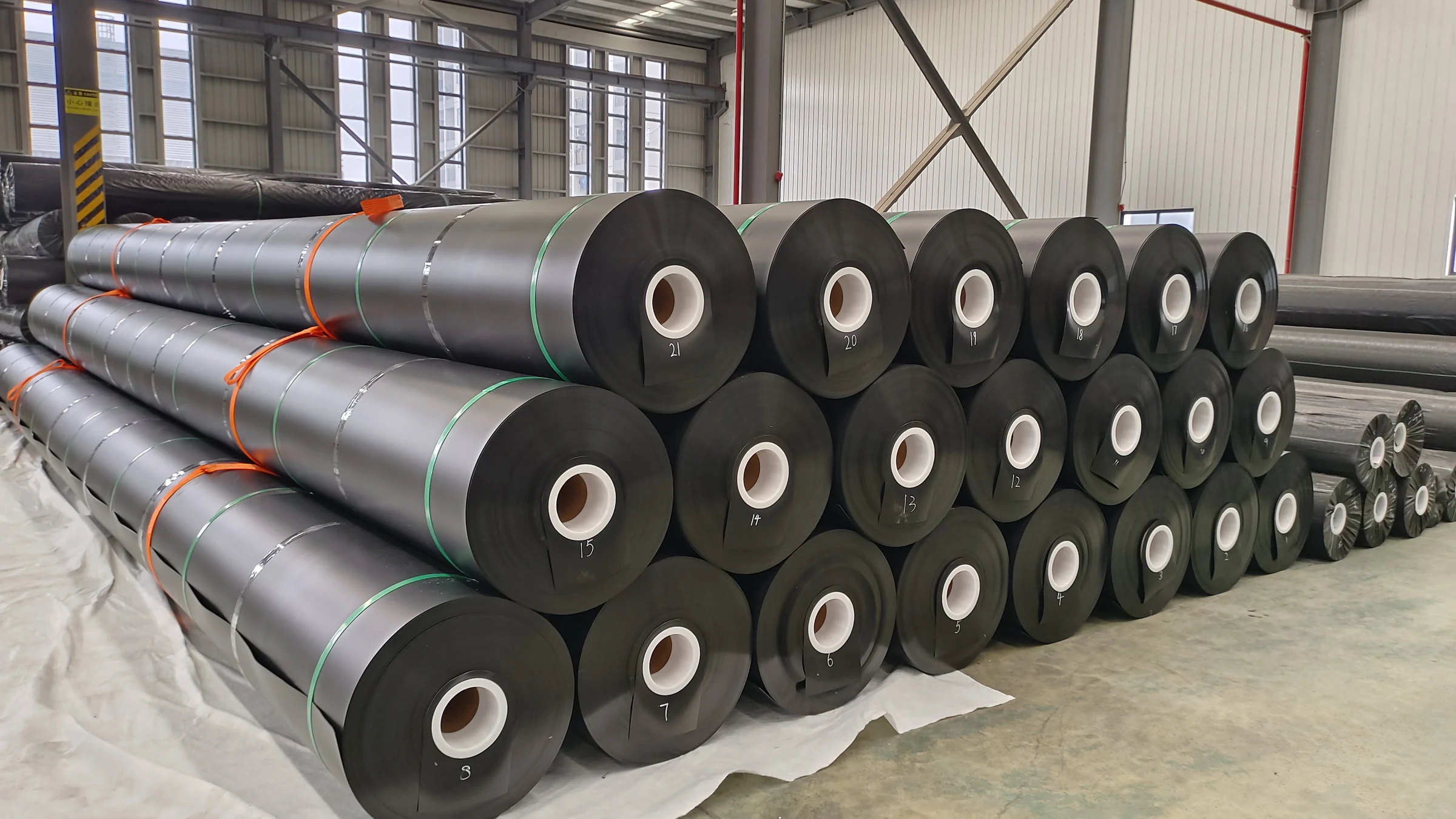

HDPE geomembrane cost per m2 needs a project-specific quotation: a sheet-only price is not an installed price. For sheet quoted by weight, multiply the quoted price per kg by the sheet mass per m2. For example, a smooth 1.5 mm sheet calculated at 0.940 g/cm3 weighs about 1.41 kg/m2, so its sheet-only price per m2 is 1.41 times the quoted price per kg. Freight, purchased area, welding, testing, and site work must then be priced separately.
This guide explains that calculation and the specifications needed for a comparable quote. It does not present an unverified supplier price as a current market average. Installation, testing, and design decisions should be handled by qualified personnel in accordance with local regulations and the project specification.
What Does a Price per m2 Include?
| Price basis | What to confirm |
|---|---|
| Sheet only | Thickness, surface, resin specification, roll dimensions, quantity, currency, and quotation validity |
| Delivered material | Sheet price plus the agreed transport, unloading, duties, and taxes; identify exclusions |
| Installed liner | Material and payable area, placement, seams, penetrations, testing, mobilization, and the stated scope of site preparation and protection |
Confirm the denominator too: purchased sheet area includes overlaps and offcuts, whereas net lined area is the surface being covered. An installed rate may include some site work but exclude earthworks, protective layers, or third-party quality assurance. Do not add an item twice if it is already included.
For U.S. municipal solid waste landfill new units and lateral expansions using the composite-liner option in 40 CFR 258.40, the liner includes an upper flexible membrane and at least two feet of compacted soil with hydraulic conductivity no greater than 1 × 10⁻⁷ cm/sec. An HDPE membrane under that option must be at least 60 mil thick and in direct and uniform contact with the soil. The regulation also provides for an approved performance-based design alternative; it is not a universal rule for every pond or reservoir [1].
EPA’s historical liner-design guidance also recommends 1.5 mm polyethylene for landfill bottom liners. Use that document for design context, not as evidence of today’s material or installation prices [2].
How Thickness Changes Sheet Cost per m2
At the same density, increasing thickness increases sheet mass in direct proportion. That does not mean the complete installed price rises by the same percentage: freight, production, installation, and other charges have their own pricing basis.
For a smooth sheet, approximate mass in kg/m2 equals density in g/cm3 multiplied by thickness in mm. The table uses 0.940 g/cm3, the minimum average formulated density in GRI-GM13 Revision 16. These are calculated planning values, not measured delivery weights or Jinseed product guarantees [3].
| Nominal thickness | Calculated mass | Sheet price calculation |
|---|---|---|
| 1.0 mm | 0.94 kg/m2 | Quoted price/kg × 0.94 |
| 1.5 mm | 1.41 kg/m2 | Quoted price/kg × 1.41 |
| 2.0 mm | 1.88 kg/m2 | Quoted price/kg × 1.88 |
| 2.5 mm | 2.35 kg/m2 | Quoted price/kg × 2.35 |
| 3.0 mm | 2.82 kg/m2 | Quoted price/kg × 2.82 |
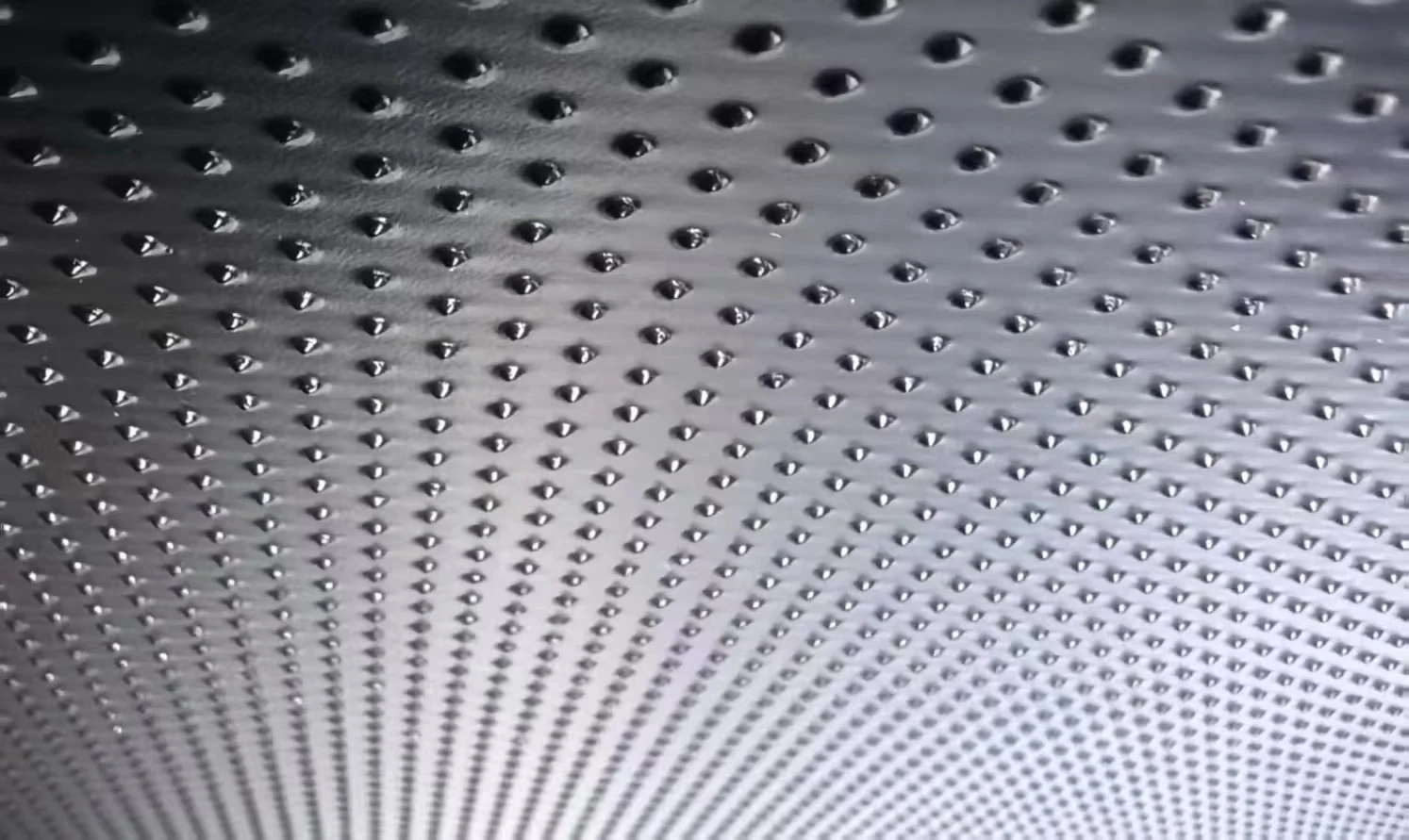
For textured geomembrane, do not estimate mass by treating the maximum peak-to-peak thickness as a uniform sheet. Core thickness and asperity height are separate measurements. Request the actual mass per unit area and roll data from the HDPE geomembrane manufacturer.
Converting a Roll Quote into a Price per m2
Sheet price per purchased m2 = total sheet-only roll price ÷ total purchased sheet area. For a weight-based offer, sheet price per m2 = price per kg × kg per m2. To compare price per kg, divide a sheet-only price per m2 by kg per m2. Keep freight and other charges on the same basis before comparing suppliers.
As an arithmetic example only, assume a smooth 1.5 mm sheet at 1.41 kg/m2 and a hypothetical sheet-only quote of USD 2.00/kg. The result is USD 2.82 per purchased m2. This is not a Jinseed quotation, market average, or installed rate; substitute the price and delivered mass from your written offer.
Which Specifications Belong in the Quote?
Request a defined conformance specification rather than comparing thickness labels alone. GRI-GM13 Revision 16 covers smooth and textured HDPE geomembranes from 0.75 to 3.0 mm; its minimum properties are a reference for material conformance, not proof that every sheet offered meets them [3].
Smooth HDPE Minimum Properties
The following values are from the smooth-sheet SI table in GRI-GM13 Revision 16. They do not apply unchanged to textured sheet. Tensile values use ASTM D6693 Type IV specimens; the table notes specify five specimens in each of the machine and cross-machine directions [3].
| Property and method | 1.0 mm | 1.5 mm | 2.0 mm |
|---|---|---|---|
| Yield strength, ASTM D6693 | 15 kN/m | 22 kN/m | 29 kN/m |
| Break strength, ASTM D6693 | 27 kN/m | 40 kN/m | 53 kN/m |
| Yield elongation, ASTM D6693 | 12% | 12% | 12% |
| Break elongation, ASTM D6693 | 700% | 700% | 700% |
| Tear resistance, ASTM D1004 | 125 N | 187 N | 249 N |
| Puncture resistance, ASTM D4833 | 320 N | 480 N | 640 N |
| Stress crack resistance, ASTM D5397 appendix SP-NCTL | 500 h | 500 h | 500 h |
For comparison, the 1.5 mm textured-sheet puncture minimum is 400 N, not the smooth-sheet value of 480 N. Smooth-sheet average thickness must meet nominal thickness, with the lowest individual of ten readings allowed up to 10% below nominal. Checking only the lowest permitted reading would miss the average-thickness requirement [3].
Durability Documentation
GM13 Revision 16 specifies 2.0–3.0% carbon black under ASTM D4218 and dispersion assessment under ASTM D5596. Initial oxidative induction time is at least 100 minutes by ASTM D8117 or 400 minutes by ASTM D5885. After 90 days of oven aging at 85°C under ASTM D5721, the corresponding retained OIT minima are 55% or 80%. For UV exposure under ASTM D7238, at least 50% high-pressure OIT is retained after 1,600 hours. These are laboratory acceptance conditions, not a direct prediction of years of outdoor service [3].
Ask which revision and test methods the contract requires, and request reports identifying the relevant grade, thickness, and production lot. Do not assume that a general brochure or a report for another thickness verifies the rolls being supplied.
What Changes Delivered and Installed Cost?
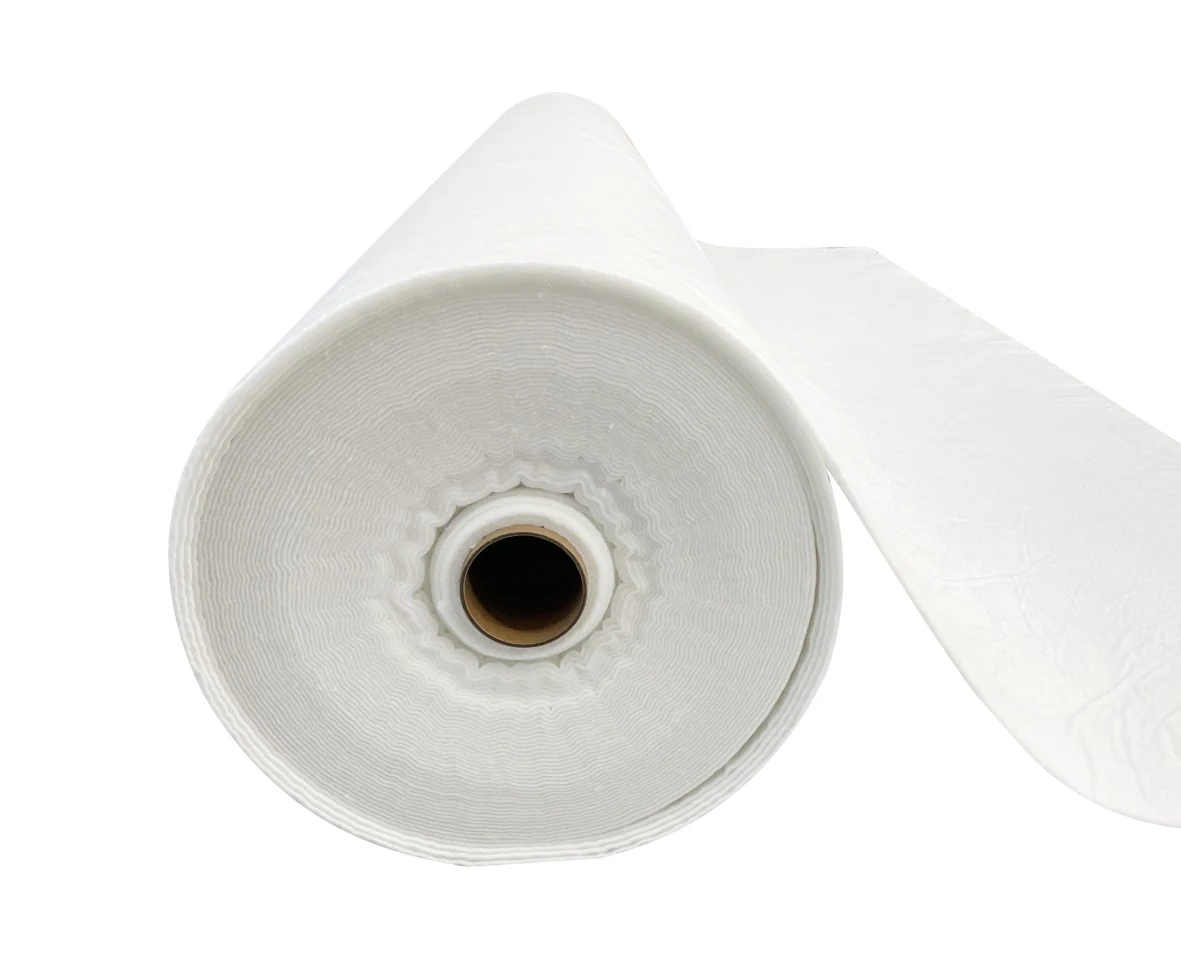
Jinseed’s HDPE liner product page lists smooth and textured material in 1.0–3.0 mm thicknesses and widths up to 8.0 m. For the same roll length and thickness, a wider roll contains more material and weighs more, but may reduce field seams where the panel layout permits. Confirm lifting capacity and access rather than selecting width on seam count alone.
Single- or double-sided textured liner must match the specified interfaces. For settlement-sensitive designs, an engineer may also consider LLDPE liner; do not treat a different polymer as a like-for-like price substitute.
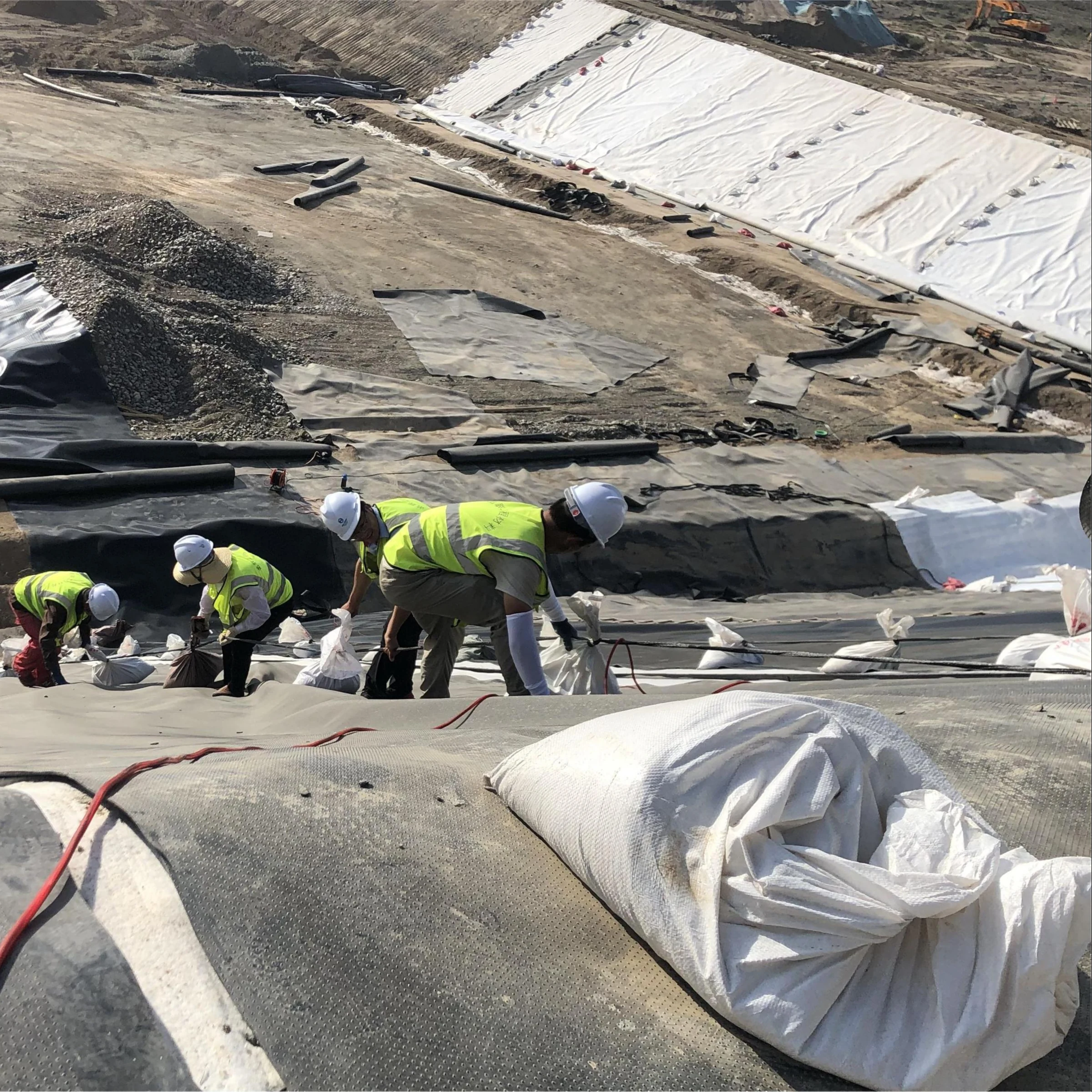
Freight, unloading, subgrade preparation, anchor trenches, pipe penetrations, welding, seam testing, and quality assurance can change the installed total. A protective geotextile or drainage layer is a separate component unless the quotation explicitly includes it. Remote mining sites, restricted-access civil engineering works, and weather-sensitive schedules require their own logistics assumptions.
A complete landfill liner system cannot be compared with a standalone roll price. When using a layer-by-layer cost breakdown, check the original bill of quantities and current contractor offers before assigning a project budget.
How Much Sheet Should You Allow?
Measure the actual bottom and slope surfaces, not only the horizontal footprint. Then prepare a panel layout accounting for overlaps, anchor trenches, penetrations, offcuts, and repairs. A rectangular aquaculture pond and an irregular reservoir lining can have different purchased areas even when their net lined areas match. There is no universal waste percentage for both.
For a calculation scenario, assume 10,000 m2 of net lined surface and a layout requiring 10% additional sheet. Purchased area is 11,000 m2. At the hypothetical USD 2.82/m2 sheet price above, material costs USD 31,020, equivalent to USD 3.102 per net lined m2 before freight or installation. The 10% is an example assumption, not a recommended allowance for every site.
Installed cost per net lined m2 = total agreed material, delivery, installation, testing, and site-work costs ÷ net lined area. Use mutually exclusive cost items so that overlaps, freight, or testing are not charged twice in the calculation.
Which Design Checks Affect the Budget?
On landfill slopes, texture alone does not establish stability. Interface shear testing and engineering assessment must address the actual adjacent materials and project conditions. ASTM D5321/D5321M provides a direct-shear method for obtaining interface shear resistance under specified test conditions; it is not, by itself, a complete slope-stability design [4].
For leachate, tailings solution, or wastewater in environmental containment, assess the actual chemicals, concentrations, temperature, and exposure conditions. EPA Method 9090A addresses chemical effects on flexible membrane liner properties; a generic claim of HDPE chemical resistance is not a substitute for application-specific compatibility assessment [5].
Specify welding procedures, trial welds, destructive and non-destructive seam tests, acceptance criteria, and responsibility for repairs in the installation package. Sheet tensile and puncture values do not establish field-seam acceptance.
What Should You Send for a Comparable Quote?
Jinseed’s published manufacturing and quality information describes in-house production, raw-material checks, finished-product inspection, and retained samples. These documented practices provide a supplier-process context, not evidence of a test on your order. Request the documents applicable to your quoted material and delivery.
- Application, site location, and required delivery date
- Specified thickness, polymer, smooth or textured surface, and required standard revision
- Net lined area, panel layout, and purchased quantity
- Slope geometry, subgrade condition, access limits, and roll-size constraints
- Required material reports and roll or lot identification
- Protection and drainage requirements, including any nonwoven geotextile
- Delivery terms, currency, taxes, payment terms, and quote validity
- Installation, seam testing, quality assurance, exclusions, and repair responsibilities
For example, if one offer covers delivered rolls and another includes placement and seam testing, first separate those items. Compare the conforming sheet on purchased area, then compare the complete project on net lined area. That produces a useful per-m2 comparison without pretending that different scopes are the same product.
Need a per-m2 figure for your thickness and site?
Send your lined area, thickness, surface, and delivery location to request a written quotation matched to your project specification.
References
- eCFR, 40 CFR 258.40, design criteria for U.S. municipal solid waste landfills, including composite-liner requirements and the approved design alternative. Read the regulation.
- U.S. EPA, NEPIS P100RAPM, historical landfill liner-design guidance. Not a current price source. Read the EPA document.
- Geosynthetic Institute, GRI-GM13, Revision 16, March 17, 2021; smooth and textured HDPE geomembrane specification, including SI tables and test notes. Read the specification.
- ASTM International, ASTM D5321/D5321M-21, direct-shear testing of soil-geosynthetic and geosynthetic-geosynthetic interfaces. Read the standard scope.
- U.S. EPA, SW-846 Method 9090A, Compatibility Test for Wastes and Membrane Liners. Read the method information.