
A 40ft container of HDPE liner costs the loaded quantity multiplied by the quoted unit price, plus any packing, freight, insurance, and destination charges not already included. There is no single container price: you need the thickness, surface, confirmed loading plan, delivery point, and a dated quotation. For an illustrative load of 9,000 m², the material subtotal is 9,000 times the price per m². That quantity is a calculation example, not a confirmed container capacity or a current market quote.
What sets the container price
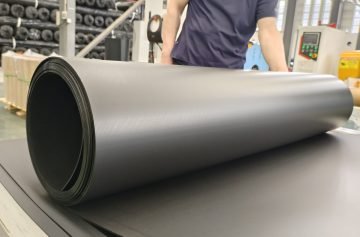
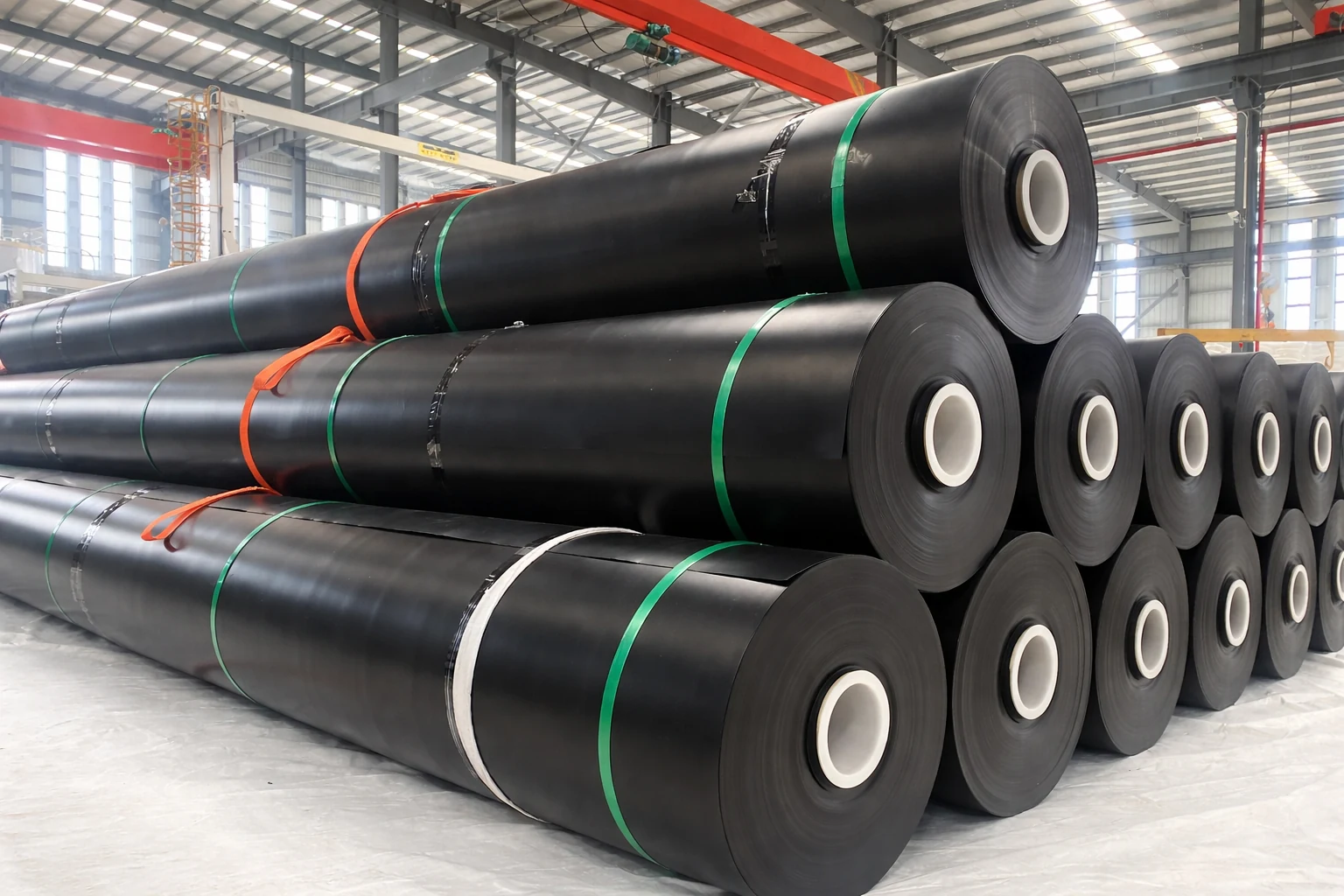
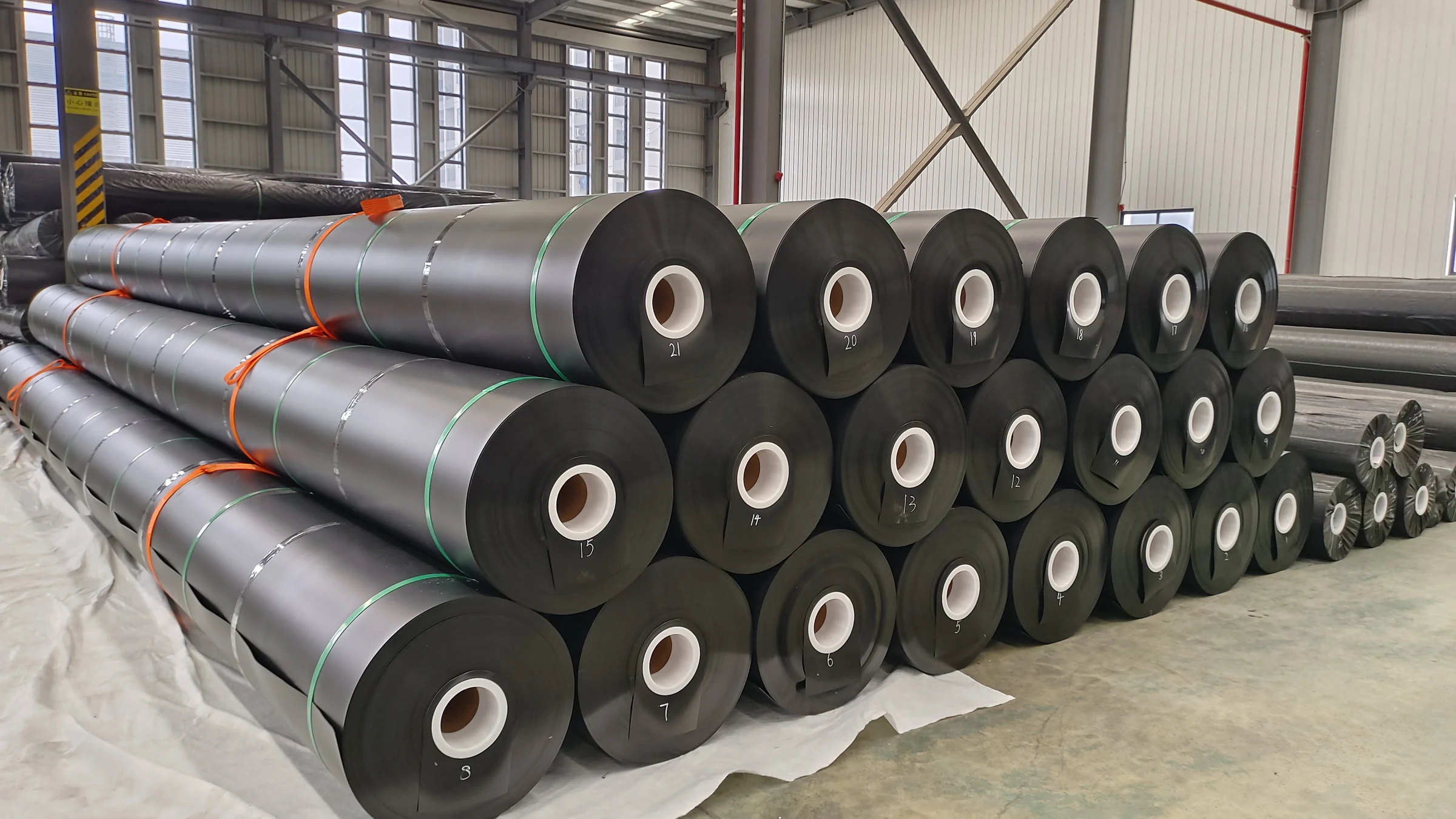
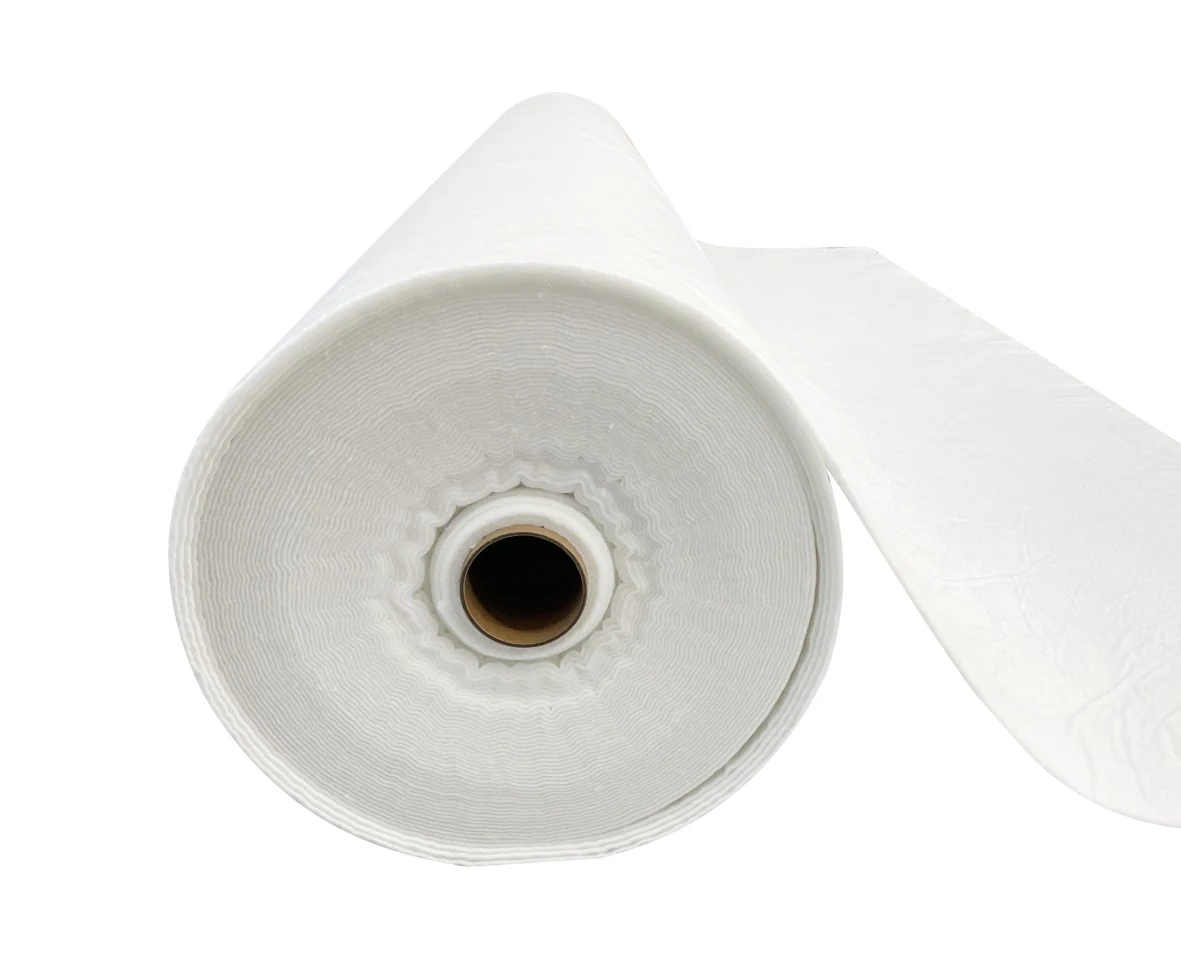
Start with the actual quantity offered. A 6 m × 50 m roll contains 300 m² of sheet. Thirty such rolls contain 9,000 m², but that does not establish whether they fit a particular container. Roll diameter, orientation, gross weight, bracing, and loading access must all work in the supplier’s loading plan. Loaded sheet area is also not the same as finished lined area: overlaps, cuts, and anchor trenches consume material.
Some suppliers quote per square metre and others per kilogram. GRI-GM13 Revision 16 covers smooth and textured HDPE geomembranes from 0.75 mm to 3.0 mm, with a minimum average formulated sheet density of 0.940 g/cm³. Using that density and nominal thickness gives approximate sheet weights of 0.94 kg/m² at 1.0 mm, 1.41 kg/m² at 1.5 mm, and 1.88 kg/m² at 2.0 mm. Formulated sheet density already includes the formulation; do not add carbon black and additives again to these estimates [1].
Separate the material subtotal from the total cost to your destination. Name the delivery term and the exact port or delivery address, then identify included and excluded charges. Do not add freight twice when it is already included in the supplier’s offer. A port-delivered quotation and a quotation delivered to your site cover different costs.
ISO 668 classifies Series 1 freight containers by dimensions and ratings; it does not specify how many geomembrane rolls a supplier can load [2]. Confirm the container type and loading plan rather than treating “40ft” as a guaranteed quantity.
How thickness changes the container quantity
These estimates use a 6 m × 50 m smooth-sheet roll and the GM13 formulated-density floor. They exclude cores and packing. Actual thickness, density, and measured roll weights can differ, so these are not shipping weights or a payload calculation.
| Nominal thickness | Assumed roll size | Area per roll | Approximate sheet weight per m² | Approximate sheet weight per roll |
|---|---|---|---|---|
| 1.0 mm smooth HDPE | 6 m × 50 m | 300 m² | 0.94 kg | 282 kg |
| 1.5 mm smooth HDPE | 6 m × 50 m | 300 m² | 1.41 kg | 423 kg |
| 2.0 mm smooth HDPE | 6 m × 50 m | 300 m² | 1.88 kg | 564 kg |
Thinner sheet provides more area per kilogram, but it does not automatically mean more area can be loaded. Roll geometry and the approved packing arrangement may limit the shipment before weight does. Ask for both net sheet weight and gross packed weight.
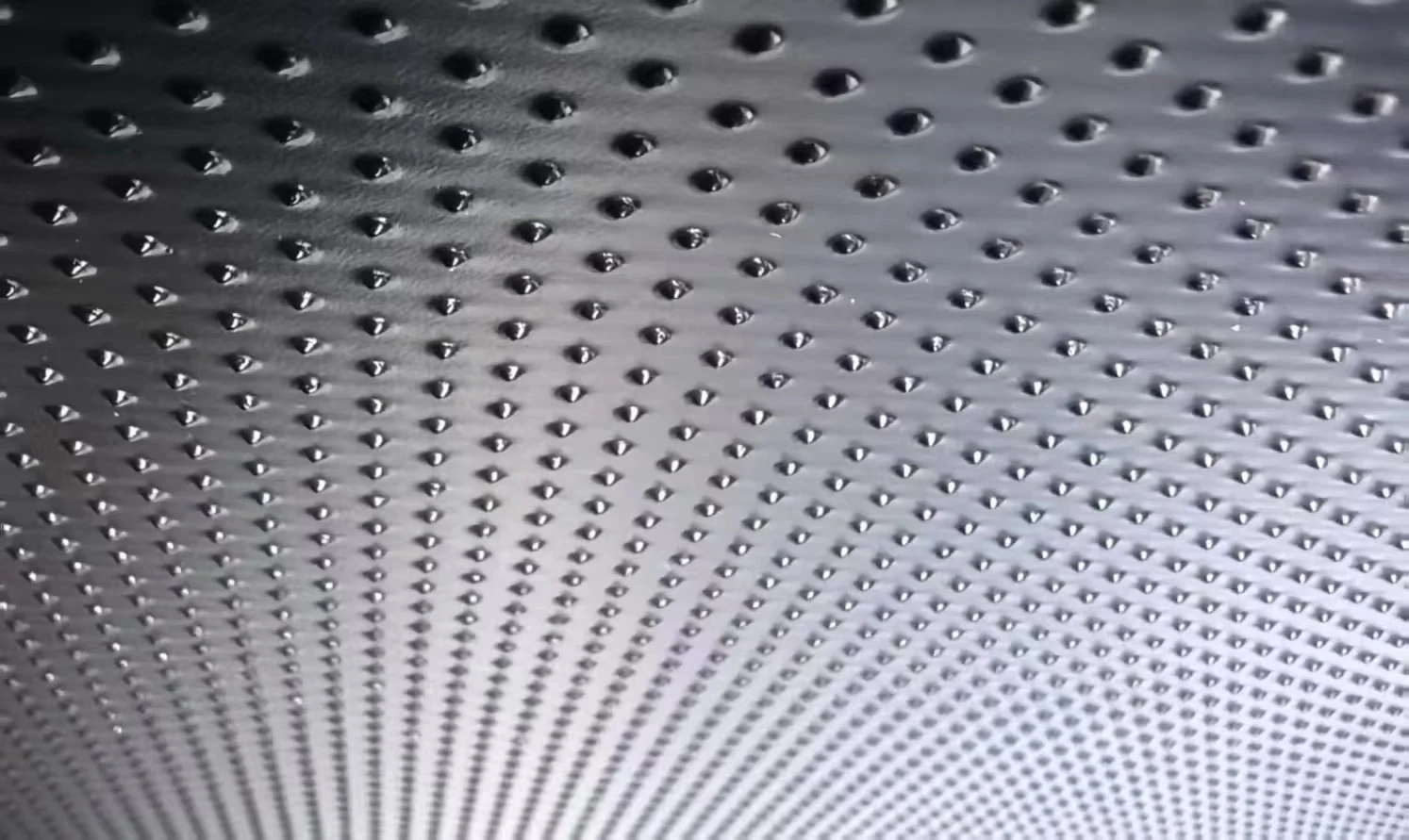
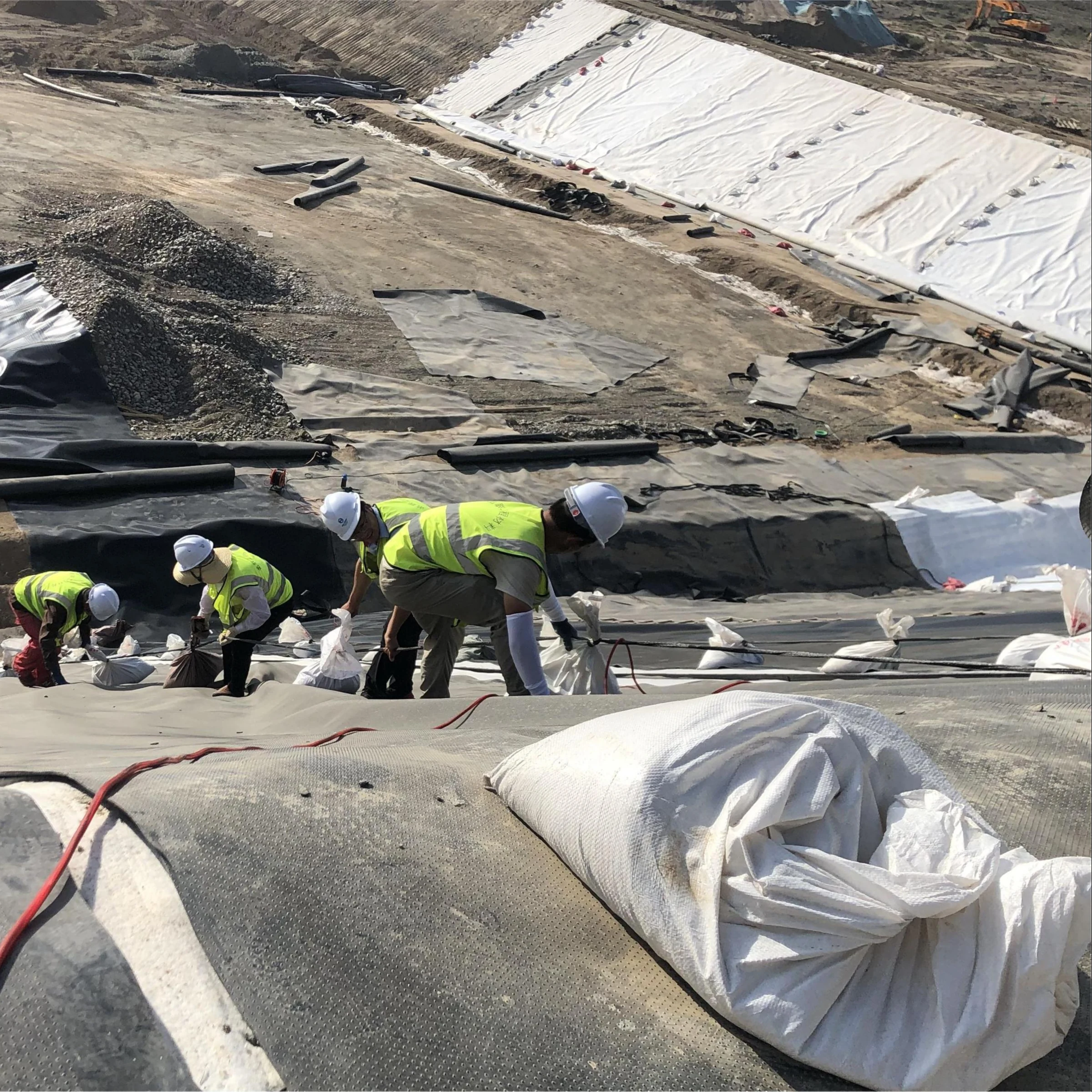
For a landfill cell, civil engineering embankment, or mining containment system, surface choice belongs to the project design. Do not select smooth or textured HDPE liner solely by price or slope appearance. Have qualified designers establish interface shear requirements for the actual liner system. Confirm textured-roll dimensions and loading separately rather than reusing a smooth-sheet packing plan.
How specification changes the material subtotal
The following GM13 Revision 16 values are specification requirements for the three stated smooth-sheet thicknesses, not Jinseed batch test results. They help you compare the same grade across quotations; they do not establish suitability for a particular waste stream or environmental containment project [1].
| Property and test | 1.00 mm | 1.50 mm | 2.00 mm |
|---|---|---|---|
| Minimum average index puncture resistance, ASTM D4833 | 320 N | 480 N | 640 N |
| Minimum average tear resistance, ASTM D1004 | 125 N | 187 N | 249 N |
| Minimum average tensile yield strength, ASTM D6693 Type IV | 15 kN/m | 22 kN/m | 29 kN/m |
| Minimum average tensile break strength, ASTM D6693 Type IV | 27 kN/m | 40 kN/m | 53 kN/m |
| Minimum average yield / break elongation | 12% / 700% | 12% / 700% | 12% / 700% |
| Minimum average standard OIT, ASTM D8117, or high-pressure OIT, ASTM D5885 | 100 min or 400 min | 100 min or 400 min | 100 min or 400 min |
| Stress-crack resistance, ASTM D5397 appendix, per GRI-GM10 | 500 h | 500 h | 500 h |
GM13 permits the manufacturer to select either listed OIT method to evaluate antioxidant content; the two times are not interchangeable results from the same test. Its carbon black content range is 2.0–3.0%. Neither OIT nor the 500-hour stress-crack requirement is a field service-life guarantee [1].
For smooth sheet, GM13 specifies a minimum average thickness equal to nominal and a lowest individual value, out of 10 measurements, no more than 10% below nominal. Keep the unit system in the order: 60 mil is 1.524 mm and 80 mil is 2.032 mm, so a 1.5 mm nominal order and a 60 mil nominal order are not identical specifications [1]. Ask for roll-linked test reports against the agreed specification and revision, not just an “HDPE” label.
Why two container quotations differ
- Different materials. Compare HDPE liner quotations at the same thickness, surface, and specification. An LLDPE liner is a different material and should be evaluated against its own project requirements.
- Different design obligations. Under the composite-liner option in US 40 CFR 258.40(a)(2) and (b), the HDPE membrane must be at least 60 mil thick over at least two feet of compacted soil with hydraulic conductivity no more than 1 × 10⁻⁷ cm/s, in direct and uniform contact. The section also provides an approved performance-based design route; it is not a universal rule for every landfill or pond [3]. EPA provides the broader municipal solid waste landfill context [4]. Follow the applicable permit and approved landfill liner system design.
- Different contents. A shipment that also contains PET continuous-filament nonwoven geotextile has a different loading plan and cost allocation. Request membrane and nonwoven geotextile quantities separately.
- Different commercial scope. Packing, cores, inspection, documentation, payment terms, quotation validity, and the delivery point can change the total. Identify exclusions before choosing the lower headline figure.
How to check a quotation before ordering
Use this illustrative purchasing check: one offer lists 30 rolls at 300 m² each, while another lists only “one 40ft container.” The first states 9,000 m²; the second gives too little information to compare. Request its roll schedule before treating the container totals as equivalent. This is a worked comparison, not a report of an actual customer shipment.
- Reconcile roll count × roll width × roll length with the quoted sheet area.
- Check the price basis. For an estimate, price per kg × sheet kg/m² gives price per m². For a kilogram-based order, confirm whether the invoiced weight excludes cores and packing and how that weight will be established.
- Match the delivery point and included charges. Record buyer-paid costs separately and avoid counting included costs twice.
- Check the specification, revision, thickness units, and required test records before accepting the lower total.
For the illustrative 1.5 mm load, 30 × 6 × 50 = 9,000 m². At 0.940 g/cm³ formulated density and nominal thickness, 9,000 × 1.41 = approximately 12,690 kg of sheet, excluding cores and packing. Material subtotal = 9,000 × quoted price per m², or invoiced net sheet kg × quoted price per kg. Use the agreed weight basis for the actual invoice, not this density-floor estimate.
A loading illustration is not a capacity guarantee. The supplier must confirm that the rolls, packed weights, and securing arrangement work for the selected container and transport limits.
What to send for an exact container price
Send the geomembrane supplier the following details:
- Project application, required sheet area, and any allowance already included for overlaps or waste.
- Thickness with units, smooth or textured surface, and the governing specification and revision.
- Acceptable roll dimensions, container type, and any unloading or site-access restrictions.
- Destination port or full delivery address, delivery term, currency, and required delivery date.
- Inspection documents, roll traceability, and the project’s seam-testing and acceptance requirements.
Name the relevant test methods: ASTM D5199 for nominal thickness of smooth sheet [5] and ASTM D4833 for index puncture resistance [6]. For textured sheet, use the applicable project-specified core-thickness method rather than assuming the smooth-sheet method applies.
For aquaculture and hydraulic engineering projects, provide the approved material requirements. A price request should not substitute for chemical-compatibility assessment, liner design, or installation planning. Qualified personnel must select, install, seam, and test the liner under the project specification and applicable local rules.
Ask for a written response showing loaded rolls and area, unit price and weight basis, material subtotal, packing and documentation charges, and the included and excluded transport or destination costs. Add the quotation’s validity date. Those details turn a headline container figure into a comparable purchase price.
Sources
- [1] Geosynthetic Institute, GRI-GM13 Revision 16, March 17, 2021: HDPE geomembrane requirements, smooth-sheet SI Table 1(b), and associated notes.
- [2] ISO 668:2020, Series 1 freight containers — Classification, dimensions and ratings. Reference page; no numerical container dimensions are used here.
- [3] US eCFR, 40 CFR 258.40(a)–(b), municipal solid waste landfill design routes and composite-liner requirements.
- [4] US EPA, Municipal Solid Waste Landfills.
- [5] ASTM International, D5199, Standard Test Methods for Measuring the Nominal Thickness of Geosynthetics.
- [6] ASTM International, D4833/D4833M, Standard Test Method for Index Puncture Resistance of Geomembranes and Related Products.
Sources checked November 3, 2026. Calculations use stated assumptions, not measured shipment data or current price quotations.
Request a container quotation
Send your thickness, surface, required area, roll-size limits, and destination. Ask for the loading plan, price basis, delivery terms, and quotation validity.