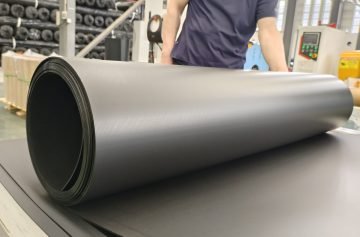
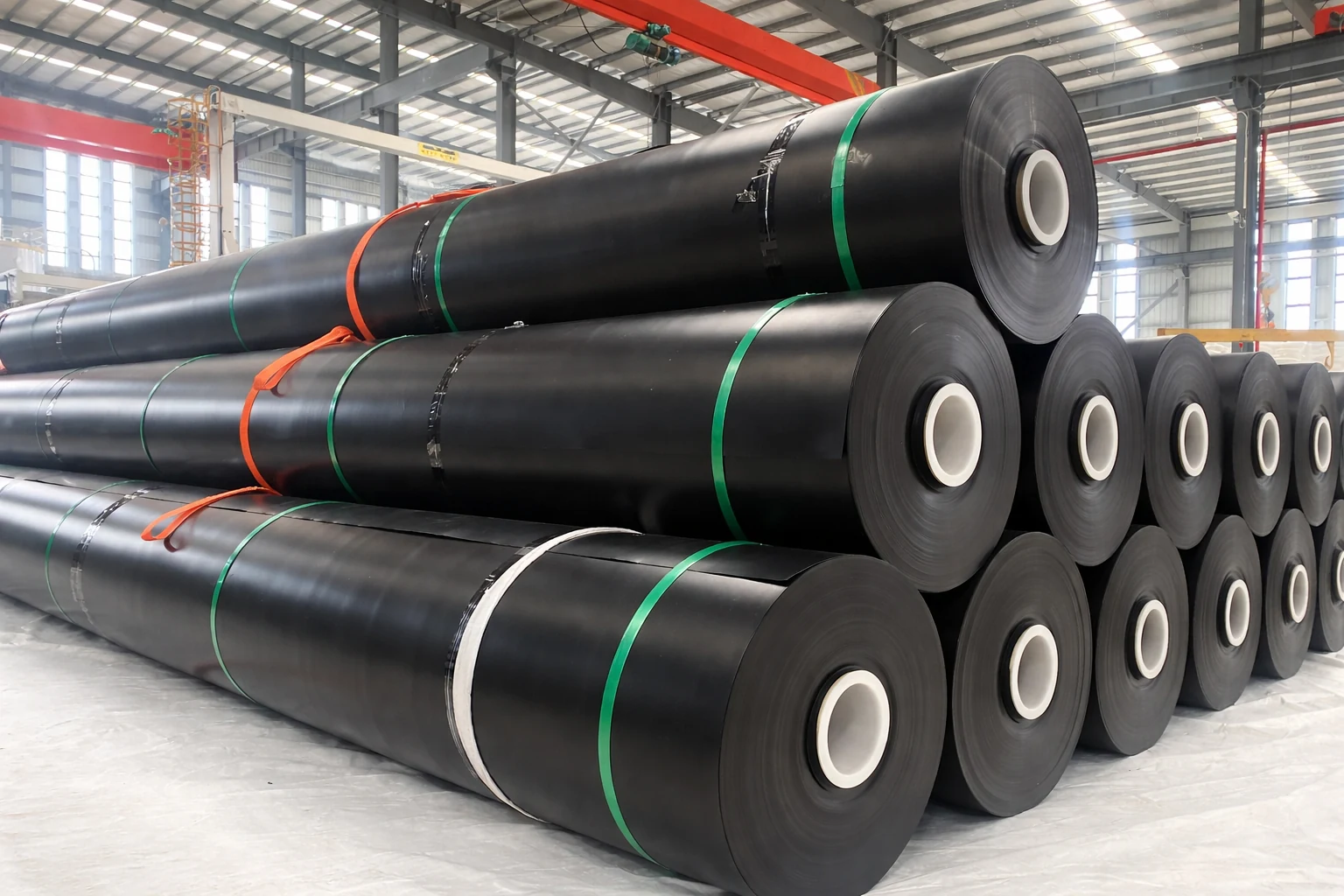
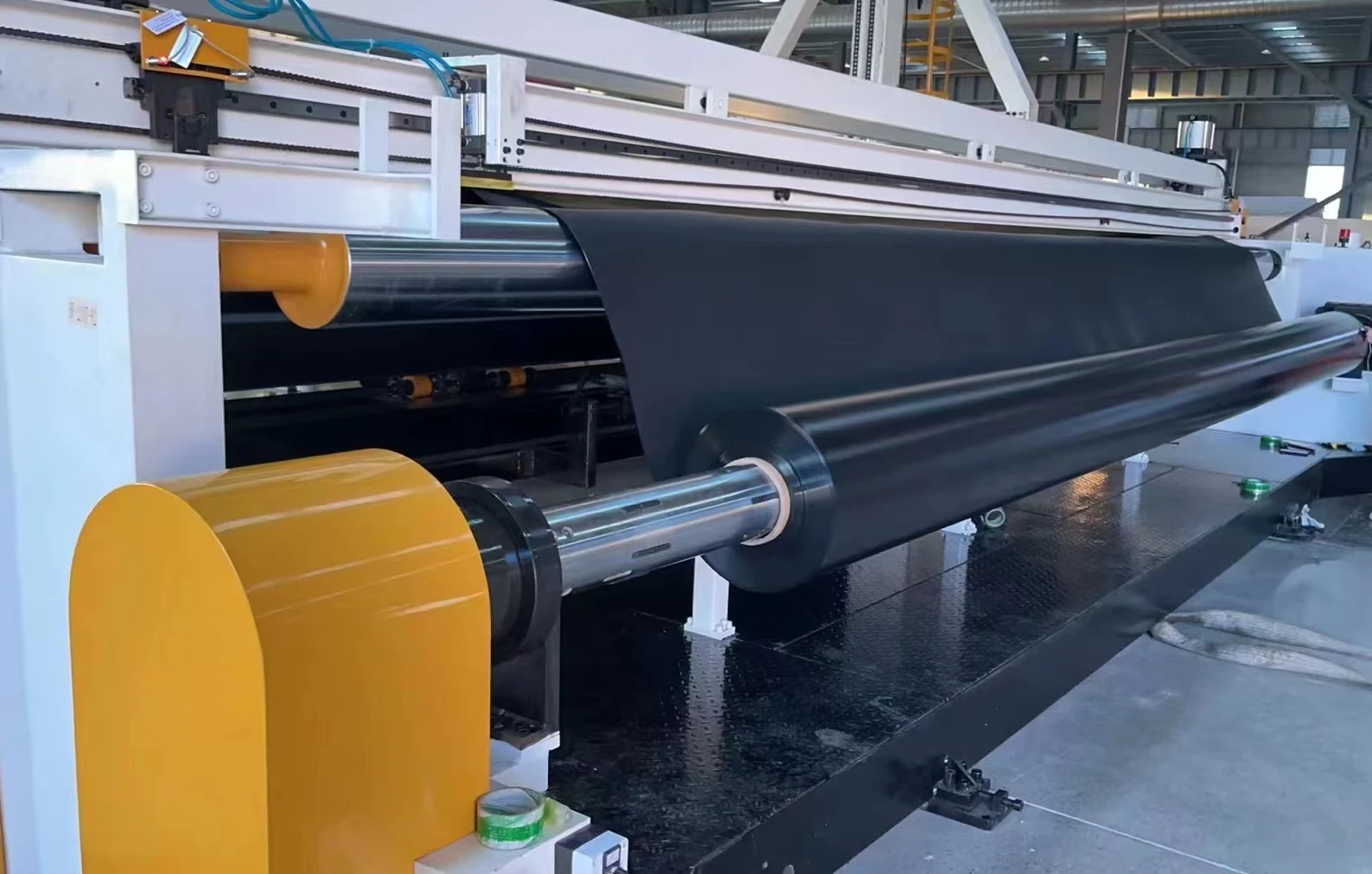
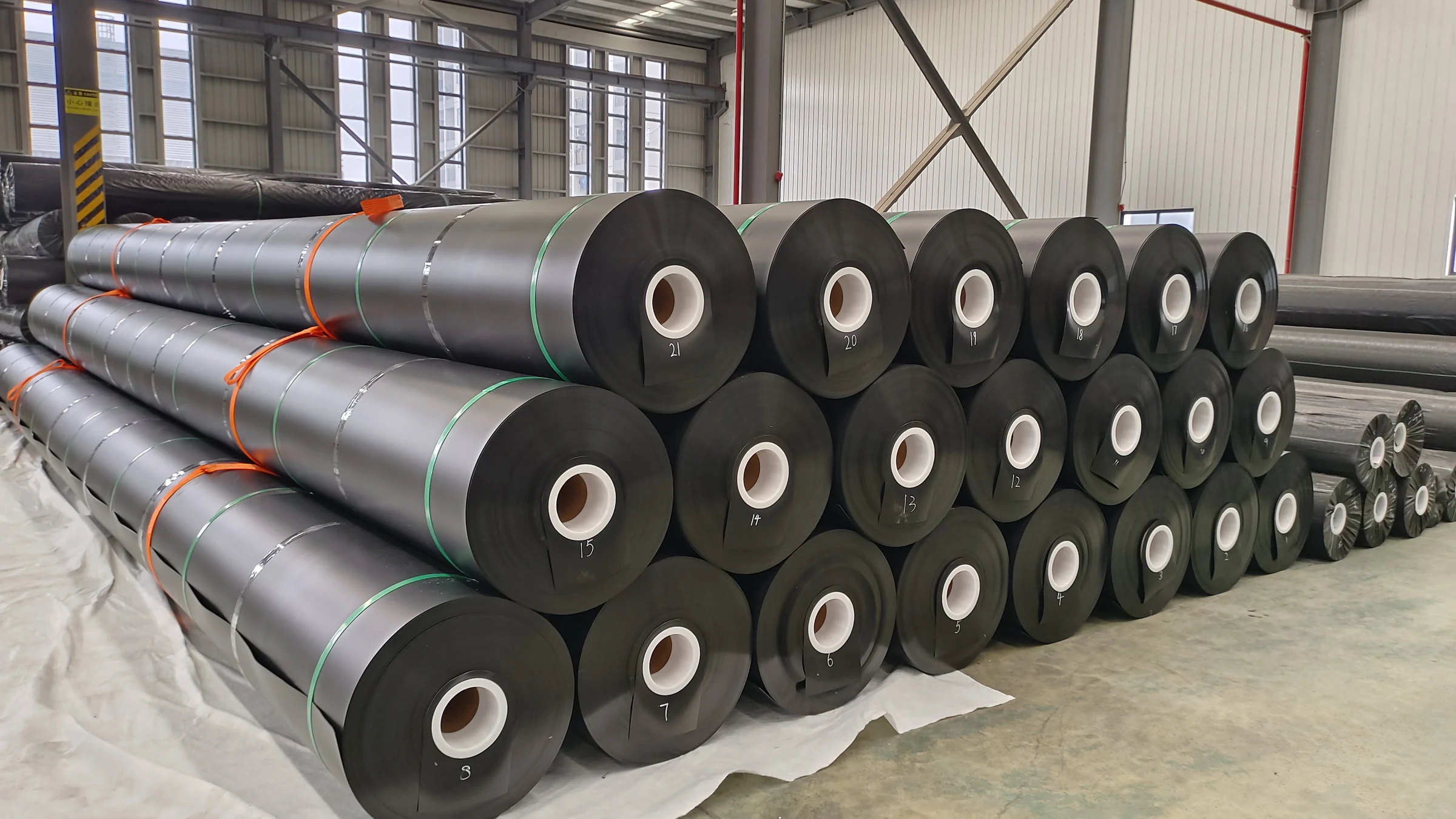
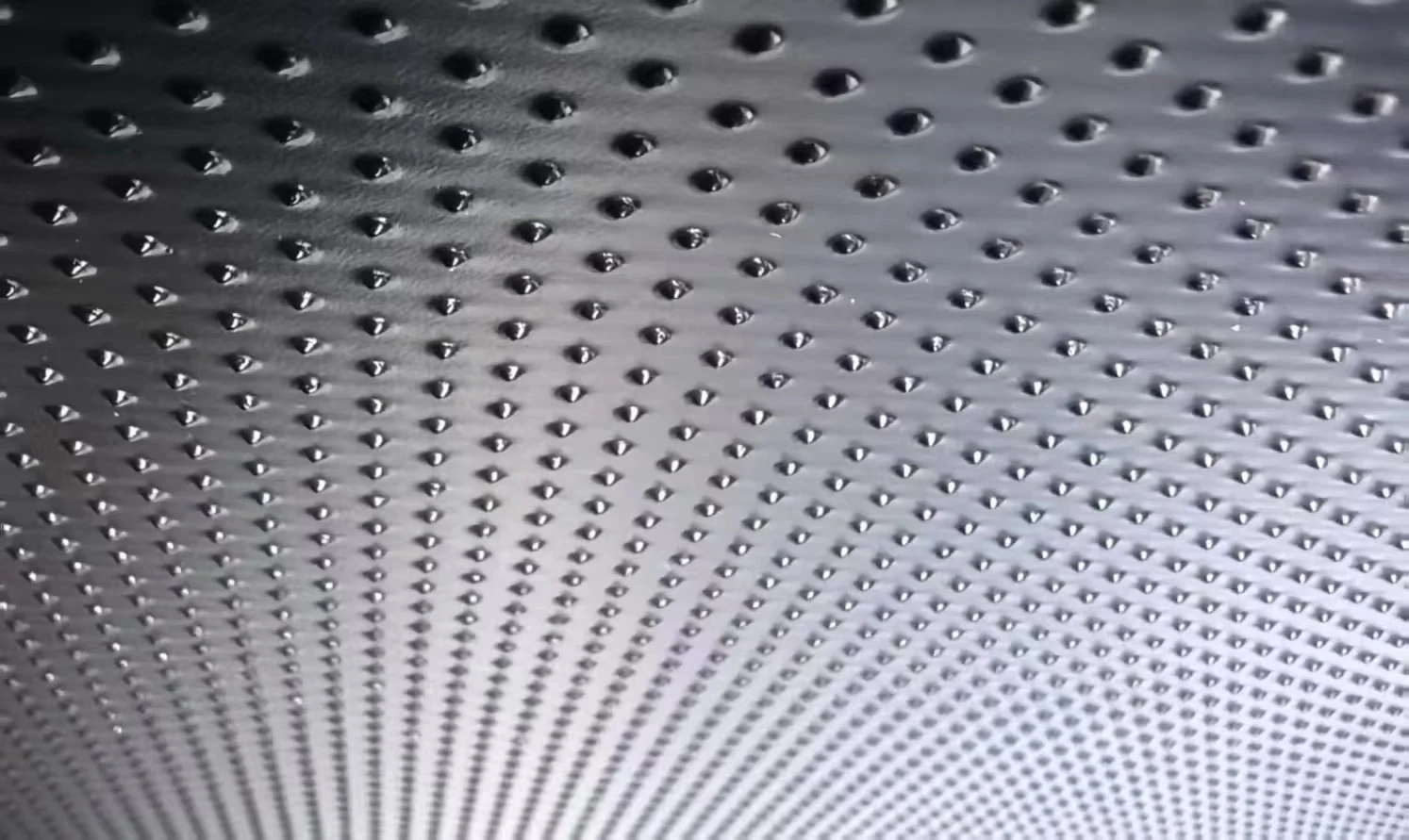
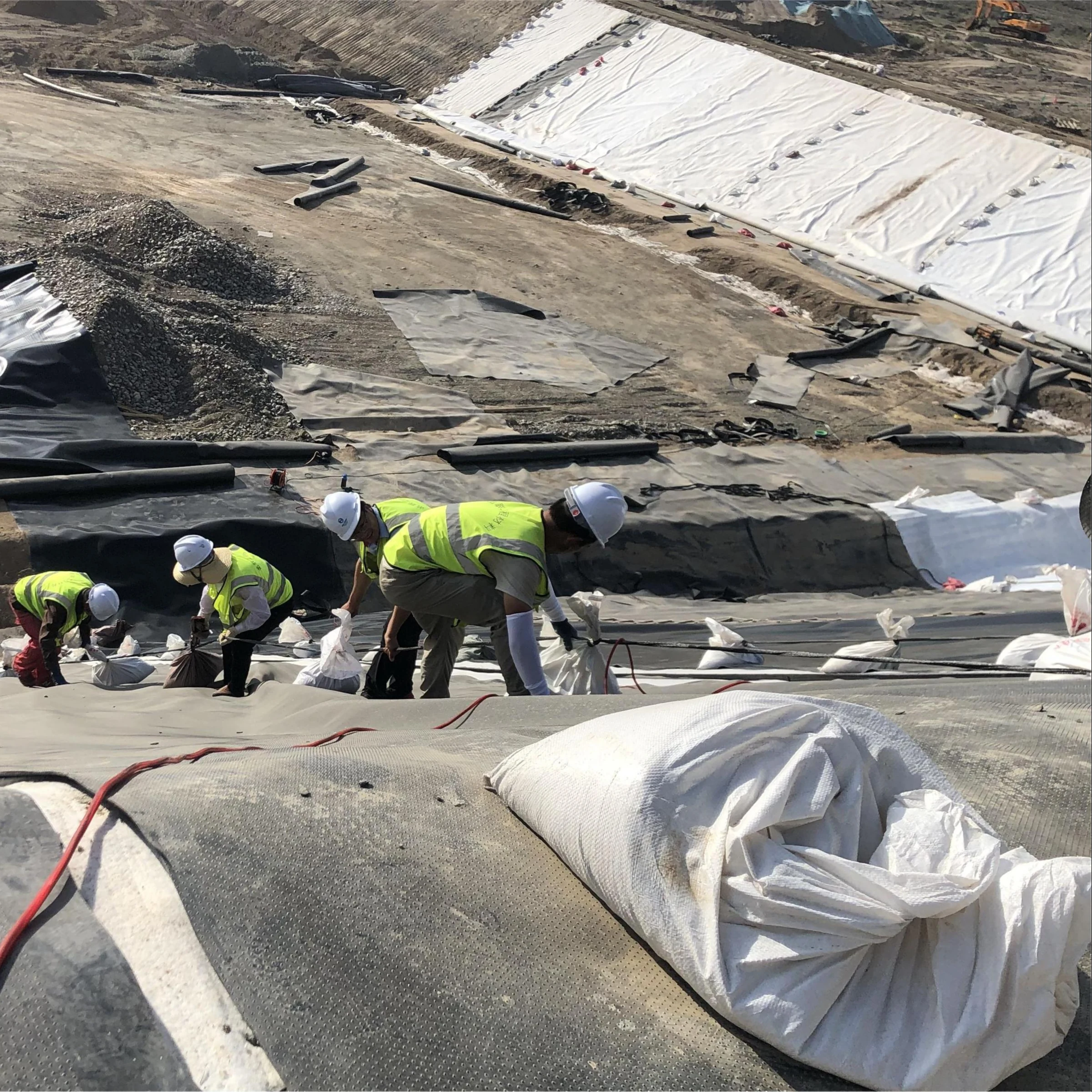

A textured HDPE liner needs a product-specific quotation; this guide does not provide a verified current market price per square meter. To calculate the sheet-only rate, multiply the quoted finished-sheet price per kilogram by the product’s mass per square meter. For example, an assumed mass of 1.41 kg/m2 gives a sheet-only rate of 1.41 times that quoted price. Add freight, installation, testing, and specified protection layers separately. Thickness, single-sided or double-sided texture, purchased quantity, and delivery terms must match before two prices are comparable.
Project scope
This guide covers single-sided and double-sided textured HDPE geomembranes for slopes and lining systems in civil engineering projects. It is a budgeting method, not a supplier offer or a project design. Qualified personnel must select, install, and test the lining system to the approved specification and local regulations.
What the price includes
| Price basis | What to confirm before comparing two quotations |
|---|---|
| Sheet only | Thickness and texture type, resin and specification reference, roll width and length, quantity, currency, and validity date |
| Delivered material | Sheet price plus agreed transport, unloading, duties, and taxes, with exclusions listed |
| Installed liner | Material and payable area, placement, seams, penetrations, anchor trench, testing, mobilization, and the stated scope of subgrade preparation and protection |
Purchased sheet area includes overlaps, anchor-trench allowances, and cutting waste. Net lined area is the surface to be covered. Ask whether a quoted rate uses purchased area or net area, and get exclusions for earthworks, protective layers, unloading, and independent quality assurance in writing.
Thickness cannot be reduced just to reach a lower unit price. Under the composite-liner option in 40 CFR 258.40 for applicable U.S. municipal solid waste landfill units and lateral expansions, the HDPE component must be at least 60 mil thick and lie in direct and uniform contact with at least two feet of compacted soil having hydraulic conductivity no greater than 1 × 10⁻⁷ cm/sec. The rule also provides an approved performance-based design route [1].
Budget both components when that composite-liner option applies. These are not universal thickness requirements for ponds, reservoirs, or mining facilities, and the rule does not itself require a textured surface.
What changes the texture premium
Texture adds surface-production and inspection requirements. A supplier may quote a premium over smooth sheet, but no universal percentage is established here. Request smooth, single-sided, and double-sided prices against the same thickness, specification, quantity, and delivery basis where the design permits those alternatives.
| Texture | Typical fit |
|---|---|
| Single-sided | One textured face; consider it where the approved design requires additional resistance at one interface |
| Double-sided | Two textured faces; consider it where both interfaces require suitable shear performance. Ask the supplier to identify the price difference rather than assume a fixed premium |
Confirm the product’s weld-edge arrangement and approved preparation procedure. A smooth weld strip does not remove the need for qualified welding procedures and seam inspection.
Interface shear resistance depends on the actual materials in contact and the test conditions, including normal stress, moisture, and displacement. Use project-specific interface testing under the applicable direct-shear method; a catalog texture description alone cannot establish slope stability [2]. The design engineer must interpret those results before accepting a lower-priced alternative. The smooth versus textured HDPE comparison explains the surface choices.
When double-sided texture fits
Consider a lining with cover soil above the geomembrane and a protection or drainage layer below it. Both interfaces need evaluation. Double-sided texture is not automatically necessary, and single-sided texture is not automatically adequate; the approved stability assessment determines what can be priced.
Thickness and material quantity
For a flat-sheet approximation, mass in kg/m2 equals thickness in millimeters multiplied by density in g/cm3. The table assumes 0.940 g/cm3 solely for calculation; it is not a guaranteed density, a measured product mass, or a list of approved design thicknesses.
| Nominal thickness | Calculated flat-sheet mass at assumed 0.940 g/cm3 |
|---|---|
| 0.75 mm | 0.71 kg/m2 |
| 1.0 mm | 0.94 kg/m2 |
| 1.5 mm | 1.41 kg/m2 |
| 2.0 mm | 1.88 kg/m2 |
| 2.5 mm | 2.35 kg/m2 |
For a textured product, use the manufacturer’s stated or verified mass per unit area for the actual sheet being quoted. Core thickness, surface profile, manufacturing method, and tolerances mean that the table is not a guaranteed minimum mass or an exact roll-weight prediction. Multiply the product-specific mass by the quoted finished-sheet price per kilogram, not a raw-resin price. The broader HDPE liner cost guide separates thickness, roll planning, freight, and installation.
In a hypothetical 10,000 m2 project, assume a 1.5 mm sheet and a mass of 1.41 kg/m2 for arithmetic only. Net sheet mass is 14,100 kg. An illustrative 10% area allowance gives 11,000 m2 purchased and 15,510 kg at that assumed mass. If P is the finished-sheet quotation in the chosen currency per kilogram, sheet cost is 15,510 × P. The same sheet cost is 1.41 × P per purchased square meter or 1.551 × P per net lined square meter. Replace the assumed mass and allowance with the actual product data and panel layout before ordering.
Check core thickness separately from surface texture. ASTM D5994/D5994M addresses core thickness of textured geomembranes [3]. ASTM D5199 covers nominal thickness of applicable geosynthetics and directs textured geomembranes to D5994/D5994M [4]. Do not compare a texture-peak measurement with a core-thickness requirement.
GRI-GM13 provides a manufacturing quality-control framework for HDPE geomembranes, including density, carbon black, tensile, tear, puncture, stress crack resistance, oxidative induction time, aging, and textured-sheet asperity height. It does not replace the project’s field-seam acceptance requirements [5]. Use the guide to reading GRI-GM13 specifications to identify which product properties a quotation promises.
Ask the HDPE geomembrane manufacturer for the proposed product data sheet and available manufacturing quality-control documentation. Agree the project conformance testing plan with the designer and quality-assurance team. At delivery, check that roll identification and supplied records match the ordered product; project testing is not replaced by a generic data sheet.
Installed price drivers on slopes
- Slope geometry and area: long, steep slopes slow the crew. Anchoring takes more work. Overlap and waste run higher. Digging and backfilling the anchor trench prices as its own item. Edge detailing does too.
- Seaming and testing scope: textured seams need a qualified procedure, trial seams, and production seam testing. Destructive seam testing usually runs in shear and peel under the applicable seam test practice [6].
- Construction quality assurance: subgrade acceptance, panel placement records, seam logs, repairs, and independent testing. Each item adds supervision cost.
- Protection and drainage layers: slopes and loaded areas often get a geomembrane protection geotextile or a specified nonwoven geotextile cushion above or below the liner. Those layers, their overlaps, and the placement method each price separately. Our landfill liner cost breakdown shows a full system priced the same way: geomembrane, clay liner, geotextile, and drainage composite.
- Chemical exposure: if the stored liquid or waste can attack the polymer, check compatibility through the project specification. Where it applies, use the waste-membrane compatibility testing practice [7]. Chemical demands can shift thickness, protection, or material selection, for example HDPE versus LLDPE liner. Each option carries its own sheet price, so name the chosen material in the enquiry. LLDPE submittals point to their own specification framework, GRI-GM17 [8]. Texture is not evidence of chemical compatibility.
- Freight and roll planning: roll width and length matter. So do container loading, route, duties, and site unloading. Tight or remote sites and small split orders usually carry a heavier per-square-meter freight share than full-container loads to an easy site.
Leave subgrade preparation, panel layout, welding, and leak-location surveys to qualified personnel. They must work to the project specification and local regulations.
How to compare quotations
Send every bidder the same sheet definition and scope. State the currency, quotation date, validity period, delivery location, and agreed trade terms. This makes the comparison reproducible without relying on an undated headline price.
| Enquiry item | State explicitly |
|---|---|
| Sheet definition | HDPE, nominal thickness and texture type (single-sided or double-sided), specification reference such as GRI-GM13, roll width and length |
| Quantity | Net lined area, plus stated overlap, anchor-trench, and waste allowance, or the total purchased area |
| Scope split | Sheet only, delivered, or installed; list testing, protection layers, earthworks, and supervision as included or excluded |
| Site facts | Slope lengths and grades, subgrade type, adjacent layers above and below the liner, and application such as landfill, mining, hydraulic engineering, or aquaculture works |
| Documents | Data sheet, manufacturing quality records, roll traceability, and the proposed seam and testing procedure |
A practical comparison scenario is two quotations for the same HDPE liner: one prices purchased sheet area, while the other prices net lined area and includes welding. Neither unit rate is directly comparable until the payable area and inclusions match. Use the worked example to reconcile area, then request separate freight, welding, testing, and protection-layer totals. For a landfill liner system, include every layer in the approved design. This is an illustrative purchasing scenario, not a reported customer project.
Which system layers need separate prices
Where a design includes a geosynthetic clay liner, obtain a separate quotation for its specified construction and placement. EPA’s historical fact sheet on geosynthetic clay liners explains that reinforcement and geotextile construction affect their cost [9]. It is background guidance, not current price evidence. GCL hydraulic properties must not be presented as HDPE permeability, and a GCL must not be assumed to replace a required compacted-soil layer without design and regulatory approval.
Frequently asked questions
Is textured liner always more expensive installed?
No. A textured sheet may carry a material premium, but the installed total depends on approved geometry, anchoring, cover materials, installation, and testing. Texture does not automatically eliminate anchors or permit a steeper slope. Compare complete, engineer-approved alternatives rather than assume that a sheet premium pays for itself.
Can textured HDPE be welded with normal equipment?
Textured HDPE can be welded using suitable equipment and a qualified procedure for the actual product and site conditions. Include weld-edge preparation, trial seams, and required production testing in the price. ASTM D6392 addresses destructive seam testing in peel and shear; the project specification sets the applicable acceptance requirements [6].
Does texture change seam testing?
The product, seam method, and approved project specification govern preparation and acceptance. Do not assume a textured surface changes or waives required testing. Ask the installer to state the test methods, frequency, repairs, and retesting included in the quotation.
What thickness of textured liner does a landfill need?
The permit and approved design decide. The 60-mil minimum cited above applies to HDPE under that particular U.S. municipal solid waste composite-liner option [1]. It is a thickness requirement, not a minimum sheet weight or a universal specification for every landfill.
Should a small pond use textured sheet to save money later?
A small pond does not automatically need texture. If the designer confirms that smooth sheet meets the interface and stability requirements, compare its price with the textured alternative. Cleaning access or a flat floor alone is not enough to decide; evaluate the full lining arrangement before ordering.
Bottom line
A usable textured-liner budget combines the actual sheet quotation, purchased quantity, delivery costs, and the specified installation and protection scope. Use measured or declared product mass when converting weight-based prices, keep the net-area and purchased-area rates distinct, and compare quotations on the same date and scope.
Need a project-specific textured liner price?
Send the net area, slope details, specified thickness and texture type, and delivery terms. State whether you need sheet supply only or a wider project scope, and ask for inclusions and exclusions to be itemized.
Technical sources
- U.S. eCFR, 40 CFR 258.40 design criteria for municipal solid waste landfill units: https://www.ecfr.gov/current/title-40/chapter-I/subchapter-I/part-258/subpart-D/section-258.40
- ASTM D5321/D5321M, direct shear testing of soil versus geosynthetics: https://store.astm.org/d5321_d5321m-21.html
- ASTM D5994/D5994M-10(2021), core thickness of textured geomembranes (historical edition; confirm the edition required by the project): https://store.astm.org/d5994_d5994m-10r21.html
- ASTM D5199-25, standard test methods for measuring the nominal thickness of geosynthetics (scope excludes textured geomembranes, directs those to D5994/D5994M): https://store.astm.org/d5199-25.html
- Geosynthetic Institute, GRI-GM13 test properties for HDPE geomembranes: https://geosynthetic-institute.org/grispecs/gm13.pdf
- ASTM D6392, testing of nonbituminous geomembrane seams: https://store.astm.org/d6392-25.html
- U.S. EPA SW-846 Method 9090A, compatibility testing of wastes and membrane liners: https://www.epa.gov/hw-sw846/sw-846-test-method-9090a-compatibility-test-wastes-and-membrane-liners
- Geosynthetic Institute, GRI-GM17 test properties for LLDPE smooth and textured geomembranes: https://geosynthetic-institute.org/grispecs/gm17.pdf
- U.S. EPA fact sheet on geosynthetic clay liners in municipal solid waste landfills (EPA530-F-97-002, revised December 2001): https://www.epa.gov/sites/default/files/2016-03/documents/geosyn.pdf