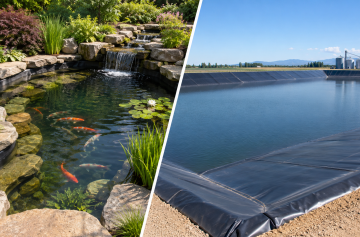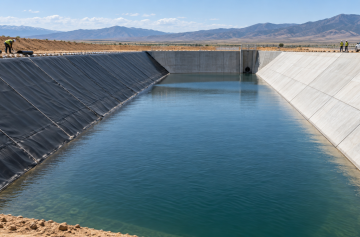

HDPE (High-Density Polyethylene) is known for its chemical resistance and long service life (50+ years, ASTM D4833), while PVC (Polyvinyl Chloride) offers superior flexibility (still usable at -20°C) but has a shorter lifespan (20-30 years).
Data shows HDPE has a tensile strength of 25-30MPa (PVC 15-25MPa) and temperature resistance from -70°C to +60°C (PVC -20°C to +60°C);
HDPE uses hot wedge welding (seam strength up to 90% of the parent material), while PVC uses solvent welding; cost for HDPE is $1.5-3/㎡ (1.5mm thick), and PVC is $2-4/㎡.
Choose HDPE for harsh environments such as landfills and chemical ponds (e.g., a project using 2mm HDPE for anti-seepage achieved a leakage rate of <1×10⁻¹²m/s);
Choose PVC for tunnel linings and temporary protection (advantages in low-temperature construction).
Material selection must combine working conditions (corrosion, temperature) and budget specifications.

Executive Summary
HDPE geomembranes (usually following the GRI-GM13 standard) provide excellent UV resistance and chemical inertness against strong acids and bases (pH 2-12) due to their high crystallinity structure.
Their high density (>0.940 g/cc) makes them the preferred choice for landfills and exposed mining ponds.
In contrast, PVC geomembranes (following the PGI 1197 standard) possess a non-reinforced elongation at break of over 300%, allowing them to adapt exceptionally well to uneven foundation settlement.
The engineering advantage of PVC lies in its support for factory prefabrication of large panels up to 2,300 square meters (approximately 25,000 square feet).
This method can reduce field welding work by about 80%, thereby significantly reducing downtime due to weather interference and the probability of seam leakage.
Material Differences
HDPE is a semi-crystalline thermoplastic with a highly regular linear arrangement of polymer chains and very few side-chain branches.
This structure allows molecular chains to pack tightly, forming dense crystalline regions, with crystallinity typically between 50% and 85%.
According to GRI-GM13 specifications, qualified HDPE geomembrane formulas are extremely “pure,” consisting of approximately 97.0-97.5% polyethylene resin, with only about 2.0-3.0% carbon black allowed (for UV aging resistance) and 0.5-1.0% antioxidant and thermal stabilizer packages.
Flexible PVC (PVC-P) is essentially a non-crystalline (amorphous) solid solution.
The base resin, polyvinyl chloride itself, is rigid and brittle (like PVC pipes), with a glass transition temperature (Tg) as high as 80°C.
To convert it into a flexible geomembrane, manufacturers must introduce 30% to 40% by weight of plasticizers into the resin matrix.
These liquid small-molecule compounds (usually phthalates, adipates, or trimellitates) embed themselves between PVC molecular chains through solvation, increasing molecular spacing and weakening the van der Waals forces between polymer chains, thereby giving the material rubber-like flexibility.
- Typical HDPE Formula Composition (Weight %):
- Polyethylene Resin: 97% (provides the basic physical barrier and strength)
- Carbon Black: 2.5% (acts as a UV absorber to prevent photo-oxidative degradation)
- Antioxidants/Stabilizers: 0.5% (prevents thermal degradation during processing and oxidation during service)
- Typical PVC Formula Composition (Weight %):
- PVC Resin: 55-65% (provides the base skeleton)
- Plasticizers: 25-35% (provides flexibility and elongation, but is also the main instability factor)
- Fillers (e.g., Calcium Carbonate): 0-10% (used to adjust cost and dimensional stability)
- Stabilizers and Biocides: 2-5% (prevents thermal degradation and microbial attack)
Due to its high crystallinity, HDPE exhibits a distinct Yield Point.
In tensile testing, when strain reaches 12% to 15%, HDPE undergoes Necking.
At this point, the crystal structure begins an irreversible rearrangement and destruction.
Once this yield point is exceeded, although the material can continue to stretch to 700% until break, its anti-seepage capability and engineering strength have substantially failed.
Conversely, PVC has no distinct yield point due to its amorphous structure and the presence of plasticizers.
PVC can withstand 100% or even 200% strain without structural necking or a sudden drop in performance, and it retains some elastic recovery capacity after stress release.
This characteristic allows PVC to maintain three-dimensional axial ductility, perfectly conforming to uneven substrates.
This is why ASTM D7176 standards for PVC elongation at break are typically set between 250% and 400%, and do not set a yield strength index.
Cost Structure
The installation budget for HDPE typically accounts for 40% to 60% of the total anti-seepage system budget, mainly due to its high reliance on field welding processes.
Standard HDPE rolls are usually 22.5 feet (about 6.8 meters) or 23 feet wide.
When covering a 50-acre (about 20-hectare) landfill unit, tens of thousands of feet of linear field welding are required.
According to GRI-GM19 specifications, HDPE hot wedge seams must contain two parallel bonding tracks with an air channel in the middle for pressure testing. While this “dual-track” welding provides extremely high security, it requires installers to perform non-destructive air pressure testing on every single seam, and destructive shear and peel testing (Destructive Testing) every 500 feet (about 150 meters). This not only consumes significant field labor hours but the holes left after destructive testing samples are taken require additional patch welding, further increasing labor costs and potential leak points.
PVC materials complying with ASTM D7176 or FGI 1197 standards can be prefabricated into large panels up to 25,000 square feet (about 2,300 square meters) in a controlled factory environment using dielectric heating or solvent welding.
This prefabrication process shifts approximately 80% to 90% of the welding workload to the factory, where labor costs are typically lower than the Prevailing Wage Rates for field technicians, and work is not disrupted by weather.
Once these folded large panels arrive at the site, unfolding and positioning can be completed with a small amount of unskilled labor, leaving only a few overlap seams between panels to be handled in the field.
For a typical 10-acre reservoir project, using HDPE might require three weeks of installation time, whereas using prefabricated PVC panels might take only three to five days.
The density of HDPE resin is typically around 0.94 g/cc, while PVC, due to its chlorine atoms and plasticizers, typically has a density above 1.20 g/cc.
At the same thickness (e.g., 60 mil / 1.5mm), the unit weight of PVC is about 30% heavier than HDPE.
This leads to increased freight costs for PVC in long-haul trucking or ocean container shipping.
However, the high flexibility of PVC allows it to be tightly folded and stacked on pallets, resulting in extremely high space utilization;
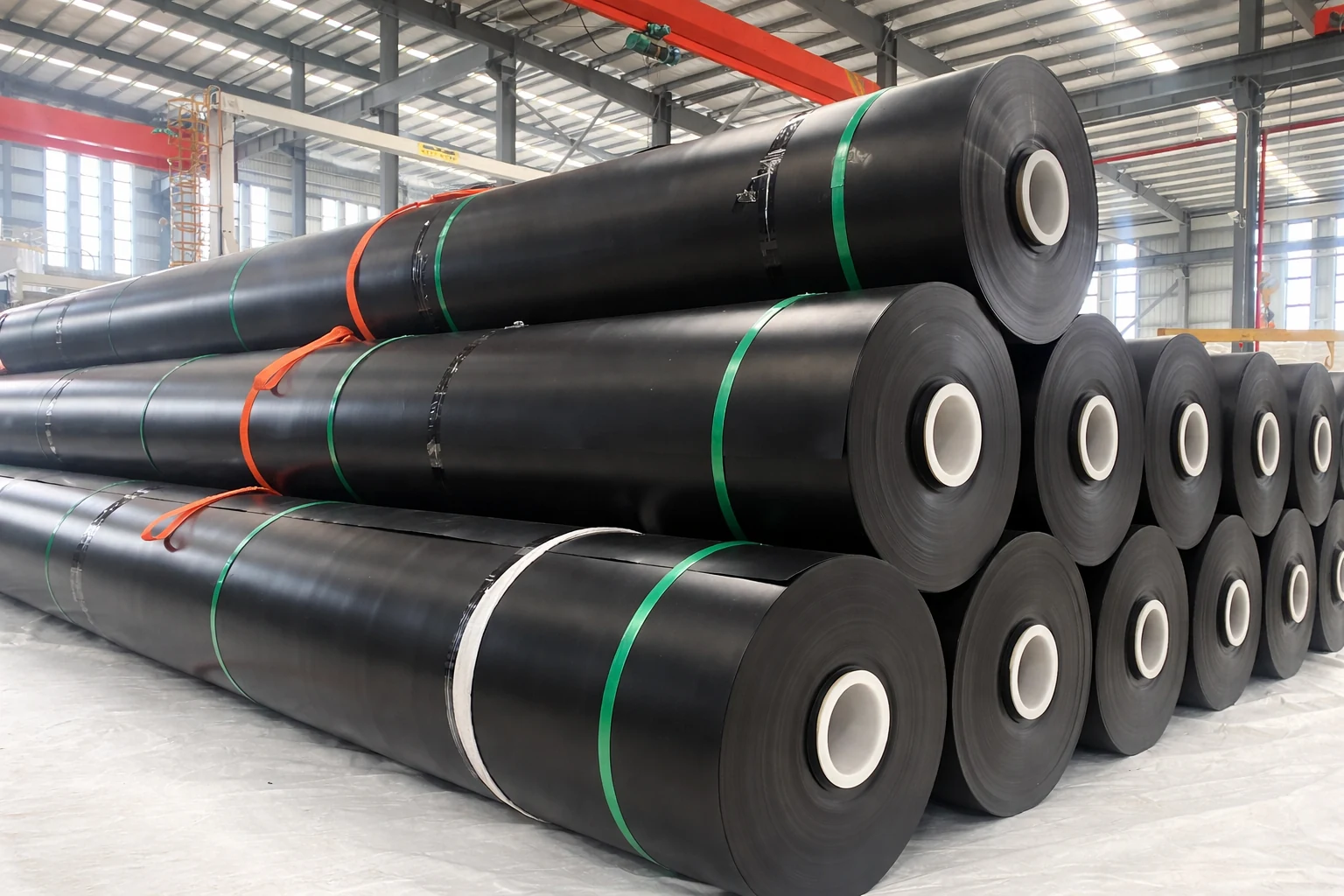
In contrast, HDPE must be transported on rigid core tubes, with unavoidable gaps between the rolls.
HDPE has a high coefficient of thermal expansion (approximately 1.2 x 10^-4 /°C).
Under direct sunlight, the surface temperature of black HDPE membranes can exceed 70°C, causing the material to expand drastically and form severe Wrinkles.
When performing soil backfill, contractors cannot bulldoze over wrinkles, as it would cause damaged folds in the membrane.
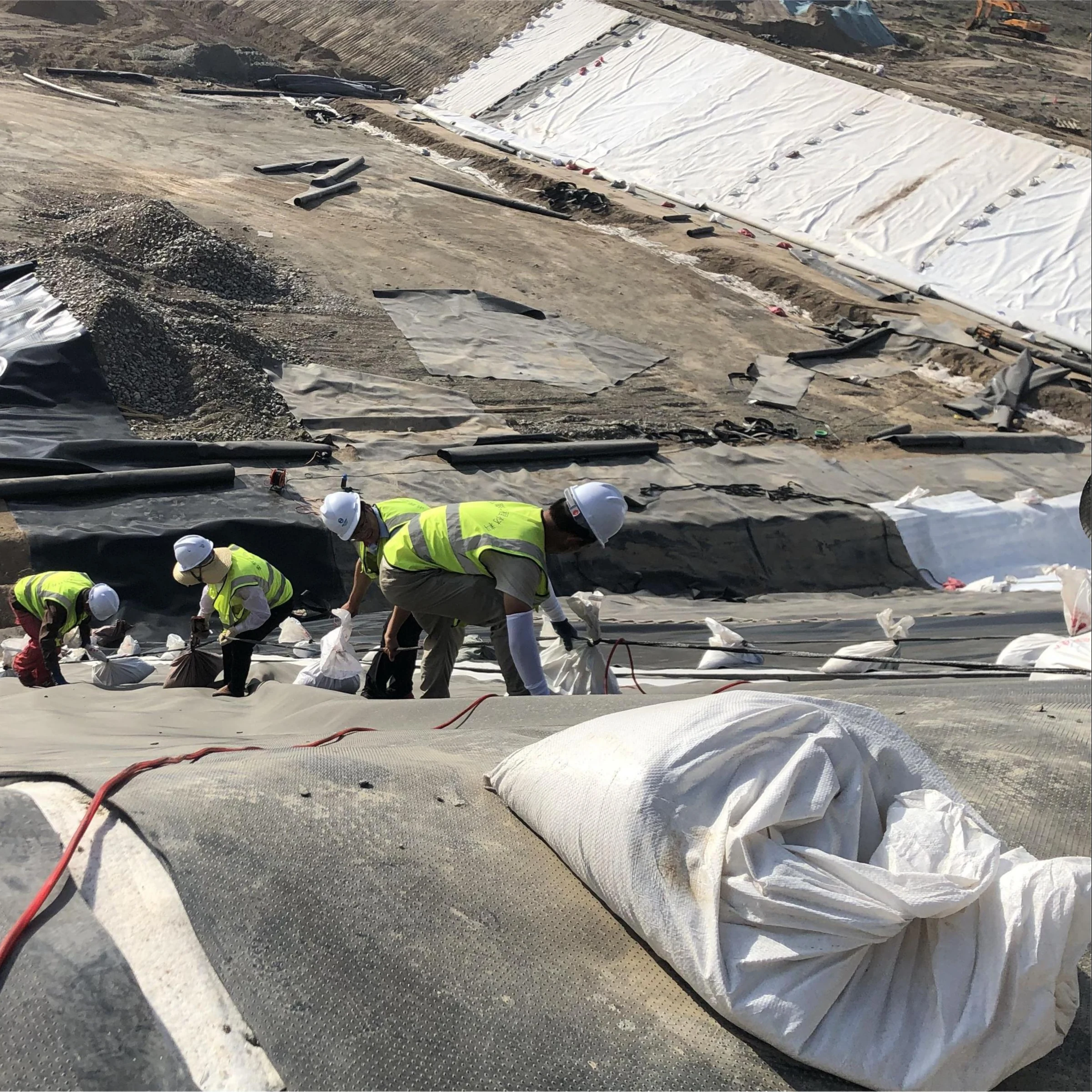
Therefore, installation teams must choose to construct during lower temperatures in the early morning or evening, or spend extra labor using sandbags to flatten wrinkles, known as “wrinkle management” costs.
PVC has a relatively low coefficient of thermal expansion, and its soft modulus allows it to conform to the foundation.
Even under temperature changes, it does not produce the kind of rigid waves that hinder construction, thus avoiding downtime costs spent waiting for appropriate temperature windows.
“In projects involving soil cover, such as landfill closures or artificial wetlands, the flexibility of PVC allows heavy bulldozers to operate on top after a 12-inch protective soil layer is laid (provided appropriate low ground pressure procedures are followed), without the constant vigilance required by HDPE for ‘bridging effects’ caused by temperature changes. Bridging in HDPE occurs when the material cold-shrinks and tightens, causing the membrane to suspend at corners; once soil weight is applied, the material may tear. The extra design redundancy and construction monitoring invested to mitigate this risk are also part of the Total Cost of Ownership.”
Because the liquid plasticizers in PVC can migrate when exposed to UV radiation and high temperatures over long periods, causing the material to become brittle, most PVC geomembrane applications (except for a few specially formulated UV-resistant grades) mandate a cover of at least 12 to 24 inches of soil or vegetation.
This involves significant earthwork excavation, transportation, and compaction costs.
If the project itself is an underground structure (such as basement waterproofing or landfill bottom liners), this cost is already within the budget and does not create an additional burden.
However, for reservoirs or irrigation canals, HDPE can be used exposed for over 20 years without soil cover, saving the owner thousands of dollars per acre in soil covering engineering fees.
Critical Comparison
HDPE utilizes its high crystallinity (approx. 50-80%) to provide broad chemical resistance (pH 2-12) to strong acids and hydrocarbons, as well as UV resistance, making it the preferred choice for landfills under the GRI-GM13 standard.
However, its high stiffness (modulus >80,000 psi) makes it susceptible to Environmental Stress Cracking (ESCR) under differential settlement.
In contrast, PVC is an amorphous material with a multiaxial elongation exceeding 150% (ASTM D5617), allowing it to fit closely to complex terrain without rupturing.
PVC allows for factory prefabrication of large panels up to 2,500 square meters each, reducing field seams by over 80% and lowering installation risks, though it requires backfill cover to prevent plasticizer volatilization and UV aging.
Installation Differences
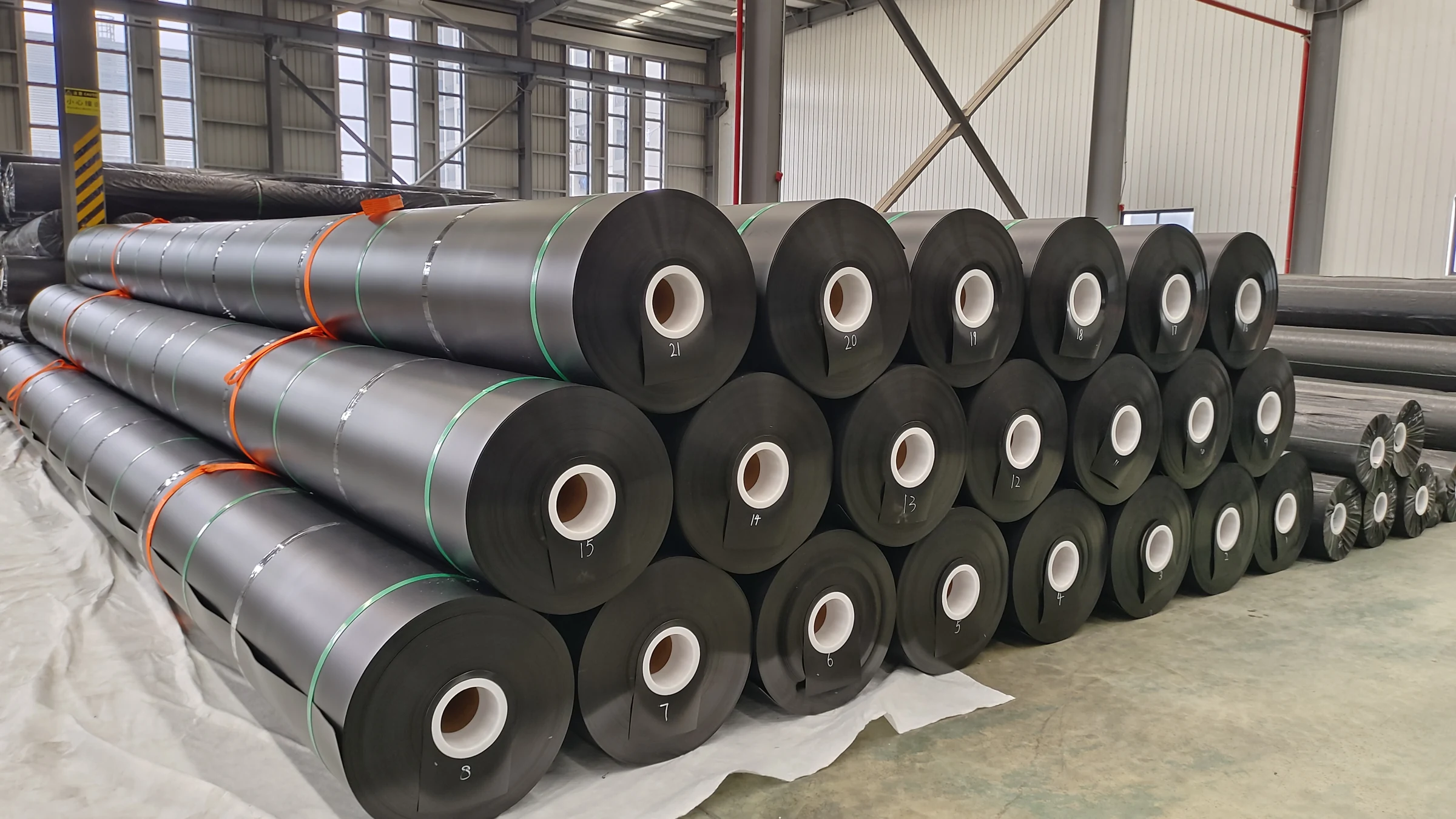
HDPE membranes must be transported in roll form, with standard roll widths usually being 7 to 8 meters (23 to 26 feet).
In large-scale projects, hundreds or thousands of rolls need to be unrolled one by one on-site, and 100% of the seam welding must be completed in the field environment.
- Dual-track Hot Wedge Welding: This is the standard process for HDPE main seam connections. The welding machine melts the overlapping interface of the two layers of membrane via a heating wedge and then fuses them through pressure rollers. This process leaves an air channel in the middle for subsequent Air Pressure Testing.
- Extrusion Welding: Used for handling repair patches, pipe penetrations, and corner details. This process bonds the parent material by extruding a molten polyethylene welding rod.
The Welding Window for HDPE is extremely narrow and highly sensitive to environmental conditions:
- Temperature Limits: Welding usually requires ambient temperatures between 5°C and 40°C. At low temperatures, the material becomes brittle and difficult to reach a molten state, easily leading to Cold Welds; at high temperatures, the material softens excessively, and the welder rollers can easily thin the parent material thickness.
- Humidity and Moisture: The welding interface must be absolutely dry. When mist, dew, or rain comes into contact with the welding surface, moisture vaporizes upon heating to form Pinholes, destroying the airtightness of the seam.
- Thermal Expansion and Contraction Effects: The coefficient of linear expansion for HDPE is as high as $1.2 \times 10^{-4} \text{ mm}/(\text{mm}\cdot^\circ\text{C})$. Under a hot sun, the surface temperature of black HDPE membrane can reach over 70°C, causing significant elongation and severe wave-like Wrinkles. Forcing a weld in a wavy state leads to massive tensile stress on the seam during night-time cooling and contraction, which can even cause cracking. Consequently, HDPE construction teams often have to work in the early morning or at night, and may even need to use Sandbags to constantly adjust the membrane position, greatly limiting construction efficiency.
The amorphous structure and high flexibility of PVC allow for large-scale processing in a controlled factory environment.
PVC membranes can be joined not only by hot air or hot wedge welding but, more uniquely, they support Chemical Fusion Welding and Dielectric Heating / RF Welding.
- Factory Fabrication: Manufacturers can weld standard-width rolls (usually 2-3 meters) into massive panels in a factory workshop using large fixed equipment. A single prefabricated panel can weigh 1.8 to 2.3 tons (4,000 to 5,000 lbs) and cover an area of 2,000 to 2,500 square meters (20,000 to 25,000 square feet).
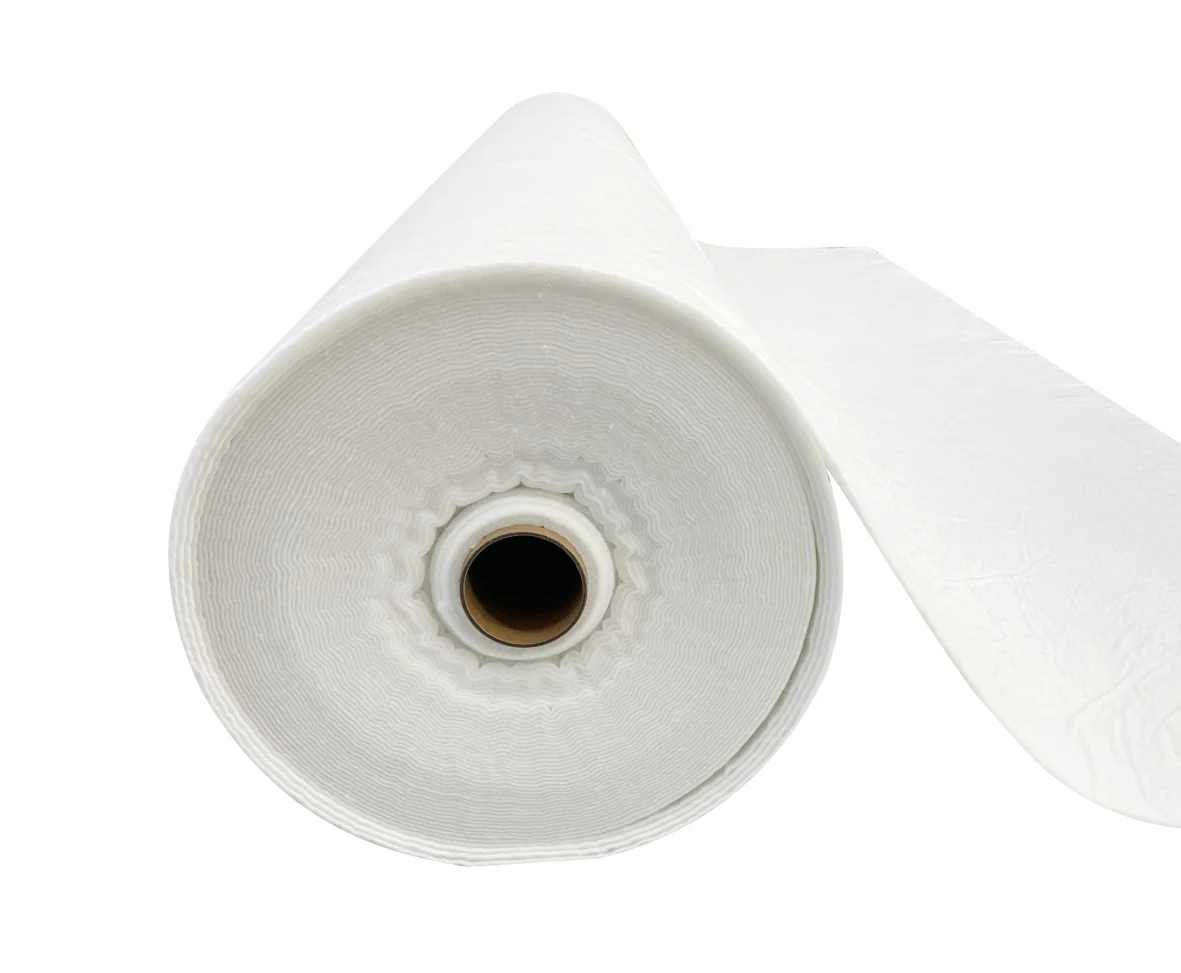
- Folding and Transportation: These giant prefabricated panels can be accordion-folded like a blanket and placed on standard pallets or in wooden crates for transport to the site.
Field Advantages of PVC Prefabrication Technology:
- Drastic Reduction in Seam Quantity: Through factory prefabrication, up to 80% to 90% of the seams are completed and quality-inspected before leaving the factory. Only a small number of overlap seams between panels need to be handled on-site. For example, to cover a 40,000 square meter project, HDPE might require 6,000 meters of field welding, whereas PVC prefabricated panels might only require 600 meters of field welding.
- Reduced Environmental Dependency: Since the vast majority of seams are completed in a factory with constant temperature and humidity, the impact of field weather on overall quality is minimized. Field construction is extremely fast, requiring only the unfolding of panels and welding of a few seams, significantly shortening the construction window exposed to bad weather.
- Ease of Installation: The flexibility of PVC panels makes them easy to drag and position on-site. Field connections are usually made using chemical fusion agents (solvent welding) or portable hot air welders. Chemical fusion agents fuse the two layers of membrane at a molecular level by dissolving the PVC surface. This “cold welding” method does not require heavy electrical equipment, making it especially suitable for remote areas or project sites with difficult power supplies.
- Front-loaded Quality Control: Welding parameters in the factory (temperature, speed, pressure) are precisely controlled by computer, and every seam undergoes online testing. This is far more reliable than manual operations performed on muddy, windy, or rugged construction sites, significantly reducing the probability of defects found in third-party Leak Location Surveys.
“The ASTM D7408 specification details testing standards for non-reinforced geomembrane seams. For HDPE, Peel Strength is typically required to reach 60% of the parent material’s yield strength and exhibit a ductile Film Tear Bond (FTB); whereas PVC factory seams can usually reach over 80% of the parent material’s strength, and since work is done in a clean environment, the risk of failure due to soil or moisture inclusion in the seam is nearly zero.”
Durability
The design life of industrial anti-seepage systems is often targeted at 50 or even 100+ years.
HDPE (High-Density Polyethylene) relies on its semi-crystalline structure-derived high density (typically $>0.940 \text{ g/cm}^3$) and non-polar characteristics to build the first line of defense against highly corrosive media.
In chemical immersion tests guided by the ASTM D5747 standard, HDPE has shown extremely high inertness to strong acid and alkali solutions ranging in pH from 2 to 13.
The tight van der Waals forces between its molecular chains make it difficult for liquid molecules to penetrate the polymer matrix.
Even after immersion in 60°C high-temperature sulfuric acid or high-concentration sodium hydroxide solution for 90 days, the physical property retention (tensile strength, elongation) of HDPE can usually still be maintained at over 95% of the initial value.
For PVC (Polyvinyl Chloride) geomembranes, PVC itself is rigid.
To obtain the flexibility required for a geomembrane, up to 30% to 35% by weight of liquid plasticizers (usually phthalates or higher molecular weight polyesters) are added to the formula.
When PVC contacts chemical media, the risk lies not in the breaking of the polymer backbone, but in Plasticizer Extraction or Solvation.
If the solubility parameters of the contact medium (such as gasoline, jet fuel, chlorinated solvents, or specific industrial wastewater) are similar to those of the plasticizer, the liquid will “wash out” the plasticizer from the PVC matrix.
According to test data from ASTM D1239 or ASTM D543, once plasticizer loss exceeds 10%, the membrane body undergoes significant volumetric Shrinkage, leading to a sharp increase in internal stress;
As the loss continues to rise, the material will permanently lose its flexibility, becoming as brittle as glass, where any minor foundation movement will cause the membrane to rupture.
Therefore, in industrial containment projects involving oils, hydrocarbons, or unknown solvents, the use of PVC is strictly limited unless a specially modified Oil Resistant PVC formula is used, but its long-term data performance still falls short of HDPE’s stability.
Ultraviolet (UV) radiation is another primary source of degradation energy.
Standard black HDPE geomembranes must be mixed with 2.0% to 3.0% fine Carbon Black during production, ensuring its dispersibility meets Category 1 or 2 of the ASTM D5596 standard.
Carbon black particles effectively absorb UV photons, converting them into harmless thermal energy.
Simultaneously, Hindered Amine Light Stabilizers (HALS) and antioxidants added to the formula are responsible for capturing free radicals.
UV Fluorescent Weatherometer testing via ASTM D7238 shows that after cumulative exposure to over 20,000 hours of intense radiation, high-quality HDPE still maintains a High Pressure Oxidative Induction Time (HP-OIT, ASTM D5885) retention rate of over 50%.
This data supports the commitment to an exposed service life of 20 to 30 years for HDPE in open reservoirs, tailings ponds, and other non-covered application scenarios.
PVC has weaker UV stability.
Although modern PVC formulas have improved through the addition of UV absorbers, in accelerated weathering tests such as ASTM G154 or G155, bare PVC membranes typically exhibit surface Chalking, discoloration, and Micro-cracking after several thousand hours.
Once plasticizers migrate from the surface due to light and heat, the membrane surface shrinks and creates tension, known as “alligatoring.”
Consequently, industrial codes usually suggest that PVC geomembranes must have Earth Cover backfilled or be used in underground applications.
| Evaluation Dimension | Reference Standard | HDPE (GRI-GM13) Performance Characteristics | PVC (ASTM D7176 / PGI 1104) Performance Characteristics |
|---|---|---|---|
| Acid/Alkali Resistance | ASTM D5747 (90-day Immersion) | Excellent. Physical property change <5%, no obvious swelling. Suitable for pH 2-13. | Good. Fair resistance to inorganic acids/alkalis, but degrades in strong oxidizing acids. |
| Hydrocarbons/Solvents | ASTM D543 (Chemical Resistance) | Extremely Inert. Resistant to BTEX, petroleum, leachate. No dissolution occurs. | Poor. High risk of plasticizer extraction, leading to hardening, shrinkage, and brittle cracking. |
| UV Resistance (Exposed) | ASTM D7238 / GRI-GM16 | Superior. Long-term bare use possible (>20 years) due to carbon black/antioxidants. High HP-OIT retention. | Limited. Plasticizers easily photodegrade/volatilize. Except for special formulas, must be soil-covered. |
| Oxidative Induction Time (OIT) | ASTM D3895 (Std-OIT) / D5885 (HP-OIT) | Standard requires >100 min (OIT) or >400 min (HP-OIT). Antioxidant package consumes very slowly. | Not applicable for OIT methods (different testing mechanism). Primarily relies on plasticizer retention. |
| Plasticizer Migration/Volatilization | ASTM D3367 / D1203 | Not Applicable (no plasticizers). No volatilization risk, extremely stable volume. | Main Failure Mode. High temperatures or airflow accelerate Volatile Loss, causing weight loss and flexibility loss. |
| Recommended Application Strategy | – | Exposed or buried. Suitable for all high-risk chemical containment. | Buried. Suitable for canals, potable water ponds, hidden layers needing settlement adaptation. |
For industrial specifiers, if the project involves unknown organic chemical waste mixtures or if the liner will be exposed to intense sun for a long time, HDPE provides the only logical margin of safety.
Conversely, if the application is for clean water or municipal sewage and the liner will be permanently covered by backfill, concrete slabs, or water, then PVC’s shortcomings in chemical resistance will be masked, and its excellent flexibility will become a long-term safeguard against geological movement.
When to Specify What
If the project involves strong acid-base liquids in the pH range of 2-12, hydrocarbon waste, or requires long-term (>20 years) exposure to sunlight, HDPE is the only choice. Landfills complying with EPA RCRA Subtitle D standards must use it.
Conversely, if the foundation is expected to have >5% uneven settlement, is located in expansive soil areas, or has a short construction window (such as the rainy season), PVC should be specified.
PVC’s multiaxial elongation exceeds 100% (ASTM D5617) and it supports factory prefabrication into large panels over 2,000 square meters, reducing field seams by 90%.
Climate Constraints
As a semi-crystalline thermoplastic material, HDPE must be transported to the site in rolls, usually with a standard roll width of 7 to 8 meters (22.5 feet).
For a 10-acre (approximately 40,468 square meters) anti-seepage area, if using HDPE, field technicians need to complete approximately 5,700 meters of linear seams.
Every meter of seam represents a potential leak point and must undergo field destructive and non-destructive testing according to ASTM D4437 or GRI-GM19 standards.
PVC is an amorphous material that supports factory prefabrication.
Manufacturers can use large dielectric heating welders to splice raw materials into giant panels in a controlled environment.
A single panel area can typically reach 1,800 to 2,300 square meters, with weight controlled at 1.8 to 2 tons for ease of forklift handling.
For the same 10-acre site, using prefabricated PVC panels requires only about 300 meters of field seam work.
A 95% reduction in field seams eliminates most weather-interrupted processes.
The installation team only needs to pull out the folded panels and perform a small amount of overlap processing, making PVC typically 4 to 5 times faster than HDPE in terms of installation speed.
“In a comparative study in North America, two reservoir projects of the same 20,000 square meter area started simultaneously. The HDPE team spent 10 days completing laying, welding, and testing, during which work stopped for two days due to wind speeds exceeding 32 km/h; the PVC team used only 8 non-specialized workers and 1 technical supervisor to complete all panel unfolding and final seaming within 2 days, completely avoiding the subsequent rainstorm window.”
HDPE has an extremely high coefficient of linear thermal expansion, approximately 1.2 x 10^-4 cm/cm/°C.
Under typical diurnal temperature differences (for example, from 15°C in the morning to 45°C surface temperature in the afternoon), a 100-meter long HDPE geomembrane will undergo a physical elongation of about 36 centimeters.
This drastic dimensional change causes the material to produce massive wave-like wrinkles (Wrinkles) at high temperatures and high shrinkage tension at low temperatures.
To prevent wrinkles from hindering drainage or causing stress concentration, installers must strictly limit the construction time for backfill or cover layers, usually only operating during lower temperatures in the early morning or evening when the material is flat.
PVC has a lower coefficient of thermal expansion, and the flexibility of the material itself can absorb most thermal stresses.
After laying, it fits snugly against the base and is essentially unaffected by solar temperature changes, allowing for continuous all-day covering operations.
GRI-GM19 specifications clearly state: “The Peel Strength and Shear Strength of hot wedge welding must reach a specific percentage of the parent material’s strength, and the failure mode must be a ductile break (FTB).”
HDPE must use hot wedge (Hot Wedge) or extrusion (Extrusion) welders for thermal fusion.
When environmental humidity is too high, it rains, dew hasn’t dried, or the base is damp, HDPE welding must stop immediately because water vapor creates micro-bubbles in the molten plastic, resulting in zero seam strength.
When the ambient temperature is below 0°C, HDPE becomes stiff and difficult to handle.
Preheating the material consumes a lot of time and is prone to cold welds.
Solvent Welding or hot air welding used for PVC has a slightly higher tolerance for the environment.
Since the field workload is minimal, construction teams can usually complete tasks by utilizing very short windows of fair weather.
In cold climates, PVC (especially specially formulated low-temperature resistant grades) remains soft and meets the low-temperature brittleness requirements of ASTM D1790, allowing it to be unfolded at -20°C without cracking or embrittlement.
For HDPE projects, destructive testing samples must be taken roughly every 150 meters of seam, and all seams must undergo 100% air pressure testing (for dual-track seams).
If a test fails, extensive repair welding and re-testing are required.
Factory-prefabricated PVC panels are strictly tested according to ASTM D751 before leaving the factory, requiring only a few panel overlaps to be checked on-site.
Quick Selection
HDPE geomembranes are produced and accepted mainly according to GRI-GM13 specifications, while PVC geomembranes follow ASTM D7176 or PGI-1104 standards.
HDPE density must be greater than 0.940 g/cc.
It is a semi-crystalline thermoplastic with 45% to 60% of its polymer chains in tightly packed crystalline regions.
This high crystallinity gives the material extremely high impermeability and chemical resistance, but also leads to higher stiffness and a lower friction coefficient.
PVC is an amorphous polymer with a density range typically between 1.20 and 1.35 g/cc (including fillers).
Its formula contains 25% to 35% by weight of plasticizers (Plasticizers), keeping it in a fluid liquid state at the molecular level, thereby obtaining rubber-like flexibility.
The following table lists the differences in basic physical attributes based on typical test values for standard thickness (1.5mm / 60 mil).
| Physical Properties | Standard | HDPE (60 mil) Typical Value | PVC (60 mil) Typical Value |
|---|---|---|---|
| Polymer Structure | – | Semi-Crystalline | Amorphous |
| Density | ASTM D792 | ≥ 0.940 g/cc | 1.20 – 1.30 g/cc |
| Hardness | ASTM D2240 | 59 (Shore D) | 78 – 85 (Shore A) |
| Min Working Temp | ASTM D746 | < -75°C | -20°C to -30°C |
| Thermal Expansion Coeff. | ASTM D696 | 1.2 x 10⁻⁴ cm/cm/°C | 0.7 x 10⁻⁴ cm/cm/°C |
| Dimensional Stability | ASTM D1204 | ± 2.0% | ± 3.0% (at 100°C) |
The stress-strain curve for HDPE shows a distinct Yield Point, usually occurring when the elongation reaches 12% to 15%.
At this point, the material necks (Necking), thickness decreases sharply, and permanent deformation becomes irreversible.
In engineering design, the allowable strain for HDPE is typically limited to within 50% of the yield strain, i.e., around 6%, to avoid the material entering a plastic failure phase.
The stress-strain curve for PVC has no yield point; the material continues to stretch until break, with elongation at break typically exceeding 350%.
In ASTM D5617 multiaxial tensile tests, PVC can withstand over 100% vertical deformation without breaking, behaving similarly to an elastomer.
This high elongation allows PVC to maintain Liquid Tightness during subgrade collapse or deformation, whereas HDPE under the same conditions might puncture or tear due to exceeding the yield limit.
Modulus of Elasticity data further confirms this; the secant modulus of HDPE is usually above 500 MPa, appearing hard and brittle, while the modulus of PVC is usually below 20 MPa, appearing soft and tough.
| Mechanical Properties | Standard | HDPE (60 mil) | PVC (60 mil) |
|---|---|---|---|
| Tensile Strength (Yield/Break) | ASTM D6693 / D882 | 22 N/mm (Yield) | 16 N/mm (Break) |
| Elongation at Break | ASTM D6693 / D882 | 12% (Yield), 700% (Break) | > 380% (Break) |
| Puncture Resistance | ASTM D4833 | 480 N | 280 N |
| Tear Resistance | ASTM D1004 | 187 N | 45 N |
| Multiaxial Strain | ASTM D5617 | ~20% | > 120% |
| 2% Secant Modulus | ASTM D5323 | > 500 MPa | < 20 MPa |
The primary failure risk for HDPE is Environmental Stress Cracking (ESCR), a brittle failure occurring under stress lower than the yield point due to the presence of surfactants (e.g., detergents, leachate).
GRI-GM13 requires HDPE to pass the ASTM D5397 (NCTL) test, with time to failure exceeding 500 hours.
To resist oxidative degradation, HDPE adds antioxidants evaluated by High-Pressure Oxidative Induction Time (HP-OIT) tests, with a standard value required to be greater than 400 minutes.
PVC has no stress cracking risk; its durability depends mainly on Plasticizer Retention.
If plasticizers volatilize or are extracted by chemicals, PVC becomes brittle and shrinks.
ASTM D1203 is used to test volatile loss; high-quality PVC should have a volatile weight loss of less than 0.7%.
Additionally, 2.0% to 3.0% carbon black is added to HDPE, making it resistant to intense UV radiation.
After 1600 hours of ASTM D7238 UV aging test, its HP-OIT retention must still be greater than 50%.
| Durability & Aging | Standard | HDPE (GRI-GM13) | PVC (ASTM D7176) |
|---|---|---|---|
| ESCR | ASTM D5397 (NCTL) | > 500 hours | N/A (No Risk) |
| Std-OIT | ASTM D3895 | > 100 min | N/A |
| HP-OIT | ASTM D5885 | > 400 min | N/A |
| Volatile Loss | ASTM D1203 | N/A | < 0.9% (by weight) |
| UV Resistance | GRI-GM13 / ASTM G154 | Excel. (Life >20 years) | Poor (Requires Cover) |
| Chemical Resistance | EPA 9090 | Excel. (pH 2-12) | Good (Avoid Solvents/Oils) |
| Water Vapor Trans. | ASTM E96 | < 0.001 g/m²·day | < 2.5 g/m²·day |
The surface of HDPE is extremely smooth, with an interface friction angle with non-cohesive soils typically only 8° to 12°, which can easily lead to landslide accidents in steep slope applications.
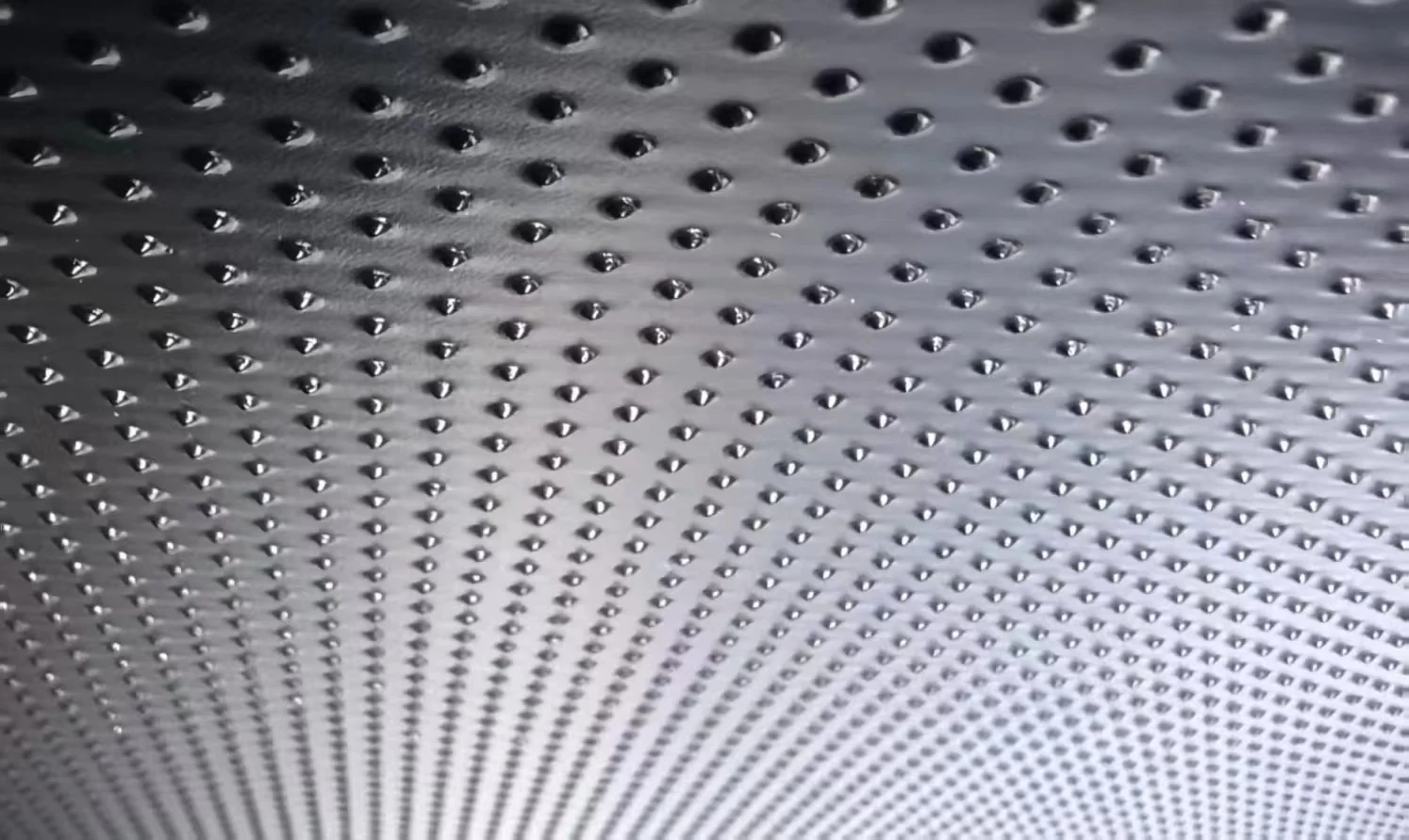
To increase friction, surface texturing (Co-extrusion with nitrogen gas) must be performed during production to create Textured HDPE, which can increase the friction angle to over 25°.
Due to its rubber-like texture, PVC naturally has a higher interface friction coefficient.
Its friction angle with geotextiles or soil can typically reach 24° to 28°, allowing it to adapt to 3:1 or even steeper slope designs without special texture treatment.