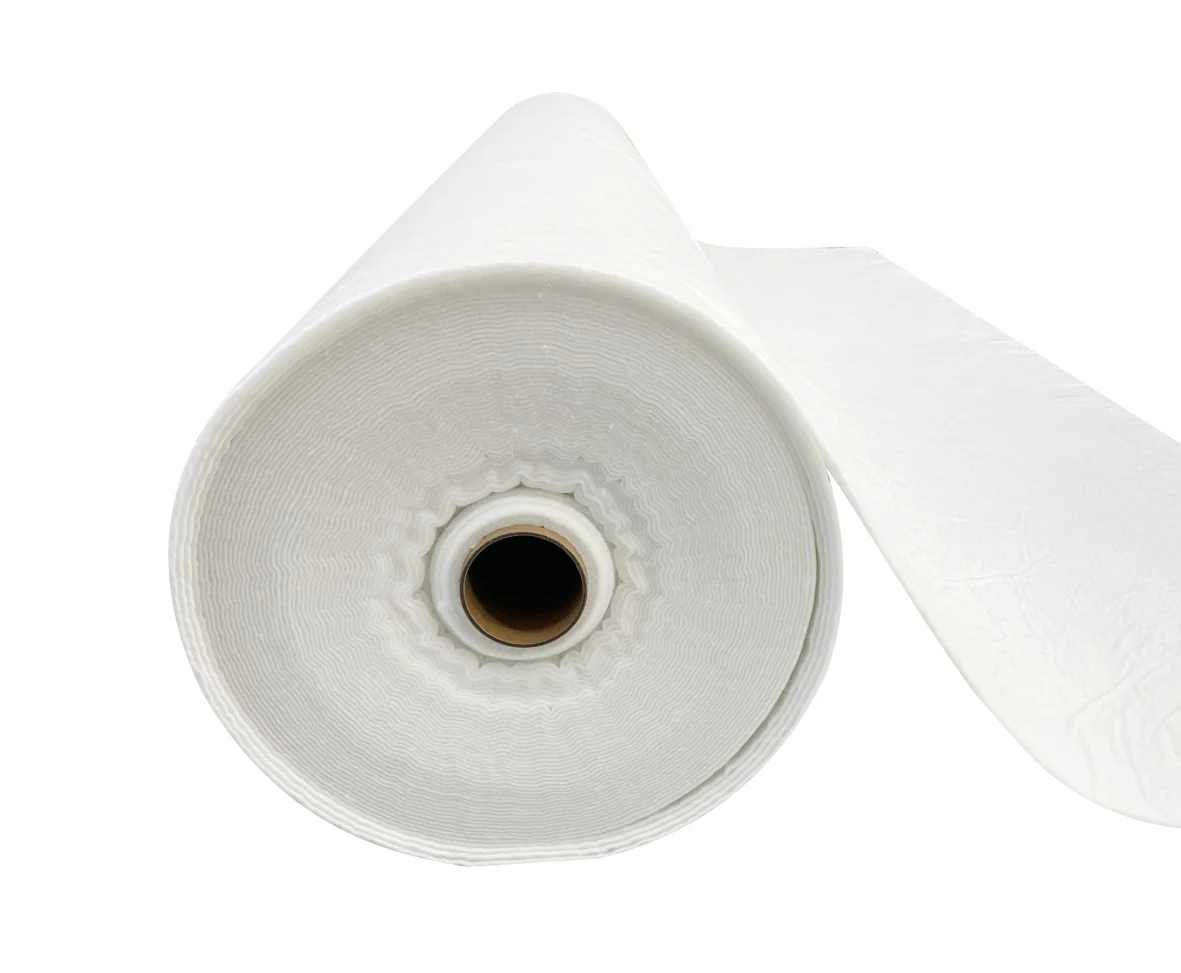

Geotextiles (polyester/polypropylene fibers) feature a porous structure with a water permeability of 0.1-10cm/s (ASTM D4491), allowing moisture and air exchange and preventing soil compaction;
Plastic sheeting (HDPE/PVC) is impermeable (HDPE water permeability <1×10⁻¹°m/s), easily causing water accumulation.
Geotextiles are used for filtration (slope protection) and drainage (French drains);
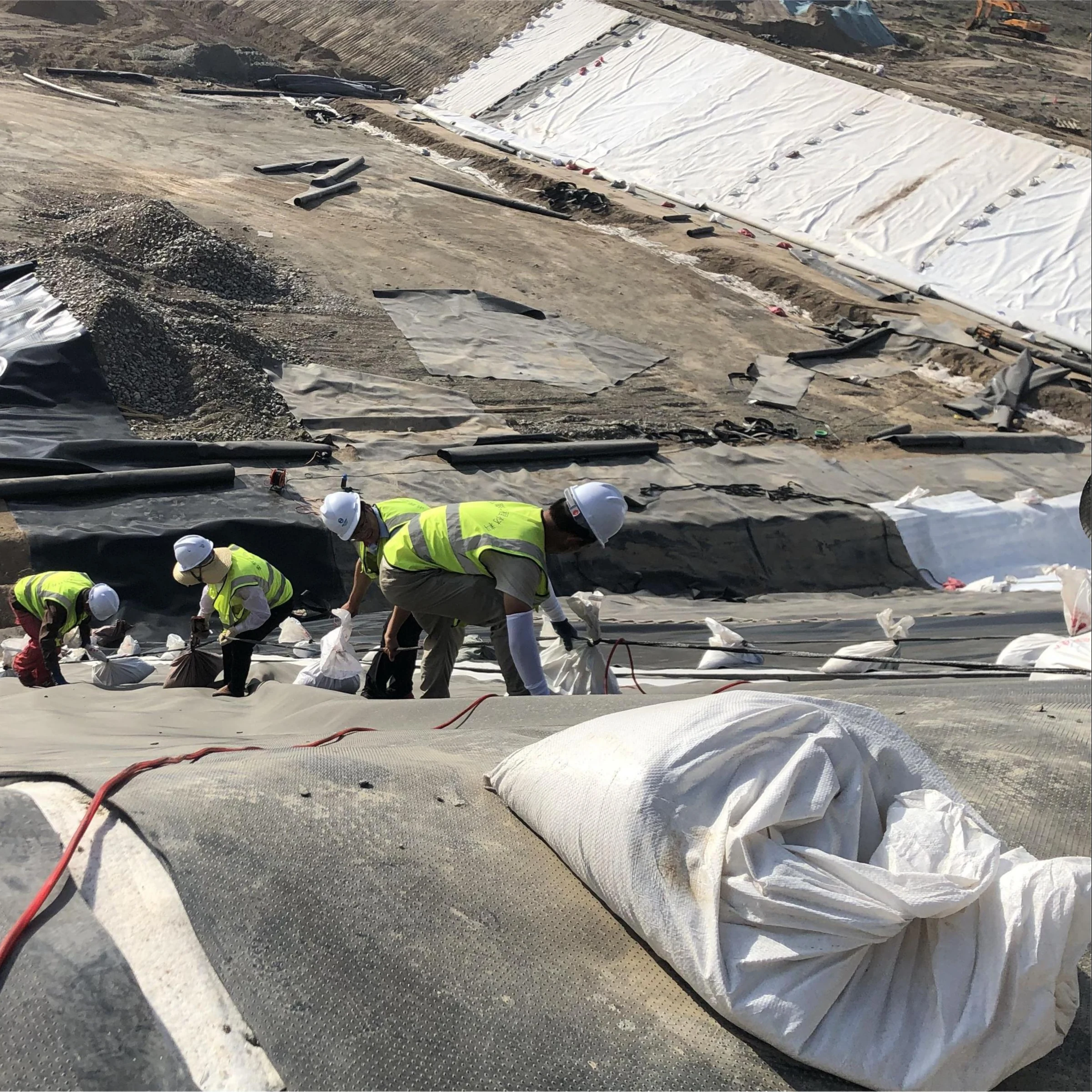
Plastic sheeting is used for anti-seepage (1.5mm HDPE membrane in landfills, leakage rate <1×10⁻⁷cm/s) and pond liners.
Geotextile tensile strength ≥20kN/m (ASTM D4595), with UV aging resistance maintaining >80% strength after 5 years;
Plastic sheeting puncture strength ≥800N (1.5mm HDPE), with acid and alkali resistance lifespan >30 years.

Breathability
The Permittivity of geotextiles is usually between 0.5 to 3.0 sec⁻¹, and their microporous structure ensures that O2 and CO2 exchange rates are almost equal to those of bare ground.
In contrast, 6-mil thick plastic film (polyethylene) has a Vapor Permeance of less than 0.1 perms, making it a completely non-breathable material.
This difference can cause the soil oxygen content beneath the plastic film to drop below 5% within weeks, while areas using geotextiles can maintain a healthy level of 15%-20%.
Moisture Permeation
Non-woven needle-punched geotextiles are composed of thousands of randomly distributed polypropylene fibers, forming a complex interconnected pore network with a porosity typically between 30% and 40%.
According to ASTM D4491 standard testing, a standard 4 oz/sq yd non-woven geotextile can achieve a vertical water flow rate of over 140 gallons per minute per square foot (GPM/ft²).
Due to this porous structure, moisture can pass vertically through the material under the influence of gravity into the underlying soil or drainage layer without accumulating on the surface.
In comparison, polyethylene (PE) plastic film, typically between 6 mil and 20 mil thick, is a continuous, non-porous barrier.
Its Vapor Permeance is typically below 0.1 perms according to ASTM E96 testing, and in practical applications, the water infiltration rate is 0.
Plastic film converts all moisture reaching the surface into surface runoff.
If used on a slope, this runoff speed increases erosion intensity, leading to severe soil erosion in edge areas.
| Physical Parameter Comparison | Non-woven Geotextile (4-8 oz) | Polyethylene Plastic Film (10-20 mil) |
|---|---|---|
| Water Flow Rate | 90 – 150 GPM/sq ft | 0 GPM/sq ft |
| Permittivity | 0.5 – 2.0 sec⁻¹ | Unmeasurable (0) |
| Apparent Opening Size (AOS) | 70 – 100 U.S. Sieve | No Pores |
| Hydrostatic Pressure Performance | Effectively releases pressure | Generates significant backpressure |
| Moisture Retention Method | Permeates to subsoil | Surface runoff or sub-membrane condensation |
In engineering projects involving retaining walls or foundation drainage, water in the soil weighs approximately 62.4 pounds per cubic foot.
If drainage is poor, accumulated moisture generates massive lateral thrust.
The Apparent Opening Size (AOS) of geotextiles is precisely designed to block fine sand particles larger than 0.15 mm while allowing liquid water to pass freely into drainage pipes (such as 4-inch perforated corrugated pipes).
Because moisture can drain smoothly, the pressure behind the retaining wall is maintained within design thresholds.
In landscape and agricultural irrigation scenarios, soil covered by geotextiles can utilize natural rainfall for moisture replenishment, with excess moisture penetrating into the underground runoff system through micropores, maintaining the soil’s dry-wet cycle.
In filtration tests specified by ASTM D4751, geotextiles effectively prevent fine soil particles from entering the drainage layer, avoiding physical clogging of the drainage system.
In areas using plastic film, moisture accumulates in the depressions of the membrane after rain, consuming large amounts of thermal energy through evaporation.
Moisture beneath the membrane, unable to evaporate upwards, creates a condensation effect, causing the soil surface layer to remain oversaturated for long periods.
Saturated soil pores are filled with moisture, cutting off the path for oxygen.
If this state persists for more than 48 hours, it triggers physiological hypoxia in plant roots, increasing the death of aerobic microorganisms and the likelihood of anaerobic pathogen breeding.
| Drainage Performance Characteristics | Geotextile System | Plastic Film System |
|---|---|---|
| Runoff Coefficient | 0.10 – 0.20 (Low Runoff) | 0.90 – 0.95 (Extremely High Runoff) |
| Permeation Path | Vertical Permeation + Horizontal Drainage | Drainage along edges only |
| Impact on Drainage Pipes | Prevents clogging, extends lifespan | Cannot be used with perforated pipes |
| Soil Moisture Fluctuation | Tends toward natural balance | Extremely dry or extremely saturated |
| Moisture Evaporation Capability | Allows capillary rise and evaporation | Evaporation completely blocked |
In the bedding construction for hardscapes (such as driveways or patios), the high water permeability of geotextiles ensures that bedding materials (such as crushed stone) remain dry, thereby maintaining friction between particles.
In regions experiencing freeze-thaw cycles, geotextiles allow moisture to drain out of the foundation system before freezing, reducing volume changes caused by ice crystal expansion.
Plastic film’s performance in this situation is destructive because it captures and locks moisture in the foundation.
When temperatures drop below freezing, the locked moisture freezes and expands, leading to uneven heaving and cracking of paving stones or concrete surfaces.
Experimental data indicates that under the same drainage conditions, the foundation lifespan with permeable geotextiles is extended by approximately 40% compared to foundations using non-breathable materials.
Temperature Regulation
Geotextiles typically have a low thermal conductivity of 0.03 – 0.05 W/(m·K). Under strong summer sunlight, although the surface absorption rate of black or dark gray geotextiles is as high as 0.85 – 0.90, their micropores allow air to remove heat via convection.
Consequently, the soil temperature beneath the material is usually maintained within a stable range of 28°C to 32°C.
Based on thermal imaging data analysis, under exposure conditions with an ambient temperature of 35°C, the surface temperature in geotextile-covered areas is about 3°C lower than bare ground, because their porous structure promotes the exchange of deep-layer cold air with surface hot air.
In contrast, 6-10 mil thick polyethylene plastic film exhibits a significant transparent or semi-transparent thermal effect.
Short-wave solar radiation can penetrate the film to heat the soil, while the long-wave infrared radiation emitted by the soil is blocked by the film.
This physical phenomenon leads to intense heat accumulation under the membrane.
| Thermophysical Parameter | Non-woven Geotextile (Needle-punched) | Polyethylene Plastic Film (PE) |
|---|---|---|
| Thermal Conductivity | 0.035 – 0.050 W/(m·K) | 0.33 – 0.50 W/(m·K) |
| Solar Absorptance | 0.80 – 0.90 (Black) | 0.10 – 0.15 (Clear) / 0.90 (Black) |
| Thermal Emissivity | 0.88 – 0.92 | 0.10 – 0.20 |
| Convective Heat Exchange Efficiency | High (due to pore permeation) | Extremely Low (complete physical isolation) |
| Max Surface Temperature Rise (Relative to Ambient) | +2°C to +5°C | +15°C to +25°C |
During evaporative cooling, geotextiles allow moisture in the soil to rise to the fabric surface via capillary action and use the latent heat of vaporization of water for cooling.
Each 1 gram of water evaporated can consume approximately 2260 Joules of thermal energy.
This continuous latent heat exchange allows geotextile-covered areas to exhibit excellent cooling performance in arid or semi-arid climates (such as the U.S. Southwest), preventing the destruction of soil physical structure due to excessive heating.
Under plastic film coverage, although moisture evaporates from the soil, it is blocked by the inner side of the film, forming condensed water droplets.
These condensed droplets not only increase the thermal conductivity of the film but also create a physical environment similar to a “hot water bath.”
When the condensed droplets fall back to the soil surface, heat is carried back into the soil, causing temperatures under the membrane to potentially soar above 50°C (122°F) during summer mid-day.
| Evaporation Regulation Characteristics | Geotextile System Performance | Plastic Film System Performance |
|---|---|---|
| Latent Heat of Vaporization Exchange | Allows free exchange, creating cooling effect | Exchange blocked, heat cycles and accumulates |
| Water Vapor Cycle Path | Soil -> Fabric Micropores -> Atmosphere | Soil -> Inner Film Condensation -> Return to Soil |
| Sub-membrane Humidity Level | 40% – 60% (tends toward ambient balance) | 95% – 100% (permanently saturated) |
| Heat Dissipation Method | Radiation + Conduction + Sensible/Latent Convection | Limited to radiation and edge conduction |
| Diurnal Temp Fluctuation | Small fluctuation, smooth curve | Violent fluctuation, extremely high daytime peaks |
Long-term thermal monitoring shows that the impact of materials on the soil profile temperature gradient extends 20-30 cm underground.
In soil temperature tests conducted using ASTM D1511 standards, the underground temperature in geotextile-covered areas decreases linearly with depth, exhibiting thermal stratification similar to natural ground surfaces.
Under plastic film, due to the lack of effective convection and evaporation paths, heat generates a thermal retention zone at a depth of 5-10 cm underground.
In landscape architecture, if the goal is to reduce the Urban Heat Island effect, the porosity and evaporative capacity of geotextiles are necessary physical parameters.
By comparing the performance of different materials under 1000 W/m² solar radiation, areas using geotextiles lose heat 40% faster after sunset than areas with plastic film.
In road reinforcement engineering, geotextiles protect the overlying asphalt or concrete layer from extreme thermal fatigue by maintaining relative stability in the roadbed temperature.
Use Cases
In engineering material selection, decisions for Use Cases are based on the material’s permeability coefficient and physical strength.
Geotextiles must comply with AASHTO M288 standards, with 4oz to 12oz/sq yd non-woven fabrics capable of handling flow rates of 50-150 GPM/sq ft, suitable for drainage and reinforcement.
Plastic film (PE material) is typically 10-20 mil thick, with a Vapor Permeance (Perm Rating) that must be lower than 0.1 according to ASTM E1745 specifications, used for moisture-proofing building foundations with 100% vapor barrier.
Infrastructure
For drainage systems, engineering designs typically require materials to possess a specific Permittivity, with standard values mostly between 0.5 to 2.2 sec⁻¹, to ensure a water flow of 50 to 150 gallons per minute per square foot.
This permeability is achieved through the needle-punching process of polypropylene fibers, with the Apparent Opening Size (AOS) typically set between 0.15 to 0.25 mm (corresponding to U.S. Standard Sieve Nos. 60-100), capable of blocking over 90% of soil particles larger than 75 microns from entering drainage lines.
In practical applications for French Drains, this material is wrapped around 4-inch perforated pipes and 3/4-inch clean crushed stone to prevent fine clay from filling stone gaps via capillary action, thereby maintaining the hydraulic conductivity of the drainage system.
Without using such filtration geotextiles, the void ratio of the drainage system would decrease by 70% within 24 to 36 months due to fine particle migration, inducing localized waterlogging and weakening the shear strength of the foundation.
| Geotextile Physical Property Index (Based on ASTM) | 4 oz/sq yd Non-woven | 8 oz/sq yd Non-woven | 200 lbs Strength Woven |
|---|---|---|---|
| Grab Tensile (ASTM D4632) | 100 lbs | 205 lbs | 200 lbs |
| CBR Puncture (ASTM D6241) | 300 lbs | 535 lbs | 700 lbs |
| Flow Rate (ASTM D4491) | 140 GPM/sq ft | 90 GPM/sq ft | 15 GPM/sq ft |
| Apparent Opening Size (AOS – ASTM D4751) | 70 US Sieve | 80 US Sieve | 40 US Sieve |
In heavy pavement and driveway construction, when the CBR (California Bearing Ratio) value of the subgrade is below 3, woven geotextiles exhibit clear reinforcement advantages.
This material is woven from high-strength polypropylene slit-film fibers, with a grab tensile strength typically exceeding 315 lbs.
Laying it between the soft subgrade and a 1.5-inch crushed stone base provides physical separation, preventing the crushed stone from embedding into the soft soil layer below under heavy load pressure.
According to North American highway engineering data, introducing a high-strength separation layer can reduce the crushed stone layer thickness from the traditional 12 inches to about 8 inches, while increasing pavement fatigue life by more than 50%.
Since woven fabric has smaller openings, its permeability is typically only 5 to 15 GPM/sq ft, making it unsuitable for conditions requiring large amounts of longitudinal drainage while providing high tensile strength.
In retaining wall construction, to release the hydraulic head pressure of backfill soil behind the wall, engineering plans switch to 6 oz or 8 oz non-woven geotextile.
This material maintains a flow rate above 100 GPM/sq ft while providing over 500 lbs of CBR puncture resistance through its needle-punched structure, preventing sharp stones from puncturing the filter layer.
| Drainage and Separation Scenario Comparison | Permeability Requirement | Min Overlap Width | Applicable Soil Type |
|---|---|---|---|
| Underground Drainage Pipe Wrap | > 100 GPM/sq ft | 12 inches | Sandy/Siliceous Soil |
| Driveway Base Layer Separation | < 20 GPM/sq ft | 18 inches | Clay/Silty Soil |
| Retaining Wall Weephole Layer | > 80 GPM/sq ft | 12 inches | Mixed Stone Backfill |
| Slope Erosion Protection | > 90 GPM/sq ft | 24 inches | Loose Topsoil |
For specific infrastructure that requires absolute impermeability, such as specific areas behind bridge abutments or as temporary rainwater diversion barriers, the logic for using plastic sheeting is entirely different from geotextiles.
These materials (usually high-density polyethylene HDPE) range in thickness from 6 mil to 20 mil.
According to ASTM E1745 Class A specifications, a 15 mil reinforced film has a Water Vapor Transmission Rate (WVTR) below 0.01 perms, primarily used to block underground moisture from eroding concrete structures 100%.
On construction sites, 10 mil black PE film is typically laid to prevent rain from washing away exposed earthwork or uncured concrete.
This material lacks long-term UV resistance. Under direct sunlight, its physical strength drops by about 40% within 60 to 90 days, so it is only used as short-term engineering protection.
In contrast, UV-stabilized geotextiles can maintain over 70% strength retention after more than 500 hours of outdoor exposure.
In soil containment projects for contaminants, a composite laying method is usually adopted:
A 12 oz non-woven geotextile is used as a cushion layer at the bottom to prevent puncture, and a 30 mil to 60 mil geomembrane is laid on top to achieve complete fluid blockage, ensuring contaminants do not leach into groundwater via rainfall infiltration.
In slope protection and riverbank management, when the slope exceeds 3:1 (H:V), the rough surface of non-woven geotextiles creates higher interface friction with the soil.
Test data shows the friction angle between needle-punched fabric and typical sand is approximately 25 to 30 degrees, whereas the friction angle of smooth plastic film in wet environments can quickly drop below 10 degrees, easily causing landslides of covering soil layers.
For long-term riverbank erosion protection, engineering plans usually adopt heavy-duty geotextiles with a CBR puncture strength greater than 600 lbs, laid beneath 6 to 12 inches of riprap.
This fabric layer withstands the impact of rock placement while utilizing its pore structure to release pore water pressure in the soil.
In simple silt control (Silt Fence), specially treated woven geotextiles are used.
These materials must have a vertical tensile strength of over 100 lbs/in, blocking over 80% of suspended solids while allowing rainwater to pass slowly at a rate of 10 gallons per minute per square foot.
Building Moisture Proofing
For moisture-proofing materials laid beneath concrete floor slabs, industry standards typically require a thickness of at least 10 mil (250 microns), while for commercial or high-performance residential projects, 15 mil (380 microns) extruded polyolefin film is more common.
This material is designed to handle capillary water rise in subgrade soil and gaseous water diffusion, with a Water Vapor Transmission Rate (WVTR) that must be below 0.1 perms.
According to ASTM E154 test data, vapor barriers complying with Class A specifications need a puncture resistance exceeding 2,200 grams to ensure the material is not damaged by foot traffic or mechanical pressure during gravel base spreading and rebar tying.
Once the moisture-proof layer has a hole only 1/8 inch in diameter, the moisture permeation in that area increases rapidly, leading to heaving, bubbling, or adhesive failure of the overlying hardwood or epoxy flooring within 6 to 12 months of installation.
| ASTM E1745 Vapor Barrier Grade Specifications | Class A | Class B | Class C |
|---|---|---|---|
| Water Vapor Transmission (Perms) | < 0.1 | < 0.1 | < 0.1 |
| Puncture Resistance | 2,200 grams | 1,700 grams | 475 grams |
| Tensile Strength | 45 lbs/in | 30 lbs/in | 13.6 lbs/in |
| Typical Thickness Suggestion | 15 mil – 20 mil | 10 mil – 12 mil | 6 mil – 8 mil |
For house structures with crawl spaces, 20 mil reinforced high-density polyethylene (HDPE) film is usually chosen, typically featuring an internal polyester scrim to enhance tear resistance.
Installation requires wall coverage to extend at least 6 to 12 inches above the ground, with joints sealed using specialized tape meeting ASTM E1643 specifications with an overlap of at least 6 inches.
According to research data from the U.S.
Department of Energy (DOE), this encapsulation can reduce the average relative humidity in crawl spaces from over 80% to below 50%, preventing wood joists from rotting due to moisture and significantly reducing the environment for mold spore growth.
The service life of this material in a completely dark environment can exceed 20 years, but it lacks the drainage performance of geotextiles.
Therefore, it must be used in conjunction with dehumidifiers or mechanical ventilation systems to prevent condensation accumulation on top of the film.
| Plastic Film Thickness vs Application Scenario Table | Thickness | Typical Perms | Expected Protection Period |
|---|---|---|---|
| Temporary Dust Barrier | 4 mil – 6 mil | 0.06 – 0.08 | 30 – 60 days |
| Concrete Subgrade Protection | 10 mil | 0.03 – 0.05 | Permanent (Buried) |
| Heavy-Duty Commercial Vapor Barrier | 15 mil | < 0.01 | Permanent (Buried) |
| Crawl Space Encapsulation Membrane | 20 mil (Reinforced) | < 0.01 | 20+ years |
In temporary protection scenarios on construction sites, for projects involving lead dust, asbestos abatement, or large-scale demolition, 6 mil polyethylene film is the minimum requirement complying with EPA RRP (Renovation, Repair, and Painting) specifications.
This material is used to construct negative pressure containment zones, and its tensile strength must meet ASTM D882 standards to ensure no rupture occurs under the pressure difference generated by blowers.
In outdoor environments, although ordinary PE film provides 100% waterproof protection, it is highly susceptible to UV degradation.
Untreated clear film will begin to embrittle after 300 to 500 hours of exposure to intense sunlight.
For outdoor coverage tasks exceeding 3 months, black reinforced film with carbon black additives is usually recommended.
This material absorbs UV radiation, protecting underlying lumber, cement bags, or unfinished roof structures from rain erosion.
For material storage in high-humidity environments, completely wrapping raw materials in film prevents external rain from entering but may also lead to a greenhouse effect during violent temperature fluctuations, causing internal residual moisture to condense.
In North American wood construction codes, framing lumber stacked on-site is usually only covered on the top and upper sides, with the bottom left open, complementing the breathable drainage logic of geotextiles.
If the project is located in high-wind areas, temporary protective film must be secured with weighted sandbags or specialized clips because the lift generated by 6 mil film at 20 mph wind speed is sufficient to destroy unreinforced seams.
For long-term exposed slopes or earthwork stacks, if plastic film is used instead of geotextiles, a ballast layer must be added to prevent moisture from accumulating beneath the film and causing landslide risks, as the interface friction angle between plastic and soil is typically only 12 to 15 degrees, much lower than the 26 to 30 degrees for non-woven geotextiles.
In basement renovation projects where walls show signs of water seepage, installing an internal plastic vapor barrier must be coordinated with a peripheral sump pump system.
12 mil to 20 mil white film is used as a diversion barrier, guiding liquid water seepage to the bottom drain tile instead of allowing it to diffuse into the indoor air.
Based on measured comparisons, this physical barrier is more effective than simple waterproof coatings at handling structural micro-cracks because plastic film possesses an Elongation at Break exceeding 400%, maintaining barrier integrity during slight wall settlement or thermal expansion and contraction.
For laboratory or medical facility floors needing to meet ASTM E1745 Class A requirements, material Impact Resistance must pass the ASTM D1709 falling dart test, ensuring thickness uniformity error is controlled within +/- 10% to eliminate weak points that could lead to moisture penetration.
Landscape Maintenance
In modern horticulture and commercial landscape design, non-woven landscape fabric typically utilizes 3 oz/sq yd to 5 oz/sq yd polypropylene needle-punched material.
The Light Blockage of such fabrics must reach over 99% to inhibit photosynthesis through physical shading, thereby blocking weed seed germination.
According to ASTM D4491 standard testing, the flow rate of professional-grade landscape fabric is typically maintained between 60 to 120 GPM/sq ft, ensuring that under heavy rainfall, moisture can permeate vertically into the plant root zone at a speed of 0.5 to 1.5 cm/s, avoiding surface ponding or the loss of organic mulch layers (such as bark or gravel).
For planting beds requiring long-term soil fertility maintenance, the fabric’s Apparent Opening Size (AOS) is generally set between 50 to 70 US Sieve. This design blocks fine soil particles from floating up while allowing oxygen and carbon dioxide exchange between the soil and atmosphere.
- Weed Barrier Efficacy: In areas using 4 oz non-woven fabric, the penetration rate of annual weeds is below 2%, and tensile strength must be over 100 lbs to resist the physical thrust of perennial rhizomatous plants.
- UV Stability: Materials exposed outdoors must pass ASTM D4355 testing, maintaining over 70% physical strength after 500 hours of intense UV radiation.
- Mulch Compatibility: The rough surface of needle-punched fabric provides a high friction coefficient (typically > 0.6), effectively preventing a 2-3 inch wood chip mulch layer from sliding on 4:1 slopes.
- Permittivity: Minimum Permittivity for commercial projects must reach 1.5 sec⁻¹ to handle the instantaneous supply of 1-2 inches per hour from automatic irrigation systems.
For physical removal of soil-borne pathogens, nematodes, and herbicide-resistant weeds, clear polyethylene film typically uses high-transparency PE film with a thickness of 1.5 mil to 4 mil.
It utilizes its extremely low thermal conductivity and greenhouse effect to raise temperatures at a depth of 6 inches underground to 108°F to 140°F (42°C to 60°C).
Within a continuous 4 to 6-week cycle, the accumulated heat generated in this enclosed environment can kill over 90% of fungal spores.
Unlike geotextiles, this plastic film must possess extremely high airtightness to prevent heat loss with moisture vapor.
In high-temperature areas of the U.S. Southwest, 2 mil film can maintain soil moisture at 70% field capacity within 15 days.
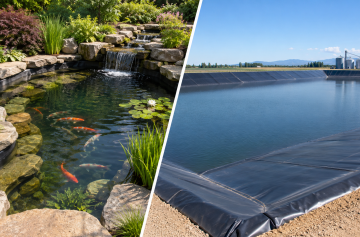
In the construction of ponds, artificial streams, or rainwater harvesting basins, the common practice is to first lay a layer of 8 oz or 12 oz heavy-duty non-woven geotextile as an Underlayment on the subgrade soil, with a CBR puncture strength exceeding 500 lbs.
This fabric layer protects the overlying 30 mil to 45 mil EPDM rubber liner or PVC plastic membrane from damage by sharp rocks or roots in the soil.
According to fluid pressure calculations, for every 1-foot increase in water depth, the bottom pressure increases by 62.4 lbs/sq ft.
Without the cushion and pressure distribution of geotextiles, the probability of plastic film developing pinholes during uneven settlement increases by 80%.
In riverbank erosion control, if the slope exceeds 3:1, Woven Geotextile is used in combination, utilizing its high tensile strength of 200 lbs/in to anchor the soil and prevent water flow shear forces from carrying away surface humus.
- Physical Separation: 3 oz non-woven fabric is often used to separate acidic peat moss from alkaline soil, preventing drastic soil pH fluctuations within 12 to 24 months.
- Root Barrier: For trees near building foundations, 30 mil to 80 mil HDPE Root Barriers are used. This high-density material can withstand tensile stress over 2500 psi, forcing roots to grow vertically downward.
- Moisture Migration Control: 10 mil black PE film is used on the ground of nursery container areas, 100% blocking ground moisture infiltration to prevent pathogens from cross-infecting seedlings via splashed water droplets.
- Winter Frost Protection: 6 mil white opaque film reflects over 50% of sunlight, preventing nursery stock from overheating during winter days and reducing physiological damage from freeze-thaw cycles.
In landscape paths needing increased soil bearing capacity (such as golf course cart paths or walking trails), laying a layer of woven fabric with a grab tensile strength of 200 lbs allows road loads to spread downwards at a 45-degree angle, significantly reducing vertical stress on the subgrade.
This design allows for a reduction of approximately 25% in the Base Course thickness while ensuring the same load-bearing capacity.
When handling irrigation water with high mineral content, the non-permeability of plastic film is used to establish temporary saline-alkali buffer zones, preventing mineral over-accumulation in the plant root zone.
In actual maintenance cycles, the physical filtration characteristics of geotextiles maintain stable performance for over 10 years, whereas ordinary 6 mil plastic film without antioxidant treatment buried in soil will see its mechanical strength decay by 15% to 20% annually.
Therefore, for permanent landscape engineering, filtration and reinforcement tasks must be undertaken by specific grades of geotextile materials.
Stability
Engineering stability is primarily determined by the interface friction coefficient ($\mu$) and tensile strength.
According to ASTM D4632 experimental data, a 6 oz non-woven geotextile provides a grab tensile strength of over 160 lbs.
Its rough surface produces a friction coefficient of 0.65 to 0.85 with sand and stone, reducing foundation displacement by over 60%.
In contrast, 10-20 mil plastic film has a smooth surface with a friction coefficient of only 0.15 to 0.25, easily causing the entire overlying layer to slide in areas with slopes exceeding 10 degrees.
Friction and Anti-sliding
According to ASTM D5321 large-scale shear test data, material stability depends on interface shear strength.
Non-woven geotextiles are needle-punched during production, forming countless randomly distributed polypropylene fiber pores.
When this material is laid beneath a crushed stone layer (such as AASHTO #57 stone), the sharp edges of the stones embed into the fiber structure, generating mechanical interlock.
This interlocking effect allows the interface friction angle ($\delta$) to typically reach over 85% to 95% of the internal friction angle ($\phi$) of the adjacent soil.
Experiments show that under a 500 psf normal load, the interface friction coefficient between non-woven geotextile and medium sand remains consistently between 0.65 and 0.80.
The high friction coefficient limits lateral displacement of soil particles, allowing foundation pressure to spread at a 45-degree angle into deeper soil when subjected to vehicle loads, effectively reducing the probability of localized settlement.
In comparison, 10 to 20 mil thick polyethylene (HDPE/LDPE) plastic film has an extremely smooth surface, with an interface friction coefficient of only 0.12 to 0.22 under the same test conditions.
In landscape projects with slope designs exceeding 10 degrees, using plastic film as a weed barrier or water barrier will cause the 2 to 3 inches of decorative stone or mulch on top to slide slowly down the film surface under gravity.
| Material and Interface Combination | Interface Friction Angle ($\delta$) | Friction Coefficient ($\mu$) | Mechanical Interlock Capability |
|---|---|---|---|
| 8 oz Non-woven Geotextile / Graded Crushed Stone | 32° – 38° | 0.62 – 0.78 | Extremely Strong (Fiber embedding effect) |
| Woven Geotextile / Sandy Soil | 28° – 34° | 0.53 – 0.67 | Strong (Surface texture friction) |
| 20 mil HDPE Plastic Film / Sandy Soil | 8° – 14° | 0.14 – 0.25 | Extremely Weak (Pure smooth contact) |
| 6 mil LDPE Plastic Film / Clay | 5° – 10° | 0.09 – 0.18 | None (Easy to form lubrication layer) |
Geotextiles possess extremely high planar permeability, typically between 90 and 150 GPM/sq.ft.
When rainwater permeates through surface stones, it quickly passes through the geotextile into the drainage layer, keeping effective normal stress at the interface stable.
In common 2:1 or 3:1 slope engineering in North America, non-woven geotextiles rely on this hydraulic balance to maintain long-term slope integrity, reducing landslide risks caused by decreased shear strength in saturated soil.
Regarding long-term load distribution, when a load acts on the geotextile, the material utilizes its tensile strength (Grab Tensile Strength approx.
150 to 250 lbs) to generate minor elastic deformation, converting pressure into horizontal tension and transferring it to the surrounding stable soil via interface friction.
Due to extremely low elastic modulus and insufficient friction coefficient, plastic film cannot transfer stress to the surroundings when under force.
Loads act vertically on the soil beneath the film, causing the film to be punctured by sharp objects or generating permanent plastic stretching at the pressure point.
This deformation leads to voids or uneven compression within the foundation, eventually appearing as cracks or deep tire ruts on the surface.
Load Distribution
According to load spreading theory in pavement engineering mechanics, vertical pressure applied to the surface typically transfers underground at a certain angle.
In unreinforced foundations, this pressure spreads in a cone shape, concentrating pressure directly beneath the loading point and easily inducing localized plastic deformation exceeding the soil’s bearing limit.
Non-woven geotextiles act as a structural reinforcement layer in this process, utilizing high modulus characteristics to generate a Tension Membrane Effect.
When heavy vehicle or crushed stone layer pressure acts on the surface, an 8 oz non-woven geotextile provides a Grab Tensile Strength of over 205 lbs.
According to ASTM D4632 standard testing, qualified engineering-grade geotextiles typically maintain an elongation at break of over 50%.
In stark contrast, polyethylene plastic film between 6 and 20 mil thick is a single-layer barrier material physically, lacking the mesh-like mechanical structure produced by fiber interlacing.
Plastic film has an extremely low tensile modulus.
When subjected to point loads (such as pressure from sharp edges of 3/4-inch crushed stone), the material quickly reaches its yield point and undergoes permanent plastic deformation.
In common subgrade testing in North America, plastic film cannot generate effective stress redistribution when facing localized high pressure; pressure penetrates the film 100% to the underlying soil.
Due to the lack of fiber tear protection, the film will produce linear tears after exceeding its critical tensile strength (usually far below geotextiles of equivalent weight), resulting in complete loss of original separation functionality.
- Tensile Performance Index (ASTM D4632): 4 oz non-woven geotextile has a grab tensile strength of approximately 120 lbs, while the 8 oz specification can reach 205 lbs. High-quality 20 mil HDPE film has some strength under tension, but its Trapezoid Tear Strength is only 20% to 30% that of geotextiles, making it very easy to damage with heavy machinery on construction sites.
- CBR Puncture Strength (ASTM D6241): This data evaluates a material’s resistance to puncture by sharp stones. Standard 6 oz geotextile typically has a puncture strength around 410 lbs, whereas plastic film in similar tests often punctures quickly due to stress concentration, failing to maintain structural integrity under rough fill.
- Load Spreading Angle: After subgrade reinforcement with geotextiles, the load spreading angle can increase from the traditional 30 degrees to 45 degrees or more, reducing peak stress on the subsoil by over 35%. Plastic film contributes nothing physically to the spreading angle.
- Elongation at Break Comparison: Non-woven geotextile allows for 50% – 100% deformation without losing overall structural force, adapting to natural foundation movement; plastic film often develops holes or thins out after 15% – 20% deformation, leading to functional failure.
In soft soil areas with a low California Bearing Ratio (CBR), laying a layer of AASHTO M288 Class 2 geotextile is equivalent to increasing the structural contribution value of the crushed stone layer by 3 to 4 inches.
When crushed stone is pressed into the geotextile surface, the fibers tightly grip the stones, forming a high-strength composite layer.
This composite layer has higher shear strength, resisting lateral squeeze of the soil and preventing crushed stone from sinking into the underlying mud (the “pumping” phenomenon).
In cyclic load tests, foundations using geotextiles typically exhibit rut depths over 50% shallower than unreinforced foundations after 10,000 standard axle loads (ESALs).
The polypropylene fibers used in geotextiles have excellent Creep Resistance, with physical dimensions and tensile modulus decaying extremely slowly under constant load for up to 15 to 20 years.
Even in frost-heave cycles in cold climates, geotextiles utilize their three-dimensional fiber structure to absorb expansion stress from freezing moisture, maintaining the flatness of the formation interface.
Under long-term stress, plastic film produces Environmental Stress Cracking, especially when soil chemical environments fluctuate or temperatures alternate, leading to polymer chain breakage and a cliff-like drop in tensile strength within 3 to 5 years.
- Subgrade Layer Thickness Optimization: Using geotextiles with a 200 lb tensile strength can typically reduce crushed stone backfill by 20% to 30% while achieving the same structural strength.
- Anticipated Modulus: Geotextiles produce significant restorative force at low strain (2%-5%), while plastic film requires massive deformation to produce weak resistance.
- Interface Shear Integrity: Geotextiles anchor surface loads within the plane through mechanical interlocking; plastic film fails to effectively anchor loads because the interface is too slippery, resulting in lateral sliding failure.
- Puncture Energy Absorption: Geotextile fiber bundles can distribute stress around stone tips, absorbing over 50 Joules of puncture energy, far exceeding the physical limits of film.
For scenarios involving heavy machinery passage, RV parking, or drainage and load-bearing behind retaining walls, selecting AASHTO standard certified 140N or 160N grade materials ensures the material maintains clear interfaces and uniform stress under complex composite stress environments.