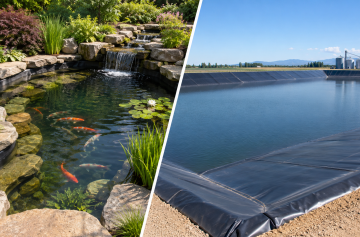
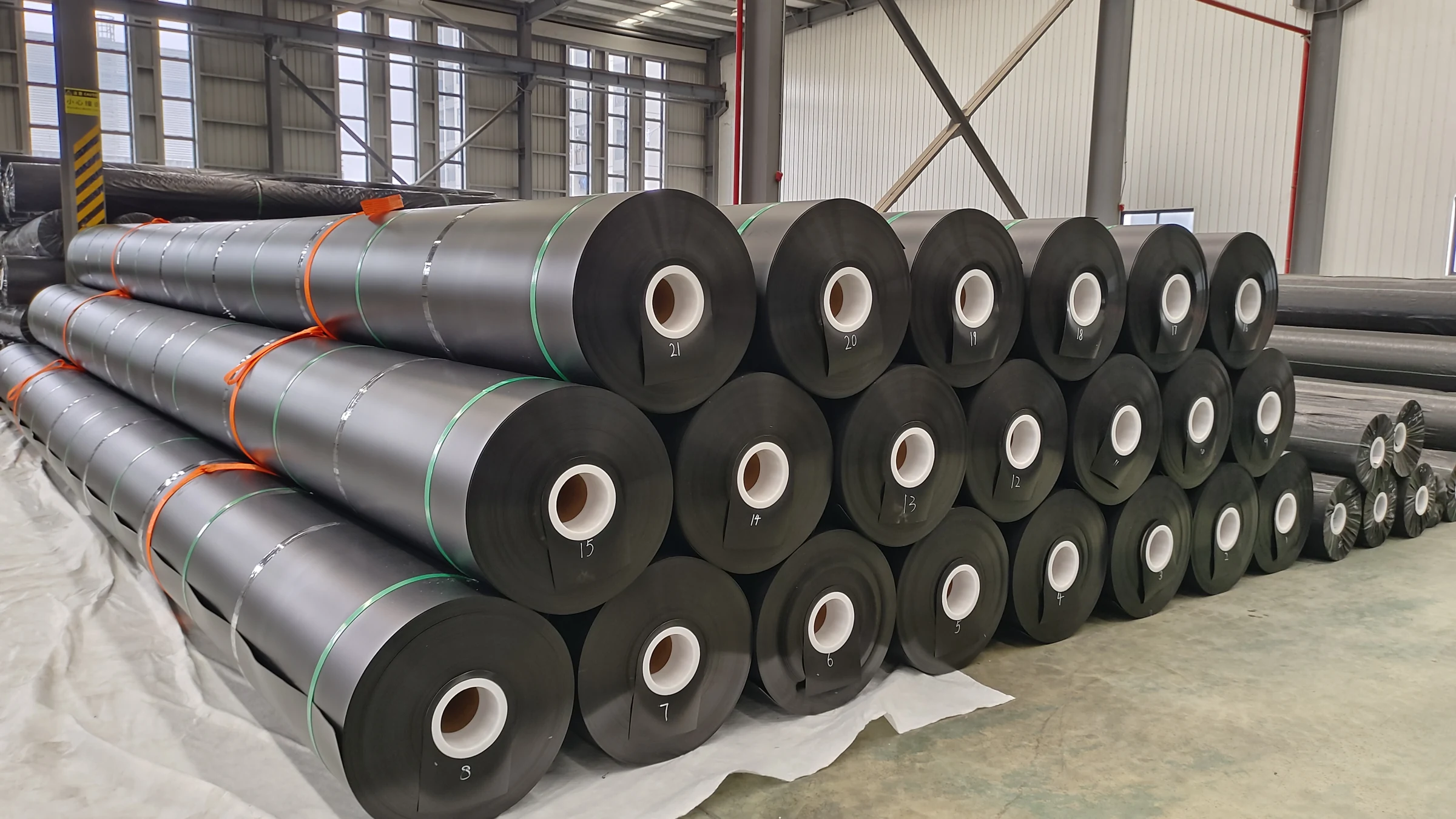
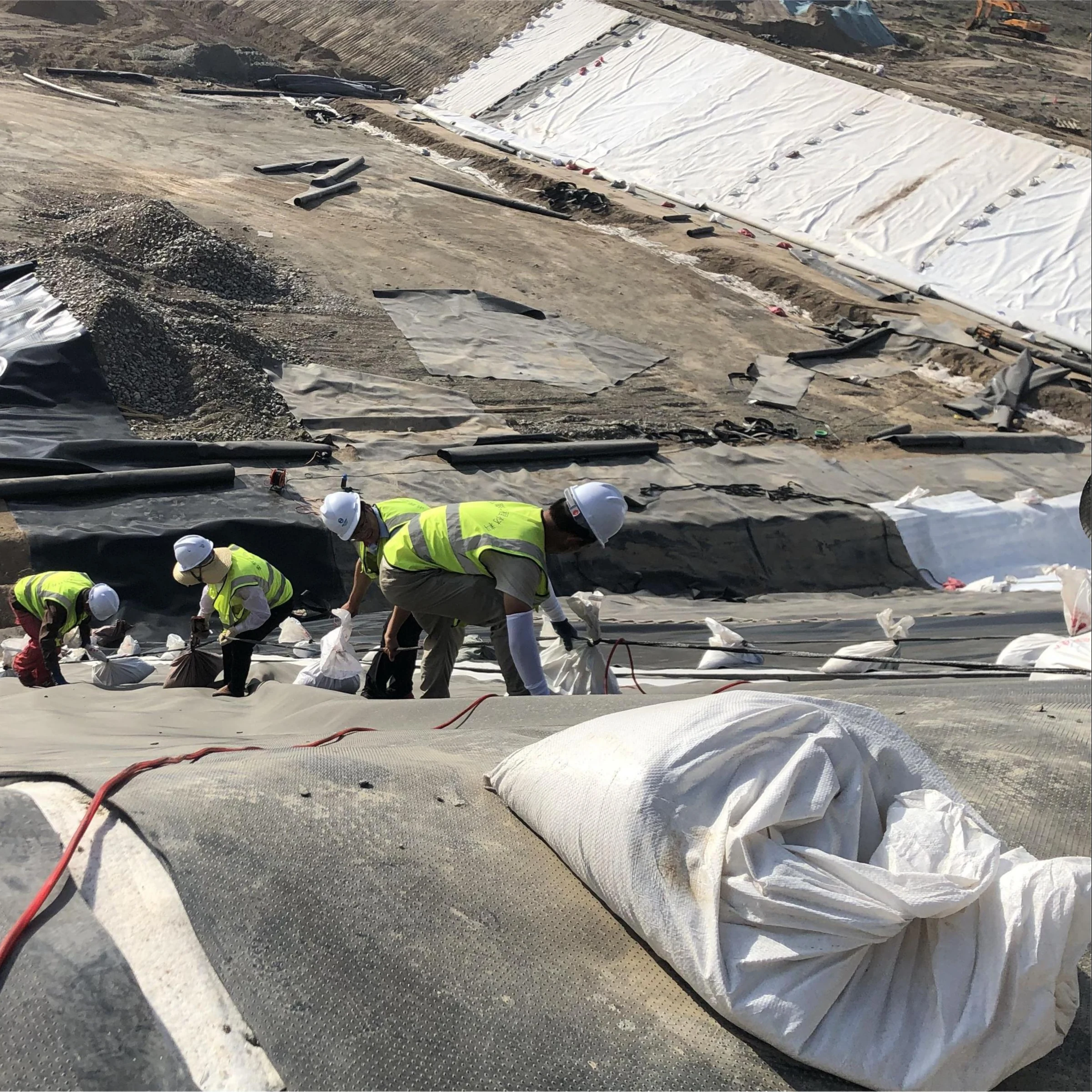

The right choice depends on what the lining has to do once the project is operating. A reservoir, wastewater lagoon, irrigation canal and mining process pond do not face the same traffic, chemicals, maintenance or leakage risk.
So instead of comparing only the price of HDPE sheet with the price of concrete, compare the completed installation, expected repairs and how well each system can control seepage over time.
HDPE vs. concrete lining at a glance
| Factor | HDPE geomembrane | Concrete lining |
|---|---|---|
| Initial installation cost | Usually lower for large containment areas | Usually higher because of material volume, placement, joints, and curing |
| Construction speed | Fast once subgrade is ready | Slower because concrete must be placed and cured |
| Seepage control | Very low permeability when sheet, seams, and penetrations are intact | Can perform well, but cracks and joints may become leakage paths |
| Settlement tolerance | Flexible and able to accommodate some deformation | More sensitive to differential ground movement |
| Traffic and abrasion | Needs protection where equipment contacts the surface | Good when designed for the expected loads |
| Repair | Localized thermal-weld repair | Crack, joint, or surface repair |
| USBR modeled durability | 15–30 years for exposed geomembranes | About 50 years for concrete category |
| Best fit | Containment-focused projects | Projects needing a hard working surface |
The service-life figures above come from a specific Bureau of Reclamation canal demonstration program. They are not warranties for every HDPE or concrete project.[1]
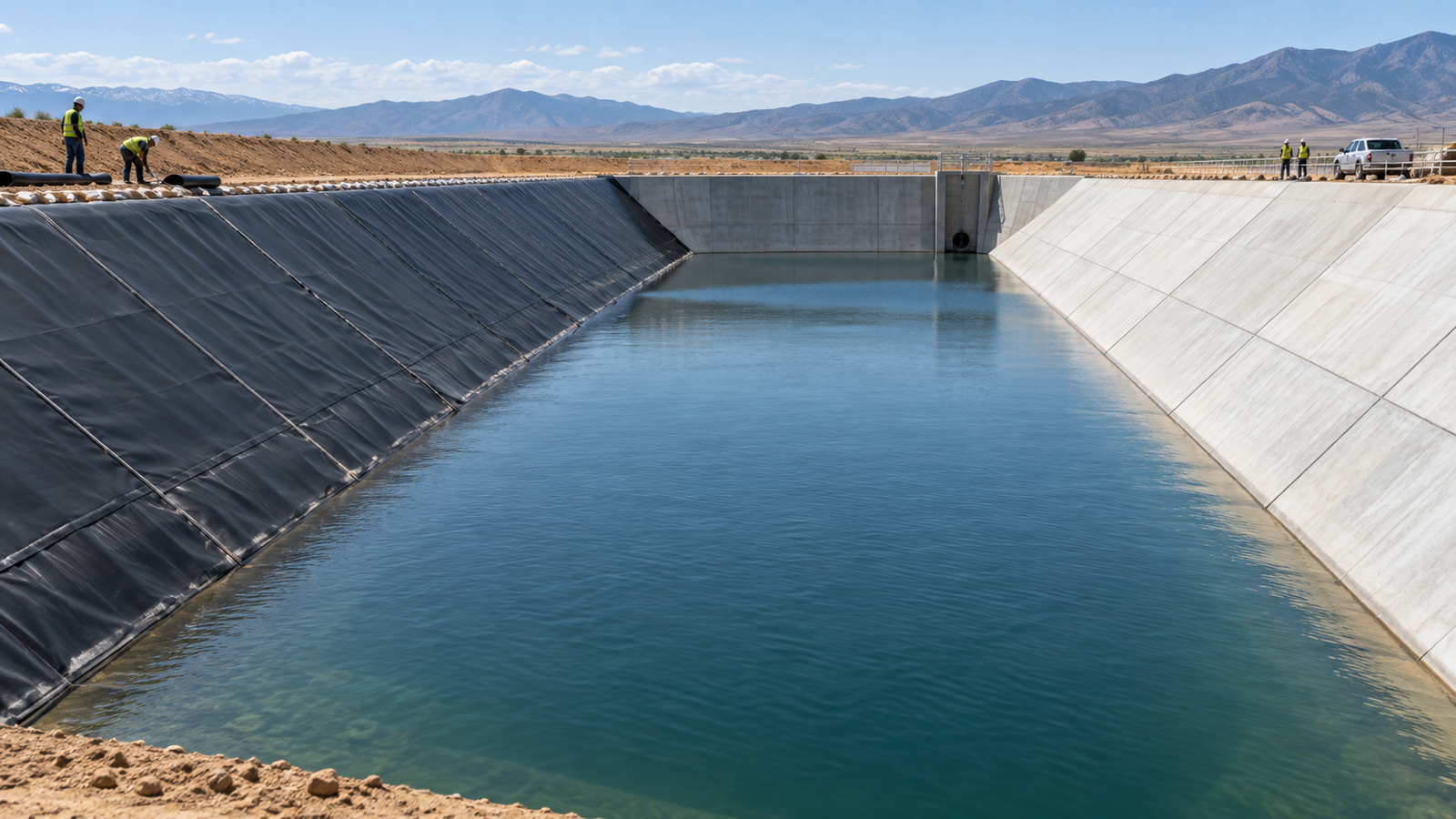
Why HDPE often costs less to install
The first big difference is simply how much material has to be moved and installed.
Take a 10,000 m² lining area. A 1.5 mm geomembrane contains only about 15 m³ of HDPE. Cover the same area with 100 mm of concrete and you need about 1,000 m³. At 150 mm, that rises to roughly 1,500 m³.
| Illustrative lining | Thickness | Material volume over 10,000 m² |
|---|---|---|
| HDPE geomembrane | 1.5 mm | 15 m³ |
| Concrete | 100 mm | 1,000 m³ |
| Concrete | 150 mm | 1,500 m³ |
At the minimum formulated HDPE density of 0.940 g/cm³ under GRI-GM13, 15 m³ works out to roughly 14 tonnes of membrane before overlaps, anchors, trimming and normal installation waste are added.[2]
The 100 mm and 150 mm concrete thicknesses here are only examples for comparing material volume. They are not universal design values. Actual concrete thickness and reinforcement have to come from the project design.
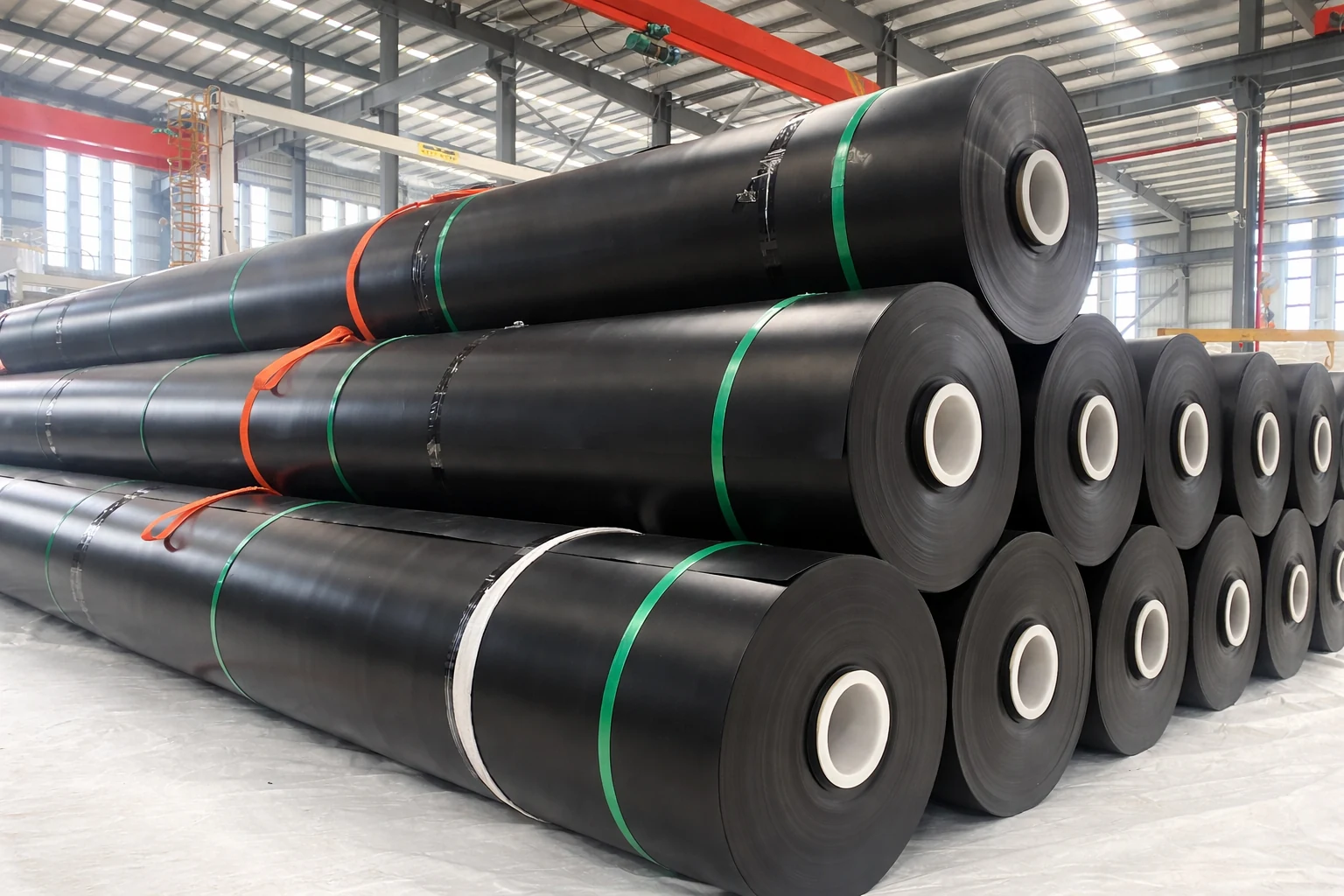
Concrete also brings more transport, placement, pumping, reinforcement, joints, curing and labor. A thin factory-made membrane can cover the same area with far less material handling.
GRI-GM13 Revision 19 covers smooth and textured HDPE geomembranes from 0.75 to 3.0 mm, or roughly 30 to 120 mil.[2] A project specification can still require something thicker.
For example, USDA Natural Resources Conservation Service Code 521 lists minimum HDPE thicknesses of 60 mil for wastewater and 30 mil for clear-water applications covered by that conservation practice.[3]
Jinseed’s smooth HDPE liner range includes several thicknesses. The right one should come from the containment duty, ground condition, exposure, loading and project specification, not simply the lowest price per square meter.
What can increase HDPE installation cost
A cheap membrane does not automatically produce a cheap finished system.
A proper quote should account for subgrade preparation, liner placement, field seams, penetrations, anchor trenches, testing, repairs and any drainage or protection layers required by the design.
The condition of the ground can change the budget quickly.
Under NRCS Code 521, exposed sharp angular particles larger than 3/8 inch require cushioning between the subgrade and geomembrane. One allowed option is nonwoven geotextile weighing at least 10 oz/yd². Another is at least 6 inches of suitable soil that meets the stated particle requirements.[3]
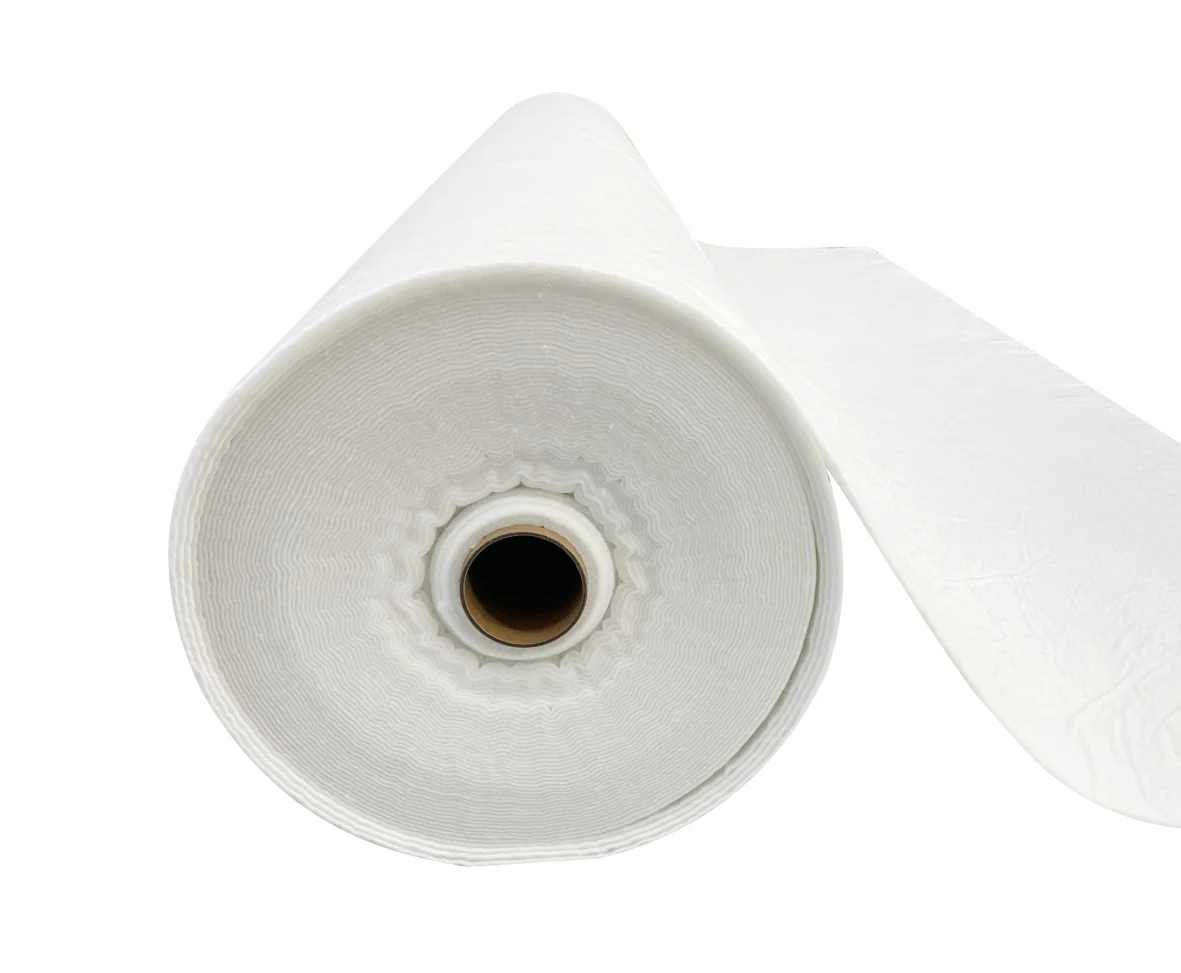
On rocky sites, a properly specified nonwoven geotextile can separate the membrane from sharp material and reduce concentrated puncture loads.
Groundwater may add another system below the liner. Under the same NRCS practice, drainage is required when the pond invert is within 2 feet of the seasonal high groundwater table because water pressure from below can lift the membrane.[3]
Gas also needs a way out. NRCS Code 521 calls for geomembrane pond vents along the crest of side slopes at spacing no greater than 50 feet, with extra gas-pressure relief where site conditions call for it.[3]
Those are requirements from one specific U.S. conservation practice, not universal rules for every industrial liner. They do show why groundwater, gas and subgrade conditions need to be known before two installed prices are compared.
Roll size matters too. Wider panels reduce the number of long field seams on open reservoirs and canals. On a large water project, the roll layout is part of the cost calculation, not just a shipping detail. Typical configurations can be reviewed on Jinseed’s hydraulic engineering application page.
Comparing an HDPE quote with a concrete design?
Send the lining area, section drawing, required thickness, side slopes, subgrade condition, protection layer, quantity, and destination. These details make it possible to calculate a realistic roll plan and identify where geotextile, drainage, or textured liner may affect cost.
Why concrete usually carries a higher first cost
Concrete also needs a prepared foundation. From there, the project may add reinforcement, joints, waterstops, forms, pumping equipment, finishing, curing and detailed work around pipes or other penetrations.
NRCS guidance for concrete pond lining calls for design information covering soil conditions, reinforcement, concrete quantity, subgrade preparation, compaction, construction details and penetrations. Joints also need proper design and sealing.[4]
The material volume adds up fast. At 100 mm thick, every 1,000 m² requires about 100 m³ of concrete. At 150 mm, it needs about 150 m³.
Concrete then needs time for placement and curing before it can carry the loads it was designed for.
That extra cost can be worthwhile when the lining also has to act as a working surface. Properly designed concrete can handle vehicle access, cleaning equipment, abrasion and repeated physical contact far better than an exposed membrane.
Compare complete installed systems, not one material price
| Cost item | HDPE geomembrane | Concrete lining |
|---|---|---|
| Subgrade preparation | Required | Required |
| Primary lining | Thin factory-manufactured sheet | High material volume |
| Joining | Thermal field seams | Construction/control joints |
| Protection | May require geotextile, soil, ramps, or concrete | Concrete itself provides a hard surface |
| Quality control | Sheet, seam, penetration, and repair inspection | Concrete production, placement, curing, and joint QC |
| Subsurface drainage | May be required where uplift is possible | Project-specific foundation drainage may still be required |
| Curing | Not required | Required |
An HDPE bid that leaves out geotextile, drainage, anchor trenches, seam testing and installation is not comparable with a finished concrete-lining price.
The same works in reverse. A concrete rate that leaves out reinforcement, joints, pumping, curing and foundation work is not the real completed cost either.
Maintenance: the two systems fail in different ways
Concrete maintenance is usually about cracks, joints, spalling, settlement damage and deterioration around penetrations.
NRCS recommends regular inspection and repair of damaged concrete lining. A crack or failing joint still matters even when the slab remains structurally usable.[4]
HDPE maintenance focuses on different problems: punctures, tears, seams, penetrations, wrinkles, uplift and direct mechanical damage.
NRCS specifically calls for periodic checks of visible geomembrane for tears and punctures, including around inlets, outlets, ramps and other appurtenances. Equipment and animals should also be kept away where they could damage the sheet.[3]
A small HDPE puncture can often be repaired locally. The area is cleaned and prepared, covered with compatible material, thermally welded and tested under the project’s repair procedure.
This work needs people who understand geomembrane welding and quality control. Jinseed’s HDPE geomembrane installation guide explains hot-wedge welding, extrusion repairs, overlaps and seam testing in more detail.
The Bureau of Reclamation long-term canal study used annual maintenance assumptions of $0.005/ft²-year for concrete and concrete-over-geomembrane systems and $0.010/ft²-year for exposed geomembranes.[1]
Those were inputs to a historical U.S. benefit-cost study, not 2026 contractor rates. The useful point is the comparison: exposed flexible liners can be cheaper to install, but some repairs require specialist field work.
Service life: what the long-term canal study actually found
The Bureau of Reclamation’s 25-year canal-lining program is useful because several systems were observed under real operating conditions for as long as 25 years.
For its benefit-cost model, Reclamation grouped the main lining systems like this:
| USBR lining category | Modeled durability | Modeled effectiveness | Maintenance assumption |
|---|---|---|---|
| Concrete | 50 years | 70% | $0.005/ft²-year |
| Concrete over geomembrane | 50 years | 95% | $0.005/ft²-year |
| Exposed geomembrane | 15–30 years | 90% | $0.010/ft²-year |
The report found that concrete-over-geomembrane systems gave the strongest combination of durability, effectiveness and reliable performance among the major lining types in that study.[1]
Do not turn those figures into a rule saying every concrete liner lasts exactly 50 years or every exposed HDPE liner fails before 30. They come from a specific canal program in Central Oregon.
Temperature, UV exposure, formulation, thickness, mechanical damage, water chemistry, ground movement and maintenance can all move real service life in either direction.
The 25-year HDPE section shows why visual condition is not the whole story
One especially useful test section was A-3, an exposed 80-mil, or roughly 2.0 mm, HDPE geomembrane installed in 1992.
After about 25 years, inspectors still rated its visual condition “Excellent.” They did find local damage, including a crack of roughly 6 inches linked to rebar penetration and several smaller defects, but the section remained one of the better performers in the program.[1]
Laboratory testing told a more complicated story. The report found elongation 58% below the referenced GRI QC value and oxidative induction time, or OIT, 66% below that referenced value. In other words, the liner still looked good, but measurable aging had already taken place.[1]
That is why appearance alone cannot tell you how much service life is left.
Properties such as density, carbon black, tensile behavior, puncture resistance, stress-crack resistance and OIT help describe the manufactured sheet and its resistance to aging. Jinseed’s guide to reading GRI-GM13 specifications explains how these values appear on supplier data sheets.
GRI-GM13 is a manufacturing specification for smooth and textured HDPE geomembrane and related testing. It does not predict an exact field lifespan for a particular site.[2]
Why published HDPE lifespan numbers can differ so much
There is no single field lifespan that applies to every HDPE geomembrane.
A National Academies review described HDPE geomembranes that had been in service for 20–31 years without significant changes in the mechanical properties examined. It also described another exposed lagoon liner that suffered severe degradation after 14 years.[5]
Those results are not really surprising. A buried membrane at moderate temperature lives a very different life from a black exposed sheet sitting in direct sun, reaching high surface temperatures and dealing with regular maintenance traffic.
So when someone gives you a lifespan number, ask whether the liner is exposed or covered, what temperature it operates at, what liquid it contains and what mechanical loading it sees.
Concrete durability and watertightness are not the same thing
Concrete can still be structurally sound while cracks and joints allow more water to escape.
Curing shrinkage, temperature movement, differential settlement, freeze-thaw cycles, joint deterioration and abrasion can all reduce hydraulic performance over time.
That difference matters in reservoirs and canals. One project may mainly need structural strength. Another may care much more about keeping seepage extremely low.
A thick, rigid lining should not automatically be treated as the better hydraulic barrier.
Ground movement favors flexibility, but HDPE still needs a good foundation
HDPE can move with some ground deformation instead of immediately forming the type of brittle through-crack associated with rigid materials.
That can help on fills, softer ground and sites where moderate differential settlement cannot be removed completely.
There are limits, though. Voids, sharp settlement transitions, poor compaction and excessive movement can strain the sheet, welds and penetrations.
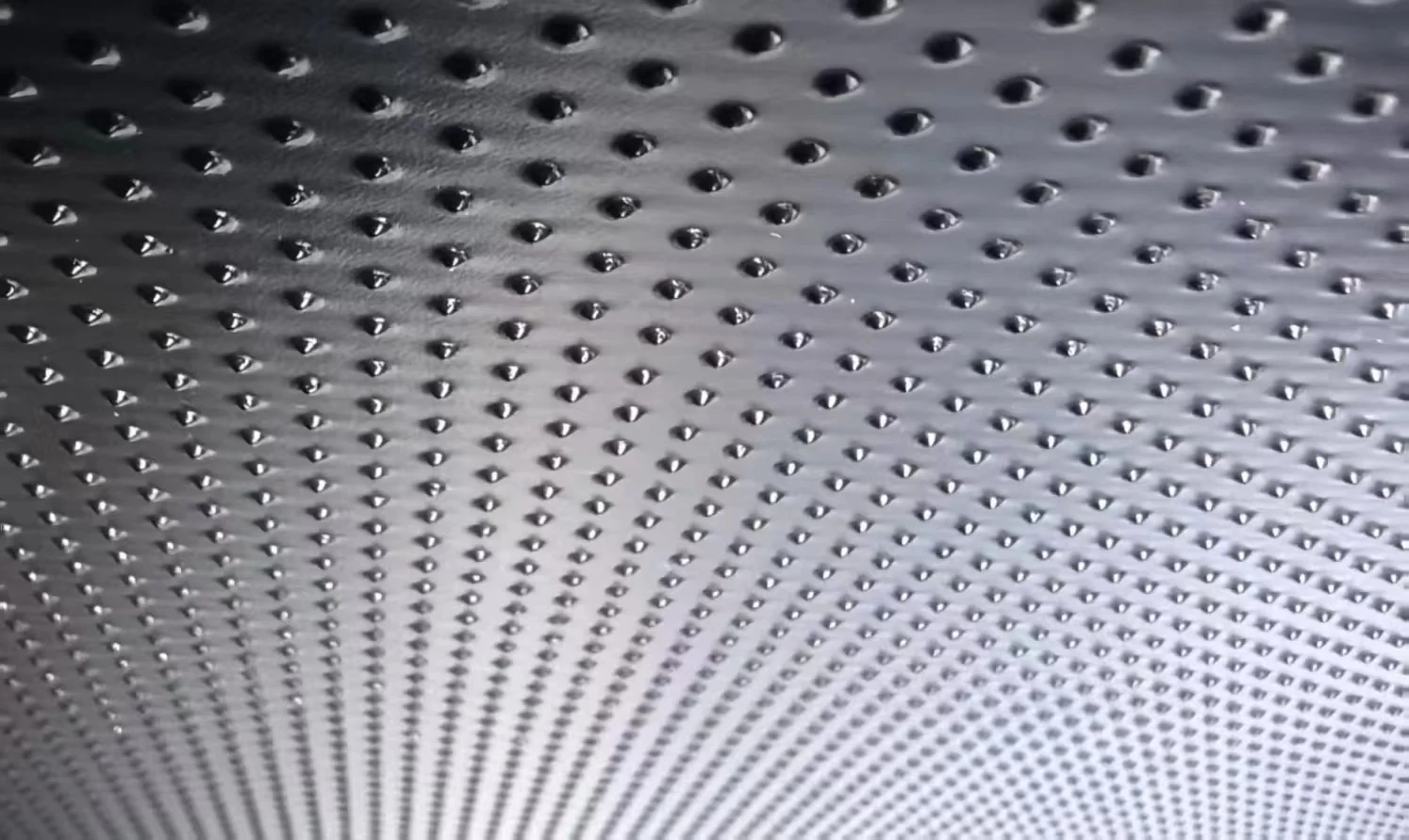
Slope friction also matters. A smooth geomembrane may work well on the basin floor, while a textured HDPE geomembrane may be needed where the design calls for more interface shear resistance.
Do not choose textured material just because a slope looks steep. The complete interface between soil, geotextile, drainage layer and geomembrane has to satisfy the stability design.
Mechanical loading is where concrete has a clear practical advantage
An exposed geomembrane is not pavement.
Excavator buckets, truck tires, dropped tools, dragged pumps, livestock and sharp maintenance equipment can puncture or tear it.
NRCS Code 521 requires geomembranes to be protected from mechanical damage and specifically addresses protection around equipment access and agitation areas.[3]
If equipment regularly needs to enter the basin, a concrete ramp, apron, cover layer or full concrete protective lining may justify the extra expense.
Concrete still needs to be designed for the actual wheel loads, impact, abrasion, joints and foundation conditions. Calling something a “concrete lining” does not mean any vehicle can safely drive over it.
Chemical compatibility should be checked before material approval
HDPE performs well with many liquids found in wastewater, mining, landfill and industrial containment. Compatibility still depends on the actual chemical environment.
Concentration, temperature, exposure time, stress and formulation all matter.
Where waste compatibility is uncertain, U.S. EPA Method 9090A provides a procedure for evaluating how exposure changes flexible membrane liner properties.[6]
Concrete is not chemically immune either. Acidic liquids, sulfates and other aggressive substances can attack the cement matrix, reinforcement, joints or protective coatings.
For process ponds and heap-leach projects, material approval should therefore use the actual process chemistry. Jinseed’s mining geomembrane section shows how liner selection changes when chemical containment and slope stability both matter.
When concrete over geomembrane is worth the extra cost
A combined system gives the two materials different jobs.
The geomembrane acts as the main low-permeability barrier. The concrete above it protects the liner and creates a harder working surface.
If the concrete later cracks, the geomembrane can still act as another seepage barrier as long as the membrane itself has not been damaged.
Reclamation’s canal study rated concrete-over-geomembrane systems highly because its benefit-cost model combined about 50 years of modeled durability with 95% modeled effectiveness.[1]
NRCS also notes that when access to the bottom of a fully geomembrane-lined waste storage pond is needed, designers can consider concrete over the liner with geotextile bedding.[3]
This setup costs more because it adds concrete, bedding, interface protection, placement, joints and curing. It makes the most sense when leakage would have serious environmental or financial consequences and the finished surface also needs to handle regular physical use.
Have a concrete-over-geomembrane section to price?
Send the section drawing, membrane thickness, geotextile requirement, lined area, slopes, quantity, and delivery location. The geomembrane and protection layer can then be matched to the actual concrete interface rather than quoted as a generic liner package.
Which lining makes sense for different projects?
| Project condition | Practical starting point | Main reason |
|---|---|---|
| Large irrigation reservoir | HDPE geomembrane | Large area and seepage control without needing a structural working surface |
| Water canal with little equipment contact | HDPE geomembrane | Fast coverage and low seepage |
| Canal with frequent mechanical cleaning | Concrete or concrete over geomembrane | Higher abrasion and equipment exposure |
| Wastewater lagoon | HDPE or engineered composite liner | Containment and chemical compatibility |
| Mining process pond | HDPE after chemical and slope review | Low permeability and chemical containment |
| Steep lined slopes | Textured geomembrane where interface design requires it | Higher interface shear resistance |
| Basin entered by vehicles | Concrete protection or engineered hard access areas | Direct mechanical loading |
| High-consequence containment with regular traffic | Concrete over geomembrane | Combines barrier performance with mechanical protection |
What to put in the RFQ before comparing prices
Make sure both suppliers are pricing the same scope.
For a geomembrane project, provide the total lined area, basin drawing, floor and side-slope dimensions, stored liquid, operating depth, groundwater level, subgrade condition, required thickness, smooth or textured surface, geotextile requirement, penetrations, access areas, seam-testing requirements and installation scope.
The order quantity also needs to cover seams, anchor trenches, penetrations, irregular geometry and cutting losses. A 20,000 m² pond will normally need more than exactly 20,000 m² of membrane, but the final allowance should come from the panel layout rather than one fixed percentage used on every job.
For material approval, look beyond nominal thickness. GRI-GM13 includes density, carbon black content and dispersion, tensile properties, tear resistance, puncture resistance, stress-crack resistance, OIT and UV-related testing.[2]
For the installation itself, define who accepts the subgrade, deploys the liner, makes trial seams, performs production welding, carries out nondestructive testing, takes destructive samples where required, finishes penetrations, repairs defects and produces the final records.
Once that scope is clear, quotations become much easier to compare. Otherwise, the cheapest bid may simply include less work.
Finally
Choose HDPE when lower installed cost, quick coverage, flexibility and strong seepage control matter most. Choose concrete when the finished surface must take regular traffic or abrasion. If the project needs both low leakage and a hard working surface, concrete over geomembrane can provide both. Compare the complete installation, maintenance exposure and real service conditions—not material price alone.
Need an HDPE quantity and specification check?
Send the application, lining area, drawing, required thickness, smooth or textured surface, protection layer, quantity, and destination. You can then compare the geomembrane option against the concrete design using an actual roll plan and project-specific material scope.