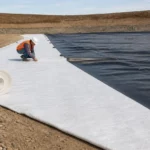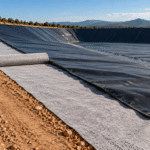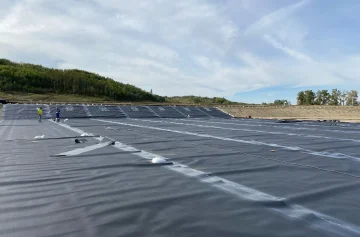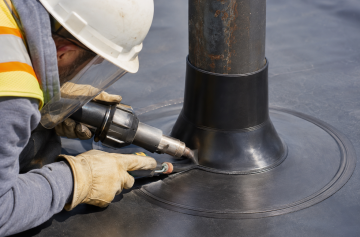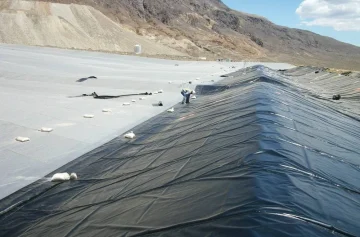
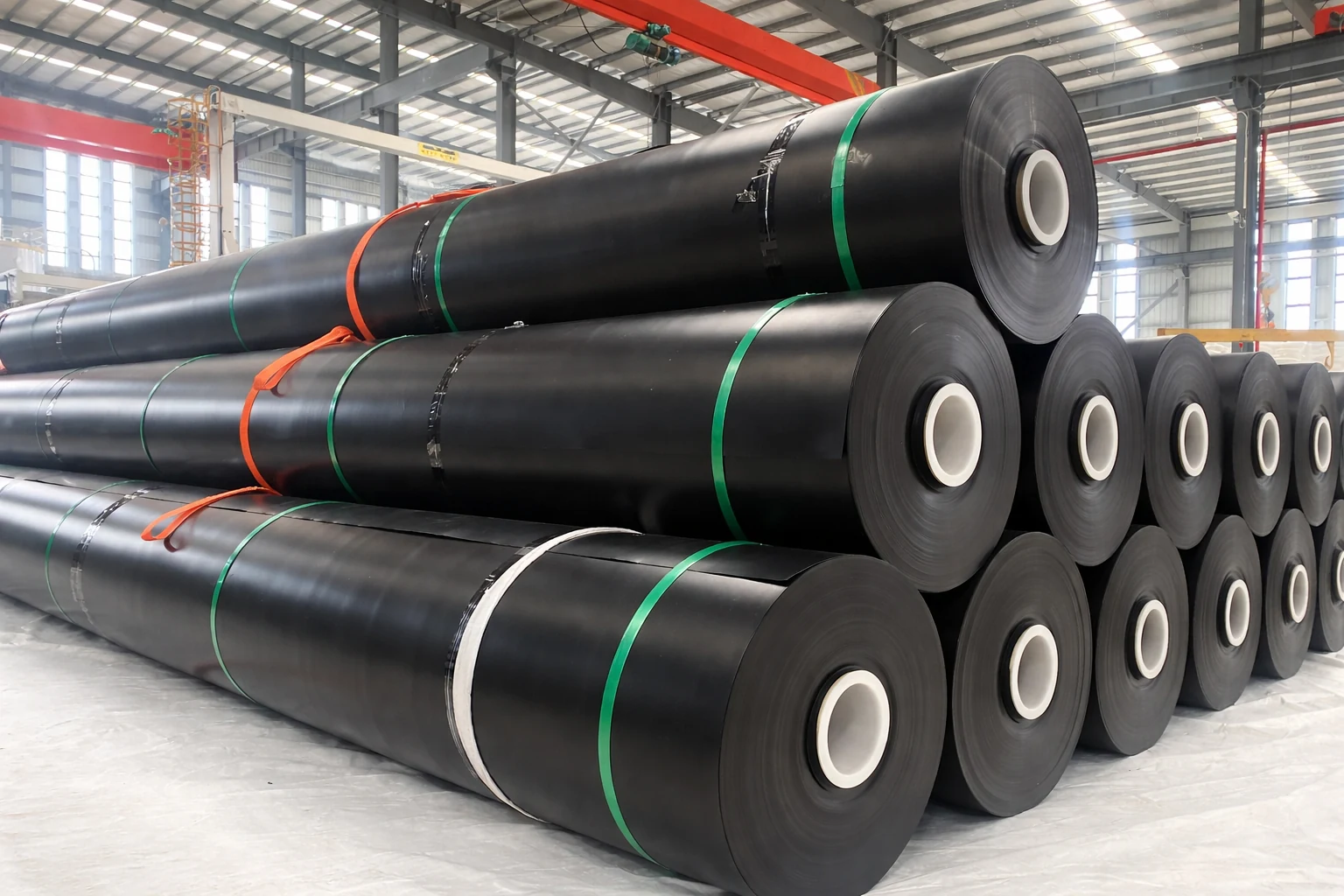
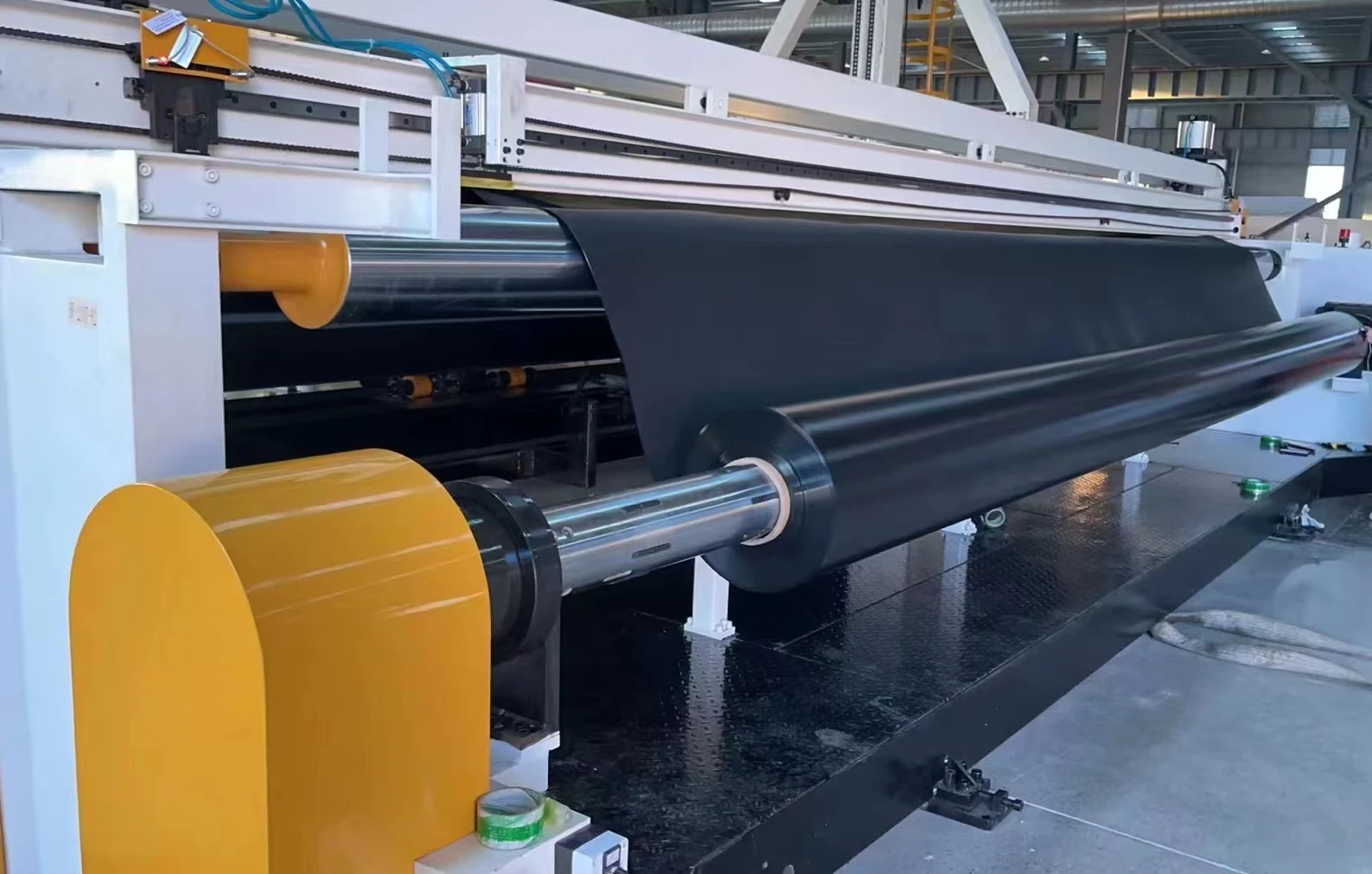
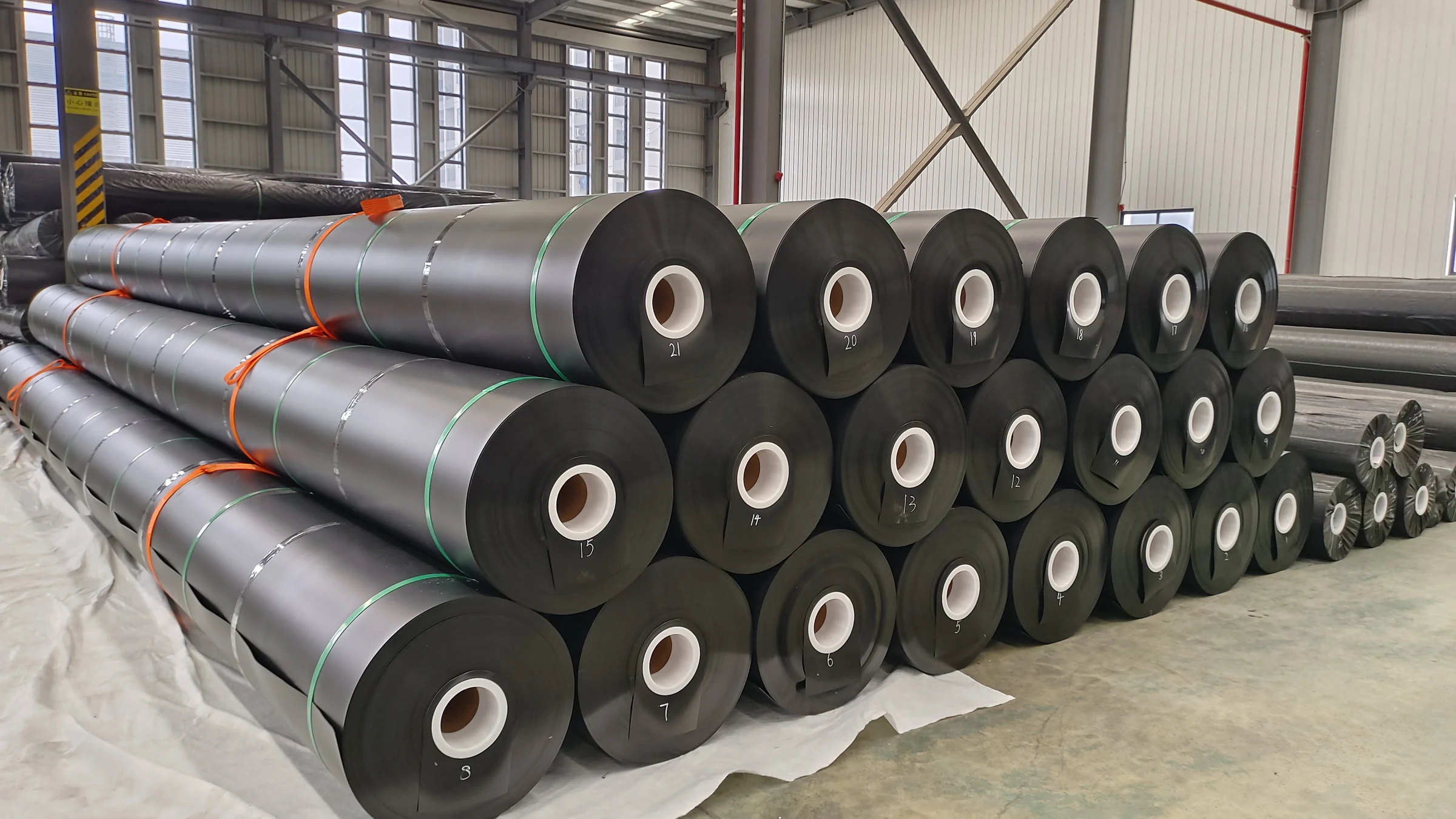
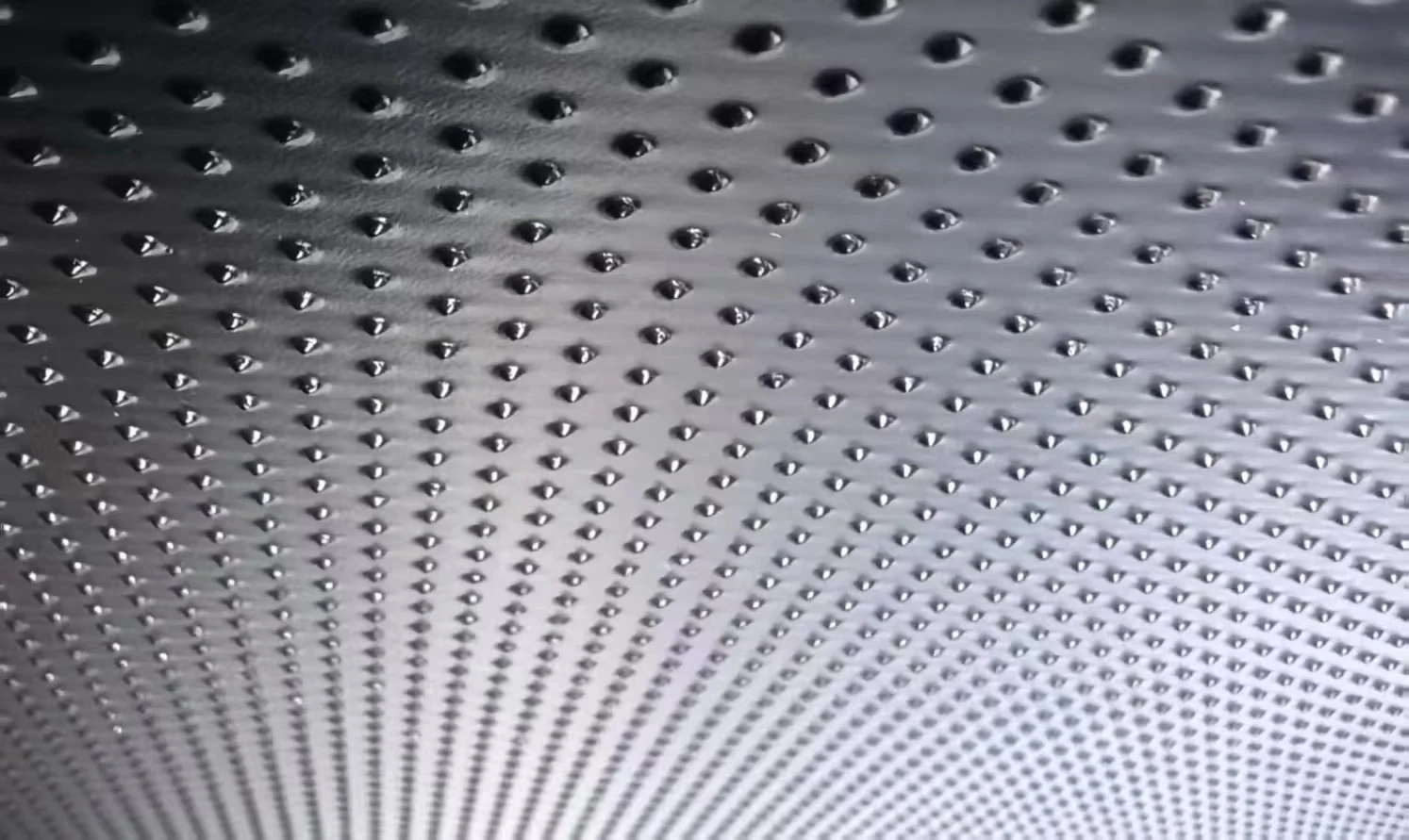
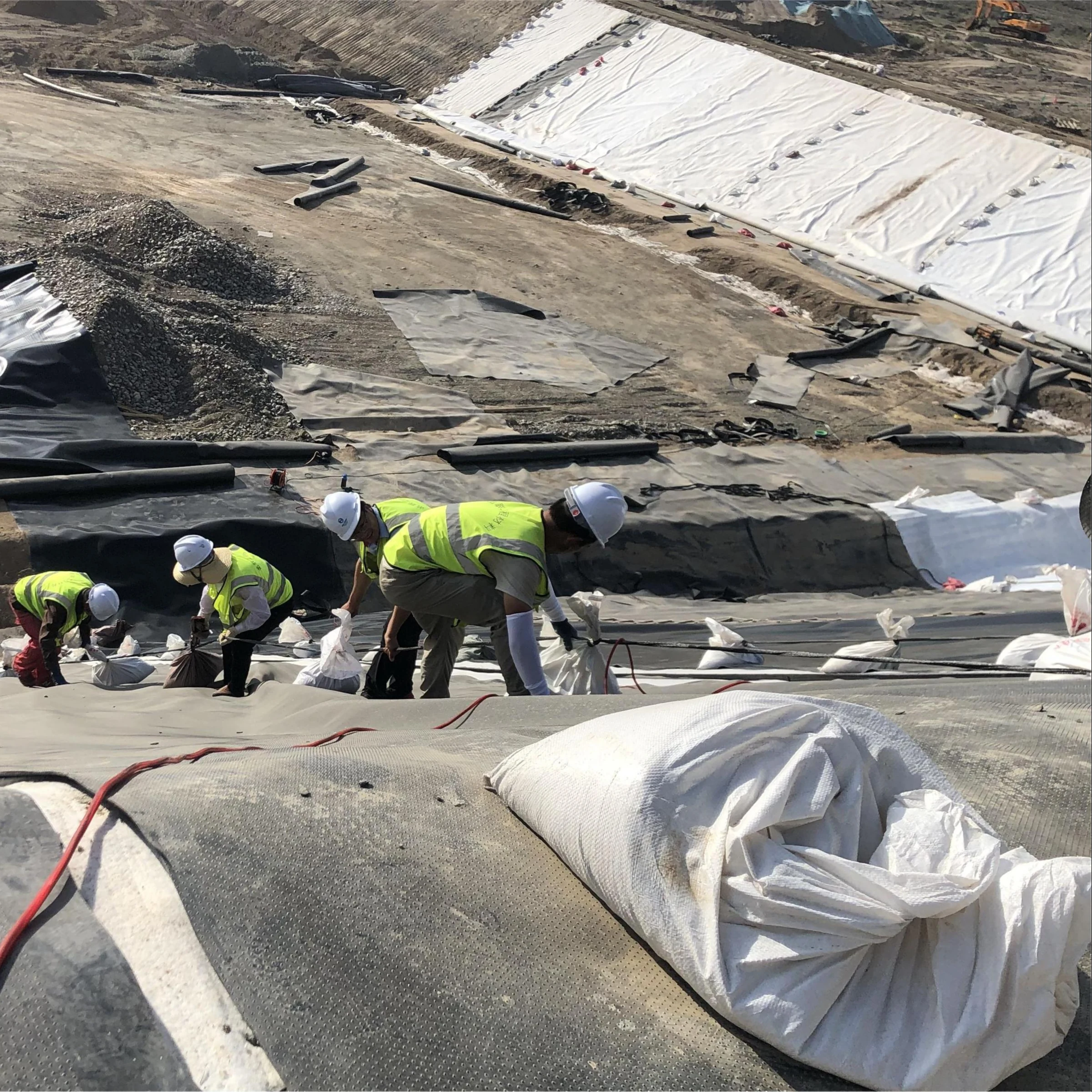
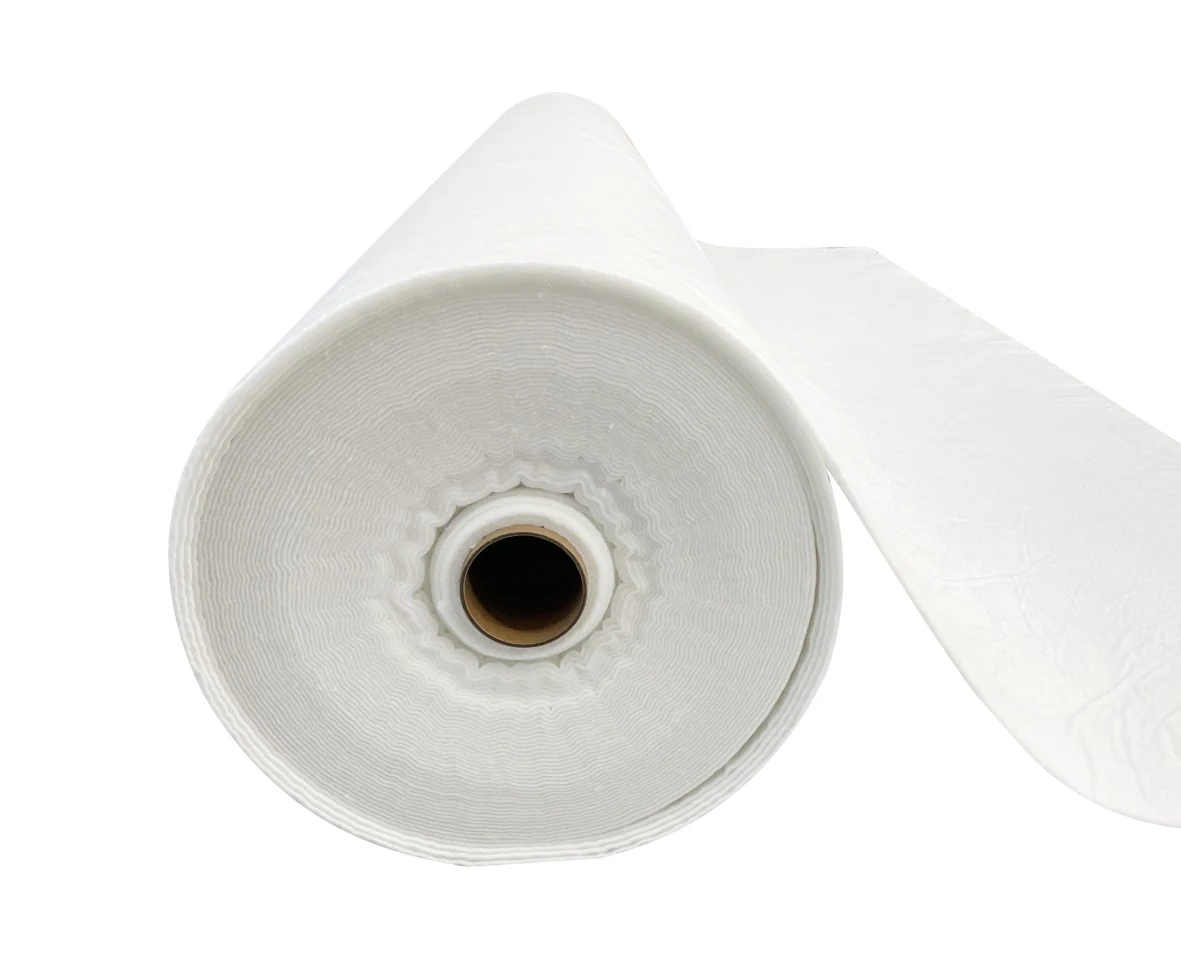

HDPE geomembrane and concrete lining perform different jobs. A geomembrane provides a thin, flexible barrier whose performance depends on intact sheet, seams and connections. Concrete provides a rigid surface that can resist specified mechanical loads, while joints, cracks and foundation movement require their own design. A combined system can use concrete to protect a geomembrane, provided the layers and interfaces work together.
This guide focuses on engineering selection, quantities and acceptance. For historical service-life evidence, maintenance assumptions and ownership-cost calculations, use the separate HDPE versus concrete installed-cost and service-life comparison. Neither a sheet specification nor a low bid is a substitute for the approved lining design.
Assign the function before selecting the material
| Required function | HDPE geomembrane | Concrete lining | Design question |
|---|---|---|---|
| Seepage barrier | Continuous sheet with welded seams and detailed penetrations | Depends on concrete condition and joint detailing | What leakage criterion applies, and how will it be verified? |
| Traffic and cleaning | Exposed sheet needs protection from damaging contact | Can provide an access surface when designed for the load | What equipment, wheel loads and abrasion are expected? |
| Ground movement | Can accommodate limited deformation; local strain still matters | Differential movement can crack panels or open joints | What movements can the foundation impose? |
| Uplift | Low self-weight makes pressure relief and restraint important | Greater weight helps but does not automatically ensure stability | What is the worst differential water head? |
| Repair | Suitable local defects may be patched and thermally welded | Joint, crack, surface or structural repairs depend on the cause | Can the defective area be located and safely accessed? |
The Bureau of Reclamation’s canal concrete maintenance guidance treats deterioration and repair as condition-dependent issues. A small concrete defect does not mean the entire lining has lost all usefulness; equally, a visually intact geomembrane does not prove every seam is sound.
Keep thickness, mass and strength units consistent
One mil is 0.0254 mm. Thus, 60 mil is 1.524 mm, while 1.50 mm is approximately 59.06 mil. Do not interchange nominal metric and imperial thicknesses in a contract that specifies an exact minimum.
GRI-GM13 Revision 19, June 11, 2025 covers HDPE sheet manufacturing properties. For 1.50 mm smooth sheet, the listed minimum-average yield strength is 22 kN/m and break strength is 40 kN/m. Its smooth-sheet minimum average thickness is nominal, with a lowest individual reading allowance of −10% among ten readings. These are manufacturing acceptance provisions, not a field wear or grinding allowance. Textured-sheet provisions differ.
A tensile result per unit width is not concrete compressive strength. Comparing “22 kN/m” directly with a concrete grade in “MPa” does not establish which lining is stronger. The load path, geometry and failure mode need to be defined first.
| Illustrative section | Assumed density | Mass per m² | Material for 10,000 m² |
|---|---|---|---|
| 1.5 mm HDPE sheet | 940 kg/m³ | 1.41 kg/m² | 15 m³; 14.1 tonnes |
| 100 mm concrete | 2,400 kg/m³ | 240 kg/m² | 1,000 m³; 2,400 tonnes |
| 150 mm concrete | 2,400 kg/m³ | 360 kg/m² | 1,500 m³; 3,600 tonnes |
These calculations use area × thickness × assumed density. They exclude overlaps, reinforcement, foundations, protection and waste. The 100 mm concrete example has about 170 times the sheet mass per square metre, but that is a self-weight comparison, not a strength or durability ratio. Concrete is commonly supplied locally; converting its mass into a count of export containers would be a misleading logistics comparison.
Roll calculations: gross area is not installed coverage
For an assumed 8 m × 140 m roll, gross area is 1,120 m². At 1.5 mm and 940 kg/m³, theoretical sheet mass is 1,579.2 kg. Actual roll weight depends on measured thickness, density, core and packaging.
| Net project area | Gross-area-only minimum rolls | Gross area supplied | Theoretical sheet mass |
|---|---|---|---|
| 10,000 m² | 9 | 10,080 m² | 14.213 tonnes |
| 50,000 m² | 45 | 50,400 m² | 71.064 tonnes |
| 800,000 m² | 715 | 800,800 m² | 1,129.128 tonnes |
These counts are mathematical lower bounds, not procurement quantities. The 10,000 m² example leaves only 80 m² before seams or trimming. With an illustrative 0.10 m longitudinal overlap, a repeating 8 m × 140 m panel contributes about 7.9 × 140 = 1,106 m² before end laps, anchors and cuts. Nine such repeating panels give only 9,954 m². Edge-panel geometry changes the exact result, so use the actual layout.
The same discipline applies to a 100 km canal with an assumed 8 m developed lining width: gross net area is 800,000 m², but length × width does not include every structure, termination or construction allowance. Avoid treating a nominal container volume or a 26-tonne example payload as a guaranteed loading plan. Confirm roll diameter, packaging, loading orientation, container limits and route restrictions before booking freight.
Separate composite liners from double liners
A composite liner combines a geomembrane with an adjoining low-permeability layer so that the components work together. A double-liner arrangement has separate liner systems with a collection or detection layer between them. These terms are not interchangeable, and a collection sump does not automatically locate the precise position of a defect.
For the prescriptive composite-liner option applicable to new U.S. municipal solid waste landfill units and lateral expansions, 40 CFR 258.40(a)(2) and (b) specifies at least 60 mil for HDPE, direct uniform contact with at least two feet (0.6096 m) of compacted soil, and soil hydraulic conductivity no greater than 1 × 10⁻⁷ cm/s (1 × 10⁻⁹ m/s). The associated leachate system must maintain less than 30 cm head. The section also provides an approved performance-based design route. These requirements are not a universal specification for irrigation ponds or concrete canals.
40 CFR 264.301 separately addresses hazardous-waste landfill requirements, including applicable multi-liner and leak-detection provisions and alternatives. Do not transfer one facility’s approved cross-section to another waste stream or jurisdiction without checking the permit basis.
For projects in China, GB 16889—2024 replaced GB 16889—2008 from September 1, 2024. Older liner classifications copied from the 2008 document should not be presented as the current design basis. Confirm the applicable project requirements and current standard.
Evaluate leakage and detection as a system
HDPE leakage can occur at punctures, defective seams or connections. Concrete leakage can occur through cracks, joints or porous areas. The rate depends on defect geometry, hydraulic head and underlying materials; neither “one pinhole” nor “one open joint” has a fixed leakage rate.
Electrical leak location can help identify geomembrane defects when the chosen method is compatible with the liner configuration, conductive pathways and cover condition. A claimed universal detection depth of 0.3 m water or 0.5 m soil is not a substitute for a method-specific survey design and verification of sensitivity. Survey limitations and inaccessible areas must be recorded.
A drainage layer measures or collects leakage; it is not itself a proof of a leak-free membrane. Concrete structures can also include drainage and monitoring provisions. The availability of an interlayer collection system depends on the design, not exclusively on the material label.
Check uplift before relying on material weight
Illustrative calculation: a net water-head difference of 0.5 m produces approximately 9.81 × 0.5 = 4.905 kPa pressure, or 4.905 kN on each square metre. The dry self-weight of the 1.5 mm sheet above is approximately 1.41 × 9.81 / 1,000 = 0.0138 kPa. Their ratio is about 355.
That ratio describes load relative to sheet weight; it is not a slope-stability factor of safety. It also does not mean uplift starts only at 0.5 m. The pressure balance, internal water level, drainage, restraint and cover determine behavior.
For comparison, 100 mm of concrete at 2,400 kg/m³ has a dry self-weight pressure of about 2.35 kPa. This alone is less than the illustrative 4.905 kPa upward pressure. A complete assessment must consider all loads and drainage conditions, including empty-basin operation and any applicable buoyancy effects. Concrete weight does not eliminate groundwater review.
Use project-specific construction acceptance points
| Stage | Geomembrane acceptance | Concrete acceptance |
|---|---|---|
| Foundation | Approved grade, support, surface condition and protection layer | Approved foundation, drainage and compaction criteria |
| Materials | Roll identification and required sheet test results | Approved mix, reinforcement and joint components |
| Installation | Panel layout, trial seams, qualified settings and connection details | Placement, consolidation, cover, joints and curing |
| Testing | Specified nondestructive seam tests, destructive samples and defect surveys where required | Specified concrete tests and joint or water-tightness checks |
| Handover | As-built panel map, repairs, test records and inspection plan | As-built details, test results, repairs and maintenance plan |
Do not prescribe a universal 90% compaction value without the test method, soil and design basis. Similarly, overlap, air-channel pressure, hold time and permissible pressure loss belong in the approved procedure. A single air test cannot replace destructive seam testing.
GRI-GM19a distinguishes seam acceptance requirements by polymer, thickness and seam type. A single 16 kN/m peel value cannot approve every HDPE seam. Trial seams establish suitable settings for the actual materials and conditions; factory sheet test records do not replace the installer’s field seam records.
Concrete opening-to-service likewise depends on the specified strength, curing and exposure requirements. “7–28 days” is not an automatic commissioning rule for every mix and application. Define the actual acceptance criterion in the construction documents.
Design concrete-over-geomembrane interfaces deliberately
When combining the materials, assign the barrier function to the geomembrane and the intended protection or working-surface function to the concrete. Check bedding, sharp edges, reinforcement supports, construction traffic, joints, drainage and interface shear before placement. The membrane should not be damaged while its protective layer is being built.
A fixed 400 g/m² geotextile is not adequate proof of protection under every concrete or aggregate load. Select a nonwoven protection geotextile using the applicable properties, contact materials and loads. Where needed, evaluate the proposed stack rather than judging by mass alone.
Texture does not provide a universal 30° friction angle, and a slope ratio alone does not show stability. Use representative interface testing and the designer’s selected parameters. Hydraulic velocity limits also depend on geometry, lining details, abrasion, cavitation risk and transitions; a generic 6–7 m/s threshold should not decide between materials.
Prepare a specification that can be quoted and checked
- Provide the application, section drawings, net lining area, slopes, liquids and service temperatures.
- State the governing specification and edition, nominal and minimum thickness requirements, and surface selection.
- Identify drainage, protection layers, penetrations, access areas and temporary construction loads.
- Request actual roll dimensions, measured mass, packaging and a project-specific quantity and loading plan.
- Agree the required batch documents, inspection points, field records and responsibility for repairs.
- Confirm lead time and any independent testing for the specific order rather than assuming availability from a general article.
Contact Jinseed with those requirements for an HDPE liner specification and quantity review. The numerical examples above are transparent calculations, not production guarantees, project certifications or confirmed container bookings.