
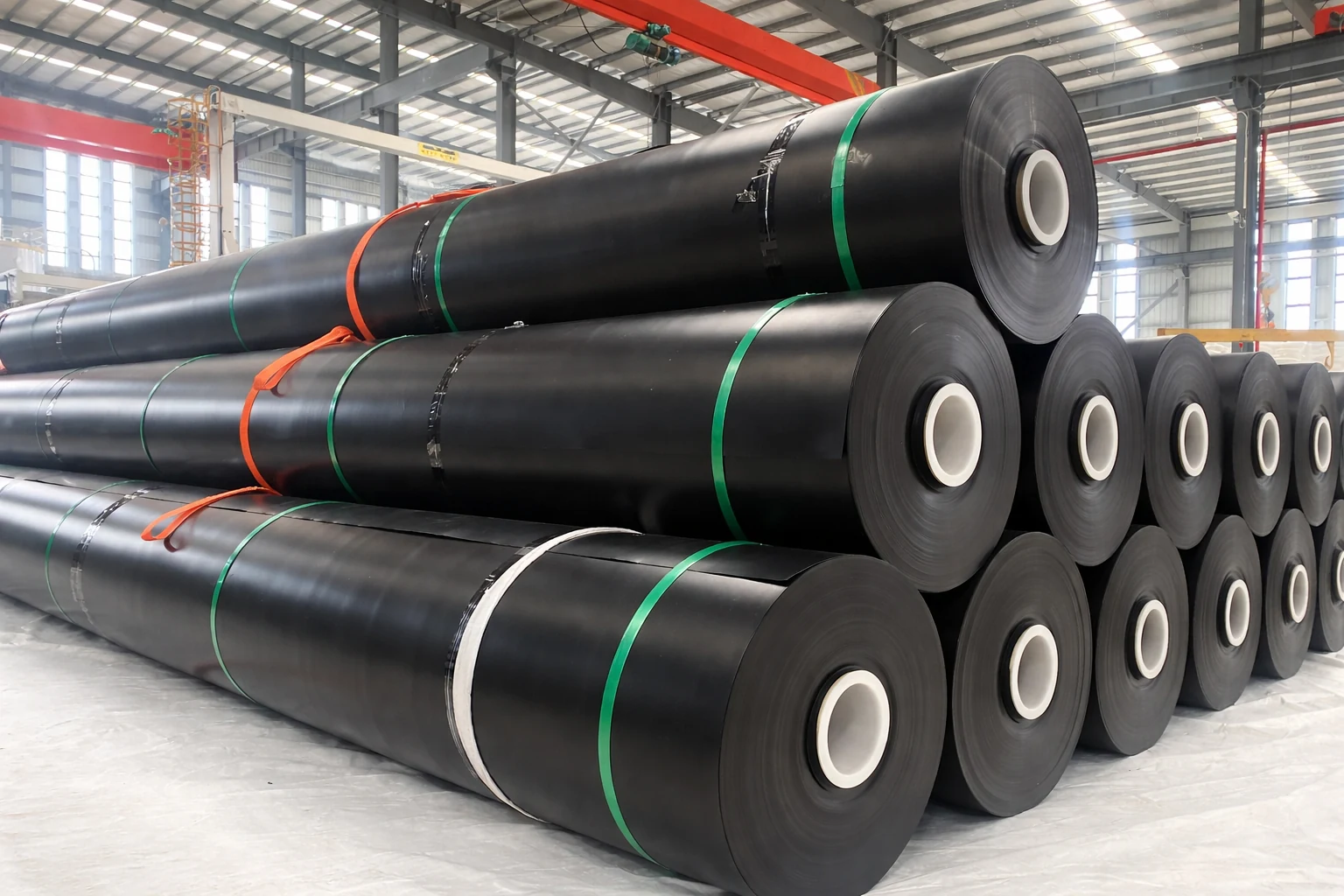
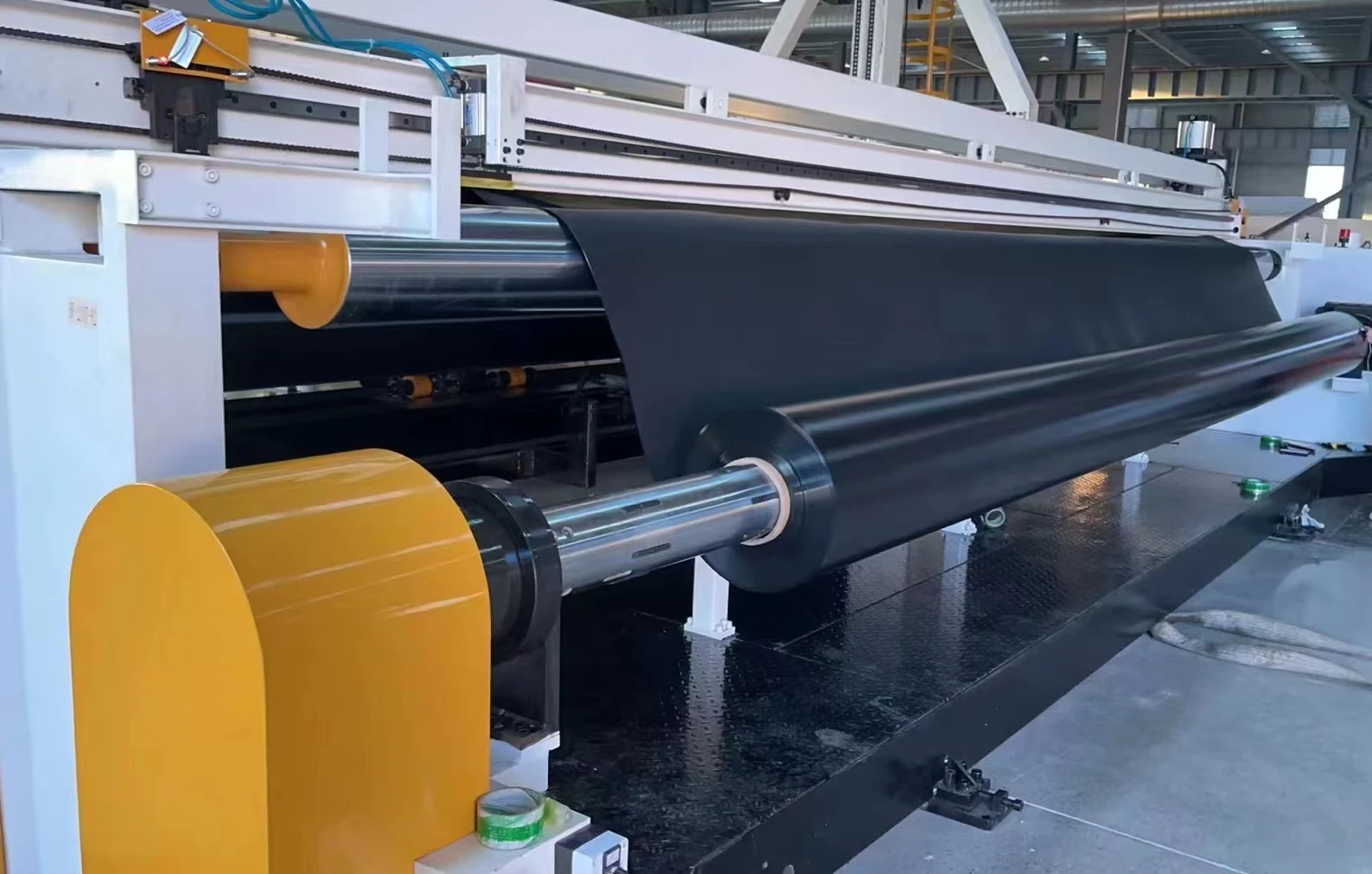
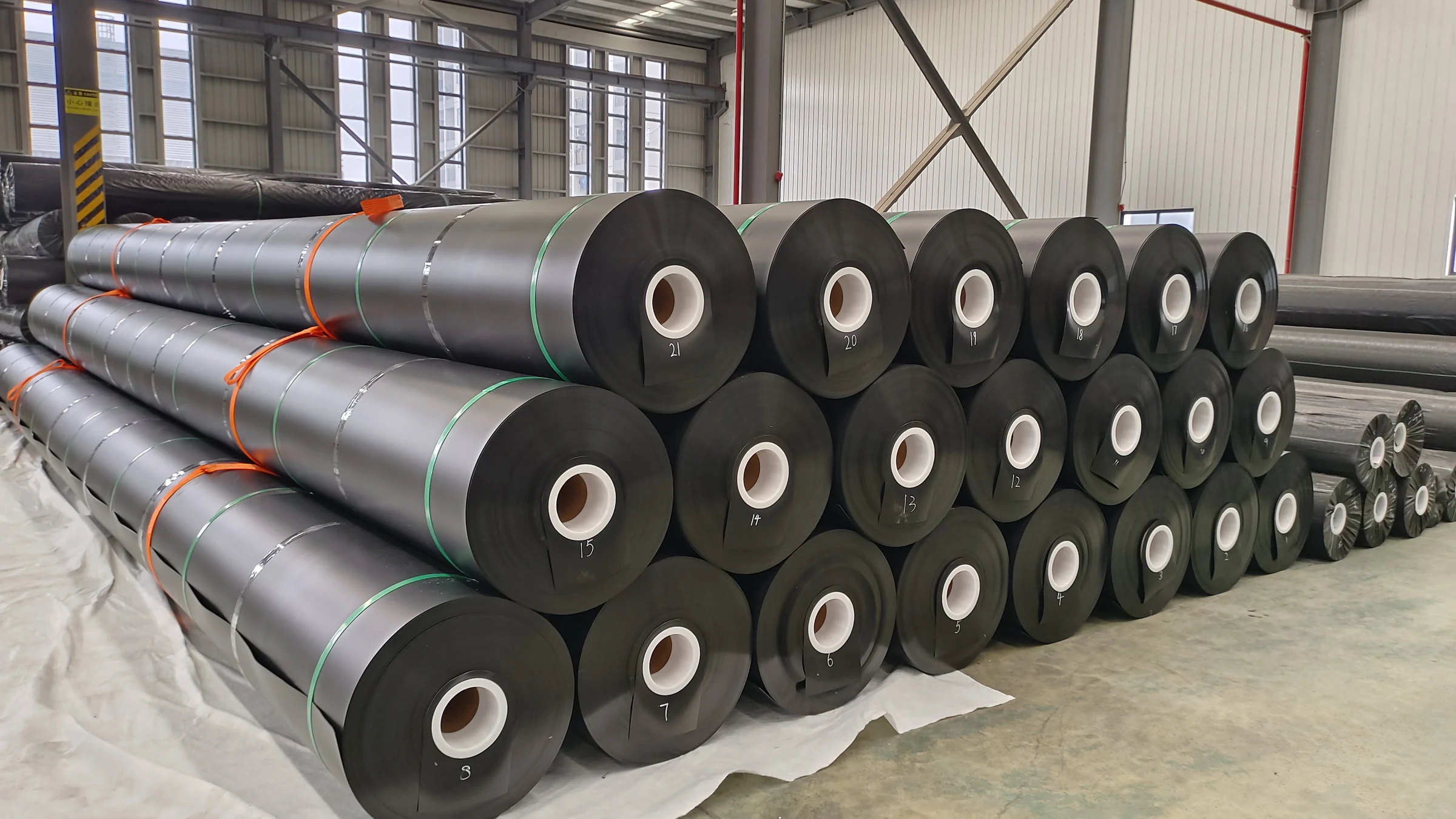
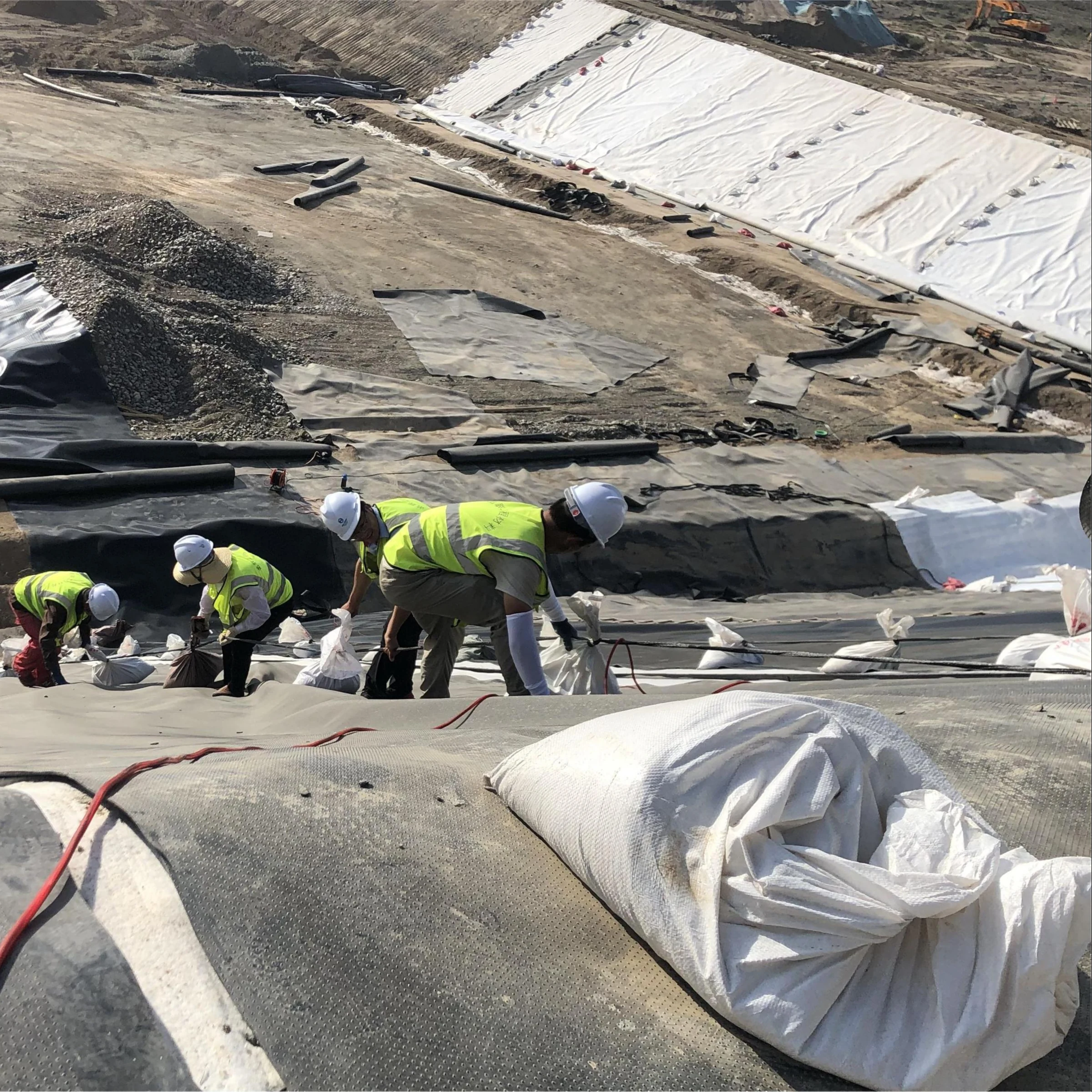

A pond liner replacement budget includes the new liner and installation, plus any draining, sludge handling, old-liner disposal, ground repairs and restart costs. A sheet-only price is not a replacement price. For the illustrative 1,000 m² pond below, the purchasing allowance is about 1,370 m² of new sheet. Multiply that quantity by a current delivered material rate, then add the site-work and installation quotes. This guide covers welded HDPE/LLDPE pond liners, not a universal price for small garden ponds.
No verified local contractor prices are provided here, so the example calculates quantities rather than claiming an average dollar total. Your location, pond condition, disposal requirements and chosen specification determine the rates.
What should a pond liner replacement budget include?
Ask bidders to separate these seven cost groups. Mark anything unnecessary as excluded or not applicable rather than leaving it unclear.
| Cost group | What to price | What changes the cost |
|---|---|---|
| Water and sludge handling | Pumping, temporary storage, sediment removal, discharge and disposal | Water volume, sludge quantity, contamination and permitted outlets |
| Old-liner removal | Cutting, lifting, transport and disposal | Actual sheet quantity and weight, access and waste classification |
| Subgrade repair | Regrading, stone removal, recompaction, drainage and anchor-trench repairs | Condition revealed after the old liner is lifted |
| New liner material | Purchased roll area, freight and applicable taxes | Polymer, thickness, surface, roll layout and delivery terms |
| Protection layer | Specified geotextile cushion below the liner and protection above it where required | Ground roughness, cover material and design loads |
| Installation and testing | Deployment, welding, penetrations, anchoring, seam testing and repairs | Panel layout, access, weather and acceptance requirements |
| Restart | Refilling, stock handling and any production interruption | Water supply, pond use and agreed return-to-service checks |
Keep direct contractor charges separate from your own lost-production allowance, then include both in the owner’s budget. Confirm whether freight, taxes, mobilisation and testing are already included before adding them again.
Compared with installing the same specified liner on a prepared, empty site, replacement adds removal and potentially sludge or repair work. That does not establish a fixed replacement premium: some ponds are already drained, while others need substantial ground remediation.
Can you repair the liner instead of replacing it?
A local defect in otherwise serviceable sheet may be repairable. Ask a qualified installer to assess the material and seams before committing to full relining. FAO’s pond-maintenance guidance includes leak repair during periodic maintenance; it does not establish a universal repair price or completion time. [1]
Request a replacement assessment when leaks recur in different areas, seams are failing over long lengths, the material shows widespread cracking, or the pond geometry must change. Those observations warrant investigation; they do not identify the cause by themselves.
Compare the complete repair option, including draining, access, testing and the likelihood of another shutdown, with a replacement quote over the same intended operating period. Do not assume a patch is always economical or that replacement always pays for itself.
How much new liner do you need to buy?
Water-surface area, installed liner area and purchased roll area are different quantities. Slopes, anchoring, seams, roll widths and cutting waste affect the order. A price per square metre is useful only when its area basis and included services match. The same distinction applies when comparing pond-liner costs per square metre.
A worked purchasing example
Assume a rectangular pond measuring 40 m by 25 m at the top of the lined basin, 2 m deep, with slopes of 1 vertical to 2 horizontal. For this simplified example, the top lined edge coincides with the stated waterline; a real pond needs its freeboard and crest details measured separately. Allow 1.5 m beyond the top lined edge on every side for anchoring and edge detailing.
- Horizontal setback on each side: 2 × 2 = 4 m.
- Flat floor: (40 − 8) × (25 − 8) = 32 m × 17 m.
- Slope length: √(2² + 4²) ≈ 4.47 m.
- Developed envelope width: 17 + (2 × 4.47) + (2 × 1.5) ≈ 28.94 m.
- Developed envelope length: 32 + (2 × 4.47) + (2 × 1.5) ≈ 43.94 m.
- Rectangular envelope: approximately 1,272 m².
- With an assumed additional 8% for seams, roll layout and cutting: approximately 1,370 m² to purchase.
This is a rectangular procurement envelope, not the exact surface area of the floor and sloping faces. Corner detailing and panel nesting affect how much of it is used. The 1.5 m allowance and 8% addition are example assumptions, not design rules. Have the installer confirm freeboard, anchor details, roll layout and the final purchase quantity without counting waste twice.
Turn the quantity into a material budget
For this example, new-sheet cost = approximately 1,370 m² × the quoted delivered price per m². Each change of 0.10 currency units per m² changes that line by about 137 currency units. This is price sensitivity, not a market-rate claim. Add the other applicable cost groups from the table to obtain the replacement budget.
Do not calculate old-liner disposal weight from the new purchase quantity. New-roll offcuts may never enter the pond, and the original liner may have a different layout or thickness. Estimate the actual sheet being removed separately.
For an explicitly assumed 1,000 m² of old 1.5 mm smooth HDPE sheet at a density of 0.940 g/cm³, theoretical dry mass is 1,000 × 1.5 × 0.940 = 1,410 kg, or 1.41 tonnes. The density is the GRI-GM13 minimum-average formulated-sheet value, not a measurement of the old liner. Use actual material data where available and add retained water and sediment separately when planning handling and disposal. [2]
Which material specifications change the quote?
Compare like-for-like materials before comparing rates. GRI-GM13 covers smooth and textured HDPE geomembranes from 0.75 to 3.0 mm; citing it does not prove that an individual supplied roll conforms. The following selected values are from Table 1(b) for smooth HDPE, not a thickness recommendation for every pond. [2]
| Smooth HDPE property | Test method | 0.75 mm | 1.00 mm | 1.50 mm | 2.00 mm |
|---|---|---|---|---|---|
| Tensile yield strength, minimum average | ASTM D6693 | 11 kN/m | 15 kN/m | 22 kN/m | 29 kN/m |
| Break elongation, minimum average | ASTM D6693 | 700% | 700% | 700% | 700% |
| Tear resistance, minimum average | ASTM D1004 | 93 N | 125 N | 187 N | 249 N |
| Puncture resistance, minimum average | ASTM D4833 | 240 N | 320 N | 480 N | 640 N |
For HDPE liner procurement, also check carbon black content of 2.0–3.0% under ASTM D4218 and oxidation induction time: standard OIT of at least 100 minutes under ASTM D8117 or high-pressure OIT of at least 400 minutes under ASTM D5885, at the manufacturer’s option. These are specification criteria, not a prediction of years in service. Request traceable material test records and the testing frequencies required by the project specification. [2]
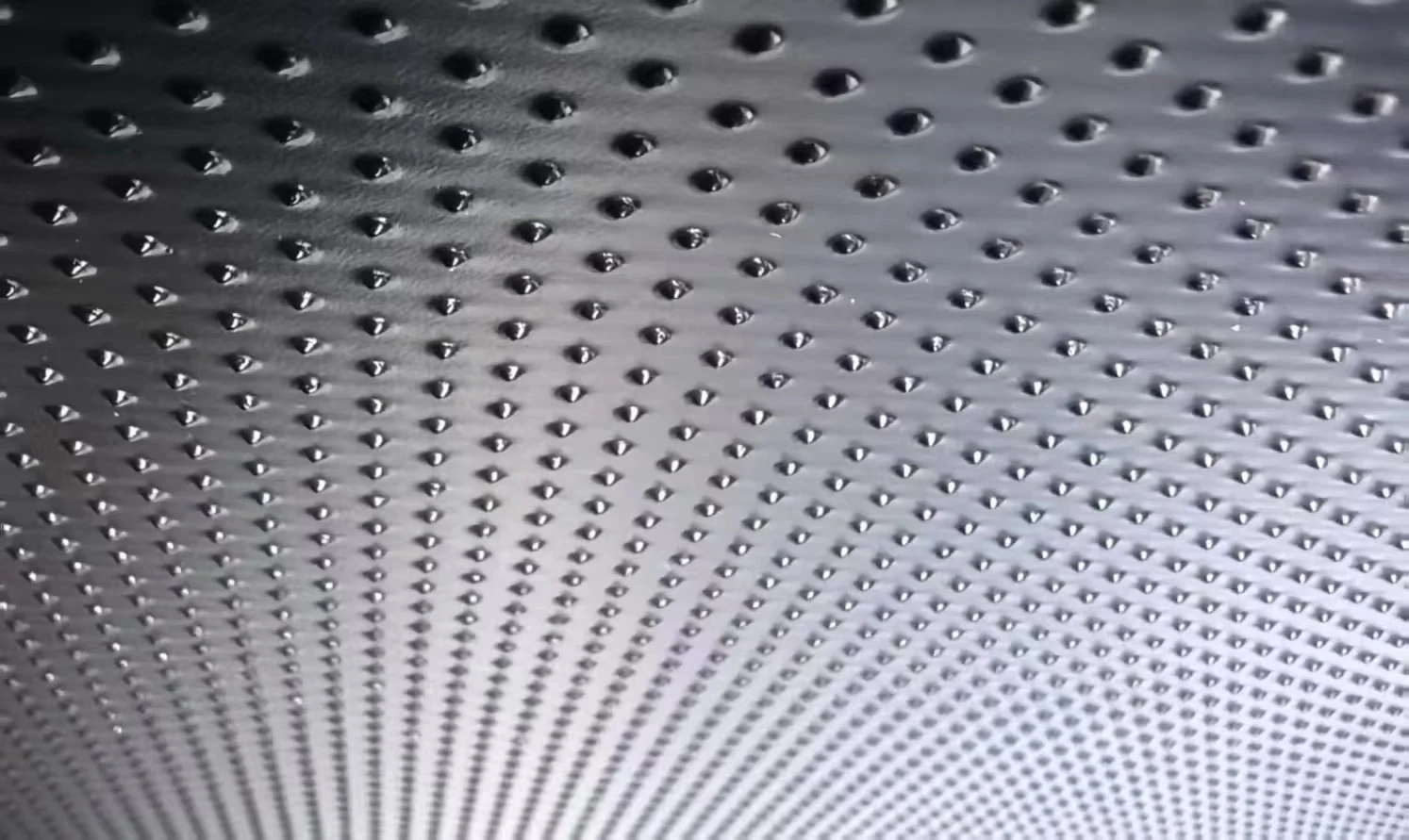
- Smooth or textured: a textured liner may be specified for an interface where friction matters. Texture alone does not establish slope stability. Require project-specific interface shear assessment rather than substituting smooth sheet solely to lower the price.
- HDPE or LLDPE: compare the specified deformation requirements and chemical compatibility before changing polymers. LLDPE geomembranes have their own specification, GRI-GM17, covering formulated sheet density of 0.939 g/ml or lower and thicknesses from 0.50 to 3.0 mm. Do not apply the smooth-HDPE table above to LLDPE. [3]
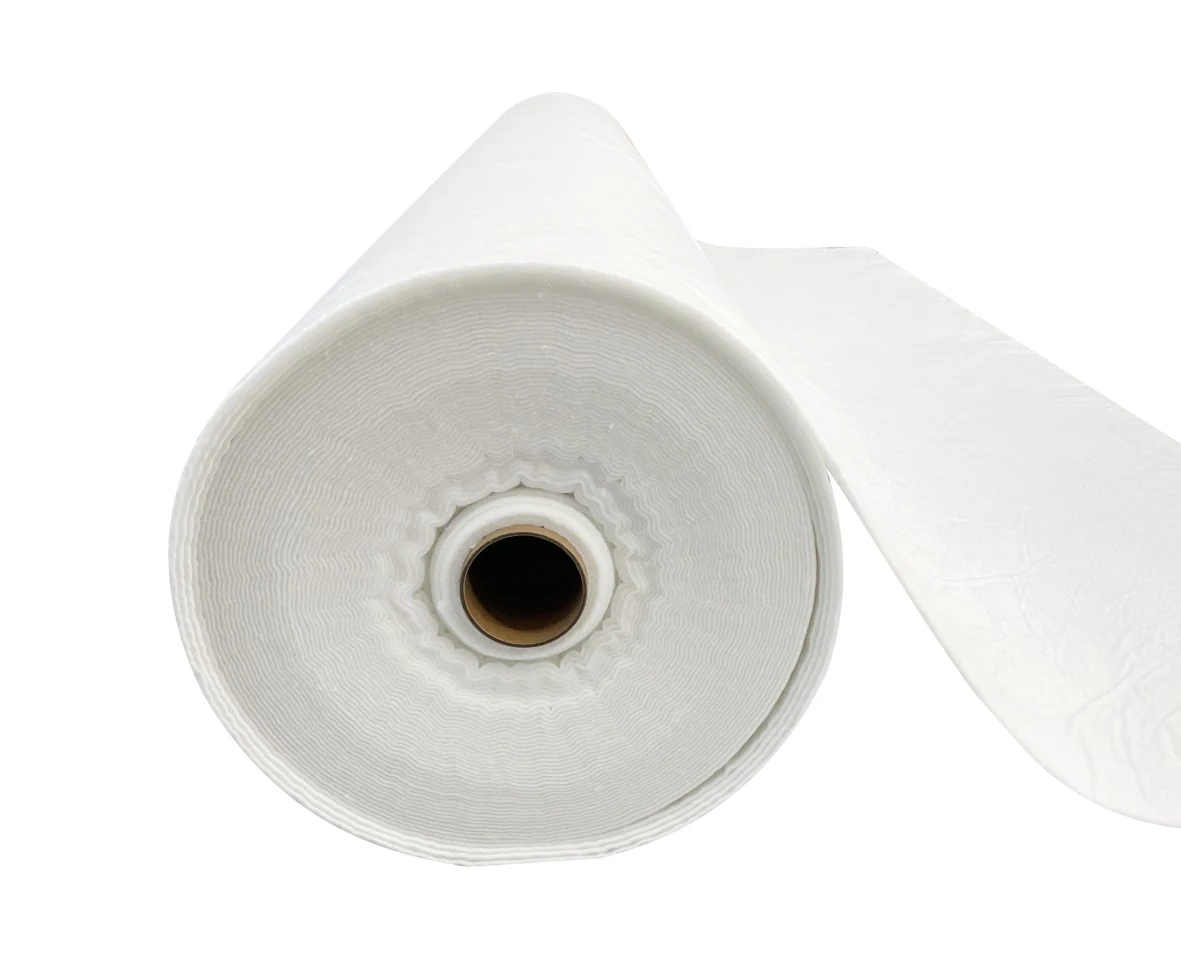
- Protection: price the specified PET nonwoven geotextile separately. A geomembrane protection layer must be selected for the ground, cover material and loads; fabric mass alone is not a complete puncture-protection design.
Jinseed supplies HDPE/LLDPE geomembranes and PET nonwoven geotextiles. For chemical storage, wastewater or mine-process water, obtain compatibility information for the actual liquid, concentration and temperature. A lower material price does not establish suitability. Comparisons with other polymers, such as HDPE versus EPDM pond liners, should also account for different handling and joining requirements.
A practical quote-comparison scenario
Suppose two bidders price the example pond. One quotes a rate against its 1,000 m² water surface; the other quotes delivered sheet against approximately 1,370 m² of purchased rolls. The first rate includes welding but not disposal; the second is supply only. Neither headline rate tells you which complete replacement costs less.
Ask both bidders to return the same completed schedule: purchased quantity, accepted installed quantity, material supply, installation and testing, removal, disposal, ground repairs and restart responsibilities. Where the subgrade cannot be inspected before draining, request stated provisional quantities and unit rates for additional repairs, with a written approval process.
This is an illustrative purchasing scenario, not a reported Jinseed customer project. Its useful check is concrete: reconcile quantities and exclusions before comparing totals. A supplier’s material offer and a contractor’s installed offer serve different purposes.
What should the written quotation confirm?
- Site and date: location, currency, quote validity, access assumptions, delivery terms, taxes and mobilisation charges.
- Existing conditions: draining and sludge responsibilities, estimated removal quantities, disposal route, ground-repair allowances and drainage requirements.
- New materials: polymer, nominal thickness, surface, specification, roll dimensions, purchase area and protection-layer requirements.
- Installation: panel layout, penetrations, anchor details, welding procedures and responsibility for weather-related delays.
- Quality acceptance: destructive and non-destructive seam-testing methods, sampling, acceptance criteria, repair and retest arrangements. GRI-GM19a addresses thermally bonded polyolefin seam strength and related shear/peel properties; it does not replace the project’s complete field-testing plan. [4]
- Payment and handover: whether measurement uses purchased or accepted installed area, programme, refill checks, records and warranty exclusions.
For aquaculture ponds, budget stock relocation and suitable refill water as well as the liner work. For water-storage applications, identify how supply will be maintained during the shutdown. Keep these owner responsibilities visible even when they are outside the installer’s contract.
Common questions before approving replacement
Can the new liner go over the old one?
Do not assume an overlay is an equivalent lower-cost replacement. Ask the designer to assess the existing liner, trapped liquids or gas, subgrade access, anchorage and inspection requirements. If retention is proposed, obtain a separately defined scope and approval from qualified personnel under local rules and the project specification.
How long will the pond be empty?
A reliable programme needs the water and sludge quantities, repair scope, delivery date, weather constraints and test requirements. Ask for the sequence from draining through acceptance and refill, not only the number of welding days. No universal shutdown duration is established by this example.
How can you reduce cost without weakening the specification?
Confirm dimensions and roll layout before ordering; inspect which pipes and edge structures can remain; coordinate draining, removal and installation; and complete acceptance testing before refill. Any change in thickness, polymer, protection or testing needs design approval, not just a cheaper quote.
Have qualified personnel determine design, material suitability, installation and acceptance under local rules and the project specification. The final budget should be a matched-scope total, with unresolved quantities and owner costs clearly identified—not simply the new sheet price multiplied by water area.
POND LINER REPLACEMENT
Send your pond dimensions, depth, slope details, stored liquid and required specification to Jinseed for a material quotation. Keep removal, site work and installation costs separate when building your replacement budget.
References
- FAO: Controlling Water Losses in Ponds. Pond lining and leak-repair guidance. Accessed 13 November 2026.
- GRI-GM13: HDPE Smooth and Textured Geomembranes, Revision 19, 11 June 2025. Scope, formulated density, smooth-sheet Table 1(b), carbon black and OIT requirements. Accessed 13 November 2026.
- GRI-GM17: LLDPE Smooth and Textured Geomembranes, Revision 17, 11 June 2025. Scope and formulated-sheet density. Accessed 13 November 2026.
- GRI-GM19a: Seam Strength and Related Properties of Thermally Bonded Homogeneous Polyolefin Geomembranes/Barriers, Revision 10, 18 March 2021. Shear and peel strength framework. Accessed 13 November 2026.
