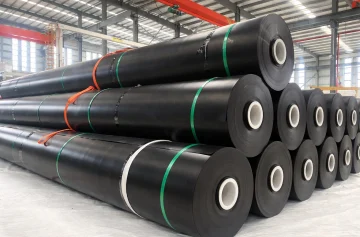
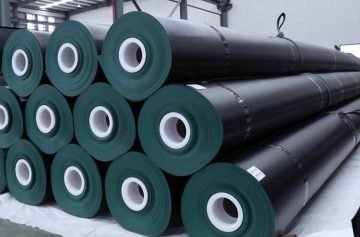
Continuous-filament and short-fiber nonwoven geotextiles differ in how their fiber networks are formed, but the fiber label alone does not establish which product will perform better. Compare the polymer, manufacturing process, mass, tensile response, puncture resistance and filtration results for the intended function. Either construction can be suitable when the finished product meets the project requirements.
This comparison explains how to read that evidence. Numerical examples are hypothetical product comparisons, not Jinseed batch certificates or verified project results. Product-specific strengths, durability claims and manufacturing details should be supported by the relevant data sheet and traceable test report.
Fiber structure: what changes and what does not
| Characteristic | Continuous filament | Short fiber / staple fiber |
|---|---|---|
| Fiber form | Filaments are produced without being cut into a specified staple length during web formation | Fibers are cut to a declared length before forming the web |
| Load transfer | Influenced by filament orientation, continuity and bonding or entanglement | Influenced by fiber overlap, orientation, length and bonding or entanglement |
| Finished construction | May be mechanically or thermally bonded, depending on the product | May also use different bonding processes, including needle-punching |
| What the label does not establish | Polymer identity, minimum strength, opening size, creep resistance, service temperature or project compliance | |
Do not confuse continuous filament with polyester, or short fiber with polypropylene. Fiber length, polymer and bonding process describe different aspects of a product. Likewise, neither label proves whether the feedstock is virgin or recycled. Request the manufacturing declaration and identify the delivered rolls.
Fiber fineness is commonly expressed in dtex: 1 dtex means 1 gram per 10,000 metres of fiber. A declared 6.6 dtex therefore describes linear density, not finished geotextile tensile strength. A staple-length range such as 38–65 mm is a possible procurement description, not a definition that applies to all short-fiber products.
ISO 10320:2019 addresses identification on site. Labels and traceability help verify that the supplied product is the one ordered, but identification does not replace the technical data sheet or prove performance compliance. Microscopy may support an investigation; routine visual inspection alone should not be treated as a complete verification of polymer and manufacturing history.
Tensile performance: compare both directions and the full curve
Use a tensile test, not a puncture test
ISO 10319:2024 is a wide-width tensile index test covering force, elongation and stiffness-related results. ASTM D4595/D4595M is another wide-width geotextile tensile method. Reports must identify which method and conditioning were used; values from different methods are not automatically equivalent.
Request machine-direction (MD) and cross-direction (CD) results, elongation at the specified point, specimen statistics and the force–strain curves. A fabric can have an adequate MD strength but fail the CD requirement. The maximum tensile force also does not state how much force the fabric carries at a small service strain.
| Hypothetical result | Candidate A | Candidate B |
|---|---|---|
| MD wide-width strength | 13.8 kN/m | 12.1 kN/m |
| CD wide-width strength | 11.2 kN/m | 6.8 kN/m |
| MD/CD ratio | 1.23 | 1.78 |
If an illustrative specification requires at least 10 kN/m in both directions and MD/CD ≤ 1.5, A satisfies those two checks and B does not. That conclusion comes from the assumed results, not from assigning A to continuous filament and B to short fiber. A ratio near 1.0 indicates more similar directional strengths; it does not establish that either strength is high enough. If CD exceeds MD, report that explicitly rather than presenting a ratio below 1.0 as automatically favorable.
Elongation is not an allowable settlement
Elongation at maximum force and elongation at rupture may be different values. State which is reported. Neither is automatically the permissible field strain: strain compatibility, seams, anchorage, local damage and long-term deformation also matter.
For a geometric illustration, a 100 mm vertical movement distributed uniformly over a 2 m horizontal span would increase the straight-line distance by about 0.125%, calculated from √(2² + 0.1²)/2 − 1. The same vertical movement over 0.2 m gives approximately 11.8%. This simplified geometry excludes anchorage, sag, slip and stress concentration, but shows why settlement in millimetres cannot be compared directly with laboratory elongation in percent.
There is no universal optimum of 55–70% elongation for every filtration, separation or reinforcement application. A higher elongation at break is not automatically better if service deformation must be limited.
Puncture resistance and cushioning
ASTM D6241 measures static puncture resistance using a 50 mm probe. It does not establish tensile uniformity, filtration performance or the allowable pressure beneath construction equipment.
For example, two assumed 300 g/m² samples with D6241 results of 3.8 and 2.6 kN differ by approximately 46.2%, calculated as (3.8 − 2.6)/2.6. The comparison is meaningful only when the test conditions and reporting basis match. It does not demonstrate that continuous-filament products are universally 46.2% stronger than short-fiber products.
When a geotextile cushions a geomembrane beneath angular aggregate, assess the assembly rather than selecting on GSM or puncture force alone. ASTM D5514/D5514M includes large-scale hydrostatic puncture methods relevant to geosynthetic configurations. The chosen configuration, pressure and contact materials must represent the design question. A higher index value is useful evidence, but not a substitute for system-level protection assessment.
Long-term load response and creep
For sustained tensile loading, require product-specific creep and creep-rupture data. ISO 13431:2024 describes testing under unconfined conditions. It does not establish one universal 5% allowable creep strain or make a 1,000-hour test equivalent to a 20-year field demonstration.
A useful report identifies polymer, product grade, direction, temperature, load level, duration and strain history. Comparing both products at “50% of ultimate strength” applies different absolute loads when their strengths differ. For a project carrying 8 kN/m, compare behavior at that relevant design demand as well as the standardized laboratory program.
A longer test window may improve the evidence, but long-term prediction still needs a justified extrapolation and appropriate reduction factors for the application. Do not infer a fixed failure probability from a creep-strain percentage without a validated reliability model. Also, a reported 5.5% strain would exceed a stated 5% limit; it would not merely approach it.
Filtration and drainage: fiber length is not the selection rule
Opening size must match the soil and hydraulic conditions
ISO 12956:2019 addresses characteristic opening size, while ASTM D4751 addresses apparent opening size. Keep the method beside the result rather than treating O90 and AOS as interchangeable labels.
A single O90 value does not describe the complete pore-size distribution. If uniformity matters, specify the method, sampling and distribution information needed. “±8 μm standard deviation” also needs clarification: standard deviation is a nonnegative statistic, while a ± tolerance is a different form of requirement.
Soil gradation, permeability, fines and flow conditions determine whether a filter is compatible. A very small opening can impede flow or encourage clogging, while an overly open fabric may fail to retain the soil structure. ASTM D5101 tests soil–geotextile filtration compatibility. Neither a plasticity index above 15 nor fines above 35% automatically requires continuous filament or an O90 below 100 μm.
Compare flow capacity at the relevant load
ASTM D4491/D4491M addresses water permeability by permittivity, reported in s−1. A simple relationship is ψ = k/t, where k is hydraulic conductivity and t is thickness. ASTM D5493 addresses permittivity under compressive load, which can alter the fabric’s void structure.
Suppose a project requires ψ ≥ 0.30 s−1 under stated test conditions. Hypothetical results of 0.42 and 0.28 s−1 would respectively pass and fail that requirement. A lower field head does not make the failing product compliant without an approved design change. A fixed 15% margin is not a universal replacement for the designer’s required capacity and variability allowance.
Through-thickness permittivity and lateral drainage are different. If a layer must convey water in its own plane, specify the appropriate transmissivity or flow test, such as ASTM D4716/D4716M. Thickening a gravel drain cannot automatically compensate for an incompatible or clogged filter at its boundary.
Bonding, temperature and installation
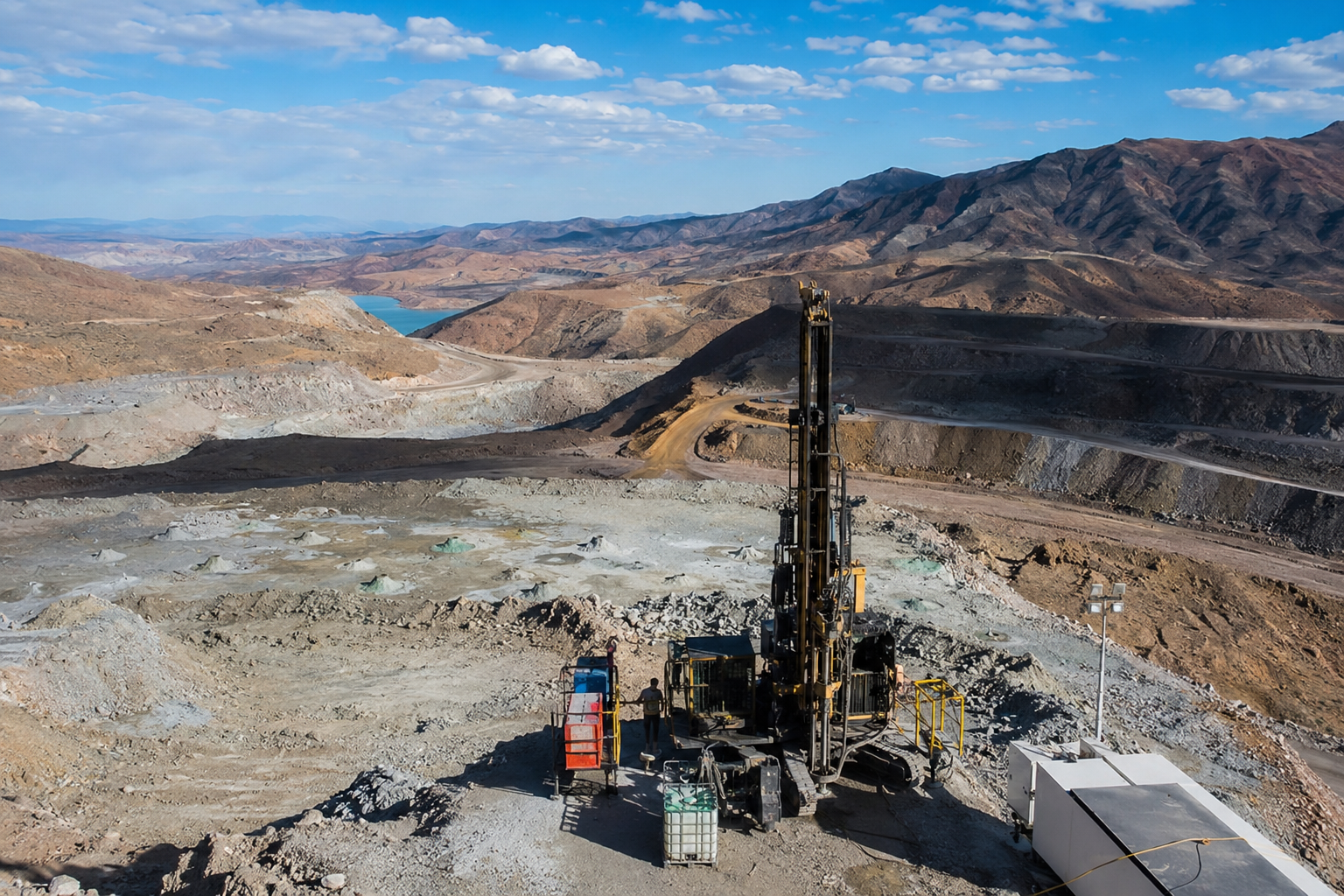
Needle-punching mechanically entangles the fiber web; thermal bonding joins fibers through controlled heating. Product behavior depends on polymer, orientation, bond pattern and manufacturing control. Do not assume that every needle-punched fabric tolerates 210°C or every thermally bonded product has one fixed temperature ceiling. Chemical exposure, temperature and duration require evidence for the particular product. ASTM D4594/D4594M provides a temperature-stability test for geotextiles.
Use overlaps, sewing or qualified bonding according to the approved installation method. ASTM D4884/D4884M addresses short-term strength of sewn or bonded geotextile seams. Neither ISO 10320 identification nor a polymer label sets the required overlap, seam strength or minimum installation temperature.
Distinguish spacing between two seam rows from spacing between individual stitches. A statement such as “100 mm stitch spacing” can lead to a very different assembly from two stitch rows 100 mm apart. Specify the seam drawing, thread, stitch pattern and qualified strength. Do not convert a presumed 50 mm settlement threshold into a blanket ban on overlaps; assess movement, restraint and the required continuity at the actual location.
Which product should be specified?
- Filtration: select by soil compatibility, opening size, loaded water flow and clogging evidence.
- Separation: check installation survivability, continuity and the soil–aggregate interface.
- Geomembrane protection: assess cushioning with the actual loading and contact materials.
- Sustained reinforcement: require design strength, stiffness, creep and durability evidence, not only break strength.
Compare delivered and installed cost only after both candidates meet the same technical requirements. There is no established universal 20–35% discount for short-fiber products or a universal long-term advantage for continuous filament. For a Jinseed enquiry, provide the application, soil or aggregate details, polymer preference, loading, exposure and required test methods. Request the named product’s data sheet and batch documentation before treating a value as certified.