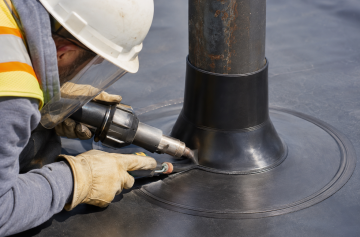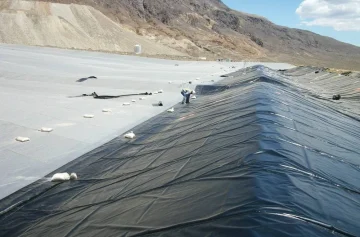
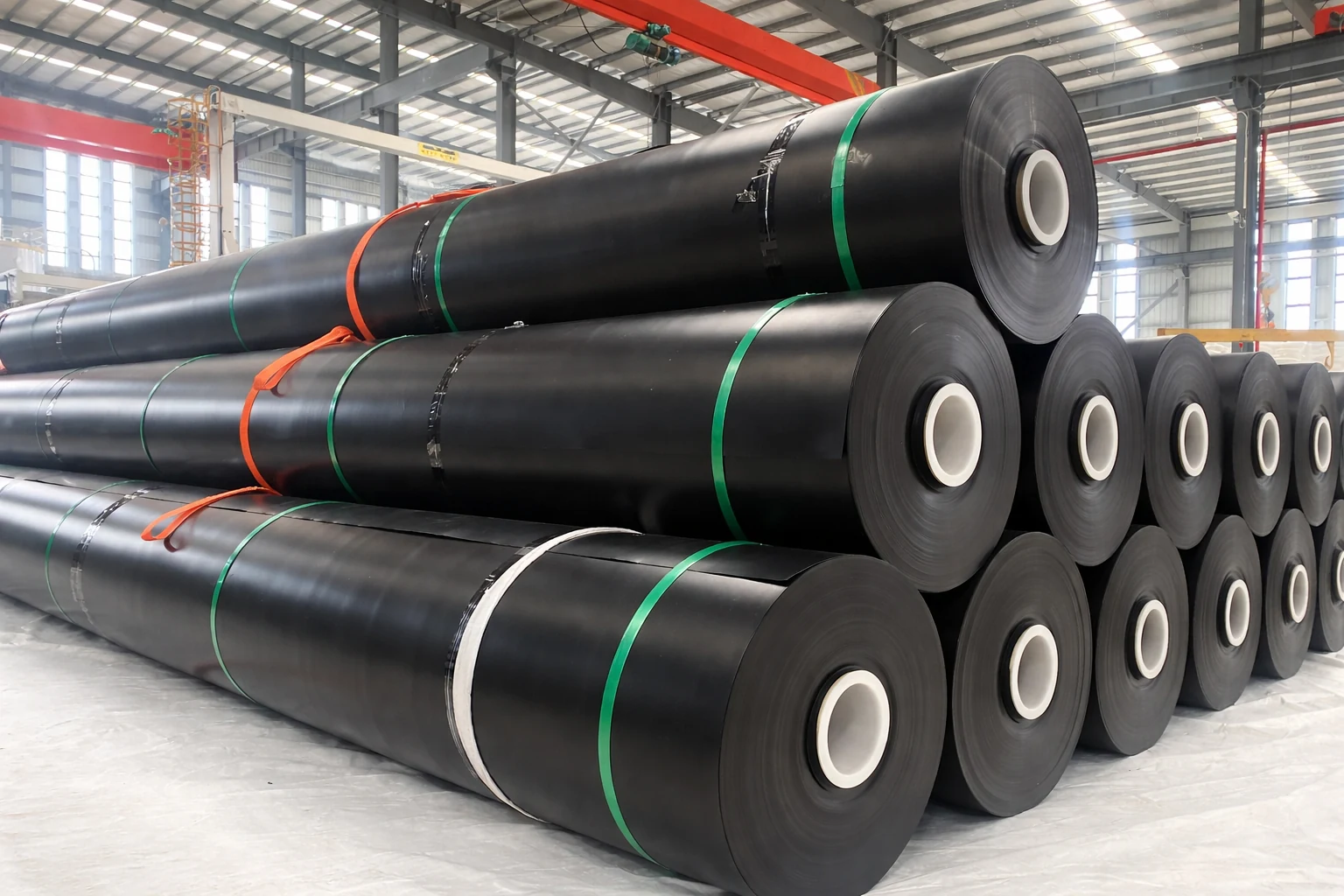
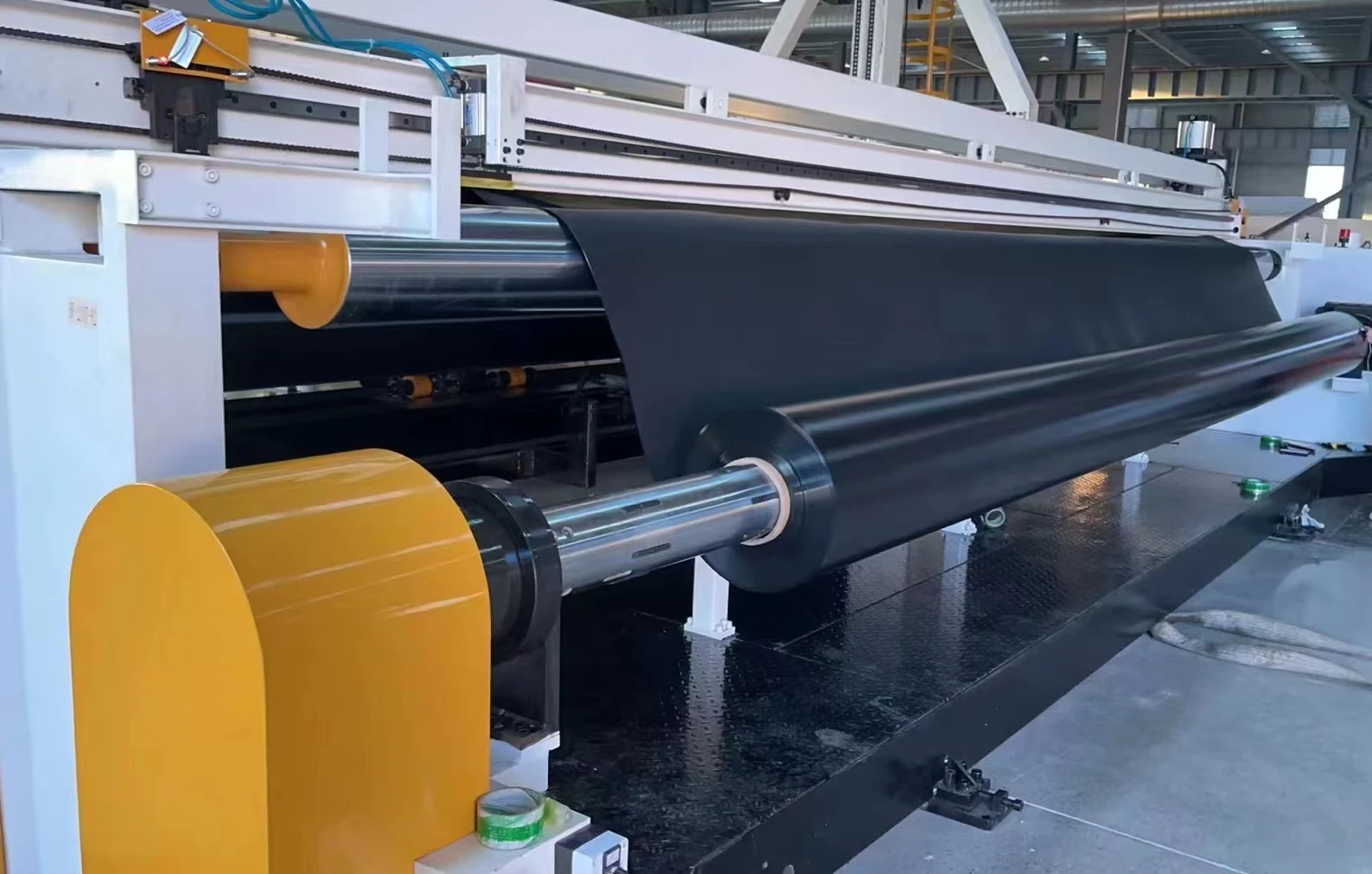
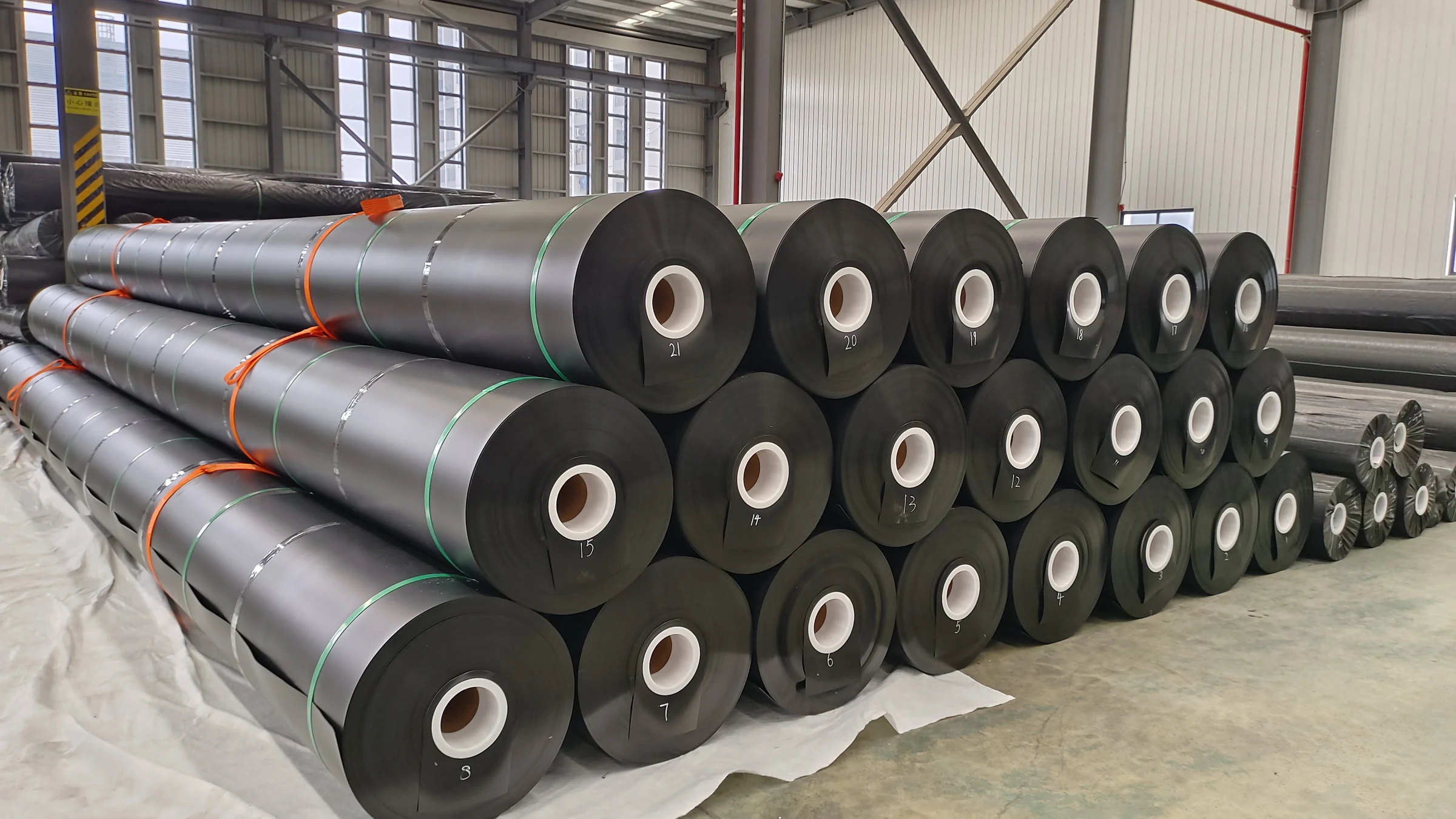
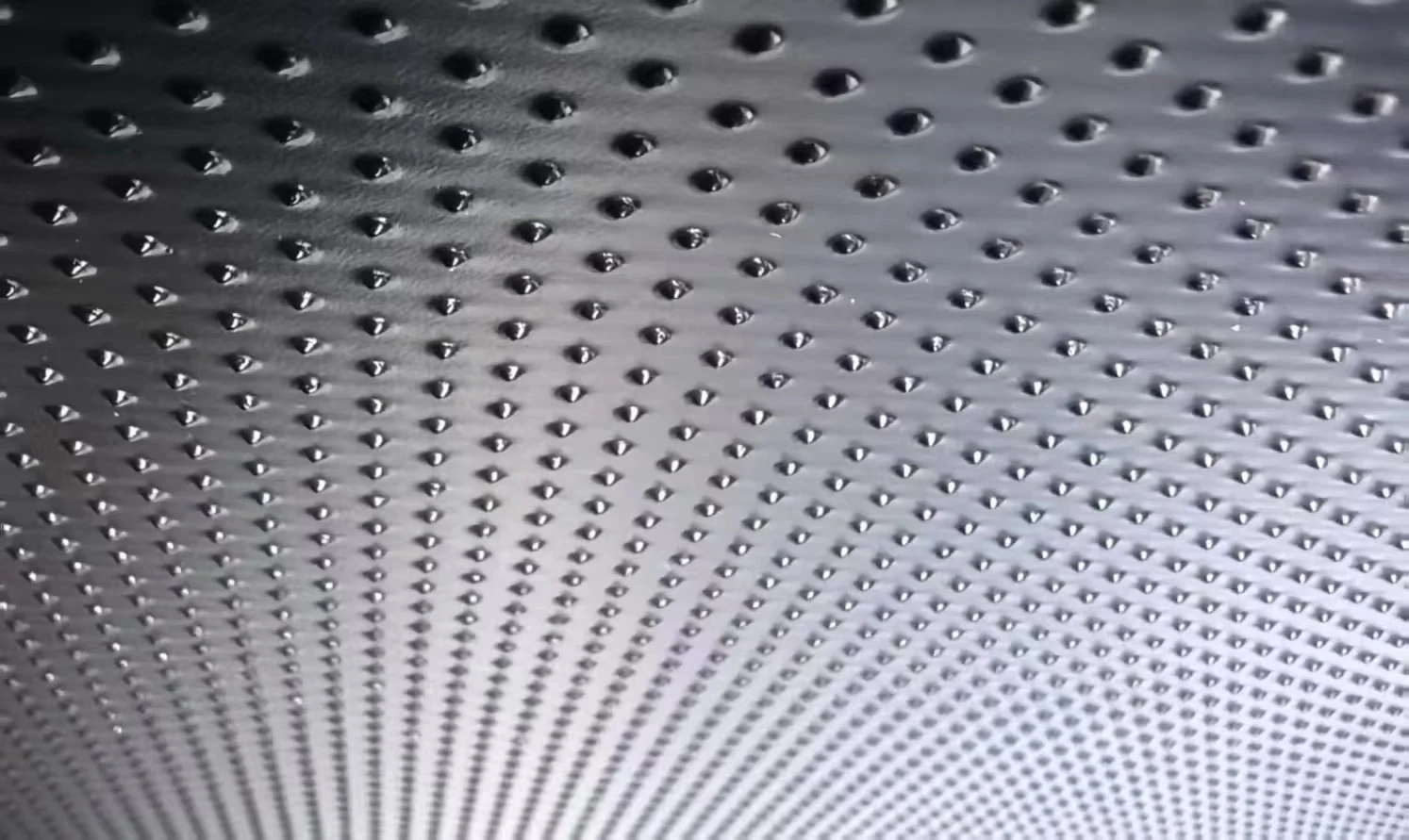
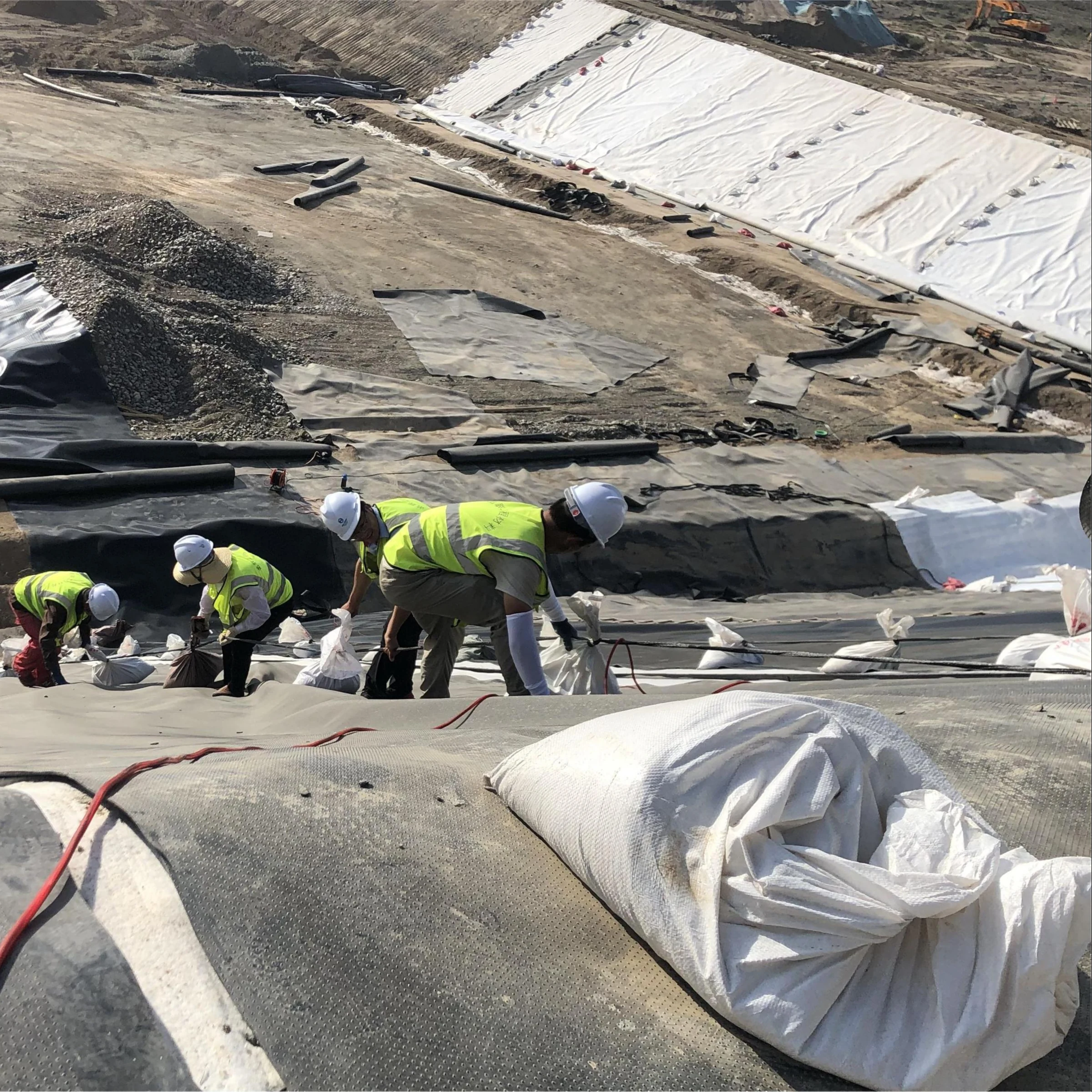

GRI-GM17 sets material, performance and manufacturing test requirements for LLDPE geomembranes. Product approval requires evidence that the proposed sheet meets those requirements and the project specification. Delivery acceptance then checks the actual rolls against batch records and any required site tests. A data sheet or a passing tensile result alone does not establish full compliance.
The specification covers smooth and textured LLDPE geomembranes from 0.50 to 3.00 mm thick. It is voluntary unless adopted through the applicable project requirements, and it allows projects to specify additional tests or stricter limits.[1]
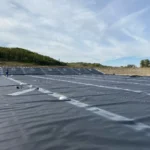
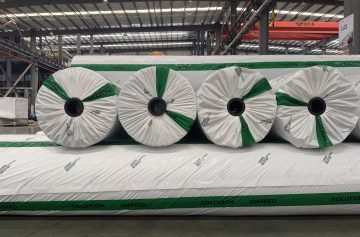
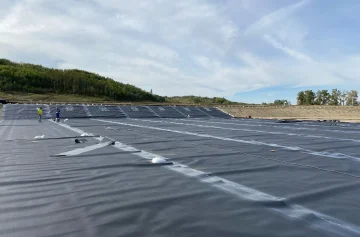
The values below use the metric tables in GRI-GM17, Revision 17, dated June 11, 2025. This is the current official file located for this review on October 23, 2026; confirm the contract-adopted revision before procurement. A newer revision does not automatically amend an existing contract. The approval checklist is project guidance, and the calculation examples are illustrative. Photographs show materials and facilities, not proof that a particular batch complies.

Which GM17 Revision Should the Submittal Use?
The older Revision 14 (March 17, 2021) file remains online. Compared with that edition, Revision 15 changed the 2% secant-modulus reporting units and addressed smooth welding edges on textured sheet; Revision 16 clarified welding-edge thickness requirements. Revision 17 adds seam-strength requirements in an appendix in lieu of GRI-GM19a. Do not combine the old modulus limits with current tables. The revision history appears at the end of the official GM17 file.
Material Requirements
| Property | Requirement |
|---|---|
| Formulated sheet density | ≤0.939 g/cm³ |
| Natural, unformulated resin density | Generally ≤0.926 g/cm³ |
| Resin melt index | ≤1.0 g/10 min under ASTM D1238 |
| Production rework | ≤10%, using the parent formulation or another approved formulation |
| Post-consumer resin | Not permitted |
| Carbon black content | 2.0%–3.0% by mass |
The 10% allowance applies to controlled production rework, not post-consumer recycled plastic. Section 4.3 prohibits adding post-consumer resin.[2]
Requirements for 1.50 mm Sheets
| Property | Smooth | Textured | Test method |
|---|---|---|---|
| Minimum average thickness | 1.50 mm | 1.425 mm core thickness | ASTM D5199 / D5994 |
| Minimum average break strength | 40 N/mm | 16 N/mm | ASTM D6693, Type IV |
| Minimum average break elongation | 800% | 250% | ASTM D6693 |
| Maximum 2% secant modulus | 414 MPa | 414 MPa | ASTM D5323 |
| Minimum average tear resistance | 150 N | 150 N | ASTM D1004 |
| Minimum average puncture resistance | 370 N | 300 N | ASTM D4833 |
| Minimum axisymmetric break resistance strain | 30% | 30% | ASTM D5617 |
| Minimum average asperity height | Not applicable | 0.40 mm | ASTM D7466 |
These values apply to the 1.50 mm columns in Tables 1(b) and 2(b). Tensile results use five specimens in each direction, with machine and cross-machine averages assessed separately. Break elongation uses a 50 mm gauge length and a test speed of 50 mm/min.[3] The 800% break elongation requirement is not an allowable field strain.
40 N/mm equals 40 kN/m, not 40 MPa. Also, 60 mil converts exactly to 1.524 mm. GM17 uses a soft conversion between its English and metric tables. For example, the current English table specifies 60,000 psi for 2% secant modulus and the metric table specifies 414 MPa; those are corresponding specified values, not an exact conversion. State the unit system in the contract and use its corresponding limits.
Thickness Acceptance
A 1.50 mm smooth sheet must average at least 1.50 mm, with none of the 10 specified readings below 1.35 mm. An average of 1.52 mm does not pass if one reading is 1.32 mm.
A 1.50 mm textured geomembrane must meet all three core-thickness conditions:
- The average is at least 1.425 mm.
- At least eight of the 10 readings are 1.350 mm or greater.
- No reading is below 1.275 mm.
ASTM D5994 measures the core thickness. The raised texture cannot be counted toward these limits.[4]
Smooth Welding Edges on Textured Sheet
Assess smooth welding edges separately from the textured core. Table 2(b) specifies modified ASTM D5199 and a minimum individual thickness of nominal minus 10%: 1.35 mm for nominal 1.50 mm sheet. Measure one specimen from each smooth edge within 150 mm of the edge on every roll. A passing core-thickness average does not waive this edge check.
Carbon Black and Aging Tests
Carbon black content uses ASTM D4218, with permitted alternative methods subject to the table footnotes. Carbon black dispersion requires a separate ASTM D5596 assessment. Of 10 viewing fields, at least nine must be in Category 1 or 2, with no more than one in Category 3. The assessment includes only near-spherical agglomerates.
| Test | Requirement |
|---|---|
| Initial OIT | Standard OIT ≥100 min under ASTM D8117, or high-pressure OIT ≥400 min under ASTM D5885 |
| ASTM D5721 oven aging at 85°C for 90 days | Standard OIT retention ≥35%, or high-pressure OIT retention ≥60% |
| UV exposure for 1,600 hours | High-pressure OIT retention ≥35% |
The initial OIT requirement allows either method; it does not require both. The UV test follows ASTM D7238 with 20 hours of UV exposure at 75°C, followed by four hours of condensation at 60°C. GM17 does not recommend standard OIT for UV-exposed samples.[5]
OIT retention = aged OIT ÷ initial OIT × 100%. A high-pressure OIT result that falls from 800 to 240 minutes after UV exposure retains 30% and fails the 35% requirement. The 1,600-hour test does not establish a 50- or 100-year service life.
Testing Frequency
| Property | Minimum frequency |
|---|---|
| Sheet thickness and smooth welding-edge thickness where applicable | Every roll |
| Asperity height | Every second roll; alternate sides for double-sided textured sheets |
| Tensile properties | Every 9,000 kg |
| Tear, puncture, carbon black content and dispersion | Every 20,000 kg |
| Density and initial OIT | Every 90,000 kg |
| 2% modulus, axisymmetric break resistance strain, oven aging and UV resistance | Per formulation |
These frequencies apply to manufacturing quality control (MQC), not site acceptance sampling. More stringent provisions in the manufacturer’s QC guide must also be followed. GM17 table values are not minimum average roll values (MARV) or maximum average roll values (MaxARV); they must be interpreted under the specified test methods.[6]
Material Approval Checklist
Product Submittal
- Product identity: manufacturer, production plant, product code, thickness and surface finish, including single- or double-sided texture.
- Raw materials: rework percentage, formulation compliance and confirmation that no post-consumer resin is added.
- Performance: test results for the proposed thickness and finish, plus oven-aging and UV-aging reports for the applicable formulation.
- Contract requirements: GM17 revision, unit system, test methods, project limits and site sampling requirements.
If the formulation has changed since testing, request the change record and supporting compliance evidence. An unchanged product name does not prove that an older aging report still applies.
Delivery Acceptance
Match roll labels to the delivery list, production batches and manufacturing quality control records. Verify the production weight covered by each test and the thickness result for every roll. Several rolls may appear on one report.
Record holes, cuts, damaged roll edges and missing labels before installation. GM17 requires sheets to be free of defects that affect the specified properties or hydraulic integrity. When requested in the contract or order, Section 10 also requires the manufacturer’s certification and test results at shipment.[7] That document is a manufacturer’s certification, not a GSI-issued third-party certificate.
Missing or Failed Results
Keep missing evidence separate from a failed test. A missing UV report leaves formulation compliance unverified; a thickness reading below the applicable limit is a recorded failure. Neither should be closed by accepting a data sheet marked “typical values.”
For a failed result, identify and hold the affected rolls, retain the original report, and follow the agreed nonconformance procedure. GM17 Section 8 directs manufacturing retesting and rejection to the manufacturer’s quality-manual protocol; project acceptance must also follow the contract’s requirements.[8]
The written approval should name the product, thickness, finish, permitted use and any outstanding conditions. Product approval does not release later deliveries without the required batch checks.
Project-Specific Checks
Slope Interfaces
Request direct shear results for the actual contact materials, with normal stresses and specimen conditions stated. A 0.40 mm asperity height does not establish interface shear strength.
Any waiver of the prescribed interface testing must come from the design engineer, with the owner’s agreement, before deployment.[9]
Chemical and Drinking-Water Contact
For industrial liquids, compatibility evidence should identify composition, concentration, temperature and contact conditions. EPA Method 9090A evaluates the effects of waste chemicals on membrane liner properties. A general claim of “acid and alkali resistance” does not provide those results.[10]
For drinking-water use, check that the applicable contact approval covers the supplied product, production plant and intended conditions. GM17 compliance alone does not establish drinking-water suitability.
Field Seams
Revision 17 now includes an appendix with LLDPE seam requirements and testing provisions. Select its appropriate nominal-thickness column and welding process, then apply the project CQA plan, including applicable specimen, frequency, failure and retesting rules. Seam testing and repair records remain distinct from sheet MQC and delivery checks.
Keep seam numbers, test results and repair retest records from geomembrane welding and seam testing. ASTM D6392 covers destructive peel and shear testing of thermally bonded, nonreinforced geomembrane seams, including LLDPE.[11] Apply the project’s specified test edition and seam acceptance criteria; sheet test reports do not establish field seam acceptance.