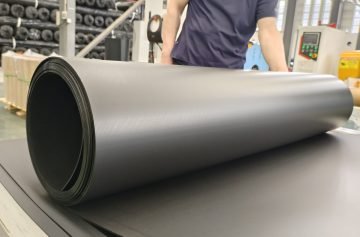
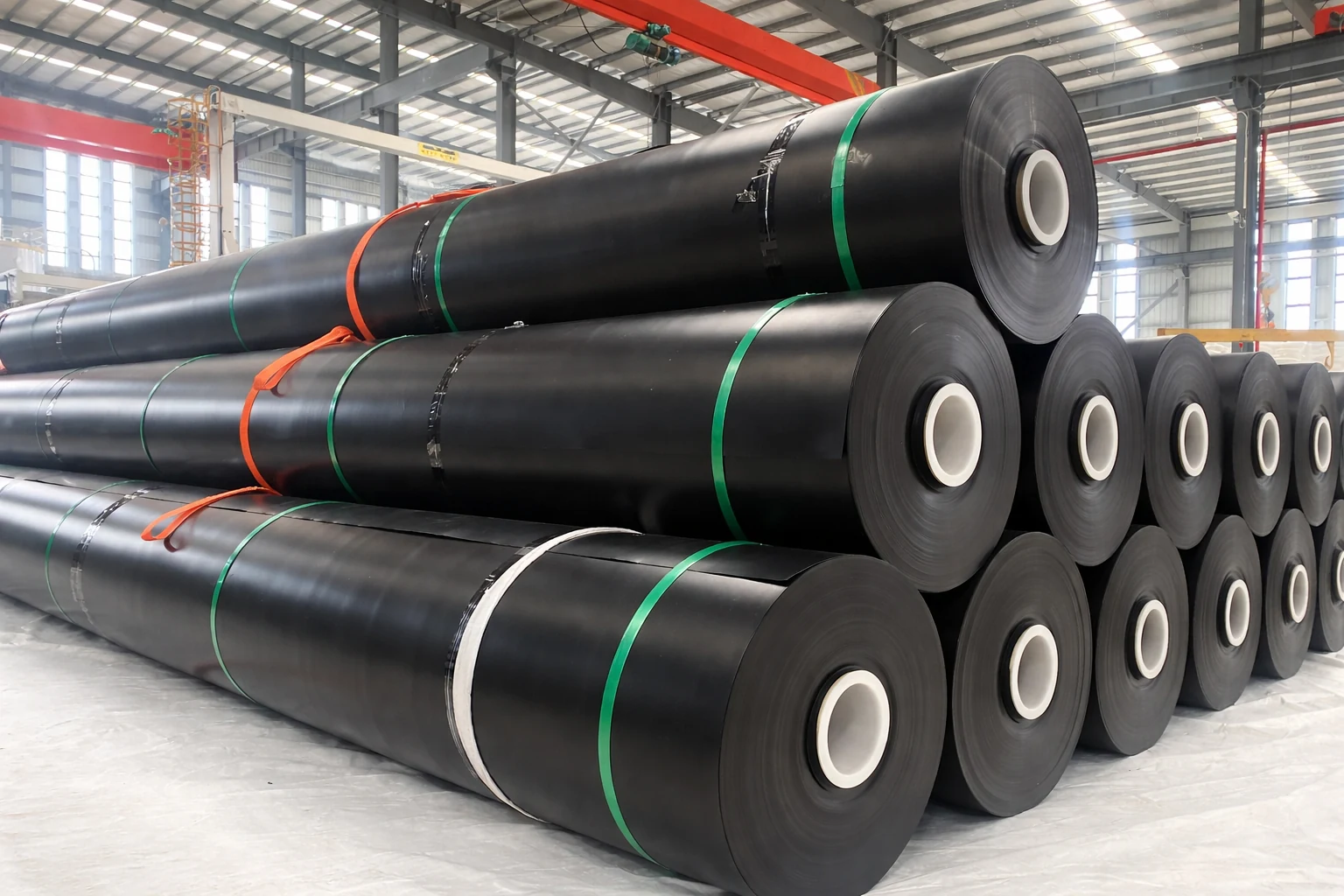
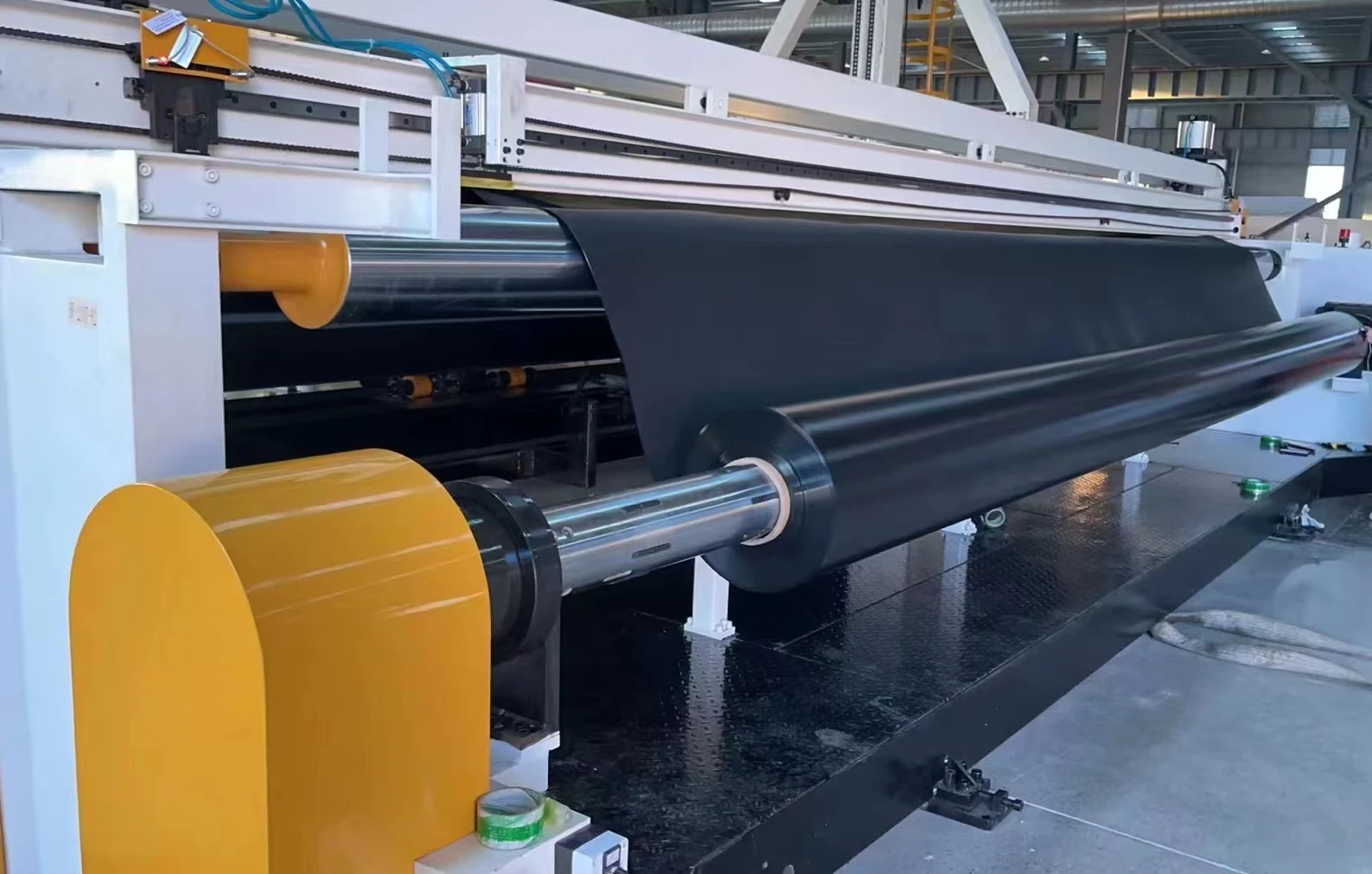
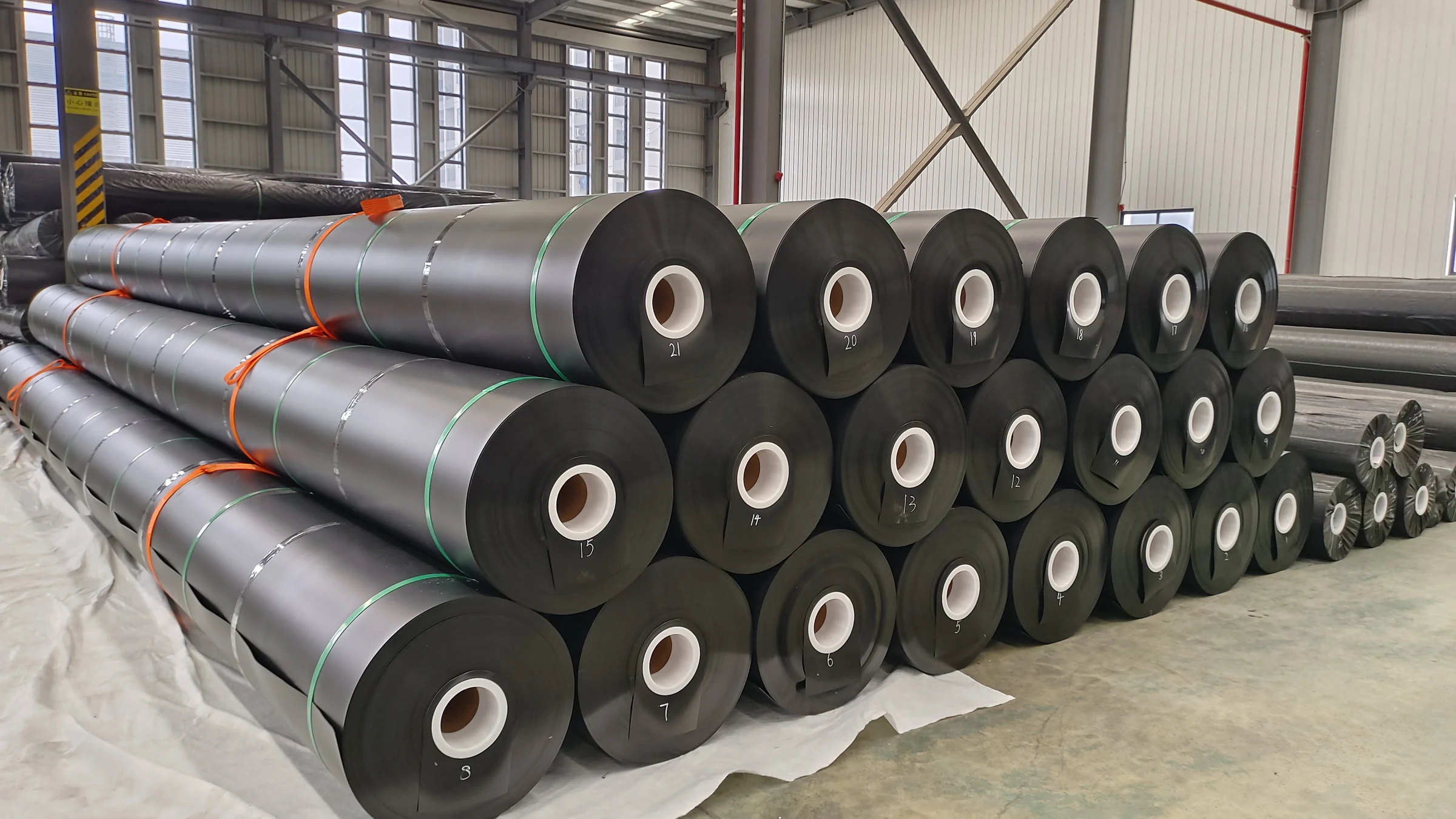

A dam liner budget starts with the purchased sheet area multiplied by the quoted price per m2, then adds installation and site-specific works. For the illustrative 50 x 30 m farm dam below, a rectangular sheet envelope of about 1826 m2 gives a sheet-only allowance of 1826 x P, where P is your supplier’s finished-sheet price per m2 in the quotation currency. This is a budgeting calculation, not a current market price or a final order quantity.
No independently verified current price range is available for this guide. Obtain a dated quotation for your specified material, quantity, and delivery location. Underlay, earthwork, crest and penetration detailing, installation, and testing must be priced separately unless expressly included.
If the supplier quotes by weight, use price per m2 = price per kg x sheet mass in kg/m2. At the specification minimum of 0.940 g/cm3, nominal 1.5 mm smooth HDPE has a calculated mass of about 1.41 kg/m2, giving an indicative sheet price per m2 of 1.41 times the quoted price per kg. Actual billing depends on the agreed mass basis. GRI-GM13 lists that density as a minimum-average formulated value, not a test result for each roll [1].
The job might stop at the upstream face or cover the whole basin of a small farm dam, with spillway, outlet, and crest works in the same package. Define that scope before requesting prices.
Have qualified personnel determine the lining design, material suitability, slope stability, installation procedures, and acceptance requirements under local rules and the project specification. Dams can carry high downstream consequences; nothing here approves a dam design.
Price scope
| Price basis | What to confirm |
|---|---|
| Sheet only | Material, nominal thickness, surface, specification, roll dimensions, quantity, currency, and quotation validity. |
| Delivered material | Sheet price plus agreed freight, unloading, duties, and taxes; list any exclusions. |
| Installed lining | Material plus underlay, earthwork and ground preparation, crest and penetration detailing, installation including deployment and welding, and testing and supervision; define the payable area. |
Distinguish purchased sheet area, accepted installed area, and water-surface area. An installed rate per m2 is not comparable with a sheet-only rate per m2, even when both use the same currency. Put dimensions, specified thickness, surface, and the payable-area rule on every quotation request.
Thickness and sheet cost
GRI-GM13 covers HDPE geomembranes with a formulated density of 0.940 g/cm3 or higher, from 0.75 to 3.0 mm, in smooth and textured surfaces [1]. It sets manufacturing quality requirements for the sheet itself, not a dam design standard [1]. With that minimum density as the base, nominal smooth-sheet mass follows mass in kg/m2 = thickness in mm x density in g/cm3:
| Nominal thickness | Mass calculation | Approximate smooth-sheet mass |
|---|---|---|
| 0.75 mm | 0.75 x 0.940 | about 0.71 kg/m2 |
| 1.00 mm | 1.00 x 0.940 | about 0.94 kg/m2 |
| 1.50 mm | 1.50 x 0.940 | about 1.41 kg/m2 |
| 2.00 mm | 2.00 x 0.940 | about 1.88 kg/m2 |
These numbers come straight from the specification minimum, so do not read them as guaranteed weights for any roll. Texture, tolerances, overlaps, and anchorage all fall outside this table. When price per kg and density hold steady, doubling nominal thickness doubles the sheet-only cost per m2, yet that tells you nothing about the delivered or installed total. A raw-resin price on its own is no finished-sheet quotation.
In GRI-GM13 Table 1(a), the 40, 60, and 80 mil columns sit near 1.0, 1.5, and 2.0 mm [1]. Do not treat those pairings as exact conversions, and do not take them as a thickness recommendation for your dam. Match the quoted sheet against this table before you compare prices: without that match, a lower per-m2 figure can describe a weaker sheet.
| Property (smooth HDPE, min. ave.) | Test | About 1.0 mm (40 mil) | About 1.5 mm (60 mil) | About 2.0 mm (80 mil) |
|---|---|---|---|---|
| Yield strength | ASTM D6693 Type IV | 84 lb/in. | 126 lb/in. | 168 lb/in. |
| Break strength | ASTM D6693 Type IV | 152 lb/in. | 228 lb/in. | 304 lb/in. |
| Yield / break elongation | ASTM D6693 Type IV | 12% / 700% | 12% / 700% | 12% / 700% |
| Tear resistance | ASTM D1004 | 28 lb | 42 lb | 56 lb |
| Puncture resistance | ASTM D4833 | 72 lb | 108 lb | 144 lb |
| Stress-crack resistance | ASTM D5397 Appendix | 500 hr | 500 hr | 500 hr |
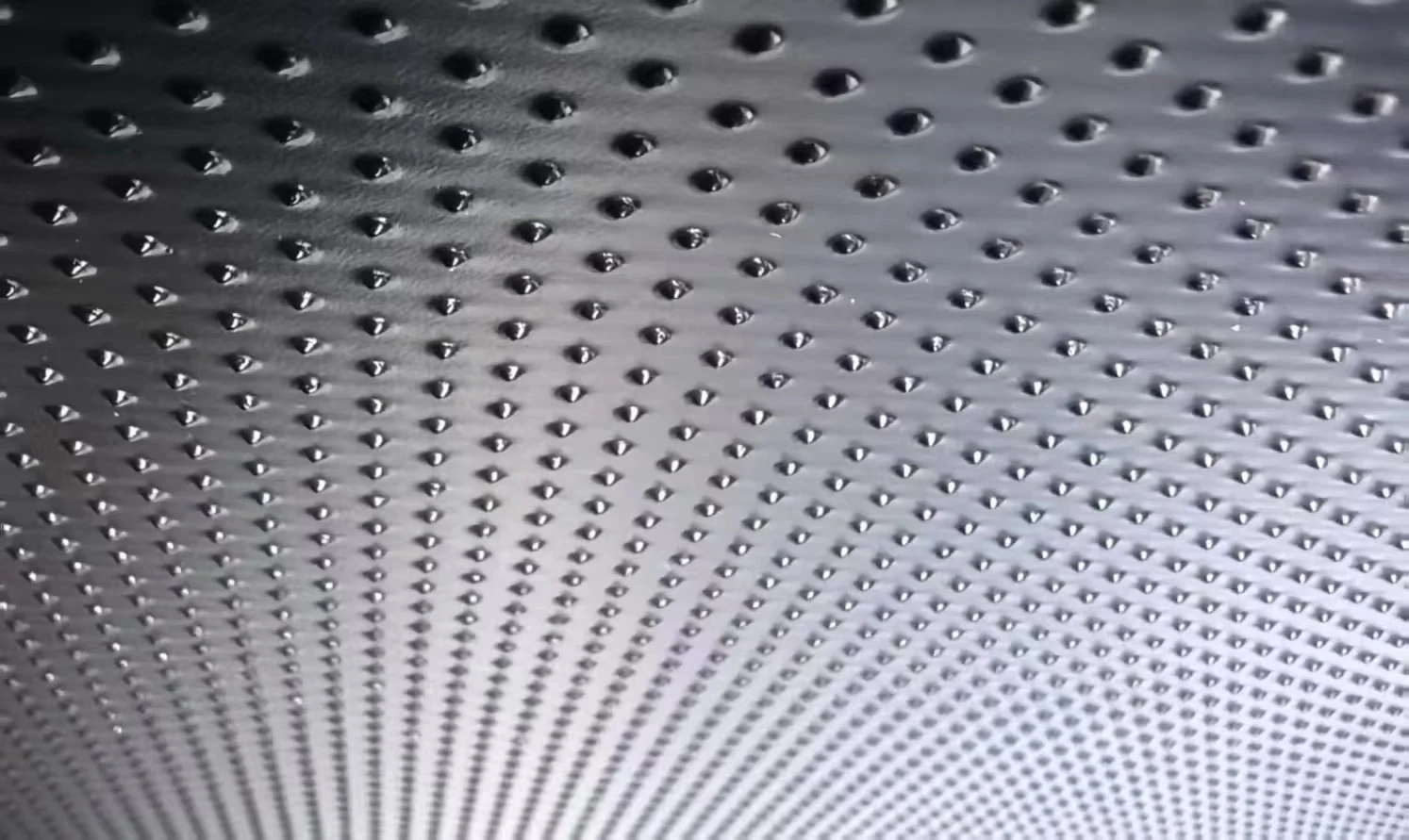
For the dam itself you choose between smooth HDPE liner, LLDPE liner, and single- or double-sided textured liner. Where interface friction on upstream faces and spillway-adjacent slopes matters for the design, texture enters the discussion. Price each option only at your specified thickness and surface, or the per-m2 figures will not match.
A thicker smooth sheet carries more calculated mass, about 0.94 kg/m2 at 1.0 mm and about 1.88 kg/m2 at 2.0 mm when you use 0.940 g/cm3. Do not estimate textured-sheet weight by adding a fixed allowance to these figures; obtain the manufacturer’s declared mass and thickness basis. Neither thickness nor texture alone establishes slope stability or suitability under sustained water head.
GCL, concrete, compacted clay, EPDM, and PVC also appear in the wider dam market and in landfill practice, but here they serve only as comparisons. Jinseed does not claim them as its own supply. Have your designer lock the thickness, surface, and protection to your foundation, loading, exposure, stored-water chemistry, and operating conditions, then get installers to price that exact build for the hydraulic engineering or civil engineering scope.
Specification check
For HDPE specified to GRI-GM13, obtain conformance documentation for the quoted thickness and surface, with the relevant test methods [1]. Do not apply this HDPE specification or its table values to LLDPE. The HDPE property values above are specification minima from GRI-GM13 Rev. 19 (June 2025); the mass figures are calculations, not roll measurements or supplier quotations.
For the smooth HDPE specification, confirm thickness (ASTM D5199), density (ASTM D1505 or D792), tensile properties (ASTM D6693), tear resistance (ASTM D1004), puncture resistance (ASTM D4833), carbon-black content (2.0-3.0% under ASTM D4218), dispersion (ASTM D5596), oxidative induction time, and stress-crack resistance (ASTM D5397). Textured material requires the applicable textured-sheet requirements and thickness measurements. Thermo-fusion seam testing is a separate acceptance item, addressed below.
For OIT, the specification sets a minimum of 100 minutes by the standard method (ASTM D8117) or 400 minutes by the high-pressure method (ASTM D5885), at the manufacturer’s option. Oven-aging and UV-retention requirements are separate checks in the same document. These are laboratory acceptance requirements, not predictions of years of dam service [1].
Pull the batch or roll reports from the HDPE geomembrane manufacturer and check traceability back to the quoted roll. Where a geotextile underlay is specified, apply the same roll traceability to the non-woven geotextile manufacturer documentation. A thinner sheet at a lower price is no equal substitute, and its price answers a different cost question.
Why dam costs differ
A dam lining brings a different mix of scope, slope length, and detailing than a garden pond, and each of those differences moves the cost. The numbers below build on face versus full basin, an 8.944 m slope at 2H:1V, about 1.22x the water surface, plus crest, spillway, and penetration work, as in mining impoundments.
- Lined scope. Pin down whether the price stops at the upstream face, runs to the full impoundment basin, or stretches past both to the spillway channel. Measurement for an upstream-face job runs along the slope and crest, while a small farm dam can call for the bottom plus all inner slopes. The wider that scope, the more m2 sits in your price.
- Height, head, and slope length. In the example below, an 8.0 m horizontal run and 4.0 m depth give an 8.944 m slope. The rectangular purchasing envelope is about 1.22x the water-surface area; that is not a universal lined-area factor. Panel layout determines seam length and the associated welding and testing scope.
- Crest, freeboard, and wave action. Have the designer define freeboard protection, anchorage, and any connections to wave walls or concrete parapets. Price the specified details and inspection requirements rather than assuming a flat-sheet rate covers them.
- Spillway and outlet penetrations. Spillway sills, intake towers, outlet pipes, and emergency overflow structures all need cuts sealed and tested one by one, each adding detailing and testing cost.
- Foundation and seepage control. Soil type, permeability, and groundwater fix the size of the earthwork and decide if an underlay or a drainage layer belongs in the job. FAO guidance puts soil investigation and topography early, ahead of procurement, because they drive construction cost [2][3].
- Diversion, dewatering, and access. A live impoundment or seasonal flow may require diversion, dewatering, or restricted equipment access. Confirm whether mobilization and travel to a remote site are included in the installation price or charged separately.
- Approvals and supervision. Height, storage volume, and downstream consequence decide how strict the approvals get. Design review, permits, and construction supervision can all apply, so get in writing who covers quality assurance and acceptance testing for the environmental engineering scope, and who pays for each part.
Costs beyond the sheet
Have every party put in writing what its price holds and what stays outside. Only that written split lets you answer the cost question on equal terms.
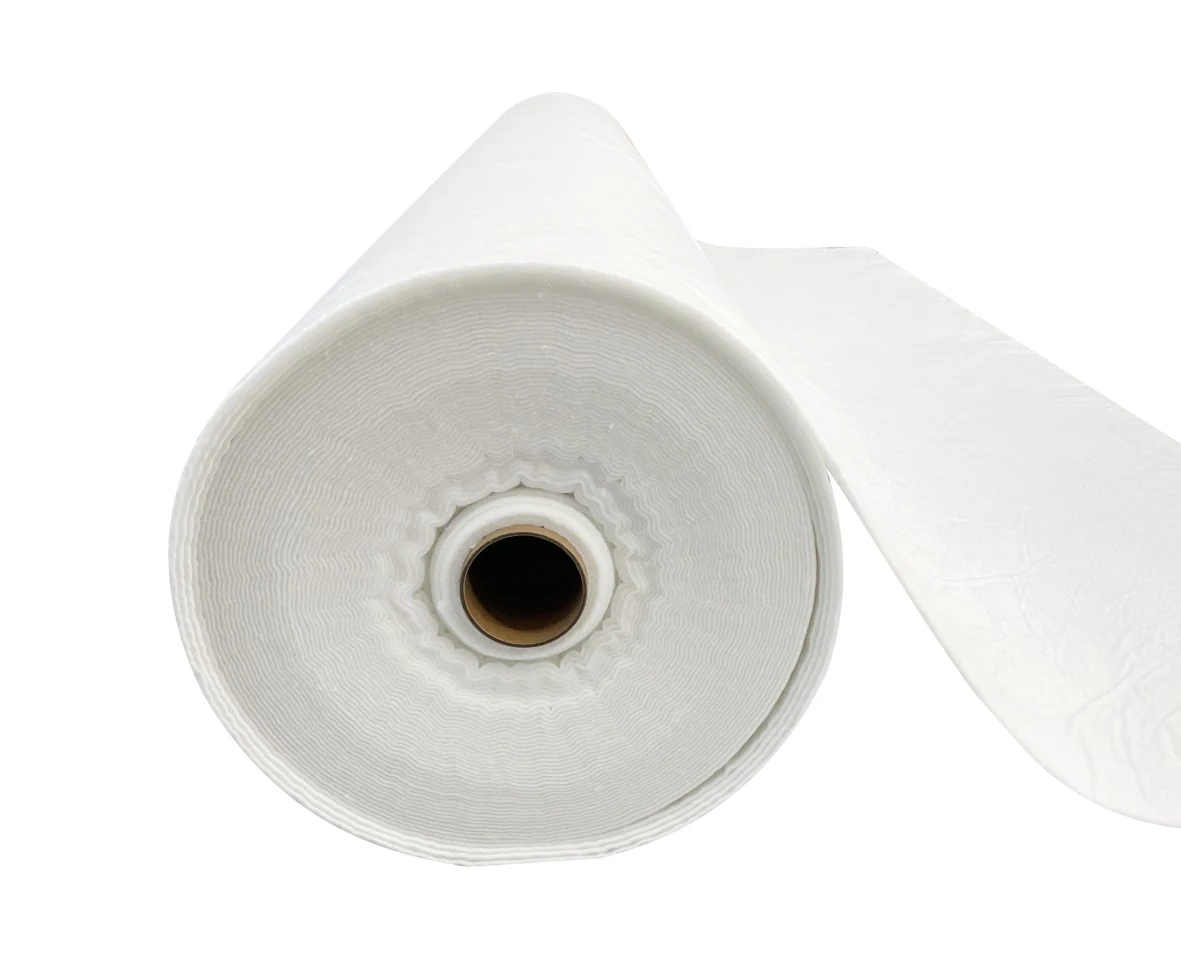
- Protection and underlay. When your designer calls for a cushion, allow a nonwoven geotextile underlay or a dedicated geomembrane protection geotextile. Material and placement cost extra, but they lower puncture risk from sharp subgrade.
- Earthworks and subgrade. Shaping, compaction, grubbing rock and roots, and fixing soft spots all belong to the civil scope, and topography decides much of that volume [3].
- Crest and anchor works. Price anchor trenches or structural crest links, backfill, and reinstatement apart from the sheet itself.
- Penetration sealing. Pipes, intakes, spillway interfaces, and concrete ties each get a compatible seal plus their own test.
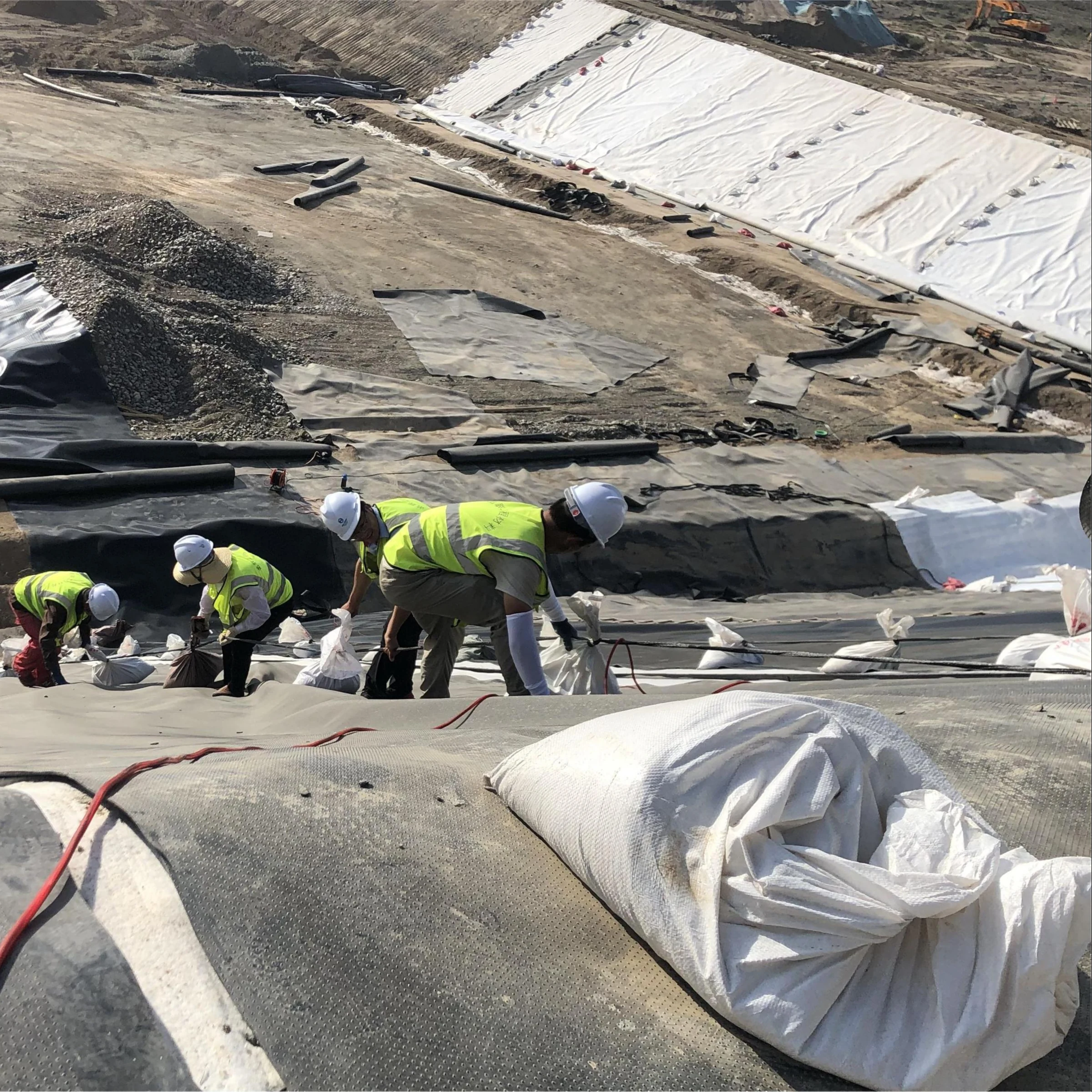
- Welding and testing. Budget for deployment, trial seams, production welding, and the nondestructive checks named in the project specification. ASTM D6392 covers destructive peel and shear testing of nonreinforced geomembrane thermo-fusion seams [4]. Define sampling, acceptance, investigation, repair, and retesting responsibilities in the contract.
- Delivery and site services. Add freight, unloading, storage, site access, taxes, standby for weather or water-level windows, and a clear split of who does what. Confirm unloading and storage before the truck arrives, so neither returns later as a separate extra.
Worked quantity
This reproducible budgeting exercise is not a completed-project report. Picture a rectangular farm dam with a 50 x 30 m water surface (1500 m2), 4.0 m deep, uniform 2H:1V sides, a level bottom, and no benches. An 8.0 m horizontal run on each side leaves a 34 x 14 m bottom.
Pythagoras then gives a slope length of about 8.944 m from 8.0 squared plus 4.0 squared.
| Dimension | Calculation | Result |
|---|---|---|
| Length | 34 + (2 x 8.944) + (2 x 1) | about 53.89 m |
| Width | 14 + (2 x 8.944) + (2 x 1) | about 33.89 m |
| Envelope | 53.89 x 33.89 | 1826.33 m2, or about 1826 m2 |
The dimensions above are rounded before multiplication. This rectangle is a sheet-envelope allowance, not the exact bottom-plus-slope surface area or an optimized panel takeoff. The 1 m edge strip is an arbitrary arithmetic allowance, not an anchor design or a freeboard allowance. Crest anchorage, spillway lining, and penetration collars are excluded. A qualified installer must reconcile panel layout, corners, overlaps, cutting waste, freeboard, and approved anchorage before the final order; do not add a generic waste percentage without checking what the envelope already includes.
Offer comparison
Using 1826.33 m2 before whole-number rounding, the envelope is 326.33 m2 above the 1500 m2 water surface, about 21.76% larger. Conversely, 1500 m2 is about 17.87% below 1826.33 m2. The percentages use different bases and are not interchangeable.
Suppose Offer A charges for 1500 m2 while Offer B charges for 1826 m2, both at price P per m2. Their sheet subtotals are 1500 x P and 1826 x P, a gap of 326 x P. Before choosing A, ask whether 1500 m2 is the actual sheet quantity or simply the water-surface measurement used for billing. A contractor could price the whole installation per m2 of water surface, so that denominator alone does not prove missing material. Obtain the sheet quantity, panel takeoff, and exclusions in writing. These are hypothetical offers, not customer records.
The illustrative envelope gives 1826 x P for sheet alone, about 1.22 x P per m2 of water surface. Add separately scoped works, delivery, taxes, and an agreed contingency without counting any item twice. The World Bank’s formal small-dam safety guidance makes safety requirements proportionate to size, complexity, and potential risk in its project framework; a small dam can still have serious downstream consequences [5]. This supports budgeting for the applicable safety scope, not a universal contingency percentage.
Before accepting a quote
For this example, a weight-based quote for nominal 1.5 mm smooth HDPE can be checked using the calculated 1.41 kg/m2. Multiply the quoted price per kg by 1.41 to obtain an indicative price per m2, then compare it with a direct per-m2 offer on the same delivery and tax basis. Before contracting, replace the calculated mass with the supplier’s agreed billing mass and verify roll traceability.
If unloading is excluded, identify who provides equipment and pays for waiting time. If testing is excluded, obtain a separate scope covering the specified checks, acceptance records, and responsibility for repairs and retesting. These are practical quotation checks derived from the stated example, not claims of first-hand installation experience.
Enquiry checklist
Put the same package in front of every supplier and installer, and insist on a written list of what sits inside the price and what stays outside, so every reply prices the same job.
- Your waterline and crest dimensions, depth, freeboard, side slopes, dam height, and a layout drawing showing the upstream face, crest, spillway, and outlet works.
- Specified material, thickness, surface, and acceptance criteria, or the performance requirements for the designer to resolve.
- Water use (including aquaculture), chemistry, temperature range, sediment load, and cleaning regime; state whether the impoundment stores drinking water so the designer can apply the relevant local rules (in the United States, public drinking water supply is regulated under the Safe Drinking Water Act [6]).
- Underlay grade and coverage where one is specified.
- Total m2 required and the allowance contained in it, with the payable-area rule stated.
- Spillway, intake, outlet pipes, ramps, and concrete ties to be sealed and tested.
- Site address, unloading, storage, duties, and taxes.
- Coverage of diversion or dewatering windows, working access, installation, welding, and testing, plus currency and validity.
Compare the total scoped cost, specified performance, payable area, and exclusions—not just the headline rate. Use your approved design and dated quotations for the actual budget. For sheet pricing, provide Jinseed with the specified material and quantities through the contact page; obtain installation and testing prices from qualified contractors.
Send your dam dimensions and specified material for a like-for-like sheet price.
References
- Geosynthetic Institute, GRI-GM13 Rev. 19 (11 June 2025), Standard Specification for Test Methods, Test Properties and Testing Frequency for HDPE Smooth and Textured Geomembranes. https://geosynthetic-institute.org/grispecs/gm13r.pdf (accessed 6 Nov 2026).
- FAO, Considerations in the Selection of Sites for Aquaculture. https://www.fao.org/4/x5744e/x5744e02.htm (accessed 6 Nov 2026).
- FAO, Fish culture in undrainable ponds — site selection and pond construction. https://www.fao.org/4/t0555E/T0555E06.htm (accessed 6 Nov 2026).
- ASTM International, D6392-25 Standard Test Method for Determining the Integrity of Nonreinforced Geomembrane Seams Produced Using Thermo-Fusion Methods. https://store.astm.org/d6392-25.html (accessed 6 Nov 2026).
- World Bank (2021), Good Practice Note on Dam Safety — Technical Note 4: Small Dam Safety, pp. 2–3. Small Dam Safety (accessed 6 Nov 2026).
- US EPA, Safe Drinking Water Act (SDWA). https://www.epa.gov/sdwa (accessed 6 Nov 2026; page last updated 28 Oct 2026).