
A reservoir liner budget is the sheet cost plus underlay, ground preparation, anchorage and penetration details, installation, and testing. For the 60 x 40 m example below, the rectangular sheet envelope is about 2754 m2 before overlaps and cutting waste. At a quoted sheet price of P per m2, that gives a sheet-only subtotal of 2754 x P in the quote’s currency, not an installed price. This guide provides a calculation method, not a verified current market-price range.
Have qualified personnel determine the lining design, material suitability, installation procedures, and acceptance requirements under local rules and the project specification.
Price basis
First establish whether a price is per square metre of supplied sheet, per square metre of installed lining, or per square metre of water surface. The same project can produce different unit prices when divided by different areas. Compare both the total price and its stated scope.
| Price basis | What to confirm |
|---|---|
| Sheet only | Material, nominal thickness, surface, specification, roll dimensions, quantity, currency, validity. |
| Delivered material | Sheet price plus freight, unloading, duties, taxes; list exclusions. |
| Installed lining | Material plus ground preparation, underlay, deployment, welding, testing, anchor and penetration details, supervision; payable area. |
Thickness and sheet cost
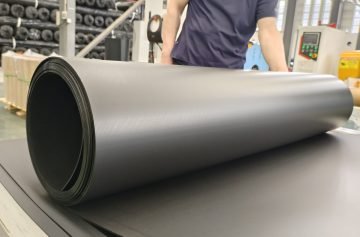
Thickness changes the amount of material purchased per square metre. GRI-GM13 covers HDPE geomembranes with a formulated sheet density of at least 0.940 g/cm3, in thicknesses from 0.75 to 3.0 mm, with smooth or textured surfaces. It is a manufacturing quality-control specification, not a complete reservoir design specification [1].
For a smooth sheet, mass in kg/m2 = thickness in mm x density in g/cm3. Using the specification’s minimum density gives these arithmetic estimates:
| Nominal thickness | Mass calculation | Approximate smooth-sheet mass |
|---|---|---|
| 0.75 mm | 0.75 x 0.940 | about 0.71 kg/m2 |
| 1.00 mm | 1.00 x 0.940 | about 0.94 kg/m2 |
| 1.50 mm | 1.50 x 0.940 | about 1.41 kg/m2 |
| 2.00 mm | 2.00 x 0.940 | about 1.88 kg/m2 |
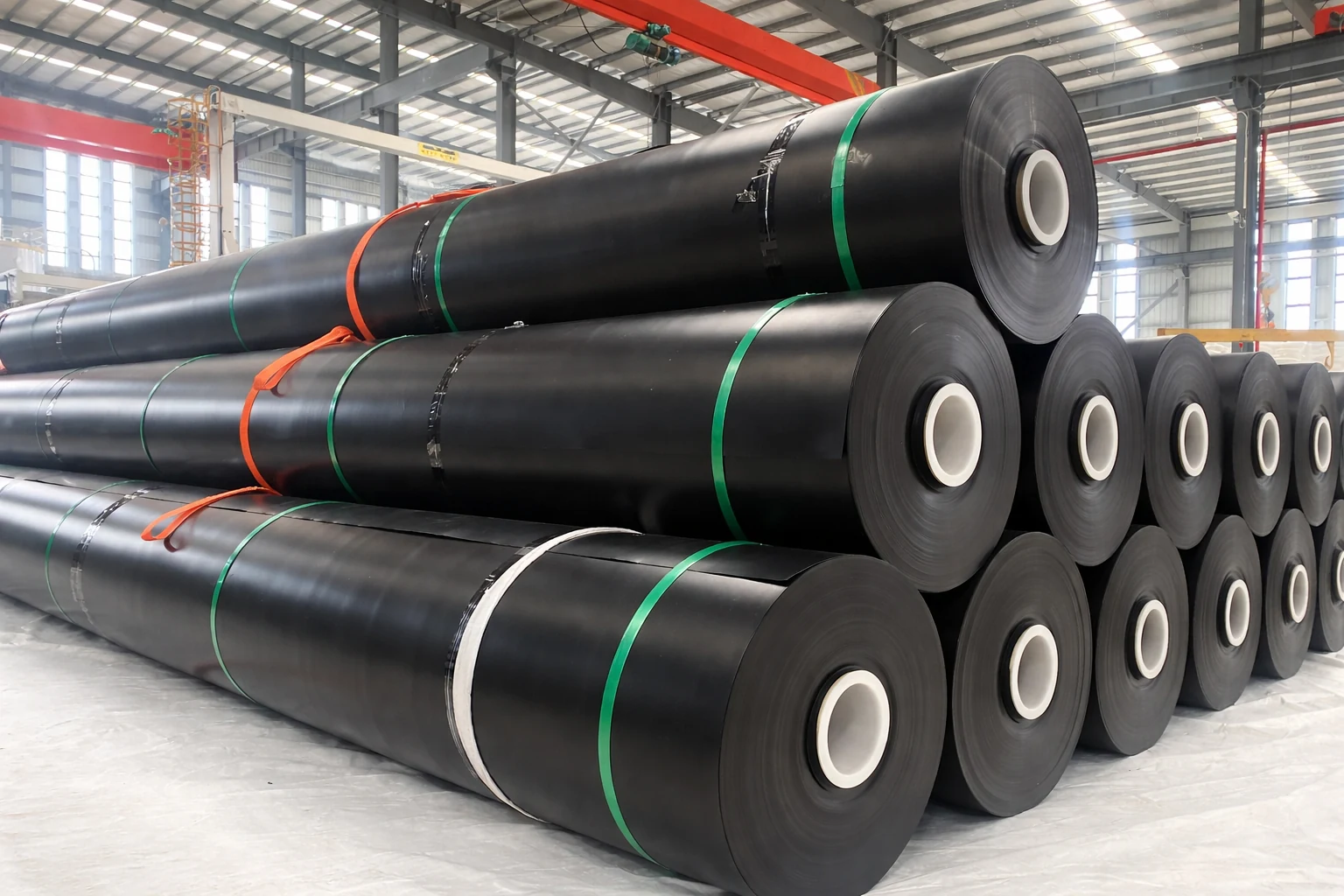
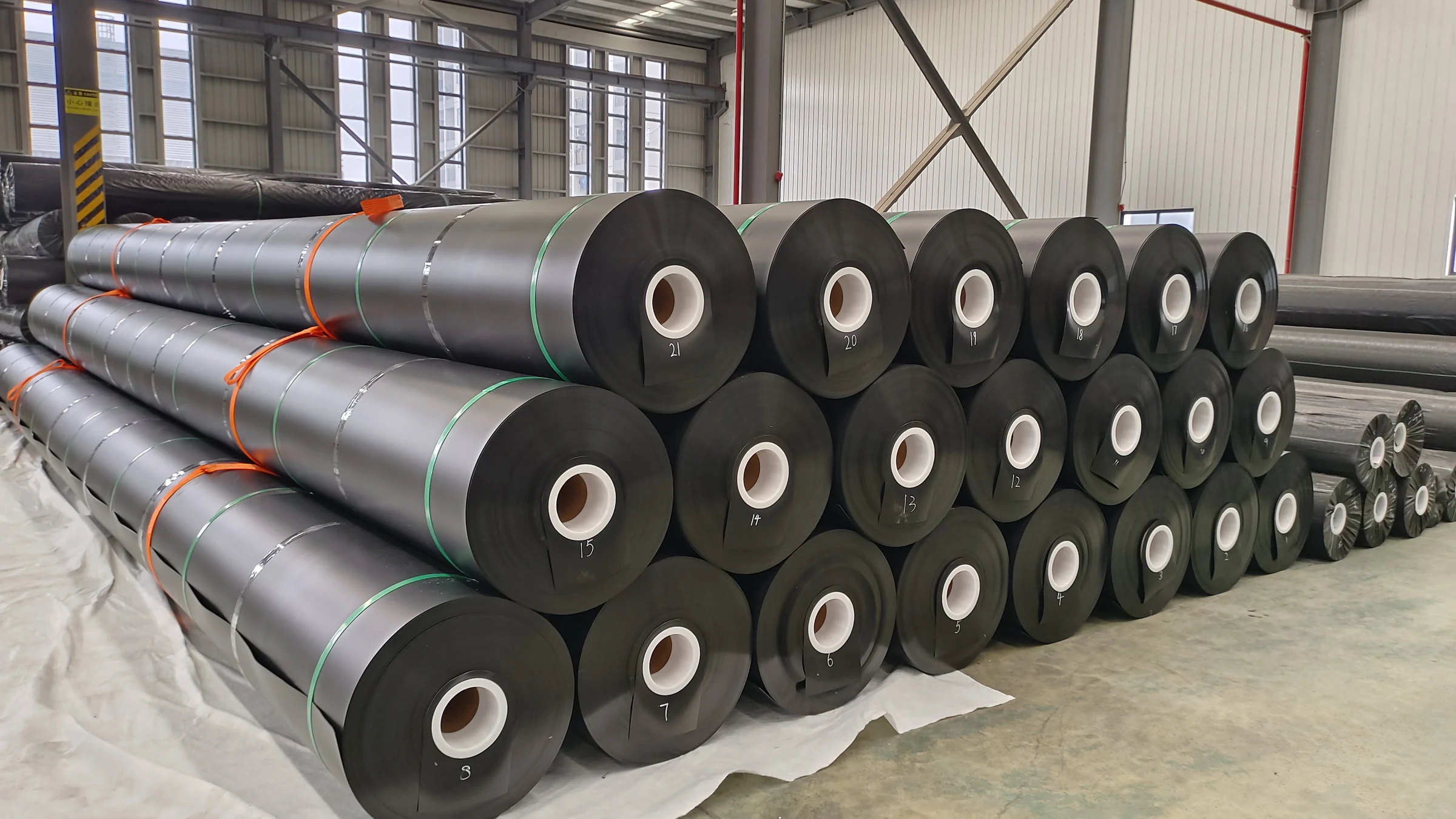
These are not guaranteed roll weights; actual density, thickness tolerances, and surface profile affect mass. Overlaps, anchorage, and cutting waste affect the quantity ordered. If a supplier quotes finished sheet per kg, sheet price per m2 = quoted sheet price per kg x sheet mass in kg/m2. At the same density and finished-sheet price per kg, doubling thickness doubles this calculated sheet cost, not necessarily the delivered or installed price. A raw-resin price alone is not a finished-sheet quotation. Jinseed’s HDPE geomembrane cost per m2 guide explains the unit conversion.
The following comparison uses three smooth-HDPE columns from GRI-GM13 Table 1(a). Its 40, 60, and 80 mil columns are approximately 1.0, 1.5, and 2.0 mm; they are not exact metric conversions or thickness recommendations for every reservoir [1].
| Property (smooth HDPE, min. ave.) | Test | About 1.0 mm (40 mil) | About 1.5 mm (60 mil) | About 2.0 mm (80 mil) |
|---|---|---|---|---|
| Yield strength | ASTM D6693 Type IV | 84 lb/in. | 126 lb/in. | 168 lb/in. |
| Break strength | ASTM D6693 | 152 lb/in. | 228 lb/in. | 304 lb/in. |
| Yield / break elongation | ASTM D6693 | 12% / 700% | 12% / 700% | 12% / 700% |
| Tear resistance | ASTM D1004 | 28 lb | 42 lb | 56 lb |
| Puncture resistance | ASTM D4833 | 72 lb | 108 lb | 144 lb |
| Stress-crack resistance | ASTM D5397 Appendix | 500 hr | 500 hr | 500 hr |
Compare the same thickness column and test basis. The tensile values use ASTM D6693 Type IV; the specification gives yield and break elongation gauge lengths of 1.3 and 2.0 inches respectively, and averages based on five specimens in each of the machine and cross-machine directions. The stress-crack row uses the ASTM D5397 Appendix procedure. These are specification acceptance values, not Jinseed batch-test results [1].
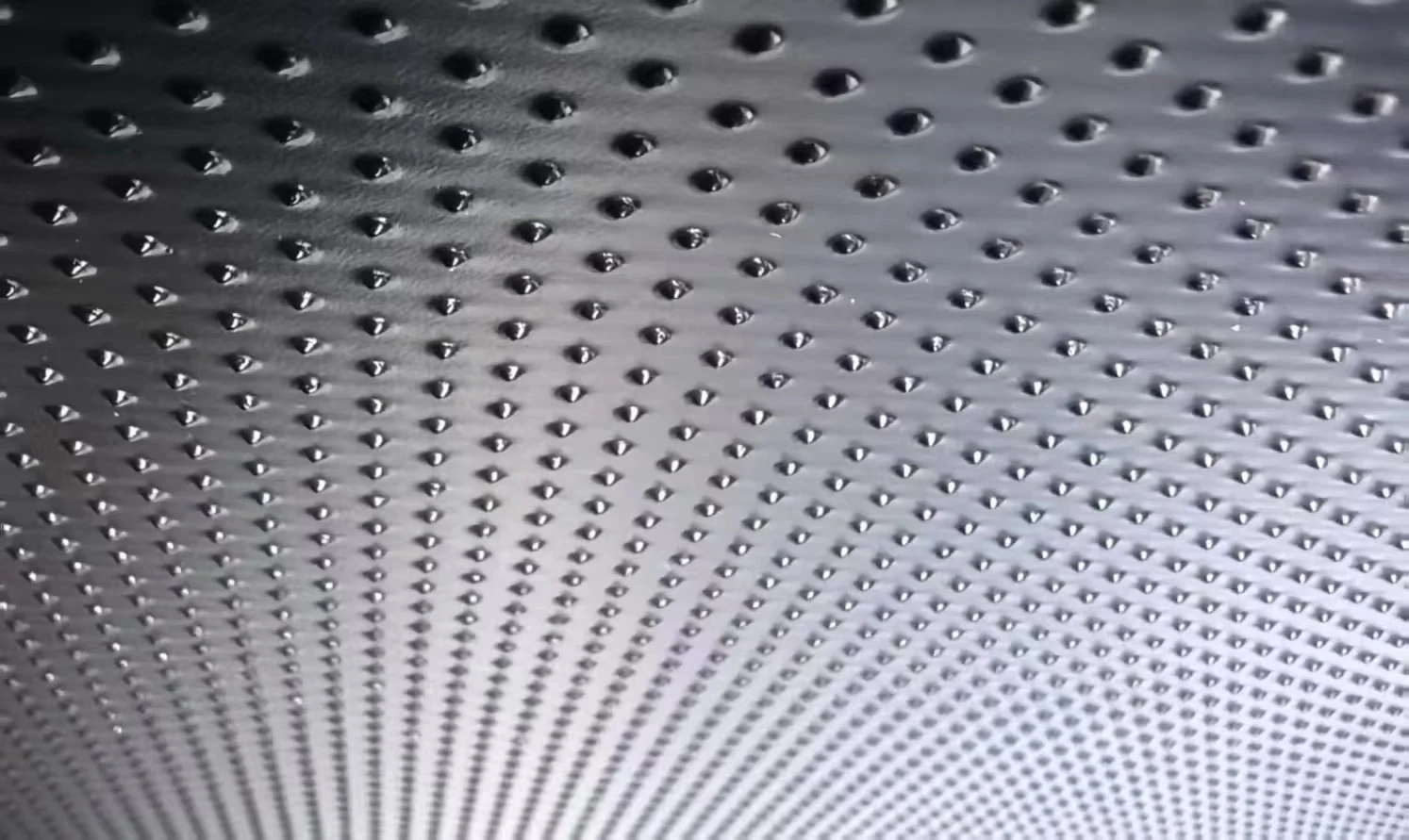
Material options include smooth HDPE liner, LLDPE liner, and single- or double-sided textured HDPE. A qualified designer should select the material and surface for the foundation, loading, exposure, and interface stability; texture alone is not proof that a slope is stable. The smooth-HDPE table above should not be used as an LLDPE acceptance table.
Specification and cost
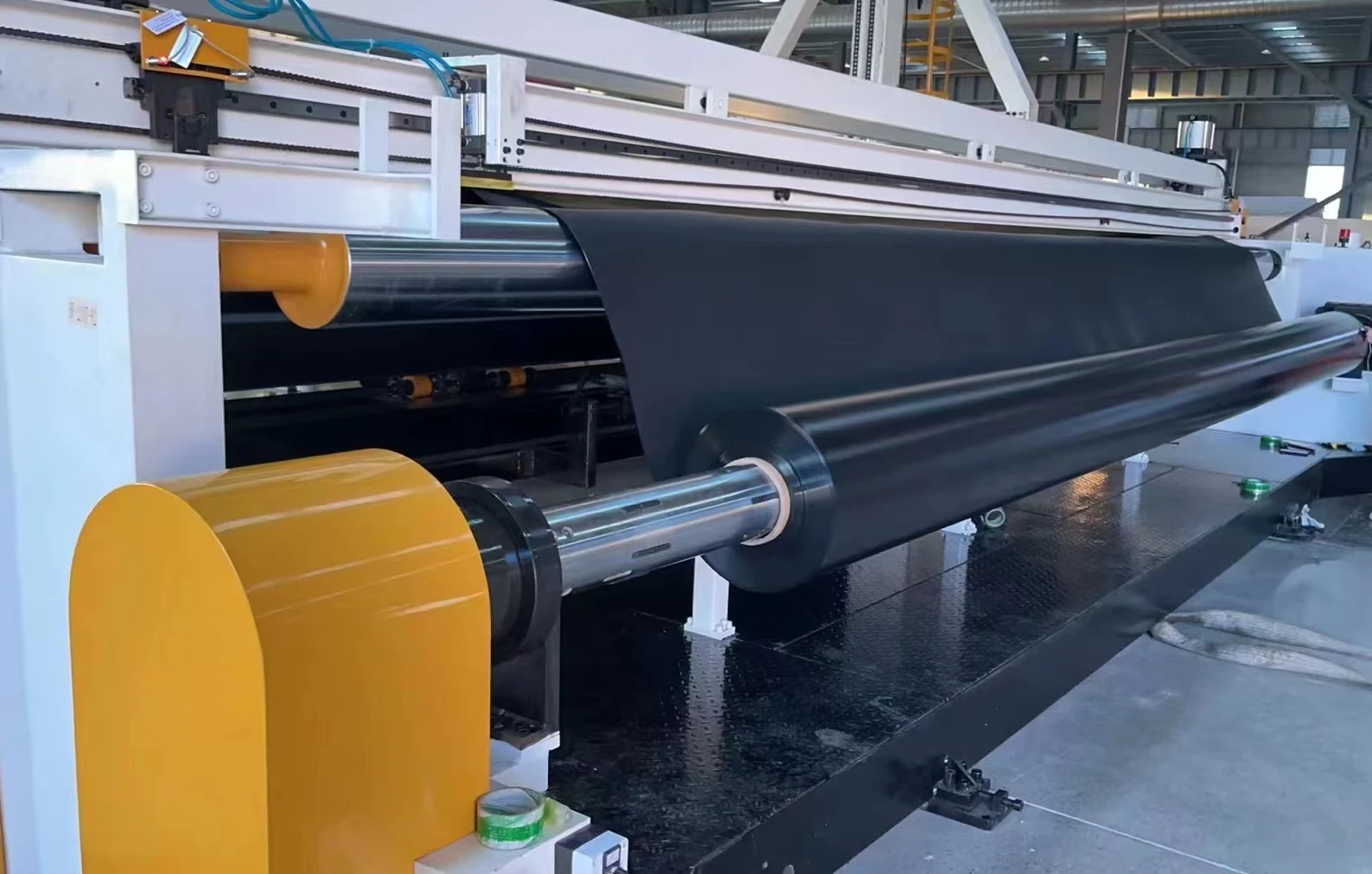
For smooth HDPE specified to GRI-GM13, request reports covering thickness by ASTM D5199, density by ASTM D1505 or D792, and the mechanical properties listed above. Carbon-black content is 2.0-3.0% by ASTM D4218. Dispersion under ASTM D5596 is assessed over ten views of near-spherical agglomerates: nine in Categories 1 or 2 and one in Category 3. The initial oxidative induction time requirement is at least 100 minutes by ASTM D8117 or 400 minutes by ASTM D5885, with the method selected as allowed by the specification [1].
The same specification defines oven-aging retention under ASTM D5721 after 90 days at 85°C as at least 55% for standard OIT or 80% for high-pressure OIT. Its UV requirement uses at least 50% retained high-pressure OIT after 1600 hours under ASTM D7238, with cycles of 20 hours UV at 75°C and 4 hours condensation at 60°C. These laboratory acceptance conditions do not predict a reservoir’s service life or establish chemical compatibility [1]. Ask the HDPE geomembrane manufacturer for traceable batch or roll documentation against the project specification.
Site details that change reservoir liner cost
A pond or reservoir unit rate is transferable only when its scope and site conditions match. Jinseed’s hydraulic engineering applications provide relevant context, but the budget still needs project-specific quantities and details.
- Geometry and panel layout. Depth, side slopes, benches, roll widths, and panel arrangement affect sheet quantities and seam lengths. Neither can be read from water-surface area alone.
- Freeboard. The worked example includes no additional lined height above the waterline. Any specified freeboard must be added to the slope coverage separately from the anchorage detail.
- Penetrations and transitions. Pipes may require boots or flanged connections; spillways, concrete ties, and ramps need their own designed details. Include fabrication, sealing, and testing rather than assuming one boot detail suits every opening.
- Water use. Duty differs across irrigation, raw-water, aquaculture, and potable-water storage. The enquiry should record use, chemistry, temperature range, and cleaning method. Potable storage depends on approval from the responsible authority, and added thickness alone settles neither compliance nor chemical suitability. Each duty carries a different detailing and testing cost.
Costs beyond sheet
- Ground preparation. Grading, clearance of stones, roots, and soft spots, and a uniform support face all remain chargeable. Topography, water supply, and soil govern that earthwork [2], while permeability and seepage checks precede procurement [3].
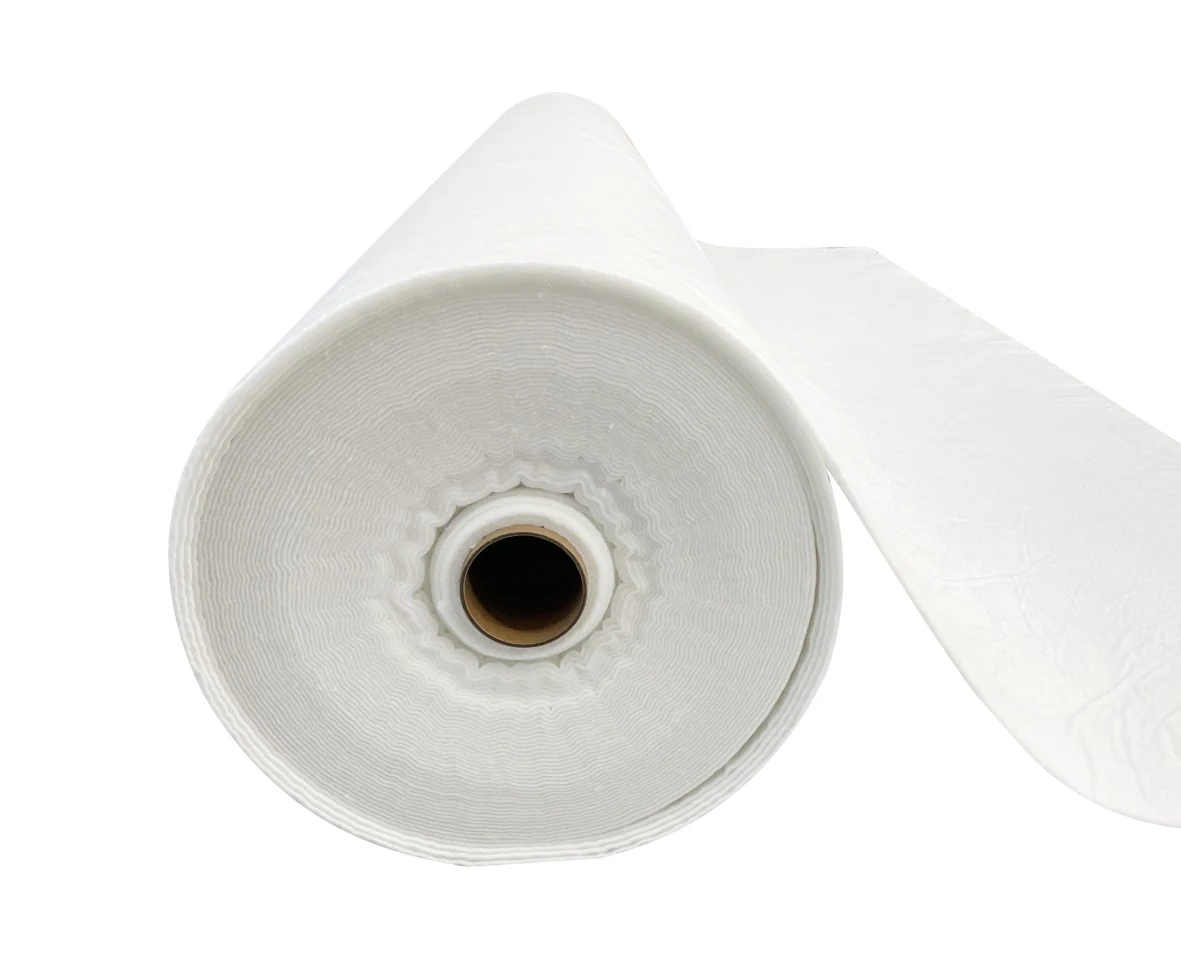
- Underlay. Where the design requires cushioning, a PET continuous-filament nonwoven geotextile is a protection option. Its grade and coverage need project-specific selection. This geomembrane protection layer is not the waterproof barrier.
- Anchorage. The trench and crest finish, pipe boots, spillway ties, and access points enter as materials plus labour.
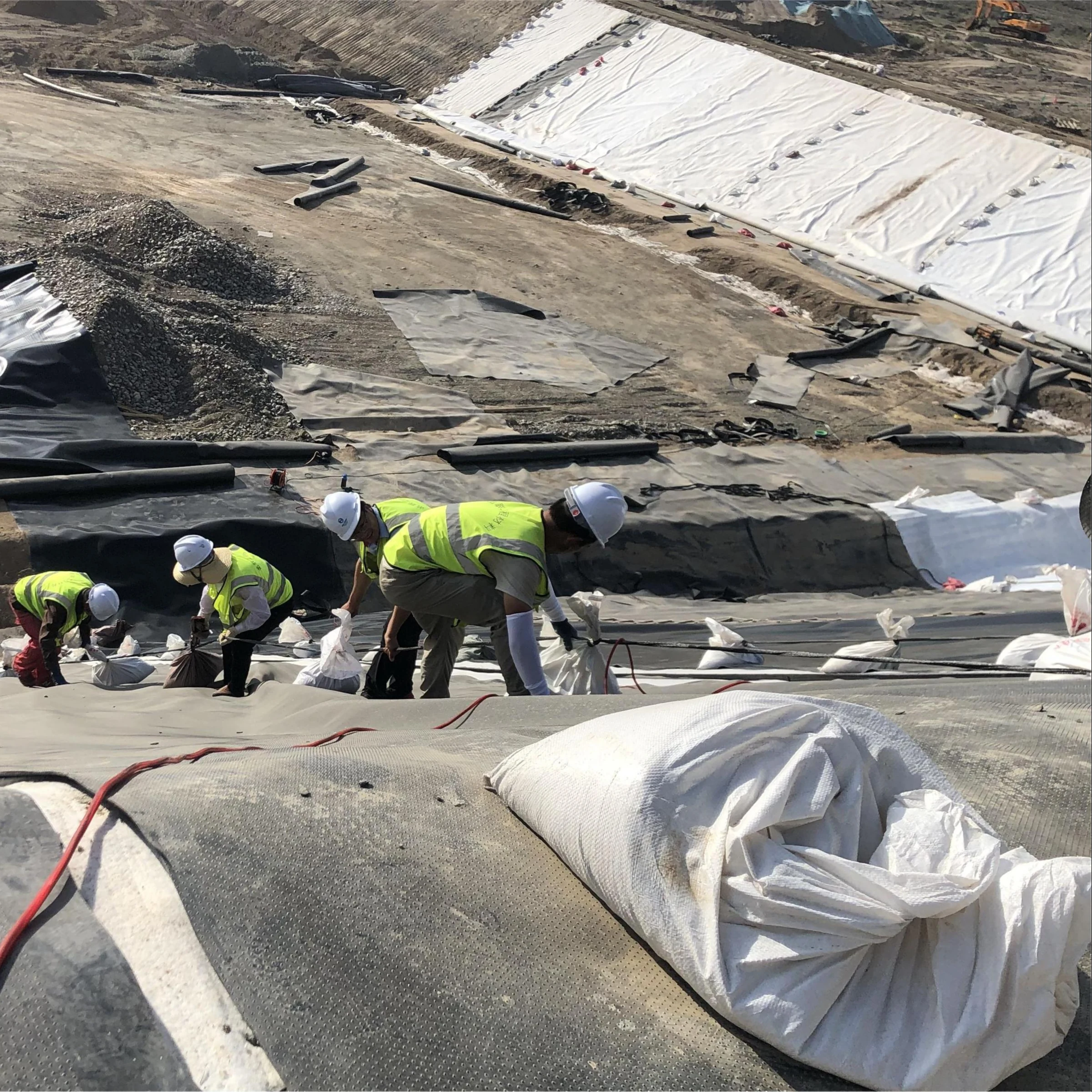
- Welding and testing. Price deployment, welding, testing, and documentation explicitly. ASTM D6392-25 addresses destructive peel and shear testing of sampled thermo-fusion seams in nonreinforced geomembranes; it does not provide a full-length nondestructive seam check [4]. Qualified project personnel must define sampling, acceptance, continuity testing, and the investigation, repair, and retesting procedure for failed results. The quotation should allocate the cost and time for that procedure.
- Delivery. The remaining items are freight, unloading, storage, site access, taxes, and allocation of responsibility.
Sheet quantity and cost
This worked example is a calculation, not a completed-project report. Assume a rectangular water surface of 60 x 40 m (2400 m2), a depth of 3.0 m, uniform 2H:1V sides, a level bottom, and no benches. Each side has a 6.0 m horizontal run, giving a 48 x 28 m bottom. The slope length is the square root of (6.0² + 3.0²), or about 6.708 m. Jinseed’s liner coverage guide discusses slopes, overlaps, and anchor allowances.
- Length: 48 + (2 x 6.708) + (2 x 1) = about 63.42 m.
- Width: 28 + (2 x 6.708) + (2 x 1) = about 43.42 m.
- Rectangular envelope using the rounded dimensions: 63.42 x 43.42 = 2753.70 m2, or about 2754 m2.
The 1 m extension at each edge is an arithmetic assumption, not an anchor-trench recommendation or a freeboard allowance. The result is a rectangular coverage envelope, not the exact wetted surface or an approved panel takeoff. Final procurement quantity must account for the actual panel layout, overlaps, cutting waste, freeboard, and approved anchorage.
Quote comparison
The 2754 m2 envelope is 354 m2, or about 14.75% larger than the 2400 m2 water surface. Conversely, 2400 m2 is about 12.85% less than 2754 m2. Those percentages use different denominators and must not be interchanged.
Consider two illustrative sheet-only offers for this geometry. Offer A charges for 2400 m2 and Offer B for 2754 m2 at the same price P per m2. Their subtotals are 2400 x P and 2754 x P, a difference of 354 x P. Offer A is not yet comparable: ask how it covers the slopes and edge extensions, and whether those quantities will be billed separately. This is a quotation-checking scenario, not a report of actual supplier offers.
The envelope subtotal of 2754 x P is equivalent to about 1.15 x P per m2 of water surface. Underlay, earthwork, detailing, installation, and testing remain outside it. For an installed budget, add those scoped items and any delivery, tax, and project-risk allowances not already included. Do not add a charge twice if it is already inside a bundled rate.
Cost checklist
Send the same enquiry package to each supplier and installer, and request a written list of inclusions and exclusions.
- Your waterline and crest dimensions, depth, freeboard, side slopes, and layout drawing.
- Specified material, thickness, surface, and acceptance criteria, or the performance requirements for the designer to resolve.
- Water use, chemistry, temperature range, and cleaning regime. For U.S. public drinking-water projects, check applicable Safe Drinking Water Act requirements with the responsible authority; elsewhere, use the relevant local drinking-water rules. The EPA framework is not a liner-product approval [5].
- Underlay grade and coverage where one is specified.
- Total m2 required and the allowance contained in it.
- Pipes, spillway, intake, ramps, and concrete ties.
- Site address, unloading, duties, and taxes.
- Coverage of installation, welding, and testing, the payable-area rule, currency, and validity.
Need a comparable reservoir price?
Send your layout, material specification, required quantity, and delivery location to request a Jinseed material quotation. Obtain installation and testing prices from qualified contractors, and compare every offer on the same stated scope.
Bottom line: compare reservoir liner quotations by total cost, specified performance, payable area, and exclusions. Use the worked envelope to check the arithmetic, then replace its assumptions with the approved design and actual quotations before setting the project budget.
References
- Geosynthetic Institute, GRI-GM13 Rev. 19 (11 June 2025), Standard Specification for Test Methods, Test Properties and Testing Frequency for HDPE Smooth and Textured Geomembranes. https://geosynthetic-institute.org/grispecs/gm13r.pdf (accessed 5 Nov 2026).
- FAO, Fish culture in undrainable ponds — site selection and pond construction. https://www.fao.org/4/t0555E/T0555E06.htm (accessed 5 Nov 2026).
- FAO, Considerations in the Selection of Sites for Aquaculture. https://www.fao.org/4/x5744e/x5744e02.htm (accessed 5 Nov 2026).
- ASTM International, D6392-25 Standard Test Method for Determining the Integrity of Nonreinforced Geomembrane Seams Produced Using Thermo-Fusion Methods. https://store.astm.org/d6392-25.html (accessed 5 Nov 2026).
- U.S. Environmental Protection Agency, Safe Drinking Water Act (SDWA). https://www.epa.gov/sdwa (accessed 5 Nov 2026).