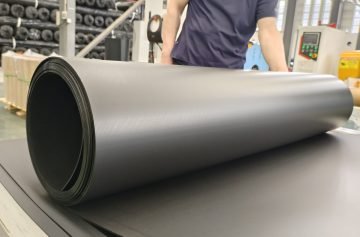
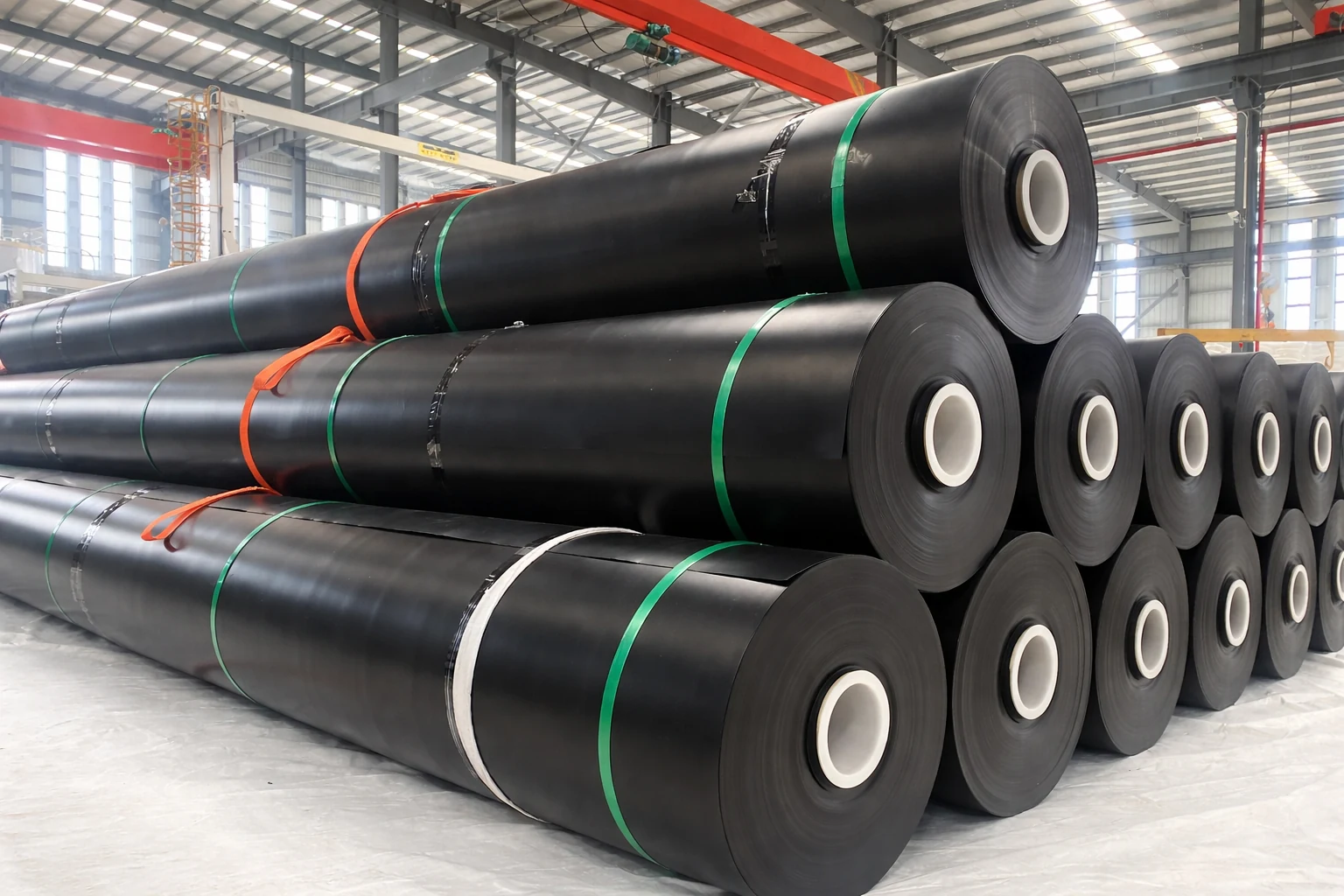
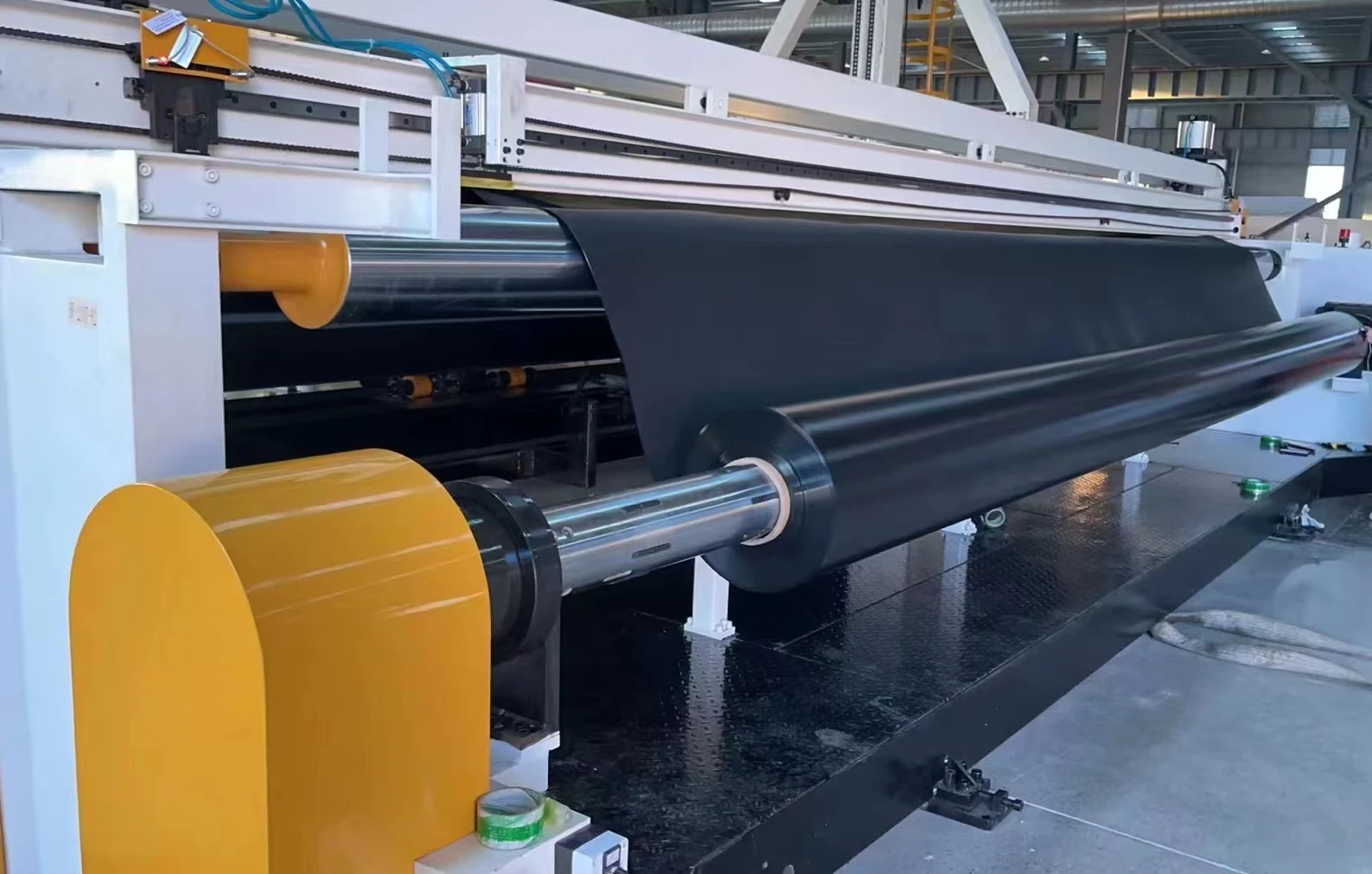
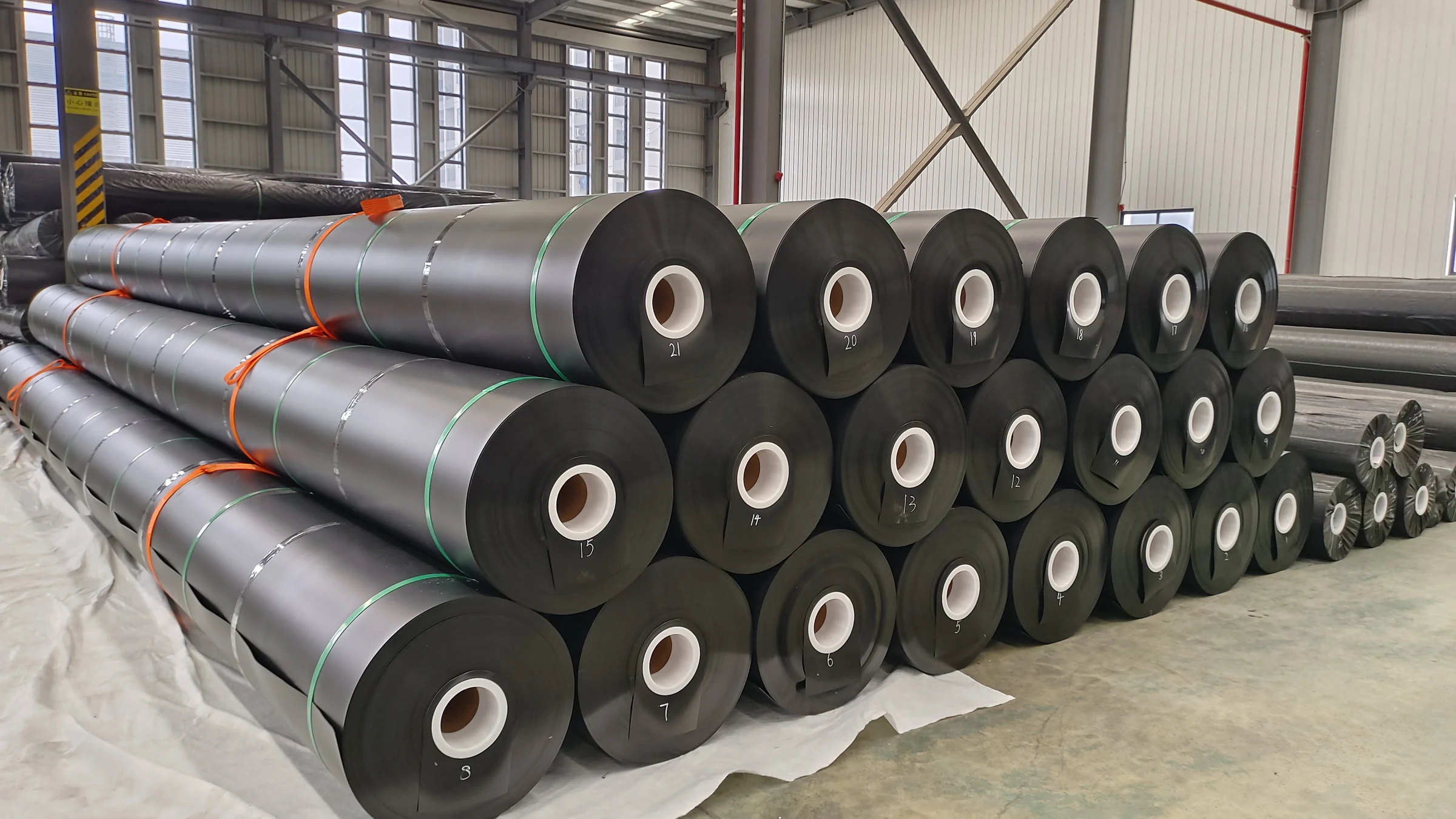

The price of 1.5 mm HDPE liner depends on whether the quote covers sheet alone, delivered rolls, or a complete installation. For a sheet-only comparison, multiply the quoted price per kg by the agreed sheet mass per square meter. Using a planning mass of 1.41 kg/m², a hypothetical USD 2.00/kg offer equals USD 2.82/m² before freight or installation. This is a calculation example, not a current market price or Jinseed quotation. A purchase-ready price needs a dated offer stating the surface, specification, quantity, delivery terms, and exclusions.
What 1.5 mm means for the price
1.5 mm HDPE liner is often discussed alongside the 60-mil class, but the dimensions are not identical. One mil equals 0.0254 mm, so 60 mil is 1.524 mm. If a project specifies a 60-mil minimum, do not assume a nominal 1.5 mm offer meets it; check the thickness requirement, tolerance, and acceptance basis before comparing prices.
For U.S. municipal solid waste landfill new units and lateral expansions, the composite-liner option in 40 CFR 258.40 requires an upper flexible membrane over at least two feet of compacted soil with hydraulic conductivity no greater than 1 × 10⁻⁷ cm/sec. An HDPE membrane in that assembly must be at least 60 mil thick and in direct and uniform contact with the soil. The rule also allows an approved performance-based design alternative; it does not set a universal thickness for ponds or reservoirs [1].
EPA background guidance discusses 1.5 mm polyethylene for landfill bottom liners. That historical design discussion helps explain the gauge, but it is not a source of current liner prices [2].
GRI-GM13 applies to smooth and textured HDPE geomembrane from 0.75 mm to 3.0 mm with formulated sheet density of 0.940 g/ml or higher, and it sets the physical, mechanical, and chemical conformance minimums for each HDPE liner grade [3]. Quotes written against different grades price different products, even at the same thickness.
Why the same thickness varies in price
Compare material requirements before comparing totals. GM13 specifies geomembrane resin and finished-sheet properties, including carbon black content and dispersion, tensile behavior, puncture resistance, stress crack resistance, and antioxidant performance. An ungraded sheet is not an equivalent offer merely because its nominal thickness matches [3]. Smooth and single- or double-sided textured liner also require separate specification checks; surface choice should follow the design, not just the lower price.
Ask suppliers to separate sheet cost from delivery and field work. Distance, shipment weight, vehicle limits, and site access affect the freight and installation scope. Depending on the contract, additional items may include:
- Field welding, trial welds, and destructive and non-destructive seam testing.
- Anchor trenches, pipe boots and penetrations, and subgrade acceptance.
- Protective geotextile cushion or drainage layers, mobilization, weather delays, and third-party quality assurance.
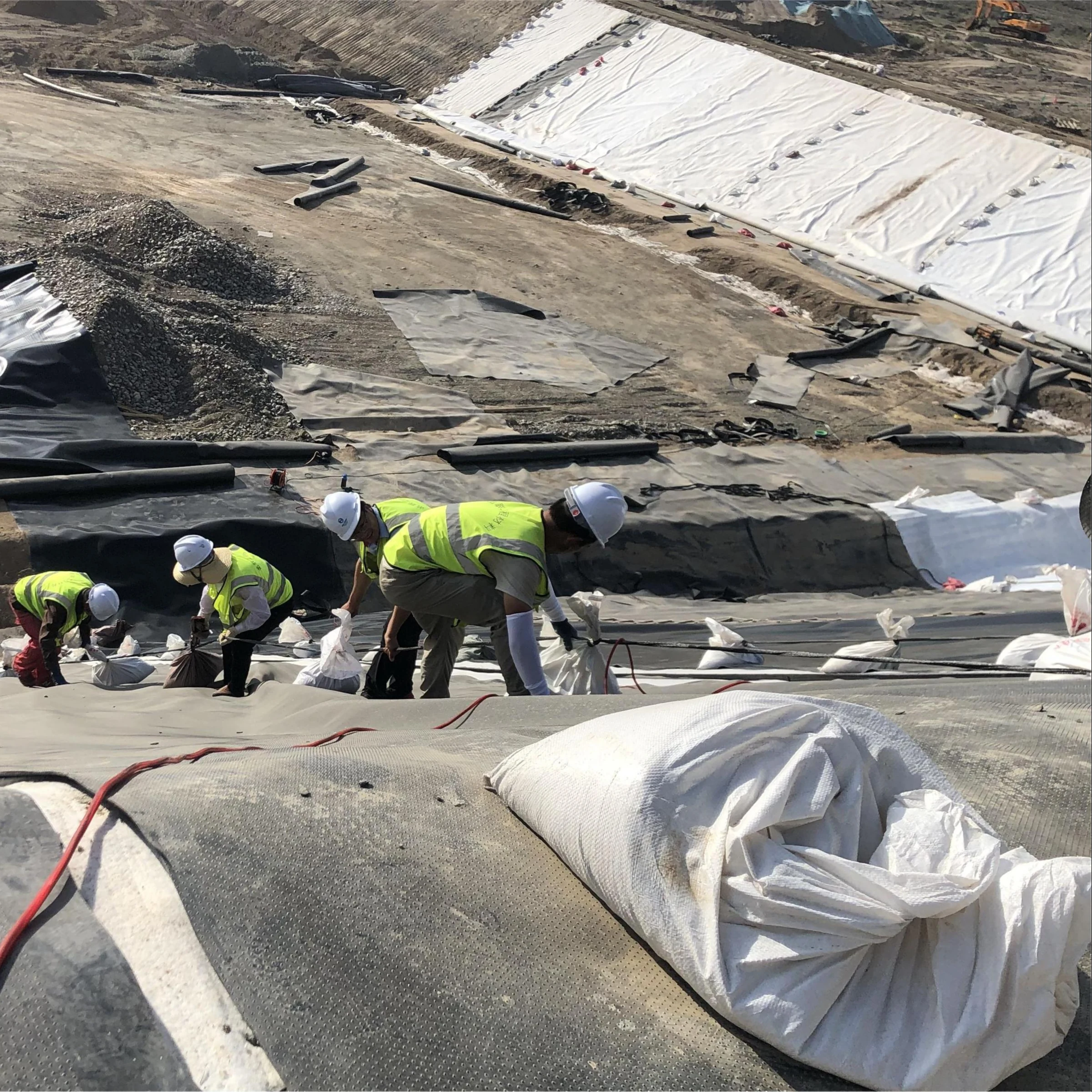
A flat pond and a steep landfill or mining slope can require different access arrangements, panel layouts, and engineering checks. Do not transfer an installation rate from one to the other without reviewing those conditions. Qualified personnel should carry out design, installation, and verification under applicable local codes and the project specification.
Which 1.5 mm specifications move the price
The following values are from the 1.5 mm smooth-sheet SI table in GRI-GM13 Revision 16, dated March 17, 2021. Mechanical values are minimum averages, not guaranteed results for every individual specimen. Tensile testing uses ASTM D6693 Type IV specimens, with five in each of the machine and cross-machine directions; yield and break elongation use gauge lengths of 33 mm and 50 mm, respectively. A textured-sheet offer needs its own applicable table, and the contract should identify the required specification revision [3].
| Property and method | 1.5 mm smooth requirement |
|---|---|
| Yield strength, ASTM D6693 | 22 kN/m |
| Break strength, ASTM D6693 | 40 kN/m |
| Yield elongation, ASTM D6693 | 12% |
| Break elongation, ASTM D6693 | 700% |
| Tear resistance, ASTM D1004 | 187 N |
| Puncture resistance, ASTM D4833 | 480 N |
| Stress crack resistance, ASTM D5397 appendix | 500 h |
For 1.5 mm textured sheet, the GM13 puncture minimum average is 400 N rather than the smooth-sheet 480 N. For smooth sheet, average thickness must meet nominal thickness, while the lowest individual of ten readings may be up to 10% below nominal. Checking only the lowest reading misses the average requirement [3].
Start a document check by matching the offered grade, thickness, surface, and production-lot identification to the reports. A generic brochure can describe a product range, but it does not establish conformity of the supplied rolls. If a report covers another surface or thickness, request the applicable evidence rather than treating the lower price as a like-for-like saving.
Durability paperwork buyers pay for
GM13 Revision 16 specifies carbon black content of 2.0–3.0% by ASTM D4218. Its ASTM D5596 dispersion note covers near-spherical agglomerates in ten views: nine in categories 1 or 2 and one in category 3. Initial oxidative induction time (OIT) is a minimum average of 100 minutes by ASTM D8117, or 400 minutes for high-pressure OIT by ASTM D5885 [3].
After 90 days of oven aging at 85°C under ASTM D5721, the minimum retained OIT is 55% for the standard method or 80% for the high-pressure method. UV testing under ASTM D7238 uses a 20-hour UV cycle at 75°C followed by four hours of condensation at 60°C; after 1,600 hours, the minimum retained high-pressure OIT is 50%. These are laboratory acceptance requirements, not a direct prediction of outdoor service life [3].
Chemical compatibility needs a project-specific review of the chemicals, concentrations, temperature, and exposure duration. On slopes, surface texture alone does not establish stability. ASTM D5321/D5321M provides a direct-shear method for soil-geosynthetic and geosynthetic-geosynthetic interfaces under specified test conditions; engineering assessment must address the actual adjacent materials and project conditions [4]. Identify who is responsible for that testing and review in the project budget.
How to convert a 1.5 mm liner price per kg to price per m²
At the same density, increasing thickness increases sheet mass in direct proportion. That does not establish a proportional increase in the complete installed cost: freight, mobilization, welding, and testing have their own pricing bases. EPA historical background analysis notes that increasing the same membrane material from 0.75 mm to 1.5 mm can double its per-acre membrane cost, depending on polymer type. That statement concerns the membrane component, not the installed project total [2].
For a uniform smooth sheet, density in g/cm³ multiplied by thickness in mm gives mass in kg/m². Using the GM13 formulated-density floor of 0.940 g/cm³ and the stated nominal thicknesses gives these planning values [3]:
| Nominal thickness | Calculated mass | What it means for a quote |
|---|---|---|
| 1.0 mm | 0.94 kg/m² | Lower sheet mass per square meter |
| 1.5 mm | 1.41 kg/m² | About 50% more sheet mass than 1.0 mm |
| 2.0 mm | 1.88 kg/m² | About 33% more sheet mass than 1.5 mm |
These are calculated sheet masses, not delivery guarantees. Actual density and thickness affect mass, and textured-sheet core thickness under ASTM D5994 is distinct from asperity height under ASTM D7466 [3]. At the example mass of 1.41 kg/m², 100 purchased square meters contains about 141 kg of sheet, excluding cores and packaging.
For purchasing, agree the sheet-mass basis separately from gross shipping weight. Smooth-sheet thickness can be checked under ASTM D5199 [5]. GM13 references ASTM D5994 for textured core thickness and ASTM D1505 or ASTM D792 Method B for formulated density; ASTM D1505 is the density-gradient method [3][6].
If offers are compared per kg, divide the sheet-only price per square meter by kg per square meter with freight and other charges kept on the same basis across suppliers.
Sheet price per purchased square meter equals price per kg multiplied by kg per square meter.
As an arithmetic check, take smooth 1.5 mm sheet at 1.41 kg per square meter with a hypothetical sheet-only offer of USD 2.00 per kg, which works out to USD 2.82 per purchased square meter. That figure is neither a quotation nor a market average nor an installed rate, so always replace it with the price and delivered mass in the written offer.
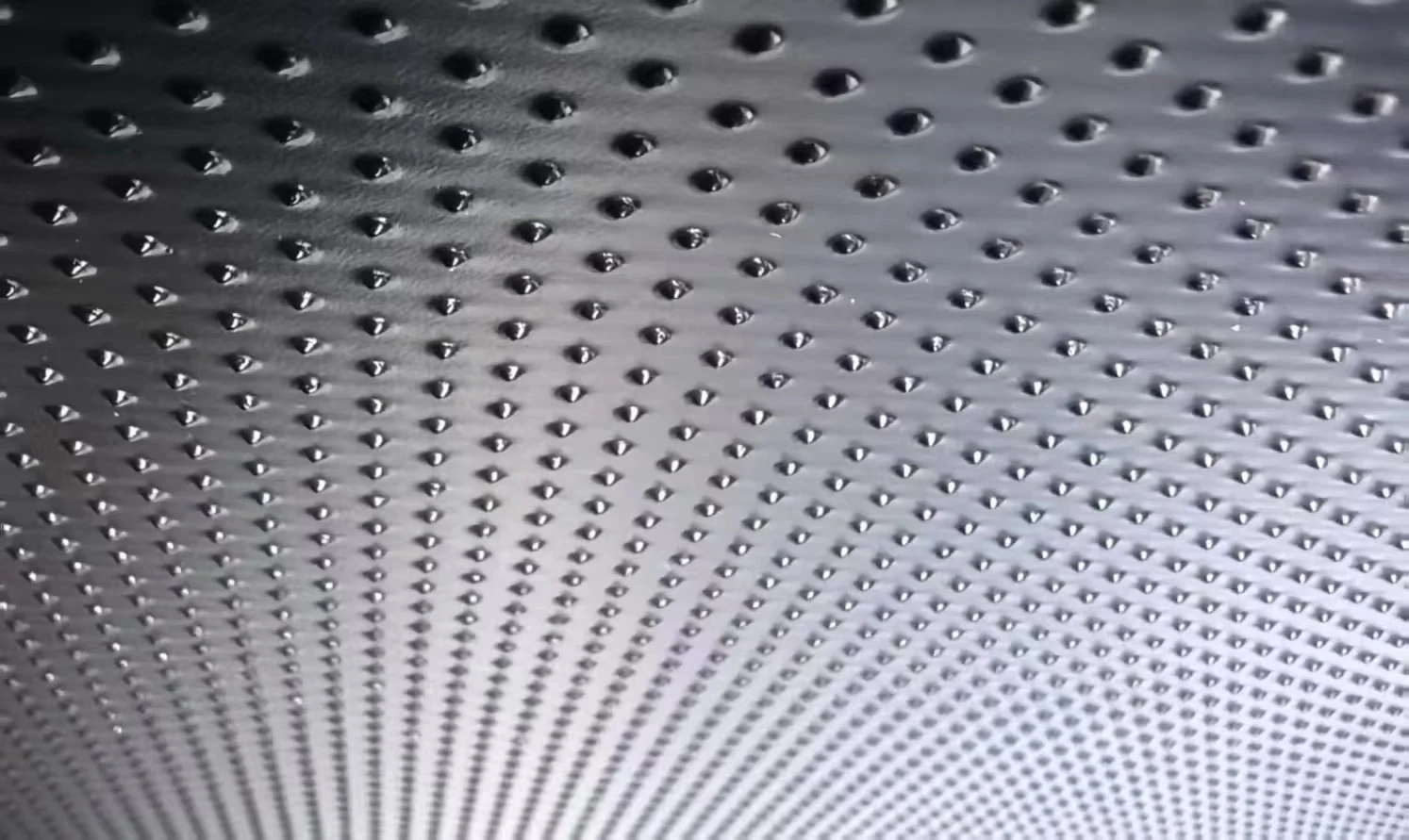
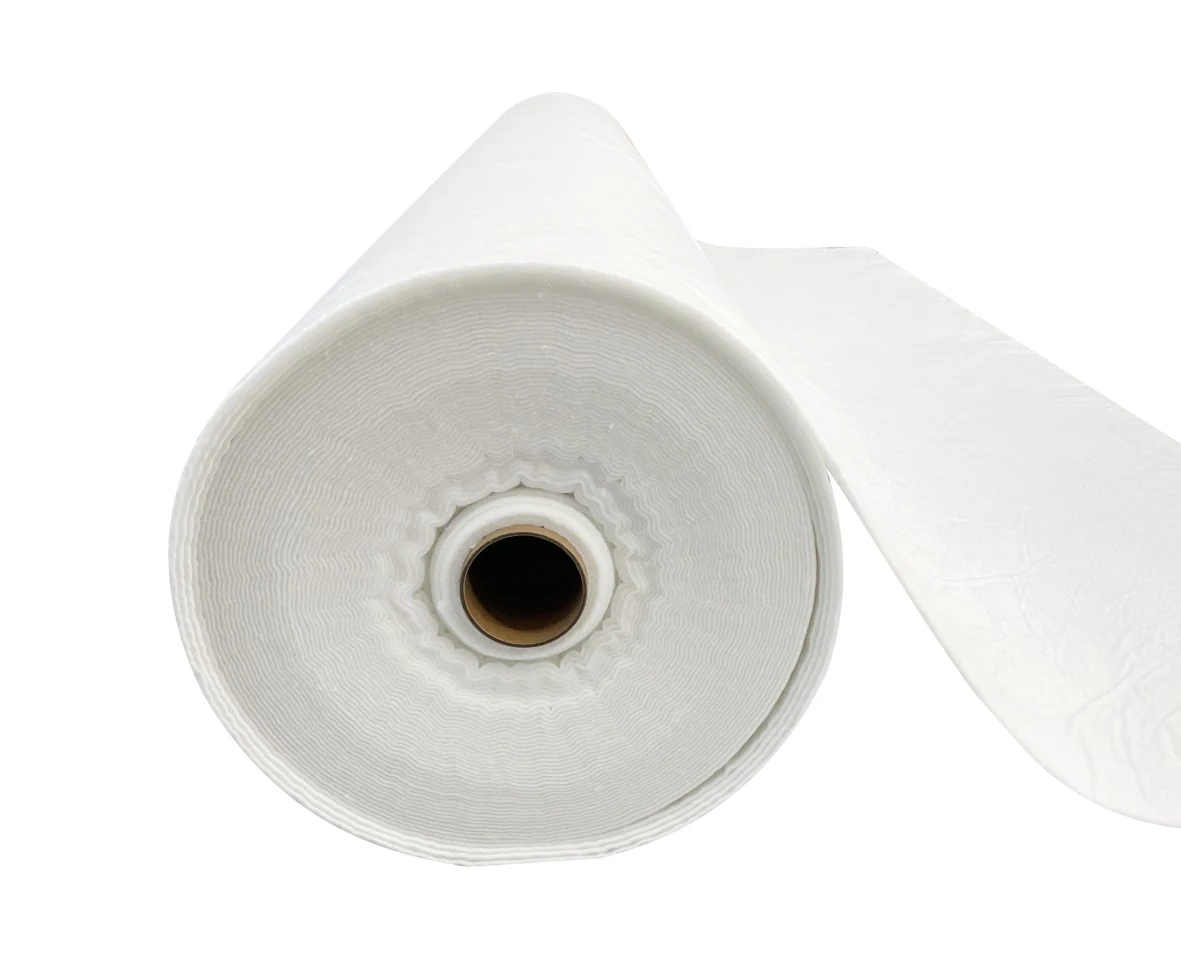
Jinseed product information lists smooth and textured HDPE from 1.0 to 3.0 mm with rolls up to 8.0 m wide. A wider 1.5 mm roll can reduce field seams where panel layout permits, although buyers still need to confirm lifting capacity and site access. An engineer might specify LLDPE liner for ground that settles. A different polymer should never be priced as if it were the same product.
What moves installed cost beyond the sheet
Base the takeoff on bottom and slope surfaces, not only the horizontal footprint. The panel layout should account for overlaps, anchor trenches, penetrations, offcuts, and any specified repair allowance. Where safe access permits, check the site against the drawings before finalizing the layout. Drawings that omit trench or penetration details can understate purchased area; a complete drawing-based takeoff need not do so.
A rectangular aquaculture pond and an irregular reservoir lining may need different purchased areas for the same net lined surface. Set the allowance from the layout rather than applying a universal waste percentage.
In this worked scenario only, 10,000 square meters of net lined surface with 10% extra sheet for layout means 11,000 purchased square meters. With the hypothetical USD 2.82 sheet price above, the sheet material totals USD 31,020, or USD 3.102 per net lined square meter before freight or installation. The 10% serves only as an example input for the arithmetic.
Installed cost per net lined square meter equals total agreed material, delivery, installation, testing, and site-work costs divided by net lined area.
Keep overlaps, freight, and testing in separate cost categories so each item is counted once. A landfill liner system can include barrier, protection, and leachate-collection components; a roll-only quote does not price that complete assembly. A nonwoven geotextile protection layer is a separate line item unless explicitly included. For remote civil engineering sites, check mobilization and access charges; for environmental containment, identify any monitoring and quality-assurance scope separately.
A practical check before accepting a lower quote
Suppose one supplier prices purchased sheet area while another uses net lined area. In the hypothetical example above, USD 2.82 per purchased m² becomes USD 3.102 per net lined m² after the example layout allowance, even though the sheet price has not changed. Put both offers on the same area basis before deciding which is cheaper. Then compare the same surface, specification, delivery point, and testing scope. This is a worked comparison, not a report of a completed Jinseed project.
What to send for an accurate 1.5 mm quotation
To reduce assumptions in the offer, include:
- Thickness, surface, and standard revision.
- Net lined area plus overlap and repair allowance.
- Slope, subgrade, and access limits.
- Required test reports with roll identification.
- Delivery location and terms, currency, quote validity, and responsibility for installation, testing, and exclusions.
Compare conforming sheet on purchased area and complete installations on net lined area. Before placing an order, obtain a dated written quotation with an agreed scope and validity period; use the calculations above to check its basis, not to substitute for a live price.
Need a firm 1.5 mm price for your project?
Send Jinseed your thickness, surface, quantities, and drawings for a written quotation tied to your specification.
References
- U.S. Electronic Code of Federal Regulations, 40 CFR 258.40, design criteria for U.S. municipal solid waste landfills, including the composite-liner option, the approved design alternative, the minimum 30-mil flexible membrane liner, HDPE at least 60-mil thick, the lower compacted soil component at least two feet thick at no more than 1 x 10⁻⁷ cm/sec, and leachate collection maintaining less than 30-cm depth. Read the regulation.
- U.S. EPA, NEPIS P100RAPM, historical landfill liner-design guidance, discussing 1.5 mm polyethylene as the flexible membrane for landfill bottom liners and the thickness-to-cost relationship for the membrane component. Not a current price source. Read the EPA document.
- Geosynthetic Institute, GRI-GM13, Revision 16, March 17, 2021; smooth and textured HDPE geomembrane specification, including SI tables and test notes. Read the specification.
- ASTM International, ASTM D5321/D5321M-21, direct-shear testing of soil-geosynthetic and geosynthetic-geosynthetic interfaces. Read the standard scope.
- ASTM International, ASTM D5199 Standard Test Method for Measuring the Nominal Thickness of Geosynthetics. Read the standard scope.
- ASTM International, ASTM D1505 Standard Test Method for Density of Plastics by the Density-Gradient Technique. Read the standard scope.